This study examines the role of a semi-state actor in developing an agrifood multi-stakeholder initiative (MSI) and its related sectoral accounting and reporting in response to the grand challenge of environmental sustainability in the agrifood industry. The paper also explores how an national environmental protection agency and environmental non-governmental organizations (NGOs) challenge the initiative’s performance. The concepts of dialogic accounting and accountability provide the theoretical framework for the study. Specifically, the study empirically assesses and extends existing theorisations of accountability-based accounting systems to the context of an MSI.
The study involved extensive documentary data collection, discussions with the semi-state staff, NGOs and sector experts, attendance at events and seminars and regular monitoring of media reports on the sector. This enabled an examination of the role of state, semi-state and civil society actors in the creation and evolution of the MSI and the related accounting and accountability processes.
The study finds that state, semi-state and civil society actors have diverse and often conflicting roles in addressing environmental sustainability in the agrifood sector and reveals the dynamic and complex nature of dialogic accounting and accountability in the context of an MSI. In particular, the study finds that the responsibility network around an MSI can create their own disclosures to challenge and critique an MSI’s performance and its incomplete and aspirational accounting. They can also seek to extend the accountability space beyond the MSI to include the sector as a whole and related government policy.
For practitioners, NGOs and policymakers, the study illustrates the value of accounting practices and disclosures that extend beyond corporate entities. These practices and disclosures can form part of an overall process of dialogic accountability, holding a sector or part of a sector to account for their environmental impacts and highlighting deficiencies in performance. In this way, NGOs and other actors can support progress towards enhanced environmental sustainability in a sector. The study encourages accounting scholars to consider how their research can support this type of accountability and these civil society actors.
The study provides insight into the role of diverse actors including state and civil society groups in enhancing accountability for environmental sustainability. It contributes to our understanding of how a variety of actors engage within and around MSIs. It adds to the literature on sustainability accounting and accountability that comes in a form and space other than corporate reports and press releases.
1. Introduction
Grand challenges have triggered the emergence of novel and diverse forms of organising, new regulatory infrastructures and new forms of accounting (Berkowitz and Grothe-Hammer, 2022; Gegenhuber et al., 2022; Kaufmann and Danner-Schröder, 2022). Firm-focused organising and accounting has proved to be inadequate in tackling these challenges. Despite corporations' purported commitment to sustainability and the development of a plethora of frameworks to account and report on organisational sustainability we are facing a rapidly worsening environmental crisis (Tregidga and Laine, 2022) and the Sustainable Development Goals (SDGs) are in grave jeopardy (UNSD, 2023). New forms of organising seeking to address grand challenges include multiple and varied transnational, national and local multi-entity sustainability initiatives (Bodin, 2017; Etzion, 2018; Kaufmann and Danner-Schröder, 2022; Ostrom, 2012). These multi-stakeholder initiatives (MSIs) typically bring together diverse actors including private sector, public sector and civil society actors (deBakker et al., 2019). By drawing together diverse actors and catalysing new interactions between them, they offer new possibilities for accounting and accountability.
It is difficult to identify specific and measurable outcomes for grand challenges such as agrifood sustainability. The parameters of success are uncertain, it incorporates multiple interconnected social and environmental challenges, and accounting and accountability systems are connected across multiple jurisdictions (Ferraro et al., 2015). If MSIs are to be effective in tackling grand challenges, we need to understand the accounting and accountability relationships that develop within and around them (Sobkowiak et al., 2025). A growing body of research proposes a more pluralistic, accountability-based accounting that facilitates dialogue and debate between multiple stakeholders (Brown, 2009, 2017; Brown and Dillard, 2013, 2015; Kingston et al., 2020, 2023; Tanima et al., 2020, 2023, 2024; Tregidga and Milne, 2022). Accountability in MSIs may require accountability-based accounting systems to track sustainability impacts and collaborative outcomes, facilitate dissensus and compromise, and include underrepresented and marginalised stakeholders (Sobkowiak et al., 2025). Emerging research on non-organisation-centric accountability systems has explored how more pluralistic, dialogic accounting works in relation to specific stakeholders groups such as workers (Dillard et al., 2024; Shivji et al., 2024), social movements (George et al., 2023; Tanima et al., 2023, 2024) and stakeholder engagement within and around MSIs (Fougère and Solitander, 2020; Manetti and Belluci, 2016; Passetti et al., 2019), However, there is little knowledge as yet of accounting and accountability in MSIs (Sobkowiak et al., 2025; Tregidga and Milne, 2022).
To the best of our knowledge this study is one of the first to focus in-depth on the accountability system for an MSI, and specifically how it responds to the grand challenge of environmental sustainability. Existing studies have illustrated how accountability-based accounting systems emerge and evolve in response to complex and conflicted, but often singular or local issues, for example workers’ rights in a specific location and industry, which can potentially be addressed with conventional solutions such as a code of conduct, complaints hotline and worker-driven audits (Dawkins, 2021; Dillard et al., 2024; Shivji et al., 2024). The study examines how a semi-state body, the Scheme Coordinator (SC) developed a multi-stakeholder sustainability scheme, along with sectoral sustainability accounting and reporting, for the agrifood sector in a European country. “FoodSmart” (anonymised), brings together multiple actors at producer, manufacturer, retail and food service levels (representing about 95% of activity in the sector). It is a diverse ecosystem of organisations, drawn together by the practice of accounting and reporting to create an MSI (Maughan and O’Dochartaigh, 2023). The study examines the evolution of the FoodSmart scheme and its accounting and reporting between 2012 and 2023 along with the response of other actors (in particular the environmental protection agency (EPA) and non-governmental organizations (NGOs)) to the environmental performance of the sector during this period, using the lens of dialogic accounting and accountability.
The paper empirically examines accounting and accountability in an MSI, drawing and building on existing work on dialogic accounting and accountability (Bebbington et al., 2007; Brown, 2009; Brown et al., 2015; Dillard and Vinnari, 2019; Dillard et al., 2024; Shivji et al., 2024; Sobkowiak et al., 2025; Tanima et al., 2020, 2023, 2024; Tregidga and Milne, 2022). In doing so it adds to our empirical understanding of the adaptable and context-specific accounting practices that can evolve within and around an MSI (Sobkowiak et al., 2025), and also responds to calls for research into non-organisation centric accounting and accountability systems (Dillard et al., 2024; George et al., 2023; Tanima et al., 2024; Tregidga and Milne, 2022). In addition, the study provides insight into how a semi-state actor engaged with environmental sustainability in the agrifood industry created, perhaps inadvertently, avenues for greater sectoral accountability. The paper also examines the role of civil society actors in challenging the performance of the scheme in the public sphere and adds to our understanding of how such actors can enhance accountability and progress towards systemic environmental sustainability. In this way the study responds to calls for researchers to examine the engagement of a variety of actors within and around MSIs in contested areas (Fougère and Solitander, 2020; Sobkowiak et al., 2025; Tregidga and Milne, 2022) and to Guthrie et al.’s (2022) call to explore the role of diverse actors including governments and civil society in enhancing accountability for environmental sustainability.
2. Sustainability as a grand challenge for the agrifood sector
The agrifood system is “the set of activities, actors and institutions that produce, process, distribute and consume food and agricultural products” (FAO, 2023). It includes food production such as meat, dairy, crops and beverages, and non-food agricultural products, e.g. cotton, wool, and wood from forestry. In 2020 agrifood employed 886 million people and generated revenue of US$3.6 trillion globally (FAO, 2023). But agrifood production is responsible for 29% of global greenhouse gas (GHG) emissions, and has a detrimental impact on water quality, biodiversity and deforestation.
Sustainability in the agrifood sector displays the three facets of a grand challenge (Ferraro et al., 2015). First, it is uncertain: agrifood is the sector most impacted by climate change, including rising temperatures and changes in rainfall, and extreme weather events such as drought and flooding (FAO, 2023). This also has severe human impacts. For example, below average rainfall for the last five years in the Horn of Africa caused the displacement of 2.7 million people and the deaths of 13.2 million livestock. Second, the challenge is evaluative, cutting across jurisdictional boundaries to impact large populations. Globally, 25% of people are employed in primary food production, rising to 60% in low-income countries (FAO, 2021). Finally, the challenge is complex, featuring dynamic, interconnected and sometimes conflicting economic, social and environmental challenges. Simultaneously increasing crop productivity (particularly in low-income countries), reducing methane emissions, and reducing the number of people suffering from hunger requires trade-offs and compromise (FAO, 2023a).
These complexities have created difficulties and conflicts around sustainability performance in the agrifood sector. Ambitious targets directly relating to the sector have been set out at global level, including SDG2 - Zero Hunger, and the Global Methane Pledge to reduce methane emissions by 30% by 2030. But SDG2 indicators, along with other SDGs, are regressing. Despite increases in food production, hunger has been increasing globally since 2015 (UNSD, 2023). Virtually all the other SDGs rely on a resilient agrifood system, and again progress is mixed but largely negative. For example, on SDG6, Clean Water, there have been water efficiency gains in agriculture but there is rising water stress in areas including Northern Africa and Western Asia (UNSD, 2023). In the European Union (EU), GHG emissions from agriculture have remained relatively constant since 2005, decreasing by only 2% (European Environment Agency, 2022). Significant efficiency gains have been made but were cancelled out by production increases (European Environment Agency, 2022).
Multiple and diverse actors are working together to address sustainability problems in the agrifood sector. Aspects of major treaties and agreements between nation states, including the SDGs and the United Nations Framework Convention on Climate Change (UNFCCC) relate closely to agrifood and there are also sector-specific initiatives such as the COP28 Declaration on Food and Agriculture, signed by 160 countries. In addition, there are hundreds of private MSIs in the agrifood sector (Von Hagen et al., 2010). Many produce sustainability standards for food or non-food agricultural products, for example the Fairtrade mark, the Rainforest Alliance or the Marine Stewardship Council.
MSIs aim to unite diverse actors with diverse goals under a shared sustainability objective. For NGOs and other civil society actors, engaging in an initiative like the Roundtable on Sustainable Palm Oil can help them to make the palm oil supply chain more sustainable, for example by calling for stricter environmental standards for business participants (Schrempf-Stirling and Palazzo, 2016). However, civil society participants often find that MSIs are more likely to privilege business interests and marginalise NGOs (Andrew and Cortese, 2011; Pichler, 2013). Although MSIs are typically designed as consensus-based, with members ostensibly aligned on common goals and interests, studies show conflict and dissensus in MSIs and both collaborative and adversarial relationships and interactions, within and around MSIs (Dawkins, 2021; Fougère and Solitander, 2020; Thomas and Anner, 2023). Along with conflict and dissensus between corporate and civil society participants in an MSI, there can be adversarial relationships between an MSI and external actors, including state actors, social movements and civil society actors (Fougère and Solitander, 2020; Thomas and Anner, 2023). These actors have diverse levels of legitimacy and power, and many of these interactions take place outside the MSI. Such interactions and actors are often ignored in accounting and accountability research (Sobkowiak et al., 2025; Tregidga and Milne, 2022). Accountability in MSIs and collaborative settings more generally is arguably more complex than single-entity settings. Typically, MSIs lack formal reporting requirements which makes it difficult to assess their performance and hold them to account (Bäckstrand, 2006; Utting and Zammit, 2009). Sobkowiak et al. (2025) propose that accountability in collaborative settings requires accountability-based accounting systems grounded in dialogic accounting.
3. Dialogic accounting and accountability
Sustainability accounting research has often focused on the technical framing of accountability as the provision of an account by an accountor (e.g. a company) to a (powerful) accountee (e.g. shareholders, investors), drawn from financial accounting (Ageymang, 2024; Bebbington et al., 2007; Brown et al., 2015; Cooper and Owen, 2007). However, the evaluative criteria embedded in this framing of accountability cannot effectively address ecological sustainability and stakeholder inclusion (Brown et al., 2015). New and different processes of accountability have been theorised in the sustainability accounting literature. A growing body of work (e.g. Alawattage and Azure, 2021; Brown, 2009, 2017; Brown and Dillard, 2013, 2015; Dillard and Vinnari, 2019; Kingston et al., 2020, 2023; Sorola et al., 2024; Tanima et al., 2020, 2023, 2024; Tregidga and Milne, 2022) has sought to “conceptualise new [dialogic] accountings that acknowledge the politics of business stakeholder interactions and enable actors to engage their commonalities and differences” (Brown and Dillard, 2015, p. 963).
3.1 Theoretical perspectives
Dialogic processes of accountability seek to include the perspectives of a diverse range of stakeholders and accounting practices that enable multiple philosophical and political standpoints to be acknowledged (Brown et al., 2015; Tregidga and Milne, 2022). Their focus is to “facilitate debate in democratic forums, promote social justice and sustainability; and are directed at exposing and reducing inequities, and articulating and evaluating feasible social reforms” (Brown et al., 2015, p. 627). The evaluative criteria (what “good” performance looks like) in this form of accountability are shaped not only by the accountor but also by the acccountee(s). These forms of accountability give other actors a greater voice and agency in defining accountabilities, incorporating their values, assumptions, knowledge and approaches to change (Bebbington et al., 2007; Brown et al., 2015; Kingston et al., 2020). In this way these dialogic processes may provide a route towards enhanced accountability for social and environmental sustainability, with evaluative criteria that include social and environmental considerations.
Accounting practices have the potential to play a role in accountability processes that sharply contrasts with their current usage in sustainability accounting. Traditionally, organisations have used sustainability accounting and reporting to support external legitimacy (e.g. Cho and Patten, 2007; Laine, 2009; Kuruppu et al., 2019), avoid regulation, manipulate public opinion, and capture and construct the discourse around sustainability in such a way as to maintain the status quo (see, for example, Archel et al., 2008; Bebbington and Larrinaga, 2014; Gray, 2010; Milne et al., 2006; O’Dochartaigh, 2019; Tregidga et al., 2013). Accounting is used in this arena to avoid rather than discharge accountability and to deflect from poor performance and social and environmental harms (Cho et al., 2010, 2015; Marshall et al., 2023). However, accounting practices can also support the development of new accounts of sustainability and new measures of performance, grounded in the socio-ecological domain (Bebbington and Larrinaga, 2024). These accounts can be both narrative and calculative (Irvine and Moerman, 2017) and can come through diverse channels, such as public consultations, protests, legal cases (Scobie et al., 2020) or beneficiary evaluations (Kingston et al., 2020, 2023). Civil society actors through counter or shadow accounts of performance can challenge perceived deficiencies in performance and reporting (Denedo et al., 2019; Irvine and Moerman, 2017; Laine and Vinnari, 2017). In this way these actors can seek to enhance accountability and support systemic social and environmental sustainability.
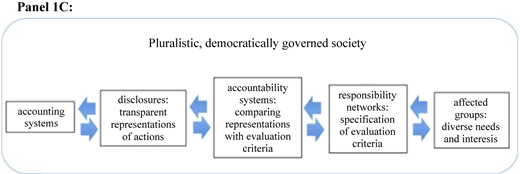
Building on prior work on dialogic accounting (Brown, 2009; Brown and Dillard, 2013) and accountability (Grant and Keohane, 2005; Rached, 2016), Dillard and Vinnari (2019) propose that critical dialogic accounting (CDA) requires the development of “accountability-based accounting systems”. CDA takes the rights and responsibilities of the constellation of constituencies, human or non-human, affected by an account provider’s actions as its starting point and explicitly recognises the mechanisms of power. Accountability is informed by a “terrain of conflictuality” (Alawattage and Azure, 2021). Dillard and Vinnari leverage the concept of agonistic pluralism (Mouffe, 2013) to acknowledge conflicting needs and power dynamics among groups impacted by an account provider’s actions. As distinct from stakeholder engagement, which is initiated by the account provider, accountability-based accounting begins with the identification of interested groups, such as political action committees, NGOs and government bodies, and their information needs. Accountability-based accounting systems would be designed to address the specific requirements of alternative accountability systems. A key element of accountability-based accounting systems is the responsibility network, a subset of interested groups which have a desire to collaborate at a given point in time and/or with respect to a particular shared issue (Dillard and Vinnari, 2019; Tanima et al., 2024). The network represents dialogically constructed sets of issues that provide the foundations for specifying evaluation criteria, and the basis for constructing accountability-based accounting systems (Dillard and Vinnari, 2019). These criteria may be the result of compromise and accommodations and can be temporary rather than permanent (George et al., 2023).
Responsibility networks are not necessarily homogenous or permanent. Groups within the network may have irreconcilable ideological orientations and power differentials and engagements between groups can involve tension and conflict (Tregidga and Milne, 2022). In a critical dialogic process, the accountability system provides a space where the account provider’s representations of its actions and outcomes are compared with the evaluation criteria devised by the responsibility networks. The accounting systems used by the account provider should lead to disclosures that render their actions and outcomes transparent and should be designed to provide information relevant to the specific accountability system (Dillard and Vinnari, 2019). The development of these accountability and accounting systems is interactive as actions and outcomes are revealed and evaluations bring attention to new issues. Components can be revised and learning can take place in the network potentially leading to shifts in alliances or understandings of accountability (Tregidga and Milne, 2022). A pluralistic environment could contain multiple accountability systems consisting of multiple evaluation criteria sets, and multiple, though not necessarily mutually exclusive, accounting systems would also be possible (Dillard and Vinnari, 2019). Potentially responsibility networks can collaborate to produce their own disclosures to hold the account provider to account (Dillard et al., 2024; Tanima et al., 2024).
3.2 Empirical studies
Although the significant body of theoretical work on dialogic accounting has not yet been matched by extensive empirical research (Sorola et al., 2024), work is emerging which provides insights into how dialogic accounting and accountability may manifest in practice. Studies have examined aspects such as dialogic forms of stakeholder engagement (Bellucci and Manetti, 2017; Bellucci et al., 2019; Kingston et al., 2023; Manetti and Bellucci, 2016; Scobie et al., 2020), counter accounts (Denedo et al., 2019; Irvine and Moerman, 2017; Laine and Vinnari, 2017; Perkiss et al., 2021), accountability mechanisms (Dillard et al., 2024; Shivji, 2024), and interactions within the responsibility network (George et al., 2023; Tanima et al., 2024; Tregidga and Milne, 2022). This body of work has highlighted that accounting and accountability systems can make visible issues that are presumed to be uncontestable, politicising them, and give power and voice to traditionally underrepresented groups. However, it also illustrates some of the complexities of dialogic accounting in practice.
Some forms of stakeholder engagement have the potential to be dialogic, such as incorporating stakeholder perspectives in sustainability reports (Bellucci et al., 2019), interacting with comments on social media (Bellucci and Manetti, 2017; Manetti and Bellucci, 2016), launching consultations and submissions (Scobie et al., 2020), and gathering evaluations from beneficiaries/customers (Kingston et al., 2023). However, these engagements are often one-sided, with dissenting opinions rarely represented or discussed (Bellucci et al., 2019). On social media for example, organisations may initially engage in two-way conversations with critical stakeholders but quickly stop interacting when consensus is not reached (Manetti and Bellucci, 2016). Furthermore, patterns of engagement and preferred accountability mechanisms vary between stakeholders and make it difficult to assess whether accountability is discharged (Kingston et al., 2023).
Several studies have utilised dialogic accounting to understand how stakeholders use counter accounts such as reports, videos, online platforms, and campaign material to challenge corporate behaviour and offer alternative perspectives on environmental harm or unethical practices (e.g. Denedo et al., 2019; Irvine and Moerman, 2017; Laine and Vinnari, 2017; Perkiss et al., 2021). In some cases, corporations respond to the counter accounts, but these responses often fail to address stakeholders’ core concerns. Corporations may increase formal disclosures without providing the key data of interest to activists (Irvine and Moerman, 2017), or make only superficial commitments (Denedo et al., 2019). These cases highlight the antagonism that can develop between actors involved in conflicted issues. Fundamental ideological differences between powerholders and activist can prevent activists from achieving their aims and make consensus impossible (Laine and Vinnari, 2017; Irvine and Moerman, 2017). Dominant actors (government actors and industry groups) can dismiss and delegitimise activists’ claims, portraying them as untrustworthy and manipulative, with some lasting success (Laine and Vinnari, 2017).
More recently, several studies highlight the problems of conflict and antagonism within the responsibility network, particularly due to ideological differences and power imbalances (George et al., 2023; Tregidga and Milne, 2022). This can lead to stakeholders being excluded from debate, sometimes because they position themselves as illegitimate and sometimes because they are positioned as such by other actors, for example corporations (Tregidga and Milne, 2022). Not all stakeholders in a responsibility network have equal capacity to make their voice heard or have equal legitimacy (Alawattage and Azure, 2021; Kingston et al., 2023; Tanima et al., 2020, 2023, 2024; Tregidga and Milne, 2022). Power differentials between different stakeholder groups can cause conflict and marginalise certain stakeholders (Tanima et al., 2020, 2023, 2024), for example giving more influence to elites over grassroots groups or vice versa (Tanima et al., 2024). A number of studies highlight how monitoring and enforcement can support effective accountability and empower marginalised groups (Dawkins, 2021; Dillard et al., 2024; Shivji et al., 2024). Dawkins (2021) also highlights that the power of organised labour and their influence over retailers and consumers, established a strong position when negotiating accountability mechanisms (Dawkins, 2021:14). However, Dillard et al.’s (2024) study and further work on the same case by Shivji et al. (2024) highlight that powerholders (large corporate buyers) and accountees (large scale horticultural growers) were able to outsource the responsibility and the cost of holding the accountees accountable to an independent assessment body.
These studies, along with other prior work on MSIs (not necessarily focused on accounting and accountability), give us some insight into what elements of an accountability-based accounting system within or around an MSI might look like. It may include external reports (Fougere and Solitander, 2020) and specifically designed structural mechanisms which incorporate enforcement (Dawkins, 2021; Shivji et al., 2024), public pressure or other factors which result in a shifting of power away from the powerholder (Dawkins, 2021; Dillard et al., 2024). However, given that the development of such accounting and accountability systems is iterative and nonlinear and can contribute to achieving a variety of first order objectives including social justice, equality and sustainability (Dillard et al., 2024), it seems likely that research on MSIs in different contexts and/or with different objectives will add to these insights or surface other elements of these systems.
Collectively, the existing studies on dialogic accounting and accountability in practice call for further research on how dialogic accountability systems develop over time, the accounting needed to support them, and how stakeholders operate and interact in these systems (Dillard et al., 2024; Tanima et al., 2023; George et al., 2023). Some specifically call for research on how multiple stakeholders respond and behave in relation to contested issues (Tanima et al., 2024; Tregidga and Milne, 2022). Most recently, Sobkowiak et al. (2025), in a literature review of accountability and collaborative settings, call for research on accountability in inter-corporate sustainability initiatives (ISIs) and MSIs [1]. The authors note that, to date, little is understood about who these initiatives are accountable to, criteria for evaluation, and disclosure of outcomes. FoodSmart as a multi-stakeholder sustainability initiative in a highly contested industry, and its accompanying accounting and reporting in conjunction with the response and disclosures of external state and civil society actors, provides a useful context to further examine dialogic accounting and accountability within and around MSIs in practice.
4. Research methods
This paper is part of an ongoing project on sustainability in the agrifood sector. Fieldwork for the project began in 2016. The project can be broadly considered a case study. In a similar manner to previous work on accountability the parameters of the case are more difficult to define than a single organisation (Scobie et al., 2020), however it is focused on a particular phenomenon, the FoodSmart initiative, in the specific setting of a national agrifood sector. To gain a rich understanding (Langley, 1999) of the creation and development of the Foodsmart initiative along with the evolving role of key actors and the implications for accounting and accountability, the study employs multiple data sources including discussions with SC staff, NGOs and sector experts, attending SC and industry events and documentary data collection. As part of this approach we also sought to build and continually add to our domain knowledge (Thomson, 2021), in this case knowledge of the agrifood sector, regularly monitoring media reports on the sector and mapping the infrastructure of global, transnational and national accounting frameworks in the agrifood sector. Building our domain knowledge allowed us to consider the broader social, political and environmental context in which the FoodSmart initiative has evolved, and the role of the national government, the SC, several NGOs and the EPA in the development of the FoodSmart initiative. Data collection and analysis for this paper focused on publicly available documentary data from several sources.
4.1 Documentary data
The primary source of data for this paper are publicly available documents relating to FoodSmart produced by the SC and other actors, such as the national government, EPA, and NGOs. The Appendix provides a list of these documents. The FoodSmart documents include reports, charters, strategy statements, guidance on target setting and the tier and credit systems, presentations, press releases and research conducted by the SC with external collaborators. National and supranational agrifood sustainability policy, indicators and measurements, EPA reports, press releases, environmental indicators and NGO reports were also collected.
Four FoodSmart reports published between 2015 and 2021 were the starting point for the data collection and analysis. These reports were carefully and repeatedly read and coded by both researchers. To develop the coding scheme, a range of coding instruments in the literature were reviewed, including Ernst and Ernst (1978), Gray et al. (1995), Hackston and Milne (1996) and Hooks and Van Staten (2011), along with an initial loose coding of the FoodSmart reports by both authors. Combining these elements, a coding framework was developed in an iterative manner and established in NVivo. The coding framework incorporates many elements familiar in the literature, e.g. news type (Hackston and Milne, 1996), environmental and social topics (Gray et al., 1995), along with codes relating to aspiration, accounting processes and practices, performance and codes specific to the FoodSmart case study, e.g. farm and member case studies. Once the coding framework was established both authors coded the reports independently. The NVivo files were then merged. Several discussion sessions on comparing coded data and consolidating codes followed. These sessions focused on themes and patterns in the data, disagreements and consolidating tree and sub-nodes to arrive at a final data set for analysis and to support confidence in inter-coder reliability. Along with the coding of the reports, the other FoodSmart documentation (charters, guidance on target setting, etc) was carefully read and used to understand and analyse how the SC developed the scheme and the accounting and reporting process.
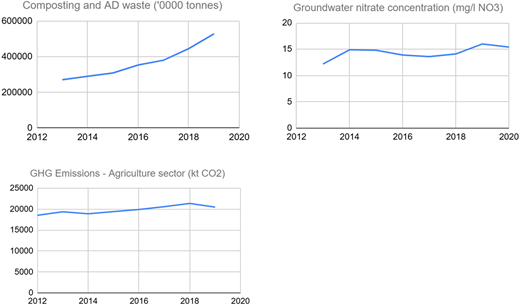
In addition, EPA documentation was gathered through a search of all publicly available reports on the EPA website between 2012 and 2021. The EPA data allowed us to examine sectoral reporting from an alternative source and to compare data at a national level with the emerging FoodSmart data. Data was gathered for a range of environmental indicators monitored by the EPA which related directly to the agrifood sector, including waste, GHG emissions and water quality. The GHG emissions data is directly connected to global indicators through the UNFCCC reporting process. Quantitative data was identified and extracted from the EPA documents and collated in Excel. This data was used to prepare Figure 3 (see section six).
NGO documentation was gathered through periodic review of the websites of the largest national environmental NGOs, with a focus on agrifood. Documentation was also gathered relating to national and supranational agrifood policy. These documents were carefully read and discussed by both authors and used to inform the analysis of the case. National print and broadcast media were also monitored and discussed on an ongoing basis by the authors to keep abreast of media sentiment and commentary on the scheme. This provided a deeper understanding of the agrifood industry, the national performance measurement infrastructure and the role and aims of the FoodSmart scheme. Data analysis was an iterative and continuous activity throughout the study (Coffey and Atkinson, 1996) and involved extensive discussion between the authors and circling back and forth between the data and relevant literature (Gioia et al., 2012).
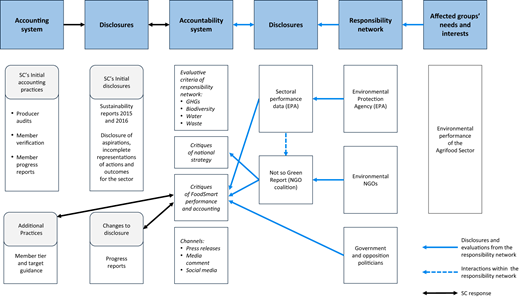
Extensive notes and diagrams were prepared throughout the analysis process to understand the chronology of the case, map the actors and understand their activities. These notes and diagrams supported the construction of a case description (Denzin, 1994; Patton, 2002) allowing us to interpret and reinterpret evidence and understand how relationships and issues developed and evolved over time (Llewellyn, 1999; Scapens, 2004). This case description informed the following case context section. The authors met regularly to discuss the data, reread the documents and consider and reflect on the theoretical framing for the paper. As our analysis matured the framing for the study focused on dialogic accounting and accountability. At this stage the analysis iterated between existing theorisations of dialogic accounting and accountability and the data and was focused on examining the role of the SC, FoodSmart’s accounting and disclosure, and outside actors’ sustained efforts to hold the scheme to account for the sector’s environmental impacts. We built on Dillard and Vinnari (2019)’s representation of how accountability-based accounting systems might work (Figure 1) to illustrate the roles of the SC and the responsibility network and key actors within it, namely the EPA, environmental NGOs and politicians, in the emerging accountability-based accounting system (Figure 2 - see section six). We then reflected on and had final discussions on the data, the theoretical and empirical literature on dialogic accounting and the literature on MSIs to inform the narrative on FoodSmart’s accounting and accountability and the discussion of the case presented in Sections Six and Seven.
5. Case context
FoodSmart is a national sustainability scheme for the agrifood sector in a European country established in 2012. Agrifood is a significant industry for this country, accounting for 7% of total employment and 7% of Gross National Income and is closely linked with the social, cultural and environmental identity of the country. It is the country’s largest indigenous sector. Almost half of the largest indigenous companies are involved in food and beverage manufacture, retail and export. The sector accounts for 9% of annual merchandised goods exports and the marketing and positioning of the sector by the SC is targeted at the export market. Emissions from agriculture are 38% of the country’s GHG emissions, largely due to methane emissions from livestock production.
The creation of FoodSmart was deeply intertwined with the development of the country’s national agrifood strategy. Between 2008 and 2010 the agrifood ministry produced its first cohesive national strategy, developed by a multi-stakeholder committee that included representatives from industry, producer organisations, industry bodies, academics and the Chair of the SC. This strategy was founded on three pillars: “Smart”, “Green” and “Sustainable growth”. The Green pillar was focused on how cultivating a green image could help to promote the industry but also contribute to the country’s overall environmental agenda, reduce costs for producers and companies and conserve biodiversity (National Agrifood Ministry, 2010). Ambitious growth targets of increasing primary output by 33% and exports by 42% were included for the sector. There were no specific emissions or sustainability targets in this strategy. In a response to a consultation on the strategy, the EPA noted that it had not been subject to a Strategic Environmental Assessment and projected that if the growth targets were met, it would result in a 7% increase in agricultural GHG emissions by 2020 (EPA, 2012).
In conjunction with this the SC carried out a survey of trade customers’ sustainability requirements in 2008. It also conducted a 2009 consumer trends survey which showed sharp increases in consumer awareness of terms such as “carbon footprint” and “food miles”. The SC began to develop carbon footprint models for producers in consultation with external stakeholders. It included sustainability as a priority for the first time in its 2009–2011 statement of strategy. When the FoodSmart scheme was launched internationally in 2012, the country’s prime minister said:
[Country] has embarked upon an innovative sustainability development programme for the food and drink industry. We have not only a clear vision of where we should be going but the wherewithal to get there. [FoodSmart] demonstrates the commitment of [nationality] food and drink manufacturers to operating sustainably and we believe it is the starting point for [country] to become a world leader in sustainably produced food and drink. (SC, 2012).
The SC’s statement of strategy 2012–14 echoed the prime minister’s aspirations for the FoodSmart scheme. These early aspirations included both an ability to produce food sustainably and to demonstrate this to trade customers. The SC also set out an aspiration that “every farm and food manufacturing business throughout [country] signs up to the sustainability agenda, making measurable commitments to producing in a sustainable manner” (SC, 2015, p. 3). It identified four milestones for the scheme: engaging both producers and manufacturers, measuring what matters, using international standards and independent verification and continuous improvement (SC, 2017). The SC set a target for scheme membership - for 100% of the country’s exports to be FoodSmart certified by 2016 - but did not set quantitative targets for environmental or social indicators. The SC was successful in quickly growing the membership of the scheme. By 2015, 500 companies had signed up to the scheme and over 90,000 producers had been audited. The sector overall was extremely successful in meeting growth and export targets.
Since the start of the scheme media, policy and civil society attention to the sustainability impacts of the agrifood industry have increased significantly. In addition, members of the scheme (large and small commercial organisations and primary producers) are all subject to economic pressures, for example, the expectations of shareholders for listed companies or price pressure on producers from large retailers. New agrifood policies, in particular the EU’s 2020 Farm to Fork and Biodiversity strategies, may have significant economic impacts for producers. These types of contradictory, societal, economic and institutional pressures could lead to tensions and conflicts between the multiple actors involved in FoodSmart and external stakeholders engaged with sustainability in the agrifood sector. Hence the case provides an opportunity to examine how accounting and accountability is playing out in this contested arena.
6. FoodSmart’s accounting and accountability
The concept of accountability-based accounting systems provides a useful theoretical stepping off point to examine the role of the SC, FoodSmart’s accounting and disclosure, and outside actors’ sustained efforts to hold the scheme to account for the sector’s environmental impacts. Figure 2 provides a representation of dialogic accounting and accountability for FoodSmart. The figure depicts the criticisms of FoodSmart by the responsibility network and the response of the SC, along with interactions within the responsibility network.
6.1 FoodSmart’s accounting and disclosures
When the scheme was first developed, the SC established a standardised planning, target setting, reporting and review process for scheme members that remains in place to date. New members are verified through the initial planning and review process. To start they are required to submit a draft sustainability plan using the SC’s online template. The SC provides feedback on the plan and several revisions can follow, before an external assurance provider verifies the final plan. The SC also puts in place annual reporting and verification requirements for company members and sets out required targets in certain topic areas in its charters. It works with members to revise their targets annually and periodically revises the metrics for the scheme.
For producers, the SC already had a well-established farm quality assurance scheme. It added new measures (grazing season, fertiliser feed, manure, housing, chemicals, energy, water and biodiversity) to this scheme and developed a feedback system and report for farmers. The system combines data from the farm assessments with information on herd profile and production information, and the report outlines the farm’s current performance relative to its peers.
FoodSmart’s disclosures began in 2015 with the publication of its first sustainability report. This report concentrates on producers and manufacturers. A small number of retailers and food service providers are included in the 2016, 2020 and 2021 reports. In line with the national agrifood strategy and the SC’s own strategy the first two FoodSmart reports contain extensive disclosure of their aspirations or what can be termed aspirational talk. This involves expressing intentions, putting forward plans and articulating visions (Busco et al., 2018; Christensen et al., 2013; Gibassier et al., 2018). The reports state and restate the ambition for the scheme to make the country a world leader in sustainable agriculture. The overall tone of these reports is extremely positive including multiple good news case studies of producers and member companies and photographs of green fields, animals, farmers and a famous actress wandering through a meadow. The scheme is consistently presented as a successful SC initiative. There is little mention of any challenges or difficulties associated with establishing and administering FoodSmart, and the challenges facing members are discussed at a general, global level.
In contrast with national policy and its strategy statement, the SC sets out quantitative aspirations for the scheme in the 2015 report in relation to GHG emissions at producer level, and cost savings and environmental performance at manufacturer level. The report features projections for 2017 of reductions in emissions, energy and water use by members, for example, predicting a drop in energy use by 4% between 2014 and 2017, and 1.6 m cubic metres of water saved by 2017. These quantitative aspirations are supplemented with nature- focused narrative aspirations, such as this extract from the 2015 report:
A visitor to the … countryside will see hedgerows alive with flowers, butterflies and bees … Gullies and streams will feed clear waters into river systems where trout and salmon populations are growing strongly. (SC, 2015, p. 103)
The SC aggregated and collated information from its accounting practices for FoodSmart’s first two sustainability reports. For example, the on-farm data, combined with the SC’s carbon models, are used to disclose some limited aggregate carbon data. The reports in 2015 and 2016 include comparable measurements and qualitative information on several sustainability topics, including energy, emissions, water, waste and biodiversity. They also disclose some absolute, as well as intensity, measurements at a multi-entity level (emissions, water use, waste and energy use for verified FoodSmart members). However, sustainability performance for the sector was not in line with the original aspirations set out by the SC (see Figure 3 in the following section).
Yet the 2015 national agrifood strategy included even more ambitious growth and export targets (an 85% increase in export growth and 23,000 additional jobs by 2025). A chapter on sustainability was included but the approach was one of “sustainable intensification” as the sector grew (National Agrifood Ministry, 2015). Further development of the FoodSmart scheme was a key recommendation, along with “improvement of the environmental footprint of sector [sic]” (National Agrifood Ministry, 2015), but no quantitative sustainability targets were set.
6.2 Responsibility network
In response to the scheme and its reporting a responsibility network of state and civil society actors emerged. These actors share a concern about the environmental performance of the FoodSmart scheme and the agrifood industry more broadly. Several environmentally focused NGOs became very critical of the scheme’s performance, including some who had initially been supportive. The EPA also emerged as a consistent and significant actor in the network and at one point senior government and opposition politicians lent their voices to the network as well. The NGOs within this network actively worked together to create their own disclosures and evaluate FoodSmart on environmental criteria. In doing so they drew on the work of the EPA. However, ideological differences were also apparent between the actors. For example, in 2023 the EPA posted a tweet suggesting that people reduce their meat consumption. Large producer interest groups immediately criticised the tweet, calling it a “blatant anti-meat crusade”, and asked the EPA to delete it. The EPA did so and was then accused by environmental NGOs of bowing to pressure from industry lobby groups.
6.3 Responsibility network’s disclosures
Members of the responsibility network have produced a variety of disclosures focused on the sector’s environmental performance. In 2016 two large coalitions of NGOs, representing over 50 social and environmental organisations, published the “Not So Green” report to “challenge government and industry claims regarding the sustainability of … agriculture” (NGO Coalition, 2016). The report drew attention to performance issues such as declining biodiversity and water quality and noted that the 2010 and 2015 national agrifood strategies were compiled by industry stakeholders. It also highlighted that the country was less efficient than the European average for GHG emissions per calorie of beef and dairy production. This report (and a follow up submission to the consultation on the 2020 national agrifood strategy) cites EPA data on emissions and air and water quality when criticising FoodSmart and national policy.
The EPA produces annual environmental data for multiple sectors including agrifood. Figure 3 illustrates some key environmental indicators for the agrifood sector based on EPA data for 2012 to 2020. These are sectoral GHG emissions and national figures for nitrate concentration in groundwater and composting and anaerobic digestion (AD) waste. Agriculture is the primary source of nitrate in groundwater and AD waste. These measurements indicate that, despite the efficiency gains disclosed in the FoodSmart reports, environmental performance in the sector is not moving in the desired direction. For example, EPA data shows that GHG emissions from agriculture increased by 10% between 2015 and 2022.
6.4 Creating an accountability system
Using their own disclosures the responsibility network has intensified and broadened their criticism of both the scheme and the sector as a whole over the years of the study. They have consistently sought to evaluate FoodSmart based on environmental criteria including GHG emissions, nitrates, waste, water and air quality and biodiversity. The responsibility networks have used both traditional media channels and their own online and social media channels to facilitate debate about the scheme. For example, in 2017 three verified FoodSmart members featured on the EPA’s worst polluters list. This list ranks companies subject to EPA licensing based on six months’ worth of data on complaints, incidents, compliance investigations and non-compliances with the licence. Companies on the list are subject to increased enforcement action by the EPA. National print and broadcast media covered the appearance of these FoodSmart members on this ‘name and shame’ list. An environmental NGO described the scheme as “a smokescreen for greenwashing the significant environmental problems which we face” and called for the scheme to be cancelled and “exposed for the sham that it is” (Online news outlet, 2017).
In 2018 an NGO report labelled the country as one of Europe’s climate action “laggards”, prompting two senior politicians (a Member of the European Parliament (MEP) from the leading government party and a former Minister for the Environment), to question the national agrifood targets and the credibility of FoodSmart. The former Minister, then in opposition, commented that FoodSmart could be perceived internationally as “fake news, fake story, and fake brand” (Online news outlet, 2018). The MEP suggested that growth targets might have to be revised downwards, noting that FoodSmart presented a contradiction, promoting the country’s green image alongside poor climate action performance.
6.5 Changes to FoodSmart’s accounting systems and disclosure
By the end of 2018, a senior manager at the SC revealed that FoodSmart was undergoing a review, both of standards and communications (Online news outlet, 2018a). The first visible change in the accounting practices for the scheme is in the 2020 and 2021 sustainability reports (there were no reports between 2016 and 2020). The title of the report in 2020 is changed from a Sustainability Report to a Progress Update. In this report and the 2021 report we see a move away from disclosure of actual performance. No absolute emissions figures for either producers or manufacturers are reported. There is also a shift in disclosure from information on both target setting and performance on targets, to information on target setting only. Quantitative environmental aspirations also decline in these reports. In the 2020 report, the only quantitative aspiration expressed is that 80 new members are expected to join the FoodSmart scheme in a given year.
In addition to the changes in reporting, the SC also made significant changes to the accounting practices for members. The SC developed guidance on target setting for members between 2021 and 2023 on packaging, emissions, biodiversity, diversity and inclusion, water and food waste. It also introduced a revised system of annual review and verification of member targets, including a new credit scoring system, and a new tiered membership structure in 2022. Multiple new guidance documents for members were published in 2023. The tiered structure determines how many targets a member must set in its annual sustainability plan – eight targets are required for the largest members, four for the smallest. Tier 1 and 2 members are required to set a GHG emissions target covering Scope 1, 2 and 3 emissions. The annual review process now involves a credit scoring process carried out by independent verifiers. This allows for members to be penalised for poor environmental performance.
If a company does not achieve a satisfactory score on each of its mandatory targets, based on its tier, it is required to submit a plan to remedy this. This plan must be approved by the independent verifier. If it fails to do so its membership can be revoked. New sanctions were also added for breaches of legislation and regulation. Membership can be revoked if a company has “irrevocably breached national legislative or regulatory requirements” (SC, 2023, p. 13). If a member fails to disclose to the SC that there has been a breach of its EPA licence its membership can be suspended and points can be deducted from its credit score. In addition, new members from 2022 onwards must complete a materiality assessment template developed by the SC. Existing members must also submit this or their own materiality assessment to the independent verifiers.
6.6 Continued criticism and evaluation from the responsibility network
However, strong criticisms of the scheme continued from NGOs and increased from the EPA. In a submission to the agrifood ministry in 2020, the EPA provided some of its strongest critique to date of FoodSmart:
Such quality standards play a valuable role and do support efficiency ambitions, however it is clear from examination of the science that the environmental sustainability of the sector as a whole is largely not supported by the evidence. And the case is weakening year-on-year as polluting air emissions increase and water quality further deteriorates. (EPA, 2020).
A leading environmental NGO further commented that the scheme should be “put out to grass” (Online news outlet, 2020). In response the Chair of the SC spoke to the national media to defend FoodSmart, stating that the scheme was evidence-based. 2020 also saw the beginning of the agrifood ministry’s consultation process for its new national agrifood strategy. The same coalition of NGOs who produced Not So Green in 2016 published an updated report in response to the consultation. They recommended that FoodSmart be discontinued and challenged its methodology for calculating beef carbon footprint.
The EPA remains concerned at the number of FoodSmart members on its annual list of biggest polluters (Online news outlet, 2023), and about water quality and GHG emissions. It continues to highlight the adverse impacts of the sector through its reports and press releases. A recent assessment and press release (EPA, 2023) on the increase in national ammonia emissions highlighted that growing livestock numbers is the key driver of this increase. It also noted that the abatement measures taken by producers (increased use of low emission slurry spreading) were not sufficient to counteract the impact of this overall growth. An environmental NGO has also begun publishing an annual environmental report card grading the government’s progress on its sectoral climate targets. In 2024, the Agriculture and Forestry sector was graded “poor” (5/10). Another NGO has an ongoing legal case against the government arguing that it is failing to protect the country’s waterways from agricultural pollution. Both NGOs are prominent members of the coalitions that published the Not So Green report.
7. Discussion
This paper analyses accounting and accountability within and around a sustainability focused MSI in the agrifood sector over time. It examines how a semi-state actor engaged with environmental sustainability in the agrifood industry and created, perhaps inadvertently, avenues for greater sectoral accountability. In addition, it provides insight into the role of civil society actors in publicly challenging the performance of the scheme and adds to our understanding of how such actors can enhance accountability and progress towards systemic environmental sustainability. In examining this phenomenon, the paper draws on and adds to existing theorisations of dialogic accounting and accountability and the growing body of empirical studies in this area.
7.1 Dialogic accounting and accountability in an MSI
The case demonstrates that in response to the creation of FoodSmart a responsibility network, made up of a subset of NGOs and a state agency, formed around an issue of shared interest. These actors have been vocal and consistent in their criticism of FoodSmart and differences between the actors have also surfaced during the case study. This lends further support to arguments that responsibility networks provide the foundations for specifying evaluation criteria and the basis for constructing an accountability system. Also, in line with prior work the case demonstrates that there can be disagreement as well as consensus within the network and intra-network engagements can involve tension and conflict (see for example, Dillard and Vinnari, 2019; Dillard et al., 2024; Tregidga and Milne, 2022; Shivji et al., 2024; Tanima et al., 2024). In addition, the development of the accountability-based accounting system is interactive and ongoing as the actors’ experience with the system leads to the revision of different components (Dillard and Vinnari, 2019). The narrative demonstrates that the responsibility network criticised and challenged the SC’s initial reports. However, the revisions by the SC to its reporting did not lead to the actions and outcomes of the scheme becoming more transparent. Instead, the narrative demonstrates that the SC provided reduced disclosure in the subsequent reports. Modestly extending the work of Dillard and Vinnari’s (2019), Figure 2 provides a visual representation of dialogic accounting and accountability for FoodSmart.
The narrative also demonstrates that the responsibility network sought to use the accountability system not just to compare the account provider’s disclosures, actions and outcomes to the evaluative criteria (Dillard and Vinnari, 2019) but to evaluate the sector as a whole and related national policy. We see this as a potentially important extension of the accountability space. The responsibility network takes a systemic view of the issue in question, as Guthrie et al. (2022) advocate, and this allows for the actions and outcomes of multiple powerful actors to be evaluated. In particular, it acknowledges the significant impact of national policy on the sustainability performance of the sector. Overall, the narrative demonstrates the contrasting and multifaceted role that accounting practices can play in an accountability-based accounting system. The responsibility network used its disclosures to challenge perceived deficiencies in FoodSmart’s performance and reporting, and the SC responded with revised target setting and audit practices but reduced disclosure.
In addition, prior work has suggested that responsibility networks have a desire to collaborate at a given point in time and/or with respect to a particular shared issue and are not necessarily permanent (Dillard and Vinnari, 2019). Their evaluation criteria, the basis for constructing an accountability system, may also be temporary rather than permanent. We would not argue that the network and evaluative criteria in this case are permanent, but they have endured and remained relatively stable since the responsibility network’s first disclosures in 2016, despite the tensions and conflicts involved. The make-up of the network has also remained relatively consistent over time except for the politicians who added their voice to the debate at a particular point in time. This could be due to the nature of the issue involved. Environmental sustainability in the Agrifood sector is a complex, evaluative and uncertain (grand) challenge that arguably requires prolonged engagement.
The narrative also demonstrates further differences between the theorisation of accountability-based accounting and the empirical reality of this process in and around an MSI. Dillard and Vinnari (2019) and Sobkowiak et al. (2025) suggest that the accounting systems used by the account provider should be designed by the account provider/MSI to provide information relevant to the specific accountability system. This system should lead to disclosures that render their actions and outcomes transparent. The case demonstrates that the accounting system put in place by the SC for the scheme was a mixture of new practices and existing systems (farm audits). The new practices were developed with some input from a small section of external stakeholders who provided expertise on multiple environmental issues. There was no evidence to suggest that this process was triggered by the identification of interested groups and substantive engagement with their information needs (beyond the initial surveys of trade customers and consumers). In addition, the disclosures that came from the SC were initially focused on the aspirations of the scheme and provided incomplete representations of the actions of the members of the scheme. Instead, the members of the responsibility network sought to meet their informational needs and establish the evaluative criteria for the scheme through their own disclosures. These disclosures formed a critical part of the accountability system established by the responsibility network. This provides empirical support for Tanima et al.’s (2023) suggestion that stakeholders in a responsibility network may form broader alliances to develop accounts and adds to our empirical understanding of how such accountability systems develop.
Sobkowiak et al. (2025) also suggest that although multi-stakeholder governance structures, including actors that are different from each other (often separated into business, NGO and government/regulatory actors) may require a multifaceted accountability system, there is a greater need for robust external accountability to maintain stakeholder trust and legitimacy in single-stakeholder models. This study demonstrates that there may be as much need for robust external accountability for MSIs, perhaps including enforcement such as sanctions (Dawkins, 2021; Shivji et al., 2024), particularly where the governance arrangements include actors with shared economic interests (in this case government/regulatory and business actors) and exclude others (NGOs).
Given these differences, is the process of accounting and accountability observed in this case still a form of dialogic accounting and accountability for an MSI? We would argue that although it may not exhibit all of the elements set out in the literature on CDA, it is still a dialogic process. It is the messy reality of such a process rather than the normative (and probably ideal) process that has been theorised in the literature. In particular, the accountability system does not take as its starting point the identification of interested groups and engagement with their information needs. Rather the responsibility network had to insert themselves and their needs and interests into the process. However, they have succeeded in creating an accountability system that includes their evaluative criteria and fosters public debate on the environmental impact of the sector. In this way the responsibility network has forced the recognition of diverse ideological positions, contested calculations, and resisted a form of monologism (accounting and disclosures that did not adequately address their needs and interests) (Brown, 2009). Given the reluctance and/or inability of corporations and ISI/MSIs to engage substantively with sustainability and sustainability accounting and accountability (deBakker et al., 2019; Kaufmann and Danner-Schröder, 2022; Tregidga and Laine, 2022) this may be a very important avenue for state and civil society groups to seek greater accountability for environmental sustainability. Thus, the study adds to our empirical understanding of the adaptable and context-specific accounting practices that can evolve within and around an MSI (Sobkowiak et al., 2025). Using the lens of dialogic accounting and in particular the concept of accountability-based accounting allows us to consider the role of state, semi-state and civil society actors in responding to the challenge of environmental sustainability in the agrifood section. The following sections focus further on the role of the SC, the NGOs and the EPA in this case.
7.2 The role of the SC
The narrative demonstrates the nuanced and evolving role played by the SC in its engagement with sustainability in the Agrifood sector. The SC’s initial engagement is not dissimilar to how individual corporations are known to engage with sustainability (e.g. Cho et al., 2010, 2015; Gray, 2010; Milne et al., 2006; Marshall et al., 2023). It established FoodSmart in response to external prompts in the form of governmental policy and customer demand. The SC then uses aspirational talk to express both environmental and commercial intentions, plans and visions in its strategy and accounting practices (Busco et al., 2018; Christensen et al., 2013). There is also a level of performativity (implementation of practices) that accompanies the environmental aspirations. The SC implements both policies and accounting practices along with some measures to encourage compliance and penalise poor practice.
Our analysis demonstrates that, in the case of the FoodSmart scheme, performativity and performance are not the same (Bromley and Powell, 2012). Over time it becomes clear that the scheme’s environmental aspirations are not achieved. Given the economic pressures in the sector and national growth targets for the industry the policies and accounting practices implemented by the SC were insufficient to address the grand challenge of sustainability in the agrifood sector. Initially, the SC attempts to mediate this gap through reporting. The 2015, and to some extent the 2016 reports include both qualitative and quantitative environmental aspirations and disclose progress towards these aspirations in the form of some data on the collective environmental performance of manufacturing members. However, after extensive criticism from the responsibility network a period of revision of the accounting system and disclosures followed.
This period of revision involved both changes to the aspirations for the scheme and to the accounting practices. The publicly reported aims of the scheme have shifted away from achieving and measuring environmental performance and lean more towards enhancing the sector’s reputation with trade customers. The SC no longer attempts to mediate the gap between its original aspirations and its environmental performance in its 2020 and 2021 reports. Aspirations about the environmental performance of the scheme are largely absent, reporting of absolute performance data ceases and only limited efficiency data is disclosed. Instead, the reporting is focused on the disclosure of information on target setting. In line with Power’s argument that data collection and measurement can become ends in themselves (Power, 2021), arguably the revised accounting practices (target setting, verification and review) have become the (reported) focus of the scheme, rather than its environmental aspirations and performance.
However, it also needs to be acknowledged that in creating and accounting for the scheme the SC has made the sector visible, knowable and calculable (Miller, 1994, 2004). Prior work has demonstrated that the SC used accounting practices in the form of planning, verification, target setting, annual review and reporting to create a membership and a reporting boundary around FoodSmart (Maughan and O’Dochartaigh, 2023). It became an account provider for a significant proportion of the sector. The EPA and NGOs who traditionally engage with government policy now had an opportunity to monitor and evaluate the scheme. In this way the SC created an avenue for other actors to seek greater environmental accountability from the sector. The SC has also taken steps to build enforcement mechanisms into the scheme, recently introducing a range of penalties and sanctions if scheme members demonstrate poor environmental performance or fail to comply with environmental regulations.
The outcomes of the scheme’s revised practices are yet to come. In parallel with the changes to the scheme there is a new national regulatory framework, the 2021 Climate Act. This act includes national emissions targets of a 51% reduction by 2030 and net zero by 2050. It also makes provisions for sectoral ceilings (finalised in 2022) and rolling five-year carbon budgets as a pathway to these targets. These give each sector, including agriculture, its own carbon budget and emissions reduction targets. For the first time the national agrifood strategy, published in 2022, contained a quantitative emissions reduction target for the sector - a carbon neutral food system by 2050 with “verifiable progress” by 2030 - alongside a slightly less ambitious export growth target of 50% by 2030. Given these changes and the changes to supranational policy and accounting, these revised practices could lead to better environmental performance in the sector. However, increasing producer concern about EU regulation, the impacts of climate change and extreme weather on production, and protests by producers about regulation and economic challenges mean the sector remains volatile and contested.
7.3 The role of NGOs and EPA
The paper also demonstrates that external actors and data have a critical role to play in challenging forms of organising and accounting for sustainability at a multi-entity as well as an organisational level (Boedker et al., 2020) and provides insight into how they do so. In line with Dillard and Vinnari (2019) and Tregidga and Milne (2022) a variety of groups with a shared interest in the environmental performance of FoodSmart and the sector as a whole coalesced into a responsibility network. The sector and scheme’s lack of environmental performance and the scheme’s practices (standards and carbon accounting methods) are continually critiqued. In conjunction with this the NGO actors strongly and persistently criticise government policy for the sector and highlight the conflict between sectoral economic growth targets and environment aims.
Overall, these actors have played a crucial role in creating a form of dialogic accounting and accountability for the agrifood industry. They have sought and established a greater voice and agency in defining accountabilities that include their values, assumptions, knowledge and approaches to change (Bebbington et al., 2007; Brown et al., 2015; Tanima et al., 2023). They developed and applied their own disclosures and their own evaluative criteria. Through debate and democratic forums (Brown et al., 2015) including traditional and online media channels, they evaluated the FoodSmart scheme and accounts of its performance. They incorporated and prioritised criteria that focus on the environmental performance of the scheme and/or the sector in this evaluation. On this basis they rejected the disclosures provided by the SC and sought accountability for the outcomes of the scheme instead. In doing so they prompted the SC to reform the practices of the scheme. More broadly they sought to have a voice in policy making for the scheme and industry. In this way these actors refused to be marginalised and silenced and established themselves as having a role to play in enhancing accountability processes and seeking systemic environmental sustainability in the agrifood industry.
8. Conclusion
This study extends current theorisations of dialogic accounting and accountability to an MSI that emerged in response to the grand challenge of environmental sustainability in the agrifood sector. The study addresses calls to examine sustainability accounting and accountability in MSIs in contested arenas (Sobkowiak et al., 2025), as well as in forms and spaces other than corporate reports and press releases (Tanima et al., 2024; Tregidga and Milne, 2022). It also responds to calls to explore the role of diverse actors in enhancing accountability for environmental sustainability (Guthrie et al., 2022). The study examined the evolution of the FoodSmart sustainability scheme and its accounting systems and disclosures over an extended period, alongside the disclosures and evaluations from a responsibility network of NGOs, the EPA and others. The scheme made the sector visible and to an extent calculable. In this way, the SC inadvertently created an avenue for greater sectoral accountability, allowing civil society actors to enter this space. These actors created an accountability system that includes their environmentally focused evaluative criteria and fostered public and political debate on the sector. This space proved volatile, involving conflict and tension between different groups with both common and divergent aims.
The case provides a nuanced view of the dynamic and iterative nature of dialogic accounting and accountability in action and highlights a number of aspects that contrast with prior work. The SC used a mix of existing accounting practices and new methods for its accounting system, this contrasts with the idea of creating dialogic accounting practice to address specific accountability needs (Dillard and Vinnari, 2019; Sobkowiak et al., 2025). The disclosures that followed were incomplete and focused on aspirations rather than performance. In response the responsibility network created their own disclosures to challenge and critique the scheme’s performance. They also sought to extend the accountability system to include the sector as a whole and government policy. The disclosures and action of the responsibility network may have catalysed changes in the account provider’s accounting systems and disclosures, but this did not lead to more complete representations of action, as previously theorised (Dillard and Vinnari, 2019). Finally, despite tensions and conflicts within the responsibility network it has remained relatively stable and endured for the life of the study.
The study suggests some avenues for further work. This paper is focused on the role of the SC and environmentally focused external actors in the evolution of an MSI. However, the complex and interconnected nature of sustainability in the agrifood sector means that other external actors, in particular farmers, producers, large cooperatives, producer associations and large agrifood corporations, have a significant role to play in the scheme and the industry. The media, both traditional and social, also has a role to play in fostering debate in the sector and contributing to disclosures (Tregidga and Milne, 2022). The role of these actors in enhancing or blocking progress towards systematic environmental sustainability in the sector needs to be examined.
In addition, several studies have highlighted the importance of the mechanisms of power, changing power dynamics and the politicisation of the accountability process (Dawkins, 2021; Dillard et al., 2024; Dillard and Vinnari, 2019; Shivji et al., 2024; Tanima et al., 2024; Thomas and Anner, 2023). Although cognisant of the power relations within this sector, power dynamics were not the focus of this study but considering these ideas in future work on MSI accountability, including the FoodSmart case, is likely to be important. Accountability also requires monitoring and the ability to impose consequences (Dillard et al., 2024; Dawkins, 2021; Shivji et al., 2024). Future research could also explore the role of national and supranational policymakers in developing incentives and sanctions which influence MSIs’ behaviour and disclosure. For example, in the agrifood sector legislation such as the EU Nitrates, Water and Habitats directives incorporate sanctions for multiple actors in the agrifood sector. What role can such sanctions play in strengthening environmental accountability in this sector?
This case study and the expanded model of dialogic accountability (Figure 2) could also inform the approach to data collection and the analytical framework of new empirical studies that seek to advance our understanding of how dialogic accounting and accountability can help to address grand challenges in other sectors and contested arenas. Additionally, it could inform reflections on existing bodies of work, for example ongoing debates in the MSI literature on outcomes, impact and accountability (deBakker et al., 2019; Dentoni et al., 2021; Utting and Zammit, 2009). In this regard, considering the work of Sobkowiak et al. (2025), along with this study seems particularly relevant. Sobkowiak et al. (2025) provide a useful framework for considering a variety of factors, including an MSI’s/ISI’s governance approach, the nature of its collaboration, and its mechanisms and attributes, in shaping accountability systems.
Finally, for practitioners, NGOs and policymakers, the findings illustrate the value of accounting practices and disclosures which go beyond the corporate entity. They can form part of an overall process of dialogic accountability that enables responsibility networks to hold a sector or part of a sector to account for their sustainability impacts and deficiencies in performance. In this way civil society actors can support progress towards enhanced environmental sustainability in a sector. Advances in data capture have supported the development of multiple new mechanisms such as public databases, social media bots and performance trackers which help civil society to interrogate corporate and industry performance on sustainability (George et al., 2023). We encourage accounting scholars to consider how their research activity can support these forms of accounting and accountability and the actors who seek to hold companies and industries to account.
The authors are very grateful for comments provided by the participants and discussant on an early draft of the paper at the 14th Interdisciplinary Perspectives on Accounting Conference, Royal Holloway University of London, July 2024. We would also like to thank the two anonymous reviewers and the editor for their constructive and insightful comments.
Appendix
Documentary data
| 1. Agrifood policy |
|---|
| European Commission (2019), The European Green Deal, European Commission, Brussels European Commission (2020), A Farm to Fork Strategy for a fair, healthy and environmentally friendly food system, European Commission, Brussels European Commission (2020a), EU Biodiversity Strategy for 2030: Bringing nature back into our lives, European Commission, Brussels European Commission (2021), The Common Agricultural Policy at a glance, Retrieved: https://ec.europa.eu/info/food-farming-fisheries/key-policies/common-agricultural-policy/cap-glance_en National Agrifood Ministry (2010), National Food Policy 2020, Agrifood Ministry National Agrifood Ministry (2015), National Food Policy, Agrifood Ministry National Agrifood Ministry (2020), Climate and Agrifood Report Agrifood Ministry National Agrifood Ministry (2021), National Food Policy 2030, Agrifood Ministry |
| 2. FoodSmart scheme |
|---|
| Reports |
| SC (2015), FoodSmart Sustainability Report 2015, SC SC (2016), FoodSmart Sustainability Report 2016, SC SC (2020), FoodSmart Progress Update Report, SC SC (2021), FoodSmart Progress Update Report, SC |
| Target, tier and scoring guidance |
|---|
| SC (2021), Packaging Target Guidance, Pathways to the Circular Economy, SC SC (2021), Emissions Target Guidance, Pathways to Net Zero SC SC (2021), Diversity & Inclusion Target Guidance, Pathways to Developing a D&I Strategy, SC SC (2021), Biodiversity Target Guidance Pathways to Nature Restoration and Resilience, SC SC (undated), Water Target Guidance Pathways to Water Conservation, SC SC (2023), Food Waste Target Guidance Pathways to Food Waste Prevention, SC SC (2023), Tier 1, Guidance FoodSmart Credits System, Food & Drink Manufacturers, SC SC (2023), Tier 2, Guidance FoodSmart Credits System, Food & Drink Manufacturers, SC SC (2023), Tier 3, Guidance FoodSmart Credits System, Food & Drink Manufacturers, SC SC (2023), Tier 4, Guidance FoodSmart Credits System, Food & Drink Manufacturers, SC SC (2023), Tier 5, Guidance FoodSmart Credits System, Food & Drink Manufacturers, SC SC (2023), Verification Process & Target Scoring Guide SC SC (2023), Verification Scoring Appeal, SC |
| Charters |
|---|
| SC (2017), Manufacturing Sustainability Charter. SC SC (2017a), Retail and FoodService Sustainability Charter, SC SC (2022), Manufacturing Sustainability Charter, SC SC (2022a), Retail and FoodService Sustainability Charter, SC |
| Other |
|---|
| SC (2012), Statement of Strategy 2012–2014, SC SC (2016a), 2015–2016 Export Performance and Prospects, SC SC (2016b), Statement of Strategy 2016–2018, SC SC (2018), Member Seminar Slides - Sustainable Packaging, SC |
| 3. Environmental protection agency |
|---|
| EPA (2018), Composting and Anaerobic Digestion (AD) Waste data, EPA EPA (2019), Composting and Anaerobic Digestion (AD) Waste data, EPA EPA (2019a), National Waste Statistics Report, EPA EPA (2020), Nitrogen and Phosphorus Concentrations 2020, EPA EPA (2021), Air Pollutant Emissions Report, EPA EPA (2021a), Composting and Anaerobic Digestion (AD) Waste data, EPA EPA (2021b), National Inventory Report, EPA EPA (2023), Press Release: Growth in agricultural activity driving increased ammonia emissions in [country] in 2021, URL withheld to maintain the anonymity of the case. Available on request from the authors EPA (2024), State of the Environment Report, EPA |
| 4. NGO |
|---|
| NGO Coalition (2016), Not So Green, NGO Coalition NGO Coalition (2020), Agri-Food Strategy 2030: Submission on Chapter 10′A Climate Smart, Environmentally Sustainable Agri-Food Sector', NGO Coalition NGO (2020a), [FoodSmart] needs to be put out to grass. URL withheld to maintain the anonymity of the case. Available on request from the authors NGO Coalition (2021), Towards a New Agricultural and Food Policy for [Country], NGO Coalition NGO (2022), Is the Government keeping its promises on climate and the environment? First Annual Report Card 2021, NGO NGO (2022), Is the Government keeping its promises on climate and the environment? Second Annual Report Card 2022, NGO NGO (2023), Is the Government keeping its promises on climate and the environment? Third Annual Report Card 2023, NGO NGO (2024), Is the Government keeping its promises on climate and the environment? Fourth Annual Report Card 2024, NGO |
Note
Both ISIs and MSIs include multiple actors. ISIs include a common type of actor, for example, CEOs. MSIs include different types of actors such as business, NGO and government or regulatory actors (Sobkowiak et al., 2025).