This study investigates how ownership structure affects environmental, social and governance (ESG) performance in Indonesian companies using stakeholder theory and resource-based view perspectives.
The study analyzes 41 Indonesian companies over 2018–2022, generating 205 firm-year observations. Data were collected from multiple databases with comprehensive robustness testing, including lag-1 analysis, propensity score matching with entropy balancing and generalized method of moments to address endogeneity concerns.
Foreign ownership, government ownership and institutional ownership demonstrate significant positive effects on ESG performance, while blockholder ownership exhibits significant negative effects. Results confirm that stakeholders with strong ESG expectations drive corporate behavior, with different ownership types providing unique strategic resources including international expertise and institutional legitimacy. Conversely, blockholder concentration creates stakeholder conflicts and constrains ESG resource development.
The study is limited by its focus on ownership variables, short observation period and geographic concentration on Indonesia. Findings extend stakeholder theory and resource-based view by demonstrating how stakeholder groups influence corporate ESG behavior.
Companies should optimize ownership composition through collaboration with foreign or institutional investors. Policymakers can develop evidence-based regulations including tax incentives.
This study simultaneously analyzes four ownership types within Indonesia's unique institutional environment, providing novel insights into ownership–ESG dynamics.
1. Introduction
Environmental, social and governance (ESG) issues have emerged as a central concern in contemporary business and investment landscapes (Chebbi and Ammer, 2022). ESG encompasses three critical dimensions, that is environmental management practices, social responsibility and corporate governance. Stakeholders now utilize ESG assessments to evaluate corporate performance beyond financial metrics and assess sustainability commitments alongside risk management capabilities (Atan et al., 2018). The United Nations Forum introduced the ESG concept through the principles for responsible investment, establishing ESG as a strategic instrument in investment decision-making (Sharma et al., 2020). Despite requiring substantial initial investment, ESG strategies deliver long-term benefits including enhanced corporate reputation, optimized operational efficiency and strengthened global market positioning (Tumewang et al., 2024).
ESG practice adoption continues to increase globally. However, its impact on corporate performance remains contentious, with diverse study outcomes generating ongoing debate (Miralles-Quirós et al., 2019). Public pressure regarding ESG practices compels companies to enhance their performance by integrating environmental and social policies into business strategies (Octavio et al., 2025a). Indonesian companies have demonstrated significant progress in implementing ESG principles, driven by heightened awareness of sustainability urgency and social responsibility (Gutiérrez-Ponce and Wibowo, 2023). This paradigm transformation encourages Indonesian companies to integrate ESG principles into corporate strategies, creating long-term stakeholder value (Liputan 6, 2023). Major Indonesian corporations now position ESG implementation as a long-term investment capable of enhancing company valuation (CNBC Indonesia, 2023; Kompas, 2024). ESG implementation prospects in Indonesia appear promising as investor interest in sustainable investment instruments grows. CNBC Indonesia (2024) reported increased ESG-based mutual funds supported by financial services authority initiatives through regulatory policies. This growth is evidenced by ESG-based stock indices expansion from two indices in 2021 (SRI-KEHATI, IDXESGL) to five indices (ESGQKEHATI, ESGSKEHATI and IDXLQ45LCL) in 2024.
Despite positive trends, ESG implementation faces various challenges (Octavio et al., 2025b). The primary challenge involves the lack of mandatory ESG disclosure regulations (Wahyuni and Syamsuddin, 2024). Many companies remain unaware of ESG disclosure importance, even considering such disclosure unnecessary (Fauziah et al., 2024). Large corporations often fail to recognize ESG implementation's financial benefits. This failure is compounded by inadequate management understanding of ESG indicators and weak governance structures (Tumewang et al., 2024). These challenges relate closely to unique characteristics of Indonesian corporate ownership structures dominated by concentrated ownership. This configuration creates governance challenges where decision-making processes are influenced by small groups of majority shareholders. Such influence potentially creates accountability gaps and transparency issues (Rasyid and Linda, 2019). The ownership and control imbalance results in managerial decisions reflecting majority shareholder interests, creating potential conflicts that impact corporate governance quality (Dewayanto et al., 2020).
Indonesian companies exhibit unique characteristics with four main ownership types. Foreign ownership has undergone significant transformation through investment liberalization policies opening dozens of sectors to international investors (Reuters, 2016). The government strengthened this commitment by establishing sovereign wealth fund Danantara, possessing assets exceeding $340 billion and setting foreign investment targets of $545 billion by 2040 (Bloomberg, 2023, 2025). Substantial foreign investor influx has important corporate governance implications. Foreign investors typically demand greater transparency in social and environmental aspects, bringing sustainable practice awareness that drives green economy shifts (Amidjaya and Widagdo, 2020). Concentrated ownership structures and family control dominate Indonesian corporations. Empirical studies demonstrate that many public companies are family-controlled (Nasir et al., 2024), creating agency conflicts between majority and minority shareholders (Muntahanah et al., 2021). Regarding ESG practices, concentrated ownership has complex implications. Majority owners possess long-term orientation and reputational concerns driving sustainable practice investment. Conversely, this structure can reduce transparency and accountability, enabling majority owners to prioritize personal interests over ESG practices (Octavio and Setiawan, 2025a).
Government ownership through state-owned enterprises (SOEs) maintains strategic roles in Indonesia's economy. SOE assets increased from $648 billion in 2021 to $750 billion in 2023, reaching 55% of GDP (East Asia Forum, 2024). SOEs contributed substantial dividends of IDR 85.5 trillion in 2024 and dominate strategic sectors including energy, banking, mining and infrastructure. Strategic consolidation from 121 to 70 companies between 2014–2023 has enhanced operational efficiency and strengthened their role in supporting national economic objectives (Antara News, 2024; US Department of State, 2023). ESG implementation in SOEs tends to be responsive to government sustainability agendas. Institutional ownership controls approximately 73.15% of shares listed on the Indonesia Stock Exchange, potentially enhancing corporate governance practices (Wicaksono and Setiawan, 2024). Institutional investors can influence corporate policies, promote environmental and social responsibility disclosure and align management decisions with shareholder interests (Santosa et al., 2022). From an ESG perspective, institutional ownership provides greater transparency and accountability pressure. These investors use ESG criteria in investment decisions and possess resources to evaluate ESG performance comprehensively.
Previous studies demonstrate that corporate ownership structures influence sustainability performance with varying impact levels (Seow, 2024; Velte, 2023). Family-controlled companies exhibit superior ESG performance due to long-term orientation (Villalonga and Amit, 2020). Institutional investors exert influence through 'governance by trade' mechanisms and ESG criteria integration (Jiang et al., 2022). However, existing studies generally analyze individual effects of single ownership types. These studies have not explored how dual ownership structures interact simultaneously in complex institutional environments such as Indonesia. The role of external stakeholders such as community assessments as moderating factors in ownership and ESG relationships remains underfocused in previous literature. This study employs stakeholder theory as the analytical foundation for examining relationships between corporate ownership structures and ESG implementation. This theory explains that long-term corporate success depends on managing relationships with various parties including investors, employees, customers, communities and government (Freeman, 1984). This theory is relevant because each corporate owner type has different approaches to managing stakeholder relationships (Awa et al., 2024).
This study provides several theoretical and empirical contributions addressing critical gaps in existing literature. Unlike previous research that examines ownership types in isolation, this investigation simultaneously analyzes four ownership structures (foreign, blockholder, government and institutional) and their collective ESG impact, capturing complex interactions often missed in single-ownership studies. The research offers comprehensive ownership–ESG analysis within Indonesia's unique institutional context, where concentrated ownership, substantial government presence and significant foreign investment create a distinctive ecosystem differing markedly from Western markets. Theoretically, the study advances stakeholder theory and resource-based view by incorporating community assessment as a moderating factor in ownership–ESG relationships, effectively bridging internal governance mechanisms with external stakeholder expectations. Methodologically, it addresses critical gaps in emerging market ESG research through comprehensive robustness tests including lag-1 analysis, propensity score matching (PSM) with entropy balancing and generalized method of moments (GMM) estimation. These contributions generate evidence-based insights for optimizing ownership structures to enhance ESG implementation across emerging markets. The empirical analysis employs stakeholder theory and resource-based view frameworks using data from 41 Indonesian companies spanning 2018–2022, generating 205 observations for comprehensive analysis.
2. Literature review and hypothesis development
Previous research on environmental, social and governance (ESG) has experienced remarkable growth, mirroring rising global emphasis on business sustainability. Zhu et al. (2024) demonstrate that effective governance elements, including board independence, sustainability committees, gender diversity, managerial ownership and regular board meetings, correlate positively with ESG performance. Conversely, CEO duality, oversized boards and foreign national representation hinder ESG progress. Gender diversity emerges as particularly significant, with Mallidis et al. (2024) discovering that companies with higher female director proportions achieve better environmental and social outcomes when maintaining UNGC affiliation and ISO compliance. Leadership experience proves crucial, as Sang et al. (2024) found seasoned CEOs substantially enhance ESG performance. Beyond governance mechanisms, innovation deserves attention, as Mohy-ud-Din's (2024) research reveals how ESG reporting catalyzes green innovation and environmental stewardship. Board diversity drives environmental innovation and generates business benefits, including increased green revenue and R&D activities among US companies.
These governance–performance relationships find strong support in Asian markets, where Saleh et al. (2025) analyzed 15,496 observations from Asian firms spanning 2008–2020, finding robust ESG practices significantly reduce corporate risk while strengthening financial stability. However, regional contexts create important variations. Mansour et al. (2025) studied board effectiveness across five ASEAN countries from 2015 to 2022, finding that while gender diversity and environmental committees enhance carbon disclosure transparency, board independence showed negative effects on disclosure practices. This suggests governance mechanisms operate differently across cultural environments, with similar contextual influences shaping ESG implementation across emerging markets, including India (Khamisu et al., 2024). Despite these important insights, research examining ownership structure and ESG relationships remains surprisingly sparse. Some evidence suggests family firms demonstrate superior ESG performance due to long-term perspective (Villalonga and Amit, 2020). Recent studies by Seow (2024) and Velte (2023) emphasize ownership structure as critical ESG determinant, while Fiorillo and Santilli (2024) revealed positive correlations between shareholder ESG engagement and company performance. This study addresses these research gaps by investigating how different corporate ownership structures influence ESG performance in Indonesia, examining four distinct ownership types: foreign, blockholder, government and institutional ownership.
2.1 Theoretical background
Stakeholder theory provides the theoretical foundation for understanding how ownership structure influences corporate ESG practices (Freeman, 1984; Tsang et al., 2023). This framework demonstrates that companies must create value for diverse stakeholder groups to achieve sustainable competitive advantage, with ownership structure playing a crucial role because different owners maintain distinct priorities regarding stakeholder importance (Wicaksono and Setiawan, 2024). In today's business environment, corporate performance evaluation has evolved beyond financial metrics to encompass social and environmental responsibility, prompting organizations across various sectors to produce comprehensive ESG reports and actively communicate their sustainability commitments (Freeman et al., 2021). ESG performance disclosure serves multiple strategic purposes: maintaining stakeholder trust, enabling investor assessment of sustainability practices and demonstrating effective risk management capabilities. Organizations implementing robust ESG frameworks generate tangible benefits including enhanced reputation, increased customer loyalty, improved talent attraction and decision-making processes that benefit both the organization and broader society, while reducing potential negative impacts on society and the environment (Octavio and Setiawan, 2025a; Osei et al., 2023; Tsang et al., 2023).
Resource-based view (RBV) theory complements stakeholder theory by emphasizing how firms can leverage their internal resources and capabilities to achieve sustainable competitive advantage in ESG implementation (Bhandari et al., 2022). According to RBV, firms achieve superior ESG performance by developing and deploying valuable, rare, inimitable and non-substitutable (VRIN) resources, including organizational sustainability capabilities, stakeholder relationships and environmental innovation assets (Kero and Bogale, 2023; Mailani et al., 2024). This perspective suggests that ownership structures can be viewed as strategic resources that influence a firm's ability to create and maintain ESG-oriented capabilities, with different ownership types providing unique resource configurations that affect ESG strategy formulation and implementation effectiveness.
2.2 Hypothesis development
2.2.1 Ownership structure and ESG performance
Stakeholder theory explains that ownership structure significantly influences corporate ESG implementation, with different ownership types maintaining distinct priorities, thereby enabling shareholders to pressure management toward responsible business practices (Freeman, 1984; Octavio and Setiawan, 2025a). The resource-based view complements this by suggesting ownership structures function as strategic resources influencing firms' capacity to develop ESG-oriented capabilities (Bhandari et al., 2022). Foreign ownership demonstrates distinctive characteristics as foreign investors typically originate from countries with stringent ESG regulations and face considerable pressure from home-country regulators to implement responsible investment practices (Wicaksono and Setiawan, 2022). Their extensive international experience heightens sensitivity to global reputation risks, making sustainable ESG practices essential for preserving long-term investment value and stakeholder confidence (Ghosh et al., 2024; Diez-Cañamero et al., 2020).
Empirical evidence supports this theoretical foundation. Studies demonstrate that foreign ownership encourages comprehensive ESG disclosure (Chen, 2019), positively impacts overall ESG practices (Tokas and Yadav, 2023) and applies stricter ESG standards (Octavio and Setiawan, 2025a). Companies with foreign ownership allocate more investment in ESG initiatives (Thuy et al., 2021). In Indonesia specifically, foreign investors act as effective external monitoring mechanisms by encouraging sustainability practices (Wicaksono and Setiawan, 2022) and help companies improve corporate standards to meet global expectations (Amidjaya and Widagdo, 2020). Foreign investment opportunities pressure Indonesian companies to maintain a good global reputation (Reuters, 2016). Based on theory and consistent empirical evidence, this study proposes the following hypothesis:
Foreign ownership has a positive effect on the ESG performance of companies in Indonesia.
From a stakeholder theory perspective, blockholder ownership creates significant power imbalances within corporate governance structures due to the dominance of majority shareholders (Freeman, 1984). This ownership structure, characterized by substantial share concentration among individual investors or shareholder groups who exercise significant control over corporate decisions, fundamentally alters corporate decision-making dynamics (Zouari and Dhifi, 2022). The resource-based view further suggests that concentrated blockholder ownership may constrain the development of diverse ESG capabilities, as controlling shareholders typically prioritize resource allocation toward activities maximizing their specific interests rather than building comprehensive VRIN resources for broader stakeholder value creation (Kero and Bogale, 2023). This power concentration enables majority shareholders to dominate corporate interests over other stakeholders, potentially influencing management decisions regarding ESG resource allocation (Wulandari and Setiawan, 2023). Consequently, majority shareholders may favor short-term financial gains over ESG investments that generate long-term benefits for broader stakeholder groups, creating tension between immediate returns and sustainable value creation.
Empirical evidence shows mixed findings regarding the effect of ownership concentration on ESG performance. Several studies found a positive effect, such as ElKelish (2017) who showed that majority shareholders can monitor companies effectively and Garas and ElMassah (2018) who found a positive relationship between ownership concentration and ESG performance. However, most studies show a negative impact. Al Amosh and Khatib (2022) found that concentrated ownership limits ESG initiatives. Wicaksono and Setiawan (2024) proved that ownership concentration reduces transparency and disclosure of environmental information. Based on the dominance of empirical evidence showing a negative effect and stakeholder theory arguments about power imbalance, this study proposes the following hypothesis:
Blockholder ownership has a negative effect on the ESG performance of companies in Indonesia.
According to stakeholder theory, government ownership presents unique characteristics due to its inherent dual role as both shareholder and guardian of public interests (Freeman, 1984). This ownership structure, defined as government shareholding sufficient to influence company policies and operations through voting rights and director appointments, creates fundamentally different governance dynamics compared to private ownership (Octavio and Setiawan, 2024). The resource-based view suggests that government-owned entities possess distinctive organizational resources including institutional legitimacy, regulatory framework access and long-term orientation that can be leveraged to build superior ESG capabilities compared to purely profit-driven private entities (Mailani et al., 2024). Unlike private owners focused primarily on financial returns, government ownership carries broader stakeholder responsibilities that extend beyond shareholder value maximization (Wicaksono and Setiawan, 2022). This comprehensive stakeholder perspective naturally encourages government entities to pressure companies toward prioritizing ESG practices to maintain institutional legitimacy and satisfy public expectations. Consequently, government ownership typically drives enhanced ESG performance as companies recognize that sustainable practices align with both regulatory compliance and social responsibility objectives.
Several empirical studies support this theoretical argument by showing a positive relationship between government ownership and ESG practices. Octavio and Setiawan (2025a) found that government ownership has a positive effect on ESG practices in the context of developing countries. Similar results were shown by Alshbili et al. (2019) and Octavio and Setiawan (2024) which proved the role of government ownership in improving ESG practices. Specifically in Indonesia, Wicaksono and Setiawan (2022) confirmed that government-owned companies have more comprehensive sustainability practices than private companies due to high public expectation pressure. Thus, based on the stakeholder theory foundation and consistent empirical evidence, this study proposes the following hypothesis:
Government ownership has a positive effect on the ESG performance of companies in Indonesia.
Stakeholder theory emphasizes that different ownership types possess varying abilities and motivations to influence corporate ESG practices, with institutional ownership representing a particularly sophisticated form of corporate influence (Freeman, 1984). Institutional investors, including investment firms, banks, insurance companies and pension funds, typically maintain substantial long-term shareholdings that enable significant corporate decision-making influence (Colpan and Yoshikawa, 2012). From a resource-based perspective, these investors contribute valuable intangible resources including advanced monitoring capabilities, specialized ESG expertise and access to sustainable investment networks that enhance firms' ability to develop and deploy ESG-oriented competencies effectively (Bhandari et al., 2022). Their long-term investment orientation naturally aligns with sustainable ESG practices that reduce investment risk while increasing firm value over extended periods (Diamond and Verrecchia, 1991; Kang et al., 2018). This combination of resources and expertise enables institutional investors to pressure management toward enhanced ESG practices through strategic voting rights and active corporate governance participation. Empirical evidence consistently supports this positive relationship, with Kabir et al. (2020) demonstrating that institutional investors actively promote higher environmental standards in portfolio companies, Kordsachia et al. (2022) confirming positive correlations between institutional ownership and stronger social programs alongside improved governance practices and Nagata and Nguyen (2017) showing that institutional investor presence consistently drives ESG performance improvements across diverse corporate contexts. Based on stakeholder theory and consistent empirical evidence, this study proposes the following hypothesis:
Institutional ownership has a positive effect on the ESG performance of companies in Indonesia.
3. Research methods, data and samples
This study uses a sample of 41 companies listed on the Indonesia Stock Exchange (IDX) and reported ESG data from 2018 to 2022, resulting in 205 firm-year observations. The sample selection was carried out using a purposive sampling method, with the main criterion being the availability of complete ESG data during the study period. Data were obtained from the Osiris Database for financial information and ownership structure and the Refinitiv database for ESG scores. The dependent variable is the ESG score which reflects the company's ESG performance. The independent variables consist of four types of ownership structures, namely foreign ownership, blockholder ownership, government ownership and institutional ownership. Each variable is selected based on its potential influence on the company's ESG policies and practices. Variables were selected based on previous literature that shows their potential influence on the company's ESG performance. The research model is as follows:
Where ESG represents the ESG score of the company as the dependent variable, the independent variables consist of four types of ownership structures: FOWN (foreign ownership), BLOWN (blockholder ownership), GOWN (government ownership) and INSOWN (institutional ownership). The control variables include SIZE (firm size), AGE (firm age), ROA (return on assets) and LEV (leverage). The index i indicates the company, while t indicates the year of observation. Finally, ε represents the error term in the model.
3.1 Variable measurement
This study employs ESG score from the Refinitiv database as the dependent variable, which measures corporate performance based on three pillars: environmental, social and governance. Ownership structure serves as the independent variable, comprising four ownership types selected based on their dominance in the Indonesian capital market and their influence on ESG performance. Foreign ownership was selected because foreign investors typically bring more stringent global ESG standards, measured as the percentage of shares owned by overseas investors (Tokas and Yadav, 2023). Blockholder ownership was chosen considering the characteristics of the Indonesian capital market, which is dominated by concentrated ownership, measured as the percentage ownership of the largest shareholder (Wicaksono and Setiawan, 2024). Government ownership was selected due to the role of SOEs in Indonesia and the government's role in promoting sustainability agenda, measured as the percentage of shares directly owned by central and regional governments (Octavio and Setiawan, 2024). Institutional ownership was chosen because of the increasingly active role of financial institutions in sustainable investment in Indonesia, measured as the percentage of shares owned by financial and investment institutions including banks, insurance companies, pension funds, mutual funds, securities firms and other investment institutions (Octavio and Setiawan, 2025a).
This study employs four control variables to control for firm characteristics that may influence ESG performance. Firm size is measured using the natural logarithm of total assets because large firms generally possess more adequate resources and face higher stakeholder expectations regarding ESG practices (Octavio and Setiawan, 2025b). Firm age is calculated from the year of establishment to the observation year because firms that have operated for extended periods tend to have more mature sustainability issue management systems (Wicaksono and Octavio, 2025). ROA is used as a proxy for profitability because good profitability levels enable firms to allocate more resources to ESG initiatives (Octavio and Setiawan, 2024). Leverage is measured as the ratio of total debt to total assets because high leverage levels may constrain firms' ability to invest in ESG practices (Tumewang et al., 2024). Table 1 presents a comprehensive description of the variable measurements used in this study.
3.2 Data collection
This study utilizes data from three main sources. First, data are obtained from the company's annual report which provides detailed information on financial performance and ownership structure. Second, data are collected from the Refinitiv database which provides ESG scores. Third, data are collected from the OSIRIS database to obtain information on company characteristics including company financial data. The use of multiple sources allows for cross-validation to ensure the accuracy and completeness of the data are the analysis. This data triangulation approach increases the reliability and validity of the research findings by minimizing the potential for bias or error in the data collection process.
4. Results and discussion
4.1 Descriptive statistics
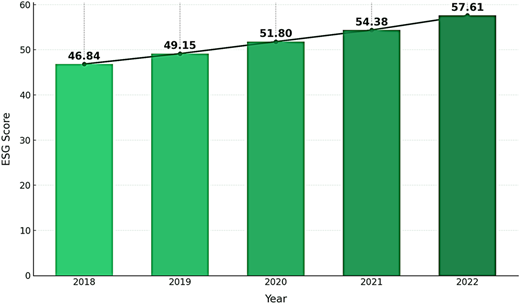
Table 2 presents the descriptive statistics of research variables. The average ESG score of sample firms is 51.954 with a standard deviation of 19.696, indicating substantial variation in ESG performance across the sample. Blockholder ownership exhibits the highest mean (55.134%), followed by institutional ownership (53.396%), while government ownership (14.607%) and foreign ownership (13.96%) demonstrate lower concentrations. The median of 0% for both foreign and government ownership indicates that more than half of the sample firms do not possess these ownership types. Firm size demonstrates an average of 187,000 trillion, firm age averages 51.439 years, while financial performance shows mean ROA of 7.271% and leverage of 22.599%. These statistics reveal significant heterogeneity within the sample, encompassing ESG performance, ownership structure and firm characteristics. Figure 1 illustrates the ESG trend in Indonesia, which demonstrates consistent improvement throughout the 2018–2022 period. Beginning with an average score of 46.84 in 2018, this value continuously increased each year, reaching 57.61 in 2022, marking a total improvement of 10.77 points. The most significant increase occurred between 2021–2022 with a 3.23-point rise. This positive trend indicates sustained improvement in ESG practices among Indonesian corporations. To examine multicollinearity, this study conducted correlation analysis as presented in Table 3. The analysis reveals that no correlations between independent variables exceed 0.8. Additionally, variance inflation factor (VIF) values for all variables remain below 10 (Gujarati, 2004; Sekaran and Bougie, 2016). Based on these two criteria, it can be concluded that no serious multicollinearity problems exist in this regression analysis.
4.2 Multivariate analysis
The results shown for the full model in Table 4 support all hypotheses regarding the effect of ownership structure on ESG performance. Foreign ownership (FOWN) shows a significant positive effect (β = 0.206, t = 7.217, p < 0.01), which supports H1 and indicates that foreign investors drive better ESG practices. Blockholder ownership (BLOWN) shows a significant negative effect (β = −0.230, t = −10.017, p < 0.01), which supports H2 and suggests that large shareholders may prioritize short-term profits over ESG initiatives. Government ownership (GOWN) reveals the strongest positive effect (β = 0.439, t = 13.079, p < 0.01), which supports H3 and highlights the crucial role of government in advancing ESG practices. Institutional ownership (INSOWN) also shows a significant positive effect (β = 0.210, t = 5.632, p < 0.01), which supports H4 and confirms that institutional investors improve ESG performance. For the control variables, both firm size (β = 3.013, t = 5.166, p < 0.01) and firm age (β = 0.103, t = 4.253, p < 0.01) show a significant positive effect, indicating that larger and more established firms maintain better ESG practices. While ROA has a positive but insignificant effect (β = 0.099, t = 1.345), leverage (LEV) shows a significant negative effect (β = −0.479, t = −9.702, p < 0.01). The model achieves high explanatory power with an R-square of 0.858, indicating that ownership structure and firm characteristics substantially explain the variation in ESG performance.
4.3 Robustness test
To ensure the reliability of findings, this study conducted three robustness tests as detailed in Tables 5–7, addressing potential model sensitivity and endogeneity concerns following established methodological practices (Octavio et al., 2025b). The initial approach involved lag-1 analysis (Table 5), where all ownership structure variables were lagged by one period to reduce simultaneity bias by establishing a clearer causal sequence: ownership structure at time t-1 influences ESG performance at time t, while current ESG performance cannot retroactively affect past ownership decisions (Wicaksono and Octavio, 2025). The study then applied PSM and entropy balancing techniques (Table 6) to tackle potential selection bias by constructing treatment variables based on industry classification, controlling for sector-specific factors that might confound the results. Additionally, GMM estimation (Table 7) was employed to address endogeneity arising from reverse causality and unobserved heterogeneity. The results demonstrate remarkable consistency across all three approaches, with foreign ownership maintaining its positive and significant impact on ESG performance, government ownership continuing to show strong positive effects, institutional ownership consistently enhancing ESG outcomes and blockholder ownership persistently exhibiting negative effects. This consistency in coefficient direction, significance levels and magnitude across different methodological approaches validates the core findings and strongly supports the interpretation that ownership structure genuinely influences ESG performance, providing confidence that the conclusions reflect real economic relationships rather than methodological artifacts.
4.4 Discussion
The stakeholder theory developed by Freeman (1984) explains that ownership structure influences firm performance through distinct relational patterns between ownership types and sustainability practices. RBV complements this framework by demonstrating how different ownership structures provide unique strategic resources for ESG implementation (Bhandari et al., 2022). Consistent with stakeholder theory, this study reveals that each ownership type exhibits distinct characteristics and motivations in implementing ESG practices. Foreign ownership demonstrates a positive influence on ESG performance, reflecting the impact of Indonesia's investment liberalization policies that have opened numerous sectors to international investors. This finding gains additional significance given the Indonesian government's strategic initiatives through the sovereign wealth fund Danantara and foreign investment targets extending to 2040 (Bloomberg, 2025). Foreign investors typically demand higher transparency in social and environmental aspects, aligning with stakeholder theory's expectation that external stakeholders with strong ESG demands drive corporate behavior. From an RBV perspective, this occurs through valuable international ESG expertise that foreign investors contribute (Kero and Bogale, 2023). These investors bring sustainable practices that accelerate Indonesia's transition toward a green economy in accordance with global standards (Amidjaya and Widagdo, 2020). Foreign ownership not only treats ESG scores as important performance evaluation tools but also creates external pressure that encourages companies to improve ESG practices through knowledge transfer and international standards adoption (Diez-Cañamero et al., 2020).
Conversely, blockholder ownership negatively influences ESG performance, reflecting the complexity of concentrated ownership structures in Indonesian corporations. This finding challenges traditional stakeholder theory assumptions about long-term oriented owners, instead supporting the view that power concentration creates stakeholder conflicts. RBV theory suggests concentrated ownership limits diverse ESG resource development (Mailani et al., 2024). Indonesia's capital market characteristics, dominated by family ownership, create conflicts of interest between majority and minority shareholders (Nasir et al., 2024; Muntahanah et al., 2021). While majority owners possess long-term orientation that could drive sustainable investments, concentrated ownership structures may reduce transparency and enable owners to prioritize personal interests over ESG practices (Wulandari and Setiawan, 2023). This finding aligns with research by Zouari and Dhifi (2022) and Shahab and Ye (2018), demonstrating that dominant shareholders tend to focus on short-term profits while ESG practices require long-term investment commitments.
Government ownership through SOEs shows significantly positive influence on ESG performance, reflecting its crucial role in Indonesia's economy. The strategic consolidation from 121 companies in 2014 to 70 in 2023 has enhanced efficiency across strategic sectors including energy, banking, mining and infrastructure (US Department of State, 2023). This finding strongly supports stakeholder theory's premise that stakeholders with broader social responsibilities drive ESG practices, while expanding RBV by demonstrating how institutional legitimacy and policy alignment serve as unique strategic resources (Bhandari et al., 2022). Government ownership creates a dual regulatory and shareholder role that results in effective oversight for aligning corporate objectives with public interests, particularly regarding sustainability (Wicaksono and Setiawan, 2022; Octavio and Setiawan, 2024). Institutional ownership also demonstrates positive influence on ESG performance through enhanced corporate governance, transparency and accountability (Kabir et al., 2020). This confirms stakeholder theory's expectation that sophisticated, long-term stakeholders promote ESG practices while supporting RBV through advanced monitoring capabilities and specialized ESG expertise (Kero and Bogale, 2023). Institutional investors utilize ESG criteria in investment decisions, possessing sufficient resources to evaluate and influence corporate policies while promoting environmental and social responsibility disclosure (Santosa et al., 2022; Kabir et al., 2020). Their long-term orientation aligns with sustainability principles, enabling institutional owners to influence companies toward adopting more comprehensive and integrated ESG practices (Wicaksono and Setiawan, 2022).
Cross-country comparisons reveal interesting variations in ownership–ESG relationships across emerging markets. While this study finds institutional ownership positively influences ESG performance in Indonesia, research in Thailand shows institutional ownership does not significantly moderate the ESG–firm value relationship, though minority shareholders demonstrate positive effects (Ngamtampong and Sukprasert, 2025). Studies across emerging markets indicate that ownership structure influences ESG performance differently based on institutional contexts, with foreign and private ownership generally enhancing ESG performance while state ownership effects vary by country-specific factors (Bilyay-Erdogan and Öztürkkal, 2023). These findings indicate that ownership structure plays a vital role in shaping ESG performance within Indonesia's unique institutional context. The results both confirm and extend existing theoretical frameworks by supporting stakeholder theory's core premise about stakeholder influence on corporate behavior while challenging assumptions about concentrated ownership. They expand RBV by identifying ownership-specific strategic resources for ESG implementation. The combination of all four ownership types creates distinctive governance complexity reflected in Indonesia's capital market, characterized by concentrated ownership alongside increasingly open foreign investment, strategic SOE roles and high institutional ownership concentration. Each element influences ESG implementation differently, contributing to deeper understanding of how ownership structure diversity in emerging market contexts shapes corporate sustainability practices.
4.5 Additional tests
This study deepens analysis by conducting three additional tests to understand ownership structure–ESG relationship complexity. First, public perception moderation testing was performed according to legitimacy theory, which emphasizes stakeholder perceptions in corporate decisions (Suchman, 1995). Analysis employs interaction variables between each ownership type and community scores as public perception proxy. Results in Table 8 show public perception strengthens positive influence of government and institutional ownership while weakening blockholder ownership's negative effect, indicating public pressure makes blockholders responsive to ESG demands despite short-term financial orientation. These findings reveal social control mechanisms' power in transforming corporate behavior and align with Octavio and Setiawan (2025b) regarding public pressure in strategic decisions. Second, partial ESG analysis was conducted considering each dimension's distinct characteristics. Models were estimated separately for ESG scores. Results in Table 9 reveal differential impacts reflecting varying ownership priorities. Foreign ownership demonstrates significant influence across all pillars with highest governance impact. Blockholder ownership exhibits substantial negative effects on social and governance aspects. Government and institutional ownership show dominant positive effects on social pillar. Third, sector comparison between environmentally sensitive versus non-sensitive sectors, as shown in Table 10, examines how regulatory pressures affect ownership–ESG relationships. These tests comprehensively strengthen main findings and provide deeper understanding of ownership structure–ESG relationships in Indonesian context.
5. Conclusion
This study analyzes the effect of ownership structure on ESG performance of Indonesian companies during 2018–2022 using stakeholder theory and resource-based view perspectives. The results demonstrate that ownership structure significantly affects ESG performance with varying patterns based on ownership type. Foreign ownership, government ownership and institutional ownership exhibit significant positive effects on company ESG performance, indicating that these investor types actively encourage sustainable business practices. These findings confirm that stakeholders with strong ESG expectations drive corporate behavior, while also revealing that different ownership types provide unique strategic resources including international expertise and institutional legitimacy. In contrast, blockholder ownership shows a significant negative effect on ESG performance, indicating conflicts between majority shareholder objectives and sustainability agendas. This pattern challenges traditional assumptions about concentrated ownership benefits while supporting the view that power concentration creates stakeholder conflicts and constrains ESG resource development. The findings confirm that diversified ownership structures encourage stakeholder-responsive orientation, while blockholder concentration creates decision-making focused on majority interests that conflicts with long-term ESG investment strategies.
5.1 Theoretical and practical implications
This study extends stakeholder theory and resource-based view applications in emerging markets, demonstrating how stakeholder groups influence corporate ESG behavior through varying expectations and strategic resources. The research challenges traditional concentrated ownership assumptions and identifies ownership-specific strategic resources for ESG implementation. Practically, findings offer actionable insights for companies optimizing shareholder composition, enable investors to utilize ownership structure analysis as ESG screening tools and help stakeholders develop targeted advocacy strategies.
5.2 Policy implications
These findings enable policymakers to design evidence-based regulations encouraging ESG-supportive ownership structures. Effective interventions include tax incentives for ESG-committed foreign and institutional investors, enhanced corporate governance regulations addressing blockholder dominance through minority shareholder protection and leveraging government ownership through clear ESG mandates for SOEs. Capital market regulations should require enhanced ESG disclosure tailored to ownership characteristics, with stringent transparency requirements for concentrated ownership companies.
5.3 Limitations and future research
This study's limitations include narrow focus excluding broader contextual factors, the short 2018–2022 period and geographic concentration limiting generalizability. Future research should adopt holistic approaches incorporating regulatory and cultural dimensions, conduct extended longitudinal studies and perform comparative analyses across emerging markets. Integrating qualitative methodologies would enhance understanding of ESG decision-making processes, while investigating dynamic ownership interactions and specific ESG dimensions could provide nuanced policy insights.