This research investigates how human interaction with the interactive genetic algorithm (IGA) influences the formation of design outcomes. It aims to: (1) assess designers’ perceptions of the effectiveness of three different interaction modes of IGAs in achieving subjective and diverse outcomes, (2) understand how interaction patterns influence the pursuit of subjective goals and (3) examine differences between novice and expert designers.
A design experiment with 26 international participants used Snowflake, a multi-mode IGA tool, to evolve urban morphologies. Post-experiment surveys and interviews were conducted to address six research questions. Quantitative and qualitative analyses were employed to examine participants’ preferences, perceptions and interaction patterns.
Results showed that interaction modes influenced the evolutionary process in distinct ways and revealed differing perspectives, biases and factors that impacted evaluations across varying levels of design experience.
Due to the small sample size and focus on the conceptual design phase, generalizability remained limited. Future studies are encouraged to extend these propositions to later design stages and broader contexts.
IGAs can reshape professional practice and design pedagogy by enabling architects and students to engage with design as a process of structuring problems and objectives rather than generating final forms. Through defining and interacting with the system, designers retained agency over the evolutionary direction of outcomes.
This research offeres the first empirical comparison between the new IGA interaction modes and demonstrated how integrating quantitative and qualitative objectives can support diverse design intentions across varying expertise levels.
1. Introduction
Genetic algorithms (GAs) are computational algorithms that simulate aspects of natural evolution. They are widely used for optimization problems due to their ability to handle complex factors with multiple local optima (Goldberg, 1989; Bentley, 1999; De Jong, 2008). As a subset of evolutionary algorithms (EAs), GAs process a population of potential solutions rather than a single solution, allowing them to explore complex search “spaces” and find optimal or near-optimal solutions (Bentley, 1999; Davis, 1991). To achieve this, GAs require guidance, typically in the form of a fitness function, which evaluates each solution in the population and assigns a fitness score based on how well it meets the problem’s objectives (Deb, 1999; Cho, 2002; Bentley and Corne, 2002).
In the past decade, there has been increasing interest in using GAs to solve design problems with multiple conflicting objectives (Mueller and Ochsendorf, 2015; Kocabay and Alaçam, 2017). For example, researchers have used GAs to optimize various architectural design problems, such as housing composition (Caldas and Santos, 2016), urban context (Navarro-Mateu et al., 2018), and wind-driven optimization (Mughal and Beirao, 2020). Despite their potential, GAs exhibit three limitations in architectural design. First, their application is primarily centered on finding optimal solutions through predefined fitness functions (Rosenman, 1996; Coello, 2006). However, such performance-based tasks are a small subset of the large, more complex, and dynamic architectural design process (Benjamin, 2012; Karaman, 2017; Newton, 2018a). Second, their capacity to incorporate subjective criteria, such as aesthetics, style, or specific client needs, is limited, restricting their application to offering a general framework for balancing conflicting parameters (Srinivas and Deb, 1994; Bentley and Corne, 2002; Newton, 2018b). Third, they restrict the architect’s ability to actively steer the evolutionary process to reflect intuitive or creative preferences, confining the architect’s role to defining input parameters and passively awaiting the results. These three limitations are identified in the literature as posing significant barriers to the practical application of GA processes in architectural design (Das, 2018; Harding and Brandt-Olsen, 2018; Newton, 2018a, b).
To address these challenges of GAs, interactive genetic algorithms (IGAs) have been developed in an attempt to accommodate a designer’s intuitive or subjective inputs in the generative process. Although a growing body of research has argued for the potential benefits of IGAs in the creative fields, directly comparable IGA modes have only very recently become available. This means that there have been no evaluations of the differences between or the effectiveness of diverse interaction modes for architectural designers. In response, the present research has three aims:
To assess designers’ perceptions of the effectiveness of three interaction modes for integrating subjective and diverse evaluations.
To understand how interaction patterns during the generative process influence the design toward achieving the designers’ subjective goals.
To understand the differences between novice and experienced designers’ interactions relative to the first two aims.
This research adopts the standard definition of “intuitive” or “subjective” engagement in design as it pertains to an architect’s personal preferences, experience and knowledge (Rosenman and Gero, 1993; Gero, 1996). Thus, “subjective” refers to the extrinsic factors in the design process using an IGA, whereas the “objective” or intrinsic factors are more closely tied to optimization. While the first two aims address knowledge gaps regarding subjectivity and IGAs, the third, related to the distinction between novice and experienced designers, stems from the findings of past cognitive design research; this suggests a significant difference (Ho, 2001; Björklund, 2013).
To fulfill these three aims, the present research reports on the results of a design experiment in which 26 participants each produced designs using three interaction modes and, to ground their experiences, one non-interactive mode (effectively a GA). Post-experiment surveys and interviews were used to record participants’ experiences in the different modes. Responses were analyzed quantitatively (using statistical methods suitable for the sample size) and qualitatively (thematic content analysis of quotes from the interviews).
The structure of this research commences with a background to past and recently developed IGA modes of interaction, introducing key terms, clarifying the knowledge gap and identifying the three interaction modes tested in the experiment. This is followed by a description of the design experiment, the survey and interview instruments, and their methodological precedents. The results are reported and discussed before the conclusion revisits the three aims and limitations of this research.
2. Background: IGA modes of interaction
This section provides a background to the study and describes past and recent modes of interaction for IGAs.
2.1 Existing modes
Metaphorically, the difference between a GA and an IGA is that between a “black box” and a “sandbox”; the former restricts direct engagement, while the latter encourages it. The traditional GA’s evolutionary process starts with a predefined population derived from genes and objectives (parameters), generating phenotypes (geometries). These phenotypes are assessed using a fitness function in a fully automated, non-interactive process, guided by the principle of survival of the fittest (Bentley and Corne, 2002) and iterated over a number of generations. In contrast, IGAs have the capacity to integrate human input, enabling designers to make selections to influence the otherwise automated evolutionary process.
In theory, an IGA’s advantage over a GA is that it allows designers to actively guide the evolutionary process by selecting options that reflect their creative intentions or intuitive evaluations. Researchers argue that IGAs are particularly effective in creative fields where such subjective criteria play a prominent role (Cho, 2002; Harding and Brandt-Olsen, 2018; Newton, 2018a). Yet, there is no consensus on the level of effectiveness of different interaction modes for supporting such subjective and creative reasoning (Takagi, 2001; Bentley and Corne, 2002; Benjamin, 2012; Egan and Cagan, 2016).
Bentley and Corne (2002), for example, identify two primary types of interaction. The first involves the user directly replacing the fitness function with their own selection. In this method, the user selects specific individuals from the population set to go through to the next generation based on subjective criteria (personal preference). The second type combines user input with the objective fitness function in a multi-objective optimization process, where subjective evaluation becomes an additional objective. This approach, which requires constructing a combined fitness set, has remained underdeveloped. Additionally, Harding and Brandt-Olsen (2018) propose a third mode in which users adjust the weightings among objectives, thereby influencing their relative importance in the optimization process. Furthermore, Newton’s (2018a) dynamic progressive architecture NSGA-II (DPA-NSGA-II), enables users to modify the number of genes, objectives, and time-dependent functions to influence optimization. Notably, the modes proposed by Harding and Brandt-Olsen, as well as by Newton, involve interaction at the level of genes or objectives, but not within the fitness function itself.
Despite these advancements, not all interaction types are appropriate for architectural design. For instance, Bentley’s first type, initially seen in Dawkins’ (1986) work, enables users to prioritize preferred solutions by overriding the objective fitness function. While effective in fields like art, this approach is less suited for architecture, which demands structural and functional considerations alongside esthetic ones (Raharjo et al., 2008; Benjamin, 2012; Mennan, 2014; Karaman, 2017). Similarly, Harding’s Biomorpher incorporates subjective input only, where user-selected fitness drives the evolution, disregarding the objective fitness values.
Additionally, several of the interaction modes identified in this section are theorized or speculative. Those that do exist in pilot software have either never been released or made available for testing or are not accessible in a form that supports rigorous comparisons and evaluation. This has restricted any previous attempts to test the many claims about IGAs in architecture.
2.2 New modes
The present research uses Snowflake as a common platform for the experiment, the only openly available GA/IGA that allows for comparable modes of interaction, offering the parallel optimization of both subjective and objective inputs required in architectural design. Snowflake Vers. 1 (Eiz and Motlib, 2025), a plugin for Grasshopper (Gh), is a customizable multi-objective GA/IGA solution based on the SPEA2 framework. Snowflake can be used in both non-interactive and interactive modes, with three variations of the latter: genes similarity mode (GeM), characteristics similarity mode (ChM), and combined mode (CoM). These modes are effectively extensions and elaborations of Bentley’s second type of interaction. These modes depart from conventional approaches by incorporating a combined fitness set, in which objective and subjective values are integrated to determine the final score. This approach to integration makes them particularly suitable for architectural applications, as previously established. While sharing a common structure, each mode introduces distinct mechanisms that guide the evolutionary process in different ways. However, their relative effectiveness has not yet been systematically evaluated.
The GeM operates by allowing designers to select individuals in the population of algorithmically generated design solutions that exhibit certain favorable formal properties. Thus, the designer can direct the evolutionary process towards solutions that maintain overall similarities with the selected phenotypes by comparing the similarity in the genes’ values between selected individuals and the population/phenotypes. Subsequent generations will be influenced by these phenotypes, aiming to maintain the desired formal similarities.
In contrast, in the ChM, the designer can define specific geometric characteristics or attributes in the problem formulation part of the evolutionary loop. Thus, an architect might choose a rotation angle, curvature, proportion, or other attribute to direct the evolutionary process towards solutions that maintain similarities with these characteristics. Contrary to the basic selection mechanism available in GeM, in ChM, designers need to encode their subjective aim within the Gh definition to influence the process.
In the CoM, designers select phenotypes based on desired formal similarities and specified geometric attributes. The evolution of CoM designs is guided by the overall formal similarities and the specified geometric characteristics by comparing the overall genes and characteristics genes similarity between each phenotype and the selected ones. Both elements are incorporated into the total evaluation set as dual or multiple objectives and are assessed as a multi-dimensional problem. This combined evaluation set determines the cumulative fitness of each individual (phenotype). Like the ChM, designers need to encode their subjective aim within the definition to influence the process.
Having established the interactive modes selected for testing in this study, the following section introduces the method employed to address the research aims, which consists of three components.
3. The method
This section outlines the framework and specifics of the research’s three key components: the experiment, the participants’ survey, and interviews. It elaborates on the procedures of these components and discusses how their integration facilitates quantitative and qualitative analysis. All three components were conducted following a formal Human Research Ethics approval (HC210757). This method follows the general approach and standards used in past computational and parametric design studies (Yu et al., 2018, 2021), and is sequenced and designed to conform to the APA standard for reporting methodological factors for lab-based experiments.
3.1 Design experiment
A design experiment was conducted to generate data necessary for addressing the three research aims described in Section 1. The experiment consisted of five components, detailed as follows:
3.1.1 Pilot study
A pilot study was conducted three months prior to the main experiment to test and refine the content, format, and survey questions. Sixteen participants from eight countries, with professional experience ranging from 1 to 12 years (Mean = 4.8, Median = 4), participated in the study. The pilot yielded insights that informed the structure of the experiment, the Gh template file (provided to participants), the survey, and the interviews, although no data were retained for analysis. Following refinement of the method, in response to the pilot study experience, architectural designers with varying levels of experience were invited to participate in a 90-min experiment focused on developing a concept design for a high-rise building.
3.1.2 Participants
A total of 26 participants from 15 countries (Australia, Canada, China, Egypt, Germany, Greece, Iran, Iraq, Jordan, Palestine, Spain, Turkey, Uganda, the UAE, and the USA) took part in the experiment. The cohort consisted of 16 males and 10 females with diverse educational backgrounds. Nineteen were professionals and seven were senior students, with design experience ranging from 1 to 23 years (Mean = 5.6; Median = 4). Participants were recruited from a pool of people who had completed an introductory training course in evolutionary design using Gh and the Snowflake plugin. Each participant was provided with the same digital site massing and topography model for an urban setting.
Twelve participants met the definition of “novice” (senior students or those with 1–2 years of experience), and fourteen “experienced” (3–23 years of experience) designers. In the results, quotes from the novice designers are designated D1-D12, and from the experienced ones, D13-D26.
3.1.3 Materials
Participants used Snowflake as the experimental design environment. As previously established, Snowflake is an IGA that supports the use of three interactive modes (GeM, ChM, and CoM) and also operates in a non-interactive mode equivalent to a standard GA, thereby ensuring a consistent and controlled setting. A Rhino and Gh template was distributed to participants in advance. Default experimental parameters were predefined based on insights from the pilot study to promote exploration and diversity across generations. These included: (1) 30 generations, (2) a population size of 100, (3) a crossover rate of 0.8, and (4) a mutation rate of 0.06. These parameters were selected to keep each experiment’s mode within a 20-min duration while producing a wide range of design variations. These settings were chosen to ensure that the only difference between them would be the mode of interaction, or non-interaction, and the designer’s subjective input. These settings were required to limit possible confounding factors.
The Gh template was set to evolve morphologies (phenotypes) generated using a lofting function based on three periodic curves with selected transformational techniques, such as scaling and rotating within given domains (limits). The morphologies evolved to address each participant’s subjective aims, while optimizing three conflicting quantitative objectives: (1) minimizing radiation on the building skin, (2) maximizing harbor views and (3) maximizing volume.
3.1.4 Procedure
The online experiment commenced with a welcome session, during which participants provided written consent. Participants were briefed on the experimental procedure and provided with a detailed explanation of the design task and the expected deliverables. The study employed a “within-subjects” design to evaluate the effects of different interaction modes. Four modes were tested: a non-interactive mode (NoM) first, followed by three interactive modes (InMs). The first interactive mode, GeM, considered the influence of independent gene parameters on the phenotypes’ evolution. The second, ChM, focused on the relative rotation angle as the independent variable. The third, CoM, allowed participants to evaluate the combined effects of GeM and ChM.
3.1.5 Design
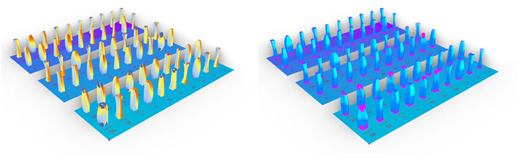
In the experiment, participants began the interaction process by specifying the desired number of generations for a fixed population size of 100. The evolutionary process then proceeded until the predetermined number of generations was completed. Outcomes for each generation were sorted in Snowflake and displayed on a grid according to their fitness values, with the highest-performing solutions positioned at the front and lower-performing solutions towards the back. This layout allowed participants to make interactive selections based on personal preferences, which influenced subsequent generations (Figure 1). Participants selected 1–3 options per generation to guide evolution, a range determined during the pilot study. To maintain a consistent baseline across all modes, participants were unable to modify gene values, their relationships, the objectives, or any part of the template definition. However, they could define formal characteristics within the Grasshopper template by specifying one or two subjective preferences, which were incorporated as additional objectives alongside the quantitative criteria.
Participants completed the experiment sequentially, starting with the NoM, followed by the three InMs in randomized order. This approach was taken to reduce cognitive fatigue and mitigate potential sequential or “order effects” that could bias results across the InMs. All participants completed the experiment online, working independently but within the same timeframe.
After the experiment, participants completed a Qualtrics survey in parallel with a semi-structured interview (the survey questions acted as interview prompts).
3.1.6 Experiment outcome
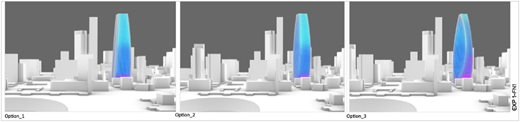
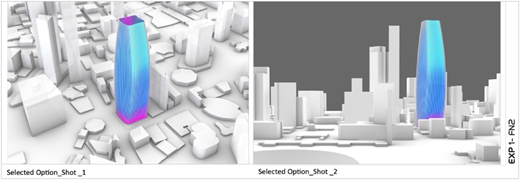
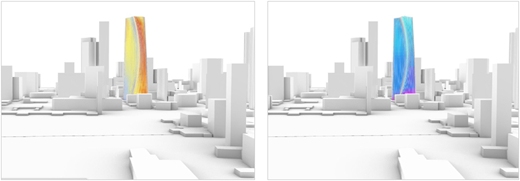
Each participant produced one design “board” per mode, resulting in four design boards per participant (3 from the interactive modes, and 1 from the non-interactive) and a total of 104 boards (4 × 26). Each board first displayed a design statement articulating the participant’s formal intent (subjective aim), followed by three images that meet the stated subjective aim (Figure 2), then two images of their favorite option from a different perspective (Figure 3). The design options, which also display each phenotype’s performance relative to the optimization criteria (such as “radiation” and “view”), were achieved using Ladybug, a Gh plugin (Figures 1 and 4). Participants used this information, represented in a grid, to assist them in selecting options they believed would direct the evolution towards their desired outcomes (Figure 1).
3.2 Post-experiment survey and interviews
After the experiment, each participant completed a Qualtrics survey with six questions (Q1- Q6) and, in parallel, a semi-structured interview (approximately 30 min). These questions, which were designed to address the three research aims, had three response options (Table 1) and a prompt for discussion. Four of the survey questions had “Yes”, “Maybe,” and “No” answers. The other two had options for which design stages were most important for interaction (“Beginning”, “Middle”, “End”) and, importantly, which was the preferred interaction mode (GeM, ChM, CoM). The four “Yes”, “Maybe”, and “No” answers were converted into numerical data (3, 2 and 1) for analysis, and the interviews were transcribed for thematic analysis, with indicative quotes identified.
A three-point scale was chosen over a five-point scale as it was easier for participants to understand, quicker to complete, and reduced cognitive load, allowing the interview to be concluded within 30 min. Moreover, formats such as Yes/Maybe/No or Beginning/Middle/End encouraged more decisive responses, thereby helping to minimize ambiguity and indecision. Such scales are also well-suited to descriptive statistics or decision-tree models, where clearly defined categories are preferred. Furthermore, as is common in research using design experiments, the total number of participants was relatively modest, and thus, detailed statistical analysis was unlikely to be useful in isolation, and answers to the survey questions would come from the combination of quantitative and qualitative approaches.
4. Results
The survey data were analyzed quantitatively, using statistical methods appropriate for the sample size, and the post-experiment interviews were analyzed qualitatively.
4.1 Quantitative analysis
The results for questions 1, 2, 5 and 6 are reported in Table 2, and for questions 3 and 4 in Tables 5 and 6. A “combined” result (all participants) is presented for each question, along with the separate responses of “novice” and “experienced” participants. Table 2 reports each question’s Mean, Median, Median Absolute Deviation (MAD), and Standard Deviation (SD), providing information about the consistency or spread of responses. Tables 5 and 6 calculate the responses to questions 3 and 4 as a percentage of the total. The results are discussed qualitatively in the remainder of this section, following conventional practice in the design computing and cognition fields (Suwa et al., 1998; Cash et al., 2016; Lee and Ostwald, 2020).
The comparative analysis of novice and experienced participants’ evaluations across four questions (Q1, Q2, Q5, Q6) revealed both convergence and divergence in scoring patterns. For Q1, both groups achieved complete consensus, with identical mean and median values of 3.00 and no variability (MAD = 0.00, SD = 0.00). Across the remaining questions, experienced participants consistently provided slightly higher mean scores (ranging from 2.86 to 2.93) compared to novices (2.58–2.83). Moreover, their ratings demonstrated lower dispersion (MAD = 0.07–0.14; SD = 0.26–0.35) compared to novices (MAD = 0.17–0.42; SD = 0.38–0.56). Thus, while both groups aligned positively in their assessments (median = 3.00 across all questions), experienced participants displayed greater consensus and consistency. In contrast, novices exhibited a broader spread of opinions.
Intraclass correlation coefficient (ICC) analysis was conducted for novice (Table 3) and experienced (Table 4) participants. For the novice group, the ICC (3, k) indicated moderate agreement (ICC = 0.666). However, the 95% confidence interval (−0.185 to 0.976) reflected high variability and the limited sample size. This confirmed that while novices generally converged on their ratings, their evaluations were less consistent than those of the experienced group. For the experienced group, the ICC (3, k) produced a point estimate of 0.000 with a broad 95% confidence interval (-2.473 to 0.929). This result did not indicate disagreement but rather reflected a ceiling effect, where participants’ ratings were highly uniform (all Medians = 3.00; MAD ≤ 0.14; SD ≤ 0.35). In such cases, ICC shows minimal variance between raters and, therefore, provides evidence of higher consensus among experienced participants.
Independent samples t-tests were conducted to compare the mean responses of novices and experienced participants across Q1, Q2, Q5, and Q6. For Q1, both groups gave identical responses (Mean = 3.00 for novices and experienced), with no variance, making statistical comparison inappropriate. For Q2, experienced participants (Mean = 2.86) scored slightly higher than novices (Mean = 2.67), but this difference was not statistically significant, t(24) = −1.13, p = 0.27 (two-tailed). For Q5, experienced participants (Mean = 2.86) again rated higher than novices (Mean = 2.58) although the difference was not significant, t(24) = −1.58, p = 0.13 (two-tailed). In Q6, the means were very similar between experienced (Mean = 2.93) and novices (Mean = 2.83), with no significant difference, t(24) = −0.74, p = 0.47 (two-tailed). Overall, while experienced participants tended to rate slightly higher across most questions, none of the observed differences were statistically significant (all >0.05). Based on the limited sample, both novices and experienced participants shared broadly similar perceptions of the interactive process, with only marginal variations in emphasis.
4.2 Qualitative analysis
Qualitative analysis of interview transcripts was employed to identify patterns in participants’ answers to the survey questions. In this section, descriptive statistics are combined with quotes from interviews.
4.2.1 Interaction and accommodating intuition
Q1 asked, “Did you feel the interactive modes allowed you to engage your intuition in the design process?” Although all 26 participants answered “Yes” (Mean = 3, Median = 3, MAD = 0, SD = 0), their views on how this occurred varied during the interviews. The most common answer was that the process allowed them to select their preferred phenotypes in each generation and see the effect of that selection on the subsequent generations throughout the process. As D19 noted, “I could choose or encode my preference and use that to guide the process. I could direct it to where I wanted it to go based on my intuition, and it would allow me to go there and present me with more options in line with my preference.” Participants D5 and D9 emphasized that the emerging forms reflected their esthetic sensibility and performed better. In contrast, the participants found the benchmark NoMs unable to engage them in the process. Participant D18 stated, “There is not enough control, especially in terms of subjective aspects.”
4.2.2 Interaction and the evolutionary direction
Q2 asked, “Did you feel that your selected subjective input influenced the direction of the evolutionary process?” Out of the 26 participants, 20 (76.9%) responded “Yes,” with a Mean score of 2.77 and a Median of 3, suggesting that most participants leaned toward the highest end of the Likert scale. The relatively low dispersion values (MAD = 0.24; SD = 0.42) show that responses were clustered closely around the top score, reflecting a high level of consensus among participants. Taken together, these results suggest both a clear and consistent pattern in participants’ views.
Fourteen (53.8%) of the participants argued that the impact of their interaction on the evolutionary direction was evident in every generation and improved over time. For example, participant D19 noted, “I could see very clearly how my selections directed the output of the algorithm. The algorithm understood where I wanted it to go in various steps.” Similarly, participant D6 described how subjective preferences guided outcomes over time: “At first, I selected options that were subjectively pleasing and performed well in environmental fitness. Then I noticed that the parameters of these selected options started to dominate the generated solutions of the next stages.” Notably, D10 developed the impression that the algorithm had “learned” his intentions and that it “understood” his ideas.
Comparing mean responses between novices (2.67) and experienced participants (2.86), while both groups had a Median of 3, the greater MAD (0.33 vs. 0.14) and SD (0.51 vs. 0.35) for novices indicated that their responses were less consistent than those of experienced participants. This suggests that while both groups generally agreed with the statement, experienced participants were slightly more positive and more consistent in their evaluations, demonstrating a greater ability to engage with the different modes to guide the evolution toward their subjective aims.
4.2.3 Interaction stage (pattern)
Q3 asked, “At what generation or stage in the process did you feel the interactivity was most effective?” Table 5 reports that 57.7% (15 participants) chose the “beginning” as the most effective stage. In comparison, only 23.1 and 19.3% argued that interacting in the middle and towards the end, respectively, was the most effective.
In support of interacting in the beginning, participant D9 noted that their earlier interactions had a more significant influence than their later ones. Confirming this, participant D6 stated, “It was most effective in the early generations from 1–10 as it helped direct the next generations.” The six participants (23.1%) who expressed the view that interacting in the middle of the process was most effective felt that it was more challenging to observe the immediate impact of their interaction in early generations. In contrast, five participants (19.3%) stated that interacting towards the end of the evolutionary process was the most effective because the effects were more pronounced at this stage. However, there were counterarguments. D2, for example, suggested that interaction in later generations was less important because “there were many selected morphologies from the previous generations that were already affecting the process.”
Comparing novices and experienced participants revealed a slightly higher percentage of experienced participants (61.5%) than novices (53.8%) preferring to interact in the beginning. This difference was not statistically significant, considering the sample size. The same percentage (23.1%) of novices and experienced participants identified interaction in the middle as most effective.
4.2.4 Interaction mode
Q4 asked, “Which mode of interaction did you find most effective?” Table 6 presents the distribution of mode preferences among novice and experienced participants. Overall, participants favored the Combined and Characteristics modes over the Genes mode.
Twelve (46.2%) participants preferred the CoM, describing it as “the most effective mode” (D3, D7, D11, D14, D18). Seven participants reported that the CoM provided options with high fitness and met their subjective objectives. D14 chose the CoM because it accounted for multiple parallel inputs, and D23 claimed “it delivers better diversity of options meeting my subjective aims” (D23). On the other hand, eleven participants (42.8%) found the ChM to be the most effective. They argued that it allowed for the inclusion of the features designers wanted in the outcomes and helped direct the process to their target in fewer generations. D9 elaborated on this, saying, “I can specify particular aspects and see the effect of what I specified much faster” (D9). In addition to these reasons, D12 argued, “It produced surprising options I had not thought about before” (D12). Only 11.5% (3 participants) preferred the GeM as they found it simple to apply and offered more “exploratory potential.” The GeM allows designers to select preferred phenotypes for overall formal characteristics rather than encoding (formulating) their intentions. Participant D10 argued that “in the GeM, I only needed to select prototypes that I like without encoding my intention” (D10). Four participants argued that GeM was a more powerful mode for exploration as it took longer to converge.
Comparing novices and experienced participants, the former preferred the ChM (50.0%), while the latter preferred the CoM (50.0%). Both had their lowest percentages for the GeM (8.5 and 14.5%, respectively).
4.2.5 Interaction and diversity
Q5 asked, “Did you feel that your interaction by adding and/or removing certain solutions affected the diversity of the new solutions?” Out of the 26 participants, 19 (73.0%) answered “Yes”, reflecting a clear majority agreement with the question. The central tendency measures reinforce this, with a Mean of 2.72 and a Median of 3, indicating that most participants selected the highest point on the Likert scale. The relatively low variability (MAD = 0.28; SD = 0.45) confirms that responses were tightly clustered around this upper end, suggesting strong consensus and limited divergence in views across the group.
Participants noted that repeatedly selecting similar solutions often led to convergence, reducing the variability of generated options. Conversely, incorporating dissimilar solutions into the selection process promoted greater diversity. For instance, D1 observed, “This technique was good for expanding the space of solutions to new possibilities.” Similarly, D18 explained that introducing a proportion of different solutions produced new options, “With good fitness scores that have different twists on the concept.” Four participants linked diversity to the frequency of their selections. As D23 explained, “If I make a few selections, I end up with fewer diverse options. In contrast, if I make more selections, I end up with more diverse options as the algorithm has more data to figure out my preference.” Consistency was also highlighted as a key factor. Participants D12, D18, D21, and D23 all emphasized that consistent selection choices significantly influenced the evolutionary trajectory.
When comparing novices and experienced participants, both groups showed strong agreement, with a Median of 3. However, the experienced group provided slightly higher and more consistent ratings (Mean = 2.93, MAD = 0.07, SD = 0.26) than the novices (Mean = 2.83, MAD = 0.17, SD = 0.38). Thus, while the overall level of endorsement was similar, experienced participants demonstrated greater consensus in their evaluations, whereas novices showed slightly more variability in their responses.
4.2.6 Interaction and quality
Q6 asked: “Based on your experience, did you feel your interaction led to a better result, and how?” A large majority of participants (88.5%) agreed that interacting with the system produced better outcomes than working in a non-interactive mode. The central tendency measures (Mean = 2.88, Median = 3) indicated strong agreement across the group. The relatively low dispersion (MAD = 0.12, SD = 0.32) suggests that participants were highly consistent in their evaluations, reinforcing the robustness of this positive perception toward interactivity. A “better” outcome was generally described as achieving diverse phenotypes aligned with subjective aims while also demonstrating high objective fitness.
Although most participants shared this perception, their explanations varied. The majority (23 out of 26) argued that, relative to the non-interactive mode, the interactive modes generated more diverse and often surprising options aligned with their subjective aims and possessing high objective fitness. Participant D14 reflected: “There was a huge difference in the result. They were surprising, and not only based on achieving the optimal radiation or views.” Similarly, D16 contrasted the two approaches, “The results in the non-interactive were extremely disarrayed. They don’t have a direction apart from their objective performance.” A minority of participants (3 out of 26) expressed a contrary view, suggesting that the choice between interactive and non-interactive modes depends on an individual’s design stance. For example, D1 observed that while some designers may wish to influence the formal and visual qualities of outcomes directly, others may prefer solutions optimized strictly for objective performance. D22 added: “Having my favorite forms and shapes is not always my design priority. In contrast, having more optimized options is sometimes the better choice for me.”
When comparing groups, the mean responses of experienced participants (2.92) and novices (2.85) were nearly identical, indicating no meaningful difference in their evaluations. Both groups reported a median score of 3, and the slightly lower MAD (0.17 vs. 0.07) and SD (0.38 vs. 0.26) suggest that experienced responses were more consistent, while novice participants showed marginally greater variability.
5. Discussion
This section reviews the research results and compares them with the results of past research in design cognition and computational design. The discussion is organized into five subsections: four derived from the dominant themes in Questions 1–6, followed by a reflection on the differences between novice and experienced participants. It aims to situate the research within the broader context of existing studies and to highlight confounding factors that may have influenced participants’ responses and shaped the overall results.
5.1 Interaction and intuition (Q1, Q2)
Engaging a designer’s intuition or subjective inputs is a key theme in past research and is often linked to creativity (Takagi, 2001; Mennan, 2014; Karaman, 2017; Harding and Brandt-Olsen, 2018). Kheirollahi (Kheirollahi, 2012, p. 59), for example, observed that “designers tend to generalize the intuitiveness of the designing process to creativity.” The results reported in the present research show that engaging intuition in an IGA is a nuanced and non-linear process, not solely determined by the chosen mode of interaction or a fixed number of steps. Instead, producing a creative outcome required a rigorous and adaptive dialogue between the architect and the algorithm, influenced by various factors such as participant experience, design background, interaction patterns, and design stance.
Participants exhibited distinct interaction patterns when engaging their intuition in the evolutionary process. As found in previous design research (Marin et al., 2012; Lee et al., 2015; Egan and Cagan, 2016), these patterns were shaped by participants’ design backgrounds, experience, and design stances. It was observed, for example, that participants D1 and D22 prioritized the generation of well-optimized solutions over strong subjective preferences. Their observations challenge the prevailing belief that interactive methods invariably yield superior outcomes. Nonetheless, most participants placed a high value on the opportunity for interaction and the application of their intuition, aiming to produce solutions aligned with their formal preferences while achieving good objective fitness. The results suggest that, through the use of different interaction techniques, participants were generally able to achieve this balance.
5.2 Interaction pattern (Q3)
Interaction patterns and frequency surfaced as important themes in the interviews. Participants acknowledged that by engaging in interaction early on, they could articulate their intentions and establish the overall trajectory of the evolutionary process. Initiating with divergent thinking produced a wider array of design options within established constraints. The interaction pattern in subsequent generations was crucial in guiding the evolutionary direction towards the designers’ subjective aims. In addition to the established pattern of interaction, participants emphasized the significance of adapting the interaction approach iteratively based on the results obtained at every generation. Participants D9 and D18 exemplified the concept of adaptability by successfully tailoring their interaction patterns in response to the outcomes of each generation. Their interactions were similar to a “working forward” approach (Lee et al., 2020), as they had a sense of direction for what they wanted to develop rather than a specific solution. This iterative approach progressed toward a designer’s evolving vision with clear intent, evaluating each stage of evolution for its effectiveness in achieving this vision within a set of parameters, unlike a “working backwards” approach wherein the designer operates with a predetermined final objective.
5.3 Interaction modes (Q4)
Overall, participants preferred the CoM (46.2%) compared to the ChM (42.3%) or GeM (11.5%). Participants, especially experienced ones, rated the CoM highly. The least popular, the GeM, was praised for its capacity to support exploration. Cognitive design researchers note that extensive divergent or explorative design behavior like this might reflect a novice designer’s lack of direction, or alternatively, it could be a temporary behavior of an experienced designer, which is briefly employed before returning to a more convergent path to a solution (Yu et al., 2021). In this present case, it appeared that the GeM offered a path either for those novices who were less proficient in interacting with the code, or for the skilled ones who sought a more open-ended and exploratory approach at the concept design stage.
In contrast, ChM and CoM involved formulating designers’ subjective aims (formal characteristics) within the Gh definition to drive the evolution forward. These modes allowed for a more nuanced and directed interaction of the design space, provided faster feedback and facilitated a more direct influence on the outcomes. They were preferred by experienced participants with strong design visions and esthetic preferences. As such, they may have had similarities to a “goal-forwarding” strategy or emphasized rapid divergence into the solution space (Lee et al., 2020).
These aspects of targeted search versus exploration are essential differentiators when considering the GeM, the ChM, and the CoM. Terzidis (2014) highlighted the concept of divergent-versus-convergent design processes, positing that architects typically employ a divergent strategy in the early stages to broaden their exploration of design possibilities. This is followed by a convergent strategy to narrow down and focus on the preferred options. This may also explain several interview answers in this research, where participants expressed the view that different modes may be more effective for different stages.
5.4 Interaction and the diversity of the outcome (Q5, Q6)
Many participants raised the topic of diversity, highlighting the complexity of the subject and the different perspectives held by architects. Participants recognized that GAs do not solely determine diversity; rather, they are influenced by various factors. In the interviews, participants identified four key factors affecting how their interactions shaped diversity: (1) the characteristics of the selected solutions, (2) the frequency or pattern of selection, (3) the consistency of the selection, and (4) the participant’s design stance.
Additionally, the structure of the parametric definitions played a vital role in fostering diversity. The range of variation in the outcomes was constrained by the topological parameters set within the parametric segment of the Gh definition model. Such constraints could limit the diversity of the resulting designs. As Aish and Woodbury (Aish and Woodbury, 2005, p. 11) argue, “Nothing can be created in a parametric system for which a designer has not explicitly externalized … this runs counter to the often-deliberate cultivation of ambiguity that appears to be part of the healthy design process.”
Discussions around diversity underscored the importance of carefully considering and adapting interaction strategies to balance exploration and convergence. Furthermore, incorporating a blend of mixed selections has been shown to promote increased diversity in future generations. This quality was valued by most participants, as higher diversity was perceived to increase the likelihood of achieving better outcomes.
5.5 Novices versus experienced designers
In past research, Ho (2001) and Björklund (2013) highlighted the differences between the practices of experienced designers and novices, emphasizing their different approaches to problem-solving and the criteria of the outcomes. Their views may explain the tendency of the experienced participants to focus on the performative criteria of the outcomes more than the novices, who tended to be driven by the formal characteristics of the outcomes. For example, novices preferred the ChM due to its ability to respond quickly to their desired formal characteristics, irrespective of their objective performance. In contrast, experienced participants preferred the CoM, which was better at generating options that addressed their formal intentions and also achieved a high level of performance.
Furthermore, novice designers often resorted to a “trial and error” method and were rarely conscious of having or employing a specific design strategy (Ahmed et al., 2003; Lee et al., 2020). This may explain the different mean values observed between novice and experienced participants.
In general, participants agreed that their interactions (1) influenced the direction of the evolutionary process, (2) affected the diversity of the new solutions, and (3) led to better results. The Mean, Median, MAD, and SD values across all questions indicate that, although both groups generally agreed with the questions, experienced participants tended to provide slightly higher and more consistent ratings, reflecting a greater ability to use the different interaction modes to steer the evolutionary process toward their subjective goals. However, acknowledging the limits of the small sample size (12 novices and 14 experienced), the differences between the two groups were not statistically significant.
6. Conclusion
This research reports the results of the first comparative study of interactive modes in IGAs, and their capacity to support architects’ subject aims. This research had three aims, the results of which are confirmed as follows.
The first aim of this research was to “assess designers’ perceptions of the effectiveness of three recent interaction modes for integrating subjective and diverse evaluations.” The results confirm that all three interactive modes have different capacities to accommodate designers’ subjectivity or intuition and influence the diversity of the outcome. Participants favored the CoM and ChM, perceiving them as the most effective in influencing the evolutionary process. In contrast, only 11.5% of participants identified the GeM as the most preferred mode for its capacity to support exploration.
The second aim was “to understand how interaction patterns influence the design process toward achieving designers’ subjective goals.” The data confirms that designers adopted different interaction patterns to guide the process toward their subjective aim. In general, an interaction pattern focused on the early stages of the design process was preferred. However, most participants acknowledged that more adaptive and frequent interactions could also be effective.
The third aim was “to understand the differences between novice and experienced designers’ interactions relative to the first two aims.” This article’s quantitative and qualitative data highlight some possible differences between the interactions of the novices’ and the interactions of the experienced. Experienced participants may have employed more rigorous interaction techniques, which likely contributed to better outcomes in terms of their alignment with their subjective aims. These interactions potentially enabled them to transcend the predefined limitations inherent in the “black box” of GAs, often referred to as the “factory-set limitations embedded within the toolset” (Picon, 2006; np). While these results appear to reflect those of past research cited previously, the sample size for the present study was too small to confirm these interpretations.
Key limitations of the present research include the relatively small sample size and the experimental design, which focused solely on the conceptual design stage. While exceeding the sample size of many past design experiments of this type and sufficient to address the research aims, the results cannot be generalized. Another limitation is that the evolutionary process examined in the experiment focused specifically on performance and subjective preference during the conceptual design phase, a stage characterized by architectural intuition and stylistic decisions. Later design phases, which are often guided primarily by quantitative criteria, were not considered, limiting the generalizability of the findings to the conceptual design stage.
Future research should examine interaction modes using larger population sizes and more generations, which could reveal new regions of the solution space and yield additional insights. Expanding the participant pool would also provide a more comprehensive understanding of the results. Furthermore, while the present experiments focused on high-rise building typologies within specific site constraints, future studies could investigate interaction-driven evolution in other architectural types or urban layouts, with different interaction patterns. Additionally, new interactive modes at the level of genes or objectives could be developed to give architects finer control over the evolutionary process. Such modes might include muting or unmuting genes or objectives, adding or removing them, or applying weights to genes and objectives. These prospective modes could be employed individually or in combination with GeM, ChM, and CoM, providing architects with additional layers of control to guide the evolutionary process more effectively.
The research findings indicate that the three new IGA interaction modes offer distinct approaches: enhancing exploration through GeM, emphasizing characteristic features through ChM, or combining both in CoM to generate options with high performative metrics. By generating options that combine quantitative efficiency with formal characteristics aligned with architects’ preferences, IGAs modes surpass traditional optimization methods. They provide a broader range of options early in the process, fostering creativity, and allow architects to shape diversity according to their vision. Moreover, IGAs enable a shift from purely optimization-driven design toward approaches that effectively integrate esthetic, conceptual, and performance objectives.
The future development of IGAs holds significant potential to transform both professional practice and architectural design pedagogy. Architects and students can engage with design not merely as the creation of end forms, but as the structuring of design problems for the IGA, using adaptive interaction to guide the algorithm in generating high-performance solutions that reflect their design intent. By defining the problem and interacting with the system, architects retain agency over the generated outcomes. This approach fosters iterative exploration and informed selection, allowing designers to steer the evolutionary search toward desired objectives while remaining responsive to emerging insights. By engaging with the diverse and sometimes conflicting aspects of a design problem, this process strikes a balance between creativity and control, enabling the creation of informed and potentially innovative solutions.
This research was supported by the ARC Centre for Next-Gen Architectural Manufacturing (ARC IC220100030) at UNSW.