


This paper investigates the evolving landscape of architectural criticism in the digital era, leveraging the enduring interplay between architecture and media. It specifically examines the role of social media and public awards in improving user engagement with architectural discourse.
A mixed-method approach, incorporating both qualitative and quantitative analyses, is used to discuss three architecture awards. These are chosen for their different evaluation processes and their capacity to offer diverse opportunities for public interaction and engagement.
The study emphasises the potential of social media to democratise architectural criticism, while also addressing challenges such as the prominence of non-critical visual material and the presence of algorithmic biases. The findings underline the importance of providing adequate materials for public evaluation and integrating expert juries to support the assessment process. These elements are essential to fostering informed public participation, bridging the gap between professional expertise and popular engagement, and enabling meaningful architectural discourse on social media.
This paper fills a gap in the academic literature by connecting public architectural awards – a relatively unexplored aspect of architectural culture – with the potential of social media as a platform for architectural criticism.
1. Introduction: architectural criticism before and after social media
This paper presents a perspective on the potential of social media to serve as a platform for public architectural criticism, enabling users to become active agents in architectural discourse. This perspective is supported by a detailed analysis of three architecture awards, each with a distinct judging process specifically designed for social media users.
Before the rise of social media and the communicative potential of the internet, criticism was primarily shaped by academic discourse. This gave criticism a foundation in institutional structures but also separated it from the public sphere due to the siloing theoretical bent prevalent in academia (Eagleton, 1984, p. 65). Moreover, academia often distinguishes between criticism and professional practice, intending to safeguard the integrity of the former over the latter (Speaks, 2005; de Solà-Morales, 1995; von Moos, 1999). In this context, criticism has lacked a relationship with the public outside the profession and academia. More recently, criticism has sought refuge in various cultural arenas, including events such as exhibitions and awards (Lavin, 2010; Gadanho, 2015), but most importantly criticism can be found on social media, where it has the possibility to engage with the public and interact with a growing user base (Jannière and Scrivano, 2020, p. 20).
The potential of social media to facilitate public engagement in critical discourse and the development of an alternative paradigm for criticism, different from the traditional and outdated one (Pawley, 1998), is significant. Numerous essays and publications have chronicled a profound shift in international architectural culture attributed to new digital and social media (Benevolo, 1986; Oechslin, 1995; Stephens, 1998; Jannière, 2009; Frampton, 2009). These platforms have become increasingly important, attractive and influential, forcing more traditional media such as journals to adapt to this evolving media landscape and embrace instant communication at the expense of a more critical approach (Chaslin, 2008; Burckhardt and Steiner, 1997).
Indeed, the expansion of social media has significantly influenced traditional forms of criticism, as observed by Hélène Jannière and Paolo Scrivano (Jannière and Scrivano, 2020, p. 20). Social media platforms can redefine the relationship between critics and the public, empowering the latter as active participants in critical discourse and reinstating the social positioning and ethical engagement of criticism (Olmo, 2020). I argue that social media fosters a democratisation of criticism by allowing the public, regardless of its background or expertise, to actively engage in critical discourse. Michael Crosbie has highlighted this shift, pointing out that « while the number of professional critics shrinks, the availability of architectural commentary grows, with many amateurs entering the field» (Crosbie, 2015, p. 37). This paper explores the potential of social media as a democratic and inclusive platform for public engagement in architectural criticism, particularly through the medium of architectural awards. It also acknowledges the inherent limitations of this medium, primarily related to the difficulty of verifying information and sources, and the nature of user interaction and engagement, which occurs predominantly «within the context of individual social networks and marketing strategies» (Harris Lipschultz, 2018, p. 272). It aims to highlight the importance of media literacy to guarantee a judicious use of social media as a platform for architectural criticism, enabling users to navigate its associated risks and opportunities (Silverblatt and Zlobin, 2004).
Following an overview of the characteristics of social media and architectural awards, the paper will discuss three public awards as exemplary models of public architectural criticism, also considering the central role of the image in architectural representation and communication on social media. Finally, the potential of public architectural awards on social media is explored, especially considering their role in disseminating a high-quality architectural culture.
2. Public architecture awards: towards public criticism in social media
2.1 Principles of social media: an overview
Social media platforms allow users to create public or semi-public profiles, interact with other users via diverse forms of communication and share external content such as videos and photos (Fabris, 2019). One of the fundamental activities that takes place on social media is the consumption of this content, which is often followed by a reaction (Harris Lipschultz, 2018, p. 38). The primary goal of social media users is to increase engagement by increasing these reactions, thus fostering social connections and interactions (Tappin, 2016). Social media therefore operates as performative groups. Indeed, in a group with a performative character, according to Bruno Latour, the lack of performance or interaction leads to the dissolution of the group itself (Latour, 2005, pp. 34–35). This concept is well exemplified by social media, where it is essential to foster more and more interactions in order to accumulate reputation and recognition within the community (Solomon, 2013). More interactions also lead to greater visibility and an increased likelihood of content reaching a wider audience. For users seeking to monetise their pages or blogs, more interactions equate to higher earnings through advertising. While not novel, this mechanism already found in traditional media such as television and newspapers (Herman and Chomsky, 2008) has been globalised by social media platforms.
Over the past decade, the proliferation of smartphones and tablets has led to a significant increase in the use of social media, resulting in a surge in user engagement (Yue et al., 2021). The simplicity and accessibility of smartphones allow social media to favour an ever-increasing number of interactions, creating a media-saturated environment that « requires people to exercise advanced visual literacy skills» (Harris Lipschultz, 2018, p. 324). With a global user base of over five billion people spanning all age groups and nationalities, spending an average of 2 h and 23 min a day on these platforms [1], the potential for information spread is matchless.
Nevertheless, the growing number of users has led to several critical issues within social media. Research has demonstrated the impact of various forms of bias, including racial and gender-related prejudice, on virtual communities within these platforms (Jane, 2017; Morstatter and Liu, 2017; Alsaad et al., 2018; Noble, 2018; Bellanova et al., 2021; Morgan and Hewitt, 2022). Furthermore, the algorithms that drive the personalisation of feeds can lead to the creation of so-called echo chambers. These are « environments in which users’ opinions, political leanings or beliefs about a topic get reinforced due to repeated interactions with peers or sources having similar tendencies and attitudes» (Cinelli et al., 2021). At the same time, as Engin Bozdag posits, algorithmic personalisation is pivotal in helping users navigate the myriad sources of information currently available on social media and the web in general (Bozdag, 2013). Indeed, the massive volume of information conveyed by social media may result in an information overload, impairing individuals’ capacity to make informed decisions due to the overwhelming amount of information they are exposed to (Eppler and Mengis, 2004).
Although most of this information is represented by photographs and images in general, Matamoros-Fernández and Farkas (2021) highlight a significant gap in image-based research on social media platforms. Two different approaches are proposed by Adami and Jewitt (2016) to conduct image-based analysis on social media: quantitatively, by measuring their relative frequency in relation to textual elements, or qualitatively, by examining their content, including subjects, framing, objects and lighting.
Speaking of architecture, the need for studies on visual communication and image-based content becomes even more urgent, as they are particularly valuable to understand how architecture is communicated on social media. Architectural awards are also increasingly promoted through these platforms. In some cases, the award process itself unfolds in the realm of social media, and such platforms are used as channels to reach a wider audience and to engage with a popular jury. This phenomenon is particularly evident for certain awards, or specific categories within them, which are explicitly designed for public participation on social media and therefore, as the following sections critically examine, share the strengths and weaknesses of social media platforms just analysed.
2.2 Architecture awards as a tool of criticism and cultural promotion
Architectural awards can therefore be broadly divided into two categories, depending on whether they are judged by a panel of experts or by a popular jury. In both cases, these awards serve as particularly powerful tools for promoting architectural criticism, being mechanisms that explicitly require critical engagement. Criticism, intended as a judgement that involves “risking opinions” (Zevi, 1995), is an inherent aspect of the awarding process. In fulfilling the role of architectural critic, the judges may base their assessment on subjective or objective criteria, the latter contingent upon the specific award type in question. Some awards rely solely on the expertise of the juror, while others combine this expertise with specific benchmarks that buildings must meet in order to qualify. Awards that involve public participation in the judging process are of particular interest for the purposes of this paper. They engage the public to participate in the evaluation process, empowering them on assuming the role of architectural critic, often using social media as a promotional platform.
As has been observed in several other disciplines, the field of architecture has seen an increase in the number of awards in recent decades. According to English (2008, pp. 2–3), this proliferation can be considered a striking symptom of the unbridled expansion of consumer society, in which professional fulfilment is perceived to be attainable solely through acclaim and fame and cultural value is equated exclusively with commercial success (Aureli, 2016, p. 40). Through their dissemination via publications, which Lipstadt (1989, p. 111) defines as any public form of architectural representation that circulates beyond the construction process, these awards confer professional and cultural legitimacy. As cultural phenomena, awards confer success and recognition on participants while also allowing organisers, juries, promoters and sponsors to establish particular movements or groups (Macarthur, 2005; English, 2008, pp. 153–154). Judges and organisers have the potential to shape specific fields, creating frameworks of perception and evaluation, traditions, techniques, rules, problems and institutions (Bourdieu, 1996). To achieve this goal, architectural awards, which are classified according to several criteria including geography, morpho-typology, construction material and function, employ a variety of forms of recognition. The more forms of recognition are used, the greater the number of participants and celebrities (Braudy, 1986) and the wider the associations and interactions within the group defined by the award. These forms of recognition encompass a range of categories, as “honourable mentions”, “nominations” or “public awards”.
As mentioned above, this paper is particularly interested in the latter category, also referred to as “crowdsourced prizes” by Roudbari (2018). Public awards may exist as subcategories within larger awards, where a professional jury is primarily responsible for evaluating and analysing candidate projects. Alternatively, they may be intended exclusively for public judgement. The distinction between these two types of awards has significant implications for the role of the public. In the first case, the panel of experts makes a preliminary selection of projects, which are then presented in a pre-screened form to the popular jury, whereas in the second case, the popular jury is solely responsible for selecting the winning projects.
While numerous studies have examined artistic and scientific awards as a cultural phenomenon – most notably the work of English (2002, 2008) – research focusing specifically on architectural awards remains limited, except for the work edited by Chupin et al. (2022). There is even less research on awards that engage popular juries, apart from the work by Roudbari (2018) mentioned above. In particular, there is a notable lack of studies analysing the mechanics of public awards within social media and their potential to disseminate architectural culture and criticism.
3. Methodology
In order to better understand how public architecture awards contribute to improve the quality of architectural culture and criticism, this paper examines three different awards that use social media as their main platform for promotion and communication.
There are several studies that have used a similar methodology to the one used in this research. In particular for what concerns the analysis of award winners databases in different fields such as architecture, art and literature. Although the objectives are different, Saraiva’s (2023) study on the Oscars is an example of a comparable approach, focusing on the historical trends of the winners and carrying out both qualitative and quantitative analyses of the results. Also of interest is the work of Biddulph et al. (2006) on the English housing awards, which uses a dual methodology similar to that used in this paper: a quantitative analysis of winning projects and architects, combined with an examination of the different criteria used to select them.
As previously stated, this paper examines three awards as representative cases within the broader phenomenon of public architecture awards. They are chosen considering how they differ in terms of geographical coverage, evaluation criteria, themes and the presence or absence of a professional jury (Table 1). All three awards are dedicated to architectural projects and not to architects or firms.
Main features of the three awards analysed
| Analysed awards characteristics | Constructive Alps | Detail Readers' Award | ArchDaily Building of the Year |
|---|---|---|---|
| Geographical extension | Alpine Convention Territory | Global | Global |
| Foundation of the award (public section) | 2020 | 2022 | 2009 |
| Frequency | Biennal | Biennal | Annual |
| Thematic characterisation | Sustainability | – | – |
| Judging process | Mixed (professional and popular jury) | Mixed (professional and popular jury) | Popular jury |
Source(s): Created by the authors
The first award is called Constructive Alps and focuses on the geographical area defined by the Alpine Convention [2]. It is strongly characterised by its focus on sustainability and its judging process involves both a panel of experts and a popular jury. A similar mixed judging process, combining input from both professionals and the public, is used for the second award, called Detail Readers' Award, that, unlike Constructive Alps, is not tied to a specific geographical area or thematic focus. The third and final award, called ArchDaily Building of the Year, also has no specific geographical or thematic constraints, encompassing architectural production on a global scale, but it is judged exclusively by a popular jury.
The study analyses these awards using a multi-method approach that combines archival research with quantitative data analysis.
The archival research is focused on publications relating to the calls for entries, the nominations and the announcement of the winners. These publications are available online and free of charge in the form of websites for ArchDaily Building of the Year and Detail Readers' Award, or as PDF catalogues in the case of Constructive Alps. However, there is a limitation to the ArchDaily platform that restricts free access, and a subscription is required to access the full archive of articles. The primary aim of the archival research was to extract qualitative data. Examination of the calls for entries referring to the different awards provided insights into the different stages and judging procedures. In particular, the analysis of these documents is useful in order to reveal, if they exist, the criteria used to select the winners.
In addition, the study analyses the information provided in the project pages presented for public voting considering both a qualitative and quantitative level: the number of photographs and drawings, the length of descriptive texts, and whether a professional jury assessment or commentary is included. These elements are essential to understand the resources available to popular juries when casting their votes, and thus the real potential of public architecture awards in promoting architectural criticism on social media.
The research also aims to extract quantitative data from the lists of winners, such as the recurrence of certain architects or architectural practices, the geographical distribution of winning projects, and the number of projects recognised by each award (Table A1). ArchDaily Building of the Year, with its long history of 15 editions to date, provided the most robust and interesting insights in terms of quantitative analysis. A major limitation of this study is the relatively recent nature of these events, which means that there is a lack of comprehensive data and historical trends, particularly for the other two awards, which have only been held for two editions to date.
The next section provides a detailed analysis of the three awards, examining their characteristics and the findings that can be extracted from the data collected.
4. Data analysis: Constructive Alps, Detail Readers’ Award and ArchDaily Building of the year
4.1 Constructive Alps
Constructive Alps has been held every two years since 2010 when it was launched by CIPRA (International Commission for the Protection of the Alps) and the Institute of Architecture and Planning at the University of Liechtenstein. From its fifth edition in 2020, Constructive Alps has introduced a public award to increase connections and interactions on social media (Gantenbein, 2021). The Award has a peculiar evaluation process that incorporates scientific and objective criteria, often used in architectural sustainability assessments (Oliveira and Sexton, 2016; Mahgoub, 2015; Creighton, 2008), as well as subjective elements shaped by the educational, cultural and professional backgrounds of the jury members.
To apply for the award, designers must complete an initial form providing general information and the sustainability strategies adopted for the project. In addition to basic project information such as location, authors, clients and dimensions, the designers are asked to enter photographs, drawings and a short text on the sustainability qualities of the building. Quantitative data are also requested on the energy used for heating, hot water, cooling and ventilation, electricity and the amount of energy generated by photovoltaic, solar thermal or other renewable sources [3].
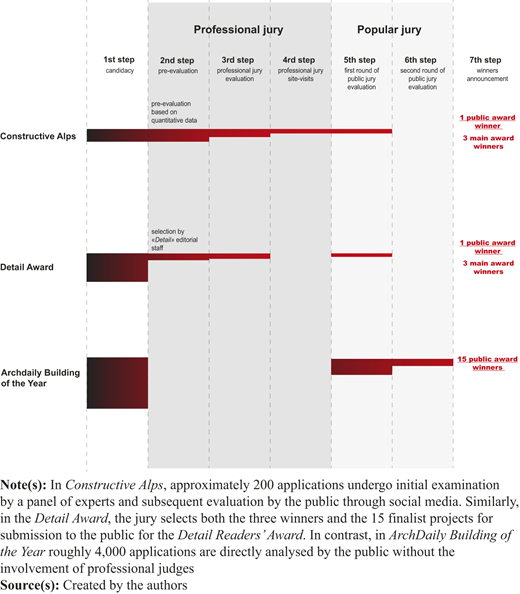
The evaluation process begins with a preliminary assessment of the applications – around 200 for each edition of the award – based on the above-mentioned quantitative data. A member of the jury is responsible for the preliminary evaluation of the applications received, assigning each project an increasing number of points according to its level of sustainability.
After processing and evaluating this first set of data (underlined in Table 2), the jury of eight experts meets to select the projects for the final phase of the competition. At this stage, the jury’s assessment is based on subjective criteria and focuses on the aspects of composition, distribution and insertion into the context. The triangulation of the pre-assessment on sustainability aspects and the subjective assessment of the jury narrows the selection down to 30 finalists.
Constructive Alps second step assessment criteria
| Constructive Alps second step assessment criteria (underlined those also present in the first step) | |
|---|---|
| Project profile (quantitative) | Sustainability aspects (qualitative and quantitative) |
| Cost of the project [€] | Life-Cycle Assessment |
| Gross floor surface [m2] | Soil Consumption reduction measures |
| Percentage of heated surface [%] | Greenhouse gas reduction measures |
| Energy Index [kWh/m2y] | Summer thermal insulation (type and calculations) |
| Heating Energy Consumption [kWh/m2y] | Shading system (type) |
| Cooling Energy Consumption [kWh/m2y] | Heating system (type) |
| Domestic Hot Water Consumption [kWh/m2y] | Cooling system (type) |
| Electricity Consumption [kWh/m2y] | Domestic hot water (type, coverage ratio) |
| Other consumption (specify) [kWh/m2y] | Ventilation (system, air change rate per person) |
| Photovoltaic Energy production [kWh/m2y] | Building management/IT automation systems |
| Solar Thermal Energy production [kWh/m2y] | Photovoltaic system (kWpeak) |
| Other sources of production (specify) [kWh/m2y] | Energy storage (type, capacity) |
| Building materials | |
| Project description (qualitative) | Problematic substances (PVC, CFCs, solvents) |
| Recycled or upcycled materials | |
| Urbanistic Concept | Water management |
| Architectural Approach | Contribution to ecological mobility |
| Social added value at local level | Participatory design process |
| Construction materials | Building’s contribution to social integration |
| Plants and air conditioning | Support of peripheral areas |
| Innovation characters | Social added value at local level |
| Awards and Certifications | Local public transport and infrastructures |
| Neighbourhood services within walking distance | |
| Thermal comfort | |
| Daylight and Acoustic performance | |
| Adaptation to climate change | |
| Creation of local value and value chains | |
| Cost-effectiveness (Life-Cycle Costing) | |
| Assumed duration | |
| Rental /Sale prices [€/m2] | |
| Construction costs [€] | |
| Operation and maintenance costs [€/y] | |
| Cost of facilities out of construction costs [%] | |
| Approach to sufficiency | |
| Durability of construction elements | |
| Separation of plants from the primary structure | |
| Plants (high and/or low tech) | |
| Reuse projects | |
| Deconstruction, Reuse and Recycling | |
Note(s): The criteria also present in the first phase are outlined
Source(s): Created by the authors
Finalists will be required to complete a more detailed application form for the second stage, which will serve as the basis for the final assessment by the professional jury. This form requests more detailed information with respect to the first-stage application form and covers many additional aspects. Firstly, it requires short texts about the project’s concept from an urban, architectural, social, technological and systems point of view. Next, the body of the application has three chapters focusing on environmental, social and economic sustainability. In these sections, designers must provide a variety of quantitative and qualitative data. This information ranges from the type of air treatment system used, wastewater reuse strategies, materials used, inclusion of participatory design processes, support for marginalised areas, creation of local value and estimates of maintenance, demolition or reuse costs (see Table 2 for a more detailed overview of the criteria).
At this point, the competition splits into two distinct processes. The professional jury visits the finalist projects in person and examines their architectural and sustainability features in more detail.
Meanwhile, the public section of the Award takes place: the finalist projects are presented through stories and reels on social media platforms, such as Instagram and Facebook. Here, users are invited to vote for their favourites on the awards’ main website. The website features a summary page with the thirty finalists, presented with a photo and the title of the project. A click on one of the projects brings the user to a dedicated page, which contains six photos, a text provided by the designers, and a datasheet indicating the location, the authors, the cost of the work and the energy performance index of the building expressed in kWh/m2y. At this point, users cast their vote for a single building of their choice for the public award.
It is important to note that the public’s judgement is therefore based solely on general information provided during the first phase of registration and is limited to the 30 finalists selected by the professional jury. On the other hand, the professional jury’s assessment is based not only on detailed information provided by the finalists in the second form described above but also on on-site visits.
Finally, the professional jury selects three winners, while the project that obtains most of the votes from the popular jury wins the public award. Only the awards given by the professional jury include a cash prize; the winner of the public award receives only recognition through publication on social media and catalogues.
As of 2024, the two editions of the award have recognised the Italian architectural firm Bressan & Botter for their Conference Centre project in Italy and the Austrian firm Rainer Schmid Architekten for the refurbishment of a lodge in Austria.
4.2 Detail Readers’ Award
The Detail Award has been organised by the « Detail » journal since 2005 and is held every two years. The award is open to buildings completed in the last three years, regardless of their geographical location. The award is divided into three sections: the Detail Award, the main section, which is judged by a professional jury; the Detail Award for Students and Schools of Architecture, also judged exclusively by the professional jury, which is dedicated to projects carried out by university students; and finally, the Detail Readers' Award, which is evaluated by a popular jury. This last section was only introduced in 2022 and has only run for two editions to date.
The students’ section, which runs independently of the other two, is not of interest for the purposes of this paper. After the submission of an entry – which is handled by the professor of the course in which the prototype or architectural project was created – the professional jury evaluates the entries and announces a winner.
On the other hand, the main and public sections have overlapping stages before diverging later in the process. The application process for both sections is identical and open to both architects and clients. The online application form requires general information about the project, such as its location, client, authors, dimensions and construction costs, as well as a project description of approximately 400 words. Applicants must also upload to the platform four representative photographs of the project and an A1 format board containing materials of their choice. These materials will form the basis of the evaluation, first by the journal’s editorial team, and then by the professional and popular juries.
Firstly, the editorial board of «Detail » reviews all the entries to ensure that they meet the formal requirements and filters out some of them. Although the call for entries does not specify any criteria for this initial selection, the stated aim of the award is to « highlight excellence in design, a comprehensive sustainability strategy, exceptional structural execution and a harmonious choice of materials » [4].
The professional jury then selects the three winners of the Detail Award, the winner of the Detail Award for Students and Schools of Architecture, and fifteen finalists for the Detail Readers' Award, from which the popular jury chooses its favourites. Again, this stage is not guided by any specific criteria beyond the professional expertise of the judges, and even if the judges do have criteria for the evaluation, these are not made public.
The Detail Readers' Award starts when users are invited to vote for their favourite project from the fifteen finalists. The award is promoted through social media platforms via stories and reels, as well as through the journal’s newsletter. Users are directed to the award’s official website, where they can vote once a day for their favourite architectural project – with the possibility of casting multiple votes for the same building.
On the website, the fifteen finalists are presented on a summary page, each one with a cover photo and a short text. Clicking on an individual project it is possible to visit its dedicated page, which contains a variable number of photographs but no drawings. Each project page also contains a brief commentary of the professional jury and a descriptive text provided by the designers.
After two months of voting, the project with the highest number of votes is declared the winner of the Detail Readers' Award.
The inaugural edition of the award, held in 2022, was won by the Danish firm BIG – Bjarke Ingels Group – for an industrial building located in Norway. The second edition, held in 2024, awarded Dorte Mandrup Studio for a visitor centre in Greenland.
4.3 ArchDaily Building of the year
ArchDaily Building of the Year has been held annually since 2009, with the exception of 2013. It places the entire judging process in the hands of the public, emphasising popular recognition over expert judgement. With thousands of nominations submitted each year – over 4,000 for the latest edition in 2024 (Hernández, 2024) – the award relies on a popular jury to select the winners in several functional categories. These have evolved over time, with some being added or removed from year to year, but in recent editions, there have been fifteen: Healthcare, Small Scale & Installations, Hospitality, Educational, Offices, Public & Landscape, Best Applied Products, Commercial, Religious, Houses, Cultural, Interior, Sports, Industrial, and Housing.
All buildings already uploaded to the ArchDaily platform are eligible. Consequently, unlike the other awards analysed, the project profiles on ArchDaily exist independently of the course of the award.
This way, the categorisation of the buildings into the functional categories and the submission of materials – such as photographs, drawings and descriptive texts – is not done specifically for the award, but is part of the process of uploading to the platform. The project profile includes a data sheet, a selection of photographs, drawings – which are not always available – and a descriptive text written by the architects.
When the nomination period is open, architects or clients can nominate their own work, or it can be nominated by a third party who considers the project noteworthy. In fact, any registered user of the platform can freely nominate a project published within the last year.
Both the nomination and subsequent voting phases are heavily promoted on ArchDaily’s social media channels through posts, reels and stories that direct users to the main voting page on the website.
As previously reported, the process begins with the nomination phase, where every platform registered user is able to nominate its favourite projects in each of the fifteen functional categories. Following this phase, a first round of voting will select 75 finalists – five for each category. Then, in a final round of voting, the public jury chooses one winner per category.
All these stages are based on the information provided in the project profile on the ArchDaily website and promoted on the platform’s social media and newsletter. There is no additional information provided specifically for the award.
As the award has now been active for 15 editions, it is possible to carry out a quantitative analysis to identify the most recurrent architects or firms in the Hall of Fame since 2009 and their geographical origin. Over the fifteen editions, the Danish studio BIG stands out as the most awarded, with eight winning projects. BIG is followed by Dutch firm MVRDV with six winning projects, and by the Swiss duo Herzog & de Meuron, OMA/AMO from the Netherlands and the Chinese studio MAD that have each won four times. Other notable practices with three awarded projects each are: Cobe (Denmark), Foster + Partners (England), Heatherwick Studio (England), Vo Trong Nghia (Vietnam) and ARCHSTUDIO (China) (Figure 1). Further analysis reveals that many of the winning works from these studios are not located in the countries where the firms are based. In fact, the analysis of the geography of the winning projects (Figure 2) reveals that a significant number of them is in China (around 14%), and Portugal (around 11%) whereas the remaining are mainly found in Europe, and in smaller numbers in the Americas or Asia. The least represented continent is Africa, with projects only in Morocco, South Africa and Rwanda.
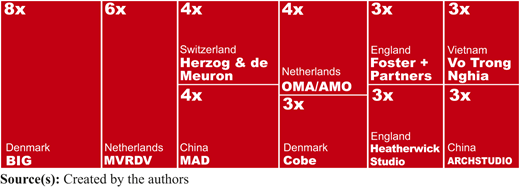
The graphic shows the most awarded architectural offices in the fifteen editions of ArchDaily Building of the Year
The graphic shows the most awarded architectural offices in the fifteen editions of ArchDaily Building of the Year
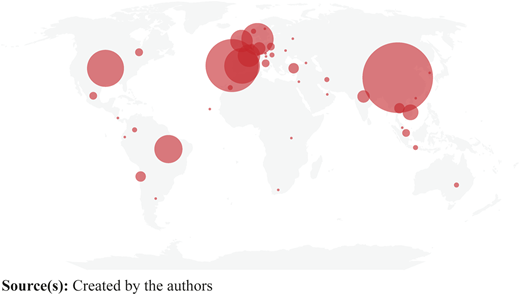
The cartography represents the nations with the most awarded projects in ArchDaily Building of the Year
The cartography represents the nations with the most awarded projects in ArchDaily Building of the Year
5. Discussion: the three awards compared
The different evaluation methods used in the three awards, as well as the presence or absence of a professional jury, highlight different strategies for increasing social media users’ critical engagement within architecture. Constructive Alps, Detail Readers' Award and ArchDaily Building of the Year (Figure 3) illustrate the challenges and opportunities that public awards and social media bring to the field of architectural criticism through their peculiar evaluation processes.
It is important to emphasise that social media is primarily used to promote the awards and encourage public participation in the voting process, but the latter takes places on a different platform, often a dedicated website. This is just one of several common elements shared by the awards. Constructive Alps and the Detail Readers' Award take a more balanced approach, combining expert judgement with public participation. This dual involvement of professionals and the public ensures a deeper engagement with architectural criticism, particularly in the case of the Detail Readers’ Award, where a professional commentary is provided to the popular jury. However, the professional jury’s assessments of the two awards are based on different criteria.
Constructive Alps includes objective sustainability criteria and subjective jury evaluation, whereas Detail Readers' Award is based exclusively on the professional expertise of the jury. Both awards present to the popular jury a selection of projects made by a professional jury. Presenting a selection of projects allows, on the one hand, the users to understand which are the best practices, but, on the other, it limits the audience’s ability to interpret, considering that they are provided with very few material for judgement.
Indeed, as evidenced by the data analysis and detailed in Table 3, among the three awards, the two that involve a professional jury are also the ones that provide the least amount of material for the popular jury to base their evaluations on. Taking into account this aspect, the Detail Readers’ Award stands out positively, as it offers a brief commentary by the professional jury on the selected project, in addition to generally providing more material – both textual and visual – than Constructive Alps. The additional element offered by Constructive Alps is the building’s energy index, in line with the thematic focus of the award. However, this indicator may appear unclear to a popular jury, especially if it is not supported by additional indicators, including qualitative ones, which are only accessible to professional judges.
The different materials provided to the popular juries by the three awards
| Materials available for the popular jury | Constructive Alps | Detail Readers' Award | ArchDaily Building of the Year |
|---|---|---|---|
| Project datasheet | ✓ | ✓ | ✓ |
| Professional jury commentary | – | About 80 words | – |
| Descriptive text provided by the architects | Between 100 and 150 words | About 300 words | Between 300 and 500 words |
| Photographs | 6 | Between 4 and 15 | Between 15 and 40 |
| Drawings | – | – | From zero to a dozen |
| Building’s Energy Index | ✓ | – | – |
Source(s): Created by the authors
In contrast, ArchDaily Building of the Year provides the popular jury with more material, giving the possibility to make an informed decision. It is the only award that includes architectural drawings, along with a much larger number of photographs than the other two, and a much longer and more detailed descriptive text. However, as it is only open to a popular jury, it lacks expert or professional commentary on the projects, which could provide additional context and insight.
The fact that the judging process is primarily based on photographic material is the essential common denominator of the three awards. Not only, does it feature prominently in the project applications and thus in their dedicated web pages, at the expense of short descriptive texts, but it also plays a significant role in the promotion of the projects on social media platforms.
In all three awards, the photographs published both on the dedicated web platforms and on their social media channels adhere to the conventions of architectural photography, characterised by a perfect climate and no people [to] mimic the perfect but sterile conditions of the artwork in the gallery (Cooke and Hill, 2002). These images encompass all scales of the building, from its integration into the urban context to its interiors and down to technological details, with no subjects other than the building itself. Construction site photographs are rarely included unless the project’s technological features are its primary focus. Even rarer are images depicting the building in use. The photographs are typically taken by professional photographers shortly after construction is completed but before the building is occupied. This is evident from the absence, in the photographs, of any personal objects belonging to the inhabitants, unnecessary additions that might disturb the purity of the representation of the architectural object. These images, born to be consumed, must be in absolute order (Baudrillard, 1998, p. 27), without any object that could undermine the architectural space. The over-reliance on this kind of photographic material for evaluation is a major obstacle to the critical engagement of the popular jury. Indeed, the staging and framing of architectural photography can disproportionately influence public perception, favouring the more visually appealing projects. The question is how to constructively and critically integrate photography with other forms of representation, requiring an « ecology of images» (Sontag, 2005, p. 141) and a visual literacy comparable to that of textual analysis (Stoller, 1963, p. 44). As Louise Noelle Gras states, «a visit to a building is indispensable when conducting a responsible and profound analysis» and «photography should neither displace nor be a substitute for direct observation» (Gras, 2022).
At the same time, it would be impossible for the large audience of these awards (the Instagram page of ArchDaily alone has over 3.5 million followers) to visit each nominated building scattered across the globe. Therefore, architectural photography remains an essential tool for disseminating architectural culture on social media and the internet. Nevertheless, to enable public engagement in architectural criticism, it is essential to guide users beyond superficial impressions and inform them of the broader meaning of architectural projects. Therefore, providing the public with images to share or react to is not enough to guarantee their active and democratic involvement in architectural criticism. Through the infinite social media network, it is necessary to critically guide and inform as many users as possible without relying exclusively on perfect staged photographs.
The first two awards analysed illustrate a promising approach, inviting public participation while providing guidance and context thanks to the formative role of the professional jury. The presence of a jury composed of experts can prevent architecture created explicitly for media consumption and relying solely on the aesthetic of photography from overshadowing projects deeply rooted in socio-cultural and economic contexts. However, it cannot be guaranteed that even the professional jury does not base its judgement primarily on photographs and visual impressions, especially when site visits are not part of the evaluation process.
Moreover, while the Constructive Alps and Detail Readers’ Award have positive aspects due to the involvement of professional juries, the material provided to the popular jury is remarkably limited and mostly photographic. This scarcity itself exacerbates the problem of over-reliance on architectural photography, undermining the rigorous evaluation process carried out by the expert jury and failing to fully harness the potential of these awards to disseminate architectural culture.
All three awards highlight the influence of public networks, raising questions about the role of popularity over architectural merit. Indeed, winning often depends on the designer’s networking skills. As observed, particularly in the time series of ArchDaily Building of the Year, the winning firms are often global architecture practices with offices spread worldwide, led by star architects with significant public followings on social media, so with a relevant number of guaranteed votes.
Examining the processes of these awards, and the materials on which popular jury assessments are based, makes clear that while social media can democratise architectural criticism through public architecture awards, it also risks oversimplifying complex architectural achievements into easily consumable visuals, or favouring certain projects solely on the basis of their media resonance. This tension between democratisation and oversimplification requires ongoing reflection on integrating public engagement while maintaining quality architectural criticism.
6. Conclusion
This paper explores the use of public architecture awards as a possible way of implementing architectural criticism in social media. It assesses their strengths and weaknesses by analysing three awards with different approaches to public participation.
The awards highlighted the principal limitations of promoting critical engagement on social media, largely due to the operating principles of these platforms. By prioritising virality (Berger and Milkman, 2011), photographic appeal and algorithmic filtering, social media often draw users into echo chambers or filter bubbles, limiting their exposure to diverse perspectives, hindering fruitful exchanges and reducing the depth of critical discourse. Moreover, the tendency to create user-friendly content discourages users from engaging in critical actions that could jeopardise their follower count. At the same time, social media channels risk fuelling sensationalism and reinforcing the exclusive and biased mechanisms of algorithms.
The analysis of ArchDaily Building of the Year winners shows that the most successful designers were already known worldwide before winning the award. This allows them to generate a significant number of social media interactions, ensuring their prominence within the algorithmic filtering processes of social media and a greater number of votes. Thus, lesser-known architectural designers are less likely to receive the same attention and remain perfectly unknown due to the same algorithms.
Nevertheless, architectural awards can be a valuable tool to promote user engagement in criticism on social media, especially because their process inherently involves judgement and evaluation, which, according to Wilfried Wang, is the primary goal of architectural criticism (Wang, 2022).
But it is not simply the act of voting that allows the public to engage in architectural criticism. It is everything that is behind the process – the visit to the website, the browsing of the different projects, the comparison of the projects and finally the choice and the voting. Through the intriguing processes of the awards, which use social media mechanisms to increase interactions, users could potentially improve their awareness of architectural issues and participate more consciously in the public debate on architecture.
Moreover, the widespread dissemination of information through social media offers unprecedented opportunities to produce and promote specific forms of architectural criticism and to « offer the public better access to professional or specialised debates» (Jannière and Scrivano, 2022). Information can quickly reach a large segment of users, a potential that is increasingly difficult to achieve with traditional media such as television, and even less so with newspapers and journals.
There is significant potential for future research to explore how social media can be used to promote a more inclusive and critical architectural discourse. In particular, the integration of professional expertise with public participation – especially in contexts such as architectural awards – offers a promising model to democratise architectural criticism. This requires a concerted effort to encourage more thoughtful engagement with architecture, helping users to navigate beyond first impressions and critically engage with the built environment. It also requires consideration of the quality and quantity of material provided to public juries to ensure they can make informed choices.
This paper makes a significant contribution to the study of cultural manifestations in architecture, focusing specifically on the role of social media in architectural awards, a topic that has been largely unexplored in academic discourse. By examining the processes, data and outcomes of these three awards, the study provides new insights into how user engagement and professional judgement intersect in the context of contemporary architectural criticism.
The main limitation of this study is the relative novelty of the phenomenon under investigation. The lack of historical data – except in the case of ArchDaily Building of the Year – limits the ability to draw comparisons or identify long-term trends. This limitation reflects the emergent nature of these award formats and the use of social media as a tool for public engagement with architecture.
Future research could focus on these new types of awards, which are becoming increasingly prevalent on a global scale. In particular, longitudinal studies tracking the evolution of these awards over time may help to identify their wider cultural and architectural impact.
In conclusion, the paper points towards a more inclusive and democratic architectural discourse in the digital age. Public architectural awards allow to redefine the relationship between critics and the public, with social media enabling individuals to become active participants in the critical discourse. The current challenge is to determine how social media users can effectively assume this new role as critics within the architectural cultural panorama, while ensuring that the discourse remains substantive, effectively bridging the gap between the professional sphere and the broader realm of social media. Public architecture awards can play a key role in this shift, promoting a more informed and democratic architectural discourse and allowing architectural criticism to go social.
Notes
Available at: https://datareportal.com/social-media-users (accessed 2 April 2024).
Alpine Convention, stipulated 7 November 1991, available at: https://www.alpconv.org/en/home/convention/framework-convention/ (accessed 24 March 2024).
Available at: https://www.constructivealps.net/it/presentazione/ (accessed 9 December 2024).
Available at: https://www.detail.de/de_en/detailaward-2024 (accessed 9 December 2024).
References
Further reading
Supplementary material
The list of the winning projects of all the editions of the three public awards
| Awards winners | 2009 | 2010 | 2011 | 2012 | 2013 | 2014 | 2015 | 2016 |
|---|---|---|---|---|---|---|---|---|
| Constructive Alps Public Award | ||||||||
| Detail Readers' Award | ||||||||
| ArchDaily Building of the Year | BTEK, Technology Interpretation Center, Spain, ACXT | Denmark Pavillion for Shangai 2010, China, BIG | Bilbao Arena, Spain, ACXT | London 2012 Velodrome, United Kingdom, Hopkins Architects | Tree Snake Houses, Portugal, Luís Rebelo de Andrade + Tiago Rebelo de Andrade | Cultura Bookstore, Brazil, Studio MK27 | Community Kitchen of Terras da Costa, Portugal, ateliermob + Colectivo Warehouse | |
| Yapi Kredi Bank Academy, Turkey, teget | Diana Center at Barnard College, USA, Weiss/Manfredi | Milstein Hall at Cornell University, USA, OMA | Cassia COOP Training Centre, Indonesia, Tyin Tegnestue Architects | Alcácer do Sal Residences, Portugal, Aires Mateus | Fogo Natural Park Venue, Cape Verde, OTO | Miu Aoyama Store, Japan, Herzog & de Meuron | ||
| The Yas Hotel, UAE, Asymptote | Hunsett Mill, United Kingdom, ACME | Moses Bridge, The Netherlands, RO&AD Architecten | CCTV Headquarters, China, OMA | Newbern Town Hall, USA, Auburn University Rural Studio | Farming Kindergarten, Vietnam, Vo Trong Nghia Architects | Cella Bar, Portugal, FCC Arquitectura + Paulo Lobo | ||
| House of Ruins, Latvia, NRJA | 60 Richmond Housing Collective, Canada, Teeple Architects | Museum of Ocean and Surf, France, Steven Holl Architects + Solange Fabiao | Municipal Healtcare cantres San Blas + Usera + Villaverde, Spain, Estudio Entresitio | Archery Hall & Boxing Club, Japan, FT Architects | Livsrum – Cancer Counseling Center, Denmark, EFFEKT | Vila Matilde House, Brazil, Terra e Tuma Arquitetos | ||
| Mountain Dwellings, Denmark, BIG + JDS | Temporary Bar, Portugal, Diogo Aguiar & Teresa Otto | Füleky Winery, Hungary, Építész Stúdió | Pedras Salgadas Eco-resort, Portugal, Lluis Rebelo de Andrade | Binh Thanh House, Vietnam, Vo Trong Nghia Architects + Sanuki + Nishizawa architects | Nine Bridges Country Club, South Korea, Shigeru Ban Architects | The Great Wall of WA, Australia, Luigi Rosselli | ||
| Huanacu Warehouse & Office, Chile, tFPS | Laposa Winer, Hungary, Atelier Peter Kis | Tori Restaurant, Mexico, Rojkind Arquitectos + ESRAWE Studio | New offices of the botin foundation, Spain, MVN arquitectos | Braamcamp Freire, Porutgal, CVDB arquitectos | Sambade House, Portugal, spaceworkers | House in Guimarães, Portugal, Elisabete de Oliveira Saldanha | ||
| Bastard Store, Italy, studiometrico | Closet House, Portugal, Consexto | Apartment Building, Luxembourg, Metaform Architects | Stacking green, Vietnam, Vo Trong Nghia | Antinori Winery, Italy, Archea Associati | The Iceberg, Denmark, CEBRA + JDS + SeARCH + Louis Paillard Architects | Factory on the Earth, Malaysia, Ryuichi Ashizawa Architect & Associates | ||
| Safe Haven Library, Myanmar, TYIN Tegnestue | Vodafone Headquarters, Portugal, Barbosa & Guimarães | MIMA house, Portugal, Mima Architects | Malopolska garden of arts, Poland, Ingarden & Ewy Architects | 48 North Canal Road, Singapore, WOHA | Wieden + Kennedy NY, USA, WORKac | School of Architecture at the RIT, Sweden, Tham & Videgård Arkitekter | ||
| Manitoba Hydro, Canada, KPMB | North Carolina Museum of Art, USA, Thomas Phifer and Partners | Town Hall Hotel, United Kingdom, rare | Reading Between the Lines, Belgium, Gijs Van Vaerenbergh | Three Cusps Chalet, Portugal, Tiago do Vale Arquitectos | The Building on the Water, China, Álvaro Siza + Carlos Castanheira | Partners In Health Dormitory, Rwanda, Sharon Davis Design | ||
| National Tourist Route Trollstigen, Norway, Reiulf Ramstad Arkitekter | Vakko Headquarters and Power Media Center, Turkey, REX | Tverrfjellhytta, Norway, Snøhetta | CINiBA, Poland, HS99 | Tete in L’air, France, KOZ Architectes | Twin Stations, Hungary, sporaarchitects | Intesa Sanpaolo Office Building, Italy, Renzo Piano Building Workshop | ||
| 55 Blair Road, Singapore, ONG & ONG | Bridge in Esch, Luxembourg, Metaform Architects | Chapel Tree of Life, Portugal, Cerejeira Fontes Arquitectos | Absolute Towers, Canada, MAD Aarchitects | Saint John Baptist Chapel, Spain, Alejandro Beautell | The Number 6, Italy, Building | Harbin Opera House, China, MAD Architects | ||
| Farewell Chapel, Slovenia, OFIS | Urban Outfitters Corporate Campus, USA, MSR Design | iGuzzini Illuminazione Headquarters, Spain, MiAS Arquitectes | D38 Office, Spain, Arata Isozaki | Walmart Sao Paulo, Brazil, Estudio Guto Requena | Sancaklar Mosque, Turkey, Emre Arolat Architects | The New Bordeaux Stadium, France, Herzog & de Meuron | ||
| Zamet Centre, Croatia, 3LHD | Tampa Covenant Church, USA, Alfonso Architects | The Crystal, Denmark, Schmidt Hammer Lassen Architects | Cinema Center in Matadero de Legazpi, Spain, ch + qs arquitectos | Fuel Station + McDonalds, Georgia, Giorgi Khmaladze | Arena do Morro, Brazil, Herzog & de Meuron | House of Vans London, United Kingdom, Tim Greatrex | ||
| Richmond Olympic Oval, Canada, Cannon Design | Fraunhofer Headquarters, Portugal, Pedra Silva Architects | Superkilen, Denmark, Topotek 1 + BIG + Superflex | Danish National Maritime Museum, Denmark, BIG | Carozzi Production and Research Food Center, Chile, GH + A | Guillermo Hevia | Ribbon Chapel, Japan, NAP Architects |
| Awards winners | 2017 | 2018 | 2019 | 2020 | 2021 | 2022 | 2023 | 2024 |
|---|---|---|---|---|---|---|---|---|
| Constructive Alps Public Award | Conference Center, Italy, Bressan e Botter | Falkenhütte Refurbishment, Austria, Rainer Schmid | ||||||
| Detail Readers' Award | The Plus, Norway, BIG | Kangiata Illorsua Visitor Centre, Greenland, Dorte Mandrup | ||||||
| ArchDaily Building of the Year | Pavilion Dufour Château De Versailles, France, Dominique Perrault Architecte | CaixaForum Sevilla, Spain, Vázquez Consuegra | Brick Cave, Vietnam, H&P Architects | A House, Portugal, REM'A | Apple Central World Bangkok, Thailand, Foster + Partners | New Interior for Casa Batlló Stairs & Atrium, Spain, Kengo Kuma & Associates | Convento do Beato Event Center, Portugal, RISCO | The Mayoral New Warehouse Logistics Center, Spain, System Arquitectura |
| ICD-ITKE Research Pavilion 2015–16, Germany, ICD-ITKE University of Stuttgart | Apple Store Michigan Avenue, USA, Foster + Partners | Sesc 24 de Maio, Brazil, Paulo Mendes da Rocha + MMBB Arquitetos | Ultra-Fast Charging Station for Electric Vehicles, Denmark, COBE | Gramalote Market Square, Colombia, Niro Arquitectura + OAU | Bridge Gallery, China, Atelier Lai | Shangai Suhe MixC World, China, Kokaistudios | Solar Trees Marketplace, China, Koichi Takada Architects | |
| Frederiksvej Kindergarten, Denmark, COBE | Zeitz Museum of Contemporary Art Africa, South Africa, Heatherwick Studio | The Macallan New Distillery and Visitors Experience, United Kingdm, Rogers Stirk Harbour + Partners | Musée Yves Saint Laurent Marrakech, Morocco, Studio KO | MoAE – Huamao Museum of Art Education, China, Álvaro Siza + Carlos Castanheira | Chapel of Sound, China, OPEN Architecture | Brazil pavilion Expo Dubai, UAE, MMBB Arquitetos + Ben-Avid + JPG.ARQ | Istanbul Modern Museum, Turkey, Renzo Piano Building Workshop + Arup | |
| Leixões Cruise Terminal, Portugal, Luís Pedro Silva Arquitecto | Children Village, Brazil, Rosenbaum + Aleph Zero | A45, USA, BIG | Chongqing Nankai LiangJiang Secondary School, China, gad | Boys and Girls Club, Mexico, CCA Centro de Colaboración Arquitectónica | Plaza of Kanagawa Institute of Technology, Japan, junya ishigami + associates | Jadgal Elementary school, Iran, Daaz office | Lung Vai School, Vietnam, 1 + 1>2 Architects | |
| VIΛ 57 West, USA, BIG | Santa Fe de Bogotá Foundation, Colombia, El Equipo de Mazzanti | Morpheus Hotel, Macao, Zaha Hadid Architects | Wood/Pile, Germany, Kengo Kuma & Associates | Maggie’s Leeds Centre, United Kingdom, Heatherwick Studio | Villa M, France, Triptyque Architecture | University hospital in tangier, Morocco, Hajji & Elouali + Architecturestudio | Steno Diabetes Center, Denmark, Vilhelm Lauritzen Architects + Mikkelsen Architects + STED | |
| Elbphilharmonie Hamburg, Germany, Herzog & de Meuron | KOI Café, Vietnam, Farming Architects | Imaculada and Cheia de Graça Chapel, Portugal, Cerejeira Fontes Architects | Garden Hotpot Restaurant, China, MUDA-Architects | Bamboo Hostels, China, Studio Anna Heringer | 50% Cloud Artists Lounge Restaurant, China, Luo Xu + CCD | House and restaurant, Japan, junya ishigami + associates | Yellow-Mini Café, Thailand, JOYS Architects | |
| The Stealth Building, USA, WORKac | Optical Glass House, Japan, Hiroshi Nakamura & NAP | Weihai Hospital of Traditional Chinese Medicine, China, GLA | House in Monsaraz, Portugal, Aires Mateus | Qishe Courtyard, China, ARCHSTUDIO | Ca’n Terra House, Spain, ENSAMBLE STUDIO | House in Pomar do Cafezal, Brazil, Coletivo LEVANTE | CHUZHI House, India, Wallmakers | |
| Maggie’s Cancer Centre Manchester, United Kingdom, Foster + Partners | Huangshan Mountain Village, China, MAD Architects | Streetmekka Viborg, Denmark, EFFEKT | L’Arbre Blanc, France, Sou Fujimoto + Nicolás Laisné + OXO architects + Dimitri Roussel | Presence in Hormuz 2, Iran, ZAV Architects | Ilot Queyries Apartment Building, France, MVRDV | Terrace house, Australia, austin maynard architects | 450 Warren, USA, SO-IL | |
| Tangshan Organic Farm, China, ARCHSTUDIO | Herdade Of Freixo Winery, Portugal, Frederico Valsassina Arquitectos | Maya Somaiya Library, Sharda School, India, Sameep Padora & Associates | CopenHill Energy Plant and Urban Recreation Center, Denmark, BIG | The Erlang Liquor Storehouse of Langjiu Estate, China, Langjiu Group + DCA | (Re)forming Duichuan Tea Yards, China, O-office Architects | Headquarters Carmo Coffee, Brazil, Gustavo Penna Arquiteto e Associados | Mallcom Factory, India, IKSOI | |
| Hubba-to, Thailand, Supermachine Studio | Nike New York Headquarters,USA, WSDIA + STUDIOS Architecture | Coal Drops Yard, United Kingdom, Heatherwick Studio | Chongqing Zhongshuge Bookstore, China, X + Living | Off-White Flagship Store Miami, USA, Virgil Abloh + AMO | Second Home Holland Park, United Kingdom, Selgascano | Atelier Gardens Studio 1, Germany, MVRDV | Readellion Bookstore, Ukraine, prototype | |
| Capilla San Bernardo, Argentina, Nicolás Campodonico | RIJNSTRAAT 8, The Netherlands, Ellen van Loon /OMA | Dream & Maze, China, Studio 10 | Second Home Hollywood Office, USA, Selgascano | Concordia Design Wrocław, Poland, MVRDV | Law Firm Headquarters, Brazil, BLOCO Arquitetos + Renata Dutra Arquitetura | CapitaSpring, Singapore, BIG + Carlo Ratti Associati | On Labs, Switzerland, Specific Generic + Spillmann Echsle Architekten | |
| Sonora Stadium, Mexico, 3Arquitectura | Zaryadye Park, Russia, Diller Scofidio + Renfro | Future Towers, India, MVRDV | Jewel Changi Airport, Singapore, Safdie Architects | Microlibrary Warak Kayu, Indonesia, SHAU Indonesia | Palacio Pereira, Chile, Cecilia Puga + Paula Velasco + Alberto Moletto | One Green Mile, India, MVRDV | Opera Park, Denmark, Cobe | |
| BBVA Bancomer Tower, Mexico, LEGORRETA + Rogers Stirk Harbour + Partners | Waterside Buddist Shrine, China, ARCHSTUDIO | UCCA Dune Art Museum, China, OPEN Architecture | Wooden Chapel, Germany, John Pawson | Islamic Religious and Cultural Center in Ljubljana, Slovenia, Bevk Perović arhitekti | Niijima Gakuen Junior College Hall & Chapel, Japan, Tezuka Architects | The Chamber Church, China, Büro Ziyu Zhuang | Sagrada Familia Parish, Brazil, ARQBR Arquitetura e Urbanismo | |
| Yellow Submarine Coffee Tank, Thailand, Secondfloor Architects | 100 Classrooms for Refugee Children, Jordan, Emergency Architecture & Human Rights | C&P Corporate Headquarters, Austria, INNOCAD | Parasite House, Ecuador, El Sindicato Arquitectura | Bamboo Canopy and Pavilions, China, IILab | Types of Spaces Installation at CONCÉNTRICO Festival, Spain, Palma + HANGHAR | Glass House, Chile, Max Núñez | Patagonian Shadow Pavilion, France, DRAA | |
| Crystal Houses, The Netherlands, MVRDV | Gymnasium of New Campus of Tianjin University, China, Atelier Li Xinggang | House in a Garden, United Kingdom, Gianni Botsford Architects | Simonne-Mathieu Tennis Court at Roland Garros, France, Marc Mimram | Costa Rica Athletic Center, Costa Rica, Studio Saxe | Camp del Ferro Sports Center, Spain, AIA + Barceló Balanzó Arquitectes + Gustau Gili Galfetti | Quzhou Sports Park, China, MAD Architects | Indoor Sports Field of Shaoxing University, China, UAD | |
| Casa Cabo de Vila, Portugal, spaceworkers |
Source(s): Created by the authors

