


We aimed to investigate what dimensions constitute the culture of sustainability of a modern university, recognize and discuss research on the culture of sustainability of universities (CoSoU) and identify the basic dimensions that contribute to this culture.
We used a systematic literature review based on the PRISMA method (preferred reporting items for systematic reviews and meta-analyses), followed by synthesis, conceptual work and logical reasoning.
We observed the most significant increase in articles on the topic under study since 2015, with researchers from the United States dominating, thus confirming the research gap concerning European countries. Our research indicates the dominance of four CoSoU dimensions, i.e. leadership, engagement, communication and relations with stakeholders. We also proposed the model structure of the CoSoU dimensions and its definition.
The research covered open-access texts. We limited it to the English language and full-text studies and excluded monographs or doctoral dissertations. This certainly did not allow us to investigate the problem holistically. Readers may consider the article an original implication to science, allowing it to fit into the existing research gap. We propose a set of important dimensions that constitute the university’s culture of sustainable development. We place equal importance on the definitions of the analyzed dimensions of sustainability culture and the CoSoU definition.
Leaders at universities, e.g. rectors and deans, can consider the identified dimensions and progressively provide them as conditions conducive to achieving sustainable development goals. The indicated CoSoU dimensions can be the subject of training for employees and university authorities.
The issue of organizational culture as such focuses primarily on shaping social behavior, in this case, the academic community.
The novelty of the article lies in addressing the topic of the culture of sustainability concerning universities and filling the research gap. A set of CoSoU dimensions, a definition of CoSoU and a model construct of CoSoU also constitute original proposals.
Introduction
Sustainable development (SD) is a firmly established concept in both public debate and the practice of political, social, and economic life. According to the Brundtland Report, SD is “development that meets the needs of the present without compromising the ability of future generations to meet their own needs.” Therefore, the concept emphasizes the need to change the contemporary socio-economic model to one that meets this demand (World Commission on Environment and Development, 1987). A long-term strategy for companies transitioning to sustainability is based on three important dimensions of sustainability, i.e. environmental quality, social equity, and economic benefit. Its representation in the triple bottom line (TBL) model – people, planet and profit. In 1994, Elkington introduced the term TBL and reflected the mutual influences and relationships between these areas (Correia, 2019). The triple bottom line helps organizations look at the economic value they generate and enables them to consider environmental and social values in evaluating their operations (Żak, 2015). The triple-bottom-line structure of sustainability applies not only to companies but also to other organizations, such as higher education institutions. Noteworthy, higher education institutions have a significant direct and indirect economic impact on the local and regional economy: their employees and students increase consumer demand, use of services, and tax revenues in the region. The provision of locally relevant skills and knowledge contributes to regional business innovation and employment. Economically responsible higher education institutions should also conduct their activities cost-effectively, managing public funds under the principles of economic viability (Puukka, 2008).
Education at all levels plays a key role in spreading the SD idea, especially since it is part of the fourth goal of the sustainable development goals (SDGs) (Nazar, Chaudhry, Ali, & Faheem, 2018). However, due to their social function, universities have a special role in this regard. They have a long and rich history. They started as an educational establishment and later assumed the knowledge-creating (research) function and, more recently, the so-called third mission (engagement). With the expansion of higher education participation, universities have acquired a larger potential for contributing to societal development. Furthermore, higher education institutions undertake fundamental and applied research in different disciplines of science to improve human understanding of life (Chankseliani & McCowan, 2021). Academic articles (e.g. Amoros Molina et al., 2023; Leal Filho, Salvia, & Eustachio, 2023a; Leal Filho, Simaens et al., 2023b) have emphasized the role of higher education in promoting and advancing the SDGs for years. However, for this commitment to be real and complete, universities should integrate the principles of sustainability into their management strategy (Leal Filho, Simaens et al., 2023b). This will not be possible without introducing and improving an organizational culture (OC) focused on sustainability. Therefore, according to the belief that success depends on OC (Taheri, Monshizadeh, & Kordiani, 2015; Kaligis, Tumbelaka, & Goni, 2023), scholars assume that becoming a sustainable organization requires building the right sustainability culture. Researchers make it clear that organizational changes related to sustainability at universities require changes in OC (Ellett, Demir, & Monsaas, 2015). As with implementing any change in an organization, implementing sustainability requires both the right technologies and tools and constructing a culture that supports the process. Every year, the literature provides many articles on the sustainability culture (e.g. Galpin et al., 2013; Ketprapakorn & Kantabutra, 2022; Assoratgoon & Kantabutra, 2023). In parallel, scholars describe the phenomenon of green culture (Wang, Sommier, & Vasques, 2022; Şengüllendi, Bilgetürk, & Afacan Fındıklı, 2023). However, there is still not too much work on sustainability culture, particularly the culture of university sustainability. This is especially true with regard to studies originating in Central European countries, which we identify as a research gap. Thus, recognizing the state of research in this area around the world, we aimed to answer the following research question: (RQ) What dimensions should constitute the culture of sustainability of a modern university? Having the above in mind, we aimed to recognize and discuss research work on the sustainability culture at universities and identify the basic dimensions that contribute to this culture. To this aim, we asked the following supporting questions: (RQ1) When and in what period did the authors write the articles, where did they write them, and what kind of articles are they?; (RQ2) How do the authors define the culture of sustainability of universities, and do they define it at all?
We used a systematic literature review based on the PRISMA method (preferred reporting items for systematic reviews and meta-analyses) to implement the research assumptions. Next, we used the methods of synthesis, conceptual work, and logical reasoning.
After the introduction, the article will present a literature section as a general basis for further consideration. Next, we will present the research methodology with a description of the research process, followed by the analysis and discussion of the results. The article will end with conclusions, which will additionally highlight research limitations and indicate future research directions.
The sustainability culture: literature review
Organizational culture constitutes a key resource for any organization (Pan, Pan, & Hsieh, 2006). Scholars consider it the glue (Andrew & Mohankumar, 2015; Nerowati, Sitiari, & Sara, 2018), the spirit (Satri, Adil, & Suardi, 2023), and the asset (Apiti, Ugwoke, & Chiekezie, 2017; Karaś & Mazur-Włodarczyk, 2022) of the company. E.H. Schein defines OC as:
A pattern of shared basic assumptions that was learned by a group as it solved its problems of external adaptation and internal integration that has worked well enough to be considered valid and, therefore, to be taught to new members as the correct way to perceive, think, and feel in relation to those problems (Schein, 2004).
Many works emphasize OC’s importance for the development of the organization, confirming its impact on efficiency (Ghimire, Rai, & Dahal, 2021; Kumar, Chau, Negash, & Tang, 2022), motivation at work (Dewi & Wibow, 2020; Putra, 2024), job satisfaction (Murtiningsih, 2020; Jamaludin & Subiyanto, 2023), employees’ sense of identity (Sułkowski, 2013; Watkins & Smith, 2022), on building bonds between personnel (Almarashdah, 2024) and broadly defined employee welfare (Monteiro & Joseph, 2023), as well as the stakeholder’s perception of the organization (Arduini, Manzo, & Beck, 2023; Assoratgoon & Kantabutra, 2023).
The latter factor affects the organization’s relationship with the market and with society at large. At the same time, OC is not a monolith (Kimata & Itakura, 2021). Each organization has different and specific subcultures that constitute connected vessels feeding the overall OC and function as powerful inhibitors for seeking excellence in functioning (Mannion & Davies, 2018). One of those is the SD culture, which we may understand as a key factor of development and may facilitate social inclusion, freedom of expression, identity building, civil empowerment, and conflict prevention while strengthening economic growth. It supports cultural policies where it might help achieve SD (see paragraph 35 of the European Consensus of Development, 2017; de Vries, 2020).
When sustainability principles are incorporated into the culture of an organization, it results in the formation of a culture of sustainability (Kumari, Bagra, Venkata, Deepaware, & Bansal, 2022). Various forms of this concept appear in the literature on the subject, such as the already-cited “culture of sustainability” (Kumari et al., 2022; Möller & Grießhammer, 2022), “culture of sustainable development” (Sułkowski, Kolasińska‐Morawska, Seliga, Buła, & Morawski, 2021) or “sustainable culture” (Maldonado-Guzmán & Pinzón-Castro, 2023). It seems that we may consider them synonymous. Regarding the university, we adopted the term “a culture of sustainability of universities” (CoSoU).
Methodology
To achieve the research goals, we used the PRISMA method. Originally, scholars developed the PRISMA model for medical sciences, but researchers in other scientific disciplines, including management sciences also use it. An essential element of the model is the algorithm, which consists of identification, screening, exclusion, and inclusion (Page et al., 2021). Figure 1 shows a PRISMA-based record identification and selection framework, using a framework that uses the Diagramme package to develop a configurable flowchart compliant with the PRISMA 2020 standards (Haddaway, Page, Pritchard, & McGuinness, 2022).
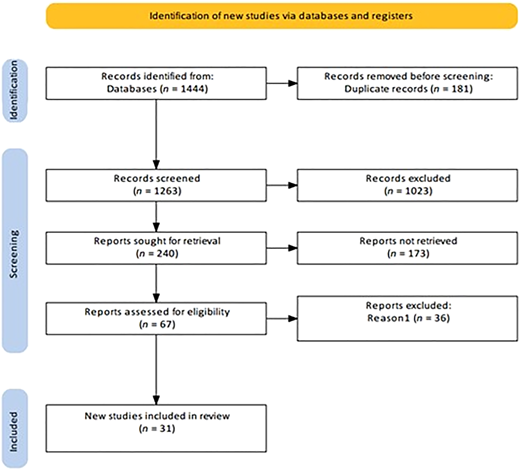
PRISMA diagram of the study conducted. Source: Authors’ own elaboration based on Haddaway et al. (2022)
PRISMA diagram of the study conducted. Source: Authors’ own elaboration based on Haddaway et al. (2022)
We used the following phrases in the study: “sustainable development,” “culture,” and “university.” We used databases available in the repository of the home university to search for articles, including Science Direct, Scopus, Emerald, and WoS. The research agenda covered the period 2000–2023. In the first stage, we obtained 1,444 records. The results included duplicates (n = 181). After we removed them, we obtained 1,263 records. At this stage, we used the following criteria for filtration: English language, full access to articles, publications from scientific journals, and peer-reviewed books published in the years 2000–2023. We obtained 240 matching records, 173 of which did not refer to the topics “sustainable development, culture, and higher education” in the abstracts, even though they contained them as keywords. Of the 67 articles subjected to content analysis, only 31 referred to issues of interest.
Finally, we prepared the selected articles for analysis according to a predefined checklist (see Table 1). The checklist included the first author's name, publication dates, country of origin of the main author, article type (e.g. research, case study), and dimensions of sustainability culture
Literature review results
| Pos | Authors | Country of origin* | Article classification** | Dimensions | |||
|---|---|---|---|---|---|---|---|
| Leadership | Engagement | Communication | Relations with stakeholders | ||||
| 1 | Corcoran and Koshy (2010) | United States | Research article | X | X | ||
| 2 | Wigmore (2010) | Spain | Case study | X | |||
| 3 | Levy and Marans (2012) | United States | Case study | X | X | ||
| 4 | Posner and Stuart (2013) | United States | Case study | X | |||
| 5 | Bullock and Hitzhusen (2015) | United States | Case study | X | X | ||
| 6 | Wooltorton et al. (2015) | Australia | Case study | X | X | ||
| 7 | Parnell (2016) | United States | Viewpoint | X | |||
| 8 | Berchin et al. (2017) | Brazil | Research article, case study | X | X | X | |
| 9 | Frauman (2017) | United States | Research article | X | |||
| 10 | Salvioni et al. (2017) | Italy | Research article | X | X | X | |
| 11 | Cohen et al. (2018) | United States | Research article | X | X | X | |
| 12 | Conner et al. (2018) | United States | Research article | X | X | ||
| 13 | Foote and Knaub (2018) | Canada | Case study | X | |||
| 14 | Niedlich et al. (2020) | Germany | Research article | X | |||
| 15 | ten Caten et al. (2019) | Brazil | Research article | ||||
| 16 | Bauer et al. (2020) | Germany | Case study | X | X | X | |
| 17 | Bohunovsky et al. (2020) | Austria | Case study | X | X | ||
| 18 | Haddock-Fraser and Gorman (2020) | United Kingdom | Research article | X | |||
| 19 | Palmer and Freeman (2020) | United States | Case study | X | |||
| 20 | Sá and Serpa (2011) | Portugal | Research article | ||||
| 21 | Pujiningsih (2021) | Indonesia | Research article | X | |||
| 22 | Sułkowski et al. (2021) | Poland | Research article | X | X | X | |
| 23 | Žalėnienė and Pereira (2021) | Lithuania | Research article | X | X | X | |
| 24 | Hindley (2022) | United Kingdom | Research article | X | |||
| 25 | Koria et al. (2022) | United Kingdom | Case study | X | |||
| 26 | Lad and Akerlof (2022) | United States | Research article | ||||
| 27 | Menon and Suresh (2022) | India | Research article | X | |||
| 28 | O’Hara and Naicker (2022) | United States | Case study | X | |||
| 29 | Sudan and Zuin (2022) | Brazil | Case study | X | X | ||
| 30 | Wang et al. (2022) | The Netherlands | Research article | X | |||
| 31 | Halmaghi et al. (2023) | Romania | Research article | X | |||
Note(s): *Country of origin of the first author; **Article categories based on Emerald ScholarOne Authors’ Guideline
Source(s): Elaboration based on the review of articles selected in the PRISMA procedure
Results and discussion
When and in what period did the authors write the articles, where did they write them, and what kind of articles are they?
The research agenda covered the period 2000–2023 (as of November 2023). We subdivided the complete period of 2000–2023 into phase 1 (2000–2004), phase 2 (2005–2009), phase 3 (2010–2014), phase 4 (2015–2019), and phase 5 (2020–2023). None of the 31 works identified within the PRISMA model were published in the 2000s, i.e. in phases 1 and 2. However, the data allowed us to observe a certain growth tendency, especially in phase 4 (11 articles) and, most of all, in phase 5, which involved 16 articles. Thus, we may assume that there will be more articles by the end of 2024. Table 1 presents the results of the literature review under the assumptions of the checklist. The year of publication was the superior and ordering category. Figure 2 further presents the dynamics of change regarding the growth of publications over the years.
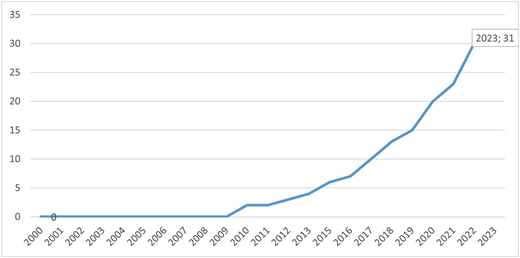
The publications included three categories of articles, i.e. 17 research articles, 12 case studies, one combining research article with a case study, and one viewpoint article.
Based on an analysis of the affiliations of the main authors, most of them represent the United States. This is probably because most of the theories and good practices in the area of institutional sustainability are being developed in the United States, even though the most stringent sustainability regulations are in the European Union (Jendrośka, Reese, & Squintani, 2021). This fact further confirms the research gap.
How do the authors define the culture of sustainability of universities, and do they define it at all?
An analysis of the articles selected in the PRISMA procedure revealed only a few attempts to explain, usually in a very descriptive and even indirect way, what a CoSoU is. Table 2 presents these attempts.
Identified attempts to define/describe the term “culture of sustainability of the university”
| Pos | Article | Definition or description of the term “Culture of sustainability of the university” |
|---|---|---|
| 1 | Levy and Marans (2012) | A culture of environmental sustainability is a campus community in which individuals understand major environmental challenges and act to resolve them |
| 2 | Wooltorton et al. (2015) | Achieving a sustainable academic institution requires a transformation not only of organizations and systems, laws, and government but also a personal and political, individual, and institutional transformation, that is, incorporating a sustainable development approach into the efficiency of the technological and rational world |
| 3 | Berchin et al. (2017) | This procedure encourages the development of a culture in favor of sustainability involving students, professors, and other staff in a sustainable atmosphere, encouraging them to replicate sustainable practices beyond the academia to their daily lives (e.g. adopting reusable cups rather than disposable ones, reducing the amount of paper used, adopting practices of energy efficiency, reducing the waste of water and learning how to dispose of their waste properly) |
| 4 | Cohen et al. (2018) | For small colleges seeking to implement similar programming to foster a culture of sustainability on their campuses, that commitment to organizational sustainability demonstrates that maintenance, durability, and invested personnel are essential when similarly seeking interdisciplinary environmental education initiatives |
| 5 | Niedlich et al. (2020) | In the following, authors identify four dimensions of organizational culture as key for sustainability governance in higher education institutions: (1) responsibility for sustainable development, (2) purpose of the higher education institution, (3) conception of sustainability, (4) relevance and scope of organizational change |
| 6 | Lad and Akerlof (2022) | “Sustainability culture” encompasses the awareness, behaviors, and lifestyle choices of the broader campus community, including its employees |
Source(s): Authors’ own elaboration based on the review of articles selected in the PRISMA procedure
As we see, we found only two attempts to define CoSoU. These are the definitions proposed by Levy and Marans (2012), emphasizing the environmental aspect (pos. 1), and the definition by Lad and Akerlof (2022), indicating both the awareness and behavioral component of this type of OC (pos. 6). Meanwhile, Niedlich, Kummer, Bauer, Rieckmann, and Bormann (2020) do not explicitly define sustainability culture in the university but highlight the importance of the OC in the process of sustainable university management, or rather the meaning of its four key dimensions (pos. 5, Table 1). In other cases, the reference to a CoSoU is not explicitly expressed but rather loosely implied by highlighting the importance of staff and student behavior, as well as their change, as elements related to such a kind of OC (pos. 2 – Wooltorton et al., 2015; pos. 3 – Berchin et al., 2017; pos. 4 – Cohen et al., 2018). According to us, CoSuU is an organizational culture of the university that supports its different areas of activity toward the achievement of sustainability goals, based on openness and collaboration with stakeholders. It is a set of norms, values, and beliefs shared by all employees of the university, as well as their behavior in the workplace, conducive to the realization of the goals of sustainable development in every area of the functioning of the university.
What dimensions should constitute the culture of sustainability of a modern university?
As Table 1 shows, the results of our research indicate the dominance of four dimensions of a CoSoU, i.e. leadership, engagement, communication, and relations with stakeholders. Those dimensions occurred most often in research.
Leadership
Scholars perceive leadership as the process of influencing others to achieve specific goals (Rowe & Guerrero, 2011). Leaders are responsible for vision, trends, and defining the highest expectations (Abatayo & Regis, 2018) because literature recognizes them as an important factor in embedding cultural values and norms into an organization (Schein, 1983). In our study, leaders are rectors, vice-rectors, deans, and vice-deans. With a clear vision of sustainability, they can use their power to influence and motivate the academic environment for the betterment of themselves as well as for the organization (Wiśniewska & Grudowski, 2024). The literature describes the leadership dimension primarily as the actions of leaders whose task is to improve existing activities and create structures within the framework of SD values (Foote & Knaub, 2018), as well as to create and maintain appropriate strategies – policies for SD (Wooltorton et al., 2015; Bauer, Niedlich, Rieckmann, Bormann, & Jaeger, 2020), which play a crucial role in affirming an SD culture. The role of the leader is extremely important (Niedlich et al., 2020; Menon & Suresh, 2022), as is their management style (Frauman, 2017; Halmaghi, Ranf, & Badea, 2023), which can directly shape a culture driving changes toward a sustainable organization (Berchin et al., 2017). Moreover, the literature notes that the essential elements of this matrix are supporting leadership through methods of measuring actions for SD, which add value to the university, and presenting theories and best practices of successful SD leaders (Haddock-Fraser & Gorman, 2020).
Žalėnienė and Pereira (2021) emphasize the importance of changing OC as a key factor in the higher education sector, highlighting the need for sustainable leadership in the process of changing systemic thinking. Meanwhile, Sudan and Zuin (2022) discuss the complexity of leadership in the context of SD, mentioning the methodology of capillary architecture for organizing durable leadership formation. On the other hand, Salvioni, Franzoni, and Cassano (2017) emphasize in their work that the best universities have management based on a shared vision of SD, which plays a significant role in affirming an SD culture.
Based on the research, we define the leadership dimension of the CoSoU as the process of setting a course of action, creating a vision, setting goals, and creating conditions in which university employees and students participate in the implementation of SD assumptions.
Engagement
Engagement refers to an individual commitment within the organization, which leads to achieving high quality and high effectiveness of processes (Steinerowska, 2015). It is a positive, persistent, and pervasive work-related psychological state characterized by vigor, dedication, and absorption toward the job and organization (Uddin, Mahmood, & Fan, 2019). Engagement within the organization closely depends on leaders’ attitudes and vital engagement (Malik & Khan, 2020). A good example on the part of leaders fosters effective engagement of other employees. Based on the information in Table 1, various approaches and strategies aim at strengthening pro-environmental and pro-social engagement in higher education institutions. Frauman (2017) and Bullock and Hitzhusen (2015) emphasize the crucial role of OC adopted at the institutional level in supporting engagement in sustainable practices. Wooltorton et al. (2015) and Bohunovsky, Radinger-Peer, and Penker (2020) share similar perspectives. They stress the necessity of involving all levels of the university organization and stakeholders in systemic changes toward sustainable development. Corcoran and Koshy (2010) argue that educational institutions’ task is to build the capacity to solve complex problems related to sustainable development in an integrated and holistic manner, aiming to encourage behavioral changes. Salvioni et al. (2017) highlight that universities oriented toward SD should adopt specific management methods and tools aimed at improving relationships and engagement with stakeholders. A culture of SD should encompass principles of social responsibility and transparency (Sułkowski et al., 2021), and continuous improvement and learning better ways of conducting activities based on environmental, social, and institutional benefits should strengthen its perception (Posner and Stuart, 2013). For this purpose, universities can utilize the self-assessment sheet (STARS) for higher education institutions, which helps evaluate aspects related to leadership roles and assessment of organizational engagement strength in creating a culture of sustainable development (Wigmore, 2010).
We perceive the engagement dimension of the CoSoU as the active attitude and behavior of university employees, and students focused on the implementation of SD assumptions, resulting in the adoption of the mission and goals of the university in this regard.
Communication
Communication is a mutual process of exchanging understandable information for both sides using the proper communication channels to achieve specific goals (Michałek, 2022). Clear communication founds the functioning of every effective organization and inspires confident, even greater, employee performance. Transparent internal communication can lead to the employees’ satisfaction, motivation, and greater commitment to their organizations, which ultimately determines team effectiveness (Kim et al., 2017). The presented group of 10 authors (among those 31 listed in Table 1) highlights communication as a dimension of CoSoU. Bauer et al. evidence this (2020) and Conner, Falkner, Lantieri, McGavisk, and McShea (2018), among others. Other authors stress that it requires strong support by actions promoting the development of pro-environmental behaviors (Levy & Marans, 2012; Berchin et al., 2017; Cohen et al., 2018). Six authors presented the most interesting approach. Hindley (2022) emphasizes the importance of clear communication of organizational values in the context of climate change education. Unclear communication of a university’s mission and vision can negatively affect the integration of SD into curricula, which in turn impacts how staff perceive the importance of these issues. Levy and Marans (2012) describe a culture of SD based on five factors influencing the pro-environmental behaviors of individuals: knowledge of issues, knowledge of procedures, social incentives, material incentives, and reminders. The authors suggest that universities should undertake three types of activities to support the development of pro-environmental behaviors, i.e. education, engagement, and assessment. Cohen et al. (2018) emphasize the importance of engaging the academic community in the process of building ecological awareness, which undoubtedly requires communication. An essential element is the integration of academic and operational activities, allowing for information exchange, improvement of campus environmental performance, and building ecological literacy among university community members. Wang et al. (2022) note that communication positively correlates with sustainability actions and all three pedagogical approaches. They highlight the key role of communication in developing sustainability competencies among students and emphasize the significance of community involvement in promoting sustainable behaviors. Parnell (2016) stresses that a culture of sustainability grows not only through sustainable actions but also through communication, collaboration, and coordination between university units. Many institutions use communication through websites, social media, and event calendars. It is possible to promote collaboration and coordination through meetings and discussion forums, which help resolve conflicts and develop new partnerships to address sustainability issues. Salvioni et al. (2017) describe the best universities as those that have a management approach based on a shared vision of SD. University leaders play a crucial role in affirming the culture of SD through management tools and methods that improve relationships and engagement with various stakeholders, which is undoubtedly communication-dependent. Communication plays a crucial role in promoting the CoSoU. Analysis of cases found in the literature suggests that clear communication of organizational values, engagement of the academic community, integration of academic and operational activities, and a shared vision of university leaders are essential for the effective implementation of sustainable development.
In our case, we may perceive the communication dimension as a process of effectively sharing information and knowledge in employee–employee, and employee–student relationships on the importance of sustainable development and the implementation of the university mission and goals in this area.
Relations with stakeholders
Stakeholders are individuals or organizational actors that can directly or indirectly impact the project implementation process or organization (Zamojska & Susmarski, 2017). Stakeholders are those that affect or are affected by an organization (Friedman, Parent, & Mason, 2004). Establishing and building relationships with stakeholders are among the key managerial processes of organizations and the core assumptions of stakeholder theory (Wagner Mainardes et al., 2012).
Identifying the stakeholders involved in higher education institutions is a fundamental step toward not establishing competitive advantages for teaching institutions, identifying their needs, and setting up the means to meet them. Meeting the needs of these individuals or groups from the internal and external environment is an important competitive factor for higher education institutions (Dobni & Luffman, 2003). These include, among others, university employees, students and their parents, donors, employers, and the wider society.
In the studied database, we identified twelve literature positions that highlighted the importance of the internal and external environment on the CoSoU. Koria, Osorno-Hinojosa, Ramírez-Vázquez, and van den Broek (2022) emphasize the significance of a collaboration culture within the triadic relationship of universities, business, and social innovators. They argue that the diffusion of open innovation knowledge through these three elements is crucial for achieving sustainable development goals. The integration of collaboration between universities and industry promotes sustainable, open innovation, highlighting the importance of a collaborative approach in higher education institutions. Next, Bauer et al. (2020) analyze governance structures and the culture of SD in various institutions, concluding that there is no single cultural factor directly promoting specific governance structures. Instead, they identify an active interplay between cultural orientations and implemented measures. This dynamic interaction suggests that SD in universities is shaped by multiple cultural and structural factors, including the analyzed parameter. Meanwhile, Berchin et al. (2017) focus on the participation of individuals in a sustainable environment within universities. They demonstrate that such an environment positively impacts students, professors, and staff, increasing their awareness of the importance of reducing water and energy consumption. Moreover, it promotes habits such as waste reduction, recycling, and overall sustainable behaviors, emphasizing the educational role of sustainable environments in universities. Bohunovsky et al. (2020) indicate that this element contributes to understanding the organizational changes necessary to achieve SD through a comparative analysis of processes in thirteen universities in Austria. Their research underscores the importance of a systemic and dynamic approach to organizational change in promoting SD in higher education institutions.
The literature analysis also allowed us to discern some additional supportive conditions conducive to the constitution of the identified dimensions of CoSoU. Bullock and Hitzhusen (2015) indicate that universities should exceed basic sustainability standards by integrating SD deeply into the institutional culture rather than merely meeting existing norms. Cohen et al. (2018) discuss the importance of improving the values of sustainable development on campuses. They emphasize the need for coalition building between academic, administrative, and operational units to enhance campus environmental performance and build ecological awareness within the university community. Conner et al. (2018) highlight the need for community engagement in sustainable behaviors within higher education institutions. They suggest that creating networks, organizations, and partnerships is crucial for achieving community engagement and empowerment, which helps overcome skepticism and promote collective actions toward SD. Corcoran and Koshy (2010) emphasize the role of educational institutions in addressing complex SD issues in an integrated and holistic manner. They argue that education promoting SD should integrate SD values into all aspects of learning, thus encouraging behavioral changes for a more sustainable and just society. Žalėnienė and Pereira (2021) identify OC change as a key factor in the transformation toward sustainable development in the higher education sector. They emphasize the role of numerous factors, including sustainable leadership, systems thinking, the political environment, and stakeholder engagement, in promoting a sustainable culture in higher education institutions. Sudan and Zuin (2022) discuss the complexity of leadership in the context of sustainable development but also highlight the need for a structured approach to developing sustainable leadership in universities. Meanwhile, Sułkowski et al. (2021) examine the professionalization of university management as a key factor in SD. They argue that SD requires a balanced approach in social, economic, and environmental spheres. They see sustainable education as a means to create a better future through a mutual understanding of diversity and social responsibility. O’Hara and Naicker (2022) emphasizes the importance of prioritizing the local context and community engagement in the SD of higher education institutions. The authors highlight the economic, socio-cultural, and environmental dimensions of SD, emphasizing the need for universities to engage with local communities to promote sustainable development. The mentioned literature positions highlight the importance of a collaborative and integrated approach in promoting CoSoU.
Based on the research, we define relationships with stakeholders as effective interactions between the university and its stakeholders to foster active communication and cooperation in support of the university’s mission and goals toward sustainable development.
Identifying these dimensions is a major step toward better understanding and operationalizing the culture of sustainability in higher education institutions. Noteworthy, the indicated dimensions are closely interdependent and interrelated. Figure 3 indicates this by the arrows and their direction. This means that a change within one of these dimensions will impact others, depending on the strength of the change and its internal and external conditions. The foundation of this model is the TBL, recognized as a holistic framework for sustainable development (Correia, 2019; Loviscek, 2020). This is all the more so because researchers emphasize that the implementation of a sustainability culture is conducive to the implementation of the TBL approach (Dyck, Walker, & Caza, 2019; Can Saglam, 2023). We also share the opinion that the effectiveness of implementing sustainable development programs might depend on the degree to which organizations emphasize organizational ethics (Wesarat, Yazam, & Majid, 2017). We may define sustainable development ethics as ethical approaches to how humans should live concerning other persons and communities, the natural world, and current and future generations (Tornini, Politi, Bruce, & Latham, 2023). Hence, ethical behavior should address all dimensions of sustainability culture as an element of the values included, among others, in Schein’s (1983) classic model of organizational culture. Scholars should consider the inclusion of these two aspects in the CoSoU model as necessary. Unfortunately, in the articles reviewed, both the reference to TBL (e.g. Haddock-Fraser & Gorman, 2020) and ethics (e.g. Berchin et al., 2017; Haddock-Fraser & Gorman, 2020; Halmaghi et al., 2023) were residual and very superficial.
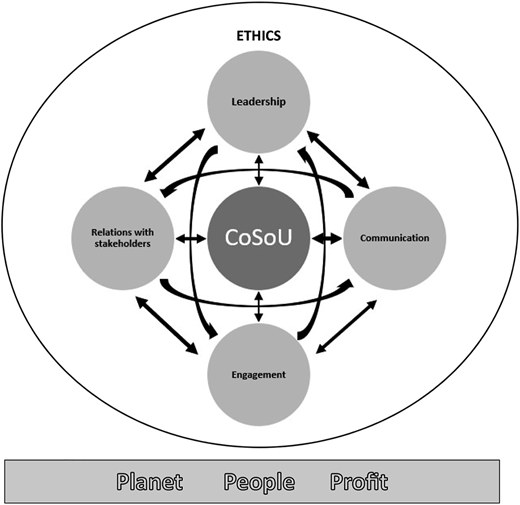
Dimensions of the culture of sustainability of universities (CoSoU). Source: Authors’ own elaboration
Dimensions of the culture of sustainability of universities (CoSoU). Source: Authors’ own elaboration
Conclusions
As institutions shaping future generations of leaders and specialists, universities are of particular significance in promoting sustainable development. The culture of sustainability plays a crucial role in higher education, influencing all aspects of functioning. This culture supports the achievement of sustainable development goals and builds the foundations for long-lasting and holistic changes within the entire academic community. Unfortunately, as the presented research indicates, the topic of the CoSoU is still underexplored. For this reason, our article constitutes an original implication to science, allowing it to fit into the existing research gap. The work is original as it proposes a set of important dimensions that constitute the culture of the university’s sustainable development. Another original proposal is a model approach to a culture of sustainable development. Moreover, the definitions of the analyzed dimensions of sustainability culture are equally original. The scientific literature lacks clear definitions and comprehensive models describing this issue, creating a research gap. Most existing works focus on specific aspects of sustainable development, neglecting the integration of these elements into a cohesive OC within universities.
The research results are also practical. Leaders at universities, e.g. rectors and deans, can consider the identified dimensions and progressively provide them as conditions conducive to achieving sustainable development goals. The indicated dimensions of a CoSoU can serve as the subject of training for employees and university authorities. They can constitute the basis for the development of sub-dimensions to build a questionnaire for measuring CoSoU.
The work also has social implications because the issue of OC focuses primarily on shaping social behavior, in this case, the academic community.
We are aware of the limitations associated with our research. First, the article covered open-access texts and regarded only the English language and full-text studies, excluding monographs or doctoral dissertations, which certainly did not allow us to recognize the problem holistically. Therefore, further research should delve into the determinants and barriers to integrating sustainable development principles into the OC of universities. The arrows marked in the CoSoU model structure can also become a starting point for examining the interdependence and strength of relationships between the indicated dimensions in selected higher education organizations. However, it remains particularly important to understand which mechanisms and tools can support the development of this culture and how we can effectively measure its impact on university operations and the academic community. Further research can also provide valuable insights not only for university leaders but also for stakeholders on how to create favorable conditions for the development of a culture of sustainability at universities.

