The World Health Organization Framework Convention on Tobacco Control (WHO FCTC) is the first treaty negotiated under the auspices of the WHO. This study aims to describe progress toward the framework’s goals, setbacks and strategies to update its articles to optimize outcomes.
A review of relevant literature, including papers in this special issue, forms the basis for identifying steps necessary to amplify the impact of the FCTC.
The WHO suggests that there are 1.3 billion users of tobacco globally. The expected deaths associated with tobacco use could be dramatically reduced by hundreds of millions between now and 2060 through measures that improve cessation and harm reduction support among adults. Additional steps needed to achieve the goals of the FCTC include developing new initiatives to address areas of profound neglect (for example, women); investing in global research and innovation; addressing the needs of vulnerable populations; and establishing a mechanism to fund priority actions required by low- and middle-income countries, including support for alternative livelihoods for smallholder farmers.
In November 2020, the WHO FCTC Parties will host their next Conference of the Parties (COP9) in the Netherlands. This paper aims to contribute to the needed policy decisions related to this meeting. Since acceptance of this article, the WHO FCTC team announced that doe to the COVID-19 pandemic COP9 has been rescheduled till November 2021.
There exists a need to prioritize the goals of tobacco control and offer clear strategies for its execution. This paper fills this niche via a thorough and up-to-date analysis of how to amend and enforce the FCTC.
Introduction
The World Health Organization Framework Convention on Tobacco Control (WHO FCTC) defines itself as “an evidence-based treaty that reaffirms the right of all people to the highest standard of health.” The first treaty negotiated under the auspices of the WHO, the FCTC’s 2003 adoption (Yach, 2003) coincided with the weakening of multilateralism (Yach and von Schirnding, 2014) and the dawn of mistrust in government-led solutions to environmental, health and financial issues. Since then, mistrust has only heightened, with concern now being expressed about our “fractured global order” (Tharoor and Sara, 2020). Calls for sovereignty and non-interference by developed and developing countries alike threaten to strain the implementation of treaties and hamper the development of future intergovernmental processes. In considering the future of the FCTC, it is therefore vital to consider this political ecosystem.
In November 2020, the WHO FCTC Parties will host their next Conference of the Parties (COP9) in the Netherlands (World Forum The Hague, 2020). This occasion creates an opportunity to reflect on progress toward the goals laid out in the FCTC, and also to discuss ways in which the treaty may need to evolve in light of changing political, public health, scientific, and agricultural realities. In what follows, I delineate significant changes underway within the nicotine sector that have serious implications for the attainment of the FCTC’s goals. I also outline an agenda for governments to consider in The Netherlands as they discuss strategies for accelerating progress in tobacco control.
Progress
The latest data suggests that there are 1.3 billion users of tobacco globally (World Health Organization, 2019a). Table 1 shows the top ten countries by tobacco use for men and women in terms of numbers. Table 2 shows the top ten countries in terms of tobacco deaths. These data demonstrate that decades of action have only slightly ameliorated the misery and death caused by tobacco use. The stubbornness of smoking rates can be attributed, in part, to a neglect of adult tobacco users and the dearth of ambition among those within the public health community. We have become, in many ways, inured to these devastating numbers. Tobacco-attributed deaths, like many noncommunicable diseases (NCDs) fail to prompt proportionate outrage (Magnusson, 2020). It is time to raise our ambition – much in the way that AIDS and breast cancer activists have over the past few decades.
The FCTC itself is a fairly ambitious document. Indeed, were the treaty’s provisions to be universally implemented, we would be much closer to a world free of tobacco-related diseases. Several measures have been taken to underscore the importance of the FCTC, including the adoption of the United Nation’s 2030 Agenda for Sustainable Development. The agenda identifies FCTC implementation as a component of sustainable development (Target 3.a); it also acknowledges tobacco control as fundamental to reducing premature mortality and to promoting mental health and well-being (Target 3.4) (UNDP, 2017). Still, despite such measures to stress the urgency of the FCTC, its enforcement remains inconsistent.
The WHO’s latest report on the global tobacco epidemic shows that many countries have implemented several provisions of the FCTC (World Health Organization, 2019a). Yet, the highest reported success rates are for provisions that have the weakest impacts on ending tobacco use. For example, 52% of the world is “covered” with respect to pack warnings, which do little to reduce smoking rates. By contrast, the implementation of cessation assistance is quite weak. A 2019 WHO report notes that “only 23 countries provide cessation services at best-practice level, even though in many countries, many tobacco users report wanting to quit” (World Health Organization, 2019b). Further, the WHO Independent High-Level Commission on Noncommunicable Diseases final report notes that the WHO MPOWER Package (a WHO FCTC initiative funded by Bloomberg Philanthropies) is “currently implemented for less than 0.5% of the world’s population” (World Health Organization, 2018a).
Implementation efforts have been particularly slow for Articles 17 and 18, which address, respectively, the need for alternative livelihoods for tobacco farmers; and the detrimental effects of tobacco farming on the environment, as well as human health. As documented in a recent report commissioned by the FCTC secretariat, select countries have demonstrated a serious commitment to developing economically sustainable alternatives to tobacco farming. The report finds, for example, that the European Union has demonstrated a shift away from subsidizing tobacco farming; and both Malaysia and the United Republic of Tanzania have made strides toward identifying crop alternatives (FCTC secretariat, 2019). On the whole, however, much work remains to be done in this area.
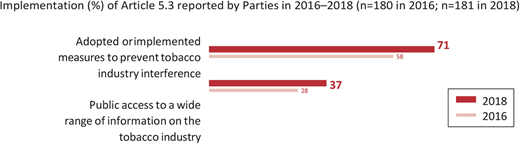
Frustratingly, parties have also been slow to implement article 19, which emphasizes the need for governments to collaborate to hold the tobacco industry accountable for its actions. Explanations for this lack of action tend to focus on industry interference and, to a lesser extent, on government commitment, legislative capacity and the almost universal lack of capacity for science, research and innovation. (Puska et al., 2019; Bialous, 2019). Tobacco industry interference has indeed been omnipresent since WHO first started addressing smoking in 1970. The extent of the interference – including deliberate efforts to subvert public policy – was revealed during the WHO inquiry (Figure 1; World Health Organization, 2000). While many tactics have changed, this type of interference remains a substantial threat to progress.
Analyses of tobacco industry interference tend to focus on top transnational cigarette manufacturers, which are listed in Table 3. This list excludes bidi and smokeless tobacco manufactures – products which, in India, are more popular than traditional cigarettes (Global Adult Tobacco Survey, 2017b). Here, it is also important to note the dominance of the Chinese State Tobacco Monopoly Administration through China National Tobacco Corporation, as well as other companies with significant state interests. In fact, many governments own a significant share in the tobacco industry, which complicates tobacco control in those nations. (National Cancer Institute, 2016).
The impact of state ownership on FCTC policies has neither been adequately studied nor considered when advancing the logic of 5.3 of the FCTC, which states that “in setting and implementing their public health policies with respect to tobacco control, parties shall act to protect these policies from commercial and other vested interests of the tobacco industry in accordance with national law” (World Health Organization, 2005). To this end, a forthcoming report by Malan and Hamilton (2020) investigates the prevalence and implications of state ownership of tobacco companies. The authors find that partial government ownership is common among countries that have signed the FCTC, leading to inherent conflicts of interest.(Malan and Hamilton, 2020).
Vision of what is possible through more concerted actions
Leaders in public health have long recognized that the fastest way to reduce deaths from tobacco is to address cessation. However, clinical, personalized, and medicated solutions were not prioritized in the original FCTC, which instead focused on population-scale policies, such as tax increases, smoke-free spaces, advertising bans and educational programs. While these strategies have successfully reduced long-term trends in youth uptake, their impact on adult smokers has been marginal.
To cut death and disease rates within two decades, we must consider new strategies for accelerating adult cessation. In particular, we must embrace empathetic tactics that encourage individual smokers to quit or switch – including the use of harm reduction products (HRPs). Over the past decade, a spectrum of HRPs have emerged (Shapiro, 2018; Abrams et al., 2018; Patwardhan and Rose, 2020; McNeill et al., 2020); and they all reflect a simple observation made decades ago by Michael Russel: “people smoke for nicotine but they die from the tar” (Russell, 1976).
The omission of HRPs from the FCTC can be attributed, in part, to the era in which the treaty was penned. Except for snus, the range of nicotine technologies available today did not exist 20 years ago. Nonetheless, the treaty includes harm reduction as a defining component of tobacco control (WHO, 2005), and would benefit from an elaboration on how to incorporate this tool into a comprehensive approach cessation. The lack of details on HRPs exemplifies one way in which the FCTC remains essentially frozen in time – a feature that must change if we are to alter the trends in tobacco-related death and disease.
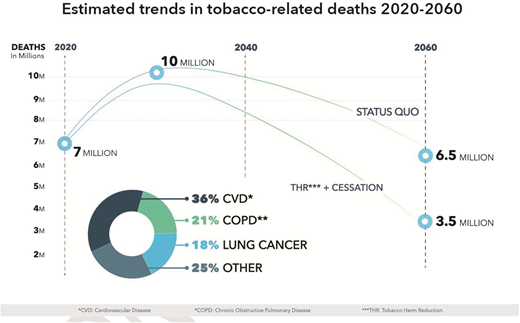
Figure 2 summarizes projected deaths because of tobacco from 2020 through 2060. I base these estimates on:
projections developed both by public and private sector researchers;
published reports on the uptake of these products; and
data on the displacement of combustibles cigarettes associated with HRP uptake (Levy et al., 2018; Djurdjevic et al., 2019; Lee et al., 2018; Djurdjevic et al., 2018; Lee et al., 2017).
These projections take the very conservative view that a 90% drop in harmful exposures associated with HRPs compared to cigarettes would translate into a 60% drop in the actual death rate. It should be noted that these projections do not reflect rapid progress in other important areas, such as improvements in the detection and treatment of lung cancer, which is responsible for over 2 of the 7 million annual deaths from tobacco (Schembri, 2019; American Cancer Society, 2019).
These projections suggest that if the full suite of WHO FCTC recommendations is implemented, annual deaths will rise from seven million (current rate) to reach ten million in the early 2030s. After that point, we can expect totals to slowly decline over many decades. To accelerate this decline, we must apply early experience from harm reduction at scale; simultaneously, we must catalyze innovation to create a class of HRPs and smoking cessation therapies that yield one-year quit rates close to 50%. Figure 2 shows our initial estimates of expected death rates if these products were widely adopted.
If we take advantage of new cessation and harm reduction technologies, we can expect three to four million fewer annual deaths from tobacco within four decades. There is no other public health issue where the potential gains approach that order of magnitude. To achieve this level of success, COP9 participants and stakeholders must dare to depart from the status quo. As these parties and other influential actors proceed, they should consider:
which aspects of the FCTC need to be modernized;
which actions already embedded in the FCTC demand accelerated action;
which areas of deep neglect require attention; and
which ideological positions that fail to serve the needs of smokers or poor farmers need revision (Table 4).
Steps toward a modern Framework Convention on Tobacco Control – and how to implement it
Modernize and amend the treaty in accordance with Article 28
Though tobacco harm reduction (THR) is included in Article 1, it has not been clearly defined. Further, the treaty does not address the implications of new technologies that deliver nicotine in ways safer than combustible cigarettes or toxic smokeless tobacco. The recent report of the WHO Product Regulations group (World Health Organization, 2019d) provides guidance on needed research related to the spectrum of HRPs; however, the report is based on somewhat outdated research. To reflect this new reality, COP parties should consider several amendments to the FCTC text. Articles 9–16, for example, would benefit from the inclusion of HRPs.
The United States Food and Drug Administration recently authorized the marketing of a modified risk tobacco product for the first time. The action permits the manufacturer to state that “using general snus instead of cigarettes puts you at lower risk of mouth cancer, heart disease, lung cancer, stroke, emphysema and chronic bronchitis.” (US Food & Drug Administration, 2019a) This statement represents an important step in THR; it also opens the door to such products being adapted for use in India, where widespread use of toxic smokeless tobacco products currently contributes to exceedingly high rates of death from oral cancer (Siddiqi et al., 2015; Yadav et al., 2020).
The rapidly evolving nicotine landscape should inspire a corresponding evolution in public policy. Yet, in the absence of evidence-based guidelines, a proliferation of ad hoc policies have been implemented that could ultimately counteract the goals of the FCTC. These include policies that:
ban menthol in THR products and permit them in cigarettes;
ban e-cigarettes while permitting combustible cigarettes;
apply plain packaging laws equally to cigarettes and THR products; and
tax THR products at levels equivalent to cigarettes.
All of these policies reinforce the status quo, thus impeding potential public health gains.
The policy discourse related to THR has also shaped public perception. In this issue, Rajkumar et al. demonstrate as much via a survey of over 50,000 tobacco users in seven countries. Among other telling findings, the survey reveals that 65.7% of adult participants believe that nicotine causes cancer. This varies from 43.7% in British men to 77.9% in South African men (Rajkumar et al., 2020). Worryingly, public perceptions of the nicotine often conflict with available scientific evidence. Gottlieb and Zeller, for example, state: “nicotine, though not benign, is not directly responsible for tobacco-caused cancer, lung disease and heart disease that kill hundreds of thousands of Americans each year” (Gottlieb and Zeller, 2017)
High levels of confusion – driven by deliberate mischaracterizations of nicotine – hamper the adoption of science-based cessation and harm reduction strategies (Fairchild et al., 2019). Yet, just as policy discourse has contributed to public misperceptions, so too can policy modifications correct these views.
Accelerate actions to end smoking
Cessation.
Article 14 of the FCTC states that all parties “shall take effective measures to promote cessation of tobacco use and adequate treatment for tobacco dependence.” (World Health Organization, 2005, 2010). Implementation of this article has been sluggish, placing hundreds of millions of would-be quitters at risk of premature death. WHO’s 2019 report reveals that many countries have yet to introduce cessation in primary healthcare settings; and the latest US Surgeon General’s report indicates that cessation measures have not been effectively implemented (US Department of Health and Human Services, 2020). In both reports, cessation is referred to as being cost-efficient. Data cited in the reports, however, show that commonly available pharmaceutical approaches to cessation remain extremely ineffective, with quit rates at one-year averaging around 5%–8% (World Health Organization, 2017).
A recent landscape analysis by EY-Parthenon indicates that the pipeline for better medications is sparse (Foundation for a Smoke-Free World, 2018). Slow innovation in this sector can be attributed to the lack of financial incentives to develop products that must be priced to compete with cigarettes. Although promising research in this field is underway, innovation must be expedited. In addition to the development of new treatment options, better training among healthcare professionals, particularly in low- and middle-income countries (LMICs) is needed (Patwardhan and Rose, 2020).
Population-wide access to cessation must be complemented by programs that reach particularly vulnerable groups of heavy users. This includes people with mental illness and tuberculosis, as well as indigenous groups and the LGBTQ+ community. Smoking rates in people with tuberculosis exceed 31% in some countries (Mahishale et al., 2015) and rates often exceed 70% in people with schizophrenia (National Institute on Drug Abuse, 2020). Yet, there have been few major efforts to adapt general cessation strategies to the needs of these groups. As a result of this neglect, these demographics experience heightened mortality rates, driven not by an underlying disease, but by tobacco use.
In this issue, Glover and Patwardhan discuss the need to acknowledge the complexities of assisting at-risk communities. They write: “different mental health conditions may need different approaches. People living with mental health conditions in the community may need different interventions from people living in mental healthcare facilities and homes. Intersectionality may require a fluidity in how interventions are designed and/or in how they are delivered to ensure efficacy for people stigmatised for multiple characteristics” (Glover and Patwardhan, 2020). The authors stress that, in addition to comorbid conditions, groups may also be at an elevated risk because of demographic features that tend to be neglected by tobacco control efforts. For example, though the FCTC acknowledges “the high levels of smoking and other forms of tobacco consumption by indigenous peoples,” cessation programs rarely target this group.
Focus on women.
The FCTC preamble expresses alarm at “the increase in smoking and other forms of tobacco consumption by women and young girls” (World Health Organization, 2005), but interventions specific to women remain rare. Now, smoking rates among women and girls are concerningly high (Solomon, 2020). A number of countries have seen a complete reversal in the relative prevalence of smoking among boys and girls, most often accompanied by a reduction in the gap between men’s and women’s smoking in adulthood, as seen in countries such as France, the UK, Argentina and Poland (GBD, 2015). Resultantly, we can expect a massive increase in tobacco-related death and disease among women over the coming decades. Youth prevention programs alone will not halt these trends.
This generational shift is further compounded by the slow progress made to date to address women’s smoking relative to men’s. More countries have achieved significant decreases in smoking among men than among women; and most countries are seeing only a minimal decrease – or even an increase – in women’s smoking (GBD, 2015). While smoking among men globally has already peaked and is in decline, it is projected that it will not peak for decades among women, especially in LMICs. Prevention interventions in the developing world, as well as adult cessation and harm reduction programs designed by and for women, remain largely untapped opportunities to advance global health.
Develop evidence-based taxation policies.
Excise taxes reduce the affordability of tobacco products and, when supported by comprehensive demand reduction measures, are an effective tobacco control measure. Yet, cigarettes remain affordable in many countries, even for low-income smokers. As the demand for cigarettes declines, governments are in a hurry to tax novel THR products without considering the net consequence of such measures. These products are now considered “tobacco” products and have been subject to taxation policies comparable to that of traditional tobacco products. In some countries (e.g. Saudi Arabia and UAE), they are in fact subject to tax schemes identical to those of traditional cigarettes (Yurekli and Kovacevic, 2020).
When designing and implementing taxation policies, governments should objectively weigh the full benefits and costs of THR products on public health. The South African budget, for example, indicates how to apply differential taxes (National Treasury, Republic of South Africa, 2020). Regulation and taxes on nicotine products should be proportionate to the risk these products pose to the public.
New initiatives to address needs
Alternative livelihoods: support tobacco farmers in countries where demand for tobacco leaf is declining.
When the FCTC negotiation commenced in late 1998, the WHO worked with the World Bank to develop its first report on the economics of tobacco control (World Bank, 1999). At the time, the demand for tobacco leaf was growing and expected to do so through 2010. The Food and Agriculture Organization (FAO) documented this projection as well (Food and Agriculture Organization of the United Nations, 2003). As a result, the World Bank and FAO cautioned against support for tobacco-growing countries hoping to diversify their economies; the World Bank also cut loans to countries for tobacco production (Yach, 2019).
The FCTC text reflected the prediction that support would be needed for farmers to develop alternative livelihoods; that prediction turned out to be correct. Today, the overall demand for tobacco leaf is falling as aggregate smoking rates decline (World Health Organization, 2019a). Government-led efforts, coupled with a large shift away from combustible cigarettes and toward HRPs, will contribute to a continued decline in demand.
Shifts in unmanufactured tobacco exports reported by Shah et al. (2019) show that Brazil, India and China play an outsized role in the global supply of tobacco. These countries are likely to dominate the tobacco leaf market for decades, with Malawi, Zimbabwe and Mozambique becoming less significant players. In Malawi, this shift represents an economic threat. If a serious effort is not made to support vulnerable smallholder farming communities in finding alternative livelihoods, we can expect economic despair to spiral at both the national and local levels; funding for transitional efforts is thus, critical.
Invest in national and global research, innovation and science.
National policy in any field of development tends to be most successful when it emerges from serious research and has the support of informed policymakers. The FCTC characterizes itself as an “evidence-based” treaty; as such, it relies on high-quality, nationally derived data supported by local researchers. Accordingly, the framework grants great prominence to the important research, surveillance and technology (as outlined in Articles 22–24 in Part IV of the FCTC (World Health Organization, 2005). Yet, in the years since the treaty’s adoption, efforts to organize a transnational research agenda have been scant.
During the Beijing 10th World Conference on Tobacco or Health, delegates engaged over five days to develop priorities for tobacco control research (Samet et al., 1998). Those priorities were used by the National Institutes of Health as the basis for what became a decade-long program of support for global health research (Yach et al., 2014). When funding ended, however, no other comparable initiative emerged until the creation of the Foundation for a Smoke-Free World (FSFW; Yach, 2017).
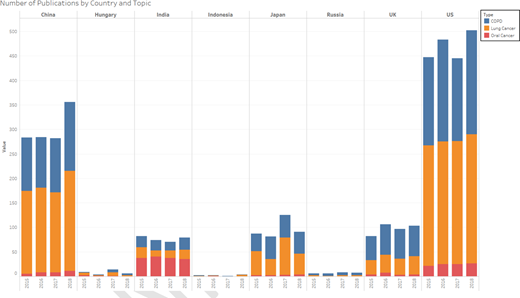
The lack of an internationally accepted research agenda has yielded significant research gaps in many countries and scientific fields. Figure 3 quantifies these gaps and makes the case for significant investment in institutions and people able to define national needs while also addressing global research. To achieve FCTC goals on a global scale, it is urgent that we adapt its recommendations to the reality of developing countries; and such adaptation requires surveillance of trends and research. To complement this strategy, research into cessation and harm reduction efficacy can be conducted in targeted settings and applied globally. This tactic is well described by the Council on Health Research for Development (Lansang, 1997).
Though there exists understandable leeriness about engaging with big tobacco, these companies may play a key role in funding cessation and harm reduction research. Indeed, Cohen and Zeller note that “given the scarcity of funding from other sources, tobacco industry support may be defensible” (Cohen et al., 2009). They further delineate four potential funding models and eight key criteria for evaluating success and feasibility. Their views are worth revisiting as we seek ways to expand research funding.
Address funding gaps: establish a mechanism to fund priority actions required by low- and middle-income countries.
On the eve of the adoption of the FCTC by the World Health Assembly in May 2003, the WHO hosted a meeting in Brussels with the European Community, members of the Development Assistance Committee, the World Bank and other donors. The purpose was clear: to mobilize funds in support of the FCTC and its provisions related to funding. This includes the Preamble, as well as Articles 4, 5, 23 and 26. This effort ultimately failed and for 15 years, no significant development agency funds have been allocated to the FCTC.
Bloomberg Philanthropies and the Bill and Melinda Gates Foundations have committed philanthropic funds that support selected elements of the FCTC. Though useful in some respects, the contributions of Bloomberg Philanthropies have been critiqued on the grounds that they frame priorities in the image of US strategies, undermine government leadership, and fail to invest in national, institutional, and individual capacity (Mukaigawara et al., 2018; Patterson and Gill, 2019).
At this critical juncture, the COP should consider how to mobilize funds needed to address the FCTC provisions. There already exist examples of how to do so. For example:
user fees from the tobacco industry fund the US FDA’s multimillion-dollar research and assessment programs (US Food & Drug Administration, 2019b);
India levies taxes on all companies for Corporate Social Responsibility programs (Rath, 2016), which could include national research to end smoking and support livelihood needs; and
in several countries, funds from tobacco excise taxes have been earmarked for public health initiatives. The lattermost tactic has funded major programs around the world (Yurekli, 2018).
The acquisition of substantial funding is both vital and feasible. First, informed parties must define how much money is needed and to what end. Funding processes for the Global Fund for AIDS, malaria and tuberculosis are instructive. In that case, the Commission on Macroeconomics and Health (Sachs, 2001) made the health and economic case for a fund and placed a number on what was required. This effort spurred unprecedented actions, which were led by governments and supported by the private and nonprofit sectors. In tobacco control, such an approach is long overdue – and vital if the vision of the FCTC is to be achieved.
Shift in philosophy
Promote multi-sectoral engagement: develop an agenda for tobacco and related nicotine delivery companies
Governments play a key role in tobacco control – but they cannot end smoking alone. In considering how to combat the damage brought by the tobacco industry, we may benefit from the lessons of other industries that have negative impacts on health or the environment. These lessons suggest that three conditions are required for progress:
technologies capable of cutting risk and doing so in ways that challenge business models (e.g., electric cars, solar panels, waste recycling and wind turbines);
consumer demand for healthier, more environmentally sustainable products; and
smart regulations led by a government that make these options more accessible for businesses and consumers alike (Foundation for a Smoke-Free World, 2019a).
Such changes are driving major contemporary revolutions, including the end of the internal combustion engine. A similar revolution could be central to bringing about the end of combustible cigarettes and toxic smokeless tobacco products.
Additional pressure for change can be applied by activating investors and senior managers in companies. That is the rationale for the Tobacco Transformation Index, a tool supported by FSFW that highlights and critically evaluates tobacco companies’ activities that either support or impede the progress toward a world free of combustible cigarettes (Foundation for a Smoke-Free World, 2019b). The goal of the Index is to reduce the rates of disease and premature death because of smoking by stimulating corporate action, leveraging investor influence, and providing objective, transparent information for stakeholders to make decisions and to hold the tobacco companies accountable.
A central point of contention relative to tobacco control programs relates to engagement with the tobacco companies, as reflected by the interpretation of Article 5.3 of the FCTC. For example, the STOP Global Tobacco Industry Interference Index report states: “Article 5.3 is regarded as the backbone of the convention and its importance cannot be over-emphasised;” and “[the] tobacco industry must be denormalized” (Assunta, 2019). Yet, to the extent that Article 5.3 is interpreted to mean boycott and ban, it has paradoxically become an impediment to change, thereby perpetuating the status quo (Ballin, 2018).
The status quo is not enough. Governments need to engage in sustained dialogue with tobacco companies to accelerate their transformation. In fact, many governments do engage in this sector. Those who have significant ownership in domestic companies have no choice (see Table 3 above). In these cases, governments’ fiduciary responsibility requires that these companies maximize their returns on investment (i.e. sell more cigarettes); their ownership thus makes it intrinsically impossible to implement FCTC clause 5.3. However, their ownership also creates an opportunity for change. If governments were to embrace harm reduction, they could direct resources within state monopolies to accelerate the transition away from combustibles.
Increase transparency.
Complex social problems cannot be solved without all stakeholders at the table. This dictum guides approaches to nuclear disarmament, environmental change, and labor rights. In these cases, concerns about the undue influence of industry players are addressed via clear conventions related to transparency in all aspects of deliberation. By contrast, processes surrounding the FCTC are characterized by a decided lack of transparency – a departure that, Gregory Jacob notes, defies international norms (Jacob, 2018). This limitation both precludes adequate media attention and denies the COP direct access to vital information. Under this system, it is exceedingly difficult to ascertain the latest cessation research and current data on tobacco purchases by major industry players.
Respectful dialogue.
The Morven Dialogue has tested the value of multi-player engagement on the many complex issues facing the future of tobacco control (Foundation for a Smoke-Free World, 2019c). This approach encourages debate and discussion on the issues and minimizes ad hominem attacks or direct harassment of people with different views (Ballin, 2018).
Across the sciences, such antagonism is, sadly, far too common and can undermine valuable research (Barnes et al., 2018). COP participants should condemn this type of behavior and embrace the view of the Wellcome Trust, which deems “bullying and harassment of any kind, in any context, to be unacceptable.” (Wellcome, 2019)
Conclusion
Treaties aim to tackle transnational threats. Their success requires that all countries, especially LMICs have the internal sovereign capacity to define their solutions and adapt global proposals for local benefit. This facet, however, is rarely addressed and explains the strains evident during the Madrid COP25 Climate discussions and other environmental treaties (United Nations, 2019; Moosmann et al., 2019).
As we evaluate progress toward the goals of the FCTC and how best to update its text, it is vital that we learn from the challenges of other treaties, as well as shortcomings of the FCTC itself. Future efforts must prioritize the end of adult smoking, with particular emphasis on demographics and regions where progress has been slow. While taking on this challenge, we must simultaneously work to support tobacco farmers in countries where demand is declining and invest in research where there exist prominent gaps. Further, tobacco companies must do far more to end the decades-long underhanded and overt efforts used to thwart public policy. Likewise, investors and governments need to more assertively penalize continued intransigence. Finally, none of these changes will be possible without a strategic plan for funding tobacco control efforts. It is possible to realize the goals of the FCTC, but these bold ambitions require bold actions.
Acknowledgment
This article was completed with input and assistance from Caitlin Shure, Brian Erkkila; Jim Lutzweiler; David Janazzo; Ayda Yurekli; Sudhanshu Patwardhan; Alexandra Solomon; Candida Nakhumwa; and Karthik Ranganathan.
Conflicts of interest
Derek Yach is the President of the Foundation for a Smoke-Free World, an independent, US nonprofit 501(c)(3) organization with the purpose of improving global health by ending smoking in this generation. He played a key role in the development of the FCTC while at WHO. The Foundation has received contributions from Philip Morris International (PMI) in 2018 and 2019 each in the amount of $80m. PMI has pledged to contribute $80m annually for the next ten years. The Foundation’s Bylaws and Pledge Agreement, preclude DY or other Foundation staff or board members from accepting any remuneration from PMI. PMI and the tobacco industry, generally, are precluded from having any control or influence over how the Foundation spends its funds or focuses its activities.
Expression of concern: The publisher of the journal Drugs and Alcohol Today is issuing an Expression of Concern for the following article Yach, D. (2020), “Accelerating an end to smoking: a call to action on the eve of the FCTC’s COP9”, published in Drugs and Alcohol Today, Vol. 20 No. 3, pp. 173-189, to inform readers that credible concerns have been raised regarding the editorial process for this article. An investigation is ongoing and is currently unresolved. Further information will be provided by Drugs and Alcohol Today as it becomes available.