Fleeing Haiti
Haiti is the country of origin for many migrants who reside in Latin America and the United States (US). Factors contributing to migration out of Haiti include economic hardship, disasters, political instability, and violence. After the Haitian Revolution, Haiti declared independence and became the first free Black republic. As a racialized country, structural violence and financial stratification contribute to the long-lasting transborder migration from its poverty-stricken communities to the Dominican Republic in search of labor. In addition, the history of US military intervention in Haiti influenced not only its development and destabilization but also the country's dependence on foreign aid. The devastation after the 2010 earthquake forced Haitians to flee to countries with more stable economies, like Brazil, which was rich in employment opportunities during the 2014 FIFA World Cup and the 2016 Summer Olympics. Precarious employment situations forced some Haitians to leave Brazil and migrate to Chile, which was considered economically beneficial and safe. The 2020 COVID-19 pandemic exacerbated the conditions of social vulnerability globally, impacting Haiti and the migrant diaspora. Crime and violence now shape contemporary migration flows out of Haiti. The 2021 assassination of Haiti's President Jovenel Moïse and the efforts of organized crime groups in the region contribute to heightened perceptions and fear concerning the risk of victimization. Haitian populations flee their country of origin and countries of transit because of the intersection of several factors. Still, they continue their journey towards destination countries like the US, hoping to return to Haiti in the future.
Race in Latin America
The Haitian experience in the Americas is complex. To truly understand Haitian migration, it is necessary to contextualize race and ethnic dynamics outside the US context. The transatlantic slave trade resulted in more Africans enslaved in countries like Mexico and Peru when compared to the US. Many Latin American countries continue to perpetuate racial erasure through the narrative of mestizaje [racial mixing] with its origin in a history of Spanish colonization. In Brazil, for example, the political ideology of racial democracy is a concept that historically promoted racial harmony through the denial of the existence of racism, discrimination, and prejudice in the country. Racial recognition politically stems from the evolution of the census in Latin America. Brazil began capturing Afro-Brazilians as preto [Black] in 2010. More recently, Chile captured Afro-descendants for the first time in the 2024 Population and Housing Census. Even after legal recognition, Black and Afro-descendant individuals, including Haitian migrants, continue to experience the detrimental impacts of racial stratification and structural violence. Ultimately, colorism perpetuates violence against Black communities in Latin America.
Wait in Tijuana
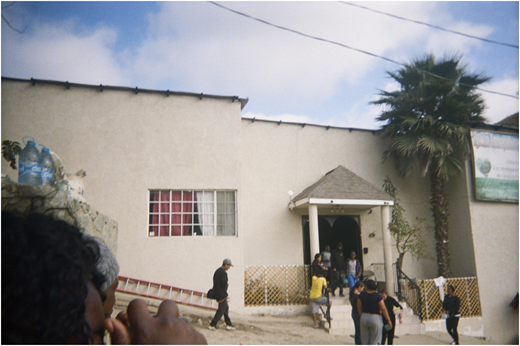
Haitian families and community members fled South America because of the racialized social conditions they experienced and headed north on their journey toward the US Pascal Ustin Dubuisson (2018), a Haitian migrant, published the book Sobrevivientes: Ciudadanos del Mundo [Survivors: Citizens of the World], where he recalls his memory of the 2010 earthquake and his migration from Brazil to Tijuana. Haitian migrants began to arrive in Tijuana in 2016. To address the arrival of Haitians, the Obama presidential administration began implementing a metering policy to limit the number of asylum seekers entering the US per day and displaced individuals waiting in Mexico. Haitian migrants added their names to waitlists, but the process concerning the list of asylum seekers lacked transparency. In 2017, the pastor of Embajadores de Jesús [Ambassadors of Jesus], a religious organization, organized a shelter that continues to be home to Little Haiti in Tijuana. When the Biden administration abandoned metering in 2021, Haitian migrants continued to wait in Tijuana throughout the COVID-19 pandemic because the Trump administration implemented Title 42, a public health and social welfare measure controlling the entry of individuals into the country to prevent contagion. In addition to facing challenges in obtaining healthcare, Haitian migrants faced the risk of contracting the virus in overcrowded migrant shelters or detention centers. Finally, between 2023 and 2025, migrants used the US Customs and Border Protection's mobile app, CBP One, to request and wait for an appointment before presenting themselves at the port of entry, like the San Ysidro Port of Entry at the Tijuana-California border. The app presented a barrier for Haitian migrants because its facial recognition would fail to recognize applicants of darker skin tones, preventing them from making an asylum appointment. Regardless of the political affiliation of the US presidency or the immigration enforcement mandates, Haitian migrants continue to wait indefinitely in border cities like Tijuana.
US immigration enforcement
Several key moments contextualize the tension between the Haitian migrant experience and immigration enforcement in the US. First, in 2018, President Trump referred to Haiti and other African nations as “shithole” countries. Then, in 2021, photographs of US Border Patrol agents on horseback chasing Haitian migrants on the Rio Grande went viral because of the similarity with tactics once used by slave patrols. The Trump-Vance 2024 campaign fueled rhetoric of Haitian migrants eating pets without documented evidence. More recently, Haitian enclaves continue to live in fear of US Immigration and Customs Enforcement [ICE] raids. In April 2025, Marie Ange Blaise, a 44-year-old citizen of Haiti, died in ICE custody, stressing the urgency of what Dr Felicia Henry refers to as a mass Black death. Finally, in June 2025, the Trump administration announced it would end the temporary protected status of Haitian migrants. The same month, a viral TikTok video titled, Haitian deportations????, shows a community coming together to protest, resist, and prevent ICE from violently detaining Haitian community members. Anti-immigrant sentiments and the social construction of border disasters shape the Haitian migrant experience in the US.
Border PAR
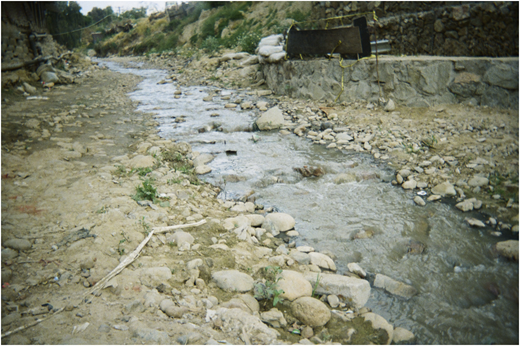
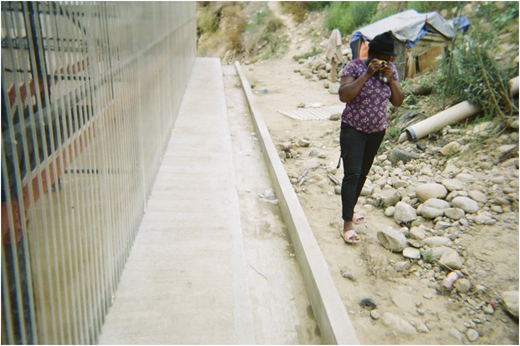
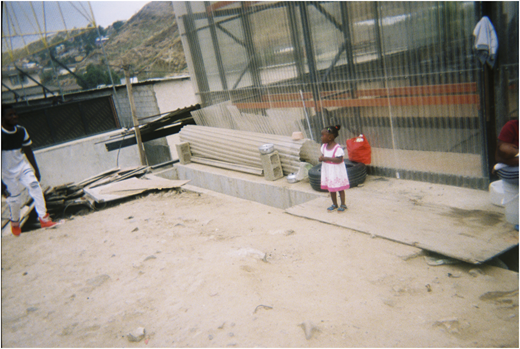
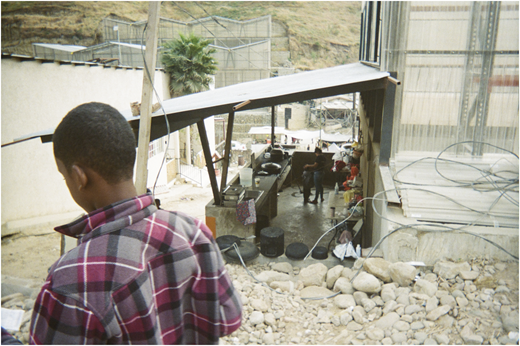
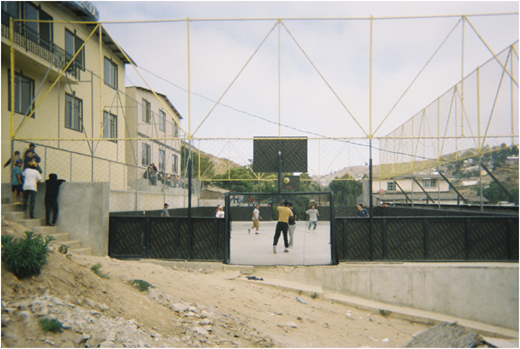
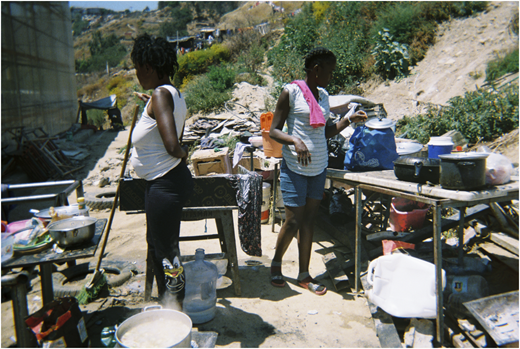
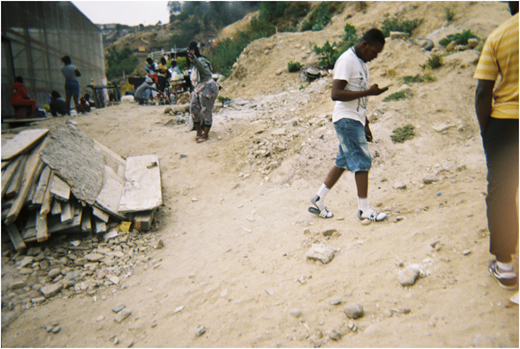
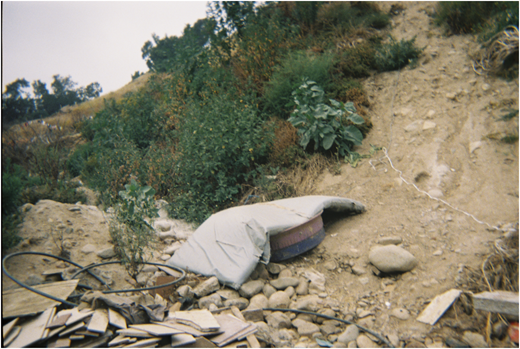
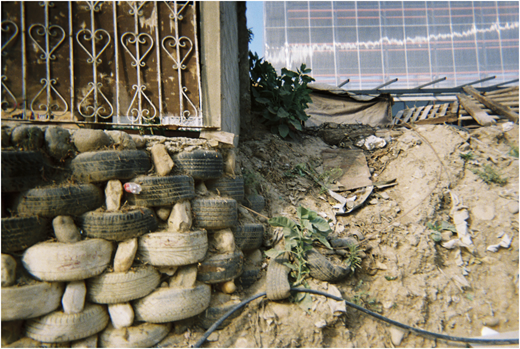
Since 2018, I have engaged with Haitian families in Tijuana's migrant shelters. In 2023, I collaborated closely with Haitian migrants through the implementation of Border PAR [participatory action research] [Author reference, n.d.]. Twenty-five Haitian Colegas [colleagues] participated in the data collection. The following photos are part of a Foto y Voz [photovoice] project where Haitian migrants captured images using single-use disposable film cameras.
Colegas first consented to Spanish consent forms and completed individual, semi-structured interviews. As a bilingual researcher, I would communicate in Spanish, and they would respond in Creole, French, Portuguese, Spanish, or a hybrid language mixture that they were comfortable using. Some migrants developed Portuguese and Spanish fluency while migrating across Latin America or from their prior ties to the Dominican Republic. Colegas received monetary compensation and selected their pseudonyms (Plate 1).
Visualizing Haitian migration using photography reclaims migrant storytelling by documenting lived experiences during border disasters. Through a collaborative community-engaged process, the photographs taken by migrants themselves capture intimate moments and conditions of social vulnerability that serve as counternarratives to distorted presentations of the migrant experience. The agentic migrant photographer makes decisions about what to photograph. The visuals are artistic and political. Through the ojo migrante [migrant eye], each photograph deconstructs master narratives about borders and migration. Photographs created by and for border-impacted populations trigger conversations about some of the most pressing issues concerning racialized communities and immigration enforcement. All photos © (Author reference, n.d.) (see Plates 2–11).