Psychological safety (PS) is crucial for organizations to increase adaptability and respond to dynamic markets, innovative behavior, and sustainability practices and processes, through team performance and learning. Specifically, for team-based work structures, understanding shared behaviors such as strategic leadership (SL) is essential, as they have a high potential for creating PS. This study aims to examine the impact of specific transformational (TL) and transactional (TS) behaviors on team PS and expand research in the context of companies immersed in a highly uncertain environment.
This research analyzed relational data in three Mexican companies using Social Network Analysis to explore shared behaviors within working teams.
The results reveal that the impact of SL on PS might vary across teams based on their characteristics (i.e. size and age). Mature companies with well-established processes and teams benefited more from TL behaviors such as articulating a vision, role modeling and fostering group goal acceptance. Conversely, TS consistently influenced PS in all the companies, with a stronger effect on the smallest, youngest and project-based one.
This study responds to calls for further research on PS as a group-level property. Moreover, by focusing on leadership behaviors rather than perceptions, this work advances the understanding of team member’s interactions from a social perspective. Finally, it emphasizes the multidimensionality of SL and extends the concept of shared leadership in team contexts.
This research shifts from an individual, top-down approach to a collective, team-based perspective, highlighting the role of SL in fostering PS. Thus, it provides valuable insights into the unique leadership and team management practices required in an emerging economy.
1. Introduction
Research on teams is essential because of the increasing number of organizations that have embraced team-based work structures to increase adaptability that responds to dynamic markets, innovative behaviors and demanded sustainability practices and processes (Andersson et al., 2020; Edmondson and Bransby, 2023; Vallabh et al., 2024) . Thus, understanding which variables affect teams’ formation and performance is of high relevance to such organizations (Johnson and Avolio, 2019). Research has established that a positive team climate is one of the key variables that drive high levels of team efficacy (Edmondson and Lei, 2014; Hackman, 1987; O’Donovan and McAuliffe, 2020). Particularly, fostering a team climate where members feel secure in posing questions, sharing ideas and experimenting with innovative solutions to longstanding challenges is paramount for enhancing performance (Edmondson, 1999). This atmosphere, named psychological safety (PS), is fundamental for facilitating open communication and collaboration within teams (Edmondson and Bransby, 2023). Nonetheless, literature on PS strongly points to the need for more clarity on what constitutes the antecedents of PS, specifically in contexts where organizational necessities may differ from the traditional North American studies (Edmondson and Bransby, 2023; Newman et al., 2017). Moreover, Edmondson and Bransby (2023) argued that empirical group-level research on PS must examine the important role that members play in creating psychologically safe teams.
In parallel, prior work has found that leadership plays a pivotal role in shaping the attitudes and behaviors of team members and in cultivating constructive interactions among them, because strategic leaders are capable of restoring a sense of safety and security (Yukl, 2012). In light of this, shared leadership emerges as an effective lens to understand the effects of leadership on team dynamics, because it highlights the collective properties that emerge from the relationships and interactions that evolve through time within the team (Nordbäck et al., 2024). Accordingly, there is increasing evidence in support of the positive effects of shared leadership above and beyond those of traditional hierarchical leadership structures (DeRue and Ashford, 2010; Gibb, 1954). Unlike traditional centralized leadership, where one individual holds sole responsibility for team outcomes, shared leadership entails distributing leadership roles and responsibilities among members and highlights that leadership is best conceived as a group quality (Pearce and Conger, 2003; Siangchokyoo and Klinger, 2022). Furthermore, earlier studies have highlighted the multifaceted and complex nature of strategic leadership (SL) which manifests in firm and group-level outcomes, as well as called for detailed studies on leadership styles and their effects beyond performance measures (Samimi et al., 2022).
Given the arguments outlined above, the motivation of this paper is to answer Edmondson and Bransby’s (2023) call to study PS as an emergent property of a group and to extend previous work on shared leadership, by examining the collective effort of members in displaying specific SL behaviors (Hogg et al., 2004; Siangchokyoo and Klinger, 2022). Thereby, we approach team interactions as behaviors rather than mere perceptions, which aligns with prior research that seeks to comprehend team interplay from a social perspective (Hogg et al., 2004), as well as with previous studies of different team phenomena emphasizing the collective properties that emerge from dynamic interactions within teams (Lefebvre et al., 2021; Nordbäck et al., 2024; Wildman et al., 2024). For instance, teamwork is a collective act that involves the obligatory interaction of people, and it is through these interactions that experiences, behaviors and knowledge are shared. Hence, regardless of their position within the team, members are open to influence and be influenced by their colleagues and collectively contribute to team processes and outcomes (Mao et al., 2019; Pearce and Conger, 2003).
This study proposes that if team members share SL behaviors, other members will perceive the team atmosphere to be psychologically safe. In other words, the more SL behaviors are displayed by members, the more PS behaviors those members will demonstrate within the team. Specifically, we follow Vera and Crossan’s (2004) definition of a strategic leader as one who is capable of displaying transformational (TL) and transactional (TS) leadership behaviors. As such, transformational behaviors will portray an inspirational and visionary model that moves subordinates to perform beyond expectations (Bass and Riggio, 2006; Podsakoff et al., 1990). Conversely, TS behaviors consider contingent rewards that make expectations clear and recognize goal achievement, which has proven to have a positive effect on team aspects such as commitment, satisfaction and performance (Bass et al., 2003).
The rationale for linking SL to PS is grounded in empirical evidence showing that TL and TS behaviors foster interpersonal trust, which is foundational to psychological safety. According to Podsakoff et al. (1990), these leadership behaviors indirectly influence organizational citizenship behaviors through follower trust – suggesting that the trust-building function of leadership extends to relational climates within teams (Edmondson and Lei, 2014; Simpson, 2007). When strategic leaders stimulate innovation, model openness and clarify roles, they cultivate an environment where members feel secure in taking interpersonal risks, voicing concerns and expressing ideas (Edmondson, 1999; Kozlowski and Bell, 2008).
Importantly, the relationship between SL and PS may not be universal, but instead shaped by contextual variables such as power distance and cultural expectations. As highlighted by Edmondson and Bransby (2023), leadership behaviors such as listening, feedback or demonstrating competence typically enhance PS. However, in high power-distance settings, hierarchical norms may require leaders to balance authority with approachability to achieve the same effect. This suggests that the effectiveness of TL and TS behaviors in fostering PS is likely contingent on the sociocultural context in which team dynamics unfold. Accordingly, this study considers not only the presence of SL behaviors but also how they are enacted and perceived within specific organizational and cultural environments.
To provide empirical evidence for our research model, we performed our study in the context of three companies in an emerging economy that differ in sector, size, age and the nature of roles displayed among team members. Data collection and Social Network Analysis (SNA) allowed us to investigate shared behaviors within working teams. The unit of analysis is the relationships between pairs of team members, making all variables dyadic (Borgatti and Cross, 2003), which according to previous literature is a desirable approach to understand team interactions (Edmondson and Bransby, 2023; Zagenczyk et al., 2023).
Acknowledging the importance of context, research on PS has been conducted across diverse settings. However, with few exceptions (Ansong et al., 2024), most studies have predominantly focused on environments characterized by low uncertainty avoidance – a cultural dimension – which limits understanding of how today’s fast-paced organizations continue to move and be relevant (Edmondson and Bransby, 2023). In other words, as organizations continue to extend their arms into further territories, their leaders also need to understand a way to be flexible and malleable enough to move their teams and organizations in a creative, innovative and productive way. Thus, understanding PS in high uncertainty avoidance and high power distance contexts, often associated with emerging economies like Mexico, is paramount. These environments are characterized by resource constraints, hierarchical leadership styles and weaker institutional frameworks, which shape distinct leadership behaviors and team dynamics (Frazier et al., 2017; Lee and Kim, 2009). In such settings, teamwork and rewards play a pivotal role in achieving knowledge management success (Atapattu and Jayakody, 2014) and the emphasis on job security highlights leadership mechanisms that might differ substantially from those examined in most existing research (López-Zapata et al., 2024). In addition, the shared leadership approach becomes even more relevant in high uncertainty avoidance contexts, where strategically combining TL and TS behaviors is required to enhance team results (Vera and Crossan, 2004) by addressing team’s needs and motivations to foster collaboration and trust (Atapattu and Jayakody, 2014; Frazier et al., 2017).
This study contributes to the literature of both PS and SL. First, we address the critical need for more group-level research on what specific behaviors from leaders create PS (Edmondson and Bransby, 2023) and extend the work on shared leadership (Siangchokyoo and Klinger, 2022) as a strategic resource for organizations to remain competitive in today’s fast-paced environments. Our study identifies specific collective leadership behaviors necessary for promoting PS within teams, especially in emerging economies, without differentiating between leaders and collaborators. Second, by examining individual dimensions of SL and their effects on PS, we contribute to the discussion on the multidimensional nature of SL (Deinert et al., 2015; Rapp et al., 2016) and respond to calls for detailed studies on leadership styles and their effects beyond organizational outcomes (Samimi et al., 2022). Unlike previous studies that treat TL and TS as a unified construct (Caza et al., 2021; Howell and Avolio, 1993), we found evidence that teams required different collective SL behaviors contingent upon their needs and characteristics (i.e. size and age) to promote PS. For instance, mature companies with well-established processes and teams benefited more from TL behaviors such as articulating a vision, role modeling and fostering group goal acceptance when promoting PS. Conversely, contingent rewards, associated with TS behaviors, consistently emerged as a significant factor for all firms in the sample exerting a stronger impact on small, young, project-based firms.
2. Psychological safety
PS is the key to understanding group processes and team dynamics. Edmondson (1999) defined PS as “a shared belief that the team is safe for interpersonal risk taking.” It transcends individual interests to allow for collective problem solutions and shared goals accomplishment (Edmondson et al., 2001). In fact, PS is a multidirectional constant and dynamic phenomenon where team members seek and share feedback between them (Edmondson and Bransby, 2023).
Research confirms PS to enable performance and learning consistently at the individual, team, organizational and interorganizational levels (Edmondson and Lei, 2014). For example, Rivera et al. (2021) found that trust, respect, tolerance and an enabling environment form a close representation of PS that enhances knowledge sharing at the interorganizational level. In a vast portion of studies, PS has been explored in its role to promote, facilitate or moderate organizational outcomes (O’Donovan and McAuliffe, 2020), as well as individual outcomes like employee creativity and proactive personality leading to innovative behaviors (Vallabh et al., 2024; Yaqoob et al., 2024; Baer and Frese, 2003). Yet, the antecedents of how it is built constitute an area that remains to be explored thoroughly (Edmondson and Bransby, 2023).
In her seminal work, Edmondson (1999) highlighted how an ideal leader would be most relevant to sponsor behaviors that take members to share ideas openly and freely, aiming at reaching higher levels of learning. Nevertheless, she did not specify how the process of leading would specifically contribute to the creation of a psychologically safe environment. In their systematic review of factors enabling PS in healthcare teams, O’Donovan and McAuliffe (2020) examined the role of supportive leadership and explained that change-oriented leaders enable PS by encouraging innovative thinking, envisioning change, taking personal risks and facilitating open discussions of errors and solutions (Newman et al., 2017). Other leadership perspectives, such as laissez-faire, encourage team members’ shared authority to make decisions and resolve problems (Raes et al., 2013). Furthermore, studies confirm that the role of the leader is fundamental to insert in team members a shared perception that the team is safe to take risks and speak up (Nembhard and Edmondson, 2006).
3. Strategic leadership
Research on SL aims to answer questions focused on how top executives influence organizational outcomes. One branch of SL research is Vera and Crossan (2004), which presents a framework that explains how strategic leaders can display both TL and TS behaviors in benefit of the organization’s processes and outcomes. In essence, SL is contextual because the proper management of human behavior requires not only motivation and inspiration but also obligations, agreements and compensation. A description of both styles of leadership follows.
3.1 Transformational leadership
Transformational leaders serve as models that inspire followers to perform beyond what is expected from them due to the strong emotional connection they have with their leader, and the inspirational drive they perceive from him/her (Bass, 1985; Díaz-Sáenz, 2011). In addition, transformational leaders are responsible for enabling their followers’ self-drive, allowing them to demonstrate their own immediate interest for the advancement of the organization’s goals and aspirations (Breevaart et al., 2014). According to Podsakoff and colleagues (1990), TL is multidimensional in nature, and includes six key behaviors or dimensions: identifying and articulating a vision; providing an appropriate model; fostering the acceptance of group goals; high performance expectations; and intellectual stimulation.
Most empirical research assumes that TL is an individual trait, highly correlated to team performance outcomes (Burke et al., 2006). In fact, scholars have found that TL predicts empowerment, cohesion and perceived group effectiveness, and others highlight its positive impact on employee well-being and organizational performance (Ogbonnaya et al., 2016). However, an increasing stream of leadership research understands it as a process in which members play a predominant role. Therefore, one of the basic assumptions for this study is that all members have the potential of displaying TL behaviors and will do so at higher or lower levels depending on their process of interaction throughout time (Uhl-Bien, 2006). Consequently, team members, regardless of their position, will display behaviors that inspire others to perform beyond expectations, which should translate into shared TL within the team.
3.2 Transactional leadership
TS leaders direct a company seeking to strengthen the organization’s culture, strategy and structure (Jansen et al., 2009). They influence individuals primarily through contingent reward exchanges and active management by exception (Avolio et al., 1999). Transactional leaders define goals, communicate explicit agreements regarding what they expect from followers, how they will be rewarded for their results and provide constructive feedback to maintain all of them on task (Howell and Hall-Merenda, 1999). Leaders with TS behaviors supervise individual and team performance to detect mistakes and take corrective action when needed (Howell and Avolio, 1993). This type of exchange relationship provides a context that is clear and safe for followers, because they understand what is expected of them. According to Podsakoff and colleagues (1984), a TS behavior can be measured through contingent rewards because it taps the extent to which a leader provides rewards in exchange for a follower’s effort. Thus, the basic assumption for this study is that all members have the potential for displaying TS behaviors and will do so at different levels depending on their interaction through time. In this sense, team members coperform the leadership practice (Spillane, 2006).
4. Strategic leadership and psychological safety in teams
Contemporary demands for quick responses, innovation and adaptability have shifted team structures toward self-managed and multidisciplinary teams. Teams no longer rely on just one person for direction but develop a need for a type of leadership that empowers all members and connects them in a way that they mutually care for and stimulate each other (Day et al., 2004). Thus, as teams and their tasks increase in complexity, so does the need for shared leadership behaviors that improve team effectiveness (Pearce and Conger, 2003). Research recognizes the importance of leaders as the “shapers and developers of adaptive teams” (Kozlowski and Bell, 2008). This idea suggests that the leader’s style will have a direct impact on what takes a team from being a group of individuals into a developed and well-adapted team (Hackman, 1987). For instance, strategic leaders with the ability to engage in transformational or transactional behaviors can shape individual behaviors by encouraging a strong sense of team identity (Jansen et al., 2009), promoting affirmative interpersonal relationships at any level of the company and encouraging collaborative behaviors (Samimi et al., 2022). Hence, members develop not only their functional skills but interpersonal capabilities that stimulate their own talents as well as their fellow members’, which eventually translates into a learning context for the team (Edmondson, 1999).
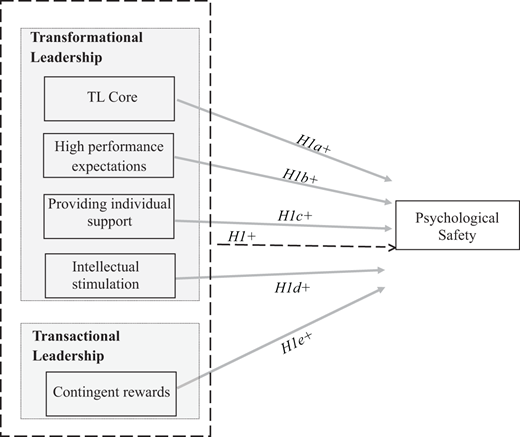
As stated earlier, this study expands on research that explores SL dimensions. Doing so is important to gain clarity regarding the ways in which specific TL and TS behaviors, when shared, will become relevant to enhance a sense of PS in the team (Burke et al., 2006). Deinert et al. (2015) found that each of the TL and TS behaviors has a distinct origin when exploring a leader’s personality traits and argued that these would have a different impact on performance; thus, differentiating behaviors becomes even more relevant in leadership studies. In this study, four variables are used to operationalize TL behaviors (Podsakoff et al., 1990): “a core transformational leader” which integrates articulating a vision, providing an appropriate model and fostering the acceptance of group goals; high performance expectations; individualized support; and intellectual stimulation. In addition, contingent reward is used to operationalize TS behavior. Hence, the current study hypothesizes that each dimension of SL will have a positive impact on the emergence of PS in teams:
From a dyadic perspective, the extent to which the team members perceive teams’ psychological safety is a positive function of how they perceive team strategic leadership, measured in its two dimensions; transformational leadership and transactional leadership.
Figure 1 presents our research model, including the hypothesis thus far presented.
In Section 5, the methodology used to test the hypothesis is described.
5. Methodology
5.1 Sample
A multiple case study design was adopted to enable in-depth analysis both within and across cases (Yin, 2003; Warwick and Osherson, 1973). To test the hypotheses, we collected cross-sectional relational data from three Mexican companies, examining the phenomenon at a single point in time. Given that the influence of leadership on PS is shaped by contextual and industry-specific factors (Edmondson, 2018), we used purposive sampling – specifically, maximum variation sampling (Creswell and Poth, 2017; Patton, 2015) – to ensure heterogeneity in team and organizational characteristics, such as size, age and sector. This strategy aimed to enhance the theoretical breadth and contextual richness of the data, enabling a more nuanced understanding of how PS emerges across diverse environments (Palinkas et al., 2015; Yin, 2003). Therefore, case selection prioritized theoretical relevance over statistical generalizability, focusing on cases that made the relational mechanisms of interest, namely, dyadic dynamics between leadership and PS, transparently observable (Eisenhardt and Graebner, 2007).
For confidentiality purposes, companies are referred to as Company 1 (CO1), Company 2 (CO2) and Company 3 (CO3). Table 1 shows a characterization of the three selected companies.
A total of 54 individuals participated in this study. Although this may appear to be a relatively small number, it is appropriate for a purposive sampling strategy, where the focus is on the relevance and richness of the data rather than the sample size itself (Patton, 2015; Morse, 2015). Moreover, in the context of social network analysis (SNA), particularly when the analysis is conducted at the dyadic level, this number is methodologically sufficient and consistent with previous practices (Rivera et al., 2021; Zagenczyk et al., 2010). This is because the unit of analysis in SNA is relational and inherently dyadic – focusing on pairs of actors – making traditional assumptions of statistical independence inapplicable (Borgatti et al., 2013). As such, large-N surveys may flatten or obscure the complex interactional mechanisms that are central to phenomena like PS. In contrast, our purposive sample enables the detection of process-level detail and underlying causal structures, supporting alignment between sampling logic and theoretical purpose in dyadic research. Regarding sample composition of the participants, 17% were women and 83% were men. The average team size was 18 members (min = 14, max = 21). Team members worked in various departments, including commercial, administrative support and operations. Notably, at the time of data collection, all teams were responsible for operational-strategic functions that involved decision-making and demonstrated strong collaboration and coordinated work processes – conditions well-suited for observing transparently the constructs under investigation. Moreover, although the sample teams were not part of top management (Samimi et al., 2022), their roles encompassed strategic responsibilities. One team was selected from each company. Table 2 shows team attributes.
5.2 Measures
The study conducted a relational data survey across the three teams to comprehend their context of work, given that the relationships that are generated between them are of mutual coexistence (Rosenthal, 1997). Relational data analysis, linked to the network approach, is used because this methodological approach allows for the identification and evaluation of relationships and interconnections between team members, in this sense, the network approach allows us to visualize and measure the dynamics of teams (Scott, 2009; Wasserman and Faust, 1994). Specifically, we used dyadic variables as the unit of analysis (Hoppe and Reinelt, 2010) because our research aims to understand the dynamics and construction of PS across the entire team, not just among leaders. In this regard, we align with the network approach previously applied to measure shared leadership (Carson et al., 2007) and recently recommended for assessing PS (Edmondson and Bransby, 2023), as it allows team-level processes to be modeled directly and accurately (DeRue and Ashford, 2010).
For psychological safety, we adapted Edmondson’s (1999) seven-item scale using the roster method, which is commonly used in social network analysis (Marsden, 1990). Specifically, we transformed psychological states perceived by individuals into actual behaviors within teams. Each respondent selected individuals from a list with whom they engaged in specific behaviors, providing more accurate PS measurements based on their interactions. Items included, for instance, “Please select the one(s) with whom you are able to bring up problems and tough issues.”
For SL, including transformational and transactional leadership, we adapted the TL and TSPodsakoff et al.’s (1990) instrument to a roster form (Marsden, 1990). This study uses Podsakoff et al.’s (1990) measurement because of its strong validity, as well as the specificity of behaviors it measures, which present a theoretical and practical advantage considering the purpose of the study. Other research has also considered The Multifactor Leadership Questionnaire (MLQ) developed by Bass and Avolio, and even though it has been widely used, evidence has been found that the Full Range of Leadership as measured by the MLQ5x, which also includes TS measurements, needs more refinement when different levels of analysis are at play (i.e. team level) (Schriesheim et al., 2009). In addition, TS as measured by Podsakoff et al. (1990), measures more specific behaviors related to feedback and recognition, which were relevant for the purpose of this study.
To address concerns about participant fatigue associated with the original 28-item transformational leadership scale developed by Podsakoff et al. (1990), we used a reduced version of the scale that had been previously developed and validated as part of a research project conducted in the same region (Mojarro-Duran, 2014). This research project followed Stanton et al.’s (2002) systematic item-reduction strategy, assessing item-level reliability and conducting confirmatory factor analyses to ensure both reliability and convergent validity of the reduced scale. The resulting version comprised seven high-loading items that preserved the conceptual integrity of the original dimensions while minimizing respondent burden (e.g. Cronbach’s alpha = 0.92). In our study, we adopted this validated reduced scale and adapted it into a roster format to collect dyadic data, in line with best practices for relational data collection (Marsden, 1990). An example of such items is: “From the following list of people, please select the one(s) who provide a good model for you to follow and you believe that lead by example.”
5.3 Data collection and analysis
Each of the three participating companies supplied a list of functional teams, including member names, email addresses and organizational charts displaying their roles. Customized questionnaires for each team were generated using Qualtrics and distributed via personalized email to team members. Direct communication with participants ensured the confidentiality of their responses for research purposes. Appendix 1 displays the instrument used in this study.
After all participants submitted their responses, the data were exported to UCINET 6.0 for analysis. To test the hypothesized relationships, the resulting matrices were examined using the Multiple Regression Quadratic Assignment Procedure (MRQAP), using the double semi-partialling permutation method with 10,000 permutations (Dekker et al., 2007). This robust technique effectively addresses multicollinearity and accounts for the inherent structural dependencies in relational data (Borgatti and Cross, 2003; Dekker, et al., 2007).
6. Results
To test hypotheses 1 (H1a, H1b, H1c, H1d and H1e) we included the PS and the SL dimensions in the model. Transformational leadership comprised the TL Core, high performance expectations, providing individual support and intellectual stimulation variables, while the transactional leadership (TS) was constituted by the contingent rewards. TL core was calculated using the average of three matrices: identifying and articulating a vision; providing an appropriate model, and; fostering the acceptance of group goals (see Appendix 1). All calculations were performed separately for each team rather than aggregated across teams. Although Wasserman and Faust (1994) cautioned that averaging matrices to analyze aggregate dimensions can result in a loss of specificity and distortion of unique relational patterns, our study addresses these concerns by assuming homogeneity within teams and ensuring theoretical coherence in our interpretations. By treating team members as comparable units (i.e. measured on the same scale) and grounding our analysis in established theoretical frameworks (Podsakoff et al., 1990), we mitigate the risk of oversimplification while maintaining methodological rigor. Together, these conditions help make averaging the matrices an acceptable approach, even with its downsides (Wasserman and Faust, 1994). Moreover, to provide evidence of empirical coherence in constructing the TL core matrix, we calculated QAP intermatrix correlations among the three underlying dimensions prior to aggregation. All correlations were statistically significant (p < 0.001), ranging from 0.46 to 0.79 (see Appendices 2–4). Consequently, we find support for the validity of the aggregation approach, both conceptually – aligned with the theoretical assumptions underlying TL core – and empirically, based on the strength of relational consistency across the dimensions. The hypothesis testing process consisted of running different models to compare the adjusted R square, which is the best indicator of model fit. Table 3 exhibits the MRQAP regression models for PS and all the SL (TL and TS) variables for the three companies.
Specifically, for Company 1, a large nation-wide B2B firm specializing in IT and telecommunication services, with data from a 14-member commercial team, the model with the best fit explains 49.7% of the variance and H1a, H1c and H1e are supported. The highest effect on PS relates to “TL Core” (β = 0.473, p < 0.01) and the lowest to “contingent rewards” (β = 0.191, p < 0.01). In Company 2, a medium-sized manufacturer operating across five Mexican states with 19 members in support roles, H1a, H1b, H1d and H1e are supported and the model with the best fit explains 37.7% of the variance. The highest effect on PS is related to “TL core” (β = 0.266, p < 0.01) and the lowest to “high performance expectations” (β = 0.104, p < 0.05). Finally, for Company 3, a small firm active in mining support across four states with a 21-member support and operations team, the best model explains 48% of the PS variance, and hypotheses H1a, H1d and H1e are supported. In this case, the highest effect on PS is related to “contingent rewards” (β = 0.290, p < 0.01) and the lowest to “TL core” (β = 0.208, p < 0.01).
Notably, “TL core” and “contingent rewards” have a positive and significant impact on PS in all three companies, indicating their essential role regardless of team or company characteristics. In contrast, “high performance expectations” is only significant in Company 2.
Table 4 summarizes the attributes of the participating companies and teams, highlighting the significant SL variables and the hypotheses supported in each context.
These findings suggest that while TL Core and Contingent Rewards consistently emerged as significant across diverse organizational settings, other dimensions – such as Individual Support, Intellectual Stimulation and High Performance Expectations – appear to be contingent upon team type and organizational context. These results appear to reinforce the need to align leadership practices with the unique demands and structural characteristics of teams across different realities. In Section 7, results are discussed to present possible explanations on the basis of previous literature and considering the specificities of each company’s context.
7. Discussion
This study addresses Edmondson and Bransby’s (2023) call to explore PS as a group-level phenomenon, builds on prior literature on shared leadership and addresses the call for detailed studies on leadership styles and their effects beyond organizational outcomes (Samimi et al., 2022). To do so, we investigated the effect of collective TL and TS behaviors on PS by focusing on team interactions as behaviors rather than perceptions. Specifically, we studied teams in three companies in an emerging economy that differ in sector, size, age and the nature of the roles among team members.
A shared finding across all three cases was the significant impact of TS (contingent rewards) on PS. Team members require assurance that their efforts will be acknowledged and rewarded to feel safe in taking risks and expressing their ideas (Sarros and Santora, 2001). This focus on short-term motivation and rewards might be attributed to the absence of a long-term vision in emerging economies, such as Mexico (Vargas-Lama and Osorio-Vera, 2020), where research on human resource management and leadership has revealed the prevalence of employee recognition, employment benefits and promotional incentives (Martinez, 2007).
The second common finding was the significant effect of TL core on PS. Team members believe that colleagues who articulate a vision, provide a role model and promote group goal acceptance contribute to creating a safe environment for risk-taking and open communication. These findings align with Elenkov and colleagues (2005), who argue that shared values, norms and attitudes in a social group influence interorganizational interactions, leading to increased PS through positive collective identity and shared goals (such as learning, innovation and sustainable practices, among others). Similarly, our findings also support the perspective of Caza et al. (2021), who argue that TL core behaviors exhibit universal positive perceptions across different cultures.
Analyzing each company, we found that for Company 1, a large organization with formalized processes, “providing individualized support” significantly contributes to PS. Here, members value colleagues who understand their personal needs and serve as role models (a TL core variable), actively fostering understanding, shared goals and acceptance. This highlights the importance of members who inspire others through their example and promote the acceptance of shared goals for PS development. Conversely, “high performance expectations” and “intellectual stimulation” were not significant. High performance expectations may increase team member stress in specific situations (Rowold et al., 2017), potentially explaining its lack of statistical significance. Regarding intellectual stimulation, a larger firm size with its complex organizational structure, may reduce the need for an open and collaborative knowledge-sharing environment (Politis, 2002).
Company 2, a younger medium-sized company with formal processes, operates on project-based activities, indicating a more dynamic and creative environment. Our findings confirmed that four SL variables significantly influence team PS. In this context, “intellectual stimulation” is critical because colleagues need to motivate and challenge each other to encourage risk-taking, learning from mistakes and experimentation. Moreover, fostering the acceptance of group goals and providing individual support (TL core variables) had a similar effect on identifying what people need and feel when working together toward a common goal. Finally, “high performance expectations” also showed to be relevant for members to develop PS, because it signifies a constant pursuit of better performance and exceeding expectations, which is fundamental to TL (Díaz-Sáenz, 2011). However, in this company, “providing individual support” was not significant for PS, possibly influenced by the predominance of male’s (89.5%) competitive preference (Korabik et al., 1993), potentially overshadowing emotional needs (Podsakoff et al., 1990).
Company 3, the youngest and smallest, was in the process of defining its procedures and policies. Engaged in diverse service projects for various mining operations, demanded a focus on distinct resources and capabilities. Notably, “intellectual stimulation” and “contingent rewards” had the most impact on team PS. Given the company’s nature, it faces substantial challenges that need adaptation and learning (Tzabbar and Margolis, 2017). For instance, the CEO emphasized the value of generating solutions and accumulating knowledge to improve operations and customer responsiveness. Politis (2002) found that contingent rewards can be counterproductive for knowledge sharing in dynamic environments, such as self-managed settings. However, this study finds that in a small service project-based company, where knowledge sharing is imperative for survival, contingent rewards can foster a collective interdependence, leading to increased PS.
In the three cases, Company 3 posed the greatest challenge in identifying significant TL behaviors influencing team PS. This difficulty might be attributed to its rapid decision-making pace, leaving limited space for consensus regarding common goals and understanding individual needs from collaborators. Consistently, “contingent rewards” was the most relevant behavior, indicating that collaborators retained an incentive for adaptive performance with a learning focus. Furthermore, Company 1 and Company 2, with longer operational histories and well-established processes and teams, demonstrated a greater number of relevant TL variables for promoting team PS. This indicates that in more formal, structured and stable organizations, collaborators find it easier to trust that their input and risk-taking are safe for proposing innovative performance approaches. However, further research is needed to confirm these findings.
8. Conclusions
8.1 Theoretical, methodological and practical implications
This study contributes to a more comprehensive understanding of how SL, encompassing both TL and TS dimensions, fosters team PS. While prior studies have acknowledged leadership’s role in promoting team behavior, the specific mechanisms through which it shapes PS have remained underexplored (Edmondson, 1999; Joo et al., 2023). Responding to this gap and to calls for disaggregating the effects of leadership styles beyond organizational outcomes (Samimi et al., 2022), this research aims to reconceptualize SL through a behavioral lens. We treat leadership not as a static trait of individuals, but as an emergent, collective pattern of observed behaviors exchanged among team members. This shift from perception-based to behavior-based analysis allows for a more precise understanding of how leadership emerges through social interaction and affects PS.
Drawing from Podsakoff et al. (1990) and Deinert et al. (2015), our findings suggest that both TL and TS behaviors – when displayed across team members – are crucial for fostering an environment where individuals feel comfortable taking interpersonal risks, expressing ideas and experimenting. This behavioral reconceptualization extends shared leadership theory by operationalizing leadership through observable, reciprocal behaviors, offering empirical evidence for its emergence within team interactions rather than solely from formal roles. This approach directly answers recent calls for relational, interaction-based investigations into PS (Edmondson and Bransby, 2023; Pearce and Conger, 2003).
Our findings are particularly relevant within the context of Mexico – an emerging economy characterized by high uncertainty avoidance and power distance – where individuals often value stability, formal structures and clear expectations (Hofstede, 2001). In such environments, we found that TS behaviors, especially contingent rewards, may function not as control mechanisms but as culturally resonant signals of support and validation. This supports Frazier et al.’s (2017) view that employees in high uncertainty avoidance cultures seek engagement but are less likely to take risks unless leadership behaviors communicate trust and structure.
Another theoretical implication of our research aligns with the foundational assumption of shared leadership: that all team members develop and exchange leadership roles through a reciprocal influence process (Siangchokyoo and Klinger, 2022). Our findings echo adaptive leadership theory, suggesting that leadership behaviors not only emerge over time through member interaction but are also reciprocated within teams (DeRue and Ashford, 2010). This reciprocal dynamic enables teams to coconstruct leadership, amplifying the conditions for PS by ensuring mutual recognition and influence.
Interestingly, our findings offer a contextual contrast to prior research suggesting that TS suppresses PS or psychological empowerment (Bian et al., 2019). Rather than eroding PS, contingent rewards consistently promoted it – particularly in younger, smaller teams. This suggests that the effects of TS are culturally and structurally contingent: when enacted by peers in supportive and goal-oriented ways, TS can foster trust and clarity in high-formality environments.
Methodologically, this study makes three significant contributions. First, it advances the measurement of team PS by focusing on observed behaviors – such as raising concerns, offering support and exchanging feedback – rather than abstract perceptions. Similarly, SL is captured as behaviorally enacted by team members, not merely attributed to formal leaders. This reframing enables scholars to examine both PS and SL as emergent, interaction-based phenomena.
Second, the comparative design across three organizational cases – each differing in sector, size and development stage – provides rich insight into how contextual variables shape the relative salience of TL and TS behaviors. Our consistent application of a behavioral and theoretical framework across diverse contexts strengthens the external validity of our findings and offers managers evidence-based guidelines tailored to their team’s structural conditions.
Third, the use of SNA with dyadic data helps capture the structure and flow of relational influence patterns. This approach provides a promising tool for examining shared leadership emergence in dynamic, interdependent systems. SNA has proven particularly useful for mapping how leadership moves through informal channels, supporting efforts to study team-level, behavioral constructs (Balkundi and Kilduff, 2006; Brass and Borgatti, 2020).
In terms of practical implications, this research offers clear, actionable guidance for organizations, especially those in emerging markets. First, leadership development programs should be designed for all team members – not just formal leaders – to cultivate the collective display of TL and TS behaviors that support PS. Second, TS behaviors, particularly contingent rewards, are especially impactful in project-based, young or small teams operating under high uncertainty. Managers should therefore reinforce clear expectations and reward structures that acknowledge contributions, reduce ambiguity and enhance perceived fairness.
Third, organizations should prioritize the development of relational competencies. Peer mentoring, feedback loops and team-based reflection sessions can promote mutual recognition and the distribution of leadership roles. Such interventions are especially critical in contexts where formal hierarchy may limit open dialogue unless informal leadership behaviors are legitimized. Moreover, organizations should create intentional relational spaces – not merely physical, but procedural and cultural – that promote mutual trust, interaction and leadership recognition. By reinforcing relational capital (Nahapiet and Ghoshal, 1998; Collins and Hitt, 2006), such spaces support open communication and trust-building – the psychological foundations for team effectiveness.
Finally, this study supports the move away from single-person leadership models and strengthens the case for collective, shared and situational leadership (Pearce and Conger, 2003; Kozlowski and Bell, 2008; Rao-Nicholson et al., 2020). Organizations must therefore foster distributed leadership capacity by equipping employees with the skills, mindset and recognition needed to lead from any position. Doing so enables teams to enhance participation, foster psychological resilience and adapt to the demands of increasingly complex environments. For example, when considering global virtual teams, as well as other forms of teams enabled by technology, the effects of national culture in the performance of these teams and their outcomes becomes even more relevant (Froese et al., 2025). Our research gives light by placing the reflector on a behavioral approach that can help organizations understand their teams better.
8.2 Limitations and future research
This study has limitations that must be acknowledged. While it is widely accepted that the value of a purposive sampling method – such as maximum variation sampling – relies more on the depth and relevance of data than on sample size (Creswell and Poth, 2017; Morse, 2015; Patton, 2015), a broader sample might have allowed for greater generalizability regarding how SL dimensions influence team PS across diverse organizational contexts.
Furthermore, although the sample size may appear limited, the methodological approach is appropriate given the sociocentric nature of the data and the unit of analysis at the dyadic level. This aligns with prior research employing social network approaches to study leadership and team dynamics (Rivera et al., 2021; Yakovleva et al., 2010; Zagenczyk et al., 2023). The use of dyadic relational data is especially relevant in capturing emergent, behavior-based leadership patterns, which are not easily detected through traditional self-report instruments. As such, the approach contributes to a growing methodological trend emphasizing the networked and interactive nature of leadership emergence.
In addition, the selected cases are not atypical but rather representative of many organizations operating in similar economic, cultural and organizational environments. They reflect common characteristics in Latin American emerging economies – such as hierarchical structures, moderate-to-high power distance and constrained resources – which enhance the transferability of our findings. These contextual features provide a valuable lens for understanding how leadership behaviors interact with cultural norms to produce or hinder PS.
Nonetheless, we acknowledge that our decision to focus the analysis exclusively on the individual dimensions of SL was made to maintain conceptual clarity and manage model complexity. Future research should build on this foundation by incorporating additional variables that may influence the SL–PS relationship. These include potential mediators such as relationship quality or trust, moderators such as team longevity, specialization level or power distribution, and controls like the nature of the task (project-based vs operational), interdependence levels and industry volatility. Such extensions could clarify the boundary conditions under which collective leadership behaviors are most effective in fostering PS.
We recognize that the single-country context tempers generalizability, moreover since this research reflects the findings of a cross-sectional approach to data collection we accept that it limits causal inference; consequently, more studies need to be undertaken in the future to confirm or refute the findings. Future studies could benefit from a longitudinal design to trace how leadership behaviors and PS co-evolve over time, especially during periods of organizational transformation or team restructuring. The dynamic nature of both constructs calls for methods capable of capturing change, adaptation and feedback processes across time.
Finally, cross-cultural comparative studies would enrich our understanding of how national cultural dimensions (e.g. power distance, uncertainty avoidance, collectivism) moderate the effects of shared TL and TS behaviors on PS. Such research could further advance theory by refining the cultural contingencies embedded in diverse SL models, including physical as well as global virtual teams (Froese et al., 2025).
In sum, while this study offers preliminary insights into the behavioral and contextual determinants of PS, a broader research agenda is necessary to deepen, contextualize and extend these findings in increasingly diverse and dynamic team environments.