

This study aims to explain the relationships between corporate social responsibility (CSR) perceptions, practices, social capital and implementation barriers in Mexican small and medium-sized enterprises. (SMEs).
Using a validated questionnaire, a cross-sectional survey was conducted with 47 SMEs from diverse sub-sectors in Guadalajara, Jalisco and Culiacán, Sinaloa. Descriptive statistics, correlation analysis and cross-tabulations were used to test three hypotheses grounded in stakeholder and social capital theories.
Only H2 is fully confirmed, with CSR practices enhancing social capital, particularly in service-oriented sectors (62% stakeholder engagement). H3 is partially supported, as financial constraints (60%) and low CSR awareness (70%) limited adoption among small firms, while medium enterprises adopted more formalized strategies. H1 is supported only qualitatively, as CSR perceptions correlated with stakeholder-oriented practices such as health-care benefits (r = 0.21), with 82% of managers emphasizing responsibility and actions/management as key CSR themes.
The sample, restricted to Jalisco and Sinaloa, limits generalizability, necessitating broader, multi-regional studies to capture diverse CSR dynamics across Mexico’s 32 states.
This study refines stakeholder and social capital theories by highlighting how familism, a cultural norm emphasizing communal ties, drives stakeholder engagement in Mexican SMEs, contrasting with Western CSR models’ focus on formalized strategies. It advocates for institutional theory to explore regulatory impacts, encouraging broader research in emerging economies.
Tailored training programs can align CSR with SME business goals, addressing low budget allocation (13/47 SMEs). Collaborative platforms and tax incentives may reduce financial and awareness barriers, enabling managers and policymakers to enhance CSR adoption and sustainability.
By fostering stakeholder engagement, CSR strengthens community trust and social capital in Mexican SMEs, supporting cultural values like familism. This contributes to sustainable economic and social development, enhancing societal well-being in emerging economies.
This study offers novel insights into recent CSR perceptions and actions in Mexican SMEs, addressing a significant gap in an under-researched context.
1. Introduction
In the last two decades, corporate social responsibility (CSR) has become one of managers’ most adopted sustainability strategies (Valdez-Juárez et al., 2021). Nonetheless, the CSR discourse has mainly focused on large companies, which tend to voluntarily undertake these initiatives (Jamali and El Safadi, 2019). Small and medium-sized enterprises (SMEs) face complex challenges, including the expectation to act socially responsibly without mandatory sustainability certifications, while playing a crucial role in Mexico’s economy. They contribute 52.2% of the country’s Gross Domestic Product (GDP) and serve as an important source of employment, with more than 6 million SMEs representing 99.4% of the total number of companies in Mexico (INEGI, 2024). In Mexico, SMEs are classified as micro, small and medium-sized companies, with microenterprises having up to 10 employees, small enterprises up to 100 employees and medium-sized enterprises up to 250 employees (BBVA, 2024).
The contribution of SMEs to CSR has become a major focus of academic research due to their vital role in the global economy. Despite their significance, the scope and impact of SMEs’ involvement in social responsibility continue to be subjects of ongoing debate (Saveanu et al., 2021). This study aims to examine the alignment of SMEs’ CSR practices with stakeholder and social capital theories, focusing on whether CSR practices enhance social capital in these enterprises and how SMEs are influenced by or take stakeholders’ expectations into account. Social capital, rooted in network relationships, is essential for firm performance, particularly for SMEs in emerging economies, as it helps them navigate resource constraints and business uncertainties (Vu et al., 2023). Nowadays, society increasingly expects companies to behave responsibly toward their stakeholders through the implementation of socially responsible practices. These conscious business practices are considered essential to achieve sustainability, improve competitiveness and enable companies to project a positive image to their stakeholders (Rodríguez-Aceves et al., 2024). Also, SMEs face increasing pressure to implement CSR initiatives that meet stakeholders’ long-term value expectations, although many struggle to manage these expectations effectively (Zhang et al., 2024). Although CSR plays a key role in fostering national harmony and driving high-quality development (Mengke et al., 2023), the potential benefits of these activities for SMEs remain unclear (Chanakira et al., 2019).
The purpose of this paper is to study the relationships between CSR perceptions and stakeholder-oriented practices, the impact of CSR practices on social capital and the influence of financial and awareness-related barriers on CSR implementation in Mexican SMEs. The study concludes that small Mexican enterprises face significant barriers to implementing effective CSR practices, primarily due to limited financial resources and a short-term focus. In contrast, medium enterprises are more successful in formalizing their CSR activities and engaging stakeholders through comprehensive strategies. These findings underscore the need for tailored support mechanisms, including customized training and resources, to help these businesses overcome challenges and adopt sustainable practices, ultimately enhancing their social capital and fostering long-term viability and growth.
2. Literature review and hypothesis
2.1 Corporate social responsibility
Corporate Social Responsibility (CSR) integrates ethical and sustainability practices into business operations to enhance societal well-being. As an evolving concept, CSR lacks a unified definition due to ongoing changes and expansions (Aleksic et al., 2022). This study defines CSR as companies voluntarily embedding social and environmental considerations into operations and interactions with internal and external stakeholders (Andruszkiewicz et al., 2024). While large companies often view CSR as an investment, SMEs frequently perceive it as an expense (Romero and Pérez, 2022), though some adopt CSR practices as an ethical obligation (Amaeshi et al., 2016; Cassells and Lewis, 2019).
2.2 Stakeholders and social capital theories
In CSR research, stakeholder theory and social capital theory are widely used frameworks, frequently applied to study SME CSR practices (Cortes and Lee, 2021). Stakeholder theory examines the interests of groups to which a company is accountable, emphasizing that organizational success depends on managing these relationships (Awa et al., 2024). It serves as a tool to identify stakeholders, ensure their rights are respected and has garnered significant scholarly attention (Tanggamani et al., 2017). Lee et al. (2017) highlight stakeholder and institutional pressures shaping SME social practices, while CSR facilitates meaningful communication with stakeholders, including employees, customers, suppliers and communities (Andruszkiewicz et al., 2024).
Social capital theory underscores social networks, relationships and community resources as drivers of collective action and long-term development (Alshammari et al., 2023). Bourdieu (1986) defines social capital as resources derived from enduring networks, while Sánchez-Ballesta and Yagüe (2022) describe it as norms and networks enabling collective action, enhancing societal or economic efficiency. Social capital comprises connections fostering cooperation and completing social spaces through interactions (Korkeila and Hamari, 2020; Marjański et al., 2019), improving organizational efficiency and development (Lin, 2017).
Institutional theory explains how external pressures shape SME CSR practices. DiMaggio and Powell (1983) describe institutional isomorphism, where coercive pressures, for example, regulations and normative pressures, such as familism, a Mexican cultural norm emphasizing family and community ties (Sabogal et al., 1987), drive CSR adoption. Mexican SMEs often favor implicit CSR due to cultural and economic constraints (Matten and Moon, 2008), complementing stakeholder and social capital theories by highlighting Mexico’s regulatory and cultural context in CSR dynamics.
2.3 SMEs’ perceptions of CSR
The perception of CSR among SME managers significantly shapes their commitment to stakeholder-oriented practices, yet many lack clarity on CSR principles and practices (Modreanu et al., 2024). Company size influences managers’ CSR perceptions; unlike large-firm CEOs, SME CEOs often lack understanding of CSR’s benefits (Leonidas et al., 2012; Pedersen, 2010; Tefera et al., 2020). Stakeholder theory posits that organizational success hinges on managing relationships with stakeholders, those who influence or are influenced by organizational goals (Freeman, 1984, p. 46), through practices like health-care benefits and employee well-being initiatives (Awa et al., 2024; Freeman, 1984). Managers who view CSR as a strategic and ethical obligation are more likely to prioritize such practices, especially where societal expectations are high (Andruszkiewicz et al., 2024; Modreanu et al., 2024). In Mexican SMEs, where stakeholder pressures increasingly shape strategies (Rodríguez-Aceves et al., 2024), we propose H1: CSR perceptions in Mexican SMEs positively correlate with prioritizing stakeholder-oriented practices, such as health-care benefits and employee well-being.
CSR in Mexico should be viewed within the broader Latin American context, where shared trends and national differences shape its meaning and practice. De la Garza Carranza et al. (2024) emphasize stakeholder theory as a key framework for understanding CSR relationships in Mexico, identifying society, the natural environment, customers, suppliers and shareholders as critical stakeholders, reflecting Latin America’s relational capitalism and community embeddedness. Similarly, Jaén et al. (2021) highlight the fragmented yet stakeholder-focused CSR research in Latin America, mirroring Mexican SMEs driven by cultural values such as familism (Falicov, 2010). This relational approach fosters community trust but contrasts with Brazil’s more formalized CSR practices, underscoring regional diversity (Jaén et al., 2021). Galinato et al. (2022) show that CSR in Latin America yields social benefits, particularly in education, yet environmental outcomes remain limited, despite green initiatives.
2.4 CSR practices of SMEs and their influence on social capital
CSR adoption in SMEs varies based on available resources and challenges. Strategic CSR enhances competitive performance by prioritizing stakeholder relations despite resource constraints (Madueño et al., 2016). Social capital theory emphasizes networks and trust-based relationships as key to sustainability in resource-limited SMEs (Bourdieu, 1986; Sánchez-Ballesta and Yagüe, 2022). CSR practices like community engagement and stakeholder collaboration build social capital by fostering trust, particularly in service-oriented sectors where stakeholder interactions are central (Murillo and Vallentin, 2012; Cunha et al., 2022).
In Mexican SMEs, CSR practices targeting human capital, clients and community impact strengthen social capital (Ríos-Manríquez et al., 2021). In Jalisco and Sinaloa, where service industries like hospitality, consulting, education and tourism are economically significant, CSR is expected to enhance social capital through deeper stakeholder relationships. Thus, H2 proposes: CSR adoption by Mexican SMEs positively correlates with enhanced social capital, especially in service-oriented sectors.
2.5 Factors that affect SMEs in the implementation of CSR practices
SMEs face significant barriers to CSR implementation, primarily financial constraints and limited awareness of CSR’s strategic benefits, hindering alignment with long-term goals (Cassells and Lewis, 2019; Wentzel et al., 2024). Stakeholder theory suggests SMEs must balance stakeholder expectations with resource limitations, yet financial scarcity and inadequate knowledge prioritize short-term survival over social responsibilities (Cortes and Lee, 2021). Institutional theory highlights how coercive (e.g., regulatory costs) and normative pressures (e.g., familism) intensify these barriers in Mexican SMEs (DiMaggio and Powell, 1983; Sabogal et al., 1987). Limited government support and unclear CSR regulations in Mexico further discourage formalized CSR strategies (Esparza and Reyes, 2019). Thus, H3 proposes: Financial constraints and lack of CSR awareness significantly impede CSR practices in Mexican SMEs.
While CSR literature focuses on large corporations (Jamali and El Safadi, 2019), SMEs face unique challenges like resource constraints and informal practices, creating a disconnect with standardized CSR models (Cortes and Lee, 2021). This gap is notable in Mexico, where few studies address SME-specific CSR dynamics (Esparza and Reyes, 2019). Stakeholder theory’s emphasis on relationship management (Freeman, 1984) may overlook Mexico’s communal ties and social capital theory’s focus on networks (Bourdieu, 1986) may underexplore institutional pressures. This study addresses these gaps with a localized stakeholder-social capital framework. The research model (Figure 1) integrates hypotheses, illustrating relationships among CSR perceptions, practices, social capital and barriers in Mexican SMEs.
 A conceptual model presents directional relationships among variables. C S R Perceptions are positively associated with stakeholder oriented practices such as healthcare benefits and employee well being, labeled H 1 positive association. C S R Practices are positively associated with Social Capital, labeled H 2 positive association, particularly in service oriented sectors. Implementation barriers including financial constraints and lack of C S R awareness are negatively associated with institutional pressures such as regulatory and cultural pressures, labeled H 3 negative association. Implementation barriers also show an upward relationship toward C S R Practices under H 3, indicating their influence on the adoption of C S R practices within the framework.
Research model proposed
Source: Author’s Elaboration, 2025
A conceptual model presents directional relationships among variables. C S R Perceptions are positively associated with stakeholder oriented practices such as healthcare benefits and employee well being, labeled H 1 positive association. C S R Practices are positively associated with Social Capital, labeled H 2 positive association, particularly in service oriented sectors. Implementation barriers including financial constraints and lack of C S R awareness are negatively associated with institutional pressures such as regulatory and cultural pressures, labeled H 3 negative association. Implementation barriers also show an upward relationship toward C S R Practices under H 3, indicating their influence on the adoption of C S R practices within the framework.Research model proposed
Source: Author’s Elaboration, 2025
The model outlines hypothesized relationships among CSR perceptions, practices, social capital and implementation barriers in Mexican SMEs, rooted in stakeholder theory (H1, H3), social capital theory (H2) and institutional theory (H3). H1 ties CSR perceptions to stakeholder-oriented practices, H2 links CSR practices to social capital and H3 explores how barriers (financial constraints, lack of CSR awareness), shaped by institutional pressures (regulatory, cultural, e.g. familism), impede CSR practices. These relationships, shown in Figure 1, frame the empirical analysis of CSR dynamics in Mexican SMEs.
3. Methodology
The methodological approach to test the research hypotheses involved empirical research via a survey of Mexican SMEs. A database of 90 SMEs, sourced from Tecnológico de Monterrey’s Educational Partners program, which connects diverse organizations with academic initiatives for real-world challenges (Tecnológico de Monterrey, 2026), was used. Random sampling from this database, covering various sub-sectors in Guadalajara, Jalisco and Culiacán, Sinaloa (Figure 2), yielded 47 valid responses (52% response rate). This may introduce self-selection bias, as SMEs with greater CSR engagement were likely more inclined to participate.
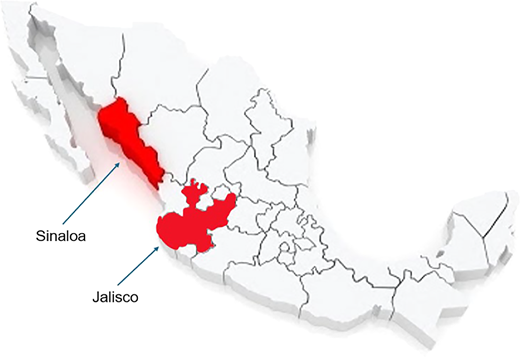
The survey, conducted from January to March 2024, used a validated questionnaire with open and closed questions to examine CSR perceptions, practices and barriers ( Appendix 1). The final sample included 47 SMEs across 47 sub-sectors (Table 1).
Sub-sectors that participated in the research
| # | Sub-sectors |
|---|---|
| 1 | Retail |
| 2 | Accounting and financial consulting |
| 3 | Real estate |
| 4 | Commercial and services sector focused |
| 5 | Tourism |
| 6 | Financial consulting |
| 7 | Deep furniture cleaning services |
| 8 | Construction materials trade |
| 9 | Education, training and consulting |
| 10 | Financial and tax consulting |
| 11 | Sports industry |
| 12 | Automotive |
| 13 | PVC doors and windows manufacturing |
| 14 | Manufacturing, chemicals |
| 15 | Consulting |
| 16 | Hospitality and services |
| 17 | Gardening |
| 18 | Food |
| 19 | Freight transport |
| 20 | Industrial packaging commercialization |
| 21 | Consulting |
| 22 | Construction industry (residential) |
| 23 | Consulting and training services |
| 24 | Education |
| 25 | Legal services |
| 26 | Service |
| 27 | Services, training |
| 28 | Manufacturing |
| 29 | Advertising and marketing services |
| 30 | Travel agency |
| 31 | Jewelry |
| 32 | Clothing manufacturing |
| 33 | Services, consulting |
| 34 | Restaurant |
| 35 | Construction industry (infrastructure) |
| 36 | Advisory service |
| 37 | Event organization |
| 38 | Technology |
| 39 | IT |
| 40 | Clothing industry. Department store |
| 41 | Condominium administration |
| 42 | Energy |
| 43 | Tourism, hotel and recreation |
| 44 | Financial |
| 45 | People analytics consulting services |
| 46 | Construction industry (commercial) |
| 47 | Food |
Descriptive statistics identified percentages (e.g., CSR implementation barriers), cross-tabulations examined sub-sector differences and a correlation matrix ( Appendix 2) assessed variable relationships tied to hypotheses. SME industry priorities are detailed in Appendix 3.
The survey, adapted from Sen and Cowley’s (2013) validated Australian study, was self-administered online, targeting SME CEOs for their direct knowledge of CSR practices and strategy formulation. A mixed-methods approach combined qualitative and quantitative techniques to enhance the robustness. Descriptive statistics and cross-tabulations analyzed quantitative data, revealing CSR trends among Mexican SMEs. This aligns with Polit and Beck (2010), who highlight that planned replication and diverse sampling strengthen generalization. Sample size determination followed Francis et al. (2010) and Gogtay (2010), considering data type, distribution, safety margins and dropout rates. Using Gogtay’s (2010) formula for descriptive studies (95% confidence level, 5% margin of error, 50% response proportion), a minimum of 43 responses was required, met by 47 valid responses.
This study used the chi-square test to evaluate hypotheses, given the categorical nature of the variables, to identify significant associations between CSR perceptions, practices and barriers in Mexican SMEs. Cramér’s V was calculated to assess the effect size of these associations, providing insight beyond statistical significance. For example, the association between sector of activity and CSR adoption yielded a Cramér’s V of 0.41, indicating a moderate effect. However, the small sample size (47 SMEs) limited the analysis for H2, resulting in modest effect sizes and weaker empirical evidence. Regression analysis was considered but not pursued due to the categorical data and limited statistical power. Future studies with larger samples could incorporate regression models and effect sizes to further validate the relationships, particularly for H1 and H3.
For qualitative analysis, content analysis was applied, coding keywords and analyzing term frequency. Two researchers manually coded 47 qualitative responses in Excel, identifying recurring themes (e.g., responsibility, benefits) through iterative analysis, achieving 85% inter-coder agreement for reliability. Specialized software was not used; coding and term counting were managed in Excel.
Mexico has 32 states, with Jalisco (8.5 million, third most populous) and Sinaloa (3.0 million, 17th-ranked) playing key economic roles (INEGI, 2020). Guadalajara, Jalisco’s capital, is a major technology hub, dubbed “Mexico’s Silicon Valley” since the 1960s, driven by government, private sector and university partnerships (Escobar, 2022). Culiacán, Sinaloa’s capital, leads in agricultural production, contributing over 30% of Mexico’s horticultural output, vital for domestic and global markets (CODESIN, 2025). Commerce significantly boosts GDP in both states: 7.5% for Jalisco and 2.2% for Sinaloa (Statista, 2022). Sample size calculation, consistent with Francis et al. (2010), considered data type, distribution, safety margins and dropout rates to ensure research validity (Gogtay, 2010).
4. Results
Based on the procedures and analytical strategies described above, the following section reports the empirical findings that address the study’s hypothesis. To begin with, it is important to share the answers of SMEs about being socially responsible. See Figure 3.
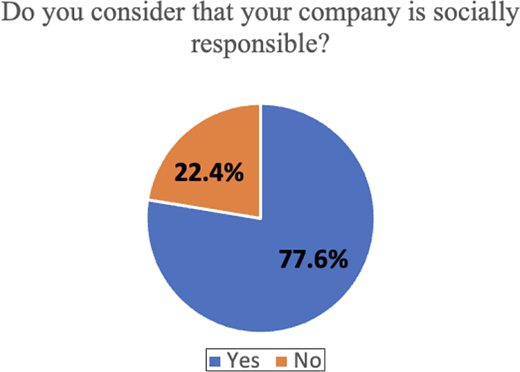
Answers about being socially responsible
Source: Authors with research data, 2024
Answers about being socially responsible
Source: Authors with research data, 2024
As noted, most companies (77.6%) consider themselves socially responsible, with a 95% confidence interval of 65% to 90% providing context for the estimate’s precision. Only one of the 47 SMEs (2.1%) perceived its economic objectives as conflicting with its moral obligations, indicating that 97.9% view their economic goals as aligned with their ethical responsibilities.
The demographics of the SMEs that answered the survey are presented in Table 2.
SMEs demographics
| Attributes | # | % |
|---|---|---|
| Size of the company | ||
| Less than 10 employees | 23 | 49 |
| Between 11 and 50 employees | 11 | 23 |
| Between 51 and 250 employees | 13 | 28 |
| Total | 47 | 100 |
| Years of operation of the company | ||
| 1–3 | 7 | 14.89 |
| 4–10 | 13 | 27.66 |
| 11–20 | 12 | 25.53 |
| More than 20 years | 15 | 31.91 |
| Total | 47 | 100 |
| Gender of respondents | ||
| Male | 25 | 53.2 |
| Female | 22 | 46.8 |
| Total | 47 | 100.0 |
| Position of respondents | ||
| Owner | 21 | 44.7 |
| Area director | 16 | 34.0 |
| CEO or general director | 10 | 21.3 |
| Total | 47 | 100.0 |
Approximately 85% of Mexican SMEs surveyed have been in operation for more than four years.
A correlation matrix ( Appendix 2) was used to analyze survey results, identifying patterns in CSR practices. This quantitative tool evaluated relationships between factors, including years of operation, employee numbers, social responsibility perceptions and prioritization of health benefits, sports sponsorship and energy-saving initiatives. Results are detailed in Table 3.
Correlation matrix results and explanations
| Criteria | Correlation (r) | Explanation |
|---|---|---|
| Health-care benefits vs Sports sponsorship | −0.60 | Companies prioritizing health care allocate fewer resources to sports sponsorship |
| Employee training vs Number of employees | 0.28 | Larger companies prioritize employee training |
| Social responsibility perception vs health-care benefits | 0.21 | Companies valuing social responsibility emphasize health care |
As shown in Table 3, there is a moderate negative correlation between health-care benefits and sports sponsorship (r = −0.60), suggesting resource trade-offs, while employee training correlates positively with company size (r = 0.28). Social responsibility perception aligns with health-care prioritization (r = 0.21), indicating strategic CSR focus.
Additionally, the findings indicate that perceptions of CSR among Mexican SMEs vary significantly among their managers. 36% of managers tend to view CSR primarily through the lens of traditional philanthropy, focusing on community involvement and charitable donations, particularly in sectors like food, freight transport, finance, manufacturing, tourism and advertising and marketing.
In contrast, 13% of managers integrate CSR as a strategic component of the business, focusing on sustainability, ethical practices common in consulting, legal and educational fields and alignment with international standards. This perspective is prevalent in sub-sectors such as furniture and cleaning services, freight transport services, consulting companies, legal services, education and training, tourism and the clothing industry.
When evaluating the three hypotheses about the relationship between CSR and business practices in Mexican SMEs, the analysis revealed moderate associations and key barriers to CSR implementation. The statistical and qualitative tests are summarized below:
CSR perceptions in Mexican SMEs are positively associated with the prioritization of stakeholder-oriented practices.
A moderate correlation (r = 0.21) was found between CSR perception and the prioritization of health-care benefits, but the t-values (1.44) does not exceed the critical value (1.68); thus, H0 is not rejected. 82% of managers associate CSR with responsibility and action, offering partial support for the hypothesis. Therefore, there is insufficient statistical evidence, but qualitative indicators suggest a positive association:
The adoption of CSR practices in Mexican SMEs is positively associated with greater social capital, especially in service-oriented sectors.
Positive correlations were found between CSR practices and the number of employee proxies (r = 0.28); a negative correlation was observed with sports sponsorship (r = −0.60). Chi-square test by sector. χ2 = 5.02 > 3.84 → H0 is rejected; service sectors demonstrate higher stakeholder engagement. As observed, both quantitative and qualitative evidence support H2:
Financial constraints and lack of CSR awareness are significant barriers to CSR implementation in Mexican SMEs.
About financial constraints: reported by 60%, but Z = 1.37 → not statistically significant. There is a lack of awareness, reported by 70%; Z = 2.74 → statistically significant (p < 0.01). Only 27.7% of SMEs allocate a budget for CSR; χ2 = 9.44 → statistically significant. Thus, H3 is partially supported. Lack of awareness is a significant barrier, while financial constraints, although not statistically significant, remain practically relevant. In summary, H3 is partially confirmed, differentiating quantitative evidence from practical relevance. A moderately positive correlation was found between CSR perceptions and the prioritization of health-care benefits (r = 0.21, Table 3). A negative correlation was observed between health-care benefits and sports sponsorship (r = −0.60, Table 3). Service-oriented sectors (e.g. hospitality, consulting) showed a 62% rate of stakeholder engagement.
5. Discussion
This study validates stakeholder and social capital theories by demonstrating how cultural and economic contexts shape CSR practices in Mexican SMEs. A moderate positive correlation between CSR perceptions and prioritization of health-care benefits (r = 0.21, Table 3) supports stakeholder theory’s emphasis on relationship management for organizational success (Freeman, 1984). This finding indicates that SMEs with heightened CSR awareness prioritize employee well-being, despite resource constraints, aligning with Cortes and Lee (2021). Service-oriented sectors show strong stakeholder engagement (see H2), supporting social capital theory (Murillo and Vallentin, 2012).
Compared to Romanian SMEs, which exhibit a 45% stakeholder engagement rate (Saveanu et al., 2021), Mexican SMEs demonstrate stronger engagement, driven by familism, a cultural norm fostering collectivist approaches and community trust (Falicov, 2010). This extends stakeholder theory by showing how cultural values amplify relationship management beyond economic priorities and enriches social capital theory by illustrating familism’s role in strengthening networks in resource-constrained settings. For instance, service-oriented SMEs leverage local initiatives, such as community donations, to foster collaboration, a nuance less prominent in Western CSR models focused on formalized strategies.
A negative correlation (r = −0.60, Table 3) shows SMEs prioritize human-focused CSR, contrasting with large firms (Jamali and El Safadi, 2019) (see Contrast Section below). Larger SMEs emphasize workforce development (r = 0.28, Table 3), aligning with stakeholder theory’s relational focus (Freeman, 1984). Institutional theory highlights how regulatory and normative pressures, including familism, shape CSR adoption, with significant barriers noted in H3 (DiMaggio and Powell, 1983; Cortes and Lee, 2021). Medium-sized SMEs, with greater resources, adopt more formalized strategies, reflecting industry norms (Lee et al., 2017).
The study proposes a localized stakeholder-social capital framework, integrating quantitative data and qualitative insights from H1 and H2. This framework addresses gaps in SME-specific CSR research in Mexico (Esparza and Reyes, 2019) and diverges from Latin American studies focusing on large firms by offering a predictive model for emerging economies. Practically, SMEs can enhance social capital through cost-effective community partnerships, such as local donations, to build trust and competitiveness, particularly in service sectors (Cassells and Lewis, 2019; Valdez-Juárez et al., 2021). Policymakers should implement tailored training programs and tax incentives to address awareness and financial barriers, fostering sustainable CSR adoption (Awa et al., 2024).
5.1 Perceptions of CSR among Mexican SMEs
5.1.1 Findings of H1: Mexican SMEs’ perceptions of CSR.
H1, positing a positive association between Mexican SMEs’ CSR perceptions and stakeholder-oriented practices (e.g. health care benefits, employee well-being), is supported by a moderate correlation (r = 0.21, Table 3) that aligns with stakeholder theory’s focus on relationship management (Freeman, 1984). Qualitative insights reveal that 96% of business owners and managers categorize CSR into five themes: responsibility (24%), actions and management, commitment, benefits (26%) and impact, reflecting a practical view of CSR as balancing societal and business objectives (Table 4).
Perceptions of CSR in Mexican SMEs
| Benefits | SMEs provide benefits that enhance the well-being of their stakeholders |
| Responsibility | SMEs accept responsibility for their social, environmental and stakeholder impacts |
| Actions and management | SMEs prioritize the benefit and interests of society and the environment |
| Commitment | SMEs commit to contributing positively to society, the environment and stakeholders |
| Impact | The company’s operations positively impact various areas, benefiting its stakeholders and the community |
A more detailed explanation of each of these criteria is provided below.
SMEs view CSR as a multidimensional concept, with 96% of managers identifying five themes (Table 4): benefits (26%), responsibility (24%), actions and management, commitment and impact, balancing business and societal goals. SMEs perceive CSR as both a business strategy and an ethical framework, blending immediate benefits with enduring responsibilities.
Stakeholder-oriented practices in Mexican SMEs show a moderate positive association with perceived business performance, supporting stakeholder theory’s focus on relationship management (Freeman, 1984). However, self-reported data, with 97.9% of managers claiming an ethical commitment and 62% reporting stakeholder engagement, may reflect social desirability bias, which exceeds Saveanu et al.’s (2021) 45% engagement rate for Romanian SMEs (Sen and Cowley, 2013). Familism may enhance engagement, as noted earlier, necessitating objective metrics (e.g., revenue growth, customer retention) in future studies (Falicov, 2010). With n = 47, the power to detect weak associations is low. This explains why some correlations (e.g., H1) do not reach significance.
Disclosing CSR activities strengthens stakeholder support in consumer-facing sectors like retail, hospitality and tourism, where social expectations enhance customer satisfaction and brand reputation (Awa et al., 2024; Sen and Cowley, 2013). Diverse CSR perceptions, shaped by organizational and cultural contexts, align practices with local realities, balancing ethical and market demands to boost competitiveness, as per stakeholder theory (Gulko et al., 2024).
5.1.2 Contrast the CSR practices of SMEs with those of large companies.
Large corporations adopt formal CSR strategies with dedicated teams and detailed reporting, addressing global issues like sustainability and ethical sourcing to meet regulatory and stakeholder expectations, boosting reputation and financial performance (Baumann-Pauly et al., 2013; Cantele and Zardini, 2020; Mallin et al., 2013). Conversely, Mexican SMEs in consumer-oriented sectors (e.g., retail, tourism, food) see CSR as a growth tool, with 70% recognizing its role in meeting consumer demands and expanding markets through sustainable relationships, aligning with social capital theory (Murillo and Vallentin, 2012).
SMEs’ focus on employee well-being, as shown in H1, contrasts with large corporations’ broader sustainability strategies, aligning with stakeholder theory (Freeman, 1984). Medium-sized SMEs, with greater resources, formalize CSR to integrate ethical commitments. This ethical focus, prominent in consumer-oriented sectors, enhances competitiveness by fostering trust-based relationships, reinforcing social capital’s role in sustainable CSR strategies (Murillo and Vallentin, 2012).
5.1.3 CSR practices of SMEs and their influence on social capital.
Findings for H2: CSR Practices and Social Capital are as follows.
Cross-tabulations confirm H2, showing CSR practices enhance social capital, particularly in service-oriented sectors (e.g., hospitality, consulting, education, tourism), where 62% of SMEs prioritize stakeholder engagement to sustain trust-based relationships critical for customer interactions and public image (Lee et al., 2017). Philanthropic activities, such as community donations, are common in food (45%), transport (40%) and finance (35%) sectors, while consulting, legal and educational SMEs (13% of the sample) adopt strategic CSR, emphasizing sustainability and ethical practices aligned with international standards. Qualitative insights highlight initiatives like tree planting, waste management, solar energy use and community projects (e.g., street improvements, donations), which foster collaboration and trust, reinforcing social capital (Murillo and Vallentin, 2012).
5.1.4 Factors that affect SMEs in the implementation of CSR practices.
Findings for H3: Barriers to CSR Implementation are as follows.
Descriptive statistics confirm H3, showing financial constraints (60% of SMEs cite limited budgets) and lack of CSR awareness (70% report unclear strategic benefits) as major barriers to CSR adoption in Mexican SMEs. Only 13 of 47 SMEs allocate budgets for CSR, often relying on revenue or time donations, reflecting resource scarcity. Small enterprises lean toward ad-hoc, philanthropy-driven initiatives, while medium-sized ones adopt more structured approaches, though awareness gaps persist. CEO decision-making, driven by personal priorities, further limits CSR uptake, underscoring the need for targeted education.
The findings support a localized stakeholder-social capital framework, where Mexico’s cultural emphasis on communal ties, including familism (H2: 62% engagement) and economic constraints (H3: 60% financial barriers, 70% awareness gaps) refine stakeholder and social capital theories. Institutional theory could further clarify how regulatory and societal pressures shape CSR (DiMaggio and Powell, 1983), complementing Figure 1’s model, advancing SME CSR discourse in emerging economies. A summary of hypotheses, findings and implications is presented in Table 5.
Summary of hypotheses, findings and implications
| Hypothesis | Quantitative key findings | Qualitative key findings | Practical implications |
|---|---|---|---|
| H1: CSR perceptions boost stakeholder practices (e.g. health care) | A moderate correlation (r = 0.21) was found between CSR perception and the prioritization of health-care benefits, but the t-value (1.44) does not exceed the critical value (1.68); thus, is not rejected. supported by 82% of managers | Qualitative indicators suggest a positive association between SMEs’ perceptions of CSR and prioritizing stakeholder-oriented practices | Focus on clear, measurable CSR actions like wellness programs to build trust |
| H2: CSR adoption enhances social capital in service sectors | CSR practices correlate with employee numbers (r = 0.28, p < 0.01) in service-oriented sectors, with 62% prioritizing stakeholder relationships | Evidence indicates that service-oriented SMEs benefit from formulating stakeholder dialogue and embedding CSR into core operational strategies | Formalize stakeholder dialogue in service sectors to strengthen relationships |
| H3: Financial and awareness barriers limit CSR | Awareness gaps (70%, Z = 2.74, p < 0.01) and financial constraints (60%) limit CSR adoption | Financial constraints are commonly perceived as a key barrier and remain practically relevant. Descriptive statistics confirm that both financial constraints and lack of awareness are consistently significant barriers to implementation | Prioritize training to raise CSR awareness over just financial support |
6. Theoretical and practical implications
This study advances CSR understanding in Mexican SMEs by proposing a localized stakeholder-social capital framework integrating cultural and economic contexts. It refines stakeholder theory by highlighting the role of familism in engagement, as observed in service sectors, diverging from Western CSR models. It extends social capital theory by emphasizing trust-based networks in resource-constrained SMEs. Institutional theory (DiMaggio and Powell, 1983) explains CSR barriers (60% financial, 70% awareness-related). Tailored CSR training and tax incentives can align SME managers’ goals with sustainability, while policymakers can promote development. This offers a roadmap for research and practice in emerging economies, especially Latin America.
This study integrates familism with stakeholder and social capital theories, demonstrating how cultural norms enhance SME engagement (e.g., 62% in service sectors) while posing transparency challenges. Unlike prior Latin American CSR research focused on large firms, it offers a novel SME-specific framework for emerging economies. Practitioners can leverage low-cost community initiatives (e.g., donations) and knowledge-sharing platforms, while policymakers can promote sustainable CSR through tax incentives. Comparative studies highlight familism’s varied impacts: Huang (2025) links Chinese familism to moral-driven success, Wang et al. (2024) connect it to philanthropy and Godlewski and Nhung Le (2024) show it enhances East Asian firm performance. In Mexico, familism likely shapes CSR similarly, but its potential to prioritize familial interests over collective good, as Ip (2008) notes in Taiwan, warrants further research to address ethical and sustainability challenges.
7. Conclusions
This study underscores the pivotal role of familism in shaping CSR practices in Mexican SMEs, revealing a culturally nuanced model that diverges from Western frameworks. By integrating stakeholder and social capital theories, it highlights how trust-based networks enable resource-constrained SMEs to prioritize community well-being, yet face challenges in transparency and environmental focus. These findings challenge universalist CSR assumptions, advocating for context-specific frameworks that leverage cultural strengths. For emerging economies, this localized approach offers a pathway to sustainable development, provided managers and policymakers address resource and awareness gaps through targeted interventions.
Limitations and future research (see Appendix 4). The study is constrained by a small sample size and a 52% response rate, which may introduce self-selection bias, potentially favoring firms already engaged in CSR and inflating reported engagement rates (Sen and Cowley, 2013). Self-reported measures are susceptible to social desirability bias, as managers may overstate ethical commitments. Additionally, the regional focus on Jalisco and Sinaloa limits generalizability, necessitating broader, multi-regional studies with objective metrics, such as financial performance or customer retention, to enhance rigor.
To enhance rigor and validity, future studies should use objective metrics (e.g., financial performance, customer retention) and qualitative methods, such as interviews, to mitigate biases like social desirability and self-selection. Expanding sample sizes and incorporating multi-regional data beyond Jalisco and Sinaloa will improve generalizability. Advanced methodologies, such as mediation analysis, can elucidate CSR perceptions and stakeholder dynamics across diverse sectors. Longitudinal and sector-specific studies are needed to identify best practices and assess the long-term impacts of CSR as a strategic lever for SME growth and societal benefit in emerging markets. Additionally, exploring mechanisms to enhance environmental sustainability and foster regional collaboration can support the development of scalable CSR models.
References
Appendix 1
Items of the questionnaire
What do you understand by the term “CSR”?
Do you think there is any social responsibility of your business? Why?
Do you find economic objectives of the business are in contradiction to moral obligations? If so. how do you manage them?
What is your organization doing in the area of CSR?
How would you like to prioritize the following CSR activities?
Donation for better cancer treatment
Additional medical benefit for employees
Sponsor a local football team
Funding a community group that opposes smoking
Financial support for employees to enhance professional skills
Control energy usage to reduce operational costs
Is there any predetermined budget for CSR? If so. what factors affect them?
Could you please inform how CSR decisions are taken in your business?
To what extent do your stakeholders influence such decisions?
Why is your company participating in CSR activities?
Are there any future plans about CSR? If so. what are they?
Are you. or is your company. a member of any trade union or industry association? If so. what was the motivation for such involvement?
Source(s): Authors’ elaboration, 2024
Appendix 2
Correlation matrix
| Characteristic | Age category | Years of operation | No. of employees | Perception of social responsibility | Health-care benefits priority | Sports sponsorship priority | Health donation priority | Employee training support priority | Energy saving priority |
|---|---|---|---|---|---|---|---|---|---|
| Age category | 1.00 | 0.23 | −0.15 | 0.08 | −0.14 | 0.17 | −0.03 | −0.20 | 0.01 |
| Years of operation | 0.23 | 1.00 | 0.22 | −0.04 | 0.07 | 0.08 | −0.03 | 0.00 | −0.23 |
| No. of employees | −0.15 | 0.22 | 1.00 | 0.11 | 0.10 | −0.15 | −0.07 | 0.28 | −0.08 |
| Perception of social responsibility | 0.08 | −0.04 | 0.11 | 1.00 | 0.21 | −0.17 | 0.00 | 0.09 | −0.31 |
| Health-care benefits priority | −0.14 | 0.07 | 0.10 | 0.21 | 1.00 | −0.60 | −0.23 | 0.60 | −0.20 |
| Sports sponsorship priority | 0.17 | 0.08 | −0.15 | −0.17 | −0.60 | 1.00 | 0.02 | −0.56 | 0.01 |
| Health donation priority | −0.03 | −0.03 | −0.07 | 0.00 | −0.23 | 0.02 | 1.00 | −0.40 | −0.24 |
| Employee training support priority | −0.20 | 0.00 | 0.28 | 0.09 | 0.60 | −0.56 | −0.40 | 1.00 | 0.06 |
| Energy saving priority | 0.01 | −0.23 | −0.08 | −0.31 | −0.20 | 0.01 | −0.24 | 0.06 | 1.00 |
Appendix 3
Industry represented/sectors and priority
| Industry sub-sectors | Energy-saving activities priority (1 = Most important. 6 = Least important) |
|---|---|
| Retail | 6 |
| Accounting and financial consulting | 6 |
| Real estate | 6 |
| Commercial and services sector focused | 6 |
| Tourism I | 6 |
| Financial consulting | 5 |
| Deep furniture cleaning services | 5 |
| Construction materials trade | 5 |
| Education. training and consulting | 5 |
| Financial and tax consulting | 5 |
| Sports industry | 4 |
| Automotive | 4 |
| PVC doors and windows manufacturing | 4 |
| Manufacturing, chemicals | 4 |
| Consulting | 4 |
| Tourism II | 4 |
| Gardening | 4 |
| Food | 3 |
| Freight transport | 3 |
| Industrial packaging commercialization | 3 |
| Consulting | 3 |
| Construction industry (residential) | 3 |
| Consulting and training services | 3 |
| Education | 3 |
| Legal services | 3 |
| Service | 3 |
| Services, training | 3 |
| Manufacturing | 3 |
| Advertising and marketing services | 3 |
| Travel agency | 3 |
| Jewelry | 2 |
| Clothing manufacturing | 2 |
| Services, consulting | 2 |
| Restaurant | 2 |
| Construction industry (infrastructure) | 2 |
| Consulting | 2 |
| Event organization | 2 |
| Technology | 2 |
| IT | 2 |
| Clothing industry. Department store | 2 |
| Condominium administration | 2 |
| Energy | 1 |
| Tourism, hotel | 1 |
| Financial | 1 |
| People analytics consulting services | 1 |
| Commercial construction | 1 |
| Food | 1 |
Appendix 4
Limitations and future research
| Limitation | Description | Future research direction |
|---|---|---|
| Sample size | The sample included only 47 SMEs, limiting generalizability and impeding the use of more advanced statistical models (e.g., regression analysis) | Increase sample size to allow multivariate modeling, including interaction and mediation analysis |
| Geographic scope | Data were collected only from two Mexican states (Jalisco and Sinaloa), potentially restricting contextual diversity# | Expand the study to include SMEs across different regions or countries for comparative insights |
| Cross-sectional design | The study provides a snapshot of motivations and CSR practices at a single point in time | Conduct longitudinal studies to track changes in CSR adoption and stakeholder influence over time |
| Sectoral variability | Sectoral differences were noted, but sector-specific drivers of CSR were not explored in depth | Develop in-depth case studies or comparative analyses across sectors (e.g. manufacturing vs technology) |
| Cultural specificity | The study is situated in the Mexican context, which may not fully translate to other cultural or institutional settings | Replicate the study in other emerging economies or contrast findings with SMEs in developed countries |

