The rapid integration of Industry 4.0 (I4.0) technologies in AEC contract management enhances efficiency but raises sustainability and ethical concerns. This study evaluates these technologies to assess their alignment with sustainable development objectives and professional engineering ethics, providing a structured decision-making framework for industry stakeholders.
A mixed-methods approach was employed, beginning with a comprehensive literature review to identify key I4.0 technologies and establish sustainability criteria aligned with the UN Sustainable Development Goals, alongside ethical principles from major engineering codes (ASCE, NSPE and AIA). A two-stage analytical approach was followed: fuzzy-DEMATEL examined cause-effect relationships among sustainability and ethics criteria, while fuzzy-TOPSIS ranked I4.0 technologies based on these criteria, providing an implementation roadmap.
The analysis reveals that economic sustainability exerts the strongest influence, shaping both societal and environmental outcomes, while ethical conduct remains foundational to engineering best practices. Leading technologies (immersive systems (AR/VR), Cloud Computing, RFID and IoT) demonstrate superior performance when evaluated against sustainability and ethics benchmarks. The study further identifies critical trade-offs between operational efficiency and ethical/sustainability compliance, culminating in a strategic implementation framework for I4.0 adoption.
This study makes three key contributions: (1) it pioneers a dual sustainability-ethics assessment framework for I4.0 in AEC contract management, addressing a literature gap; (2) it introduces a novel hybrid multi-level fuzzy-DEMATEL-TOPSIS model for multi-criteria decision-making and (3) it provides empirically grounded guidelines to mitigate risks such as cybersecurity threats and resource inequity.
1. Introduction
Contract Lifecycle Management (CLM) encompasses every phase of a contract, from inception to conclusion (Safa et al., 2017). Effective contract management is crucial for reducing costs and risks, enhancing revenue, and ensuring compliance with regulations (Fatayer et al., 2022). However, traditional practices often result in delays exceeding time and cost estimates, with a reliance on outdated methods hindering the adoption of advanced technologies (van der Heijden, 2023). In this regard, automated and intelligent technologies present a solution, promising enhanced efficiency.
Industry 4.0 (I4.0), the fourth industrial revolution, integrates digital technologies across sectors, including AEC, particularly in contract management, where it mitigates traditional limitations (Wahab et al., 2023). The construction industry has seen a 319% increase in annual startup investments, reaching $2.2 billion between 2011 and 2021 (de Boer et al., 2022). Given these investments, assessing implemented technologies is essential to optimize contract management processes and maximize returns (Wu et al., 2025).
Sustainability, defined as the integration of economic, environmental, and social considerations, is central to the construction industry's focus on responsible resource management and reducing environmental impact (Kinnunen et al., 2022). Alongside sustainability, engineering ethics, which establishes principles of responsible conduct and decision-making, is equally critical in ensuring that technological advancements uphold integrity and public trust (Man-Fong Ho, 2011). The convergence of sustainability and ethical frameworks establishes a critical dual-lens evaluation mechanism for construction technologies, where sustainability addresses systemic impacts (economic-environmental-social triads) while ethics ensures normative compliance (professional integrity, accountability, and equity). In contract management specifically, this combined approach mitigates the sector's unique vulnerabilities where technological efficiency gains could otherwise compromise either ecological stewardship (sustainability concern) or fair practice standards (ethical imperative), thereby creating a balanced adoption paradigm (Ding, 2008).
The literature on I4.0 applications in CLM, examined through the lenses of engineering ethics and sustainability, reveals three distinct yet interconnected research phases. The earliest phase established foundational knowledge, with studies such as Zhou et al. (2025) and Zhang et al. (2023) identifying key technological applications, opportunities, and challenges in I4.0-enabled CLM. While these works provided critical technical insights, they largely overlooked systematic integration with sustainability and ethical frameworks, creating a notable gap in the literature. This overlook is problematic because it risks promoting technologically advanced but ethically unexamined and unsustainable practices, potentially leading to long-term environmental harm, social inequities, or unintended ethical consequences in CLM. This limitation prompted a shift toward a second phase of research, where scholars began incorporating sustainability and ethics considerations. For instance, Bai et al. (2020) developed a multi-criteria decision-making framework to assess the economic, environmental, and social sustainability of I4.0 technologies, while Montalbán-Domingo et al. (2019) examined social sustainability in public construction contracts. Similarly, Trentesaux and Caillaud (2020) explored ethical concerns in automated systems, Mahmoud and Beheiry (2021) investigated sustainable contract practices such as green procurement, and Shick (2015) emphasized engineering ethics in government contracts, particularly regarding justice, transparency, and accountability.
Despite these advancements, significant gaps persist in the current body of research. First, there remains a stark divide between studies on I4.0 applications and those on traditional CLM, with little exploration of how digital technologies influence sustainability and ethics specifically within CLM ecosystems. This compartmentalization prevents a holistic understanding of how emerging technologies reshape contractual governance. Second, sustainability and ethical considerations are often treated as isolated factors rather than interdependent components, leaving their dynamic interactions (such as how sustainable digital contracting may introduce new ethical dilemmas) largely unexplored. Third, much of the existing research remains theoretical, lacking empirical validation through real-world case studies or measurable performance indicators. Finally, methodological approaches have been imbalanced, with an overreliance on qualitative analyses and hypothetical scenarios rather than quantitative or computational modeling of actual I4.0-CLM implementations.
To address these limitations, this study develops an integrated evaluation framework that bridges the gap between I4.0 and CLM research while systematically examining their intersections with sustainability and ethics. The framework establishes measurable relationships between key performance indicators, incorporates empirical validations, and provides practical implementation strategies for diverse contract types and project scales. Guided by these objectives, the study focuses on evaluating I4.0 technologies in construction CLM through the dual perspectives of sustainability and engineering ethics, structured around the following research questions:
What are the key sustainability and engineering ethics assessment criteria for evaluating Industry 4.0 technologies in Construction Contract Lifecycle Management (CLM)?
How do sustainability and engineering ethics criteria interact in the context of I4.0-enabled CLM, and what trade-offs or synergies emerge from their integration?
What is the current performance of Industry 4.0 technologies in CLM when measured against the identified sustainability and engineering ethics criteria?
What is a practical roadmap for implementing Industry 4.0 technologies in CLM to optimize both sustainability and ethical outcomes, based on the findings?
Directed by the research questions, the structure of the paper is organized to investigate the implementation of I4.0 technologies in CLM through the dual lens of sustainability and engineering ethics. In this regard, Section 2 establishes the theoretical foundation by identifying and categorizing relevant I4.0 technologies and their application areas within CLM, while also defining the sustainability and engineering ethics criteria used for evaluation. Building upon this framework, Section 3 outlines the methodology, with particular emphasis on the integrated use of Fuzzy-DEMATEL and Fuzzy-TOPSIS, detailing their step-by-step application, underlying logic, and assumptions. Section 4 presents the results of the model, offering a comparative analysis with existing literature and validating the findings. Section 5, the discussion, interprets the results in relation to each research question, offering key theoretical contributions—including a comparative assessment of sustainability and ethics criteria, and the impact of Industry 4.0 technologies on contract lifecycle performance. Based on these contributions, a strategic roadmap for the implementation of Industry 4.0 in contract lifecycle management is proposed, accounting for regulatory frameworks, cultural norms, institutional maturity, and prevailing economic conditions. Finally, Section 6 concludes the paper and outlines directions for future research.
2. Literature review
2.1 Application of Industry 4.0 technologies in contract management
The Fourth Industrial Revolution marks a significant shift in the construction sector, where the integration of physical and digital systems fosters a more efficient, data-driven, and collaborative environment (Ghasemi et al., 2024). Known as I4.0, this paradigm leverages technologies such as the Internet of Things (IoT), artificial intelligence (AI), robotics, and cyber-physical systems to create interconnected and intelligent ecosystems (Wang et al., 2022). In the construction domain, referred to as Construction 4.0, these tools drive automation, predictive analytics, and real-time decision-making across project lifecycles (Chen et al., 2022).
Several conceptual models guide the application of these technologies. Kozlovska et al. (2021) reviewed the impact of I4.0 technologies on the evolution of Construction 4.0, identifying key technologies such as IoT, 3D printing, big data, AR/VR, autonomous devices, and BIM, all of which reshape modern construction. Expanding on this, Perrier et al. (2020) classified Construction 4.0 technologies into seven areas: Data Science (big data, machine learning), Digital Construction (BIM, digital twins), Prefabrication (3D printing, modular construction), Construction Modeling (BIM, CAD), AI (predictive analytics, robotics), Systems Modeling (cyber-physical systems), and Monitoring (IoT, sensors, drones). This framework enhances understanding of how these technologies integrate into construction processes. Karmakar and Delhi (2021) proposed a widely adopted four-layer paradigm organizing Construction 4.0 technologies into hierarchical layers: the Physical Layer (automation, robotics, IoT, 3D printing, UAVs), the Data Layer (digital twins, BIM, cloud computing), and the Digital Tools Layer (VR, AR, AI, machine learning, big data). This holistic, four-layer conceptualization not only structures the implementation of I4.0 technologies but also ensures that each technology is systematically integrated into the construction lifecycle, thereby driving the industry toward greater innovation, efficiency, and sustainability.
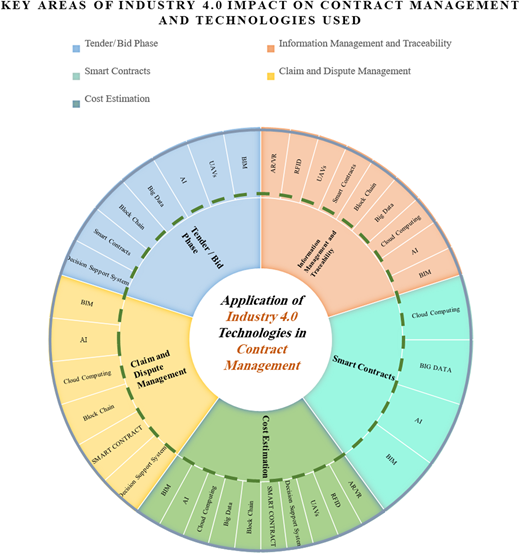
Amid this transformation, CLM has emerged as a key area for digital integration, transitioning from manual processes and fragmented communication to a more automated, transparent, and traceable system enabled by I4.0 tools. Data analytics now support contractor evaluation during tendering, while AI-driven models enhance cost estimation accuracy (Wang et al., 2022). Smart contracts powered by blockchain automate execution and reduce reliance on intermediaries, and digital records with audit trails improve claim and dispute resolution (Wang et al., 2022). Additionally, cloud platforms and IoT technologies strengthen information management by enabling real-time updates, remote access, and secure data storage (Chen et al., 2022). Najafzadeh et al. (2024) comprehensively mapped these influences by identifying five core CLM domains—1) tender/bid phase, 2) cost estimation, 3) smart contracts, 4) claim and dispute management, and 5) information management and traceability—each of which is directly shaped by specific I4.0 technologies. Their work provides a foundational framework for aligning contract functions with technological capabilities, thereby offering a roadmap for the digitization of CLM processes. Figure 1 outlines the specific technologies influencing each area. While these developments indicate substantial promise, it is imperative to adopt a balanced view by acknowledging not only the merits but also the underlying complexities of such integrations.
Despite the transformative potential of I4.0 in CLM within the construction sector, its implementation has been fraught with significant limitations, ethical dilemmas, and sustainability concerns that warrant critical scrutiny (Shojaei and Burgess, 2022). One of the most pressing ethical issues revolves around data privacy and security, particularly as CLM systems increasingly rely on cloud platforms, IoT devices, and blockchain-enabled smart contracts. For instance, while blockchain ensures transparency and immutability, its decentralized nature can conflict with data protection regulations, especially when sensitive contractual information is stored across multiple jurisdictions without clear governance frameworks (Das et al., 2022). Additionally, AI-driven cost estimation and contractor evaluation tools, though efficient, have been criticized for algorithmic bias, where opaque machine learning models may inadvertently favor certain contractors based on historical data, perpetuating inequities in tendering processes (O'neil, 2017). Sustainability concerns also arise from the environmental footprint of I4.0 technologies; for example, the energy-intensive nature of blockchain networks contradicts the construction industry's growing emphasis on carbon neutrality (Das et al., 2022). Moreover, the rapid digitization of CLM processes can exacerbate the digital divide, disproportionately disadvantaging smaller firms lacking the resources to adopt costly I4.0 tools, thereby consolidating market power among larger players (Faisal et al., 2023). Critics further argue that the over-reliance on automation may erode human oversight, leading to rigid contractual interpretations that fail to account for nuanced, context-specific disputes—a concern highlighted by the inflexibility of smart contracts in handling unforeseen contingencies; While proponents counter that I4.0 enhances efficiency and reduces disputes, empirical studies reveal that poorly integrated systems can amplify complexities, such as interoperability issues between legacy software and new IoT-enabled platforms (Najafzadeh et al., 2024).
These challenges underscore the necessity of a dual-lens investigation that balances the promised efficiencies of I4.0 with a critical assessment of its ethical and sustainability trade-offs. Without such scrutiny, the digitization of CLM risks exacerbating systemic inequities and environmental harms, ultimately undermining the long-term viability of I4.0 in the construction industry.
2.2 Sustainability and engineering ethics in I4.0-enabled-CLM
Since the publication of Our Common Future by the World Commission on Environment and Development (Brundtland, 1987), the concept of sustainable development has gained global prominence. It is commonly defined as meeting the needs of the present without compromising the ability of future generations to meet their own needs (Kinnunen et al., 2022). In practice, this concept is grounded in the triple bottom line framework, which emphasizes the interdependence of economic growth, environmental stewardship, and social equity.
In the context of I4.0 technologies applied to CLM, sustainability cannot be pursued in isolation from these three pillars. Effective implementation demands compliance with relevant standards and frameworks that address not only environmental performance but also social and economic outcomes. However, existing sustainability standards often exhibit limitations in this regard. For example, the Royal Institution of Chartered Surveyors (RICS) and Cradle to Cradle (C2C) frameworks emphasize circular economy principles and carbon reduction strategies, while ASHRAE and Green Globes focus primarily on energy efficiency and green building performance. Similarly, ISO 14001, BREEAM, and LEED provide comprehensive environmental management systems but offer limited guidance on integrating social and economic considerations, particularly in contract management processes.
Given these constraints, the United Nations Sustainable Development Goals (SDGs) offer a more comprehensive and integrated framework. Unlike many traditional standards, the SDGs explicitly address the interconnectedness of environmental, economic, and social priorities. This study aligns its sustainability evaluation with eight SDGs that are directly relevant to I4.0-enabled CLM in the construction sector (Najafzadeh et al., 2024). These include: Good Health and Well-Being, Quality Education, Clean Water and Sanitation, Affordable and Clean Energy, Industry Innovation and Infrastructure, Sustainable Cities and Communities, Responsible Consumption and Production, and Climate Action. Each of these goals captures a critical aspect of the challenges and opportunities faced in digital contract management, and together they provide a holistic foundation for assessing sustainable outcomes.
Engineering ethics refers to the moral principles that guide engineers in their professional responsibilities, emphasizing core values such as honesty, integrity, and accountability (Oladinrin and Ho, 2015). While ethical codes may vary across organizations and regions, fundamental tenets (such as transparency, competence, and accountability) remain universally consistent. These values are embedded in overarching frameworks like the Universal Declaration of Human Rights, the Project Management Institute's (PMI) Code of Ethics, and the Construction Management Association of America's (CMAA) Code of Ethics. In the construction sector, three ethical codes are particularly influential. The National Society of Professional Engineers (NSPE) Code of Ethics stresses impartiality, fairness, and equity, ensuring adherence to the highest standards of honesty and professional conduct. The American Institute of Architects (AIA) Code extends this focus to include societal obligations, client relationships, and environmental stewardship, highlighting the architect's role in upholding integrity and fairness. The American Society of Civil Engineers (ASCE) Code of Ethics is especially pivotal within the industry, as it not only emphasizes honesty and integrity but also underlines engineers' responsibilities to society, particularly the application of engineering expertise to promote public welfare and environmental sustainability. By synthesizing the ethical standards of prominent organizations such as NSPE, ASCE, and AIA, four key indicators emerge as essential for evaluating engineering ethics in the construction industry. These indicators are: Ethical Conduct (integrity, honesty, lawfulness, dignity, fairness, and equality), Engaged Citizenship (maintaining up-to-date knowledge, fostering innovation, and demonstrating resourcefulness), Stakeholder Data Security and Knowledge Sharing (prioritizing data security and encouraging transparent knowledge sharing), and Promoting Public Health, Safety, Welfare, and Sustainable Development (advancing health, safety, welfare, and sustainable development).
The integration of sustainability and engineering ethics in I4.0-enabled CLM represents a critical nexus for responsible digital transformation in construction. As emerging technologies like blockchain, IoT, and AI reshape contract administration, they simultaneously introduce complex ethical dilemmas, including data privacy concerns, algorithmic bias, and digital divide implications, alongside sustainability challenges related to energy consumption, e-waste generation, and supply chain transparency (Gurgun and Koc, 2021). The imperative for simultaneous analysis stems from their inherent interdependence: ethical frameworks without sustainability considerations risk endorsing environmentally detrimental practices, while sustainability initiatives divorced from ethical principles may perpetuate social inequities (Aftab et al., 2022). This symbiosis is particularly evident in construction contracting, where digital tools must align with both the SDGs and professional ethical codes to ensure technological adoption delivers equitable, environmentally sound outcomes. The systematic classification and analysis presented in Table 1 operationalize this dual imperative by mapping key indicators to their specific impacts on CLM and demonstrating their convergence with I4.0 capabilities, thereby providing practitioners with a holistic framework for ethical, sustainable digital CLM implementation.
3. Research methodology
3.1 Research design
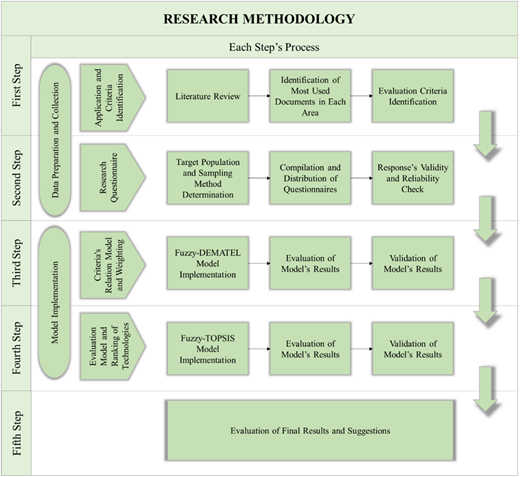
This study adopted a multi-step methodology integrating literature analysis and structured evaluation to address the research questions. The first phase involved a detailed literature review to identify the application areas of I4.0 technologies in CLM, drawing from (Najafzadeh et al., 2024), who mapped five key domains: tendering, cost estimation, smart contracts, claim and dispute management, and information management. Concurrently, the review examined relevant standards and frameworks to establish evaluation criteria for sustainability and engineering ethics. In alignment with the United Nations' Sustainable Development Goals and according to the literature, the study focused on those (SDGs) most directly linked to I4.0 in CLM: Good Health and Well-Being, Quality Education, Clean Water and Sanitation, Affordable and Clean Energy, Industry Innovation and Infrastructure, Sustainable Cities and Communities, Responsible Consumption and Production, and Climate Action. For engineering ethics, four key criteria were derived from professional codes (NSPE, ASCE, AIA): ethical conduct, engaged citizenship, stakeholder data security and knowledge sharing, and commitment to public health, safety, and sustainable development. These foundations informed the structure of the subsequent analysis and addressed the study's first research question. The outcomes of this phase included delineating I4.0 application domains in construction contract management and establishing evaluation criteria for sustainability and engineering ethics. This foundational step directly addressed the first RQ, as detailed in the literature review section.
Subsequently, building upon the findings from the literature review and adhering to guidelines for developing multi-criteria evaluation questionnaires, a paired evaluation questionnaire was devised. Initially, the target population and sampling method were defined. The questionnaire was then distributed to selected experts within the identified statistical population, resulting in a robust dataset. The reliability and validity of the collected data were rigorously assessed to ensure its suitability for further analysis. This phase marked the extraction and preparation of the research dataset, encompassing both the first and second steps of the methodology.
Following data collection, the third phase involved developing relevant evaluation models. The first of these, the Fuzzy-DEMATEL multi-criteria evaluation model, aimed to elucidate the interrelationships among sustainability criteria and engineering ethics, which answer the second RQ. This model investigated causal relationships, measured the intensity of these connections, and assigned weights to each criterion. The model outputs underwent thorough validation to confirm their accuracy and relevance.
In the fourth phase, the evaluation and ranking of I4.0 technologies were undertaken using the Fuzzy-TOPSIS multi-criteria evaluation model. This model answered the third RQ and assessed the technologies based on their applicability within construction contract management, viewed through the lenses of sustainability and engineering ethics. As with the previous model, validation of the outputs was conducted to ensure reliability.
Finally, the fifth phase focused on evaluating the model outputs and formulating recommendations to address the last RQ. This comprehensive approach ensured a systematic and rigorous examination of the research questions, providing a detailed and validated framework for understanding the integration of I4.0 technologies in construction contract management and their implications for sustainability and engineering ethics. The entire research methodology process is summarized in Figure 2.
3.2 Data collection and software
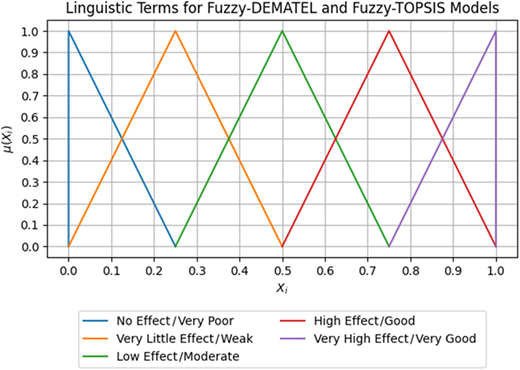
Building on the literature review findings, the research questionnaire was designed to address key constructs. Insights included: (1) application areas of I4.0 technologies in contract management, (2) eight sustainability evaluation criteria from the 17 SDGs relevant to construction, and (3) four engineering ethics criteria from NSPE, AIA, and ASCE codes. To ensure reliability and validity, the questionnaire underwent standardization, including pretesting, feedback incorporation, and consistent formatting. Implemented online for efficient and secure distribution, the questionnaire began with basic personal information, followed by sections on evaluation models. For the Fuzzy-DEMATEL model, a matrix questionnaire was used to explore the interrelationships among criteria, presented in a linear format to ensure clarity and reduce potential misunderstandings. The model utilized the Likert scales to assess interrelationships among criteria, comprising 18 questions on sustainability and ethics. Similarly, the Fuzzy-TOPSIS model evaluated options against each criterion, using 60 questions to gauge I4.0 technologies' impact on engineering ethics and sustainability. Linguistic terms for the Fuzzy-DEMATEL and Fuzzy-TOPSIS evaluation questionnaires can be seen in Figure 3. The linguistic scales adopted for the Fuzzy-DEMATEL and Fuzzy-TOPSIS evaluations were selected based on their widespread acceptance and validated use in multi-criteria decision-making studies. These scales reflect a balance between interpretability and mathematical precision, allowing expert judgments to be expressed intuitively while maintaining consistency in fuzzification. The five-term linguistic set—ranging from No Effect to Very High Effect for Fuzzy-DEMATEL and from Very Poor to Very Good for Fuzzy-TOPSIS—was chosen to avoid cognitive overload while capturing sufficient granularity in expert assessments. Moreover, the corresponding triangular fuzzy numbers (e.g., (0,0,0.25) to (0.75,1,1)) were derived from previous literature in engineering decision analysis, where similar fuzzy scales have been effectively employed to model uncertainty in expert evaluations (Garg and Rani, 2022). This selection ensures methodological consistency, facilitates expert comprehension, and preserves the robustness of the final analysis.
The target population for this research includes construction engineers with at least a master's degree, academic research experience in sustainability or engineering ethics, and a minimum of five years of related work experience. This population is considered unlimited due to the unknown number of qualified individuals. For this study, a stratified snowball sampling method was employed. This probabilistic technique involves randomly selecting individuals or population units, who then identify and introduce new individuals from their social networks, creating a chain of referrals that systematically expands the sample (Goodman, 1961). Initially, a small group of qualified engineers was identified through professional networks and communication with university professors. These initial participants referred colleagues with similar qualifications, continuing until new introductions led to duplicates. To ensure comprehensive sampling, individuals were categorized based on characteristics such as educational background and work areas, with the sampling process conducted in parallel across these categories. The stratified snowball sampling method was chosen due to its effectiveness in accessing a specialized and dispersed population (Goodman, 1961). This approach leverages existing professional networks to identify qualified individuals, ensuring adequate representation of different subgroups and enhancing the generalizability of the findings.
The validity of the questionnaire ensures it accurately captures the intended information and reflects the true attributes being measured. Validity was enhanced by selecting relevant questions, using clear language, and ensuring robust content (Taherdoost, 2016). Additionally, three field experts reviewed the questionnaire to confirm its content validity and adherence to academic standards. Reliability refers to the consistency of the questionnaire's results across multiple administrations, minimizing random errors (Sjöström et al., 1999). To assess reliability, Cronbach's alpha was computed using SPSS, evaluating the internal consistency of the questionnaire. This measure ranges from 0 to 1, with higher values indicating greater reliability, particularly for Likert scale responses. The formula for Cronbach's alpha is:
where is Cronbach's alpha coefficient, is the number of items in the questionnaire, is the average variance of each item and is the variance of the entire questionnaire's result.
3.3 Fuzzy-DEMATEL
MCDM is a comprehensive approach that integrates multiple criteria to evaluate and select the optimal option (Mardani et al., 2015). A key method within MCDM is Fuzzy-DEMATEL, which combines Fuzzy set theory with the Decision-Making Trial and Evaluation Laboratory (DEMATEL) methodology. This method effectively addresses ambiguity and uncertainty in decision-making, making it valuable for managing criterion ambiguity. Its applications span project selection, supplier evaluation, and strategic planning (Mardani et al., 2015). The Fuzzy-DEMATEL method is particularly suited for identifying the relationships, intensities, relevance, and weighting of research criteria for several reasons. First, Fuzzy logic accommodates uncertainty, which is essential in real-world scenarios where information is often ambiguous or incomplete. Traditional binary logic falls short in such contexts, whereas Fuzzy logic models uncertainty through degrees of truth, offering a more nuanced approach to decision problems. Second, DEMATEL is favored in this research for its accuracy and effectiveness in assessing relationships among criteria and assigning appropriate weights. The subsequent section details the stages of implementing the Fuzzy-DEMATEL method in this research:
Identification and Finalization of Criteria: The initial step involves identifying and finalizing the approved criteria for the implementation of the Fuzzy-DEMATEL model, Where C represents the set of determined criteria and Cn denotes each criterion within this set.)
Obtaining the Fuzzy Direct Relationship Matrix : This step involves creating a matrix based on experts' opinions through a pairwise comparison of criteria, where n represents the number of criteria. In this matrix, indicates the degree of influence of criterion on criterion .
It is crucial to average the opinions of multiple experts to achieve a consensus:
where p represents the number of experts and denotes the matrix corresponding to the opinions of expert p.
Normalization of the Fuzzy Direct Relationship Matrix ( This matrix is normalized according to the following equation:
Conversion to Crisp Matrices: The normalized Fuzzy direct relationship matrix is transformed into three crisp matrices. Given that each entry in the normalized Fuzzy direct relationship matrix ( consists of three values (representing three limits), the subsequent step involves transforming ( into three crisp matrices: , and .
Calculation of Fuzzy total relation matrix (: In fact, the detailed calculation of the total relationship matrix is which can be expressed as . On the other hand, it has been proven that . Therefore, it is concluded that:
It is necessary to apply the above relation to all three boundaries. In this case, the final result can be obtained using the following relation:
Defuzzification: The Fuzzy total relationship matrix is defuzzified using the following formula for all elements of the matrix:
This defuzzification approach—commonly referred to as the Simplified Centroid or Graded Mean Integration Representation (GMIR) method—has been widely applied in fuzzy decision-making literature due to its computational efficiency and ability to retain the central tendency of expert judgments (Gayathri et al., 2022). Compared to more complex defuzzification techniques, this method strikes a practical balance between accuracy and interpretability, making it particularly suitable for applications such as Fuzzy-DEMATEL, where large-scale matrix operations are involved. Its use in this context ensures consistency, preserves decision reliability, and allows for meaningful comparison of interrelationships among criteria.
Calculation of D and R Values: The sum of the values in the rows () and columns () of the total relationship matrix are calculated, followed by () and (). The results are then plotted and interpreted.
Weight Calculation: The weight of each criterion is determined by normalizing the () values.
Graphical representation: The cause and effect of criteria are graphically represented. This involves calculating the average of all values inside the matrix ():
A new matrix (), is created by setting values greater than the average to 1 and others to 0. For example, if , it indicates that criterion 1 acts as a cause for criterion 2.
3.4 Fuzzy-TOPSIS
Fuzzy-TOPSIS (Technique for Order Preference by Similarity to Ideal Solution) is a versatile MCDM method, applicable to both multi-objective and MCDM scenarios (Reddy et al., 2022). By utilizing Fuzzy set theory, it effectively handles ambiguity and uncertainty in option evaluation. The method constructs a decision matrix that evaluates options based on performance across criteria, identifying ideal positive and negative solutions. Fuzzy-TOPSIS ranks options by their proximity to these ideal solutions, making it highly suitable for balancing conflicting criteria in complex decisions. The following section outlines the stages of implementing Fuzzy-TOPSIS in this research:
Identification and Finalization of Problem Criteria and Alternatives: The initial step involves identifying and finalizing the criteria and alternatives for the decision-making process. The set of determined criteria C and finalized alternatives A are represented as follows:
(Where C represents the set of determined criteria and Cn denotes each criterion within this set. Also, A is the set of finalized alternatives, and am is each alternative.)
Obtaining the decision matrix (): This step involves creating an matrix derived from experts' opinions through pairwise comparison of alternatives and criteria, where n and m represent the number of criteria and alternatives, respectively. The element denotes the performance and score of the alternative based on the criterion Each effect is represented using three numbers:
It is noteworthy that this stage is based on input from a significant number of experts in the field. Consequently, it is essential to average their opinions to achieve a consensus.
where p represents the number of experts and denotes the matrix corresponding to the opinions of expert.
This research employs a novel approach to evaluate alternatives, differing from traditional methods that directly assess alternatives using set criteria. In this approach, the applications of each alternative, specifically I4.0 technologies, are first identified. These applications are then evaluated based on relevant criteria, and the overall performance of each alternative is calculated as the average performance across all its applications. For instance, consider Technology Q, which has two application domains, G1 and G2, and two criteria, A1 and A2, for evaluation. Initially, each application domain is assessed using the criteria. Afterward, the average performance of these domains is calculated to represent the overall performance of Technology Q. This averaging provides a comprehensive view of the technology's effectiveness across its various applications.
Defuzzifying the Decision Matrix: The decision matrix is defuzzified according to the following formula for all members of the matrix:
For consistency, the same weighted average defuzzification method was applied to the fuzzy decision matrix in the Fuzzy-TOPSIS model. This method emphasizes the modal value while still considering the lower and upper bounds, providing a balanced representation of expert input. Its simplicity and reliability make it particularly appropriate for ranking alternatives, as it facilitates a straightforward comparison of aggregated fuzzy scores across criteria without distorting the underlying expert evaluations (Gayathri et al., 2022).
Normalizing the Decision Matrix: The normalized decision matrix is obtained using the following equation:
Calculating the Weighted Normalized Decision Matrix: In this step, the weights of the criteria, determined using the output from the Fuzzy-DEMATEL method, are applied:
Determining the Best Positive and Negative Ideal Options for Each Criterion: Since not all criteria necessarily have a positive nature, it is essential first to identify the nature of each criterion. Then, the options with the highest and lowest points for each criterion (according to its nature) are determined:
In the above formula, refers to criteria that have a positive effect, while refers to criteria that have a negative effect.
Determining the Distance of the Alternatives from the Positive and Negative Ideal Points:
Calculating the Performance Score of Each Alternative: Finally, the performance score of each alternative is calculated using the following equation:
4. Result and validation
4.1 Questionnaire's results
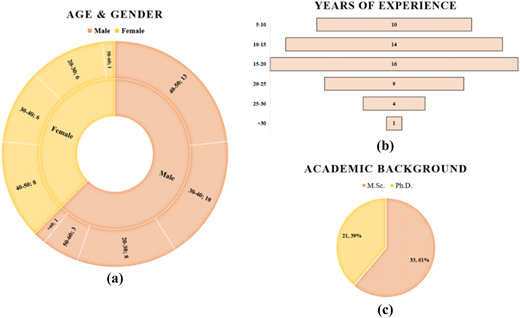
A total of 54 experts participated in this study, bringing diverse perspectives shaped by their demographic profiles and professional experiences. The gender distribution comprised 35 males and 19 females, with age groups revealing distinct patterns: males were predominantly in the 40–50 age range, while females were more evenly distributed across the 20–50 age brackets. In terms of professional background, the majority of participants had 15–20 years in their respective fields, with a noticeable presence in the 15–20- and 10–15-year ranges. Additionally, the experts were highly educated, with 33 holding master's degree and 21 possessing Ph.D., underscoring the substantial expertise that contributed to this study. Detailed information on the experts' profiles is presented in Figure 4.
The validity of the questionnaire was assessed by three experts in the field, whose feedback confirmed that the content thoroughly addressed the relevant constructs, thereby affirming the instrument's robustness. This expert validation enhances the credibility of the study's results. Additionally, the reliability analysis yielded a Cronbach's alpha value of 0.951, indicating excellent internal consistency across the 78 items. This high coefficient demonstrates that the questionnaire items are well-correlated and effectively measure the intended constructs.
4.2 Results of multi-criteria decision-making models
4.2.1 Results and validation of Fuzzy-DEMATEL model on sustainability and engineering ethics criteria
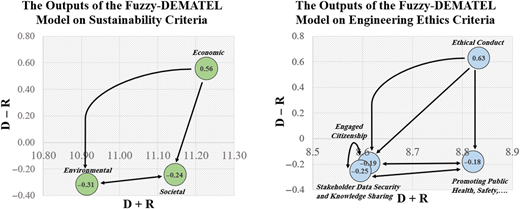
This study employed the Fuzzy-DEMATEL method to investigate the interrelationships among sustainability and engineering ethics criteria within the context of I4.0 applications in construction CLM. The sustainability dimension was structured around three principal pillars: economic, environmental, and social. In parallel, engineering ethics was operationalized through four critical components: Ethical Conduct, Engaged Citizenship, Stakeholder Data Security and Knowledge Sharing, and Promoting Public Health, Safety, Welfare, and Sustainable Development. Following standard methodological procedures, the D and R values were calculated to assess the total influence exerted and received by each criterion, respectively. The D + R values identified each criterion's overall prominence, while the D−R values indicated the net directional influence (i.e., whether a criterion is a cause or effect factor).
According to Figure 5, the results showed that in the sustainability cluster, economic sustainability emerged as the most influential driver, followed by social sustainability, while environmental sustainability exhibited the least influence and was positioned as an effect factor. This outcome is consistent with previous findings by (Jamwal et al., 2021; Bai et al., 2020), who observed that, although environmental aspects are acknowledged as critical to sustainable development, they are often underemphasized in real-world construction practices due to immediate project constraints and return-on-investment considerations. Thus, the DEMATEL output reinforces this imbalance and empirically validates the literature's claim that environmental considerations remain under-integrated in current I4.0 implementations in CLM.
In the domain of engineering ethics, Ethical Conduct was identified as the most significant causal factor, exerting considerable influence over the other three criteria—particularly Engaged Citizenship and Public Health and Safety. This aligns with the arguments made by (Trentesaux and Caillaud, 2020), who posited that ethical foundations in automated and intelligent systems are fundamental to ensuring normative compliance. Similarly, the prioritization of ethical conduct corroborates (Shick, 2015) emphasis on integrity, transparency, and accountability in government contracts, thereby highlighting the real-world implications of this ethical construct when integrated into digital CLM systems.
Notably, Stakeholder Data Security and Knowledge Sharing, while critical, was positioned as more reactive than proactive, suggesting that it is shaped by rather than shaping other ethical behaviors. This finding contributes new empirical insight to the literature by underscoring a structural dependency of data ethics on more foundational principles such as ethical responsibility and active citizenship—an area that has been largely theoretical in previous studies (e.g., Montalbán-Domingo et al. (2019)).
Validation of the DEMATEL findings was conducted by triangulating the outputs with established academic literature and expert insights. This literature-aligned validation not only confirms the robustness of the model's outputs but also allows for a deeper interpretation of systemic weaknesses and priorities in current practice. For example, the positioning of environmental sustainability as an effect criterion implies that current digital transformations in CLM are not yet ecologically driven—a concern echoed in (Ding, 2018; Kinnunen et al., 2022), both of whom called for more integrated strategies that address the long-term ecological impacts of construction technologies.
4.2.2 Results and validation of Fuzzy-TOPSIS model on sustainability and engineering ethics criteria
The application of the Fuzzy-TOPSIS framework generated a dual-layered ranking of I4.0 technologies based on their performance across sustainability and engineering ethics criteria. These rankings offer a differentiated view of technological value, revealing a misalignment between the priorities embedded in environmental performance and those associated with professional ethical standards. The result of this section is shown in Figure 5.
Based on the results shown in Table 2, Cloud Computing has been identified as the top performer in sustainability. This aligns with earlier claims in the literature (Kineber et al., 2022) about its transformative potential to dematerialize workflows and support energy-efficient practices in decentralized construction systems. However, its eighth-place rank in engineering ethics suggests that cloud-based infrastructures—despite their operational efficiencies—may fall short in areas such as responsibility assignment, data ownership, or equitable access, dimensions that are increasingly central to ethical discourse in the built environment (Shick, 2015). These findings reveal a tension within current adoption narratives, where sustainability gains are not always accompanied by proportional ethical improvements.
In contrast, RFID, IoT, and immersive technologies achieved a rare convergence, occupying top positions across both dimensions. While their sustainability advantages have been documented (Deep et al., 2025; Liu et al., 2021; Vahidi et al., 2024), particularly in enabling real-time monitoring, traceability, and waste reduction, their strong ethical performance also resonates with literature emphasizing their capacity to enhance site safety, accountability, and stakeholder awareness. This dual excellence supports recent scholarly arguments (Harris and Birnbaum, 2015) that sensor-based and visualization tools can enable both systemic optimization and principled practice when properly integrated into contract workflows.
A more ambiguous pattern emerges in the case of Blockchain and Smart Contracts, which rank relatively low in sustainability yet perform well in ethics. This divergence, consistent with (Bai et al., 2020), reflects a growing discourse on how these technologies—while promising transparency and data integrity—continue to struggle with environmental externalities, particularly energy usage. The finding challenges prevailing narratives that often conflate digital transparency with sustainability, reinforcing the view that ethical trust mechanisms do not inherently reduce ecological impact unless accompanied by energy-responsible design strategies.
Surprisingly, Decision Support Software (DSS) and Big Data, both widely promoted in recent construction technology literature (Lu and Zhang, 2022), exhibit weak performance, particularly in sustainability. These tools are frequently cited for their optimization capacity and data-informed planning, yet the results here suggest their current implementations may not actively support environmentally sustainable practices. This discrepancy raises concerns about their actual contribution beyond process acceleration, and supports a growing skepticism in the literature regarding “black-box” analytics that prioritize predictive efficiency over holistic systems thinking.
BIM and AI, which received moderate-to-low rankings in both domains, further reflect this ambiguity. While both are often positioned as essential for digital transformation in the AEC sector (Chen et al., 2022; Liang et al., 2024), their middling performance here may reflect unresolved methodological limitations—such as high resource consumption in model rendering (in the case of BIM) or opacity in decision-making algorithms (for AI)—which remain under-addressed in dominant narratives. These results underscore the need for critical engagement with technology deployment strategies, moving beyond the assumption that digitalization is inherently beneficial.
Importantly, these rankings reinforce the idea that the ethical and sustainability value of digital technologies is context-dependent rather than intrinsic. Their capacity to contribute meaningfully to responsible construction contract management is shaped not only by their technical functionality but also by how their implementation aligns with broader organizational, social, and policy structures. This insight complements recent perspectives in construction ethics research, which advocate for a more integrated assessment approach that accounts for technological, human, and institutional interdependencies (Najafzadeh et al., 2024).
After a preliminary comparison with existing literature to verify the consistency of the results and the contribution of the study, Table 2 presents the subsequent validation of the Fuzzy-TOPSIS model. To ensure its methodological robustness and credibility, a two-pronged approach was employed, integrating comparative validation and sensitivity analysis, both of which are widely recognized as reliable strategies for validating multi-criteria decision-making models.
Comparative Validation: First, the Fuzzy-TOPSIS rankings were benchmarked against two established MCDM techniques: MOORA (Multi-Objective Optimization on the Basis of Ratio Analysis) and SAW (Simple Additive Weighting). These methods were selected due to their distinct computational logics, providing independent decision-making pathways for ranking alternatives under conflicting criteria. The MOORA method evaluates alternatives by normalizing decision data and applying a ratio-based analysis that separates beneficial and non-beneficial attributes, allowing clear and mathematically tractable comparisons (Mardani et al., 2015). In contrast, SAW aggregates normalized scores via weighted summation, emphasizing the cumulative impact of each criterion (Devi and Sihotang, 2019). By applying identical criteria weights and performance data across all three methods, the resulting rankings demonstrated a high degree of concordance, particularly for top-performing technologies such as RFID, IoT, and immersive technologies (AR/VR), which consistently ranked highest in both sustainability and engineering ethics dimensions. Similarly, lower-ranked technologies, including Blockchain, Smart Contracts, and DSS, maintained consistent positions across models. This agreement among independent MCDM frameworks confirms the internal consistency of Fuzzy-TOPSIS and reduces concerns regarding model-specific bias or algorithmic artifacts, thereby validating its decision logic and reproducibility.
Sensitivity and Robustness Analysis: To further validate the model, a sensitivity analysis was conducted by individually adjusting the weights of the sustainable development and engineering ethics criteria by ±10%. This approach tests whether the model remains stable under variations in criterion importance, a standard practice in MCDM validation (Mardani et al., 2015). Results showed that top-ranked technologies, such as Cloud Computing, IoT, RFID, and AR/VR, consistently maintained their leading positions, while lower-ranked options remained unaffected by perturbations. These findings demonstrate that the model is robust to moderate changes in criteria weighting, indicating that the prioritization of technologies is reliable and not unduly sensitive to specific sustainability or ethical priorities.
Together, the comparative validation and sensitivity analysis provide a triangulated validation framework, ensuring that the Fuzzy-TOPSIS model produces credible, consistent, and reproducible rankings. This robust validation affirms that the identified top-performing Industry 4.0 technologies are appropriately prioritized for enhancing sustainable and ethically aligned construction contract management.
5. Discussion
The construction sector faces increasing pressure to adopt digital technologies to enhance efficiency, accountability, and sustainability, especially in managing CLM. Yet, integration of I4.0 technologies into CLM remains fragmented, with limited focus on how these tools align with sustainability goals and engineering ethics. This underscores the need for a structured framework to assess such technologies through both lenses. To address this gap, the study was guided by four research questions. The structure of this discussion is aligned with these questions.
In response to RQ1 — What are the key sustainability and engineering ethics assessment criteria for evaluating I4.0 technologies in CLM? — a detailed literature review was conducted to define both the scope of technologies and relevant evaluation criteria. The review identified five CLM domains where I4.0 technologies are applied: tendering, cost estimation, smart contracts, claim and dispute management, and information management. These areas reflect the contract lifecycle and informed the technological scope. Simultaneously, the review examined established frameworks to identify criteria grounded in the United Nations SDGs most relevant to CLM: Good Health and Well-Being, Quality Education, Clean Water and Sanitation, Affordable and Clean Energy, Industry Innovation and Infrastructure, Sustainable Cities and Communities, Responsible Consumption and Production, and Climate Action. For engineering ethics, four key criteria were drawn from professional codes including NSPE, ASCE, and AIA: ethical conduct, engaged citizenship, stakeholder data security and knowledge sharing, and commitment to public health, safety, and sustainable development. These criteria formed the dual-evaluation framework that shaped the multi-criteria analysis and directly addressed the first research question.
5.1 Theoretical contribution of the research
This research introduces significant theoretical contributions that enhance our understanding of sustainability and ethics within contract management in the AEC sector, particularly through the application of I4.0 technologies. These contributions encompass new theoretical insights, interdisciplinary linkages, framework validation, and improved conceptual clarity.
Comparative analysis of sustainability and engineering ethics criteria: The Fuzzy-DEMATEL analysis offers a theoretically significant perspective on sustainability and engineering ethics in I4.0-integrated construction CLM. Addressing the RQ2, it explores how these criteria interact and uncovers the trade-offs and synergies emerging from their integration by identifying causal-effect relationships, revealing systemic hierarchies and leverage points that guide how decision-makers prioritize sustainability and ethics in digital CLM.
From a sustainability perspective, economic sustainability emerges as the primary causal driver, confirming its gatekeeper role in technological adoption for CLM. This finding aligns with sustainability science debates where economic viability dictates broader sustainability feasibility, while introducing new evidence that social and environmental factors activate conditionally – only after economic needs are met (Jamwal et al., 2021). This explains sustainability's frequent relegation to rhetoric rather than procedural integration in CLM technology strategies, where unregulated economic priorities risk marginalizing social and environmental dimensions. Notably, social sustainability ranks as the second strongest driver, challenging conventional triple-bottom-line hierarchies by demonstrating greater causal influence than environmental factors in CLM contexts. The human-centric nature of contractual management elevates concerns like labor conditions, fairness and inclusivity, with digital systems particularly amplifying these in contract authorship, dispute resolution and stakeholder engagement – highlighting the need for socially-responsive technology design (Man-Fong Ho, 2011). This economy > social > environment priority sequence necessitates reevaluating sustainability taxonomies for digital construction workflows. The reactive positioning of environmental sustainability reveals ecological outcomes as derivatives of economic and social decisions rather than autonomous drivers, exposing a systemic flaw where digital CLM processes prioritize quantifiable metrics (cost, time) over meaningful ecological considerations. This supports existing critiques about digital tools measuring what's measurable rather than what matters, identifying a critical blind spot that demands upstream integration of environmental metrics in digital CLM architecture.
In engineering ethics, ethical conduct (integrity, transparency, accountability) stands out as the most influential driver, serving as a systemic enabler for other ethical practices. Its dominance supports arguments in responsible AI and machine ethics, where foundational ethical frameworks must precede technological deployment to mitigate unintended harms (Liang et al., 2024). In digital CLM, ethical conduct ensures downstream alignment with professional and societal expectations. Engaged citizenship and public health/safety, while important, are effect-driven—activated by broader ethical frameworks rather than pursued independently. This suggests that visible ethical outcomes (e.g., stakeholder empowerment, safety) depend on less tangible drivers like organizational culture and codes of conduct. Notably, stakeholder data security and knowledge sharing, despite their prominence in digital ethics discourse, are reactive rather than causal. This implies that data-related behaviors are outcomes of broader ethical climates, not isolated technical challenges. The findings advocate for a paradigm shift, where data governance is integrated into a values-based architecture rather than treated as a standalone technical issue.
The intersection of sustainability and engineering ethics in I4.0-integrated construction CLM reveals a compelling synergy that underscores the necessity of holistic, value-driven digital transformation. The analysis results indicates that while economic sustainability and ethical conduct are the primary causal criteria within their respective domains, their co-activation fosters a mutually reinforcing dynamic where responsible governance structures enhance the legitimacy and uptake of sustainability practices. For instance, ethical conduct ensures transparent decision-making, which in turn strengthens trust in the allocation of economic resources toward socially and environmentally responsible objectives (Wu et al., 2022). Similarly, when social sustainability is supported by ethical imperatives—such as fairness, inclusivity, and accountability—digital CLM systems become enablers of equitable stakeholder engagement rather than tools of procedural efficiency alone (Najafzadeh et al., 2024). Moreover, the marginalization of environmental sustainability and data security as effect-driven outcomes signals a missed opportunity to embed these concerns as core design principles. Bridging this gap requires reconceptualizing digital CLM not merely as a technical system but as an ethical-socioeconomic ecosystem where long-term sustainability and ethical integrity are co-dependent. Therefore, a synergistic integration of these two domains calls for upstream embedding of ethics within sustainability strategies, ensuring that technological advancement in construction management is not only efficient but also just, inclusive, and ecologically responsible.
Comparative analysis of I4.0 technologies from sustainability and engineering ethics perspective: The Fuzzy-TOPSIS results illuminate a layered landscape of I4.0 technology performance, directly addressing the RQ3 by evaluating how these technologies currently perform in CLM when measured against the identified sustainability and engineering ethics criteria. The revealed alignment—or misalignment—between these dimensions exposes deeper systemic trade-offs, validating theoretical assumptions while also highlighting novel tensions that complicate practical implementation.
Cloud Computing, which emerged as the top-ranked technology in terms of sustainability, signifies a major advancement in the digitization of construction CLM. Its ability to reduce dependence on on-premises servers, minimize document-related material waste, and facilitate remote contract drafting, approval, and dispute resolution aligns with SDG 12 (Responsible Consumption and Production) (Kineber et al., 2022). Empirical findings from (Musarat et al., 2024) highlight that cloud-based CLM platforms significantly decrease paper usage, energy consumption, and the carbon footprint of in-person administrative tasks by enabling real-time collaboration across project teams. However, its low ethical ranking reflects deeper concerns that extend beyond environmental gains. As discussed by (Najafzadeh et al., 2024), the consolidation of contract data within proprietary cloud infrastructures introduces ethical risks such as vendor lock-in, lack of data ownership transparency, and limited customization—especially problematic for Small and Medium Enterprises (SMEs) and subcontractors engaged in multi-party contracts. These stakeholders often lack the technical leverage or financial means to ensure fair terms, making them vulnerable to unilateral changes in service, pricing, or data access policies. In a CLM context, this results in uneven digital participation and power asymmetries, where larger firms dominate contractual platforms, while smaller actors are marginalized (Bai et al., 2020). This contradicts the ethical principles of fairness, accountability, and inclusivity that should underpin digital transformation in construction. Therefore, the divergence between cloud computing's high sustainability score and low ethical ranking reveals a structural tension between operational optimization and equitable stakeholder engagement—underscoring the need for transparent, interoperable, and ethically governed cloud solutions tailored for CLM in construction.
RFID, IoT, and Immersive Technologies (AR/VR) form a rare intersection of high ethical and sustainability scores. Their success lies in their embeddedness within the site-level operational fabric: IoT and RFID enable real-time tracking of materials and safety incidents, directly reducing disputes, waste and enhancing accountability (Liu et al., 2021). From an ethical lens, these technologies strengthen responsible conduct by allowing transparent decision audits, proactive safety monitoring, and traceable stakeholder communication (Liu et al., 2021). AR/VR, in particular, offers a preventive function: replacing physical mock-ups with virtual environments not only aligns with SDG 9 (Industry Innovation and Infrastructure) but also reduces safety risks associated with on-site errors (NSPE Code of Ethics) (Lozano-Galant et al., 2024). However, their limited industry adoption especially in SMEs reveals a cultural friction—an entrenched preference for reactive over preventive innovation in the AEC sector.
Blockchain and Smart Contracts, though widely praised for their ethical contributions, embody a significant paradox in the context of sustainability. Their high ethical ranking is primarily due to their ability to ensure immutable records, enforce transparent bidding, and automate fair payment verification—mechanisms that align closely with ethical standards such as accountability, fairness, and integrity outlined in the AIA Code of Ethics. These systems reduce human bias, promote trust, and mitigate disputes by embedding transparency directly into contract execution processes (Li and Kassem, 2021). However, their low sustainability performance is rooted in the energy-intensive nature of traditional blockchain networks, especially those using proof-of-work consensus mechanisms, which demand vast computational resources and generate substantial carbon emissions. Although newer algorithms like proof-of-stake offer more energy-efficient alternatives (Li et al., 2025), their application within construction remains limited due to technological inertia, sectoral conservatism, and insufficient regulatory alignment. As a result, blockchain delivers procedural ethics at the cost of environmental degradation, creating an emerging dilemma: the promotion of digital trust and fairness may inadvertently exacerbate ecological harm if sustainability is not embedded into design and implementation strategies. This tension underscores the need to internalize environmental costs within blockchain-enabled procurement and project delivery models to avoid replacing traditional opacity with a more complex form of “green opacity.”
DSS and Big Data Analytics, despite their widespread promotion as drivers of efficiency, rank low in both sustainability and ethics due to inherent design and implementation shortcomings. DSS tools, while effective at accelerating contract planning and resource allocation, often prioritize immediate cost or time reductions over long-term environmental considerations such as embodied carbon, construction waste, or post-handover energy use (Chaphalkar and Patil, 2012). This narrow optimization lens undermines claims of sustainability and reveals a techno-centric bias in construction technology adoption. On the ethical front, Big Data Analytics presents even more pressing concerns. As noted by Karmakar and Delhi (2021), the extensive use of surveillance technologies to monitor labor productivity and predict subcontractor performance introduces risks of data exploitation and labor discrimination. In addition, Predictive algorithms may unintentionally reinforce bias, especially when trained on historical datasets that reflect systemic inequalities—such as penalizing subcontractors from underrepresented regions or rewarding high-output workers without accounting for safety or well-being (Liang et al., 2024). Moreover, the accumulation of data by dominant construction platforms creates monopolistic control over project information, raising questions about data ownership, accessibility, and market fairness (Chaphalkar and Patil, 2012). These practices can undermine worker autonomy, obscure accountability, and entrench asymmetrical power dynamics between clients, contractors, and suppliers. To address these dilemmas, an ethics-by-design approach is essential—one that incorporates federated learning to decentralize data control, anonymization protocols to protect individual privacy, and data minimization strategies to limit surveillance to only what is operationally necessary. Without such safeguards, the promise of data-driven construction risks becoming a mechanism for exclusion, overreach, and systemic inequity, rather than transparency and efficiency.
BIM and AI, widely viewed as pillars of digital transformation in AEC, present a nuanced case of the “efficiency-ethics trap.” BIM's strength in clash detection and visualization reduces rework and waste, aligning with economic and social sustainability (Chen et al., 2022). However, the energy-intensive demands of rendering and updating large federated models—especially on remote cloud servers—undermine SDG 7 (Affordable and Clean Energy). Ethically, BIM introduces dilemmas around model ownership and access: subcontractors or minority stakeholders may be excluded from key design decisions if model-sharing is restricted, contradicting the ASCE ethical principle of inclusive participation (Najafzadeh et al., 2024). Similarly, AI's modest performance across both dimensions is tied to its algorithmic opacity. Risk prediction models used in digital contract management may systematically favor large, experienced firms by interpreting historical performance data without contextualizing disparities, inadvertently reinforcing inequality (Mahmoud and Beheiry, 2021). This raises urgent calls for algorithm audits, explainable AI standards, and regulatory oversight in the AEC industry.
The comparative analysis reveals that high technical performance does not guarantee ethical or sustainable outcomes. Technologies like blockchain and AI can promote transparency and decision efficiency while simultaneously exacerbating energy usage and social bias. Conversely, tools like AR/VR and IoT achieve alignment only when integrated with intentional policies that prioritize long-term value over short-term gains. This observation supports a shift in research and practice from tool-centric evaluations to system-level appraisals, where the deployment context, governance mechanisms, and stakeholder inclusion determine the ethical and sustainable impact of digital solutions. This critical cross-analysis reinforces the need for a holistic, context-aware digital strategy in construction CLM—one that treats technological adoption not as a neutral upgrade, but as an ethical and ecological intervention.
Finally, apart from the conceptual contributions of this paper, it introduces two significant methodological contributions. First, it addresses a gap in the literature (Bai et al., 2020) by employing the Fuzzy DEMATEL method to explore interdependencies between sustainability and engineering ethics criteria. Second, instead of broadly assessing I4.0 technologies, the study incorporates a sub-layer within the Fuzzy TOPSIS method, focusing on specific application areas within the CLM. These innovations contribute to a more comprehensive analysis of how sustainability and ethical considerations influence I4.0 applications in contract management.
5.2 Practical contribution of the research
Through answering the RQ4, this study provides a concrete roadmap for implementing I4.0 technologies in CLM while optimizing sustainability and ethical outcomes. Our findings demonstrate that successful adoption requires a phased, layer-by-layer approach aligned with the specific capabilities and impacts of each technology. Based on the empirical results showing Cloud Computing and RFID/IoT as top performers, we propose the following implementation framework:
At the digital layer, organizations should prioritize cloud-based platforms as foundational infrastructure, given their dual benefits in reducing energy consumption (supporting SDG 7 - Affordable and Clean Energy) while enabling secure data sharing (addressing ASCE ethics standards). Blockchain applications should be selectively implemented for high-value contracts where transparency is critical, using energy-efficient consensus protocols to mitigate sustainability concerns. AI deployment must follow ethical guidelines for bias mitigation, particularly in tender evaluation processes, with regular audits as recommended by NSPE standards (Liang et al., 2024).
The physical tools layer requires careful calibration between automation and human oversight. Our results show 3D printing's strong sustainability potential makes it ideal for prefabricated components, particularly when combined with RFID tracking for material provenance — a solution that satisfies both environmental (SDG 12 - Responsible Consumption and Production) and ethical (transparency) requirements. Robotics should be deployed for high-risk tasks to enhance safety (SDG 3 - Good Health and Well-being), but with worker retraining programs to address social sustainability concerns.
For the data layer, IoT sensors emerge as the most balanced solution, scoring highly in both sustainability and ethics. These should be implemented for real-time monitoring of energy use, material flows, and structural performance, with clear protocols for data ownership and privacy in line with General Data Protection Regulation and local regulations (Najafzadeh et al., 2024). Big data analytics should focus on predictive maintenance rather than worker surveillance to avoid ethical pitfalls while maximizing resource efficiency.
The security layer demands proactive measures, particularly for technologies like blockchain and cloud systems. Our findings indicate that advanced encryption must be standard for all contract data, with special attention to protecting vulnerable parties' information. Cybersecurity systems should undergo regular ethics reviews to ensure they don't inadvertently exclude smaller contractors lacking digital infrastructure.
Implementation should follow a three-stage process: First, pilot high-impact, low-risk technologies like cloud platforms and IoT sensors. Second, establish cross-functional ethics/sustainability committees to evaluate each technology's lifecycle impacts before scaling. Third, develop regionally adapted guidelines that consider local infrastructure (e.g., renewable energy availability for data centers) and labor conditions (e.g., upskilling needs for robotic systems).
For stakeholder engagement, we recommend using AR/VR tools to create immersive training modules that explain both technical processes and their sustainability/ethics implications (Lozano-Galant et al., 2024). Regular community consultations should be mandated through smart contract mechanisms, with feedback automatically incorporated into contract adjustments.
While the aforementioned roadmap for implementing I4.0 technologies in CLM presents a normative pathway, it is primarily suited for standard conditions and may require adjustments in practice. It is fundamentally shaped by divergent regulatory frameworks, cultural norms, levels of institutional maturity, and prevailing economic conditions. These contextual factors introduce varied adoption circumstances, thereby necessitating a context-sensitive and adaptive approach to technology deployment in construction CLM.
Regulatory environments play a decisive role in I4.0 adoption. Stringent data governance policies, e.g. the European Union General Data Protection Regulation (GDPR), characterized by strict privacy laws and cross-border data restrictions, may limit real-time collaboration in digital CLM platforms. In contrast, developing countries with more flexible regulatory landscapes, such as Iran, often lack clear standards for cybersecurity and AI ethics, leading to risks of inconsistent implementation (Najafzadeh et al., 2024). Meanwhile, countries with centrally regulated systems may enforce rapid collaborative BIM adoption but struggle with transparency in algorithmic decision-making. These disparities highlight how compliance requirements can either accelerate or obstruct digital transformation, depending on local legal infrastructures.
Cultural dimensions deeply influence stakeholder acceptance of I4.0 solutions. In high-trust, collaborative work environments, automation and decentralized systems (e.g., blockchain for contracts) are more readily adopted (Marangunić and Granić, 2015). Conversely, hierarchical or relationship-driven cultures may resist AI-driven tools that disrupt traditional authority structures. Additionally, regions with strong artisanal traditions often perceive automation as a threat to craftsmanship, creating resistance to robotics. Such cultural variability demands adaptive strategies to align digital tools with local workforce expectations and social norms.
The readiness of institutions to support ethical I4.0 adoption varies significantly. Mature institutional ecosystems—with robust legal frameworks, standardized protocols, and interdisciplinary training programs—provide a stable foundation for digital CLM. In contrast, developing institutional environments may lack enforcement mechanisms for ethical guidelines, leading to inconsistencies in data integrity or contract transparency (McNamara and Sepasgozar, 2020). Furthermore, gaps in technical education and professional certification hinder the workforce's ability to navigate AI-enhanced dispute resolution or predictive cost estimation. Strengthening institutional capacity is thus critical to equitable technology diffusion.
Economic conditions further stratify I4.0 implementation. High-resource settings with advanced infrastructure can deploy IoT, digital twins, and cloud-based CLM systems seamlessly. However, low-resource contexts face foundational challenges—such as unreliable power grids or limited internet connectivity—that restrict even basic digital tools (Baghalzadeh Shishehgarkhaneh et al., 2022). Additionally, the high capital costs of I4.0 technologies disproportionately exclude SMEs, exacerbating market inequalities. To bridge this gap, scalable and low-cost digital solutions must be prioritized for underserved construction sectors.
This roadmap addresses the key findings from our technology assessments while providing actionable steps for organizations to balance operational efficiency with sustainability and ethical responsibility in CLM. The layered approach ensures technologies are implemented where they deliver maximum value with minimal negative externalities, creating a pathway for truly sustainable and ethical digital transformation in construction contracts.
6. Conclusion
The application of Industry 4.0 (I4.0) technologies in Construction Contract Management (CLM) represents a significant and promising trend in addressing challenges within the AEC industry (Najafzadeh et al., 2024). However, the successful implementation of these technologies requires careful consideration of sustainability and ethical consequences.
The literature review revealed that while many studies have explored I4.0 in CLM, few have comprehensively examined its sustainability and ethical implications. This study aimed to fill that gap by assessing I4.0 technologies in the contract management of the AEC industry from both sustainability and engineering ethics perspectives using an integrated multi-stage methodology. This included an extensive literature review, a hybrid Fuzzy-DEMATEL, and a Fuzzy-TOPSIS method.
Key findings and contributions of this study include:
Literature Review: Identified 11 I4.0 technologies frequently mentioned in CLM, with applications in the tender/bid phase, cost estimation, smart contracts, claim and dispute management, and information management and traceability. Analyzed related ethics and sustainability regulations, identifying eight sustainability criteria based on the Sustainable Development Goals (SDGs) and four engineering ethics criteria from ASCE, NSPE and AIA.
Hybrid Fuzzy-DEMATEL MCDM Model: Demonstrated that the economic pillar plays a central role, significantly influencing societal and environmental contexts. Ethical conduct emerged as the most influential factor for ethical practices in engineering. The cause-effect relationships, intensity, and weights of criteria were also calculated.
Hybrid Fuzzy-DEMATEL MCDM Model: Immersive technologies like AR and VR, Cloud Computing, RFID, and IoT were identified as strong performers in both sustainability and ethical domains. Emerging technologies such as distributed technologies are also promising for future sustainability and ethics considerations. Based on these findings, the study proposed the best application areas and implementation strategies for I4.0 technologies in CLM.
Building on this study's findings, several promising avenues for future research are identified to advance the understanding and practical implementation of I4.0 technologies in construction CLM:
Contextualizing Technology Adoption – Regulatory and Stakeholder Perspectives: Technology uptake in CLM is deeply influenced by contextual factors such as regulatory environments, institutional maturity, cultural norms, and stakeholder dynamics. Future research should investigate how different regulatory regimes—ranging from centralized to flexible frameworks—and varying cultural and geographic contexts impact the adoption and ethical governance of I4.0 technologies. Equally important is a focused examination of stakeholder engagement frameworks, including collaboration, trust-building, power relations, and inclusiveness, which shape technology acceptance and ethical integration. This integrated approach will enable the development of adaptive, context-sensitive strategies that align technological innovation with local governance, societal values, and cultural realities, ultimately facilitating more effective and equitable implementation.
Technology-Specific Sustainability and Ethics Integration: Given the distinct characteristics and impacts of individual I4.0 technologies, future studies should examine them separately to extend and tailor sustainability and ethics guidelines accordingly. Such technology-specific frameworks can address unique risks, benefits, and governance challenges, providing more precise recommendations than generalized approaches.
Equity and Inclusiveness in Digital CLM: Digital transformation in CLM may inadvertently deepen disparities, especially for SMEs facing barriers related to cost, technical capacity, or access. Future research should explore mechanisms to foster equitable participation and inclusiveness, including capacity-building initiatives, supportive policies, and governance models that empower marginalized stakeholders to fully benefit from I4.0 innovations.
Enhancing Data Collection Methods for Robustness: To strengthen the validity and applicability of research findings, future studies should adopt hybrid data collection methods, combining expert questionnaires with empirical data gathered directly from organizations actively implementing I4.0 technologies. This triangulated approach will yield richer, contextually grounded insights and support the formulation of more actionable recommendations for both academia and industry.
In conclusion, this study lays a foundation for future exploration of I4.0 technologies in CLM underscoring the importance of sustainability and ethics. It emphasizes the need to balance technological progress with sustainability while upholding ethical standards, crucial for preserving our shared home, the Earth.