Although innovation ecosystems (IEs) are generally considered capable of creating shared value (SV), this potentiality has often been taken for granted and not deeply analysed, yet. As a result, in the literature, there is not a framework that defines the process of SV creation in IEs or which aspects should be considered for understanding it. Moving from these considerations, this paper aims to propose a conceptual model of how IEs can create SV, identifying the main building blocks of the process and the aspects that characterize these building blocks.
The authors reviewed the literature on IEs and value creation over the last 15 years, by structurally analysing 120 articles. On the basis of such review, the authors identified main dimensions of analysis focusing on the conceptualization of SV in IEs.
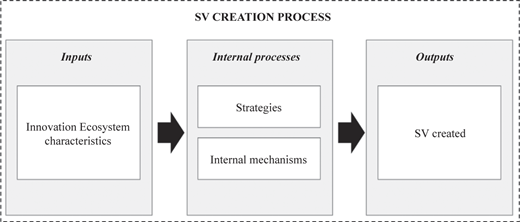
First, the authors developed a conceptual model relying on a process-based logic and framing the SV creation in terms of inputs, here intended as four key characteristics (actors, structure, governance and relations), internal processes (strategies and internal mechanisms) and outputs (the value created). Second, each element of value creation is explored, highlighting the main evidence emerging from prior studies in connection to each block.
This paper drives the identification of some relevant relationships that connect the characteristics of the IEs, the strategies and the internal mechanisms to the output of the process, i.e. the SV created.
1. Introduction
Since its first formulation (Adner, 2006), the term Innovation ecosystem (IE) has been adopted to describe structures of interconnected entities, that, thanks to dynamic horizontal relations, support new grounding, exchange and strengthening of dispersed competences and resources to create innovations and value (Gomes et al., 2018; Jacobides et al., 2018; Russell and Smorodinskaya, 2018). The importance of such structures is growing (Bassis and Armellini, 2018; Baloutsos et al., 2020) due to a paradigm shift, that is moving the innovation processes outside the boundaries of a single organization (Moore, 1993; Chesbrough et al., 2006; Von Hippel, 2007; Usman and Vahnaverbeke, 2017), with the engagement and the collaboration of different entities (Schuh and Woelk, 2017; D'Auria et al., 2016; Russo-Spena et al., 2017).
IEs are generally considered inherently capable of creating socio-economic benefits for multiple stakeholders (Liu et al., 2016; Benz and Seebacher, 2018; Alberti and Belfanti, 2019; Huang et al., 2019; Knockaert et al., 2019) or, in Porter and Kramer’s terminology, shared value (SV; Porter and Kramer, 2011) [1]. Therefore, it is widely accepted that actors within an IE can both improve their own results (Knockaert et al., 2019) and generate collective impacts for the system as a whole (Adner, 2006; Adner and Kapoor, 2010; Russell and Smorodinskaya, 2018) and the society at large (Guerrero et al., 2016; Radziwon et al., 2017; Del Vecchio et al., 2017; Lopes and Farinha, 2018; Audretsch et al., 2019).
However, the relationship between IEs and SV has been studied in a highly fragmented way (Liu and Stephens, 2019; Oskam et al., 2021). Indeed, prior contributions focused on specific aspects, episodic cases or peculiar settings (Liu et al., 2016; Huang et al., 2019; Alberti and Belfanti, 2019), while a deep analysis of the processes of value creation in IEs is still lacking (Ritala and Almpanopoulou, 2017; Gomes et al., 2018; Alberti and Belfanti, 2019; Suominen et al., 2019), even if they are crucial for a more efficient leverage of SV potentialities.
The paper aims to fill this gap, by focusing on the following research questions: which are the elements/building blocks that characterize the process of SV creation in IEs? To what extent are these elements connected to each other’s?
To this aim, the paper revises the articles published in the last 15 years, dealing at a different extent with the creation of SV within IEs. Based on such prior literature, the paper proposes a conceptual model that represents the process of SV creation within IEs, outlining its outputs, the internal processes (strategic and operational) and inputs. Such model helps to provide a systemic picture of the state of the art literature in connection to each element of the process of SV creation and supports the identification of some relationships amongst different building blocks. This analysis suggests that the value created by IEs is relevantly influenced by a few main elements of heterogeneity in the inputs – i.e. the internal characteristics of the IEs – and by the strategies and mechanisms that are put in place.
The paper is organized in five further sections. Section 2 presents the literature review performed, Section 3 introduces the conceptual blocks of the model, and Section 4 the exploration of such blocks. Section 5 discusses main relations amongst these blocks, specifically proposing relations that outputs have, on the one hand, with inputs and, on the other hand, with strategies and mechanisms. Conclusions are in Section 6.
2. Research methodology
To explore the creation of SV within IEs, the paper relies on a thorough literature review of the articles published on this topic in the last 15 years. In these years, indeed, the concept of IEs, seen as key for value creation, has been widely adopted and studied (Baloutsos et al., 2020). The literature review was conducted through a developmental approach (Templier and Paré, 2015), as the aim was to propose a conceptualization of SV creation in IEs. The search of studies to be included in the review was done with a replicable, scientific, transparent process (Petticrew and Roberts, 2006), balanced in terms of specificity and sensitivity. It stemmed from the research question, formulated including key subjects (IEs), interests (SV creation) and outcome (conceptualization and building blocks). Papers not meeting these requirements were excluded (complementarities) [2].
In line with this approach, at first, we identified keywords related to the RQs: “innovation ecosystem*” AND “shared value”. However, the first query formulated only with these keywords was too specific: indeed, many relevant articles were left out because they were not explicitly mentioning SV but synonyms or paraphrases referring to the same concept. Thus, we enriched the search with terms in “OR” adopted by Porter and Kramer (2011) and their synonyms – collective impact, local cluster andsocio economic (or socio-economic, or socioeconomic) impact (Table 1).
On Scopus, the query found 211 contributions. We did not filter for type of publication, also keeping proceedings and book chapters, so to have in the sample all diverse kinds of updated contributions. Filters were applied to include documents published from 2006 [3], in English, in the research fields of interest (Business, Management and Accounting, Social Sciences, Economics, Econometrics and Finance) [4]. Titles, abstracts and keywords of the remaining 164 articles were read to include only contributions aligned with the aims of our analysis: three exclusion criteria were applied. First, we dismissed contributions in fields that are disconnected from business, social sciences, management and economics (such as papers leveraging IEs as objects to experiment algorithms/programmes as well as articles on biological ecosystems, populations and communities). Second, we excluded papers analysing the organizational and strategic behaviours of companies dealing with open innovation transitions, adopting an internal company perspective and not a systemic one. Third, we ruled out those articles focused only on university (and knowledge) ecosystems and their patenting processes.
This process led to the selection of 120 “core articles”, classified according to the dimensions provided in Appendix: reference and reading day, details on the search process (keywords, filters and databases), synthesis of the problem, research questions, methodology, and other information linked to the object of analysis and paradigm. Amongst the dimensions of analysis, we also considered the quality of the article (critical analysis) and the relevance for the present research.
Half of these 120 papers were published in the last years proving the growing interest in this topic. The selected papers were analysed based on a thematic reading (Paterson et al., 2001), which enabled the individuation of building blocks to be considered as the key elements for conceptualizing the process of SV creation in IEs. This phase was conducted through a continuous confrontation amongst the authors, which independently worked on the conceptualization and then shared their impressions and insights, to support the development of the framework that is presented in the following section.
3. Conceptualizing SV creation in IEs: a process-based view
SV creation in IEs is inherently complex: it requires continuous exchanges and circular loops of relations amongst the multiple stakeholders of the system. Indeed, both SV and IEs have a multi-level and multistakeholder nature. Hence, conceptualizing SV creation in IEs requires to balance the need of simplifying the reality to structure and study it, and the possibility of capturing this complexity and fuzziness.
For this reason, we identified some building blocks for representing the process in a simplified way but underlying the relevance of identifying relations, interlinkages and loops amongst them for being able to study the issue.
In particular, the process of SV creation in IEs can be represented based on four main building blocks: the outputs, intended as the results of the process of value creation, the modalities through which these results can be reached (namely the strategies adopted), the instruments supporting these strategies (internal mechanisms) and the key characteristics of the IEs that represent a sort of input (or starting point) of the process itself (Reypens et al., 2016) (see Figure 1). Thus, the individuated building blocks and relations in Figure 1 represent a simplification of the complex reality of SV creation in IEs useful to structurally study the research questions posed.
Based on the literature review, we have identified some dimensions of analysis that characterize these four building blocks. These dimensions do not aim to be exhaustive, but they represent recurrent issues that emerge from the literature in connection to our building blocks and that appear relevant for explaining SV creation in IEs. Table 2 provides an overview of these main aspects that are then detailed below.
The outputs of the process are represented by the value that is created. For defining outputs, different aspects should be taken into account, including the type of objectives considered (Fulgencio, 2017; Surie, 2017; Lopes and Farinha, 2018; Audretsch et al., 2019), their prioritization (Nambisan and Baron, 2013; Mantovani and Ruiz-Aliseda, 2018; Kwak et al., 2018; De Silva et al., 2018) and the related performance (Adner and Kapoor, 2010; Tsujimoto et al., 2018; Audretsch et al., 2019; Alberti and Belfanti, 2019).
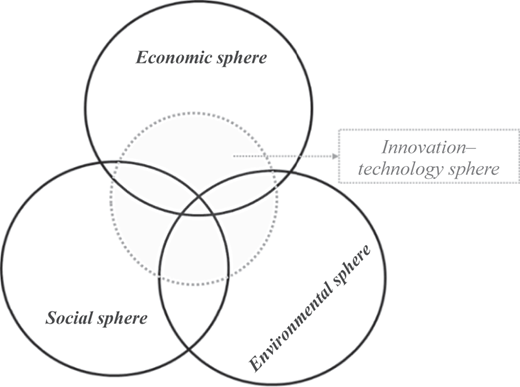
Objectives are defined by considering spheres in line with the Triple Bottom Line (TBL: social, economic, environmental; Elkington, 1997). This is consistent with characteristics both of SV and IEs, which entail multi-stakeholder and multi-actor settings, creating diverse benefits (De Silva et al., 2018). A fourth sphere can be extrapolated, which is fundamental for the object of analysis (IE): the one of innovation (Reypens et al., 2016; Audretsch et al., 2019). The innovation sphere includes outputs related to patents, new products-processes-services, R&D spending (Liu et al., 2016), collaborative projects and innovative job positions (Lopez and Farinha, 2018) (Figure 2).
The performance of the outputs can be expressed in terms of rapidity of creation of SV (Liu et al., 2016; Schuelke-Leech, 2018), intensity (Surie, 2017; Datteé et al., 2018) and resilience (Tsujimoto et al., 2018; Fukuda, 2019).
Concerning IE strategies for SV creation, some macro-strands can be individuated as particularly relevant to explain the relations between SV and IEs. These aspects relate to alignment and coopetition [5], both crucial and debated in IE contexts. First, alignment can be intended both as internal (amongst IE members) and external (between the IE and outer levels) (Al Mamun, 2018): the former (internal alignment) focuses on strategies enacted by actors constituting the network and requires the definition and acceptance of overarching goals and value propositions (Lopes and Farinha, 2018; Talmar et al., 2018). The latter (external alignment) is important to avoid lock ins of inner looking systems (Boschma, 2005; Ben Letaifa and Rabeau, 2013) and for enhancing viability in the outer socio-technical regime (Walrave et al., 2018).
Second, coopetition (Nalebuff and Brandenburger, 1997) well applies to systemic contexts (and thus to IEs), where actors are independent players that may compete while aiming at collaborating to cocreate (Benz and Seebacher, 2018; Wegmann et al., 2018). Collaboration is key so to enhance knowledge exchange and generation (Boschma, 2005; Ben Letaifa and Rabeau, 2013) amongst actors which complement each other’s in a non-generic way (Jacobides et al., 2018). Competition is also precious, as it enhances the stimulus to continuously improve and innovate (Desrochers, 2001). In this connection, identifying the level of strategic collaboration (in the spectrum of coopetition) helps in understanding and designing SV creation strategies, characterized by diverse levels of riskiness and efficiency (Bosch-Sijtsema and Bosch, 2014; Planko et al., 2019).
Competition and cooperation can occur simultaneously in coopetitive strategies, but they are also partially in contrast one with the other. Cooperation and collaboration, indeed, need a certain level of trust and the sharing of resources, data and information, which might be complex in a competitive environment.
Then, concerning internal mechanisms, they can be tools, systems, platforms (Gawer, 2014; Kwack et al., 2018), ways to reinforce personal relations and intangible flows (Prokopenko et al., 2014; Planko et al., 2019). Their heterogeneity can be articulated considering their level of formality and openness. The former requires understanding whether internal mechanisms are formally defined (databases, platforms, measurement and reporting tools, balanced scorecards) or whether they are informal (personal relations, communication, participation to events … Witte et al., 2018). The latter requires focusing on the level of openness they favour/are designed with (Mantovani and Ruiz-Aliseda, 2018). On the one hand, openness is fundamental to create and disseminate innovation and value (Ferdinand and Meyer, 2017). On the other hand, it implies sharing competitive resources, tacit knowledge and risks.
Last, also the characteristics of IEs (inputs of the process) are relevant when analysing SV creation (Reypens et al., 2016). In particular, four elements emerge from the literature as they can contribute to explain the heterogeneity in SV creation: actors (Fulgencio, 2017; Suseno et al., 2018; Baloutsos et al., 2020), structure of the IE (Surie, 2017), relationsand governance (Majava et al., 2016).
Starting from the actors, IEs are (Jacobides et al., 2018) composed by entities of diverse nature (as firms, individuals, organizations, agents and universities) and roles like orchestrators (Still et al., 2014; Linde et al., 2021), brokers (Lin, 2018) components and complementors (Adner, 2006), and intermediaries (as Technology Transfer Offices; Sinell et al., 2018). Actors are independent but interdependent and have numerous relations that are indeed a second key characteristic explaining heterogeneity in SV creation process. Relations amongst actors have been modelled as helixes of continuous and dynamic interactions amongst industry, academia, public institutions (Etzkowitz and Leydesdorff, 2000) and the civil society (Carayannis and Campbell, 2009). Relations can be internal to the ecosystem or with outer levels, more or less intense and strong and support in this way value creation (Gomes et al., 2018). SV creation is a complex task demanding the support of institutions, as governance structures (Granstrand and Holgersson, 2020), which can be top-down, bottom-up or absent as in complex adaptive systems (Jucevicius et al., 2014), composed by diverse leading bodies. A last characteristic of IE affecting SV creation relates to the system structure: the ecosystems’ width (proximity) and sectors in focus appear as relevant for understanding and managing value creation. Indeed, according to Ritala and Almpanopoulou (2017), identifying the proper “boundaries” of an IE is crucial for uncovering value creation modalities.
4. Exploring the building blocks
Relying on the process-based view introduced above, we analysed the sampled papers to understand which is the main evidence that emerges from the literature in connection to each building block (outputs, strategies, mechanisms and inputs). In this section, each building block is explored.
4.1 Outputs
Value created in ecosystems can be referred to the four above identified spheres: economic, environmental, social and innovation (Audtretsch et al., 2019).
In the literature, the first sphere is associated with tracking IEs’ economic results in terms of profit/shareholder value (Lopes and Farinha, 2018) and market share/product value (Fulgencio, 2017). IEs are considered capable of affecting the environmental outputs as well, in terms of energy efficiency and circularity. Outputs belonging to the environmental sphere are framed in the literature as: energy security, emission reduction (Ding and Wu, 2018), waste treatment, improved habitat (Surie, 2017) and enhancement of circularity (Whicher et al., 2018). According to the analysed literature, IEs entail diverse social benefits for communities and external stakeholders, too. The multi-stakeholder nature of IEs supports the recognition of relevant societal needs (Siqueira et al., 2014) and the improvement of the well-being and quality of life of entire territories: this incentivises the attraction of talented figures (Surie, 2017) the creation of high-quality jobs (Surie, 2017; Huang et al., 2019), skills (Shrotriya et al., 2018) and knowledge (Prokopenko et al., 2014). Last, the innovation sphere, which strongly relates to the other ones, is traced in terms of increased IP investments (Chaudhuri, 2012) – required when inventions are sustained by collaborating actors – spillovers of inventions, new start-ups (Siqueira et al., 2014), synergic contaminations fuelling continuously improved innovative services, products and processes (Lopes and Farinha, 2018).
The second dimension of analysis concerns the performance of the IEs – i.e. how outputs are reached in terms of resilience, rapidity and intensity. Performing resiliently in IEs is crucial for sustaining value creation: authors recognize that this is not automatic and that only IEs capable of self-adapting can sustain SV creation in the long term (Russell and Smorodinskaya, 2018).
Concerning rapidity, from the literature it emerges that economic outputs are reached faster than the ones in the other spheres, since economic outputs are usually more short-term oriented. Conversely, objectives in the social and environmental spheres require wider time windows to be reached (Jelinek et al., 2012; Del Vecchio et al., 2017; Suseno et al., 2018): authors assess the need of simultaneously tackling short- and long-term objectives (Russell and Smorodinskaya, 2018).
The analysis of the literature pinpointed that there are also some debated elements concerning outputs.
The first one is the existence of trade-offs amongst the four spheres (Mantovani and Ruiz-Aliseda, 2018; Russell and Smorodinskaya, 2018; Hong et al., 2019), whose prioritization is not univocal. The four spheres are in trade-off (Mantovani and Ruiz-Aliseda, 2018; Hong et al., 2019; Oskam et al., 2020), for instance, when firms are asked to accept a diminished individual short-term profitability (economic sphere) to increase the quality of the system and social/environmental effects (Mantovani and Ruiz Aliseda, 2018). Conversely, others state that all spheres can coexist and that the objectives can be simultaneously tackled (Russell and Smorodinskaya, 2018; Audretsch et al., 2019). This second strand of contributions assesses that innovation, environmental and social values complement the economic one (Surie, 2017) in creating a sort of hybrid value (Suseno et al., 2018). Hybrid value can simultaneously strengthen innovation performances of single actors and of the system as a whole (Song, 2016).
From articles a possible trade-off between rapidity and resilience emerges: in case an IE wants to foster rapidity and, with it, short-termism, it might neglect resilience, which needs a long-term view and might require giving up some rapidity to construct solid, sustainable and flexible basis of the ecosystem.
4.2 Strategies
IEs are structures of interdependent and independent participants (Jacobides et al., 2018) that leverage on their complementarities (Kukk et al., 2015; Xu et al., 2018) and dynamic capabilities (Liu et al., 2016; Feng et al., 2019; Linde et al., 2021) in a non-contractually defined setting (Jacobides et al., 2018; Thomas and Autio, 2019). Therefore, SV creation in IEs always experiences a coexistence of cooperation and competition, which thus affects strategic choices (Planko et al., 2019). To be successful, cooperation must effectively align actors’ goals, to grant equal and proper power distribution and a collective advantage (Mantovani and Ruiz-Aliseda, 2018; Liu et al., 2018). Overall, collaboration can be driven by the focal firm (Bosch-Sijtsema and Bosch, 2014) or be based on group cycling or dyads (Gupta et al., 2019). For instance, according to Bosch-Sijtsema and Bosch (2014), the “benevolent orchestrator” is a collaborative ecosystem strategy for internally driven innovation, which protects mainly the interests of the core firm: in this case, only once the innovation is determined, the orchestrator decides to collaborate with the selected partners of the ecosystem. A less “centrally controlled” collaborative strategy is the “thousand flowers” one that consists in the involvement of multiple entities that aim at finding coherent and interesting customer facing solutions. Conversely, firms adopting competitive approaches tend to consider the ecosystem only as an antenna for spotting new trends and developments, (“let them compete”) or accept to selectively cooperate following specific rules, i.e. on patents (“play inside the box strategy”) (Bosch-Sijtsema and Bosch, 2014).
Concerning alignment, authors agree that a shared purpose of value creation, a coherent ecosystem model shaped around SV proposition, a unique mission and an overarching goal (Walrave et al., 2018; Russell and Smorodinskaya, 2018; Benz and Seebacher, 2018) are relevant for internal alignment. Then, a balance between internal alignment and external viability should be found while shaping strategies at IE level (Kukk et al., 2015; Radziwon et al., 2017; Walrave et al., 2018). This is achieved through, for instance, ambidextrous approaches, establishing dual business units in firms participating to an IE (Zeng et al., 2017) or sustaining multi-directional flows.
The analysis of the literature focused on the strategy dimension identified some differences on how IEs can create SV. First, strategies can present a different balance between cooperation and competition (that occurs when there is more than one actor in each role, Walrave et al., 2018) for supporting internally and externally driven innovations. Such balance is defined considering both the individual competitive advantage of focal firms and the risk of unacceptance (i.e. of defining value propositions and reaching objectives then not accepted by all key stakeholders) as well as of uncertainty around actors’ behaviours. Indeed, while single entities prefer avoiding collaborating with competitors, both unacceptance and uncertainty are expected to decrease within collaborative strategies. When such strategies are ex ante structured, they can enhance trust and legitimation, decreasing future disputes and misalignments (Hannah, 2018; Kolloch and Dellermann, 2018), and increasing resilience, intensity and rapidity of output generation. The assumption that collaborative strategies can enhance output performances is debated, too: indeed, some contributions highlight that uncertainty increases when numerous and diverse actors are involved in coopetition (Brusoni and Prencipe, 2013).
Further debates emerge in connection to internal and external alignment. First, alignment between priorities of single entities and of the IE can be achieved, on the one hand, by leveraging on “uncontrolled developments” (Jucevičius and Grumadaitė, 2014) of self-regulatory processes (Nambisan and Baron, 2013), or, on the other hand, by looking for an orchestrator, capable of driving developments (Kukk et al., 2015: Linde et al., 2021). A second difference concerns the emphasis given to external alignment. This issue is perceived as urgent when dealing with path breaking innovations linked to the discovery of new niches and possible disruptions of socio-technical systems (Walrave et al., 2018), but less when incremental improvements are tackled. This relates to how the external context is perceived: in path breaking innovations, the socio-technical system is perceived as an external contextual element to be included in the analysis (even as a constraint), while other contributions assume that the external environment (context) is part of the ecosystem itself, as a source of stimuli (Schuh and Woelk, 2017).
4.3 Internal mechanisms
Moving from the first aspect – the level of formality – the analysed papers confirm that IEs adopt both formal and informal mechanisms. Amongst formal ones, there are scorecards and control systems enriched by the inclusion of ad hoc perspectives (as network collaboration, economic, social and environmental; Lopes and Farinha, 2018) key for roadmapping and preempting (Elia et al., 2016; Dattée et al., 2018). They can support a more transparent and safer collaboration by introducing detailed knowledge and risk sharing mechanisms, rules, platforms (Gawer, 2014; Planko et al., 2019), institution of Technology Transfer Offices (TTOs; Sinell et al., 2018), with a continuous focus on trust, common vision, alignment and equal power distribution.
The second aspect characterizing mechanisms is the level of openness, intended as the extent to which mechanisms favour the sharing of resources (especially data and knowledge) (Benz and Seebacher, 2018). The level of openness should be carefully “designed”: it can be supported by the implementation of interconnected and flexible infrastructure (physical and virtual).
The analysis of the adoption of internal mechanisms individuated case-specific differences. The first one links to the type and competitive nature of the resources that flow amongst actors: the more the resources are tangible, the more formal are the mechanisms in place (i.e. monetary and goods exchanges are contractually defined and traced). Mechanisms can evolve from more to less informal (Ritala et al., 2013) throughout the IE lifecycle: when IEs are in their birth phase, both formal and informal mechanisms are key. When the maturity of the IE increases, usually with its dimension and complexity, mechanisms tend to be formalized and managed by dedicated functions at IE level (Annanperä et al., 2015; Su et al., 2018). or by independent actors. Then, the analysed literature highlights the existence of diverse degrees of openness, which appears as particularly relevant when dealing with intangible flows of knowledge or data. In IEs knowledge or data can be fully shared, cumulated (through addition) or just integrated. To achieve this result (integration), IEs rely on interaction and platforms that can be open, based on common interfaces and on innovative transparent communication (Prokopenko et al., 2014; Ferdinand and Meyer, 2017). In other cases, platforms ground on closed interfaces (Mantovani and Ruiz-Aliseda, 2018) to protect ownership and competitive advantage. Infrastructure can be dedicated and developed at IE level for value appropriation (Kwak et al., 2018) or be driven by specific entities, aiming at sharing resources for enhancing systemic value.
4.4 Inputs: characteristics of IE
Actors, structure, relations and governance are aspects that can determine the nature of different IEs. Actors composing an IE can be diverse in type (industry, academia, public institution, society …), size, proximity (social, personal and cognitive) and number (Khademi, 2020). Some authors, taking a structural perspective, highlight the role of hubs, components and complementors in creating value (Adner, 2006). Others stress more the diverse nature of actors and their dynamic relations (Carayannis and Campbell, 2009).
Relations amongst actors are dynamic and build the network itself (Usman and Vahnarbeke, 2017); they can be more or less intense, strong, mainly internal to the IE or linked to outer levels (Lin, 2018). These relations enable the flow and bundle of diverse resources, even strategic. To manage these bundle and interactions, IEs are characterized by top-down or bottom-up governance structures, led by orchestrators (Linde et al., 2021) or characterized by power distribution (Russell and Smorodinskaja, 2018). In this connection, some contributions suggest IEs’ leaders should structure control mechanisms and asymmetric relations to sustain cooperative innovation performance (Song, 2016). Others recommend leaving IEs to completely self-adapt (Russell and Smorodinskaya, 2018) or introducing pull-based systems (Fukuda, 2019), taken, for instance, in the Japanese 5.0 STI (Science, Technology and Innovation) system [6].
Last, concerning structure, IEs can be glocal (Jelinek, 2012) and very diffused or localized at a smart-city level (Ritala and Almpanopoulou, 2017). It is difficult assessing the size, width and boundaries of an ecosystem (Ritala and Almpanopoulou, 2017), but it is important to properly manage and enhance value creation.
5. Discussing relations of inputs and processes with outputs
After having introduced the building blocks in Section 4, in this section, we discuss some relationships that are starting to emerge from the literature between the outputs (i.e. SV created) on the one hand and the inputs (the characteristics of the IE) or the internal processes (mechanisms and strategies) on the other hand (see Table 3).
5.1 Relations between inputs and outputs
First, the literature review provides some preliminary evidence about how different characteristics of the IE (input) influence SV creation (output).
IEs’ actors influence SV outputs in diverse ways. A proper selection of collaborators (Witte et al., 2018) is key, first, in favouring the sharing of tacit knowledge (Audretsch et al., 1998), necessary for innovating and growing (Sinell et al., 2018). Second, in supporting a sustainable and intense creation of innovation: actors bring in the ecosystem diverse complementary resources and this enables reaching intense and diversified outputs (Lin, 2018).
Thus, actors’ type and number affect prioritization of output spheres, rapidity and resilience. Specifically, when IEs are designed around a focal firm and are populated mainly by companies (commercial entities) as upstream components and downstream complementors (Adner, 2006), there is a large emphasis on objectives related to innovation and creation of economic value (Adner and Kapoor, 2010, 2016; Dedehayir et al., 2017; Suseno et al., 2018). The other spheres usually gain an increased relevance when diverse players (universities, community representatives, public institutions, research institutes and funding agencies) affect the value proposition (Russo-Spena et al., 2017; Xu et al., 2018; Planko et al., 2019), resulting in larger emphasis on social objectives (Del Vecchio et al., 2017; Audretsch et al., 2019). Thus, the social sphere gains importance in IEs populated by numerous actors of diverse nature, including NGOs and governmental institutions (Lund-Thomsen and Nadvi, 2010).
Differences in actors and their organization/management impact performances of IEs (Baloutsos et al., 2020). Actors can affect output rapidity and resilience: when diverse actors are involved, rapidity is mined, as the diversity of needs, objectives, values to be simultaneously managed and aligned increases (Walrave et al., 2018), thus slowing down the process of value creation. Once all these diverse actors are properly involved, the system is considered more resilient (Russell and Smorodinskaya, 2018), thanks to the IEs’ “social groups and economic activities that coexist within them” (Alberti, 2016, p. 11).
The second characteristic relates to the structure, which may affect outputs in terms of prioritization and performances. For instance, localized IEs – as living labs or Science Parks (Del Vecchio et al., 2017; Fulgencio, 2017) – can strengthen relationships with communities, which typically lead to the recognition of environmental and social inclusion as key outputs (Valkokari et al., 2017; Fulgencio et al., 2017; Camboim et al., 2019). Moreover, in line with literature on agglomerations and proximity (Boschma, 2005), the exploitation of synergies is considered easier in local systems (Capello, 2009). Conversely, less localized IEs tend to be characterized by weaker and less controllable trust and ties, resulting in less effective settings. However, there is not full consensus on the effects of localization: some authors argue that spatial proximity is not enough for granting proper collaborations (Boschma, 2005; Capello, 2009) for value creation and that it can even hinder them (Ben Letaifa and Rabeau, 2013; Witte et al., 2018). This happens when competitors acting closely in ecosystems might not be prone to collaborate for SV creation. A too high spatial proximity may bring risks of lock-ins or opportunism (Boschma, 2005), which lead towards delays and less intense outputs. Big and global IEs (as virtual laboratories of the future; Jelinek, 2012), with low spatial proximity, are expected to impact many levels even outside the IE itself (Fulgencio, 2017), as they act as multipliers of relations, thus potentially expanding effects and reaching challenging targets.
IEs' sectors and localization affect output spheres and prioritization, too: for instance, environmental impacts are core when the IE acts in energy-related industries (as the IE for renewable energy in India; Surie, 2017, or the one for circular economy in Scotland, Whicher et al., 2018), catch-up countries (Huang et al., 2019) or place-based IEs with a strong participation of Corporate Social Responsibility (CSR)-oriented firms (Lund-Thomsen and Nadvi, 2010).
Concerning the third IE characteristic, diversity in relations determines heterogeneity in outputs, which are reached faster when relations are strong, persistent and multi-directional, as more resources can be bundled, networks built and entities impacted. The presence of intense and stable relations sustains the creation of synergies that enrich the bundle of available resources (Adner and Kapoor, 2010), enhances acceptance (Kolloch and Dellermann, 2018) and, therefore, positively affects resilience of outputs reached. The existence of connections with the outside impacts on the intensity, too, as the more the connections firms have, the more the innovation created (Lin, 2018). This happens for instance, in the Boston Uijma IE defined as a “community-controlled open innovation ecosystem”, which, thanks to the connections with the outer levels, integrates internal and external knowledge, opening paths for sustainable innovations (Bevilacqua and Ou, 2018).
Last, governance affects definition and prioritization of objectives and impacts on rapidity and resilience. Governance structures applying top-down control mechanisms can support reaching outputs more rapidly, but they present possible disadvantages in terms of resilience, as the case study analysis of Witte et al. (2018) shows: they study two different start-up IEs in port cities (Rotterdam and Montréal) and show that top-down governance brings the risk of losing acceptance and engagement. However, top-down structures can timely react to changes, since decision-making processes are usually well defined and more rapid than the ones in decentralized systems. The presence of leading bodies and orchestrators decreases possible risks linked to uncontrolled collaborations and enhances rapidity, as these leaders are key in structuring the process through which objectives are identified and aligned with IE goals (Cunningham et al., 2015; Dattée et al., 2018). However, they risk being detached from the everyday life of IEs, thus displaying a poor capacity of adapting to changes (Russell and Smorodinskaya, 2018), which is actually more natural in bottom-up governed IEs. In bottom-up governed and, even more, in self-adapting IEs with no leading actors (as the health and life science ecosystem in San Diego; Majava et al., 2016), there is no “imposed” prioritization of objectives, which may mine rapidity; in this sense, IEs can evolve with no pre-defined direction, being driven by changes in power balance of actors and contingencies, thus presenting resilience. In this situation, objectives may be reached more slowly but maintained more resiliently (Russell and Smorodinskaya, 2018).
5.2 Relations between internal processes and outputs
The SV creation (output) depends not only on the characteristics of the IEs but also on the processual elements that are put in place: strategies and mechanisms.
Concerning strategies, first, it emerges that collaboration, if efficient and effective, improves resilience and intensity and helps in considering and reaching simultaneously outputs pertaining to diverse spheres. However, the more the collaborating actors, the higher the initial negotiation efforts, and the adoption of opportunistic behaviours due to potential power imbalances. They decrease, respectively, rapidity of output generation and resilience.
Second, internal alignment is more structured and efficient when leading bodies at IE level involve managers of the key entities (Dedehayir and Seppänen, 2015). Indeed, their participation provides legitimation and guidelines based on experience and knowledge of the available resources. Such level of involvement and alignment (shared vision and goals) may take time, but, when in place, it supports rapidity and resilience, as well as a proper prioritization of output spheres. External viability relates to output performances, too: intensity benefits from a high number of “connection points” and feedback loops (Walrave et al., 2018), from bundling resources and enhancing acceptance and agreements.
Also, internal mechanisms affect the outputs reached. First, a too high level of formality might slow down the innovation processes, thus affecting rapidity. Then, less formalized mechanisms, usually sustained by independent bottom-up structures of symbiotic relations (Still et al., 2014), can support resilience in IEs, in terms of sustainable creation of value at ecosystem level.
Concerning openness of internal mechanisms, it depends on the strategic nature of the resources flowing: strategic resources are preferably bundled through semi-controlled flows, permitting integration but not full sharing, to preserve competitive advantage. Even if complex and not always feasible, openness and sharing are key to enhance the intensity of outputs reached, as bundling resources can support value creation through open innovation (Chesbrough et al., 2006). Given the fact that diverse resources and capabilities are shared, multiple outputs can be reached, even simultaneously. Partnerships composed by actors with balanced power distribution enable bundling such synergic resources (Annanperä et al., 2015), thus supporting mutual processes of value co-creation and sharing (Russo-Spena et al., 2017), which are sometimes difficult to be set. The implementation of open platforms at IE level supports sharing, too and are facilitated by the formulation of dedicated policies.
6. Conclusion
The present study embraced a process-based logic to identify and relate dimensions of analysis key to shed light on SV creation in IEs.
Relevant articles published in the last 15 years on IEs and value creation have been structurally analysed keeping the above-mentioned process-based logic. This supported the individuation of building blocks in terms of inputs (characteristics of IEs), internal mechanisms, strategies, outputs, as well as their sub-dimensions. These aspects have been explored considering the contributions of prior literature, embracing a developmental approach: the analysis outlined not only points on which the literature agrees upon but also controversies. Debated issues concerning outputs, strategies, mechanisms emerge, as well as elements of heterogeneity pertaining the inputs (IE characteristics).
Elaborating on these results, the discussion uncovered relations between outputs, on the one hand, inputs, strategies and mechanisms, on the other hand. This reasoning helps to identify key open issues to be tackled, as (1) the effect of heterogeneity and complexity of IE on collaboration and alignment, (2) the role of proximity in determining SV output, and (3) governance structures and output performances.
The major theoretical contribution of this work is the conceptualization of SV creation in IEs, which required a complex task of systematizing a quite fuzzy literature on IEs (Suominen et al., 2019; Baloutsos et al., 2020), where SV creation was not studied but often taken for granted. A new conceptualization of SV creation in IEs is here provided – based on previous literature contributions – and explored. Being able to identify and relate building blocks helps better delineating the object of analysis and understanding SV modalities, providing a starting point for further empirical and theoretical analysis in diverse contexts.
Concerning practical implications, policymakers can get insights on their role and choices (i.e. in terms of prioritization of objectives, incentives for cooperation and regulations for internal mechanisms) to enhance SV at IE level. Managers are provided with a panel of main dimensions of analysis and elements to be considered while framing strategies aligned with the IE they belong to.
Some limitations are acknowledged. First, the complexity of the issue required simplifications, which have implications: the conceptual model organized in building blocks might seem linear or suggest a deterministic view of SV creation, which is characterized by loops and interdependences. The proposed model and building blocks are useful to structure the analysis, as they enable capturing the main constituents of the SV creation process as well as interdependences emerging amongst them. Indeed, the building blocks are not simple, closed and detached elements, but inherently complex dimensions (and sub-dimensions) that have identifiable interlinkages. Indeed, as shown in the analysis, exploring the building blocks enables understanding also which relations arise amongst dimensions and sub-dimensions (i.e. how inputs affect outputs, how strategies and mechanisms can impact outputs, how diverse choices under these dimensions can impact SV creation …). This also supports the individuation and analysis of feedback loops. Despite its usefulness, the introduced conceptual model should be adopted always acknowledging that it represents a simplification of a concept/a reality.
Moreover, although our approach was structured, subjectivity could have been introduced in paper selection (especially as it was not conducted independently by the multiple authors): this issue, however, is not central in developmental reviews, which focus more on the identification of a new conceptualization than on the systematic nature of search for studies. It is important also to acknowledge that filters have been applied during the search for studies, for instance excluding articles not in English: this was done to avoid misinterpretations due to translations, but it should be pointed out that a few papers have been excluded.
A last limitation relates to the lack of an empirical exploration. The identified dimensions have not been illustrated nor explored empirically: this could be very beneficial for validating, modifying, integrating the model and thus we suggest it to be the starting point for future research, aimed at providing an empirical analysis of SV creation in diverse IEs based on the conceptualized dimensions. Longitudinal studies might be of interest, as well, to understand how elements evolve throughout the IE lifecycle, affecting SV processes.
Notes
Introduced by Porter and Kramer (2006) and then refined in 2011, shared value is created thanks to “policies and operating practices that enhance the competitiveness of a company while simultaneously advancing the economic and social conditions in the communities in which it operates” (Porter and Kramer, 2011, p. 66). It assumes (1) markets are defined by societal needs and (2) social harms increase internal costs for firms.
These are the four core elements (PICO) required by The Cochrane Collaboration (2017) for scientific systematic reviews: People (the key subject), Interests (aspect included in the analysis), Complementarities (what is not included) and Outcome. They are here adapted to a social science field.
Year 2006 was chosen as starting point, since it is the moment when, for the first time, both the terms IEs and SV were uniquely adopted in the literature (Adner, 2006; Porter and Kramer, 2006).
These research fields are directly provided in Scopus and include, amongst others, publications on innovation and entrepreneurship.
These sub-dimensions do not want to be exhaustive and are intended to be macro areas where diverse strategies (and strategic processes) can insert, in a continuum of possible choices.
This pull approach moves away from a system where solutions to problems are addressed by internal actors following an explicit demand towards one which explicitly aims to ex ante “facilitate value creation for Society” (Fukuda, 2019, p. 13).