This study aims to examine how cultural dimensions affect digitalisation, particularly artificial intelligence (AI) development and its implementation strategies in 38 countries.
We use a mixed methodology to obtain a deeper insight into a complex and, at the same time, understudied phenomenon, e.g. the global impact of cultural values on digitalisation and AI development. Combining quantitative and qualitative analyses, we shed new light on the empirical manifestations of cultural dimensions and expert perceptions. Quantitative analysis uses regression models based on data sourced from the GLOBE and Digital Competitiveness Ranking studies. Qualitative insights are drawn from epistemic interviews with experts representing four countries, namely China, Italy, Russia and the USA, which belong to different cultural clusters. The choice to have countries representing different clusters follows the logic of the GLOBE Project and aims at gaining insight into different cultural groups and scaling up the results to other countries in the same cluster.
Key findings highlight risk aversion as a pivotal factor, encompassing uncertainty avoidance, future orientation, institutional collectivism, power distance and performance orientation practices. Expert interviews elucidate how these cultural values influence national strategies, regulatory frameworks, stakeholder engagement, competitive dynamics and future skill requirements in AI implementation and development.
Further research is recommended to delve deeper into the intricate relationship between country culture, technological adoption and economic progress, enriching global understanding of digitalisation dynamics and AI implementation and development. The research data can be further developed and expanded to include other GLOBE clusters not covered in this study, allowing for a deeper analysis. Inviting more experts from each region would enhance the breadth of perspectives. Moreover, similar studies could be conducted within the context of a single country to provide a more detailed examination.
Implications for policymakers underscore the need to integrate cultural considerations into digitalisation strategies, ensuring alignment with societal values and optimising economic outcomes. Businesses are encouraged to adopt culturally sensitive approaches to AI implementation to build trust and foster engagement within diverse cultural contexts.
The originality of this study lies in its exploration of the intersection between digitalisation, AI implementation and cultural dimensions – an area that has so far received limited attention in the available literature. While comparative studies often focus on the technical or policy aspects of digital advancements, this research highlights how cultural factors can facilitate or hinder these developments. Moreover, the study employs a mixed-methods approach, combining quantitative analysis with qualitative insights. This approach allows deeper understanding and cross-validation of findings, enhancing the study’s credibility and offering a more nuanced perspective on the role of culture in shaping digital transformation.
Introduction
In an era of rapid technological advancement, digitalisation exploitation has become critical in driving economic growth, improving efficiency, and fostering innovation across various sectors. The digitalisation process is complex and multifaceted, with its success depending on numerous external and internal factors (Brunetti et al., 2020). On one hand, digital technologies serve as tools used in digitalisation. On the other hand, they drive the need for digitalisation (Khavenson et al., 2020). For instance, artificial intelligence technology (AI) has emerged and evolved in recent years, becoming a transformative force shaping economies and societies worldwide. Analytical projections portend transformative shifts in the labour market, healthcare, financial sector, and manufacturing. According to Goldman Sachs, the evolution of generative AI may engender the displacement of approximately 300 million jobs in developed nations while concurrently modernising the routine work processes of 63% of their inhabitants. PricewaterhouseCoopers' report indicates that the integration of AI can augment the global GDP by 14% by 2030, thereby causing transformative alterations in production and distribution. McKinsey’s prognostications assert that within the forthcoming decade, a minimum of one form of AI technology will be implemented by 70% of enterprises. Most developed countries around the world have, in various capacities, engaged in the race related to AI development, rendering it a global phenomenon. More than 62 countries have already embraced AI-related strategies (Maslej et al., 2023). Despite the worldwide scope of the process, the trajectories of digitalisation, including AI development and implementation, vary significantly across countries (Koroleva, 2015; Małkowska et al., 2021; Rubino et al., 2020).
The influence of cultural factors on the innovation pace within a country is widely acknowledged (Shane, 1992; Rinne et al., 2012; Prokop et al., 2023), with cultural dimensions significantly affecting economic dynamics and entrepreneurial behaviour (Calza et al., 2020). However, the existing literature notably lacks an understanding of the intricate interplay between country values and digitalisation, especially in the AI sector. Rubino et al. (2020) highlight the necessity of comprehensively examining how variations in country cultural dimensions contribute to shaping digitalisation dynamics. The research question for this article is: “How do country-level values shape AI and digitalisation strategy?”
This study employs a mixed-methods approach to investigate the relationship between culture, digitalisation, and AI development. First, we conducted a quantitative analysis and employed regression analysis to examine the relationship between GLOBE dimensions and digitalisation data sourced from the Digital Competitiveness Ranking (2022). The sample encompassed 38 countries, i.e. all the countries for which data from both sources were accessible.
Second, to obtain a deeper insight into the phenomenon and more interpretative results, we conducted in-depth epistemic interviews to co-construct knowledge (Berner-Rodoreda et al., 2020) and further examine the influence of culture on digitalisation and AI development across diverse country contexts. These interviews involved experts from academia, institutions, and industry practitioners. Our selection of interviewees focused on countries representing distinct cultural clusters outlined by the GLOBE Project, which identifies ten cultural clusters comprising countries with similar cultural dimensions. The clustering methodology ensures both internal homogeneity and external heterogeneity. We selected the countries that span various clusters, including Anglo, Latin Europe, Confucian, and Eastern Europe, exhibiting diverse levels of studied dimensions.
The paper proceeds as follows: the first part of our literature review discusses the literature focused on AI and digitalisation. Next, we examine cross-cultural literature to elucidate the impact of culture on digitalisation. The methodology section explains the use of mixed methodology, i.e. a quantitative analysis that includes principal components analysis and a multiple linear regression analysis. A qualitative analysis is based on in-depth interviews with experts. Finally, we present the results and discuss practical and theoretical implications.
Literature review
AI and digitalisation
Since the 1980s, discussions about the digitalisation of various fields of human endeavour have become increasingly prevalent. Broadly, these discussions delineate three distinct phases: computerisation, informatisation, and digital transformation (Koroleva, 2015). The computerisation process began with the emergence of mainframe computers in the 1950s, large room-sized machines used for data processing and complex calculations. However, the trend accelerated significantly during the Personal Computer Revolution (1970–1980s) when Apple II (1977) and IBM PC (1981) released personal models to the market. Factors driving this phase included advancements in microprocessor technology, decreasing hardware costs, and rising demand for personal computing capabilities (Lehr and Lichtenberg, 1999).
The informatisation phase is linked to the invention of the World Wide Web in 1989 and the development of web browsers like Mosaic in 1993 and Netscape Navigator in 1994, which made the Internet accessible to the public. Key factors included network infrastructure development, the standardisation of communication protocols (like TCP/IP), and the commercial expansion of the Internet, spurring global connectivity and information exchange (Salahuddin et al., 2016).
The era of Big Data and the Internet of Things (IoT) posed challenges related to digital transformation, which involves radically reshaping of processes across many areas of life. Influencing factors included advancements in data storage and processing, the proliferation of smart devices, and the integration of AI and machine learning into business and daily life (Koroleva, Jogezai, 2024). Despite the global nature of these transformations, they progressed differently across countries, communities, and groups (Galindo et al., 2021).
Recent studies have widely investigated digital transformation and its impact on businesses, noting its significant effects on industries (Cannavale et al., 2022). This work includes research on start-ups, SMEs, and large firms across various sectors, from green innovations to healthcare. For instance, Almansour (2024) argues that artificial intelligence can help start-ups in green innovation gain a competitive edge. Moreover, AI can expand how firms foster breakthrough innovations: human-human-AI collaboration (HHAC) - involving two or more people working with an autonomous agent to achieve shared goals–has been identified as crucial for such innovation (Yu et al., 2024). Overall, digital transformation enables firms to pursue high-quality growth, offering three significant benefits: greater information transparency, enhanced innovation capabilities, and improved financial stability, which drive high-quality development (Wu et al., 2023).
Numerous international comparative studies examine factors affecting digitalisation. For example, using a business ecosystem architecture approach, cases from Germany and Denmark have highlighted commonalities and differences between the two countries’ electricity ecosystems, noting influences such as regulatory frameworks, market structures, and public-private partnerships (Malkowska, 2021). Research by Małkowska (2021) also explores the digitalisation of society (Society 4.0), an economy’s readiness to tackle technological challenges (Economy 4.0), and ICT use in companies (Companies 4.0). The study employs cluster analysis and multi-criteria decision-making (TOPSIS) to rank countries based on evaluation criteria like innovation capacity, technological infrastructure, and digital skills in the workforce (Marti and Puertas, 2023). Additionally, digitalisation in public sector organisations has been examined (Frach, 2017), including the adoption of e-government services, citizens' digital literacy, and digital infrastructure availability for public service delivery.
Culture and digitalisation
Culture is a central factor affecting digitalisation and is increasingly viewed as an indicator of an organisation’s digital transformation maturity, as well as an enabler of that transformation (Steiber and Alvarez, 2023). The impact of culture has been widely explored in international management literature (Tian et al., 2018). Research shows that national culture influences technological implementation (Rubino et al., 2020) because it shapes levels of risk-taking and proactiveness (Kreiser et al., 2010). For instance, based on Hofstede’s model, Power Distance and Uncertainty Avoidance negatively affect SMEs' risk-taking, while Individualism, Power Distance, and Uncertainty Avoidance negatively influence proactiveness. Other studies have examined how country culture impacts technological acceptance through the Technological Acceptance Model (TAM), which gauges societal acceptance of new technologies based on perceived usefulness and ease of use (Davis, 1989).
While TAM provides a solid theoretical foundation, numerous studies show that a country’s cultural values can significantly moderate technology acceptance dynamics (Sanguineti and Maran, 2024). For example, Srite and Karahanna (2006) found that Masculinity did not interact as a moderator between perceived usefulness and behavioural intentions. In line with these findings, Sanguineti and Maran (2024) focused on Individualism and Uncertainty Avoidance, demonstrating that perceived usefulness helps reduce the negative effects of Uncertainty Avoidance on cloud adoption.
Understanding the role of national culture as a variable in digitalisation entails research on Internet diffusion. For example, Zhao et al. (2007) analysed Individualism, Uncertainty Avoidance, and Power Distance, finding that Uncertainty Avoidance indirectly affects Internet diffusion, as the Internet inherently involves ambiguity and perceived risks (Zhao et al., 2007). Perceived risk can also negatively impact the broader digital transformation process, as seen with medical AI adoption (Huang et al., 2023).
Though relevant, the direct impact of culture on digitalisation has not been extensively investigated. Some authors have applied Schein’s framework (Schein, 2010; Schein and Schein, 2019) to explore culture at the organisational level (Steiber and Alvarez, 2023). Cultural traits supporting digital transformation have been identified, and recent research highlights cultural factors that can hinder or enhance AI adoption, with values like transparency and trust supporting AI advancement (Robinson, 2020). Trust, rather than emotions, plays a key role in shaping the acceptance of AI robots in high Uncertainty Avoidance cultures (Chi et al., 2023).
Examining the AI-country culture relationship, Eitle and Bruxman (2020) found differences between the US and Germany, both AI leaders, despite contrasting Hofstede dimension scores. Germany, with higher Uncertainty Avoidance, tends to prioritise preparatory activities, whereas the US has advanced cloud systems implementation without stringent regulations. This research also demonstrated how Power Distance affects top management’s involvement in AI use cases. Additionally, research by Sanguineti and Maran (2024) indicates that Uncertainty Avoidance negatively influences cloud storage adoption, while Individualism has a limited impact. The Masculinity dimension has been associated with resistance to digitalisation due to materialistic and assertive values, while Collectivism appears to moderate AI adoption significantly (Bokhari and Myeong, 2023).
Hofstede’s model, while widely used, has limitations due to outdated data collection and sample reliability. These limitations have led scholars to incorporate the GLOBE Project framework, which emphasises recent data and a broader range of cultural dimensions, including Uncertainty Avoidance, Future Orientation, Power Distance, Institutional Collectivism, and Assertiveness (Calza et al., 2016; Canestrino et al., 2020). This framework, developed by House et al. (2004), provides insights into cultural practices (current cultural perceptions) and cultural values (desired cultural change). The GLOBE model’s nine dimensions provide a comprehensive understanding of values and practices, aligning well with studies on culture and innovation (Das, 2022).
Despite the advantages of GLOBE, digitalisation literature largely relies on Hofstede’s model, with few studies examining GLOBE’s impact on AI adoption. Among these few, Al-Habsi et al. (2022) discuss leadership’s influence on digitalisation, while Krishnan and AlSudiary (2016) examine cultural dimensions’ effect on virtual social network diffusion, a domain related to digitalisation. Policymakers and managers must consider cultural barriers to AI technology adoption across cultural contexts (Na et al., 2023). While various frameworks have examined culture’s impact on technology, further research is needed to clarify the practical implications of digitalisation and AI adoption through cultural values in the GLOBE model.
Methodology
This study uses mixed methodology. This approach provides insight into the possible relationships between culture, digitalisation, and AI. It also allowed us to gain a deeper knowledge about the mechanisms that shape the development of these phenomena, focus on international expert perceptions, and confirm that cultural aspects, according to the quantitative analysis, may act as facilitators or inhibitors for them.
By combining quantitative with qualitative data, this study bridges the gap between numbers and narratives, offering a more nuanced view of the digitalisation process and AI development and implementation.
Additionally, integrating qualitative and quantitative data allowed us to cross-validate findings and provide a richer, more comprehensive understanding of the phenomenon.
Quantitative research
To answer the research question, we extracted data from several sources. Digital Competitiveness Ranking (2022) was useful in obtaining digitalisation data. We considered the following factors: (1) knowledge, (2) technology, and (3) future readiness. The first factor comprises different sub-factors also considered in the analysis, i.e. Talent, Training and Education, and Scientific Concentration. The second factor consists of the sub-factors Regulatory Framework, Capital, and Technological Framework. The third factor is devised by Adaptive Attitude, Business Agility, and It Integration. Cultural variables were taken from the Global Leadership and Organisational Behaviour Effectiveness Research Program (GLOBE project) (House et al., 2004). This model is a widely used framework within cross-cultural studies. We took the nine cultural dimensions from GLOBE. The authors distinguish between “values scores” and “practices scores” for each dimension. The values, also labelled “Should be”, emphasise a society’s future orientation. The practices, labelled “As is”, highlight the actual perception of each context. The nine cultural dimensions are Power Distance, Institutional Collectivism, In-Group Collectivism, Uncertainty Avoidance, Future Orientation, Gender Egalitarianism, Assertiveness, Humane Orientation, and Performance Orientation.
We also included control variables in the analysis: GDP growth (annual %), Research and Development Expenditure (% Of GDP), and Individuals Using the Internet (% Of Population). The first control variable was taken from The World BankWorld Development Indicators (2022). The second and the third control variables were taken from Trading Economics (2021). Our final sample included 38 countries.
Qualitative research
To answer the research question, we conducted eight interviews with experts from academia, institutions, and industry practitioners involved in digitalisation, AI development, and integration (See Table 1). Our selection of interviewees focuses on countries representing distinct cultural clusters, as outlined by the GLOBE Project, which identifies ten cultural clusters comprising countries with similar cultural dimensions. The clustering methodology ensures both internal homogeneity and external heterogeneity. Specifically, our chosen countries span different clusters, including Anglo (USA), Latin Europe (Italy), Confucian (China), and Eastern Europe (Russia), exhibiting diverse levels of investigated dimensions [1]. The cluster approach represents an innovative approach to comparing countries. While representing a useful tool to summarise differences and analogies across countries, cluster-based information can also be useful in theory building. Moreover, cluster-based research ensures that adequate sampling, in terms of cultural heterogeneity, is included in the sample. Additionally, it allowed us to scale up the empirical results obtained for a particular culture to other potentially similar cultures present within the same cluster (Calvelli and Cannavale, 2013).
Methods
Quantitative analysis included Principal Component Analysis (PCA) and multiple linear regression. SPSS Software was used to conduct the analysis. Qualitative analysis was conducted with the help of in-depth epistemic interviews aimed at co-constructing knowledge (Berner-Rodoreda et al., 2020) to further explore the influence of culture on digitalisation and AI development in diverse national contexts.
Unlike previous studies that focused on quantitative or qualitative methods, our mixed-methods design provides new insights into how cultural values influence AI adoption. This approach enables us to analyse the statistical trends while simultaneously gaining a deeper understanding of the experiences and perceptions of individuals from different cultural backgrounds.
Quantitative analysis: Principal Component Analysis (PCA) and Regression analysis
First, we performed a linear multiple-regression analysis. However, the cultural variables were strongly correlated with each other. To solve the multicollinearity issue, we performed a factor analysis of principal components, which allowed us to combine cultural variables based on their correlation. As a result, we obtained six factors. Three were related to GLOBE’s cultural practices, and three were related to values. The second step of our analysis involved a regression analysis with the dependent variables as the factors extracted from the digital competitiveness ranking, i.e. talent (Model 1), training and education (Model 2), scientific concentration (Model 3), regulatory framework (Model 4), capital (Model 5), technological framework (Model 6), adaptive attitude (Model 7), business agility (Model 8), and IT integration (Model 9). We considered the aggregated factors, namely Risk Aversion, Social Consciousness, Self-Confidence, Goal Orientation, Social Interaction, and Group Orientation as independent variables. The factor Risk Aversion comprehends Uncertainty Avoidance Practice (UA_P), Future Orientation Practice (FO_P), Institutional Collectivism Practice (INST-COLL_P), Power Distance Practice (PD_P) and Performance Orientation Practice (PO_P). Social Consciousness comprehends In-Group Collectivism Practice (IN-GROUP_COLL), Gender Egalitarianism Practice (GE_P) and Human Orientation Practice (HO_P). Self-confidence comprehends Assertiveness Practice (ASS_P) (See Table 2). Factor Goal Orientation includes Institutional Collectivism values (INST-COLL_V), Future Orientation Values (FO_V) and Performance Orientation Values (PO_V). Social Interaction comprehends Gender Egalitarianism Value (GE_V), Power Distance Value (PD_V), Uncertainty Avoidance Value (UA_V), Humane Orientation Value (HO_V) and Assertiveness Value (ASS_V). The last factor, Group Orientation, includes only In-Group Collectivism Value (InGroup-COLL_V) (See Table 3).
Qualitative analysis
Qualitative data was collected through eight semi-structured interviews with senior experts. The interviews were conducted face-to-face or online via Zoom between May and July 2024. Each interview lasted between 35 and 60 min, with an average duration of 42 min. The interview guide included 15 questions related to Digitalisation, Strategic and Regulatory Foundations of AI Implementation, Creating Conditions and Developing AI, Principles of AI Implementation, and AI in Education.
We transcribed and coded the collected interviews using an open deductive coding strategy, distributing the codes according to the themes of the cultural practices of the GLOBE study: Power Distance, Uncertainty Avoidance, Humane Orientation, Institutional Collectivism, In-Group Collectivism, Assertiveness, Gender Egalitarianism, Future Orientation, and Performance Orientation.
Findings
Quantitative research results
Starting from Model 1, the explanatory variables considered were Risk Aversion, Social Consciousness, Self-Confidence, Goal Orientation, Social Interaction, and Group Orientation, while the independent variable was Talent. The results of this model were particularly interesting. Indeed, we found that the collinearity test measured through the VIF certifies the absence of correlation between independent variables as the VIF of the model is less than 3.5. The most significant variable in the model was the explanatory variable labelled Risk Aversion with a strong significance of 0.001. The beta value of the regression is also −11.188, meaning that the effect of Risk Aversion on Talent is indirect. Other things being equal, if Risk Aversion increases by a single unit, we will have an 11-point reduction in the talent variable. We also checked for regression residuals in the model. The Durbin-Watson statistic measured 1,567 and, as a result, we assume that the Model is normally distributed.
Model 2 considered the same explanatory and control variables, but the dependent variable was Training and Education. In this model, the independent variables are also not correlated (the VIF of the Model is minor than 3.5). The Goal Orientation variable was strongly significant (0.009). This variable explained a variation of 10 points of the independent Training and Education (beta measures 10,094). The Durbin-Watson test measured 2,141. The model is normally distributed based on the Normal Probability Plot.
Model 3 measured the impact of cultural variables aggregated into factors on the basis of the dependent variable, i.e. Scientific Concentration. All the variables were not correlated since the VIF of the model was smaller than 3.5. However, this model was not considered as the variables were not significant.
Model 4 considered the Regulatory framework as a dependent variable. VIF indicates the absence of collinearity within the independent variables (VIF <3.5 or the Model). The most significant explanatory variable was Risk Aversion (significant at level 5%). The beta coefficient showed a negative impact, scoring −6,154, which means that if this factor increased by a single point, the Regulatory Framework variable would decrease by 6,154 points. This result is similar to what we found in Model 1, representing a negative impact of some GLOBE’s cultural practices with Talent.
We tested Capital as the dependent variable in Model 5. Independent variables were not correlated (VIF <3.5). Risk Aversion was the most significant among the dependent variables (Sign <0.001, strongly significant value), indicating a strong negative effect on Capital (this coefficient measures −12,938). Residuals were checked through the Durbin-Watson test, but the result was inconclusive. In the model, residuals are normally distributed.
Model 6 focused on investigating the impact of cultural dimension on the dependent variable Technological Framework. The model attested to the absence of multicollinearity (VIF< 3.5). Risk Aversion (strong significance level measure 0.007) and Social Interaction (strong significance level measure 0.005) were significant. Both factors negatively impacted the Technological framework: the first factor scored −6,983, while the second scored −6,670. Within the model, regression residuals were normal and not correlated.
Model 7, Model 8, and Model 9 focused on the dependent variable of Adaptive Attitude, Business Agility, and IT integration, respectively. All the models presented a VIF <3.5. We can conclude that the explanatory variables selected were not correlated. Within Model 7, the most significant variables were Risk Aversion (strongly significant at 0.001 level) and Social Interaction (strongly significant at 0.006 level), with a beta coefficient of −8,544 and 5,061, respectively. While Risk Aversion negatively affected Adaptive Attitude, Social Interaction had a positive impact. In Model 8, the most significant variable among the explanatory variables was Risk Aversion with a beta coefficient of −7,641, having a negative effect, which is in line with previously analysed dependent variables. With a strong significance level of 0.001, Risk Aversion was also significant in Model 9 with a beta coefficient of −9,960, having a negative effect. Also, the three models present residuals normally distributed and not correlated based on the Durbin-Watson score.
We can conclude that Risk Aversion is the most explanatory factor since it appears to be significant in almost all the models considered in the analysis (except Model 2 and Model 3). Indeed, Uncertainty Avoidance Practice, Future Orientation Practice, Institutional Collectivism Practice, Power Distance Practice, and Performance Orientation Practice are cultural dimensions of GLOBE that mainly affect digitalisation and AI development and implementation. Particularly, these cultural dimensions affect the subfactor Talent (Model 1) and impact the Technology Factor since we found a significant effect in Models 4, 5, and 6. Risk Aversion impacts all the subfactors composing Technology, i.e. Regulatory Framework, Capital, and Technological Framework. Also, Risk Aversion impacts Future readiness (Models 7, 8, and 9), shaping all the subfactors considered (Adaptive Attitude, Business Agility, and It Integration). Besides Practices, some values also affect digitalisation. Notably, within the regression, we found that Goal Orientation, which includes Institutional Collectivism values, Future Orientation Values and Performance Orientation Values, impacts Training and Education, the subfactor included in the Knowledge factor variable. Finally Social Interaction, including Gender Egalitarianism Value, Power Distance Value, Uncertainty Avoidance Value, Humane Orientation Value, and Assertiveness Value–shapes the Technology factor, affecting the subfactor Technological Framework and the Future Readiness Factors, which in turn affects the Adaptive Attitude subfactor.
Qualitative research results
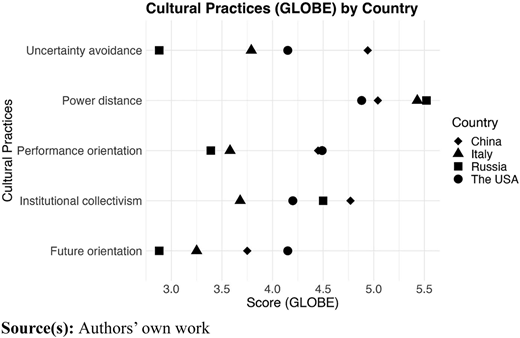
A quantitative investigation has revealed that Risk Aversion (Practices: Uncertainty Avoidance, Future Orientation, Institutional Collectivism, Power Distance, Performance Orientation) emerges as the foremost significant factor, followed by Social Interaction (Values: Gender Egalitarianism, Power Distance, Uncertainty Avoidance, Humane Orientation, and Assertiveness) and Goal Orientation (Values: Institutional Collectivism, Future Orientation Values, and Performance Orientation). According to our results, cultural practices have the strongest impact on digitalisation, and specifically, Uncertainty Avoidance, Future Orientation, Institutional Collectivism, Power Distance, and Performance Orientation are the practices with the highest impact. It is indeed imperative to understand that this constitutes a collection of practices. Through the qualitative phase of our research, we aim to construct a comprehensive framework and dissect the most influential cluster of factors. This entails examining how these practices manifest within the context of digitalisation, as well as the utilisation and implementation of AI. Expert insights from four countries, each representing distinct clusters as per the GLOBE framework, will be employed to improve our understanding of these dynamics. Figure 1 represents GLOBE clusters for selected countries.
An important manifestation of Uncertainty Avoidance is the establishment of social norms, rules, and procedures designed to mitigate the unpredictability of future events. Russia, China, and Italy not only support their own producers of AI but also avoid uncertainty and risks associated with data leakage by restrictions. In these countries, AI services provided by companies such as OpenAI were once restricted or prohibited. Experts from Italy emphasised that they view the regulation of AI in Europe, and especially in Italy, as a crucial resource for implementing these technologies.
Considering artificial intelligence, we establish our own rules, follow the AI Act, and recognise the government’s efforts to improve the framework. And I think that it's important for us to have a regulation (Expert from Italy).
At the same time, we observe a more disjointed or unframed development of digitalisation and AI in the USA. Various players, primarily from the private sector, are involved in this field. While some digitalisation strategies can be described for this country, according to experts' opinions, the strategies for AI have not been formulated yet and perhaps may not emerge as a unified strategic approach in the near future.
There is no national strategy, although I have to say that the government's–both federal and state governments, are very interested in AI. So, there is a position statement by the federal government and a quasi-regulation that's very general. They will understand. They will admit that there's a potential positive impact on the economy and the society but they should also be careful about the negative consequences in the state governments. Also, different ones have different kinds of statements and working groups (Expert from USA).
Future Orientation refers to the degree to which individuals engage in future-oriented behaviours such as planning, investing in the future, and delaying gratification. With regard to Future Orientation practice, we observe that China exhibits the highest practices concerning this indicator among this group of countries. In China, a strategy has been devised, focusing not merely on digitalisation but on leveraging it to transition from a manufacturing-centric economy to a blue economy. This transition entails harnessing digital technologies and striving for leadership in information technology.
China has historically been a major manufacturing nation, but in recent years, we have shifted our development strategy. We no longer aim to be just a leading manufacturing country; we also want to harness the power of information and digital technology to shape our future. Consequently, we have undergone a significant transformation to embrace these new technologies (Expert from China).
The response from the Russian expert presents an intriguing perspective. He observes that Russia’s late entry into the digitalisation process is not a disadvantage but rather an advantage. This timing has enabled Russia to avoid numerous errors and costs associated with the initial implementation of innovations, while also allowing the adoption of best practices. However, he notes that this strategy no longer applies to the current context, as Russia is now actively participating in the competitive landscape of artificial intelligence development.
I believe Russia has the advantage of having started digitisation a little later. Generally, when certain technologies are introduced later, they are implemented better right from the start. For example, credit card payments, which have existed in other countries for a long time, were inconvenient at the beginning of the century. Since these systems were already established, many people got used to their initial, less efficient forms. However, our implementation began later, allowing various financial technologies, such as convenient QR codes and contactless payments, to spread very quickly. When you implement technology at a stage when it is mature, you tend to do it well from the outset (Expert from Russia).
Chinese culture often places a strong emphasis on Institutional Collectivism, valuing loyalty, harmony, and conformity within formal organisations and societal structures. Expert responses highlight different behaviours among individuals and various market players in China compared to countries like the USA and Italy, where Institutional Collectivism is traditionally low. In the USA, there is a strong emphasis on competition for resources and dominance in technology development, while in China, as noted, there is a common strategy and shared goal. Experts emphasise that even the micro-strategies arising within individual organisations reflect the overarching goal.
So, and then there are some other players as well, like universities have their own game to play and they collaborate, their associations people meet and their meetings, but they also compete with each other for attention or public money or the grant money and all of that (Expert from USA).
As far AI strategy I think is government {what actors play a key role in developing these AI strategy?} but it's a very huge the description for all country, but are different Institutes different organisations has their own strategy. But all the small strategies reflect the big one (Expert from China).
All participants in the study emphasise that various actors play roles in the development and integration of AI across different fields at the country level, mentioning IT companies, universities where talents emerge, and the government, which creates a conducive environment. According to an Italian expert, for successful innovation crystallisation, it is essential to maintain harmony within the triple helix model. However, we observe differences in overall approaches and regulations that can be correlated with Power Distance, the degree to which members of an organisation or society expect and agree that power should be unequally shared.
It's been a long tradition here in the US to let industry self-regulate until they misbehave, and then the government gets involved (Expert from USA).
Russia demonstrates the highest levels of Power Distance Practices among this group of countries. Expert responses confirm that the Russian community, comprising various actors, accepts authority and top-down regulation. One example is how the government regulated and organised the tech company market after the pandemic. During the crisis, these companies were actively developing, offering their services to various concerns, including educational organisations. This somehow drew the attention of the authorities to the niche.
Sooner or later, it was bound to happen. This market was growing under fairly unorganised conditions. It was a kind of gold rush. And, of course, when it reached a noticeable size, regulatory measures were implemented by the government. No one was surprised by this (Expert from Russia).
Experts place significant emphasis on human well-being in their responses, noting that AI is merely a tool designed to make individuals more independent, less burdened by routine tasks, and happier overall. Specifically, experts mention that these services are in high demand among people with particular needs, such as those requiring assistive services for medical reasons.
Curiosity doesn't just arise in the world of research or universities. Curiosity is born based on needs. Someone with diabetes knows they have to inject themselves with insulin, so they will never be afraid if you tell them they no longer have to use a syringe but can use a spray, which already exists. Or gum for diabetics. They already have a high desire to improve {and try new services based on AI}, they don't want to be slaves to the system, and they are very quick. So starting with these categories would also accelerate the acceptance of the technology (Expert from Italy).
Experts identify curiosity, the readiness to learn, and the ability to interact with AI as an extremely important set of soft skills for the future. Thus, at this stage of technological development, experts speak less about achievements, which is characteristic of Performance Orientation Practice, and more about personal relationships and loyalty, as well as communication with a new interlocutor—artificial intelligence.
Curiosity, a desire to learn new things, the joy of change, and readiness for these changes—such personal qualities are very important. Regarding soft skills, they are clearly beginning to expand. Besides communication with people, communication with artificial intelligence systems is becoming relevant. In the future, we can expect teams of agents, including AI agents, to participate in solving tasks and interacting with them will require a different approach. This might be called prompt engineering, but prompt engineering implies a fixed set of skills that need to be learned once. No, this will also be constantly evolving. Therefore, the skill of communication, a soft skill, and the understanding that this system requires an approach similar to interacting with a person, is essential (Expert from Russia).
At the current stage of technological development, experts from various countries emphasise the importance of integrating AI to enhance human well-being and align with societal values.
Chinese culture, characterised by high levels of Uncertainty Avoidance, has formulated a comprehensive strategy for digitalisation and AI. This strategy promotes a unified country approach and addresses risks such as data leakage by prohibiting foreign AI services. Meanwhile, the USA exhibits more fragmented approaches driven by diverse actors in the private sector and academia, resulting in less cohesive national strategies.
Russian experts observe that for the Russian system, precise top-down regulations in the development and use of artificial intelligence are characteristic, viewing this approach as pivotal for driving technological advancement in the country. Similarly, Italian experts prefer structured regulatory frameworks that guide the integration and deployment of AI technologies. They view this approach as essential for fostering innovation while ensuring compliance with ethical and legal standards.
Overall, experts emphasise that beyond technical achievements, the successful integration of AI depends on factors such as personal relationships, loyalty, and effective communication with AI systems. They highlight the importance of continuous learning, curiosity, and the development of new soft skills, reflecting the dynamic and evolving nature of the AI landscape.
Discussion
Digitalisation and AI development are complex phenomena affected by the positive and negative influences provided by various external and internal factors (Brunetti et al., 2020). Scholars agree on the extent to which AI and digital dynamics affect firms and industries (Cannavale et al., 2022), start-ups’ adoption of green innovations and competitive advantage (Almansour, 2024; IMD, 2022), the development of breakthrough innovations (Yu et al., 2024), and firms’ high-quality development (Wu et al., 2023). However, both AI and digitalisation differ greatly between geographic areas (Koroleva, 2015; Małkowska et al., 2021; Rubino et al., 2020). Following Rubino et al. (2020), our research investigates the effect of cultural variations on digitalisation dynamics.
Rubino et al. (2020) and later Steiber and Alvarez (2023) encourage studying cultural variables for digital transformation and technological implementation. In line with the research needs highlighted by the authors, our analysis considered six explanatory variables: Risk Aversion, Social Consciousness, Self-Confidence, which are composed of GLOBE Practices, and Goal Orientation, Social Interaction, and Group Orientation, which aggregate GLOBE Values. It verified these variables' impact on three digitalisation factors: Knowledge, Technology, and Future Readiness. According to our results, GLOBE dimensions, including both practices and values, impact the factors of Digitalisation.
We found Risk Aversion is the most explanatory variable, and consequently, Uncertainty Avoidance Practice, Future Orientation Practice, Institutional Collectivism Practice, Power Distance Practice, and Performance Orientation Practice are the GLOBE cultural dimensions that most affect Digitalisation. Future readiness is the factor of Digitalisation which is most affected by cultural practices. Our results on Uncertainty Avoidance seem to be in line with what Zhao et al. (2007) proved with Internet diffusion and with Kreiser et al. (2010). Particularly, referring to Hofstede’s model, Kreiser et al. (2010) demonstrate that Uncertainty Avoidance has an indirect impact on the firms’ level of risk-taking. Also, Eitle and Bruxman (2020) agreed on the negative effect of Uncertainty Avoidance while considering Germany and the USA’s AI adoption in terms of early adopters. The authors discuss that the effect of the cultural dimensions does not imply a divergent adoption of AI but rather a different approach to it.
Our analysis further confirmed the results concerning the Collectivism dimension verified within Bokhari and Myeong’s (2023) contribution. The authors emphasised the impact of Collectivism on AI in smart cities. However, our contribution extends previous findings on Collectivism and Uncertainty Avoidance. We consider not only the GLOBE’s dimensions, which have been shown to be accurate (Das, 2022), but also other cultural dimensions that constitute the Risk aversion variable as relevant for the investigated phenomena.
Given the high impact of cultural practices on digitalisation, we conducted a qualitative analysis by interviewing experts from China, Russia, Italy, and the USA. The findings reveal that cultural factors significantly shape digitalisation and AI strategies. For instance, China and Russia, both with high levels of Institutional Collectivism and Uncertainty Avoidance, have centralised AI strategies that mitigate risks through strict regulations, including bans on foreign AI services. These countries focus on collective goals and data security (Koroleva and Naushirvanov, 2021).
In contrast, Italy and the USA, with more individualistic and lower Power Distance cultures, show a more fragmented approach to AI and digitalisation, driven primarily by the private sector rather than cohesive national strategies. Experts emphasise that while Italy lacks a clear digital strategy, there is a bottom-up push for AI development. In the USA, digitalisation is more disjointed, reflecting a balance between private sector innovation and regulatory gaps.
Across all regions, the role of institutions, namely governments, IT companies, and universities, was highlighted as crucial in shaping AI development. The responses also underscored the importance of human well-being, noting that AI, regardless of cultural context, is seen as a tool for enhancing independence. Interestingly, in high Power Distance countries like China and Russia, support for AI is tied to clear regulations and national strategies, while in lower Power Distance countries like Italy and the USA, it is more about personal convenience and technological benefits.
These insights demonstrate that cultural dimensions not only influence AI adoption, but also could guide how governments and industries should approach digital transformation.
Implication
The findings of this study underscore the significant role cultural practices play in shaping digitalisation and AI development, offering several critical implications for policymakers, businesses, and academia. Firstly, policymakers must recognise that cultural values influence not only the pace but also the acceptance and implementation of digital technologies. Culture acts as a legitimisation mechanism, meaning that understanding how cultural values foster or limit digitalisation and AI acceptance can help institutions communicate opportunities effectively and manage the technological transition in a way that aligns with local principles.
For example, in countries with high Uncertainty Avoidance or Risk Aversion, concerns about privacy, data protection, and job displacement may be more prominent. Policymakers should tailor their strategies to emphasise societal protection, well-being, and transparency, building trust in the new technologies. In high Power Distance societies, where hierarchies are deeply rooted, attention should be paid to ensuring fairness and inclusivity, preventing AI systems from reinforcing existing inequalities. By considering cultural values, governments can design digital strategies that foster environments where technological advances are seen as an enhancement rather than a disruption to existing social orders.
Moreover, issues such as privacy protection, the ethics of AI decision-making, news reliability, and the role of humans in the job market are closely tied to the values that characterise a society. These must be addressed in ways that respect national values to ensure a sustainable and responsible technological transition. Investments in digital infrastructure, education, and regulatory frameworks must, therefore, consider socio-cultural nuances to ensure inclusivity and effectiveness.
Businesses operating across diverse cultural contexts can also benefit from this study’s findings by adopting culturally sensitive approaches to AI and digitalisation implementation. By aligning their efforts with the local culture, businesses can foster trust and acceptance among communities. In countries with strong collectivist values, emphasising the collective benefits of AI-driven innovations may enhance public support and reduce resistance. Conversely, in individualist cultures, framing digitalisation as an opportunity for personal empowerment and economic freedom may resonate more effectively.
From an academic perspective, the study highlights the need for more nuanced research on the interplay between country culture, technology adoption, and economic development. Future research should explore the role of culture in shaping not only the acceptance but also the impact of digital technologies on labour markets, societal values, and global economic dynamics. This may contribute to a deeper understanding of digitalisation’s global trajectory, helping to develop comprehensive models that integrate cultural dimensions rather than relying on fragmented approaches.
Finally, the study emphasises the need for culturally sensitive ethical frameworks in the development of AI and digitalisation strategies. These frameworks should balance innovation with societal values, ensuring that technologies enhance human welfare without exacerbating social inequalities. At the same time, as digitalisation becomes a global phenomenon, international cooperation on shared ethical standards around issues like data privacy, algorithmic bias, and equitable AI benefits will become increasingly important. These considerations will be vital for navigating the complex, culturally varied landscape of digital transformation. The findings of this study highlight the complex role that cultural practices play in shaping digitalisation and AI development, providing significant implications for policymakers and organisations involved in these processes. Risk Aversion, while often seen as a limiting factor, can be effectively managed by aligning AI and digitalisation efforts with a country’s social priorities and cultural values. For instance, in nations with high Risk Aversion, where concerns about uncertainty and change are prevalent, it is essential to create strategies focusing on health, welfare, and societal protection. This alignment allows technological progress to proceed even in more risk-averse environments, demonstrating that culture does not simply hinder innovation but offers pathways to tailor its growth to meet societal needs.
Moreover, the study reveals that culture does more than merely influence the pace of digital transformation as it actively shapes how governments and institutions should manage these changes. In countries with high Uncertainty Avoidance, regulatory frameworks become critical to reducing risks and facilitating acceptance of new technologies. Likewise, in societies with strong Institutional Collectivism, national strategies that emphasise collective well-being and social cohesion can enhance the public’s willingness to adopt AI-driven innovations. These insights suggest that cultural factors should be integral to the design of national digital strategies, with the aim of fostering environments where technological progress aligns with societal values.
The importance of understanding and integrating cultural practices extends beyond the national level. For policymakers, these findings underscore the need to consider how specific cultural traits influence both the processes and the outcomes of AI and digitalisation. Rather than applying uniform strategies, governments should recognise also reinforces the importance of qualitative analysis in exploring new and evolving phenomena, offering deeper insights into the nuanced ways culture shapes technological change.
In light of the cultural variations observed, the study implies a need for culturally sensitive ethical frameworks in AI and digitalisation. These frameworks should consider the delicate balance between fostering innovation and protecting societal values. In countries with high Uncertainty Avoidance, for example, policymakers must design regulations that safeguard against risks without stifling innovation. Similarly, in high Power Distance societies, there is a need to ensure that AI development promotes fairness and inclusivity, avoiding the reinforcement of existing social inequalities. Finally, while national strategies may differ based on cultural contexts, there is a growing need for global cooperation to develop shared ethical standards, particularly around critical issues like data privacy, algorithmic bias, and the fair distribution of AI’s benefits. These considerations are vitally important as the world navigates the complex landscape of digitalisation and AI development.
Conclusion and limitation
Digitalisation and AI development are becoming increasingly important leverages of economic and social development. However, the ethical issues connected to the phenomena and the perceptions about AI are very different across countries, and culture seems to play an important role in shaping the assumptions about whether and how AI should be developed and implemented.
Our study sheds new light on the topic by highlighting the important effects of cultural practices on the three main factors of digitalisation and exploring the implications of these effects. The quantitative analysis has revealed Risk Aversion’s significant and negative effect on Knowledge, Technology, and Future Readiness. We have found Uncertainty Avoidance Practice, Future Orientation Practice, Institutional Collectivism Practice, Power Distance Practice, and Performance Orientation Practice to be the cultural dimensions that mostly affect Digitalisation and AI development, although other effects derive from cultural values connected to Goal Orientation and Social Interaction.
Our study is supported by a qualitative analysis, which focuses on Risk Aversion to understand the practical implications of cultural practices through the lens of experts from four different countries (China, Russia, Italy, and the USA) who have provided their insights into the dynamics of digitalisation and AI development in their respective countries. Those countries are very different and belong to four different cultural clusters showing specific approaches to the analysed phenomena. The strong impact that Collectivism and Power Distance have on the perception of people and on the way the Government manages the digital transition has been empirically proven.
This study also presents some important limitations, which may represent future research venues. First, the research sample could be extended by adding more experts from the same countries. Also, considering more than one country in each cluster may allow researchers to generalise the empirical results achieved and to check if results about the social implications of cultural practices can be confirmed using the example of other countries.
In addition, the results obtained about the impact of values on digitalisation and AI will be further explored to understand better how desirable goals affect the perception of people about the phenomena and the kind of strategies Governments decide to implement to manage the phenomena.
Notes
Russian data were collected as part of the RSF (project no. 22-18-00687 “Research on the institutional design of the Russian education system transformation in the context of post pandemic reality: Ecosystem analysis and landscape mapping”
References
Appendix
List of countries in the sample.
Argentina
Australia
Austria
Brasil
Canada
China
Colombia
Denmark
Finland
France
Greece
Hong Kong
Hungary
India
Indonesia
Ireland
Israel
Italy
Japan
Kazakhstan
South Korea
Malaysia
Mexico
Netherlands
New Zeland
Philippines
Poland
Portugal
Qatar
Singapore
Slovenia
Spain
Sweden
Thailand
Turkey
United States of America
Venezuela
Russia