This study investigates the dynamics of iterations in Internet of Things (IoT) new product development (NPD), focusing on the interplay between data collection, information creation and value creation phases.
A multiple-case study approach was employed, examining five IoT NPD projects across various industries. Data were collected through 20 in-depth semi-structured interviews and analysed using qualitative methods.
The study identifies uncertainty related to data collection components as the primary driver of iteration cycles in IoT NPD. The technological readiness level (TRL) of data collection components and the concept readiness of the new IoT product significantly influence this uncertainty. The research identifies key nominally complete activities triggering iterations across the data-value chain and reasons for iterations including technological uncertainty, data quality evolution, product concept maturity, interdependencies between phases, validation requirements and external partnerships.
The study is limited to IoT products with human data sources in specific domains. Future research could expand to other IoT sectors and employ larger sample sizes.
The findings suggest that project managers should focus on reducing uncertainty in data collection components to minimize unplanned iterations. Strategies include reducing the number of high-risk components and clearly defining system requirements early in the development process.
This study introduces an IoT NPD iteration framework, a novel theoretical model that explains how uncertainty in data collection components drives iteration cycles in IoT NPD. By mapping the reciprocal dependencies between data collection, information creation and value realization, the framework offers a structured approach to identifying the root causes of iteration and strategies for managing complexity in IoT NPD projects.
1. Introduction
The landscape of product development is undergoing a profound transformation driven by pervasive technologies, big data and the Internet of Things (IoT) as emerging technologies for building smart systems (Sevak and Babu, 2024). Platforms supporting modular, wearable and mobile smart environments further facilitate this shift by enabling seamless integration of heterogeneous components (Sartori and Melen, 2023). This convergence continues to blur the boundaries between physical and digital domains, giving rise to what is now referred to as digital-physical product development (Euchner, 2019; Hendler, 2019; Kayser et al., 2018). Traditional analogue products are being equipped with digital functions through the integration of sensors, actuators and improved connectivity (Porter and Heppelmann, 2015). In this evolving paradigm, the concept of “smart products” has emerged (Raff et al., 2020; Nylén and Holmström, 2015), characterized by their ability to sense, analyse, store, transmit and utilize environmental data (Park et al., 2021). This transition is fundamentally reshaping the product development landscape, with IoT serving as a transformative technological driver, as emphasized by Sheen (2019).
As a result, product development is becoming increasingly intertwined with software development and knowledge discovery processes. This integration introduces a level of complexity that warrants closer analysis (Ebrahim, 2023; Hornos and Mario, 2024). Despite the recognition of this need in recent discourse, such as in the special issue by Wynn et al. (2019), a research gap persists in understanding the complexities of integrating IoT sensor data into new product development (NPD) processes (Marzi et al., 2021). Consequently, the rigid structure of NPD process models developed in the late twentieth century is increasingly ill-suited to the dynamic and multi-layered nature of digital-physical product development (Knudsen et al., 2023). Consequently, scholars increasingly emphasize the need for empirical studies to clarify the complexities and challenges posed by this new phenomenon (Briard et al., 2021; Lee et al., 2022; Li et al., 2019).
In general, the development of new products that leverage digital technologies has been an ongoing theme in digital innovation for decades (Nambisan et al., 2017). Regarding smart products, Lim et al. (2018) differentiate these products based on whether they collect data from engineered or human sources. The former category refers to IoT products that collect and utilize data from other digital systems such as game consoles, industrial machinery, smart home systems, digital twins and many others. The latter category includes IoT products designed to extract physiological, psychological and/or kinematic data directly from humans. This paper focuses on IoT NPD products that interact directly with humans rather than with machines or other non-human entities. Fitness trackers, sports gadgets or health-monitoring wearables are prominent representatives of this category. Smart products targeting human data sources emphasize the unique complexity inherent in IoT NPD, introducing additional complexities compared to machine-based data sources. Their design requirements are unique in that they include unobtrusive (on-body) sensors and actuators, seamlessly integrated into everyday objects like clothing, patches or sports equipment. The required miniaturization of hardware introduces distinct technological challenges into the NPD process, including limitations in battery and processing power, the need for reliable high-frequency data collection and transmission, managing sensor placement and signal quality, a comfortable form factor and more. Furthermore, Machchhar et al. (2022) highlight that data-driven value creation in such systems depends on the effective interplay between product design and service integration to ensure optimal functionality and user experience. Particularly, many specific decisions about the sensor selection (Kremser and Mayr, 2022) and sensor configuration (i.e. placement and combination of sensors) must be made (Farias da Costa et al., 2021). Consequently, IoT NPD requires dedicated analysis due to its inherent complexity, which arises from the need for clean data, sophisticated algorithms and interdependent hardware and software artifacts (Muthukrishnan et al., 2020; Porter and Heppelmann, 2015). However, in such complex and exploratory environments, iteration is not only a response to technical challenges or uncertainty but can also result from serendipitous discoveries – unexpected insights that arise during activities such as prototyping or informal sensemaking (Trott et al., 2025).
Using the lens of iteration to explore IoT NPD provides a comprehensive understanding of the dynamics, challenges and opportunities in this evolving landscape. Iteration, a foundational concept in agile software development (Leffingwell, 2007; Onesi-Ozigagun et al., 2024), involves the repetition of nominally complete activities (Ulrich and Eppinger, 2016), occurring at either the project or task level (Wynn and John Clarkson, 2018). A crucial challenge lies in effectively managing iterations within the NPD process to optimize their contribution to the overall product development journey. In particular, the front-end process, i.e. the early-phase concept development, often experiences chaos, unpredictability and lack of structure, leading to iterative cycles (Gassmann and Schweitzer, 2014). Early design considerations are therefore crucial in addressing these challenges (Kallenborn and Täube, 2014). Thus, understanding the triggers for unplanned iterations is essential in such environments. However, unanticipated iteration cycles are commonplace in these complex and uncertain product development landscapes (Agostini et al., 2019; Shafqat et al., 2022), a condition inherent in IoT NPD, as we will elaborate further in this article.
Still, despite significant progress in understanding iteration in traditional NPD contexts (Wynn and Eckert, 2017), a notable gap remains in academic discourse regarding the factors that drive iterations in the IoT NPD domain. While the relationship between complexity and project uncertainty is well documented in product development (Peng et al., 2014), the specific pathways through which technological uncertainty, posed by IoT sensor components and its generated data, affects iterations in IoT NPD remain underexplored and warrant further investigation (Stockstrom and Herstatt, 2008). Consequently, this study centres at the following research questions:
What are the main activities and reasons in IoT NPD that trigger iterations?
How does sensor-related uncertainty amplify iterations in IoT NPD?
Our study, based on data from a multiple-case study (Eisenhardt and Graebner, 2007), addresses the challenges associated with integrating data collection and information creation components. In doing so, we shed light on an emerging but under-researched topic at the intersection of technology management, innovation and data analytics (Bstieler et al., 2018). By developing an IoT NPD iteration framework, we contribute to theoretical models of iteration in innovation management and provide practical insights for managers on how to minimize uncertainty-driven iteration cycles in IoT NPD.
2. Complexity, uncertainty and iteration in the scope of IoT NPD
2.1 The data-value chain as a theoretical lens for IoT NPD
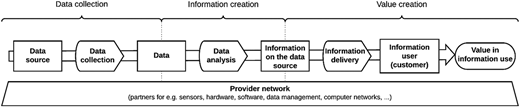
Traditional stage-gate models are proving insufficient to deal with the inherent complexity and uncertainty of smart product development (Trott et al., 2022). While approaches such as technology gate models offer some improvements (Aristodemou et al., 2019), they still retain rigid structures that can limit innovation in the IoT context. In contrast, the data-value chain framework (Lim et al., 2018) proves to be a more appropriate approach, providing a comprehensive lens for analysing IoT NPD projects without imposing strict sequential processes. It is constructed around nine primary components for data-value creation, which are either resources (represented by rectangular boxes) or activities (illustrated by arrow boxes), as shown in the ensuing diagram (Figure 1):
Data source: The physical object of interest that is equipped with data collection components to generate data. This can be another engineered system (e.g. a car with a rain sensor) or a human (e.g. an athlete wearing a sensor on their wrist).
Data collection: This activity relates to the software, hardware and methods involved in collecting data from the data source.
Data: This resource is the result of data collection and includes various kinds of data about the data source’s condition or behaviour.
Data analysis: The activity of data analysis includes the pre-processing of data (cleaning, anonymization, aggregation, etc.) as well as the application of various data mining methods.
Information on the data source: The result of the previous data analysis is commonly divided into descriptive and predictive information.
Information delivery: This activity relates to methods and tools enabling (unobtrusive) interaction with the generated information, such as with displays, haptic or auditive feedback channels and dashboards.
Customer: The target group for the generated information is distinguished into individual (B2C) or organizational (B2B).
Value in information use: Finally, value is created when the generated information is used and supports the proposed value proposition.
Provider network: As the foundation of the data-value chain, the provider network includes the necessary technological ecosystem and partner network (e.g. data management, telecommunication provider, app development, etc.).
Through the distinct phases and elements, the framework provides a structured way to examine the complex nature of, and the value creation challenges to be addressed by IoT NPD but does not suggest a specific sequence of actions or steps as is typical of process models. Instead, using the data-value chain as reference process for investigating our phenomenon of interest, i.e. capturing the dynamic nature of IoT NPD development, proves particularly valuable in understanding and analysing the sensing process, how data flows and is transformed throughout the value chain, characterizing each of the nine factors rather than prescribing a fixed process flow. This flexibility makes it particularly useful for dealing with the complexities and variability inherent in IoT NPD projects. Indeed, in contrast to most studies in the data-driven innovation paradigm (OECD, 2015) which assume that data has already been collected and processed (Saltz, 2015), the data-value chain includes data source specification and data collection as a necessary precondition to value creation. These elements are directly linked to the final value creation (Sjöman et al., 2018) and thus should be included in any IoT NPD model. Therefore, the data-value chain is a comprehensive lens to analyse IoT NPD because it specifically acknowledges sensor technology, a vital component when developing smart products (Raff et al., 2020). Furthermore, the choice of the data-value chain model is strengthened from Wynn and Eckert (2017), who highlight the importance of a theoretical framework that is attuned to the causes, effects and behaviours of iterations within the development process.
2.2 What differentiates NPD from IoT NPD
Traditional NPD models that primarily discuss physical products may not be entirely adequate for the development of digital-physical products due to the latter’s multi-layered technology stack (Lee et al., 2022; Raff et al., 2020). When contrasting IoT NPD with conventional NPD, scholars refer to two key distinguishing factors: data science and the hardware specific to IoT devices (e.g. sensors, actuators) (Lee et al., 2022). Thus, to complement the physical NPD knowledge, a significant research stream in contemporary business and management theory as well as practice focuses on the integration of data science into NPD, particularly in the context of smart product development (Li et al., 2019; Lee et al., 2022). This fusion brings together perspectives from NPD and Knowledge Discovery and Data Mining (KDD) models. Prominent KDD models such as the CRISP-DM (Chapman, 2000) and the IBM-invented Analytics Solution Unified Method (ASUM-DM) (Angée et al., 2018) provide process frameworks. However, these models primarily offer a technical perspective on the data processing pipeline and may limit the ability to manage and organize the process effectively (Marbán et al., 2009) which is particularly important in IoT business management where strategic alignment and cross-functional coordination are essential (Sevak and Babu, 2024).
Meanwhile, a separate body of literature emphasizes the integration of digital and physical components in product development (Hendler, 2019). While these aspects are likely to be pertinent to IoT NPD, the unique complexities of IoT, such as the integration of sensors and actuators, along with associated hardware, software and firmware development, necessitate specific consideration when exploring the fuzzy front end of smart product development. Development cycles continue to decrease (Knudsen et al., 2023) and the separate product life cycle and data life cycle become more intertwined (Lee et al., 2022), causing challenges due to disparate development timelines and volatile requirements (Hendler, 2019). This emerging scenario suggests that while NPD and IoT NPD share some similar attributes, they also have fundamental differences that need specific consideration and approaches.
2.3 What differentiates NPD from IoT NPD – the complexity of IoT NPD projects
While IoT NPD is a subset of NPD, we argue that it distinguishes itself through its inherent complexity. To demonstrate this point, we compare our model of IoT NPD – the data-value chain – against the NPD project complexity model by Peng et al. (2014). This model features three dimensions: product size (i.e. the number of individual components), interdependence of NPD tasks and project novelty (i.e. the newness of product design, product markets and involved technology).
Product size: Referring to the data-value chain, it is straightforward to list the variety of components necessary to build an IoT product. These are at least: the sensor hardware, consisting of (1) the sensor itself and (2) a PCB that hosts the sensor hardware alongside any necessary processors, data storage and transmission hardware, and a power source (e.g. battery), (3) executable algorithms that infer the target information from the sensor data and (4) an interface over which the end user can receive the information (e.g. a smartphone app). Furthermore, some components of the provider network, such as data management infrastructure or tools for algorithm development, are required for development and product operation, but they do not show up directly in the final product.
Task interdependence: The second factor for NPD project complexity is task interdependence. Thompson et al. (2017) distinguishes between three levels of interdependence with increasing complexity. With pooled interdependence, organizations are merely connected by a shared pool of resources. Sequentially interdependent tasks have an assembly-line-like flow: Task B requires the output of Task A, and Task C requires the output of Task B. Reciprocal interdependence is the most complex of the three interdependence levels. If Task A is reciprocally interdependent of Task B, Task A requires the output of B, and Task B requires the input of Task A.
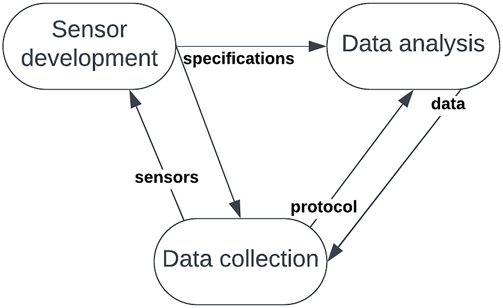
One example in IoT NPD is the interaction between sensor development (situated in the provider network), data collection and data analysis. Data analysis requires data from data collection. Data collection requires sensors from sensor development and a measurement protocol in which the requirements of the data analysts are reflected. Sensor development requires specifications from data analysis (e.g. data quality requirements) and data collection (e.g. form factor). These specifications may change with new results from data analysis that suggest changes in sensor design to better fit the needs of the project. The illustration of this example (Figure 2) directly shows a reciprocal interdependency between IoT NPD tasks.
Novelty: The third factor positively associated with NPD project complexity is the novelty of the new product. There are several measures of product novelty that are relative to existing products, summarized by Tidd and Bodley (2002). However, what is more interesting regarding IoT NPD is technology novelty. Adapting the definition by Tatikonda and Rosenthal (2000), we define technology novelty as the newness of the technologies used in the NPD project from the perspective of the IoT NPD team. Tidd and Bodley (2002) use a simple, binary measure of product novelty relative to the firms’ level of experience: “routine” and “non-routine”, which we apply to measure the technology novelty of IoT NPD projects. We argue that IoT NPD projects are primarily non-routine due to the variety of the involved components.
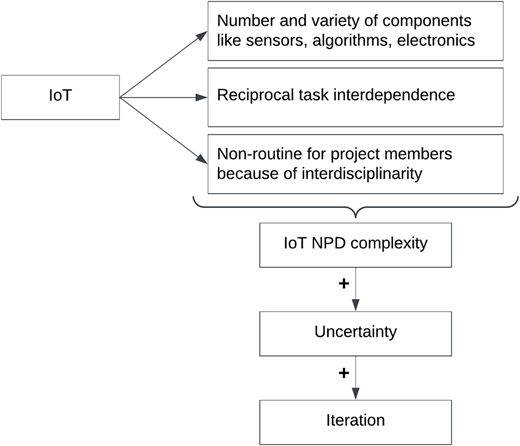
To summarize (Figure 3), IoT NPD projects (1) are large in that they combine a variety of components, (2) involve reciprocally interdependent tasks and are (3) non-routine, i.e. novel. With respect to the NPD complexity model, they meet all three criteria to be considered complex to a high degree.
2.4 Iteration in the context of IoT NPD
Summarizing the section above, the development of digital-physical products differs significantly from traditional physical product development, characterized by higher uncertainty, interdependence and complexity (Hendler, 2019). These factors influence the frequency and nature of iterations throughout the development process (Wynn and Eckert, 2017). However, there exists a lack of consensus on the definition of “iteration” in NPD scholars. Different perspectives in studies in different development domains led to different terms such as feedback loops, rework or churn to describe iterative processes (e.g. Li et al., 2019; Wynn and Eckert, 2017; Shafqat et al., 2022; Onesi-Ozigagun et al., 2024). Wynn and Eckert (2017) propose a framework for conceptualizing iterations into three core stereotypes of iterations: progressive, corrective and coordinative iterations. Despite these distinctions, what remains common across all types of iteration is that new information becomes available or lessons are learned at almost any stage of the project, prompting the project team to revisit and repeat an earlier activity before proceeding. Ulrich and Eppinger (2016) refer to this repetition of nominally complete activities as a “development iteration”.
Despite the lack of agreement on the definition, iterations are prominent sources of change risk and can significantly contribute to the propagation of delays across a project (Panahifar et al., 2018; Li et al., 2020). This is particularly true when iterations stem from serendipitous insights during development, which highlights the potential of unplanned discoveries to reshape project direction in unforeseen but valuable ways (Trott et al., 2025). In response, recent shifts have been made to adapt existing linear models like the Stage-Gate (Cooper, 2008) to include more flexible, adaptive approaches, such as integrating agile methodologies (Cooper, 2017, 2022; Cooper and Sommer, 2018). These models typically operate around key decision points where new information can prompt a reassessment of previous stages (Ulrich and Eppinger, 2016). McCarthy et al. (2006) demonstrate that such nonlinearity can be localized, affecting specific parts of a process without necessarily impacting others. This observation led to the development of complex-adaptive systems approaches, which are particularly adept at managing the intricacies of NPD decisions that occur at strategic, review and in-stage levels. Furthermore, the more recent introduction of socio-technical complexity considerations into these models by Kallenborn and Täube (2014) allows for an understanding of how social and technical factors intertwine during product development which is specifically relevant in technology development processes (Aristodemou et al., 2019). Building on this evolution, recently Cooper (2024) highlights how AI technologies can enhance iteration management by enabling faster, data-driven feedback loops and supporting more dynamic decision-making across the NPD process.
To this end, reviewing the literature, the understanding and classification of the term “iteration” in product development processes varies depending on the context (Wynn and John Clarkson, 2018). Consequently, distinguishing between different types of iterative processes is essential for making informed management decisions (Wynn and Eckert, 2017). Referring to IoT NPD, one of the biggest challenges lies in the inherent unpredictability of data exploration, especially when dealing with sensor data. Data scientists often struggle with the uncertainty of results as they are not predetermined (Saltz, 2015). This unpredictability is exacerbated by the natural latency between physical product development activities (i.e. data collection phase along the data-value chain) and data product development activities (i.e. information creation phase along the data-value chain) in IoT NPD. Accurate analytical models are highly dependent on new data generated as part of the physical product development process, leading to an inevitable time lag between these development processes (Li et al., 2019). This complex interplay of concurrent engineering and tasks from diverse disciplines introduces a new level of analysis and a distinct type of coupling which need to be studied in relation to all other existing couplings. This integration necessitates a comprehensive understanding of the new process complexities that emerge from the use of IoT sensor data in NPD (Marzi et al., 2021). Contemporary NPD frameworks, exemplified by work such as Li et al. (2019), Cooper (2022) or Lee et al. (2022), or process models for data analytics projects (e.g. Wirth and Hipp, 2000) have already evolved in first steps to accommodate these iterative tendencies by incorporating multiple feedback loops and anticipating iterative behaviour and outcomes. However, the question how iterative situations appear at the different steps along activities in smart product development remains open for a deeper exploration.
3. Method
The lack of preceding research necessitates the identification of themes and patterns rather than their confirmation (Edmondson and Mcmanus, 2007; Eisenhardt, 1989). Consequently, this work is an effort at theory building based on a multiple-case study. As summarized by Eisenhardt and Graebner (2007), this research strategy involves the collection and qualitative analysis of data extracted from historical or contemporary descriptions of events. Its goal is to produce an “accurate, interesting, and testable (Eisenhardt and Graebner, 2007, p. 26)” theory about the subject under investigation, instead of the deductive testing of some pre-existing theory.
A case study approach was chosen as the research method for this study for several reasons. First, a multi-case approach was chosen due to its ability to gather comparative data which is more likely to contribute to the development of an accurate and generalizable theory compared to single case studies (Eisenhardt and Graebner, 2007; Yin, 2018; Nambisan et al., 2017). It provides the opportunity to observe distinct patterns within the data by intentionally selecting “polar types” cases (Eisenhardt and Graebner, 2007). Second, it is useful for exploring the under researched complexity in the front end of development projects (Khurana and Rosenthal, 1998) and preserves the contextually embedded aspects of a complex phenomenon (Yin, 2018) inherent in IoT NPD. Third, this approach supports the identification and understanding of the various influencing factors for IoT NPD iteration within the natural setting of an actual IoT product development process. It offers an opportunity to explore not just what these factors are but also how they interplay and contribute to the iterations in the data-value chain. Fourth, case studies can generate rich narratives, detailing the intricate dynamics and relationships often missed in quantitative studies. This depth and detail provide a profound understanding of the mechanisms and nuances underlying the iterations along the data-value chain.
3.1 Case selection
Our analysis includes five IoT NPD projects by companies of varying sizes. The selection of these cases adheres to our sampling strategy and spans industries like sports, fitness and well-being, and digital health and prevention. These sectors already have a robust foundation in IoT human systems, largely through wearables (Raff et al., 2020) and are well-positioned to exploit data-intensive scientific discoveries (Tolle et al., 2011). The following sampling criteria were chosen to ensure comparability:
The IoT NPD has started within the last five years.
The data source of the new IoT product is human.
The (target) accuracy of the new IoT product’s output is sufficiently high (see Peake et al., 2018) and sufficient scientific rigor in its creation was applied (Tejero and León, 2020).
Varying levels of maturity regarding the new IoT product’s system components and requirements
It’s worth noting that we deliberately omitted IoT projects from the medical monitoring market. This decision is predicated on the fact that the process for medical IoT products is fundamentally distinct from non-medical IoT products, due to factors like regulatory compliance and data protection. Table 1 shows a summary of the five cases selected for this study based on the collected interview data.
3.2 Data collection
To gather empirical data from different perspectives in IoT NPD, 20 in-depth semi-structured interviews (see Table 2) served as the main source of data.
Respondents were asked about their experiences within their respective project’s front end and following IoT NPD phases. They were chosen from various levels of the company hierarchy and had different roles to lessen bias (Eisenhardt and Graebner, 2007). The roles were classified based on De Mauro et al. (2018): business analysts, data scientists, developers and product managers. This role-specific, systematic analysis of activities in IoT NPD could unveil network dynamics within IoT NPD, which are often ambiguous, complex and heterogenous (Häusler et al., 2021).
To increase internal validity (Gibbert et al., 2008), each interview was structured around a predefined questionnaire that followed the nine steps of the data-value chain (see theory section). The interviewers were this paper’s first and second authors. In addition to the interviewers’ notes, all interviews were recorded and transcribed by a professional transcription service provider to ensure the quality of the data (Mayring and Fenzl, 2019). To achieve a higher construct validity, we gathered secondary information from annual reports, written processes, project documentation and other corporate documents to enable a triangulation with multiple sources of the organizations’ process development practices (Eisenhardt, 1989; Yin, 2018). The semi-structured interviews are described in Table 2 in detail.
The interviews were conducted over a period of four months from July to October 2022 and lasted between 60 and 130 min. The interviewees had the option to speak in German or English. All of them preferred to answer in German. Before the interview, all interviewees answered a questionnaire about (1) basic information about the IoT NPD project (duration, costs, size of the project team, etc.), (2) the interviewee’s assessment of the new IoT product’s information validity (Stegenga, 2014) and (3) the interviewee’s estimate of their organization’s data analytics maturity level (Lismont et al., 2017).
3.3 Data analysis
Each IoT NPD project in this study served as a stand-alone unit of analysis and followed Yin’s (2014) case study methodology. Our initial approach involved a comprehensive investigation of each case, which included two key components: a qualitative analysis and an assessment of each IoT product complexity. This two-pronged strategy allowed us to dive into the details of each project while assessing its technical intricacies. The qualitative analysis focussed on gaining rich, contextual information about the development process, challenges encountered and iterative cycles. At the same time, the assessment of IoT product complexity examined the technological aspects, including sensor integration, data processing capabilities and the interplay between hardware and software components. This thorough approach allowed us to capture both the depth of individual project experience and the technical complexity that the IoT NPD.
3.3.1 Qualitative analysis
Our data collection process incorporated a diverse range of sources, including interview transcripts, supplementary interview notes and an array of secondary data as outlined in Table 2 (Yin, 2014). This secondary data encompassed an assortment of materials, including mailing lists, PowerPoint presentations, meeting minutes, publications and website data from the respective case companies. To capture the unique characteristics of each case early on, we developed conceptual illustrations (Miles and Huberman, 1994). The interview transcripts were then systematically processed and analysed using MAXQDA Analytics Pro (VERBI GmbH, Germany), ensuring a rigorous and consistent interpretation of the data.
We started data analysis by adopting an inductive approach allowing for theories to emerge from the data, grounded in the reality of IoT NPD, rather than attempting to fit the data into existing theoretical frameworks. The transcripts were coded inspired by the approach of Gioia et al. (2013). The codes located statements on sections of the data-value chain (Lim et al., 2018). While the nine sections of the chain served as our main deductive categories, several sub-categories emerged during the coding procedure. Afterwards, we iteratively created first-order themes (Park et al., 2021) that represented the elements of the data-value chain and the connections between them. Subsequently, we conducted a comparative analysis across cases to comprehend both the similarities and distinctions among them (Yin, 2014). Two of the authors worked on this initial analysis, which was followed by a debate and a synthesis in the whole author group. As first-order coding can only make descriptive statements, we identified in a next step relationships between cases (Miles and Huberman, 1994) and created second-order themes (Gioia et al., 2013). Finally, in a subsequent phase we aggregated the second-order categories into distinct, theoretical dimensions.
3.3.2 Complexity of the envisioned new IoT product
Following our chosen NPD complexity model, the three dimensions we characterized the case studies’ NPD complexity through (1) number of components, (2) interdependency of tasks and (3) novelty of the new product from the perspective of the project community (see Table 1). These dimensions were quantified in the following ways.
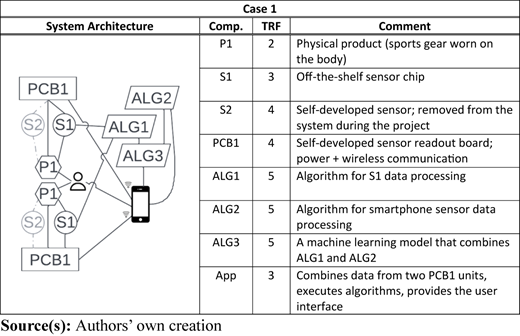
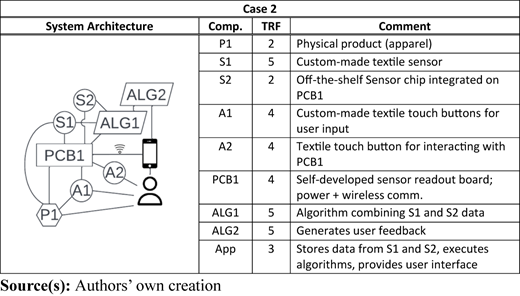
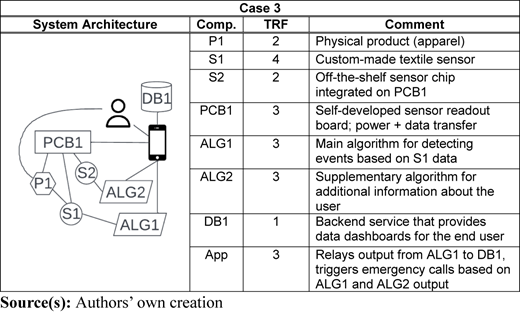
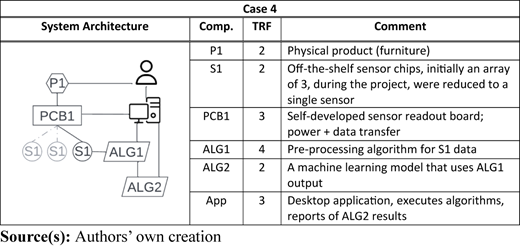
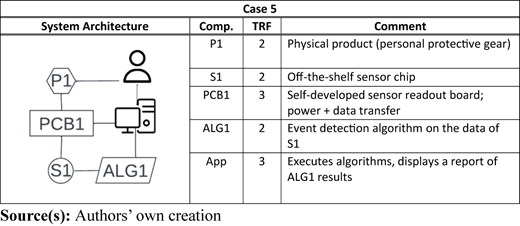
Number of components: Based on the basic system architecture of the new IoT product, which are based on the interview data and were checked for validity by interviewees that were familiar with the technical aspects of the project, it is straightforward to derive the number of components by counting them. To have a better understanding of where on the data-value chain these components are located, we distinguish them between physical product, sensor, PCB, algorithm, app and database. Details of the system architectures can be found in the Appendix.
Interdependency of tasks: As discussed in the theory section, there are three types of interdependence: pooled, serial and reciprocal. We argue that it is expected to find reciprocal interdependence between IoT NPD tasks. Similarly, we expect to find reciprocally interdependent tasks in our cases examined. To confirm this expectation, we asked interviewees about the way the project team organized to tackle technological roadblocks within the IoT NPD project.
New product novelty: Following Tidd and Bodley (2002), we distinguish between “routine” and “non-routine” projects based on the interview data. In addition, we use the European Space Agency’s (2008) technology readiness levels (TRLs, Table 3). TRLs have been adopted by the public sector to describe the maturity of new technology (Héder, 2017), from TRL 1 (= observed basic principles) up to TRL 9 (=“flight proven” system). In their original form, TRLs are assessed on a component level. A component with a low TRL indicates a high degree of novelty, and vice versa.
Initially, we tried to estimate each component’s initial TRL based on the interview data. However, it was often difficult to confidently assign a component to one of the nine levels. Thus, we switched to a five-level scale, the technology risk factor (TRF, Brady, 2002). The TRF maps the TRL to “risk”, e.g. a low TRL corresponds to a high level of risk and vice versa. Transferred to our purposes, a low TRF indicates a low degree of product novelty, and vice versa.
3.3.3 Uncertainty about system requirements
Besides differences in complexity, the cases examined differed also in the clarity of their vision for the new product. In other words, while some product-owning firms had rather system requirements for the new product, other firms started with more vague notions. The detailed analysis of each case can be found in the Appendix.
To operationalize this initial degree of uncertainty in the system requirements, and to stay within the already established TRL framework, we use the system requirements classes “operation environment”, “concept of operation” and “performance objectives”, which are introduced in the TRL handbook (European Space Agency, 2008). Each is connected to a question (Table 4) and scored on a five-point scale (Table 5) by the authors based on the interview data.
4. Results
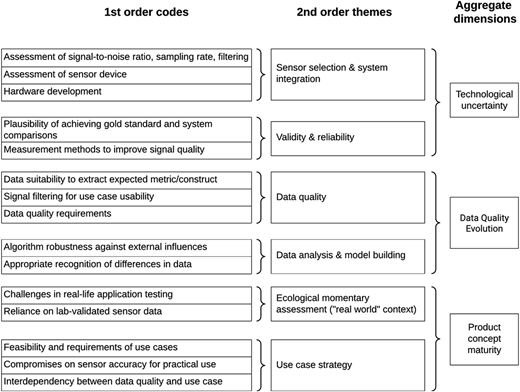
This section presents the empirical findings from both within-case and cross-case analyses of IoT NPD. As the study is grounded on the fundamental premise that IoT NPD is a nonlinear process, the objective of this section is to provide an integrated perspective on iterations and associated uncertainty in IoT NPD. The projects that faced challenges in data collection component development, namely cases 1, 2 and 3, had more overall more iterative situations than those that faced challenges in data analysis, like cases 4 and 5. Figure 4 presents the results visually in a data structure according to Gioia et al. (2013).
4.1 Technological uncertainty
Technological uncertainty was primarily driven by challenges related to data collection components, particularly sensor selection, validity and reliability, and system integration. Therefore, if the data can be meaningfully leveraged (Machchhar et al., 2022). These factors significantly influenced the timing and nature of iterations throughout the development process. In four of the cases, the project teams had to swap data collection components (sensor, measuring circuit, etc.) for various reasons such as the availability of a new sensor or a change in measuring principle. The changes always affected other parts of the development cycles. As one interviewee in Case 1 stated: “The quality of the data, what we see, and the scientific lead was not happy with the choice of sensors that we have had. And then we had a separate project where we just tested the different sensors, more or less to say, okay, which sensor with which strength should we use anyway? So that took us more time. We didn’t think or think along with this phase. And then he finally comes up with the results and final sensor selection.” System integration posed additional complexities, as the interdependencies between hardware and software components often led to cascading effects when changes were made. Thus, the uncertainty of data collection components propagated throughout all phases of the data-value chain.
Particularly, sensor selection emerged as a critical early-stage activity, often requiring multiple rounds of testing and validation. Many considerations need to be made and there are several obstacles that complicate the process of selecting fit-for-purpose sensors (Kremser and Mayr, 2022). As one interviewee noted: “At the beginning, we had many, many rounds. There were several rounds with suppliers to find out which sensors are available on the market, and then they were basically bought, tested and validated.” This iterative process often involved evaluating dozens of sensor types before identifying a suitable configuration, as another participant explained: “Twenty, thirty different sensor types through laboratory tests and repetition of these laboratory tests, already came to a ninety, over ninety percent agreement, so the rest, I think, was then accepted.” Cases 1 and 2, which had the most data collection components with the highest average TRF, also experienced the most iterations at this step. It is best categorized as a corrective iteration (Wynn and Eckert, 2017), reflecting a non-trivial return to an earlier phase associated with new information about the chosen sensor technology.
In all cases, it was important to evaluate the sensor’s performance in the intended application scenarios through experiments, sanity checks, laboratory studies and controlled pilot studies in the field and to validate whether the addressed context awareness is achieved (Ren and Zheng, 2024). One person in case 2 stated: “Initially, we conducted a pilot study with a small number of participants. Later, we generated a larger data set where we were confident that the data was closer to the final product.” Changes in data collection components triggered an informal validation procedure, in which the project members (re)assessed current TRLs, which caused further delay. In particular, the study illustrated the consequences of involving research-focused team members in IoT NPD projects. Taking cases 1, 2 and 4 as examples, the data showed that industry-science projects demanded a higher standard of evidence for validation, specifically in the form of peer-reviewed publications. This standard necessitated more extensive testing against gold standard systems in laboratories and exhaustive in-field validation studies. As a result, these projects experienced an increased number of iterations. In contrast, cases 3 and 5 targeted time-to-market as their primary success metric, with less emphasis on publication. Consequently, these projects bypassed the lengthy validation process required for academic publishing and experienced fewer iterations. However, it is noteworthy that while these projects may reach the market quicker, they may miss out on the thorough validation process, which could potentially impact the product’s long-term viability and acceptance. This disparity in development timelines between the hardware development and data validation procedures created a complex environment where iterations in the data collection phase had far-reaching implications for the information creation phase, necessitating careful coordination and frequent reassessment of design decisions throughout the IoT NPD process. The integration of AI-driven data analytics adds to this complexity as advanced AI techniques are increasingly used to extract actionable insights from IoT datasets (Marengo, 2024).
As the provider network is responsible for delivering and configuring the data collection components on a technical level, it has a strong relationship with data collection. In all cases, it was necessary to work with external partners to source, define, develop and adapt the final hardware setup. Selecting the appropriate supplier for the desired IoT system was in general a challenging task as many interviewees from management positions did not have sufficient technical know-how. This includes estimating the sensors’ fitness for use, regarding the complete system architecture, as well as identifying any necessary modifications or customizations. Multiple handovers from one supplier to another during the development process caused further iterations (cases 1, 3 and 4). In general, the development of the data collection component was subject to substantive market uncertainty. This phenomenon affected both large and small companies and resulted in project delays and unanticipated costs, and risks to the product’s functionality and performance (e.g. in Case 2); these challenges align with recent research by Disch and Wouters (2024), which highlights the importance of cost control and managing dynamic changes in NPD development. Furthermore, the results indicate that the geographical proximity of the partners is helpful when cooperating with suppliers (observed in Cases 3 and 5), which is plausible when considering that sensors measure physical phenomena.
4.2 Data quality evolution
The data analytics teams focused primarily on validating the TRL of the data acquisition components while simultaneously performing data analyses for information generation, creating a fundamental interdependency between sensor development and analytics processes. This is a symptom of a larger chicken-and-egg dilemma that was observed in cases 1–4: to conduct proper data analytics, sensors with a high TRL are needed. But to raise the TRL of sensors, proper data analytics is required. Since the performance of information generation is ultimately limited by the quality of the input data, all cases started with developing or selecting the right data collection component and gradually shifted towards information creation. For instance, as evident in Case 2, initially aiming for high precision, teams discovered that coarser measurements were sufficient for their needs. This led to multiple hardware iterations for finally achieving the required metrics. This relationship is reflected in a continuous feedback loop in which data quality requirements evolve through practical experience rather than following predetermined criteria. This highlights also the need for flexible front-end processes, as highlighted by recent work of Cooper (2024), who argues that AI-enabled systems can support dynamic redefinition of project parameters based on real-time insights. The process became increasingly sophisticated as teams gained deeper insights into the data’s potential and limitations. Hence, what was considered a good sensor signal was not anchored in pre-defined criteria but often emerged through an iterative sense-making process during the project life cycle; this illustrates elements of serendipity, where unexpected insights were recognized and leveraged through observational skill and contextual responsiveness (Trott et al., 2025). One interviewee in Case 2 explained: “For example, with this pressure sensor in particular, I have the highs and the lows, and they have never defined exactly how big the delta has to be. There should be a delta, but is a specific one necessary? What artefacts may or may not occur? How well can you smooth the signal so that it is still useable? Yes, all of this was actually an adjustment during the project and was not a requirement from the outset to say: we can work with this and we can’t work with that.” As a result, a standardized measure of sensor accuracy was not established at the outset. Teams iteratively validated and refined data extraction methods through multiple rounds of development. Project teams adjusted technical parameters such as bandwidth, resolution, sampling rate and signal filtering based on real-world insights and changing requirements. Bi-weekly meetings facilitated continuous evaluation and refinement of the analysis approach. This adaptive approach was particularly evident when moving from controlled laboratory environments to unpredictable real-world scenarios where external factors such as physiological responses and environmental conditions significantly affect sensor performance. As one project manager of case 3 described that the field scenarios led to significant variations due to unforeseen influences in terms of sweating.
4.3 Product concept maturity
The results show that iterations in IoT NPD are closely linked to the maturity of the product concept and the value creation processes. Despite preliminary user studies and a clear market focus, the lack of precise system requirements often led to uncertainties regarding the desired functionalities. This challenge emphasizes the importance of strategic technology integrations (Sevak and Babu, 2024) and a fitness for purpose (Harvey and Green, 1993) respectively manufacturers market strategy (Bent et al., 2020) perspective in IoT NPD. It prioritises pragmatic accuracy tailored to specific use cases and consequently determines design requirements such as reliability, user-friendliness and effectiveness (Francés-Morcillo et al., 2020). Products targeting broader consumer markets (e.g. Case 4) compromised on accuracy to balance cost and feasibility, while products for specialised domains such as performance sports (e.g. Cases 1 and 5) required stringent accuracy standards.
An observed key factor influencing these iterations was the definition and operationalization of constructs (de Vet et al., 2011), which are crucial for the alignment between technical, analytical and market goals. Latent constructs such as motion quality (case 1) or sleep quality (case 3) posed a particular challenge. These constructs required extensive operationalization to translate abstract concepts into observable characteristics and measurable metrics. This process often triggered multiple iterations as the teams refined their understanding of the constructs and worked to ensure that the data collected matched both the technical accuracy and value proposition of the product (Sperlich and Holmberg, 2017). For instance, as an interviewee from Case 2 highlighted: “Firstly, identify what you want to measure and then look at what options are available and how this fits into a product, what comes out at the end-consumer product side.” Such iterative refinement often required reconfiguration of sensors and recalibration of measurement methods to ensure fitness for purpose. In the context of IoT NPD, this quality concept recognises that some degree of measurement error is acceptable if the resulting information retains its value to the intended information consumer. This pragmatic approach emphasizes that it is not the absolute accuracy but the utility of the measurement that determines its appropriateness by balancing technical feasibility with the product’s value proposition and market requirements.
In addition, the evolving nature of the use cases played an important role in the iteration cycles. Case 3, for example, showed how feedback continuously changed the product concept, with one participant stating: “Oh, very often. I had the feeling that something different came up with every analytics iteration. You have to say that. So, we had the original idea that we could react proactively. Then it turned out that we could only recognize and form a rescue chain. That was the second promise. Then we added another new use case. We’ve optimized from time to time.” This contrasts with Case 5, where well-defined use cases at the outset minimized iterations and fostered better alignment across data collection, information creation, and value delivery.
In summary, the study provides evidence that the integration of IoT and sensor data processing is not simply an add-on to an existing physical product, but rather a fundamental shift in the design and development process that comes with a high degree of uncertainty. One main factor for iteration was the technological uncertainty of IoT NPD. Firms that have dealt exclusively with physical products in the past and who now want to digitize them may underestimate the technological complexity of adding data collection components. The integration of sensors requires the use of non-routine technologies, materials and new design approaches (Wang et al., 2023), all of which raise the new IoT product’s overall TRF. Technological uncertainty leads to frequent changes in technological protocols, availability and performance of sensors, data accuracy and reliability of the overall IoT system. Table 6 summarizes these wide range of iteration triggers which is driven by uncertainty and the need for continuous refinement to ensure fit-for-purpose.
5. Discussion
The empirical results discussed in the previous section show a recurring theme of iterative cycles in all phases of IoT NPD. Particularly prominent are the iterations in sensor selection, data analysis and use case alignment, which are often triggered by evolving project requirements and feedback from real-world testing. These findings highlight the need for a robust theoretical framework to systematically address the complexity and interdependencies in IoT product development. By positioning these empirical findings within the broader literature on iteration in NPD, this section aims to provide a comprehensive model for understanding and managing iterative dynamics in IoT NPD.
Traditional NPD frameworks often assume a linear progression with limited dependencies, whereas the IoT NPD process is inherently complex due to its reliance on interdependent hardware, software and data science components (Trott et al., 2022; Ebrahim, 2023; Hornos and Mario, 2024). Examples of such frameworks include those proposed by Li et al. (2019), Cooper (2022) and Lee et al. (2022). However, the paper notes that despite these advancements, there remains a need for deeper exploration into how iterative situations manifest at different steps along activities in smart product development. This suggests that the chicken-egg dilemma continues to be a significant challenge in IoT NPD, requiring further research and innovative solutions to effectively manage the interdependencies between physical and data product development (Wang et al., 2023).
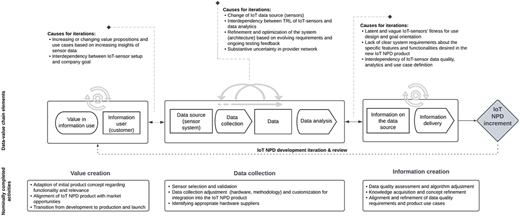
Building on foundational theories in navigating uncertainty and complexity discussed in Section 2 (e.g. Wynn et al., 2019), we suggest a conceptual framework that extends the literature by emphasizing on causes and effects of IoT NPD iterations and shows phases (value creation, data collection and information creation) and flows between them.
Whereas traditional NPD models aim to reduce uncertainty through predefined processes, a strategic IoT development demands dynamic adaptation to accommodate the evolving capabilities and constraints of sensor technologies (Sevak and Babu, 2024). Thus, the data collection phase is in the centre of the model, having interdependencies in both directions, i.e. the information creation and value creation phase. Iterations in the data collection phase often stem from the need to validate sensor fitness for purpose, customize data collection methodologies and adjust hardware configurations in response to real-world testing feedback. These challenges cascade into the information creation phase (right part of the model), where algorithmic adjustments and knowledge acquisition activities are necessary to align data quality with use-case requirements (left part of the model). Finally, the value-creation phase demands iterative refinement of product functionality and relevance to ensure alignment with customer needs and market opportunities.
The framework follows an agile project management approach, incrementally deliver value (Onesi-Ozigagun et al., 2024; Hornos and Mario, 2024). The innovation outcome of each development cycle, i.e. the IoT NPD increment, is a refined understanding of the product’s feasibility, functionality and alignment with its intended value proposition. This outcome is achieved through iterative cycles that progressively reduce uncertainty and improve integration across the data-value chain. For instance, an increment may result in validated sensor configurations, enhanced data analytics models or updated use-case scenarios, all of which contribute to a more robust IoT product. Each increment serves as a building block that moves the IoT NPD process closer to achieving its final goals, allowing teams to iteratively refine both the product and the development process itself.
By situating these dynamics within the data-value chain, the model provides a holistic view of iterative processes in IoT NPD. Moreover, this approach addresses the challenge of IoT-based system development (Hornos and Mario, 2024) and bridges gaps in the existing literature by contextualizing iterations as both a response to and a driver of uncertainty across interconnected development phases.
5.1 Driver for iterations
The uncertainty regarding data collection components (Machchhar et al., 2022) in IoT NPD is the most prominent reason for iterations, and it drives the overall dynamism of the process. It follows that if one aims to keep the number of total iterations low, the number of changes in data collection components should be kept low, which is achieved by reducing uncertainty. One observed strategy (Cases 1 and 4) is to reduce the number of components with high TRF. However, doing so was not possible without affecting information and value creation. Similarly, one can also reduce the scope of the value proposition in terms of specializing operation environments (Ren and Zheng, 2024) or lowering performance objectives. In the end, the final product of an IoT NPD process is significantly shaped by its data collection components. They can alter product features, performance and the realization of the envisioned value proposition. However, it has to be considered that formulating correct system requirements for data collection components requires an understanding of (latent) constructs that make up the new IoT product’s value proposition (Bollen, 2002; Borsboom et al., 2003). In other words: What is the information that the new IoT product should generate, and how, under which conditions, is the data for this information collected?
Moreover, the data from the case studies strongly support the claim that the involvement of researchers (as defined by De Mauro et al. (2018), these are primarily the job families of data scientists and engineers), with their inherent focus on publishing, can lead to an increased number of iterations in IoT NPD, too. While this might extend the product development timeline, it also ensures a more comprehensive and stringent validation process, which could be advantageous in certain scenarios where reliability and scientific evidence are of paramount importance for firms’ overall strategy and vision. In sum, managing the uncertainty in these components is not merely a technical challenge but a strategic necessity. It is key to ensuring that the final product aligns with the original vision, meets the target metrics, and ultimately fulfils customer and market expectations.
Interestingly, the study showed that data analytics, located in the information creation sector of the data-value chain, does not contribute too heavily to iterative cycles. One might expect that the use of sophisticated machine learning and statistical modelling techniques is highly experimental and thus iterative, but this is not reflected in the data. Instead, we found that the focus of data scientists oscillated between data collection, information creation and value creation. Apart from their accepted function as data analysts and information creators, they are integrally involved in sensor development, offering feedback on the current TRL of data collection components and determining their fitness for use in achieving the project’s target metrics in the intended operational scenario (Machchhar et al., 2022). In all cases, sensor data validation encompasses considerations such as sensor accuracy, signal-to-noise ratios, and the potential drift of sensor readings over time which are well-known sensor fault types (Kullaa, 2013). This expansion of responsibilities necessitates a broader knowledge base (i.e. data engineering) that transcends a narrow understanding of data scientists as either statisticians or machine learning engineers. They need to effectively communicate with the provider network, especially with electrical and software engineers, which presents a potential challenge (see Chapter 1 of Atwal, 2020).
5.2 The potential for catastrophe
IoT NPD is particularly vulnerable to late-stage failure, as assessing the suitability of a sensor configuration often depends on data analytics conducted in later phases. This is the case whether the IoT NPD project starts with a value proposition (∼ market pull) or with sensing technology (∼ technology push). While the plausibility of sensor output data can be established early on, e.g. by pressing a thumb on a pressure sensor on a worktable and seeing if the output signal correlates, real validation requires a proper environment and methodology. Furthermore, inconsistencies in translating the value proposition into data collection component requirements can reveal themselves in this stage (e.g. a target metric proves to be not calculatable by what the collection components measure).
Uncertainty, even in late-stage, may be triggered by serendipitous discoveries, i.e. insights that emerge unexpectedly during processes (Trott et al., 2025). This means that IoT NPD has the potential to produce catastrophes in the sense of abrupt results that invalidate the current vision of the finished data-value chain. Catastrophe models are already established as part of NPD projects analysed as complex adaptive systems (McCarthy et al., 2006). Case 1 experienced such a catastrophic event. During the development of the product, one of the data collection components proved to be too fragile for use, which resulted in the removal of the sensor system from the architecture, the redesign of the data analytics pipeline and a reduction of the value proposition’s scope. This was exacerbated by market uncertainty and supply chain issues. Consequently, the clearer and more precise the underlying product concept is (Stockstrom and Herstatt, 2008; Sevak and Babu, 2024), the clearer the system requirements are. A high concept readiness appears to be an important prerequisite for selecting appropriate data collection components and ensuring high-quality data.
5.3 Non-accurate decision-making in IoT NPD
A notable observation across all five cases is the lack of strategic (Marmier et al., 2014; Sevak and Babu, 2024) and accurate (Ozer, 2005) decision-making. This pattern is evident in both sensor development and data analysis stages, where decisions are often made based on the information available at a particular time. Although this approach may not yield perfect results, it is pragmatic and allows for forward momentum towards the ultimate goal. This observation aligns with recent work in NPD (Cooper, 2022) that emphasizes the need for acceleration in NPD and an increasing software–hardware partition in modern products (Wang et al., 2023), necessitating projects to move forward despite imperfect information.
However, this approach of approximating decisions should not be misconstrued as a lack of rigor or discipline in the decision-making process. Quite the opposite, one can argue that decisions in IoT NPD should still follow a systematic process, such as the Agile-Stage-Gate model (Cooper, 2021), which can provide a structured framework for managing the innovation process and making informed decisions. It will be important to continue refining agile methodologies applied in the decision-making process (e.g. improvement in defining “nominal complete activities”) in IoT NPD (Guerrero-Ulloa et al., 2023) to ultimately maximize the chances of success by proposing a normative process model that adapts to the contextual specificity of IoT NPD.
6. Conclusion
The results of our study confirm our preliminary assumption that IoT NPD is highly complex due to its software and hardware diversity as well as its involvement of data analytics (Hendler, 2019; Raff et al., 2020; Hornos and Mario, 2024). The data from the five studied cases reveal shared patterns in iterative behaviour. By comparing them across cases, we identified two primary drivers of uncertainty in data collection component development: (1) the TRL of data collection components and (2) the concept readiness of the new IoT product. These factors, in turn, are the key reasons behind the number of unplanned iterations in IoT NPD. This aligns with the notion that “uncertainty refers to an unpredictable future, which includes […] technology pathways, and that adapting to uncertainty […] is considered a major strategic challenge faced by organizations” (Trott et al., 2022).
The IoT NPD Iteration Framework presented in this study (Figure 5) offers a significant contribution to our understanding of the iterative dynamics inherent in the development of new IoT products. This framework highlights the interplay between data collection, information creation and value creation phases, placing uncertainty in data collection components at the centre of the iterative process. By doing so, it provides a structured perspective on the multi-layered challenges and opportunities of IoT NPD. The framework’s emphasis on the bidirectional flow between these phases reinforces the nonlinear nature of IoT product development, challenging traditional NPD models. It identifies key nominally complete activities that trigger iterations, illustrating how iteration cycles propagate through the development process. Furthermore, this model serves as a valuable tool for both researchers and practitioners as it provides a structured approach to identifying and mitigating potential sources of uncertainty and iteration. This, in turn, enables more effective strategies for managing complexity in IoT NPD projects. By synthesizing empirical findings with established theoretical concepts, the framework not only expands our theoretical understanding of IoT NPD but also provides a practical roadmap for navigating uncertainty in IoT NPD.
6.1 Theoretical implications
This paper contributes to the theoretical advancement of IoT NPD by identifying the key drivers of unplanned iterations. By emphasizing the iterative nature of the process and utilizing the data-value chain as a framework for the analysing IoT NPD activities (Lim et al., 2018), this study offers novel insights into the integration not only of software and hardware (Cooper, 2022) but also of data science and concept development activities within NPD.
In contrast to previous studies, which have either focused on specific aspects of IoT NPD in comparison to traditional NPD (e.g. Lee et al., 2018) or new conceptual IoT NPD process models (Lee et al., 2022), our study extends this body of work by providing empirical evidence of the real-world challenges encountered during IoT NPD. By systematically outlining the key activities that shape each phase of IoT NPD, we extend previous work that addressed broader digital-physical development contexts (Hendler, 2019; Kayser et al., 2018).
The study sheds light on the primary drivers behind the iterative nature of IoT NPD and synthesizes them into an IoT NPD iteration framework (Figure 5). This framework places data collection component uncertainty at its core and identifies the various factors influencing iteration cycles in IoT NPD. A key insight from our findings highlights the critical role of accurately translating a value proposition into system requirements and, subsequently, into data collection components. This emphasizes the importance of ensuring alignment between the underlying latent constructs and their corresponding metrics (Borsboom et al., 2003).
Regarding future work, the proposed framework remains to be tested through deductive approaches. Furthermore, the real-world challenges identified in this study, along with their relationships to key activities across each phase of IoT NPD, provide fertile ground for further investigation. Further research could explore the successful integration of data science into NPD, the factors influencing iteration frequency and complexity in IoT NPD, or conduct more in-depth studies on the translation process from value proposition to latent constructs and, ultimately, to data collection components.
Moreover, sensemaking theory may provide a valuable theoretical lens for explaining why iterations occurs in IoT NPD. Sensemaking is broadly characterised as “the search for meaning as a way of dealing with uncertainty” (Helms-Mills, 2003), covering a broad range of domains (see Weick et al., 2005). From this perspective, IoT NPD can be understood as a collective, interdisciplinary effort to progressively reduce uncertainty surrounding the final design, functionality and implementation of the new IoT product. In this context, conceptualizing IoT NPD as a boundary object (Zasa and Buganza, 2024) could offer a complementary approach that explores how different job roles and disciplinary perspectives shape the IoT NPD process.
6.2 Managerial implications
From a managerial standpoint, it is well known that the innovation process is affected by the use of digital technologies (Agostini et al., 2019). However, there is a lack of coherent knowledge to help managers navigate the complexities of smart product development (Huikkola et al., 2022). Our study provides new insights into the key activities essential for successful IoT NPD and highlights the interdependencies between technological development, concept development and the overall NPD process.
First, product-owning firms should ensure high concept readiness to facilitate the effective translation of the new IoT product’s concept into a clear value proposition. This involves a structured process: from value proposition to metrics and from metrics to a specific sensor configuration during the early stages of development. A strong concept foundation ensures that IoT NPD teams have a deep understanding of the latent constructs that sensors are intended to quantify, while also considering the broader organizational and external capabilities required to leverage data effectively (Mikalef et al., 2018; Machchhar et al., 2022). Failure to establish early concept readiness may lead to unpredictable outcomes, project delays or failures, which can be costly for the company.
Second, high-risk components play a significant role in iteration cycles, as they increase the likelihood of unpredictable behaviour, potentially leading to project delays or failures. In many instances, the optimal sensors for capturing the required data are not readily apparent. Technology and supplier selection (Melander and Tell, 2014) can impact product design and functionality and may necessitate greater reliance on external partners (Nambisan et al., 2017). Effectively managing the volatility of data collection components represents a critical challenge for IoT NPD teams, requiring a proactive approach to risk mitigation.
Third, managers should implement a TRL assessment strategy to evaluate whether a data collection component can deliver the required quality and accuracy before committing to its integration in the development process (Sevak and Babu, 2024). Applying these insights will enable managers to make informed decisions, enhance project efficiency and strengthen their competitive position in the IoT market.
In sum, recognizing the inherent challenges of IoT NPD and proactively developing strategies to minimize excessive iteration can significantly improve both efficiency and effectiveness in product development. A deeper understanding of iteration drivers may better equip firms to navigate the intricate journey of IoT NPD.
6.3 Limitations and future research
The cases examined are limited to IoT products that rely on human data sources in the domains of sports, fitness, well-being and B2C industry. To extent the generalizability of our findings to IoT products designed for industrial or engineering systems, further research is required. Since this study analysed only a limited number of case studies, and despite our efforts to incorporate contrasting cases, the results may not be representative of all possible IoT NPD scenarios. Future research should consider expanding the sample size and incorporating a broader range of cases to further validate our findings in other operational scenarios (Machchhar et al., 2022). Moreover, as this study aims to provide empirical insights into iteration cycles in the emerging field of smart product development, future research should explore the categorization of iteration types based on the iteration stereotypes proposed by Wynn and Eckert (2017).
A particularly intriguing area for future research involves examining how different project team roles perceive iterations within IoT NPD. Our findings indicate that managers tend to report a higher number of iterations compared to engineers during the development process. Investigating these differential perceptions of iterations (as per De Mauro et al., 2018) could yield valuable insights into the orchestration of the collaborative process in IoT NPD projects (Faccin et al., 2020). A clearer understanding of how varied role-based perspectives may impact project trajectory, iteration frequency and overall project success or failure, e.g. using the concept of boundary objects (Zasa and Buganza, 2024), could significantly contribute to the field.
Lastly, an intriguing research question that deserves further exploration concerns the occurrence and impact of the scientific rigor in IoT NPD (Peake et al., 2018; Alexandrova and Haybron, 2016). Preliminary insights from this work suggest that the accuracy level of the information targeted for the new IoT product is a crucial differentiator in IoT NPD, influencing multiple aspects of the development process, including the need for a validated latent construct, validation studies and comparisons against gold standard systems. These factors introduce distinctive characteristics at various stages of IoT NPD. Future work could further explore how varying levels of scientific rigor shape decision-making, iteration cycles and the overall success of IoT innovations.