This study explores the journey of healthcare organizations towards digital transformation maturity (DTM), focusing on the development and implementation of digital dynamic capabilities. By investigating the microfoundations of these capabilities, this study aims to provide a deeper understanding of the mechanisms.
Research reported in this paper employs an abductive approach. Empirically, a qualitative methodology based on a multiple-case study analysis has been conducted on six Italian healthcare organizations through semi-structured interviews and archival data.
The findings reveal the microfoundations across digital sensing, seizing and reconfiguring capabilities in healthcare to achieve DTM. The study also identifies three main stages of DTM, demonstrating how different combinations of these capabilities influence the progression towards digital maturity, thereby attaining different innovation outcomes.
This study offers implications for healthcare managers who want to advance with DT and strategically manage the innovation essential to fully enact it. The research is limited by its focus on Italian healthcare organizations, potentially affecting the generalizability of the findings. Future studies could expand the geographical scope and employ mixed-methods approaches to validate and extend the results achieved in this study.
The study contributes to the nascent literature on DTM by providing empirical evidence of the microfoundations that enable digital dynamic capabilities, offering practical insights for healthcare managers and policymakers to foster an environment that supports a strategic approach to digital innovation.
1. Introduction
Over the past decades, digital transformation (DT) has emerged as a new disruptive and multifaceted phenomenon, globally recognized as a megatrend that is “observable today and will likely have transformational potential in the future” (Debonne et al., 2022, p. 2). A great number of managerial scholars have extensively discussed DT, mainly emphasizing the role of technologies to adapt, change and evolve the corporate development strategies (Reis et al., 2018; Joel et al., 2024). Others have recognized that DT is not only linked to the implementation of technologies in businesses, but to be embraced, it is necessary to shift attitudes, behaviors and thinking within the organization (Wieslander et al., 2021). In this direction, it emerged that DT is a complex and non-linear phenomenon that can be approached as a progressive journey that involves different actors with different goals (Vial, 2019; Appio et al., 2021). In this direction, digital transformation maturity (DTM) conceptualizes a state of being complete, perfect, or ready (Lahrmann et al., 2011). This state represents the maximum expression of DT for which firms go beyond a merely technological interpretation, by merging managerial and behavioral elements describing “what a company has already achieved regarding its digital transformation efforts” (Chanias et al., 2019, p. 19). Thus, it is the result of the DT journey, in which organizations have both a strong digital foundation and a good knowledge of how to use it for strategic business purposes (Shahiduzzaman, 2017). Building upon studies (Teichert, 2019; Gökalp and Martinez, 2022; Kocaoglu and Kirmizi, 2025), this paper conceptualizes DTM as the holistic realization of DT towards sustainable competitiveness, demanding differentiation and innovation in response to emergent and unexpected phenomena. Therefore, organizations need to focus mostly on developing DTM rather than merely implementing digital artifacts (Alaimo, 2022; Piccoli et al., 2024). However, notable gaps persist, as discussed below.
First, until now, scholars have mostly investigated DTM as a construct to be measured by proposing various assessment models (Enkel et al., 2020; Lin et al., 2020; Gökalp and Martinez, 2022) and neglecting the understanding of the intricate interplay between its constituent elements (Steiber and Alvarez, 2023). Indeed, a recent literature review has outlined that research about DTM as a holistic concept is scarce by discussing it in discrete and incomplete ways (Teichert, 2019). Various and different digital maturity areas have been identified and mapped, and several dimensions and attributes have been addressed by establishing strong relationships with digital technologies. For example, technology, which is the most addressed maturity area, is represented in terms of process automation by only emphasizing technology complexity assessed through metrics such as: amount of digital investment, digital intensity and technology level (Ferreira et al., 2019), and neglecting the interactions with soft elements (i.e. digital skills, digital expertise, etc). All in all, leveraging digital technologies and strategizing accordingly requires specific capabilities and considering the related business domain (Teichert, 2019; Warner and Wäger, 2019; Kane et al., 2017).
Second, DTM is mainly investigated in industrial contexts (Catlin and Scanlan, 2015; Shahiduzzaman, 2017), thereby drawing a picture in which the service industry is under-represented (Teichert, 2019). Last but not least, less academic attention has been paid to conceptualizing DTM concerning innovation management and how digital technologies are implemented in innovative and novel ways (Nambisan et al., 2017; Teichert, 2019). This gap is particularly relevant in knowledge-intensive sectors, which call for the implementation of digital technologies and the achievement of DTM for revolutionizing, reconfiguring and renovating value creation processes to face the actual socio-economic uncertainty (Henfridsson et al., 2018; Ferreira et al., 2024; Ellström et al., 2021). Among these sectors, the healthcare system emerges as an urgent and demanding reality that not only craves for digital technologies but also need to digitally innovate, in terms of improving the patient experience, enhancing the effectiveness and the quality of care, increasing cost efficiency, renovating healthcare services delivery (Sermontyte-Baniule et al., 2022; Massaro, 2023; Kraus et al., 2021). This is due to the ongoing challenges that affect healthcare, such as an aging population, the increasing relevance of chronic diseases; growing global pressure at institutional and public opinion levels towards inclusiveness and equity of care (WHO, 2020) and the need to manage unexpected health emergencies, such as the COVID-19 pandemic (Mauro et al., 2024). In particular, the COVID-19 crisis has acted as a catalyst for DT in healthcare organizations, accelerating the adoption of digital technologies. As a result, approximately 65% of healthcare organizations worldwide have reported an increased implementation of digital solutions to address these challenges (Mauro et al., 2024; Tortorella et al., 2022). Therefore, healthcare studies (Fichman et al., 2014; Mauro et al., 2024) have focused primarily on the role of digital technologies rather than on understanding how healthcare organizations can digitally innovate their value proposition, value creation and value delivery, thereby neglecting a wide discourse about DTM. A notable gap persists in exploring how technical and human dimensions can be integrated and combined to facilitate the emergence of innovation. Moreover, healthcare studies have provided conceptual analyses and literature reviews, rather than an empirical investigation of the digital innovation outcomes (Aceto et al., 2018).
Against this backdrop, to achieve DTM, healthcare organizations must explore and leverage valuable knowledge-based, transformative capabilities to adapt to emergent scenarios (Kaur, 2019). Therefore, embarking on a learning journey towards DTM demands cultivating higher-order dynamic capabilities that enable successful digital innovation (Mele et al., 2023).
Theoretically, this study adopts the dynamic capabilities perspective (Teece, 2007) as the literature has demonstrated its utility in environments characterized by the rapid evolution of the current scenarios (Teece, 2014). In doing so, this analysis assumes dynamic capabilities as innovation-based capabilities that healthcare organizations develop to integrate, build and reconfigure internal and external resources and competencies to adapt to highly turbulent environments (Teece et al., 1997). Accordingly, sensing, seizing and reconfiguring are the dynamic capabilities that can support organizations’ progression toward DTM (Teece, 2007). Given the lack of studies that have conceptualized dynamic capabilities for DTM, particularly in the healthcare setting, zooming in on their antecedents can contribute to providing a more detailed understanding. In other words, the identification of dynamic capabilities’ microfoundations can challenge the complex and fuzzy nature of the investigated phenomenon, breaking down the dynamic capabilities into specific and circumscribed transformation mechanisms (Foss, 2011). This study addresses the aforementioned gaps in knowledge by asking the following research question (RQ1): What are the dynamic capabilities and the related microfoundations concerning DTM that support (digital) innovation? The explorative study is based on an abductive approach by applies the Gioia methodology (Gioia et al., 2013). Empirically, six public and private hospitals circumscribed to the Italian National Healthcare System, because of its supportive institutional context that stimulates DT (Mauro et al., 2024), were contacted and studied. The results support both theoretical and practical contributions. Theoretically, by considering DT from a digital maturity perspective, the study operationalizes the dynamic capabilities through the investigation of the related microfoundations in the healthcare context. In doing so, to better understand how digital sensing, seizing and reconfiguring support healthcare organizations’ DTM, nine microfoundations have been identified and conceptualized. Therefore, findings advanced existing concepts and proposed new ones, which have been synthesized in a set of “theoretical propositions that introduce new constructs and cause-[and]-effect relationships” (Cornelissen, 2017, p. 3) that will contribute to setting a new research agenda for advancing the acumen of the DTM in healthcare. Moreover, by activating those microfoundations as enabling innovative mechanisms, digital innovations are outlined, thereby providing a framework that describes the main stages towards DTM as an all-encompassing process.
Practically, results support healthcare managers in creating a baseline for strategically approaching the journey towards DTM in realizing innovation that enables organizations to respond and align with the current fast-paced evolution of digital environments.
To enhance these considerations, the paper is structured as follows. After the introduction, Section 2 analyzes the study’s theoretical background; Section 3 describes the research design and the implemented methodology for the empirical analysis. Follow Sections 4 and 5, in which the achieved results are presented and discussed. Lastly, in Section 6, conclusions, implications and possible future research are outlined.
2. Theoretical background
2.1 Unveiling the relation between digital transformation and digital transformation maturity: the role of innovation in healthcare
In managerial literature, DT has been primarily discussed as the mere implementation of digital tools that change the value creation process, operations and financial aspects (Reis et al., 2018). According to Leso et al. (2024), DT encompasses more than incorporating novel digital technologies, as it implies profound strategic, organizational and cultural shifts (Saarikko et al., 2020). Scholars debated over the evolving understanding of DT, which emerges as a complex and nonlinear process, intended to “improve an entity by triggering significant changes to its properties through combinations of information, computing, communication, and connectivity technologies” (Vial, 2019, p. 118). Therefore, it can be conceptualized as a transformative journey that pervades every aspect of an organization, from building new digital environments to developing appropriate skills (Kane, 2019; Garzoni et al., 2020). This study builds on the research undertaken by Vial (2019), which suggests that in the current business landscape, leveraging new digital tools to address skills gaps, ensuring data security and navigating regulatory frameworks is essential to complete DT, which is associated with DTM. Stated differently, DT is a state in which organizations develop the ability to adapt to digital scenarios, mobilizing current and new resources to improve processes, products and services’ efficiency, effectiveness and quality (Kane et al., 2017). Due to the continuously changing of digital landscapes, DTM is not static because it reflects the dynamic transformative potential of an organization (Leso et al., 2024). Moreover, the DTM journey is not one-size-fits-all, because organizations evolve differently, influenced by factors such as size, business model and industry dynamics (Kane, 2019; Leso et al., 2024). To date, DTM has been mainly studied as an assessment evaluation of DT; thus, many scholars have evaluated it through traditional performance metrics such as revenue growth and profitability, thereby focusing on financial performance (Llopis-Albert et al., 2021). Recently, other scholars contended that DT positively impacts innovation performance, recognizing DTM as a critical lever of digital readiness (Chen et al., 2024; Jie et al., 2025). Acknowledging DT’s dynamic nature, merely measuring it may overlook its evolving dynamics (Leso et al., 2024).
Investigating the journey towards DTM is particularly relevant in healthcare, which demands not only the adoption of digital technologies but also the digital innovation of the provided services, as well as of value creation and delivery (Dal Mas et al., 2023).
In healthcare, DTM is the extent to which organizations strategically embed digital technologies and data-driven practices in medical and non-medical processes to optimize operations, prioritize and personalize care, thereby improving overall outcomes (Benazzouz and Auhmani, 2024).
In doing so, innovation is essential for providing new and high-quality digital protocols, care paths, drug development and e-health services (Haggerty, 2017; Gupta et al., 2024). Particularly, through innovative digital technologies, tools and devices such as telemedicine and wearable technologies, healthcare organizations can inform interactions with patients thanks to new relational or multi-sided value propositions (Snowdon et al., 2024; Vogel et al., 2024). At the same time, digital platforms can develop multilateral links among healthcare actors such as public or private hospitals, healthcare practitioners and professionals, pharmacies, drug companies, R&D labs, universities and government bodies, stimulating network and ecosystem innovation (Secundo et al., 2019; Ciasullo et al., 2022a; Pietronudo et al., 2022). Accordingly, digital innovation has a broad context, and it can be defined as the creation and consequent change in market offerings (products and services), business processes and business models that result from the use of digital technology (Nambisan et al., 2017). Taking the discussion forward, the prior literature discussing digital innovation has underlined the responsibility of digital technology in the innovation process. In this perspective, the contribution of innovation results mainly highlights the enabling role of the underlying infrastructure of information technology and related artifacts (Nambisan et al., 2017). Indeed, in this case, a product-centric or a technological-centric approach is embraced where innovation is a function of technology and the technological innovation emerges from the integration of product and process innovation (Kohli and Melville, 2019; Zhou et al., 2019). Conversely, other scholars have underlined the crucial contribution of human abilities in extracting value from digital technologies for creating digital innovations. In this case, the assumption of a knowledge-based approach led to conceptualizing digital innovation as the combination or recombination of intangible assets (i.e. human skills, mindset, competences, attitude, relationships, etc.) for creating new knowledge (i.e. business models, culture, etc.) (Kohli and Melville, 2019). What follows is that (digital) skills and competencies are central to the development of innovation. Technology is still one of the key elements, but it is conceived as a technical artifact that enables knowledge application. As such, it should be negotiated through human interactions and resource integration (Martín-de-Castro et al., 2011). Based on Kohli and Melville’s (2019) insights and assuming a knowledge-based approach, opportunities for innovating arise when technological, human and managerial dimensions are harmonized to address the emerging challenges of digitalization.
By focusing on healthcare, building upon studies (Yoo et al., 2012; Dal Mas et al., 2023), even if digital innovations enable novel outcomes (i.e. products, processes, business models, etc.), various impediments have been highlighted. Among these, emerged (1) technological issues related to unreliable digitized infrastructure and interoperability (Kraus et al., 2021), (2) organizational issues, due to the low leadership commitment and organizational readiness/flexibility (Tortorella et al., 2022; Sony et al., 2023), (3) regulatory and privacy issues, related to the proper use of personal and sensitive data (Kraus et al., 2021; Haggerty, 2017) and (4) environmental issues related to the lack of resources (e.g. skills, information, etc.) (Thijssen et al., 2023; Mauro et al., 2024).
To date, the healthcare system still demonstrates a certain resistance to change due to internal conflicts and a conservative culture that is oriented to the preservation of traditional managerial approaches, values, habits and practices (Ciasullo et al., 2017; Cannavacciuolo et al., 2023). This conservative approach lies upon the lack of digital experience, which often characterizes the health governance, still focused on a mere technology-based perspective and unwilling to shift to a more holistic one that merges technology with the knowledge-based one (McCarthy et al., 2025). The challenges discussed above outline the relevance of understanding how the evolutionary paths towards DTM take place for strategically innovating healthcare. This calls for a concrete managerial effort in promoting a proactive approach to DTM based on a clear innovation orientation that drives a transformation roadmap, prioritizes activities and defines a digital strategic vision (Konopik and Blunck, 2023).
2.2 The role of dynamic capabilities and their microfoundations to advance digital transformation maturity in healthcare
As discussed in the previous section, the journey towards DTM requires that healthcare organizations to undergo a systemic renewal, creating new value by harmoniously integrating internal and external capabilities with digital solutions.
While different transformation stages can be undertaken (Aras and Büyüközkan, 2023), describing the multidimensional factors that affect DT remains challenging due to unpredictable trajectories and setbacks that hinder a linear progression toward it (Carroll et al., 2023). This unpredictability underscores the critical role of dynamic capabilities (Teece, 2007) in navigating unforeseen challenges and leveraging emerging digital opportunities. As higher-order dynamic capabilities, they can enable health organizations to embark on the DTM journey by integrating, building and reconfiguring internal and external resources and competencies (Teece et al., 1997), by a non-linear continuous adaptation to dynamic digital landscapes (Eisenhardt and Martin, 2000; Kirmizi and Kocaoglu, 2024).
According to the seminal literature (Teece, 2007), dynamic capabilities depict organizations’ ability to (1) sense or identify new opportunities and threats by scanning, creating and learning from the external environment, (2) seize opportunities by mobilizing resources through agile practices that balance risk and rewards and (3) reconfigure or execute innovation strategies enhancing, combining and, when necessary, reconfiguring internal and external business processes to stay competitive. These capabilities provide organizations with the strategic agility to interpret rapidly changing environments, facilitating the creation of novel resource configurations grounded in innovative routines, products and services (Teece et al., 1997; Alwali, 2023).
Being innovation-based (Ambrosini and Bowman, 2009; Pavlou and El Sawy, 2011), dynamic capabilities encompass an organization’s ability to create knowledge to be used at tactical and strategic levels to sustain a competitive edge even in complex and ever-changing scenarios (Ghanam and Cox, 2007; Zheng et al., 2011). Even though dynamic capabilities support the understanding of how innovation can be generated, a central challenge related to “how the enterprise can keep renewing its resource base and create new capabilities” (Al-Aali and Teece, 2014, p. 103) remains. To address this inquiry, scholars focused on the role of microfoundations (Foss, 2011; Felin et al., 2012; Teece and Linden, 2017) or “the skills, processes, procedures, organizational structures, decision rules, and distinct disciplines that support the capabilities of sensing, seizing and reconfiguring” (Teece, 2007, p. 1319). This splitting of dynamic capabilities into microfoundations led to a better understanding of the relationships between each component, the factors driving their behavior and their impact on company performance (Felin et al., 2012). This micro-level approach facilitates a deeper comprehension of complex, collective phenomena by examining the individuals, processes and interactions specific to a given organization. The microfoundation approach is not a theory per se but rather a way of thinking for understanding the outcomes’ drivers observed at higher levels of analysis (Felin et al., 2012). Therefore, this approach can support the definition of the contextual antecedents of macro-level phenomena such as DTM.
Research mostly approached these micro-level elements, focusing on individuals’ roles and interactions (Felin et al., 2012; Foss, 2011), paying scarce attention to the mechanisms they activate to create the capabilities that start innovation processes. This is mainly due to the difficulty of creating high-level or dynamic capabilities, usually tacit and dispersed in microfoundations (Leso et al., 2024). To date, this knowledge gap also affects the understanding of how microfoundations give a more nuanced sense to the generic dynamic capabilities’ architecture built upon sensing, seizing and reconfiguring abilities (Zollo and Winter, 2002; Chen et al., 2023). Thus, their conceptualization can contribute to addressing this gap, recognizing those routines, skills and competencies that affect the strategic change at the organizational level, thereby underpinning healthcare progression towards the DTM journey (Eisenhardt and Martin, 2000). Consequently, this study approaches microfoundations as the core mechanisms of digital dynamic capabilities and queries how they support healthcare DT through the creation of subsequent digital innovations’ streams.
3. Methodology
3.1 Research strategy
This exploratory study advances the nascent research on dynamic capabilities microfoundations for healthcare DTM. A theoretically grounded, empirically informed framework is proposed to detect the transformational mechanisms to achieve digital innovations. To address these objectives, this study engages in multiple steps. First, an in-depth multiple case study analysis (Yin, 2003) was performed, since it is particularly suited for collecting evidence about contemporary and complex real-life phenomena (Yin, 2003), such as the DTM of healthcare organizations. It allowed for a deeper investigation of the phenomenon by comparing and pointing out similarities and differences of the case studies and therefore contributing to emergent theory (Eisenhardt, 1989; Corbin and Strauss, 1990; Maxwell and Chmiel, 2014). Second, to carry out the data coding and analysis, qualitative content analysis and Gioia methodology were followed. As an effective qualitative methodological approach, it allows the development of data analysis that can meet the rigorous standards of trustworthy research (Magnani and Gioia, 2023). Particularly, the Gioia method (Gioia et al., 2013) was employed to identify the dynamic capabilities’ microfoundations that drive digital maturity in terms of digital innovations created. Accordingly, an abductive inferential research strategy was adopted based on an integrated approach to the theory and empirical data, thereby producing new theoretical insights (Magnani and Gioia, 2023). Particularly, we considered DT from a digital maturity perspective and the dynamic capabilities as the main theoretical lenses that drove the theoretical approach to the empirical observations. Third, by repeatedly switching between theoretical considerations and empirical observations, a framework that interprets the journey towards DTM as an all-encompassing process, and some theoretical propositions are provided. Particularly, to detect the ascendant climax towards DTM, three distinct and interconnected stages of DTM are identified in light of digital innovations realized.
3.2 Case organizations’ selection
The multiple case study analysis was focused on the Italian healthcare system and its organizations because it is characterized by a supportive institutional context, in which specific policies and legislations have been dedicated to stimulating DT at different levels (Secundo et al., 2021; Benazzouz and Auhmani, 2024). Particularly, the study focused on some representative big Italian public and private hospitals, selected according to a specific sampling strategy that made it possible to compare them (Stake, 2005). The following screening parameters guided the non-probability sampling (Rapley, 2014): (1) operating within the healthcare sector, (2) being based in Italy, (3) being public/private health organizations, (4) having more than 500 employees and (5) being among the world’s best hospitals for 2024 according to Newsweek ranking [1]; (6) having embarked DT in the previous ten years (Table 1).
Six health organizations operating in the North, Center and South of Italy were selected among the best-ranked, two for each national geographic area. Their names were anonymously classified using symbols and progressive numbers to maintain the confidentiality of each case organization.
3.3 Data collection and analysis
Data were collected through semi-structured interviews, conducted with some healthcare key informants and scanning some archival information (e.g. reports, video interviews, podcasts, corporate websites, etc.). This made it possible to implement a data triangulation strategy, based on a qualitative cross-validation of findings using multiple data sources and techniques for comparing, validating and corroborating them (Eisenhardt, 1989; Patton, 2015). The key informant approach, according to which can be involved “organizational actors from different hierarchical levels, functional areas, groups, and geographies” (Eisenhardt and Graebner, 2007, p. 28), was implemented. Accordingly, health managers, chief physicians, senior physicians and nurses were selected to be interviewed due to their deep understanding and involvement in the use of digital tools and projects of DT (Table 2). Moreover, for all the key informants, at least ten years of seniority and a good knowledge of health digital solutions (Helfat and Peteraf, 2015) were required.
The same interview was conducted with 30 key informants (Yin, 2003) between April and June 2024, and lasted from 15 to 20 min. Due to the respondents’ geographical distance, the interviews with the selected key informants, previously contacted via email, were conducted via Zoom platform, digitally recorded and transcribed. When possible, multiple interviews were conducted per actor to challenge the limitations coming with the involvement of individual respondents, who sometimes cannot report on complex issues (Hughes and Preski, 1997).
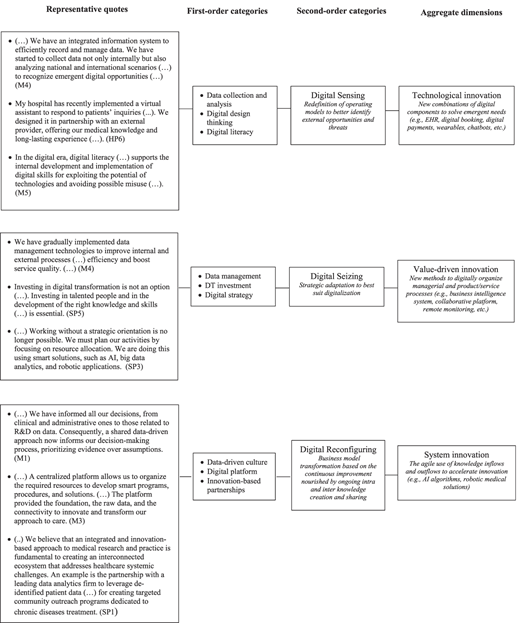
Table 3 summarizes the respondents’ main characteristics and case organizations, anonymously classified using symbols and progressive numbers. The interviews were organized according to a specific protocol to ensure a general coverage of the research themes defined according to the extant literature on DTM (Konopik and Blunck, 2023; Benazzouz and Auhmani, 2024; Gupta et al., 2024). To ensure transparency and richness in the data analysis process, some explicative interview quotes are illustrated in Table 3 and subsequently reported in the coding scheme (see Figure 1) as representative quotes.
The guiding questions (see Appendix) were developed according to the results of the extant literature on the topic and synthesized into the conceptual background to recognize the microfoundations of DTM in healthcare. Researchers neutrally approached the interview themes, avoiding questions about sensitive information to reduce possible bias (Hughes and Preski, 1997).
Data analysis was conducted by the entire research team, following the qualitative content analysis according to Gioia’s methodology (Gioia et al., 2013). It was articulated in three distinct steps. The first one was dedicated to reading multiple times each interview to initially get in touch with the understanding of the digital practices implemented (i.e. activities and resources), involved actors and effects generated in terms of digital innovations. The second step dealt with the coding process, which is characterized by an inner iterative nature that responds to the abductive approach. The coding process was first singularly performed by each researcher, and then the coding results were compared to ensure inter-coder reliability. Moreover, autonomous coding allowed reduced the bias of a single researcher involved in the whole coding process (Gioia et al., 2013). A rigorous coding protocol was employed to build the coding scheme (Magnani and Gioia, 2023). Initially, researchers identified the major themes in the data and recurrent expressions that were related to those mechanisms (i.e. microfoundations) that enabled dynamic capabilities for healthcare digital maturity. This was possible by moving from raw qualitative data to increasingly abstract conceptual elements or first-order categories (informant-centered), from which second-order categories were derived by comparing empirical observations with prior literature. Second-order categories explain the idea of the first-order categories in more academic language, reaching a higher level of abstraction (theory-centered). Particularly, researchers explored how microfoundations shape digital dynamic capabilities in health organizations by combining a digital maturity perspective with dynamic capabilities literature. Lastly, by combining second-order categories (i.e. theoretically informed) and first-order categories (i.e. empirically derived), aggregate dimensions were identified. The highest level of abstraction was used to identify the digital innovations created in the process towards DTM. The selective coding at the core of the categories’ definition also led to the derivation of some theoretical propositions that contribute to building a theory from the analyzed data to shape future research (Carmichael and Cunningham, 2017; Hollebeek et al., 2024) and propose a framework to describe the journey towards DTM.
4. Findings
This section presents and discusses the results of the empirical analysis according to a progressive logic, which recognizes and conceptualizes the microfoundations of digital dynamic capabilities for healthcare progression toward digital maturity. Figure 1 shows the visual representation of the methodological systematic process followed as described in the previous section.
4.1 Microfoundations for digital sensing
The case analysis of the investigated healthcare organizations led to the identification of three main microfoundations for digital sensing in healthcare. Specifically, the mechanisms through which digital sensing is activated are data collection and analysis, digital design thinking and digital literacy. They push healthcare organizations to recognize the powerful potential of digital technologies to grasp new opportunities in the healthcare scenario, to create new digital products and services, and to understand the importance of being able to use technologies, therefore paving the way for digitalizing routines and practices. Therefore, data collection and analysis are related to the organization’s ability to collect and interpret data, thereby identifying the main trends in digital health with the related opportunities and threats (e.g. the need for new personalized products/services, new guidelines and/or medical protocols, a growing number of alternative service providers, etc.)
It’s been a decade since we understood the importance of data. At first, collecting and managing it was not easy because we didn’t have specific tools. Now, we have an integrated information system to efficiently record and manage data. Consequently, we have started to collect data not only internally but also by analyzing national and international scenarios. This led to the recognition of emergent digital opportunities and challenges as well as new collaboration opportunities for improving e-health services. (M4)
Digital design thinking is linked to the implementation of digital tools in healthcare practices and related processes. Indeed, from the interviews, it emerged that healthcare organizations started to digitize medical activities and, above all, to develop new or renovate value propositions to better deploy healthcare services, such as smart payments, digital consultations, digital communication systems and digital booking systems. In this regard, a head physician reported:
My hospital has recently implemented a virtual assistant to respond to patients’ inquiries and doubts before endoscopic exams. This solution was ideated after the collection of patients’ needs and complaints. We designed it in partnership with an external provider, offering our medical knowledge and long-lasting experience. Before launching this innovative service, we collected users’ feedback to fine-tune and make it as patient-oriented as possible. (HP6)
Digital literacy emerged as a meaningful mechanism that equips, in the first moment, people and then the overall organizations to act in digital scenarios with the right skills and knowledge. It supports the right use of digital solutions, making them familiar and easier to implement. More in-depth, digital literacy supports physicians, nurses and managers in enhancing their willingness to handle digital tools both for managing professional tasks and for improving internal and external interactions. Then, healthcare organizations move to be better equipped for adjusting and changing to the evolving digital scenarios by cultivating a skilled workforce. As reported in the following statement, healthcare senior managers considered it very important for digitalizing clinical and administrative processes as well as for properly managing digital tools:
In the digital era, digital literacy initiatives for medical and non-medical staff are crucial for ensuring the seamless integration of digital tools in administrative processes and medical routines. These initiatives support the internal development and implementation of digital skills to exploit the potential of technologies and avoid possible misuse. In the end, it is not only a matter of merely investing in technologies but also of promoting critical thinking to responsibly and effectively exploit digital innovation potential for the service we provide. (M5)
4.2 Microfoundation for digital seizing
The analysis also led to the recognition of the microfoundations that activate seizing capability. Three main mechanisms operationalize it by strategically supporting health organizations toward digital maturity. Indeed, beyond merely considering the role of the underlying digital infrastructures, digital artifacts and related tools, healthcare organizations started to recognize the strategic potential of integrating technologies with organizations’ long-term vision.
Then, data management, DT investments and digital strategy design were identified as the microfoundations that activate seizing capability. Data management emerged as a set of processes, procedures and tools implemented to gather, analyze and use data for creating value and, in doing so, enhancing organizations’ innovations. This capacity characterizes five organizations (O1, O2, O3, O4 and O5), which have developed a different approach to it and a different configuration of competency over time, as the following statements demonstrate:
We have gradually implemented data management technologies to improve internal and external processes. We have implemented a business intelligence system to improve process efficiency and boost service quality. To personalize this system, our administrative department worked together with some of the most critical medical divisions. This led to amplifying the acceptance and the use of the system. (M4)
Extracting information from data became essential for us to understand how to better satisfy our patients. Therefore, we stressed the strategic relevance of big data analytics. (M5)
DT investments support not only the implementation of digital tools and solutions, but also the creation and acquisition of the knowledge resources essential to designing and developing brand new ones. Also in this case, this capacity characterizes all the investigated organizations, but two of them (O1 and O3) have demonstrated a clear and long-lasting approach to digital investments. Even though O2, O4 and O5 recognized their importance, they are still working on them:
Investing in digital transformation is not an option, but a necessity. Apart from the investments we made and planned in digital technologies, investing in talented people and in the right knowledge and skills is essential to use and create innovative digital solutions. We must transform not only our technological infrastructures but mainly our mindset for improving the hospital’s general management, diagnostic, and therapeutic activities. (SP5)
Finally, digital strategy emerged as essential for coordinating digitalization activities and business processes, which are often emergent, not planned and even conflicting. This is the case of four analyzed organizations (O1, O2, O3 and O4):
I’m witnessing the rapid evolution of healthcare. So, working without a strategic orientation is no longer possible. We must plan our activities by focusing on resource allocation. We are doing this using smart solutions, such as AI, big data analytics, and robotic applications. All these technologies are centralized and managed through an internal management system to improve the quality of care and the patient experience. (SP3)
4.3 Microfoundation for digital reconfiguring
Some analyzed health organizations developed a digital reconfiguring capability intended as the innovative ability to digitally transform and renew organizations’ structure and strategies. Indeed, once acquired and assimilated, technological knowledge, they developed the ability to continuously improve and create new knowledge, thereby reconfiguring their strategic assets. Therefore, data-driven culture, digital platform and innovation-based partnerships were identified as the main microfoundations.
Data-driven culture emerged as the set of behaviors and practices that a specific group or team shares and nourishes through an ongoing and real-time data flow. Respondents contend that even though the development of a data-driven culture supports the switching from decisions taken on opinions to decisions taken on factual data, this change remains challenging, especially for public hospitals, characterized by specific values, behaviors, norms and a general reluctance to change. Following some representative quotes (i.e. O1, O3):
My hospital is one of the most innovative and digitized Italian big hospitals. We recognized the importance of data. We have informed all our decisions, from clinical and administrative ones to those related to R&D on data. Consequently, a shared data-driven approach now informs our decision-making process, prioritizing evidence over assumptions. (M1)
To make more informed decisions, we know how important data and big data analytics are. We have understood it over the years, working on the creation and exploitation of a shared digital mindset, which changed our decision-making, making it more agile. (M3)
Digital platform is based on the capability to create a multi-sided and data-oriented service that internally and externally connects people, technologies, organizations and other platforms, mediating transactions and interactions to create new complementary offerings. Following some representative quotes (i.e. O1, O3):
Some years ago, my hospital started a real transformation, which culminated in a renewed digital approach, pointing to improving the quality of internal and external processes and, above all, the care we deliver. Thanks to an integrated digital platform, information between departments and external stakeholders is shared. Therefore, data accessibility, minimized errors, coordination, knowledge sharing, and the disposition towards innovation were enhanced. (M1)
Digital transformation initiatives cannot be episodic. Thus, a centralized platform allows us to organize the required resources to develop smart programs, procedures, and solutions. For example, by centralizing patient data, we developed AI-powered diagnostic tools to analyze medical images and detect anomalies. This wasn’t possible with our old and fragmented legacy systems. The platform provided the foundation, the raw data, and the connectivity to innovate and transform our approach to care. (M3)
Finally, innovation-based partnerships underlined the importance of knowledgeable partnerships to create and share informational resources to accelerate scientific innovation. However, innovation-partnerships must be well organized and formalized, because the selection of the most appropriate partners and the most suitable governance approach can discourage opportunistic and conflicting behaviors. Follows some interesting statements:
My hospital is partnering with national and international universities, research centers, innovation hubs, institutions, and digital companies to create innovative solutions and to promote medical research. We believe that an integrated and innovation-based approach to medical research and practice is fundamental to creating an interconnected ecosystem that addresses healthcare systemic challenges. An example is the partnership with a leading data analytics firm to leverage de-identified patient data to recognize health trends for creating targeted community outreach programs dedicated to chronic disease treatments. (SP1)
For us, innovation-based partnerships are strategic. We have created, in collaboration with a national university, a public research center, and some tech companies, a digital medicine hub dedicated to predictive personalized medicine. Currently, we are working on the use of AI algorithms to combine patients’ clinical data with their genomic analysis to tailor treatments. The data are stored in our digital platform to work on social determinants of health, tracking and addressing the social factors that impact health outcomes. (SP3)
5. Discussion
By exploring the journey toward digital maturity, this study contributes to the fragmented research on DTM, particularly in the healthcare setting (Chanias et al., 2019; Mauro et al., 2024). Accordingly, the analysis of the activities, resources and technologies implemented by healthcare organizations contributes to classifying the main mechanisms that shape transformative capabilities for the development of digital innovations (RQ1). In this sense, reframing the DT from a maturity perspective and adopting the dynamic capabilities framework (Teece, 2007) makes it possible to offer a deeper understanding of the multi-layered process able to sustain DTM. Thus, nine micro-level abilities that health organizations must mobilize were uncovered, the related dynamic capabilities were conceptualized and the emergence of diverse innovation outcomes was outlined.
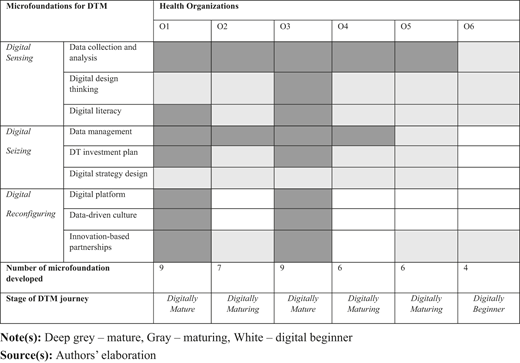
Table 4 points out the progressive, non-standardized and subsequent aggregation of the different microfoundations that health organizations activate to build dynamic capabilities and affect digital innovations. Our analysis indicates that to perform sensing, new procedures and practices better aligned to the market environment must be introduced. This implies the ability to grasp and address both digital and patient-centric trends by digitally redesigning and renovating the value propositions, characterized by increasing levels of interconnectivity and automation, thereby enabling a recontextualization of health service provision in the cyber-physical environment.
Sensing supports the enactment of reactive, but not yet strategic, responses to external changes, as the achieved innovation is mainly a function of technology. Indeed, the identified microfoundations (data collection and analysis, digital design thinking and digital literacy) represent the necessary human infrastructure to develop new learning processes and enable the generation of new knowledge to extract value from technologies. Consequently, it is possible to infer that in the healthcare domain, digital sensing conceptualizes the redefinition of the operating models and capability-building practices to better identify external opportunities and threats.
By combining sensing capability with the seizing one, health companies can effectively exploit the identified opportunities. Indeed, the observed organizations started an ongoing process of strategic adaptation by renewing internal medical and non-medical processes to better suit DT’s imperatives and stay competitive over time. The strategic renovation is realized by turning the knowledge created during the external environment and market scanning into process innovations or new organizational setups (Damanpour, 2020). Thus, seizing is activated through the following microfoundations: data management, DT investment and digital strategy, which led health organizations to strategically manage digital technologies, thereby exploiting the technological knowledge to update innovative solutions. Accordingly, digital seizing can be defined as the organizational ability to strategically adapt or change to best suit digitalization imperatives, capturing informative resources that different healthcare actors must harmonize to advance the journey toward digital maturity. In other words, digital seizing emerges as the organizational ability to strategically approach digital challenges and adapt decision-making to the ever-changing digital scenarios. It is grounded on a strategic commitment that nourishes organizations’ readiness to create data-driven knowledge that updates value-driven innovations (AL-Khatib et al., 2024; Zhang et al., 2025).
Harmonizing technological, social and relational resources enacts the continuous reconfiguration of dynamic capability thanks to a data-driven culture, digital platform and innovation-based partnerships’ microfoundations. Particularly, a data-driven culture is developed through the continuous improvement of learning processes and through the transformation of the individual hard and soft skills and competencies into organizational knowledge, which is integrated with external knowledge deriving from networked actors. Thus, a proactive attitude renovates knowledge exchange modalities and relational management strategies via digital platform-based capability, which co-create new value, thereby realizing system innovations. This supports health organizations in overcoming path dependencies and exploring ongoing innovation opportunities by leveraging network and ecosystem dynamics (Pietronudo et al., 2022; Ben Selma et al., 2025). Accordingly, digital reconfiguring capability is conceptualized as the ability to pursue a business model transformation based on the continuous improvement nourished by the ongoing intra and inter knowledge creation and sharing. It can help health organizations to orchestrate the change or even start a brand-new transformation triggered by new resource combinations and re-combinations to achieve digital maturity (Gupta et al., 2024; Leso et al., 2024).
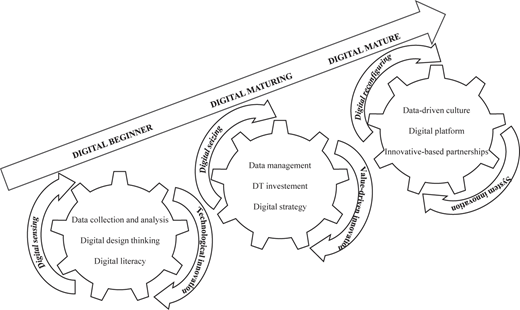
In line with the extant literature (Feiler and Teece, 2014; Kowalski et al., 2024), as shown in Table 4, healthcare organizations tend to develop sensing and seizing capabilities first and reconfiguring capabilities later, when they master knowledge-creation processes based on building, integration and reconfiguring both internal and external resource bases. Accordingly, different innovative outcomes can be generated. Technological innovation represents a basic form of innovation since it is characterized by a low level of novelty, aimed at optimizing and simplifying information flows, rather than lacking in the enrichment of the value proposition to engage patients and users (Zhou et al., 2019). Thus, technological innovation (new digital products/services) can be considered a basic requisite for going through the DTM journey because it lays its infrastructural foundations. This is the case of a public hospital located in the south of Italy (i.e. O6). Indeed, it is approaching the DT process both by recognizing the value of digital technologies for optimizing operational processes (i.e. by introducing Electronic Health Record [EHR]) and sharing the relevance for physicians and nurses to use them. However, the strategic exploitation of technologies is limited by the reluctant and episodic approach to innovation, the budget and financial constraints and the conservative organizational approach. Indeed, it lacks a coherent strategic vision and a shared data culture, which are essential to coordinating processes, procedures and tools for handling data. Consequently, the early stage of the DT journey is embraced and it is defined as a digital beginner.
Value-driven innovation is based on an innovation-oriented attitude grounded in the relevance of data and human dimensions. Data-driven practices that support evidence-based decision making, together with a strategic vision, allow the exploitation of technological knowledge by catching up with the value coming from digital solutions. Thus, healthcare organizations become skillful at learning because they develop the absorptive capacity, as the capability of acquiring and assimilating knowledge to shape a strategic commitment towards a digital orientation. This is the case of a public hospital located in the center of Italy (O2); a public university hospital in the north (O4); and a private hospital in the south (O5). All these organizations showed a steady willingness to elevate and integrate digital technologies in their practices, activities and strategies, thereby building a digital orientation. Nevertheless, digital maturity is still developing. Indeed, they have failed to nurture a data-driven mindset, which is one of the most valuable factors to effectively sustain digital innovation management in pursuing digital maturity (Appio et al., 2021). Probably, they lacked the development of the corporate ability to systematically extract insights from data, due to the missed experiential learning, particularly in terms of applied knowledge. At the same time, despite the ongoing establishment of external collaborations, they lacked the building of digital service platforms, thereby neglecting the creation and the exchange of experiential knowledge (Chen et al., 2023). Therefore, these organizations are placed at the intermediate stage of DTM, considering them as digital maturing.
System innovation emerges as (1) systemic because it combines social, cultural and relational dimensions and (2) systematic because it is based on a transformative tension to innovation management. Particularly, systemic innovation is rooted in exploiting innovation opportunities by integrating and combining renovated knowledge with external partners that nurture collaborative co-created knowledge (e.g. a digital platform embedded in multi-sided digital solutions). Systematic innovation supports innovative approaches to value creation processes of the entire healthcare (eco)system and business model innovation. Thus, systematic innovation emerges by harmonizing and updating knowledge integration through open innovation projects that improve scientific and user knowledge.
This happens both thanks to the ability to complement and exploit the incorporated absorptive capacity by applying, recombining and relaying knowledge, and the development of a digital culture that strategically and proactively shapes and orchestrates the related digital ecosystem (Fernandes et al., 2023; Kowalski et al., 2024). This favors internal and external partnerships by pushing interrelated and interdependent innovations (Ciasullo et al., 2022b). The analysis demonstrated that only two private healthcare organizations (i.e. O3, O1) developed the harmonious ability to continuously create, integrate and transfer key resources that were integrated along the individual, organizational and ecosystemic levels (Chen et al., 2023). As private teaching hospitals, they have lower impediments, such as bureaucratic, administrative, legal and financial constraints (Cannavacciuolo et al., 2023), that allow them to be better equipped to face and handle digital scenarios. The achieved findings demonstrated that these two organizations invested heavily in both the most advanced technologies and biomedical research by combining heterogeneous knowledge, such as multidisciplinary capacities, skills and technological knowledge. This is due to their long-lasting learning investments that have deeply committed human resources in fostering a culture of innovation, which encourages collaboration across medical and non-medical specializations and interorganizational teams and functions. Accordingly, these activities, practices and processes have been operationalized in research hubs, in which experiential learning, based on the insights coming from data, leads to create, exploit and share, new knowledge through technology transfer mechanisms. Also, thanks to the prolific establishment of partnerships and the building of digital services platforms, they integrated and combined external knowledge with the internal one, thereby renovating their business model and related ecosystems because of cross-side network effects (Pietronudo et al., 2022). Therefore, they were recognized as digitally mature.
In sum, to pursue DTM, healthcare organizations need to strategically perform the whole set of dynamic capabilities by activating the identified microfoundations. The ongoing combination and integration of microfoundations lead to a more robust DTM, as shown in Table 4. Therefore, microfoundations emerge as auto-reinforcing mechanisms that better equip health organizations to deal with emerging and unforeseen problems (Foss et al., 2023). At the same time, aligning with Zollo and Winter (2002), healthcare DTM emerges as a strongly intertwined learning process, grounded on deliberate investments in knowledge creation and experience accumulation, which holistically drives towards a strategic renewal. This strategic process is rooted in the development of transformative digital-driven capabilities, by refreshing the organization’s business model, collaborative/cooperative interactions and corporate culture (Warner and Wäger, 2019). Accordingly, DTM is based on context-specific microfoundations, which manifest and evolve differently among healthcare organizations and over time by producing differences in innovation outcomes.
Based on the result of the analysis of comparative cases, Figure 2 provides the framework related to DTM that health organizations embrace, and the progressive waves of innovations performed. In particular, as a holistic learning process (as the row indicates), DTM is characterized by three main steps: (1) initial (digital beginners), (2) intermediate (digital maturing) and (3) final (digital mature). Each of these stages is made up of specific microfoundations that represent the architecture of digital sensing, digital seizing and digital reconfiguring. The achieved microfoundations activate specific core mechanisms such as: knowledge acquisition, knowledge integration and knowledge recombination that affect digital innovation outcomes. Moreover, when dynamically integrated, they sustain and perform DTM.
6. Conclusion and implications
This paper delves into the intricate journey of healthcare organizations toward digital maturity (Kane et al., 2017; Leso et al., 2024), providing a granular exploration of the dynamic capabilities and the underlying microfoundations that drive this journey. In doing so, this paper offers interesting implications for both theory and practice.
Theoretically, the analysis contributes to the literature on DTM and dynamic capabilities by providing a more nuanced understanding of their interplay in the healthcare system. Accordingly, some research propositions are advanced that pave the way for advancements and further exploratory studies in what we currently know about DTM in the healthcare management context.
First, while previous studies have framed DT as a technological endeavor (Hess et al., 2016), this study reinforces the idea that DT must be complemented by knowledge-based resources. We extend prior work by highlighting how digital maturity is achieved not merely through technology implementation, but by investing in strategic, organizational and cultural shifts to fully exploit the potential of digital technologies. Therefore, the following proposition is conceptualized:
DTM in healthcare is considerably supported by the ability to create and activate knowledge-based resources, which complement the transformative potential of digital technologies with actors’ dispositions to enact strategic, organizational and cultural shifts.
Second, findings provide empirical evidence of the DTM journey complexity (Vial, 2019), recognizing and describing how healthcare organizations navigate such a complex and unpredictable path characterized by various stages, challenges and setbacks. Particularly, unlike earlier studies that conceptualized DTM as a quantitative construct (Lin et al., 2020; Gökalp and Martinez, 2022), this research adds to existing knowledge by focusing on the dynamic capabilities that drive the complex DTM journey as well as zooming out on those mechanisms (i.e. microfoundations) that enable them. Drawing on these considerations, the following proposition is proposed:
DTM is a complex, non-linear and ongoing journey that healthcare organizations undertake through the cumulative activation of dynamic capabilities; thus, this journey starts when specific microfoundations activate sensing, seizing and reconfiguring capabilities, adapting them to emerging scenarios.
Third, this study contributes to the dynamic capabilities literature by operationalizing them in the underexplored context of healthcare and by conceptualizing the related microfoundations (Felin et al., 2012). Indeed, whereas existing healthcare research emphasizes the challenges to implement digital technologies (Sony et al., 2023; Tortorella et al., 2022; Sony et al., 2023), this study identifies specific microfoundations analyzing the mutual interactions that occur in the healthcare domain between people, processes and technologies, which are the pillars of DT (Reis et al., 2018). These interactions enable the dynamic action of sensing, seizing and reconfiguring capabilities and their innovative effects. In other words, the identification of microfoundations (or first-order capabilities) drives the conceptualization of dynamic capabilities in healthcare, also understanding the innovation outcomes generated (Ben Selma et al., 2025). In doing so, the analysis recognized the antecedents or the essential elements that activate dynamic capabilities for advancing the DTM journey and the related effects in terms of innovation. This was possible thanks to microfoundations’ ability to better explain the influence that individual, organizational and multi-sided interactions have in favoring progressive waves of innovation. Accordingly, the following proposition is presented:
In healthcare, the dynamic capabilities of sensing, seizing and reconfiguring are enabled by nine microfoundations, which generate non-linear and iterative waves of innovation dependent on the interplay and reinforcement of microfoundations across dynamic capabilities; the more integrated and co-evolving they are, the more likely an organization is to reach advanced digital maturity by performing digital innovation.
Fourth, this study extends prior work (Loureiro et al., 2023) by enriching the literature on digital innovation management. Indeed, it investigates how healthcare organizations could rethink their innovation models, adopting digital solutions that not only allow the creation of new products/services/processes but also contribute to relational changes with a strategic impact. Follows a further proposition:
DTM depends on the ability of healthcare organizations to enact relational changes that pervasively impact the whole healthcare system and progressively change their ecosystems.
This study also offers some interesting managerial implications. First, the conceptualization of the key microfoundations provides health managers with a blueprint for enacting data-driven corporate strategies to achieve DTM. In doing so, the study offers a precise description of the microfoundations they need to develop to better activate the transformative potential of dynamic capabilities to achieve digital maturity. Thus, deepening the main characteristics of microfoundations, this study also supports health managers in better understanding the different influences that specific digital practices have on organizations’ ability to progress the DTM journey.
Second, this study supports health managers in better understanding the multifaceted and knowledge-intensive nature of DT and the related need to always create and share new knowledge supporting internal and external collaborations to generate innovation. This is possible by promoting a data-driven approach based on experiential learning and data as strategic assets, which can enhance and rapidly adapt the quality of decision-making to the ever-changing digital scenarios (Warner and Wäger, 2019). However, to achieve this goal, managers must also be able and willing to create a networked and multileveled space or ecosystem in which the ongoing interactions between people, processes and technologies contribute to the development of those micro-level elements essential for dynamically activating specific capabilities to start digital innovation processes.
Consequently, following Helfat and Peteraf (2015), future research could adopt an individual perspective to further explore how DTM is shaped, focusing on the cognitive processes that enable sensing, seizing and reconfiguring, and the related microfoundations. Indeed, the conceptualization of DTM, shaped by deliberate investments in knowledge and experience accumulation, makes it interesting to deepen the role of individual actors in developing and deploying dynamic capabilities. Consequently, a more in-depth exploration of individual cognitive capabilities, such as mental models and interpretive schemes of clinical and administrative managers, could offer new insights into the influence that individual cognition and mental models can have on knowledge resources’ mobilization and reconfiguration in response to changing digital environments.
Although this paper provides valuable insights into DTM in healthcare by investigating its core mechanisms, there are some shortcomings that affect the research. First, the qualitative analysis limits the generalizability of the findings due to the small size of the sample and the fact that healthcare organizations are situated in Italy. This makes the achieved findings not so generalizable because healthcare systems and DT initiatives can vary significantly across countries and regions. Second, the study is also limited by the potential biases coming from data collection exclusively based on semi-structured interviews and archival data. Consequently, future research based on a mixed-method approach and on a wider sample could provide a more comprehensive and robust understanding of DTM in healthcare.
Appendix
Which is the city where you work?
_____________________________________________________________________________
Could you share your time in the current position, tenure in the company and age?
_____________________________________________________________________________
What is your occupation? What are your main responsibilities?
_____________________________________________________________________________
Do you think that DT offers new possibilities for health organizations? If yes, why?
_____________________________________________________________________________
Has your organization recently implemented digital tools? If yes, which? And which are the main processes affected?
_____________________________________________________________________________
Did your organization select the tools mentioned above analyzing and comparing the available offerings and/or what competitors implemented?
_____________________________________________________________________________
What are the digital tools and/or analytics implemented to collect and analyze data?
_____________________________________________________________________________
Is there an integrated strategy of action for the continuous learning of employees and/or for the improvement of skills?
_____________________________________________________________________________
Has your organization developed collaborations to boost digitalization? If yes, with which organizations? What has been the contribution to innovation?
_____________________________________________________________________________
What are the main activities that for your organization are essential for DT?
_____________________________________________________________________________
Did your organization change some processes, products, or services to better suit DT? If yes, which? How did it contribute to the emergence of innovations?
_____________________________________________________________________________
Have your organization organized and implemented a data management system?
_____________________________________________________________________________
Is there a strategic approach in place for collecting data, selecting sources and interpreting results?
_____________________________________________________________________________
Did you revise уour decisions in progress based on the results of data interpretation?
_____________________________________________________________________________
Does your organization have implemented digital platforms? If yes, what are the main goals and innovations generated?
_____________________________________________________________________________
What are the projects that your organization has or will implement to boost DT?
_____________________________________________________________________________
Which are the main partners of your organizations?
_____________________________________________________________________________
Are they involved in digital initiatives? If yes, in which initiatives?
_____________________________________________________________________________
What are the digital projects that your organization has planned for the next few months?
_____________________________________________________________________________
What is the role of digital innovation for the viability of your organization?
_________________________________________________________________________
Note
For further information, see: Italy’s World’s Best Hospitals 2024 – Newsweek Rankings.