Workplaces have transformed dramatically over the past decades culminating in the rise of remote work and uncertainty over the future of the corporate office. Research on the benefits and challenges of remote work has revealed a disconnect between employers and employees, which has led organisations to consider whether to embrace flexibility or tighten their grip. The purpose of this study is to increase understanding of how remote work is approached on a strategic level in Finland where remote working rates are notably high.
Representatives of 20 small, medium and large knowledge work organisations were interviewed. Data were collected in a two-phase process comprising a questionnaire and a semi-structured interview that focused on workplace strategies, approach to remote work and the future perspective. The mixed-methods approach enabled identifying themes in questionnaires that were explored in greater depth in interviews for a comprehensive understanding of the topic.
This study revealed that organisations favour short-term strategies, highlighting the challenges of taking a future-oriented view in the quickly transforming environment. While remote work is widely adopted and now an integral part of working life, the approach tends to be reactive rather than strategic, which can leave organisations unprepared for future challenges. There has been a shift in power dynamics with employees holding unprecedented control over their work locations.
This study examines how remote work is perceived and approached by organisations on a strategic level, while existing literature is typically limited to remote work practices and the employee perspective.
Introduction
Digital transformation accelerated by the COVID-19 pandemic has quickly reshaped the way we work. High levels of connectivity and online tools have made it possible for many to work regardless of location or time. The workplace is no longer defined by the physical boundaries of an office building; it is now equivalent to any location where work takes place. Yet, physical office spaces and remote work settings are far from irrelevant, as they are known to affect many factors essential to organisations, such as perceived productivity and well-being (e.g. Arkesteijn et al., 2021; Bergefurt et al., 2022; Toivonen et al., 2025; Xiao et al., 2021).
As the extent of the pandemic unfolded, many organisations were forced to arrange remote work settings almost overnight on an ad hoc basis without complete workplace strategies. Since then, remote work has been increasingly studied, and organisations have gained hands-on experience. Organisations have communicated views both in favour of and against remote work (Oladiran et al., 2023; Smite et al., 2023; Tagliaro and Migliore, 2022). Similarly, both positive and negative effects have been discussed in academic research.
Post pandemic, we have seen many organisations shifting from enabling the workforce to work completely remotely to returning to the office at least part time. The possibility of returning to the office has left many organisations rethinking their approach to remote work. It seems that what was initially a temporary solution is turning out to have a lasting impact on workplace strategies (Tagliaro et al., 2023). This raises a fundamental question: To what extent will employees be able to choose where and when to work in the future, and what is the role of organisational strategy shaping and supporting these choices?
In the constantly shifting landscape, there is an ever-growing need to anticipate changes taking place and to cope with the uncertainty and complexity they create (Heinonen et al., 2017; Rohrbeck et al., 2015). This need is also evident in the field of real estate and space-related decision-making (Toivonen, 2021; Toivonen et al., 2021, 2023) where the work environment must be adaptable and responsive to evolving requirements (Ellison Schriefer, 2005). To navigate these challenges, a shared effort among real estate stakeholders is required, not only to anticipate future changes but also to ensure a smooth and successful transition. Traditionally, research in the field has taken an empiricist and retrospective approach (Saurin and Ratcliffe, 2011; Toivonen, 2011). Vischer (2011) argues that, similarly, workplace strategies are reactive and retrospective rather than embracing new ideas and processes.
The aim of this study is to increase understanding of how remote work is approached on a strategic level by organisations in Finland, where remote working rates are notably high. In Finland, the potential to work remotely was the highest in Europe at the beginning of the pandemic with 59% of the workforce able to work remotely either full time or part time due to the availability of well-developed digital technologies (Eurofound, 2020). A more recent study by Eurofound (2024) reported that Finland was the most liberal country in the EU regarding work location, with employees enjoying greater freedom to decide where to work compared to their European counterparts. Consequently, Finnish organisations were considered a relevant context for study.
Much of the vast amount of industry and academic research on remote work conducted during the past few years, is focused on employee experiences and neglects the employer perspective and role in supporting remote work on a strategic level. There is a lack of literature specifically exploring the incorporation of remote work into workplace strategies and how responsibilities are distributed between employers and employees. In general, as noted by Appel-Meulenbroek and Danivska (2021), research on workplaces is fragmented and spread across multiple disciplines.
To explore workplace strategies, approaches to remote work and future perspectives, we collected data in a two-phase process comprising a preliminary questionnaire and semi-structured interviews with representatives of 20 small, medium and large organisations located in Finland. As a result, links between workplace strategies and organisational goals are presented, a list of measures taken to support and guide remote work is provided, and the roles of different work locations are compared. These results can benefit various parties in the industry such as managers and HR professionals, policy-makers and stakeholders in the real estate sector to anticipate aspects such as space use and organisations’ investment priorities, which can be critical in maintaining asset value and attracting tenants in a market that is challenged by rising vacancy rates.
This paper is structured as follows. Firstly, a literature review addresses workplace strategy, how remote work reshapes these strategies, and the future outlook. The study design is then explained, followed by the results. Finally, the results are discussed, and conclusions are presented with suggestions for further research.
Literature review
Workplace strategy and organisational alignment
A workplace strategy refers to aligning organisation’s work patterns with the work environment to achieve peak performance and strategic goals while reducing costs (Ellison Schriefer, 2005; Redlein et al., 2020). At its best, a workplace strategy can be an important tool for optimising productivity, attracting and retaining talent, accelerating innovation and improving brand image (Redlein et al., 2020). Following the rise of knowledge work, the importance of intellectual capital has grown. As a result, the emphasis in workplace strategies has shifted from space towards people. This people-centric approach focuses particularly on supporting employee performance but also on satisfaction and well-being by creating spaces, processes and tools that support their work (Mitchell‐Ketzes, 2003). Thereby, an effective workplace strategy considers the work environment from social, physical, technical and financial points of view (Ellison Schriefer, 2005; Mitchell‐Ketzes, 2003). A recent study by Redlein et al. (2020) adds the environmental dimension, as the role of sustainability has grown in real estate decision-making (Newell and Marzuki, 2022). All these aspects are closely connected and often impact one another (Ellison Schriefer, 2005), creating a system shaped by many disciplines and linking workplace-related questions to other corporate strategies. However, these strategical links are less discussed in the literature.
Remote work reshaping key components of workplace strategies
The shift in ways of working has impacted many of the main dimensions of workplace strategies. Traditionally, the term workplace has been connected to a physical space, prompting extensive research on how environmental features such as temperature, lighting and noise conditions influence well-being and productivity (Harris, 2019). However, it has long been recognised that a workplace incorporates not only a physical space but also virtual environments (Cairns, 2003; Saurin and Ratcliffe, 2011; Vischer, 2011) and subsequently locations that enable mobile working (Rothe et al., 2012). As the work environment has expanded from the physical boundaries of the corporate office to homes and third places, employers’ ability to impact employee performance and well-being through space has diminished. A typical response has been to upgrade the office and provide additional hospitality services to lure people back, where employers’ power to affect work performance through spatial elements still remains. It is unclear how workspaces outside the corporate control are addressed in workplace strategies.
Remote work itself has been extensively studied for example in terms of productivity, well-being and work–life balance (Tagliaro et al., 2022; Tagliaro and Migliore, 2022; Weijs-Perrée et al., 2021). Productivity in remote work, in particular, has caused debate between employers and employees (Barrero et al., 2023; Bloom et al., 2023; Harker Martin and MacDonnell, 2012; Kowalski and Ślebarska, 2022; Saurin, 2012), and creating a workplace strategy will require balancing conflicting interests (Vartiainen, 2024). Among employees, remote work has been considered to increase perceived productivity (Giovanis, 2018; Harker Martin and MacDonnell, 2012; Toivonen et al., 2025). From employers’ point of view, the problem with productivity is, for example, the lack of a clear metric to measure it (Redlein et al., 2020) and the notion of physical proximity coming with the benefit of informal and serendipitous information sharing (Ellison Schriefer, 2005).
In terms of workspace, the key issues concerning individual productivity and satisfaction are the characteristics and suitability of the available work setting, e.g. at home including the family situation, the availability of a dedicated room, storage, ergonomics, the accessibility of ICT, layout, indoor climate, lighting, décor, room size and view (Arkesteijn et al., 2021; Haynes, 2008; Tagliaro et al., 2022). While some thrive at home, for others, the home can be far from an ideal work environment due to issues such as interruptions, distractions, inadequate technology, lack of suitable space or feelings of loneliness (Ellison Schriefer, 2005).
Workplace strategy moving forward
As the pandemic swept across the globe, practice outpaced research on remote and hybrid work, leading many organisations to adopt a reactive approach to address workplace-related questions. Leaps in technological development continue to impact knowledge work, for example, through advancements in virtuality and the implementation of artificial intelligence (Vartiainen, 2024), requiring organisations to think strategically and anticipate not only where and when work will be performed, but also how it will be carried out and what impact it will have on the work environment. Even though the growing importance of mobility and the inevitable impact of changing communication methods on workplace strategies are recognised (Ellison Schriefer, 2005; Heeroma et al., 2012), much focus is still placed on short-term tactics and best practices. Levin (2005) confirms that workplace strategies should look beyond design trends and take into consideration long-term business strategies. Short-sightedness can hinder organisations’ ability to fully use workplace strategy as a tool for contributing to their organisational goals. Rohrbeck and Kum (2018) found in their study that future preparedness has the potential to increase business performance, an element closely tied to workplace strategies.
A growing need to keep up with the evolving work environment has led organisations to reassess their workplace strategies (Tagliaro et al., 2023), but many issues still remain unsolved. Workplace strategies are typically based on studies about where the employees work, how often the space is used and in what ways, and how employees react to the work environment (Redlein et al., 2020). Ellison Schriefer (2005) claims that solutions should not only be based on quantitative data because they require consideration of qualitative variables such as business drivers, employee demographics, brand image and desirable patterns of work. Remote work challenges typical data-driven decision-making, as in many ways it is difficult to measure, or even identify, the many dimensions invisible to the employer such as the characteristics of workspace. The expanding work environment tests the ability of employers to manage a broad, complex array of factors that impact work. It is still unclear how this task will be executed on a strategic level and how responsibilities are distributed between the employer and the employee.
To conclude, the empirical part of the study will focus on three themes that emerged from the literature. Firstly, theoretically, workplace strategies are linked to other organisational goals such as business performance and resource optimisation. Our aim is to examine how these links are perceived in practice by organisations. Secondly, since remote work differs from on-site work in aspects such as location and characteristics of work settings, communication methods and employer and employee needs, a different approach to workplace strategies is required. We seek to explore how remote work and locations outside the corporate office are addressed in workplace strategies. Thirdly, in the era of swiftly accelerating transformation of work, we focus on exploring the time dimension of workplace strategies.
Study design
This study aims to increase understanding of how remote work is approached on a strategic level by organisations in Finland where remote working rates are notably high. Representatives of 20 small, medium and large knowledge-work organisations were interviewed in a two-phase process comprising a preliminary questionnaire and a semi-structured interview. The mixed-methods approach enabled identifying themes in questionnaires that were explored in greater depth in interviews for a more comprehensive understanding of the topic. The themes presented in the literature review guided the development of both the survey and the interview questions, as well as the deductive analysis of qualitative data. The following section elaborates the data source selection, data collection procedure and data analysis executed in this study.
Respondents
To explore diverse views of workplace strategies and remote work practices, the respondents were selected from various fields. Purposive sampling (Saunders et al., 2016) was used to select organisations from the largest knowledge-intensive sectors operating in the Helsinki Metropolitan Area (HMA) including professional, scientific and technical activities; ICT; financial and insurance activities; public administration; and administrative and support services (Statistics Finland, 2023). HMA was chosen as the study location as it is the largest office market in Finland, whereas the second largest office market of Tampere is only 11% of the former’s size (Catella, 2025). The selected organisations varied in size to include small (<50 employees), medium (50–250 employees) and large (>250 employees) organisations and represented both public and private sectors. Different perspectives were gained by interviewing both owner-occupants and organisations occupying leased offices. The respondents were primarily manager-level employees who were familiar with company strategies and decision-making regarding the work environment. While some organisations operated both in Finland and elsewhere, the interviews focused on the operations in Finland to identify local insights and challenges. Table 1 presents an overview of the organisations interviewed.
Data collection
The data were collected in a two-phase process consisting of a preliminary online questionnaire (Phase 1) and an interview (Phase 2). The sequential mixed-methods approach enabled identifying themes in questionnaires that were then explored in greater depth in interviews providing a more comprehensive understanding of the topic (Creswell and Plano Clark, 2007). The survey and interviews were carried out between October 2023 and July 2024. The interviews were transcribed with participants’ consent to improve the reliability of the study and the results were analysed anonymously.
As elaborated in the literature review, in the empirical part of the study, we aim to explore how remote work is approached in workplace strategies. Firstly, we ask whether organisations have a workplace strategy, what the motivations behind these strategies are, and how they are linked to other organisational goals such as staff goals, business performance and environmental initiatives. Secondly, we examine the role of remote locations in comparison to traditional corporate spaces, and how organisations support and control remote work. The third section of the empirical part focuses on the future, asking about the time dimension of workplace strategies and how organisations envision the future of their work environment.
The Phase 1 questionnaire consisted of 20 multiple-choice questions focused primarily on the first two themes: workplace strategies and remote work practices. The purpose of the questionnaire was to gain initial information of the organisation’s present position and to subsequently lay foundations for the interview (Phase 2). It also provided initial insight on each organisation’s workplace strategies in terms of timeframes.
Phase 2 involved semi-structured interviews that, in addition to expanding on the themes already addressed in the questionnaire (workplace strategy and remote work) explored the organisation’s outlook for the future. Workplace strategies and approach to remote work were explored in more depth. The future theme was introduced in the interviews as the setting allowed participants to explore ideas and uncertainties better than in a structured questionnaire. Interviews were carried out conversationally either remotely or in person depending on respondent preferences.
Data analysis
Data from the questionnaires were first analysed quantitatively to identify overall patterns. The interview transcripts were then analysed using thematic analysis. Thematic analysis was considered a suitable method for its flexibility in analysing complex data (Saunders et al., 2016). A deductive approach was used with themes informed by the literature review. The transcripts were reviewed and coded following these themes while remaining open to additional insights from the data. Using a mixed-methods approach enabled triangulation which provided a more comprehensive understanding of the topic and enhanced the validity of the findings (Saunders et al., 2016). Findings are presented following the three overarching themes drawn from the literature: workplace strategies, approach to remote work and future outlook. Each is discussed with supporting evidence from the interview data. As the approach focused on identifying themes, it did not include, e.g. calculation of repetitive words. However, some quantifying marks drawn from the questionnaires are presented to complement the qualitative findings and to offer a clearer indication of similarities among the interviewees.
Results
Workplace strategies and organisational goals
The majority of the organisations reported having an existing workplace strategy. Large organisations were more likely to have a formal workplace strategy linked to specific goals such as environmental initiatives, financial targets or staff well-being. In contrast, smaller organisations indicated a preference for ad hoc decision-making referring to the flexibility to take immediate action. The current uncertainty of office attendance and raised awareness of sudden, high impact events like the pandemic were echoed in responses. Organisations with established workplace strategies also reported the increased need for regular revision of long-term strategies.
Regardless of the sector or size of the organisation, the transition to a hybrid work model was systematically identified as a key trigger for developing new workplace strategies and informing decisions related to the work environment. A common sentiment expressed by interviewees was that the physical corporate office no longer met the requirements of the newly adopted ways of working. For many, the strategy was tied to a lease agreement and an expiring agreement provided an opportunity to develop a new strategy.
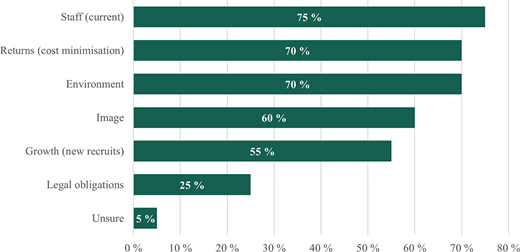
Most of the organisations aligned staff related goals with their workplace strategies and decision-making (Figure 1). This was reinforced in the interviews, where employee well-being was consistently emphasised as a key focus in shaping the work environment. As one interviewee stated, “Our staff is our single most important resource”. Another seconded the statement and commented: “Our philosophy is that when our employees are well, it has a positive impact on the result”. Well-being was often associated with social connections in the corporate office and interviewees were more likely to highlight these over potential benefits of working, for example, from home. Close to half of the organisations indicated that their staff expansion goals were tied to the workplace strategy, and some interviewees noted that the work environment is considered an important factor in attracting new talent. Notably, the benefit of the wider talent pool enabled by remote work was largely dismissed, as only one participant touched on the topic in the interviews.
Environmental targets were tied to workplaces in most organisations, but this was more prominent in larger organisations, where potential global strategies steered local decision-making, or in cases where the physical workplace had a significant impact due to the size of the office and number of employees. One such organisation emphasised the tension between sustainability values and office use, commenting: “Sustainability is a challenge if the office is used only once a week. Providing an office while meeting the sustainability targets is a difficult task”.
Approach to remote work
Although the trend of digital transformation and the rise of remote work were widely acknowledged, hybrid work practices at the current level were in use by all organisations primarily as a remnant of the practices implemented during the pandemic. While none of the organisations operated as fully remote or fully on-site, there was variation in attendance patterns, sometimes within the organisation. This was more prevalent in large organisations which incorporated larger ranges of tasks and teams with varying needs.
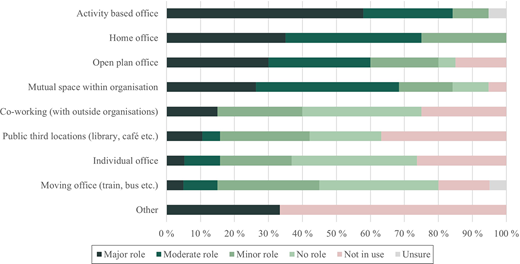
The sample organisations occupied various places for work (Figure 2). When asked to evaluate the importance of different locations, most participants perceived the home office as playing a key role alongside the corporate office. In fact, every organisation indicated their employees used the home office while other remote locations held less importance. Several interviewees clarified that information security and confidentiality were limiting the opportunity for remote work in third locations with financial and insurance sectors being particularly sensitive of this matter.
While co-working locations were mentioned as a positive way to interact with other industries, they were often used as a temporary solution, e.g. during an office relocation or as a buffer space to complement the corporate office. In one instance, the decision to withhold access to co-working space was also a way to limit remote work, as the corporate office was the only appropriate location outside the home. As one interviewee put it, “When our employees go to the office, we prefer that they work in our own office, connecting with their colleagues”.
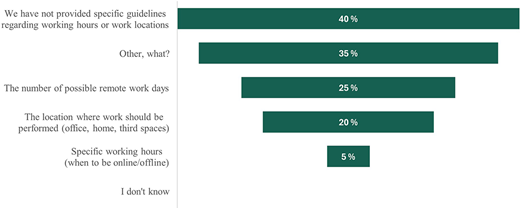
Organisations provided their employees a high level of independence to choose when and where their work is performed (Figure 3). Restrictions were primarily imposed on roles which required an on-site presence due to the nature of their operations. The given guidelines did not reflect a prevalent view among participants of hoping employees would be present at the office more often.
Although some organisations mandated part-time office work, the days were not specified nor tracked. Most of the organisations opted to give only a strong recommendation to work on-site. Reflecting on their experience, one interviewee commented that while a recommendation to spend a certain number of days in the office is generally accepted, insisting on specific days causes resistance among employees. Another noted: “Previously, the justification for remote work was on the employee, but now it has flipped, and the employer must justify why remote work wouldn’t be permitted”. One interviewee recognised the impact of rapidly changing work dynamics on individuals: “It’s a significant change to start working at home, but it’s also a significant change to return to the office”.
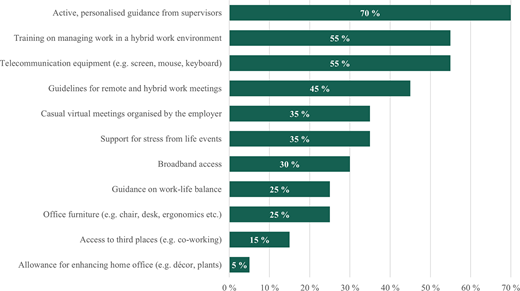
Across the organisations, support for remote work was demonstrated mainly through technological equipment, but many also considered it necessary to offer instructions and training (Figure 4). The level of support has changed since the pandemic as many organisations mentioned they have scaled back support such as the provision of office furniture or technological equipment. Instead, organisations directed efforts to equipping the corporate office and promoting employee wellbeing e.g. through joint events. As one respondent recounted, “the aim is to ensure better facilities at the office than those at home”. Another echoed this by asserting that they ensure “any particular needs that employees may have are addressed at the office”.
Although remote work was enabled in all the organisations, many of the participants expressed a preference for employees returning to the office. This typically stemmed from concerns over maintaining company culture, collaboration and trust through face-to-face encounters. These were reasons many indicated the need to have an office altogether. One participant tapped on the contradicting views on productivity at home and at the office. Observing that extreme solutions are unlikely to be fruitful, they suggested that a solution for an efficient team is found somewhere halfway. Many interviewees remarked on the difficulty of encouraging employees to return to the office. As one participant put it: “The reasons for working at home are personal, and that’s why it’s such a challenge to find incentives for getting employees back to the office”.
Timeline and future prospects
While the organisations demonstrated the need and willingness to address hybrid working in the corporate office, the planning was typically limited to a short-term horizon. The majority planned their work environments within a time span of 5 years or less. The interviews revealed that the strategy was typically tied to the length of a lease agreement, and organisations were increasingly reluctant to make long-term agreements, instead aiming for shorter terms than before. As one participant noted, “We no longer want to be stuck in a 5- or 10-year lease agreement, as a lot can happen during that time. Even if short-term leases are more expensive, they present us a smaller risk”. Participants considered shorter leases as a way of future-proofing operations by mitigating long-term commitments to workplaces that may not respond to unforeseen challenges. The longest strategic timeframes were in large organisations or those that owned their premises.
Flexibility was valued not only in terms of time but also in how space was managed. In particular those with long-term agreements had to consider other measures for adaptability, such as buffer spaces and subletting. Some saw physical assets as a liability due to the new ways of working. A major organisation noted that “If we’re unwilling to mandate specific days to spend at the office, it is only logical that we reduce the physical office space”. Some organisations that occupied their own premises were considering the option of transitioning to leased space to reduce costs and gain more agility.
Nonetheless, although remote work has taken a strong foothold in organisations of all sectors and sizes, physical offices were seen as an integral part of operations now and in the future. While many organisations anticipated downsizing and highlighted flexibility, all respondents indicated that the corporate office will remain essential at least within the next decade. For some, the reasons stemmed from legislation that requires a provision of customer services in a physical location, but many referred to security risks such as possible information breaches when working outside the corporate office. Many organisations raised reasons such as collaboration and a need to connect. Particularly in large organisations, it was noticeable that one size no longer fits all. One respondent noted that despite the popularity of working from home, the home setting is not ideal for everyone, and they emphasised the need to provide employees with a change from the domestic setting: “some also have a social need to seek time outside the home”. One interviewee also indicated that having a physical office is a matter of credibility.
Discussion and conclusions
This study set out to understand how remote work is approached by organisations on a strategic level in Finland, where remote working rates are notably high. We focused on three themes in particular: Firstly, workplace strategies and their connection to other organisational strategies; secondly, the role of remote work locations and how remote work is supported and controlled; thirdly, the timeframe of workplace strategies and organisations’ future perspectives.
Workplace strategies and organisational goals
Most organisations reported having a workplace strategy, and particularly large organisations linked their workplace strategy to organisational goals. In line with earlier studies (e.g. Redlein et al., 2020), we found that workplace strategies are closely linked to other organisational strategies and goals, such as well-being and financial and environmental initiatives. Small organisations were motivated by maintaining agility, and implementing a workplace strategy was not seen to support it. However, other organisational goals were said to be reflected in their workplace-related decision-making but the level of implementation remained unclear. Even though the link to other goals was recognised, the focus was on maintaining the well-being of staff and fostering intellectual capital. Academic literature has examined both the negative and positive aspects of remote work, but it seems that public discourse is much more focused on the challenges, and this is also reflected in the employer perspective. Amidst the conversation on social isolation and organisations’ cultural decline, it is easy to overlook the opportunities that remote work can bring.
Decision-making and strategies, particularly in the real estate sector, are traditionally approached by retrospective quantitative data and benchmarking market practice. Also, this study revealed that workplace strategies were often based on staff questionnaires and benchmarking other companies with focus on current and recent development. While this can provide important information, it may not reflect future needs sufficiently and holds a risk of workplace strategies always being outdated.
Addressing remote work in workplace strategies
Although many major global organisations have reported enforcing returns to the office (Marks, 2024), our results showed employers’ reluctance to implement policies that mandate employees to abandon remote work, even on a part-time basis. Additionally, literature suggests that employees are questioning the return to the traditional arrangement of working primarily at the corporate office (Gibson et al., 2023). Participants of this study noted that the home office has an equal role compared to the corporate office in daily operations. During the pandemic, there was a peak in financial and material support for setting up a remote workstation. However, this support has since diminished, and it has changed shape towards providing training and managerial support. Moreover, the interviews revealed a growing hesitation among organisations to invest in remote locations, with many choosing instead to enhance and equip the corporate office to attract employees back.
As remote work has an important role in organisations, employers face challenges in optimising all work environments in use. This limitation may prevent them from realising the full range of potential benefits that a well-designed work setting could offer. As discussed in the literature review (e.g. Harris, 2019), the work environment impacts employees’ well-being and ability to work. Several studies suggest that with appropriate equipment and setup, productivity and well-being could improve when working from home (e.g. Authors, 2025; Arkesteijn et al., 2021; Bergefurt et al, 2022). Consequently, if workplace strategies are not inclusive of remote work locations, there is a risk of organisations losing influence over elements that contribute to their success. Remote work has the benefit of allowing people to create and work in highly tailored work settings that are not always available in the corporate office. On the contrary, this carries the risk of work being done in environments that are not optimal, as home offices are set up by individuals who might lack the expertise to build a suitable workstation, or opportunities are constrained by other factors.
Future prospects
Even though previous studies (e.g. Rohrbeck and Kum, 2018) have concluded that long-term strategic thinking can have many positive impacts including business advantages, the results of this study indicate that organisations prioritise a short-term, reactive approach in their workplace strategies. Among the participants, the short-term focus was often seen as a way of mitigating risks, as flexibility allows their organisations to adapt quickly to the evolving market. As previous studies point out, short-term thinking comes with risks of its own: the focus only on the short-term can leave many aspects unnoticed, particularly about the future (Ratcliffe, 2000), and hinder the generation of new ideas (Vischer, 2011). Long-term strategic thinking can help organisations to identify and prevent unforeseen obstacles while also spotting possible opportunities in the future, ultimately building resilience.
Fostering a short-term approach to the work environment can also be a challenge in practice. In terms of workplaces, physical space itself creates constraints, as it is difficult to transform overnight. The ability of employees to adapt to constant change can also vary significantly, and continuous changes can impact their performance and morale. The rapid technological advancements changing how work is done are also increasingly challenging to keep up with. Moreover, attempts to adapt to every shift can weaken the focus on how and where the work itself is done effectively. This reactive approach can lead to workplace strategies that are unable to acknowledge and respond to the changing environment and its direct and indirect impacts in a holistic manner. To build resilience (Toivonen, 2021) and business advantage (Rohrbeck and Kum, 2018), organisations should take a long-term, holistic view on work environment (Saurin, 2012) instead of relying on temporary fixes (Levin, 2005).
Limitations
Certain limitations should be considered when reading the results. Firstly, the sample size of 20 responses reflects a limited number of views and perceptions. Secondly, the data collection was carried out over several months and the responses always reflect a view at the time of response. Despite the dispersion of data collection, there is a clear cohesion between responses which indicates that there have been no immediate solutions to the ongoing challenges and the challenges have remained. Thirdly, despite how some of the organisations operate globally, the interviewees were based in Finland and the study concentrated on their experiences locally. Additionally, generalisability may be limited in countries that do not have the same level of remote work capability as Finland.
Conclusions and further research
This study highlights that while organisations recognise the significant role of remote work, insights and experiences are in many cases yet to be translated into long-term workplace strategies. Organisations are still navigating their approach to remote work and remain hesitant to commit to long-term strategies. However, the rapid pace of change risks leaving them unprepared for changes that short-term thinking may overlook. The swiftly changing environment ensures that matters related to remote work are not static, and to keep up, it is necessary to look beyond the near future. This indicates that there is a need to include different timespans to workplace strategies, taking into account short-, medium- and long-term goals. This approach would allow reacting to short-term needs, but also enables identifying future opportunities and building resilience against long-term disruptions.
The widespread adoption of remote work has led to a shift in power dynamics, with employees holding a high level of control over where and when they work. Employers are responsible for creating company strategies but the current division between employer and employee perspectives poses challenges to creating a balanced workplace strategy. Developing a successful workplace strategy that all parties are committed to requires co-operation from both sides, instead of a top-down approach.
These results can benefit various parties in the industry such as managers and HR professionals, policy-makers and workplace strategists. Understanding how organisations incorporate remote work in workplace strategies can help stakeholders in the real estate industry who are challenged by the lowering demand for office space and rising vacancy rates. As was found in the literature review, the academic literature still has little to say about how remote work should be incorporated in a workplace strategy, so this study also adds to the limited literature on remote work from a strategic point of view.
The study offers many avenues for further research. Firstly, as it was limited to a Finnish context, a global comparison could offer deeper insight into how remote work is approached strategically internationally and in locations where remote work rates are lower. Secondly, in contrast to a single office space, supporting remote work requires spreading resources across multiple locations and may complicate issues such as insurance, regulations and administration. These challenges are not yet standard practice and warrant further exploration. Finally, challenges in taking a long-term vision offer a significant scope for further research on how strategic foresight could be incorporated into the development of workplace strategies.
The authors would like to thank all the interviewees for their time and valuable insights, which greatly contributed to this study.