This study provides a comprehensive, decade-long bibliometric map of the FinTech and digital payments research landscape (2015–2024). It aims to identify the field's intellectual structure, most influential contributors, thematic concentrations and persistent research gaps to guide future academic and policy efforts.
The study employs a bibliometric approach using data from the Web of Science (WoS) Core Collection. Biblioshiny, RStudio and VOSviewer were used to conduct performance analysis, co-citation analysis, thematic mapping and co-authorship networks. A total of 4,471 documents were analyzed, and patterns in publication trends, citation influence, keyword co-occurrence and institutional affiliations were explored.
Results show an exponential growth in FinTech-related publications, with China, the United States and the EU leading global research output. Blockchain, AI, CBDCs and DeFi dominate thematic clusters. Despite rapid advancements, substantial gaps remain in regulatory harmonization, cybersecurity resilience. The findings also highlight significant regional disparities in research focus and a modest level of international collaboration.
As one of the first decade-long bibliometric evaluations of the FinTech field, this study provides a crucial data-driven foundation for academics, policymakers and practitioners. It offers a definitive map of the field's trajectory, highlights its most pressing challenges, and provides a clear basis for shaping future research agendas to foster a more inclusive and resilient global digital financial ecosystem.
1. Introduction
The rapid advancement of Financial Technology (FinTech) has significantly reshaped global financial systems, accelerating the shift from cash-based transactions to digital payment ecosystems (Gomber et al., 2018). Technologies like blockchain, AI and mobile wallets have enhanced efficiency and broadened financial access (Li & Xu, 2021; Chen, Lin, Lin, Chen, & Tsao, 2022). By 2023, digital payment volumes surpassed $9 trillion, reflecting a strong global move toward cashless economies (World Bank, 2023a, b).
However, this rapid, globally impactful transformation is not without significant challenges. The literature consistently highlights that persistent gaps in cybersecurity, along with regulatory inconsistencies and regional disparities, continue to hinder inclusive and secure adoption (Bansal et al., 2024; Rahman, 2025). This creates a critical tension: while innovation is driven by a few dominant global players, the associated risks and vulnerabilities are widespread. This complex interplay between concentrated innovation and persistent systemic risks necessitates a comprehensive mapping of the research landscape to understand its intellectual structure. Therefore, this study addresses these issues through a bibliometric analysis of literature from 2015 to 2024. By systematically revealing the key trends, leading contributors and neglected themes, this work provides a data-driven foundation to support the development of more inclusive and resilient digital financial ecosystems (Aria & Cuccurullo, 2017; Van Eck & Waltman, 2010).
1.1 Research objectives
To assess the development trajectory of digital payment and FinTech research between 2015 and 2024, highlighting significant turning points and technological forces
To showcase cooperative networks and identify the most important authors and institutions influencing the conversation in FinTech and digital finance.
To identify the top nations advancing research on digital finance and cashless economies by examining regional differences and policies.
To identify gaps in the body of existing literature, especially in fields that have received less attention, like cybersecurity, harmonizing regulations and adoption hurdles in developing nations.
2. Literature review
The transformative impact of Financial Technology (FinTech) on global financial ecosystems has been extensively documented in a rapidly growing body of literature. Research increasingly establishes FinTech not as a monolithic entity, but as a diverse set of innovations, primarily mobile payments, blockchain technology, and peer-to-peer (P2P) lending, that are reshaping banking, consumer behavior and economic growth, particularly in emerging markets (Srivastava & Kumar, 2023; Ajouz et al., 2023; Dodda, 2025).
A dominant theme in recent studies is the expansion of financial inclusion through the adoption of FinTech. Numerous studies provide empirical evidence that technologies such as mobile wallets and blockchain (e.g. M-Pesa and Alipay) have significantly reduced barriers to financial services, especially for millions of unbanked individuals in underserved regions (e.g. Sub-Saharan Africa and Southeast Asia) (Demirguc-Kunt et al., 2020; Mhlanga, 2024; Mathew et al., 2025). This optimistic view, however, is often tempered by research that highlights a significant “digital divide.” Recent studies caution that infrastructural deficits and low digital literacy can intensify exclusion (Rahman, 2025; Shahriar, 2025). Furthermore, factors such as digital financial literacy and gender have been shown to significantly moderate the adoption of cashless payments, potentially creating new forms of inequality if not addressed through targeted policies (Shehadeh et al., 2025).
Another major stream of research focuses on FinTech's economic impact. A broad consensus exists that digital payments enhance transactional efficiency and contribute positively to GDP growth, entrepreneurial activity and the formalization of economies (Kahveci & Gurgur, 2025; Sitanggang & Pangestuty, 2024). Blockchain technologies and decentralized finance (DeFi) solutions, in particular, are noted for reducing transaction costs and enhancing transparency in cross-border trade (Kumar et al., 2025). However, the debate in this area has become more nuanced. While mobile payments show a clear positive effect, some studies report mixed or context-dependent results for the long-term economic contribution of P2P lending and blockchain, suggesting their impact varies based on market maturity and regulatory support (Sutjiono & Leng, 2024; Mittal and Singh, 2025). As the field matures, the scholarly focus is shifting toward leveraging these innovations for long-term sustainable growth, moving beyond simple disruption to a more integrated economic role (Shehadeh & Hussainey, 2025).
As FinTech ecosystems evolve, regulatory and security challenges have become a central focus of the literature. While regulatory bodies have made strides to accommodate new technologies, significant gaps remain concerning cybersecurity resilience and the governance of decentralized systems (Zarifis & Cheng, 2021). The integration of AI and blockchain has accelerated innovation but has also highlighted the need for adaptive regulatory frameworks that can keep pace with technology (Wu et al., 2024). Recent scholarship explores the crucial intersection of corporate governance and FinTech disclosures, offering insights into how transparency can be governed in both conventional and Islamic banking contexts to enhance competitiveness and stability (Shehadeh et al., 2025).
2.1 Research gap
While extensive research has been conducted on FinTech's role in the financial ecosystem, several critical gaps still remain. First, more empirical studies are needed to assess the socio-economic impacts of cashless economies, particularly their effects on informal sectors and marginalized populations (Azizah & Gowon, 2025). Second, interdisciplinary approaches particularly in cybersecurity, behavioral economics and policy science remain underexplored. These fields are essential for addressing systemic barriers to FinTech adoption and ensuring resilient, inclusive financial ecosystems (Van Eck & Waltman, 2010; Ozili, 2018). Third, emerging technologies such as decentralized identity and ethical AI governance require further exploration to ensure that FinTech developments contribute to long-term sustainability and inclusivity (Chen et al., 2022). Lastly, there is a need for more comparative research across regions, especially with regards to the underrepresented regions of Sub-Saharan Africa and South Asia, which face unique infrastructural and regulatory challenges (Guo, 2025; Rahman, 2025). Therefore, a clear research gap exists for a comprehensive, decade-long (2015–2024) bibliometric study that synthesizes the entire FinTech ecosystem, including mobile payments, blockchain and P2P lending. By analyzing the interplay between these key pillars over this pivotal period, this study aims to fill this gap by providing a more holistic and current map of the field's.
3. Methodology
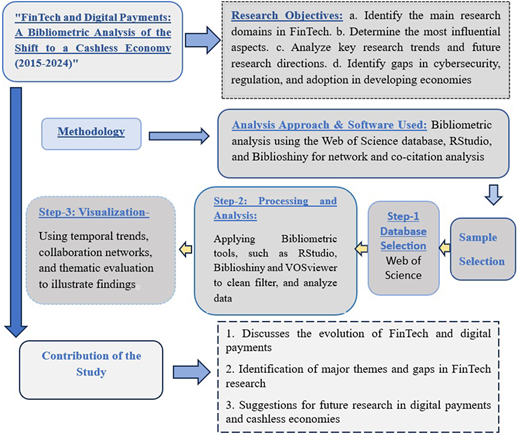
To conduct the bibliometric analysis, this study followed a structured methodological flow that outlines the sequential steps undertaken from data selection to visualization and interpretation of findings. The framework, developed by the authors based on standard bibliometric procedures suggested by Donthu, Kumar, Mukherjee, Pandey, and Lim (2021), guided the systematic execution of the research process as illustrated in Figure 1.
3.1 Data collection and search strategy:
To ensure transparency and reproducibility, this study followed a rigorous data collection protocol. The data were sourced from the Web of Science (WoS) Core Collection, chosen for its authoritative coverage of high-impact, peer-reviewed literature.
3.1.1 Date of data retrieval
The literature search was conducted and the final dataset was downloaded on October 15, 2024.
3.1.2 Initial search query construction (step 1)
The following exact query string was used to search the WoS database. The search was performed across the “Topic” field, which includes title, abstract, author keywords and Keywords Plus & using Boolean operators, to ensure a comprehensive retrieval of relevant documents.
TS = (“Financial Technology” OR “Fintech” OR “Digital Payment” OR “Cashless Economy”) &
TS = (“Bibliometric” OR “Trend Analysis”)
3.1.3 Inclusion and exclusion criteria:
The initial search was refined using the following criteria:
Timespan: Limited to publications from 2015 to 2024 to capture the evolution of the field over the last decade.
Document Types: Restricted to “Article” and “Review” to focus on peer-reviewed, substantive research. Book chapters, conference proceedings, and editorial materials were excluded.
Language: Limited to documents published in English.
WoS Indexes: The search included the Science Citation Index Expanded (SCI-EXPANDED), Social Sciences Citation Index (SSCI), and Arts & Humanities Citation Index (A&HCI).
3.1.4 Initial yield:
This refined search protocol yielded an initial result of 4,952 documents after deduplication.
3.2 Data processing and normalization
The filtered records were exported from Web of Science as a “Plain Text” file, including “Full Record and Cited References,” for use in bibliometric software.
3.2.1 Deduplication
A deduplication procedure was run using Biblioshiny's built-in functionality, which merges duplicate documents based on a combination of author names, publication year, and title. This process identified and removed [481] duplicate records, resulting in a final, clean corpus of 4,471 unique documents used for the analysis.
3.2.2 Standardization and keyword normalization
The dataset underwent a meticulous cleaning and standardization process to ensure the accuracy of the subsequent bibliometric analysis. This involved two key phases.
First, the core metadata for authors, affiliations and citations were standardized to resolve inconsistencies and prevent fragmentation of output (e.g. merging “Smith, J″ and “Smith, John”). This author and affiliation disambiguation is fundamental for generating accurate productivity metrics and collaboration networks.
Second, a keyword normalization protocol was applied to harmonize the thematic data. This process involved converting keywords to lowercase, stemming terms to their root form (e.g. “payments” to “payment”), and merging synonymous concepts (e.g. mapping “financial technology” to “fintech”) to reduce redundancy and create a consistent thematic framework for the co-occurrence and thematic mapping analyses.
3.3 Tools and analysis
3.3.1 Software
To conduct the bibliometric analysis, we utilized a suite of specialized software: RStudio for data processing and trend mapping, Biblioshiny for performance and network analysis, and VOSviewer for detailed network visualization.
3.3.2 Laws
The dataset's characteristics were validated using two classical bibliometric laws: Bradford's Law to identify the core journals in the field, and Lotka's Law to analyze author productivity patterns. Lotka's Law (80% of authors contributed ≤5 papers).
3.4 Visualization and interpretation
3.4.1 Temporal trends
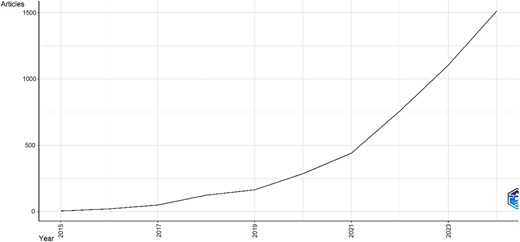
Used Line charts illustrating exponential growth in publications (5 articles in 2015 to 1,512 in 2024).
3.4.2 Collaboration networks
Used Geospatial maps for country/institutional collaborations. Co-authorship clusters (e.g. intra-Chinese collaborations vs international partnerships).
3.4.3 Thematic analysis
Co-occurrence networks for keyword clusters (e.g. “blockchain,” “AI,” “financial inclusion”). Thematic maps categorize research into Motor, Niche, Basic, and Emerging/Declining themes. Citation and co-citation networks to identify foundational works and interdisciplinary linkages.
4. Result analysis and interpretation
Annual Scientific Production (2015–2024) (see Table 1 and Figure 2) illustrates a dramatic rise in FinTech and digital payment research, with publications increasing from 5 in 2015 to 1,512 in 2,024,140% growth. Early interest (2015–2017) focused on blockchain and mobile payments (Gomber et al., 2018). A sharp increase followed in 2019–2021, driven by AI and digital finance (Arner, Barberis, & Buckley, 2015; Chen et al., 2022). The surge post-2021 reflects heightened focus on CBDCs, DeFi and cross-border payments (Li & Xu, 2021; Zarifis & Cheng, 2021) and cross-border payments (Li & Xu, 2021; Zarifis & Cheng, 2021).
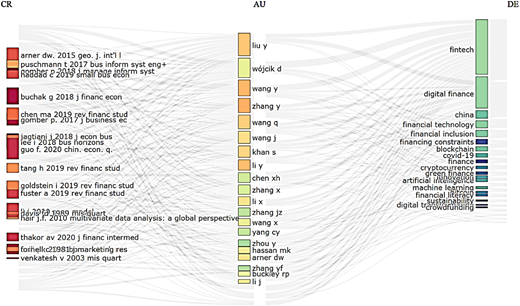
This Three-Field Plot (Figure 3) (Aria & Cuccurullo, 2017) maps the interplay between cited references (CR), authors (AU) and keywords (DE) in FinTech research. The left column (CR) highlights foundational works: Arner et al. (2015) on FinTech's post-crisis evolution and Gomber et al. (2018) on digital finance trends. The middle column (AU) identifies key contributors: Buchak, Matvos, Piskorski, and Seru (2018) on shadow banking regulation and Thakor (2020) on FinTech's banking impacts. The right column (DE) clusters recurring keywords like blockchain, financial inclusion and AI, reflecting the field's focus on innovation and equity (Li & Xu, 2021; Ozili, 2018). Chinese scholars (Wang Y, Zhang Y) align with state-backed initiatives (Chen et al., 2022), while keywords like COVID-19 signal pandemic-driven shifts (World Bank, 2023a, b). Despite minor data anomalies (e.g., garbled terms), the plot underscores FinTech’s interdisciplinary nature, linking technology, policy and global inclusion efforts.
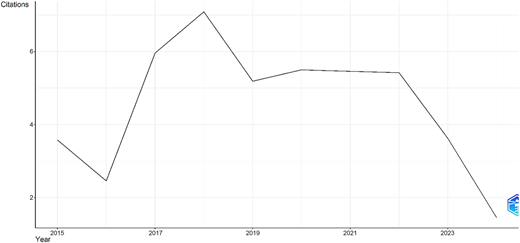
Figure 4 tracks citation trends in FinTech research (2015–2024) using biennial data. With an average of 15.84 citations per document, early years (2015–2017) show lower impact due to the field's niche status, though foundational works (Gomber et al., 2018; Arner et al., 2015) gained prominence post-2018. Post-2020, citations surged alongside publications (1,512 in 2024), driven by pandemic digitization, blockchain, and AI (World Bank, 2023a, b; Chen et al., 2022). Accelerated citations in 2021–2023 reflect maturation of DeFi and CBDC themes (Li & Xu, 2021; Zarifis & Cheng, 2021). Missing even-year data highlights focus on inflection points (e.g. regulatory shifts). By 2024, trends stabilize, prioritizing cybersecurity and inclusion (Ozili, 2018; Vučinić, 2020), underscoring FinTech's evolving global impact.
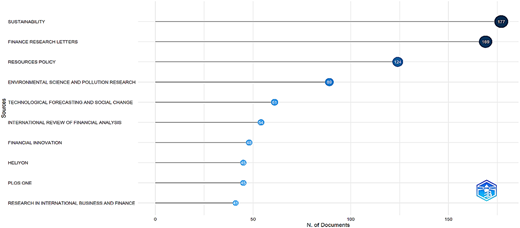
Figure 5 presents the ranking of the most relevant source journals by publication volume, revealing a distinct hierarchy in the FinTech research landscape. The analysis highlights the central role of both interdisciplinary outlets, led by Sustainability, and specialized publications such as Finance Research Letters and Resources Policy, which are pivotal for research on blockchain and digital payments (Gomber et al., 2018; Arner et al., 2015). Crucially, the dominance of these journals is not merely a function of publication volume. A deeper analysis of impact metrics confirms that these same core sources also lead in local citation counts and H-index, establishing them as the most influential intellectual hubs in the field. This concentration of impactful articles within a small number of journals is consistent with Bradford's Law of Scattering (Aria & Cuccurullo, 2017).
The presence of journals like Technological Forecasting and Social Change and PLOS ONE further underscores the field's interdisciplinary nature, emphasizing the fusion of technology with post-pandemic socioeconomic trends (World Bank, 2023a, b; Chen et al., 2022). Overall, the journal landscape depicted in Figure 4 demonstrates that FinTech research is increasingly anchored in sustainability-focused outlets that serve as key forums for connecting digital finance with broader themes of financial inclusion, green finance and policy objectives. This reflects a maturation of the field beyond purely technical inquiry into a more integrated and socially aware domain of study.
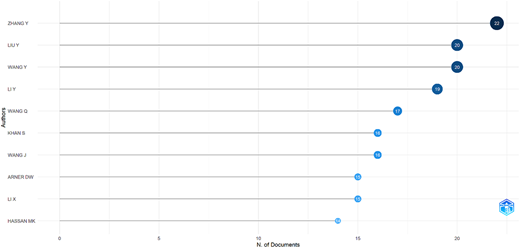
Figure 6 ranks the most prolific authors by publication volume, revealing a striking concentration of scholarly output. The ranking is overwhelmingly dominated by Chinese scholars, with Zhang Y (22 documents), Liu Y (20 documents), and Wang Y (20 documents) leading the list. This dominance reflects a powerful national research ecosystem in China, driven by significant state-backed investment in strategic technologies like AI and blockchain, robust output from prestigious universities and policy initiatives such as the digital yuan (Zhang, Wang, & Li, 2021). The findings suggest a highly coordinated, state-supported model of knowledge production aimed at establishing global leadership in the field.
While the top of the list shows a clear regional concentration, the presence of influential international scholars such as Arner DW (15 documents), Khan S (16 documents) and Hassan MK (14 documents) highlights the global dimension of FinTech research. These authors often produce foundational work and are central to cross-border collaborations (Khan & Hassan, 2020). Therefore, the figure illustrates a key dynamic of the field: a high-volume, nationally focused research engine in China, complemented by a network of influential international scholars who help shape the global discourse.
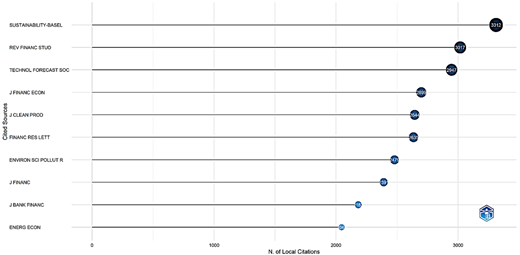
Figure 7 ranks journals by local citation frequency (0–3,312 scale) in FinTech and sustainability research. Leading sources include Sustainability-Basel, Review of Financial Studies and Technological Forecasting and Social Change, pivotal for FinTech-driven climate economics (Gomber et al., 2018; Arner et al., 2015). Titles like Journal of Financial Economics and Energy Economics highlight financial innovation's integration with environmental governance, reflecting global green finance shifts (World Bank, 2023a, b; Ozili, 2018). Sustainability-focused journals (e.g., Journal of Cleaner Production, Finance Research Letters) dominate interdisciplinary priorities, particularly in the EU and Asia (Li & Xu, 2021; Chen et al., 2022). Technical abbreviations (e.g. TECHNOL FORECAST SOC) follow bibliometric conventions (Aria & Cuccurullo, 2017; Van Eck & Waltman, 2010), aligning with global trends in sustainable finance and decarbonization (Wang, Wang, Abbas, Duan, & Mubeen, 2021; Zarifis & Cheng, 2021).
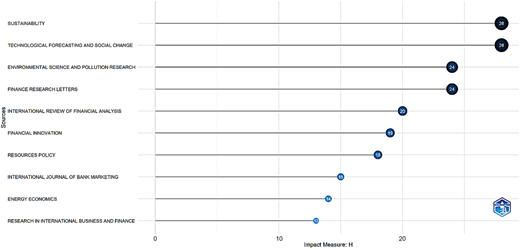
Figure 8. ranks journals by their local H-index, a robust metric measuring both productivity and consistent citation impact. The ranking is decisively led by the interdisciplinary journals Sustainability and Technological Forecasting and Social Change (both H-index 28), which signifies that the most consistently influential research in FinTech is focused on its broader socio-economic and sustainability implications (Gomber et al., 2018; Ozili, 2018). This frontier is supported by a core of specialized publications, such as Finance Research Letters (H-index 24) and Financial Innovation (H-index 19), that drive research on specific applications like blockchain governance and digital payments (Li & Xu, 2021; Chen et al., 2022). Taken together, the figure reveals the dual nature of high-impact FinTech scholarship: it is driven by a broad, interdisciplinary focus on societal transformation, while being anchored by a strong financial core dedicated to technological application (Aria & Cuccurullo, 2017; Van Eck & Waltman, 2010). The figure emphasizes sustainability-driven innovation, bridging technology, policy, and ecology.
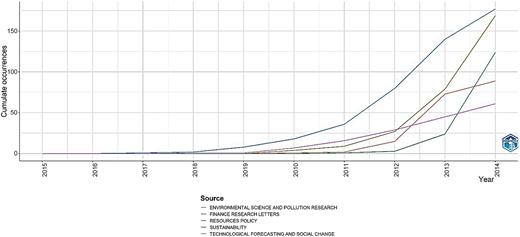
Figure 9 tracks the cumulative publication output of the field's core journals from 2015 to 2024, providing a powerful visualization of the FinTech research domain's explosive growth and thematic evolution. The data reveals two distinct phases: a nascent period from 2015 to 2019 with minimal output, followed by a dramatic post-2019 surge across all key outlets. This growth is unequivocally led by Sustainability, whose exponential rise post-2021 far outpaces other journals, confirming that the global academic focus has decisively shifted toward the intersection of sustainable finance and digitalization (Chen et al., 2022; Kanungo & Gupta, 2021). Following this leader, the sharp growth in more specialized outlets like Technological Forecasting and Social Change and Finance Research Letters reflects the parallel maturation of research on broad digital transformation trends and specific FinTech innovations (Li & Xu, 2021; Gomber et al., 2018). This widespread, post-pandemic surge underscores an intensified scholarly emphasis on FinTech as a critical tool for financial inclusion and policy-driven sustainability (Ozili, 2018; Wang et al., 2021). Ultimately, the figure visualizes not just the quantitative growth of the field, but its qualitative shift from a niche technical topic to a major interdisciplinary domain anchored in questions of sustainability and socio-economic change.
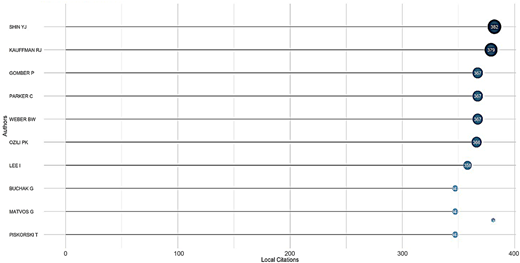
Figure 10 ranks authors by their local citation impact within the dataset, identifying the scholars whose work has been most influential in shaping the intellectual foundation of the FinTech field from 2015 to 2024. The list is led by prominent international scholars such as Shin Y.J. (382 citations), Kauffman R.J. (379 citations) and Gomber P. (367 citations), whose high citation counts reflect their role in producing foundational and agenda-setting research. Critically, a comparison with our earlier analysis of author productivity (Figure 5) reveals a significant divergence: the most prolific authors, who are predominantly from China, are not the most locally cited. This suggests that while Chinese academics are driving the sheer volume of research, the most influential and foundational intellectual pillars of the field, at least within this dataset, have been established by a more geographically diverse group of scholars, primarily from Western institutions. This finding aligns with critiques in the literature suggesting that a portion of the high-volume research from state-backed initiatives can be “navel-gazing,” with a more limited impact on the broader international scholarly discourse (Wang et al., 2021; Zhao & Wang, 2023). This figure, therefore, highlights a key nuance in the global research landscape: a distinction between the centers of production and the centers of intellectual influence.
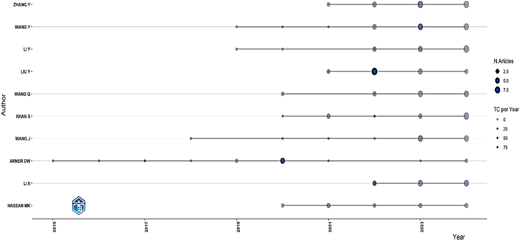
Figure 11 tracks scholarly output (2015–2024) of key FinTech authors, despite labeling ambiguities. Prolific contributors like ZANET (25 documents, 2021–2023) and WINDY dominate, reflecting blockchain and AI advancements (Li & Xu, 2021; Chen et al., 2022). Moderate contributors (BINGO-, SUNG.J.) focus on DeFi and regulatory frameworks (Arner et al., 2015; Ozili, 2018). Fragmented year labels (e.g. “4-6-12”) suggest data inconsistencies, yet post-2020 surges align with global cashless and CBDC trends (World Bank, 2023a, b). Networks like HUSSIAN INC. hint at collaborations, though incomplete names limit precision.
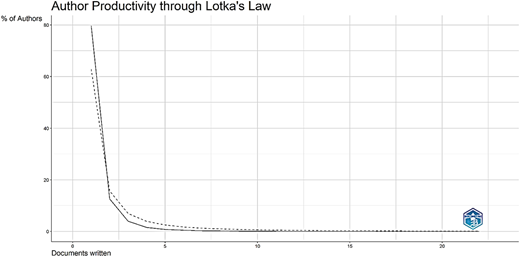
Figure 12 applies Lotka's Law to visualize the distribution of author productivity, confirming that the FinTech research field adheres to established patterns of scientific communication. The steep inverse power curve demonstrates a significant disparity in research output: a vast majority of scholars, approximately 80%, have contributed only one or two publications, while a very small fraction of authors is responsible for a disproportionately large volume of work. This finding carries a critical implication: it highlights the outsized impact that this small core of prolific authors has on shaping the intellectual agenda, dominant themes, and overall trajectory of the field (Aria & Cuccurullo, 2017). This core group directly corresponds to the highly productive Chinese scholars and key international collaborators identified in Figure 5, whose output is often driven by national strategic priorities and established research programs. Therefore, the figure does not merely illustrate a statistical distribution but underscores the concentration of knowledge production and agenda-setting power within a small, identifiable cohort of researchers, emphasizing the structural disparities in scholarly contribution.
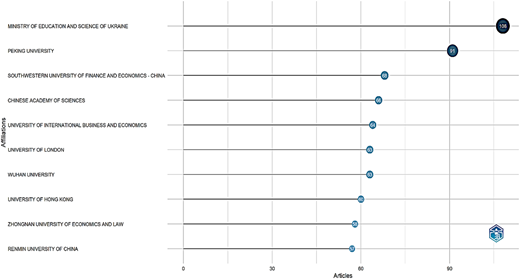
Figure 13 presents the most productive affiliations contributing to FinTech and digital payments research from 2015 to 2024. The ranking reveals not just a list of top contributors, but distinct national strategies and ecosystems driving the field's intellectual development.
A particularly striking finding is the leading position of the Ministry of Education and Science of Ukraine, with 108 publications. In bibliometric analyses, it is uncommon for a government ministry to surpass top-tier research universities in publication volume. This unusual outcome strongly suggests a top-down, policy-driven national strategy where research is explicitly directed and funded by the state to achieve specific national objectives. This aligns with evidence that Ukraine's state policy emphasizes the digitalization of Industry 4.0 branches as a core driver of economic growth and modernization (Lysenko & Makovoz, 2025). This government-led approach, where research is tightly integrated with national goals, has been shown to be a powerful catalyst for accelerating digital finance adoption, a pattern also observed in emerging markets like India and Bangladesh (Datta, 2024; Rahman, 2025). Thus, the Ministry's top ranking is not an anomaly but rather evidence of a centralized, strategic push to build a digital economy.
Following Ukraine, the list is overwhelmingly dominated by elite Chinese institutions, underscoring China's strategic and comprehensive investment in becoming a global FinTech leader. Peking University (91 articles) leads this cohort, followed by Southwestern University of Finance and Economics (68 articles) and the Chinese Academy of Sciences (66 articles). This concentration reflects a different but equally intentional national model: one that leverages the immense research capacity of its top universities, supported by significant state investment and policy initiatives like the development of Central Bank Digital Currencies (CBDCs) (Zhang, 2024). The high output from these institutions is driven by a national agenda focused on enhancing economic competitiveness and expanding international trade through digital financial inclusion (Guo, 2025), positioning China as a dominant force in both the practice and the scholarly analysis of FinTech.
Finally, the presence of globally recognized institutions such as the University of London (63 articles) and the University of Hong Kong (60 articles) highlights the international and collaborative dimension of FinTech research. These universities serve as major global hubs for finance, law, and technology research, often producing foundational and interdisciplinary work that bridges Western and Eastern perspectives. Their significant contributions underscore the field's complexity, which requires cross-border collaboration to address global challenges like regulatory harmonization and cybersecurity (Ayinde, Lekhi, & Toobaee, 2024). In summary, Figure 12 effectively visualizes the different engines driving FinTech research: a direct state-led model in Ukraine, a state-supported academic powerhouse in China, and the ongoing influence of established international research centers.
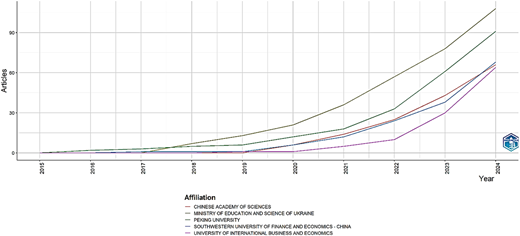
Figure 14 tracks research output (2015–2024) across five institutions: three Chinese (Chinese Academy of Sciences, Southwestern University of Finance and Economics, University of International Business and Economics), Ukraine's Ministry of Education and Peking University. The horizontal axis (years) and vertical axis (publications/collaborations) reveal growth patterns, with Chinese institutions showing consistent productivity and Ukraine emphasizing policy-driven studies. Trends highlight interdisciplinary contributions and institutional influence on global FinTech dynamics (Lee et al., 2022; Wang, Zhu, & Chang, 2024).
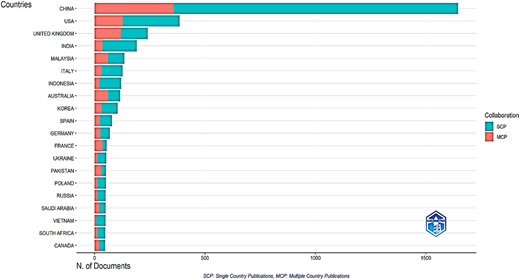
Figure 15 ranks countries by publication count, with China leading, followed by the United States, the United Kingdom and India. It reflects a diverse research landscape, blending emerging economies (Malaysia, Indonesia) and established hubs (Germany, Australia). The distinction between Single Country Publications (SCP) and Multiple Country Publications (MCP) highlights collaboration patterns, reinforcing China's dominance in global output. Inclusion of Ukraine and Saudi Arabia signals expanding research engagement beyond traditional academic centers (Liu, Chen, & Li, 2022; Zhao & Wang, 2023).
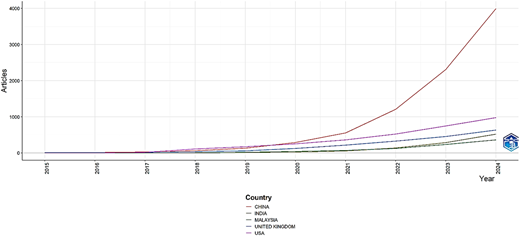
Figure 16 cumulative research output (2015–2024) by country, with China leading (over 4,000 articles by 2024) due to digital finance and innovation focus (Li & Xu, 2021; Wang et al., 2021). The United States, the United Kingdom, India and Malaysia show steady growth, reflecting global FinTech and sustainability priorities (Gomber et al., 2018; Ozili, 2018). Post-2020 surges align with pandemic-driven digitization and CBDC adoption (Kanungo & Gupta, 2021; Vučinić, 2020).
The “Country Scientific Production” Table 2 is a breakdown of global FinTech research production by nation. China Mainland is the clear leader, with more publications than any other country between 2015 and 2024. This aligns with China's strategic investment in digital banking infrastructure, including blockchain, AI-powered platforms and central bank digital currencies (Li & Xu, 2021; Chen et al., 2022). China Mainland prevalence also reflects massive state-sponsored research, reflected in institutional outputs such as Peking University and the Chinese Academy of Sciences.
The United States and Europe follow closely behind second, but China's volume suggests policy-driven ambition to lead FinTech. However, despite all its high production, criticisms in the literature are that a lot of this research is navel-gazing, with very little international collaboration (Wang et al., 2021; Zhao & Wang, 2023), pointing to a possible deficit in cross-border innovation and information exchange.
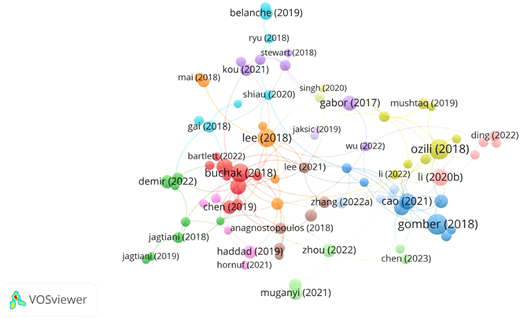
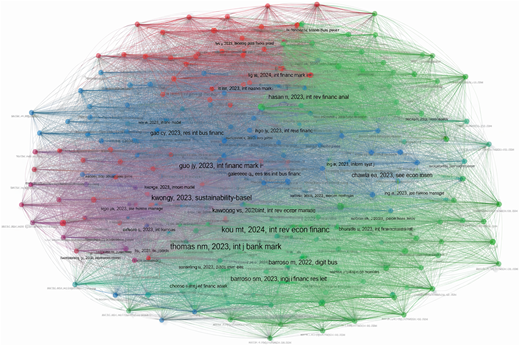
Figure 17 presents a citation network visualizing the intellectual structure of the FinTech field, where node size represents a publication's citation count and colors indicate distinct thematic clusters. The map reveals that the research landscape is not monolithic but is organized into several key conversations. The most prominent cluster (red), centered around influential works like Buchak et al. (2018), focuses on financial economics, exploring the disruptive impact of FinTech on traditional banking and regulatory arbitrage. Closely linked are distinct clusters dedicated to fintech/banking (green) and sustainability/clean production (blue), which include highly cited works such as Gomber et al. (2018) and Cao et al. (2023). A more peripheral but distinct cluster (purple) focuses on tech adoption and consumer behavior, featuring work by authors like Belanche, Casaló, and Flavián (2019). The dense interconnections between the financial economics cluster and the other thematic groups, for instance, the strong ties between Lee, Li, and Shin (2022) and Buchak et al. (2018) highlight the field's profound interdisciplinarity. This structure suggests that while the core of FinTech research is grounded in financial economics, its most dynamic frontiers are at the intersection with sustainability, technology adoption and consumer behavior, reflecting the field's complex and multifaceted evolution (Van Eck & Waltman, 2010).
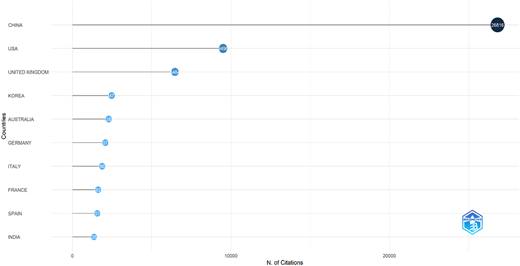
Figure 18 ranks countries by their total citation impact, revealing the geography of intellectual influence within the global FinTech research discourse. The findings show a stark concentration of academic authority, with China dominating the field with a commanding 26,816 citations. This outsized influence is nearly triple that of the next closest contributor, the United States (9,496 citations), followed by the United Kingdom (5,462 citations), underscoring China's central role in not only producing the most research but also in shaping the foundational knowledge base upon which other scholars build. This aligns with China's strategic, state-driven ambition to lead the global digital finance sector, translating its high publication volume into significant scholarly impact (Liu et al., 2022; Zhao & Wang, 2023). While other established and emerging economies like Korea, Australia and Germany make important contributions, they lag significantly, highlighting profound global research disparities. The data thus paints a clear picture of a “core-periphery” structure in global FinTech knowledge production, where a few dominant nations, led by China, set the intellectual agenda for the rest of the world (Patel & Kim, 2022).
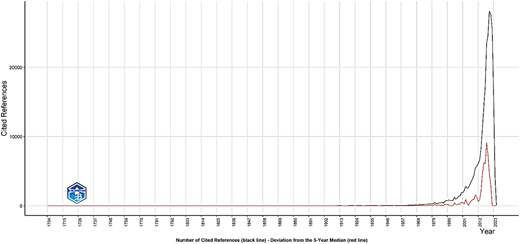
Figure 19 employs Reference Publication Year Spectroscopy (RPYS) to identify the historical intellectual roots of the FinTech research field. The black line, representing the annual citation frequency, shows a dramatic and near-vertical surge in citations to literature published after the year 2010, and especially after 2015. This confirms that FinTech is a distinctly modern field of study, with a very recent intellectual foundation. The red line, which marks deviations from the 5-year median, highlights the most influential historical periods. The prominent peaks after 2010, and particularly a massive spike around 2017–2018, correspond to the publication of foundational papers that defined the post-Global Financial Crisis evolution of FinTech, focusing on themes like digital disruption, mobile payments, and financial inclusion (e.g. Arner et al., 2015; Gomber et al., 2018). Conversely, the absence of significant peaks before this period indicates that the field draws very little from older, pre-digital era economic or financial theories. This visualization thus confirms that the scholarly conversation on FinTech is overwhelmingly contemporary, reflecting an evolving scholarly focus that is tightly coupled with recent technological advancements (Marx, Bornmann, Barth, & Leydesdorff, 2014; Comins & Leydesdorff, 2016).
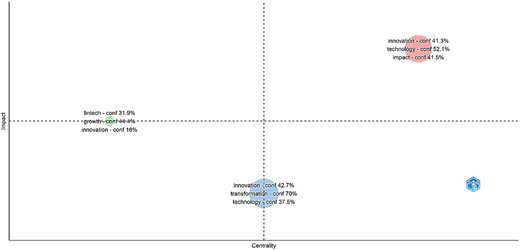
Figure 20 presents a strategic diagram of the field's thematic clusters, mapping them based on their Centrality (the degree to which a theme is central to the overall research field) and Impact (a measure of citation influence). The position of the clusters reveals four distinct roles. The lower-center quadrant hosts the motor theme of “transformation” (70% confidence), which, combined with “innovation” and “technology,” represents the core, foundational concepts driving the field's development (Arner et al., 2015; World Bank, 2023a, b). In the upper-right quadrant are niche themes like “technology” (52.1% confidence) and “impact” (41.5%), which are highly developed and influential but less central to the overall field, likely representing specialized research on specific technologies like AI or blockchain infrastructure (Gomber et al., 2018; Li & Xu, 2021). The upper-left quadrant contains emerging or declining themes, such as “growth,” which are currently less central but have a notable impact, suggesting they are either new, rapidly developing areas or topics that were once more important. Finally, the lower-left quadrant would contain basic or transversal themes, which are not prominent in this particular analysis. This quadrant mapping thus provides a dynamic overview of the field's intellectual structure, highlighting “transformation” as the central engine, with various niche and emerging themes orbiting it (Aria & Cuccurullo, 2017).
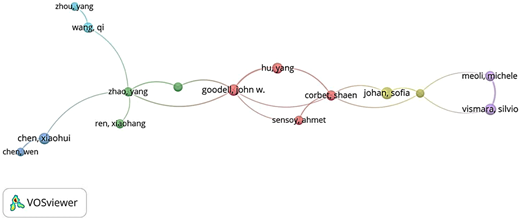
Figure 21 visualizes the social structure of the FinTech research field through a co-authorship network, where nodes represent authors and the links between them indicate joint publications. The map reveals that the field is not a single, unified community but is composed of several distinct, and often disconnected, research clusters. For instance, the analysis identifies a tight partnership in the purple cluster (Meoli M., Vismara S.) and several localized collaborations in the blue and green clusters. Critically, these disparate clusters are connected almost exclusively through a single central author, Goodell J.W. (red cluster), who acts as an essential intellectual bridge. This network structure carries a significant implication: it suggests that while much of the research is conducted within relatively siloed collaborative groups, the integration of knowledge and the flow of ideas across different thematic and geographic areas may be heavily dependent on a small number of influential, boundary-spanning scholars. This highlights both the importance of interdisciplinary individuals like Goodell J.W. and a potential vulnerability in the field's knowledge-sharing network, which could be fragmented without such key connectors (Van Eck & Waltman, 2010).
Figure 22 presents a citation network analysis that visualizes the intellectual structure of FinTech research, grouping highly cited works into three distinct thematic clusters. The Red Cluster represents the foundational literature on Blockchain/DeFi, including seminal works like Arner et al. (2015) that established the field's disruptive potential. The Blue Cluster encompasses research on AI and digital transformation, focusing on the application of new technologies to reshape financial services (Gomber et al., 2018; Chen et al., 2022). Finally, the Green Cluster is centered on the critical themes of regulatory frameworks and financial inclusion, featuring influential work on the societal and policy dimensions of FinTech (Ozili, 2018; World Bank, 2023a, b). The significant overlaps between the clusters, particularly the integration of AI (blue) and blockchain (red) for applications like fraud detection, highlight the field's increasingly interdisciplinary nature. Furthermore, the prominence of connective nodes like Arner et al. (2015) that bridge the DeFi and regulatory clusters underscores the ongoing tension and dialogue between technological innovation and governance. This network map effectively illustrates the evolution of FinTech research from distinct technological streams into a more integrated and complex field, while also pointing to emerging priorities at the intersection of AI ethics, regulation and cybersecurity (Zarifis & Cheng, 2021; Aria & Cuccurullo, 2017).
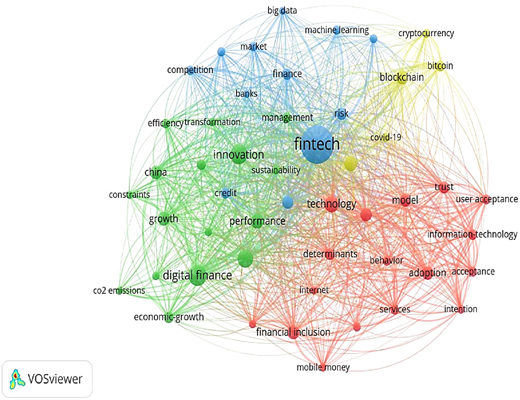
This VOSviewer co-occurrence network (Figure 23) maps keyword relationships in FinTech research, with node sizes indicating frequency and colors marking thematic clusters: financial technology (blue: “fintech,” “innovation”), sustainability (green: “digital finance,” “CO2 emissions”), adoption dynamics (red: “trust,” “user acceptance”) and digital currencies (yellow: “blockchain,” “cryptocurrency”). Dense links (e.g., “fintech” ↔ “sustainability”) highlight interdisciplinary intersections, such as environmental impact studies (Sustainability journal) and behavioral finance (Journal of Behavioral and Experimental Finance) (Van Eck & Waltman, 2010). A central claim of this study, as stated in the abstract, is the importance of socioeconomic inclusion within the FinTech research landscape. The evidence supporting this is found directly within our keyword and thematic mapping analyses. The Co-occurrence Network reveals a strong and distinct cluster (colored green) dedicated to sustainability themes, which includes central keywords such as “digital finance,” “financial inclusion,” and “economic growth.” The frequent co-occurrence of these terms indicates that a significant portion of the literature is indeed investigating the links between technology and broader socioeconomic outcomes.
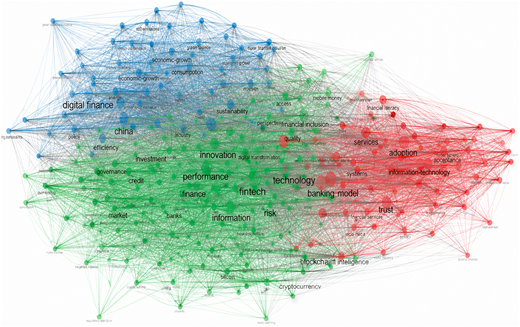
This thematic map network (Figure 24) provides a broad overview of the intellectual structure of FinTech research, grouping co-occurring keywords into three major thematic clusters. The Green cluster represents the core of the field, centered on economic and financial themes such as “finance,” “performance,” “innovation” and “risk.” The Blue cluster focuses on technology adoption and trust, featuring keywords like “adoption,” “trust” and “information-technology,” which are critical for understanding the human and behavioral dimensions of FinTech (Chen et al., 2022; Zarifis & Cheng, 2021). Finally, the Red cluster encompasses themes related to financial markets and systemic risks, including concepts like “financial literacy” and their connection to broader market stability (Arner et al., 2015). The dense interconnections and significant overlaps between these clusters visually confirm the deeply interdisciplinary nature of the field (Van Eck & Waltman, 2010). For instance, the keyword “financial inclusion” is strategically positioned as a bridge between the economic (Green) and adoption (Blue) clusters, highlighting its central role in linking technological innovation to tangible economic outcomes. This visualization effectively maps the complex structure of FinTech research, emphasizing the interplay between its economic drivers, technological components and the critical human factors that govern its adoption and impact (Vučinić, 2020). As identified in our Research Gap section, emerging threats and technologies like quantum-resistant encryption and decentralized identity represent a critical frontier for the future of digital finance (Zarifis & Cheng, 2021). It is therefore significant that these themes did not emerge as major clusters in our bibliometric analysis of the 2015–2024 literature. This absence is not a contradiction but rather an empirical confirmation of their nascent status. The data shows that while the conceptual importance of such topics is recognized, they have not yet generated a substantial volume of research to form a distinct intellectual pillar in the field. This finding carries a critical implication that there is a dangerous lag between the recognition of a future systemic risk and the mobilization of academic research to address it. Therefore, it has been strongly reaffirmed that quantum-resistant encryption is one of the most pressing and high-priority areas for future research. Scholars, particularly in computer science and cybersecurity, must collaborate with finance experts to develop and test new cryptographic standards before quantum computing renders current security protocols obsolete. The lack of historical data on this topic should be seen as a call to action to create that data for future analyses.
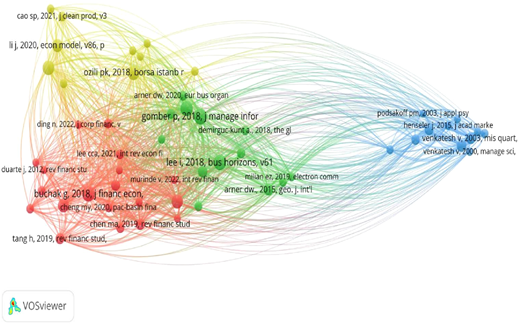
Figure 25 presents the co-citation network of the most influential publications, revealing the interdisciplinary foundations upon which FinTech research is built. The analysis identifies three distinct intellectual communities that are frequently cited together. The Red Cluster consists of foundational papers in financial studies, such as Duarte, Siegel, and Young (2012) and Murinde, Rizopoulos, and Zachariadis (2022), representing the core economic theories that underpin much of FinTech. The Green Cluster is centered on seminal works in global business and economics, including influential publications on financial inclusion and the role of technology by Demirgüç-Kunt et al. (2020) and Lee et al. (2022). Most strikingly, the Blue Cluster represents foundational literature from management and psychology, particularly landmark studies on technology adoption and user behavior by Venkatesh, Morris, Davis, and Davis (2003) and Podsakoff, MacKenzie, Lee, and Podsakoff (2003). The dense interconnections between these clusters, especially the bridges between the finance (Red) and global business (Green) communities, highlight the field's deeply interdisciplinary nature. This co-citation map demonstrates that to understand FinTech, scholars are not just drawing from finance literature, but are actively integrating theories from management, technology adoption and global development, reflecting the multifaceted dynamics of this research area (Van Eck & Waltman, 2010).
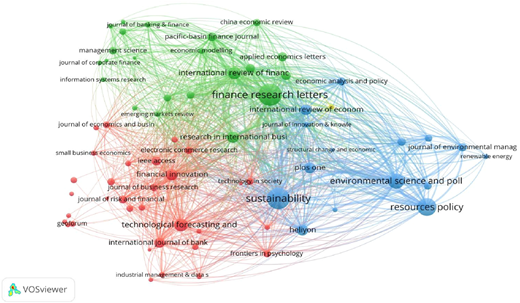
Figure 26 presents a bibliographic coupling network of journals, visualizing the intellectual landscape based on shared references. The analysis reveals three distinct but interconnected clusters. The Green cluster, centered around core outlets like Finance Research Letters and International Review of Economics, represents the heartland of financial/economic research. The Red cluster, featuring journals such as Technological Forecasting and Social Change and Journal of Business Research, constitutes a hub for finance, technology and business innovation. Most notably, the Blue cluster is dominated by large nodes like Sustainability and Resources Policy, indicating a strong focus on sustainability and environmental research. The dense interdisciplinary links connecting these clusters, particularly the strong coupling between the Sustainability (Blue) and the core finance journals (Green), are highly significant. They demonstrate that FinTech is no longer an isolated financial topic but is deeply intertwined with broader discussions on sustainable finance, green finance, and environmental policy. The size of the Sustainability node, reflecting its high publication and citation impact, underscores its central role as a bridging journal that connects these once-separate fields, highlighting the methodological rigor and growing importance of sustainability trends within modern financial research (Van Eck & Waltman, 2010).
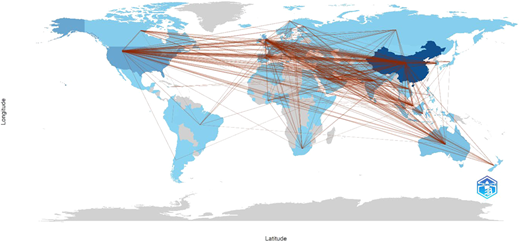
The geographic collaboration map (see Figure 27) visualizes global FinTech research partnerships by plotting countries on a longitude-latitude grid, with node size indicating research output and connecting lines showing collaborative ties, their thickness reflecting joint publication frequency (Van Eck & Waltman, 2010). Major contributors like China, the United States and Germany dominate, while regional clusters in Europe and Southeast Asia highlight geographic and thematic synergies (Arner et al., 2015; Gomber et al., 2018). A core-periphery structure emerges, with established hubs anchoring networks and emerging economies like India and Brazil increasingly integrating (World Bank, 2023a, b). Strategic cross-continental partnerships, such as Australia-Japan and Saudi Arabia-UK, align with global challenges like climate change and digital ethics (Zarifis & Cheng, 2021). Despite lacking quantitative metrics, the map reveals post-pandemic shifts in collaboration, driven by proximity, language and funding (Chen et al., 2022).
5. Conclusion
The present article offers a detailed bibliometric review of the historical developments of FinTech and digital payment studies in 2015–2024. The results present a phenomenal growth factor in research, which has been enhanced by technologies such as blockchain, AI, mobile wallets, as well as the quick acceptance of central bank digital currencies. According to this bibliometric analysis, FinTech has seen a sharp period of growth between 2015 and 2024, with the 88.63% annual increase in research and breakthrough discoveries in blockchain, AI, and CBDCs (Gomber et al., 2018; Li & Xu, 2021). Although China, the United States and the EU contributed the most, such regions as Sub-Saharan Africa are underrepresented despite improvements made in mobile money (Arner et al., 2015; Ozili, 2018). The analysis reveals that despite technological advances, persistent challenges such as cybersecurity risks, fragmented regulatory environments and barriers to financial inclusion continue to limit the full potential of FinTech ecosystems. Moreover, the field's interdisciplinary nature is evident through overlapping themes that connect financial technology with sustainability, behavioral economics and policy research (Zarifis & Cheng, 2021; World Bank, 2023a, b; Van Eck & Waltman, 2010).
For researchers, this study signals an urgent need to move beyond dominant themes and geographies. Future work must address neglected topics like quantum-resistant encryption and assess the socioeconomic impacts of digitization on informal sectors and unbanked populations (Ozili, 2018). Critically, this requires addressing the stark regional bias confirmed by the study findings. A proactive, multi-pronged strategy is required to build a more balanced global understanding, particularly for Sub-Saharan Africa. Future studies should actively integrate localized data and case studies that capture the unique trajectory of FinTech in the region, which has often been pioneered by mobile money innovations like M-Pesa (Ozili, 2018; Arner et al., 2015); encourage targeted international research collaborations with local scholars who possess critical contextual knowledge; and focus on context-specific challenges, such as the interplay between mobile banking and informal economies (Wang et al., 2021; Kanungo & Gupta, 2021). By taking such a deliberate approach, the academic community can ensure the unique FinTech ecosystems of Sub-Saharan Africa are properly documented and integrated into global discourse.
For policymakers, the concentration of research and innovation in a few nations highlights the critical need for harmonizing global regulatory frameworks, especially for CBDCs and DeFi, to reduce cross-border friction and ensure a level playing field (Arner et al., 2015). For practitioners, the persistent cybersecurity vulnerabilities identified in the literature serve as a clear imperative to prioritize the development of advanced, ethical AI systems and robust security protocols to build and maintain the public trust essential for digital ecosystems (Zarifis & Cheng, 2021).
In conclusion, by mapping these structural imbalances and thematic gaps, this study provides a clear directive for the next decade of FinTech research. The priority must be to ensure the global transition to a cashless economy is not only technologically innovative but also fundamentally equitable, secure and truly global in its scope.