By methodically mapping the intellectual structure, thematic evolution and research trends within fintech-driven sustainability literature, this study investigates the role of fintech in advancing sustainable development.
Using a three-stage sensemaking framework of scanning, sensing and substantiating, a bibliometric analysis of 685 Scopus-indexed articles published between 2017 and 2025 was carried out. To examine performance metrics, collaboration networks and bibliometric laws, the study combines co-citation, co-authorship and thematic mapping techniques using VOSviewer and QDA Miner.
The findings show that fintech sustainability research has grown significantly, with new themes like digital innovation, financial inclusion and green finance becoming more well-known. However, there is still a lack of research in areas like financial constraint dynamics and the integration of the environment, society and governance. The results show how interdisciplinary collaboration patterns and changing knowledge clusters are influencing the field.
The study may overlook pertinent contributions from other databases since it is restricted to Scopus-indexed papers and certain bibliometric techniques. The study offers a structured knowledge map to direct future empirical and conceptual investigations, theoretically extending the sensemaking framework to bibliometric research.
The insights support technology-enabled sustainable finance ecosystems by helping policymakers, financial institutions and technology developers link fintech initiatives with inclusive growth objectives and the United Nations Sustainable Development Goals.
In addition to providing a unique sensemaking-based analytical framework to comprehend knowledge evolution and future research trajectories in this quickly developing field, this study provides a thorough and theory-driven bibliometric synthesis of fintech and sustainable development research.
1. Introduction
The shift from traditional to digital finance reshapes risk–reward balance for long-term investment. Digital platforms remove information barriers historically hindering green initiatives fintech reduces financial constraints and fosters innovation-driven green transformation in private firms (Zhu & Huang, 2025) while improving service efficiency and cost reduction makes sustainability programs more viable for institutional portfolios (Dewangan & Kumar, 2025).
Sustainable development has become a global priority as economic growth intensifies environmental pressures. Fintech – through digital finance, mobile banking and payment systems enhances resource accessibility, efficiency and transparency to enable inclusive and sustainable growth, with its role in green transformation increasingly recognized by academics, practitioners and policymakers (Badruddin, 2017; Fernandez-Vazquez, Rosillo, de La Fuente, & Priore, 2019; Cumming, Kumar, Lim, & Pandey, 2022; Goodell, Kumar, Lim, & Pattnaik, 2021; Kumar et al., 2022a, b). Studies linking fintech to sustainable development goals (SDGs) remain fragmented and largely descriptive, lacking deeper interpretative analysis connecting bibliometric trends to theoretical frameworks. Sensemaking theory is rarely applied in bibliometric research to explain how fintech scholarship evolves and identify emerging research directions.
This study applies sensemaking approach to systematically map, interpret and evaluate the research structure on “fintech in sustainable development.” It uses a qualitative bibliometric approach to determine publishing patterns and authors that contribute frequently;
Look at topic clusters;
Use Lotka's, Bradford's and Zipf's laws to validate bibliometric regularities and
Find understudied regions for further research.
1.1 Research gap
Several articles on the bibliometric analysis of the topic of “fintech” have been found, according to the prior research survey. It has been observed that bibliometric research on “fintech in sustainable development,” particularly with a focus on the sensemaking approach, remains limited. This research gap motivated the use of the sensemaking approach in a bibliometric investigation of “fintech in sustainable development.”
1.2 Research questions
What are the publication trends?
Who are the most prolific contributors?
Which research articles have received the most citations?
What are the major themes, and what are the future trends in the field?
Which geographic areas have researchers disregarded and on which have they concentrated?
Does the research follow the bibliometric laws?
1.3 Research objectives
The major aim of the current study is to understand bibliometric analytics in the field of research in “fintech in sustainable development” using the sensemaking approach. The sub-objectives are as follows:
To explore the key contributions using performance analysis techniques;
To conduct science mapping, including an analysis of collaboration patterns, research themes and trends, along with the regional focus of the research and
To substantiate the research using the bibliometric laws.
1.4 Novelty of the research
The study's novelty lies in combining the sensemaking approach with bibliometric analysis a distinctive method for reaching more reliable conclusions. By integrating Lotka's, Bradford's and Zipf's Laws within this framework, the study advances bibliometric analysis of “fintech in sustainable development” while making theoretical contributions by demonstrating how sensemaking enhances bibliometric interpretation. It also provides a replicable industry mapping that informs academics, regulators and institutions on fintech's evolving sustainability agenda.
1.5 Research schema
Table 1 depicts a three-stage research schema employing a sensemaking framework. The “scanning” stage concentrates on performance analysis to find publication trends and significant contributors. The “sensing” step uses science mapping and thematic analysis to look at research themes, collaboration patterns, regional focus and intellectual structure. The “substantiating” stage confirms findings by applying bibliometric laws such as Lotka, Bradford and Zipf.
2. Literature review
2.1 Application of fintech
Fintech significantly reduces credit risk; in Chinese commercial banking, fintech integration lowers non-performing loan (NPL) ratios by an average of 0.9% points while improving cost and asset efficiency (Qin & Jing, 2025). However, in innovation-driven emerging economies, digital lending often raises NPL ratios due to rapid adoption outpacing regulatory frameworks, whereas digital capital rising shows stronger market resilience (Anestiawati, Amanda, Khantinyano, & Agatha, 2026).
Over the past decade, digitalization has transformed financial technology, with blockchain and related innovations attracting wide industry attention and spawning new methodologies (Zhao, Tsai, & Wang, 2019). Banking has become the leading adopter of these technologies (Dozier & Montgomery, 2020), driving secure, efficient electronic payments and cashless economy initiatives (Badruddin, 2015). Beyond finance, these technologies serve small and medium-sized enterprises (SMEs), supply chains and industrial firms (Jiao, Shahid, Mirza, & Tan, 2021; Kimani et al., 2020; Menne et al., 2022), enabling diverse payment methods (Visconti-Caparrós & Campos-Blázquez, 2022), anti-money laundering measures (Akartuna, Johnson, & Thornton, 2022), cryptocurrency adoption (Nasir et al., 2021) and capital market trading (Kauffman, Liu, & Ma, 2015). Recent scholarship consistently links fintech to financial innovation and sustainable growth (Menne et al., 2022; Najib, Ermawati, Fahma, Endri, & Suhartanto, 2021; Shin & Choi, 2019; Zhao et al., 2019; Deng, Huang, & Cheng, 2019). On sustainability, research examines fintech's role in banking (Ji & Tia, 2022; Kangwa, Mwale, & Shaikh, 2021; Saif, Hussin, Husin, Alwadain, & Chakraborty, 2022) and introduces green fintech frameworks (Puschmann, Hoffmann, & Khmarskyi, 2020). In Indonesia, combining fintech with formal financial services through regulatory sandboxes, information and communication technology (ICT) investment and institutional innovation is essential to banking the large unbanked population (Setiawan, Nugraha, Irawan, Nathan, & Zoltan, 2021).
2.2 Fintech in sustainable development
Fintech's contribution to SDGs is conditional and context-dependent. SDG progress through fintech is linked to select firms where social and environmental values outweigh financial gain and inter-firm collaboration amplifies SDG impact (Carè, Boitan, & Fatima, 2023). Institutionally, only SDG 3 and SDG 17 advance through development in prosperous nations, and only SDG 16 in developing ones (Popkova, De Bernardi, Tyurina, & Sergi, 2022).
Digital micro-savings boost savings participation by 42.6% and volume by 37.4% over informal methods, supporting SDG 1 and SDG 8, while increasing women entrepreneurs' financial decision-making independence by 48.1%, advancing SDG 5 (Karankoti, Shrivastava, Gao, Uplaonkar, Sonar, & Panwar, 2026). Green fintech and DeFi reduce carbon footprints by cutting reliance on physical banking and cash logistics, supporting SDG 13 (Ramaiya, Goyal, & Dubey, 2025).
Despite innovation activity on social media and open innovation models (Franco-Riquelme & Rubalcaba, 2021), fintech has broadly failed to achieve SDGs meaningfully. In Zambia, mobile money complements but does not replace broader financial inclusion strategies (Chikalipah, 2020). Fintech's empowerment of women is significant in low-gender-bias countries but negligible where bias is high (Esmaeilpour Moghadam & Karami, 2023). Internet adoption and fintech positively support green economic growth despite carbon emission challenges (Awais, Afzal, Firdousi, & Hasnaoui, 2023; Badruddin, 2023).
Fintech drives sustainable development in Indonesia's banking industry (Legowo, Subanidja, & Sorongan, 2020), enables SME transition to circular economic models (Pizzi, Corbo, & Caputo, 2021) and creates value through sustainable technological orientation and ecological efficiency (Taneja et al., 2023). Broadly, fintech reshapes financial access to promote long-term sustainability (Ullah & Begum, 2025).
2.3 Concept of bibliometric laws
Academic research on digital finance is largely empirical and still emerging (Zou, Liu, Wang, & Yang, 2023). Bibliometrics, a quantitative approach to synthesizing literature, categorizes prior research and provides objective, reproducible findings (Tepe, Geyikci, & Sancak, 2021).
Three classical bibliometric laws underpin this method (Tsay, 2005; Hood & Wilson, 2001; Osareh, 1996a, 1996b). Lotka's Law (1926) establishes that a small number of authors produce the majority of scholarly output, expressed as yx = 6/p2xa, where yx is proportion of authors generating x publications and a is a subject-specific constant (Alvarado, 2002). Bradford's Law (1934) holds that literature on any topic disperses across journals in zones of declining density, in the ratio 1:n:n2 (Brookes, 1969). Zipf's Law (1949) links word frequency to rank the most frequent term ranks first, the next second and so on (Fairthorne, 1969).
These laws form the foundation of bibliometric analysis, which extends them by systematically searching databases for keywords, authors and publications across national and international journals to yield research-ready data (Farias, 2009).
2.4 Concept of sensemaking approach
Performance analysis tracks publication and citation trends and identifies the field's most productive researchers. Science mapping (sensing) uncovers relationships between clusters and defines their thematic focus as demonstrated by Lim, Rasul, Kumar, and Ala (2022), who used keyword co-occurrence to generate distinct thematic clusters in customer engagement research.
Substantiating validates conclusions through credibility, confirmability, dependability and transferability criteria drawn from Lincoln and Guba (1985, 1986) and Guba (1981). Credibility is achieved through triangulation: applying multiple methods to a single dataset, such as cross-validating geographic claims using influential articles and journals or discipline coverage using countries and institutions (Lim, Kumar, Pandey, Verma, & Kumar, 2023). Co-word analyses can be validated through PageRank (Kumar et al., 2022a, b; Kraus et al., 2022; Kumar, Lim, Sivarajah, & Kaur, 2023a; Saha et al., 2023) or bibliographic coupling (Donthu, Lim, Kumar, & Pandey, 2023; Kumar, Lim, Sivarajah, & Kaur, 2023a). Confirmability ensuring findings reflect data rather than researcher bias requires transparent documentation of methods (Kraus et al., 2022), supported by relevant citations (Kumar, Sharma, Rao, Lim, & Mangla, 2023b).
Dependability, referring to consistency and reliability of results, is confirmed through repeatability checks (O’Kane, Smith, & Lerman, 2021), cross-checking (She, Waheed, Lim, & E-Vahdati, 2023), temporal analyses (Kumar et al., 2023b; Singh, Lim, Jha, Kumar, & Ciasullo, 2023) and triangulation with prior reviews (Lim et al., 2022; Donthu, Lim, Kumar, & Pattnaik, 2022). Transferability – the applicability of findings across contexts – is demonstrated by showing how results extend across multiple domains (Kumar et al., 2023a), using cases to illustrate cross-field influence (Lim, Kumar, Pandey, Rasul et al., 2023; Sahoo, Kumar, Abedin, Lim, & Jakhar, 2023) and discussing broader implications (Júnior, Limongi, Lim, Eastman, & Kumar, 2023; Ciasullo, Lim, Manesh, & Palumbo, 2022).
3. Method
3.1 Database and search query formulation
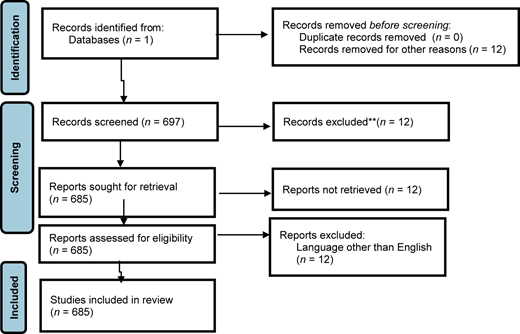
The SCOPUS database, selected for its broad, peer-reviewed interdisciplinary coverage in finance, business and sustainability (Munodei and Athenia, 2023; Baas, Schotten, Plume, Côté, & Karimi, 2020), was searched using the query: TITLE-ABS-KEY (“fintech”) AND TITLE-ABS-KEY (“sustainable development”) AND (LIMIT-TO (LANGUAGE, “English”)), in line with Preferred Reporting Items for Systematic Reviews and Meta-Analyses (PRISMA) 2020 criteria. This yielded 697 records (2017–2025), of which 685 were retained after excluding 12 irrelevant or non-English items (Figure 1).
3.1.1 Inclusion/exclusion criteria
To highlight the multidisciplinary character of fintech and sustainable development, all document kinds and topic areas were covered. Only records that were published in languages other than English or lacked comprehensive bibliographies were disqualified.
3.1.2 Data cleaning and preparation
Duplicate records were identified via Scopus DOI matching and manually verified. Inconsistent institutional names and missing author fields were standardized, and keywords were consolidated (e.g. “green finance” = “green financing”). This ensured data reliability and interpretative validity.
3.2 Analytical framework: sensemaking approach
The analysis was led by the sensemaking framework, which has three stages:
3.2.1 Scanning
Bibliometrics for scanning: performance and descriptive (co-citation, citation and co-authorship analysis);
3.2.2 Sensing
Science mapping and theme interpretation (thematic coding, bibliographic coupling and co-occurrence);
3.2.3 Substantiating
Bibliometric rules are used to validate. This made it possible to trace quantitatively and get a qualitative understanding of how fintech's sustainability conversation is developing.
3.3 Software and parameters
VoSviewer (v1.6.20) was used for all bibliometric visualizations, with association-strength normalization to calculate cluster density and fractional counting for co-citation and co-authorship networks. QDA Miner (v5.0) was used for thematic interpretation, which extracted conceptual themes using frequency analysis and open coding.
3.4 Validation through triangulation
Bradford's, Zipf's, and Lotka's Laws substantiated journal dispersion, keyword distribution and author productivity respectively. Credibility, reliability and confirmability were strengthened through triangulation of quantitative measures and qualitative coding (Lincoln & Guba, 1985, 1986). Topic modelling and Spearman's rank correlation-based keyword co-occurrence analysis further reinforced interpretative reliability and replicability of the bibliometric mapping.
4. Analysis and discussion
4.1 Scanning
The sensemaking approach involves the first stage, “scanning”. The process of scanning has been accomplished in the study through performance analysis. The performance analysis has been conducted using co-citation analysis, citation analysis and co-authorship analysis. The scanning process meets the first objective of the study, thereby answering research questions first, second and third.
4.1.1 Trend in publication
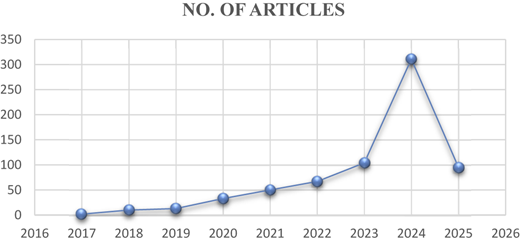
Figure 2 shows publication trends from 2017 to 2025, revealing steady growth in “fintech and sustainable development” research from 1 article in 2017 to 14 in 2020 and 29 in 2025. This upward trajectory is largely attributable to COVID-19, which accelerated online transactions and intensified focus on sustainable development issues.
4.1.2 Most cited authors
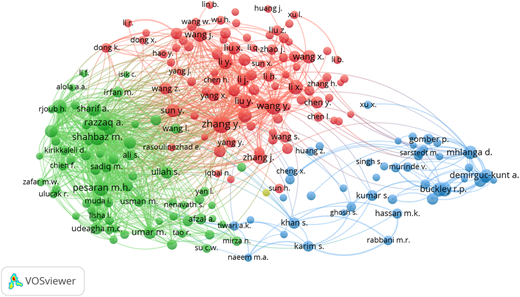
Bibliometric analysis (Figure 3) reveals that by citations, “Zhang Y.” leads (279), followed by “Razzaq A.” and “Pesaran M.H.” (209 each) and “Shahbaz M.” (205). By total link strength, “Zhang Y.” (14,500), “Shahbaz M.” (13,922), “Wang Y.” (13,887) and “Sharif A.” (12,804) dominate as intellectual hubs. Key thematic keywords “fintech,” “green innovation,” and “natural resources” also show strong link strength, reflecting their growing centrality. These findings point to concentrated thought leadership among select authors and the rising importance of multidisciplinary themes across sustainability, financial innovation and resource-based development.
4.1.3 Prolific authors
Table 2 highlights the most prolific authors by publications, citations, and average publication year. David Mhlanga leads with 7 publications, 134 citations and an average year of 2024, reflecting sustained activity. Siddik, Abu Bakkar and Rabbani, Mustafa Raza each have 5 publications, with 241 and 143 citations, respectively, Siddik's higher citation count and more recent average year (2023), indicating growing impact. Hassan, M. Kabir, Taghizadeh-Hesary, Farhad and Wong, Wing-Keung each contributed 4 publications with 50–58 citations and average years spanning 2021–2024, reflecting consistent engagement. Collectively, these authors illustrate the field's dynamic and evolving scholarship.
4.2 Sensing
“Sensing” is the second stage of the “sensemaking” process. To be able to test the fourth, fifth and sixth enquiries in the study, the subsequent research aim is satisfied in the current stage. The “thematic analysis”, co-occurrence analysis and bibliographic coupling analysis approaches were all deployed in the sensing methodology.
4.2.1 Thematic focus of publications
Table 3 categorizes research themes across six dimensions (Badruddin, 2023). The primary focus covers green finance, sustainable development and financial inclusion. The spatial focus spans across countries and regions including Indonesia, Pakistan, India, China, Brazil, Russia, India, China and South Africa (BRICS), Organisation for Economic Co-operation and Development (OECD) and developing economies. The sectoral focus encompasses banking, healthcare, stock markets, mobile money, technology, energy and digital sectors. The functional focus highlights innovation, business models, peer-to-peer lending and blockchain. Frames (Semetko & Valkenburg, 2000) include emerging economies, economic growth, quality environment and Islamic finance. The other category flags environmental, social and governance (ESG) and financial constraints as underexplored areas warranting future research.
4.2.2 Fintechs driving sustainable development in different regions across the world
Digital payments reduce transaction-based emissions by eliminating paper and physical infrastructure (Ramaiya et al., 2025). In Sub-Saharan Africa, fintech promotes renewable energy investment (Abdalla, Awad, Jafeel, Azhar Hussain, & Ozturk, 2025), while in polluting industries, it removes financing barriers and stimulates green innovation (Zhu & Huang, 2025; Liu, Li, Lobont, & Wang, 2025). In Europe, green fintech integrated with circular economy principles enhances biodiversity protection (Kakar et al., 2025).
Table 4 shows fintech reduces resource constraints and supports sustainable development in regions with advanced infrastructure (Yu & Li, 2024) while improving financial institutions' operations and supporting energy transitions in OECD countries (Tiwari, Cheong, See Mey, & Saji, 2024). In coastal regions, it fosters equitable development through expanded financial access, green finance and stronger regulation (Sadhana, Sukardi, Susilo, Maulana, & Nashihah, 2025).
In Middle East and North Africa (MENA), an enabling regulatory environment is essential for fintech-driven sustainability to align with developmental goals (Kabir Hassan, Rahiman, Raza Rabbani, & Alhomaidi, 2022; Alsmadi, Abu-AlSondos, Al-Daoud, & Aldulaimi, 2024). Related party transactions also significantly influence earnings management in Jordanian non-financial listed companies (Al-Manaseer, Al-Thuneibat, & Ahmad, 2026). Fintech advances sustainable progress by expanding green finance access, promoting financial inclusion, enhancing efficiency and transparency and developing data analytics and regulatory technologies (Gautier Georges Yao Quenum, 2024), while simultaneously reducing pollution and carbon emissions (Wen & Azzaq, 2023). Regionally, South Asian Association for Regional Co-operation and Association of Southeast Asian Nations studies highlight diverse growth potential shaped by local needs (Imam, McInnes, Colombage, & Grose, 2022), while in the Central Asia Regional Economic Cooperation Program region, fintech's impact on economic growth is amplified in higher-growth nations (Razzaq, 2024).
4.2.3 Qualitative interpretation of the clusters and themes across regions in the world
Qualitative bibliometric analysis (Table 3) reveals fintech increasingly theorized as a multidimensional catalyst for institutional, environmental and developmental change moving beyond mere adoption documentation.
Regionally, fintech operates differently across contexts. In China and OECD economies, it strengthens environmental regulations and advances green finance and industrial transition. In ASEAN and India, it drives inclusive finance and renewable energy investment. In Australia, it supports carbon reduction and real-time environmental monitoring. France and OECD literature emphasizes ESG integration, regulatory compliance and corporate sustainability. Globally, fintech is positioned as SDG delivery mechanism linking financial inclusion, poverty alleviation and environmental stewardship.
Malaysia and China have linked fintech to green energy efficiency, while Central Asia faces resource dependency and outdated infrastructure impeding energy transition (Liang & Morgan, 2026). In Jordan and the Gulf Cooperation Council, fintech supports non-oil sector growth and diversification (Ben Bouheni, 2025), though gains in digital financial reporting remain contingent on macroeconomic stability and digital literacy (Shehadeh, 2025). Islamic fintech, particularly green Sukuk and digital Shariah compliance tools, offers a framework aligning ethical governance with ESG and sustainability goals (Shi, Firmansyah, Wang, & Xu, 2025; Liu et al., 2025).
4.2.4 Most “cited references”
Bibliographic coupling analysis, using documents with a minimum of 10 citations, identified 23 connected items from 35 selected articles within the largest network set. The top five highly cited references (Table 5) are: Arner, Buckley, Zetzsche, and Veidt (2020), Demir, Pesqué-Cela, Altunbas, and Murinde (2022), Anshari, Almunawar, Masri, and Hamdan (2019), Pizzi et al. (2021) and Zhao et al. (2019), with the first three recording the strongest overall link strengths.
4.2.5 Bibliographic coupling analysis
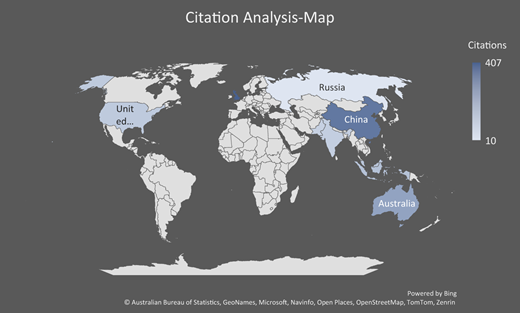
The result of bibliographic coupling based on country depicted in Figure 4 conveys that the highest number of documents are from “China”, followed by “India” and “Pakistan”, whereas the largest number of citations is found in “United Kingdom”, followed by “China” and “Australia”, with the least citations from “Russian Federation”.
4.3 Substantiating
The present study uses the bibliometric laws – Lotka's law, Bradford's law and Zipf's law – to support the “sensemaking” approach. Below is a discussion on the application and analysis of the bibliometric laws:
4.3.1 Lotka law
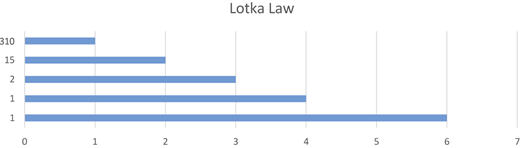
Lotka's law (xny = constant; n = 2) predicts that ∼60% of contributors produce one publication, ∼15% two, ∼7% three, and so on – each successive group comprising roughly 1/n2 of single-contribution authors. In this dataset, “Rabbani, Mustafa Raza” leads with six publications and “Siddik, Abu Bakkar” with four (both <1%), while “Afzal, Ayesha” and “Firdousi, Saba” each have three (<1.25%). In total, 15 authors (<10%) have 2 publications, and 310 authors (>90%) have one each (Figure 5). This distribution confirms adherence to Lotka's law, attributable to the study's limited research volume and single-database scope.
4.3.2 Bradford law
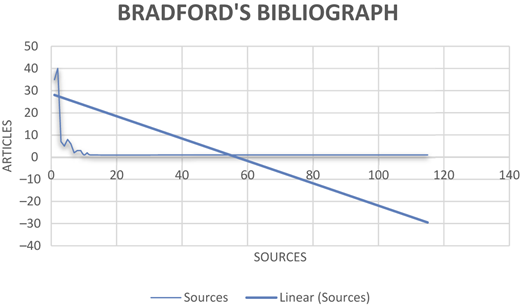
Bibliographic coupling analysis (minimum: 1 document, 0 citations per source) identified 53 connected items in the largest set. Sources are distributed across three Bradford zones (Table 6, Figure 6): Zone 1, 17 documents from a single high-output source; Zone 2, 4 documents from 2 sources, 3 from 3 sources and 2 from 11 sources, and Zone 3, 0 or 1 document per source. This pattern – few sources yielding many references, many sources yielding few – confirms adherence to Bradford's law.
4.3.3 Zipf's law
Table 7 confirms a Zipfian keyword distribution where frequency decreases proportionally with rank, with “fintech,” “sustainable development” and “financial inclusion” dominating, while a long tail of thematically significant terms follows a power-law distribution. This hierarchical pattern, where few keywords anchor discourse and many others contribute niche perspectives, is typical of bibliometric data and helps distinguish core from peripheral themes within the field.
4.3.4 Topic modelling analysis
Topic modelling reveals twenty distinct themes reflecting research at the intersection of sustainability, technology, economics and governance (Table 8).
Dominant themes (85%+ of estimated cases): Topic 7 (“Renewable energy and sustainability economics”), Topic 11 (“SDGs and social inclusion”) and Topic 14 (“fintech and cross-country analysis”) dominate the landscape. Topic 7 concentrates on low-carbon transitions and sustainable policy; Topic 11 integrates SDGs, gender and rural development particularly across Africa and India and Topic 14 affirms digital finance as a cross-national catalyst for innovation and development.
Climate and resource management (40–50% of cases): Topics 1 (“Natural resource economics”), 20 (“Carbon emissions and climate change”) and 16 (“Bibliometric reviews”) address carbon reduction, ecological footprint analysis and methodological mapping reflecting both environmental centrality and field maturity.
Governance and energy transition (60%+ of cases): Topics 19 and 6 cover corporate governance, ESG, productivity and industrial transformation. Topic 10 adds a regional lens, examining fossil fuel intensity and energy transitions in Asian economies.
Methodological and technology themes: Topics 5 and 4 reflect advanced econometric frameworks (method of moments quantile regression (MMQR), generalized method of moments (GMM), autoregressive distributed lag and uncertainty modelling), while Topic 3 highlights artificial intelligence (AI), machine learning, blockchain and big data signalling, a field-wide shift toward computational and data-driven methods.
Emerging niche themes: Topics 8 (technology adoption and trust), 18 (supply chain innovation), 12 (SMEs and firm structure) and 17 (eco-friendly mining) represent smaller but coherent clusters, indicating growing scholarly interest in digital behaviour, logistics, small business dynamics and responsible resource extraction.
Overall, rapid technology advancement, enhanced methodological rigour and robust environmental and developmental cores serve as the thematic landscape's anchors. Research increasingly sees digitization, innovation, and governance as essential elements of sustainable development, as seen by the coherence between high-frequency sustainability issues and technology-driven clusters. The subjects' consistency and diversity point to a developing research ecosystem where environmental imperatives are investigated in relation to financial inclusion, technological advancement and institutional effectiveness in addition to being studied separately.
4.3.5 Keyword co-occurrence and correlation analysis
This keyword co-occurrence and Spearman correlation analysis (Table 9) maps temporal and thematic shifts across six frequency bins.
Strongly emerging frontiers: Natural resource and environmental economics dominate growth (“NATURAL”, “RESOURCES”, “MINERAL”, “CARBON” and “CLIMATE”, “POLLUTION”). Advanced econometrics are rising rapidly (“MMQR”, “QUANTILE” and “ASYMMETRIC”) as traditional ordinary least square and GMM approaches decline.
Stable core: Foundational terms “FINTECH”, “FINANCIAL”, “SUSTAINABLE”, “DEVELOPMENT” and “ENERGY” remain stable organizational anchors. “GREEN” is transitioning from core to emerging.
Declining areas: Generic terms (“APPLICATIONS”, “BUSINESS”), digital infrastructure (“INTERNET”, “MOBILE” and “PLATFORMS”), and institutional terms (“BANKS”, “FIRMS” and “INSTITUTIONS”) are falling, signalling a shift from institutional to environmental and technological analysis. ML research (“MACHINE”, “LEARNING”) appears to be saturating.
Geographic and sectoral patterns: Cross-country comparative focus grows (“CHINA”, “BRICS” and “COUNTRIES”). “AGRICULTURE” and “TRADE” are expanding rapidly. “DECENTRALIZED” rises as “BANKING” falls, reflecting a shift from centralized to distributed financial architecture.
Technology evolution: “DECENTRALIZED” grows as “BLOCKCHAIN” slightly declines –— research is moving from blockchain novelty to specific DeFi applications. “BIG” data decline, indicating post-hype normalisation.
Policy and impact: “IMPACT” and “INFLUENCE” grow significantly, reflecting greater emphasis on measurable outcomes. “POLICY” and “GOVERNANCE” remain stable while “INSTITUTIONS” declines, suggesting research increasingly examines how policy shapes technical and environmental outcomes.
Sustainability and SDGs: “SUSTAINABLE” and “SUSTAINABILITY” remain stable; “SDG/SDGS” show slight declines – scholars appear to address sustainability directly rather than through explicit SDG labelling. “ENVIRONMENTAL” and “CLIMATE” grow strongly; “INCLUSION”, “POVERTY” and “GENDER” remain stable but secondary to environmental priorities.
Finance and economics: “FINANCE” and “FINANCIAL” are stable. “DECENTRALIZED” rises as “BLOCKCHAIN” and “CROWDFUNDING” normalize. “GDP” slightly declines, suggesting a shift toward multidimensional development measures.
Research quality: “INSIGHTS” rises significantly, reflecting demand for actionable contributions. Firm-level terms (“FIRMS”, “COMPANIES” and “SMES”) broadly decline, confirming a field-wide shift from organizational to systemic and environmental perspectives.
5. Conclusion
Research on “fintech and sustainable development” grew steadily from 2017 to 2025, with findings organised through the sensemaking framework across five dimensions.
5.1 Performance analysis
Leading cited authors include Hassan M.K., Khan S., Bashar A. and Karim S. Most influential works are “sustainability, fintech and financial inclusion” (Arner et al., 2020; 138 citations) and “fintech, financial inclusion and income inequality: a quantile regression approach” (Demir et al., 2022; 114 citations). Emerging specialized areas include Islamic finance, Islamic fintech (11 instances each) and MMQR methodology.
5.2 Science mapping
Thematic analysis spans primary, spatial, sectoral, functional and frames categories across diverse geographies, including Indonesia, Pakistan, Turkey, Bahrain, India, China, Zambia, BRICS, OECD, Belt and Road and developing economies with China most prominent. ESG and financial constraints remain underrepresented and warrant further investigation.
5.3 Bibliometric laws
The dataset confirms compliance with Bradford's, Lotka's and Zipf's laws, validating structural consistency of research patterns in the field.
5.4 Topic modelling
Research centres on climate mitigation, renewable energy, SDG-linked socioeconomic inclusion and governance, supported by advanced econometric and technological innovation clusters. Smaller clusters reflect growing interest in fintech adoption, supply chain innovation and sustainable resource management collectively signalling increasingly transdisciplinary and methodologically rigorous scholarship.
5.5 Keyword analysis
The field has shifted from digital business themes toward environmental and resource-oriented concerns. Natural resources, mineral extraction and climate keywords show strong positive trends; financial inclusion, business applications and Internet platforms are declining. Advanced quantitative methods, particularly quantile regression and asymmetric approaches, are increasingly prevalent.
Overall, the sensemaking approach effectively maps contributions, thematic frameworks, geographic emphases, and methodological evolution within the emerging field of fintech and sustainable development.
6. Practical and theoretical implications
Publication trends signal fintech sustainability is now a policy priority; regulators should allocate dedicated resources aligned with United Nations Sustainable Development Goals. Publication surge post-COVID raises a question worth studying: Do crisis-driven research spikes produce sustained depth or temporary clustering?
Key authors provide evidence-based foundations for institutions designing fintech sustainability frameworks. Concentrated author influence signals potential knowledge hierarchy and geographic bias. Future studies should audit citation diversity.
Dominant themes (green finance, financial inclusion and digital innovation) require firms to integrate, not separate, environmental and inclusion agendas, investing in blockchain carbon tracking, AI-ESG scoring and low-carbon payment systems. ESG appears only 17 times in the keyword corpus, which is a critical gap; scholars should model how ESG metrics moderate fintech sustainability across institutional environments.
Regional inequalities necessitate regulatory sandboxes in South Asia, Sub-Saharan Africa and MENA. Geographic asymmetry must be addressed; journals and funding should aggressively seek papers from these locations.
Citation gaps between high-output nations (China, India) and high-impact nations (UK) urge emerging markets to pursue international co-authorship and high-impact journal engagement.
Bradford's law makes core journals accessible to scholars and librarians with limited database access. Lotka's law confirmation verifies bibliometric methodologies in this subject and emphasizes the importance of increasing author output through mentoring and dedicated research centres. Bradford's law suggests a small journal nucleus, which academics should follow to see if it expands as the field matures. Zipf's law distinguishes between core and peripheral issues, with the long tail (Islamic fintech, eco-friendly mining and ESG) indicating the most significant theoretical gaps.
Topic modelling confirms that fintech's greatest value lies at the digital finance–environmental action nexus; public–private partnerships and SDG-linked tools (especially for women's empowerment and SMEs) are high-impact priorities.
Islamic fintech is an underutilized policy tool. Islamic fintech warrants dedicated theoretical frameworks linking Shariah principles with ESG and green Sukuk.
Declining trends for financial inclusion (standalone), ML hype and firm-level framing signal field maturity; rising trends in natural resource economics, DeFi, quantile regression and cross-country analysis define the leading research edge.
Keyword trends show the frontier has shifted from generic fintech (mobile banking, internet platforms) to DeFi, natural resource management and carbon-reduction tools; BRICS nations need coordinated policy frameworks.
7. Limitations and future research agenda
7.1 Limitations
The study has four key limitations:
Single-database reliance risks omitting unindexed works;
The 2017–2025 timeframe excludes post-2025 research;
VOSviewer and QDA Miner cluster interpretation is parameter-dependent and
Qualitative coding reflects the researcher's interpretive bias.
7.2 Future research directions
Use mixed-method triangulation (bibliometrics; expert interviews and/or Delphi validation) for greater replicability.
Integrate multiple databases to reduce source bias.
Apply machine learning for sentiment analysis and dynamic co-word mapping in fintech-sustainability literature.
Link bibliometric findings to regional and/or policy SDG implementation frameworks.
Explore understudied sub-themes: energy efficiency, Islamic fintech, ESG metrics and climate-finance constraints.
Combining these approaches enables a multi-layered, empirically grounded understanding of fintech's role in sustainable global change.