This study examines how social value, focused on worker welfare and community well-being, can be integrated into public procurement.
Employing an exploratory sequential mixed-methods design, the research commenced with 19 semi-structured interviews at a federal tertiary institution, followed by a survey of 121 construction professionals from public tertiary institutions across 11 northern Nigerian states.
The key findings include the absence of clear mandates for social value implementation for community, workers and limited institutional commitment, revealing gaps in the Public Procurement Act (2007).
International best practices are identified through a review of relevant studies and adapted to guide the development of a context-specific framework for Nigeria. The framework offers actionable guidance for policy reform, institutional alignment and capacity development aimed at fostering inclusive and sustainable construction outcomes in the public sector.
Introduction
Public procurement plays a central role in delivering infrastructure by regulating the acquisition of goods, services and works. In recent years, it has evolved beyond a transactional process to serve as a strategic policy tool for achieving broader socio-economic and sustainability objectives, including the creation of social value (Loosemore, 2016; Watts et al., 2019). In this context, social value refers to the additional benefits that procurement delivers to individuals, communities and society beyond the immediate economic outcomes. These benefits include enhanced well-being, job creation, skills development and improved community resilience (Watts, 2024).
Despite growing international recognition of its importance, the integration of social value into public procurement, particularly within the construction sector in developing countries, remains limited and fragmented (Akindele et al., 2023). In Nigeria, public tertiary institutions are significant recipients of government construction investments. Between 2011 and 2021, the Tertiary Education Trust Fund (TETFund) facilitated the implementation of over 152,838 infrastructure-related projects. These include lecture theatres, laboratories, hostels, and administrative buildings across public universities, polytechnics and colleges of education in Nigeria (Voice of Nigeria, 2021). According to Aina (2025), Nigerian state governments collectively earmarked an estimated ₦28.8 trillion (approximately $36–38 billion USD, based on Central Bank of Nigeria exchange rates) for infrastructure projects across all sectors during the 2024–2025 fiscal period. This reflects a broader commitment to capital development that could further support educational infrastructure if strategically aligned. It also provides a platform for examining how public procurement can support broader socio-economic goals, including the integration of social value.
Nevertheless, there is limited evidence on how social factors are embedded within their procurement processes to promote sustainable development (Uyarra et al., 2020). As a result, the potential of procurement to deliver holistic outcomes beyond physical infrastructure is underutilised. Major policy agendas, including the United Nations Sustainable Development Goals (UN, 2015), the African Union's Agenda 2063 (AU, 2015) and Nigeria's National Development Plan (FGN, 2021), emphasise inclusive growth and sustainability. Public procurement, therefore, presents a vital opportunity to align construction activities with these goals by embedding considerations such as worker welfare, local participation, community engagement and equitable development (Preuss, 2009). However, the current public procurement system in Nigeria is not sufficiently equipped to deliver on this potential (Ogunsanya et al., 2019). The regulatory framework, particularly the Public Procurement Act (PPA) 2007, remains largely cost-driven, with few explicit provisions for promoting social or sustainability outcomes (Williams and Adeniran, 2024). Structural challenges such as corruption, limited institutional capacity and weak enforcement mechanisms continue to undermine transparency and accountability (Ejohwomu et al., 2024; Bosio et al., 2022). These are compounded by low levels of awareness and technical expertise among procurement professionals, along with economic pressures that favour short-term cost savings over long-term value (Ogunsanya et al., 2019; Oyewobi and Jimoh, 2022). These constraints highlight the need for a more strategic and context-specific approach to procurement reform. In the Nigerian context, especially within the tertiary education sector, public procurement has the potential to serve as a catalyst for national development and institutional sustainability aligned with these global goals.
Against this backdrop, this paper explores how social factors can be strategically integrated into public procurement to enhance social value within the context of sustainable construction. Focusing on Nigeria's public tertiary institutions, the study employs a sequential mixed-methods research design to investigate current practices, stakeholder perspectives and institutional dynamics. The aim is to develop a strategic framework for embedding social value into public procurement, thereby promoting socially responsible and sustainable construction. It provides empirical insights that are intended to inform policy, guide procurement practice and support institutional reform in the built environment.
Literature review
Public procurement has evolved to include broader societal goals beyond mere cost considerations. It is now employed to deliver social, economic and environmental benefits, collectively known as social value, through initiatives such as local employment, skills training, fair working conditions and community engagement (Preuss, 2009; McCrudden, 2004; Watts et al., 2019; Raiden et al., 2019). However, literature often lacks critical analysis of how social value is measured, and the term is frequently used without a clear definition, undermining comparability and accountability across contexts. While closely related, social sustainability and social value are conceptually distinct. Social sustainability refers to broader, long-term societal goals that encompass equity, inclusion and resilience across social, economic and cultural domains (Hidayat et al., 2020). In contrast, social value focuses on the immediate and measurable benefits of specific activities, such as procurement decisions, on individuals and communities (Andrecka, 2017). Unlike the systemic nature of social sustainability, social value is operationalised through targeted actions and can be assessed using both qualitative and quantitative methods (Watts et al., 2019). This study therefore adopts social value as a practical lens to examine how procurement in Nigeria's construction sector can deliver tangible social outcomes (Bosio et al., 2022). Although instruments like the UK's Social Value Act (2012) demonstrate formal support (Cabinet Office, 2012), there is little exploration of how these mechanisms translate to developing-country settings. This study is therefore guided by five key gaps identified in the literature:
Policy gap: The limited enforcement of sustainability principles within Nigeria's procurement regulations raises the question: How do existing public procurement policies and regulations promote sustainable construction practices? (Ejohwomu and Oshodi, 2014; Achanya and Cinjel, 2020).
Organisational gap: Rigid institutional structures within public tertiary institutions hinder the integration of social value, prompting the question: How does current procurement practice in these institutions impact social factors? (Raziq et al., 2020; Rwelamila et al., 2000).
Implementation gap (workers): There is limited attention to the well-being of site workers during project delivery, leading to the question: How are social factors currently implemented to improve site workers' conditions? (Olutuase, 2014; Lozano and Garcia, 2020).
Implementation gap (community): Procurement processes often neglect community well-being, raising the question: In what ways does procurement address social factors to enhance community quality of life? (Manu et al., 2019).
Global alignment gap: There is a lack of local frameworks aligned with international sustainability standards, resulting in the question: How can a framework integrate social factors into procurement to enhance social value and sustainability outcomes? (Tunji-Olayeni et al., 2020; Khojastehpour and Jamali, 2021).
In this instance, social factors refer to the specific procurement-related considerations/practices (e.g. provisions for workers' welfare, health and safety, community engagement, etc.) that are embedded within procurement processes. Corresponding to this, social value refers to the broader social outcomes and benefits that arise when social factors are effectively implemented.
Embedding social value in public procurement directly supports several United Nations Sustainable Development Goals (SDGs). For example, socially responsible procurement contributes to SDG 8 (Decent Work and Economic Growth) through local job creation and skill development (ILO, 2018); SDG 9 (Industry, Innovation and Infrastructure) by fostering sustainable construction practices (UNDP, 2020); SDG 10 (Reduced Inequalities) by promoting access for disadvantaged groups (Uyarra et al., 2020); and SDG 11 (Sustainable Cities and Communities) by strengthening community resilience and urban sustainability (UN-Habitat, 2020).
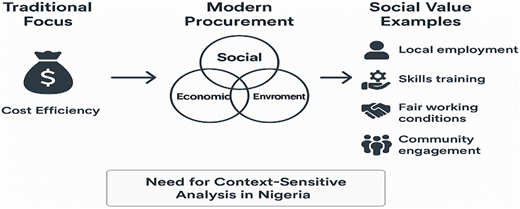
Given the predominance of UK-centric studies, there is a clear gap in understanding how social value frameworks adapt to contexts characterised by weaker institutions and informal labour markets (Achanya and Cinjel, 2020). To advance social value in public procurement, future scholarship must critically examine: who defines it within institutions, how stakeholder interests influence procurement decisions and what trade-offs are encountered. Such context-sensitive analysis, particularly for public tertiary institutions in Nigeria, is essential to move social value from rhetoric to strategic practice. Figure 1 depicts how public procurement can transition from a narrow focus on cost-efficiency to a broader strategic function aimed at generating social value.
As highlighted in the literature, procurement is increasingly leveraged to achieve inclusive outcomes such as local employment, workforce development and community benefit (Preuss, 2009; Watts et al., 2019; Raiden et al., 2019). While this evolution is supported by policy instruments in some advanced economies, its application in developing contexts remains limited by institutional and regulatory gaps (Achanya and Cinjel, 2020). Figure 1 therefore underscores the need to reposition procurement as a catalyst for sustainable and socially responsive construction, particularly within public sector institutions.
Workers and communities at the heart of social value
Globally, procurement strategies are increasingly delivering tangible social benefits. For instance, Oslo's requirement for fossil-free construction supports both environmental and public health outcomes (e.g. improved air quality and reduced noise pollution) (SCAPE, 2024; Carrington, 2025). The UK's Social Value Act has facilitated inclusive employment and bolstered local supply chains (Watts et al., 2019; Loosemore and Higgon, 2015). In Scotland, Scottish Water's £9 billion infrastructure scheme, launched in 2024, sets a precedent with its commitment to generate 4,000 jobs by 2033 (Parker, 2024). These examples illustrate how procurement can genuinely promote worker welfare and community development (Brandenburg et al., 2012).
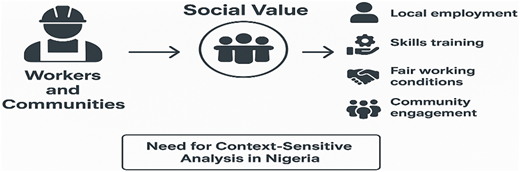
Figure 2 illustrates the centrality of workers and communities in delivering social value through public procurement. As reflected in the literature, social value encompasses outcomes such as local employment, skills training, fair working conditions and community engagement (Watts et al., 2019; Raiden et al., 2019).
By situating these outcomes within a framework responsive to stakeholder needs, procurement can serve as a strategic tool for inclusive development. However, realising such benefits requires context-sensitive analysis, particularly in Nigeria, where institutional, legal and socio-economic constraints currently limit the translation of global social value models into locally meaningful outcomes (Achanya and Cinjel, 2020; Manu et al., 2019; Ejohwomu and Oshodi, 2014). Nevertheless, challenges persist. A lack of shared definitions leads to fragmented delivery of social value (Raiden et al., 2019), while generic measurement frameworks often fail to account for local socio-economic realities (Fujiwara et al., 2022). Watts et al. (2019) further emphasise the subjective nature of social value, influenced by diverse stakeholder priorities. These insights underscore the necessity of balancing globally informed models with locally attuned strategies.
Nigeria context constraints
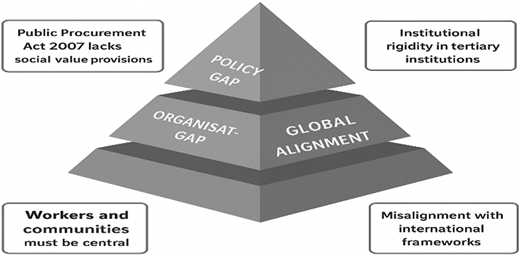
Nigeria's integration of social value into public procurement faces multiple hurdles, which include the following as captured in Figure 3:
Policy gap: The Public Procurement Act 2007 prioritises cost-efficiency and omits explicit provisions for social or sustainability outcomes (Ejohwomu and Oshodi, 2014; Achanya and Cinjel, 2020).
Organisational gap: Structural limitations and institutional rigidity within tertiary institutions impede adoption of socially responsive practices (Raziq et al., 2020).
Global alignment gap: Current practices are misaligned with international standards, lacking frameworks calibrated to Nigeria's socio-economic context (Tunji-Olayeni et al., 2020; Khojastehpour and Jamali, 2021).
Figure 3 reflects the key institutional and contextual barriers limiting the integration of social value into Nigeria's public procurement processes, particularly in the construction sector. These interrelated barriers include a policy gap, evidenced by the Public Procurement Act (2007), which lacks explicit provisions for social and sustainability outcomes (Ejohwomu and Oshodi, 2014); an organisational gap, reflected in the rigid institutional culture and limited responsiveness of public tertiary institutions (Raziq et al., 2020); and a global alignment gap, where prevailing procurement practices remain misaligned with international frameworks and local realities (Tunji Olayeni et al., 2020). These structural constraints exacerbate poor labour conditions and community-level impacts, thereby marginalising the very stakeholders that social value aims to uplift (Enshassi et al., 2016; Manu et al., 2019). The figure reinforces the literature's call for reforms that place workers' welfare and community well-being at the heart of procurement.
Empirical evidence further reveals that construction workers in Nigeria often face unsafe conditions, poor compensation and limited welfare services (Olutuase, 2014). Host communities, meanwhile, experience environmental disruption and displacement with minimal benefits (Manu et al., 2019). This review argues that workers' welfare and community well-being should not be treated as marginal concerns but as foundational elements of social value. Therefore, meaningful reform requires legal and institutional alignment to deliver tangible improvements for these stakeholder groups. Moreover, public tertiary institutions, as major consumers of infrastructure, have unique potential to champion socially responsive procurement (Munaro and John, 2025). Their role as centres of learning enables the integration of sustainable practices through education, research and community engagement. Embedding social value criteria into construction procurement within these institutions can enhance infrastructure inclusivity and strengthen local resilience (Ogunsanya et al., 2019).
Methodology
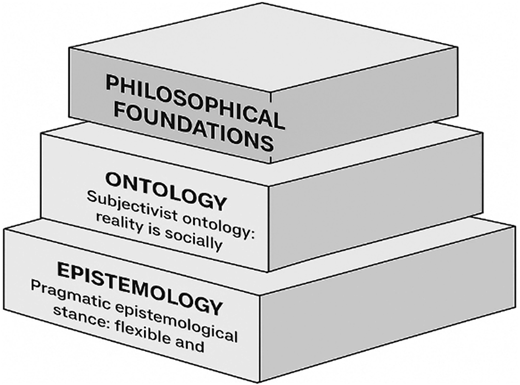
This study aims to develop a strategic framework for embedding social value into public procurement, thereby promoting socially responsible and sustainable construction within Nigeria's public tertiary institutions. To achieve this, the study adopts an exploratory sequential mixed-methods design, combining qualitative and quantitative techniques to explore, validate and prioritise key social factors relevant to sustainable procurement (Creswell, 2014; Creswell and Hirose, 2019; Tashakkori and Teddlie, 1998; Wellman et al., 2023). The qualitative phase provides an in-depth understanding of institutional practices and stakeholder perceptions, while the quantitative phase broadens the investigation to a larger professional population, ensuring both contextual depth and broader applicability. This design aligns with a pragmatic philosophical stance that values methodological flexibility and problem-oriented inquiry. Figure 4 depicts this philosophical alignment, thus providing a foundation for exploring how social factors influence procurement outcomes in Nigeria's construction sector to facilitate the framework development.
The research is informed by a subjectivist ontology, recognising that realities are constructed through stakeholder interactions within specific institutional and socio-cultural contexts (Crotty, 1998; O'Gorman and MacIntosh, 2014). The epistemological position is grounded in pragmatism, supporting the integration of diverse methods to generate actionable insights for complex, real-world problems (Creswell and Plano Clark, 2017; Morgan, 2014). A value-aware axiological stance acknowledges the researcher's position and prior experience in construction management as instrumental in shaping data interpretation, with reflexivity and transparency embedded throughout the research process (Bourdieu, 1990; Trainor and Bundon, 2021).
Data collection methods
Prior to data collection, this study was reviewed by the University Faculty Research Ethics Committee and subsequently approved. The first phase involved semi-structured interviews with 19 professionals responsible for procurement and construction delivery in a public tertiary institution in Nigeria. Participants were selected using purposive sampling, based on their professional roles, expertise and years of experience (6 to over 30 years), ensuring they could provide informed perspectives on public procurement and sustainability (Flick, 2007). The interviews were conducted in two phases to facilitate theoretical sampling and maximise diversity in perspectives (Strauss and Corbin, 1998). The first phase involved senior officials with responsibilities in procurement policy and institutional strategy, while the second phase involved professionals managing construction project sites. This phased approach allowed for iterative reflection, deeper data saturation and validation of emerging findings (Creswell, 2014; Patton, 2015). All participants received consent documents and an information sheet at least six weeks prior to the interviews. Interviews lasted between 50 and 70 min, were audio-recorded with permission, transcribed verbatim and returned to participants for member checking to ensure credibility (Lincoln and Guba, 1985). Table 1 presents the characteristics of interview participants.
Findings from the qualitative phase informed the development of a survey instrument comprising 5-point Likert-scale items that assessed the perceived importance of various social value factors in public procurement. The questionnaire was piloted with 10 professionals to refine its clarity and structure. The final instrument was distributed to a broader sample of procurement and construction professionals across public tertiary institutions in 11 northern Nigerian states, using a combination of purposive and convenience sampling (Saunders et al., 2016). A total of 121 valid responses were received out of 150 distributed questionnaires, yielding an 81% response rate. This high rate, well above typical response rates in construction research (Holtom et al., 2022), was achieved through follow-up reminders, snowball recruitment, and leveraging professional networks. Table 2 presents the characteristics of survey participants.
Data analysis techniques
Interview transcripts were analysed using Reflexive Thematic Analysis (RTA) as outlined by Braun and Clarke (2022). This involved six iterative stages of data familiarisation, systematic coding using NVivo software, themes generation, themes review, themes definition and naming, and writing up with supporting quotations. Trustworthiness was ensured through multiple strategies: phased data collection, member checking, maintenance of an audit trail, use of NVivo for transparent coding and regular peer debriefing (Hill and Dao, 2020; Trainor and Bundon, 2021). Researcher reflexivity, informed by prior professional experience, was maintained throughout to minimise bias and enhance contextual sensitivity (Braun and Clarke, 2012; Bourdieu, 1990).
Quantitative data from Likert-scale responses were analysed using the Relative Importance Index (RII), a method well-suited for ranking ordinal data in construction management research (Sakhare and Patil, 2019; Holt, 2013). Thus, the RII supports the prioritisation of social value factors, helping to identify those most critical for integration into developing the strategic framework. The RII is calculated using the formula:
Where:
ΣW = sum of weights assigned by respondents,
A = highest possible weight (5 in this case),
N = total number of respondents.
To assess the reliability of the survey instrument, Cronbach's alpha was computed. The instrument achieved a value of 0.926, indicating excellent internal consistency (Nunnally and Bernstein, 1994; Tavakol and Dennick, 2011). Cronbach's Alpha was calculated to assess the internal consistency of the survey instrument. The overall alpha value was 0.926 across 71 items, which indicates excellent reliability. A summary of the reliability statistics indicates a Cronbach's Alpha of 0.926. Example of this descriptive statistic for survey items is presented in Tables 3 and 4.
Item-total statistics are provided in Table 4 to show how individual items relate to the overall scale.
These results demonstrate that the removal of individual items would not significantly improve the overall reliability, further confirming the robustness of the instrument.
Findings
This section presents the findings from the qualitative interviews and quantitative survey. Data were thematically analysed using Braun and Clarke's reflexive thematic analysis, while survey responses from 121 construction professionals provided quantitative validation. The findings are organised under two overarching themes of Workers' Welfare and Community Well-being, which together illustrate how social value is currently addressed in construction procurement practices.
Workers' Welfare in Construction Procurement
The interviews revealed systemic neglect of workers' welfare in project delivery. A summary of the analysis is captured in Table 5.
From Table 5, participants spoke of unsafe site conditions, the absence of welfare provisions in procurement documents and the difficulty of enforcing health and safety regulations. For instance, P01, serving as Director of Physical Facilities and trained as an architect, recalled repeated scaffold accidents caused by poor construction materials:
You even see the scaffolding that they do; it is just this ordinary bamboo. At least we have had about two incidents of contractors whose workers fell from the scaffold because the scaffolds are not well done. And it is very difficult to enforce these rules.
Others explained that enforcement was difficult due to weak institutional monitoring, lack of penalties and the casual nature of construction labour. As P03, a Senior Deputy Director in the Physical Facilities unit with an architectural background, observed, basic entitlements for casual workers were often non-existent:
The truth of the matter is that as for casual workers, there is nothing like sick leave, there is nothing like pension, that is the naked truth. This, they believe, is due to the short-term nature of our projects.
Further accounts from participants described how workers were treated as disposable, with little scope for training or welfare support. Taken together, these perspectives point to three persistent challenges of unsafe working conditions, lack of welfare benefits and limited opportunities for skills development. These concerns were corroborated by the quantitative findings, where the respondents were asked to rank well-being factors for site workers. The survey results ranked health and safety measures, fair wages and training opportunities as top priorities for integrating social value into procurement (see Table 6).
The survey findings in Table 6 supported these observations, where professionals ranked ensuring safety on construction sites as the highest welfare-related priority (RII = 0.940), followed by fair wages and training opportunities. These results confirm a consensus among practitioners on the importance of safeguarding workers' welfare, even though such measures are rarely embedded in procurement processes.
Community Engagement and Well-being
The second theme concerns how procurement practices contribute to community development and social cohesion. Table 7 summarises the qualitative analysis on community well-being.
Interviews highlighted weak community engagement, the absence of participatory planning and limited avenues for inclusive employment. According to P13, a Deputy Director in Physical Facilities who works as a builder, meaningful community involvement should form part of every stage of project delivery:
… engaging community in every aspect of work that you are doing within any community is key. It must not only be in university because the Procurement Act involves all constructions. Just like the safety and … that is why we are saying that if they ask us, we will give them these inputs.
By contrast, P11, also a Deputy Director in Physical Facilities with a building background, described the lack of consultation with host communities:
Projects just show up in communities. People are rarely asked what they need or how they feel about it.
Several participants highlighted the value of employing local labour. As participant P03 explained further:
When young people from the area are hired, they feel ownership of the project, and it reduces vandalism.
Others pointed to institutional constraints. P08, an intermediate-level professional in the Teaching Hospital campus and a quantity surveyor by training, remarked:
Even when we want to include social value criteria, there’s no policy to support us.
This points to institutional constraints and gaps in policy that prevent even well-intentioned actors from embedding social outcomes in practice. The survey responses presented in Table 8 reinforced these perspectives on community well-being.
The respondents were asked to rate the well-being factors for communities. From Table 8, the respondents identified ensuring residents' safety during construction (RII = 0.914) and sustaining communication with communities (RII = 0.898) as top priorities. They also rated conflict resolution mechanisms and inclusive employment practices highly. These results underline a shared professional recognition of the need for procurement processes that enhance community well-being.
Furthermore, Table 9 provides a basis to support the translation of these findings into action through a strategic framework. Apart from the progression from qualitative themes to survey, the table highlights how to prioritise social factors within public procurement to drive inclusive outcomes.
Insights across the themes in Table 9 show that professionals consistently emphasised safety, fair labour practices, communication and community participation as central concerns. However, weak enforcement, casualisation and institutional gaps continue to hinder implementation. These findings highlight the limited integration of social value in current procurement practices. To better understand the implications of these findings, the next section discusses them in relation to existing literature and broader debates on social value in construction.
Discussion
The findings of this study reveal both areas of convergence and persistent tensions in how social factors are addressed within procurement for construction projects in Nigeria's public tertiary institutions. While professionals consistently identified safety, fair labour practices, communication and participation as important priorities, the evidence also pointed to weak enforcement mechanisms, casualisation of labour and institutional gaps that limit their practical implementation. These patterns suggest that although awareness of social value is growing, systemic and structural constraints continue to hinder its integration. The discussion therefore critically interprets these findings by situating them against existing literature, examining where the Nigerian experience aligns with or diverges from international practice, and considering the broader implications for embedding social value into public procurement.
For workers' welfare, interviews highlighted unsafe site conditions, lack of formal welfare benefits and limited skills training opportunities. These qualitative findings were corroborated by survey results, where professionals ranked site safety (RII = 0.940), fair wages, and training opportunities as the most critical welfare priorities. This convergence of findings underscores a strong professional consensus on the importance of welfare. At the same time, it reveals systemic barriers such as weak enforcement, casualisation, and short-term contracting that hinder implementation. These conditions echo global concerns about construction workers' vulnerability in low-regulation contexts (Brandenburg et al., 2012; Raiden et al., 2019) and support McCrudden's (2004) argument that procurement, without explicit mandates, struggles to enforce labour rights.
In relation to community well-being, qualitative narratives emphasised the lack of participatory planning and local employment, with respondents criticising the “top-down” delivery of projects. Survey results reinforced these views, ranking community safety (RII = 0.914) and sustained communication with host communities (RII = 0.898) as top indicators. These findings align with prior studies identifying weak stakeholder engagement as a recurring barrier to socially sustainable infrastructure (Falana, 2025). In contrast, jurisdictions such as the UK and South Africa embed local labour and participation requirements in procurement legislation, thereby moving procurement beyond cost and time toward broader sustainability (Cabinet Office, 2012; Laryea and Watermeyer, 2024). Nigeria's absence of such mechanisms reflects both a policy–practice gap and the need for locally attuned reforms.
By combining qualitative and quantitative evidence, this study demonstrates that although professionals recognise the importance of social value, structural barriers prevent its effective translation into practice. This reinforces international scholarship that highlights the tension between policy aspirations and practical outcomes in socially responsible procurement (Preuss, 2009; Watts et al., 2019), while offering context-specific insights from Nigeria's tertiary education sector where such issues remain underexplored. The findings therefore justify the development of a strategic framework by showing that current procurement practices lack the mechanisms, incentives and enforcement structures needed to embed social considerations. Without such a framework, social value remains a rhetorical commitment rather than an operational reality. Hence, a structured approach is required to bridge the gap between institutional aspiration and on-the-ground implementation, ensuring that procurement processes not only acknowledge but actively deliver on workers' welfare and community well-being.
Framework development
Scholars have proposed different models to integrate sustainability and social considerations into procurement, ranging from value-chain approaches (Loosemore, 2016) and life-cycle frameworks to performance measurement models (Fuentes-Bargues et al., 2017). While these frameworks advance understanding of sustainable procurement, they are often designed in high-income contexts and rarely address the institutional and regulatory realities of developing countries. They tend to emphasise environmental and economic dimensions while giving limited attention to social outcomes such as worker welfare, labour practices and community engagement. As such, they provide useful reference points but do not adequately respond to the gaps identified in this study.
To address these shortcomings, this paper adopts the Input–Process–Output (IPO) model as the organising logic for developing a framework tailored to Nigeria's public tertiary institutions. The IPO model, originally conceptualised in systems analysis (Churchman, 1968), has been widely applied in management and operations research for its clarity in tracing how inputs are transformed into outcomes through defined processes. Its structured and process-driven orientation is particularly suited to public procurement, where compliance and accountability are critical (Mohammed and Kozlowski, 2017; Farnese et al., 2019). Importantly, the IPO provides a practical lens through which social value can be systematically embedded into procurement stages rather than treated as an afterthought.
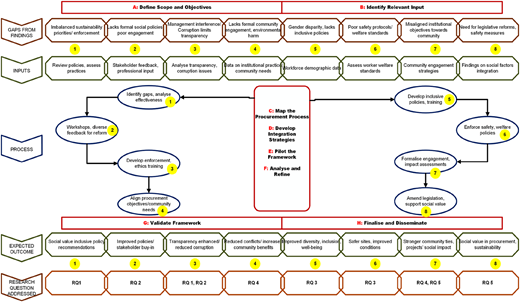
The proposed framework (see Figure 5) is grounded in the empirical findings of this study, combining insights from qualitative interviews and survey validation.
From Figure 5, the framework consists of three interrelated stages. The Input stage highlights enabling conditions – policy revision to explicitly include social value, capacity building for procurement professionals and contractors, and institutional commitment through leadership and stakeholder engagement. The Process stage focuses on operationalisation through clear social clauses in bidding documents (e.g. health and safety, fair wages, ethical labour), systematic evaluation during tendering, and ongoing monitoring. It also emphasises early and continuous community consultation to align projects with local needs. The Output stage specifies measurable outcomes, including safer working conditions, local job creation and improved community satisfaction, thereby providing benchmarks for assessing procurement performance beyond financial metrics.
Implementation pathways
To translate the proposed IPO framework into practice, eight implementation pathways are identified (Table 10). These steps respond to the institutional and operational gaps revealed in the findings and create a cycle of continuous improvement.
To ensure applicability, the eight implementation pathways were derived from the gaps identified across the three stages, ranging from defining objectives and mapping processes to piloting, validation, and refinement. These steps create a feedback loop that allows for continuous improvement and institutional learning. By directly linking institutional gaps to procurement practices and their societal impacts, the IPO framework provides a replicable and policy-relevant approach for Nigeria's tertiary institutions. It shifts procurement from a compliance-driven activity to a mechanism for delivering tangible social value, while remaining adaptable for other developing-country contexts with similar institutional challenges (Achanya and Cinjel, 2020).
These implementation pathways ensure that the proposed IPO framework is not merely procedural but directly responsive to the social priorities identified in the study. Steps such as mapping processes (C) and developing integration strategies (D) embed concrete measures for protecting workers' welfare, including health and safety standards, fair wages and ethical employment practices. Likewise, piloting (E) and validation (G) create avenues for incorporating community perspectives, ensuring that projects align with local needs and foster stronger social relationships. By linking implementation directly to welfare and well-being outcomes, the framework moves beyond compliance with procurement rules to actively deliver social value, thereby addressing the gaps observed in Nigeria's tertiary construction sector.
Overall, the framework provides a structured pathway for embedding social factors into procurement processes to generate social value. In doing so, it offers a response to Nigeria's context-specific challenges and contributes to broader debates on how public procurement can be leveraged to advance sustainability in construction.
Implications for research, practice and society
This study contributes to the growing body of scholarship on social value in public procurement by providing empirical evidence from a developing-country context, where such insights remain limited. By adopting a mixed-methods design, it demonstrates how qualitative narratives and quantitative validation can be effectively integrated to examine social value. The IPO framework developed here offers a replicable model for future studies, enabling comparative analysis across sectors and countries. Further research should test and refine this framework in different institutional settings, as well as explore metrics for assessing social outcomes over time.
For practitioners and policymakers, the study provides actionable guidance for embedding social value into procurement processes. The IPO framework highlights clear entry points to reforming procurement policies to mandate social clauses, strengthening institutional capacity through training and awareness and fostering community-inclusive procurement practices. These measures can improve contractor accountability, enhance worker welfare and ensure host communities benefit from construction projects. Procurement officers in tertiary institutions can use the framework as a practical tool for aligning project delivery with sustainability goals.
For the wider society, socially responsive procurement can transform public investment into a catalyst for inclusive development. By prioritising workers' welfare and community well-being, procurement practices can reduce inequality, improve site safety and strengthen the legitimacy of public institutions. In Nigeria, embedding social value within procurement processes has the potential to foster social cohesion and ensure more equitable benefits from infrastructure spending. More broadly, this approach aligns with the United Nations Sustainable Development Goals (SDGs), particularly those on decent work, reduced inequalities and sustainable communities.
Conclusion
This study examined how social factors can be integrated into public procurement to enhance social value within Nigeria's public tertiary institutions. By combining qualitative interviews with construction professionals and a survey of 121 practitioners, the study revealed persistent gaps in worker welfare and community engagement. These gaps stem largely from weak institutional mandates, limited enforcement and the absence of clear policy frameworks to support socially responsive procurement.
Through the corroborating of qualitative narratives, quantitative validation and existing literature, the research demonstrates that while professionals recognise the importance of safety, fair wages and community participation, systemic barriers prevent their effective implementation. To address this, the study developed an IPO framework, offering a structured and context-sensitive approach for embedding social value into procurement processes. The framework identifies enabling inputs (policy reform, institutional commitment, capacity building), operational processes (embedding social clauses, monitoring compliance, stakeholder engagement) and measurable outputs (safer work environments, inclusive employment, improved community relations).
The study advances scholarship by providing an empirically grounded framework for social value integration in Nigeria's construction sector. For practice, it offers actionable guidance for policymakers, procurement officers and tertiary institutions seeking to align infrastructure delivery with social outcomes. For society, it underscores that public procurement can move beyond a cost-driven exercise to become a lever for equitable and sustainable development. Future research should extend the application of this framework across other sectors and regions, while refining performance indicators to ensure accountability and long-term impact.