Change of climate is attributed to human activity that alters the composition of the global atmosphere observed over comparable periods. The purpose of this paper is to explore smallholder farmers' perceptions of climate change and compare it with meteorological data, as well as to identify perceived adaptation barriers and examine the factors that influence the choice of adaptation options in eastern Ethiopia.
In total, 384 sample households were chosen from four districts of the zone. A cross-sectional survey was used to conduct the study. Primary data was acquired through key informant interviews, focus group discussions and semistructured interviews, whereas meteorological data was collected from the National Meteorological Service Agency of Ethiopia. A Mann–Kendall statistical test was used to analyze temperature and rainfall trends over 33 years. A multivariate probit (MVP) model was used to identify the determinants of farmers' choice of climate change adaptation strategies.
The result indicated that temperature was significantly increased, whereas rainfall was significantly reduced over the time span of 33 years. This change in climate over time was consistently perceived by farmers. Smallholder farmers use improved varieties of crops, crop diversification, adjusting planting dates, soil and water conservation practices, reducing livestock holdings, planting trees and small-scale irrigation adaptation strategies. Moreover, this study indicated that sex of the household head, landholding size, livestock ownership, access to extension, access to credit, social capital, market distance, access to climate change-related training, nonfarm income, agroecological setting and poverty status of the households significantly influence farmers’ choice of adaptation strategies.
Further research is required to evaluate the economic impact of each adaptation options on the livelihood of smallholder farmers.
Institutional variables significantly influenced how farmers adapted to climate change, and all of these issues might potentially be addressed by improving institutional service delivery. To improve farm-level adaptation, local authorities are recommended to investigate the institutional service provision system while also taking demographic and agroecological factors in to account.
This study compared farmers' perceptions with temperature and rainfall trend analysis, which has been rarely addressed by other studies. This study adopts an MVP model and indicated the adaptation strategies that complement/substitute strategies each other. Furthermore, this study discovered that the choice of adaptation options differed between poor and nonpoor households, which has been overlooked in previous climate change adaptation research.
1. Introduction
Climate change refers to a change of climate attributed directly or indirectly to human activity that alters the composition of the global atmosphere observed over comparable periods [The Intergovernmental Panel on Climate Change (IPCC), 2014]. This change becomes an important global issue because it brings a serious challenge to the world population. It affects human and animal health, food and water security, market and infrastructure (Charles et al., 2014). Developing countries, including Africa, are the most vulnerable to the negative impact of climate change because most of these countries' main livelihood is rainfed agriculture, which depends on climatic factors (Serdeczny et al., 2017). Having limited social, economic and financial resources also contributes to the vulnerability of African countries by limiting their ability to prevent and respond to climate change impacts (IPCC, 2014). As part of Africa, the dependence of the major economic sector on agriculture makes Ethiopia vulnerable to climate change (Conway and Schipper, 2011). Ethiopia has a 5.3 million ha irrigation potential, of which 3.7 million ha can be exploited for irrigation cultivation using surface water sources (Awulachew and Ayana, 2011). Despite the potential for irrigation development, Ethiopian agriculture is still subsistence-based and rainfed (Zewdie et al., 2021). Moreover, about 74% of the farmers in Ethiopia are smallholders producing mostly for their own consumption and small marketed surplus [Food and Agriculture Organization (FAO), 2018]. The majority of smallholder farmers in Ethiopia have a very small land size and cultivate their crops using traditional methods which limits their capacity to invest in improved farming practices that could reduce their vulnerability (USAID, 2017). Climate projections for Ethiopia show continued warming, but very mixed rainfall patterns (NAPA, 2019). For the IPCC mid-range emission scenario, the mean annual temperature will increase in the range of 0.9°C–1.1°C by 2030, in the range of 1.7°C–2.1°C by 2050 and in the range of 2.7°C–3.4°C by 2080 compared to the 1961–1990 normal (IPCC, 2007). Moreover, studies on climate trend analysis in different parts of the country such as (Addisu et al., 2015; Ademe et al., 2020) using 40 and 35 years of rainfall and temperature data, respectively, indicated a mixed pattern of rainfall and an increasing trend of temperature.
Higher frequency of extreme events, increasing temperature, change in rainfall, the occurrence of new pests and diseases resulting from climate change are challenging the livelihood of smallholder farmers in Ethiopia (Tesfaye and Seifu, 2016). Among climate extremes, drought caused significant damage to rural rainfall-dependent farmers. The very recent drought caused in 2015 created catastrophic livestock losses and crop failure that made 10.2 million people food insecure (FAO, 2016). The negative impact of this change is increasing from time to time and made many resource-poor smallholder farmers vulnerable (Asrat and Simane, 2017). Climate change affects the livelihood of smallholder farmers by reducing crop yield and threatening their food security status (Yalew et al., 2017). According to USAID (2017), climate change may decrease national gross domestic product by 8%–10% and 6% of each year's agricultural production by 2050; however, adaptation action for agriculture could reduce losses by half. Therefore, making the agricultural sector adaptive to the negative impacts of climate change is a priority for Ethiopia because most of the population depends on it. Adaptation to climate change in agricultural production refers to modifications in farming activities to go with climatic conditions that reduce the possible harmful impact (Franklin et al., 2012). This will help smallholder farmers to secure their income and reduce their vulnerability. Therefore, identifying adaptation strategies used by smallholder farmers and factors that affect their choices of adaptation strategies is vital in designing policies to promote effective adaptation options in Ethiopia in general and to improve the adaptive capacity of smallholder farmers in particular.
Before responding to climate change, farmers must perceive climate change. According to Jha and Gupta (2021), farmers' perceptions of climate change had positive and significant impacts on adaptation measures. Because farmers’ perception of climate change plays a key role, inappropriate adaptation and agricultural practices decision-making in their perceptions should necessarily be linked with meteorological data trends for effective adaptation in the agricultural sector (Mubiru et al., 2015; Nyasimi et al., 2013). Although some studies (Tesfaye and Seifu, 2016; Asrat and Simane, 2018; Addis and Abirdew, 2021) examined farmers’ perception of climate change in some places of the country, there is a paucity of empirical work in linking farmers' perception with meteorological data trends. Hence, the available evidence is not clear whether farmers perceived climate change properly, particularly in eastern Ethiopia. Many previous studies (Deressa et al., 2011; Tazeze et al., 2012; Legesse et al., 2012; Belay et al., 2017; Marie et al., 2020) indicated that in response to climate change, farmers in Ethiopia implemented various adaptation options. Because of the multidimensional impact of climate change, farmers implement various adaptation strategies rather than relying on a single adaptation strategy in response to climate change (Legesse et al., 2012). Previous studies failed to consider the interdependence nature of different adaptation strategies that farmers may use. They used a multinomial probit model that did not consider the possible interdependence of many adaptation options. However, Tesfaye and Seifu (2016) conducted a study on a similar study area using a multivariate probit (MVP) model which considers the interdependent nature of adaptation strategies and simultaneously computed all adaptation strategies with a set of explanatory variables. Although the study area comprises three agroecological settings, the study only took into account two of them (lowland and midland). Furthermore, although crop–livestock mixed farming is the most common livelihood activity in the study area, the studies by Tazeze et al.(2012); Tesfaye and Seifu (2016); and Tessema et al. (2013) focused only on crop-based adaptation measures. However, the current study revealed that reducing the number of livestock was one form of adaptation strategy used by smallholder farmers in the study area. As a result, unlike previous studies, this adaptation strategy was incorporated into the research. The current study also included the household poverty level as an additional explanatory variable that had not been included in previous studies. Knowledge about how farmers perceive climate change, adaptation strategies implemented and factors influencing the simultaneous choice of adaptation strategies will help in designing policies that consider the challenges that climate change is imposing on Ethiopian farmers.
2. Research methodology
2.1 Description of the study area
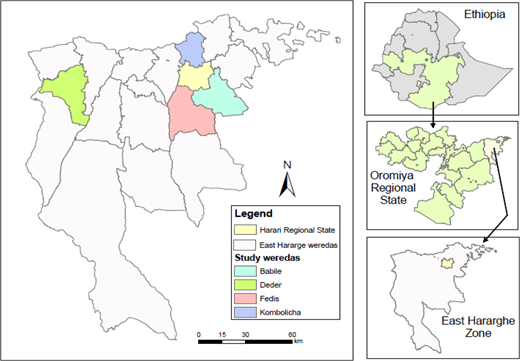
The study was conducted in the East Hararghe Zone which is located in the Oromia National Regional State, Ethiopia. The area has been highly affected by recurrent drought. As a result, the zone is one among chronically food-insecure areas of the country (Lemessa et al., 2019; Tesfaye and Seifu, 2016). The zone is classified into three agroecological zones: lowland (<1,500 m), midland (1,500–2,300 m) and highland (>2,300 m) above sea level; however, the lowland covers 67% of the area. The average annual rainfall varies between 400 and 1200 mm, whereas the average temperature varies between 25°C and 30°C. The basic livelihood activity of the farmers is rainfed agriculture. However, because of the uneven distribution and variability of rainfall, its productivity is reducing from time to time (East Hararghe Administration Office, 2018). Maize and sorghum are the major crops grown basically for consumption under a rainfed system, whereas cash crops such as khat and vegetables are produced using small-scale irrigation. Almost all districts under this zone were classified as food insecure and supported by the productive safety net program (PSNP). The area is highly affected by recurrent drought and erratic rainfall, which have resulted in crop failure (Mulugeta et al., 2018). Because farmers in this zone are smallholders who mainly depend on rainfed agriculture climate change becomes a severe challenge for their livelihood activities. In response to this change, farmers in the zone have been practicing different adaptation strategies such as crop diversification, using improved varieties of crops, soil and water conservation practices and planting trees (Tazeze et al., 2012; Tessema et al., 2013) (Figure 1).
2.2 Sampling procedure, sources and methods of data collection
The representative sample districts and respondents were selected following a multistage cluster sampling procedure. In the first stage, the 20 districts of the zone were clustered into three agroecologies (highland, midland and lowland). In the second stage, one district from the highland (Dedar), one district from the midland (Kombolcha) and, because of its extensive coverage (67%), two districts from the lowland (Fedis and Babile) were selected randomly. From these districts, a total of 13 kebeles (lower administrative units) were selected randomly. Finally, 384 farm households were randomly chosen from the selected kebeles based on the probability proportional to size sampling procedure. The sample size was determined using the method developed by Kothari (2004):
For this study, both primary and secondary data were used. For the primary data, semistructured questionnaires were used to collect data from 384 sample respondents, whereas checklists were used to collect data from focus group discussions (FGDs) and key informant interviews (KIIs). With the support of development agents working in the chosen kebeles, focus group discussants and key informant interviewees were chosen. Four FGDs (one for each district) which consisted of 8–10 participants were conducted. How climate is changing over time, adaptation options, barriers to implementing different adaptation strategies and its perceived impact were discussed. A total of ten KIIs comprising agricultural office staff at the zonal and district levels, as well as local leaders, participated. Previous studies, climate data and documents of agricultural offices were sources of secondary data. The 33 (1983–2016) years of monthly precipitation and minimum and maximum temperature records for four representative stations were taken from the Ethiopian National Meteorological Service Agency. These stations were selected because the rest of the stations were established recently, therefore they did not have sufficient data for trend analysis.
2.3 Data quality and analysis methods
All the collected data including the temperature and rainfall were checked and detected visually for outliers and missing data to avoid typing errors. The data were tested for serial autocorrelation using Durbin–Watson test in the R-car package and we found the autocorrelation was not significant. Different methodologies such as descriptive statistics, Mann–Kendall statistical test and MVP model were used to analyze the data. Descriptive statistics such as frequency and percentage were used to assess and describe farmers' perceptions of climate change, adaptation barriers and adaptation strategies used by smallholder farms in the study area.
2.3.1 Temperature and rainfall trend analysis.
The Mann–Kendall statistical test was used to check whether there is a significant trend either decreasing or increasing in temperature and rain fall in 33 (1983–2016) years. This test is a widely used nonparametric test for hydro-climatic studies because it does not require the data to be normally distributed. Moreover, this test is not affected by missing data and outliers which are common in climate data (Abghari et al., 2012).
Based on Mann (1945), the Mann–Kendall test (S) for a time series x1, x2, x3, …, and xn is estimated as:
where n = number of data points, xk and xj = data values in time series k and j (j > k) and sgn (xj = xk) is defined as:
The standardized test static for the Mann–Kendall test (Z) was calculated as:
The null hypothesis for this test is that there was no significant (decreasing or increasing) trend in temperature and rainfall overtime, whereas the alternative hypothesis was that there has been a significant trend in both parameters. The trends of temperature and rainfall were tested for their significance. Therefore, a Z-value of 1.96 (5%) significant level was used to assess whether the trend in both temperature and rainfall in the years 1983–2016 was statistically significant or not. Therefore, if the absolute value of Z is higher than 1.96, the null hypothesis of no significant trend over time will be rejected. Similarly, if the Z-value is positive, it shows an increasing trend, whereas the negative value shows a decreasing trend.
2.3.2 Sen’s slope estimator.
Sen’s (1968) nonparametric method was used to estimate the magnitude of trends in the time series data as:
where xj and xk represent data values at time j and k, respectively. β is Sen’s slope estimate. β > 0 indicates an upward trend in a time series. Otherwise, the data series presents a downward trend during the period.
2.3.3 Analysis of farmers' perception of climate change.
To assess farmers' perceptions about long-term climate change, the surveyed farm households were asked questions about their observations (increasing or decreasing trend) in the patterns of temperature and rainfall over the past 20–30 years. The result was analyzed using frequency and percentage of response for both temperature and rainfall trends. Many previous studies such as Reddy et al. (2022), Jha and Gupta (2021) and Tesfaye and Seifu (2016) used this method to assess farmers perception of climate change.
2.3.4 Econometric model.
Farm households usually implement a variety of adaptation strategies rather than relying upon a single adaptation strategy in response to climate change, so the adoption decision is multivariate. The study used a MVP econometric model because this model shows the influence of different independent variables on each adaptation strategy simultaneously (Belderbos et al., 2004). This method also allows the error terms to be freely correlated. The correlation comes either from the complementary or substitutability nature of different adaptation strategies (Ndiritu et al., 2014). The positive correlation between the error terms indicates complementary, whereas the negative correlation indicates substitutability of different adaptation strategies.
The dependent variables were six dummy variables (crop diversification, changing planting dates, planting trees, reducing the number of livestock, soil and water conservation measures and small-scale irrigation). These strategies were selected based on the data collected from respondents and previous studies such as Tazeze et al. (2012) and Tessema et al. (2013). Farmers decide to adopt the jth adaptation strategy if:
Let uo represent the benefit of adopting jth adaptation measure, whereas j denotes a choice of adaptation strategies.
The net benefit (Yij) that the farmer drives from the use of jth adaptation measures is a latent variable determined by observed household characteristics (Xij) and the error term (uij) which have a multivariate normal distribution with zero means and variance of one:
(j = crop diversification, changing planting dates, planting trees, reducing the number of livestock, soil and water conservation measures and small-scale irrigation).
Using the indicator function, the observed preference in equation (5) translates into the observed binary outcome equation for each choice is given by (Table 1):
3. Results
3.1 Temperature and rainfall trends
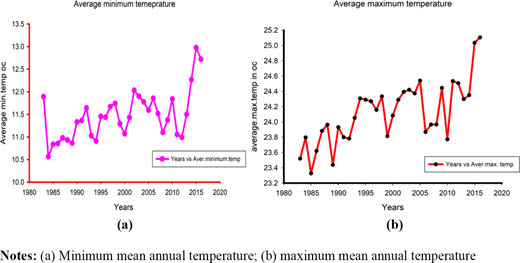
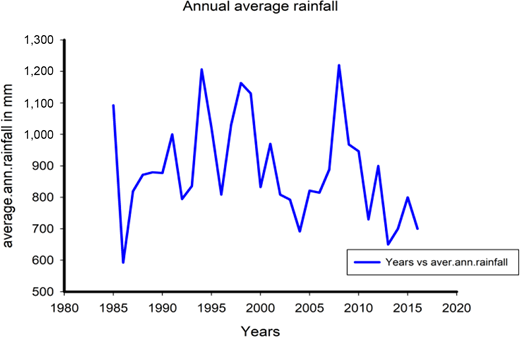
The result presented in Figure 2(a) and (b) shows an increasing trend for both maximum and minimum annual temperature in the considered years. Moreover, the statistical result from the Mann–Kendall test presented in Table 2 also confirmed a significant (P < 1%) increasing trend in both maximum and minimum annual temperatures. The maximum temperature increased by 0.29°C per decade, whereas the minimum temperature increased by 0.32°C per decade. On the other hand, the result presented in Figure 3 shows a decreasing trend in annual rainfall. Similarly, the Sen’s slope value for rainfall (−6.17) presented in Table 2 indicates the amount of rainfall was decreased by 61.7 mm per decade. The trend line in Figure 3 also showed that rainfall was highly decreasing after the year 2015. According to the interview held with the east Hararghe Zone Disaster Risk Management Office, because of the 2015 climate change-induced El Nino, the zone was affected by drought for the last three consecutive years (2015, 2016 and 2017). Furthermore, the result obtained from FGDs and KIIs revealed that the increase in temperature and rainfall reduction negatively affected the productivity of agriculture in the study area by increasing the frequency of drought and reducing the availability of water.
3.2 Farmers' perception of climate change
Respondents were asked if they had perceived any significant changes in temperature and rainfall for the last 20 and above years to assess farmers' perception of climate change. The result presented in Table 3 indicated that 97% of sample respondents perceived that temperature was increasing and 99% of them perceived a decreasing trend in rainfall. The result agreed with the statistical result of increasing temperature and decreasing rainfall which shows that farmers in the study area well-perceived climate change.
3.3 Climate change adaptation strategies
Smallholder farms in the study area used a variety of adaptation measures in response to climate change. The strategies indicated in Table 4 are using improved varieties of crops, crop diversification, adjusting planting dates, soil and water conservation practices, reducing the number of livestock, planting trees and using small-scale irrigation are the most common. Among sample households, most of them (97%) used improved variety as an adaptation strategy, whereas only 30% of them used small-scale irrigation as an adaptation strategy compared to other adaptation strategies. KIIs and FGDs indicated that water availability, particularly underground water, is gradually diminishing in the study area as a result of recurring drought, which leads farmers to dig up to 20–30 m for water. Therefore, using irrigation needs high capital, labor and technology which are not afforded by many farm households. The result further revealed that farmers in the study area used a combination of different adaptation strategies together rather than relying on a single strategy. According to the survey result, a minimum of three adaptation strategies were used in combination at the household level.
3.4 Adaptation barriers
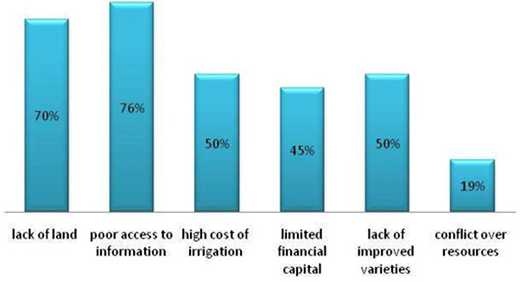
While farmers respond to climate change by adapting various adaptation strategies, they were challenged by different barriers that make adaptation difficult. The result presented in Figure 4 revealed that the most important barriers were poor access to climate and market information, having a small land size, lack of improved vegetable varieties, high cost of irrigation facilities, limited financial capital and conflict over resources were major barriers for effective adaptation.
3.5 Determinants of farmer’s choice of climate change adaptation strategies
The MVP model identified the significant factors that affect farmers’ decision to adopt climate change adaptation strategies. Among the identified adaptation strategies, using improved varieties of crops was adopted by almost all sample households. Therefore, this strategy was not included in the model. The variance inflation factor was done to check whether there is multicollinearity between independent variables. The result showed that the mean value was 1.4 indicating that there was no multicollinearity problem. The Prob > chi2 = 0.000 is significant at 1% significance level and the likelihood ratio test of the null hypothesis of independence between the climate change adaptation strategies decision (ρ21 = ρ41 = ρ51 = ρ61 = ρ32 = ρ63 = ρ53 = ρ54 = ρ64 = 0) shows the interdependence of adaptation strategies. Therefore, the null hypothesis of independence of adaptation strategies was rejected at a 1% level of significance. This indicated that the choice of multiple adaptation strategies is not mutually independent. The result presented in Table 5 indicates both the complementary and substitutability nature of adaptation strategies. For instance, the result shows a positive and significant interdependence between adjusting planting dates and reducing the number of livestock adaptation strategies (Rho21). This indicates that these two strategies are complementary. Similarly, the correlation of error terms in using irrigation and adjusting planting dates shows a negative and significant interdependence (Rho51). This implies the substitutability nature of the two strategies. The interdependence of other strategies was also presented in Table 5.
Farmers' decision to adjust planting dates is significantly influenced by education level, land size, agricultural extension service, credit access, social capital market distance and training. Land size, social capital and poverty status of the households significantly affected the farmers' decision to reduce livestock numbers. The use of soil and water conservation adaptation strategy is determined by the sex of the household head, extension service and nonfarm income. Livestock number, market distance land size and poverty status of the household significantly influenced the adoption of small-scale irrigation in response to climate change. Crop diversification and tree planting adaptation strategies are influenced by social capital and market distance. The farmers' decision to adopt different adaptation strategies also varies by agroecology.
4. Discussions
4.1 Temperature and rainfall trends
The result confirmed that temperature significantly increased over the last 33 years. The result is consistent with Emerta and Aragie (2013) who reported that temperature has an increasing trend in the eastern parts of Ethiopia. Likewise, the study conducted by Addisu et al. (2015) also confirmed significant increasing trends in temperature in Ethiopia. The result revealed that rainfall showed a decreasing trend over the years. In line with this finding, Addisu et al. (2015) also reported that the average amount of rainfall decreased gradually in some parts of the country. In addition to the decrease in rainfall after the year 2015, the occurrence of acute drought induced by El Nino had a substantial impact on the farming community, resulting in lower agricultural income and food insecurity for 190,254 households in the zone. The result also confirms the FAO’s report which indicated that the extreme drought caused by El Niño in 2015 made 10.2 million people food insecure in Ethiopia which includes the East Hararghe Zone (FAO, 2016). Because the livelihood of farm households depends on rainfall the amount and distribution of rainfall is critical. According to Zeleke et al. (2021), in the study area, because of the increase in temperature, erratic and uneven distribution of rainfall, smallholder farmers were exposed to drought. As a result, they were supported by a PSNP. The result implies lack of efficient alternative livelihood options exposed households to the negative impact of climate change and challenged the livelihood of smallholder farmers. Unless resource-poor farmers get institutional support like irrigation facilities, climate change will increase the level of food insecurity in the future. Therefore, immediate measures should be taken to reduce the adverse impact of climate change on farm households.
4.2 Farmers' perception of climate change
The result confirmed that a higher percentage of respondents perceived climate change (temperature and rainfall change). A similar study conducted by Tesfaye and Seifu (2016) in the study area reported that 95% of respondents perceived temperature change, whereas 86% of the respondents perceived a change in rainfall. The percentage of respondents who perceived change in both temperature and rainfall in the current study is higher implying that the level of perception is increasing gradually. This is because as a result of the higher frequency of drought in recent years, farm households have well-perceived climate change. The result from FGDs and KIIs are also consistent with this result. Finding agreed with the result of Asrat and Simane (2018), who found that experiencing a higher frequency of drought in the past increases farmers’ perception of climate change.
4.3 Climate change adaptation strategies
Farmers in the study area implemented different climate change adaptation strategies as indicated in Section 3.2. Among the adaptation strategies, using an improved variety of crops was adopted by 97% of the respondents. The higher percentage is because of higher variability and shortage of rainfall which made the local varieties fail to give the expected output. Therefore, farmers were forced to use improved crop varieties (early maturing and drought-resistant) instead of the local varieties. The result obtained from FGDs revealed that although having access to these varieties is not easy, especially for poor households, they are accessing through their social capital such as lending, borrowing, and exchange of seeds. On the other hand, the result indicated that only a few (29.9%) farmers use small-scale irrigation as an adaptation strategy compared to other adaptation strategies. This result is in line with Belay et al. (2017) and Deressa et al. (2011). The result implies that in addition to the limited availability of water resulting from recurrent drought limited technological and financial capital hinders farmers to use small-scale irrigation adaptation strategy. Farm households used a combination of different adaptation strategies together. This is because the impact of climate change is multidimensional (Caragea and Ciprian, 2015), adopting a single strategy may not be efficient. The result supports the finding of Legesse et al. (2012).
4.4 Adaptation barriers
Poor access to climate and market information was the first and most crucial barrier to effective adaptation followed by lack of land. Information about the market and climate helps farmers to choose appropriate adaptation strategies and adapt to climate change (Tazeze et al., 2012). Therefore, the lack of adequate access to such information hinders farmers from making the right decision to respond to climate change. The result implies that the uncertainty related to climate change makes information delivery difficult and the institutional weakness in information delivery. Therefore, the adaptive capacity of responsible institutions should be improved to deliver relevant and on-time climate and market information. A similar result was reported by Kassie et al. (2013). The shortage of land was mentioned as the second constraint. This might be related to population growth which caused declining in landholding sizes; thus, income from agriculture per household was reduced. Moreover, the shortage of rainfall and recurrent drought caused severe land degradation and made some land unsuitable for agricultural activities. Because land is an essential asset for farm households, it affects the process of adaptation to climate change. Belay et al. (2017) reported a similar result.
Furthermore, the study also found that having access to improved vegetable varieties was another vital barrier to effective adaptation. Farmers in the study area in addition to cereals also produce vegetable crops basically for selling. Although vegetables can generate better income for farmers, access to improved seed varieties of these crops was minimal. The outcome of FGDs and KIIs revealed that growing vegetables would enable them to produce more per unit of area and grow at least three vegetable crops in a year. If farmers get adequate access to improved varieties, they can improve their well-being and adapt to climate change. Besides, income from the vegetables might be used to cover the cost of adopting different adaptation strategies. Similarly, having limited financial capital also hindered farmers from using different adaptation strategies such as small-scale irrigation and purchasing an agricultural input which aggravates vulnerability to climate change.
4.5 Determinants of farmer’s choice of climate change adaptation strategies
The results from the MVP model indicated that the sex of the household head positively and significantly influenced the use of soil and water conservation practices. This indicates that male-headed households are most likely to adopt soil and water conservation practices than female-headed households. Thus, because of this adaptation strategy’s labor-intensive nature, it is less practiced by female-headed households. Moreover, such an adaptation strategy also takes more time, making it difficult for female-headed households to adapt because of their multiple roles. The result is in line with studies conducted by Legesse et al. (2012) and Deressa et al. (2011) who reported that male-headed households use different adaptation measures than female-headed households. However, it contradicts with results reported by Charles et al. (2014) who found that female headed households are more likely than male headed households to adopt adaptation alternatives. In contrast to Ethiopia, the majority of agricultural activities in South Africa are carried out by women, according to the study. Therefore, the inconsistent results could be attributed to the research locations' contextual variations.
Years of schooling of the household head affected adjusting planting date positively and significantly at a 1% significant level, indicating that farmers with better years of schooling have the probability of choosing this adaptation strategy. Adjusting planting dates include early and late planting that can help farmers to reduce the probability of crop failure resulting from water stress during the early stage of crop development. Because the study area is significantly affected by drought adjusting the planting dates is critical in reducing crop failure. Such an adaptation strategy depends on farmers’ ability to access, realize and interpret climate information to make essential decisions that are directly related to farmers’ education level. The result agrees with previous studies (Asfaw et al., 2017; Belay et al., 2017).
Land size positively influenced the choice to adjust planting dates, reduce the number of livestock and use small-scale irrigation adaptation strategies. Farmers with large farm sizes use a small-scale irrigation adaptation strategy. This might be because farmers with large land sizes have better income (Deressa et al., 2011), to cover the initial investment of irrigation facilities compared to farmers with small land sizes. This result is in line with the finding of Misganaw et al. (2014), who reported having a large land size increases the probability of using irrigation as an adaptation strategy. The result further indicated that those farmers with large land sizes prefer to reduce livestock numbers in response to climate change. If farmers had a large land size they would prioritize crop production because for most farm households crops serve as the primary source of food. Therefore, they prefer to sell their livestock during shocks to fulfill their basic needs and purchase agricultural inputs. This can reduce the negative impact of climate change. Previous studies such as Bryan et al. (2013) and Zeleke et al. (2021) also reported that farmers reduce their livestock numbers if they have other livelihood sources such as crop production.
The result presented in Table 5 revealed that livestock ownership in tropical livestock unit (TLU) positively influenced the choice of tree planting adaptation strategy but negatively influenced the use of small-scale irrigation. Having relatively better numbers of livestock in TLU encourages households to plant trees. As indicated by FGDs, because of recurrent drought and variability of rainfall, a shortage of grazing land and animal feed is a severe problem in the study area. Therefore, farmers plant trees around their farms for animal feed and at the same time to protect their farms from frequent soil erosion. A similar result was reported by Gebrehiwot and Van Der Veen (2013). On the other hand, having more livestock reduced the probability of using a small-scale irrigation adaptation strategy. The probable explanation is more livestock is expected in lowland areas in which the shortage of water is a serious and common problem. Therefore, households with more livestock may not choose small-scale irrigation as an adaptation strategy because the area had limited potential for irrigation. The finding agrees with the result reported by Deressa et al. (2011).
Those households who received more frequent agricultural extension services adopt adjusting planting dates, crop diversification and soil and water conservation adaptation strategies. Having access to agricultural extension services helps farmers to get climate-related information that increases the chance of adapting to climate change (Charles et al., 2014). Agricultural extension service is also an important tool to increase the awareness of farmers about climate change and its negative impacts. This service helps farmers to choose possible adaptation strategies that can help farmers to adapt to climate change. The result implies that improving access to agricultural extension services can help farmers to use multiple adaptation strategies. The current finding is in agreement with Atinkut and Mebrat (2016) and Bryan et al. (2013) but it contradicts the findings of Tazeze et al. (2012) who reported access to extension services reduces the chance of adopting crop diversification adaptation strategy.
The result presented in Table 5 showed access to credit influenced adjusting planting dates positively and significantly. This shows that having access to credit services enables households to adjust planting dates. This is because access to credit lets farm households have financial resources that can be used to adjust their farming activities and make decisions. The result indicates that farm households using credit can fulfill the necessary farm inputs on time and adjust their planting date accordingly. Other studies (Gutu et al., 2012; Tazeze et al., 2012; Temesgen et al., 2009) also reported similar results.
The MVP model result revealed that social capital positively and significantly influenced the choice of three adaptation strategies such as adjusting planting dates, reducing the number of livestock and diversifying crop. This is because farmers in their social organizations can learn and share information, discuss problems about climate change and effective adaptation strategies that facilitate the process of adaptation positively (Hamilton and Lubell, 2019; Tiwari et al., 2014). The result suggests that social capital can make easy the efficient coordination of information which increases the probability of using climate change adaptation strategies. The study conducted by Deressa et al. (2009) also reported that social capital enables farm households to adopt crop-based adaptation strategies such as adjusting planting dates and crop diversification.
Market distance significantly and negatively influenced the choice of adjusting planting date, crop diversification, using small-scale irrigation and planting tree, which indicates that the household near the market adopts these adaptation strategies more than those found far away. In marketing, farmers will exchange information (Temesgen et al., 2009) about climate change that can help to adjust their planting date. Moreover, market help farmers to get farm inputs such as improved varieties which encourages the adoption of crop diversification and buying of necessary inputs required to use small-scale irrigation. This result is in line with many previous studies (Balew et al., 2014; Belay et al., 2017; Bryan et al., 2013).
The result revealed that receiving climate training significantly and positively influenced adjusting planting dates. The result obtained from FGDs confirmed that their participation in climate training increases their awareness about the importance of having information on the offset/onset of rainfall before planting. Training about climate change, its impact and the possible adaptation strategies will increase farmers’ awareness of adaptation strategies (Diallo et al., 2020). This might be the possible reason to have a positive relationship between adjusting planting dates and participating in climate change-related training. The result supports the findings of Ajao et al. (2011) and Seid (2018). Moreover, the study conducted by Legesse et al. (2012) also indicated the absence of climate training programs hinders the adoption of climate change adaptation strategies.
Farm households living in different agroecologies implemented different adaptation strategies. This study indicated that compared to the lowland farmers, those who were living in the midland agroecology choose soil and water conservation practices. A similar result was reported by Legesse et al. (2012). The result further revealed that farmers who were living in the midland agroecology were less likely to choose tree planting and adjusting planting dates. In the study area, compared to the midland agroecology, a high level of land degradation and soil erosion was observed in the lowland agroecology. This situation needs quick action such as planting trees to protect against more damage. The result supports the finding of Tazeze et al. (2012). On the other hand, farmers in the highland agroecology were more likely to reduce the number of livestock but less likely to choose soil and water conservation practices and crop diversification compared to the lowland. The highland farmers get a relatively better amount of rainfall and the frequency of natural hazards is relatively low. Therefore, farmers in the highland have limited knowledge of climate change and possible adaptation strategies. A similar observation has been made by Gutu et al. (2012). Moreover, for the highland farmers, livestock is not their primary source of livelihood compared to the lowland farmers. Therefore, they might be sold their livestock to purchase agricultural inputs at the time of climatic shocks. A similar result was reported by Zeleke et al. (2021).
The households’ poverty status affects the choice of adjusting planting dates and reducing the number of livestock positively, whereas the use of small-scale irrigation is affected negatively. Because of their financial and resource limitations, poor households cannot afford the cost of adaptation compared to better-off households. Therefore, they will choose less capital intensive adaptation strategies like adjusting planting dates than capital intensive adaptation strategies like small-scale irrigation. Furthermore, during climate-related hazards such as drought, poor households prefer to sell their livestock to buffer their income and compensate for their consumption gap (Bryan et al., 2013; Zeleke et al., 2021).
5. Conclusions and policy implications
The study concludes that the surveyed farm households in eastern Ethiopia well perceived the change in terms of temperature and rainfall. In response to the perceived climate change, farmers used various adaptation strategies. The adaptation strategies used by smallholder farmers are interrelated to one another. Some of the strategies complement and others substitute each other. The choice of climate change adaptation strategies is influenced by socioeconomic, institutional and agroecological factors such as sex, education level, land size, livestock ownership, access to agricultural extension services, credit, market distance, social capital, training, poverty status and agroecological settings. Moreover, the study also concludes that poor households choose less capital intensive adaptation strategies such as soil and water conservation practices, adjusting planting dates and reducing number of livestock adaptation strategies because of their financial limitations.
Subsidized irrigation systems that encourage farmers to adopt irrigation should be prioritized in climate change and poverty reduction policies. This will reduce farmers' reliance on rainfed agriculture and improve their adaptive capacity to climate change. The design of climate change adaptation policies should consider the interdependencies of different adaptation strategies to build smallholder farmers' adaptive capacity more profoundly. To make smallholder farmers adaptive to climate change, access to institutional services such as access to climate information, extension service, credit, climate training, education and the market should be improved because having relatively better access to these services increased the likelihood of using different adaptation strategies. Climate change adaptation and poverty reduction policies and strategies should support the poor and female-headed households to use more efficient adaptation strategies by providing access to resources and different services. Moreover, considering agroecological differences should be an integral part of climate change adaptation policy design because farmers in different agroecological settings used different adaptation strategies. Considering socioeconomic, institutional and agroecological differences will help climate change policymakers to design specific adaptation strategies that fit the needs of different groups. Further research is required to evaluate the economic impact of each adaptation option on the livelihood of smallholder farmers.
Funding: Africa Centre of Excellence for Climate Smart Agriculture and Biodiversity Conservation, Haramaya University, and Debre Markos University funded this research as part of a PhD study.