Focusing on Gampaha, Sri Lanka’s most densely populated district, this research aims to explore the lived experiences, vulnerabilities and adaptive strategies of 25 women and girls aged 10 to 76 years who faced increasing frequency and severity of recurrent flooding. The district’s low-lying coastal terrain, rapid urbanization and unsustainable development practices exacerbate flood risks, as a gendered issue with disproportionate impacts on women and girls.
This study was designed by women, for women, with all-women expert researchers personally conducting interviews with women and girl respondents. When participants struggled to verbally express their experiences, particularly the gendered impacts of climate change-induced flooding, they were invited to draw their perceptions, which were then discussed in depth.
While only seven participants were familiar with the term “climate change” all could identify environmental changes such as irregular rainfall and increased flood frequency. Reported impacts included the destruction of homes and infrastructure, reduced income opportunities, education disruptions and health challenges, particularly related to sanitation and hygiene. Twenty-one of the respondents had lived in the area for over a decade and described intensified responsibilities during floods, including food preparation and community support, despite minimal involvement in formal disaster planning. Most respondents said women’s caregiving roles made evacuations during floods more difficult. Fifteen of the 25 participants expressed dissatisfaction with current flood management approaches, calling for improved healthcare, tailored support services and greater inclusion of women in preparedness and response planning. The findings underscore the urgency of integrating gender-responsive and intergenerational measures into climate adaptation strategies in flood-prone regions.
This research collects data about women and girls within one of the most population dense and rapidly growing, yet poor, urban districts in Sri Lanka. Such research has not been undertaken to date. The data collected is limited to women and girls in this district.
The findings underscore the urgency of integrating gender-responsive measures into climate adaptation strategies in flood-prone regions. The findings also demonstrate the key roles that women and girls can play in flood mitigation and flood management. The roles that girls are expected to take on can mean that they are absent from formal education.
This research is part of a broader project to train the trainers for mitigating and managing increased frequency and intensity of flooding due to climate change. Women leaders are trained to then train other women within the community.
To the best of the authors’ knowledge, this research, focusing specifically on the lived experiences of women and girls in Sri Lanka, has not been previously undertaken.
Introduction
Climate change, a scientific phenomenon as evidenced by authoritative sources such as the Intergovernmental Panel on Climate Change (Lee et al., 2023), does not affect countries, communities and population subgroups equally (Balasubramanian, 2018; Lee et al., 2023). Climate change poses significant challenges to low-income countries, many of which lack adequate coping mechanisms to address its impact (Lee et al., 2023; UN Women, 2025). These countries most at risk are often the least responsible for climate change, such that significant inequities and injustices prevail (Birkmann et al., 2022; Lee et al., 2023). Furthermore, the climate crisis is not “gender neutral” (MacGregor, 2010). Its effects are most severe for women and girls, intensifying already existing gender inequalities and pose unique threats to their livelihoods, health and safety (Lee et al., 2023).
South Asia is one of the fastest-growing regions in the world, home to over 1.9 billion people (Mukherjee et al., 2022; World Bank, 2024) or approximately one quarter of the world’s population (Amjath-Babu et al., 2025). Despite its rapid economic growth, the region continues to face significant challenges due to widespread poverty and limited access to resources, with over 33% of the world’s poor residing in South Asia (United Nations Development Programme [UNDP], 2019). Comprised largely of low- and middle-income countries, the region struggles with resource constraints and technical capacity limitations. While development is accelerating, it is accompanied by a range of complex issues that require integrated and inclusive approaches (Ahmed et al., 2018). The impacts of climate change are one such issue (Ahmed et al., 2018), where South Asia is argued to be the most vulnerable and affected region on the planet (Thelma and Ramanan, 2024). Recent research has been published on the impact of climate change on weather patterns, including monsoons that are key to supporting the livelihoods of these South Asian populations (Fiaz et al., 2025; Thelma and Ramanan, 2024).
Sri Lanka, in particular, is increasingly experiencing the adverse effects of climate variability, especially in districts characterized by high population density and intense developmental pressure (Jayawardena et al., 2025). The country’s rising temperatures, complex hydrological systems and frequent exposure to extreme weather events contribute to its heightened vulnerability (Climate Risk Country Profile: Sri Lanka, 2020). Over the 20th century, it was recorded that Sri Lanka has warmed by approximately 0.8°C. Due to the impacts of El Nino and La Nina events, rainfall in the country has shown wide variation from 900 mm in the driest regions to 5000 mm in the wettest (Samaraweera et al., 2024). Winter rainfall responses to El Niño–Southern Oscillation are asymmetric in Sri Lanka, with a significant reduction in rainfall during El Niño events. During peak El Niño winters, the presence of the Philippine sea anomalous anticyclone induces an anticyclonic circulation over the Bay of Bengal, suppressing moisture convergence and reducing rainfall over Sri Lanka (Jayawardena et al., 2025).
According to the Second National Communication submitted by the Ministry of Environment to the UNFCCC in 2011, Sri Lanka faces major climate related risks in key sectors such as agriculture and water resources, alongside growing threats to human health and coastal zones (Ministry of Environment, 2011).
One of the major climate change-induced impacts in Sri Lanka is flooding. Riverine flooding, flash (or pluvial) flooding and coastal flooding are the three main types of flood events in Sri Lanka (Samaraweera et al., 2024). Both riverine and flash floods pose significant risks, particularly to densely populated and low-lying areas (Samarasinghe et al., 2022). According to the Disaster Management Centre (DMC) (Disaster Management Centre,) (2026), floods have consistently been the most frequently recorded disaster type in the country since 1974 and continue to dominate national disaster statistics in recent decades. The DMC’s DesInventar database records show that between the years 1974 and 2014 floods accounted for 48.5% of the country’s recorded disaster events. A recent study covering the period 1982 to 2022 identified a significant increase in both rainfall and erosion in Gampaha District. The mean rainfall erosivity (R) factor increased by 26.92%, accompanied by an increase in average annual rainfall of 572.01 mm (26.93%) (Dilhara and Weerasinghe, 2026).
Floods in Sri Lanka cause substantial socio-economic and environmental damage. These events result in loss of life, injuries and destruction of property, while also severely impacting infrastructure, livelihoods and human well-being. Average annual losses due to floods are increasing. The adaptive capacity of affected communities remains low, and they do not consistently receive adequate support from relevant authorities (De Silva and Kawasaki, 2018).
An often-overlooked aspect is the psychosocial well-being of flood-affected individuals, which remains insufficiently addressed in disaster response and recovery efforts (Song et al., 2025). Although some exploration has been undertaken in Sri Lanka to explore the psychological well-being of flood victims staying in relief camps (Amarakoon et al., 2024), which concluded that psycho-social distress and conflicts persisting among flood-affected residents is primarily driven by uneven compensation distribution and cultural tensions.
Gendered disaster vulnerabilities exist globally in both high and low-income countries (Fatouros and Capetola, 2021). Women, the elderly, adolescent girls and children are among the most vulnerable groups in natural disasters due to gender-based discrimination, social inequalities and unequal power relations (Fatema et al., 2019; Chowdhury et al., 2021; Matlakala et al., 2024; Spencer and Thompson, 2024). Women are expected to be primary caregivers for disaster affecting family members which increases their emotional and physical workload. When women have lost their husband or head of household and traditional livelihoods, vulnerability for disasters is increased (Alam and Rahman, 2017). Due to established social structures, high-income countries are often able to overcome the effects of disasters, but women’s vulnerability in countries with less-income remains as a challenge (Fatema et al., 2023). There is a two-decade history of evidence that gender differences persist in South Asian nations where climate change impacts more negatively on women’s than men’s lives and livelihoods; but rather than positioned as vulnerable these women are increasingly seen as having a key role in climate-related disaster mitigation and management (Azad and Pritchard, 2023).
Policy-focused reports, such as the recent publication of the Gender and Climate Change in Sri Lanka Policy Issue Brief (Slycan Trust, 2024), have already highlighted significant structural gender inequalities, low female labor participation and the need for gender-responsive adaptation. The novelty of the present paper lies in its provision of empirical evidence to substantiate those policy claims, grounding abstract recommendations in the lived realities of women and girls in a flood-prone district. Despite this issue brief and other reports, in Sri Lanka, gender remains a critical yet often overlooked dimension in disaster studies. The impacts of disasters are experienced differently by men and women due to their distinct socio-economic roles, responsibilities and biological differences. Women, in particular, tend to experience and perceive disasters in ways that differ significantly from men (Amarakoon, 2024; De Silva and Jayathilaka, 2014).
Practice-oriented perspectives have also underscored women’s centrality in water and sanitation in Sri Lanka (Aladuwaka and Momsen, 2010; Gnanapala et al., 2025; Perera, 2011; Rifka and Gunasekara, 2026; The New Humanitarian, 2011), which demonstrated that rural water initiatives mobilized women’s power and succeeded precisely because women’s key leadership roles were recognized. The current study extends such insights to the specific context of flooding under climate change, thereby linking sanitation responsibilities directly with disaster impacts.
The Gampaha District is frequently affected by monsoonal floods, particularly due to its location within the Kelani River basin. Including Suduwella area, the Gampaha District is characterized by rapid urban development, poor drainage systems and proximity to vulnerable hydrological features, making it highly susceptible to seasonal and flash flooding (Dahanayake and Wickramasinghe, 2022; Peiris et al., 2025). With a population exceeding 2.4 million, Gampaha is the most populated district in Sri Lanka (Department of Census and Statistics, 2024).
The Gender and climate change in Sri Lanka: Issue brief (Slycan Trust, 2024) provides a framework and justification for this study. Although a few studies have been conducted in the Gampaha District on gender in the context of flood risk reduction (e.g. De Silva and Jayathilaka, 2014), significant gaps remain in existing literature. De Silva and Jayathilaka (2014) had already documented gender dimensions in a flood risk reduction project in Gampaha, showing that women were more vulnerable than men due to socio-economic roles, patriarchal norms and limited participation in decision-making. In particular, there is a lack of age-disaggregated analyses, with limited attention given to the specific experiences of girls and elderly women. Furthermore, there are limited research studies that show how women actively adapt to and cope with flooding events. This study aims to address these gaps by providing a more nuanced understanding of gendered experiences in flood-prone areas.
In this context, this current study advances the work of De Silva and Jayathilaka (2014) by seeking to explore women’s and girls’ understandings and experiences of environmental change, climate change and flooding within the Gampaha district. It aims to examine the gender-specific health, livelihood and well-being challenges they face as a result of climate change–induced floods. It also intends to identify gender-specific vulnerabilities and propose recommendations to strengthen women’s and girls’ resilience and adaptive capacity in reducing flood risk. Our participatory, inclusive, intergenerational, women-centered approach, engaging female respondents across generations and using creative elicitation techniques (drawings) – combined with the focus on sanitation and caregiving – constitutes a distinctive contribution that we see as key to capture difficult-to-verbalize experiences and ultimately for more effective flood-related and other disaster management. So, this paper offers insights that go beyond existing local and regional studies.
Methodology
Study design
The study design was a distinctly participatory action and gender-focused approach. This design was chosen to mobilize women’s and girl’s power (see e.g. Ruszczyk et al., 2020), whereby only women and/or girls were involved as researchers and participants who worked together in designing the study and both collecting and analyzing the data. This study used a descriptive qualitative research approach (Sandelowski, 2000; Sandelowski, 2010) to explore women’s and girls’ understandings and experiences of environmental change, climate change and flooding; and how climate change and recurrent flooding impact on those women and girls specifically in terms of health, livelihood and well-being in the Gampaha District. A descriptive qualitative approach (Doyle et al., 2019) was used because the aim was to allow participants to simply describe, rather than explain, this emerging social phenomena within their natural context (Sandelowski, 2010). A descriptive qualitative methodology was also appropriate for this study as a project that aimed to have practice and policy implications rather than contribute to abstraction or theory (Ayton, 2023; Hall and Liebenberg, 2024).
This study makes significant methodological contributions. It was designed by women, for women, with an all-women team of expert researchers conducting face-to-face interviews with women and girls in their own communities. All discussions were held in the local languages, Sinhala and Tamil and at their local Church hall to ensure accessibility and comfort. The women could bring their young children and babies with them to the event. When participants found it difficult to articulate certain experiences, particularly the gendered impacts of flooding, they were invited to draw their perceptions, which then served as the basis for deeper conversation. By placing respondents at the center of the process and adapting to their preferred modes of expression, the research highlights the value of adopting “respondent-friendly” data-gathering methods that surface insight that conventional approaches may overlook.
Study area
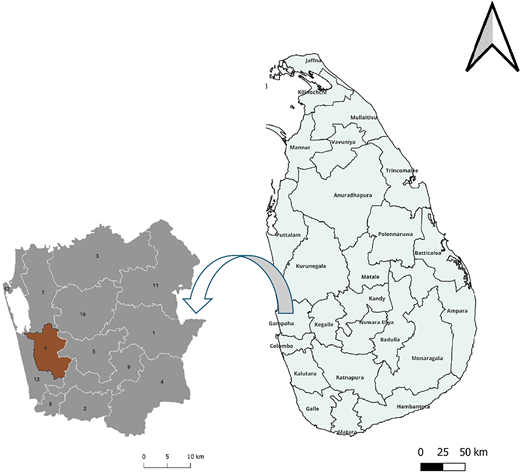
This study was conducted in the Suduwella area of the Gampaha District (marked 6 on the map in Figure 1) on the western coast of Sri Lanka. This site was chosen due to its vulnerability of recurrent floodings and significant impact on local communities, especially women and girls. Educational access for girls and women in the Gampaha District has steadily improved over the past two decades, as is the case for Sri Lanka more broadly through the country’s gender equity goals, with most girls completing primary and secondary education. However, Gampaha continues to rank highly among the districts with significant intra-district educational inequalities, where girls from marginalized areas face barriers such as school dropout, limited transport and family obligations (Sarma et al., 2018).
Suduwella belongs to Jaela Divisional Secretariat. Geographically, the Gampaha District is bounded by Maha Oya and Kelani Ganga lower drainage basin. The northern boundary extends up to the Maha Oya estuary (7°18′ N) to eastward up to the Giriulla area, while the southern boundary lines from the Kelani Ganga estuary (79°50′ E) toward the Ranala village (80°15′ E) area. The western boundary is the Indian Ocean and the eastern boundary lies below the 300 m contour line (Survey Department of Sri Lanka, 2012; Pattiaratchi et al. 2022; GEBCO Compilation Group, 2026). Because Gampaha District is located within Sri Lanka’s wet zone, it experiences a tropical monsoon climate with significant variations in rainfall. The district has seen an increase in extreme weather events, including heavy rainfall leading to frequent flooding (Eriyagama et al., 2010). The Gampaha District population was about 2,433,833 in 2024, with females comprising 50.9% of the total population (Department of Census and Statistics, 2024).
Data collection
The data-gathering process was somewhat novel in the context of disaster studies. We combined group brainstorming sessions, expert-led in-depth structured interviews and creative elicitation techniques of storytelling and drawing. Data was collected in November 2024, a nonmonsoon season that was between significant flood events rather than immediately following a single flood event. This is because we were interested in these women’s and girls’ longer-term experiences of and adaptive roles in, flood preparedness and recovery (Virole and Ricadat, 2022).
All expert authors personally facilitated the group brainstorming and storytelling and conducted the individual interviews, engaged directly with respondents during the field visit. Most conversations and verbal data gathered were in the local Sinhala or Tamil languages and entered in to an excel sheet. In cases where participants found it difficult to verbally express certain experiences, particularly concerning the impacts of floods, they were invited to draw their perceptions, after which they provided explanations of these visual representations. Such complementary use of pictures and stories allows the researcher to complete a thorough and multifaceted qualitative analysis (Virole and Ricadat, 2022).
This approach not only deepened the quality of insights but also captured nuanced dimensions of climate impacts that might otherwise remain unspoken. Importantly, this approach facilitated a safe space for the women and girls where they were able to communicate their ideas and emotions more clearly, which highlighted better the negative feelings and issues they faced with the floods.
Sampling and recruitment strategy
The target population consisted of women and girls aged 10 years old and above residing in the Suduwella area. Participants were recruited via community networks and comprised all women and girls who were present and consented/assented to participate in the research, on the day. The study sample comprised 25 women and girls, religiously either Catholic or Buddhist, who came together to contribute to the research within their local community at the Suduwella Church Hall. The research workshop was conducted in this community hall, as a common facility for any villagers with no religious or other exclusion. The research took place on a weekday morning when these women usually meet socially in the Church Hall. School-aged girls were also present on that day because schools were closed to allow Sri Lankan’s the opportunity to return to their villages to vote in the country’s elections.
Data analysis
The collected responses were translated from Sinhala or Tamil into English language and subsequently transcribed for analysis by the first author. Qualitative data were systematically coded to identify key themes, patterns and recurring insights following Braun and Clarke (2006)'s thematic analysis. Direct quotes from the participants have not been provided here as these were in local languages, not in English. Instead, the quotes were translated by our first author, who is fluent in all three languages and the sentiments of key quotes have been summarized in English within the findings. The findings are interpreted within the context of existing literature to provide meaningful conclusions.
Ethics
Ethical considerations and conduct were paramount throughout the research process. Ethics approval was obtained from the University of Colombo ethics committee. Potential participants were first introduced to each of the researchers and briefed about the purpose of the study. Next, informed consent was obtained from each of the 19 women before conducting the brainstorming sessions, storytelling, interviews and drawing. For each of the six girls aged 10–17 years old, as a vulnerable group of legal minors, both consent from their parent or legal guardian and assent from each girl was obtained prior to data collection commencing. The participants were each gifted a modest food parcel (lunch for that day) and small gift in recognition of their time and effort given to participating in the research.
Findings and discussion
Some general demographic information (age, time residing in the district, occupation) was collected from each of the girls and women who participated in this study (see Table 1) to provide some context for their other interview responses.
Female’s limited understanding of climate change yet widespread experiences of environmental change
Eighteen of the 25 women and girls interviewed stated that they had no understanding of the term “climate change,” and only seven indicated that “yes” they had an understanding. However, when asked about any environmental changes that they had noticed within their district all 25 of the women and girls could identify changes in rainfall or flooding: with statements such as “irregular rainfall,” “longer periods of rainfall” “heavier rainfall” and/or “more floods.” Furthermore, 14 of the women and girls observed “increased heat” as an environmental change based on their life experiences rather than their level of formal education. Age and length of residence, rather than formal education, appeared to track awareness of environmental change.
Flooding and other perceived climate change impacts
When asked broadly about their perceptions of the impact of climate change all 25 women and girls focused on the impacts of flooding rather than of increased heat or other environmental changes in the Gampaha District. All shared an experience of floods becoming more frequent.
The remaining responses fitted within four broad themes of impacts on lives (loss of human and animal lives), impacts on physical health (create health problems), impacts on livelihood (e.g. loss of homes and infrastructure and crops get damaged) and impacts on access to education (e.g. schools close during the floods).
Impacts of climate induced flooding lives and livelihoods of women and girls
The participants described a wide range of impacts of floods on the lives and livelihoods of women and girls. These impacts were coded and then broadly grouped under the following six themes of daily life disruptions, livelihood and economic impacts, challenges to physical health and hygiene, education disruption, physical safety and security concerns and mental and physical exhaustion:
Daily life disruptions: Disruptions to daily life were a theme common to the impacts experienced by all participants. Women and girls reported that cooking becomes hard due to the kitchen being flooded, difficulties of finding firewood to fuel stoves and difficulties of finding necessities of cooking including rice and other staple ingredients and in keeping these supplies clean and dry; that it is hard to find clean water for drinking and food preparation; difficulties for drying clothes and other laundry and the need to spend a lot more time cleaning houses and other infrastructure after flooding.
Livelihood and economic impacts: All 25 participants talked about the economic impacts of flooding on the livelihoods of themselves or their families. Comments from the women and girls included. The main experiences were less income due to being unable to attend jobs (because routes to travel to work were cut off by floodwaters and the need to stay home to clean up after the floods) and damage to the home garden’s cultivated vegetables and other crops and animal farms. Based on the comments provided by working women, a potential link was identified between women’s employment and their participation in flood adaptation. Work-life experiences and shared knowledge from the work-place appeared to influence adaptive practices, such as relocating temporarily to work-places or alternative safe locations during floods, storing dry food at home when heavy rain begins and moving valuables to friends or relatives living in nonflood-prone areas.
Challenges to physical health and hygiene: All 25 respondents reported experiencing a lack of sanitary facilities due to overflowing of toilets, that it was hard to find sanitary pads and disposable nappies and difficulties disposing of them during flooding, spread of waterborne diseases and skin infections. Participants reported difficulties in caring children, pregnant women and elders and who easily get exposed to diseases and that it is a lot harder during flood events to access medical support and medicines Twenty-one of the women and girls interviewed described skin infections as noticeable health related issues for themselves or other women and girls, while 14 of them described about waterborne diseases as a notable health issue.
Education disruption: All respondents spoke of the disruption of education for their school aged children due to schools being closed and/or difficulties associated with children traveling to and from school during periods of flooding. There were also issues with availability of technology, access to the internet and disrupted electricity supplies that influenced children’s abilities to continue schooling from home. Girls were more likely to miss school because of the expectation that they would care for family members or help with cleanup.
Physical safety and security concerns: Many respondents conveyed concerns for the physical safety of themselves, their animals and their belongings. One risk is increased exposure to animal attacks, especially poisonous snakes or crocodiles, which come through flood water. Women also had concerns around keeping children at home during flooding as they always want to go outdoors to play which is dangerous. Heavy floods weaken infrastructure, bring down electric wires and increase the danger of sliding in water and falling. There was also concern expressed about the risk of supplies and other belongings being looted or stolen.
Mental and physical exhaustion: All participants described the mental and physical exhaustion experienced from having to deal with the floodwaters and the subsequent cleanup.
Women more vulnerable than men to the effects of flooding
Twenty-one of the women and girls interviewed perceived that females are more vulnerable than males to the impacts of flooding because women and girls are expected to stay at home and care for children and the elderly during floods, which makes it difficult for them to easily relocate during such events. Fourteen of the women described the main inequalities or disadvantages experienced during or after floods to be insufficient sanitary facilities.
Twenty-two of the women and girls reported that they experienced no challenges or obstacles for women in accessing relief services. In contrast, the remaining three girls and women reported difficulties for females traveling to relief distribution points and that sometimes information about relief does not reach the women who are at home.
Women take on key roles and responsibilities during flood events at household and community levels
The participants described a range of roles and responsibilities undertaken during flood events. Within the household, these include ensuring the safety of children, elderly family members and persons with disabilities; securing household assets and important documents prior to evacuation; cooking with limited resources and managing and rationing food supplies to sustain the household during and after the flood. At the community level, participants reported responsibilities such as preparing food for neighbors who were unable to do so, coordinating with other women to share resources and caregiving duties, engaging in community clean-up and rebuilding efforts and supporting the distribution of relief aid.
Women’s contribution to manage the effects of flooding and strategies used to cope with flooding
The participants outlined their contributions to managing the impacts of flooding within their community. The majority mentioned engaging in postflood cleanup efforts, supporting neighbors to move safe places, supporting the evacuation of elderly individuals and children, distributing relief supplies, providing food and other resources for affected people in their areas. Notably, many school-aged girls emphasized the importance of women’s roles in educating others about flood safety and preparedness.
Participants also described various personal and household-level strategies for coping with floods. One such measure, reported by eight participants, involved constructing elevated toilets to prevent inundation. The most adopted strategy, stated by nine participants, was placing valuable items such as electrical appliances and wooden furniture on higher shelves. In addition, six and seven participants, respectively, reported building small barriers around their homes and staying informed about flood alerts through television and mobile phones. Five participants indicated that they temporarily relocate to relatives’ homes during severe flooding. Three participants mentioned stockpiling dry food during flood-prone seasons as a preparedness measure.
Church as a key community support network for the villagers during floods
Fifteen of the participants stated that families received support from the Church in the form of food parcels. Four of the respondents received support from their neighbors. Five of the women and girls stated that they had received no support from such groups or networks. Three of the women and girls stated that they had awareness that community groups and networks existed but provided no support because they were not well organized. All 19 participants who perceived that support was received from community groups and networks stated that support for women was in the form of provision of dry food and sanitary items, while seven of these respondents had also experienced support from such community groups and networks to help with the evacuation of pregnant mothers and mothers with young children.
Limited support from government and nongovernmental organizations
All 25 participants believed that women’s needs must be explicitly considered in policies, strategies and initiatives for climate change- induced flood preparedness. However, when asked about the support to women provided by specific government and nongovernment organizations, 17 of the respondents perceived that no support was provided and/or felt that government or nongovernment organization interventions had not aided their ability as women and girls to cope with floods. Of the remaining eight respondents, seven believed that women received support from government organizations and only four believed that any support for women came from nongovernment organizations. These eight respondents described that these government and nongovernment organizations’ interventions to provide clean drinking water, medicines for skin infections and flood alert warnings to get ready for the floods had made a difference in their ability as females to cope with the floods.
Divergent perceptions of current flood management strategies meeting the needs of women
Ten of the participants agreed that current flood management strategies meet the needs of women, while 15 of the women did not believe that women’s needs were met. The later expressed the need for better access to healthcare and the need for females to be involved in the decision-making regarding flood management strategies.
Discussion
Although the world widely recognizes climate change as one of humanity’s greatest threats, we argue that if communities at the grassroots level and particularly women and girls, remain unaware of it, we have failed in our responsibility to educate them. This research shows that even in a highly populated urban district with a relatively high literacy rate among participants, fewer than one-third of the women and girls interviewed were aware of the concept of climate change. Nevertheless, every participant could clearly describe tangible environmental changes, such as irregular rainfall patterns and increased flood frequency that have altered their daily lives. This finding supports the need for education of Sri Lankan women and girls, including girls from a young age and elderly women, so that they better understand climate change and to enhance their climate resilience and disaster risk reduction literacy and capabilities, as proposed by Slycan Trust (2024)’s gender and climate brief. We support calls for such literacy and capability to be built through models that mobilize the power of women, such as the UN Women (2026)’s “training of trainers.”
The present study is the first in Sri Lanka to explicitly elicit participation of a wide age range of women and girls from elderly through to those at school. The study offers valuable insights into the demographic and occupational characteristics of women and girls living in Gampaha, while also shedding light on the multifaceted impacts of flooding on their day-to-day lives. According to the results, the participant group is notably diverse, spanning an age range from 10 to 76 years. Younger participants provided perspectives on contemporary challenges, such as disruptions to education and limited access to technology, the internet and electricity to participate in education from home during flood events, whereas older participants reflected on long-term environmental degradation, shifts in traditional livelihoods and evolving community resilience practices. These findings are somewhat consistent with those of other studies in Sri Lanka and more broadly across South Asia. In Bangladesh, while older populations were more concerned about the effects of climate change because of their experiences, younger people showed higher levels of awareness on environmental issues or climate change (Haq and Ahmed, 2016). Given that several years have elapsed between 2016 and our study in 2024, it is apparent that middle-aged to elderly women, particularly those who have resided in the area for over 10 years, will likely have a greater awareness of environmental changes and the associated impacts.
A particularly significant finding is that 21 of the 25 participants have resided in the area for over a decade. This pattern of long-term residence is important because it implies that most participants have not only experienced recurrent flood events firsthand but have also observed and adapted to gradual environmental, social and economic changes over time. Their extended presence in the community means they can offer detailed accounts of how flood risks, coping mechanisms, public infrastructure and community support systems have evolved. Such longitudinal knowledge is critical in identifying both persistent vulnerabilities and emerging resilience strategies. Furthermore, the deep-rooted connection to the local environment among participants enhances the credibility of their observations and provides a rich context for understanding the cumulative and intergenerational impacts of flooding on women’s livelihoods, health, education and social roles. Dulawan et al. (2024)'s study of households in the Philippines found a trend of long-term residency based on muti-generational connections to home and land despite the growing risks and negative impacts of greater frequency and intensity of flooding over time.
The women and girls in our study were engaged in a variety of roles, primarily within the informal and semi-formal sectors. Ten of the women were involved in unpaid labor, predominantly as housewives. Nine of the women are engaged paid employment including activities such as sewing, farming, small-scale business ownership and daily wage labor reflecting the economic diversification among participants. The remaining six respondents were school students, highlighting the value and relevance of young women’s perspectives. Although none of the participants were engaged in professional occupations (such as teacher, nurse, lawyer and doctor), this study contributes to a gap in understanding how a woman’s employment and their work-place related experience might influence their participation in flood adaptation.
Participants’ perceptions revealed that climate change impacts in the study area have notably intensified, with flooding becoming more frequent. Participants in previous studies, outside of Sri Lanka, have also noticed that climate change increases the risk of flooding events (Hettiarachchi et al., 2018; Hirabayashi et al., 2013). Respondents identified a range of consequences associated with flood events, including damage to homes, infrastructure and crops, loss of income, health problems and loss of human and animal lives, decision-making or participation in decision-making and school closures during flooding periods. Specifically, all participants reported difficulties in cooking due to flooded kitchens, challenges in sourcing firewood and other necessities, problems drying clothes and scarcity of clean water for drinking and food preparation. Despite a policy brief in Sri Lanka to address gender inequities (Slycan Trust, 2024), these negative impacts remain similar to those experiences by women in decision-making or participation in decision-making during flood periods (De Silva and Jayathilaka, 2014). Moreover, considerable time and labor were required for cleaning houses and other structures once floodwaters receded. The women and girls remain largely responsible for these activities with limited support from men and boys, the Church and nongovernmental or governmental organizations. This is consistent with other studies, such as Azad and Pritchard (2023) where Bangladeshi men acknowledged the key role that women play in flood adaptation.
Many women in the study, as is the increasing trend in Sri Lanka, contribute to the financial livelihood and economic stability of their families. Flooding severely impacted on the livelihoods and economic stability of our women participants. All participants experienced reduced incomes as a result of being unable to attend jobs and/or damage to their home gardens, crops and animal farms. Health and hygiene challenges during flooding were widely reported. Our findings aligned with those of a previous study also conducted in the Gampaha District, which concluded that the floods had a more direct and impact on livelihood activities of women compared to the men (De Silva and Jayathilaka, 2014), as women are often trapped at home during a flood event and then expected to turn their time and energy to supporting others and cleaning up.
All participants noted serious sanitation and physical health concerns during flood events. These included lack of sanitary facilities caused by toilet overflows, difficulty accessing sanitary pads, spread of waterborne diseases and skin infections and difficulty in caring for children and elderly family members, who were more vulnerable to illness. Twenty-one participants reported observing skin infections such as redness, swelling and itchiness, while 14 experienced waterborne and vector-borne diseases, including bacterial infections, diarrhoea, viral fever, rat fever and dengue fever, during flood periods.
The previous studies have highlighted the effects of flooding on skin diseases. Among flood-affected individuals, the most reported skin problems include cutaneous infections or infestations, skin injuries and inflammatory conditions like allergic or irritant contact dermatitis (Dayrit et al., 2018). Flood events can mobilize pathogens in the environment and increase run-off of water from fields, transporting them into rivers and wells increasing human exposure to waterborne pathogens (Fewtrell et al., 2011). Previous studies have identified Vibrio spp. and Leptospira spp as commonly reported pathogens and most reported outbreaks of Vibrio spp. following extreme water-related weather events occurred in Asia (Cann et al., 2012). Some participants mentioned that they are mentally and physically exhausted due to having to deal with floods. Long-term studies have investigated that there are psychological impacts of flooding, including post-traumatic stress disorder, depression, anxiety, psychiatric disorders, sleep disorder and suicide (Zhong et al., 2018). Some participants highlighted that they have been exposed to animal attacks, especially poisonous snakes, which come through flood water. In certain regions with high rates of snakebites, the number of incidents tends to rise during the rainy season, which in South Asia directly coincides with the monsoon period (Ochoa et al., 2020).
This study also highlights significant gender-specific vulnerabilities. Twenty-one respondents believed that women were more vulnerable during floods because they were primarily responsible for caring for children and the elderly, making it harder for them to evacuate or move freely. Pregnancy also increases women’s vulnerability, as their mobility is significantly reduced during this period (Mehta, 2007). When men migrate in search of income-generating opportunities, the burden of responsibilities often shifts to women. In addition, 14 participants indicated that sanitary facilities were insufficient during flood events, posing significant health and dignity challenges for women and girls. Lack of clean water and cleaning materials hinder personal hygiene, increasing urinary tract infections, reproductive tract infections and skin diseases (Sultana, 2010). Toilets may be unusable due to being submerged or damaged. Temporary shelters often lack private and secure spaces for changing menstrual materials. In addition, during floods, supply chains are disrupted leading to scarcity of sanitary napkins, cloths, soap and clean water.
Regarding access to relief services, 22 participants did not face major obstacles. However, the remaining participants reported difficulty traveling to relief distribution points and noted that information about relief efforts often did not reach women who stayed at home. During flooding periods, roads may be submerged or damaged, resulting in movement by foot, vehicle or boat difficult or dangerous. This is especially the case for elderly women with disabilities, who may not have access to boats making it difficult if not impossible to travel to relief distribution centers. In areas with heavy flooding, moving through water may pose safety risks, especially for children and pregnant women. Power outages and disturbed mobile networks create difficulties in receiving announcements of relief distributions. Furthermore, language barriers and low literacy levels can prevent some women from understanding announcements and some who reside in rural and remote areas may be completely isolated and unreachable for relief distributions. This aligns with wider evidence that women are disproportionately affected by disasters due to structural inequalities, including limited access to information, resources and decision-making (UN Women, 2020; World Bank’s Global Facility for Disaster Reduction and Recovery, 2020).
Despite disaster management initiatives the World Bank (2021) recognizes that men, women, boys and girls are all affected differently by a disaster even when they live in the same household.
Participants highlighted various ways in which women can contribute to managing the effects of flooding. According to the responses, six of participants indicated that women engage in cleanup efforts following flood events. In addition, seven participants mentioned that women provide support to neighbors, including assisting the elderly and children in relocating to safer areas. Another five noted that women contribute by helping to distribute relief supplies, while seven stated that women provide food and other essential resources to those affected. Furthermore, four of the respondents emphasized the role of women in educating others about flood safety and preparedness. Globally, studies indicate that women have a significant role as an agent of change in the community in the effort to reduce disaster risk. Women’s contributions include providing inputs to government policies, acting as facilitators or educators in education programs for the community to increase awareness of flood risk reduction efforts, seeking funds for flood management activities, taking on roles as medical personnel for emergency response activities and undertaking many other roles (Sopiawati and Hatuti, 2019; Ajibade et al., 2013).
Participants also engaged various coping strategies to mitigate the impacts of flooding. These included raising toilet structures, relocating to relatives’ homes during severe flooding, placing valuables on higher shelves, constructing small barriers around homes, monitoring flood alerts via television and phones and stockpiling dry food. Other studies have found that coping strategies vary depending on socio-cultural factors such as region, community, social group, household, gender, age, living situation, season of the year and duration of the flood (Samaraweera, 2018). In the densely populated area of our study, we were impressed by how people quickly share disaster news with each other by talking and sending SMS alerts; and how women and girls lead some of these communication initiatives. We acknowledge that individual families and neighborhoods have implemented some impressive on-the-ground strategies for mitigating the impacts of recurring floods, but that inequities and negative impacts persist, especially for women and girls. We agree with the findings of Azad and Pritchard (2023) that women require access to human, social and financial capital to enable their increased capacity for flood adaptation. We also advocate for a city-wide approach to using advanced technologies to monitor and predict flooding and for widespread warning and communication; inclusive policies and decision-making; resilient urban-planning and the adoption of green infrastructure/nature-positive solutions (see e.g. Dharmarathne et al., 2024) to retain adaptable cities as they are confronted by more frequent and intense flooding.
In Sri Lanka, religious institutions play a significant role in disaster response and recovery, particularly during flooding events. These institutions often serve as centers for community mobilization, offering shelter, food and necessities to affected individuals (Samaraweera, 2018). However, only three participants noted the presence of community groups, but noted that these groups were either inactive or poorly organized. Three participants indicated the absence of support networks, while four mentioned having supportive neighbors. Other research in Sri Lanka has shown that social capital plays a crucial role in effectively adapting to flood events (Karunarathne and Lee, 2019). Church hall is open for all the community without any limitation and as a result all community without considering the ethnic or religious background uses the community hall of the Church for community purposes.
All the participants believed that women’s specific needs must be considered in flood preparedness and response efforts. Also, 17 of the respondents stated that government and NGO interventions had not significantly improved their ability to cope with floods. Only eight participants acknowledged improvements such as access to clean water, medicines for skin infections and early flood warnings facilitated by government and NGO efforts. This finding is consistent with that of other studies in Sri Lanka that have shown that most participants were not satisfied with involvement of government institutions (Wanninayake et al., 2024). Fifteen of our 25 participants expressed dissatisfaction with current flood management strategies, emphasizing that these approaches do not adequately address the specific needs of women.
Study significance and limitations
This study both makes useful contributions and comes with limitations. The study is one of very few disaster studies undertaken specifically by, with and for women; who also involved girls as participants and it makes some novel contributions of innovative methods to disaster studies. It also provides some evidence to show that a policy brief in Sri Lanka that calls for gender equity and justice in climate change impacts is yet to be enacted in both policy and practice on the ground. Women and girls are eager to participate in codesigned policy development, decision-making and proactive initiatives. Our small, context-specific sample prevents generalization of results and findings should be interpreted as illustrative rather than definitive. Another limitation is our exclusive focus on women and girls, so no gender comparison was possible. Finally, our study has not made a systematic comparison across age groups and employment status, despite the diversity of our participants. This study opens a space for ongoing research and other power-mobilizing, participatory activities with women and girls.
Implications
The findings and conclusions of this study have a number of implications for practice and services, policy, research and society related to gender and climate adaptation, both within Sri Lanka and more widely:
Practice and services: The findings point to the urgent need for improved healthcare, sanitation and hygiene services tailored to the needs of women and girls during floods. This includes strengthening support systems for reproductive health and community-based care.
Policy: The study stresses the importance of including women in disaster preparedness and response planning. It highlights the urgency of integrating gender-sensitive measures into climate adaptation strategies in flood-prone regions of Sri Lanka.
Research: We call for further gender-focused participatory studies, particularly in the Global South, to address existing knowledge gaps. We argue that the women-centered methodological design offers a model for future research.
Society: By documenting women’s and girls’ lived experiences, the study underlines how gender inequalities exacerbate vulnerabilities and negatively affect quality of life. The research draws attention to women’s caregiving roles and community contributions, aiming to influence public attitudes and visibility of these issues.
Calls to action
The women and girls who participated in this study highlighted the need to focus on better healthcare access during disasters and for greater involvement of girls and women in decision-making processes related to flood management and preparedness. We advocate for a reframing of girls and women from being perceived as vulnerable groups to enable them to mobilize their power as resilient and key capability-builders for effective disaster management (see for instance Samaraweera, 2023). We call for government-initiated policy and practices that increase the participation of women and girls in decision-making and explicitly support women and girls within their communities, as recommended by Slycan Trust (2024), both within Sri Lanka and other contexts.
Conclusion
This study explored how women and girls in Sri Lanka’s Gampaha District understand and experience environmental change, climate change and flooding. It examined the specific health, livelihood and well-being challenges they face due to climate change-induced floods, identified gender-specific vulnerabilities and suggested ways to strengthen resilience and adaptive capacity. While many participants were unfamiliar with the term “climate change,” all recognized clear environmental shifts such as irregular rainfall, longer wet periods and more frequent severe floods. Commonly reported health problems included waterborne diseases and skin infections, with limited access to sanitary facilities pose significant risks for women and girls. The research also highlighted the vital roles women and girls play in household and community response during floods, along with the coping strategies they use. While gender and climate change have received increasing scholarly and policy attention in Sri Lanka, this study makes a distinctive contribution to exploring women’s and girls’ experiences through our particular focus on sanitation, caregiving burdens and exclusion from formal disaster planning. Furthermore, the study adds to wider debates on gender and climate adaptation across the South Asia region and globally.
The findings underscore the importance of active support from both governmental agencies and NGOs to improve coping mechanisms, ensure service accessibility and promote gender-sensitive disaster risk reduction. Such involvement is key to building resilience among flood-affected communities. Broader research across multiple flood-prone districts with larger samples is recommended to capture a more comprehensive and comparative understanding of community experiences and needs. Despite the study being limited in scope to a single area within Gampaha and involving a small sample, we believe that the call to have women and girls involved in decision-making and for government and NGOs to ensure that females are well-support socially and financially, with supplies, with clean-up, with healthcare and to maintain access to education is critical to all flood event contexts within Sri Lanka and beyond.
The authors gratefully acknowledge the participants from the Suduwella area for generously sharing their experiences with flooding, which significantly contributed to the achievement of the study’s objectives. Special thanks are extended to Ms. Nayanali Karunathilake and Ms. Ishara Nimeshi of the Department of Zoology and Environment Sciences, Faculty of Science, University of Colombo, Sri Lanka, for their assistance in fieldwork activities. The authors also acknowledge the Department of Zoology and Environment Sciences, Faculty of Science, University of Colombo, for providing the resources and institutional support essential to the successful completion of this research.
Author contributions
Deepthi Wickramasinghe, Julie Trafford, Sujeewa Kumari: conceptualization; Deepthi Wickramasinghe, Julie Trafford, Sujeewa Kumari: methodology; Deepthi Wickramasinghe, Julie Trafford, Sujeewa Kumari: investigation; Deepthi Wickramasinghe, Julie Trafford, Sujeewa Kumari, Nimali Darshika: data curation; Nimali Darshika: formal analysis; Nimali Darshika, Deepthi Wickramasinghe: writing – original draft; Nimali Darshika, Julie Trafford, Sujeewa Kumari, Deepthi Wickramasinghe: writing – review and editing; Deepthi Wickramasinghe, Julie Trafford: supervisions.