This paper aims to report findings of a study of vulnerability that identified adaptation strategies of male and female farmers in two regions of Eritrea. The country is suffering from food shortage because of climate and non-climate stressors. As such, erratic rainfall, chronic droughts and extreme weather adversely affect crop production. This paper answers the question of how policy instruments and cultural practices, and their interaction, increase or reduce the vulnerabilities of male and female agricultural producers, including producer perceptions of how instruments and culture can be improved.
Interviews and focus groups were conducted in the two study regions in Eritrea. Documents and transcripts of the interviews and focus groups were coded by theme and analyzed.
Findings revealed that the main rainy season has reduced from four to two months, and the minor rainy season has often failed. As a result, exposure and sensitivity to climate change affects all farmers. These climate change impacts together with Eritrean government policy instruments, including the limited availability, affordability and accessibility of agricultural inputs such as land, fertilizer, seeds, and male labor exacerbate the vulnerability of agricultural producers. Tigrinya farm women are the least able to adapt to extreme weather because of an unequal distribution of resources resulting from cultural, patriarchal views of women which have prevented them from being regarded as equal primary farmers and further limit their access to the resources mentioned. This vulnerability is exacerbated by the prescribed military service of men in their community (which is not prescribed in the matrilineal Kunama community). Producers perceive that addressing this gender inequality and improving government instruments, most importantly getting rid of mandatory military service, will improve adaptation.
Concrete recommendations made by the community are reported.
This paper presents important findings from qualitative research conducted in Eritrea.
Introduction
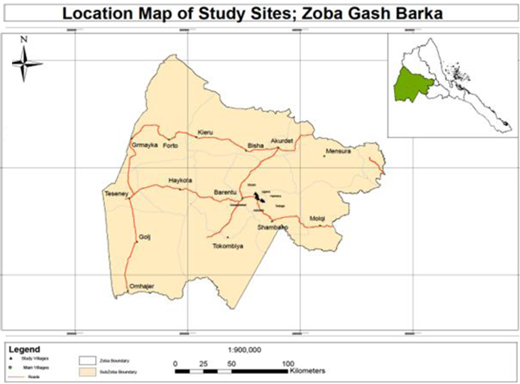
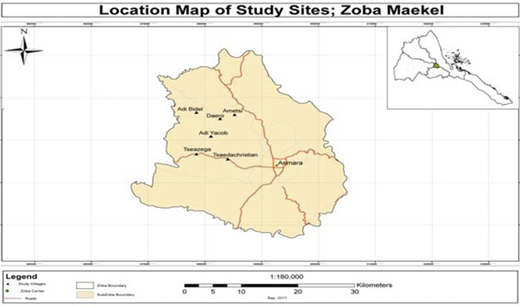
The vulnerabilities of dryland farmers to climate change in two river basins in Eritrea[1], Berik, Central Highlands (Tigrinya[2] ethnic group) and Sosona/Barentu, Lowlands Gash-Barak (Kunama[3] ethnic group) are explored. The focus of this research is the context, cultural practices and institutional governance structures that interact with adaptive practices of farmers in both study regions. This paper answers three questions:
How can policy instruments and cultural practices increase or reduce the vulnerabilities of male and female agricultural producers?
How is this affected by the interaction of policy instruments and cultural practice?
What are producer perceptions of how instruments and culture can be improved?
This study makes an important contribution to the understanding of policy instruments and cultural practices and their contribution to vulnerability within a totalitarian state and one of the most vulnerable regions of the world. According to the Intergovernmental Panel on Climate Change (IPCC) Fifth Assessment Report on Africa, the continent is one of the most vulnerable to climate change as it has “high exposure and low adaptive capacity” (Niang et al., 2014, p. 1,205). There is an increasing need for understanding existing climate vulnerabilities and adaptive capacities of rural populations addressing both climatic and social systems (O’Brien, 2013).
In this article, the framework of the study is introduced with a brief review of literature on vulnerability, institutions and policy. Then, a brief overview of the context of Eritrea and the study regions are provided. The methodology of this study is outlined followed by the research results, discussion, recommendation made by participants and, finally, a conclusion.
Vulnerability, institutions and instruments
This section reviews the literature surrounding vulnerability, adaptation to climate change, institutions and policy. Institutional capital is a key factor in the adaptive capacity of people and communities. Policy instruments (the focus of this research) are an important component of institutional capital.
Although a range of definitions exist (Leichenko and O’Brien, 2002; Kelly and Adger, 2000; Smit and Wandel, 2006), according to the IPCC (2014, p. 5), vulnerability “[…] encompasses a variety of concepts and elements including sensitivity or susceptibility to harm and lack of capacity to cope and adapt”. Adaptive capacity is complex (Smit and Pilifosova, 2003); the adaptive capacity of a household to cope with climate risks depends on the environment of the community, which in turn depends on the resources of the region (ibid.). The adaptive capacity of a local area is determined by politics, culture, economics, environment and other conditions (ibid.) and can be influenced by the way resources are managed and the financial, technical and information resources of the community and region (Adger and Kelly, 1999; Kelly and Adger, 2000; Smit and Pilifosova, 2001). One of the most important resources of a community to adapt is institutional capital. Figure 1 lists these resources based on what the IPCC calls “the determinants of adaptive capacity” (IPCC, 2001, p. 893). Access and control of these resources are important to reduce vulnerabilities, but it is the capability of actors to organize them into adaptive strategies that defines the balance between sensitivity (determined by lack of or limited resources) and adaptation (defined by the existence of resources that could be mobilized to reduce sensitivity).
Institutions are defined as sets of rules (informal and formal) that enable or deter the behavior of actors within a particular policy system or society to create stability (North, 1990), determine what is appropriate, legitimate and proper (Buttel, 1997; Homer-Dixon, 1999; O’Riordan and Jager, 1996) and facilitate the management of climate related risks. Examples of institutions are such things as the existence and availability of insurance, water conservation programs, credit programs, etc. Local and informal institutions (such as neighbors assisting neighbors in times of harvest or extreme weather events) may be highly relevant to ensure adaptive capacity of local people and livelihoods (Adger, 2003; Berkes, 1998; Dube and Sekhela, 2008). Political institutions (such as financial assistance programs in times of drought) also play a fundamental role in organizing society and imposing rules that define nature and societal relationships (Beck, 1992; Dryzek, 1997; Howes, 2005; Papadakis, 1996). Institutional capital includes a combination of formal and informal institutions of an economy, which in juxtaposition with other resources, influences societal performance (Peng et al., 2008).
Policy instruments are tools used by state or non-state actors to influence behavior and effect a certain response from people and communities (Anderson, 2010). Because policy instruments are a method that formal institutions use to effect mandates, they are a key component of institutional capital and a key aspect of study in relation to adaptation to climate change (Gupta et al., 2013; Mwinjaka et al., 2010). Policy instruments may be regulatory measures, which are imposed by legislative function with measures to ensure compliance such as command and control instruments (Baldwin et al., 2011). Some instruments are market or economic instruments such as private insurance, disaster relief funds or loan instruments for income smoothing (Botterill and Chapman, 2009; Pollner, 2012; Stavins, 2003). Other instruments attempt to influence behavior through such means as increasing environmental awareness or responsibility, awareness campaigns or campaigns to reduce water usage (Garrido and Gomez-Ramos, 2009). Also, instruments may encourage voluntary management arrangements such as local watershed governance (Gupta et al., 2013). The existence of these instruments is one indication of institutional capital, but a more important indicator is how these instruments operate at the local level. The determination of how these instruments affect behavior and assist with adaptation to climate change, or increasing vulnerability to climate change, requires a matching of people’s autonomous adaptation strategies with these policies (Mwinjaka et al., 2010).
The IPCC has recognized that in adapting to climate change, “diverse values, language uses, ethics, and human psychological dimensions play a crucial role in the way people use and process information and take decisions” (Jones et al., 2014, p. 203). The social context, cultural differences and environmental values are identified as important. It is hypothesized that “At a very basic level, egalitarian societies may respond more to community based adaptation in contrast to more individualistic societies that respond to market-based forces (medium confidence)” (Jones et al., 2014).
This research explored the adaptive strategies of dryland farmers in Eritrea. An important component of this study was the institutional capital available to these farmers specifically delineated as the policy instruments with which they interacted in coping with extreme events of drought as well as the context, the cultural practices that informed this adaptation.
Eritrea case study
Climate and agriculture in Eritrea
Eritrea lies in the Sahelian rainfall zone of Africa. This part of the continent is dry and experiences water scarcity (Department of Environment, 2007). The authors of IPCC report (Niang et al., 2014, p. 1,202) concluded that “Climate change will amplify existing stress on water availability in Africa (high confidence)”. Eritrea’s Department of Environment (2007, p. 1) stated that climate change led water deficit has already been observed in the country. The climate “is highly variable, influenced by the expanding Sahel-Saharan desert”, high-pressure monsoons, low-pressure systems, “proximity to the Red Sea and the physical features [of the land] typically, the mean annual temperature declines by 1°C for each 200-meter rise in elevation”.
In Eritrea, 95 per cent of agriculture is rain-fed, making agriculture vulnerable to climatic risk (Gebremedhin, 1993; Habte, 2002). Agriculture, specifically crop and livestock farming, is a way of life across Eritrea (Gebremedhin, 2002). The harvest depends on rainfall. Scarcity of rain, therefore, leads to food insecurity. In good rainfall seasons, agricultural production meets only 60 per cent of the country’s food needs, whereas in poor rainfall seasons, agricultural production could easily fall below 25 per cent of food needs (Habte, 2002; International Fund for Agricultural Development [IFAD], 2008; United Nations Development Programme [UNDP], 2008). According to IFAD (2008, p. 1), “Even in years with adequate rainfall, about half of the food required by the country has to be imported”. As such, food shortage is a major issue.
Eritrea’s political structure and economy
Eritrea has been the victim of political wars and economic exploitation for centuries. Since 1993, Eritrea is a single-party state, run by the Eritrea People’s Liberation Front under the name of People’s Front for Democracy and Justice. The country is still run by the de facto leader before independence. The planned 1997 Presidential election never materialized. Since 2001, this government’s leadership has been particularly brutal. It has created a highly militarized country through mandatory, indefinite national service[4] (Eritrea Foreign Policy and Government Guide, 2013). The economy of Eritrea, like those of other developing countries, is based on subsistence agriculture. More than 80 per cent of the population is engaged in agriculture and related activities (Gebremedhin, 2002). The political economy has faced many economic challenges because of lack of resources and chronic drought, which has been exacerbated by restrictive economic policies. The country’s economy is solely controlled by the government and its party-owned businesses which are utilized to complete their development agenda (Eritrea Foreign Policy and Government Guide, 2013). Few large private enterprises exist, and most operate in conjunction with the government Ministries.
Gender roles in the study areas
The study areas were the regions of the Central Highlands (Tigrinya ethnic group) and Gash-Barak Lowlands (Kunama ethnic group). The two study regions are distinct and unique from each other because of their respective ethnic groups and economic, social and cultural ways of life outlined on Table I. The two groups were chosen because of their very different cultural gender practices.
While the Tigrinya live in the relatively less-fertile Central Highlands, their culture is Eritrean Orthodox, and their women cannot plough, seed, sell or graze livestock. It, like much of Africa, is very patrilineal and patriarchal (Gebremedhin, 2002; Tesfagiorgis, 2011). The male-dominated structure of Eritrean societies is socially constructed by deeply rooted traditions. These are widely accepted as the cultural norms, values and guidelines that control the social interactions and relations between the two genders (Figure 1) (Gebremedhin, 2002; Kibreab, 2009).
Conversely, the Kunama live in the Gash-Barka Lowlands, which is relatively more fertile, monotheistic (without formal hierarchies and practices of Islam or Christianity) and matrilineal. Here, women practice all aspects of farming, except livestock grazing. Another significant cultural difference discovered in the research was the Tigrinya people have a high percentage of participation in national military service for men and non-married women, whereas the Kunama do not (Figure 2).
Methodology
This research was based on a qualitative case study method. The field research took place in Eritrea within a period of seven months from March to October 2011. Access to the research country and sites are important when collecting primary data (Silverman, 2005), the access to the research areas was achieved by the National Union of Eritrean Women (NUEW) and the sub-region of the Ministry of Local Government with the support of the village leaders.
A purposefully selected sample was used in this research (Creswell, 2009; Silverman, 2005). This sampling procedure was based on representation in terms of the various socioeconomic groupings. Socioeconomic status was determined based on the judgment of the local administration and NUEW leaders. Social status of participants was considered to represent a variety of households existing in the regions. Both genders were represented equally among participants. Marital status was also considered. Female headed-households and women whose husbands were serving in national service were also included in this study sample.
In total, 12 semi-structured interviews were conducted, 4 with key informant community leaders and 8 with elderly male and female farmers. A total of 24 focus groups were also conducted with a total of 140 male and female participants, 56 from Berik, Central Highlands, and 84 from Sosona/Barentu, Gash-Barka. Focus groups were organized in each village with six-eight participants. Focus groups of male participants and female participants were held separately so that each group would feel comfortable during the discussions. Issues explored included climate, weather, agricultural practices, social and cultural practices, perceptions surrounding improvements needed to government instruments and cultural practices in the future. Data were analyzed as themes and sub-themes using content analysis. Data were coded and logically organized and assessed to identify the components of vulnerability, exposure, instruments and adaptation strategies utilized by the participants. Thereafter, a comparison of the sensitivities, policy instruments, cultural context and adaptation strategies between the two case studies was made.
Results
The findings have been analyzed first by identifying key sensitivities, relevant cultural, gender practices, adaptation strategies and perceptions of male and female farmers of policy instruments.
Vulnerability
Farmers identified and ranked vulnerable social groups from most to least vulnerable as:
disabled men and women farmers;
elderly with adult children in indefinite national service (in Berik, Central highlands there is a high percentage of participants; this is not the case in Sosona, Gash-Barka);
female-headed households;
wives of husbands in indefinite national service; and
vulnerability by family size.
The most vulnerable households were those that lacked the assets and resources to diversify their livelihoods in terms of both farm labor and coping with food shortage. Factors include the number of livestock owned, farm labor shortages and lack of income-generating activities. The least vulnerable were those who had assets and could diversify these assets through diversifying agricultural practices including livestock for instance.
Sensitivities
Farmers, when asked about climate change, discussed the major sensitivities in terms of temperature, wind patterns, rainfall variability, drought, water scarcity, deforestation and flood. Both male and female farmers in both study areas reported that they were experiencing climate change particularly in terms of rainfall variability; this included erratic rainfall, delays in the onset of rain, rain failures, low rainfall or too much rain. In some years, rain began and ended early, and, in other years, it began late and ended early. Scarcity of rainfall is a major issue as the findings indicate that the minor (azmera) rainy season has often failed and the main (kremti) heavy monsoons end earlier in August instead of in September. During years of drought, early planting and late maturing crops such as sorghum, maize and finger millet were not harvested. When farmers were asked what they thought caused rain variability in both study areas they said:
Rain comes from God. We depend on rain and we cannot do anything without it. We do not have any other options, except to pray to God for good rain, it is in God’s hands. We are also aware that deforestation has something to do with rain variability. [Berik focus group (confirmed also by Sosona participants)]
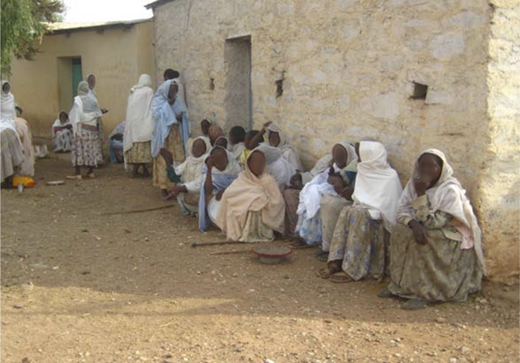
Plate 1 shows Tigrinya women praying for rain. According to respondents, crop production is determined by climate and agriculture inputs such as rainfall, labor, both human and draught (animal) power and fertilizer. Participants identified factors that contributed to low crop yields. These are listed in decreasing order of importance:
increases in temperature and strong wind patterns;
scarcity of rain;
recurrent drought;
weeds, pests and diseases;
shortage of male labour [5];
flood;
deforestation, soil erosion;
draught power oxen and camels;
increase in female-headed households;
lack of fertilizer, animal dung and decreasing soil fertility;
seed shortage and poor quality; and
lack of maintenance of soil and water conservation practice (fallow, crop rotation).
Gender, cultural practices and adaptation
The gender division of labor and control of resources are important in rural livelihoods as illustrated in Table II. The division of labor influences access to labor among households. For example, it was found that some activities were strictly limited to specific genders in both ethnic groups.
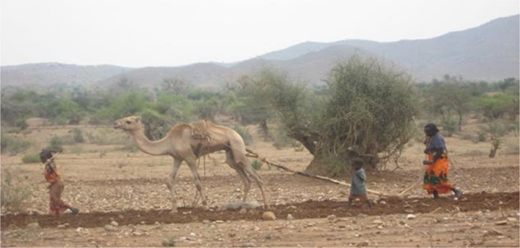
As a rule, tasks performed by men are controlled by men and those performed by women are controlled by women. The study found that Tigrigna women have additional cultural and gender restriction in practicing farming compared to that of Kunama women. Tigrigna women are restricted from ploughing (and Kunama are not – as depicted in Plate 2), an essential practice in the highland, resulting in denial of access to resources and services. Hence, female-headed households become dependent on access to male labor. This problem is exacerbated by government policy of mandatory indefinite national service with Tigrigna males forming the highest percentage as such inaccessible to their family farm. Women of both ethnic groups work longer hours than their male counterpart as domestic work is the sole responsibility of women. They are also responsible for parenting, taking care of children, the sick, elderly, in-laws and extended families.
In general, these findings demonstrate that farm women experience excessive workloads in both ethnic groups. Culturally, most activities are carried out by women/girls, and they suffer greatly when these resources such as water and firewood are scarce. During water shortage, the girls spend long hours in search of water. This means they miss school and their scholarly performance suffers. These findings are consistent with those of similar studies conducted in other developing countries (Kakota et al., 2011).
Drought was discussed at length as one of the major extreme weather event that impacted farmers in both study areas. Major droughts occurred in 2007, 2008 and 2009, resulting in crop failures. Of these drought years, farmers recalled 2008 as the worst, as crop production was extremely low for both human food and livestock feed. Although there were no human deaths recorded, livestock deaths were at their highest. Farmers were encouraged to identify and discuss adaptation strategies (Table III).
Management of grains and food is crucial when dealing with limited resources in times of shortages of food and, particularly, during droughts. This means that grain purchased must last longer; as a result, Tigrinya women stated they ate less. When the prices of grains increased, the price of livestock decreased. During drought, farmers do not make profit from livestock sales; they sell because they need cash. Traditionally, in Berik (Highlands), the groom provides the bride with gold, which may be sold during hardship.
In Berik (Highlands) farm, women reported that they made kitcha[6] homemade bread for their children. In Sosona (Lowlands), they use the wild plant locally known as gaba[7] found in the Gash-Barka area as the last option. Participants stated that the use of gaba as a coping mechanism has been practiced for centuries because it thrives in drought. The men travel long distances in search of gaba, and the women do the preparation of the gaba into bread. It is noted that the Sosona population do not use starvation as a coping strategy because of availability of gaba. In Berik, no wild plant exists and as such starvation is common. This is an important comparative feature of adaptive capacity.
Another important drought adaptation strategy in Sosona (Lowlands) is working at the traditional gold mines operated by the government. This is important for earning cash; the latter is used to purchase grains. Farmers stated that they are the first and foremost farmers and only during drought do they search for gold. In Berik, a popular coping mechanism is cash remittance[8] from family abroad. In both study areas, credit loans from the MoA and the NUEW are provided. Farmers are given cash loans to generate income, but majority of farmers use these loans to purchase grains during drought. Farmers disliked the use of loans because of high interest rate (12 per cent). They worry about the rates and inability to pay back on time, although loans were helpful during hardship.
Instruments
The above research findings indicate that farmers are unable to meet their daily food needs because of extreme weather (drought) and crop failures. As such, local and informal institutions are highly relevant to ensure adaptive capacity of local people and maintain their livelihoods. The government of Eritrea has put in place policy instruments to facilitate adaptation strategies to enable farmers to deal with drought. This institutional capital is in the form of market/economic instruments as well as environmental awareness and responsibility through campaign.
The following instruments are available in both study regions:
Drought relief: During droughts, the government imports grain from Sudan locally known as wedi-aker[9]. This grain is similar to red sorghum. Farmers complained that the quality was very poor for making injera the flatbread staple. This grain is distributed to vulnerable groups[10] and is also made available at the market to the general public at a lower price. Both male and female farmers, however, need to find sources of cash to purchase this grain. Participants in both study areas identified (Table III) ways in which they collected money, although opportunities are very scarce. In both study areas, seeds are loaned to farmers prior to planting season but have to be returned by the following harvest.
Credit loans to support income generating activities: NUEW and MoA have a credit loan program at 12 per cent interest rate to help farmers engage in income-generating projects. NUEW credit loans are designed for women, providing 3,000 Nakfa (US$75). The following are success stories shared by women in Sosona (Lowlands): one woman used the money to open a small grocery shop next to her hut; another purchased a donkey; a third opened a small shop where she sold tea, a popular local beer called siwa and soft drinks. Participants recounted these as successful livelihood strategies.
The Eritrean government provides the following economic instruments in the Central Highland region only:
Subsidized government shops: The government shops provide subsidized grains and essential food items such as sugar, coffee, tea, cooking oil, macaroni (poor quality) and salsa. Both male and female farmers argued that the shops are useful as the prices were lower than market price. However, supply estimated by the government was insufficient. For example, 25 kg of sorghum is supplied for a family of five for two months.
Subsidized farming tools, fertilizer and seeds: In Berik (Highlands), male farmers agreed that farming tools such as forks, plough tips, plough beams and yokes were available at a lower price from the local office of the MoA; however, tool quality was poor. The market is a better place to purchase farming tools of better quality, although more expensive.
Land and equipment grants for gardening vegetables: In Amesti and Adi-Yakob village, Berik, with the collaboration of the NUEW, suitable land for gardening was given to selected vulnerable female farmers in the category of female-headed households with children and martyred husbands as well as females with children and husbands serving in national service. They were also given one pumping motor but limited supplies of oil and gas increased prices to 200 Nakfa (US$5). This program ended after one year.
Environmental awareness and responsibility campaigns
Participants discussed two other government initiatives relating to climate change and deforestation. The first was only available in the Central Highlands region, but the second was universally available. The two initiatives are as follows:
Tree planting campaign: Since 1991, the government of Eritrea has taken the responsibility of forest management by appointing a community watchman in the Central Highlands. It is illegal to cut live trees, and trespassers are fined by the MoA. Both male and female farmers in Berik reported that they were engaged in community tree planting, a program led by the MoA and the NUEW. The local government administration office kept records. At least one adult member of each household is required to engage in tree planting. There are consequences for not showing up (such as difficultly accessing government shop subsidies). In Sosona, there is no tree planting program.
Adhanet energy-efficient stoves: Improved traditional mogogo stoves, known locally as Adhanet, are used to reduce forest depletion and environmental degradation. Adhanet energy-efficient and environmentally friendly stoves are locally manufactured by selected trained individuals. These trainers can then train other women.
Discussion
In both study regions, the impacts of climate change were being experienced. Participants reported increases in temperature, strong wind patterns, scarcity of rain resulting in recurrent drought, increased weeds, pests and diseases, flood, soil erosion and deforestation. Farmers adapted by eating less, selling assets, borrowing money, selling firewood and charcoal, handicrafts, livestock, trading in tea, coffee, local alcoholic drink and looking to alternate food sources.
The geography of the two study regions differed in the quality of farmland (fertility) and size of the farm. The Central Highlands had smaller, less fertile lands that required more ploughing. Temperatures were much lower in the highlands, whereas population density and food shortage was higher. Because of the vulnerability of the people in the region to drought and food shortage, practices of soil conservation were disbanded resulting in increased vulnerability. In contrast, the Gash-Barka Lowlands had larger, more fertile farms requiring less ploughing. Interestingly, women in the Lowlands were able to plough compared to women in the Highlands. This vulnerability was exacerbated by the instrument of military service that applied only to men in the Highlands.
Although the mean annual temperatures are much higher in the Gash-Barka Lowlands, there is access to two natural resources that facilitate adaptation. First, gold mining allows men secure employment and off-farm income. So, men not only are present but also can obtain contributory income. Second, gaba is accessible and can be made into bread (an alternate food source) staving off hunger and starvation. These resources significantly reduces the vulnerability of the Kunama people in Sosona, the Gash-Barka Lowlands. The Tigrinya people in Berik, the Central Highlands do have access to Kitcha to make bread, but it is not always available. The Tigrinya women can sell gold jewelry in times of extreme vulnerability (once) but do not have another livelihood option, as the Kunama people do gold mining. Military service of the men does provide a small wage to women, but women-headed households in the Central Highlands are very vulnerable because of their inability to conduct all of the farming activities (such as ploughing five times a year). The Kunama people have developed a traditional communal coping mechanism called wefera. Here, the community comes together to help prepare land for seeding for vulnerable members of the community. Notably, immigrants from Eritrea working in the diaspora, remit a portion of their pay to their families (a key coping mechanism for the Tigrinya ethnic group).
Even though more government programs are available for the Tigrinya group, their effectiveness at reducing vulnerability is questionable. Assisting the people with gardens could improve food availability; however, the latent impact includes increasing cost of equipment such as pumps, poor quality of equipment, grain and inputs provided by government run shops without a free market system. Encouraging private investment and developing a market for supplies could be a key adaptation strategy for government (Tiffen et al., 1994). The Kunama people expressed interest in these services, as well as the tree planting program. Universal accessibility of equipment, tools, inputs and services could increase demand and allow for a greater number of suppliers potentially preventing exorbitant price increases as was the case in relation to the gardening water pumps.
Comparing and contrasting gender and instruments
The two study regions have varied cultures with Sosona practicing matrilineal system, whereas Tigrinya practices patrilineal system. This study found that culture plays an important role in division of labor, thus dictating access to resources. The difference in responses from male and female participants regarding their vulnerability and adaptability epitomizes the importance of a gender-focused study. The study findings demonstrate that gender inequality is a crucial factor, as female farmers were more vulnerable than male farmers to climate change, especially among the Tigrinya people. Female-headed households in Berik, Central Highlands, were the most vulnerable group, in comparison to female-headed households in Sosona, Gash-Barka Lowlands for three reasons:
Tigrinya women were excluded from ploughing because of cultural restrictions making them dependent on male relatives or forcing them to participate in sharecropping in the absence of men.
This issue was made worse by government policy of indefinite national military service for the Central Highlands.
Unable to plough, Tigrinya women were considered to be secondary farmers, resulting in exclusion of access to resources of agricultural inputs such as fertilizer and seeds from the MoA.
Gender and instruments combine to increase the vulnerability of the Tigrinya.
The old and stable culture of patriarchy of Eritrea support these circumstances and also combine with the political reality of an undemocratic state. Change of the state and the instruments examined herein is slow; economic state instruments assume a very important place in adaptation because of the state control of the economy.
The symbiotic outcome of the matrilineal society of Kunama, Sosona region in the Lowlands is that women have access to all available resources and men are not obliged to participate in indefinite national service (in fact earning mining income). Hence, the agricultural units of Kunama have more adaptive capacity because of the ability of the women to perform all farming activities except livestock grazing. The Kunama have more access because of access to instruments and culture to increase their adaptation by increasing their assets.
The best outcome would entail not enforcing military service on Kunama people, and resolving the differences with Ethiopia, abolishment of mandatory indefinite military national service as well as allowing Tigrinya women access to resources and support from MoA.
Recommendations by both male and female farmers in both study areas
Both male and female farmers who participated in the research made the following recommendations. These recommendations are ideas put forward by farmers in order to cope with climate and non-climate stressors related to farming livelihoods.
Ideas common to both study areas are:
provide support to build capacity of both male and female farmers to cope with extreme weather stressors;
drought-relief grain supply should be available to all farmers;
encourage the collection of data on female farmers’ access to various agricultural extension services;
provide additional gender-sensitive agricultural extension programs for female farmers to increase their farming management capacity and their general agricultural knowledge;
support the development of new sources of credit, as low-cost loans are essential to help farmers diversify, and interest must be kept minimal to ensure success;
provide opportunities for off-farm work and income generating projects that are crucial to earn cash for purchase of grains and other essential items;
increase availability, affordability and accessibility of agricultural inputs to both male and female farmers including better seeds, labor, draught power, tractor services, farming tools and materials to combat pest infestations;
encourage community solidarity; and
encourage increase of livestock ownership, as it supports adaptation. It diversifies household income and provides animal dung as organic fertilizer. This fertilizer is preferred as it provides better yields during erratic rainfall as well as better long-term restoration of soil fertility and moisture.
Specific to Berik, Central Highlands:
increase the supply of grain from 25 to 50 kg by the subsidized government shops for a family of five on a monthly basis;
address gender inequalities within the agriculture sector by eliminating gender discrimination, economic and cultural barriers;
provide female headed-household with ploughing arrangements that will secure their farming output;
indefinite military national services in Eritrea should have time limits and ultimately abolished and, in the mean time, increase the monthly wage to match the current living cost;
encourage Eritrea’s Ministry of Defense, especially during ploughing season, to allow male farmers to return to their farm; and
develop government policies that encourage the younger generation to stay in the country by providing job opportunity and growth.
Specific to Sosona, Gash-Barka:
subsidized government shops are needed;
provide training on safety for gold mining; and
encourage gardening practices and provide incentives.
Conclusion
This article discusses the impact of climate change and policy instruments on livelihoods of subsistence farming in Eritrea. In sub-Saharan Africa, climate change has affected rainfall variability leading to crop failures and droughts. In Eritrea, rainfall has been erratic. The main (kremti) rainy season has reduced from four to two months, and the minor (azmera) rainy season has often failed. The country continues to suffer from food scarcity because of climate and non-climate related stressors. The impact on agriculture and the lack of adaptive capacity will intensify the challenges that climate change continues to pose on Eritrean male and female farmers. As such, erratic rainfall, shortage of male labor, gender inequality and the lack of agricultural inputs have contributed to limited crop production exacerbating the existing inequality. The most important determinant of vulnerability is the changing climate, in particular rain variability and drought. Second, the social/cultural view of women in the Tigrinya ethnic group has prevented them from being regarded as equal primary farmers. This has resulted in variations of outcomes of adaptive strategies, especially when combined with government instruments (more of which are available to Kunama by way of assistance) and the third most important determinant, mandatory indefinite national military service (only applying to the Tigrinya which removes male farmers from their family farms).
Vulnerability is determined by adaptive capacities. A single climate hazard, like drought, does not affect men and women in the same way because some people have greater capacity and access to resources than others.
The undemocratic Eritrean government has developed a government controlled economy with few private companies operating in conjunction with government ministries. As a result, Eritrean agricultural producers are highly reliant on the government and economic instruments available to them. The historic patriarchal culture of Eritrea that Tigrinya women experience restricts their access to these important instruments, limiting their institutional capital and increasing their vulnerability. This context could be changed significantly by changing the culture of patriarchy and the reliance on government instruments. Tigrinya agricultural producers identified the need to address gender inequalities within the agriculture sector by eliminating gender discrimination, economic and cultural barriers.
Notes
Eritrea is located in Eastern Africa, bordering the Red Sea, Djibouti, Ethiopia and Sudan. Population is 5,824.000 (2011 estimate) with GDP per capita $681 (Eritrea Foreign Policy and Government Guide, 2013).
The Tigrinya are an ethnic group and also one of the official languages (it is also spoken in Ethiopia). The Tigrinya are the majority with approximately 50 per cent of the country’s population (Gebremedhin, 2002).
The Kunama are also an ethnic group and also a language spoken only by the Kunama, and they are the minority making up only 2 per cent of the population (ibid.).
By law, Eritrean nationals (male and female) aged 18 to 50, are expected to take part in the compulsory Active National Service (ANS) Proc. 82/1995, Art. 8 for a total of 18 months (6 months military training and 12 months working in development projects – road building, etc.). In May 2002, the Eritrean government extended the national service period to indefinite service. The name was changed to the Warsai-Yikaalo Development Campaign (WYDC). The Ministry of Defense pays these soldiers from 150 to 500 Nakfa (US$3.75 to 12.50) under the pretext of national reconstruction which included state farm (Kibreab, 2009). Eritrea has the second largest army in Africa (300,000 men and women). The defense budget remains a heavy burden for the country at 25.7 per cent of the GDP in 2002 (Last figures available) (Library of Congress, 2005).
Shortages of male labor was reported by Berik participants who stated that the absence of male labor since 2002 due to mandatory indefinite national service was significant.
Kitcha is made of wheat flour, water and salt, relatively thin unleavened bread.
Gaba is the popular wild plant that can be made into a bread by smashing and processing it into a kind of concentrated bread to be used during shortages of food and droughts. It is also a good source of food for long journeys during migrations.
Remittances from “abroad estimated to account for 32%” of the GDP per year (Library of Congress, 2005, p. 8).
Wedi-aker is a crop that requires more rain and grows in Sudan. It is a high-yield and late-maturing crop. Injera is staple flatbread and Wedi-aker is a poor quality to make injera with. This grain is not intended for injera, but this is the only grain available. Injera is made with taff grain, but this grain is not supply by the government.
Vulnerable groups according to the government are martyrs’ parents, wives and children, including wives of husbands who are currently serving in the national service (Berik male and female participants).
The field research in Eritrea was carried out for seven months with the aid of a grant from the International Development Research Centre, Ottawa, Canada. Information on the Centre is available on the web at www.idrc.ca.