The mainstream climate change community has primarily concerned itself with mitigation and adaptation strategies, both of which require monitoring and prediction. These four inter-connected response actions (mitigation, adaptation, monitoring and prediction) constitute the main strategies for managing climate change. This paper aims to weigh in on policies and societal coordination for effective management of the earth’s climate with respect to these four elements in Africa because of its socioeconomic peculiarities.
The Delphi experts’ method backed by questionnaires was used to obtain relevant data for the study. The questionnaires were distributed to professionals dealing with issues related to climate change response and sustainability in various parts of the world, with a focus on Africa.
With respect to the strategies that are most needed for effective climate change actions in Africa, government’s policies, activities and decisions rank highest at 1.20 with a p-value of < 0.001, and financing is next at 0.93, mitigation is 0.83, prediction is 0.76 and adaptation is 0.68 (p = 0.048), at the 5 per cent cutoff. Also, for the most appropriate approaches to managing climate change across Africa, regional efforts are at least 8 times more effective than country-wide approaches, followed by continental efforts at 6.51 times, international cooperation at 3.99 times and inaction at 0.00 times.
The paper concludes that a holistic climate change management approach is important in Africa to contain the impacts of climate change in the continent.
1. Introduction
Climate change has remained the most challenging global environmental phenomenon of all time. The Fifth Assessment Report (AR5) of the Intergovernmental Panel on Climate Change (IPCC, 2014a, 2014b) has, in fact, indicated that climate change is accelerating faster than had been anticipated and that this portends grim immediate and long-term consequences for the environment and society. The potential consequences extend to virtually all aspects of life and livelihoods – food security, energy and water resources, national and global economies, political stability and security (Francis, 2015; IPCC, 2014a, 2014b; Ban Ki-moon, 2011; IPCC Impacts, Adaptation, and Vulnerability, 2007). As reported by Stern (2007), climate change is as much global as it is local in terms of its causes and consequences, and international collective action is critical in driving an effective, efficient and equitable response at the scale required. Thus, it is not difficult to understand why the Paris Agreement, which came into force on November 4, 2016, was successfully negotiated.
Africa is the lowest emitter of carbon dioxide (CO2) (EIA, 2012; 2009), which is an important greenhouse gas (GHG). Yet, the continent is particularly vulnerable to climate change because of its extant environmental and socioeconomic challenges. These are reflected in and promoted by the expanding desert conditions, disappearing rainforests, underdeveloped economies, general low adaptive capacity and, therefore, weak resilience to climate variability and change (Vorster et al., 2011). Factors such as poorly developed infrastructure and its attendant effects on socioeconomic conditions are prevalent in Africa. The vulnerability of African countries is worsened by their limited capacity to act, and sometimes by outright inaction in addressing climate variability and change issues. This is partly a reflection of policy- and decision-makers’ inability to appreciate the frightening consequences of their inactions. Human beings’ inactions on issues of climate change pose real dangers to communities, regardless of their locations (Vorster et al., 2011). Bezabih et al. (2011) note that the vulnerability of African countries to climate change is high, as their economies are largely agrarian and, in most areas, wholly weather-dependent. The effects of climate change in Africa are thus felt within income and consumption. Furthermore, climate change affects various sectors of the economy, directly or indirectly (Vorster et al., 2011). Bezabih et al. (2011) further posit that interactions between different sectors must be studied to assess the impacts on the overall economy. Most studies on climate change impacts have been sectoral, the results of which may be added up to obtain an estimate of the overall change in social welfare (Fankhauser and Tol, 2005). This approach ignores potentially significant “horizontal inter-linkages”, that is the interaction of sectoral impacts, such as the connection between agriculture and water.
The economic impact of climate change is usually measured as the extent to which the climate of a given period affects social welfare in that period. This static approach ignores the dynamic effects which climate change may have on economic growth, and hence future welfare (Fankhauser and Tol, 2005). Linking monetary values to climate change helps to drive home the economic implications of the phenomenon beyond the conventional understanding (Stern, 2007; Hope, 2011; Faiyetole et al., 2016). This understanding is potentially capable of making Africa’s policy- and decision-makers on climate change take effective actions that will contribute more meaningfully to the global response on climate change. According to the OECD (2008a, 2008b) and IPCC Impacts, Adaptation, and Vulnerability (2007), the cost of inactions overwhelmingly outweighs that of actions. In fact, Faiyetole et al. (2016) conclude that Africa must avoid inaction and refuse business-as-usual responses on issues regarding climate change, going forward. The latter authors further posit that for Africa to contribute to and benefit from global climate change efforts, it should pursue a hybrid of four climate policy scenarios, which can be measured using the representative concentration pathways (RCPs) (van Vuuren et al., 2011a, 2011b; Thomson et al., 2011; Masui et al., 2011; Riahi et al., 2011; IPCC, 2007). This is because each RCP, from 2.6, 4.5, 6.0 to 8.5 Wm−2, portends different costs in terms of per cent of gross domestic product (GDP) for Africa. Hence, only through a more thorough understanding and appreciation of the nature of the critical issues, can a viable way forward be identified for joint actions in Africa (Vanderheiden, 2011).
It has also been suggested by Barnett and Adger (2007) that the determinants of human security are, as temporally as they are, spatially complex: past processes, such as colonization and war, shape present insecurity, and on-going processes, such as climate change and trade liberalization, would shape future securities of countries across the globe. The factors affecting violent conflicts arising from climate change include weak livelihoods, poverty, weak states and human migration, all of which are common to most African countries.
The status of the African economies vis-à-vis the increasingly adverse effects of climate change remains a subject of concern. Without any doubt, the hope of achieving sustainable development will be elusive without technological innovations (African Innovation Outlook II, 2014; Solow, 1956) and its deployment in effectively responding to climate change. As a matter of fact, economic growth theory is hinged on improvements in technology, which also is the source of long-run development (Romer, 1990). The OECD (2008a, 2008b) has consequently suggested that differences in technology are the main determinants of differences in income per capita across countries. Unfortunately, such technology is largely unavailable in Africa; yet, it is evident that technological innovations have a critical role to play in climate change response. For example, space-based monitoring, which generates remotely sensed data, provides invaluable global, regional and local information about the earth’s system and can play a vital role in assessing environmental change at various scales. The data can be used to inform policymaking and influence climate change decisions (ISU, 2011). A few African countries, including Nigeria, South Africa, Egypt and Algeria, have taken some giant strides in procuring and launching small satellites for earth resource and environmental disaster management (Wood and Weigel, 2012; Surrey Satellite Technology Limited, 2011). Some other countries in the continent have shown interest in joining the league of countries with satellite assets in the orbits. Ghana, for example, plans to launch a synthetic aperture radar satellite, code-named Ghanasat-1, by 2020 (Proven-Adzri and Browne-Klutse, 2016).
Although it is the second most populous region in the world, with 1,186.2 million people (UNFPA, 2016), and the least CO2 emitter, with 1,205.703 million metric ton emission, which is less than 4 per cent of the global share (EIA, 2012), Africa has a weak GDP and low per capita income. In fact, 34 of the 48 least developed countries (LDCs) as defined by the United Nations (UN) General Assembly in its resolutions “59/209, 59/210, 60/33, 62/97, 64/L.55, 67/L.43, 64/295” are from Africa (UNFPA, 2016). These facts, when compared with those of the less populous regions and industrialized countries of the world, make a good case for a focused effort in Africa to reduce its vulnerability to climate change. Thus, the continent requires development and deployment of effective strategies and technological innovations to manage climate change for sustainable development. Without this, Africa’s huge population is at dismal risk from the “accelerating” climate change. As climate change is a global phenomenon, Africa has to define its response strategies based on the understanding of the extent of its vulnerabilities through cooperation. This could enable environmental managers in the continent to be able to effectively develop actions to adapt to and/or mitigate climate change.
1.1 The objectives
Africa is the poorest continent with low GDP and per capita income, such that 34 of the 48 UN-defined LDCs (above 70 per cent) are from this continent. These countries are the least emitters of GHGs, but yet the most vulnerable to the impacts of the global climate change. Climate change is expected to exacerbate the socioeconomic, humanitarian, security and political stresses that African countries already face, unless urgent proactive measures are taken toward containing the impacts. Thus far, the efforts made at the continental scale have yielded little or no results in addressing these impacts. Meanwhile, as already highlighted, most countries in Africa have limited monitoring, predictive, mitigation and adaptation actions with respect to climate change issues. Considering their economic, technologic and social statuses, these countries are bound to continue to struggle with local or country-wide efforts, and/or would simply remain inactive in the climate change response space. The literature, however, has shown that the cost of inactions overwhelmingly outweighs that of actions. At the same time, human, technological and financial resources could be pooled together by member countries, for burden-sharing, to address the climate challenges. There is, therefore, the need for studies that could bring out the appropriate approaches for managing climate change across the continent, to effectively, efficiently and equitably address monitoring and prediction for climate change adaptation and mitigation actions. The objectives of this paper, therefore, are to assess the strategies needed for climate change response (SCCR) in Africa and to evaluate the appropriate approaches for managing climate change (MCC) across the continent.
2. Addressing the climate change phenomenon in Africa: a review
Many studies on Africa’s response to climate change have examined local and country-wide impacts of climate change (Yadoo and Cruickshank, 2012; Bezabih et al., 2011; Adesina and Odekunle, 2011; Adejuwon, 2006; Deressa et al., 2005), while most others only considered global issues (Stern, 2007; Arnell et al., 2004). Some others are focused on the regional dimensions (Collier et al., 2008; Nyong et al., 2007). Recognizing the need for a common position for Africa on climate change issues, the African Union (AU) in 2009 in preparations for the Fifteenth Conference of Parties to the United Nations Framework Convention on Climate Change (COP 15), mandated the African Union Commission (AUC), among other things, to facilitate the development of an “African Strategy”. Thus, the Climate Change and Desertification Unit was established by the Department of Rural Economy and Agriculture. It further requested the Commission to elaborate on a comprehensive African strategy on climate change, including the development of sectoral technical backup data on the impacts of climate change, how much it would cost the economy and the amount of carbon sequestered in various African ecosystems (African Union, 2014). Table I shows some of the notable climate-related institutions and initiatives in Africa.
There are, of course, country and regional programs on climate change. Prominent joint initiatives include “The African Solution” to address climate change; a tripartite program on climate change adaptation and mitigation initiated by Common Market for Eastern and Southern Africa (COMESA), East African Community (EAC) and Southern African Development Community (SADC, 2017). Furthermore, there are other bilateral and multilateral activities toward climate change mitigation and adaptation in Africa. These include renewable energy generations and energy efficiency activities. Bilateral cooperations with Germany, France, Switzerland, Finland, The Netherlands, the UK, Denmark, Norway and Australia, among other non-African member states, dot the African countries. The multilateral organizations involved in Africa’s climate change response efforts include The World Bank, International Finance Corporations (IFCs), African Development Bank (AfDB), European Investment Bank (EIB), UN Economic Commission for Africa (UN-ECA), The Delegation of the European Union, United Nations Environment Programme (UNEP), Renewable Energy and Energy Efficiency Partnership (REEEP), Global Environment Facility (GEF), United Nations Industrial Development Organization (UNIDO) and United Nations Institute for Training and Research (UNITAR) (Climate Investment Funds, 2017). Notable multilateral initiatives include the teaming up of the Nordic Development Fund (NDF) through its Nordic Climate Facility (NCF) initiative, with ECA, World Bank, AUC and AfDB to operationalize the Africa Climate Resilient Investment Facility (AFRI-RES) by approving €5m, particularly for its programs supporting climate-proofing Africa’s long-lived infrastructure investments (Nordic Development Fund, 2017).
2.1 From monitoring and prediction to mitigation and adaptation strategies
The IPCC (2014a, 2014b) and IPCC Impacts, Adaptation, and Vulnerability (2007) show that for an anthropogenic climate change, human beings’ drive toward socioeconomic development produces GHGs and aerosols. Relative concentrations of these pollutants in the atmosphere cause the changes that are taking place in the earth’s climate. These may be classified as essential climate factors (ECF). They combine the effects of climate process drivers (CPDs) and the actual climate change indicators (CCIs) to explain the climate change phenomenon. The CPDs are GHGs and aerosols, while the CCIs are temperature change, precipitation change, sea-level rise and extreme climatic events.
UNEP (2014) and IPCC (2014a, 2014b) have considered adaptation and mitigation responses, including financing, as primary means of managing climate change. Connected with these are monitoring and prediction of climatic events as means of preparing for and/or strengthening adaptation and mitigation actions (ESA and CEOS, 2012; ISU, 2011; ITU, 2011; OECD, 2008a, 2008b). Measham and Lockie (2012) and Heller and Zavaleta (2009) have, however, identified the need to be more specific when discussing the principles that are consistent with unavoidable uncertainty about the future. Thus, calculating and managing the risks to human communities of rapid environmental and technological change is pertinent. Further recommendations include that there is a need for “greater integration of social science into an endeavor that, although dominated by ecology, increasingly recommends extension beyond nature reserves and into human-occupied landscapes”. Tompkins and Adger (2004) argue that emerging insights that support community-based resource management as an effective way to cope with environmental change characterized by future surprises or unknowable risks have implications for policies and strategies for responding to climate change. On the basis of the above-mentioned, a holistic climate change management (CCM) approach is critical situated on the premise that there is a need for managing the complex interrelationships between the science of climate change; the technological innovations for mitigation and adaptation strategies, including monitoring and prediction approaches and policies; and their societal coordination for a fairly predictable future.
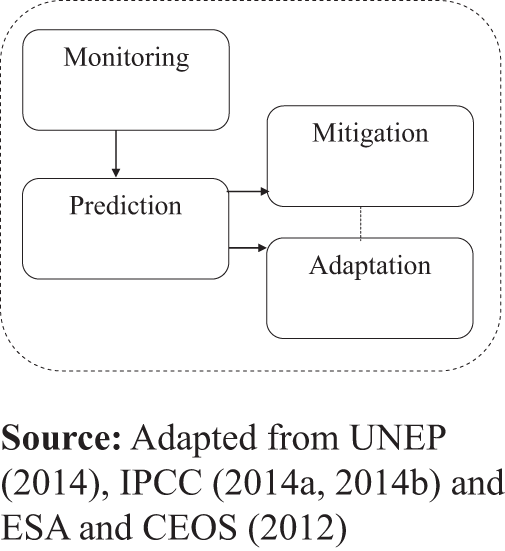
This paper attempts to underscore the fact that managing climate change involves mitigating the climate process drivers and/or adapting to their impacts and vulnerability. It also involves the capability and capacity to monitor the current events and prediction of future scenarios. As noted by IPCC (2014a, 2014b), “adaptation and mitigation choices in the near-term will affect the risks of climate change throughout the 21st century”. Prediction is vital in planning adaptation and mitigation strategies, and monitoring is necessary to assess how effective these strategies are. Therefore, monitoring and prediction must be strengthened for effective climate change mitigation and adaptation. Their systemic interaction is depicted in Figure 1.
Technological innovations such as earth monitoring satellites, solar geoengineering and space-based solar power (SBSP) systems can have a significant impact on climate change response (Keith and MacMartin, 2015; Keith and Parker, 2015; Faiyetole, 2014; White, 2013; SBSP-Study-Group, 2007; Keith and Dowlatabadi, 1992). Renewable energy has been an important technological change for controlling climate change process drivers because of its low GHG emissions when compared to coal, oil and gas and fossil fuels. A more effective mitigation of GHGs could involve the deployment of SBSP (White, 2013; SBSP-study-group, 2007). Solar geoengineering can also serve as a climate change mitigative technique. Both solar geoengineering and SBSP are state-of-the-art techniques. Although nascent in their plans, they both promise to be effective mitigative tools. They are not yet deployed owing to technical and financing issues, and considerations on possible negative externalities that may not yet be foreseeable. Even when these techniques get deployed in developed countries, they could take a longer time to be available for use in Africa. This is considering the technical and economic capacities of the African countries.
Adequate and empirical data gathered using earth observation satellites during the phase of monitoring can be processed and analyzed using the geographic information system (GIS) technique. Information screened may be studied to understand trends and patterns for precise prediction of future events. SBSP and policy based on space technology, i.e. “such satellites could be used to monitor the implementation of international treaties such as the Kyoto Protocol” (ITU, 2011), could be effective. Therefore, data from monitoring devices and prediction using models could aid the planning for effective climate change adaptation and mitigation strategies.
3. Materials and methods
The Delphi experts’ method was used. It involves sourcing qualitative primary data from experts and professionals in the field of climate change response and sustainability using questionnaires administered through a purposive sampling technique. The method entails a group of experts who anonymously reply to questionnaires and subsequently receive feedback in the form of a statistical representation of the “group response”, after which the process repeats itself. The goal is to reduce the range of responses and arrive at something closer to expert consensus (RAND, 2013; Hsu and Sandford, 2007; Dalkey and Helmer, 1963). It captures a critical target population defined by their educational and managerial experience in the field of climate change response and sustainability across the globe but with a specific focus on Africa. The respondents were from specialized agencies, universities, research institutes and think tanks.
The data collected were quantitatively analyzed using statistical techniques including relative importance index (RII) and one-sample Kolmogorov–Smirnov test (KS test). In Somiah et al. (2015), Johnson and LeBreton (2004) assert that RII could aid in finding the contribution a particular variable makes to the prediction of a criterion variable both by itself and in combination with other predictor variables. Therefore, to determine the appropriate CCM strategies for Africa, key variables were identified from the literature, and experts’ opinions were sought on the strategies most needed for climate change response in the continent, and on the approaches most appropriate for managing climate change across Africa.
For this paper, RII is found by using the following formula:
where p is the frequency of the ratings of any particular variable and b is the frequency of the ratings of any base variable. m…s are different base variables identified for different stated objectives.
For the first objective, for example, RII with respect to a base variable such as monitoring of “the strategies most needed for climate change response in the continent” is represented as RIISCCRm. Where subscript SCCR is the stated objective and “m” represents a monitoring strategy, which is considered the base variable in this case, for being a logical first step toward effective mitigation and adaptation strategies. For this objective, six different ratings were conducted, such that respondents were asked to rate from 1 = least important to 6 = most important.
Where,
i = 1, 2, 3, 4, 5, 6.
A particular variable is denoted by “x”. They are governance, financing, monitoring, prediction, mitigation and adaptation strategies.
In other words:
where,
Axi = The mean or average for a particular variable “x”.
A(m…s) = The mean or average of any base variable.
where,
fxi = The frequency of every respondent for any particular variable, such as governance.
fmi = The frequency of every respondent for the monitoring strategy.
fx1 = Least important up to fx6 = Most important.
Therefore:
For the second objective, RII with respect to a base variable such as country-wide approaches of the “most appropriate approaches for managing climate change across the continent of Africa” is represented as RIIMCCc. Where subscript MCC is the stated objective and “c” represents a country-wide approach, which is considered the base variable in this case, for being a first logical approach that countries could adopt. Also, for this objective, the respondents were asked to rate from 1 = least important to 6 = most important.
A set of variables is denoted by “y”. The particular variables are regional strategies, Africa-wide efforts, international cooperation (bi/multilateral), all without inaction, country-wide approaches or inaction.
Therefore:
One-sample KS test was also adopted because the testing of normal distribution assumption was not met, thus providing p-values at the 5 per cent cutoff.
3.1 Data collection
Data were collected through questionnaires distributed via emails and SurveyMonkey. SurveyMonkey is an online survey tool, which was used to send questionnaires to selected experts online. The general characteristics of the climate change sustainability experts are shown in Table II. The sample size for this study was 50, and 90 per cent of the sample responded in the first round. The second-round respondents comprise 76 per cent of the sample size; these were experts who completed and returned the questionnaire on the extended final timeline. Close to three-fifths (57.78 per cent) of the respondents have expertise in space science, engineering and remote sensing from space, while about a quarter (24.44 per cent) have specific skills in climate change response and sustainability, and 17.78 per cent are involved in interdisciplinary research, social science and education in either space or climate change fields. This implies that all of the respondents had expertise either in the fields of space science and technology such as remote sensing or climate change response and sustainable development. The respondents’ organizations or industries were spread as follows: 33.33 per cent in aerospace, 24.44 per cent in climate change and sustainable development and 26.67 per cent in research, education and think tank, mostly related to either aerospace or climate change response and sustainability. The demographic characteristics of the respondents show that 60 per cent of their organizations were from North America, specifically the USA and Canada. About 24 per cent of the organizations were from Europe, spread over France, Germany, The Netherlands, the UK, Spain, Belgium, Italy and Austria. Respondents from Japan and Singapore returned 8.89 per cent of the questionnaires, while 6.67 per cent of the questionnaires were completed by experts in African countries. The data collection spread was considerably global, covering countries with bilateral and multilateral cooperations with African countries on climate change response and socioeconomic development.
The respondents were experts on climate change response and sustainability with demonstrable interest in Africa, working in national space agencies (NSAs) such as US NASA centers. Respondents from other NSAs include those from Japan Aerospace Exploration Agency (JAXA) and German Space Agency (DLR). Experts were also from the National Science Foundation (NSF), National Oceanic and Atmospheric Administration (NOAA) and Canada Centre for Remote Sensing (CCRS). Respondents were also purposively chosen from international organizations and foundations such as the UN Office of Outer Space Affairs (UN-OOSA), X-Prize Foundation, Centro euro-Mediterraneo sui Cambiamenti Climatici, Joint Implementation Network for Climate and Sustainability and International Independent subject-matters Consultants (IICs). Some of the other respondents were from universities such as Harvard, Stanford, Washington State University, Singularity University and International Space University. A few others came from industries or companies such as Inmarsat, Planet Labs, Inc., and others. Furthermore, the respondents include experts in climate change response and sustainability from South Africa, Nigeria and Algeria. The quality of the respondents guarantees the integrity of the data.
With respect to the respondents’ understanding of the policy issues relating to climate change response and sustainability, nearly all of them had management training and/or policy experience in the field of climate change response and sustainability. Close to two-fifths (35.56 per cent) of the respondents practice as executives – as directors, senior management members and even owners in their establishments. This group includes directors at NASA headquarters and centers; 33.33 per cent of the respondents were in the middle management category, who have received management training and function as managers in their organizations. The bulk (68.89 per cent) of the executives and middle management officers have educational backgrounds in climate science, space science and engineering. In addition, 31.11 per cent of the respondents are professors, scientists and/or researchers (PS&R).
With respect to the educational status of respondents, which definitely has an effect on capacity for analysis of issues, 91.11 per cent have degrees equivalent to and above Master’s degree. Of these, 37.78 per cent have a PhD. All the respondents were associates, members or fellows of relevant and prestigious professional bodies, who were abreast of the current research, trends and possible future development on climate change response.
Finally, to further ascertain the level of credibility of the information given, years of experience working on the field were requested. More than three-fifths (64.44 per cent) of the respondents have had more than 11 years working in the field. Specifically, 31.11 per cent of the respondents have experience working in the fields from 11 to 15 years, while 13.33 per cent have experiences of between 16 and 20 years in the field. A fifth of the respondents have work experience of 21 years and above, with a particular expert having spent more than 40 years in the US Government’s military and space programs. About a third (31.11 per cent) have work experience of 1 to 10 years. However, most respondents in this bracket have degrees equivalent to and above Master’s degree. The study is reasonably gender-sensitive, with more than a fifth (22.22 per cent) of the respondents being female.
4. Results and discussion
4.1 Climate change management, financing and governance
In addition to the need to mitigate the climate process drivers and adapt to the impacts of climate change and reduce vulnerability of communities to its consequences, it has been shown that more inclusive management of climate change could include capability and capacity to monitor the current climatic events, assess the effectiveness of adopted strategies and aid the prediction of future patterns. This is depicted in Figure 1. The increasing impediment that financing and governance pose to international climate change response, and their theoretical justifications as shown by Measham and Lockie (2012), Heller and Zavaleta (2009) and Tompkins and Adger (2004), justify determining their validity as relevant CCM and response strategies through empirical work like this study.
4.1.1 Governance and climate change response in Africa.
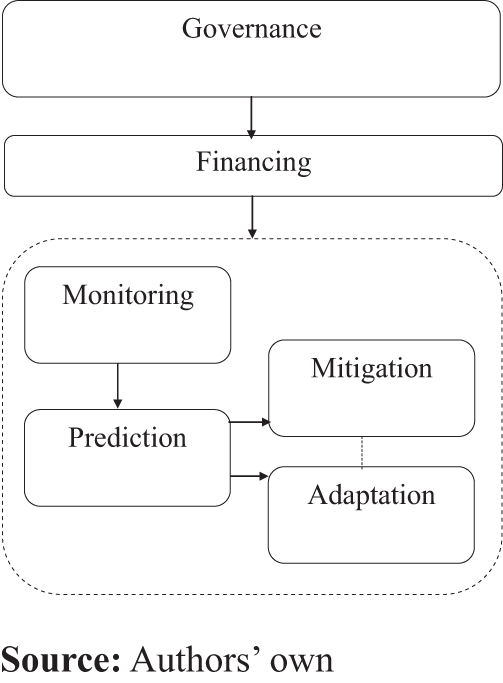
On strategies that are most needed for climate change response and sustainability in Africa, Table III shows that government policies, activities and decisions (governance) are most important (AISCCR at 5.08/6 and RIISCCRt at 22.23 per cent). Also, topping AISEC and RIISECt indices (Faiyetole, 2015), governance, therefore, is emphatically the most relevant strategy in addressing issues relating to climate change response in Africa. Subscript SEC implies socioeconomic conditions that may impact climate change and vulnerability (CCV). Governance is statistically significant as a strategy most needed for climate change response at p < 0.001, over 99 per cent level of significance. The RIISCCRm for governance at 1.20 implies that governance weighs 1.20 times more than monitoring, as a strategy most needed for climate change response and sustainability. For RIISECe, governance is 1.13 times weightier than energy (e) as a socioeconomic condition that may impact CCV (Faiyetole, 2015). The average and relative importance of strategies most needed for climate change response were based on the four parameters identified from the literature, as the primary strategies of CCM. However, with the strength of governance in this study, it could be adequate to have it join the CCM strategies as depicted in Figure 2. The result implies that with responsive and appropriate climate governance in Africa, issues of climate change may be adequately subdued, and sustainable development as highlighted by the UN Sustainable Development Goal with respect to climate change could be enhanced.
4.1.2 Financing and climate change response in Africa.
AISCCR for financing as a “strategy most needed for climate change response in Africa” is 3.95 and 17.29 per cent for RIISCCRt, coming third behind governance and monitoring. Financing is above mitigation (3.50), prediction (3.21) and adaptation (2.88). Mitigating climate change, for instance, may require installing new infrastructure, e.g. renewable energy projects, which require huge funding. Most non-Annex-I countries have a weak GDP, meaning they are poor countries. According to Bode (2005), to benefit from instruments such as the Clean Development Mechanism (CDM), Annex-I countries are expected to have certified emission reductions (CERs), which are only purchasable by Annex-B countries when they have aspects of “technological additionality”. On the one hand, to implement projects that can accrue CERs is hard and expensive, whereas on the other hand, projects with state-of-the-art technologies certifiable for CDM are equally hard and expensive for developing countries such as Africa, which populate the non-Annex-I countries. Projects such as SBSP if implemented will sufficiently certify the conditions of CDM both on the CER front and unchallengeable technological additionality. However, projects such as SBSP are out of reach even for developed countries, especially because of funding issues, which are mostly Annex-B countries that seemingly have the funds for CERs. The issue of finance is thus at the center of efforts at addressing climate change, and African countries are unable to internally satisfy the level of financing required.
For African countries to get the required funds to develop sustainable climate change response, they must have access to such instruments as the Green Climate Fund. The RIISCCRm for financing is 0.93, which implies that financing has approximately the same weight as monitoring as a scheme needed for climate change response and sustainability. In view of the significance of the financing factor, it is considered as a good strategy for CCM, as shown in Figure 2.
Together with governance and financing, Figure 2 shows the systemic interactions of CCM strategies. Adaptation strategy, although with very low AISCCR, is significant at 95 per cent level of significance (p = 0.048), and has a significant correlation with climate change response, just as governance, at p < 0.001.
4.2 Climate change management and response approaches across Africa
The UNFPA (2014) subdivided Africa into three broad regions, namely, The Arab States Region, East and Southern Africa Region and West and Central Africa Region. Africa is, definitely, a huge continent with people of diverse cultures across the divides. The Arab State region consists of six African countries: Algeria, Egypt, Libya, Morocco, Sudan and Tunisia. The East and Southern Africa region consists of 24 countries, including South Africa. The West and Central Africa region consists of 23 countries, including Nigeria. For this study, the study area is primarily populated by three countries, Algeria, South Africa and Nigeria, which come from each of the three regions. Considering the diverse cultures, economies and religions across the continent, the question of how best to manage issues concerning climate change across Africa arises. Table IV shows the result of pertinent analyses.
Only 4.44 per cent of the respondents consider that when addressing climate change issues within Africa, a country-wide approach is sufficient, whereas 82.15 per cent of the respondents favor at least a form of cooperation or the other among the different countries within and outside Africa. More than a third (35.56 per cent) of the experts agreed that regional strategies are the best options of cooperation among the countries in Africa for climate change response. It is, however, logical to consider country-wide approaches as the baseline for engagement in climate change response in Africa, and it is so asterisked as shown in Table IV.
The RII for most appropriate approaches for managing climate change across the continent of Africa (RIIMCCc), for the regional strategies, is 8.01 (where MCC represents the approaches most appropriate for managing climate change across Africa). This implies that regional scheme could be 8 times more effective in managing climate change in Africa than country-wide approaches. It, however, implies that response to climate change issues could be drawn along regional boundaries – the Arab State Region for climate change response; the East and Southern Africa Region for CCM; and the West and Central Africa Region for climate change sustainability, for instance. Existing African regional economic organizations such as COMESA and Community of Sahel-Saharan States (CEN-SAD) (Woodrow Wilson International Center for Scholars, 2008) are good examples of organizations that can pursue regional climate change actions. For a closer-knit response to climate change in Africa, the regions could be better seen along existing sub-regional economic blocs such as the SADC and EAC. Others include the Economic Community of Central African States (ECCAS), Arab Maghreb Union (AMU) and the Economic Community of West African States (ECOWAS) for western African sub-region. The challenges associated with the drying Lake Chad, for example, reflect the need for a sub-regional-level response to climate change, to revamp agricultural, hunting, pastoralism, security and, especially, fishing. Lake Chad is a unique transboundary natural reserve that crosses national frontiers and shared by Cameroon, Chad, Niger and Nigeria, all in the West African sub-region (Bdliya and Bloxom, 2010; Onuoha, 2010; Garcia, 2008).
The next most important approach is Africa-wide efforts, which was indicated by 28.89 per cent of the respondents. The existing continental organizations in Africa may be used as platforms, ride-on or be built as their subsidiary, for carrying out climate change response activities in the continent. These organizations include the AU, New Partnership for Africa’s Development (NEPAD), AfDB or UN Economic Commission for Africa. An Africa-wide effort offers an opportunity for holistic view and understanding of the climate change issue in the continent. At 17.7 per cent, international cooperation is another worthy approach for climate change response. Bilateral and/or multilateral cooperation agreements may be reached among countries within a sub-regional bloc. Bilateral cooperation is often preferred to multilateral because it is often easier for a country to reach cooperation agreements with other countries than for several countries to reach agreement on the same issue. Using both bilateral and multilateral agreements holds a lot of benefits for pursuing climate change response agenda in the continents.
Although a country-wide approach to climate change response promises a more coordinated and pungent strategy at addressing climate change issues, the findings from this study suggest that it may not necessarily be so. This is because climate change is as much global as it is local. Climate change is a common problem across national borders. Little wonder, the country-wide approach is lowly rated at 4.44 per cent compared with others. Less than a tenth (6.67 per cent) of the respondents believe all the above-mentioned approaches are needed at different proportions. For instance, as efforts are geared toward climate change response at the national level, so could cooperation be sought at sub-regional and regional levels. In fact, international cooperation, whether in the form of bilateral and/or multilateral, with countries outside Africa could continue to be explored. Also, participation in Africa-wide efforts could be made mandatory for all countries in Africa. According to the statistics, the approach to be strongly discouraged is inaction. Owing to the poor economic states of most African countries, there is a very high tendency for them to demonstrate “inaction”, of which the respondents show a strong NO toward this naivety at 0.00 per cent choice as a worthy approach.
5. Conclusions: holistic climate change management in Africa
From the analyses presented above, it can be concluded that governance and financing are the two most important parameters which are really intertwined. Governance often affects financing and vice-versa and should be addressed in climate change response in Africa. This will help to strengthen efforts directed at monitoring and predicting of the climate change phenomenon and so mitigating and adapting to climate change. It can be further concluded that regional strategies would remain critical for managing climate change across the continent. Other approaches such as Africa-wide efforts and international cooperation, either bilateral or multilateral, across regions in Africa and outside the continent would need to be addressed. Thus, all forms of proactive actions focused on climate change response and sustainability in Africa could be so encouraged. The paper reveals that although country-wide approaches could be more coordinated and pungent strategies, they are not necessarily so. Furthermore, it shows that inaction is not a choice for African countries. Such that, inaction could be totally discouraged, as cooperation within and outside the continent offers burden-sharing opportunities.
With enhanced regional, Africa-wide and international cooperation reached toward addressing climate change in Africa, resources, including human and financial, can be pooled together and shared. This means burden-sharing leading to a reduction of financial stress in the individual countries. Projects that could meet the requirements for technological additionality and CERs may be implemented to benefit from international burden-sharing mechanisms such as the CDM. Instituting a responsive climate governance regime across Africa will ensure appropriate responses, including the above-mentioned, to climate change issues. Through responsive climate governance in Africa, encouraging and enhancing state-of-the-art studies that allow for cross-sectoral interactions or horizontal inter-linkages of sectors, and policy implementation of findings to the fullest details can then be ascertained. Furthermore, security issues owing to climate change can be adequately tackled.
This paper has thus shown that it is possible to start to effectively, efficiently and equitably combat this phenomenon of climate change in Africa, especially if a holistic CCM approach is adopted. From this study, holistic CCM in Africa could be defined as a response to the climate change phenomenon using all forms of cooperation, especially regional efforts, to understand its science, application of responsive technological innovations and societal standards for governance, monitoring, financing, mitigation, prediction and adaptation strategies.
One of the limitations of this study is that it relied on experts’ own views, which may not reflect their institutional position on climate change response and sustainability. Thus, they may not be totally representative of any organization’s positions or tenets on climate change.
One way forward could include using the African Union or NEPAD mechanisms to further call the African member countries to action, on the need for concerted and holistic efforts, to be drawn along the regional borderlines considering common geography, characteristics and goals, toward effectively, efficiently and equitably combating the climate change phenomenon.
The authors would like to thank the anonymous reviewers for their positive critiques that have helped improve the quality of this paper.