


The purpose of this study is to measure local climate change response capacity and identify the existing gaps between local climate change action plans and land use plans.
This study uses content analysis method to statistically analyze 40 pioneering local jurisdictions' climate change action plans and land use plans.
The results show significant gaps in the two types of plans. Local climate change action plans have a higher quality of plan components including factual basis, targets, coordination, and communication than local land use plans. However, local land use plans have an even higher quality of policy plan components than action plans.
This study has extended established climate change concepts and practices by incorporating climate change considerations into the existing framework of local decision making.
1 Introduction
Climate change has been identified as an important global issue (Intergovernmental Panel on Climate Change (IPCC), 2007). Although major political attention still emphasizes an international response to global warming, local jurisdictions can play a critical role in global climate change mitigation and adaptation (Betsill, 2000). Local jurisdictions account for a majority of global CO2 emissions (O'Meara, 1999). Climate change impacts are even more pronounced at the local and regional levels than at national and global levels (National Assessment Synthesis Team, 2000; Wilbanks and Kates, 1999). Local efforts have profound implications for climate change since local action can address the majority of greenhouse gas (GHG) emission originations and also provide appropriate political jurisdictions for developing necessary policies to address GHG emission reduction at the local level (Betsill, 2000). Local jurisdictions have more direct influence with peoples' daily lives necessary to reduce GHG emissions. Since they also have considerable authority for land use planning, building permits, transportation and public transit, infrastructure investment and maintenance, waste management, and energy consumption (Agyeman et al., 1998; Collier, 1997; DeAngelo and Harvey, 1998; Kates et al., 1998; Rayner and Malone, 1997; Urpelainen, 2009). Climate change actions can contribute to local sustainable development initiatives and bring multiple potential benefits in environmental quality, economic saving, and social equality aspects.
Local responses are critical for providing a fundamental inventory for local land development by setting a long‐term sustainable mission, making appropriate land use policies, coordinating cross‐boundary planning issues, and implementing development decisions (Lindley et al., 2006; Moser and Tribbia, 2006; Moser and Luers, 2008; Travis, 2008). However, research on local responses is lagging behind climate impact assessment at the global level (Betsill, 2000). Local responses for climate change mainly include two types of plans: a local climate change action plan, and a local land use plan for climate change. In 2008, the International Council for Local Environmental Initiatives (ICLEI) drafted a protocol manual for local climate change action plans and the American Planning Association (APA) developed an initial policy guide to help local jurisdictions address climate change issues through local land use plans; however, few studies have been done to theoretically conceptualize a research framework and empirically exam the capacity of local responses for climate change mitigation and adaptation.
1.1 Local climate change action plans
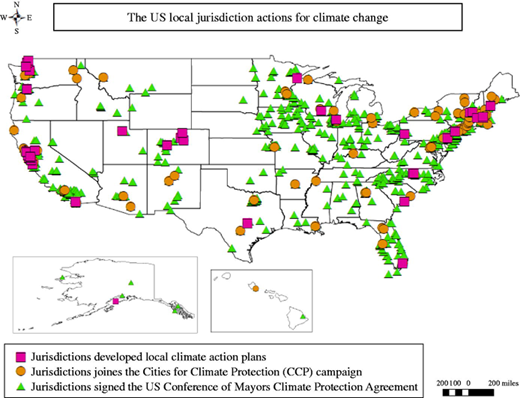
Since 2002, many local jurisdictions have joined global efforts to mitigate climate change. There are three different levels of local participation for climate change action (Figure 1).
First, 910 mayors, representing a total population of over 81,842,444 citizens, have signed the US Conference of Mayors Climate Protection Agreement since December 2008. Under the Agreement, local jurisdictions commit to meet or beat the Kyoto Protocol targets at the local level through effective local policies such as anti‐sprawl land‐use policies and urban forest restoration projects.
Second, 157 local jurisdictions have joined the cities for climate protection (CCP) Campaign since December 2008. In order to join this campaign, local jurisdictions must pass a resolution “pledging to reduce greenhouse gas emissions from their local government operations and throughout their communities” (ICLEI, 2008). Those jurisdictions affiliated with the CCP campaign have legally committed to address the threats of climate change by reducing GHG emissions. The CCP Campaign helps local jurisdictions reduce emissions and integrate climate change mitigation into their decision‐making processes by providing an innovative quality framework to reduce emissions through local government decisions.
Third, more importantly, at least 40 local jurisdictions have developed local climate change action plans or GHG emission inventories. They are the pioneers in addressing climate change from the agenda level to the action level. A local climate action plan will provide a feasible means to establish strategic goals to lower emissions, identify emission sources and amounts, develop appropriate policies, establish mechanisms for coordination, monitor, measure and report quality. ICLEI is also one of the leading agencies which helps local jurisdictions make climate change action plans.
1.2 The role of local land use plans for climate change
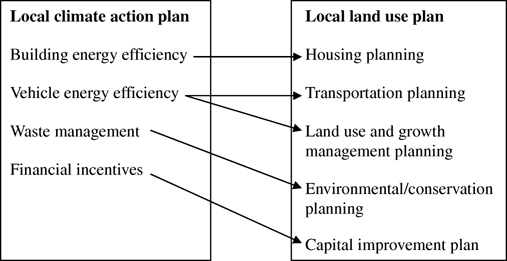
Local land use planning can play a critical role in climate change mitigation and adaptations (APA, 2008; Lindley et al., 2006; Moser and Tribbia, 2006; Moser and Luers, 2008; Travis, 2008). In this study, local land use plan means local land use comprehensive plan, or master plan, or general plan. The relationship between local climate action plans and local land use plans is shown in Figure 2.
The role of local land use planning for climate change is extremely important because it deals with basic development issues. Since local land use plans can address a broad range of development issues, they are well suited to play a critical leadership role to address the effects of climate change by encouraging change in development patterns to reduce the impacts of GHG emissions (APA, 2008). In general, local land use plans can mitigate climate change by reducing GHG generated from sources of human origin. Additionally, local land use plans provide an important means to adjust land use activities and practices so that vulnerability to potential impacts associated with climate change can be reduced or avoided. Even though essential connections were found between local climate change action plans and local land use plans, no research has been done to examine these relationships and their effects. Previous studies primarily discussed the role of local land use policy in climate change (Bizikova et al., 2007; Swart and Raes, 2007), but no linkage was found to connect traditional land use plans with the most recent emerging local climate change action plans. To date, no empirical model has been provided to measure the effects, strengths, and weaknesses of local climate change action plans and their effects on local land use plans. In recognition of this gap in the current research, this study has proposed a proactive model to empirically examine local jurisdictions' climate change response capacity in two types of plans: local climate change action plans and local land use plans. This paper has conceptualized the key concepts of climate change by converting them into specific plan components to increase our understanding of how and where to integrate climate change mitigation and adaptation approaches into decision making for climate change response.
1.3 Research questions and objective
This study seeks to identify the gap between local climate change action plans and local land use plans through empirically examining the kinds of information local jurisdictions have adopted to address climate change.
Specifically, this study addresses two critical research questions related to the efforts of local jurisdiction to mitigate climate change:
- 1.
What are the gaps between local climate change action plans and local land use plans; and which indicators received greatest and least attention in local climate change action plans and local land use plans?
- 2.
Which factors may affect local jurisdictions' climate change response capacity?
2 A conceptual framework for local climate change planning
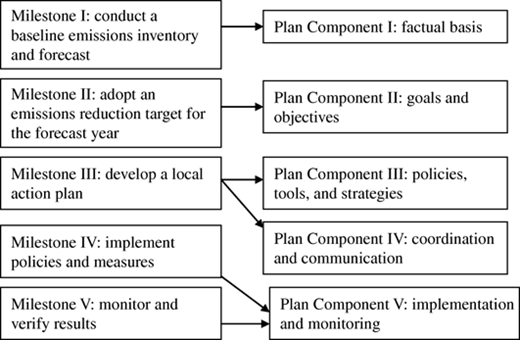
This study proposes a conceptual framework for local climate change planning, including both local climate change action plans and local land use plans regarding climate change responses. ICLEI (2008) set five milestones to guide local jurisdictions' climate change actions:
Milestone I. Conduct a baseline emissions inventory and forecast.
Milestone II. Adopt an emissions reduction target for the forecast year.
Milestone III. Develop a local action plan.
Milestone IV. Implement policies and measures.
Milestone V. Monitor and verify results.
In Figure 3 this study develops the essential linkage between these five milestones and the conceptual framework for local climate change planning.
In Figure 3, the five major milestones should be incorporated in local plan components by directly or indirectly integrating climate change information, mitigation, and adaptations. Based on the analysis for these plans and the key literature on climate change, this study further proposes a conceptual model to guide local climate change planning. A local plan must accept the concept of climate change and identify needs related to local development as well as represent general targets, objectives, and needs. Thus, competing missions, objectives, values, physical, and socioeconomic conditions are brought together and incorporated into a local plan. More importantly, an effective local plan represents a collaborative vision for climate change. A strong vision of strategies, policies, standards and criteria for GHG emission reduction is essential for a local plan. Furthermore, a local plan needs to indicate ways to implement and monitor itself. Therefore, an ideal local climate change planning should include five core components:
- 1.
factual basis;
- 2.
goals and targets;
- 3.
policies, tools, and strategies;
- 4.
inter‐organizational coordination; and
- 5.
implementation and monitoring.
2.1 Factual basis
The factual basis of local climate change planning refers to an understanding of climate change impacts that are closely related to human and local development. The factual basis of local climate change plans includes two major sub‐components.
First, perception of climate change, which measures how well local jurisdictions understand the concepts of climate change. To make effective climate change responses, local jurisdictions must understand the basic concepts of climate change, climate variability, GHG emissions, and global warming. Moreover, the effects and impacts of climate change for local jurisdictions should be addressed in local climate change plans.
Second, fact and trend of climate change. Local climate change plan should analyze the impacts through providing a baseline emissions inventory and forecast. In the factual basis component, a local climate action plan should identify the major sources of GHG emissions and calculate the emissions for both a base year (e.g. 2008) and a forecast year (e.g. 2018). ICLEI suggests that an emissions inventory should comprise the inventory from local government operations and all sectors of the community within a jurisdiction. It is important for local climate change plans to identify pre‐impact conditions such as local exposure to climate and physical and social vulnerability that place communities at risk to climate change impacts (Center for Science in the Earth System et al., 2007). Local exposure to climate change arises from residents occupying geographical areas where they could be affected by specific climate change impacts that threaten lives or property. The cost estimates for GHG emission reduction should also be a part of the analysis. Analysis tools and software should be identified in the plans (ICLEI, 2008).
In summary, the factual basis of local climate change planning can provide a benchmark against which a jurisdiction can measure progress. The foundation for the factual basis is an inventory of critical effects on local conditions which draws explicitly from the literature on climate change; thus the factual basis is the descriptive foundation on which policies and decisions within the plan are made and expressed in a written or visual form. A local plan must contain a written text describing local conditions and elements for development as well as maps, catalogues, and diagrams illustrating the generalized distribution of land use, transportation resources, natural resources, emission conditions, and other factual information that can be illustrated.
2.2 Targets and objectives
Targets and objectives of local climate change planning should include a political commitment for local GHG emission reduction. Targets should indicate the quantity of GHG that the jurisdiction wants to reduce by the target year (ICLEI, 2008), typically expressed as the percentage by which emissions will be reduced compared to a baseline year. For example, Seattle has set goals to reduce GHG emission to seven percent below 1990 levels by 2012. The targets and objectives are political undertakings that should consider the targets adopted by other levels of jurisdictions, similar communities, reliability, feasibility, and timing issues. The targets may not have legal meaning, but it reflects a political will. Local jurisdictions must clearly establish an emissions reduction goal and specific target for the forecast year. These goals and targets can foster political will and create a framework to guide the planning and implementation of ameliorative measures.
Targets and objectives guide the implementation of climate change mitigation and adaptations in local plans. Goals and objectives should reflect the needs and desires of local jurisdictions as well as indicate the action required to achieve the envisioned future for lower emissions. Local jurisdictions must understand and address climate variability and change to enhance their ability to plan and respond. Targets are a general expression of a local jurisdiction's values and may be abstract in nature. The objectives are more specific, measurable actions necessary to move toward these goals; usually multiple objectives have to be achieved before goals are considered attained.
2.3 Coordination and communication
Local climate change planning should identify necessary coordination procedures for the agencies dealing with climate change. Additionally, it is important to identify the communication skills required for climate change education, training, and outreach. Owing to the fact the impacts of climate change cross multiple geographic boundaries and organizational jurisdictions. Successful local planning will require good communication and collaboration among agencies, sectors, stakeholders, citizens, and natural geographic and jurisdictional boundaries. Since climate change is increasingly recognized as a multiple‐scale issue, rather than impacting only the local level, climate change action plans require a wide range of expertise to understand scientific problems and an even wider range of agencies to find and implement solutions. Inter‐organizational coordination is an umbrella framework for all the agencies providing collaborative services at the local level. Education and communication have been widely identified as a critical approach to address environmental problems and climate change issues (van Aalsta et al., 2008) and provide a means to exchange climate change information with the general public, stakeholders, and decision makers to develop support for local action.
2.4 Policies, tools, and strategies
Local jurisdictions must establish appropriate policies, tools, and strategies to reduce GHG emissions and achieve their emissions reduction targets. The policy component of a plan should demonstrate methods for a local jurisdiction to reduce its GHG emissions. This component represents the heart of a plan because it is the means for realizing a plan's goals and objectives (Tang, 2008) and reflects a clear commitment to guide local decision making. The action strategy should identify and quantify appropriate measures for achieving a reduction in emission levels. Policies, tools, and strategies are based on a plan's factual basis and its goals and objectives are to ensure that the vision of the local jurisdiction is met; these should be clearly worded so their implementation can be measured and monitored. Each policy, tool, or strategy might pertain to only one particular aspect of a goal or it might be one of several steps toward goal achievement. It is essential for a local action plan to identify suitable climate change interventions. Local policies, tools, and strategies should include:
building and land use policies (Betsill, 2000; Stone, 2008);
transportation policies (APA, 2008);
energy strategies (Andrews et al., 2008);
waste strategies (California Air Resources Board et al., 2008; Nelson, 2008);
resource management strategies (Mayors Climate Protection Center, 2007); and
financial tools (Chameides and Oppenheimer, 2007).
2.5 Implementation and monitoring
Plan implementation and monitoring is an important element in both the theory of collaborative learning and the practice of adaptive management, which enables a jurisdiction to measure the effectiveness of its GHG reduction policies. Local climate change planning must include a timeline, a description of financing mechanisms, and an assignment of responsibility to departments and staff. Local jurisdictions should place a high priority on developing effective emissions reduction strategies decided to be most effective. It also places a high priority on the county's most urgent adaptation needs and major planning and investment decisions that are currently under consideration. Monitoring is an important for local plans since GHG emissions are ongoing. Monitoring can provide an opportunity to highlight achievements, assess key knowledge, provide direction for future greenhouse response, and obtain important feedback to improve measures over time. The most successful plans are those that are initially written with a concern for realistic and well‐timed implementation measures. Implementation and monitoring also establishes a framework to determine how well the plan is meeting its goals and objectives, and identifies areas for improving the quality of local climate change action. Implementation and monitoring can guide public decision making and determine how it should be monitored and updated for climate change mitigation and adaptation.
3 Dependent and independent variables
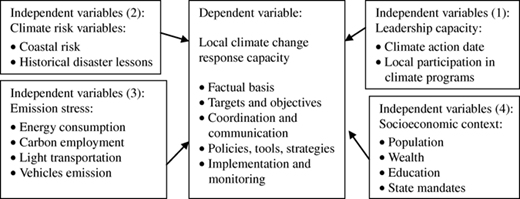
These five core plan components provide a framework to guide local climate change planning. Figure 4 provides a conceptual model of dependent and independent variables for this study.
3.1 Dependent variable: local climate change response capacity
The dependent variable is local climate change response capacity, which is measured by the combined plan quality of local climate change action plans and local land use plans. This study has developed 37 indicators as a practical protocol to measure plan quality of local climate change action plans and local land use plans. These indicators provide a model for identifying the elements of a high‐quality local climate change plan to guide local decision makers and also propose a comprehensive, measurable, standardized plan evaluation.
The measurement of plan quality in this study includes the following equations: Each indicator is measured by a score 0, 1, and 2. Each jurisdiction's local climate change response capacity (RQj), measured by a combined score of the two types of plans, is a relative percentage of the combined two plan qualities (ranging 0‐100 percent): Equation 1 APQj is the total scores of a whole plan (ranging 0‐50); and LPQj is the total scores of a whole plan (ranging 0‐50). This study also uses indicator coverage percentage to measure the extent to which each of the indicators was addressed across all plans. It measures an indicator has been addressed by how many plans by percentages.
3.2 Independent variables
Many factors may influence local climate change response capacity, including geographic, political, social, and economic variables. Recent research has discussed the factors influencing climate change perceptions (Brody et al., 2008a, b; Zahran et al., 2008a, b) and local land use planning (Norton, 2005; Tang, 2008; Tang and Brody, 2009). However, little research has directly measured the factors influencing local climate change response capacity. Based on the literature regarding climate change and land use planning, this study builds an independent factor framework with four variables – leadership capacity, climate risk, emission stress, and socioeconomic context – to empirically examine the factors influencing local climate change response capacity.
Leadership capacity variables include climate action date and local participation for climate change (Betsill, 2000). The variable of climate action date is measured by the time of local climate change action plans which is calculated by subtracting 2009 from the year the action plan was made. The variable of local participation in climate action programs measures whether the jurisdictions are participating in major climate programs:
CCP Campaign (available at: www.iclei.org/index.php?id=1484®ion=NA).
Mayors' Climate Protection Agreement (available at: www.usmayors.org/climateprotection/).
University or college in a jurisdiction which participates in the American College and University Presidents Climate Commitment (available at: www.presidentsclimatecommitment.org/).
Climate risk variables include coastal risk (Brody et al., 2008a; Zahran et al., 2008a) and historical disaster lessons (Brody et al., 2008b; Zahran et al., 2008b). Coastal risk is dichotomously measured by whether a jurisdiction is directly connected to a coastline. Some research has indicated that jurisdictions which are most vulnerable and sensitive to the effects of climate change may be more highly aware of the necessity to deal with climate change (Tol et al., 2004). Historical disaster lessons are measured by the number of weather‐related fatalities and injuries in a jurisdiction occurring between 1995 and 2000 from the spatial hazard events and losses database for the USA.
Emission stress variables include energy consumption (Brody et al., 2008a), light transportation (Brody et al., 2008a), carbon employment (Zahran et al., 2008a), and vehicle emissions. Energy consumption was measured by total estimated energy per capita in 2001 (available at: www.nationalatlas.gov/natlas/Natlasstart.asp). The following three variables were collected from the Census 2000 Summary File 3 (SF 3) Table. The light transportation variable was measured by the percentage of workers over 16 who travel to and from work by walking, biking, or using public transportation. Carbon employment was measured by total county civilian population (16 years or older) employed in agriculture, forestry, mining, construction, manufacturing, transportation, warehousing, and utilities, divided by total employed population sixteen years or older. The vehicle emissions variable was measured by the number of vehicles located within a jurisdiction.
Socioeconomic context variables include population (Berke et al., 1996; Tang et al., 2009), wealth (Scott and Willits, 1994; van Liere and Dunlap, 1981), education (Guagano and Markee, 1995), and state mandates (Berke et al., 1996). The socioeconomic context measured the influence of socioeconomic background information on response capacity. Population was measured by the number of residents in a jurisdiction in 2006. Wealth was measured by median family income in 2000 and education measured by the percentage of persons over 25 years of age with a bachelor's degree or higher. The state mandate variable was measured by whether the state has passed legislation in regard to climate change.
4 Research methods
4.1 Sample selection
The population of this study comprises all the jurisdictions that have made a local climate change action plan. The data collection firstly searched the web sites of jurisdictions which have joined the US Conference of Mayors Climate Protection Agreement and the CCP Campaign, then double‐checked the information provided by the Pew Center on Global Climate Change and National Association of Counties to find possible local climate change action plans. After systematic searching, local climate change action plans and local land use plans of 40 jurisdictions were collected by September 1, 2008.
4.2 Data analysis
This research includes two stages of data analysis: first, this study used descriptive statistics to assess the quality of the 40 local climate change action plans and local land use plans. Second, this study used Pearson's product‐moment correlation coefficients and multiple regression analysis to analyze the factors affecting local climate change response capacity. The ordinary least squares technique was introduced into this study to measure which factors influenced local climate change response capacity. This study also conducted related reliability statistical tests to ensure that the ordinary least squares would yield best, linear, and unbiased estimates.
5 Results
5.1 Descriptive statistics for plan quality
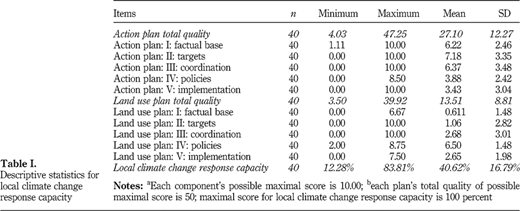
The descriptive results are listed in Table I. The mean score of local climate change response capacity is 40.62 percent on a scale of 100 percent, indicating a relatively limited capacity for climate change response in these 40 jurisdictions. There were large variations in local climate change response capacity across jurisdictions.
As Table I indicates, the mean of the total mean score for the 40 local climate change action plans' quality is 27.10, which is 54.2 percent of the total possible score on a scale of 50. Of the five plan components, targets and objectives, factual basis, coordination and communication plan components received relatively high scores among the five plan components; however, the policies and implementation plan components received relatively low scores among these five components. local land use plans had relatively lower total mean quality compared to local climate change action plans. Interestingly, local land use plans basically had reversed results among the five plan components. Local land use plans had extremely low plan quality for factual basis, targets, coordination, and communication plan components, but higher scores in the policies plan component. Implementation and monitoring for climate change also stayed at a very lower level.
5.2 Indicator quality
The indicator quality for the five plan components is listed in the following Figures 5‐15). Indictor quality differences between local climate change action plans and local land use plans illustrate the strengths and weaknesses of local climate change mitigation.
5.2.1 Indicator quality in the factual basis plan component
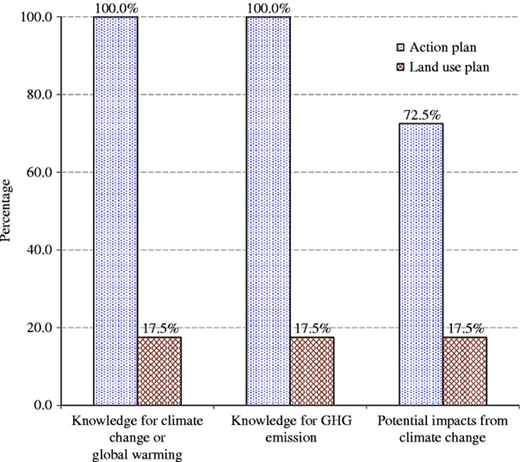
Significant differences were found in the indicators of perception sub‐section in Figure 5. Local climate change action plans had perfect perception of the knowledge concepts of climate change and GHG emissions; however, only 17.5 percent of local jurisdictions were aware of these fundamental concepts in their land use plans. A majority (72.5 percent) of action plans identified the potential impacts of climate change; however, only 17.5 percent of land use plans addressed these impacts because climate change is not the main focus of them.
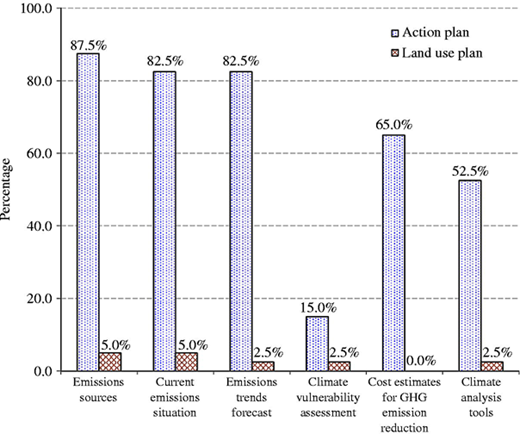
Consistent results were found in the sub‐section of fact and trend of climate change (Figure 6). Local land use plans had much lower coverage for climate change analysis indicators. Action plans had varied quality in these analysis indicators. A majority (82.5‐87.5 percent) of action plans specified the emission sources, current emission situation and emission trends forecast. Many of action plans identified cost estimates (65.0 percent), and analysis software (52.5 percent), but fewer (15.0 percent) action plans conducted a vulnerability assessment for climate change to identify physical and social vulnerability. Only very few (0.0‐5.0 percent) land use plans conduct detailed analysis for the fact and trend of climate change.
5.2.2 Indicator quality of target and objectives
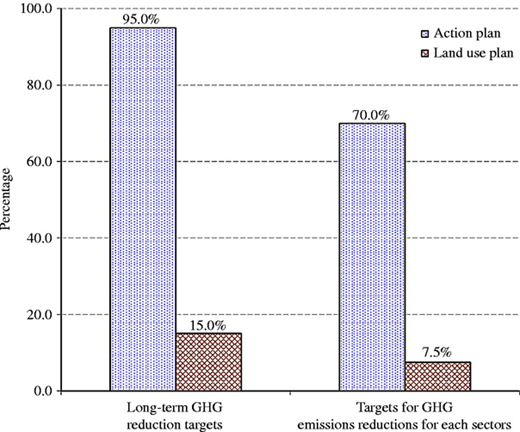
In Figure 7, local climate change action plans set clearer targets and objectives for long‐term GHG emission reduction (95.0 percent) and short‐term reduction objectives for sectors (70.0 percent). However, local land use plans rarely set goals for long‐term GHG emission reduction (15.0 percent) and short‐term objectives (7.5 percent).
5.2.3 Indicator quality of collaboration and communication
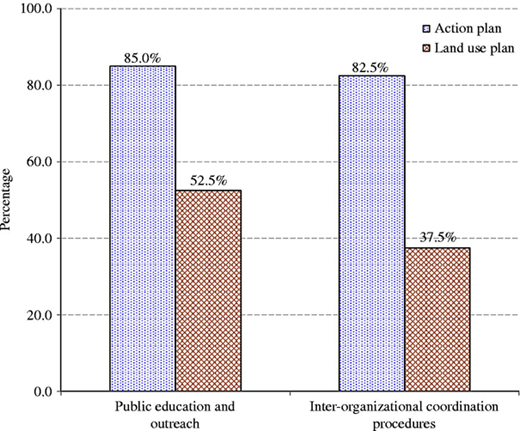
Local climate change action plans showed relatively higher collaboration and communication efforts. As shown in Figure 8, a majority (82.5‐85.0 percent) of plans identified policies for public education and outreach programs, or identified appropriate procedures to coordinate with multiple agencies (e.g. business, government, IPCC, CCP, etc.). Local land use plans partially (37.5‐52.5 percent) addressed collaboration and communication functions for climate change and their efforts were primarily directed toward air quality improvement, which can be considered a part of GHG emission reduction.
5.2.4 Indicator quality of policies, tools, and strategies
The policy component revealed large variations among policies, tools, and strategies listed by individual plans. Some were well covered in the two types of plans; however, some strategies received little attention.
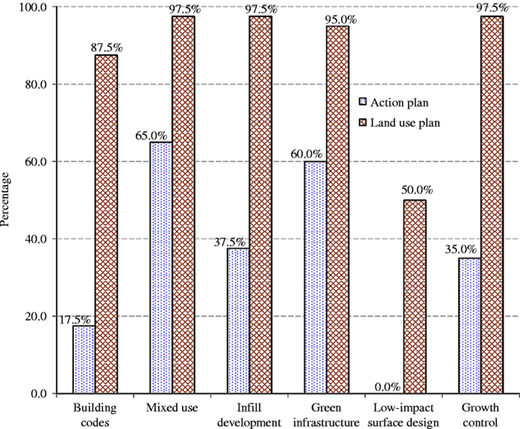
Building and land use policies. Local land use plans had much higher coverage for building and land use policies than local climate change action plans (Figure 9). Most local land use plans specified these policies; however, action plans did not address issues such as disaster‐resistant land use and building codes (87.5 percent in land use plans; 17.5 percent in action plans), mixed use and compact development (97.5 percent in land use plans, 65.0 percent in action plans), infill development (97.5 percent in land use plans, 37.5 percent in action plans), green building and green infrastructures (95.0 percent in land use plans, 60.0 percent in action plans), control of urban services and growth boundaries (97.5 percent in land use plans, 35.0 percent in action plans). Half of the land use plans adopted low‐impact surface design standards were adopted; however, none of the action plans incorporated this policy.
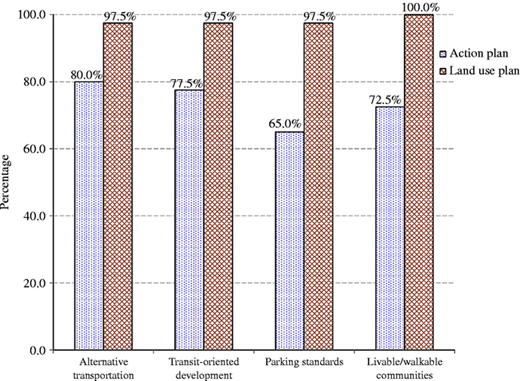
Transportation policies. Both the action plans and land use plans had higher coverage in transportation policies; local land use plans almost fully covered these indicators (Figure 10). Local jurisdictions well identified alternative transportation strategies (97.5 percent in land use plans, 80.0 percent in action plans), transit‐oriented development and corridor improvements (97.5 percent in land use plans, 77.5 percent in action plans), parking standards adjustments (97.5 percent in land use plans, 65.0 percent in action plans), and livable community design standards (72.5 percent in land use plans, 100.0 percent in action plans).
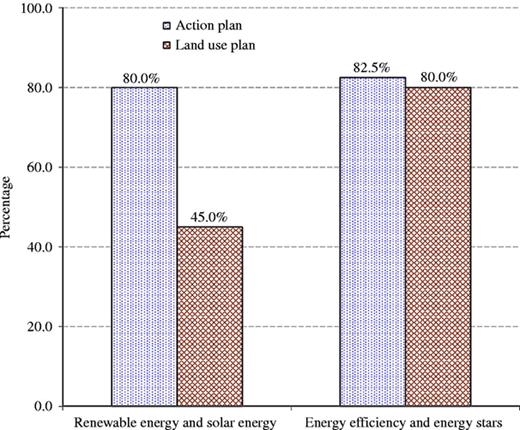
Energy strategies. In Figure 11, a majority (80.0 percent) of action plans emphasized using renewable energy (e.g. solar energy, wind energy); however, only 45.0 percent land use plans mentioned using renewable energy. A majority (80.0‐82.5 percent) of the two types of plans asked for energy efficiency and energy star policies.
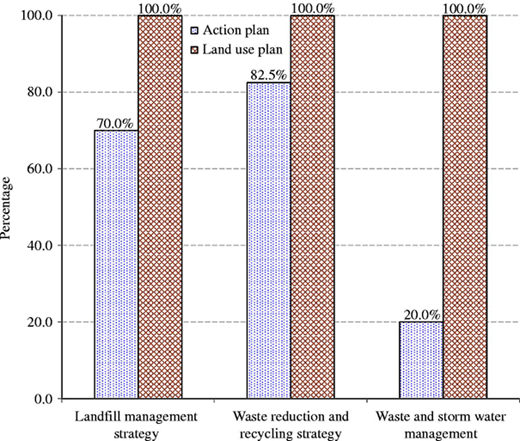
Waste strategies. All local land use plans considered waste management strategies (Figure 12). Many action plans adopted a landfill methane capture strategy (70.0 percent breadth), and waste reduction and recycling strategy (82.5 percent), except for storm water management (20.0 percent).
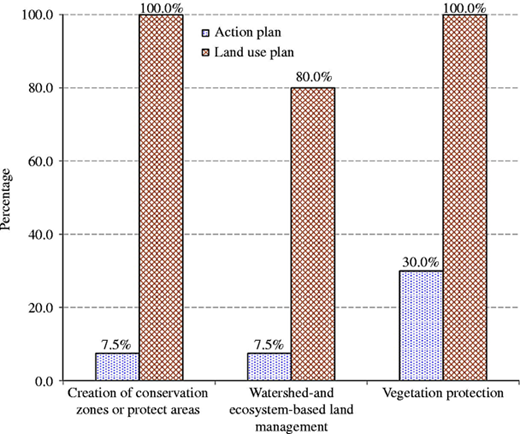
Resources management strategies. Local land use plans had much higher coverage than action plans for resources management strategies (Figure 13). All 40 land use plans adopted policies for creation of conservation areas and vegetation protection, and 80.0 percent of emphasized watershed‐based and ecosystem‐based land management strategies. Local climate change plans paid less attention to resource management strategies for GHG reduction and climate change mitigation. Only 7.5 percent adopted policies to protect critical environmental areas and conservation zones. Additionally, policies with watershed‐based and ecosystem‐based land management initiatives were rarely (7.5 percent) adopted in current plans.
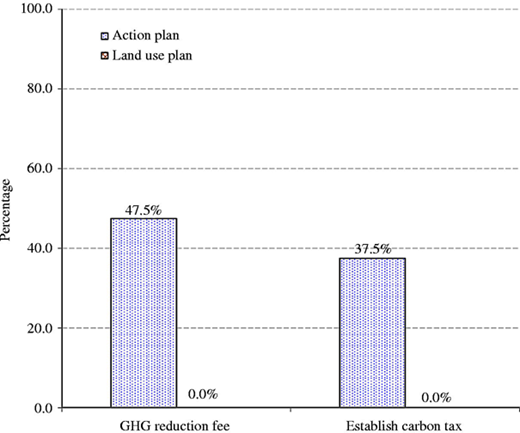
Financial tools. In Figure 14, some jurisdictions decided to adopt GHG reduction fees (47.5 percent), or establish carbon taxes (37.5 percent). However, no land use plans used financial tools for climate change mitigation.
5.2.5 Indicator quality of implementation and monitoring
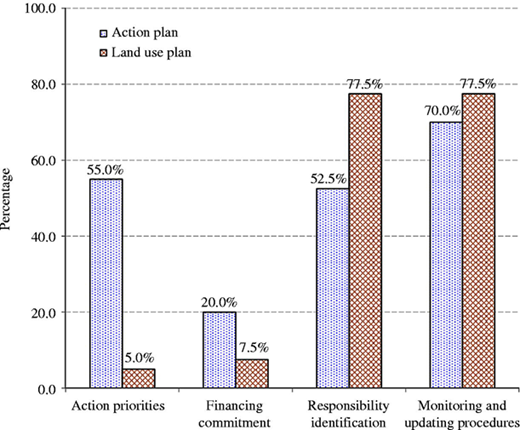
As shown in Figure 15, many of the action plans and land use plans emphasized continuous monitoring, evaluation, and updating. Slightly more than half (52.5 percent) of the plans identified roles and responsibilities among sectors and stakeholders. About 55.0 percent of the plans established implementation priorities for climate change action, but very few local land use plans specified implementation priorities (5.0 percent). However, only 20.0 percent of action plans and 7.5 percent of land use plans made financial and budget commitments for implementation.
5.3 Correlation results
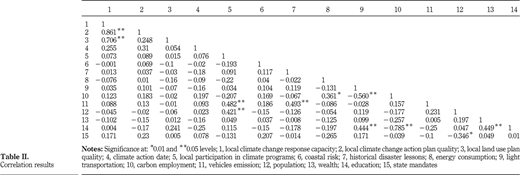
This study used Pearson's product‐moment correlation coefficients to indicate the degree of association among variables. Correlation results in Table II show that local climate change response capacity is significantly correlated with the quality of local climate change action plans and local land use plans, but there is no significant correlation between action plan quality and land use plan quality. Additionally, no independent variables were significantly correlated with the dependent variable – local climate change response capacity.
5.4 Regression results for independent variables
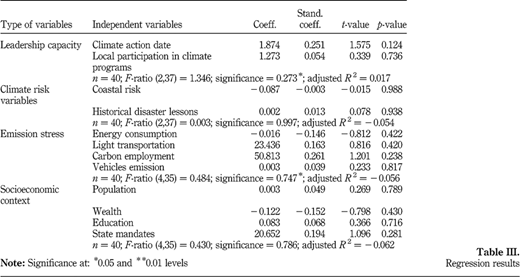
In order to find a best‐fit line for cause and effect, this study further examined the variables in sub‐regression models to determine which variables in each set of variables were statistically significant at the 0.05 and 0.01 significance levels. The regression results in Table III further highlighted the relationship among the four sets of independent variables with local climate change action plan quality.
None of the independent variables showed significance in each sub‐regression model when we further grouped them and examined the interrelationships. Thus, the regression results indicated that none of the four sets of variables significantly influenced local climate change response capacity.
6 Discussion
The results of this study point out many critical research issues in local climate change responses regarding local climate change action plans and local land use plans. The following section further discusses the implications of these results.
Benefits and obstacles for local climate response
These 40 jurisdictions are pioneers and first actors among thousands of local American jurisdictions making concrete local climate change action plans. Therefore, with clear awareness and motivation they have attempted to identify methods for making detailed climate change action plans. An important motivation for local climate response is that controlling GHG emissions may have a number of other “co‐benefits,” including considerable economic savings, and environmental protection. These 40 pioneer jurisdictions have provided useful models and calls to action to higher levels of federal and state governments for climate change. Although local jurisdiction will receive the cumulative effects of local climate change response, there are many obstacles to effective local action. First, it is still uncertain whether local climate change response will have a significant measurable effect on the overall threat of global climate change. The uncertainties come from climate change distribution, timing, and magnitude of local impacts (Kates et al., 1998; Kates and Torrie, 1998; Wilbanks and Kates, 1999). The nature of uncertainty and complexity in climate change may distract decision makers' attention. In general, local jurisdictions have insufficient ability to incorporate much large‐scale climate change information when updating local plans. Local jurisdictions may be impacted only through the impact of GHG on global climate (DeAngelo and Harvey, 1998). Since most current climate change studies are conducted at regional, national, or global levels, it is a challenge for local jurisdictions to consider integrating the information. Moreover, information uncertainty about climate change can also cause potential problems for local decision makers. Some common “cognitive illusions” or biases are contrary to absorbing and understanding uncertain information (Nicholls, 1999). Uncertainty and debate in regard to climate change may cause local jurisdictions to wait for additional, clearer official information to impel them to adopt action. In addition, the effects of climate change are not equally distributed across jurisdictions and regions (Tol et al., 2004) and may cause some jurisdictions to delay action for climate change. Second, local jurisdictions may have limited institutional functions to deal with climate change along with limited resources and tight budgets to conduct strategic planning. Many times, local jurisdictions have limited regulatory or legislative authority for making policies. Local climate change efforts cannot be effectively linked to economic savings. Staff turnover and an expected wave of retirements will eliminate significant stores of institutional knowledge (California Climate Change Center, 2006). However, even if local jurisdictions encounter many obstacles to their climate change responses, these 40 jurisdictions realize that they still have an important role to play for climate change mitigation and adaptation.
Gaps and bridges in local climate change response
Deceptive results have identified significant gaps either in indicator quality or plan quality between local climate change action plans and local land use plans. Considering plan age, local land use plans generally lag behind local climate change action plans. Land use plans had limited awareness and analysis, but many policies dealing with land development patterns have been used for climate change mitigation. Although action plans had a higher level of awareness and detailed analysis of emissions inventory, few linked emission data geographically. More important, local climate change action plans had even fewer policy toolboxes than land use plans. The major weaknesses of the two types of plans indicate that both of them have a significant need to improve their major plan components through better collaboration in factual basis, targets and objectives, coordination and communication, policies, and implementation mechanisms.
There are many reasons for the gaps in the two types of plans. First, an important reason may be that they were implemented by different agencies. Local climate change actions were mainly developed by ICLEI; however, local land use plans were mainly managed by local planning agencies. The correlation results also confirmed that there is no statistical correlation between these two types of plans. To fill this institutional gap, thus, it is necessary to build a local political‐level collaboration platform to enhance institutional capacity to stay abreast of the trends in relevant climate change information and policies. Second, another important reason is that varied action priorities exist for different decision procedures at different times. Owing to the different function of the two types of plans, they may set different action priorities for their plans. Climate change action plans tend to set a more strategic and long‐term policy framework; however, local land use plans almost always address immediate and complex issues so long‐range issues frequently have a lower priority for local planners. Many recent studies have found that long‐term mitigation or adaptation (e.g. natural hazards) are a low priority compared to the pressures of responding to more immediate community problems such as economic development, housing, and transportation. (Wolensky and Miller, 1981; Tang et al., 2009; Wood and Good, 2005). In general, local governments usually pay major attention to ongoing and near‐term concerns due to limited time and resources, and relatively few of them selected long‐term items (hazards, environment, and sustainability) as a priority (Tang et al., 2009). Thus, it is definitely a conflicting challenge for the two types of plans to set action priorities.
Therefore, in summary, an important way to breach the gaps in planning priorities is to make effective collaboration along with necessary incentives and supports to motivate decision makers to incorporate this topic in their daily decision‐making frameworks. Betsill (2000) suggested local leaders should “think locally, act locally” in developing local climate change responses. Strong leadership with effective collaboration mechanisms for climate change issues is necessary to implement local climate response priorities for climate change mitigation and adaptation. Local jurisdictions should enhance cross‐scaling collaboration among multiple agencies, including local governments, neighborhood governments, regional organizations, state and federal regulatory and funding agencies, international consulting organizations, and individual property owners.
Toolbox for local climate change responses
Although the strategies for climate change mitigation and adaptation have increasingly gained attention in research and policy communities, this study found that local climate change action plans have limited policies to address climate change, particularly through the use of natural resource management. For example, current climate change action plans mainly focused on the built environment and paid less attention to natural resource management. In fact, local land use plans could adopt more adaption strategies such as watershed‐based and ecosystem‐based management policies to protect and enhance carbon sinks in soils, vegetation, and streambeds for the long term. Research findings indicate that many mitigation strategies such as mixed‐use and compact development, and green building techniques have been relatively well used in current local plans. Local plans also still need more creative initiatives to expand their toolboxes for climate change mitigation and adaptation. Although many policies for climate change mitigation and adaptation have been discussed in recent research (Kates and Clark, 1996; Berkes and Jolly, 2001), local jurisdictions have insufficiently digested these policies and incorporated them into current plans. Local climate actions also depend on institutions or upper‐level regulations. Some recently discussed carbon policies such as carbon trade and carbon tax were rarely considered in current local policies system. It does not mean they are not important, but there needs to be more time and effective policy framework to integrate new ideas, suggestions, and strategies into local policy decisions. Climate change mitigation and adaptation should be a social learning process facilitated by flexible institutional mechanisms.
Variables affecting local climate change responses
Explanatory results have identified that no traditional variables show significance in local climate change response. There are several reasons for this result. First, one of the major reasons is that climate change is widely recognized as a newly‐disseminated scientific and political topic for local decision making. The independent variables selected in this study may have only an indirect, remote influence rather than direct effect on local climate change response. It may have a more direct influence (local political perceptions, team attitude and ability, financial support, or information communication) on local climate change response (Moser and Tribbia, 2006; Moser and Luers, 2008). Further research is needed to examine the most influential contributors to local land use response capacity for climate change. Second, the result of this study is based on a relatively small sample size. Some planning studies have identified that community conditions have a small (and marginally statistically significant) correlation with planning outcomes (Lindell and Brandt, 2000; Lindell et al., 1996; Norton, 2005). Some recent studies with a larger sample size have found some statistical significance for climate change perceptions between some climate and risk variables (Brody et al., 2008a, b; Zahran et al., 2008a, b). Thus, a larger sample size will help to identify the critical variables influencing local jurisdictions' climate change response.
7 Conclusions
Regarding the first question (“What are the gaps between local climate change action plans and local land use plans; and which indicators received greatest and least attention in local climate change action plans and local land use plans?”), the descriptive results indicate significant gaps between the two types of plans. Local climate change action plans have a higher quality of plan components including factual basis, targets, coordination and communication; however, local land use plans are weak in these three components. Interesting findings show that local land use plans have an even higher quality of policy plan components than action plans. Both types of plans have relatively poor quality of implementation and monitoring. This study concluded that the 40 jurisdictions have made significant progress in the first three milestones by conducting a baseline emissions inventory and forecast, adopting an emissions reduction target for the forecast year, and developing a local action plan; however, they have made limited progress in implementing policies and measures, and monitoring and verifying results in their local climate change action plans. The findings of this study are basically consistent with Wheeler's (2008) four major conclusions on current climate change action plans:
- 1.
the near‐term goals of GHG emissions reduction are too low;
- 2.
the progress of climate change action planning is slow;
- 3.
implementation is a problem; and
- 4.
public understanding and involvement is insufficient.
Indicators received mixed attention regarding the two types of plans. Local land use plans have given little attention to awareness, analysis, targets, and implementation for climate change, but they have played a critical role in climate change mitigation and adaptation at the local level. Local climate change action plans were mainly focused on GHG emissions reduction in the built environment; thus, they paid little attention to the strategies for natural resource management. We have mentioned that the two types of plans were developed and managed by different agencies and there is no significant statistical correlation between them. A higher quality local climate change action plan does not mean a quality local land use plan for climate change mitigation and adaptation. Results found in this study are similar to some previous literature (Travis, 2008) that shows that local planners are actually well prepared to contribute to mitigation and respond to mandated emission reduction through established planning policies such as growth boundary control, mixed land use, transit‐ and pedestrian‐conducive design, solid waste management, and building codes to reduce the local carbon footprint. However, current policies, tools, and strategies are still not enough to mitigate and adapt to climate change.
Regarding the second question (“Which factors may affect local jurisdictions' climate change response capacity?”), results indicate that none of the traditional variables significantly influenced local jurisdictions' climate change response efforts. The explanatory results were not consistent with some previous studies. This study did not furnish statistical evidence to support Tol et al.'s (2004) findings that those jurisdictions which are most vulnerable and sensitive to the effects of climate change may be more highly aware of the necessity to deal with climate change. The findings of this study are somewhat inconsistent with those of previous studies (Brody et al., 2008a, b; Tang, 2008; Tang et al., 2009; Tang and Brody, 2009; Zahran et al., 2008a, b) that found plan quality and other planning outcomes are related to community context and the quality of the planning process. One of the major reasons is that climate change is widely recognized as a recently‐disseminated, remote planning discipline. The contextual variables (planning context, environmental context, participation context, and socioeconomic context) may have only an indirect, remote influence on response capacity for climate change. The regression results suggest some more important factors (planning directors' perceptions, planning staff attitude and ability, financial support, or information support) may have a more direct influence. Further research is needed to examine the most influential contributors to local land use response capacity for climate change.
This study measured local climate change response capacity by two types of plans: local climate change action plans and local land use plans. The actual local climate change response capacity may be much more complex and exceed the two types of plans specified in this study. Since no variables show significance in this study, future research needs to examine more direct factors that influence local response capacity for climate change. Identifying perceived barriers to implementation of different planning policies would be an important step toward improving local climate change response capacity.

References
Further Reading
About the authors
Zhenghong Tang, PhD, is an Assistant Professor in the Community and Regional Planning Program at the University of Nebraska‐Lincoln. His research interests focus on land use planning, environmental planning and policy, and climate change policy.
Zijia Wang is studying in the Forestry College at Beijing Forestry University. Her research interests cover landscape design, community planning, and sustainable development.
Thomas Koperski is a graduate student in the College of Architecture at the University of Nebraska‐Lincoln. His research areas include community planning and urban policy.

