


– The purpose of this paper is to investigate climate change perceptions and adaptation strategies in the communities of Morogoro region of Tanzania. Climate change is a vital issue of global concern.
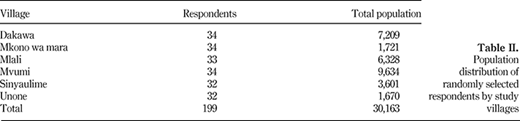
– Rain fall data trends collected from different meteorological stations in the region were useful in assessment of climate variability and change trends from the historical perspective. In addition, quantitative interviews, surveys and focussed discussion groups were used to collect data capturing past and present trends in the catchment, and reasons provided by 199 respondents from a total of six villages. The data were collected with the aid of trained research assistants and trained graduates selected from each of the randomly select villages.
– Significant differences in rainfall intensities have been recorded by use of feedback results from analysis of variance tests conducted. Major indicators of climate variability and change include: increased dry spells (39.7 per cent), drying of rivers (34.7 per cent), a reduction in water flows (14.6 per cent) and poor economy of the area (11.1 per cent).
– The scope of the study does not cover certain aspects such as the spatial and temporal changes in daily temperature which could have provided important and additional dimension. This study also did not take into consideration institutional arrangements required to successfully implement national adaptation programmes to climate change. Finally, it is important to remember that peoples’ perceptions determine the social mental picture of climate change.
– The study suggests the need for leverage on resource use through education and good governance strategies to be employed by resource planners, leaders and policy makers.
– This study links scientific and participatory data as an approach for incorporating modern technologies and local knowledge into the design of useful practices and strategies as well as their successful implementation. Opinions from communities supported the urgent need for effective use and management of resources while laying emphasis on advancement of both indigenous and imported technologies.
– An understanding of how the community views climate change is crucial in design of practices aimed at improving their well-being. In this regard, a study investigating smallholder farmers’ views regarding major drivers of change, assessing main factors leading to changes in climate experienced and identifying potential coping strategies against climate change, was conducted in East Africa, Tanzania between 2009 and 2010. This paper identifies potential resilient practices intended to minimize destruction and maximize opportunities likely to benefit Morogoro region.
1. Introduction
African economies and livelihoods are highly vulnerable to climate variability as well as to challenges imposed by human-induced climate change (Boko et al., 2007). Due to its low ability to adapt and respond to changes, the African continent is regarded as the most vulnerable to the negative impacts of climate change (Sokona and Denton, 2001). The high vulnerability of the continent to both climate change and variability is compounded by low economic capacity to cope (Thornton et al., 2006; IPCC, 2007).
In Tanzania, climate change is classified by the National Adaptation Plan for Action as disastrous to major sectors of the economy and people’s livelihoods (Paavola, 2008). While, like most African countries, Tanzania is not a significant emitter of greenhouse gases, predictions demonstrate the likelihood that the country will suffer from adverse impacts of climate change. The climate of the East African region is naturally dynamic with high temporal and spatial rainfall variability. Parts of Tanzania with a bimodal rainfall pattern will record a 4-45 per cent increase in rainfall while those areas dominated by unimodal rainfall patterns will record a 5-15 per cent reduction in rainfall (Shongwe et al., 2010). Rainfall analysis for the period of 1961-2000 confirms these projected trends (New et al., 2006). The Wami/Ruvu basin is one of the two river basins in Tanzania expected to experience a decrease in rainfall and runoff, which might consequently jeopardize important biodiversity, livelihoods and productivity in the industrial sector (Shongwe, 2009). Freshwater flows in the Rufiji river are predicted to increase by 5-11 per cent while flows in the adjacent Pangani and Ruvu Rivers will decrease by 6-10 per cent (URT, 2003). It is expected that with this overwhelming trend of increasing environmental stress from deforestation, poor land use and other human-induced perturbations, adverse effects of climate change will be heightened in the region in the coming decades (Shongwe, 2009).
Vulnerability to climate change differs across diverse communities and regions (IPCC, 2007) and depends closely on local and regional climatic and weather patterns (Adger et al., 2002). Agro-landscapes, whose level of exposure to certain historic climatic stress is higher, could vary widely in their vulnerability and resilience levels (Swanson et al., 2009). In addition, socio-ecological systems can develop along specific development trajectories (Enfors et al., 2008). While any single element of the global sphere could be sustained by mutually reinforcing feedbacks, its verge shifts its course into other spheres with different reactions and impacts (Scheffer et al., 2001; Folke et al., 2004). If a certain threshold is reached, changes in feedback make it impossible to return to its former state (Carpenter et al., 2001). The climate change science and how it relates with smallholder systems is not well explored (Morton, 2007). Thus, an understanding of how the community views climate change is crucial in the design of practices aimed at improving their well-being. Folke (2006) identifies the need to complement resilience with other available resources and opportunities from disturbances. Sterk (2007) demonstrated that farmers tend to adapt gradually to management strategies. Strategies could be developed over the years with changing environments, coupled with good practices and their adaptive capacity to cope with external stresses and shocks (Morton, 2007; Hardee and Mutunga, 2010). The use of indigenous knowledge can be useful in community empowerment through effective participation in development processes (Leautier, 2004).
Our study sought to understand how smallholder farmers view change drivers, the main factors leading to change in climate, and their associated potential coping strategies in Tanzania. We identify resilience practices to climate change that are intended to lower destruction and maximize opportunities that are likely to benefit the Wami/Ruvu community and other parts of sub-Saharan Africa facing similar challenges. This research raises education-, management- and policy-related concerns that have profound implications for development and management regimes in Tanzania and other parts of sub-Saharan Africa. Finally, based on the study results, we draw out key policy messages and contributions that can promote quick responses to key land, water and agricultural sectors in response to climate change impacts in the region.
2. Methods
2.1 Study area
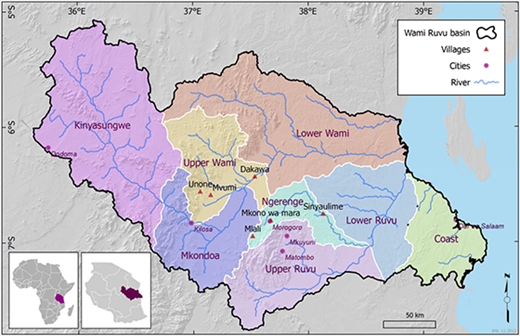
The study was conducted in the Wami/Ruvu River basin, a watershed of the Morogoro region (Figure 1). The river basin, one of the nine river management basins established in 2002 for the whole of Tanzania, is located between 5°-7°S and 36°-39°E. The basin covers a surface area of about 72,930 km[1] and includes the sub-basin areas of Wami (40,000 km[1]), Ruvu (17,700 km[1]) and some small coastal river systems (15,230 km[1]) located to the south of Dar es Salaam that drain into the Indian Ocean. Both the Wami and Ruvu rivers have over the years experienced reduction in river flows that have been attributed to decreases in regional rainfall, which affects the ecological systems and their associated economic sectors (Orindi and Murray, 2005).
Climatic conditions in the upper part of the Wami/Ruvu river basin range from semi-arid in the region near Dodoma to the savannah type in the Coastal region. The area around the Nguru and Rubeho mountains receives mean annual rainfall of approximately 800-1,200 mm, and the region around the Ukaguru Mountains receives approximately 1,000-1,800 mm, while the plateau region receives between 800 and 1,000 mm. Towards Dodoma and to the north of the Wami sub-basin, average annual rainfall between 500 and 600 mm is received. During the coldest month (August), the temperature of the basin drops to a monthly average of 18°C, while the temperature rises to a monthly average of 32°C during the hottest month (February).
The Wami/Ruvu river basin has about 5.4 million inhabitants who are distributed in towns and villages across the basin and whose population sizes vary with regions and districts (National Bureau of Standards/Regional Commissioner’s Office, 2003; WRBWO, 2008a). The basin population comprises 7.7 per cent of the total population of Tanzania (Table I). Twenty per cent of the population lives in rural villages and small towns; the remaining inhabitants are smallholder farmers whose livelihoods are at the mercy of erratic and unreliable rainfall (Hyera, 2011). Major crops grown include maize, sweet potatoes, cassava, sorghum and beans. The low financial capability of most smallholder farmers in the region contributes to low levels of agricultural productivity, while poor infrastructure development in most rural villages in the region prohibits access to markets and public services (URT, 2007a). The agricultural sector is regarded as the major contributor to Tanzania’s Gross Domestic Product (URT, 2011), creating large employment opportunities (80 per cent). Frequent conflicts emerge because of competition between farmers and pastoralists over limited supplies of water. Other income sources in the basin include livestock, bee-keeping, hunting and fish farming. Low soil fertility in the region results from the shortening or elimination of the fallow period without concurrent efforts to increase soil nutrients through fertilizer application or other soil management practices (Mwangi, 1997). Due to high labour intensity and low quality of organic fertilizer, restoration of soil fertility requires use of mineral fertilizers that smallholder farmers cannot afford (Sanchez, 2002; Sachs et al., 2004).
2.2 Materials and methods
Data were collected from six randomly select villages of the Wami/Ruvu river basin (URT, 2012). A total of 199 local participants (respondents) were interviewed (Table II). Main variables included: socio-economic profile of the respondents, background information of the landscape, major drivers of change as perceived by smallholder farmers, factors leading to this change, institutional levels of management already in place and adaptation measures that smallholder farmers found as ideal platforms in creation of development pathways which could contribute positively towards building resilience against climate-induced shocks.
The Statistical Package for the Social Sciences (SPSS, Version 18) was used to analyse data for the quantitative part of the study. Various climate change themes were discussed and content analysis applied for in-depth surveys. Data were structured into major variables, particularly water, land and agriculture, to ease the analysis of answers originating from local viewpoints. Statistical tests were performed for distinct patterns that emanated from key themes under the climate change subject. Pearson chi-square tests were used to establish any possible linkages between main variables. The multinomial logistic regression was used to determine relationships between climate change drivers and target themes. A paired t-test was performed for comparisons between rainfall variability. Major options for implementation in different parts of the river basin, were identified by village leaders, agricultural experts, district government leaders and water resource managers as pertinent steps in strengthening the system’s resilience ability to extreme and increasingly variable weather events. Environmental assessments and data collected in the region by the Wami/Ruvu Basin Office during the month of April 2011 were also applied in the study.
3. Results and discussion
The results have been summarized in four sections. The first section shows characteristics of respondents, relationships between drivers of change and perceptions about climate change, as well as other related factors influencing change. The second section shows major change drivers and perceptions about climate change; the third section shows rainfall data trends collected from multiple hydrometric rainfall stations throughout the Wami/Ruvu river basin. Lastly, we discuss adaptation measures which were identified by farmers as a means of strengthening the system’s resilience against climate change shocks.
3.1 Characteristics of respondents
The descriptive analysis of the respondents’ demographic traits revealed that the largest age group in the sample was the middle-aged group (31-50 years old), with 59.3 per cent of the total respondents in this particular age group. The age group of 51 or more accounted for almost a quarter (24.1 per cent) of respondents. The lowest rate of participation (16.6 per cent) came from 13 to 30 age group. Male respondents accounted for 62.3 per cent of the total respondents, the dominant group. A descriptive analysis also found that about three-quarter of the respondents (74.9 per cent) received education up to the primary level; slightly less than 15 per cent (14.6 per cent) had no access to education, while only about 10 per cent (10.6 per cent) had been educated up to the secondary level. Countrywide, the adult literacy rate is approximately 90 per cent in cities and only 66 per cent in rural areas (URT, 2007a). The government needs to invest in the community by availing more education opportunities from primary to tertiary levels.
Most of the smallholder farmers interviewed (90 per cent) derived their livelihoods from agriculture-based activities, only 4 per cent (3.5 per cent) from business initiatives and less than 1 per cent (0.5 per cent) were employed by the government. The river basin population is predominantly an agrarian population whose daily livelihood is based on subsistence agriculture. The mean annual income for most households, derived from agricultural productivity is approximately[2] Tshs 100,000-Tshs 500,000 (Hyera, 2011).
The Pearson chi-square test showed a strong relationship, p-value = 0.014, between gender and education, emphasizing the fact that gender has an important bearing on education in the study region. Culture and tradition identify women with child-bearing roles; girls usually get married at a younger age and have fewer opportunities than men in education. Moreover, men are encouraged to seek employment to support their families as head of households. This generally pushes men to gain access to education and therefore increases their chances of getting job opportunities. This identifies the need for gender mainstreaming to be prioritized particularly with regard to climate adaptation programmes and policies because this will support the vulnerable group through empowerment. Other studies established how women and children, especially those in rural areas, remain vulnerable to varied effects of climate change (Arora-Jonsson, 2011).
3.2 Perceptions about climate change
This section explores respondents’ views and knowledge on climate change. The feedback during this study indicates that the population is, in general, well-informed about climate change. More than 90 per cent of the informants acknowledged a decline in rainfall received currently compared to the rainfall from previous three decades. Major changes recorded are an increase in dry spells (39.7 per cent), drying of rivers (34.7 per cent), reduction in water levels in most rivers (14.6 per cent) and a decline in the economy (11.1 per cent). Tanzania is experiencing a difficult economic period that is caused by a sharp decline in all major crop exports compounded by a decline in the capacity utilization of the industrial sector in the country (Gibbon, 1994). These features have prompted sharp cutbacks in the state’s social expenditure, which in turn has caused or contributed to a steady decline in smallholder productivity (Skarstein, 2005).
3.3 Major drivers of change
Respondents identified major drivers of change to be human driven (46.2 per cent), climate change (34.2 per cent) and population growth (16.1 per cent), with other factors such as natural change and cultural change (3.5 per cent). Results from chi-square tests show a significant relationship between availability of hydrometric/weather stations and their uses at p-value = 0.000, at a likelihood ratio of 0.0 and with an informed linear association of 0.0. This shows that respondents demonstrated a keen sense of interest related to information accessibility from existing weather stations that have been installed in different parts of the river basin. They may also be empowered through awareness and education capacity development with the presence of government institutions such as the Wami/Ruvu Basin Office, which has been directed by the government of Tanzania to govern the sustainable use of water resources through every positive means, including education.
3.4 Linkages between change drivers and perceptions about climate change
Chi-square tests were conducted with the aim of testing relationships between perceptions about climate change and main drivers of change in the region. There is a very strong relationship at p-value = 0.000, with a likelihood ratio of 0.005. This identifies the strong correlation existing between climate change and drivers of change in the region.
3.4.1 Local governance and education.
Accessibility to information has an important bearing on adaptation measures aimed at combating climatic stresses (Deressa et al., 2009). Study findings show a sound relationship between local governance and education at the 0.018 significance level, with a likelihood ratio of 0.009 and linear by linear association of 0.612. This complements a significant role played by education in enhancing governance at the local level. There is a possibility, and a significant opportunity, to include institutional frameworks towards increased production while conserving water and land resources. This is because different institutional frameworks may support farmers in upholding better opportunities for diversification in agricultural productivity while minimizing dependence on those activities that are subject to climatic shocks (Paavola, 2008). The results of this study emphasize explicitly the importance of raising awareness and improving peoples’ education capacity on impacts of climate change in the Wami/Ruvu river basin. A high percentage of informants (74.9 per cent) have been educated up to primary level while 14.6 per cent had no access to education. In other studies, the significance of education has been shown to strengthen the adaptive capacity of affected communities (Enfors et al., 2008; Deressa et al., 2009). The use of secondary data and an understanding of existing climate trends can benefit the bottom-up approaches while addressing climate-related impacts. The community relates climatic impacts felt with increased anthropogenic activities that degrade landscapes. Community empowerment could be a priority as a means to reduce the increasing trend in community-based disaster risks such as frequent floods in the area. Educating the community on the need to strengthen the ecosystem against climate change can contribute significantly to positive change (Folke, 2006; Newsham and Thomas, 2011; Di Falco et al., 2012).
3.4.2 Land use and management.
Smallholder farmers acknowledged the key role played by effective land use and management practices, as well as their relevance to development projects in the region (Table III), at a very high level of significance (p = 0.023).
3.4.3 Primary drivers of change influencing land uses in the region.
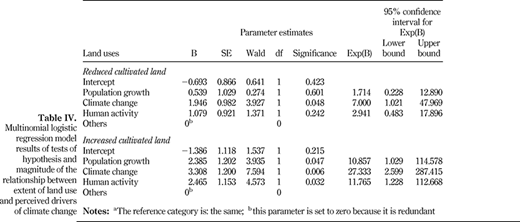
The study explored linkages between the extent of land use and primary drivers of change as perceived by communities. As special interest centred on the relationship between individual categories of perceptions of primary drivers of change and either of the two levels of land use, the Multinomial Logistic Regression Model was considered suitable in this case (Table IV). It is to be noted that the SPSS NOMREG procedure fixes the last category of either variable at zero. In this study, the reference category of the level of land use is “the same” while for the perceived drivers of change the reference category is “others”.
The model showed a significant relationship between population growth (increase in population) and a decrease in land uses as perceived by smallholder farmers (p-value = 0.048). The relationship between the two variables can also be determined in terms of the magnitude of the parameter estimate, which in our case is the value given by Exp (B) – the exponent of the log-odds ratio. There is a generally positive relationship between the perceived drivers of climate change and reduced land uses (less land being put into use by households in the region). This indicates that, in general, the odds of reduced or increased land use are in favour of the given categories of perceived drivers of change than those of “other” factors. The model showed that the odds of climate change influencing reduced land uses are seven times higher than the other factors as perceived by smallholder farmers. Equally, there is a significant relationship between an increase in land uses and population growth as perceived by smallholder farmers (p = 0.047). This demonstrates a positive relationship between climate change and increased land uses, which in many times is a result of human-induced processes.
A significant relationship between an increase in land uses and a change in climate as perceived by smallholder farmers (p = 0.006) was also revealed. A strong relationship was also found between increased land uses and human activities (p = 0.032). The magnitude of the relationships between the categories of the significant variables confirms the importance of three drivers of change, namely, population growth, climate change and human activities, especially with regard to their effect on changing patterns of land uses. However, the very wide confidence intervals suggests the need for caution when interpreting the data, because of the wide variability in the data. This finding suggests the need for further research.
3.4.4 Major factors influencing climate change.
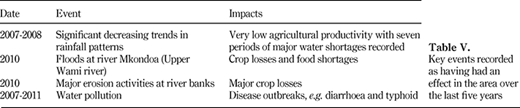
Most of the respondents (71 per cent) identified anthropogenic activities as major drivers of climate change; the remaining respondents (21 per cent) identified natural factors. This excludes eight missing responses. Our results indicate that change has been felt across the entire Wami/Ruvu river basin, and this change has been influenced by human activities and natural factors. An environmental assessment by Hyera (2011) recorded a major decline in most riparian resources in the Wami region, which was attributed to unreliable rains (Table V). Other factors identified to be major contributors to these changes were human activities including land degradation for agricultural activities, poor irrigation methods, timber sawing and widespread charcoal production for income.
3.5 Rainfall data trends
The Kendall’s Tau trend analysis test (significant at the 95-per cent confidence level) indicates a decreasing trend in rainfall at four of the ten rainfall stations that were analysed (Table VI).
Significant differences were observed (t = -2.242; df = 11; p = 0.047) in mean rainfall trends between the 1980s and 2000s in the Ruvu sub-basin. However, no significant differences in mean rainfall trends were observed (t = 1.345; df = 11; p = 0.206) between the 1980s and 1970s (Table VII).
Significant variability (t = −2.617; df = 11; p = 0.024) in rainfall intensities were also recorded for the Wami sub-basin during 1970s and 1980s (Table VIII).
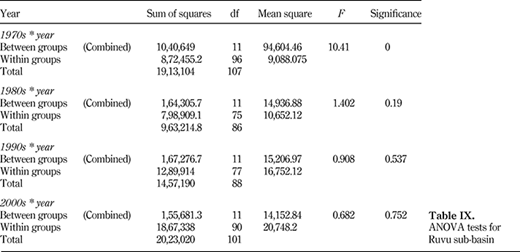
In the Ruvu sub-basin, there were major differences in recorded rainfall amounts across the months (p < 0.05) during the 1970s (Table IX). The month of April recorded the highest rainfall amounts (350.9 mm) followed by March (290.8 mm), with August recording the least amount of rainfall (32.4 mm).
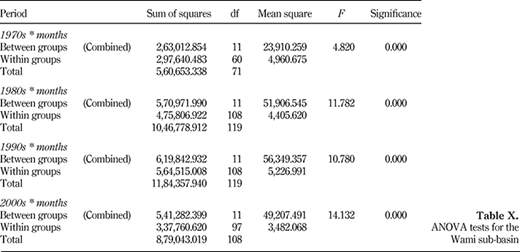
In the Wami sub-basin, there were significant differences in rainfall amounts across the months (p < 0.05) during the 1970s ( Table X). March (159.4 mm) had the highest rainfall followed by January (138.7 mm), while August (3.6 mm) had the lowest rainfall. During the 1980s, there were also significant differences in rainfall amounts across the months (p < 0.05). The highest mean rainfall was recorded in April (212.7 mm), followed by December (183.6 mm), with the lowest rainfall recorded during September (10.7 mm). In the 1990s, results also demonstrated significant differences across months (p < 0.05). The highest rainfall was recorded during April (247.1 mm), followed by March (142 mm), with the lowest rainfall recorded during September (8.35 mm). During the months across the 2000s, significant differences were also recorded (p < 0.05), with the highest rainfall recorded in April (213.5 mm) followed by March (212.2 mm), while the lowest rainfall was recorded in July (6.4 mm).
3.6 Adaptation strategies
In general, respondents view effects emerging from climate change to be a significant threat to the region. Though climate differs across three agro-ecological zones (upstream, middle stream and downstream), it is highly likely that effects of climate change would influence their adaptive capacity. This is a result of major impacts such as floods, and food insecurity leading to low yields, which has an effect on living standards of communities in the upper part of Wami/Ruvu river basin. Adaptation mechanisms can help manage risks in vulnerable areas (Smit and Wandel, 2006). The most important adaptation strategies identified are summarized in this section.
3.6.1 Land uses.
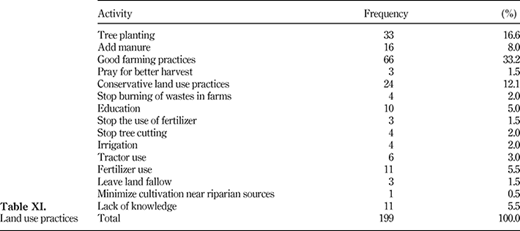
The study region is fortunate to have adequate and sufficient land area to cater for communal needs. Nonetheless, the demand for this resource has increased over the past 15 years as a result of the growing human population in the region. Achieving effective use of this resource requires collective action towards integrated management and use of land by all stakeholders. The study identified various strategies that require close attention (Table XI).
Tree planting was prioritized by informants as a major activity that could help maintain the ecological integrity of the area, especially with restoration of degraded land. Respondents associated investment in tree planting initiatives to be the most ideal practice because of its multiple functional purposes. Upper- and middle-stream farmers considered tree planting as an innovative and effective water conservation technique.
3.6.2 Water resource use and management.
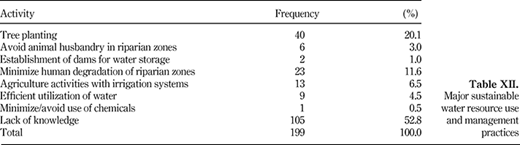
Different water use and management strategies were identified by farmers as a coping strategy to climatic impacts; these are summarized in Table XII.
Respondents prioritized tree planting, protection of riparian zones, establishment of appropriate storage facilities especially during heavy rains, use of appropriate irrigation methods and the need to minimize chemical pollution into water courses such as the Wami and Ruvu rivers. However, a relatively high percentage of smallholder farmers (52.8 per cent) showed their lack of knowledge for activities that could be put into place as ideal water management practices. It would help if farmers were encouraged to adopt policies that promote long-term sustainable use and management of water resources in the region. Government institutions such as the Wami/Ruvu Basin Office could improve the capacity of smallholder farmers by enhancing their knowledge as a key step towards water conservation in the region. These institutions need to be included in the process of policy formulation and implementation.
3.6.3 Agriculture.
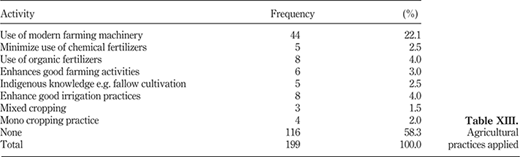
The use of improved technologies in agricultural production was ranked high by respondents (44 per cent) as key towards realization of development and growth in the agriculture sector (Poisot et al., 2004). Other activities such as use of fertilizers and good agricultural practices were considered important mechanisms to help increase agricultural productivity (Table XIII). Integrating current technologies with indigenous technologies could encourage bottom-up approaches in the implementation of relevant strategies by smallholder farmers. The use of indigenous knowledge in other studies was regarded as an important asset for community empowerment through effective participation in development procedures (Leautier, 2004). In our study, it was important to note that a relatively high percentage of participants (58.3 per cent) had no information about what types of practices they could use to enhance their productivity while at the same time building resilient agro-landscapes. There is an urgent need therefore for farmers to gain access to good education and capacity building programmes on application of practices that could positively influence resilience against climatic stresses.
3.6.4 Alternative livelihood support avenues.
Farm income has an important influence on smallholder farm adaptation measures (Enfors et al., 2008). Empowering smallholder farmers by providing access to credit facilities can enhance their adaptive capacity. It would be worthwhile if many farmers engaged in non-farm income generating initiatives as an alternative approach for livelihood support. This could provide positive change especially during periods after the[1]vuli and[3]masika short and long rainy seasons, respectively.
4. Policy relevance
The need to integrate a broad range of stakeholders in adapting to climate change has been citied in various policy-related literature (Few et al., 2007; Collins and Ison, 2009; Cooper et al., 2008). Policies that promote the act of collective responsibility could significantly contribute towards positive change (Brown and Harvey, 2009). Water resource managers need to prioritize engagement of stakeholders in problem identification as a way to address the prevalent situation in the region. It was interesting to see the participants’ eagerness to engage in activities which required collective action for adaptation. Every farmer should accept the responsibility to improve productivity by using the best set of strategies that would help to develop and build on smart agriculture. This has the capacity to contain rapid shifts attributed to land degradation from anthropogenic activities, which are regarded as major contributors to increased climate variation and change.
Education plays an important role in shaping decisions and ideas of development and peoples’ well-being in any given society. The region possesses a rich store of local knowledge that can be developed and used by the community. Therefore, agricultural experts at both local and regional scales need to consider integrating local knowledge in their planning. There is also an opportunity to develop cross-sectoral strategies that bridge local knowledge with technologies imported from elsewhere. This process should be incorporated in practical training and field implementation procedures.
Local institutions are vital in helping to shape adaptation to climate change (Boko et al., 2007; Agrawal, 2008). They have the capacity to equip local societies with new knowledge on impacts of climate change and how to manage likely future uncertainties and risks. In essence, they facilitate support measures aimed at attaining and strengthening the adaptive capacity of communities from a holistic approach (Gupta et al., 2008). Engaging relevant institutions in the Wami/Ruvu river basin and engaging communities in effective adaptive measures can influence the approach used to deal with climatic stresses in the region. These institutions need to promote agricultural practices that prevent land degradation of riparian and conserved areas. On the other hand, governance processes need to be started and strengthened in a manner that is accepted and credible to local societies. Government at all levels and civil society need to strengthen the political support for policies that are climate-informed and support resilient responses to climatic changes. Enactment of policies leading to on-farm adaptation strategies should be endorsed. Attaining adaptive capacity means acquiring human and social capital with the right governance structures in place (Vincent, 2007). Furthermore, the government should allocate additional funds to programmes that advocate girl child education and empower women to reduce their vulnerability to the adverse impacts of climate change (Hardee and Mutunga, 2010). A gender-sensitive approach that is in line with the processes of decision making should be followed in climate adaptation programmes (Nelson and Stathers, 2009).
Climate change impacts in the United Republic of Tanzania should not be underestimated. The threats that climate change pose to Tanzania are recognized in the national level policy; Alley et al. (2007) and the Tanzanian National Adaptation Plan of Action (2006) advocate the need to enact transparent policy frameworks and relevant adaptation strategies as key steps to reduce climatic risks. Preventing climate risks and uncertainties requires knowledge on likely risks and uncertainties as well as efficient use and management of resources. In its National Adaption Plan of Action (NAPA, 2007), the government of Tanzania should incorporate suitable mechanisms by which local regions such as Morogoro can effectively adapt to changes in weather patterns; this is especially important for areas that are regarded as most vulnerable to climate change impacts. URT (2007b) underlines the importance of the link between the identification of immediate and urgent climate change adaptation actions and long-term sustainable development. The other challenge is to look for best mechanisms of integrating innovative solutions to poverty challenges in the region because poverty plays a key role on vulnerability and coping strategies of communities in Morogoro region.
4.1 Study limitations and gaps
Our study has provided a contribution to knowledge on climate change at the local scale in Tanzania. However, the scope of the study does not cover certain aspects such as the spatial and temporal changes in daily temperature which could have provide important and additional dimension. This study also did not take into consideration institutional arrangements required to successfully implement national adaptation programmes to climate change. Finally, it is important to remember that peoples’ perceptions determine the social mental picture of climate change. Variables such as ideological orientations, which influence perception and society’s mental picture of climate change (Stedman, 2004), have not been integrated in the scope of the study.
5. Conclusion
This study identified promising resilience practices that could help increase the adaptive capacity of the Wami/Ruvu community and other parts of sub-Saharan Africa facing adverse impacts of climate variability and change. The low literacy rate of the community was identified to be a barrier to the sustainability of any programmes that promote a range of adaptation strategies (land use, water resource use and management, agriculture and alternative support systems) to climate variability and change. This study links scientific and participatory data as an approach for incorporating modern technologies and local knowledge into the design of useful practices and strategies as well as their successful implementation. Opinions from communities supported the urgent need for effective use and management of resources while laying emphasis on advancement of both indigenous and imported technologies. Governance structures must capitalize on effective adaptive strategies and innovative solutions as a positive measure for counteracting the adverse effects of climate variability. In addition, the design of a holistic approach from bottom-up is important for all management and development efforts geared towards the realization of climate resilient communities.


Significance tests demonstrating relationships between land uses and management practices
Significance tests demonstrating relationships between land uses and management practices
Multinomial logistic regression model results of tests of hypothesis and magnitude of the relationship between extent of land use and perceived drivers of climate change
Multinomial logistic regression model results of tests of hypothesis and magnitude of the relationship between extent of land use and perceived drivers of climate change
Key events recorded as having had an effect in the area over the last five years
Key events recorded as having had an effect in the area over the last five years
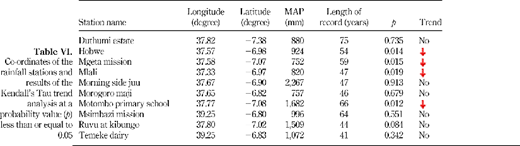
Co-ordinates of the rainfall stations and results of the Kendall's Tau trend analysis at a probability value () less than or equal to 0.05
Co-ordinates of the rainfall stations and results of the Kendall's Tau trend analysis at a probability value () less than or equal to 0.05
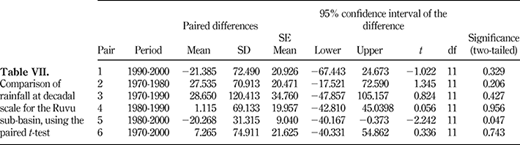
Comparison of rainfall at decadal scale for the Ruvu sub-basin, using the paired-test
Comparison of rainfall at decadal scale for the Ruvu sub-basin, using the paired-test
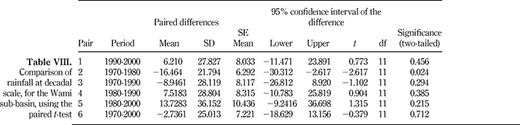
Comparison of rainfall at decadal scale, for the Wami sub-basin, using the paired-test
Comparison of rainfall at decadal scale, for the Wami sub-basin, using the paired-test
References
Further reading
About the authors
Mercy M. Ojoyi is a PhD Fellow at the University of KwaZulu-Natal, South Africa. She also works on a SIDA-funded project pertaining to agriculture and climate change in Nairobi Kenya. Mercy M. Ojoyi is the corresponding author and can be contacted at: mercyojoyi@gmail.com
Dr Jean-Marc Mwenge Kahinda is senior researcher, catchment hydrologist in the Council for Scientific and Industrial Research’s Hydrosciences Research Group. He is based in Pretoria, South Africa.
Financial support by the IDRC research programme, Wami/Ruvu Basin Office and the partial Partner Research Fund (UPaRF) of the UNESCO-IHE Institute for Water Education is appreciated. The statistical support and guidance provided by Mr Dawit Getnet Ayele and Mr Laila B. Lokosang of the School of Statistics and Actuarial Science, and Mr Dominick Menge from Jomo Kenyatta University of Agriculture are also appreciated. The co-operation and support by farmers, leaders and experts across Wami/Ruvu catchment is highly acknowledged. The views expressed in this paper do not necessarily represent the views of the funding bodies which supported part of the fieldwork. Useful comments from two anonymous reviewers helped improve the original manuscript. The critical reading and correction of this manuscript by Prof P.J. Ashton is greatly appreciated.
Notes
“Vuli” is the short rainy season.
Tshs 1,500 = 1 USD (2012).
“Masika” represents the long rainy season.

