


This paper aims to document indigenous knowledge systems (IKS) used for short- and long-range rainfall prediction by small holder farmers in three communities of Guruve District, in north-eastern Zimbabwe. The study also investigated farmers’ perceptions of contemporary forecasts and the reliability of both IKS and contemporary forecasts.
Data were collected among small holder farmers in Guruve District using household interviews and focus group discussions in three wards in the district, grouped according to their agro-climate into high and low rainfall areas. To get an expert view of the issues, key informant interviews were held with key agricultural extension personnel and traditional leaders.
Results obtained showed show high dependence on IKS-based forecasts in the district. Over 80 per cent of the farmers used at least one form of IKS for short- and long-range forecasting, as they are easily understood and applicable to their local situations. Tree phenology, migration and behaviour of some bird species and insects, and observation of atmospheric phenomena were the common indicators used. Tree phenology was the most common with over 80 per cent of farmers using this indicator. While some respondents (60 per cent) viewed forecasts derived from IKS as more reliable than science-based forecasts, 69 per cent preferred an integration of the two methods.
The simplicity and location specificity of IKS-based forecasts makes them potentially useful to smallholder farmers, climate scientists and policymakers in tracking change in these areas for more effective climate change response strategies and policymaking.
1. Introduction
The economies of many developing countries rely heavily on agriculture for livelihoods and economic growth. In these countries, 70 per cent of agricultural output is derived from small-scale farmers who mostly practice rain-fed agriculture (Kotir, 2011, Masinde and Bagula, 2011). These farmers occupy fragile to near fragile pieces of land in areas that are projected to become drier, and with more intense and frequent occurrences of extreme weather and variable rainfall than at present because of climate change (Boko et al., 2007; Bryan et al., 2009; Dixon et al., 2014, Scholes et al., 2008). Smallholder farmers possess weak buffering mechanisms and will thus be affected most, as they fail to absorb climate shocks. Current efforts to promote sustainable use of natural resources to enhance food security and reduce poverty will be negatively affected in developing countries, such as Zimbabwe. Most parts of Zimbabwe have recently experienced increases in inter-annual variability of rainfall (Brown et al., 2012; Shi and Tao, 2014; Williams et al., 2010), resulting in compromised household and national food security (Vogel and O’Brien, 2003). Vulnerability to climate shocks among smallholder farmers can potentially be reduced through the use of reliable climate and weather forecast information that can actively influence important farm decisions (Ash et al., 2007; Boko et al., 2007; Meza et al., 2008; Orlove et al., 2010; Pareek and Trivedi, 2011; Pennesi, 2011; Stigter et al., 2013; Zuma-Netshiukhwi et al., 2013), especially where inter-annual rainfall variability is strongly influenced by El Niño and La Niña events (Regnier, 2008).
In Zimbabwe, long-range forecasts, covering a period of a month up to a season or more, are generated using statistical relationships between rainfall and mostly sea surface temperatures and disseminated by the Meteorological Services Department (MSD) as the “Seasonal Climate Forecast”. Although improvements made in the forecast generation have achieved 75 per cent accuracy, the seasonal forecasts are generated using data from a sparse network of stations, and thus often fail to account for spatial and temporal variability, making it difficult to provide forecasts at micro-scale level (Marshall et al., 2011). To cater for the uncertainties, seasonal forecasts are presented as probabilities of occurrence. However, interpreting the probabilities in seasonal forecasts presents a challenge to smallholder farmers (Mason and Chidzambwa, 2009). The forecasts tend to give a “one size fits all” prediction for homogeneous zones whose rainfall may vary considerably. The lack of actionable information which can be interpreted and used, such as onset, cessation and dry spell periods, impedes uptake of seasonal forecasts (Hansen and Coffey, 2011). In addition, the format in which the forecasts are disseminated is not suitable for direct use by farmers (Stone and Meinke, 2006). Smallholder farmers thus rely on indigenous knowledge systems (IKS) as a means of forecasting rainfall patterns.
IKS are a body or bodies of knowledge developed by a community of people in a particular geographical area (Mapara, 2009; Orlove et al., 2010, Zuma-Netshiukhwi et al., 2013; Pareek and Trivedi, 2011) that are used in health (Crengle et al., 2014; Dixit et al., 2013), development (Lateef, 2012) and reduction of the impacts of natural disasters (Leichenko and O’brien, 2002). In this paper, we refer to IKS as traditional knowledge used to predict weather and seasonal rainfall patterns and used as a decision support by smallholder farmers (Nyong et al., 2007; Pennesi, 2011). IKS provide mechanisms for participatory approaches through observation, analysis and sharing of experiences allowing smallholder farmers to adjust to changes in climate. However, IKS in weather and climate prediction is under threat of disappearance because of lack of systematic documentation and lack of coordinated research to investigate their accuracy and reliability (Chang’a et al., 2010; IPCC, 2007; Codjoe et al., 2014), while some of the IKSs need recalibration because of the changing climatic conditions (Lemos et al., 2002). The lack of documentation and research in IKS in Zimbabwe was mainly caused by the policies of colonialism. Before its independence, Zimbabwe’s agriculture sector was characterized by a highly productive mechanized large-scale commercial farming sector mainly dominated by whites and located in areas with good soil and favourable rainfall patterns between Natural regions 1 and 2, alongside a relatively low input, low output, communal smallholder agriculture sector located predominantly in dry and infertile regions in Natural regions 3, 4 and 5. Indigenous smallholder farmers were alienated from the productive land and thus excluded from technologies that supported commercial agriculture. As IKS is often associated with smallholder farmers, very little interest in traditional or indigenous knowledge existed in this period (Briggs, 2005; Hill and Katerere, 2002; Mapara, 2009). During independence in 1980, Zimbabwe inherited the same dual agriculture economy in which management-oriented weather services were generally not available to smallholder farmers (Stigter, 2011; Muguti and Maposa, 2012; Risiro et al., 2012). Agrometeorological advisories provided by the local agricultural extension services were largely for the benefit of the commercial farmers. In addition, the top–down structure of the extension services resulted in little useful information reaching the smallholder farmers. The farmers’ conditions were poorly understood and the extension approach, if any, was one of “modernization” that was completely out of tune with the reality of agricultural production of peasant farming (Mwaura, 2008). This therefore created a knowledge gap between commercial and smallholder farmers, resulting in the latter relying more on IKS which they understood better than scientific forecasts.
A genuine interest in IKS and techniques developed by smallholder farmers started in recent years with Stigter and associates being among the first researchers to investigate the use of IKS in agricultural meteorology, as illustrated in Stigter (2011). Most agricultural livelihoods in Zimbabwe are rain-fed and thrive well when supported by accurate and reliable weather forecasts and the right decisions on crop cultivars and routine operations. However, the uptake of the “Seasonal Climate Forecast” by the poor resourced smallholder farmers remains low, while the use of IKS remains high. There is, therefore, a need to document IKS used in weather and seasonal forecasting and investigate the signal strengths of the indicators. Studies on the use of IKS have been conducted in other parts of Zimbabwe. Studies by Makwara (2013) in Zaka district, Masvingo province, Muguti and Maposa (2012) in Masvingo and Manicaland provinces and Shoko (2012) and Shoko and Shoko (2013) in Mberengwa district; Masvingo focused on documentation of IKS and recommended the adoption of IKS as an integral part in decision support systems in agriculture. However, the studies failed to capture the action-oriented responses to the IKS used by the local communities. The objectives of this study therefore focused on documenting IKS used for seasonal and short-term rainfall forecasting, the perceptions of communities of the reliability of these indicators and the decision support systems designed in relation to the observed IKS. The study further investigated the dissemination and transfer mechanisms of IKS and the means of analysing and sharing such information in communities. Based on the farmers’ observations, some efforts were made to solicit for information on the areas of agreement between IKS- and science-based forecasts.
2. Methodology
2.1 Study area
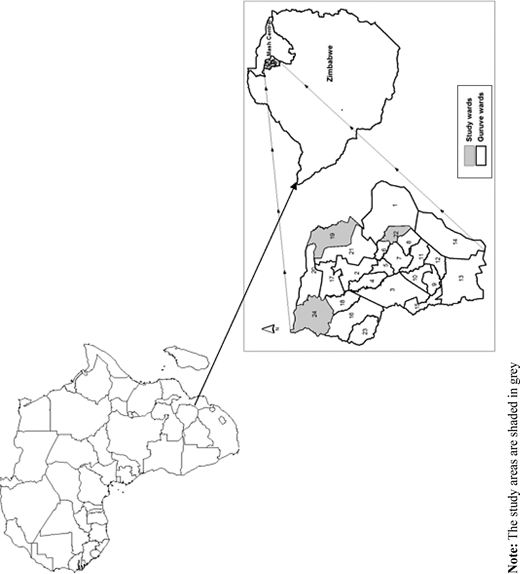
The study was carried in March 2013 in Guruve District, in Mashonaland Central province of Zimbabwe (Figure 1). Most of the district lies in agro-ecological region 2B and receives rainfall above 750 mm per annum. The district has been traditionally known as the prime area for growing maize in the province by virtue of the deep clay soils which are inherently fertile. However, the district is characterized by extreme variations in rainfall both spatially and temporally. The study covered three wards: 19, 22 and 24. Ward 24 borders with agro-ecological Region 3 and is therefore drier compared to the other two wards.
2.2 Data collection methods
To document IKS, qualitative and quantitative data were collected using household interviews, focus group discussions (FGDs), key informant interviews (Bernard, 2011) and a questionnaire designed for household interviews with questions covering objectives of the study.
2.2.1 Household interviews.
With the help of the District Agricultural Extension Officer (DAEO) and using random sampling, households were selected from those in high rainfall wards (Wards 19 and 22) and from the low rainfall ward (Ward 24). A list of villages in each ward and the households in each village were made available by the DAEO’s office. Households to be interviewed were randomly selected from the list. On average, 40 household interviews were conducted in each of the three wards. Whilst all age ranges were included in the interviews, the screening introductory part allowed only those who had lived in the area for at least 10 years to be interviewed. The assumption made was that the longer one stayed in the area, the more familiar they became with the surrounding environment. The questionnaire contained three sections and combined structured and semi-structured questions. Open-ended questions were included to allow respondents to give as much information as possible. Section 1 collected demographic information, while Section 2 investigated the IKS used in the area for forecasting rainfall patterns, the meanings of the indicators and actions taken in relation to the forecasts. Section 3 focussed on access to, uptake and perception of the reliability of scientific forecasts in comparison with IKS. The questionnaires were analysed qualitatively and quantitatively, and statistical inferences were drawn based on the results of the analysis. Frequency tables of the different indicators were calculated where possible, using Microsoft Excel and SPSS software.
2.2.2 Focus group discussions.
To triangulate information collected through household interviews, two FGDs were conducted, with 15 gender balanced members in each group. The first group consisted of respondents at least 60 years old who had lived in the area for at least 10 years. This group is seen as custodians of indigenous knowledge (Mwaura, 2008). On the other hand, the general view is that structures for passing on this kind of knowledge have weakened significantly such that younger generations are opting mostly for scientific knowledge (Tanyanyiwa and Chikwanha, 2011). To investigate the transfer of IKS to younger generations in the area, a second FGD, with members consisting of respondents aged between 20 and 40 years, was conducted. Results of indicators given by the two groups were compared for differences. The topics covered during FGDs included the cropping patterns, IKS for short and seasonal forecasting and the decisions related to the observed IKS, as well as access to and reliability of scientific weather forecasts.
2.2.3 Key informant interviews.
To get an expert view of emerging issues, key informant interviews were held with the DAEO, three agricultural extension supervisors and two traditional leaders. These were asked to highlight the major IKS used in the area, the resulting decision support systems developed by the communities and access, uptake and challenges to using scientific forecasts by communities.
3. Results and discussions
Farmers view the occurrence of rainfall as a process influencing the environment and took time to observe, analyse and interpret these processes thereby formulating IKS. The IKS forms the foundation upon which decision support systems supporting agricultural activities is derived. The results herein describe in detail IKS used in seasonal rainfall prediction, actions taken by farmers in response to the indicators, the reliability of these indicators, comparisons with scientific forecasts and farmers’ perceptions towards scientific forecasts. Specifically highlighted in the results also are the areas of agreement between IKS and scientific forecasts, as well as coping strategies during hunger periods.
3.1 Cropping practices
All the farmers interviewed grew maize and at least two other crops, among them tobacco, groundnuts, cowpeas, soya beans and small grains. The crops were grown mainly for consumption and generating incomes. The traditional crop grown in the district has been maize, but there has been a recent shift to other crops, such as small grains in some areas. Major reasons cited for the shift from growing maize only to crop diversity were reduced maize yield because of changes in rainfall patterns which became notable from the year 2000. Small grains, such as sorghum, were also becoming popular, as these were able to survive dry conditions during the growing cycle. Most households interviewed had a crop which they grew for cash. Such crops included tobacco, sunflower and soya bean. Sugar beans and soya beans were commonly intercropped with maize.
3.2 IKS for weather and climate forecasting
The survey revealed a wealth of IKS used by smallholder farmers for both short range (1 day to a week) and seasonal forecasting (six months spanning from October of one year to March of the following year), including nowcasting in some instances. These included tree phenology, behaviour of certain bird species, insects and crickets and evolution of atmospheric parameters. Similar indicators were given during FGD for both the elderly and the youth. More than 70 per cent of the group with elderly members had stayed in the area for at least 30 years and nearly 15 per cent had stayed for between 10 and 20 years. About 60 per cent of the members of the FGD for the youth had stayed in the area for between 10 and 20 years with the rest having stayed for more than 20 years. The youth indicated that they got to know about these indicators from their elders and through observation; therefore, they agreed with the IKS given by the elderly group. While the elders used IKS more, the youth felt loss of some of the indicators like tree species and exposure to science was making it more difficult to have faith in IKS. They were slowly shifting to scientific forecasts; however, the challenges were poor access and limited knowledge and understanding of the meaning of terminology used in the forecasts.
3.2.1 Trees.
The use of tree phenology as an indicator was common among the three wards. At least 80 per cent of the respondents from all three wards used trees as an indicator for seasonal rainfall forecasting. The farmers observed phenology of different trees species such as amount of fruit and budding of new leaves (Tables I and II). The most commonly used trees were muchakata (Parinaricuratellifolia) and muzhanje (Uapacakirkiana). At least 65 per cent of the trees were observed on the amount of fruit they produced. Many flowers producing many fruits were synonymous with poor rainfall season. Average flowering translating to average fruits was a good indicator of a good rainfall season. In the dry season, trees shed off their leaves. Budding of many new leaves resulting in high Normalized Difference Vegetation Index observed as the greenness of the trees represented a good rainfall season. At least 29 per cent of respondents indicated that they observed the budding of new leaves on trees as an indicator of season quality. Similar observations were found in the eastern districts of the country (Risiro et al., 2012). Soon after emergency of new leaves, some tree species produce water droplets from the leaves. Such is the rain maker tree (Lonchocarpuscapassa). The amount of water produced by the newly emerging leaves was observed as a precursor to the seasonal rainfall pattern that will follow. The more the water droplets from leaves, the better the seasonal rainfall pattern. Little or no water produced by the leaves was an indicator for poor seasonal rainfall pattern that in turn negatively affected production. No disaggregation was done at ward level; however, the overall use of IKS according to gender per ward is given in Table V. Farmers formulated response actions based on a combination of indicators (Tables I-IV).
Indicators of a good rainfall season based on observations on a variety of trees
| Shona name | English name | Scientific name | Usage (%) | Observation | Action |
|---|---|---|---|---|---|
| Muchakata | Mobola Plum | Parinaricuratellifolia | 41 | Average fruiting | Buy seed, including long-season varieties such as R215 and the SC7 series |
| Uzhanje | Wild loquat | Uapacakirkiana | 40 | Average fruiting | Buy seed, including long-season varieties such as R215 and the SC7 series |
| Mupfuti | Prince of Wales’ feathers | Brachystegiabohemii | 21 | High density and greenness of new leaves | Buy medium maturing seed varieties such as the SC6 series |
| Mupanda | Rain tree | Lonchocarpuscapassa | 20 | Produces many rain drops from new leaves | Prepare land, buy medium maturing seed varieties such as the SC6 series |
| Munhondo | Munondo | Julbernardiaglobiflora | 18 | High density and greenness of new leaves | Prepare land, buy seed in time |
| Munhunguru | Batoka plum | Flacourtiaindica | 17 | Produces a lot of fruits | Buy and medium maturing maize varieties |
| Mutohwe | Snot apple | Azanzagarckeana | 17 | Average fruits produced | Include sweet potatoes |
| Chenje | Ebony | Diospyrosmespiliformis | 16 | High density and greenness of new leaves | Reduce land for long-season maize varieties. Buy medium maturing maize varieties |
| Mutufu/munzviro | Wild Medlar | Vanguerialanciflora | 15 | Average fruits produced | Include sweet potatoes |
Indicators of a poor rainfall season based on observations on a variety of trees
| Shona name | English name | Scientific name | Usage (%) | Observation | Action |
|---|---|---|---|---|---|
| Mango | Mango | Mangiferaindica | 19 | Produces many flowers which drop off | Acquire short-season maize varieties |
| Muhute/Mukute | Water berry | Syzygiumguineense | 18 | Low density and greenness of new leaves | Look for small grains seed |
| Mupondo | White bauhinia | Bauhinia macrantha | 18 | Low density and greenness of new leaves | Harness market gardening |
| Musasa | Musasa | Brachstegia spiciformis | 16 | Low density and greenness of new leaves | Look for small grains seed |
| Tsambatsi | – | Lanneaedulis | 16 | Abundance of fruits | Harvest wild fruits, engage in food for work and batter trade |
| Tsarangidze | Narrow leaf mahobohobo | Uapacanitida | 16 | Shedding of new leaves | Turn to gold panning to supplement incomes from market gardening |
| Mutamba | Sweet monkey orange | Strychnosspinosa | 14 | Abundance of fruits | Harvest fruit for future consumption |
| Mutsamvi | Wild fig | Ficusingensis | 11 | Low density and greenness of leaves | Look for small grains seed, collect wild grain for consumption during hunger periods |
Comparison of IKS use at ward level
| Ward no. | Males interviewed | Females interviewed | Males using IKS | Females using IKS | % use of IKS (ward level) |
|---|---|---|---|---|---|
| 19 | 18 | 23 | 14 | 18 | 78 |
| 22 | 16 | 24 | 13 | 16 | 73 |
| 24 | 13 | 24 | 13 | 19 | 80 |
Other indigenous indicators used for short- and long-term forecasting
| Indicator | Shona name | English/Scientific name | Observed behaviour | Meaning | Action |
|---|---|---|---|---|---|
| Birds | shuramurove | white bellied stork or abdim stork (Ciconiaabdimii) | Migration in large numbers | Good Rainfall season approaching | Land preparation |
| Haya | Great spotted cuckoo (Clamatorglandarius) | “toitsvanga” sound is heard through the day | Rainfall season approaching | Land preparation | |
| tsvotsvotsvo sound is heard | Rains imminent | Decide crop to plant first | |||
| Dendera | Southern Ground Hornbill (Bucorvus leadbeateri) | Makes distinct sounds during the night and early hours of the morning | Drizzly and cool weather conditions later in the day | Prepare for dry weather | |
| Insects | dzvatsvatsva | Solifugida spp. | Runs all over especially at night | Rains imminent | Seed should be ready |
| Closes its hole | Rains coming in a few hours | Fertilizer application | |||
| Opens its hole | Dry weather conditions persists | Plan activities that do not require rains | |||
| Nyenze | Cycada spp. | Sings continuously in October | Good rainfall season predicted | Decide on crops to grow | |
| Mhashu | Orthoptera spp. | Observed in large groups | Poor rainfall season | Look for short-season seeds | |
| Mhamhatsi | Hymenoptera spp. | Taking their food outside their hole | No rains in the short term | Plan activities that do not require rains | |
| Nhowa | Lepidoptera larvae | Observed in abundance | Poor rainfall season | Gathering wild grains |
Atmospheric and astronomical indicators
| Observation | Usage (%) | Meaning | Action |
|---|---|---|---|
| High pre-season temperatures (September and October) | 33 | Good rainfall season with hailstorms initially | Used together with other indicators to make choice of seed |
| Low pre-season temperatures (September and October) | 33 | Delayed onset of season and poor rainfall season | Look for early medium maturing maize varieties such as SC5 series and SC6 series |
| Towering cloud development over the southwest | 23 | Good rainfall season | Prepare land |
| Establishment of southeast winds during rainfall season | 25 | Atmosphere stabilizing and dry weather follow | Weed cautiously and halt fertilizer application |
| Establishment of southeast wind pattern in the cool season | 16 | Cool, cloudy and drizzly weather conditions | Provide warm shelter for small stock |
| Establishment of northerly wind patterns during a dry spell | 26 | Return of rains | Plan weeding and fertilizer application activities |
| Hallo around the moon (dzivaremvura) | 7 | Good rainfall season | Combine with other indicators to make choice of crop cultivars |
3.2.2 Birds.
Observation and analysis of behaviour of some bird species as predictors for short- and long-term forecasting was quite common in Guruve (Table III). Haya (Clamatorglandarius), shuramurove (Ciconiaabdimii) and dendera (Bucorvusleadbeateri) were commonly used for short- and long-range forecasting. Before the onset of the season, when temperatures are high, the great spotted cukoo (haya) was often heard making distinct sounds. Such sounds could last until the season began and would occur when heavy rains were expected on the day. The initial sound of the haya bird was “toitsvanga”, meaning we are searching for the rains, however a few days just before the rains began the sound changed to “tsvootsvootsvoo” the symbol for pounding rains. If these distinct sounds were not heard, the rainfall season often translated into one with erratic rainfall and not enough to sustain crops. Migration of white bellied storks or “shuramurove” in the local language (Ciconiaabdimii) in large groups indicated a good rainfall season. Whenever the season was bad, very few of these birds were observed in the area. The sound of the southern ground hornbill (dendera) in the early hours of the morning was precursor to initially overcast, cool and drizzly weather conditions followed by dry weather conditions. Drizzly weather conditions are often associated with a high pressure system over the southeast coast of the African continent which steers a cool and moist south-easterly airflow over Zimbabwe (Meteorological Services Department, 1981). The anticyclonic airflow causes the atmosphere to stabilize. The use of birds to predict rainfall patterns is also common in other countries, such as Tanzania, where the appearance of large swarms of Yangiyangi birds is indicative of the onset of a good rainfall season (Chang’a et al., 2010). Birds were not used as indicators in isolation; however, pre-season temperatures, wind direction and tree phenology provided insights into the rainfall the communities could anticipate. These combined influenced the decisions farm activities and crops to plant
3.2.3 Insects.
Several insects are used for long- and short-term forecasting (Table III). Nyenze (Cycada) singing continuously during the hot season (September and October) signifies the approach of a good rainfall season. When poor rains are predicted the cycada is occasionally heard. Mhashu (Orthoptera spp.) observed in large numbers on trees or grass signified a poor rainfall season. In drought years, large groups of these insects were observed well into the season. The abundance of nhowa (Lepidoptera larvae), a caterpillar found on Brachystegia spiciformis, commonly known as zebrawood or Musasa tree, also signified a bad season. The farmers harvested these caterpillars for consumption during hunger periods. The spider, dzvatsvatsva/buwe (Solifugida spp.) was often observed running all over, especially at night, an indication that the start of the rainfall season was close. The spider was also used for nowcasting. Whenever the spider was observed to seal the entrance of its hole, rains would occur in a few hours and therefore farmers remained home or quickly sought shelter. Opening its hole for long periods marked the onset of a dry spell. During such periods, weeding was done but would be reduced to a minimal if the dry spell persisted over weeks. Where soil moisture was expected to reduce significantly, fertilizer application was discouraged. Many ants called mhamhatsi (Hymenoptera spp.) moved about swiftly and bit people when stepped on when rains were imminent. Once the ants started to take their food out of the hole, a dry period would occur in the following few days.
3.2.4 Atmospheric and astronomical indicators.
The smallholder farmers observed and analysed atmospheric events. The survey revealed that farmers also used indicators that were closely related to the evolution of the atmosphere for long- and short-term forecasting (Table IV).
High pre-season temperatures, especially in the months of September and October, indicated a good rainfall season ahead. As October approached dark towering clouds would often be observed in the southwest, a phenomenon the farmers described as “a rain making process of the atmosphere”. One respondent said “Mumwedzi waGumiguru tinowanzoona shongwe dzehore kuchamhembe kwakabvira kumavirazuva zvichitaridza kuruka mvura kunenge kuchiita denga” (We observe towering clouds over the southwest in the months of October, a process we view as the rain making process of the atmosphere). Persistence of east to southeast wind pattern (kubuda) in October caused low daytime temperatures resulting in a delayed onset of the rainfall season. A late onset of the season meant a shorter growing period; as a result, farmers resorted to medium maturing crop varieties. The persistence of a cool south-easterly airflow during the farming period resulted in poor spatial and temporal distribution of the rains, as cold temperatures inhibited the establishment of winds that brought moisture to the area. A circle around the moon (dziva remvura) coincided with wet periods, while moon rise was associated with dry conditions.
It is evident that the farmers closely monitored the rainfall patterns in relation to atmospheric parameters. Regarding the setting in of dry spells, the farmers indicated that the establishment of lower temperatures together with an introduction of a south-easterly wind pattern resulted in an end to a wet spell, while the persistence of such a pattern coincided with periods of dry spells. The frequency and length of the dry spells influenced the decisions by farmers to consider other livelihood options such as gold panning, market gardening and sell of livestock. The establishment of a northerly wind pattern coupled with towering clouds indicated the return of rains. The observations of the farmers agree with scientific forecasts. If not coupled with low pressure to the north/northwest of the country, a cool and south-easterly airflow (anti-cyclonic airflow) stabilizes the atmosphere resulting in dry conditions. If the anticyclone persists for some weeks, this would often be associated with a high pressure system in the middle levels (5.5 km above the surface) called the Botswana Upper High. In drought years, this atmospheric feature was dominant. Farmers would observe a continuous influx of south-easterly airflow. However, though farmers were aware of climate change and noted changes in temporal and spatial variability of rainfall, onsets and cessation of rains, they could not exactly quantify the changes. The use of atmospheric developments has been observed elsewhere. In the Arctic, the onset of easterly winds normally marks the onset of the main rain season (Pennesi et al., 2012). In Malawi, astronomical signals such as circle around the moon have been used to predict seasonal changes (Kalanda-Joshua et al., 2011). Rainbow colours: when red is dominating means more rains to come, if blue colour dominates and clear sky appears, it means that rain has passed (Zuma-Netshiukhwi et al., 2013). Some authors argue that IKS such as described above have higher density and diversity and have potential to improve on the spatial resolution of meteorological/climatological forecasts (Speranza et al., 2013).
3.2.5 Access and uptake of seasonal climate forecasts.
Timely and effective dissemination of seasonal forecasts is very critical, as it impacts on the choices of crop cultivars and long-term planning of farm activities. The farmers got weather and seasonal climate forecast information through the radio, farmer meetings or from agricultural extension workers. Of the respondents, 65 per cent received MSD seasonal forecasts on time. However, they had limited understanding of the meaning of probabilities given in the forecasts. For the sake of producing seasonal rainfall forecasts, the country is divided into three homogeneous regions. Forecasts are made for three probable categories of below-normal (dry conditions), near-normal (around the average) and above-normal (wet conditions) for each region. A probability is assigned to each category, indicating the chance of the particular category to occur in each region during the target season. Farmers were not sure of how the categories “normal/average, above normal and below normal” were generated and where the data were obtained from. About 27 per cent said that they received the forecasts late, while the rest did not have access at all. Information was transmitted one way, but farmers preferred interaction during dissemination. Terminology used in short-term forecasts such as “scattered, isolated, numerous rain showers” and others were confusing, as the outcomes did not really agree with their understanding of the terms and their observations. Any non-occurrence of an event mentioned in a forecast in their locality was a failure on MSD. Other regions of the world have adopted the idea of agricultural extension officers offering agrometeorological services and advisories to farmers such as established in India (Stigter et al., 2013). The idea of an agrometeorological service is still under development in Zimbabwe.
The farmers preferred that the science used to generate climate forecasts includes actionable knowledge that drives agricultural decision-making process with specific needs addressed, an idea echoed by Roudier et al. (2014). The current effort to disseminate climate information to grassroots levels requires great improvement to make the information user friendly, only then effective dissemination has been seen to have taken place (Ziervogel and Downing, 2004). Agents who understand and can translate climate information to a product understood by the smallholder farmers are necessary, asthey are able to relate with both the scientist and the farmer. Although this has been tried in Climate Field Schools, relevant training of trainers was lacking (Stigter, 2015). Currently, such agents do not exist and the establishment of agrometeorological services can no longer be ignored. Hansey and Coffey (2011) believe that tools that target farmers and rural communities require effective delivery mechanisms, an idea implemented in Indonesia producing positive results (as implemented by Stigter, 2010, 2015; Stigter and Ofori, 2014b, 2014c).
3.2.6 Reliability of IKS and scientific forecasts.
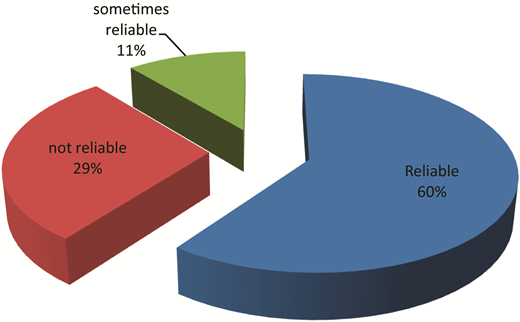
Smallholder farmers are still highly dependent on IKS for seasonal rainfall prediction. At least 60 per cent viewed IKS as more reliable than scientific forecasts, while 29 per cent thought scientific forecasts were better than IKS (Figure 2).
As shown in Table V, dependence on IKS was high in the three wards (78 per cent in ward 19, 73 per cent in ward 22 and 80 per cent in ward 24); however, farmers were aware of the shortcomings of IKS.
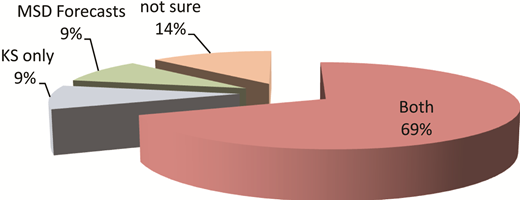
Like scientific forecasts, IKS could not forecast onset of season, dry spells and phenomena like cyclones. IKS was location specific, while scientific forecasts considered large areas of similar covariation. They indicated that some of the indicators had weakened over time probably being caused by climate change. Wind patterns had become weaker than observed before, key plant species have disappeared because of deforestation and the changing climate, and the few remaining often gave mixed signals. In addition, the farmers indicated changes from one extreme event to another without giving time to the trees to adjust to new conditions. As a result, 69 per cent of the farmers preferred a merging of the two methods of weather and seasonal forecasting (Figure 3). Chagonda et al. (2010) argues that farmers are wary of technology that is difficult to understand and therefore prefer to use information that they have obtained themselves. Farmers argued that IKS provided weather information at local level which was not captured in scientific forecasts; therefore, those indicators which strongly could feed into science from the local perspective need to be included as indicators in the generation of forecasts. Development of scenarios based on signal strength of IKS was given as an option, so that even if farmers failed to receive forecasts on time, they could base forecasts on the strength of indicators observed. One farmer, Mrs Yoni Chitemere, said “Dai maongorora zvatinoshandisa mukazvibatanidza neruzivo rwenyu rwemariro ekunze nekuti tioona kuti zvinoshanda asi kuti hazvina kunyorwa mumagwaro nokudaro zvinotarisirwa pasi” (We wish that you would examine IKS because it works but so it has not been documented and tested therefore given the value it is worth).
Farmers indicated that they used the social networks to discuss the meaning of their local indicators with some taking time to compare IKS and scientific forecasts. Neighbours discussed observations and experiences especially when the indicators became visible. During farmer meetings and others, the elders usually initiated the discussion following their observations to and from meetings and funerals. They would often tell stories of past experiences to the young men and women. During the night, families sit together to share meals. Such times are utilized by the elderly to tell about IKS for weather forecasting and those for treating certain diseases in humans, birds and animals in the home. During FGDs, both the elderly and the youth highlighted these as the methods used to pass down information to the younger generation. While the elderly highly value IKS with the youth acknowledging receiving a lot of information from the elders, however, in the FGDs, the youth indicated a need to treat IKS with caution given the lack of understanding of how climate change was influencing the indicators.
Some of the farmers had made efforts to compare forecast so as to derive convergence (Figure 4).
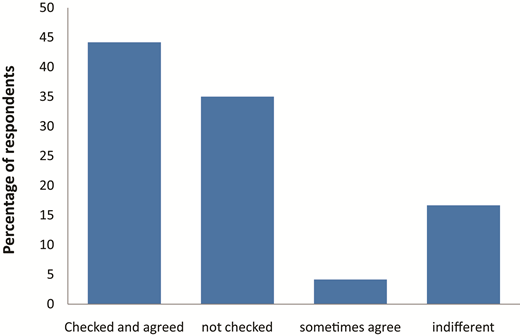
Those who did the comparison were most the elderly people. The youth indicated the loss of certain plant species and therefore making comparison difficult. They believed the few trees left change responding to changes in the climate system and therefore losing accuracy. The youth indicated the great spotted cuckoo having accuracy on predicting rainfall occurring within a few days. Agreement was observed mainly on atmospheric indicators (nearly 35 per cent) and tree phenology (about 30 per cent), as shown in Figure 5. The farmers’ observations are related to movement of weather systems that have a bearing on the rainfall pattern over the country. In FGDs, the elderly group highlighted convergence observed in the spider (Solifugida spp), the great spotted cuckoo bird and pre-season temperatures combined with wind patterns. The youth highlighted convergence being mostly observed on the great spotted cuckoo bird and the spider. In other parts of the globe, for example in South Africa, the farmers’ perceptions were that IKS were usually right, but not always (Ziervogel, 2001). A few of the farmers interviewed wanted to use scientific forecasts alone though they highlighted lack of understanding of the terms used in the forecasting. Generating useful forecasts therefore calls for a deep understanding of the needs of specific user groups, particularly those in agriculture and the benefits and challenges forecasts may present to these users (Ziervogel, 2004). Where possible, participatory approaches have to be used at the local level to co-opt grassroots levels in dissemination of forecasts through programs such as “train the trainer”. The language of climate/weather forecasts would be treated at two levels, first at the extension staff level, who will go down to the farmer and develop a farmer language. With such an approach, it becomes easier to understand the needs of the farmer and therefore develop tailored weather and climate forecasts.
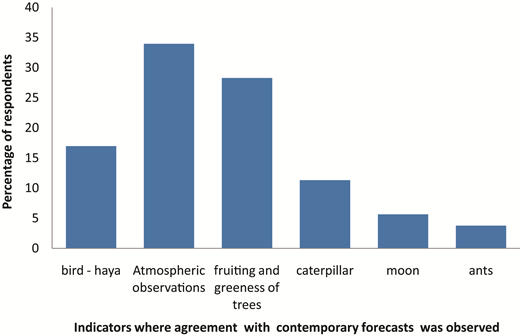
Different indicators and how well they agree with scientific forecasts as observed by farmers
Different indicators and how well they agree with scientific forecasts as observed by farmers
3.3 Dissemination and coping strategies
Apart from observing and analysing the predictors, smallholder farmers developed decision support systems based on their experiences and predictions. Farmers indicated information that was shared during farmer meetings, funerals and other meetings such as called for by the headman as well as neighbour to neighbour interactions. During such meetings, farmers shared and analysed their observations and exchanged knowledge on actions to take based on experience gained in previous years. Whenever a poor season was predicted, the communities would harvest and store abundant wild fruits. One respondent said “kuwanda kwemichero kunorevanzara saka taitogara tapfimbika michero kuti tigodya kana nzara yoruma” (The abundance of many wild fruits indicated a poor season so we would harvest and store the fruit to consume during hunger periods). Some wild grains produced by grass normally found in swampy areas were also collected for late use during hunger periods. In recent years, the farmers indicated diversifying crops to include short season maize varieties and small grains whenever they predicted a poor rainfall season.
Understanding existing adaptation strategies utilized at household and community level is important especially when introducing new options. Farmers in the district were aware of the changes in their environment and are aware of their vulnerabilities to climate change but had not really quantified the changes in relation to production loses. They indicated that total crop failures are now possible, unlike in the past when they were able to get some harvest no matter how bad the season was. From the year 2000, the farmers indicated an increase in low yields associated with highly variable and lower rainfall amounts. Hence, they now view farming as gambling. Although they failed to explain or even account for every change, the farmers indicated they have made efforts to align their farming systems to the changes observed each season. To account for the unpredictability of rainfall in the season, as observed in mixed signals of IKS, farmers’ strategies now aim at minimizing risk, although this often means settling for low inputs and low, albeit stable yields. One possible strategy is to sow several varieties of a single crop at the onset of the rainy season. The varieties differ in their length of the growing cycle and their potential yield. It is expected that at least one variety will give good yields regardless of the rainfall season quality. Other strategies include appropriate crop, variety and sowing date selection and staggered planting. Whenever a bad rainfall season was anticipated, the farmers preferred to grow short-season maize varieties and small grains, like sorghum. In drought years, livelihood systems shifted to focus more on market gardening, casual labour and gathering wild fruits and grain. Where water is available market gardens should be promoted to improve household food availability. When good rainfall season was expected, the farmers grew mostly long-season maize varieties in larger areas.
4. Conclusion
Farmers’ ability to cope with the changing climate is being outpaced by the rate at which climate change is taking place (Mulkern, 2013). Seasonal climate forecasts can be used as an adaptation strategy to climate change and variability. From the findings, both scientific- and IKS-based forecasts have their strengths and weaknesses. However, engaging in culturally appropriate adaptation strategies calls for an understanding of IKS (Winarto and Stigter, 2015). Although farmers may want to adopt scientific forecasts and other science-based agrometeorological products, the format in which the forecasts are most often presented makes it difficult for farmers to actively seek for climate knowledge and to use it for planning agricultural activities. This makes the approaches developed in Indonesia the more worth mentioning (Stigter et al., 2015). To many farmers, the prominence and the credibility of the forecasts do not lie in the statistical significance of the outputs but on whether the information is packaged in an action-oriented format while being reliable to a greater extent. Farmers struggle to understand the language used in the forecasts and prefer methods that tie closely with the environment in which they live. The scientific forecast, much like IKSs, do not give information on the onset, distribution and cessation of rains, which are significant aspects influencing farm activities. The observations present a unique opportunity for a mechanism of integrating scientific- and IKS-based forecasts where possible, for example (Zuma-Netshiukhwi et al., 2013), making efforts not to overlook the derived benefits of forecasts that are given in the right format (as demontrated in the studies by Stigter et al., 2015a, 2013).
Some of the IKS identified in this study, especially those related to atmospheric phenomena, agree with sources of knowledge that meteorologists use. Local forecasts converge with scientific ones in some aspects of content and method, but also diverge in terms of practical significance and meanings. The significant overlaps in the two methods in Africa make indigenous empirical observations such as collected in Tables II-IV potentially useful to climate scientists in tracking changes (Orlove et al., 2010). The observations present a unique opportunity for a mechanism of integrating scientific- and IKS-based forecasts where possible and to influence climate change response strategies and policy formulation.
Global circulation models and ENSO assessment models are used to generate scientific forecasts. The models are global in nature; however, IKS is local and therefore there is a possibility of improving the accuracy of science-based forecasts using IKS observations. IKS can positively influence the process of generating forecasts. IKS should not be viewed as primitive but as possibly complimenting scientific efforts in providing sustainable solutions to adapting to more extreme weather conditions, increasingly variable climate and global warming as representing the consequences of climate change (as highlighted in the studies by Stigter and Ofori, 2014a, 2014b, 2014c). The areas of agreement identified by the farmers call for methods to be established to investigate the strength of IKSs for local weather and seasonal forecasting before this knowledge gets lost and it can no longer be adapted to climate change. Although the combination may provide more valuable information than when used in isolation, the derived benefits of forecasts given in the correct format should not be ignored. Most importantly, incorporating indigenous knowledge into climate change concerns should not be done at the expense of modern/scientific knowledge (Nyong et al., 2007).

