There has been a growing criticism of the degree to which sports events are sustainable today and their ability to promote the sustainable development goals (SDGs). This study aimed to explore Greek running event organizers' attitudes towards sustainable management of their events, including the dimensions of environmental, social and economic sustainability, while examining at the same time the challenges that they face in adopting the SDGs.
Thirty-one interviews were conducted with organizers of running events in Greece. Thematic analysis was employed to identify, analyse systematically and report patterns within the data, based on the three dimensions of sustainability.
The analysis of the interviews showed that the Greek event organizers were aware of the importance of sustainable practices; they tried to develop strategies to limit the negative impacts of the events and maximize the positive ones; however, in most cases, their events were not used as a tool for promoting and provoking sustainable development. This is due to the lack of an integrated strategy at the regional and national levels, and a lack of technical knowledge.
This study was based on a qualitative design. A snowball sampling method was used, which obviously gives a non-probability sample. Another limitation of the study relates to merging all the different types of running events. Results were not produced separately for city and mountain running events. It will be interesting to conduct more focused studies in the future, considering the specific nature of some of the mountain running events.
Well-designed and effectively managed running events can make substantial contributions to several SDGs, while reducing their potential negative impacts. The findings of this study highlight several practical implications and demonstrate the need for tailored strategies, depending also on the type of event. An important requirement for sustainable event delivery is the development of comprehensive sustainability plans during the bidding and early design phases.
The results showed the positive influence of running events on individual well-being, which is a prerequisite of social well-being. Sport events can contribute to SD3, as they can be associated with physical, psychological and social benefits.
While it has been argued that sport events, if organized properly, can promote several of the SDGs, there is limited empirical research around running events. This study contributes to the literature by exploring whether running event organizers have adopted sustainable management practices in their events, under the three pillars of economic, environmental and social sustainability for promoting and delivering sustainable development, as it has been proposed as an ideal model.
Introduction
The global sports tourism industry is currently estimated to be worth 803.9 billion dollars, with a continued growth trend (Grand View Research, 2026). This accounts for approximately 10% of total global trips and 25% of tourism revenue. The United Nations (UN) classifies this form of tourism as the fastest-growing sector in recent years (Coherent Market Insights, 2024). Forecasts suggest that by 2030, this market could reach approximately $ 1.8 trillion, growing at a compound annual growth rate of 16.1% from 2021 to 2030 (Travel and Tour World, 2024). Sport events constitute an integral part of national and regional tourism development strategy in many countries today, including Greece (Alexandris et al., 2017; Koutrou and Kohe, 2025). However, if sport events are not planned and executed properly, they can have significant negative outcomes on the environment, on local communities and on residents' quality of life (Cavallin Toscani et al., 2024). In response to the above negative outcomes, there has been increasing pressure to make these events more sustainable (Collins and Cooper, 2017; Mair and Smith, 2021, 2022).
The introduction of the sustainable development goals (SDGs) in the 2030 Agenda for Sustainable Development (United Nations, 2024) has been a major action towards guiding sport events to adopt at least some of these goals. Building on the decisions of the 2021 COP climate summit in Glasgow, nearly 300 international and national sport organizations have signed up to the UN Framework for Climate Action in Sport (United Nations Framework Convention on Climate Change (UNFCCC, n.d.). This obviously represents a strategic change in sport organizations' policies with political, social and economic implications. The World Athletics Association, as one of the signatories to the UN Framework for Climate Action in Sport, has become the first organization with a 10-year sustainability strategy (World Athletics, 2021).
Several studies have been critical of the degree to which sports events are sustainable today and their ability to promote the SDGs. Cavallin Toscani et al. (2024) argued that, although sport events have been changing rapidly recently, aiming to address sustainability issues, there is still a lot to do to adhere to the SDGs. In a recent study specifically conducted in running events, Delińska (2024) concluded that, while several strategies have been developed in integrating sustainable practices into urban marathons, considerable challenges remain. The current state of academic knowledge regarding sustainability in sport events is still limited, and more international research is required, as Cavallin Toscani et al. (2024) noted. In a special issue of the Journal of Sustainable Tourism, Mair and Smith (2021) argued that academic research in the areas of event sustainability still has a narrow focus, and researchers need to go beyond merely making events more sustainable to consider how events might contribute to the wider sustainability agenda. Furthermore, the same authors pointed out that most academic research has focused on the environmental aspect of sustainability, while there is still limited research and understanding of the social dimension. Mair and Smith (2021) also proposed that it is not enough “to run sustainable events, rather, we should focus on how events can contribute to the sustainable economic, social and environmental development of the places which host them” (p. 2).
Considering the growing impact of running events on tourism development (Alexandris et al., 2023; Helsen and Scheerder, 2020), the necessity for event organizers to adopt the SDGs (Rasoolimanesh et al., 2020), but on the other hand, the limited promotion of sustainable practices in several running events (Delińska, 2024), as it has been shown in the limited academic research in this area (Mair and Smith, 2021), this study aimed to explore Greek running event organizers' attitudes towards sustainability and the challenges that they face towards sustainable management. This study contributes to the literature first from a contextual perspective. Running events in Greece have expanded considerably over the past 30 years, both in number and in scale, and they have contributed positively to the development of the domestic tourism industry (Gkarane et al., 2025). This growth reflects broader international trends in which mass-participation running events stimulate destination visibility, enhance local economies and attract sport tourists (Higham, 1999; Shipway and Jones, 2007). Moreover, research on sport tourism in Greece has shown that endurance events, particularly road races, can strengthen regional tourism profiles and extend the tourist season (Karadakis et al., 2010; Kouthouris and Alexandris, 2005).
Most of the running events in Greece are small-scale events, which, however, can have a notable social and economic impact on local communities; They can be defined as outdoor, locally organized running events of limited size – often trail or mountain races – that generate localized economic, social and environmental impacts and rely heavily on community participation and regional identity (Tzetzis et al., 2014). However, there are two major internationally renowned ones: the Athens Authentic Marathon, with more than 50,000 participants and an estimated direct economic impact of 15 million euros, and the Alexander the Great Marathon, with more than 20,000 participants and an estimated direct economic impact of 2.5 million euros (Karagiorgos et al., 2023). However, there is some evidence that running events are still not part of a national tourism strategy and are not fully aligned with sustainable practices (Gkarane et al., 2025). From a theoretical standpoint, this study contributes to the literature by examining the extent to which running event organizers have adopted the SDGs and employ them as instruments for promoting and delivering sustainable development – an approach that has been proposed as an ideal model for event management (Mair and Smith, 2021). As Mair and Smith (2021) argue, “rather than merely trying to understand how best to limit negative impacts, there is a need for research on the potential of events as tools for promoting, provoking and delivering sustainable development” (p. 1741). Previous studies have been sceptical about the degree to which sport events fully promote the SDGs. The results of the study are part of the DEPART Project, which is financed by the Interreg Europe program, and it includes the exchange of good practices in five European countries.
Theoretical background
This study is based on the sustainability multidimensional framework rooted in the World Commission on Environment and Development (1987) and consolidated through the United Nations’ 2030 Agenda (United Nations, 2015). At its core, sustainability requires the integration of economic viability, environmental protection and social well-being, a tripartite model widely adopted in sport management and sport tourism research (Hinch and Higham, 2011; Mallen and Adams, 2017; Trendafilova and Babiak, 2013). This framework positions sustainability as a practical guideline for how events – such as running races – should be designed, implemented and evaluated. However, the sustainability discourse is not without critique. Scholars argue that the concept often becomes vague and is limited applicable in practice (Fletcher and Rammelt, 2017; Purvis et al., 2019; Redclift, 2005).
For instance, a municipality hosting a running event may publicly commit to sustainability principles yet remain dependent on single-use materials and conventional energy sources. Such practices are not necessarily the result of negligence but might reflect limited budgets, inadequate infrastructure, diverse stakeholder expectations and the absence of institutionalized sustainability guidelines. All these might restrict the extent to which organizers can translate sustainability theory into operational reality.
Within this broader sustainability framework, sport event studies provide an essential sector-specific foundation. It is well accepted today that sport tourism includes active participation and passive spectating, where running events – such as marathons, half-marathons and city-based races – represent significant forms of active sport tourism that attract participants and spectators who travel expressly for sport-related engagement (Gibson, 1998; Hinch and Higham, 2011). As planned, they themed and time-bound activities (Mair and Smith, 2021), running events combine leisure and competition, community life and influence local economies. Their impacts extend across all three pillars of sustainability: generating economic activity, shaping social cohesion and producing environmental footprints.
Economic sustainability
The economic dimension of running events includes both measurable “hard” impacts, such as visitor spending, job creation and infrastructure investment (Chalip, 2014; Duglio and Beltramo, 2017; Tomino et al., 2020), and “soft” or intangible benefits, including destination image enhancement and media exposure (Chalip et al., 2003; Hallmann and Breuer, 2010; Ntovoli et al., 2024). In order to achieve economic sustainability, appropriate planning, community involvement and equitable benefit distribution are required (Tomino et al., 2020). These factors correspond directly to SDG1, which emphasizes poverty reduction through employment and local economic development.
Social sustainability
The social dimension of sustainability extends from community well-being to social cohesion. Running events can promote health and physical activity (SDG3), strengthen community identity (Ritchie et al., 2009), support gender equality through inclusive participation (SDG5) and foster accessible and inclusive urban environments (SDG11). At the same time, if not properly designed and executed, they may produce negative effects – congestion, noise or exclusion from planning (Chien et al., 2012). Scholars note that social sustainability in events remains conceptually not well defined (Mair and Smith, 2022), underscoring the importance of understanding how organizers negotiate competing social expectations.
Environmental sustainability
While some events contribute to site enhancement or environmental regeneration (Deccio and Baloglu, 2002), many are associated with waste, emissions and ecological disturbance (Kim and Walker, 2012; Meurer and Lins, 2017). Environmental frameworks emphasize responsible resource use (SDG12), climate action (SDG13) and ecosystem protection (SDGs 14 and 15). Running events may support these goals by raising environmental awareness, implementing sustainable operations or encouraging behaviour change, yet they also risk producing adverse impacts if not properly managed.
The sustainable development goals (SDGs)
Bringing these elements together, the SDGs function as a cross-cutting policy structure linking sport tourism, sustainability and event management. As previously noted, running events can contribute to multiple SDGs, including SDG1 (employment and poverty reduction), SDG3 (health and well-being), SDG5 (gender equality), SDG11 (sustainable cities and communities), SDGs 12–15 (responsible consumption, climate action, ecosystem protection) and SDGs 16–17 (peace, partnerships, social cohesion). The SDGs, therefore, can operate as a framework that can shape how event organizers conceptualize sustainability and justify their strategic choices. Summarizing, running events can be analysed within multidimensional socio-economic practices embedded within local communities and global sustainability agendas. This integrated perspective enables a comprehensive understanding of how running event organizers try to keep a balance between sustainability ideals, community expectations and operational realities.
Event stakeholders as key actors in sustainable event delivery
Event organizers play an important role in implementing sustainability within event planning and management. Their attitudes, knowledge, perceived responsibilities, resource capacities and engagement with stakeholders significantly shape how effectively sustainability principles are applied in practice (Chutiphongdech et al., 2025). Research increasingly emphasizes the need for event organizers to integrate environmental, social and governance considerations into their operational frameworks, positioning them as central actors in sustainable event delivery (Chutiphongdech et al., 2025).
This perspective aligns with stakeholder theory (Freeman, 1984), according to which organizations – and by extension event organizers – must consider the interests, needs and influence of all groups who can affect or are affected by their actions, such as local communities, local authorities, sponsors, local businesses and Destination Management Organisations (DMOs). It has been proposed that effective sustainability implementation depends on strong stakeholder relationships, clarity of roles and shared accountability across all event actors (Getz and Van Niekerk, 2019).
The context of the study: running events
Global participation in running events globally peaked in 2016 with a total of 9.1 million runners, and then it slightly decreased to 7.9 million (a decline of 13%) in 2018 (RunRepeat, 2019). However, the actual change in participation in the last 10 years shows an increase in the proportion of participation of 57.8% (from 5 to 7.9 million participants). In 5 K races (fun races), 10K races and half marathons, there were 2.9 million, 1.8 million and 2.1 million participants in 2018, respectively (RunRepeat, 2019). Most participants engage in what is called “recreational distances” (i.e. 5K, 10K, half-marathon) events (Alexandris et al., 2019, 2021; Karagiorgos et al., 2023). The accessibility and inclusive nature of running events have a strong social appeal and attract individuals of different ages, religions and social groups (Karagiorgos et al., 2022, 2023).
In the context of Greece, the growing number and scale of running events over the past thirty years have contributed to increased domestic and international sport-motivated travel, reinforcing their role as catalysts for local, regional and national tourism development and destination promotion (Kaplanidou and Karadakis, 2010; Shipway and Jones, 2007). Consequently, running events can be understood as a dynamic form of sport tourism that enhances regional visibility, stimulates local economies and extends the tourist season (Gkarane et al., 2025). Following the above discussion, the objectives of this study were set as follows:
To explore organizers' attitudes, perceptions and levels of engagement with sustainability principles.
To identify the practical, structural and contextual challenges they encounter in implementing sustainable practices.
To propose a set of context-appropriate good practices that can support the sustainable development of running events in Greece.
Materials and methods
Research epistemological approach
The current study is grounded in a constructivist paradigm, which assumes that social reality is multiple and context-dependent and that meanings are co-constructed through interaction between researchers and participants. This orientation is well-suited to the goal of exploring how Greek running-event organizers understand and enact sustainability within their specific contexts. Semi-structured interviews were positioned as knowledge-producing conversations rather than neutral extractions of facts, and analysis has been necessarily interpretive (Creswell and Poth, 2018; Kvale and Brinkmann, 2015; Lincoln and Guba, 1985). Therefore, reflexive thematic analysis was employed to develop patterns of meaning, attending to both participants' accounts and the researchers' interpretive work (Braun and Clarke, 2006; Clarke and Braun, 2013) while building a solid ground for research rigour (Sveinson and Wagner, 2024).
Study design
A qualitative research method was employed, which is particularly effective for exploring complex, context-specific phenomena (Creswell and Poth, 2018). Data were gathered with semi-structured interviews. The sample consisted of thirty-one (31) interviewees. These interviewees were considered key informants and were purposely selected based on their experience and position in the running sector, using a snowball sampling technique. The first six participants were identified through the research team's professional networks. These individuals were contacted via email and invited to participate in the study. Following each interview, each participant was asked to recommend two more organizers with relevant experience. This process was implemented in three rounds, thereby initiating the snowball sampling process. Key informants are individuals who, because of their knowledge, are in a good position to comment on the topics of the study. For interviewees to satisfy the definition of being a key informant, they had to be in an administrative position in running associations for more than 5 years (criterion 1), had been involved in the organization of at least five running events (criterion 2) in the last five years (criterion 3). Criterion 1 targeted experience-based judgment rather than role title alone; the Dreyfus (2004) skill-acquisition framework indicates that capabilities associated with competence/proficiency typically emerge over multiple years of situated practice, strengthening participants' ability to speak to tacit, context-sensitive decision-making around sustainability. Second, criterion 2 ensured exposure to multiple event cycles, venues and contingencies, which improves pattern recognition and reduces idiosyncratic accounts that can occur after one or two events; such purposeful diversification of informant experience is recommended in qualitative management and evaluation methods (Patton, 2014). Third, criterion 3 restricted the recall horizon to five years to balance regency with adequate cycles; recall accuracy generally deteriorates as intervals lengthen (Bell et al., 2019), so capping the window mitigates recall bias while still allowing sufficient experiential breadth.
This sample of the study did not have the objective of being representative of the whole sector or the country, as is the case in qualitative research, where statistical generalizability is not the main objective; instead, the focus is on obtaining rich, in-depth insights from participants. The non-representative sample is, however, a limitation of the study. In terms of the sample size, it has to be noted that qualitative research is usually determined by the point of saturation, which occurs when additional interviews no longer yield new meaningful information or insights (Hennink et al., 2017; Lincoln and Guba, 1985; Strauss and Corbin, 1990). Although saturation occurred after approximately 20 interviews, a further eleven interviews were conducted to provide a safety margin, as has been proposed by Yanamandram and White (2006), and to decrease the chance of new information being missed. The size of 31 respondents is within the acceptable range of respondents in a qualitative research project (Yanamandram and White, 2006), and it was determined through using qualitative principles of saturation. Classic evidence shows that thematic saturation can occur within 12 interviews in relatively homogeneous studies (Guest et al., 2006), whereas code saturation emerges after 9 interviews and meaning saturation after 16–24 (Hennink et al., 2017). To ensure variation across event types and governance arrangements, the lower bounds were intentionally exceeded and 31 organizers were interviewed.
In terms of demographics, 17 interviewees were males and 14 were females. The age range was 36–57 years old, with an average of 46 years. All of them were university graduates, and 12 of them also had postgraduate degrees in business-related fields. In terms of their position in the organization, 22 interviewees were involved with the operations of the events, 5 were marketing/promotion officers and 4 were chairs of the association (Table 1). All the running associations were non-profit ones; this is a common pattern in Greece. The final sample consisted of 14 different running sport events (i.e. city marathons, urban running events and outdoor running events), ranging from small-scale local events (approximately 100–300 participants) to large-scale events (i.e. over 10,000 participants). Including running events of different types and sizes enabled the study to capture a broad range of perspectives in relation to the research objectives.
Interviewees participated voluntarily, with informed consent obtained via written forms detailing the study's purpose, procedures and rights (Saunders et al., 2016). The data collection started in March 2025 and finished in April 2025. This study adhered to the ethical research practices of the leading institution. The interviews ranged in length between 20 and 30 min. They were conducted online in the Greek language by the three senior researchers of the project. The three researchers were trained in qualitative research. Every effort was made to avoid personal positioning and bias during the interview process, following the principles of collecting qualitative data (Saunders et al., 2016). The interviews were recorded and subsequently transcribed. This method allowed for the flexibility to probe deeper into key themes while maintaining consistency across interviews (Kvale and Brinkmann, 2015). The transcripts were translated by a professional English literature teacher, and a back translation technique was used to ensure that we did not miss any important information (Saunders et al., 2016).
Based on the research questions of the study, a set of core questions and several probes were developed ( Appendix). The interviews started with socio-demographic and background information of the participants, as reported above. The core questions used in the interview guide (in relation to the main topics) were the following: Sustainability awareness and attitudes, Running events and sustainability, Impacts. Challenges and Suggestions.
Interview analysis
Thematic analysis was employed to identify, analyse systematically and report patterns within data (Braun and Clarke, 2006). This approach is well-suited to exploratory research, allowing for inductive coding grounded in participant perspectives. The six-step framework (Clarke and Braun, 2013) guided the analytic process: data familiarization, initial coding, theme identification, theme review, definition/naming of themes and report writing. Thematic categories aligned with the three core dimensions of sustainability – environmental, economic and social – reflecting the UN SDGs framework and literature in sport event studies (Alexandris et al., 2021; Karagiorgos et al., 2023; Mair and Smith, 2022; Morfoulaki et al., 2023). Our study followed a reflexive thematic analysis approach in which coding is an interpretive, iterative act rather than a mechanical procedure (Braun and Clarke, 2006; Clarke and Braun, 2013). To enhance confirmability, two members of the team independently familiarized themselves with the full data set, generated initial codes and then engaged in structured code-review meetings to compare interpretations, reconcile differences and agree on the evolving codebook. Throughout the analysis, we maintained an audit trail comprising analytic memos, a versioned codebook and a decision log documenting merges/splits and category naming. A third team member acted as a critical friend, interrogating theme boundaries and negative cases. These procedures, alongside transparent reporting of our final coding structure (Table 2), support the credibility, dependability and confirmability of our findings (Lincoln and Guba, 1985).
Results
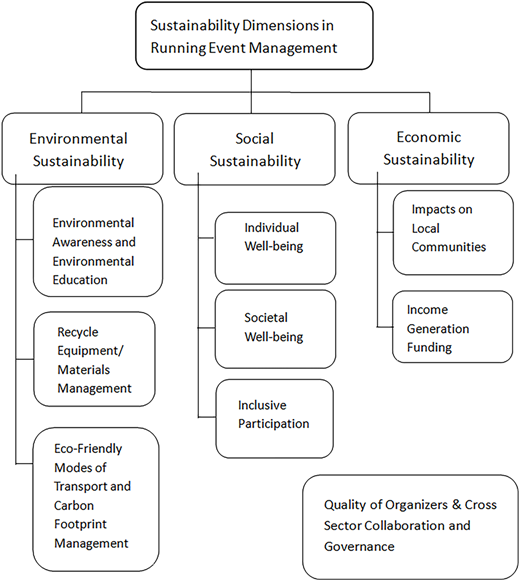
The presentation of the results is based on the three main pillars of sustainability as discussed in the theoretical background: economic, environmental and social.
Theme One: Economic Sustainability, defined as “organizing events in a way that covers costs, uses resources effectively, and generates positive direct and indirect economic impacts for the event itself and the local community”. The following sub-themes were revealed:
Sub-theme one: impacts on local communities
The issue of economic sustainability has two dimensions. On the one hand, most of the interviewees discussed the positive economic impacts on local communities. As Stella said:
Our events promote local economic growth by creating jobs and supporting small businesses.
However, none of the interviewees were able to evaluate the exact direct economic impact of their events on local communities. This is because of the lack of research on event evaluation. As Nikos said:
Research is required to measure the economic impact of our events. We currently do not have data to know exactly the direct economic impact of our events on local communities.
Event organizers do not have the technical knowledge and research experience to collect primary data to provide measurable outcomes. This is an important area as it relates to the evaluation of running events and the arguments being used to bid for such events. Furthermore, it is worth noting that none of the interviewees referred to the role of their events in building the image of the destination in which they take place. This shows a lack of a strategic integration of their events within the local or regional destination-building strategy, considering also that DMOs have been recently established in Greece, with the role to develop and manage destinations' branding.
Sub-theme two: income generation/funding
On the other hand, the event organizers raised the issue of the financial sustainability of their events. The main sources of income are participants' fees (when the events are not free), sponsors, and, in very limited cases, funding from local and central government. Most stakeholders proposed that the government should financially support such events:
Greater funding from the government is required. (Alex)
Financial grants should be offered to event organizers. (Elena)
While this seems like a fair suggestion, considering the large number of running events that take place every year, it is very difficult for the government to set specific criteria to decide which events should be financially supported.
Theme Two: Social Sustainability: Defined as “planning and delivering in a way that supports individual and societal well-being, ensuring inclusivity and respecting local values and culture”. The following sub-categories were revealed:
Sub-theme one: individual and social well-being
It seems that this was the most difficult topic for the interviewees. The definition of social sustainability was not clear to them, and their understanding of its dimensions. Some of the interviewees linked it specifically to the adoption of a healthy, active lifestyle, adding that running events contribute to this direction. As Kostas said:
Those who participate in running events live healthier and have better health.
Research has shown that running events help towards the development of positive attitudes towards a more active lifestyle and towards adopting healthier behaviour (Ntovoli et al., 2025). It has been found that individuals who aim to take part in running events get trained for several weeks before the event and adopt a healthier lifestyle in terms of their diet.
Some interviewees also linked running events with individual well-being. As Kostas said:
Runners have better psychological health as running helps them to be more positive in their lives.
This is also in line with previous research in which it was found that outdoor running events and especially those that take place in the environment create opportunities for individuals to develop higher subjective well-being levels (Theodorou et al., 2024; Wolf and Wohlfart, 2014). It is well accepted today that a running event and the side events could stimulate healthy behaviours of participants, visitors and the local community, amongst others, by making “the healthy choice, the easy choice” (e.g. Convenant Gezonde Sportevenementen (Slot Heijs et al., 2020).
As previously noted, social sustainability also relates to citizens' quality of life, social coherence and societal well-being, which is a prerequisite of healthy societies today. Mair and Smith (2021) pointed out that most academic research has been focused on the environmental aspect of sustainability, while there is still limited research and understanding of the social dimension. The inclusion of local communities in the organization and operation of running events is an important topic. This was raised by a few interviewees. For example, Thomas said:
We must convince local communities that our events could build the image of their places.
Local communities must be respected and be part of the whole organization plan.
However, we would expect that more interviewees would have made this link, since local community involvement is an important prerequisite of social sustainability today and an important success factor (Oyebanji et al., 2017).
Sub-theme two: inclusive participation
Social sustainability depends on broad access and community inclusion. Many organizers acknowledged that current participation largely reflects already-active individuals, while underrepresented groups, such as elderly people or those with disabilities, are often excluded.
Our events are mostly attended by people already into fitness. We should invite more schools, elderly people, and even people with disabilities. (Giota)
The goal should be to make everyone feel welcome at our events—regardless of age, ability, or background. (Tim)
A socially sustainable event is one where the whole town feels it belongs, not just the runners. (Thanos)
Inclusivity is a central pillar of social sustainability, promoting equity, diversity and community cohesion (Misener and Mason, 2006). Inclusive sport events foster broader social engagement and contribute to a sense of belonging across demographic boundaries (Spaaij, 2012).
Theme Three: Environmental sustainability, defined as: “organizing events in a way that reduces environmental impact, by minimizing waste, conserving resources, and limiting pollution, so the natural environment is protected”. The following sub-categories were revealed:
Sub-theme one: environmental awareness and environmental education
There was generally a good knowledge of the definition of sustainable management of sport and its principles. As Nikos defined:
Sustainability in the sports environment refers to the management and operation of sports facilities, activities, and events in a manner that promotes environmental stewardship, social well-being, and economic efficiency, ensuring their long-term viability.
This is an encouraging finding, since it shows that the level of education and professionalism of running event organizers is good. It should also be noted that all the interviewees were positive towards developing sustainable sport events, as a prerequisite for quality event management. It should, however, be noted that most of them link sustainability with the environmental aspect:
The actions must be related to the protection of the environment and the places where our running events take place. (Nikos)
As Kostas emphasized, organizers need to respect the environment and not exhaust natural resources:
When planning for our running events, it is important to conserve natural resources. We must respect the environment.
However, there was also criticism that theory and practice might be different. A few interviewees admitted that while running events are promoted as sustainable, in practice, little is done to adhere to the principles of environmental sustainability. This might be due to a lack of understanding of its principles, but also to a lack of true commitment on the part of the organizing bodies. As Thanos said:
There is still a lack of true understanding about the different dimensions of sustainability among several event organizers. In Greece's natural treasures are not being fully utilized, and many times are often not respected.
The issue of environmental education was a significant one raised by interviewees. The public is still not well educated about the importance of participating in events that respect the environment and preserve it, regardless of whether it is in an urban or a mountain location. As Dimitra said:
The public is still not ready to accept all environmentally friendly actions. We must educate participants, spectators, and the local community to actively engage in sustainability efforts.
Educating the public should be one of the goals of running events. This applies to both the participants and visitors, spectators and associated people. Side activities, such as workshops, games for children and green sponsorship initiatives, can help in this direction. Bill, for example, said that:
Running marathons should be branded as ‘green ones' to communicate the importance of respecting the environment.
Sub-theme two: recycle equipment/clothing and waste management
Some of the interviewees had good knowledge about good sustainable practices, and they said that they started implementing them in their events. Several good practices were proposed by interviewees:
At the feeding stations, the use of recyclable materials and methods of hydration for athletes is recommended and Promoting the use of equipment (e.g. clothing and footwear) made from recyclable materials. (Maria)
Promoting composting, recycling, and sustainable modes of transport. (Bill)
It is encouraging that interviewees pointed out the need to use recycling equipment, promote organic products, and, of course, adopt a zero-waste strategy. Energy consumption is an issue; however, it was not strongly raised by interviewees. Hover et al. (2020), in their event management plan, proposed that the organizers should use energy-saving equipment to protect the environment, such as solar lamps, low-flow showerheads, etc.
Sub-theme three: eco-friendly modes of transportation and carbon footprint management
A well-noted issue that was raised by a few interviews relates to the accessibility of the running places and the use of travel methods. Little has been done so far in running events in Greece to promote eco-friendly modes of transportation. As Aris and Helena respectively said:
Promoting sustainable modes of transport.
We must promote eco-friendly travel methods for event attendees. This is difficult in both the cases of urban and mountain running events.
Hover et al. (2020) proposed that the use of public transportation should be promoted when choosing the destination of a running event. Furthermore, the event should be easily accessible on foot or by cycling. This is a challenging issue, since we refer to urban events and, in several cases, it is not easy for organizers to provide safe walking and cycling routes within the cities (European Healthy Stadia Network, 2014).
Although participants demonstrated awareness of environmental sustainability, few organizers had implemented strategies to measure carbon emissions. This sub-theme reflects a critical gap in current practices: the need to account for and reduce carbon footprints generated by travel, energy use and material waste.
We rarely consider the emissions caused by transport, electricity, and plastic waste. We need to calculate our footprint. (Nikos)
Even if we use green materials, if 2,000 people drive alone to the venue, it defeats the purpose and Offsetting emissions is not on our checklist, but it should be part of the planning from the start. (Maria)
Carbon footprint awareness in sport events is critical to fulfilling SDG 13 (Climate Action). Despite existing discussions on recycling and transportation, few interviewees mentioned systematic approaches to measuring greenhouse gas emissions or implementing evidence-based mitigation strategies. Rather than relying on carbon offsetting schemes, which remain contested within the sustainability literature, researchers increasingly emphasize the importance of reducing emissions at the source through informed management practices. Calculating the carbon footprint of sport events provides an important evidence base for identifying emission hotspots and guiding targeted mitigation measures (Collins et al., 2009).
Sub theme four: “quality of the organizers and Cross-Sector Collaboration and Governance
One more theme was revealed, named “Quality of the Organizers and Cross-Sector Collaboration and Governance”, and defined as “the technical knowledge to design and apply sustainability practices and measurable outcomes and coordinating public, private, and community stakeholders through clear decision-making structures to share responsibilities and improve efficiency.”
Interviewees raised the issue of technical knowledge on sustainability. They talked about the lack of specialized executives in sustainability to consult with them. This is a well-noted topic as it shows a new “profession” that should be developed in the future.
Experts in sports tourism with sustainability knowledge should contribute more significantly and Keeping event organizers updated on the latest sustainability standards is required in order to develop effective strategies. (Alexander)
Adoption of good practices from more advanced countries in sustainable sports events is required. (Christos)
In the case of city running events, Mairi also raised the issue of cooperation with the local government in terms of designing green events:
Government officials with deep knowledge of their city should participate in the planning of our events in order to co-develop sustainable strategies for the cities.
The interviewees also emphasized the credibility and knowledge of the organizing body of sport events:
Success depends on who plans and manages the event.
Event outcomes are determined by the quality of organization.
Running events in Greece are organized by non-profit sport associations, local authorities and in some cases, private corporations. In all cases, the local authorities should grant permission to organize a running event, in cooperation with other bodies such as the Forest authority (in the case of mountain events) and the Greek Athletic Federation (in some cases). Girginov (2023) emphasized that the answer to the question of who creates the visions in running events is important to answer. This question is directly related to how promises of impact are delivered and at what cost. It is also directly related to sport and tourism policy and planning.
Several stakeholders emphasized that fragmented governance limits progress. This sub-theme highlights the need for integrated planning among public, private and community sectors to achieve sustainability goals.
We need more structured cooperation — tourism boards, environment agencies, sponsors, schools — all should be involved.
Local governments often give permission, but they’re not actively engaged in making the event better.
We lack a shared platform. Each event organizer works alone when there could be joint strategies.
Effective sustainability in sport events depends on collaborative governance involving public, private and civil sectors (Girginov, 2018; Parent and Deephouse, 2007). Cross-sector partnerships enhance innovation, accountability and resource pooling. This approach aligns with sport event legacy planning and ensures sustainable implementation across economic, environmental and social domains. Strong institutional frameworks support SDG 17 (Partnerships for the Goals). A brief of the results is presented in Table 2 and Figure 1.
Discussion
Environmental sustainability
The interviews revealed a relatively high level of awareness among Greek running event organizers regarding the need to limit the negative environmental impacts of their events. This finding aligns with concerns raised in previous research showing that running events can create substantial environmental pressures if not properly planned and delivered (Cavallin Toscani et al., 2024). Many organizers reported concrete actions aimed at waste reduction, responsible resource use and environmentally sensitive event design. Although participants emphasized that close cooperation with local authorities is essential for implementing sustainable practices effectively, they also acknowledged that such collaboration is currently limited and often restricted to administrative procedures rather than strategic sustainability planning.
Additionally, several interviewees recognized that the post-COVID period has accelerated changes in event design, with organizers increasingly prioritizing environmental sustainability. This observation supports Cavallin Toscani et al.’s (2024) argument that the sport event sector has been undergoing rapid adaptation to meet contemporary sustainability standards. However, despite this progress, organizers acknowledged a lack of technical expertise to quantify environmental impacts using primary data, agreeing with Rasoolimanesh et al.’s (2020) call for the development of clear indicators and metrics. This gap limits their ability to systematically measure and improve environmental outcomes.
Another important finding concerns the limited adoption of systematic carbon footprint measurement. Although organizers demonstrated environmental awareness, they rarely monitored emissions or implemented evidence-based mitigation strategies. This supports Collins et al. (2009), who argue that carbon accounting is a prerequisite for effective environmental management in sport events. The findings suggest that organizers continue to prioritize visible environmental actions, such as recycling, over systematic environmental performance assessment.
Economic sustainability
Economic sustainability emerged as both a priority and a significant challenge for the organizers. Interviewers consistently highlighted difficulties in securing financial resources, maintaining financial viability and investing in sustainability initiatives that often require additional funding. Reliance on sponsorships and government support was seen as necessary, and insufficient funding was frequently cited as a reason why many events fall short of comprehensive sustainability standards. Although all organizers recognized the positive short-term economic impacts of their events on local communities, such as increased spending and visitor flows, only a small number acknowledged longer-term economic benefits in relation to enhanced destination image. This limited strategic vision indicates a broader absence of integrated tourism promotion at regional and national levels. The fact that none of the organizers reported meaningful collaboration with destination management and marketing organizations (DMMOs), which were recently established in Greece as autonomous entities, further demonstrates the lack of alignment between running events and broader destination branding strategies. In the context of sport tourism events, governance structures are often fragmented, making it unclear which actors should assume leadership in translating sustainability and leveraging ambitions into coordinated action. This ambiguity is particularly evident in destination settings where DMMOs have not taken an active role and/or event organizers operate with overlapping but not always aligned mandates. It would be expected that DMMOs possess the strategic capacity and marketing knowledge to integrate events into broader tourism promotion agendas; but this is not always the case in Greece. Determining which actor should lead – or how leadership should be shared – remains a critical challenge.
Innovation, a key driver of economic sustainability, was also notably absent from the organizers' considerations. As Delińska (2024) noted, integrating innovative technologies into running events is essential for enhancing competitiveness and long-term viability. Yet, the interviews revealed minimal engagement with new technologies such as AI-based applications, data-driven marketing tools or virtual reality experiences, despite their growing adoption by major international marathons and leading professional sport leagues. Event organizers' limited engagement with new technologies might reflect structural constraints, such as small teams with restricted budgets, limited technical expertise and heavy operational workloads. These findings are consistent with Getz and Van Niekerk (2019), who argue that sustainable event management requires coordinated governance among multiple stakeholders. Similarly, Chutiphongdech et al. (2025) emphasize that organizers often face institutional and resource constraints that limit the implementation of sustainability initiatives. All these might result in limited capacity to implement innovative approaches. Without institutional support, adequate training and clear guidelines, organizers seem to prioritize essential logistics over strategic or technological enhancements, reinforcing the gap between innovation practices and what is feasible in small-scale event contexts.
Social sustainability
The study revealed that social sustainability remains the least understood dimension among Greek running event organizers. Although organizers frequently mentioned social impacts, they struggled to define or measure them systematically, supporting Mair and Smith's (2021) argument that the social dimension is often under-researched and poorly understood in event studies. Nevertheless, most interviewees acknowledged that running events enhances individual well-being, which contributes indirectly to social well-being. This connection aligns with research showing that running events can build social capital, foster integration and promotes equality (Misener and Mason, 2006; Zhou and Kaplanidou, 2023). Subsequently, running events also contribute to SDG 3 (“ensure healthy lives and promote well-being for all at all ages”) by facilitating mass active participation. Another key barrier to social sustainability was the limited cooperation between event organizers and local/regional authorities, local communities and runners. The lack of stakeholder involvement contradicts the co-creation approach, noted by Karagiorgos et al. (2023), who argue that communities and participants should be considered co-producers (Crawford, 2020), not merely consumers. The interviews suggested that such collaborative frameworks were often ineffective or underdeveloped, limiting the ability of events to generate deeper social value. Potential examples of co-creation, such as sports clubs assisting with event management or providing training programs, remain underutilized.
The findings further revealed that the quality of organizers and cross-sector collaboration constitute critical enabling conditions for sustainable event management. Participants highlighted the lack of specialized sustainability expertise and fragmented collaboration among public authorities, tourism organizations, environmental agencies and local communities. These findings reinforce previous research arguing that sustainable sport event delivery depends not only on individual organizational commitment but also on collaborative governance and stakeholder coordination (Parent and Deephouse, 2007; Girginov, 2018; Getz and Van Niekerk, 2019). From a stakeholder management perspective (Freeman, 1984), sustainability outcomes are strengthened when stakeholders share responsibilities, exchange knowledge and participate in joint decision-making rather than operating independently. The fragmented collaboration identified in this study suggests that stakeholder relationships remain underdeveloped, limiting the collective capacity to achieve sustainability objectives. This finding further supports Getz and Van Niekerk's (2019) argument that effective stakeholder coordination is fundamental to sustainable event management.
Practical implications
Well-designed and effectively managed running events can make substantial contributions to several SDGs, while reducing their potential negative impacts. The findings of this study highlight several practical implications and demonstrate the need for tailored strategies, depending also on the type of event. An important requirement for sustainable event delivery is the development of comprehensive sustainability plans during the bidding and early design phases. These plans should articulate clear sustainability objectives, measurable indicators and operational guidelines. To design such plans and face the lack of specialized executives in sustainability, event organizers should develop partnerships with universities, sustainability consultants and public agencies specializing in sustainable event management. This suggestion is in line with Mazza's (2023) work, which gives emphasis on stakeholder communication and continuous dialogue with public authorities, community groups and local organizations. The inclusion of local communities in the organization and operation of running events is an important topic. This is a prerequisite to feel part of the event (Schulenkorf, 2012). Local culture should be respected and promoted, and events should take the form of local festivals (Stankova and Vassenska, 2015). For example, in urban events, this may include coordination with local authorities, waste management agents and city business associations. Mountain events, on the other hand, typically require collaboration with environmental agencies, protected area managers and local mountain communities, whose knowledge is essential to ensuring ecological protection and trail preservation.
The active engagement of local businesses and community organizations is equally important in all settings. In city events, economic benefits can be maximized by involving urban hospitality providers, restaurants and local caterers, distributing in this way visitors' spending within the local economy. For instance, large city marathons often collaborate with travel agents to develop tourism packages. In mountain or trail running events, organizers can support local development by partnering with village authorities, mountain lodges, local craft producers and regional food suppliers, thereby reinforcing small-scale rural economies and sustaining local livelihoods. This approach aligns with the call for enhancing economic impact through community participation (Rasoolimanesh et al., 2020).
The professionalization of event management is another prerequisite for sustainable delivery. As noted in recent literature on event quality and technological integration, modern management tools are essential for improving coordination and monitoring. As Zong and Zhong (2024) emphasized, the integration of contemporary technologies and quality-focused management approaches is becoming a prerequisite across the running event sector. Environmental responsibility constitutes a core dimension of sustainable event practice. In city events, environmental measures typically include zero-waste stations, reusable equipment, the reduction of plastics and incentives for public transportation, such as discounted metro or bus travel for participants. Mountain events, on the other hand, must prioritize trail protection, erosion control and low-impact aid station design in order to reduce the pressure on fragile natural ecosystems. Thus, event organizers are encouraged to adopt carbon accounting tools and explore carbon offset programs (Nautiyal and Klinsky, 2022).
Finally, the financing of events, particularly through sponsorship programs, requires a more professional and strategic approach. While sponsors may view running events as a way to promote their corporate social responsibility initiatives (Scheinbaum and Lacey, 2015), sponsorship remains a financial investment that demands clearly articulated assets and measurable outcomes (Batty et al., 2016). To address these limitations, event organizers need to adopt a more professional and strategically oriented approach to income generation. This includes developing long-term financial plans like self-financed tactics or targeting private corporations willing to invest in running events, and presenting structured sponsorship proposals that articulate tangible assets and measurable return-on-investment criteria. In this direction could help the universities and research centres by developing cooperation with event organizers to measure the economic impact of such events. As previously noted, small-scale sport events are increasingly recognized as attractive platforms for corporate social responsibility initiatives, offering companies opportunities to demonstrate community engagement, participant inclusion and social impact. Generally, running events should prioritize their social inclusion and expand participation to underrepresented groups, including youth, seniors and people with disabilities, thereby supporting SDG 10 (Reduced Inequalities) and SDG 3 (Good Health & Well-being). Overall, strengthening the professional capacity of organizers to leverage these opportunities is therefore essential for enhancing both event sustainability and financial resilience.
Conclusion
This study highlighted the multifaceted nature of sustainability within the context of running events in Greece, revealing both progress and gaps across the economic, social and environmental domains. While organizers recognize the positive economic impact of running events, the lack of systematic evaluation limits their ability to quantify these impacts or leverage them strategically for destination branding and development. It was found that social sustainability remains partially understood, often limited to individual health benefits, with less emphasis on community cohesion and inclusive participation. Strengthening community involvement is essential to enhancing the social legacy of these events. Environmental sustainability was shown to be the dimension with the greatest awareness, but also the most significant implementation challenges. Although organizers express strong support for environmentally responsible practices, actions remain limited. Environmental education, both for participants and the wider community, represents an important underdeveloped area. The additional themes identified (organizer capacity and cross-sector governance) point out the structural barriers that inhibit sustainability progress. The absence of specialized expertise, fragmented cooperation and limited strategic alignment with public authorities and DMOs limit the ability of organizers to adopt comprehensive sustainability strategies. Strengthening collaboration among stakeholders, establishing clear sustainability criteria based on SDGs and investing in capacity-building are critical next steps.
Study limitations and future research
This study was based on a qualitative design. The typical limitations of qualitative results apply to our study. A snowball sampling method was used, which obviously gives a non-probability sample. As is known, non-probability samples are considered biased, and they cannot be representative of the study population. Subsequently, the results cannot be generalized. While all the principles of conducting and analysing interviews were followed, the subjective interpretation of interviews is always an issue in qualitative research. Using a quantitative approach could help in future studies to test specific metrics, such as direct spending and indirect economic impacts, but also carbon footprints, energy consumption, waste management, biodiversity preservation and quantifying some of the positive or negative impacts of running events. A quantitative approach can help to measure socially related impacts such as social capital and well-being development, with the use of valid and reliable questionnaires (Zhou and Kaplanidou, 2023). Another limitation of the study relates to merging all the different types of running events. Results were not produced separately for city and mountain running events. It will be interesting to conduct more focused studies in the future, considering the specific nature of some of the mountain running events. In the same line, a comparative case study approach, which involves selecting events based on location or scale, can yield more detailed insights. Alternatively, focusing on a single-event case study that incorporates a broad range of stakeholders allows for a holistic and multi-dimensional understanding of the phenomenon. Finally, the sample of the study included only organizers of running events. As previously noted, there are several stakeholders involved in the organization of running events. More research is required in order to explore the views of local communities, local businesses and even sponsors towards sustainability aspects. Runners should also be included in future studies in order to examine how their sustainability perceptions of the event influence their choices and the development of positive word of mouth.
Informed consent statement
“Informed consent was obtained from all subjects involved in the study.” Approval number of the Department Ethics Committee: 215/2025. (Attached as a supplementary file – not for review)
Appendix Interview core questions
Section 1. Background Information
Can you briefly describe your role and responsibilities in the organization of the event? How long have you been involved in organizing running events?
Section 2. Economic Sustainability
In your opinion, what are the main economic impacts of your running event on the local community? Do you currently measure the economic impact of the event? If not, what challenges prevent this?
What are your event's main sources of income? Should running events receive government funding? What criteria should be used?
To what extent do you believe running events contribute to destination visibility or branding?
Section 3. Social Sustainability
How do you think participation in running events affects the physical and psychological well-being of individuals? What strategies does your event use to promote healthier lifestyles?
How are local residents involved in the planning or implementation of the event
Who typically participates in your event? Are some groups underrepresented?
What additional strategies could improve inclusivity?
Section 4. Environmental Sustainability
How do you define environmental sustainability within the context of running events?
What actions does your organizing body take to protect the natural environment?
Have you implemented any strategies to reduce waste or promote reusable equipment?
What challenges do you encounter in promoting environmentally friendly transportation?
Section 5. Organizational Capacity and Governance
Do you feel event organizers in Greece have adequate knowledge and expertise regarding sustainability?
How would you describe your cooperation with local authorities and other stakeholders?
What improvements in policy or collaboration would help you run a more sustainable event?
Closing Questions
What do you see as the most significant sustainability challenge facing running events in Greece today?
Is there anything else you would like to add about sustainability or event management?