In agri-food supply chains (AFSCs), food waste can be minimized, and food security can be improved with the assistance of artificial intelligence (AI). But the implementation of AI in AFSC is difficult due to various barriers. Therefore, this paper aims to examine the barriers in the AFSC and explores how these challenges can be addressed using AI.
This article draws on academic research, business best practices and legislative frameworks to provide suggestions from a conceptual and qualitative perspective. This critical assessment takes into account the viewpoints of many stakeholders and examines the difficulties of using AI technology in AFSC.
Our findings reveal the various barriers, such as for producers (lack of expertise, initial cost, data privacy concerns), for food processors (regulatory compliance, legacy systems, quality control, regulations and standards), for distributors (logistical challenges, seasonal variability, sustainability concerns, regulatory compliance) and for consumers (limited access to information, quality and freshness, complexity of the supply chain and cost fluctuations).
This study does an in-depth analysis focusing on the application of AI or the challenges faced by it from the perspective of all major stakeholders involved in AFSC. Our study not only identifies these challenges, but it also recommends what efforts are necessary to mitigate these challenges.
1. Introduction
The United Nations Population Division estimates that the worldwide population will increase from 7.8 billion in 2020 to 10.9 billion by the end of the 21st century (Wrachien et al., 2021). Consequently, estimates indicate that food demand will increase by 59%–98% to accommodate this growth (El Jaouhari et al., 2024). This rapid population increase places huge pressure on stakeholders in the agricultural sector to scale up food production effectively (Govindan, 2018). With the rising population, ensuring adequate supply becomes increasingly challenging. As population growth strains food production systems, AI offers a promising solution for sustaining agricultural productivity and addressing food security challenges (Grady et al., 2019). Furthermore, the agricultural food sector faces numerous challenges, including food safety, digitization, sustainability and the pressing need to enhance agri-food supply chain (AFSC) security. AI plays a crucial role in enhancing AFSC security through its ability to optimize various processes, forecast potential risks and improve decision-making, thus contributing to the achievement of the second sustainable development goal of ending hunger (Monteiro and Barata, 2021).
In AFSC, security stakeholders play a major role (Vaio et al., 2020b). There are four main stakeholders in AFSC. First on the list are farmers/producers, who perform a crucial role. They are the growers and the basis of our food system (Djekic et al., 2021). Food processors come next, converting raw food into various products while ensuring quality and food safety requirements are met (Grimm et al., 2014). Then there are distributors who schedule and help ensure the flow of products from processing facilities to supermarkets or directly to consumers (Bosona and Gebresenbet, 2013; Djekic et al., 2021). Finally, you have consumers who are at the end of the food chain. The choices consumers make and their needs greatly shape the entire supply chain in that they are the point of influence forming the supply chain through their purchasing decisions (Khrais, 2020). In traditional AFSC, linkages between stakeholders are often difficult, with several factors inhibiting their ability to remain efficient and profitable.
When discussing AI, system implementations can help different stakeholders in the AFSC to reduce food loss and waste and therefore improve profits. It is important to underscore that AI algorithm-based platforms enabling data exchange and communication may encourage better coalescence with the various stakeholders within the AFSC (Tamasiga et al., 2023). The incorporation of AI technology can support enhanced efficiency, precision and traceability in the AFSC and contribute to providing safer and more resilient supply chains (Anastasiadis et al., 2025). AI singles out patterns, risks and potential spoilage, contamination and disruption within the supply chain that can be acted upon through alternative solutions (Tamasiga et al., 2023). Thus, AI-based sensors and monitoring systems can be put to use ensuring food quality and safety are monitored in real-time, and corrections to standards are documented as they occur (Al-Talib et al., 2020). This ensures that only safe and quality food products are reaching consumers, thus contributing to the protection of the public’s health (Khrais, 2020). Moreover, blockchain technology enables full traceability by storing permanent records of each individual product update in its movement from farm to consumer (Vern et al., 2025). Such transparency can enhance consumer trust.
Numerous studies discuss the AFSC in its various aspects under the lens of AI; we did not find research that has directly examined the ground-level barriers from different stakeholders’ perspective to implement AI functionality in terms of AFSC security. Djekic et al. (2021) suggest that new technology cannot be implemented optimally if its stakeholders are not involved in the process. While existing studies in the AFSC domain have explored the application of AI and the challenges associated with it, there has been limited comprehensive analysis conducted from the perspective of all major stakeholders. Most prior research either briefly mentions stakeholders or focuses narrowly on technical aspects of AI. There is a lack of holistic studies that integrate a stakeholder-centric view with a thorough analysis of AI-related challenges and provide actionable recommendations to address them. Therefore, we have formulated two research questions that this study will attempt to address in order to fill the research gap as follows:
What are the primary barriers for various stakeholders to the successful implementation of AI in AFSC security?
What initiatives are required to overcome these barriers for the different stakeholders?
To address these questions and within the mind setup of lack of discussion in this particular area, we have explored academic research, business best practices and legislative frameworks (similar method to El Jaouhari et al. (2024) and Samadhiya et al. (2025)), especially from the perspective of stakeholders, to identify how stakeholders play an important role in catalyzing the implementation of AI in AFSC as well as what the barriers are that are already there and leading stakeholders to not adopt or implement it in AFSC. We explore how we can address these barriers so that future research or the upcoming research or the industries or managers can effectively implement and adopt this AI technology in AFSC by prioritizing or highlighting adopting solutions to address those barriers. This paper discusses the challenges of AI adoption and implies potential ways to face these challenges. Our analysis suggests that a solid and systematic strategic plan and a friendly and welcoming atmosphere for stakeholders in AI systems play a vital role in improving the security of AFSC. Therefore, this paper provides evidence that various obstacles need to be tackled from the stakeholder points of view, which can help the enhanced overall efficiency of the AFSC as well as its security. AI is performing well, but its adoption and implementation in the ground reality are not successful. Until adoption and implementation are successful, no technology can show its impact properly. The stakeholders in AFSC play a major role in this adoption and implementation. This research contributes to the AFSC and digital transformation literature by highlighting the often-neglected concerns of key stakeholders: farmers, food processors, distributors and customers. It underscores that technology adoption, particularly AI, in agriculture is not solely a matter of economic or technical feasibility. From a practical standpoint, the findings can inform policymakers, agri-tech developers and industrialists in designing more inclusive, trust-building digital solutions that cater to real stakeholder concerns, ensuring higher adoption and long-term sustainability in AFSC security. The outcomes of this research will help policymakers, technology companies and supply chain experts focus on the most important factors that affect the adoption of AI in the AFSC.
In this article, Section 2 covers the background of literature, while Section 3 shows barriers for stakeholders to implement AI in AFSC. Section 4 shows efforts to overcome barriers to implementing AI in AFSC. Section 5 explores the discussion and implications part of the research. Moreover, Sections 6 and 7 explore the conclusion and possible future research directions.
2. Background of literature
The role of stakeholders is crucial in securing the AFSC (Vaio et al., 2020b). AFSC represents the process of food from the field to the consumer and applies to agricultural production, food processing, packaging, transportation and consumption. Food waste happens primarily due to inadequate storage, inadequate and improper handling, deficiencies in post-harvest management and scarcity of information (Vern et al., 2025). Because AFSC is an inherently uncertain process, it needs visibility and requires real-time tracking and monitoring to minimize food loss, ensure safety and reduce fraud. To address these needs, AFSC is increasingly leveraging modern digital technologies such as artificial intelligence (AI), machine learning (ML), Internet of Things (IoT) and blockchain to encounter food safety, quality and security (Kumar et al., 2024). AI is prominent for ensuring the AFSC is secure; nevertheless, there are numerous typical adoption challenges that arise in terms of its practical application (Gold et al., 2017; Chkanikova and Mont, 2015). AI is currently helping the AFSC become smarter and safer. AI solutions include ML, sensors and automation that help identify problems faster, facilitate tracking and improve monitoring. For example, AI can predict climate changes, can be used to monitor food freshness and when and if food safety regulations are being applied.
Many studies show that AI can be very helpful in various parts of the supply chain. But using it in real life is not easy. Lack of technical resources, high costs, lack of trained people, concerns about data security and reluctance to adopt new technology – all these are major obstacles. Even if it clears the previous obstacles, another challenge of integrating AI solutions with legacy infrastructure can emerge, which not only requires significant capital investment but also a drastically complicated integration process (Kamble et al., 2019; Pasupuleti et al., 2024). Furthermore, trust and acceptability among the stakeholders are still major enabling agents for adoption. Overcoming these barriers will require a joint effort by industry stakeholders, policymakers and technology providers in creating customized solutions that can improve AFSC resilience but also tackle these challenges adequately. In addition, the needs, thinking and readiness to adopt technology of every stakeholder involved in the supply chain are different, which further increases the challenge. Most research so far has focused on only one party, such as farmers or companies. What is needed is a holistic view of the system and understanding the views of all stakeholders. Understanding these different perspectives and needs is critical to successfully implementing AI across the AFSC system.
3. Barriers for stakeholders to implement AI in AFSC
In July 2019, Food and Agriculture Organisation (FAO) published a report titled “The State of Food Security and Nutrition in the World 2019; SOFI 2019)”. This report highlights the alarming situation of hunger at the global level. It states that the number of people suffering from hunger has been increasing continuously for the last three years, exceeding 820 million in 2018. Along with this, it has also been made clear that many forms of malnutrition, such as stunting in children and obesity in adults, are still present on a large scale, which remains a serious threat to public health. Given these circumstances, making the global food system safe is not only necessary, but it has also become a big challenge (Fao et al., 2024). If all stakeholders in the AFSC are made aware of AI, its benefits and their contribution in preventing food waste, it will not only strengthen food security but also prevent unnecessary loss of food. When implementing AI in the AFSC domain, various stakeholders are involved, and each may face different barriers. Enhancing AI in the food supply chain is crucial for ensuring security and efficiency (Tamasiga et al., 2023). The acceptance of any new technology depends on how your stakeholders react to any type of technology. Unless the stakeholders are comfortable with the new technology, it will never be successfully implemented in any food supply chain (Al-Talib et al., 2020). Here are the main key stakeholders and the barriers they might encounter.
3.1 Barriers for producers/farmers in AFSC
The understanding levels between producers of AI, ML, blockchain, etc., are very low because they do not know the values of these technologies. Producers are the starting stakeholders of the AFSC, responsible for cultivating crops and producing raw materials (Krishnan et al., 2021). Most producers are afraid to adopt new technology because they think that new technology might damage their crops, so they are interested in doing traditional farming (Dora et al., 2022). Traditional farming practices are deeply ingrained in many agricultural communities, and some producers may be resistant to adopting new technologies due to fear of change or perceived risks (Sharma et al., 2020). The next challenge for producers is cost; the initial costs of implementing AI technologies, including infrastructure, software and personnel training, can pose significant financial barriers for various producers, particularly those operating on a small scale (Vernier et al., 2021). Also, the AI algorithm depends on lots of data to train the model. Farmers often find it difficult to access high-quality data due to a lack of good Internet connectivity and concerns about data privacy (Awan et al., 2021). In addition, farmers also fear that if they share their personal or sensitive information with technologies such as AI, the information may be leaked or fall into the wrong hands (Wiseman et al., 2019).
3.2 Barriers for food processors in AFSC
The AFSC consists of many stages, in which the role of processors is very important as they convert raw products into final products useful for consumers. Initially, processors obtain raw materials from agricultural producers (Djekic et al., 2021). After this, various processing and manufacturing processes are adopted to convert that raw material into finished goods. During this entire process, it is important that the products are in accordance with quality, safety standards, government regulations and customer preferences. For this, the processor has to follow strict quality control measures (Trienekens and Zuurbier, 2008). This includes the control of hygiene, temperature, ingredient quality and product consistency (Kotsanopoulos and Arvanitoyannis, 2017). Yet processors are faced by many challenges that can limit operations and greater efficiency (Gold et al., 2017). These regulations and norms imposed by the public sector are not the only hindrance, as delays in raw material procurement from farmers and suppliers increase demands on working capital and influence the operational costs (Chkanikova and Mont, 2015). Quality control is another important tool in this step; however, assuring quality is difficult (Vernier et al., 2021). Food processors, for example, have to deal with the anxiety caused by market factors such as the changes in commodity prices, exchange rates or the demand for their product (Iorember et al., 2024). Topmost laid back is consumer consciousness about environmental concerns. At the same time, they are also under pressure to reduce waste and carbon footprint, conserve resources and maintain ethical sourcing practices, which cannot always be easy and profitable (Adams et al., 2021). Food processors rely on a consistent availability of raw materials and sustained supply chains, and disruptions occurring due to weather events, transport issues or geopolitical instability can cause delays, high cost or unavailability of supplies (Stecke and Kumar, 2009). So, the implementation of AI, ML, IoT and blockchain is a good choice for reducing the risks involved, but it involves significant investments in infrastructure, training and organizational change management (Khan et al., 2022; Kumar et al., 2024). AI offers food processors in the AFSC a powerful toolkit for overcoming various barriers, improving operational efficiency and driving innovation across the value chain.
3.3 Barriers for distributors in AFSC
Food distributors would sit at an intermediate step in the AFSC, facilitating the transfer of agricultural produce and products from producers to consumers. They serve as conduits connecting agricultural producers (e.g. farmers and food processors) with different points in their supply chain (e.g. retailers, wholesalers, food service and occasionally consumers (Djekic et al., 2021). The AFSC complex chain has intermediate actors who face fragmented and decoupled acting (Dania et al., 2018). This fragmentation causes several problems, such as waste, delays and increasing costs. However, distributors face logistical challenges, such as inadequate infrastructure in rural areas, such as storage facilities and poor roads (Balaji and Arshinder, 2016; Vernier et al., 2021). These barriers include knowledge, data, partners or transport examples, which lead to delays and increase costs to the system (Bosona and Gebresenbet, 2013). Charlebois et al. (2021) suggest that food is a very complex process to distribute, as it needs to comply with various policies mostly in the fields of food safety, labeling, quality standards and tracking each part of food from farm to fork through the complete AFSC. Also, constant monitoring practices are critical to meet these standards (Hammoudi et al., 2009). The distributors rely on such inefficient, primitive systems to run their operations, their inventors, and their flows of communication up and down the supply chain (Tadayonrad and Ndiaye, 2023). Additionally, supply chain disruptions can be caused by external factors (Hammoudi et al., 2009) like natural catastrophes, epidemics, trade conflicts and geopolitical confrontations that disrupt system service even more in the form of transportation delays, goods shortages and increased costs. Sufficiently long transit times, improper handling and insufficient monitoring systems make it a very complex task to maintain the quality and freshness of the product (Kotsanopoulos and Arvanitoyannis, 2017). Additionally, consumers expect to see sustainable and ethically sourced products, which is a driving factor for adopting environmentally friendly practices, even though it may incur extra costs (Vaio et al., 2020b).
3.4 Barriers for consumers in AFSC
It is of paramount importance that in AFSC the consumers are the end-point receivers of the product. Also, for consumers in the AFSC, there are a variety of barriers; one of those many important barriers is the missing information and transparency of the products (Bastian and Zentes, 2013). The modern AFSC comprises complex interactions between multiple intermediaries through the various stages of food products, including production, processing, packing and distribution, and is extremely complex (Charlebois et al., 2021). This complexity makes it difficult for customers to trace the route their food has taken from farm to table. Consumer forms of requests, tendencies and behaviors have a significant role in many processes of the supply chain from manufacturing to shipping, promotion and retail (Cannas et al., 2024). Little visibility to consumers about where their food comes from, how it was produced, and its journey through the supply chain, has led to considerable uncertainty about the quality, safety and sustainability of food purchases (Tsang et al., 2018). Deceptive marketing makes it even harder for consumers to get it right. False labels and claims on food products have made it impossible for consumers to obtain the real attributes of the product (Banterle et al., 2013). Many instances of foodborne illnesses and product recalls can erode consumers’ confidence in the safety of the AFSC, eventually leading the consumers to hesitate in making purchases of certain products or brands if they perceive a risk to their health (Charlebois et al., 2021; Chhetri, 2024). Consumers value fresh, high-quality food products; however, challenges in transportation, storage and distribution can compromise the freshness and quality of food by the time it reaches consumers (Singh et al., 2018). Addressing these barriers requires multifaceted efforts. Enhancing transparency, improving communication, strengthening food safety regulations, and promoting sustainable and ethical practices throughout the AFSC are essential. These efforts can empower consumers to make more informed choices and foster greater trust in the food they consume. Furthermore, Table 1 (online supplementary file) represents the barriers faced by various stakeholders in adopting AI within AFSC.
4. Efforts to overcome barriers for implementing AI in AFSC
There is a lot of research that already explains the efficiency of AFSC can be improved through AI, but at the ground level, it is very tough to adapt for all AFSC stakeholders. A report by MIT Technology Review Insights (2025) states that AI is rapidly advancing research in crop and food systems. With the help of data, AI is able to test new ideas quickly and accurately. This improves the AFSC, makes better decisions and also increases collaboration among stakeholders. The correct use of AI will make the food system more robust, sustainable and profitable. In section 3, we can see there are lots of barriers in the context of stakeholders to the implementation of AI in AFSC security, so this section is dedicated to explaining how this challenge will be overcome.
4.1 Food producers’ perspective
The use of AI in the agriculture sector is going to grow rapidly in the coming years. It is estimated that this market will grow from US$3.3 billion in 2024 to more than $31 billion by 2034. This technology will be used especially in tasks like crop monitoring, disease identification, precision seeding, intelligent irrigation and yield forecasting (Global Market Insights, 2025). Food producers always have questions in their minds regarding the implementation of new technology, as it can involve substantial costs and uncertainties about its impact on productivity. So, in this context, the first step is to prepare the producers for what the advantages of using AI technology in the AFSC are. However, if they observe an increase in yield percentage, then they are inclined to adopt new technologies (Ahumada and Villalobos, 2009). AI can revolutionize agricultural methods, from forecasting crop yields to optimizing irrigation management. For instance, ML algorithms enable precise predictions of crop yields by analyzing factors like soil properties, weather patterns and historical data (Ben and Karim, 2017). ML algorithms provide real-time information on soil conditions, crop progress and pest infestations by analyzing data from sensors, drones and satellites (Mihret et al., 2025). Because of this early detection, farmers get ready to implement timely interventions, eventually reducing crop losses and the need for harmful pesticides (Goodrich et al., 2023). For example, a German startup has developed the Plantix app. This app identifies plant diseases and nutrient deficiencies with the help of techniques like ML and image recognition. Such digital technologies can be easy to use and very useful for small farmers (Khirade and Patil, 2015; Hampf et al., 2021). The LS-SVM technique has been used to estimate soil quality, while a self-adaptive algorithm has been used to improve irrigation planning (Morellos et al., 2016). Arvind et al. (2017) believes that if devices like sensors, Zigbee and Arduino are combined with ML algorithms, then these techniques can prove to be very effective in predicting the possibility of drought and dealing with it. But, many small farmers in developing countries are left behind in adopting these technologies because it costs a lot to implement them (Vernier et al., 2021; Sharma et al., 2020). Also, they do not know how much these technologies can increase their yield. Therefore, there is a need for governments to encourage small farmers to adopt AI-based technologies by giving them financial help or subsidies (Sharma et al., 2020; He et al., 2023).
One of the basic problems farmers face is data privacy concerns; they are always worried about how they raise their crops and want to keep this information confidential, leading to a reluctance to share their data (Wiseman et al., 2019). Therefore, data privacy context is crucial in the context of farmers. So, if they are sure that their data storage is secure, they can consider using AI in food production. Farmers need training before using new technologies such as AI, as they usually are not tech experts. AI in AFSC not only assists farmers in their farming capabilities but also leads to guided farming to achieve higher yields and better quality with fewer resources.
4.2 Food processors’ perspective
Food processors can strategically predict and minimize supply chain disruptions by implementing AI-powered predictive analytics (Djekic et al., 2021). They can analyze different data sources, including weather conditions, transportation routes and market demand, to forecast potential challenges and implement proactive measures to ensure a smooth and uninterrupted flow of goods through the supply chain (Dubey et al., 2019). Identification of potential risks in advance will enable them to implement contingency plans, optimize inventory levels and secure alternative suppliers to lessen the impact of disruptions (Khan et al., 2022). Lack of information sharing is one of the major barriers for local food processors in the AFSC, unlike multinational processors, who have an integrated and coordinated system (Ruteri, 2009). It results in inefficient production schedules, overproduction, stockouts, waste, unsold stocks and customer dissatisfaction. Supply/demand, in one such pinch, comes at them location-wise, where they match coordinate-by-coordinate, leading them to severe monetary losses. Thus, AI can address such issues through enhancing demand forecast, allowing for proper interaction and real-time sharing of information, optimization of inventory replenishment and improving logistics (Pasupuleti et al., 2024). AI tools can also help track product quality and analyze customer feedback, enabling transparency and collaboration. This allows local processors to develop efficient and sustainable supply chains for their raw materials. The challenges in technology, finance and infrastructure, which are barriers to the implementation of AI in food processing, can only be addressed through sector-specific solutions (Kamble et al., 2019; Pasupuleti et al., 2024). To help processors with marginal technical expertise, developers should create user-friendly AI tools (for example, mobile apps that utilize the abovementioned intuitive interfaces and examine the storage conditions) wherever possible. These costs will be reduced by granting or subverting the adoption of AI and stimulating the emergence of low-cost AI solutions by small-scale processors (He et al., 2023). Training programs can bridge skill gaps and reduce resistance; these can take many forms, ranging from those designed by international bodies like the FAO to awareness campaigns that feature success stories such as the use of AI to prevent post-harvest losses in Kenya (Gideon, 2024). These solutions, when implemented, create a supportive ecosystem enabling food processors to adopt AI effectively, enhancing efficiency, reducing food waste and strengthening AFSC for improved food security. A food processor contributes to food security by utilizing AI to enhance production and supply chain efficiency, ensuring consistent food availability. Collaborating with farmers, they use predictive tools to forecast crop yields and optimize irrigation, securing a steady supply of raw materials (Elufioye et al., 2024). Processors aid farmers by offering financial assistance, technical support and training to tackle difficulties associated with implementing AI.
4.3 Food distributors’ perspective
Distributors are one of many intermediaries in the AFSC that are part of the system, supporting the efficient transfer of products from producers to retailers and finally to consumers. However, even this high-tech process has challenges which stem from inefficient transportation routes, poor inventory management and spontaneous breakdowns in infrastructure (Bosona and Gebresenbet, 2013; Balaji and Arshinder, 2016). This is where AI comes in as a disruptive solution that could alleviate those pain points altogether. The implementation of AI-fueled analytics platforms provides distributors' enhanced visibility throughout the supply chain, providing preventative decision-making and risk management (Tsang et al., 2018). For AFSC, route optimization in transportation is one of the flexibilities that distributors can capitalize on using AI. AI algorithms can review historical data on delivery routes, traffic conditions and weather patterns, and assess this information to develop the most efficient routes for finishing the distribution process for their products (Abduljabbar et al., 2019). Consequently, transportation costs will likely be reduced, while delivery times and the assurance that perishable commodities arrive safe and sound could also experience the same reduction. In addition to audits, AI-based inventory management systems could allow distributors to measure demand accurately and maintain enough stock so they meet demand (Mcmurtrey and Rebman, 2019). AI algorithms predict future demand with very high accuracy, assisted by the analysis of multiple factors like sales history, seasonal trends and market fluctuations. AI allows distributors to better manage their stock and thus reduce the chances of understocking or overstocking their inventory, helping to reduce the overall costs involved in inventory management (Mcmurtrey and Rebman, 2019). By using AI-powered automation to optimize processes in existing infrastructure, organizations can relieve the need for system upgrades to address the need to deliver greater efficiencies and performance.
Lack of data quality and availability are still top challenges for distributors heading to implement AI in the AFSC. To solve this, they can deploy solutions such as IoT sensors and blockchain to ensure that real-time data is collected and recorded accurately (Tamasiga et al., 2023). Developing shared platforms with supply chain partners and standardizing data formats are additional ways of making consistency easier and enabling better collaboration. Grants and subsidies given by the government in favor of digital transformation can also relieve these expenses; a staged implementation strategy allows companies to ease some of the costs in the short term and test the AI solution on a small scale before implementing it in their whole business (Tamasiga et al., 2023). Organizations often face skill and knowledge gaps that separate them from effective AI adoption because they do not have the necessary expertise to successfully implement and leverage AI. Distributors can also further reduce this gap by conducting training schedules for employees and collaborating with universities and research institutions. There are also significant regulatory and ethical implications (Mishra et al., 2023). Distributors deal with multiple rules for food safety, agricultural regulations and AI ethics (Alexander et al., 2024). They can also employ AI-based solutions for compliance monitoring to help align their processes with the rules. Establishing ethical frameworks for the use of AI and participating in industry organizations to promote supportive regulations are also good moves.
4.4 Food consumers’ perspective
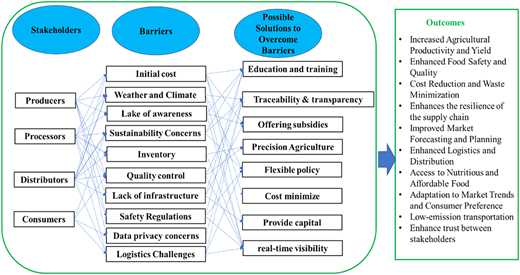
AI has played a vital role in solving many consumer-related issues in the AFSC. Its main objective is to make the entire process more transparent and monitorable. Blockchain technology can help to create a transparent and immutable record of transactions for tracking food items from farm to consumer (Astill et al., 2019). This gives consumers more confidence in the nutritional quality, safety and sustainability of food products (Vaio et al., 2020a). Also, AI is proving to be helpful in monitoring food safety. AI ensures the freshness and quality of its food items by continuously monitoring the environment by checking factors like temperature and humidity (Taneja et al., 2023). Many applications of AI are available for waste reduction. For this, one of them is the use of sensors and IoT devices (Tsang et al., 2018). AI algorithms create and optimize storage conditions to prevent waste. Utilizing algorithms to integrate technology into every individual step of production, waste has not only been reduced but also harms the environment, ultimately promoting sustainable practices and enhancing food security. It utilizes historical sales data, current market conditions and other important factors to generate accurate predictions of consumer demand, therefore enhancing demand forecasting and smart pricing strategies (Zellner et al., 2021). Using AI throughout the supply chain helps producers and retailers maximize inventory-level management, pricing levels and product availability (Pasupuleti et al., 2024). As a result, we are seeing that AI can be used to make the entire AFSC more efficient. Similarly, AI-enabled recommendation engines analyze customer preferences and dietary restrictions and recommend food products to a customer. This helps not only to enhance the shopping experience but also to structure healthy eating; thus, they feel satisfied with customers (Cannas et al., 2024). Also, predictive analytics based on AI can identify supply chain disruptions (for example, delays in transportation or natural disasters), resulting in enhanced supply chain resilience (Dwivedi et al., 2022). Figure 1 shows how to deal with the obstacles that AI will face in realizing its potential for the AFSC.
5. Discussion
The AFSC faces challenges like weather dependence, perishability, product variability and rising sustainability demands. These issues complicate logistics, quality control and traceability. However, adopting modern technologies can improve efficiency, reduce waste, and enhance the overall resilience and sustainability of the supply chain (Piddubna, 2024). Due to increasing urbanization and population growth, food safety and security have become critical issues in the modern world. As population growth strains food production systems, AI offers a promising solution for sustaining agricultural productivity and addressing food security challenges (Govindan, 2018). In the AFSC, stakeholders play a major role. Various stakeholders take advantage of AI technology, which makes AFSC more secure and sustainable. The objective of this paper is to identify major barriers in AFSC for the stakeholders, how these barriers can be mitigated with the use of AI technology and what types of initiatives are required to overcome these barriers for the different stakeholders.
AI technology is bringing a revolutionary change to the modern agriculture sector. This technology is proving to help make traditional agricultural practices modern and more accurate (Zorić et al., 2023). ML algorithms, in particular, are making the process of data-driven decision-making easier in agriculture. These algorithms can accurately predict crop yields by analyzing many factors such as soil properties, weather patterns and historical production data (Mihret et al., 2025). Identification of potential risks in advance will enable them to implement contingency plans, optimize inventory levels and secure alternative suppliers to lessen the impact of disruptions (Djekic et al., 2021). Lack of information sharing is one of the major barriers for local food processors in the AFSC, unlike multinational processors, who have an integrated and coordinated system (Khan et al., 2022; Ruteri, 2009). Thus, AI can address such issues through enhancing demand forecasts, allowing for proper interaction and real-time sharing of information, optimizing inventory replenishment and improving logistics.
In this article, we look at which types of barriers various stakeholders face in implementing AI in AFSC. Two research questions are formulated to study these aspects in depth. The first RQ is: What are the primary barriers for various stakeholders to the successful implementation of AI in AFSC? To address this research question, we have identified different barriers for different stakeholders, such as initial cost, lack of expertise, logistics challenges, sustainability concerns, seasonal variability, data privacy concerns and quality control. These challenges are broadly discussed in Section 3. Like producers/farmers faced major barriers in awareness about the use of digitization in AFSC (Gold et al., 2017). There are many weather-related uncertainties in the AFSC, which directly impact production levels. This is a significant challenge that requires special attention from all stakeholders. So to deal with such situations, advance planning and good management are needed to maintain stability in supply (Tadayonrad and Ndiaye, 2023). Furthermore, the second research question tried to address how these barriers can be mitigated with the use of AI technology, and what types of initiatives are required to overcome these barriers for the different stakeholders. To address research question 2, we did multiple brainstorming sessions among us, and we have come up with the following open research questions (ORQs), which future researchers can use as a recommendation to initiate the research in this area as well as confirm these initiatives to overcome these barriers so that AI can be implemented smoothly in AFSC.
ORQ1: How can AI tools be designed so that small farmers and poor producers in rural areas can use them according to their needs and circumstances?
ORQ2: How can we integrate AI with traditional agricultural knowledge in a way that preserves and does not harm local farming traditions?
ORQ3: What kind of changes are required in the infrastructure to effectively implement AI technology in food processing units?
ORQ4: How can blockchain and AI together help stakeholders respond quickly and accurately to problems such as traceability, food safety and food fraud?
ORQ5: How can food processors ensure that data collected by AI is safe and used appropriately?
ORQ6: What are the main concerns or fears that prevent food processing companies from adopting AI technologies?
ORQ7: How do tools like real-time tracking and predictions by AI help distributors better manage risks?
ORQ8: How do consumers’ concerns about the transparency of data use and tracking in AI-enabled food systems affect their acceptance?
5.1 Implications
This study contributes to the broader understanding of AI integration in AFSC security by focusing on the real-world barriers that hinder adoption among key stakeholders. While existing literature acknowledges the potential of AI to enhance efficiency and traceability in food systems (Khrais, 2020; Chhetri, 2024), this research addresses the often-neglected concerns of farmers, food processors, distributors and customers. Farmers may resist AI due to fears of data misuse, suggesting that future technology adoption frameworks must account for psychological and social factors, not just economic or technical ones (Elufioye et al., 2024; Awan et al., 2021). The study also highlights the importance of institutional support, such as financial assistance from the government, training programs and infrastructure development, in promoting digital transformation. These findings support the view that the success of technological innovation in agriculture is not solely dependent on its capabilities but also on the ecosystem that enables its use.
In terms of actionable outcomes, this research offers a roadmap for addressing stakeholder-specific challenges. For smallholder farmers, financial limitations, lack of awareness and data-related concerns are key barriers. To tackle these, targeted interventions such as subsidies, low-interest loans and capacity-building initiatives are essential (He et al., 2023; Zorić et al., 2023). Establishing transparent data governance frameworks can also encourage trust and participation. For food processors, AI offers numerous advantages, including improved regulatory compliance, predictive supply chain management, quality control and demand forecasting (Kamble et al., 2019). The integration of digital tools such as AI, ML and IoT can streamline operations, reduce waste and improve responsiveness to market changes (Awan et al., 2021). Although several articles are available on the use of digitalization in AFSC security for stakeholders, limited discussion on the difficulties in adopting AI at the grassroots level is available. This study would enable policymakers, strategy managers and professionals to add a deeper understanding of how AI can be seamlessly integrated into AFSC from the perspective of various stakeholders.
6. Conclusion
This paper explores the varying efforts of multiple stakeholders in overcoming the issues related to the implementation of AI in the AFSC. Using an exploratory method, the study reviews the literature to identify the the primary barriers, AI solutions and initiatives required for overcoming barriers related to AFSC security. The barriers regarding stakeholders that prevent the implementation of AI in AFSC are initial cost, integration complexity between them, data privacy concerns, resistance to change, regulatory compliance, quality control, standards, logistical challenges, seasonal variability and sustainability concerns. Moreover, this study also reviewed the initiatives required to overcome AFSC-related barriers for the different stakeholders. We reviewed how various solutions for multiple stakeholders can be offered to overcome these barriers so that AFSC can benefit from the implementation of AI. To help various stakeholders adopt AI in the AFSC, there needs to be more awareness, training, financial support and trust. Farmers need education on digital tools and affordable access to AI technologies. Food processors require help upgrading their systems, training for staff and strong data privacy rules. Distributors benefit from better transport tracking and collaboration with tech firms to improve logistics. Customers need to understand how AI ensures food quality and safety, with clear product information and data protection. Overall, government support, clear policies and innovation hubs are key to encouraging AI adoption across the entire AFSC system.
Despite a comprehensive review of the AFSC security literature, the study has several limitations. This article basically focused on four stakeholders – producers, food processors, distributors and consumers – while not including other important stakeholders such as retailers, policymakers and technology providers. This limited scope may reduce the overall depth and completeness of the analysis. Also, regional differences, local regulations and cultural factors that may influence the use of AI are not considered in detail. Considering these limitations, the study findings should be interpreted with caution. The AFSC sector has a transformative opportunity to strengthen food security by leveraging AI to enhance productivity, ensure food safety and promote transparency. The integration of AI, ML, cloud computing, blockchain and IoT holds significant potential to improve the resilience and efficiency of AFSC, addressing critical challenges in food availability and accessibility.
7. Future research
There is still a lot to uncover about how different stakeholders in the AFSC can adopt AI sustainably. This study also suggests some useful strategies to overcome current barriers. Future research should focus on how these ideas work in real life, especially for small farmers and processors in developing areas. Moreover, exploring training, financial support and clear data privacy rules will make farmers feel more confident about using AI. More studies exploring how food processors can use AI tools to improve quality, reduce waste and manage supply chain risks in real-time are required. It is also important to study how AI can be integrated with other technologies like blockchain and IoT to make the food supply system transparent and efficient. This article mainly focuses on journal articles only. Future studies may consider including business practices and legislative frameworks to provide a more comprehensive understanding. Researchers can also follow real examples over time to see how businesses adjust to AI, what challenges they face and what support they need. These future studies can build on the current findings and help create better ways to use AI in making food systems stronger, safer and more sustainable.
The supplementary material for this article can be found online