The rapid expansion of the electric vehicle sector has highlighted the significance of lithium-ion batteries (LIBs) and the need for specialized packaging. However, there exists a research gap in managing specialized packaging for LIBs during prototyping processes. This research, in a case study, aims to fill that gap by examining the challenges associated with specialized packaging in the automotive prototype context.
After selection of our case company, its data were gathered using three rounds of expert input. The analysis then divides the identified specialized packaging challenges into categories; then Multi-Criteria Decision-Making (MCDM) is used to identify best-match lean tools for dealing with the categories.
Analysis of the interview data collected revealed 24 challenges related to specialized packaging, which were categorized into 4 distinct themes. Through analysis of the focus group discussion, 13 challenges were identified within the 4 themes, as applicable to LIB-specialized packaging and subsequently formed the foundation of the survey. Furthermore, the application of multi-criteria decision-making to the survey data enabled the identification of lean tools appropriate for addressing the four identified themes of challenges.
This paper contributed to the establishment of a structured method to facilitate the implementation of lean tools in the management of specialized packaging within the case of an automotive prototyping process.
1. Introduction
In the context of the growing electric vehicle (EV) sector and its influence on the automotive industry, physical prototypes serve a pivotal role in new product development by facilitating operational processes and impacting overall product success (Baraldi and Kaminski, 2018; Yusof et al., 2024; Ravi et al., 2024). Within the automotive industry, this process is referred to as the automotive development process (ADP), which consists of a sequence of activities structured into distinct phases, ultimately resulting in a product that is prepared for serial production (Canuto da Silva and Kaminski, 2017; Baraldi and Kaminski, 2018). While literature emphasizes the importance of a seamless prototype process in the ADP (Baraldi and Kaminski, 2018; Yusof et al., 2024), research on the internal processes of physical prototypes remains nascent and exploratory (Weckenborg et al., 2024). The prototype process and its contextual framework have yet to be sufficiently integrated, hindering the optimization of process efficiency and coherence (Vorwerk and Trojahn, 2024; Weckenborg et al., 2024). The literature primarily addresses how ensuring a seamless transition from concept to production requires the ADP to minimize extended lead times rather than how this can be achieved when the process is not functioning as intended (Paker, 2021; Svensson et al., 2023; Yusof et al., 2024).
Despite the recognized importance of specialized packaging in ensuring regulatory compliance and component protection (García-Arca et al., 2020; Popa, 2022), its role in the prototype process remains insufficiently explored (Krajewski, 2024; Morashti et al., 2022; Popa, 2022). Critical components that require specialized handling and packaging are fundamental to the ADP, as their effective management is essential for maintaining process efficiency (Krajewski, 2024). As lithium-ion batteries (LIBs) are classified as dangerous goods (Azzopardi et al., 2023; Neumann et al., 2022; Slattery et al., 2021), they present significant challenges in handling, particularly with respect to their need for specialized packaging (Harper et al., 2019). Despite these challenges, LIBs are established as a fundamental technology driving the advancement of EVs (Promi et al., 2024; Ralls et al., 2023). However, a research gap persists regarding the operational challenges within the prototype process, particularly in relation to the increasing complexity of packaging and its operational implications (Gopinathar et al., 2016; Morashti et al., 2022; Popa, 2022). This gap highlights the need for further investigation to optimize specialized packaging solutions and enhance operational efficiency in the context of EV development.
Originally established in the automotive industry, lean management (LM) has long been a key methodology for waste reduction and process optimization (Ateş, 2023; Dewadi et al., 2024; Dörnhöfer et al., 2016). In the context of the ADP, lean tools as a means for operational enhancements remain limited (Santos et al., 2023), compared to their extensive application in automotive manufacturing processes, where these tools have established a status quo (Dourado et al., 2024; Liker, 2021; Tuli and Shankar, 2015). The literature provides insight into the potential of lean tools to improve ADP processes; however, this potential remains uninvestigated in relation to ADP for EVs (Dourado et al., 2024; Paker, 2021). Simultaneously, in the automotive industry, lean tools come to life in the pursuit of continuous improvement, with established practices such as standardized work and value stream mapping (VSM) contributing to the core principles of LM (Dewadi et al., 2024; Naeemah and Wong, 2023; Paker, 2021). Lean tools are essential within the ADP for reducing waste, fostering innovation and collaboration’ and driving process improvement (Dourado et al., 2024; Paker, 2021). Despite the exit of alternative lean tools (Naeemah and Wong, 2023), uneducated tool selection may cause additional expenses and fewer benefits than expected and even more failure consequences (Sorooshian et al., 2017).
Manufacturing firms, according to Maldonado Guzmám and Pinzón Castro (2023), face a variety of multifaceted and complex challenges that require integration of different knowledge domains and skills to be overcome. Building on this, this study addresses the following research questions:
What are the challenges associated with specialized packaging in LIB prototype development?
Which lean tools can best address these challenges?
Answering these questions contributes to the literature by extending the application of lean tools into the specialized context of LIB packaging, an area that has received little scholarly attention. The paper, from a theoretical perspective, advances understanding of how Lean methodologies can be adapted beyond traditional manufacturing to address packaging-related challenges in early-stage automotive development.
The remainder of the paper is structured to answer these research questions in a case study, with the next section offering a theoretical foundation. The research methodology is detailed in Section 3. Sections 4 and 5 detail the results and pertinent discussion. Lastly, Section 6 serves as the article’s conclusion.
2. Literature review
2.1 ADP and specialized packaging
The global competition among automotive companies intensifies every year, making new products play a crucial role in maintaining competitiveness (Reichelt et al., 2023). A successful new product boosts market share, attracts customers and improves quality (Baraldi and Kaminski, 2018; Omidzadeh et al., 2024), with the product development process serving as the foundation for these outcomes, particularly in the automotive industry, where it is known as the ADP for new vehicle development (Canuto da Silva and Kaminski, 2017). The process involves a series of interconnected activities aimed at achieving specific, measurable outcomes through sequential milestones (Baraldi and Kaminski, 2018; Dourado et al., 2024). The primary purpose of the ADP is to identify problems and subsequently provide solutions, which results in the development of a new vehicle (Erichsen et al., 2016; Reichelt et al., 2023). It is often divided into interconnected sub-processes, each focusing on different modules or components, which adds to the complexity of the ADP (Canuto da Silva and Kaminski, 2017; Omidzadeh et al., 2024). Although the process differs for each company, Reichelt et al. (2023) underscore that flexibility is a crucial characteristic, particularly within the ADP in the electric automotive industry, where it is essential to meet market demands, comply with industry standards and adapt to emerging technologies (Svensson Harari and Fundin, 2023). Prototypes serve essential purposes in the ADP that significantly impact the success of a new product (Elverum and Welo, 2016; Canuto da Silva and Kaminski, 2017; Yusof et al., 2024). Elverum and Welo (2016) highlight that there are various definitions of a prototype; however, Erichsen et al. (2016) offer a general definition as “an early version of a product that represents certain important features or aspects”. Physical prototypes play a multifaceted and crucial role in the ADP, particularly as a means of knowledge acquisition and transfer within the processes (Erichsen et al., 2016). Elverum and Welo (2016) argue that they fulfill four key purposes in the process: enhance learning, communication, integration and milestones.
The unique characteristics of prototype parts differentiate their operations from mass production, as these parts are singular, stored in one location at a time and often require flexible decisions on short notice (Vorwerk and Trojahn, 2024; Weckenborg et al., 2024). Correspondingly, Elverum and Welo (2016) emphasize that management of prototypes must be both flexible and effective to meet strict time constraints and accommodate late design changes. Such delays can impede the overall development process and adversely affect project timelines (Vorwerk and Trojahn, 2024; Weckenborg et al., 2024). Similarly, Elverum and Welo (2016) highlight that delays in procuring materials for prototypes can extend lead times throughout the ADP, potentially disrupting the development schedule. A well-planned prototype process is therefore crucial to ensure timely availability of parts, improving overall responsiveness (Weckenborg et al., 2024). Additionally, a proactive logistics solution, as opposed to a reactive one, enhances the efficiency and availability of critical prototype components (Weckenborg et al., 2024). This is further supported by effective packaging, which facilitates smooth material flow and efficient transportation, addressing logistical challenges (Gopinathar et al., 2016).
Moreover, packaging has become increasingly vital for companies, positioning it as a central element in operational management, contributing to increased process efficiency (Popa, 2022; Rajeev, 2024; Witek-Krowiak et al., 2024). García-Arca et al. (2017) highlight that effective packaging reduces waste, such as unused space, excessive materials and product damage during transit. Fabri et al. (2020) emphasize that internal logistics must manage regular delivery schedules to ensure materials are available as needed. Specialized industrial packaging, unlike standard packaging, is designed for heavy, bulky, fragile or hazardous products, providing the highest level of protection (Gopinathar et al., 2016). In addition to providing essential protection, packaging must ensure safety and efficiency (García-Arca et al., 2020), particularly for specialized industrial packaging that is tailored to the product’s versatility and accounts for multiple transit stages before reaching its final destination (Gopinathar et al., 2016). As LIBs are classified as dangerous goods since they exhibit corrosive, flammable, toxic and explosive characteristics (Azzopardi et al., 2023; Neumann et al., 2022; Slattery et al., 2021), they require specialized packaging and transportation solutions to ensure safety and compliance with regulatory standards (Saw et al., 2016). Effective handling procedures and appropriate labeling are essential in safeguarding LIBs during transit, mitigating associated risks and ensuring that the batteries reach their destination intact and operational (Chen and Wang, 2024; Slattery et al., 2021).
2.2 Lean management
LIBs have more recently become associated with LM, particularly in production settings, where they contribute to enhanced operational efficiency (Shivgar and Nanwatkar, 2024). LM has expanded beyond manufacturing to include broader business management practices (Boutayeb et al., 2024; Czifra et al., 2019; Dourado et al., 2024; Paker, 2021). It is further acknowledged for its role in development processes, particularly in waste reduction during stages like concept development in the prototype process (Dourado et al., 2024; Tuli and Shankar, 2015). Literature argues that lean principles (LPs) can enhance the ADP, as the concept of lean product development (LPD) facilitates the precise identification of customer needs and minimizes rework through establishing efficient process flows (Dourado et al., 2024; Paker, 2021; Tuli and Shankar, 2015). At the same time, Tuli and Shankar (2015) explain that aligning LPs with the collaborative nature of ADP can help overcome organizational barriers, improve communication and ensure strategic alignment.
LPs are operationalized through lean tools, which are essential for process optimization and efficiency (Tortorella et al., 2016). These tools support organizations in streamlining workflows, fostering cross-functional collaboration and enhancing process performance throughout product development (Dourado et al., 2024; Paker, 2021). Naeemah and Wong (2023) highlight just-in-time (JIT), Kaizen, Kanban and single-minute exchange of dies (SMED) as widely recognized lean tools. Additionally, the literature includes tools such as quality function deployment, 5S, Poka-Yoke, Takt Time, the 5 Whys, Continuous Flow and Jidoka, all aimed at minimizing non-value-adding activities and enhancing process efficiency (Anvari et al., 2014; Santos et al., 2023). While lean tools aim to optimize processes and improve efficiency, they each employ distinct methods to achieve this (Dewadi et al., 2024; Naeemah and Wong, 2023). Klimecka-Tatar and Obrecht (2024) highlight additional tools, such as Hoshin Kanri, Gemba Walks and Plan–Do–Check–Act (PDCA), crucial for continuous improvement. Further, Paker (2021) identifies lean tools including A3, Visual Management and Obeya Room, used in automotive product development and process optimization, while Dewadi et al. (2024) highlight additional tools, such as JIT and VSM, essential for improving efficiency and product quality. Table 1 presents the lean tools identified for this research, derived from the reviewed literature.
Performance improvement through lean tools is contingent on their appropriate selection (Baskaran and Lakshmanan, 2019). As highlighted by Alaskari et al. (2016), despite the extensive application of lean tools in both research and practice, clear guidance regarding their selection in research remains limited. Nonetheless, literature emphasizes the need for rational decision-making when selecting improvement initiatives in research contexts (Aslam et al., 2020; Hegedić et al., 2024; Naeemah and Wong, 2023). Practical constraints such as time, resources and study scope may further restrict tool selection (Naeemah and Wong, 2023). Within organizations, uncertainty remains in identifying the most suitable lean tools (Dewadi et al., 2024). Moreover, within an organizational context, uncertainties also persist regarding the identification of the most suitable lean tools to adopt (Dewadi et al., 2024). Dewadi et al. (2024) and Paker (2021) note the challenges of tool selection, given differing organizational contexts and objectives. While several methodological approaches, including multi-criteria decision-making (MCDM), have been proposed to assist in the selection (Naeemah and Wong, 2023), Dewadi et al. (2024) emphasize that effective selection requires a clear understanding of the specific problems the tools aim to address.
3. Research methodology
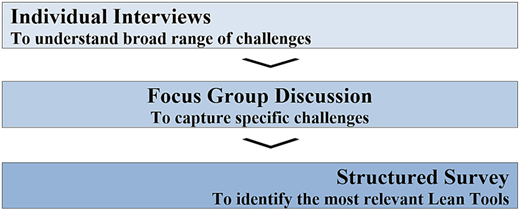
A case study [1] design was adopted in this paper, focusing on an original equipment manufacturer (OEM) in the European automotive industry engaged in EV development to explore challenges related to specialized packaging for LIBs within the automotive prototype process. This was guided by 20 lean tools identified through the literature review. The flowchart of Figure 1 presents the research process, illustrating the three stages.
As shown, data for this study were collected across three sequential rounds through expert participation. In this paper Van den Bulck et al. (2019), experts were purposely selected to capture a broad range of perspectives, reflecting diverse professional backgrounds and specialized expertise within the case company. Monteleone et al. (2024) emphasize the importance of expert participation in exploratory research, especially when key variables are unclear or theoretical foundations are limited.
The identification of experts was based on two primary criteria: (1) the definition of expertise relevant to the research’s context and (2) the specific competencies necessary to address the research questions. The evaluation of expert status considered individuals’ formal roles and responsibilities, ensuring their direct involvement in the prototype process and their ability to provide domain-specific insights into specialized packaging operations.
This research was conducted in three rounds, utilizing a panel of experts.
Round 1 aimed to identify challenges associated with the flow of specialized packaging within the prototype process, using semi-structured interviews with the selected experts. The interviews were designed to elicit general insights, allowing challenges to emerge organically from the participants’ experiences.
Round 2 explored whether the challenges identified in the first round were applicable specifically to specialized packaging for LIBs. This was addressed through an online focus group discussion with the same experts, providing a platform to validate and refine the initial findings.
Round 3 examined how the 20 lean tools identified in the literature review could contribute to addressing the challenges associated with LIBs specialized packaging. Data were collected through an individual questionnaire survey, enabling a focused evaluation of the perceived relevance and impact of each tool in overcoming the identified challenges.
The selection of six experts was based on theoretical saturation, which was reached after the sixth interview in round 1, as no new insights relevant to the research questions emerged thereafter. The expert panel consisted of six individuals from various hierarchical levels involved in the prototype process, with industry experience ranging from 7 to 26 years (M = 15.8) and company tenure between 7 and 12 years (M = 9.5). The first and second rounds were analyzed using thematic analysis to systematically identify, organize and interpret patterns in the data. In round one, interview data were coded into broader themes related to specialized packaging challenges, forming a coding framework that guided subsequent analysis. These themes were refined into specific challenges by cross-comparing expert responses, and their occurrences were quantified to assess significance. The same coding framework was applied in round two to ensure continuity, with thematic analysis selected for its flexibility and ability to highlight the relative importance of findings, aligning with the explanations by Nowell et al. (2017). In the third round, data were analyzed using the ordinal priority approach (OPA), a method situated within the broader framework of MCDM (Ataei et al., 2020). OPA was chosen for its ability to process ranked ordinal data and systematically prioritize alternatives across multiple criteria, thereby facilitating the evaluation of the relevance of Lean Tools to the identified themes of challenges from the subsequent rounds.
3.1 Application of ordinal priority approach (OPA)
Within the MCDM framework, both traditional and modern methods are recognized; however, the precise number of available techniques remains indeterminate, given the continuous evolution of methodological developments (Sorooshian et al., 2023). To eliminate ambiguities in decision-making, it is essential to replace outdated methods with contemporary approaches, such as OPA, which is recognized as one of the more recent contributions (Alkaabi and Raoof Mahjoob, 2023; Pan et al., 2023).
Compared to other MCDM methods, OPA simplifies analysis by eliminating the need for pairwise comparisons, normalization and input aggregation (Mahmoudi and Javed, 2022). Instead, it relies on sets, indices and ordinal variables to construct a reference system that structures and analyzes expert rankings (Mahmoudi and Javed, 2022; Ataei et al., 2020). Table 2 presents this reference system as described by Mahmoudi and Javed (2022).
Considering the variables presented in Table 2, the computational process of the OPA method can be summarized in three primary steps, as outlined by Mahmoudi and Javed (2022). These steps are applicable under the assumption that all experts possess equal competence when no clear distinctions are evident (Ataei et al., 2020; Mahmoudi and Javed, 2022).
Step 1: The identified attributes should subsequently be ranked according to their perceived importance.
Step 2: Alternatives should be ranked by the expert(s) for each attribute.
Step 3: Using the information obtained from Steps 1 to 2 for OPA mathematical operations. However, utilization of the existing OPA Solver (Version 1.4 (https://ordinalpriorityapproach.com/)) obviated the mathematical computations (Mahmoudi et al., 2023).
4. Analysis and results
4.1 First round of data collection
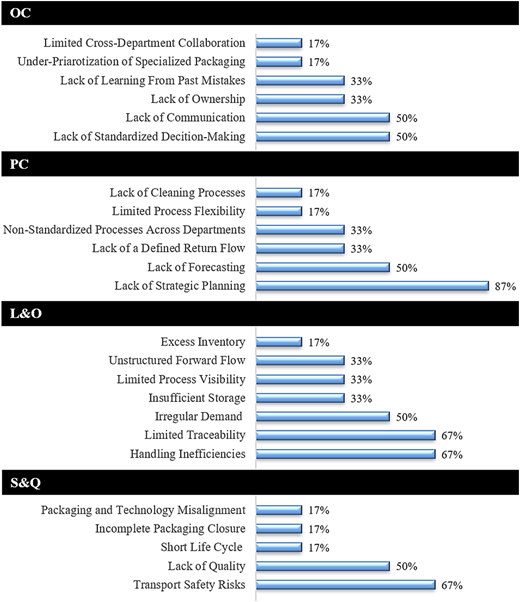
Six expert interviews were conducted, each averaging 76.67 min in duration. Using thematic analysis, four key themes were identified, capturing issues related to specialized packaging within the studied prototype process. These themes, namely organizational challenges (OC), planning challenges (PC), logistical & operational challenges (L&O) and safety & quality challenges (S&Q), were derived based on their perceived impact on both the flow of specialized packaging and the overall prototype process. Through the four emerging themes, a structured list of 24 challenges was identified, capturing key issues highlighted by the experts during the individual interviews. Figure 2 presents these challenges, organized according to the identified themes, along with their occurrence rates, reflecting the proportional representation of experts who mentioned each challenge.
4.2 Second round of data collection
The second round of data collection involved an online focus group discussion attended by five out of six respondents (83.3%). One expert did not participate, resulting in an attrition rate of 16.7%. The list of challenges identified during the first round served as the foundation for the session, which aimed to assess the relevance of these 24 challenges to LIBs’ specialized packaging. Through the focus group discussion, 13 challenges were deemed applicable to the flow of specialized packaging within the prototype process. Table 3 presents the 13 challenges identified as relevant to the specialized packaging of LIBs. No additional challenges were proposed by the experts, leading to the exclusion of 11 challenges deemed inapplicable to LIBs’ specialized packaging. The results are organized according to the coded themes identified in the first round of analysis, emphasizing the challenges related to LIBs and their perceived significance. While some challenges were discussed independently, others were repeatedly highlighted in conjunction. In the following sections, each of the challenges pertinent to LIBs is examined in detail based on the focus group insights.
OC: The experts acknowledged and emphasized a perceived lack of learning from past mistakes concerning LIBs. They indicated that when new vehicle projects were initiated alongside the use of LIBs’ specialized packaging, previous process flow inefficiencies were often not considered. As a result, new prototype processes were perceived to commence without fully incorporating lessons learned from earlier experiences. Furthermore, a lack of standardized decision-making was considered a challenge applicable to LIBs’ specialized packaging. The absence of standardized decision-making introduced uncertainties in the management of LIBs’ specialized packaging, impacting the prototype process both operationally and in terms of procurement. For instance, the acquisition of specialized packaging was described as conducted on an ad hoc basis by various divisions as needs arose. Moreover, the experts highlighted lack of ownership as an applicable challenge, noting that no clear management responsibility was assigned for LIBs’ specialized packaging. Given that the prototype process involved multiple stages and spanned various divisions, including those responsible for transportation and storage, the lack of ownership exacerbated coordination difficulties. This, in turn, led to extended lead times for critical decision-making within the prototype process. Additionally, the experts emphasized that addressing the lack of ownership could help resolve the previously identified challenges of lack of standardized decision-making and lack of learning from past mistakes. Experts further acknowledged a lack of communication as a critical issue in the current flow, leading to reactive decisions and prolonged lead times in the prototype process. Given the importance of specialized packaging for LIBs, for transport safety and process structure, communication inefficiencies disrupted both packaging management and process flexibility, ultimately affecting timeline adherence and adaptability in prototype development. The experts noted that improving communication could serve as a foundation for addressing broader OC, such as learning from past mistakes and lack of ownership.
PC: Within this theme, experts highlighted a lack of strategic planning specific to LIBs’ specialized packaging. While planning occurred at the vehicle prototype level, early-phase considerations for packaging were limited. This reactive approach led to recurring inefficiencies across successive projects. The experts also emphasized a clear connection between this planning deficiency and the previously discussed challenge of lack of learning from past mistakes. The experts further noted that non-standardized processes across departments constituted a significant planning challenge for LIBs. The involvement of multiple departments throughout the prototype process resulted in inconsistent storage and handling practices for LIBs’ specialized packaging. The absence of standardized procedures was seen to constrain flexibility, reduce adaptability to process changes and hinder compliance with regulatory requirements specific to LIBs. Additionally, the experts highlighted a lack of cleaning processes as a critical constraint in the reuse of specialized packaging. As LIB prototypes must remain uncontaminated, a structured cleaning routine was considered essential following the use of packaging in transportation and storage. The absence of such a process disrupted planning efforts and contributed to shortages in available specialized packaging when needed for subsequent use.
L&O: The experts identified lack of process visibility as a factor that impeded responsiveness and flexibility in the handling of LIBs’ specialized packaging across the various stages of the prototype process. This lack of visibility also complicated the identification of bottlenecks, contributing to delays in both the prototype workflow and related transportation activities. In parallel, limited traceability was recognized as a challenge, where the absence of a structured traceability mechanism hindered the ability to quickly locate specialized packaging when urgently needed. The experts emphasized the interrelation between these two challenges and suggested that improved oversight of specialized packaging resources could enhance process efficiency, reduce delays and support more effective resource allocation within the prototype process. Additionally, the experts highlighted the unstructured forward flow of specialized packaging as a significant challenge. While the prototype process was clearly defined from a design perspective, it lacked a structured and coordinated flow for managing LIBs and their associated packaging. Consequently, new prototype projects frequently commenced without a predefined framework, as requirements, specifications and governance structures were often developed reactively during the process, leading to extended lead times.
S&Q: The issue of packaging and technology misalignment was emphasized by the experts, as the development of LIB prototypes did not consistently align with the evolving technological requirements of the prototype process. Frequent modifications to LIB prototypes during development necessitated adjustments to specialized packaging. When changes arose in later stages, existing packaging solutions often failed to meet requirements, leading to bottlenecks and increased lead times. In addition, the experts identified a lack of quality in specialized packaging as a persistent challenge. Ensuring packaging quality was considered both essential and continuous; however, instances of insufficient durability or material deficiencies led to delays and inefficiencies across multiple stages of the prototype process. Transport safety risks were also recognized as a significant concern. The improper handling or transportation of specialized packaging for LIBs posed substantial safety hazards, which the experts further linked to the challenge of packaging and technology misalignment. This misalignment often led to the use of incompatible packaging, heightening the risk of damage to LIB prototypes. These incidents resulted in project delays, elevated costs and potential regulatory non-compliance.
Finally, Table 4 presents the challenges in ranked order, structured based on the experts’ evaluations from the focus group discussion. The prioritization reflected the perceived urgency and impact of each challenge on optimizing the LIBs’ specialized packaging flow, ensuring the prototype process functioned as intended.
4.3 Third round of primary data collection
The distributed questionnaire in data collection round three resulted in a response rate of 83.3%. In the applied three-step data analysis model, the initial step involved ranking the attributes, represented by the four identified challenge themes: OC, PC, L&O and S&Q. The rankings were derived from the experts’ prioritization of the identified challenges, as presented in Table 4. To quantify these rankings, the assigned values were aggregated, and the resulting mean scores were calculated. These scores served as the foundation for ordering the themes based on their perceived importance. The OC theme received a mean score of 3.00, indicating it was perceived as the highest priority. In contrast, the PC theme had a mean score of 8.67. The L&O and S&Q were assigned mean scores of 7.67 and 10.00, respectively. Consequently, the themes were ranked in ascending order of mean scores, with the OC theme being the most critical (3.00), followed by L&O (7.67), PC (8.67) and finally S&P (10.00), reflecting their relatively perceived importance.
The results present the experts’ ranking of the 20 lean tools in relation to the four themes of challenges, utilizing an ordinal scale from 1 to 5. Table 5 displays the calculated weights (Wk), derived using the OPA online software. These weights were obtained from the experts’ responses, which were based on their ranking of the four challenge themes, with mean scores serving as the basis for the calculations. Additionally, the cumulative weights for all themes are provided, illustrating their interactions and contributions to the overall evaluation of the alternatives.
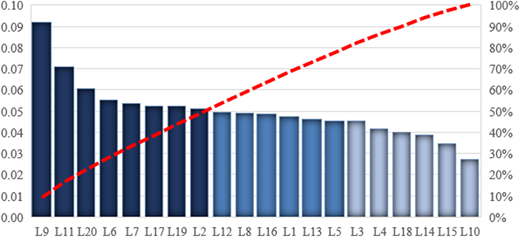
The collected weights for all four themes, presented in Table 5 above, were further illustrated in a Pareto diagram (Figure 3). This diagram visually represents a hierarchical distribution of the weights assigned to the 20 lean tools. The classification framework consists of three tiers, each reflecting the relative importance of the four themes of challenges. The first tier, marked in a darker grey shade, includes eight lean tools that collectively account for approximately 50% of the total weight. The second tier, illustrated in a lighter grey shade, comprised six additional lean tools. Together, the tools in the first and second tiers accounted for approximately 80% of the total weight. The third and final tier consists of the remaining six lean tools, depicted in the lightest shade, and collectively accounting for <20% of the total weight. Although these tools were assigned to a lower hierarchical priority, they were not considered insignificant. Rather, they reflected a lower level of prioritization while still offering constructive contributions to addressing the identified themes of challenges.
5. Discussion
The expansion of the EV sector has highlighted the importance of specialized packaging for LIBs, which are crucial for their management. However, there is a research gap in the literature on managing specialized packaging for LIBs within the prototype process. Our case study identified 24 challenges related to specialized packaging and categorized them. Our systematic approach was developed to address these challenges using lean tools. The study answered its two research questions. To ensure the quality and trustworthiness of the research design, this paper applied key criteria of reliability and validity, aligning with explanations by Zohrabi (2013). Reliability was strengthened through clear documentation of methodologies and a mixed-methods approach, ensuring consistency and stability of the findings over time. Internal validity was enhanced through peer review and expert validation, ensuring the findings accurately reflect the intended measurements.
5.1 Theoretical implications
The four identified themes of challenges derived from their perceived impact corresponded with insights established in existing literature. Insights from the literature on the prototype process (Vorwerk and Trojahn, 2024; Weckenborg et al., 2024) and operational packaging (Rajeev, 2024) provide context that supports the relevance of the four identified themes. However, expert insights provide a broader understanding of the themes of challenges, building upon the foundational knowledge established by Gopinathar et al. (2016) regarding the fundamentals of specialized packaging. From a more comprehensive perspective, these four themes reflect the inherent complexity of the ADP explained by Omidzadeh et al. (2024), illustrating how the identified themes of challenges could contribute to its overall complexity. Fabri et al. (2020) also emphasize the importance of an efficient internal packaging system in prototype processes to ensure operational efficiency.
The complexities, attributed to the existence of sub-processes and the multifaceted nature of the broader ADP (Canuto da Silva and Kaminski, 2017; Paker, 2021; Omidzadeh et al., 2024) and the prototype process (Elverum and Welo, 2016; Vorwerk and Trojahn, 2024), allow the identified theme of OC to be contextualized through the acknowledgment of these dynamics. Addressing packaging issues goes beyond the organizational context; according to Asim et al. (2022), a better packaging system contributes to the entire society, reducing negative environmental, societal and industry aspects of the supply chains. These broader societal implications emphasize the relevance of specialized packaging as not only an operational necessity but also a critical element of sustainable and safe EV development (Gowrishankar, 2025). Simultaneously, the PC theme questions traditional notions regarding the need for flexibility in the ADP, as discussed by Reichelt et al. (2023) and Svensson, Harari and Fundin (2023), by highlighting a contradictory emphasis, emerging from this study, on the importance of standardization in maintaining structural consistency in planning operations within the ADP. Also, the identified theme of L&O is supported by the need for precision and speed in prototype logistics, which Weckenborg et al. (2024) highlights. Furthermore, the theme of S&Q can be viewed as a consequence of an imperfect prototype process, which, as noted by Elverum and Welo (2016), necessitates both flexibility and effectiveness to accommodate late design changes and strict deadlines.
The identified challenges applicable to LIBs’ specialized packaging offer an additional perspective in relation to Slattery et al.'s (2021) discussion of challenges associated with LIBs. While the literature indicates that the ADP is tailored to specific organizational needs within the automotive industry (Baraldi and Kaminski, 2018; Canuto da Silva and Kaminski, 2017; Reichelt et al., 2023), the findings can enhance the understanding of the implications of the 4 themes and the 13 associated challenges related to LIBs, particularly in addressing concerns that may arise in the context of EVs. Notably, the observed challenge of lacking standardized decision-making can appear to contradict the emphasis on flexibility within the broader ADP, as described by Baraldi and Kaminski (2018). Experts further contend that the absence of standardized decision-making introduced uncertainty in managing LIBs’ specialized packaging, thereby adversely affecting operational efficiency. This observation indicates the necessity for a trade-off between standardization and flexibility in the management of LIBs within the ADP, shedding new light on the ADP literature presented by Reichelt et al. (2023) and Svensson, Harari and Fundin (2023). Consequently, interconnections between various challenges and their outcomes were identified, highlighting the potential interrelations among the themes affecting the flow of specialized packaging for LIBs. These interdependencies can be linked to the literature on the interconnected nature of the ADP, discussed by Baraldi and Kaminski (2018).
The hierarchical classification, derived from the Pareto diagram and cumulative thresholds of approximately 50%, 80% and <20% of total weight, identifies the lean tools considered most effective for addressing the four themes of challenges, offering insights into their perceived utility in addressing challenges for LIBs' specialized packaging. Yet, Martins and Frederico (2025) assert that the successful implementation of an LM initiative is heavily reliant on top management’s support. However, the first tier, in comparison to the second and third, provides new perceptions into potential pathways for implementing lean tools within this research’s context. However, no single tool is seen as sufficient to independently address the challenges. Instead, the classification emphasizes how certain tools, especially those in the first tier, are regarded as key drivers for simultaneously managing these challenges. The highest weight assigned to standardized work (L9) offers an additional contribution to the discourse established in this study regarding the trade-off between flexibility and standardization by providing new perspectives that extend the insights on the importance of maintaining flexibility within the ADP outlined by Reichelt et al. (2023) and Svensson, Harari and Fundin (2023). Simultaneously, it contributes to the research of Dourado et al. (2024) and Tuli and Shankar (2015) by exemplifying an area within the automotive industry where standardized methods can be effectively applied.
5.2 Practical implications
Although it is acknowledged that the findings may not be generalizable to organizations beyond the case company, the conducted research sheds light on the practical implications within the context of an OEM in the automotive industry, demonstrating how the findings offer insights into their practical relevance and potential applications. Firstly, the findings provide an understanding of the challenges related to prototype components requiring specialized packaging, with a specific focus on those applicable to LIBs, and how these challenges hinder the functioning of the prototype process. Secondly, the findings of this paper provide implications regarding the most impactful challenges to improving the flow of LIBs' specialized packaging, particularly the OC related to inadequate communication. Thirdly, an additional implication derived from the integration of lean tools as a potential means of improvement is that these tools not only offer insights into how they can be applied to address the identified challenges but also indicate which tools may contribute most significantly to overcoming the identified challenges.
The hierarchical classification, with distinct tiers, offers guidance for how a lean tool implementation can be structured, with the highest-weight tool, standardized work, highlighting the practical need for consistent methods in managing specialized packaging of LIBs. While the findings have limited direct generalizability beyond the specific case, they offer valuable implications for other practitioners by providing a methodological approach to identifying challenges within automotive companies’ development practices.
6. Conclusion
Using a case study approach, 24 packaging challenges were identified and divided into 4 categories: OC, PC, L&P and S&Q. Of these, 13 were directly relevant to LIBs, and further investigation revealed the interconnections between them. To address these challenges, a structured application of lean tools was used. This work, as a result, addresses the gap in literature concerning the management of specialized packaging for LIBs within the automotive prototype process. It also expands on lean research by demonstrating its application in a novel domain of prototype packaging, where safety, sustainability and operational complexity intersect. It also contributes to the emerging literature on LIB management by emphasizing packaging as a strategic component of long-term EV development, rather than just a technical one. By connecting packaging performance to broader sustainability and safety outcomes, the study emphasizes its societal relevance and practical value in advancing safer and more sustainable transportation.
There is, however, room for future studies to add to the current work. Uday et al. (2025) and Salman et al. (2024) discussed potential barriers to the implementation of lean tools; addressing successful implementation of the identified lean tools remained for future contributors. In this work, while researcher bias was minimized, qualitative interpretation may still remain subjective. Besides, future work could broaden the scope by conducting multi-case or cross-country studies, as well as longitudinal analyses, to investigate the long-term impact of Lean implementation in LIB packaging.
Thanks to the University of Gothenburg, this article is from master’s thesis conducted by the first two authors under the supervision of the third author. In their work, artificial intelligence is used for brainstorming and presentation improvement.
Note
This case company remains anonymous for confidentiality reasons.