The study introduces and validates an adaptive self-regulatory approach for service organizations in the digital era, addressing the evolving landscape of human resource management. Focusing on frontline service workers, the research explores the mechanism that fosters ambidextrous behavior, aiming to enhance proactive service performance (PSP) and address layoff concerns in today’s volatile economy.
Drawing on the Career Construction Model of Adaptation (CCMA) and Job Demands-Resources (JD-R) theories, the study examines the impact of proactive personality (PP) and hardiness on activating ambidextrous behavior to achieve higher PSP. The survey findings of 368 frontline banking employees in Vietnam support the hypothesized model.
The study reveals that higher PP levels in frontline staff lead to enhanced ambidextrous behavior and PSP while adapting to digital human resource management (HRM). Hardiness, identified as a personal adapting resource, acts as a mediator between PP and ambidexterity, influencing both direct and indirect effects. Consequently, employees with superior PSP perceive lower job insecurity.
The findings contribute to the debate on the value of personality and adaptability traits in employee selection within the Industry 4.0 context. Emphasizing the importance of ambidexterity and staff adaptation in uncertain times, the study positions employees as either drivers or barriers in the change management process.
The study integrated various adaptability theories, shedding light on self-regulated mechanisms for ambidextrous workers to excel in e-HRM. It underscores the significance of individual-level ambidexterity in navigating changing environments resulting from HRM digitalization efforts.
1. Introduction
During turbulent times such as the COVID-19 pandemic, the service operating environment becomes highly uncertain, and service firms start putting greater job demands on their employees to deal with compulsory changes, including but not limited to work process reconfiguration, downsizing, and new technology adoption (Ng and Stanton, 2023; Palumbo and Cavallone, 2022; Wynen et al., 2021). Even more challenging, service firms can be deemed far more complex and stressful to manage than manufacturing firms owing to unpredictability and customer demand variability (Jacobs, 2018). As a result, the increasing complexity of service systems demands that their employees possess enhanced competencies and flexibility. However, this can also lead to greater levels of anxiety and reduced job security among the workforce. Numerous studies have investigated different practices used by service firms to overcome such difficult times, including their attempts to raise employees’ quality and expertise (Anderson, 2004), foster service staff’s work engagement (Min-Ling et al., 2019), enhance management’s expertise and knowledge (Tadic et al., 2018), or promote higher levels of emotional and cultural intelligence (Darvishmotevali et al., 2018) to adapt effectively in volatile service environments. Only competent personnel can undergo such transitions (Hautala-Kankaanpää, 2022; Ramachandran et al., 2023), but finding and hiring such a skilled workforce in the rapidly changing and digitally transformed Industry 4.0 environment is a major issue for modern service companies (Seet et al., 2023; Obeidat, 2016; Zembski and Ulewicz, 2022).
Digitization of Human Resource Management (HRM) or e-HRM is promising in this context (Ramachandran et al., 2023; Theres and Strohmeier, 2023), which essentially means carrying out HRM tasks through digital technology applications (Theres and Strohmeier, 2023). Deloitte Insights (2017) has praised the growing trend of digital human resource (HR) for its ability to offer a cohesive, digitally-enabled workplace experience that prioritizes teamwork, productivity, and empowerment by integrating all organizational processes and promoting adaptability. The digitization of HRM can also result in cost savings and reduced administrative burdens through automation (Strohmeier, 2007). e-HRM also helps achieve relational goals by providing high-quality services to internal customers of the organization, through improving the timeliness and client-service orientation of both HR professionals and other personnel.
Digital HRM, or e-HRM, uses digital technology to perform HR tasks and create cohesive, productive workplaces (Theres and Strohmeier, 2023; Deloitte Insights, 2017). It not only saves costs and reduces administrative burdens through automation but also improves the timeliness and quality of HR services. However, rapid digitalization demands that employees quickly adapt to new processes such as digital onboarding, e-training, and automated performance tracking while maintaining high performance (Liu and Lin, 2021). Despite these pressures, research on employees’ adaptive mechanisms in digital HRM remains limited (Mom et al., 2015). Our study hopes to address this gap by focusing on how employee ambidexterity (EA), i.e. balancing existing expertise with proactive learning, can enhance service performance (Mom et al., 2009; Scuotto et al., 2019). Going deeper, little is known about individual-level ambidexterity’s contributing factors and mechanisms.
To address the identified research gap, this study develops and tests a theoretical framework grounded in the Career Construction Model of Adaptation (CCMA) (Savickas, 2013) and Job Demands-Resources (JD-R) theory (Bakker and Demerouti, 2017), exploring how frontline banking employees adapt to HRM digitalization at transactional, relational, and transformational levels. We propose that frontline employees develop a self-regulated adaptation mechanism by leveraging Proactive personality (PP) traits to strengthen their psychological hardiness. Hardiness, as a psychological resource, helps employees sustain ambidextrous behavior balancing existing competencies and proactive learning to maintain performance in rapidly evolving digital contexts (Kobarg et al., 2017; Tho, 2019). By emphasizing hardiness as a central adaptability resource, this research extends existing knowledge on workplace adaptation and provides insight into how frontline staff effectively navigate uncertainty in digitalized workplaces.
Based on the arguments and discussions, this study proposes the following two research questions:
How does employee ambidexterity enhance proactive service performance and alleviate layoff concerns among employees in the current digital age?
How does hardiness serve as a novel mediator in the relationship between proactive personality and employee ambidexterity?
This study advances research on employee adaptability and digital HRM by confirming the direct link between PP and EA, reinforcing its role in fostering adaptive behaviors in dynamic workplaces (Zhao and Gao, 2014; Wang et al., 2024). It also highlights ambidexterity as a driver of proactive service performance (PSP), offering practical insights for improving frontline banking operations (Yu et al., 2013). A key contribution is reframing hardiness as an adaptive resource rather than a personality trait, demonstrating its role in enhancing ambidextrous capabilities amid digital transformation (Maddi, 2006). This extends both JD-R and CCMA theories by emphasizing adaptive resources in fostering employee adaptability (Schnellbächer and Heidenreich, 2020). Lastly, the study links PSP to lower perceived job insecurity (PJI), providing actionable insights for managing workforce stability during digital HRM transitions (Chan, 2006).
The remainder of this paper is organized as follows. Section 2 reviews past literature and presents the hypothesis development for this study. Sections 3 and 4 outline the research methodology and the analysis of the results. Finally, Section 5 discusses the findings and presents the conclusion with the theoretical and managerial implications, limitations, and future research directions.
2. Literature review
2.1 HRM digitalization and its current level
The digitalization of HRM is considered a crucial aspect of organizational digitization (Akbari and Hopkins, 2022). This facilitates the real-time monitoring and management of all interconnected activities related to operations and supply chain management (Hautala-Kankaanpää, 2022; Ramachandran et al., 2023; Theres and Strohmeier, 2023). HRM is being transformed into digital HRM (or e-HRM) that makes use of information technology (IT), electronic mobility, media, and analytics to augment its efficacy and efficiency (Ramachandran et al., 2023; Theres and Strohmeier, 2023). As Deniz (2020) confirmed, Industry 4.0 will influence HRM in new ways. For instance, the process of hiring new staff is increasingly reliant on such technological aids as Artificial Intelligence; or individuals’ efforts are evaluated with the use of Big Data and rewarded in a manner that is more adaptable and personalized.
However, businesses may choose to implement e-HRM at varying levels, depending on the targeted contents, implementation, stakeholders, and outcomes of their IT-enabled HRM strategies, policies, and practices. Overall, digitalization contributes to HRM in three areas (Theres and Strohmeier, 2023):
In the first area of HRM digitization, the focus is on the operational benefits (e.g. cost savings and productivity) of e-HRM which facilitates administrative HRM tasks, e.g. e-recruitment, e-selection, e-training, e-development, e-learning, and e-compensation (Strohmeier, 2007; Theres and Strohmeier, 2023).
The second area of e-HRM, called relational e-HRM, refers to the use of IT to improve communication, collaboration, interaction, and relations between stakeholders in HRM-related tasks (Bondarouk et al., 2017; Theres and Strohmeier, 2023). This e-HRM aspect offers employees and managers remote access to HRM data and services so that they can take more control over HRM tasks, reduce response times, increase HRM service levels, sustain employment relations, and ameliorate employee satisfaction with HRM services and processes (Reddick, 2009; Bissola and Imperatori, 2014; Bondarouk et al., 2017).
The third aspect of e-HRM is transformational capacity, which encompasses strategic alignment and integration between HRM and IT to produce added value for employees, managers, and the business at large as well as its partners (Bondarouk et al., 2017; Theres and Strohmeier, 2023). The use of smart technology in the company’s knowledge management drives the shift of focus on more vital corporate issues (e.g. organizational development and human capital management) (Bissola and Imperatori, 2014; Reddick, 2009; Theres and Strohmeier, 2023).
2.2 Employee ambidexterity
Previous studies highlight the significance of ambidexterity for organizations facing dynamic conditions, emphasizing the need to balance exploration and exploitation activities to achieve optimal outcomes (Raisch and Birkinshaw, 2008; March, 1991). Scholars have described ambidexterity using terms like “fit and flexibility” (Wright and Snell, 1998), “stability and agility” (Vinekar et al., 2006), and “alignment and adaptability” (Gibson and Birkinshaw, 2004). Despite evidence linking ambidexterity to organizational performance and innovation (Raisch and Birkinshaw, 2008), research has primarily focused on organizational levels. Only recently has individual ambidexterity attracted attention (Mom et al., 2009), yet theoretical and empirical exploration of EA remains limited.
Regarding EA, previous research has insufficiently clarified what specifically constitutes ambidextrous staff behavior (Klonek et al., 2021; Kao and Chen, 2016). Studies by O'Reilly and Tushman (2011) and Jasmand et al. (2012) explored how employees and managers balance seemingly conflicting goals, such as maintaining high service quality while efficiently completing customer requests. Achieving individual ambidexterity likely depends on contextual factors and resources that encourage ambidextrous behaviors (Zhang et al., 2019). For example, Affum-Osei et al. (2020) identified that specific adaptability resources, notably control and confidence, positively relate to higher EA. Also, general findings show that ambidexterity (at the firm- and individual level) should be associated with performance (Jee Young et al., 2019; Jasmand et al., 2012; Mom et al., 2015; Kobarg et al., 2017), business growth (Kobarg et al., 2017), creativity (Chen and Fu, 2020; Poon et al., 2020; Zhao and Gao, 2014), innovation capability (Alghamdi, 2018; Caniëls and Veld, 2019; Rosing and Zacher, 2017), customer satisfaction (Faia and Vieira, 2017; Jasmand et al., 2012), knowledge acquisition (Baek, 2012). Therefore, it is suggested that promoting EA is vital to long-term organizational survival and well-being.
In exploring frontline bank employees’ adaptation to digital HRM changes, this study emphasizes EA as a critical mechanism. Although adaptability generally involves responding to environmental shifts, ambidexterity specifically refers to the proactive balancing of paradoxical demands at work, combining both efficient task execution and innovative behaviors (Good and Michel, 2013; Raj et al., 2024). In the context of digital HRM transformation, ambidexterity represents a vital behavioral adapting strategy through which staff actively integrate new technologies while sustaining service quality. Therefore, our study integrates adaptability and ambidexterity into a cohesive framework, highlighting how organizations can foster ambidexterity among frontline employees to remain competitive amid technological uncertainties.
2.3 Proactive service performance
Needless to say, employees in the service industry, especially in frontline positions, often face constant challenges in enhancing their PSP characterized by self-motivated, long-term, and persistent service conduct that exceeds the expectations of their profession (Dong et al., 2022). Frontline workers in modern service organizations need more delegated authority to inspire sufficient self-regulated adaptive initiatives in response to the unpredictability caused by customers’ increasingly active participation in co-producing the service delivery process combined with the chaos brought by internal operations transformation (e.g. digitalized HRM).
Several studies have examined PSP in different contexts and under various influences. Hoang and Le (2024) and Rank et al. (2007) emphasize the significance of personal and situational aspects, such as individual motivation and the complexity of tasks, in motivating proactive customer service performance. Meanwhile, Hur and Shin (2024) and Hamzah et al. (2020) examined the significance of PSP improvement in financial services, while Chen and Peng (2021) chose to investigate the hospitality industry. As for the outcomes, Deloitte Insights (2017) highlight the operational and economic benefits of maintaining PSP despite potential challenges related to changing customer behavior. These studies emphasize the importance of being proactive in customer service performance to improve customer experience and operational efficiency in adapting to changes.
2.4 Hypothesis development
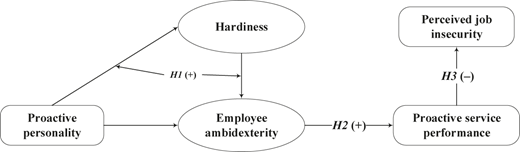
This study integrates the CCMA (Savickas, 2013) and JD-R theory (Bakker and Demerouti, 2017) to explain how frontline banking employees adapt to digital HRM changes. CCMA frames PP as adaptive readiness, with hardiness as an adaptability resource that supports ambidextrous behavior, leading to improved performance and lessening job insecurity. Meanwhile, JD-R theory highlights how personal and job-related resources help employees manage rising digital demands. By linking these theories, the study examines how adaptability resources and ambidextrous behaviors enable employees to sustain performance and long-term employability in evolving digital environments.
Mediating effects of Hardiness on the relationship between proactive personality and employee ambidexterity
As previously discussed, EA is perceived as the ability to simultaneously engage in exploration and exploitation activities to achieve expected work outcomes. This ability is crucial for the success of both workers and businesses (Hoang and Le, 2024). Nevertheless, our understanding of how individual traits can independently stimulate EA remains limited (Wang et al., 2023). In the context of changes (i.e. digital HRM transformation), according to the CCMA framework, how individuals respond to a new situation to achieve EA is influenced by their adaptability, predefined by their differences in knowledge, skill, ability, and other characteristics, e.g. personality (Ployhart and Bliese, 2006). Such stable characteristics that reflect a person’s flexibility or willingness to adapt can be conceptualized as adaptive readiness (Neureiter and Traut-Mattausch, 2017).
In our study, we chose to examine PP since it has been well-confirmed as an antecedent of adaptability (Lee et al., 2021; Ling et al., 2022), but only a few studies have explored its role in activating more proactive work actions and outcomes in changing work settings (e.g. Zhao and Gao, 2014; Kao and Chen, 2016). PP encompasses a relatively stable disposition against situational forces where individuals take initiative in various activities and conditions (Crant and Bateman, 2000). More specifically, when facing work challenges presented by HRM digitization, adaptive employees approach their tasks and adjust to the changing situation proactively or reactively (Ployhart and Bliese, 2006). Indeed, in anticipation of possible changes in the working environment, staff with a PP might be keener to learn new skills (i.e. exploration – one ambidextrous behavior) to ensure efficient operations toward performance goals (Wang et al., 2024). Further, proactive workers are likely to plan and induce changes in their working environment (Sonnentag, 2003). Although PP is an early indicator of adaptability (Kao and Chen, 2016), its involvement in EA has been the subject of relatively few studies (Yu et al., 2020). Few studies have linked PP to EA, primarily in different contexts (e.g. Wang et al., 2023, on R&D personnel and creativity). In digital HRM adaptation, proactive traits encourage employees to embrace change (Joseph et al., 2023; Hoang and Le, 2024). However, this relationship is not always direct, requiring further exploration of mediating factors. This study fills this gap by examining how intervening mechanisms shape the connection between PP and ambidexterity.
One novel key variable that can mediate this relationship is “hardiness”. Hardiness was first conceived by Kobasa (1979) in terms of three traits: commitment, control, and challenge. People with a high degree of hardiness show a great ability to accept change as inevitable and even welcome it as an opportunity for progress (Zhang, 2011). Hardiness is broken down into three elements: the ability to think and feel in a way that fosters existential bravery and drive, the capability to adjust to new situations, and the commitment to lifelong learning and personal development (Sheard and Golby, 2007). The study of Bartone et al. (2013) supports the idea that hardiness (particularly the hardiness-control) is a predictor of adaptation in military officer leaders. Thus, we consider hardiness a new and essential resource to explore concerning change-related coping behavior (Hanton et al., 2013) in the context of mildly stressful and chaotic work environments caused by HRM digitalization. A key gap in the literature is the limited exploration of hardiness as an adaptability resource in workplace adaptation (Tho, 2019). Traditionally viewed as a resilience factor against stress (Kobarg et al., 2017; Maddi, 2006), hardiness also plays a crucial role in fostering perseverance, learning, and problem-solving, enabling employees to balance efficiency (exploitation) with innovation (exploration) (Eschleman et al., 2010; Bartone et al., 2013). In the context of digital transformation, employees with higher hardiness are more likely to embrace technological change rather than resist it, making them better equipped to integrate AI-driven workflows, automation, and digital HRM tools into their daily tasks (Hanton et al., 2013; Palm et al., 2020). By positioning hardiness as both a stress-buffering trait and an enabler of ambidextrous adaptability, this study highlights its critical role in maintaining service excellence amid continuous technological shifts.
According to the CCMA theory (Savickas, 2013), positive personality traits displaying a willingness to adapt (i.e. adaptive readiness – “proactive personality”) affect one’s ability to deal with the changes in work-related activities and transitions (i.e. adaptability resource – the ability to acquire “hardiness”). As a result, it benefits adaptive responses (one’s actions and beliefs in response to new circumstances – “ambidexterity”). PP traits, characterized by a willingness to initiate change and adapt to new situations, are essential for navigating dynamic work environments. Hardiness, defined as a combination of a resilient and robust mindset and a commitment to lifelong learning (Sheard and Golby, 2007), is a key adaptability resource as it would enable individuals to perceive stressors as manageable and growth opportunities rather than threats. While PP and hardiness may influence each other, our primary focus is on the influence of PP on hardiness. For banking frontline staff, hardiness becomes a crucial adaptive resource that helps them cope with the uncertainties and pressures of digital transformation. In addition, the JD-R theory asserts that a PP, acting as a positive personal resource, provides individuals with the initiative and willingness to influence their environment and implement changes that facilitate personal and organizational objectives. Hardiness, on the other hand, enhances employees’ ability to leverage job resources (i.e. PP) and buffers the impact of job demands, thereby promoting adaptive behaviors such as ambidexterity.
In digital HRM environments, employees with proactive personalities were believed to better adapt to newly added e-HR systems or AI-driven performance tools requiring ambidexterity, such as mastering new technologies while maintaining core service tasks. This relationship is partly mediated by hardiness, for example, developed through digital stress-management platforms, which enables persistence through technological disruptions (Palm et al., 2020). Following this logic, we propose the following hypothesis:
Hardiness positively mediates the relationship between proactive personality and employee ambidexterity.
Employee ambidexterity and Proactive service performance
In this study, we chose to examine “proactive service performance” (PSP) as the key outcome of the adapting process, referring to an employee’s actions that go above and beyond what is required of them in terms of their job description and that they undertake their initiative and maintain over time (Jang et al., 2020). The rising complexity of HRM digitization, along with the ever-evolving needs of customers, is a major factor in the decision to focus on PSP since frontline staff in customer service must go the extra mile to satisfy clients in such situations. In such circumstances where service staff is expected to achieve higher PSP while in the effort to adapt to changes, individual ambidexterity, as conceived by Good and Michel (2013) as a mental construct that involves exploration, exploitation, and the capacity to proactively switch between the two modes of cognition, represents a possible solution.
In this sense, Good and Michel (2013) found a positive effect of individual ambidexterity on adaptive task performance over and above general mental ability. Furthermore, workers with higher levels of adaptability tend to achieve positive career outcomes and person-environment fit by enacting specific adapting behaviors, such as proactive skill development (Pajic et al., 2018), and more specifically – EA. Ambidextrous service staff are also characterized by cognitive and behavioral complexity and can dynamically adapt their tactics (such as being directive or providing autonomy) to contextual changes resulting from HRM digitalization to fulfill their required service performance, which is consistent with the findings from Bledow et al. (2013).
Although a comprehensive understanding of individual ambidexterity is underdeveloped (Kao and Chen, 2016), very few empirical studies have confirmed the positive effects of individual ambidexterity on staff’s in-role performance, such as Jasmand et al. (2012) who, for instance, viewed ambidextrous behavior as staff competence in accomplishing even contradictory tasks in the pursuit of various service and sales goals among customer service workers, let alone the “proactive” level. EA in digital HRM contexts shall be enabled by various tools, such as AI-powered customer relationship management systems that allow service staff to resolve current issues (exploitation) while simultaneously spotting trends for proactive service improvements (exploration) (Raj et al., 2024). The capacity for these dual roles directly enhances PSP, and so the following hypothesis is proposed:
Service staff with a higher level of employee ambidexterity (EA) positively leads to better proactive service performance (PSP)
Proactive service performance and Perceived job insecurity
Lastly, in the changing work setting that digitalized HRM may present to employees, we believe that their overall efforts towards a higher level of adaptation and PSP will ultimately promote a sense of self-comfort that their jobs are secured and stable. In this sense, Probst (2002) defined “perceived job insecurity” as a state in which employees perceive the continuance of their jobs to be under threat, differing from the concept of “employment stability” where the indicators of insecurity are objective (e.g. measurement of job tenure or the level of layoffs) (de Ruyter et al., 2020). People experience job insecurity when there is a mismatch between their expectations and the reality of their workplace, and when they feel helpless to take steps to ensure their present job and career continue in the way they would like in the face of an unclear future (Kim and von dem Knesebeck, 2016).
As discussed in the previous hypothesis (H2), the CCMA theory by Savickas (2013) affirms that the ability to accept and adapt to new situations and responsibilities in the workplace (i.e. EA) is a crucial self-regulatory competency that leads to essential adaptation outcomes. In this case, service workers who can adapt to changing circumstances are more confident in their abilities to advance in their careers and take charge of their professional development (i.e. PSP), hence reducing PJI (i.e. the subsequent outcome) (Rudolph and Zacher, 2016). In the present scenario, the JD-R model is a relevant supporting theoretical framework for comprehending this phenomenon. This is because the operating environment is highly volatile during turbulent periods, such as the post-COVID-19 pandemic and the implementation of new technology in bank HRM, and firms are imposing increased job demands on their staff to cope with changes, such as downsizing and workplace/process reconfiguration, which results in their PJI (Palumbo and Cavallone, 2022; Wynen et al., 2021).
The PJI can be mitigated by the availability and utilization of job resources, such as PSP, which is characterized by self-initiated, anticipatory actions that employees take to improve service delivery. This is a critical job resource that can buffer the negative impact of job demands, such as uncertainties and pressures associated with digital HRM changes. By adopting a proactive approach, employees are better prepared to manage the demands of their jobs, thereby minimizing the discrepancy between their expectations and the actuality of their workplace. In digitally transformed workplaces, PSP (e.g. using predictive analytics to preempt customer needs) signals adaptability to technological change, reducing PJI as employees align with future-focused organizational strategies.
Therefore, the following hypothesis is formulated:
A higher level of proactive service performance shall lead to lower perceived job insecurity.
The hypotheses formulated above are illustrated in Figure 1 below:
3. Methodology
3.1 Participants and procedure
Considering our research objectives and existing organizational literature, this study adopts a positivist, mixed-methods approach combining insights from qualitative exploration and quantitative validation. Specifically, initial qualitative insights were utilized to refine our model and measurement tools before quantitatively testing the hypotheses (Creswell and Clark, 2010). Furthermore, employing a survey-based approach aligns well with studying individual-level phenomena, making it suitable for our frontline banking employee context (Choudrie and Dwivedi, 2005).
This study examines frontline banking employees as a relevant context, given their significant representation in service roles worldwide (80% of the global workforce), according to Microsoft’s Work Trend Index Special Report 2023. In Vietnam, banking is crucial to economic stability, with frontline employees playing central roles in customer satisfaction amid rapid digital transformations (Raj et al., 2024). Digital tools such as AI-assisted customer interactions, automated performance tracking, and cost-cutting strategies post-pandemic (Samson and Agrawal, 2020) have increased the pressure on staff to sustain high service quality while adjusting to digital processes. These shifts make the sector an ideal context to explore how employees leverage adaptability resources to maintain performance and job security (Meyer et al., 2022). In this research, we control age (measured in years) and management level, as both could influence proactive job behavior and individual adaptability and adaptation (Rudolph and Zacher, 2016).
The study surveyed 368 frontline banking employees from various service branches and professional ranks across Vietnam. Respondents held customer-facing roles such as personal bankers, loan advisors, and customer service officers, which required switching between routine efficiency/protocol compliance and proactive customer engagement. Participants were selected from state-owned, joint-stock, and private banks, ensuring diversity in organizational structures and HRM digitalization levels. The sample was drawn from a database of Vietnamese banks from the Yellow Page, and managers were approached to distribute the survey to their staff. This process ensured a representative selection of employees directly affected by digital HRM transformation. As an incentive for every voluntary completed form, the respondent was offered to choose between a mobile top-up voucher and a donation to the Mountainous Underprivileged Students Fund charity, each worth VND 50,000.
A pilot study with 50 respondents was conducted to refine the questionnaire, aligning with the recommended guidelines of Hair et al. (2014). As both independent and dependent variables were collected from the same respondents, common method variance (CMV) was assessed using Harman’s single-factor test (Podsakoff et al., 2003). Results showed eight distinct factors, suggesting no significant CMV issue. To further validate the findings, an additional factor analysis was conducted by grouping the items of each independent construct with those of the dependent variable (PJI). In every case, the results indicated the emergence of two or more distinct factors, reinforcing the conclusion that CMV was not a significant concern in this study.
3.2 Measures
The items used to measure critical variables in the research were adapted from past empirical studies with a scale ranging from 1 (strongly disagree) to 5 (strongly agree). To minimize survey fatigue and the possibility of respondents giving identical answers, we followed the recommendations from prior works, using a reduced subset of three to four items from each scale to keep the survey length to a minimum without jeopardizing the validity (Maloney et al., 2011). The constructs were operationalized as follows:
PP was assessed as a single factor using the approach of Claes et al. (2005).
Hardiness (HD) (9 items): the 9-item version of a multidimensional construct developed by Bartone et al. (1989) and adopted by Tho (2019) was used for a self-rated measure that covered the three conceptually important facets: control (3 items), commitment (3 items), and challenge (3 items).
EA. The explorative and exploitative work-related activities of employees were measured using the scale developed by Kobarg et al. (2017). Similar to what Schnellbächer and Heidenreich (2020) did, EA in our paper was measured as a second-order construct, which comprised two first-order factors: “exploitation” and “exploration.”
PSP refers to the work outcomes by a service staff to fulfill service goals of improving both efficiency and quality of required tasks. We adapted the scale originally developed by Rank et al. (2007) and later applied by Raub and Liao (2012) in China.
PJI. The job insecurity scale developed by de Ruyter et al. (2020) was adapted for this study. The instrument assesses respondents’ perceptions of the extent to which their jobs were secure, whether working well could lead to greater job security, and their certainty of retaining current duties and retaining the same employer.
3.3 Analytical method
Covariance-based Structural Equation Modeling (CB-SEM) was selected as the analytical method for this study to ensure rigorous testing of the proposed relationships among latent variables. Following Hair et al. (2014), CB-SEM is particularly well-suited when the objective is to validate an established theoretical model, confirm hypothesized relationships, and assess overall model fit. Given that this research involves complex, multi-dimensional constructs, CB-SEM provides a robust framework for capturing and analyzing latent variables while accounting for measurement errors. Additionally, this method allows for a comprehensive evaluation of goodness-of-fit indices, ensuring that the theoretical model aligns with the observed data. Before conducting the analysis, extensive data screening and cleaning were performed, including checks for missing values and outliers, to enhance the reliability and validity of the results.
4. Results
4.1 Profile of the respondents
The descriptive statistics of the respondents are presented in Table 1, which shows the total number and variance in respondents according to their gender, age, organizational type, contract terms, and whether they are currently holding a managerial position. 368 complete survey forms were obtained via Microsoft Forms (online platform) and by post. The response rate was 46% (368 replies over 800 sent), thanks to incentives.
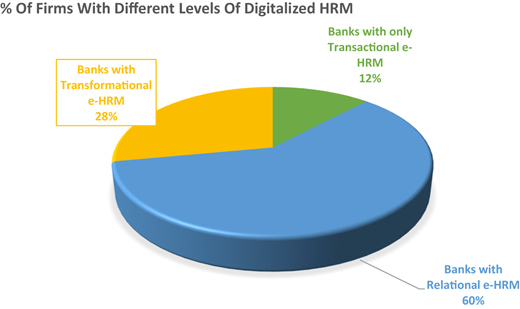
We also asked the respondents to indicate the highest level of HRM digitalization that applied to their organizations during the past three years. Such changes or uncertainty includes some example questions as follows:
Level 1 – Transactional e-HRM: “Is the bank you are working at implementing any electronic payroll systems, benefits administration, or employee records … ?”
Level 2 – Relational e-HRM: “… implementing remote access to HR data and services such as communication and employment relations … ?”
Level 3 – Transformational e-HRM: “… implementing strategic planning such as human capital management, knowledge management, organizational development, …?”
Responses are recorded in Figure 2 as follows.
4.2 Measurement model
We conducted Confirmatory Factor Analysis in CB-SEM to evaluate the quality of our measurement model. In line with the procedure suggested by Hair et al. (2014), the significance of loadings and the convergent and discriminant validity of the constructs were assessed. First, only the items with loadings greater than 0.700 were retained. Then, each composite variable had Cronbach’s Alpha above the recommended value of 0.700 and composite reliability from 0.737 to 0.948, exceeding the 0.700 threshold. These results illustrated satisfactory construct reliability and convergent validity (Hair et al., 2014). Next, we found that each variable’s Average Variance Extracted (AVE) ranged between 0.501 and 0.842, which satisfied the acceptance level of 0.500 and reinforced the convergent validity of composite variables (Hair et al., 2014). Finally, the AVE of each factor outstripped its squared inter-factor correlations, indicating its discriminant validity (Hair et al., 2014). Regarding EA, its first-order factors had significant standardized regression weights, which corroborated the multifaceted nature of this second-order construct as originally developed by Kobarg et al. (2017). The same inference applied to the Hardiness (HD) variable. Hence, the reliability and validity of our measurement model were substantiated. See the Online Appendix for more details.
4.3 Structural model and hypothesis testing
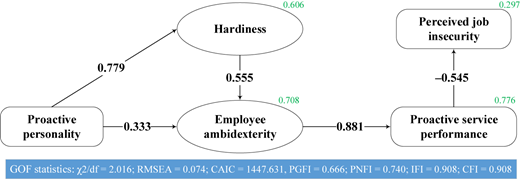
The structural part of our CB-SEM (Figure 3 and Table 2) demonstrated that service staff’s HD partially mediates the relationship between PP and EA in that both the direct and indirect effects are statistically significant, giving support to H1. Next, our model showed that service employees with higher EA are then associated with more PSP and this positive relationship is statistically significant, substantiating H2. Finally, our analysis corroborated H3, indicating that service workers with better PSP are likely to perceive lower job insecurity.
Moreover, we conducted our endogeneity testing following the CB-SEM procedures outlined by Hair et al. (2014), utilizing the instrument-free Gaussian copula approach proposed by Park and Gupta (2012). Initially, we assessed whether the endogenous variable was normally distributed by applying the Kolmogorov–Smirnov test with Lilliefors correction (Mooi and Sarstedt, 2019) to the latent independent variable scores. The results indicated that the scores of all constructs were not normally distributed. This allowed us to evaluate the Gaussian copula approach to detect endogeneity issues. The results showed that all p-values were above 0.05, indicating that the Gaussian copulas were insignificant. Based on these findings, we concluded that endogeneity issues were not present in this study.
5. Discussion and conclusion
5.1 Discussion of results
First, the current study aims to investigate the direct and indirect predictive effects of PP on ambidextrous behavior among service employees in response to the changes brought about by HRM digitalization to achieve PSP and, ultimately, alleviate the sense of job insecurity. As indicated in the model, our statistical results significantly explained 29.7% variance of PJI and 77.6% variance of PSP. All hypotheses in this study were supported, extending the current research on both EA and PSP by addressing a novel underlying self-regulated process that connects them all through the lens of adaptability. Also, this study’s findings are consistent with those confirmed by past studies such as Alghamdi (2018), Kao and Chen (2016), Rank et al. (2007), and Zhao and Gao (2014). Frontline service employees with proactive personalities will be in a better position to acquire ambidexterity (either directly or through the development of hardiness), making it simpler for them to satisfy customers and feel more secure in their jobs.
Second, our research identifies hardiness as a mediator between PP and EA, a relationship not previously examined in the banking sector’s digital adaptations. Digital HRM practices, such as online learning platforms and collaboration tools, create an environment where proactive traits can flourish, yet no prior studies have explored how hardiness drives this process (Zhao and Gao, 2014; Kao and Chen, 2016). According to CCMA theory, adaptability resources like hardiness are shaped by one’s willingness to adapt, and in banking, hardiness becomes a strategic asset when supported by continuous feedback, targeted upskilling, and flexible work arrangements (Palm et al., 2020). Essentially, hardiness enables frontline staff to manage the pressures of digital transformation and actively pursue innovative solutions, thereby ensuring both service quality and operational efficiency.
Lastly, our study empirically confirmed the effect of PSP on decreasing PJI. This finding is aligned with similar results from past literature such as Vo-Thanh et al. (2020). The digital transformation of banking intensifies regulatory pressures, operational shifts, and job uncertainty, requiring employees to navigate evolving demands (Tadic et al., 2018). Downsizing and process automation contribute to workforce concerns, making adaptability essential for sustaining performance and career security. In this sense, EA enables staff to balance efficiency with innovation, reaching for more proactive performance and thereby reinforcing their value within the organization. Proactively adapting to change enhances job satisfaction and reduces perceived insecurity, especially when organizations invest in training and development to strengthen workforce resilience.
5.2 Key implications
Theoretically, this study offers several contributions to the literature. First, the study successfully explains how service staff can develop and enhance their self-regulated adaptive mechanism when dealing with changing working environments and settings deriving from their organization’s efforts to digitalize HRM via individual-level ambidexterity using a construction model of adaptation approach. Our findings hope to answer the calls from various scholars for the need to comprehend how working individuals adapt to cope with changes beyond typical mechanisms based on control enforced by top management in today’s challenging business world (Contreras et al., 2020). Second, our study examines ambidexterity at the individual level, addressing calls to explore how personal characteristics shape ambidextrous behaviors rather than relying solely on top-down perspectives, as concerned by de Ruyter et al. (2020). To our knowledge, it is the first research integrating CCMA and JD-R theories to understand how employees self-regulate adaptive behaviors, enhance performance, and reduce job insecurity. Additionally, this research uniquely positions hardiness as an adaptive resource (instead of a personality trait) mediating PP and ambidexterity, enriching CCMA and JD-R frameworks. Lastly, by focusing on the banking industry, which is marked by strict regulation, rapid technological change, and demanding customer expectations (Tadic et al., 2018), the study provides valuable insights for promoting adaptive performance among frontline employees.
For practical implications, the current findings may contribute to settling the ongoing dispute over the value of personality and flexibility in employee selection (Woods et al., 2020), particularly in the context of Industry 4.0. Personality, adaptability, and performance in service jobs have a complex connection with one another, and understanding this might lead to better use of personality tests in the hiring process. When using personality measurements in personnel selection, it may not be best practice to select job applicants from the top down, as is standard practice when using ability tests, but rather to select the ones that “fit.” Secondly, the findings highlight the importance of understanding ambidexterity and employee adaptation during uncertain times, especially as banks accelerate digital HRM practices. Employees can either support or hinder organizational change, making targeted HR initiatives crucial. Specifically, this study positions hardiness as a mediator linking PP with ambidextrous behavior, emphasizing the need for resilience-focused HR programs such as stress management workshops and adaptive learning initiatives tailored to frontline bankers (Palm et al., 2020). Moreover, HR managers should consider integrating these interventions with employees’ inherent personality traits to foster genuine adaptability, thus enhancing their self-efficacy, ambidextrous behaviors, and overall performance. Providing employees with greater confidence in adapting to digital HRM practices can significantly help banks navigate uncertainty effectively.
All in all, HRM policies and practices that include digital technology should be assessed not just for their efficiency and effectiveness but also for the degree to which they are seen as fair and beneficial by all service employees and not as burdens or even fears over losing their jobs. A sense of insecurity over one’s employment status may have detrimental psychological and physiological impacts, as well as lead to discontent in one’s current working position, a decrease in dedication to the company, and a breakdown in trust in management (Probst, 2002). Empirically, our proposed mechanism shall present a possible strategy that service firms can adopt when detecting levels of job insecurity in their workplace. If firms recruit the “right” people from the beginning and then offer proper training on “hardiness” and “ambidexterity,” service staff shall be better off with higher performance and feeling less insecure, which consequently saves the HR department from handling mental health complaints, rumors and gossips about future layoffs, and non-compliant job behaviors (Hellgren and Chirumbolo, 2003). Despite initial disruptions, digitizing HRM removes routine tasks, reduces human errors, and allows specialists to focus on critical issues (Naeem, 2020). Effective digital HR practices include integrating proactive digital tools (e.g. mobile platforms, digital performance management), digitizing manual tasks for improved control and challenges, and digital training or reward systems to boost motivation and commitment and enhance employees’ adaptability, engagement, and overall performance (Halid et al., 2020).
5.3 Limitations and future research
Several limitations should be considered when interpreting this study. Firstly, external factors influencing service employees’ adaptation to HRM digitization, such as workplace characteristics and broader environmental influences (cultural, economic, technological), were not explored (Dolan et al., 2022). Future research could examine how team support, managerial influence, and cultural aspects like collectivism or power distance impact employees’ adaptability. Expanding this research into sectors beyond banking, such as retail or healthcare, may offer valuable insights and tailored strategies. Secondly, the study overlooked skills like emotional intelligence and situational assessment, which could moderate the adaptive benefits of PP traits as Chan (2006) has proposed. Lastly, self-reported measures risk social desirability bias; future research could incorporate evaluations from supervisors, peers, or customers and employ longitudinal or experimental designs to address potential causality concerns.
Acknowledgment
This work was supported (1) by the Japanese Government via the project “An Empirical Study on Services Value Chain based on the Experiential and Credibility Values” (Grant-in-Aid for Scientific Research (A) No.25240050), (2) by Japan International Cooperation Agency (JICA) through AUN/SEED-Net Project (No. 022674.242.2015/JICA-AC) and (3) by Japan Society for the Promotion of Science (JSPS) KAKENHI (No. JP18J11566) and (4) Sustainable Development Goals (SDG) grant from the Graduate Research School of Western Sydney University (WSU) (No. 20551.72050).
We gratefully acknowledge Dr Nguyen Thi Minh Thi, a former supply chain manager of Samsung Electronics Vietnam Co., Ltd. and Nipro Vietnam Co., Ltd., for her in-depth remarks that contribute to the completion of this paper.
Funding: This research is funded by the University of Economics Ho Chi Minh City, Vietnam (UEH).
Conflicting interests: We wish to confirm that there are no known conflicts of interest associated with this publication. We confirm that the manuscript has been read and approved by all named authors and that there are no other persons who satisfied the criteria for authorship but are not listed. We further confirm that the order of authors listed in the manuscript has been approved by all of us.
We confirm that we have given due consideration to the protection of intellectual property associated with this work and that there are no impediments to publication, including the timing of publication, concerning intellectual property. In so doing we confirm that we have followed the regulations of our institutions concerning intellectual property.
Ethical approval: We further confirm that any aspect of the work covered in this manuscript that has involved either survey human has been conducted with the ethical approval of all relevant bodies and that such approvals are acknowledged within the manuscript.
Contributorship: We understand that the Corresponding Author is the sole contact for the Editorial process (including the Editorial Manager and direct communications with the office). He is responsible for communicating with the other authors about progress, submissions of revisions, and final approval of proofs. We confirm that we have provided a current, correct email address, which is accessible by the Corresponding Author.
Availability of data: The data are available on request from the corresponding author due to the participant’s privacy.
References
The supplementary material for this article can be found online.