The package printing industry poses significant environmental challenges. Green human resource management (GHRM) has been proposed as a mechanism for mitigating these impacts, but its drivers remain poorly understood in emerging-economy contexts. This study examines how HR managers' education, GHRM awareness, institutional pressures and formal HR policies shape perceptions of GHRM's contribution to competitive advantage in Ghana's package printing industry.
A mixed-method design combined survey data and interviews with HR managers selected through purposive and snowball sampling. A path model grounded in the resource-based view (RBV) and institutional theory was tested using AMOS version 26, while qualitative findings contextualized the quantitative results.
The results show that four hypothesized relationships were supported. Institutional pressures significantly influence both GHRM awareness and the integration of GHRM practices, while HR managers' awareness significantly predicts perceived competitive advantage. In contrast, academic qualifications and formal HR policies do not exhibit significant effects. Qualitative evidence suggests that GHRM adoption is driven primarily by external regulatory, market, and normative pressures rather than internal HR structures.
The current work relied on self-reported measures of GHRM practices and competitive advantage, which may introduce perceptual bias. However, such measures are appropriate for constructs involving managerial interpretation. Future research could supplement perception-based measures with objective and verifiable indicators such as energy consumption records, waste management logs, environmental audit reports or customer retention data. While the sample size was small, it reflected the accessible population of HR managers in the sector and was appropriate for the exploratory, theory-extending objectives of the study.
The findings provide several context-specific and actionable implications for managers, industry associations, and policymakers. First, the strong effect of institutional pressures suggests that industry-wide environmental standards, certification schemes and regulatory signalling are effective levers for promoting GHRM. Second, the importance of awareness highlights the value of short, practice-oriented capacity-building programmes tailored to SME realities rather than generic sustainability training. Third, the weak role of formal HR policies implies that shared HR toolkits or policy templates developed by industry associations could help firms institutionalize GHRM without extensive internal expertise. Fourth, customer environmental expectations emerged as a powerful market mechanism; firms can leverage this by communicating environmental performance and targeting procurement opportunities with sustainability requirements. Finally, addressing gender imbalance in HR leadership may introduce diverse perspectives that support the long-term institutionalization of GHRM practices.
This study extends GHRM scholarship by demonstrating the limits of resource-based explanations in weakly institutionalized, SME-dominated industries and showing how institutional pressures and managerial awareness jointly shape GHRM outcomes. The findings challenge the assumption that formal HR systems are necessary for sustainability-oriented HRM and show that external institutional forces can compensate for weak internal HR structures. By integrating RBV and Institutional Theory, the study provides context-sensitive insights into GHRM adoption and sustainable HR practices in resource-constrained environments.
1. Introduction
Package printing is expanding rapidly across the globe (Sastre, de Paula, & Echeveste, 2022). The demand for packaged essentials such as food, beverages, cosmetics, and pharmaceuticals increased sharply during the COVID-19 pandemic, leading to a corresponding rise in manufacturing activities within the package printing industry. According to Markets and Markets (2022), the industry's market share is expected to reach USD 433.4 billion by 2026. Modor Intelligence (2022) projects that this value will rise to USD 507.10 billion in 2027, representing a compound annual growth rate (CAGR) of 7.61%. This growth trajectory implies a rising demand for both human resources and printing raw materials, with significant implications for environmental sustainability.
The negative environmental implications of package printing have garnered attention globally (Silva, 2001). According to Rösch, Kohajda, Röder, Bergen, and Schlink (2014), air pollutants and volatile organic compounds (VOCs) are present in the inks, moistening solutions, varnishes, washing solvents, and lacquers used in printing processes, many of which evaporate during production. Volatiles are released during ink mixing, printing, surface coating, and waste handling, posing serious environmental risks. The greenhouse effect and ozone depletion caused by VOCs contribute to global warming and environmental degradation (Aydemir & Özsoy, 2020). While many industrialized countries enforce strict regulations against environmentally harmful emissions, low- and middle-income nations often face significant challenges in implementing and enforcing such policies. Even though advanced pre-press technologies like computer-to-plate (CTP) systems and metal engraving have been introduced globally to lessen the detrimental environmental effects of pre-press processes, many small-scale package printing businesses in Ghana and other developing economies lack access to these technologies due to cost constraints. Additionally, increased paper material waste is reported in the sector (Vachon & Klassen, 2006), and waste disposal methods are often not environmentally friendly (Aydemir & Özsoy, 2020). The printing process and transportation also consume significant energy, contributing to greenhouse gas emissions and climate change (Department of Environment and Conservation NSW, 2005). These challenges underscore the importance of organizational and managerial interventions, beyond technological upgrades, for mitigating the environmental footprint of package printing.
Employees are vital ambassadors for environmental sustainability because they drive firms' groundbreaking and creative initiatives (Jackson, Ones, & Dilchert, 2012). Package printing companies can enhance their environmental performance, reduce costs, and boost employee loyalty by adopting effective green human resource management (GHRM) practices (Renwick, Redman, & Maguire, 2013). GHRM encompasses policies and practices that encourage environmentally responsible behaviour among employees, thereby aligning sustainability objectives with organizational performance goals (Jabbour & de Sousa Jabbour, 2016; Yusoff, Nejati, Kee, & Amran, 2020). Prior studies by Aykan (2017) suggest that GHRM functions, including green job design, recruitment, training, performance appraisal, and rewards systems, can generate long-term competitive advantages by embedding sustainability into core organizational processes.
GHRM supports the growth of resource-efficient and socially responsible organizations by raising employee awareness of and commitment to environmental sustainability (Gilal, Ashraf, Gilal, Gilal, & Channa, 2019). However, the effective implementation of GHRM depends on several enabling conditions, including HR managers' educational backgrounds, their level of awareness of GHRM, the presence of formal HR policies, institutional pressures, and the degree to which GHRM practices are integrated into daily organizational activities (del Brío, Fernandez, & Junquera, 2007; Glavas, Senge, & Cooperrider, 2010). These enablers affect not only the adoption of GHRM practices but also how HR managers interpret and evaluate GHRM's contribution to competitive advantage (Carballo-Penela, Ruzo-Sanmartín, Álvarez-González, & Paillé, 2023). HR managers' perceptions are particularly important because they shape HR decision-making and determine the extent to which sustainability initiatives are prioritized and institutionalized (Mtembu, 2019; Al Mamun, 2019; Hossari & Elfahli, 2023). If they view GHRM practices favourably in their contribution to competitive advantage, HR managers are more likely to promote an atmosphere that values environmental responsibility and sustainable business practices. This may result in more employee commitment, creativity, and engagement in sustainability initiatives. This focus on HR managers' perceptions is particularly important because HR managers act as key gatekeepers of GHRM implementation. In many SMEs, sustainability initiatives are rarely institutionalized unless HR managers perceive them as strategically valuable. Consequently, managerial perceptions represent an important precursor to organizational action and may influence whether environmental practices are adopted, maintained, or abandoned, even before measurable organizational performance outcomes become evident.
Although a growing body of research has examined the performance outcomes of GHRM, most studies focus on organizational-level economic, social, or environmental outcomes rather than managerial cognition and interpretation. Mishra (2017) is one of the few authors who investigated how the availability of formal HR policies influences HR managers' beliefs about sustainability-driven competitive advantage. Similarly, existing studies (e.g. Aykan, 2017; Yusoff et al., 2020; Carballo-Penela et al., 2023) largely assume the presence of formalized HR systems and strong regulatory environments, conditions that may not hold in emerging-economy contexts characterized by institutional informality and resource constraints. The lack of literature on this subject underscores the need for more empirical research to identify the variables influencing HR managers' perceptions of GHRM's value.
This study argues that the limited explanatory power of existing GHRM research stems from an overreliance on internal organizational factors, without sufficient attention to the institutional contexts in which HR decisions are made. By integrating the Resource-Based View (RBV) with Institutional Theory, this study advances a more context-sensitive explanation of how GHRM enablers shape HR managers' perceptions of competitive advantage in industries operating under weak formalization. Specifically, the study demonstrates that institutional pressures and managerial awareness play a more decisive role than formal HR policies or educational qualifications in shaping both GHRM integration and perceived competitive advantage.
Using a path analysis approach within Ghana's package printing industry, the study makes three key contributions. First, it empirically shows why internal HR resources alone are insufficient to explain GHRM outcomes in SME-dominated, informal settings. Second, it highlights managerial awareness as a critical cognitive resource linking GHRM practices to competitive advantage. Third, it illustrates how institutional pressures substitute for weak internal HR structures in driving sustainability practices. Beyond its contextual relevance, the study contributes conceptually to GHRM scholarship by clarifying the boundary conditions under which RBV-based explanations hold and when institutional explanations become more salient. The findings also offer practical, context-specific insights for strengthening GHRM implementation in resource-constrained industries.
2. The package printing industry and its effects on the environment
Packaging is a multifaceted system that protects and maintains the content of products and also facilitates their pricing, identification, promotion, and marketing (Sastre et al., 2022). Package printing refers to the process of printing packaging materials, like plastic, glass, paper, metal, paperboard, and labels, through several printing procedures, including flexography, offset lithography, screen printing, rotogravure, and digital printing using diverse types of ink (Modor Intelligence, 2022). As of 2019, the global packaging market was valued at approximately USD 917 billion, with projections indicating growth to USD 1.05 trillion (Sastre et al., 2022). This growth is largely driven by the food, beverage, cosmetic, and pharmaceutical sectors, where packaging plays a critical role in product differentiation and safety. Da Silva (2017) reported that in Portugal, the printing industry is accountable for approximately 2% of manufacturing turnover and employment. In Ghana, however, disaggregated data on the package printing industry's contribution to GDP remain unavailable, reflecting the sector's largely informal and fragmented structure. This lack of formalization has implications not only for economic measurement but also for environmental governance and sustainability practices within the industry.
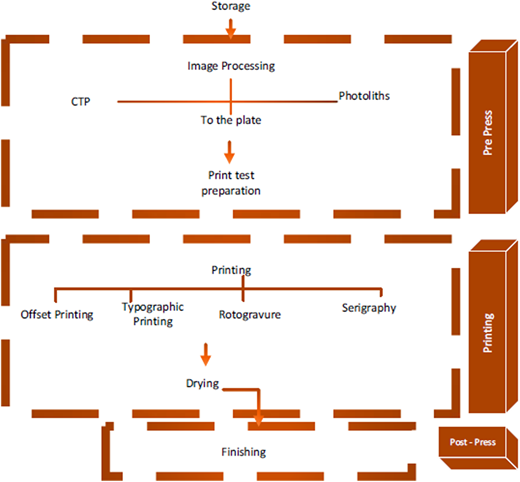
The Package Printing process consists of three main stages, namely pre-press, print, and post-press (Figure 1). During the pre-press stage, a text or image is processed through several procedures to be reproduced using one of several printing methods. The selected printing method influences the pre-press processes and the print quality (Barbosa, 2005). Image designing and processing is the first step during pre-press and may include photocomposition and photolith production, by which a model is produced, which is used at a later stage to print metal sheets. In recent times, many medium- and large-scale Package Printing companies have resorted to the use of Computer to Plate (CTP) technology, which eliminates photoliths' production (Da Silva, 2017). This saves time because it accelerates the pre-press stage. In the CTP technology, a digital file is sent unswervingly to the metal sheet through a laser without any transitional activities and the use of photoliths. Many small-scale firms in developing economies continue to rely on older, more environmentally intensive processes due to cost constraints. During the print stage, images are transferred onto substrates, while post-press activities involve finishing processes that enhance the visual and tactile quality of printed products.
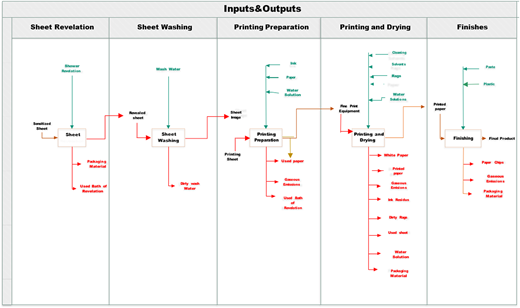
As demand for packaging and packaged products continues to rise, sustainability challenges become increasingly pronounced. It is proposed that packaging and its related activities must cause the least environmental impact (Da Silva, 2017). Da Silva (2017) highlights that printing processes (Figure 2) generate environmentally harmful outputs, including wastewater contaminated with nitrogen compounds and solid waste from inks and substrates. The handling of inks, solvents, paper waste, and energy consumption directly affects the industry's environmental footprint and its contribution to climate change. Environmentally sustainable practices, such as reduction of waste, recycling, safe treatment and disposal of waste, and the use of low-VOC materials, are therefore increasingly emphasized (Aydemir & Özsoy, 2020). However, the adoption of such practices depends not only on technological investments but also on organizational and human resource-related factors, including employee awareness, training, and managerial commitment to sustainability.
This study builds on this insight by shifting attention from purely technological solutions to the role of human resource management in mitigating the environmental impact of package printing, particularly in contexts where financial and regulatory constraints limit access to advanced production technologies.
3. Hypothesis development
3.1 Theoretical foundation
This study relied on two complementary theories, namely, the Resource-Based View (RBV) theory and the Institutional Theory, to explain how Green Human Resource Management (GHRM) enablers shape HR managers' perceptions of competitive advantage. The Resource-Based View (RBV) theory postulates that firms achieve sustained competitive advantage through resources and capabilities that are valuable, rare, inimitable, and non-substitutable (VRIN) (Wernerfelt, 1984; Barney, 2001; Lowe & Teece, 2001). From an RBV perspective, human resources, particularly managerial knowledge, skills, and organizational systems, constitute strategic assets that can differentiate firms over time (Helfat et al., 2023; Cappelli, Corsino, Laursen, & Torrisi, 2023).
Competitive advantage refers to a firm's ability to create greater value than competitors, either through cost efficiency, superior profitability, or differentiated offerings (Barney, 2001; Tedla, 2016; Thomran, Alshallaqi, Hasan, & Abdulrab, 2022). Prior research suggests that while tangible resources and technologies can be replicated, socially complex systems such as HR practices are more difficult to imitate, making them a potential source of sustained advantage (Bal, 2010).
In the context of GHRM, the RBV frames HR managers' academic qualifications, awareness of environmental sustainability, and formal HR policies as internal strategic resources that enable the integration of green practices into HR activities. When effectively deployed, these resources can enhance firms' environmental performance while simultaneously contributing to competitive advantage. However, RBV alone does not sufficiently explain why firms decide to adopt GHRM practices in the first place, especially in developing-country contexts where environmental regulation is weak and formal HR systems are underdeveloped.
To address this limitation, the present study integrates Institutional Theory (DiMaggio & Powell, 1983), which emphasizes the role of external pressures in shaping organizational behaviour. Institutional Theory identifies normative pressure (e.g. industry and professional standards), coercive pressures (e.g. regulations and customer requirements), and mimetic pressures (e.g. imitation of competitors) as key drivers of organizational change. Institutional Theory also recognizes that organizations may respond to external pressures symbolically rather than substantively. Meyer and Rowan (1977) argue that firms often adopt formal structures, policies, and procedures to gain legitimacy and satisfy stakeholder expectations, even when these structures are weakly implemented in practice. This phenomenon, commonly referred to as institutional decoupling, occurs when formal policies are disconnected from day-to-day organizational activities (Bromley & Powell, 2012). In the context of GHRM, firms may develop environmental policies to signal commitment to sustainability without fully integrating green practices into HR-related activities. Consequently, the mere existence of formal HR policies may not necessarily translate into meaningful GHRM implementation, particularly in resource-constrained and highly informal organizational settings. In emerging economies such as Ghana, where formal enforcement mechanisms are limited, institutional pressures often substitute for internal strategic motivations in driving sustainability-related practices (Becker & Huselid, 2006; Aravamudhan, 2012; Mandip, 2012; Deshwal, 2015; Khan, Azhar, & Hayat, 2014 Aykan, 2017).
By integrating RBV and Institutional Theory, this study argues that while institutional pressures explain why firms adopt GHRM practices, RBV explains how internal HR-related resources determine whether such adoption translates into perceived competitive advantage. HR managers occupy a central position in this process, as their awareness and capabilities mediate the relationship between external pressures and the integration of internal practices. This dual-theoretical framework allows the study to move beyond context-specific description and contribute conceptually to GHRM scholarship by clarifying the boundary conditions under which internal resources and external pressures jointly shape sustainability outcomes.
Existing GHRM studies typically rely on RBV to explain competitive advantage or Institutional Theory to explain adoption pressures. Few studies combine both perspectives to explain how external pressures shape awareness and integration while internal cognitive resources shape perceived competitive advantage.
3.2 Hypothetical relationships between the GHRM enablers and HR managers' perception of a firm's competitive advantage
3.2.1 Academic qualifications of HR managers and integration of GHRM practices
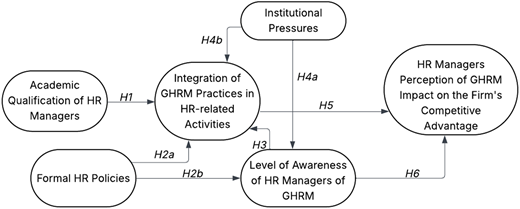
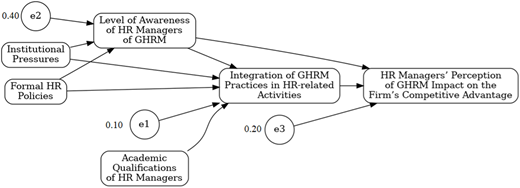
Previous studies suggest that higher educational attainment is associated with greater receptivity to environmental initiatives and sustainability-oriented HR practices (Yang & Li, 2023; Younis & Hussain, 2023). However, much of this evidence is drawn from contexts characterized by formal HR systems and specialized sustainability training, raising questions about its applicability to SME-dominated industries in developing economies. Despite these contextual differences, existing literature generally supports a positive association between HR managers' academic qualifications and the integration of GHRM practices (Figure 3).
Academic qualifications of HR managers are positively related to the Integration of GHRM practices.
3.2.2 Formal HR policies promoting GHRM and integration of GHRM practices in HR-related activities
Organizations looking to improve their environmental sustainability and gain a competitive edge must include Green Human Resource Management (GHRM) strategies in all HR-related activities. The existence of formal HR policies that specifically encourage GHRM practices within the company is one important aspect impacting this integration. Fayyazi, Shahbazmoradi, Afshar, and Shahbazmoradi (2015) and Peng and Lin (2008) noted that the absence of a comprehensive strategy or policy for green human resource management implementation challenged GHRM implementation in a study on 31 Iranian managers and oil experts in the oil industry, focused on cultural, managerial, technological, and HR factors affecting GHRM implementation. The lack of such a strategy may make it more difficult to encourage environmentally friendly behaviour among staff members (Haddock-Millar, Sanyal, & Müller-Camen, 2016). Businesses that promote environmental sustainability through well-articulated and stated formal HR policies are generally expected to integrate GHRM practices into recruitment, training, performance management, and employee development activities. However, the institutional decoupling literature suggests that the existence of formal policies does not always guarantee implementation. In some organizations, environmental policies may serve primarily symbolic purposes aimed at demonstrating legitimacy to external stakeholders rather than guiding operational practices (Meyer & Rowan, 1977; Bromley & Powell, 2012). Despite this possibility, prior GHRM research generally assumes that formal HR policies facilitate the implementation of green practices. Therefore, the following hypothesis is proposed (Figure 3):
Formal HR policies promoting GHRM are positively related to the integration of GHRM practices.
3.2.3 Formal HR policies promoting GHRM and the level of awareness of HR managers of GHRM
For environmentally sustainable HR practices to be successfully implemented and integrated within firms, HR managers must understand GHRM practices. Formal HR policies that support GHRM can make HR managers aware of the significance and goals of GHRM efforts. Peng and Lin (2008) believe that the absence of a formal strategy or policy on the implementation of green human resource management curtails HR managers' comprehension of green plans and procedures. According to Jackson and Seo (2010), the lack of a comprehensive plan also contributes to poor knowledge and awareness, doubts, resistance to change, and a lack of enthusiasm for green HRM. Therefore, HR managers who support formal HR policies promoting environmental sustainability are more likely to have a deeper understanding of GHRM principles and practices. Thus, the theory that we are putting forward is (Figure 3):
Formal HR policies promoting GHRM are positively related to the awareness of HR managers of GHRM.
3.2.4 Level of awareness of HR managers of GHRM and integration of GHRM practices
HR managers' comprehension of GHRM practices is deemed crucial for effective integration and implementation of ecologically sustainable HR practices in enterprises. HR managers well-versed in GHRM are better suited to promote and support integrating green initiatives into all HR-related activities. Islam, Hunt, Jantan, Hashim, and Chong (2020) found that one of the main obstacles to businesses implementing GHRM practices is a lack of environmental management knowledge and expertise among employees, particularly managers. Aragón-Correa and Rubio-López (2007), Sindhwani and Saxena (2015) are among the authors who have advocated for increased environmental management education and training. According to the authors, insufficient or nonexistent experience in environmental management can lead to inefficiencies, ineptitude, and a decrease in profits. Implementing green human resource management methods is further hampered by the lack of and inadequate availability of green courses in higher education across the globe (Sindhwani & Saxena, 2015). Though these studies provide insightful information about the relationship between awareness levels and GHRM practice integration, more research is necessary to determine potential moderators and contextual factors that may affect this relationship, as well as to explore the mechanisms through which awareness influences integration. In light of the aforementioned, the following is our hypothesis (Figure 3):
The level of Awareness of HR Managers of GHRM is positively related to the Integration of GHRM Practices.
3.2.5 Institutional pressures and integration of GHRM practices
Institutional Theory argues that organizations adopt new practices in response to pressures from the external environment rather than purely internal strategic considerations (DiMaggio & Powell, 1983). In developing economies, sustainability-oriented HR initiatives are frequently driven by client demands, regulatory expectations, and industry norms rather than internally developed capabilities (Jabbour & Santos, 2008; Renwick et al., 2013). Accordingly, institutional pressures are expected to play a critical role in shaping both HR managers' awareness of GHRM and the extent to which green practices are integrated into HR-related activities.
Institutional pressures are positively related to HR managers' awareness of GHRM.
Institutional pressures are positively related to the integration of GHRM practices.
3.2.6 Integration of GHRM practices in HR-related activities and HR managers' perception of GHRM impact on a firm's competitive advantage
Incorporating GHRM practices into HR-related tasks is imperative for firms seeking to improve their competitive advantage and environmental sustainability. HR managers are crucial to the development and application of GHRM practices, and the degree to which GHRM practices are interwoven into HR-related activities affects how these managers perceive the practices' effect on the company's competitive advantage (Khan, Shams, Khan, Akbar, & Niazi, 2022). HR managers who believe GHRM adds to the company's competitive edge are more inclined to work for organizations where GHRM practices are more deeply integrated into HR-related tasks like hiring, training, and performance management (Jabbour & Santos, 2008). We hypothesize that HR managers' perceptions of GHRM's influence on the firm's competitive advantage positively correlate with integrating GHRM practices in HR-related activities (Figure 3). HR managers are more likely to believe that GHRM adds to the company's competitive edge and improves its strategic market position in organizations that successfully incorporate GHRM practices into HR-related activities.
Integration of GHRM Practices in HR-related Activities is positively related to the HR managers' perception of GHRM's impact on the firm's competitive advantage.
3.2.7 Level of awareness of HR managers of GHRM and HR managers' perception of GHRM impact on a firm's competitive advantage
Understanding and implementing environmentally sustainable HR practices inside firms depends heavily on managers' awareness of GHRM practices. HR managers who are well-versed in GHRM are better able to identify the strategic significance of GHRM projects and how they could affect the company's competitive advantage (Vahdati & Vahdati, 2018). The level of GHRM awareness among HR managers was found to positively correlate with their perception of GHRM's impact on competitive advantage. This suggests that HR managers with a greater understanding of GHRM practices are more likely to view GHRM as a strategic tool for gaining a competitive edge. This promotes a sustainable and environmentally conscious culture (Haddock-Millar et al., 2016). We hypothesize that HR managers' perceptions of GHRM's influence on the firm's competitive advantage are positively correlated with their level of GHRM awareness (Figure 3). HR managers who believe that GHRM practices add to the company's competitive edge are more inclined to work for organizations that invest in educating HR managers about GHRM practices, which improves the organization's strategic standing in the market.
The level of Awareness of HR Managers of GHRM is positively related to the HR managers' perception of GHRM's impact on the firm's competitive advantage.
4. Method
4.1 Study area
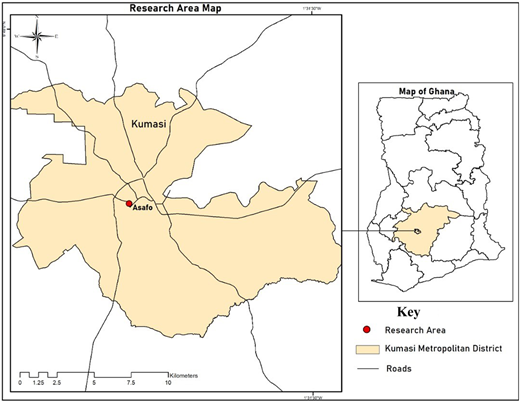
The study was conducted at Asafo in Kumasi, Ghana [Latitude: 6.687284386795921, Longitude: −1.6117233037948608]. Kumasi is the second-largest city in Ghana (World Population Review, 2023) and the capital of the Ashanti Region. Asafo (Figure 4) and other adjacent suburbs constitute the Central Business District of Kumasi. Economic activities within the Asafo enclave include financial and commercial sectors, pottery, clothing and textiles, and Package Printing. Asafo is widely considered the hub of package printing activities in Kumasi, hosting a concentration of small-, medium- and large-scale printing firms, book binding shops, stationery shops, and graphic design companies (Okyere, 2017). This concentration made Asafo a suitable site for examining GHRM practices within the package printing industry.
4.2 Research design
A mixed-method research design was employed for this study, combining quantitative survey data with qualitative interviews. This design was appropriate given the exploratory nature of GHRM research in developing-country manufacturing contexts, where both measurable relationships and contextual explanations are required. Quantitative methods, using structured questionnaires, were used to test hypothesized relationships among key constructs, including HR managers' education, awareness of GHRM, institutional pressures, integration of GHRM practices, and perceived competitive advantage.
Qualitative methods, through semi-structured interviews, were employed to elucidate the contextual and institutional factors underlying the observed quantitative relationships, particularly to explain why certain hypothesized paths were supported while others were not. Rather than treating qualitative data as supplementary, the study adopted an explanatory mixed-methods approach in which interview insights were explicitly used to interpret and contextualize the quantitative findings. This approach enhanced the interpretive depth and credibility of the analysis, consistent with mixed-methods scholarship (Ponto, 2015; LaMarre & Chamberlain, 2022).
4.3 Sampling technique
A combination of purposive and snowballing techniques (i.e. non-probability sampling technique) was employed. The package printing industry in Kumasi lacks a formal registry or sampling frame, rendering probability-based sampling impractical. Purposive sampling enabled the identification of firms with designated HR managers, aligning with the study's focus on HR-related GHRM practices. Snowball sampling was subsequently used, where participating HR managers nominated other eligible respondents within the study area.
A total of 61 HR managers from 61 firms participated in the study. This number represents the accessible population of HR managers within the package printing firms operating in the study area, effectively constituting a census of the relevant professional group. In organizational and managerial research, studies involving small but complete populations are common when examining niche sectors or specialized professional roles (Onwuegbuzie & Collins, 2007). Given the study's exploratory and theory-extending objectives, the sample size was deemed appropriate, particularly when complemented by qualitative data that provided explanatory insight.
4.4 Data collection tools and procedure
A questionnaire with open- and closed-ended questions and an interview guide were used for data collection. The instrument captured information on: (i) the presence of formal HR policies promoting GHRM, (ii) the educational qualification of HR managers, (iii) the level of awareness of HR Managers of GHRM, (iv) the level of integration of GHRM practices into HR-related activities, (v) HR managers' perceptions of GHRM's contribution to competitive advantage, and vi. institutional pressures shaping GHRM awareness and adoption.
The questionnaire was first pre-tested before the field survey using 15% of the target respondents to assess clarity, completeness, and consistency, consistent with established survey research guidelines (Baker, 1994; Gizaw, Yalew, Bitew, Lee, & Bisesi, 2022). Feedback from the pre-test informed revisions to item wording and structure, enhancing content validity.
The administration of the questions was done using English language. The availability of formal HR policies promoting GHRM in the firms was coded 0 for “No formal policies” and 1 for “Yes, formal HR policies exist”. The educational level of the HR managers was coded as follows: 0 – “No formal education”, 1 – “Junior High School”, 2 – “Senior High School Certificate”, 3 – “Diploma”, 4 – “Bachelor's degree”, 5 – “Master's degree”, 6 – “Ph.D”. Responses to the questions regarding awareness of GHRM were evaluated using a Likert scale ranging from 1 (“Not aware”) to 5 (“Fully aware”), where higher scores indicated greater awareness. Composite scores were created by averaging responses to multiple awareness items. A Cronbach's alpha of 0.82 indicated a good internal consistency. For each set of questions pertaining to the integration of specific GHRM practices (e.g. Job design), responses were assessed on a Likert scale from 1 (“Least applied”) to 5 (“Highly applied”), with higher scores indicating greater integration of GHRM practices in HR-related activities. The composite score reliability using Cronbach's alpha was 0.83. The average score for all items under the questions relating to awareness of GHRM and integration of specific GHRM practices was calculated by averaging the numerical values assigned to the responses, providing a composite score representing the awareness level of the managers of GHRM, and the level of incorporation of GHRM practices in the firm.
Institutional Pressures' items were developed to assess three dimensions consistent with the Institutional Theory literature: Coercive pressures such as external environmental regulations, compliance requirements, governmental oversight (Sample item: Environmental regulations influence our adoption of GHRM practices), Normative pressures such as expectations from professional bodies, industry associations, certifications (Sample item: Our industry norms encourage us to adopt environmentally responsible HR practices), Mimetic pressures such as competitive imitation, benchmarking against leading firms (Sample item: We adopt certain GHRM practices because other successful firms in our sector use them). The respondents rated their agreement on a 5-point Likert scale with 1 being “Strongly disagree” and 5 being “Strongly agree. Similarly, a composite score for institutional pressures was computed by averaging the items across all three dimensions. The Cronbach's alpha for the institutional pressures scale was 0.86, indicating strong internal reliability. The perceived impact of GHRM on competitive advantage was measured using evaluative items capturing managers' beliefs about the strategic value and competitive benefits of GHRM.
4.4.1 Reliability and validity of measures
The questionnaire items used to measure awareness, GHRM integration, institutional pressures, and perceived competitive advantage were adapted from established GHRM literature, particularly Al Mamun (2019) and related studies. Content validity was enhanced through expert review and pre-testing. Internal consistency reliability was assessed using Cronbach's alpha coefficients, which exceeded the recommended threshold of 0.70 for all multi-item constructs. Given the exploratory nature of the study, composite scores were subsequently computed by averaging responses across the respective items.
4.5 Data organization, analysis and presentation
Qualitative interview data were analyzed using thematic analysis, involving systematic coding and categorization of responses to identify recurring themes related to GHRM adoption and perceived competitive advantage. These themes were subsequently used to interpret and explain quantitative relationships, particularly unsupported hypotheses, rather than being treated as independent findings.
Given that data for the principal study constructs were collected from the same respondents using a single survey instrument, common method bias (CMB) was assessed using Harman's single-factor test. All measurement items relating to awareness, institutional pressures, GHRM integration, and perceived competitive advantage were subjected to an unrotated exploratory factor analysis. The first factor accounted for 41% of the total variance, which was below the recommended threshold of 50%, suggesting that common method bias was unlikely to pose a serious threat to the validity of the findings (Podsakoff, MacKenzie, Lee, & Podsakoff, 2003).
The quantitative data were first organized and subsequently analyzed with version 24 of the Statistical Package for the Social Sciences software and version 26.0 of the AMOS software. First, preliminary analyses were performed to extract the descriptive statistics, consisting of the mean, and standard deviations of the variables under study. Then, the hypothesized model (see Figure 3), earlier developed based on prior literature and theoretical frameworks, was examined by means of path analysis in AMOS using structural equation modelling (SEM) techniques. Prior to analysis, key assumptions, including linearity, normality, multicollinearity, homoscedasticity, and independence of observations, were assessed and satisfied. The path model proposed direct paths from the independent variables to the dependent variable, as well as potential indirect paths through mediating variables. Path analysis was conducted using structural equation modelling (SEM) techniques to estimate the parameters of the hypothesized model. Maximum likelihood estimation was used to estimate the coefficients of the paths in the model. For direct and indirect effects, significance was considered to be indicated by p values under 0.05. Model fit indices, including chi-square (CMIN = 3.137; p > 0.05), goodness-of-fit index (GFI = 0.980), comparative fit index (CFI = 1.000), and root mean square error of approximation (RMSEA = 0.000), were used to assess the overall fit of the model to the data (Bollen & Long, 1993).
To further assess the adequacy of the sample size, a post-hoc statistical power analysis was conducted using GPower version 3.1.9.7. The analysis was based on the most conservative observed effect size derived from the model's explained variance (R2 = 0.19; f2 = 0.235), a significance level of 0.05, a sample size of 61, and four predictors. The achieved statistical power was 0.842, exceeding the recommended minimum threshold of 0.80 (Cohen, 1988; Kline, 2016). This indicates that the sample size was adequate to detect moderate relationships within the proposed path model and supports the stability of the estimated path coefficients.
4.6 Ethical consideration
The study's objectives were explained to the managers, and their voluntary participation in the survey was requested. Participants were assured that the information they provided would be handled with anonymity and the utmost confidentiality throughout the study and the publication of results. Every manager interviewed understood the rationale for the work and freely provided consent to participate in the research.
5. Results and discussion
This section combines quantitative and qualitative findings to examine how GHRM enablers shape HR managers' perceptions of competitive advantage. Rather than reporting results descriptively, the discussion emphasizes how contextual conditions in Ghana's package printing industry explain both supported and unsupported hypotheses through the combined lens of the Resource-Based View and Institutional Theory.
5.1 Demographic characteristics of HR managers and profile of the firms
In Table 1, the demographic profile of HR managers and firm characteristics is presented. Consistent with documented patterns in the global packaging sector, the sample was predominantly male, reinforcing evidence that the industry remains male-dominated (Vorster, 2013; Parkside, 2023). This gender imbalance has implications for leadership diversity and the diffusion of sustainability-oriented HR practices. A significant portion of the managers held a bachelor's degree or a senior high school certificate, and a large proportion had between one and five years of work experience. Approximately 49.2% of the HR managers reported awareness of GHRM. Compared to other developing contexts, this places Ghana within an “emerging awareness” category, with awareness levels higher than Morocco (Hossari & Elfahli, 2023) but lower than Bangladesh (Al Mamun, 2019). This suggests that sustainability-oriented HR knowledge is diffusing but remains uneven across the sector.
Notably, most firms lacked formal HR policies supporting GHRM, revealing a clear gap between managerial awareness and organizational formalization. Qualitative responses indicated that managers feared formal green policies might deter prospective employees, highlighting a perceived trade-off between environmental responsibility and labour market competitiveness. Notably, most firms (95.1%) lacked formal HR policies supporting GHRM, revealing a clear gap between managerial awareness and organizational formalization. Responses indicated that managers feared formal green policies might deter prospective employees, highlighting a perceived trade-off between environmental responsibility and labour market competitiveness:
Having an HR policy that documents restrictions on anti-green behaviour may discourage prospective employees from accepting employment offers in the firms. (HRM, Firm 2).
Integration of GHRM into HR activities was predominantly moderate. This baseline condition is critical for interpreting subsequent path results, as weak formal structures alter the relative importance of individual-level cognition and external institutional pressures compared to patterns observed in highly formalized industries.
5.2 HR managers' perceptions of GHRM's contribution to competitive advantage
HR managers' perceptions are central to understanding the strategic value attributed to GHRM (Aykan, 2017). A slight majority (52.5%) perceived GHRM as contributing to cost reduction, primarily through energy conservation and material reuse (Table 2). These perceptions align with arguments that GHRM improves operational efficiency (Deshwal, 2015; Aravamudhan, 2012):
We conserve energy by putting off the computers and other machines when not in use, which reduces the cost of electric power. This helps us to reduce the production cost, which affects the prices of our products. (HRM, Firm 1)
We mostly keep the master paper and screen board used for printing. When the client comes back to do the same printing again, we use the same board or master paper. In that case, the client does not pay for the board or master paper again. This lowers the cost of printing. (HRM, Firm 35)
Similarly, many respondents perceived positive effects on profit margins (54.1%), customer loyalty (59%), and organizational growth (65.6%). Qualitative insights revealed mechanisms such as recycling revenue, repeat patronage by environmentally conscious clients, improved waste management, and access to government contracts requiring environmental compliance:
We get additional money from the sale of the waste papers that are produced in our company for recycling. This increases the company’s revenue and gives us an advantage over our competitors by raising our profit. (HRM, Firm 20)
Through GHRM, we produce comparatively cheaper products. Due to this, we always get the clients coming back to purchase our product. (HRM, Firm 44)
Customers care about confidentiality. Therefore, when you indiscriminately dispose of waste from the printing process, you may inadvertently disclose sensitive information. So, when customers see that you are careful in how you manage waste, they are likely to always come back to you. (HRM, Firm 51)
We will have a greater chance of getting the government's approval for large contracts if we meet the environmental standards. (HRM, Firm 10)
However, a sizable minority expressed scepticism. They emphasized standardized pricing structures, product quality, delivery speed, and interpersonal relations as more decisive than environmental practices. These divergent perceptions are theoretically important, as they indicate that perceived competitive advantage is not uniformly associated with GHRM adoption across firms:
The price for a square foot of a sticker or large format and digital print is standardized among all the firms, so nothing will change if my company practices GHRM or not. (HRM, Firm 15)
Customers are only interested in the quality of your work and the price of the product and not necessarily on how the firm’s activities protect the environment. (HRM, Firm 11)
Customers are mostly concerned about the good relationship firms establish with them rather than how the firms consciously do their activities to preserve the environment. (HRM, Firm 57)
The customers do not want their work to be delayed. They do not care about how you manage your services. If you practice GHRM but are not able to meet their timelines, they will not come to you again. (HRM, Firm 52)
This heterogeneity in perceptions helps explain why some hypothesized relationships were not statistically supported, as the dependent construct itself reflects contested interpretations rather than a universally accepted outcome.
The qualitative findings suggest that the divergence in perceptions is rooted in how managers conceptualize business performance and competitiveness. Managers who viewed GHRM positively tended to associate environmental practices with operational efficiency, waste reduction, customer retention, and compliance-related opportunities. In contrast, those who did not perceive GHRM as a source of competitive advantage generally evaluated firm performance using traditional business indicators such as production efficiency, product quality, pricing, delivery speed, and interpersonal relationships with customers. For these managers, environmental management was regarded as a separate responsibility that had little direct influence on profitability or market success.
This finding indicates the presence of a perception barrier rather than a purely operational barrier. Although many firms were already implementing environmentally responsible practices such as waste reuse, energy conservation, and improved waste management, several managers did not explicitly recognize these activities as strategic GHRM initiatives capable of generating competitive value. Consequently, the challenge facing many firms may not be the absence of green practices, but rather the absence of managerial awareness regarding the strategic link between environmental sustainability and business performance. Similar observations have been reported in emerging-economy studies where environmental initiatives are often viewed as compliance obligations or operational expenses rather than investments capable of enhancing competitiveness (Jabbour & de Sousa Jabbour, 2016; Renwick et al., 2013).
5.3 Hypothetical relationships between GHRM enablers and perceived competitive advantage
5.3.1 Quantitative and qualitative findings and their explanatory roles
Figure 5 and Table 3 present the path analysis results. The results indicate that hypothesis H6 (Awareness → Competitive Advantage) was supported (β = 0.43, p = 0.002), indicating that HR managers who were more aware of GHRM were more likely to perceive it as a source of competitive advantage. Institutional pressures significantly predicted both awareness (β = 0.38, p = 0.01) and integration of GHRM practices (β = 0.33, p = 0.02). Hossari and Elfahli (2023) assert that accepting GHRM is only possible by raising awareness. They clarified that raising awareness of GHRM helps businesses learn about its current or prospective application and how it may help them obtain a competitive edge. In contrast, the education-related hypotheses (H1, H2a) were not supported (p > 0.05). These results suggest that in Ghana's package printing industry, external institutional forces and managerial cognition outweigh formal HR structures or educational credentials in shaping green HR practices.
The qualitative evidence clarified that GHRM knowledge is often acquired informally, HR systems are weakly institutionalized, and compliance is driven more by regulatory expectations and client demands than by internal policy frameworks.
5.3.2 Literature- and theory-based interpretation of supported and unsupported hypotheses
Consistent with theory-building research, the findings are compared with prior studies conducted in different industrial and national contexts to assess the extent to which existing GHRM explanations are transferable to Ghana's package printing industry and to identify context-specific deviations. The dominance of institutional pressures as predictors of awareness and integration aligns with Institutional Theory, which posits that organizations adopt practices in response to coercive, normative, and mimetic pressures (DiMaggio & Powell, 1983; Jackson et al., 2012). In emerging-economy contexts where sustainability is still weakly institutionalized, external forces often precede internal capability development (Jabbour & de Sousa Jabbour, 2016). Interview data confirmed that HR managers were primarily influenced by customer requirements, municipal regulations, and competitor behaviour.
The positive relationship between awareness and perceived competitive advantage supports RBV arguments that knowledge constitutes a valuable intangible resource (Wernerfelt, 1984; Barney, 2001). Awareness functions as a cognitive capability that allows managers to recognize efficiency gains, reputational benefits, and growth opportunities associated with GHRM. The same argument has been made in the extant literature that awareness is the necessary building block of any successful GHRM implementation process (Renwick et al., 2013; Jabbour & Santos, 2008).
Conversely, the non-significant effects of education and formal HR policies reflect contextual constraints. In Ghana, sustainability content is rarely embedded in HRM education, limiting the relevance of academic qualifications for GHRM implementation. This is in line with findings from other African and emerging contexts where the environmental sustainability component is absent from HRM curricula (Banga & Gobind, 2025). The finding also contrasts with studies conducted in more formalized organizational settings where managerial education has been shown to positively influence environmental strategy adoption (Yang & Li, 2023; Younis & Hussain, 2023). This divergence suggests that educational attainment alone may be insufficient when sustainability competencies are not embedded within HRM curricula or organizational training systems. The non-significant relationship between formal HR policies and GHRM integration can also be interpreted through the lens of institutional decoupling. Although organizations may establish environmental policies to demonstrate conformity with stakeholder expectations, such policies do not necessarily result in substantive changes in organizational behaviour (Meyer & Rowan, 1977; Bromley & Powell, 2012). The qualitative findings support this interpretation. Many respondents described environmental practices as informal routines rather than outcomes of documented HR policies. This suggests that formal policies may exist primarily as symbolic mechanisms for organizational legitimacy while actual GHRM implementation remains dependent on managerial awareness and external pressures. The finding, therefore, extends the decoupling literature by demonstrating that, in highly informal SME contexts, policy formalization alone may be insufficient to drive sustainability-oriented HR practices. Similar critiques have been raised by GHRM scholars who argue that RBV cannot explain environmental HR adoption in either low-resource or institutionally weak settings (Renwick et al., 2013). These findings collectively support the usefulness of combining RBV with Institutional Theory in the study of GHRM. While RBV explains why awareness matters for competitive advantage, Institutional Theory explains how awareness and adoption emerge in the first place. This dual-theory perspective provides a more nuanced explanation of GHRM adoption in emerging-economy industries (Jackson et al., 2012; Jabbour & de Sousa Jabbour, 2016). The present findings, therefore, extend the theoretical discourse on GHRM by demonstrating how institutional pressures and knowledge-based resources jointly influence green HRM adoption in an emerging economy industry.
While previous studies have reported positive associations between formal environmental policies and GHRM implementation (Fayyazi et al., 2015; Peng & Lin, 2008), the present findings suggest that policy existence alone does not guarantee implementation in highly informal SME environments.
6. Theoretical contributions and implications
This study advances theoretical and practical insights that add to existing knowledge on GHRM, especially from underexplored African industrial contexts. Even though the RBV and Institutional Theory have been integrated in Section 5.3.2 to interpret the findings, the explicit contributions and implications of this study for theory, practice, and future research are discussed in the sections below.
6.1 Theoretical contributions
This study contributes to GHRM scholarship in four key ways. First, it demonstrates that GHRM adoption in Ghana's package printing industry is driven primarily by institutional pressures rather than internally developed HR resources, extending Institutional Theory into underexplored SME-dominated African contexts where formal HR systems are often weak or absent.
Second, the study refines the Resource-Based View explanations by showing that awareness, rather than formal HR policies or educational credentials, acts as a critical capability linking GHRM to perceived competitive advantage. This finding foregrounds managerial sensemaking as a pivotal but under-theorized resource in GHRM research and suggests that cognitive resources may be more influential than structural resources in shaping sustainability-oriented behaviour in resource-constrained firms. Third, by integrating RBV and Institutional Theory, the study offers a context-sensitive framework that explains both the emergence and outcomes of GHRM practices. Specifically, Institutional Theory explains why firms adopt GHRM under external pressures, while RBV explains how awareness functions as a strategic capability that shapes perceptions of competitive advantage. This integration moves beyond single-theory explanations that assume formalized HR systems and strong regulatory environments.
Finally, the study contributes empirically by demonstrating that moderate GHRM integration can occur even in highly informal sectors, challenging assumptions that formal HR structures are prerequisites for sustainability-oriented HRM and highlighting alternative pathways through which sustainability practices become embedded in SMEs.
6.2 Practical implications
The findings provide several context-specific and actionable implications for managers, industry associations, and policymakers. First, the strong effect of institutional pressures suggests that industry-wide environmental standards, certification schemes, and regulatory signalling are effective levers for promoting GHRM. Second, the importance of awareness highlights the value of short, practice-oriented capacity-building programmes tailored to SME realities rather than generic sustainability training. Third, the weak role of formal HR policies implies that shared HR toolkits or policy templates developed by industry associations could help firms institutionalize GHRM without extensive internal expertise. Fourth, customer environmental expectations emerged as a powerful market mechanism; firms can leverage this by communicating environmental performance and targeting procurement opportunities with sustainability requirements. Finally, addressing gender imbalance in HR leadership may introduce diverse perspectives that support the long-term institutionalization of GHRM practices.
6.3 Implications for future research
Future research should examine how institutional pressures change over time in Ghana and similar contexts. Longitudinal studies could explore whether internal HR capabilities eventually supplant external pressures in driving the integration of GHRM. A comparative study across industries and employee levels would further clarify the generalizability of these findings. Future research should also move beyond perceived competitive advantage and examine objective environmental and organizational performance indicators, such as waste reduction, resource efficiency, environmental compliance, and customer retention outcomes.
7. Limitations of the study
The current work relied on self-reported measures of GHRM practices and competitive advantage, which may introduce perceptual bias. However, such measures are appropriate for constructs involving managerial interpretation. Future research could supplement perception-based measures with objective and verifiable indicators such as energy consumption records, waste management logs, environmental audit reports, or customer retention data. While the sample size was small, it reflected the accessible population of HR managers in the sector and was appropriate for the exploratory, theory-extending objectives of the study.
Although the post-hoc power analysis indicated adequate statistical power (0.842) for detecting moderate effects, the relatively small size of the accessible population may have reduced the likelihood of detecting weaker relationships among variables. Consequently, some non-significant paths should be interpreted with caution. Future studies involving larger samples across multiple geographical locations and industrial sectors would provide an opportunity to further validate the robustness and generalizability of the findings.
Data availability statement
The data supporting the findings of this study are embedded within the article.
The authors acknowledge the immense financial support provided to the first author by the Government of India through the e-VBAB Network Project for Tele-Education and Tele-Medicine in Africa, enabling the pursuit of a Master of Business Administration at Amity University, Uttar Pradesh, India. Special thanks to Elizabeth Yeboah Israel, Victoria Amegashiti Bubune, Charlesworth Osei Soadwa, Samuel Opoku Afriyie, Samuel Ofosu, and Elvis Bawah for their assistance in data collection and the development of some schematic diagrams and the map of the study area.