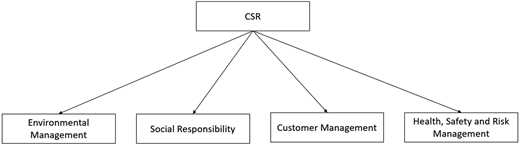
This study examines the role of corporate social responsibility (CSR) in sustainable supply chain management, specifically targeting the dimensions most valued by practitioners. By identifying and ranking key CSR dimensions–Environmental Management, Social Responsibility, Customer Management and Health, Safety and Risk Management–the research aims to establish a framework that enhances CSR implementation in supply chains.
The study uses a quantitative survey of supply chain management practitioners, analyzed through the consistency fuzzy preference relations (CFPR). This methodology enables a pairwise comparison to determine the relative importance of CSR dimensions. The sample includes professionals with varying levels of experience and roles in supply chain management, ensuring diverse perspectives on CSR priorities.
Results indicate that Health, Safety and Risk Management is considered the most critical CSR dimension, followed by Customer Management and Social Responsibility, with Environmental Management ranked last. The findings suggest that practitioners prioritize CSR elements that directly impact organizational safety and risk, highlighting a potential gap between broader CSR goals and operational focus areas in supply chains.
The study offers a scalable CSR assessment model for supply chains, though limited by a sample size focused on practitioners from a single geographic region. Further research could broaden the sample and explore industry-specific CSR priorities.
By highlighting Health, Safety and Risk Management as the primary CSR focus, this study provides actionable insights for supply chain managers. The findings can guide companies in developing CSR policies that align with practitioner priorities, thus enhancing sustainability efforts and stakeholder trust in supply chain operations.
This research extends existing literature by employing a CFPR approach, which enables a more refined prioritization of CSR dimensions from the perspective of supply chain practitioners. Unlike previous studies that focus on general CSR criteria, this study provides an industry-specific evaluation, offering insights that bridge theoretical CSR frameworks with operational decision-making in sustainable supply chain management.
1. Introduction
The rapid development of technology and economic growth has reshaped global lifestyles, creating opportunities for prosperity and also introducing challenges related to social inequality and environmental degradation. This dual impact has led to a global shift towards sustainable development, which calls for economic progress that aligns with social inclusion, environmental responsibility and intergenerational equity to benefit current and future generations (Fisher et al., 2022). Sustainable development rests on three interdependent pillars: social, environmental and economic sustainability. Social sustainability fosters inclusiveness, environmental sustainability conserves resources and economic sustainability supports business growth and job creation. To achieve sustainability, organizations must integrate these pillars into their operational models and strategies (Lozano, 2008). However, sustainability application varies significantly across sectors, where each industry customizes goals according to its specific needs. For example, resource-intensive sectors like manufacturing may focus on environmental conservation, while service sectors might emphasize social equity. These variations lead to diverse interpretations of sustainability within organizations, complicating the development of consistent policies that reflect shared values and priorities.
Supply chain management has emerged as a key area for companies to demonstrate their sustainability commitments. As global supply chains become more complex, they also face increased scrutiny from consumers, stakeholders and regulators who now expect sustainable practices across the entire supply chain–from sourcing to production and distribution. Consequently, responsibility in the supply chain has evolved into a significant competitive factor, influencing corporate reputation and customer loyalty (Tate et al., 2010). Today’s consumers are highly informed and prioritize transparency regarding the environmental and social impacts of the products they buy. Thus, sustainable practices across the supply chain have become central to a company’s competitive advantage, showcasing a commitment to responsible growth.
Corporate social responsibility (CSR) is an effective approach for embedding sustainability within supply chains. CSR reflects a company’s dedication to ethical and socially responsible practices that meet societal expectations while minimizing negative impacts on communities and the environment. Within supply chains, CSR requires companies to engage key stakeholders–including suppliers, manufacturers and customers–in initiatives that promote ethical, social and environmental responsibility. Yet, CSR approaches differ by industry due to sector-specific demands. For example, logistics companies may prioritize reducing emissions, while technology firms may focus on sourcing materials ethically. Sustainable decisions enhance corporate reputation, align with regulatory expectations and satisfy consumer demand for transparency (Raza, 2018). Increasingly, companies are incorporating CSR into their supply chain strategies, with a particular focus on ethical sourcing. Ethical sourcing entails selecting suppliers who adhere to sustainability standards, a trend prominent in industries where public concerns around labor and environmental issues are high (Feng et al., 2017). However, despite its importance, CSR implementation in supply chains is often inconsistent, lacking a standardized framework, which leads to varied practices and makes it challenging to create unified policies that satisfy all stakeholders (Yadlapalli et al., 2020).
Today, CSR has become integral to global supply chain management, where it promotes positive outcomes for individuals, communities and the environment (Costa and Menichini, 2013). Strategically, CSR has evolved into a long-term approach aimed at optimizing profitability while fostering corporate goodwill (Moravcikova et al., 2015). However, CSR remains a broad concept open to varied interpretations based on company goals and operational needs (Welford, 2005), which can profoundly influence business strategy. As companies acknowledge the role of CSR in influencing customer perceptions and brand reputation, integrating CSR into supply chain management is seen as essential to building customer satisfaction, enhancing loyalty, improving brand value and ultimately increasing profitability (Tekin et al., 2015). Nonetheless, inconsistency in supplier CSR practices has drawn criticism from stakeholders, complicating the evaluation of supply chains’ social and environmental performance (Boyd et al., 2007). Research has often centered on client perspectives, with less emphasis on employee perceptions and their impact on organizational outcomes. Employees' attitudes toward CSR can significantly influence their loyalty to the organization, which, in turn, affects overall success (Lee et al., 2013). Employees who understand and support CSR initiatives often feel a stronger sense of corporate identity, leading to higher engagement and productivity (Asante Boadi et al., 2020).
This study seeks to address these challenges by examining the perspectives of organizations and employees on CSR within supply chains, specifically focusing on the CSR dimensions most valued by practitioners in sustainable supply chain management in Taiwan. To achieve this, the study utilizes the consistent fuzzy preference relations (CFPR) to systematically assess and prioritize CSR dimensions based on practitioner insights. CFPR provides a structured approach by breaking down decision criteria into a hierarchy, allowing for pairwise comparisons that reveal the relative importance of each dimension. This method enables the identification of CSR factors that are most critical to sustainable supply chain management, creating an evidence-based framework that can guide companies in refining their CSR policies.
Through this CSR-focused supply chain perspective, the study offers insights into employee attitudes and key sustainability dimensions within supply chains. The findings are intended to help organizations develop CSR frameworks that are better aligned with both employee and consumer expectations. Ultimately, the study aims to provide practical guidance for firms working to strengthen their CSR strategies, ensuring alignment with internal stakeholders as well as broader societal values.
2. Literature review
CSR has become a central topic in sustainable development discussions in recent years. Beyond job creation, companies are expected to contribute to wealth generation and play a positive role in promoting sustainability and environmental stewardship (Moir, 2001). Modern enterprises are not solely accountable to shareholders; they must also consider the interests of a broader group of stakeholders, including employees, customers, suppliers, consumers, local communities, nations and the natural environment (Lindgreen and Swaen, 2010).
Research has consistently shown that CSR efforts contribute positively to sustainable development. Within organizations, CSR efforts are increasingly influenced by environmental concerns rather than strict economic factors, positioning the natural environment as a primary driver of CSR initiatives. This orientation toward environmental responsibility underpins the adaptation of business models in line with sustainable principles, which can offer companies both a competitive edge and longer-term sustainability (Xia et al., 2018). Consequently, CSR has become a strategic goal for companies, shaping their initiatives and strategies to meet sustainability objectives alongside economic considerations.
In today’s global economy, an increasing number of consumers and stakeholders expect businesses to adopt environmentally responsible and ethical practices. This growing expectation has driven supply chain management at all levels to incorporate sustainability principles, encompassing all facets of the supply chain–design, organization, interactions, competencies and capabilities. Balancing the achievement of sustainability goals with profit maximization has thus become a central focus in supply chain management (Ashby et al., 2012). To provide sustainable and reliable long-term benefits for both customers and stakeholders, four key elements of the supply chain align with sustainability goals, addressing both stakeholder expectations and economic interests: environmental management, social responsibility, customer management and health, safety, and risk management (Hussain et al., 2016). High level of CSR measures ensures that the framework remains adaptable across industries without introducing excessive complexity. Furthermore, many supply chain practitioners evaluate CSR initiatives at a strategic level, making a high-level categorization more applicable for real-world decision-making.
2.1 Environmental management
Environmental CSR initiatives emphasize sustainability by integrating responsible practices across the supply chain as they focus on the conservation of natural resources and the responsible management of environmental impacts. By implementing eco-friendly practices, organizations reduce their ecological footprint, which benefits both economic and environmental outcomes. This is especially impactful in developing countries, where sustainable practices can support economic development while mitigating environmental degradation (Shazad et al., 2020). These initiatives address every stage of the supply chain, from sourcing raw materials to processing, packaging, storing, transporting and managing end-of-life disposal (Nawrocka et al., 2009). To be effective, environmental CSR in supply chains is supported by four key elements: efficient resource use, waste reduction, product life cycle management and risk mitigation (Yadlapalli et al., 2020). Efficient resource use conserves energy and materials, minimizing waste, while waste reduction strategies limit pollution and disposal costs. Product life cycle management extends product longevity, reducing the need for frequent replacements and risk mitigation helps prevent environmental harm due to supply chain disruptions or accidents. Sustainable supply chain strategies incorporating closed-loop production systems and emission control measures drive environmental responsibility while ensuring operational resilience (Golicic and Smith, 2013). Furthermore, proactive environmental risk management ensures compliance with international environmental standards such as ISO 14001 (Dubey et al., 2017). Together, these elements build a strong foundation for environmental stewardship within supply chains, helping organizations achieve sustainable growth and meet increasing demands for corporate environmental responsibility.
2.2 Social responsibility
Social responsibility within CSR includes essential elements that address pressing social issues, forming the backbone of socially oriented initiatives within businesses. Key areas of focus include fostering positive community relationships, respecting consumer choices and gaining public support–each of which significantly affects customer perception, business marketing and overall corporate performance (Kim, 2018). Within supply chain management, social responsibility is assessed both internally and externally. Internally, it encompasses health and safety protocols and fair employment practices, safeguarding employee welfare and fostering equitable work environments. Externally, it evaluates the broader impact on local communities and stakeholders, both contractual and non-contractual, thereby establishing criteria for external social sustainability (Ahmadi et al., 2017). Socially sustainable practices are defined by the safety, welfare and health aspects embedded within products and processes. Achieving social sustainability within supply chains requires collaborative efforts among all stakeholders–including suppliers, manufacturers, customers and society at large. Addressing social issues at the supplier level promotes social sustainability upstream, ensuring that ethical labor practices and community-friendly policies are integrated from the start. Meanwhile, socially responsible purchasing practices downstream contribute to sustainability by aligning supply chain decisions with ethical standards and operational efficiency, which benefits both the organization and its broader social environment (Mani et al., 2016). Collaborative partnership with NGOs and government agencies strengthen CSR execution and facilitate sustainable community development (Carter and Jennings, 2002).
Social responsibility across the supply chain can be organized into four key elements: societal impact, customer attraction and retention, fair operating practices and human resources management, which includes non-discriminatory practices (Yadlapalli et al., 2020). Societal impact ensures the company positively influences communities, while fair operating practices uphold ethical standards. Human resources management focuses on inclusivity and employee well-being. Together, these elements emphasize a commitment to social sustainability, reinforcing ethical and responsible business practices that enhance stakeholder trust and long-term corporate success. By embedding these principles, supply chains can contribute to social equity, strengthen community relations and improve their corporate image in an increasingly socially conscious market.
2.3 Customer management
CSR reflects a company’s dedication to ethical and socially responsible practices, which research consistently links to positive impacts on consumer and customer perception, satisfaction and trust (Martínez and Rodríguez del Bosque, 2013). CSR initiatives extend beyond improving product perceptions to influencing broader aspects of customer loyalty and corporate trust, positioning customer management as a critical component of CSR within supply chain management. In a comprehensive CSR framework, stakeholders encompass not only employees but also consumers, underscoring the importance of consumer satisfaction as a measure of CSR success. To maximize the impact of CSR initiatives, managers must ensure that these efforts are well aligned with societal values and positively resonate with consumers. Consumer recognition is pivotal to CSR outcomes; when customers perceive CSR activities as genuine, they are more likely to form loyal, trusting relationships with the company. This alignment with societal interests is crucial as companies are increasingly expected to engage in CSR initiatives that reflect their core values rather than mere profit-driven motives. CSR efforts rooted in authentic corporate culture are more likely to yield sustainable, long-term benefits (Chaudary et al., 2016).
Within CSR-focused customer management, four essential stakeholder groups emerge: shareholders, customers, employees and the community (Perez and del Bosque, 2016). Companies that align customer engagement strategies with global sustainability goals (e.g. SDGs) enhance corporate credibility and brand values (Jones et al., 2017). These elements collectively strengthen CSR’s impact by fostering a positive corporate image, building trust and supporting sustainable practices. Through a robust CSR strategy that actively considers these stakeholders, companies can enhance consumer relations, support community welfare and reinforce their commitment to ethical and socially responsible business practices.
2.4 Health, safety and risk management
Workplace health and safety are deeply embedded in organizational practices and employee behaviors, aiming to create environments that uphold critical safety standards. This encompasses a variety of factors–organizational, technical, physiological and chemical–that collectively support a secure working environment. Adherence to health, safety and ergonomic standards has evolved from a voluntary practice to a necessary economic and technical requirement, significantly impacting a company’s growth, productivity, product quality and profitability (Górny, 2012). Implementing an optimal health and safety framework and fostering a risk-prevention culture are now central to CSR. This responsibility covers key areas such as human resource management, work–life balance, respect for basic rights and public safety, including product safety and environmental health. By prioritizing these elements, companies not only protect their employees but also promote operational efficiency and long-term sustainability (Montero et al., 2009). Additionally, implementing supply chain risk assessment models, product safety audits and crisis management protocols enhances long-term corporate sustainability and stakeholder confidence (Hale and Borys, 2013). The adoption of blockchain-based models can help mitigate fraud risks and improve safety standards in the supply chain (Saberi et al., 2019). This comprehensive approach to health and safety positions it as a fundamental aspect of CSR, underscoring its role in maintaining ethical standards and supporting social responsibility. Together, these measures highlight the critical importance of workplace safety as essential to sustainable and socially responsible business operations, benefiting both the organization and its broader community.
Tyagi et al. (2018) employed a fuzzy-AHP-TOPSIS approach to prioritize CSR alternatives in the automobile industry, identifying green, social, economic and closed-loop perspectives. Gonvindan et al. (2018) developed a CSR-based supplier selection model incorporating multiple stakeholder perspective. Our study diverges by employing CFPR, which facilitates a more consistent and scalable decision-making process. Additionally, while these prior studies focus on theoretical CSR categories, our study captures real-world practitioner perspective, thus bridging the gap between CSR principles and operational supply chain challenges.
3. Methodology
Analytic hierarchy process (AHP) proposed by Saaty (1980) has become a general decision-making method for rating the importance among the factors and has been broadly applied to various domains (e.g. Al-Harbi, 2001; Roh et al., 2015). The AHP method is primarily employed to solve problems involving many comparisons of criteria evaluation. In this paper, the proposed procedure utilized the hierarchy in AHP with consistent fuzzy preference relations (CFPR) process for rating the suppliers. The following text will give the brief description of the AHP model and the CFPR method.
Because AHP employs the pairwise comparison procedure, a total of n (n – 1)/2 comparisons need to be answered in a group on n criterion. When the number (n) of criterion in a group increases, the required pairwise comparisons also increase. As a result of too many questions and comparisons, it is easy to cause evaluator’s mental confusion and thus easily results in inconsistent situations. In the case of inconsistencies, questionnaires have to be checked and re-answered again, which leads to time wastage and inefficiency.
To avoid the aforementioned problem, this study uses CFPR (Herrera-Viedma et al., 2004) to establish decision matrices. Using CFPR, only n – 1 comparisons are required of n-criterion. The rest of [(n – 1)(n – 2)]/2 comparisons were computed by using additive transitivity in the procedure of CFPR. The human comparisons are reduced, and hence, human errors can be reduced.
In summary, while AHP could be employed given the limited number of pairwise comparisons, CFPR is utilized in this study due to its ability to ensure higher consistency in decision-making, particularly when expert respondents provide subjective judgements. Unlike AHP, which requires reciprocal matrices for all pairwise comparisons, CFPR reduces the cognitive burden on respondents by allowing them to provide fewer inputs while still maintaining high consistency in the ranking process. This is particularly useful in case with small sample sizes, where decision-makers may struggle to maintain consistency in AHP matrices.
3.1 Consistent fuzzy preference relations (CFPR)
Herrera-Viedma et al. (2004) propose the consistent fuzzy preference relations for constructing the decisions matrices of pairwise comparisons based on additive transitivity property. Fuzzy preference relations enable an expert or decision-maker to give linguistic values for comparison of criteria. The value given by the experts represents the degree of the preference for the first alternative over the second alternative. Two major kinds of preference relations are applied: (1) multiplicative preference relations and (2) fuzzy preference relations.
Multiplicative preference relations (Saaty, 1980): A multiplicative preference relation in terms of a set of alternatives is represented by a matrix , = ( ij), where ij is the preference ratio of alternative i to j. Saaty suggests measuring ij using a ratio scale and the defined 1–9 scale. Herein, ij = 1 represents the absence of a difference between i and j; ij = 9 denotes that i is maximally better than j. In this case, the preference relation is typically assumed to be a multiplicative reciprocal, ij ∙ ji = 1 i, j {1, …, n}.
Fuzzy preference relations (Chiclana et al., 1998; Fodor and Routbens, 1994; Tanino, 1998): A fuzzy preference relation on a set of alternatives is a fuzzy set on the product set with membership function : [0, 1]. The preference relation is represented by the matrix = (), where = ( i ∙ j) i, j {1, …, n}. Herein, is the preference ratio of alternative i to j: = 1/2 means that no difference exits between i and j, = 1 indicates that j is absolutely better than j and 1/2 indicates that i is better than j. In this case, the preference matrix is generally assumed to be an additive reciprocal, + = 1, i, j {1, …, n}.
Herrera-Viedma et al. (2004) proposed a CFPR. These propositions are described as follows:
Consider a set of alternatives, = {, …, }, associated with a reciprocal multiplicative preference relation = (ij) for ij [1/9, 9]. Then, the corresponding reciprocal fuzzy preference relation, = () with [0, 1] associated with is given as
where log9 ij is considered because ij is between 1/9 and 9. If ij is between 1/7 and 7, then log7 ij is used. In general, logn ij is used if ij is in the interval [1/n, n].
For a reciprocal fuzzy preference relation = (), the following statements are equivalent:
For a reciprocal fuzzy preference relation = (), the following statements are equivalent:
These propositions are useful and can be utilized to construct a consistent decision matrix from the set of n – 1 values {, , …, }. A decision matrix with entries that do not fall in the interval [0, 1], but in the interval [–k, 1 + k], k 0, can be obtained by transforming the obtained values using a transformation function that preserves reciprocity and additive consistency. The transform function is defined as
4. Results and analysis
The proposed model using the AHP hierarchy with the CFPR method was applied to evaluate the most important CSR measures in supply chain in Taiwan. Figure 1 illustrates the structure of the study. A total of 18 supply chain practitioners, with an average of 12 years of experience, in Taiwan took part in this CFPR evaluation.
The entire procedure for construction of decision matrix is illustrated as follows:
Collect the questionnaires from the evaluator. The questionnaire is designed as in linguistic variables.
Convert linguistic variables and compute the average score for each pairwise comparison.
Construct the initial criteria decision matrix. Table 1 demonstrates the initial value of the fuzzy preference. The “x” in Table 1 is going to be determined in the next step.
Compute the remaining elements in the decision matrix using Eq. (5). For CFPR, the diagonal values are all 0.5 and are computed according to Eq. (1). If some of fuzzy preference ratios are not in the interval [0, 1], to preserve reciprocity and additive consistency, transformation function (Eq. (6)) is employed to perform the transformation. Finally, obtain priority of the weight, w, which can be computed as follows:
The priority and the ranking are shown in Table 2.
The analysis reveals that Health, Safety and Risk Management holds the highest weight at 0.331, indicating that respondents view it as the most crucial CSR dimension in sustainable supply chains. Customer Management holds a weight of 0.237, suggesting that customer-oriented practices are important. Social Responsibility follows with a weight of 0.228, emphasizing the importance placed on ethical practices and social impacts. Environmental Management has the lowest weight, at 0.204, reflecting a relatively lower emphasis on environmental concerns in this context. However, it is noticeable that the difference of the values from Customer Management to Environmental Management is minimal, indicating they hold similar importance.
The prioritization of Health, Safety and Risk Management (0.331) in Taiwan’s supply chain highlights its foundational role in maintaining operational stability and ensuring employee welfare, which are essential components of effective CSR. Taiwan’s industrial landscape is heavily dominated by high-risk sectors such as electronics and semiconductor manufacturing, which present unique safety challenges. These industries involve complex, often hazardous processes that require stringent safety protocols and proactive risk management strategies. Consequently, Taiwanese supply chains are built on a risk-averse culture that prioritizes rigorous compliance with health and safety standards. This approach not only minimizes operational disruptions but also protects human resources, which are vital in an industry that demands specialized skills and consistent productivity. Taiwan’s regulatory framework further enforces these standards, providing strict guidelines that companies must adhere to, thereby reducing workplace accidents and aligning with global expectations for employee protection. Emphasizing health and safety strengthens resilience across supply chains, enhances corporate reputation and promotes long-term sustainability, which is particularly critical in Taiwan’s export-oriented economy.
The weighting of Customer Management (0.237) highlights Taiwan’s emphasis on customer satisfaction, responsiveness and alignment with evolving customer expectations as integral parts of CSR strategies. Taiwanese firms, especially in consumer electronics and other customer-centric sectors, are known for their focus on high-quality products and transparency, which are pivotal for establishing brand loyalty and market leadership. The importance of customer management in Taiwan’s CSR approach reflects the need to integrate customer-focused CSR initiatives that not only address product quality but also enhance ethical standards in production and sourcing. As international customers increasingly prioritize ethical sourcing, Taiwanese firms can leverage customer management in CSR to strengthen their competitive position. Meeting and exceeding customer expectations related to ethical practices, transparency and product quality can differentiate Taiwanese brands and reinforce customer trust. This customer-centric approach is strategically beneficial for Taiwanese companies as it addresses ethical concerns and supports brand differentiation in global markets where consumer awareness of CSR practices continues to grow.
Social responsibility (0.228) reflects a growing recognition among Taiwanese companies of the need to incorporate ethical practices into their operations, particularly in managing supplier relationships and supporting local communities. Taiwan’s supply chains are intricately connected to local suppliers and labor markets, making fair labor practices and equitable treatment vital to sustainable operations. Companies that prioritize social responsibility in Taiwan gain significant social capital and trust, both locally and internationally. By addressing social equity and demonstrating ethical practices, Taiwanese firms align themselves with stakeholder expectations that increasingly prioritize fairness and inclusivity, as well as a supportive community presence. In Taiwan’s highly competitive, export-driven economy, these socially responsible practices contribute to a strong, ethical brand image, which is key to maintaining favorable relationships with global business partners who value CSR. Furthermore, as global supply chains demand higher levels of transparency and fairness, Taiwan’s proactive approach to social responsibility reinforces its commitment to ethical standards, helping companies maintain a competitive edge in international markets.
Finally, the lower weighting of Environmental Management (0.204) indicates that while environmental considerations are recognized, they are currently seen as less critical within Taiwan’s CSR framework compared to social and safety dimensions. This prioritization may reflect the specific characteristics of Taiwan’s manufacturing-focused supply chains, where the urgency of managing social issues and health risks often outweighs immediate environmental goals. However, Taiwan’s supply chains are not immune to global environmental expectations, which are becoming increasingly stringent, particularly in areas such as sustainable sourcing, waste reduction and resource efficiency. While environmental initiatives are currently secondary, this ranking does not imply disregard; rather, it points to a phased CSR strategy where immediate social and safety concerns are prioritized, with environmental goals integrated gradually. Taiwanese companies may approach environmental management as a long-term commitment, aligning with international sustainability trends while ensuring business resilience. As environmental standards continue to tighten globally, Taiwan’s supply chains may need to elevate environmental practices, especially to satisfy the expectations of environmentally conscious partners and markets. Adopting sustainable practices can position Taiwanese firms favorably in the global supply chain landscape, where environmental sustainability is increasingly viewed as essential for long-term competitiveness and regulatory compliance.
In summary, Taiwan’s supply chain CSR priorities reflect a strategic, phased approach that emphasizes health, safety, customer management and social responsibility while progressively integrating environmental considerations. This hierarchy aligns with Taiwan’s economic goals and industrial characteristics, ensuring that supply chains remain resilient, ethically sound and competitive on a global scale.
5. Discussion
Our findings reveal a practitioner-driven prioritization that diverges in key areas, specifically, Health, Safety and Risk Management emerged as the top concern, suggesting that industry professionals prioritize immediate operational risks over broader environmental or economic concerns. These findings highlight the central role of employee welfare, risk mitigation and social responsibility in Taiwan’s supply chain sector, highlighting a balanced approach to CSR that aligns with Taiwan’s specific industrial and cultural context.
5.1 Theoretical implications
This research contributes to the growing body of literature on CSR by utilizing the CFPR to evaluate and prioritize CSR dimensions within the supply chain management framework. CFPR’s structured, hierarchical analysis enables a clear understanding of CSR priorities in the unique context of Taiwan’s supply chains. Unlike traditional multi-criteria decision-making models, CFPR ensures consistency in pairwise comparison, leading to more reliable insights. By applying CFPR, this study addresses a gap in existing research by illustrating how CSR priorities can vary across context-specific environments, offering a comparative framework that researchers may use to investigate CSR dimensions in different geographical or industrial settings. Furthermore, these results extend the theoretical framework of CSR in supply chains, especially by reinforcing the importance of health and safety, social responsibility and customer management. This study shifts the focus from the theoretical CSR categories to the practical decision-making concerns of supply chain practitioners, offering a unique perspective that enhances the applicability of CSR strategies in real-world supply chain management. The findings suggest that CSR in Taiwan’s supply chains goes beyond compliance with regulations; it is embedded within a broader cultural and ethical framework that values employee welfare and social equity. For future studies, this framework provides a foundation for comparative analysis across other supply chain settings globally, allowing for cross-cultural and cross-industry comparisons that can reveal new insights into CSR prioritization. Additionally, the results support the integration of health and safety as central components in CSR, challenging supply chain managers to view these dimensions as fundamental rather than secondary or regulatory requirements.
While CSR has historically been a benchmark for sustainable business practices, Environmental, Social and Governance (ESG) criteria have become the dominant framework used by investors, regulators and stakeholders to evaluate corporate sustainability performance (Kotsantonis et al., 2016). This shift highlights the increasing emphasis on quantifiable metrics and risk-based assessments in sustainability reporting. Out study aligns with ESG principles by providing a structured approach to prioritizing CSR initiatives that directly impact environmental sustainability, social responsibility and corporate governance. By integrating CFPR into CSR decision-making, this study offers a practical framework that business can adopt to enhance their ESG performance, improve investor confidence and ensure regulatory compliance. This perspective is particularly relevant for supply chain management, where ESG metrics are used to assess supplier sustainability, ethical sourcing and operational resilience (Eccles and Klimenko, 2019).
5.2 Practical implications
The findings of this study offer valuable insights for supply chain managers and policymakers in Taiwan by providing a structured prioritization of CSR dimensions that can inform strategic planning and regulatory development. Taiwan’s economic landscape is shaped by its dominant high-tech and manufacturing industries, which have stringent regulatory requirements and operational risk factors. Previous studies identified environmental and ethical sourcing as key CSR priorities in supply chain (Gonvindan et al., 2018; Tyagi et al., 2018). Our result aligns with these findings but emphasize the increasing prioritization of Health, Safety and Risk Management, which was ranked highest in our study. The divergence suggests that firms operating within Taiwan prioritize operational risk mitigation and workforce safety as central CSR concerns, possibly due to regulatory influences, industry-specific risks and corporate compliance pressures.
The emphasis on Health, Safety and Risk Management reflects Taiwan’s robust regulatory framework, including compliance with Taiwan’s Occupational Safety and Health Act and industry-specific safety regulations. The importance of employee welfare and workplace risk reduction extends beyond compliance – it is crucial for maintaining business resilience in a competitive market. Taiwanese firms must continue developing comprehensive risk-mitigation strategies, strengthening workplace safety policies and enhancing crisis management frameworks to sustain operational continuity and corporate reputation.
The focus on Social Responsibility highlights the growing demand for ethical labor practices, fair wages and supplier accountability, particularly in Taiwan’s export-driven economy. Global supply chain partners and investors increasingly expect Taiwanese firms to engage in transparent supplier relationships, community development initiatives and compliance with international labor standards. This shift not only enhances brand credibility but also secures long-term market access and strengthens stakeholder relationships.
Customer Management also plays a critical role in Taiwan’s CSR framework, emphasizing brand trust, ethical marketing and consumer protection. Companies in Taiwan, especially in the electronics and consumer goods sectors, must adopt customer-focused CSR practices, including transparency in business operations, high product quality standards and ethical supply chain management. These initiatives help companies differentiate themselves in global markets, strengthen consumer loyalty and enhance competitive advantage.
Although Environmental Management ranked lower in CSR priorities, its importance is growing due to global sustainability expectations and increasing environmental regulations. Taiwanese firms can gradually integrate sustainable resource management, waste reduction initiatives and carbon footprint reduction strategies (Chen et al., 2006). Aligning with global environmental standards will help businesses maintain their position as key players in international supply chains.
By addressing these CSR priorities, Taiwanese businesses and policymakers can develop targeted strategies that align with both domestic regulatory expectations and global sustainability trends, ensuring long-term business sustainability and corporate responsibility.
5.3 Limitations and further recommendations
While this study provides valuable insights, there are some limitations that should be acknowledged. The scope of the study is limited to Taiwan, which may affect the generalizability of its findings to other regions with different cultural, economic or regulatory environments. Taiwan’s supply chain context is characterized by a unique combination of manufacturing expertise, technology-focused industries and export-oriented policies that may not fully translate to other economies. Consequently, future research could replicate this study in other geographic contexts to compare CSR priorities across various supply chains, potentially revealing differences or similarities in how CSR is perceived and prioritized globally. Additionally, this study employed CFPR as the primary tool for prioritizing CSR dimensions, which provides a structured and quantitative method but may not capture the qualitative nuances of CSR perceptions among stakeholders. Future research could incorporate alternative decision-making tools or mixed-method approaches, such as interviews or focus groups, to further explore the underlying motivations and perspectives that influence CSR prioritization. Such qualitative insights could complement the quantitative findings, offering a more comprehensive view of the factors driving CSR decision-making in supply chains. Another limitation is that this study captures a snapshot of CSR priorities, which are subject to change as environmental, social and regulatory landscapes evolve. CSR expectations and priorities are dynamic, shaped by emerging global trends, evolving stakeholder expectations and regulatory developments. Longitudinal studies could be particularly valuable in this regard as they would allow researchers to track shifts in CSR priorities over time, providing insights into how Taiwanese companies adapt their CSR strategies in response to changing industry standards and market demands.
6. Conclusion
In summary, this study highlights the critical role of CSR within Taiwan’s sustainable supply chain management framework, offering a structured prioritization of CSR dimensions that aligns with industry and societal expectations. By addressing key areas such as Health, Safety and Risk Management, Social Responsibility, Customer Management and Environmental Management, Taiwanese supply chains are positioned to enhance resilience, build trust and support sustainable development.
Health, Safety and Risk Management stands out as the most prioritized dimension, reflecting the high value placed on employee welfare and risk mitigation, which are essential for sustaining productivity and operational continuity. Social Responsibility further emphasizes the importance of ethical labor practices and community engagement, providing companies with a pathway to reinforce trust among stakeholders and contribute positively to society. Customer Management aligns CSR efforts with customer expectations, allowing companies to respond to consumer demands for ethical business practices, transparency and quality. While Environmental Management ranks as a lower priority, the study suggests a phased approach for Taiwanese companies, integrating environmental sustainability practices incrementally to remain competitive and meet global sustainability standards.
These insights provide a foundational framework for both practitioners and researchers, promoting a nuanced understanding of CSR’s impact within Taiwan’s supply chain sector. Practically, the study equips managers with a prioritized roadmap for CSR initiatives, ensuring that resources are allocated to areas that yield the most significant social and operational benefits. For policymakers, the study underscores the importance of regulatory support for health, safety and social responsibility initiatives within supply chains, suggesting that comprehensive policies can drive sustainable and ethical practices across industries.
Theoretically, this research reinforces the relevance of CSR as an adaptable framework that aligns with specific cultural and industrial contexts, providing a model for understanding CSR in other localized settings. As Taiwan’s supply chains continue to evolve in response to global pressures and local demands, this study offers a basis for further research, enabling a deeper examination of CSR priorities within dynamic supply chain environments.