To enhance the loan repayment performance of microfinance institutions (MFIs) in Pakistan, this study aims to analyze the direct impact of social capital and loan credit terms on loan repayment performance and microenterprises’ business performance while considering the mediating role of microenterprises’ business performance on the relationship between social capital, loan credit terms and loan repayment performance.
The analysis was conducted based on the data gathered via a questionnaire distributed to 316 microenterprises owners. The respondents were selected using the stratified sampling technique by dividing the target population into three influential groups of manufacturing, trading and services microenterprises. The reliability and validity of the constructs were established using (1) factor loading, (2) Cronbach’s alpha, (3) composite reliability, (4) average variance extracted, (5) the variance inflation factor, (6) the Fornell–Larcker criterion and (7) the heterotrait–monotrait ratio. The structural equation modeling technique was then applied, and the hypotheses were tested based on the structure model generated through bootstrapping by using partial least squares structural equation modeling.
The results confirm the direct impact of social capital and loan credit terms on microenterprises’ business performance and loan repayment performance. It also supports the mediating role of microenterprises’ business performance toward the relationship between social capital, loan credit terms and loan repayment performance while considering the direct impact of microenterprises’ business performance on loan repayment performance.
To date, the direct impact of social capital and loan credit terms on microenterprises’ business performance and loan repayment performance has been hardly investigated in the context of Pakistan. This study also examines the mediating role of microenterprises’ business performance toward social capital, loan credit terms and loan repayment performance. The findings will enable both MFIs and microenterprises to improve their business performance and loan repayment performance through enhanced social ties and the development of more flexible credit products that protect the borrowers’ interests and the interest of lenders.
1. Introduction
Access to external capital such as bank credit is an absolute obstacle that lies in the development and growth of microenterprises mainly as it halts the smooth running of their business activities. Microenterprises also face some inherent internal challenges, including small-scale economies, inappropriate location of the business, and the lack of planning, managerial skills, technical expertise, and business education (Abagissa, 2021). Besides this, most microenterprises are believed to fail due to making massive personal financing for low-value-added products and services (Berns et al., 2021). Fortunately, microfinance institutions (MFIs) emerged as economic development tools that provide credit facilities to microenterprises that are unable to fulfill the formal requirements for getting access to credit from conventional financial institutions. In this regard, MFIs are believed to reduce poverty, promote women’s entrepreneurship, create employment opportunities and boost business growth by providing access to credit to underserved markets (Kumari, 2021). Moreover, MFIs are not only significant in developing networking among different stakeholders, including government departments, vendors, retailers and nonprofit organizations (NPOs) but also ensuring the economic development of microenterprises through the provision of social capital and favorable loan credit terms and conditions (Mata and Ibrahim, 2020).
Loan repayment performance has been propounded as the backbone of the banking sector, especially for the survival, growth and stability of MFIs in Pakistan. This is because excellent loan repayment performance often indicates excellent business performance among microenterprises, as evident by various studies that reported a positive relationship between clients’ business performance and loan repayment performance (Abeyseker, 2020). According to the State Bank of Pakistan (SBP), the local MFIs are consistently facing a severe loan repayment crisis, and all indicators relating to nonperforming loans (NPL) have been consistently increasing over the last five years. These indicators include (1) NPL ratio to gross advances, (2) NPL provision to gross advances, (3) NPL ratio to shareholder equity, (4) ratio of NPL write-off to NPL provision and (5) ratio of provision against NPL to NPL amount. The SBP further added that an increase of Rs 12,265 million in the NPL of MFIs has been reported from 2015 to 2020, whereas an increase of 4.51% was found in the ratio of NPL to gross advances in MFIs. Moreover, in the last five years, a 4.24% increase was found in the provision against NPL to gross advances, and a rise of 22.88% was reported in the ratio of NPL to shareholder equity. There was also a 29.47% increase reported in the NPL write-off ratio to NPL provision, besides the rise of 15.57% in the provision against NPL to net NPL over the last five years.
The higher loan repayment rate, thus, leads to a long-term relationship between the borrowers and MFIs as a better repayment rate indicates better business performance among the borrowers and enhances the lending capacity of MFIs. Through the lending progress, borrowers will be able to improve their business performance gradually, and the process of progress lending can be ensured through better loan repayment performance. If the MFIs provide credit facilities to the borrowers under favorable terms and conditions, then the borrowers will be able to increase their business performance, subsequently enabling them to repay their outstanding loans as per the contractual agreement (Bond and Rai, 2009). On the contrary, any MFIs’ borrowers who fail to fulfill the terms and conditions of the contractual agreement due to a lack of understanding between the principal (lender) and agent (borrower) will not be able to pay the outstanding loan due to poor business performance. In this situation, the said borrowers will not get the facility of progress lending, and MFIs’ lending capacity will also suffer (Chowdhury et al., 2021). Therefore, the relationship between MFIs and borrowers depends upon the high repayment rate, and MFIs can ensure a better loan repayment rate through the provision of a better understanding between the principal (lender) and agent (borrower) as well as favorable loan credit terms that are not only suitable for the borrowers but the lenders as well (Worokinasih and Potipiroon, 2019).
However, the loan repayment performance of microenterprises has significant importance for MFIs in the long run. Arguably, the survival, growth and stability of MIFs depend on the loan repayment performance that is accessed through the NPLs generated by microenterprises (Schulte and Winkler, 2019). When microenterprises fail to pay their outstanding loans or are unable to pay their loans on time, it directly affects the liquidity position of MFIs and creates a hurdle in flow of funds between the lenders and borrowers (Ahamed, 2021). Therefore, the main objective of this study is to look at the determinants that affect the loan repayment performance of microenterprises in Pakistan. In general, microenterprises’ failure to pay loans on time could be due to multiple factors, including (1) the clients’ personal behaviors, (2) loan-specific factors, (3) business-specific factors and (4) factors related to lending institutions. All these factors vary according to business types, whether it is a trading concern, manufacturing concern, services concern or nontrading concern (Ssekiziyivu et al., 2018).
This study contributes to the current literature by suggesting that social capital and loan credit terms affect the loan repayment performance by incorporating the mediating role of clients’ business performance. Previous research has shown that social capital and loan credit terms significantly impact both financial and loan repayment performance (Ssekiziyivu et al., 2018). The hypothesis of this study is drawn upon the Agency theory, which indicates a situation of moral hazard and adverse selection lies between the principal (lender) and borrower (agent) due to information asymmetry that can be mitigated through the formation of social capital (better coordination between the borrower and lender) and favorable (less stringent) loan credit terms. The primary objective of this study is to measure the impact of social capital (i.e. understanding between borrowers and lenders) and loan credit terms (e.g. interest rate, loan size and repayment schedule) as perceived by the borrowers that the MFIs directly control. This study may be among the first to examine these important variables in the context of Pakistani MFIs.
The first significant contribution of this study is that it reports on the direct impact of social capital and loan credit terms on business performance and loan repayment performance, in addition to the direct impact of business performance on loan repayment performance. The second major contribution of this study is that it looks at the mediating role of business performance toward loan repayment performance and social capital along with the mediating role of business performance toward loan credit terms and loan repayment performance. Hence, we can address the seven key questions: (1) Is business performance directly influenced by social capital? (2) Do loan credit terms directly impact client business performance? (3) Is loan repayment performance directly influenced by social capital? (4) Do loan credit terms directly impact loan repayment performance? (5) Is loan repayment directly affected by business performance? (6) Does business performance play a mediating role between social capital and loan repayment performance? (7) Does business performance play a mediating role between loan credit terms and loan repayment performance?
The rest of the paper proceeds as follows: Section 2 discusses the different theories used to support this study, a thorough review of the past literature related to the topic and the hypotheses investigated in the study. This is followed by Section 3, which explains the research methodology, and Section 4 discusses the results in light of the relevant literature and theories. Finally, Section 5 contains the conclusion, limitations, implications and future direction of the research.
2. Literature review and hypothesis
This section presents a thorough discussion of the principal-agent theory, its relationship with the variables investigated in this study, and a review of past studies conducted on this topic.
2.1 Principal-agent theory
The principal-agent theory has a central importance in this study and serves as the fundamental basis for forming the research hypotheses. It is believed that in a contractual agreement between a lender and borrower, the probability of information asymmetry cannot be overlooked. In this regard, the principal-agent theory posits that the principal (MFIs) do not have complete information and knowledge about the agent (borrowers), and the latter tends to hide important information during the loan process. Both parties also prefer their own interest and targets. Therefore, while sanctioning a loan, the principal and agent should be on the same page in the context of information, and the interest of both parties must be given due importance. However, moral hazard and adverse selection make it impossible for the concerned parties (principal and agent) to draft an ideal contract. The problem of moral hazard exists when the borrowers do not use the loan amount for the intended purpose and ultimately face loan repayment problems. Moreover, poor monitoring on the MFIs’ part further enhances the probability of moral hazard (Kihanga, 2020). As a result, the lending decision capacity of MFIs will suffer, and the chances of adverse selection will increase due to the lack of important information about the borrowers, including their financial situation, moral character, business skills and detail of family members. Indeed, chances of adverse selection are often higher in the rural market as compared to the urban market due to a lack of proper monitoring (Arhin et al., 2019). The following section explains how social capital and loan credit terms, directly and indirectly, affect loan repayment performance.
However, according to principal-agent theory goals of both parties can be aligned by establishing a good relationship between the lenders (principal) and borrowers (agent) through the provision of appropriate incentives for borrowers (principal) in terms of favorable loan credit terms (Arhin et al., 2019). In fact, the principal-agent theory also deals with the supervision and monitoring of the borrower (agent) by the lenders (principal) as well as establishing an effective relationship with the borrower (agent) to ensure that the borrower would use the loan amount for the intended purpose and repay the loan as per contractual agreement (Iqbal et al., 2015). However, the principal-agent theory was concerned with two fundamental issues in the financial, contractual agreement. The first issue arises when the lender's (principal’s) goals are not aligned with the borrowers’ (agent’s) goals. Basically, two parties involved in a contractual agreement have different attitudes toward the risk. Similarly, both lenders (principal) and borrowers (agent) may have different approaches because of different risk preferences and different objectives (Toroitich and Omwono, 2013). Accordingly, this theory elaborates the relationship in which one party (the principal) delegates work to another (the agent), who performs that work on behalf of the principal (Moynihan and Pandey, 2010). Although, the principal-agent theory indicated that during the lending process, the lender (principal) did not observe the behavior of the borrower (agent) whether they were trustworthy. The lenders (principal) only consider one factor during the lending process which is the outcome of their loan whether the borrower (agent) is able to fulfill the contractual obligation and would pay the outstanding loan or not (Nawai and Shariff, 2010). Meanwhile, this theory is useful to the study because during loan sanctioning, borrowers (agent) consider their own credit needs and never consider the interest of lenders (principal). Therefore, to enhance the loan repayment performance a closed relationship between the lenders (principal) and borrower (agent) could be ensured through the social capital and favorable loan credit terms. Therefore, in Pakistan, no empirical research was conducted to measure the impact of social capital on loan credit terms directly and indirectly (through the client business performance) in the context of principal-agent theory by considering the MFIs as principal and microenterprises as an agent.
2.2 Direct impact of social capital on microenterprises’ business performance and loan repayment performance
Social capital refers to providing access to resources and sharing resources through social relationships (Gallenstein et al., 2020). It comprises three dimensions: cognitive, relational and structure (Kim et al., 2020). The cognitive dimension describes the process of shared meaning, rules, norms, and goals and creating a better understanding between both parties on a specific agreement. In this regard, the cognitive dimension of the social relationship ensures the interest of both parties. This leads to a higher commitment with the interest of each party and ultimately becomes a cause to reduce the monitoring cost and enhance business performance and profitability compared to other competitors. At the same time, the relational dimension is the process of creating a friendly environment, developing a relationship of trust, giving due respect to counterparts in a specific agreement and ensuring the interest of each other through regular interaction. Such social capital dimension puts a positive impact on the business performance of microenterprises as it enhances trust, increases the strength of the relationship, leads to open discussion and ensures transparency in their transaction. Moreover, all affiliated actors will preserve their respect and promise with each other and avoid undermining the mutual trust or exploiting the interest of other parties even if they have the opportunity to do so. The act of both parties encourages them to share the resources that they have without any fear (Jafarinejad et al., 2021). Lastly, the structure dimension ensures the impersonal relationship in the specific social network that enables microenterprises to achieve their sales target and protects the wellbeing of their employees through profit. It also enhances the access to facilities through access to information and by exchanging valid information that can be used to increase the clients’ business performance as well (Jafarinejad et al., 2021).
In this regard, it is argued that MFIs should promote a friendly environment between both parties to reduce the ratio of NPLs. Specifically, MFIs should direct their field workers or lending officers to implement the organizations’ policies with true letter and spirit by respecting the counterparts’ interests. Loan officers must briefly explain the MFIs’ lending policies, complete the process of group formation, provide proper training to borrowers on business management, ensure timely disbursement of the loan, reduce social disbursement and ensure timely repayment of a loan through proper followup (Siwale and Ritchie, 2011). They can also provide operational assistance to the borrowers through frequent and intensive communication by conducting different workshops and seminars so that the clients will be able to understand the latest challenges and new trends in business management. Various seminars and workshops conducted by the MFIs will allow the borrowers to interact with the loan officers and other borrowers within the network. They will also be provided with technical support regarding the proper utilization of loan amounts through interaction and intensive communication with the lending officers and other borrowers. Moreover, close and informal relationships between the borrowers and lending officers can ensure the early location of problems regarding loan repayment performance (Loke et al., 2020). The ratio of NPLs will be higher if the borrowers fail to participate in training programs or workshops arranged by the MFIs (Roslan and Karim, 2009). In addition, the lending officers’ experience serves as another critical factor that affects loan repayment performance. This is because experienced lending officers often create a long-term relationship with the borrowers through informational relationships and possess a better understanding of when, how and where to put pressure on the clients to ensure better loan repayment. These justifications and past empirical evidence, thus, lead to the formulation of the following hypotheses:
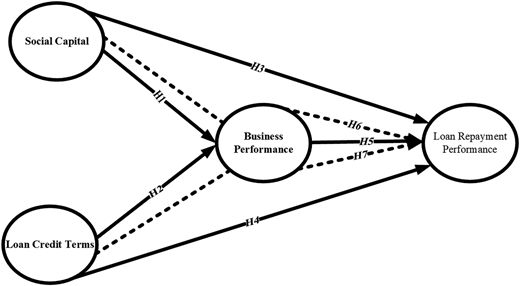
Social capital has a positive impact on microenterprises’ business performance.
2Social capital has a positive impact on microenterprises’ loan repayment performance.
2.3 Direct impact of loan credit terms on microenterprises’ business performance and loan repayment performance
The existing literature suggests three categories of loan design features play an essential role in determining the loan-repayment performance of microenterprises and subsequently enhance the clients’ business performance in terms of profitability and achieving the sales target (Hameed et al., 2020). First is the loan-related factors that include loan size (loan amount limit), the interest rate on the loan, the value of collateral attached to the loan case and the loan repayment schedule. The second factor is the screening criteria for sanctioning loans, including the borrowers’ qualifications and merit. In contrast, the third factor is associated with the incentive or penalty provided to the borrowers, including a grace period, discount for early repayment, or fine for delayed payment (Aslam et al., 2020). As discussed in the earlier section, MFIs do not trust their borrowers due to the lack of information, while the majority of borrowers also hide essential information during the sanctioning loan stage. Such an act of information concealing on the borrowers’ part, thus, adversely affects the loan repayment performance and their own business performance. For instance, conventional banks provide loans to the borrowers under favorable terms and conditions, like offering a large amount of loan for a more extended period at a lower interest rate against the sizable collateral or security. However, MFIs usually provide loans to the borrowers under unfavorable terms and conditions like an offered small amount of loan for a limited time at a higher interest rate, and these terms and conditions affect the microenterprises in two distinct ways. First, they will avoid applying for credit. Secondly, it adversely affects their loan repayment performance in terms of profitability, and subsequently, they will fail to repay their outstanding loan at the time of maturity (Love et al., 2016).
The key indicator for loan delinquency and loan default in microenterprises is the misbalance between loan size and collateral or security size. Furthermore, unfavorable or tight repayment schedules also play a significant negative role in the clients’ loan repayment performance and business performance in terms of lower profitability (Worokinasih and Potipiroon, 2019). Due to the inflexible or tight repayment schedule, many microenterprises do not apply for a loan, while the majority of them fail to achieve the loan objectives due to shorter repayment periods and unavailability of the grace period (Worokinasih and Potipiroon, 2019). Furthermore, most borrowers fail to achieve their loan deadlines due to high-interest rates (Jote, 2018). This is because a high-interest rate has been reported to have a negative relationship with credit demand and loan repayment performance (Maiti et al., 2020), where chances of loan default and loan delinquency are believed to increase with a higher interest rate (Ngonyani and Mapesa, 2018). Hence, the size of loans and interest charged by MFIs has become a debatable issue in the context of microenterprises. It is propounded that providing microenterprises with a higher loan size will decrease the probability of loan delinquency and loan default (Parvin et al., 2020). In this accord, microenterprises that receive a lower loan amount will probably face loan repayment problems due to shorter time and lower return on investment whereas those who receive a large loan will have a more extended period for repayment, accept a higher return on investment, and pay their outstanding loans without experiencing any problems (Ojiako et al., 2014). Therefore, this study suggests that a favorable loan package/product will increase the credit demand and enhance the microenterprises’ loan repayment performance. This leads to the formulation of the following hypotheses:
Favorable loan credit terms have a positive impact on microenterprises’ business performance.
Favorable loan credit terms have a positive impact on microenterprises’ loan repayment performance.
2.4 The direct and mediating role of business performance on loan repayment performance in the context of social capital and loan credit terms
Thus far, it has been argued that social capital and flexible loan credit terms directly impact loan repayment performance. The next question is whether these variables (social capital and loan credit terms) have an impact on business performance. The business performance comprises several indicators, including net profit, return on investment (ROI), return on equity (ROE), various sale targets and profitability ratio concerning the competitors. Most microenterprises fail to pay their outstanding loans due to the smaller size of business and lower profitability ratio, and are ultimately unable to meet the deadlines of the loan maturity period. On the other hand, those with strong financial performance and who earn high profits often face no issues in loan repayment performance and can meet all deadlines mentioned in the contractual loan agreement (Khan et al., 2021).
Hence, this study proposes further investigation on whether business performance has a mediating role in the relationship between social capital and loan credit terms. It was found that operational assistance and training provided by MFIs have a positive impact on business performance in terms of profitability that lead to better repayment performance (Dar and Mishra, 2020). Moreover, monitoring clients regarding the utilization of loan amounts as per contractual agreement by the loan officers also enhances business performance and ultimately positively impacts loan repayment performance (Dixon et al., 2007). Hence, MFIs often provide loans without any collateral or security and charge a high-interest rate that adversely affects the business performance of microenterprises as a significant portion of their profits are used for making interest payments, subsequently creating loan repayment problems for microenterprises (Obokoh et al., 2016). It was also reported that when the interest rate is reduced in the case of the provision of collateral, businesses will be able to generate enough cash flows to repay the outstanding loans (Ssekiziyivu et al., 2018).
Microenterprises’ business performance has a positive impact on their loan repayment performance.
Microenterprises’ business performance has a mediating role between social capital and loan repayment performance.
Microenterprises’ business performance has a mediating role between loan credit terms and loan repayment performance (see Figure 1).
3. Methodology
The research model of this quantitative study comprises four reflective constructs that include social capital (SC), loan credit terms (LCR), business performance (BP) and loan repayment performance (LRP). The survey technique was used as the data collection instrument through a structured questionnaire adapted from Kwambai and Wandera (2013) that measured the four reflective constructs on a five-point Likert scale ranging from 1 = Strongly Disagree, 2 = Disagree, 3 = Neutral, 4 = Agree and 5 = Strongly Agree. The study's target population was the owners of microenterprises that are currently engaged with MFIs as borrowers or clients. They were divided into four categories based on the nature of their business, including (1) agriculture, (2) manufacturing, (3) trading and (4) services. Meanwhile, the sample size comprised 316 randomly selected members from each business category via stratified random sampling (Ahmadini et al., 2021). Following the sampling process, the final sample was formed by 105 owners of manufacturing microenterprises, 105 owners of trading microenterprises and 106 owners of services microenterprises. However, the logic behind the application of structural equation modeling (SEM) in this study is that SEM not only measures the validity and reliability of the instruments but also provides the services of hypothesis testing (Barclay et al., 1995; Hair et al., 2011). Consequently, SEM can be applied in two ways, including a one-stage approach and a two-stage approach. The one-stage approach applied both the measurement model (outer model) and structure model (inner model) at the same time. Meanwhile, in a two-stage approach, first of all, the measurement model (outer model) would be applied and after that structure model (inner model) would be applied (Hair et al., 2017a).
This study implied a two-stage approach as it is suggested for two reasons: first, it is generally accepted (Hair et al., 2019; Henseler et al., 2014), and second, it offers the best picture of the reliability of each construct as it reduces the interactional effects of measurement and structure models (Hair et al., 2011). The first stage of the two-stage SEM approach is the measurement model (outer model). The measurement model (outer model) ensured the validity and reliability of the instrument and the multicollinearity issue. Moreover, reliability is referred to as the ability of the data collection instrument (questionnaire) to indicate the same results over some time (Bonds-Raacke and Raacke, 2012; Holt, 2002) whereas the ability of measures to measure the same thing that research intends to measure is called validity (Bonds-Raacke and Raacke, 2012). All the measures adopted from other sources were tested for their reliability and validity as both reliability and validity are essential to fetch accurate and fair results (Holt, 2002). The reliability and validity of the questionnaire were determined through factor loading, Cronbach’s alpha, composite reliability (CR), average variance extracted (AVE), variance inflation factors (VIFs), the Fornell–Larcker criterion and the HTMT ratio while the partial least square modeling technique was employed to analyze the data (Hair et al., 2017a, b).
After ensuring the reliability and validity of the instrument through the measurement model (outer model), the next step involves testing the relationship of different constructs or testing the hypotheses of the study through the structure model (inner model) by using PLS-SEM (Hair et al., 2019). Moreover, the hypothesized pat relationship among different study variables or different constructs of the study would be determined through the structural model that is also referred to as the inner model (Hair et al., 2017a; Hair et al., 2019). Henceforth, a significant level of different path coefficients (β) was tested based on bootstrapping procedure through the p-value (p < 0.01) threshold (Hair et al., 2017a). As discussed in an earlier section, to ensure the precision of the SEM approach, a nonparametric procedure called bootstrapping was applied in this study. By default, bootstrapping randomly receives the subsamples from the original sample of the study to estimate the bootstrap standard errors through the replacement and scuffling errors (Hair et al., 2017a). Consequently, bootstrapping approach generated the t-statistics (t-values) and p-values that enable the researchers to access the significance level of path coefficient (β). In this study, the standardized procedure of bootstrapping applied through the subsample size = 5,000 and to access the significant level of path coefficient (β) threshold for t-value was taken as ≥ 1.96, whereas the threshold for p-values was taken as (p < 0.01) at (α) = 10% significance level (Henseler et al., 2015).
4. Results and Discussions
4.1 Measurement of constructs
4.2 Measurement model
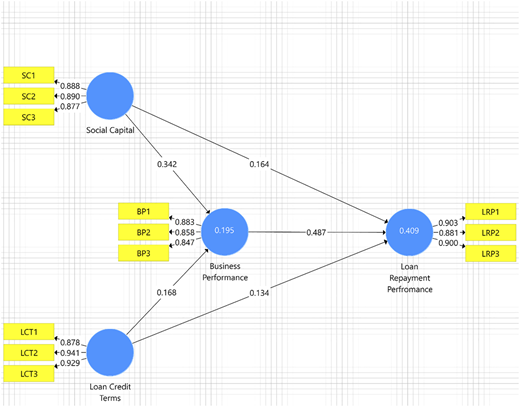
The reliability and validity of data collection tools can be assessed through the outer model generated by using PLS-SEM (Hair et al., 2017a, b). In this study, various techniques were used to test the reliability and validity of the questionnaire instrument, namely (1) factor loading, (2) Cronbach’s alpha, (3) CR, (4) AVE, (5) the VIF, (6) the Fornell–Larcker criterion and (7) the HTMT ratio. The internal consistency of the scale items was assessed using Cronbach’s alpha and CR; its convergent validity was determined through the AVE, whereas the collinearity between the items of each construct was measured using the VIF. In addition, the discriminant validity was also observed through the Fornell–Larcker criterion and HTMT ratio to ensure that all constructs used in the study statistically do not match with each other.
The process of representing indicators in defining the definition of a latent variable or the latent variable through the contribution of items is called indicator reliability. Moreover, indicator reliability will be ensured through the factor loading, and the minimum criteria or threshold for factor loading is (>0.6) (Oke et al., 2022; Hair et al., 2021). Factor loading is an important measure to ensure that all items within a construct serve their intended purpose. A factor loading value of more than 0.60 suggests that the item effectively and efficiently serves its purpose (Hair et al., 2012). The results in Table 7 show that the factor loadings of all items in the constructs are greater than 0.60 and range between 0.85 and 0.94, subsequently indicating its suitability to measure the constructs and positively serve the intended purpose. Internal consistency is a method of reliability in which we judge how well the items on a test that are proposed to measure the same construct produce similar results. However, if all items on a test measure the same construct or idea, then the test has internal consistency reliability, whereas the internal consistency reliability will be measured through the Cronbach’s alpha and CR, and the minimum threshold for both is >0.6 (Oke et al., 2022; Hair et al., 2021) (see Tables 4-6 and Figure 2).
However, reliability is based on latent consistency. It means that the instrument presented the same outcome when we used it again under the same conditions (Sekaran and Bougie, 2016). Hereafter, reliability means the degree to which an instrument produces similar results by repeatedly repeating in the same condition (Amora, 2021). Moreover, the internal consistency of the scale items was assessed through Cronbach’s alpha and CR. In this regard, a threshold of more than 0.70 (Hair et al., 2012) suggests a positive internal consistency of scale items. As shown in Table 3, the Cronbach’s alpha and CR values of all constructs exceed 0.70, which indicates a positive internal consistency of scale items for each construct variable. While traditionally, the internal consistency reliability was accessed through the Cronbach’s alpha value, CR ensured appropriate internal consistency reliability for two reasons. First of all, CR did not consider the whole indicator loading equal to the target population, which is consistent with the working principle of the PLS-SEM algorithm that ranks the indicator based on their individual reliabilities in the process of model estimation. Second, Cronbach’s alpha is also based on the number of items in the scale and generally underestimates the internal consistency reliability (Oke et al., 2022; Hair et al., 2021).
However, CR is a better indicator of reliability than Cronbach’s alpha because CR better predicts the internal consistency of a set of measures rather than focusing on a single variable. Besides this, CR is also based on the model characteristics that enhance its application (Park, 2021). In addition, CR is another prominent technique used to measure the reliability of the data collection instrument. However, the value of CR greater than 0.70 is a better indicator of instrument reliability (Lai, 2021). Another important measure used to test the convergent validity of the construct was the AVE. In this regard, a threshold of 0.50 and above suggests that the constructs meet the convergent validity requirement (dos Santos and Cirillo, 2021). The results in Table 7 show that the AVE value of each construct in this study is greater than 0.50.
Although, multicollinearity is another problem incurred during data analysis, the issue of multicollinearity not only causes methodological problems but also creates problems during the interpretation of results. However, the issue of multicollinearity arises when the two independent constructs (variables) are found to be highly correlated with each other. (Hair et al., 2019). Moreover, if the issue of multicollinearity is found, then the test of multicollinearity is recommended before further analysis for the decision regarding rejection or acceptance of the proposed hypothesis (Templeton et al., 2021). However, in the existence of multicollinearity, the study outcomes would not be acceptable and precise. Therefore, to deduct the issue of multicollinearity, a test of the VIF has been introduced and recommended by various researchers. However, different researchers have suggested different thresholds for the VIF to deduce multicollinearity. For instance, if the value of the VIF near 1 indicated fewer chances of multicollinearity, the VIF value near 0 showed high multicollinearity. Moreover, the value of the VIF up to 5.0 indicated the nonexistence of multicollinearity (Hair et al., 2021). Meanwhile, a threshold of less than 3.30 is suggested to observe the collinearity between the items in each construct through the VIF. If the VIF value of each item in the construct is less than 3.30, it means that there is no issue of collinearity between the items, and they are not correlated with one another (Akinwande et al., 2015). As shown in Table 7, the VIF values for all items are less than 3.30, indicating the absence of collinearity between the items in each construct.
However, reliability has significant importance, but it cannot serve the purpose of measures without the instrument's validity. In addition, “the ability of the scale to measure what it is supposed to measure is called reliability” (Ghauri et al., 2020). Meanwhile, if a scale fulfilled the reliability assumption, it does not mean it would be valid as well whereas reliability was ensured the consistency of the instrument, and validity was considered the ability of the instrument to measure the same thing that a researcher aim to measure. However, reliability is vital for the instrument, but without the assumption of validity, it would be baseless or incomplete (Ahmed and Ishtiaq, 2021).
In addition, the instrument's validity ensured the accuracy of the measurement scale or instrument (Shafie et al., 2021). Likewise, the process of drawing meaningful and valuable inferences from the score of the instrument is called validity (Oke et al., 2022). Likewise, a good and valid scale has three different features, including (1) observable items should have a representation of the construct of the study; (2) the construct should be based on the relevant measures; and (3) items and construct should not be correlated with each other. Moreover, considering these three factors, this study incorporated the two types of validity: construct validity (convergent validity and discriminant validity) and content or face validity (Kumari, 2021). Hereafter, convergent validity was observed through AVE, whereas discriminant validity was measured through different approaches, including the Fornell–Larcker criterion and Heterotrait-Monotrait ratio (Oke et al., 2022; Hair et al., 2021).
Moreover, discriminant validity indicated the difference between the two constructs or variables; it appeared that construct measures did not have any relationship (Hair et al., 2021). The first and foremost approach used to measure discriminant validity is the Fornell–Larcker criterion. The approach compares the square root of AVE with the inter construct relation. However, by establishing discriminant validity, the square root of AVE would be higher than the intervariable correlation (Hair et al., 2021). Moreover, the HTMT ratio is the ratio between the average of all pairwise correlations between the indicator of the two latent variables and the average of all pairwise associations within the two different constructs. Likewise, the HTMT ratio HTMT is recommended as its better working with small sample size and better performance if the target population has homogenous characteristics. In comparison, items’ cross-loading and the Fornell–Larcker criterion is prefered in case of a small sample size and if the population is heterogeneous (Roemer et al., 2021; Hair et al., 2019). However, the HTMT ratio is another robust measure used to access discriminant validity. Moreover, HTMT ratio was considered a more reliable measure than others used to measure discriminant validity. In contrast, the HTMT ratio threshold is less than 0.90 suggested by Roemer et al. (2021) and Oke et al. (2022).
Furthermore, discriminant validity was observed through the Fornell–Larcker criterion and HTMT ratio to ensure that all constructs used in this study are statistically unmatched (Ab Hamid et al., 2017; Hair et al., 2020). In this study, the square roots of AVE for all constructs were compared with a correlation matrix to measure the discriminant validity. As shown by the Fornell–Larcker–criterion results in Table 8, the discriminant validity of the constructs has been established as the AVE in bold which is higher than its highest constructs correlation with any other constructs (Hair et al., 2020). The HTMT ratio of correlation was also used to assess the discriminant validity. In this regard, a threshold of less than 0.85 suggests that the constructs are statistically different from one another (Henseler et al., 2016). The results in Table 9 show that discriminant validity has been established as the HTMT ratios of all constructs in this study which are less than 0.85, which means that they are statistically different.
4.3 Structure model
Following establishing the reliability and validity of the questionnaire instrument, the next step is to test the hypotheses using the structure model (inner model). The decision to accept or reject the hypotheses was based on the bootstrapping results generated via PLS-SEM, and the key criterion will be the significance of the path coefficients (β-Values), t-value and p-values (Hair et al., 2020). The justification and advantages of bootstrapping in the context of direct relation and mediating analysis have been supported by various studies. The prime feature of the bootstrapping approach is that it does not require any assumption regarding sample distributions of the indirect impact or its product (Hair et al., 2020; Hayes and Preacher, 2010). In previous research, various mediating analysis techniques were suggested but bootstrapping possesses a significant superiority over other methods as it generates an empirical representation of the sample distribution of the indirect effect (Rucker et al., 2011). The present study not only attempts to measure the direct impact of social capital and loan credit terms on business performance and loan repayment performance but also to determine the mediating role of microenterprises’ business performance on the relationship between social capital and loan repayment performance as well as the mediating role of business performance toward loan credit terms and loan repayment performance. For this purpose, the structure model results were generated through PLS-SEM with a sample size of 316 microenterprises currently working in Pakistan.
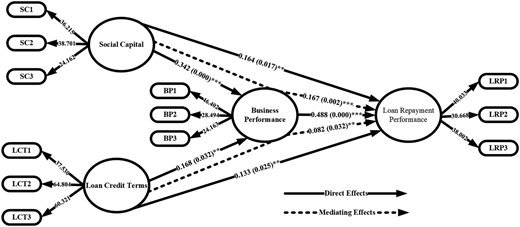
Table 10 presents the hypotheses testing results based on the significance of the path coefficients (β-Values), t-value and p-values. The first hypothesis (H1), which states that “Social capital has a positive impact on microenterprises’ business performance,” is accepted (β = 0.342; t = 4.335 and p < 0). It means that microenterprises in Pakistan can enhance their business performance (sales growth, profit growth, performance as compared to competitors and overall business performance) through the social capital (frequent communication with the loan officers, regular interaction between borrowers and MFIs, interaction in workshops organized by MFIs for microenterprises, commitment and honesty/truthfulness of borrowers, and MFIs with contractual agreement). The finding of this hypothesis is consistent with several past studies (Gallenstein et al., 2020; Jafarinejad et al., 2021).
Meanwhile, the second hypothesis (H2), which suggests that “Favorable loan credit terms have a positive impact on microenterprises’ business performance,” was accepted (β = 0.168; t = 2.150 and p < 0.032). It indicates that the provision of loans on favorable terms and conditions (sufficiency of the loan amount, charging reasonable/affordable interest rate and flexible repayment schedule) will enable microenterprises to enhance their business performance (sale growth, profit growth, performance as compared to competitors and overall business performance). The finding is consistent with several past studies (Hameed et al., 2020; Worokinasih and Potipiroon, 2019; Worokinasih and Potipiroon, 2019, 2019; Ojiako et al., 2014).
Moreover, the third hypothesis (H3) on “Social capital has a positive impact on microenterprises’ loan repayment performance” has also been accepted (β = 0.164; t = 2.382 and p < 0.017). It means the loan repayment performance (better repayment rate, regular payment of debt as cum due and sufficiency of net income to pay the outstanding debt) of microenterprises in Pakistan can be boosted through the provision of social capital (sales growth, profit growth, performance as compared to competitors and overall business performance). Such finding is in line with other studies (Kim et al., 2020; Jafarinejad et al., 2021; Siwale and Ritchie, 2011; Loke et al., 2020; Roslan and Karim, 2009).
The fourth hypothesis (H4), which specifies that “Favorable loan credit terms have a positive impact on microenterprises’ loan repayment performance,” is also accepted (β = 0.133; t = 2.48 and p < 0.025). It suggests that providing loans to microenterprises on favorable terms and conditions (sufficiency of the loan amount, charging reasonable/affordable interest rate and flexible repayment schedule) will enhance their loan repayment performance (better repayment rate, regular payment of debt as cum due and sufficiency of net income to pay the outstanding debt). The result is consistent with previous studies (Aslam et al., 2020; Love et al., 2016; Jote, 2018; Maiti et al., 2020; Ngonyani and Mapesa, 2018; Parvin et al., 2020).
Furthermore, the fifth hypothesis (H5) on “Microenterprises’ business performance has a positive impact on its loan repayment performance” is also accepted (β = 0.488; t = 5.306 and p < 0). This statement assumes that microenterprises’ business performance positively impacts their loan repayment performance. It means that the loan repayment performance (better repayment rate, regular payment of debt as cum due and sufficiency of net income to pay the outstanding debt) of microenterprises depends on their business performance (sales growth, profit growth, performance as compared to competitors and overall business performance). The finding is further justified by various empirical studies that reported similar results (Ssekiziyivu et al., 2018).
The sixth hypothesis (H6) on “Microenterprises’ business performance has a mediating role between social capital and loan repayment performance” has also been supported by the bootstrapping results of the structure model (β = 0.167; t = 3.165 and p < 0.002). It means that social capital (frequent communication with the loan officers, regular interaction between borrowers and MFIs, interaction in workshops organized by MFIs for microenterprises, commitment and honesty/truthfulness of borrowers and MFIs with contractual agreement) leads to better business performance (sales growth, profit growth, performance as compared to competitors and overall business performance), subsequently enabling microenterprises to improve their loan repayment performance (better repayment rate, regular payment of debt as cum due and sufficiency of net income to pay the outstanding debt). Such a result is also justified by existing studies (Dar and Mishra, 2020; Ssekiziyivu et al., 2018).
Likewise, the seventh hypothesis (H7), which specifies that “Microenterprises’ business performance has a mediating role between loan credit terms and loan repayment performance,” is also accepted (β = 0.082; t = 2.140 and p < 0.032). The statement indicates that favorable loan credit terms (sufficiency of the loan amount, charging reasonable/affordable interest rate and flexible repayment schedule) lead to better business performance (sales growth, profit growth, performance as compared to competitors and overall business performance), thus empowering microenterprises to improve their loan repayment performance (better repayment rate, regular payment of debt as cum due and sufficiency of net income to pay the outstanding debt). The finding is in line with many past studies that reported similar results (Khan et al., 2021; Obokoh et al., 2016) (see Figure 3).
5. Conclusion, policy implication, limitations and future directions of research
Based on the principal-agent theory, this study examined the factors that affect the loan repayment performance of microenterprises in Pakistan. The findings indicate that social capital and loan credit terms directly affect loan repayment performance and microenterprises’ business performance. Furthermore, the findings also suggest that microenterprises’ loan repayment performance also depends on the actions taken by the loan officers of the respective MFIs. This study also found that the loan repayment performance of microenterprises can be improved through better business performance in terms of increasing enterprises' sales and profit (Wakunuma et al., 2019). Moreover, regular interaction and good relations between the borrowers and lenders can create a trustworthy relationship as each contract party intends to fulfill their contractual obligation with true letter and spirit (Afshari et al., 2020).
It is interesting to note that in addition to loan credit terms, social capital also has a positive impact on business performance and loan repayment performance. The findings also suggest that favorable loan terms and conditions, including lower interest rates, reasonable loan size and flexible repayment schedule, enable microenterprises to generate sufficient cash flow to fulfill their loan obligations as per the contractual agreement (Ssekiziyivu et al., 2018). Hence, microenterprises are likely to default in the case of unfavorable loan terms and conditions, including higher interest rates, unrealistic loan sizes and inflexible loan repayment schedules. As every borrower has a different preference depending on the purpose of their loan, MFIs should develop flexible products while keeping the borrowers’ individual preferences and priorities into consideration so that they can fulfill their requirements and pay the outstanding loan smoothly as per the contractual agreement. Although previous studies have reported mixed results on this topic, this study found that favorable loan terms and conditions have a positive impact on the business performance of microenterprises and loan repayment performance.
However, more research work should be done in the context of different loan products that will be beneficial not only for the borrowers but also for the lenders. Future research should look into different types of loans perceived as most desirable by borrowers in a specific microfinance context. The findings that business performance mediates the relationship between social capital and loan repayment performance, along with the mediating role of business performance toward loan credit terms and loan repayment performance, also have theoretical implications. Adding to previous studies that examined the direct relationship of social capital and loan credit terms on loan repayment performance (Worokinasih and Potipiroon, 2019), this study has found that social capital and favorable loan terms not only have a direct effect on loan repayment performance but also in improving business performance.
Nevertheless, this study is not without its limitations. First is the issue of common method bias that might have arisen from the self-administrated questionnaire used in this study. Second, the target population of this study comprised individuals who were primarily less educated and less conversant with the importance of research and hesitated to share the critical information with the researcher. Third, the issue of generalization of findings on the whole country may be raised as the data of this study were collected only from firms situated within the Punjab province. Fourth, each MFI has different products and loan credit terms; therefore, biases in this regard may arise. Besides these restrictions, we believe that the outcomes of this study will be useful and have substantial implications for policymakers dealing with microcredit and microenterprises.
This study extends previous research that looks at the factors affecting loan repayment performance in the context of MFIs borrowers. Nonetheless, the findings reported in this study have found significant support for the impact of social capital and loan credit terms on loan repayment performance. Moreover, in this study, microenterprises’ business performance emerged as a mediator in the relationship between social capital and loan repayment performance and between loan credit terms and loan repayment performance. An essential contribution of this study is that both borrowers and lenders were found personally responsible for their actions and reactions due to social ties and trust, resulting in continuous interaction between both parties. This study also suggests that MFIs should consider the preferences and priorities of microenterprises while designing new products, and more flexible products should be developed that enable microenterprises to fulfill their needs and repay the outstanding loan as per the contractual agreement. It is hoped that the outcomes of this study will stimulate further research in this critical area and disseminate and share with concerned stakeholders, including MFIs, microenterprises, chamber of commerce, credit rating agencies, SBP, NPOs, NGOs, Ministry of Finance Pakistan, Ministry of Commerce Pakistan and the Planning and Development Department of the Government of Punjab. Moreover, the findings of this study will also be shared with the concerned microenterprises and lending officers of MFIs so that a compatible product may be developed that protects the interest of both parties (lender and borrowers) through the social capital favorable loan credit terms.