Hexavalent chromium in Portland cement poses significant health risks and contributes to environmental pollution. Traditional reduction methods rely on costly, resource-intensive reducing agents derived from primary raw materials. This study presents a sustainable approach by synthesising ferrous sulfate from industrial iron-rich sludges and waste sulfuric acid to mitigate hexavalent chromium levels in Portland cement. Three types of iron-rich sludges, sourced from municipal wastewater treatment and steel manufacturing, were analysed using X-ray diffraction to identify their iron-bearing phases. Key parameters, including sludge grinding intensity, stirring rate, reaction time and temperature, were systematically optimised to enhance ferrous sulfate yields. Under optimal conditions, approximately 17 g of pure ferrous sulfate were produced from 10 g of sludge and 50 ml of 20% waste sulfuric acid, achieving a recycling efficiency of around 90%. Incorporating the synthesised ferrous sulfate into ordinary Portland cement reduced hexavalent chromium concentrations below 2 ppm, complying with Environmental Protection Agency, USA standards. This method demonstrates the feasibility of repurposing industrial waste to enhance cement’s environmental performance, offering a promising valorisation pathway for iron-rich sludges and waste acids. The approach is cost-effective and environmentally friendly, aligning with circular economic principles and promoting green innovations in industrial waste management.
Introduction
Hexavalent chromium (Cr(VI))is a highly mobile and toxic form of chromium that poses serious health and environmental risks. In construction materials, particularly ordinary Portland cement (OPC), alkaline conditions increase the solubility and bioavailability of hexavalent chromium, raising the risk of exposure through dust inhalation or skin contact (Cho et al., 2024; Jafari et al., 2023; Wang et al., 2023). Prolonged or repeated exposure can lead to allergic dermatitis, ulceration and even carcinogenesis, underscoring the need for strict regulations such as directive 94/62/EC in the European Union (European Commission, 1994). As construction demands grow globally, the cement industry faces mounting pressure to comply with stringent hexavalent chromium limits that protect worker safety and the environment (Fu et al., 2021; Song et al., 2019).
Conventional mitigation relies on adding iron (II)-based reducing agents – commonly ferrous sulfate – during cement milling. In these redox reactions, iron (II) donates electrons to hexavalent chromium, converting it into the more stable and less toxic trivalent chromium (Cr(III)) (Arshi and Singh, 2021; Fu et al., 2021). Although this method effectively decreases hexavalent chromium concentration, the high-purity ferrous sulfate typically derives from primary resources, making it expensive and environmentally burdensome (Jiang et al., 2024; Macias et al., 1997). Given the ongoing rise in global infrastructure projects, the cement industry seeks more sustainable and cost-effective alternatives to meet regulatory requirements without exacerbating resource depletion.
In pursuit of greener production methods, recent studies have examined various industrial waste streams that could serve as feedstocks for hexavalent chromium-reducing additives (Jafari et al., 2023; Rajapaksha et al., 2022). Iron-rich sludges, produced by steel manufacturing, metal refining and mineral processing, are among the most abundant waste types. These sludges often feature mixed iron oxides such as ferrous oxide, magnetite and ferric oxide in varying oxidation states (Chen et al., 2024; Liang et al., 2021). Improper management of such sludges can lead to hefty disposal costs, environmental damage and regulatory liabilities (Jagupilla et al., 2015; Taslakyan et al., 2022). Meanwhile, waste sulfuric acid from processes like titanium dioxide pigment production remains largely underutilised, contributing to hazardous acid waste streams (Khosravi et al., 2021; Luo et al., 2024).
Harnessing these byproducts to synthesise ferrous sulfate presents a promising avenue for circular economy principles (Fan et al., 2021; Furmanski et al., 2024). By combining iron-rich sludges with waste sulfuric acid, one can obtain an effective reducing agent for hexavalent chromium, simultaneously diverting waste from landfills and lowering the environmental impact associated with virgin chemical production (Nie et al., 2022; Sousa et al., 2023). However, realising consistent and high-purity ferrous sulfate requires controlling key process variables, including sludge pre-treatment (e.g. grinding), reaction temperature, stirring intensity and residence time (Feng et al., 2024; Zuo et al., 2024). Iron (II) dominant phases dissolve more readily, whereas ferric oxide demands more aggressive or prolonged conditions (Chen et al., 2024; Reardon and Beckie, 1987). Detailed knowledge of these dissolution kinetics and crystallisation behaviours is, therefore, critical for achieving high iron (II) yields.
Building upon this framework, the present study investigates the feasibility of synthesising ferrous sulfate from three different industrial sludges and a waste sulfuric acid stream to reduce hexavalent chromium in OPC below 2 ppm (parts per million). First, the sludges are characterised by way of X-ray diffraction (XRD) and chemical analyses to determine their iron-bearing phases (Cai et al., 2015; Santos et al., 2019). Then the temperature, reaction duration and sludge particle size are systematically varied to optimise ferrous sulfate yield and purity (Lei et al., 2002; Wise et al., 2003). The resulting product is incorporated into OPC initially containing 20 ppm of hexavalent chromium, and its reduction performance is measured using an ultraviolet visible (UV-vis) spectrophotometric method (Anuar et al., 2021).
By successfully converting industrial sludge and waste acid into a high-value cement additive, this research contributes a cost-effective, eco-friendly strategy for addressing hexavalent chromium contamination in building materials (Akhter et al., 1990; Prasad et al., 2021). Beyond reducing reliance on virgin raw materials, the current authors’ method demonstrates how waste valorisation can enhance compliance with environmental standards, encourage resource conservation and reduce waste disposal burdens. In so doing, the study offers a scalable model for integrating circular economy practices into the cement sector, ultimately contributing to cleaner production pathways and safer work environments worldwide.
Experimental methods and materials
Materials and sample preparation
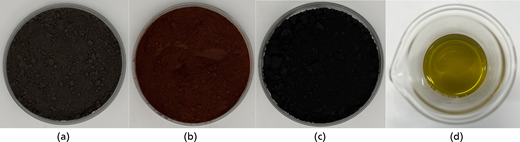
Three types of industrial iron-rich sludges, designated as LD (Linz–Donawitz sludge), CF (cold forming sludge) and CR (cold rolling sludge) were obtained from metal refining and related processes that are known to generate substantial amounts of iron-laden waste, as illustrated in Figure 1. Sludge LD primarily consisted of ferrous oxide and ferric oxyhydroxide, CF sludge had ferrous oxide, magnetite and significant quantities of other iron oxides, while sludge CR was predominantly composed of ferric oxide. The variations in oxidation states and morphological characteristics among these sludges were hypothesised to influence their reactivity with sulfuric acid.
A waste sulfuric acid solution with a 20% concentration, sourced from titanium dioxide pigment production, was used as the leaching and reaction medium. This approach repurposes unmanaged effluent, thereby mitigating disposal challenges and reducing associated costs. An OPC with a compressive strength of 42.5 MPa was prepared under controlled laboratory conditions using a mix design with a lime saturation factor of 0.92 (KSL 5201, 2013). The raw materials consisted of high-purity chemical reagents: calcium carbonate, silicon dioxide, ferric oxide and aluminium oxide, which were thoroughly blended using a ball mill to ensure homogeneity.
Clinker spheres weighing 25 g each were prepared and thoroughly dried before sintering in a furnace. The temperature gradually increased from room temperature to 1450°C at a controlled rate of 6°C per minute (Sun et al., 2024). Upon reaching 1450°C, the temperature was maintained for 30 min to complete clinkerisation. The resulting clinker was cooled, crushed and mixed with 5% gypsum to control the setting time. This clinker–gypsum mixture was then ground in a ball mill to achieve a Blaine fineness of approximately 3700 cm2/g, which meets standard commercial cement specifications.
For further cement preparation, 1 kg of OPC was mixed with 20 ppm of chromium trioxide. The mixture was placed in a ball mill machine (model HT-1000) with a round-shaped container filled with 95% zirconium oxide balls, each 20 mm in diameter. The materials were milled for 1 h to ensure uniform distribution of chromium trioxide. After milling, the reference cement was divided into 100 g portions and stored in zipper bags. Five sample categories were prepared to evaluate the hexavalent chromium reduction performance. The first sample, serving as the control, contained only reference cement with 20 ppm chromium trioxide. The second and third samples included 100 g of reference cement mixed with 0.5 g and 1.0 g of ferrous sulfate tetrahydrate (FeSO4·4H2O), respectively. The fourth and fifth samples consisted of 100 g of reference cement mixed with 0.5 g and 1.0 g of ferrous sulfate monohydrate, respectively. These samples were further processed in a small container using 5 mm zirconium oxide balls (95%) in the same ball mill for 1 h.
Synthesis procedure
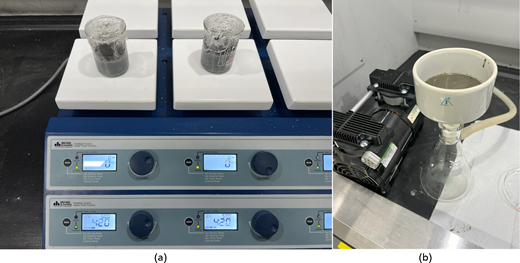
Preliminary experiments revealed that particle size and reaction parameters significantly influence the formation of ferrous sulfate. Sludges LD and CF were ground for 2 min to reduce particle size and increase specific surface area, thereby enhancing iron dissolution in the acidic medium. The Rocklabs RM1000 instrument was used for grinding; this can reduce particles to a size of up to 75 μm. A total of 200 g of well-dried sludge was prepared, with each sample ground for 2 min. In each experiment, 5 g of LD and 5 g of CF were mixed with 50 ml of waste sulfuric acid in a glass beaker.(Zhang et al., 2017). The mixture was agitated at 200 r/min and maintained at 70°C. Reaction durations of 4 to 9 h were evaluated to determine the optimal conversion yields, with 5 h found to be the ideal balance between productivity and energy efficiency(Kanari et al., 2018; Tolchev et al., 2002). Figure 2(a) illustrates the experimental set-up, in which the DAIHAN Scientific electronic heater and stirring machine were used to provide complete control over both speed and heating processes.
As shown in Figure 2(b), the post-reaction slurry was filtered to remove undissolved solids, ensuring a clean solution for subsequent processing. The filtrate was then cooled to 5°C and left to stand for 24 h to promote the crystallisation of ferrous sulfate. Cooling decreases the solubility of Fe2+ ions, leading to the precipitation of ferrous sulfate tetrahydrate as the primary crystalline phase. This phenomenon is driven by a reduction in thermal energy, which decreases the capacity of water to hold dissolved ions. During secondary treatments, ferrous sulfate monohydrates (FeSO4·H2O) formed due to continued supersaturation, dehydration and slight shifts in solution equilibrium conditions, which favoured the monohydrate form at lower humidity and slightly elevated ionic concentrations.
The precipitated crystals were collected and dried at 40°C for 24 h, a temperature sufficient to remove residual moisture without causing thermal decomposition or phase transformation of the hydrated salts. These dried samples were then subjected to further analysis. In addition, the residual sludge from the initial reaction, containing unreacted solids and partially soluble byproducts, was treated with fresh sulfuric acid to recover additional ferrous sulfate. The sulfuric acid acts to solubilise remaining iron compounds, regenerating Fe2+ ions for further precipitation. This recycling process enhances resource efficiency by maximising the extraction of ferrous sulfate and minimising waste, adhering to principles of circular material utilisation in chemical processing.
Analytical methods
The elemental composition of both raw and processed materials was analysed using inductively couple plasma optical emission spectrometry with a PerkinElmer Optima 5300DV instrument. Samples were dried at 105°C, ground to a fine powder and 0.5 g were digested using nitric acid (HNO3) and hydrofluoric acid (HF) under microwave-assisted conditions. The digested solutions were diluted to a known volume with deionised water. Calibration was performed using certified standards for key elements such as iron (Fe), silicon (Si) and aluminium (Al), along with trace elements like arsenic (As), cadmium (Cd) and lead (Pb). The plasma parameters were optimised, and the sample solutions were introduced into plasma by way of a nebuliser. Emission intensities at element-specific wavelengths (e.g. Fe at 238.204 nm, Si at 251.611 nm) were measured and compared to a calibration curve to determine element concentrations.
Quality control checks, including blanks and replicates, ensured accuracy. The analysis confirmed that hazardous metals were below detection limits, supporting the material’s safety and regulatory compliance (Vargas-Muñoz et al., 2021). Crystalline phases were found through XRD analysis using a Rigaku Ultima IV diffractometer equipped with Cu Kα radiation (λ = 0.154056 nm) operating at 40 kV and 30 mA (Cai et al., 2015; Santos et al., 2019). Scans were conducted over a 2θ range from 5° to 90° at a rate of 7°/min, enabling the differentiation of various iron oxides (ferrous oxide, magnetite, ferric oxide) and the confirmation of ferrous sulfate hydrate formation (Peng et al., 2022).
Hexavalent chromium concentrations in OPC samples, both before and after treatment, were quantified using UV-vis spectrophotometry with a Thermo Scientific GENESYS 150 instrument set to a wavelength of 540 nm. The analysis followed the diphenylcarbazide colorimetric method due to its high sensitivity and specificity for hexavalent chromium. First, the OPC samples were dissolved in an acidic solution to extract hexavalent chromium, and the solution was filtered to remove undissolved solids. A freshly prepared diphenylcarbazide reagent was then added to the filtrate, allowing the sample to react and form a purple-violet complex with hexavalent chromium. After a reaction period of 5–10 min, the absorbance of the solution was measured at 540 nm. To ensure correct quantification, a calibration curve was generated using standard hexavalent chromium solutions of known concentrations. The concentration of hexavalent chromium in the sample was found by comparing its absorbance to the calibration curve. The results were recorded and assessed to verify compliance with regulatory limits for hexavalent chromium in cement materials.
Results
Sludge characterisation and reactivity
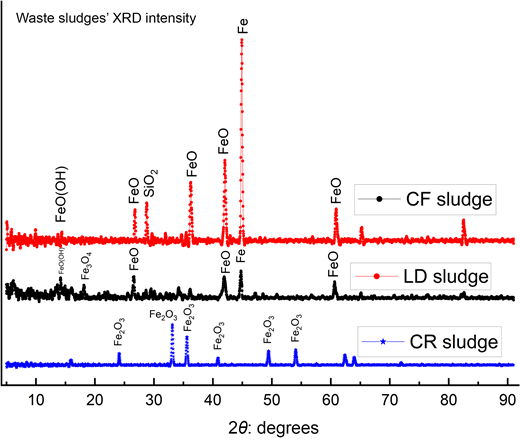
The initial characterisation results, summarised in Table 1, revealed that sludges LD, CF and CR possess distinct compositions of iron oxides and hydroxides, each exhibiting varying oxidation states. Sludge LD formed primarily ferric oxide and ferric oxyhydroxide, as indicated by XRD peaks between 35° and 40° 2θ. Sludge CF exhibited significant quantities of magnetite and ferrous oxide, as indicated by prominent XRD reflections at 30°, 36° and 57° (2θ). In contrast, sludge CR was dominated by ferric oxide, with sharp peaks observed at 33°, 35° and 54° (2θ), suggesting a highly crystalline and oxidised Fe (III) phase, as shown in Figure 3.
Optimised conditions and yield of ferrous sulfate
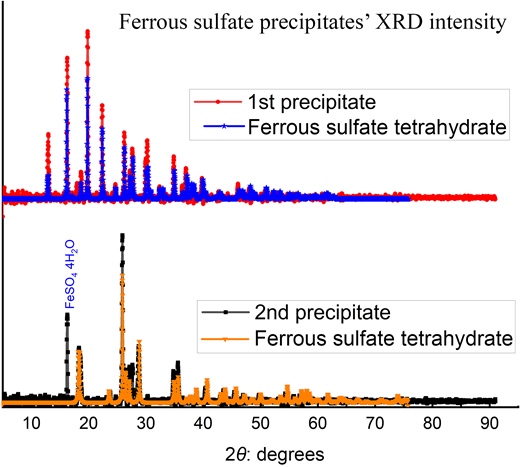
Systematic variation of reaction parameters (time, temperature, stirring rate and sludge pre-treatment) was conducted to optimise ferrous sulfate yield. Notably, mechanical grinding of sludges LD and CF for 2 min before the reaction enhanced dissolution rates by approximately 20%, as evidenced by higher iron concentrations in the filtrate. XRD patterns of the dried precipitates, as shown in Figure 4, confirmed successful precipitation of ferrous sulfate tetrahydrate under optimal conditions: 10 g of sludge, 50 ml of acid, a reaction temperature of 70°C and a duration of 5 h. Characteristic peaks appeared prominently at approximately 20°, 24°, 30° and 35° (2θ), indicating the formation of the desired crystalline phase. Comparative experiments indicated that reaction time had a non-linear effect on yield. Shorter reaction times (e.g. 2–3 h) did not allow sufficient iron (II) release, resulting in yields below 4–5 g of ferrous sulfate per 10 g sludge. Extending the reaction beyond 5 h (e.g. up to 9 h) did not significantly increase yield, as equilibrium appeared to be reached, and further dissolution was minimal. Optimal yields ranging from 7 to 9.11 g of ferrous sulfate tetrahydrate per 10 g sludge were achieved at 5 h. Temperature also played a critical role: at 50°C, yields were about 30% lower due to reduced kinetic energy and slower dissolution kinetics; at temperatures above 80°C, however, side reactions and potential partial decomposition of intermediates appeared to limit the net gain in soluble iron (II) (Lei et al., 2002; Reardon and Beckie, 1987).
Table 2 summarises the key experimental results obtained from synthesising ferrous sulfate under different conditions involving industrial sludge types and waste sulfuric acid. The table elucidates key parameters, including sludge-to-acid ratios, processing conditions (sludge grinding, reaction temperature, mixing intensity and residence time), and the resulting yields of ferrous sulfate tetrahydrate. Standard deviations were calculated based on triplicate measurements of the dried waste sludge, the final solution and the dried final precipitates, ensuring the reliability of the results.
When processed individually under optimal conditions, sludge LD and sludge CF yielded 5.8 ± 0.27 g and 6.1 ± 0.17 g of ferrous sulfate tetrahydrate, respectively. Notably, a 1:1 mixture of sludges LD and CF significantly enhanced the yield to 8.9 ± 0.31 g, proving a synergistic effect that surpasses the performance of single sludge experiments. This improvement is attributed to the complementary dissolution behaviours of the two sludges: ferrous oxide and ferric oxyhydroxide present in sludge LD facilitate the maintenance of a favourable redox environment, facilitating the extraction of iron (II) from magnetite in sludge CF.
Furthermore, the table emphasises the superior efficiency of the first precipitate, which achieved superior purity and yield compared to secondary reactions involving recycled residues. These findings underscore the importance of optimising raw material combinations and processing parameters to maximise ferrous sulfate production efficiency and minimise waste. Consequently, this supports the scalability and industrial applicability of the proposed sustainable synthesis method, offering a practical alternative to conventional ferrous sulfate production processes.
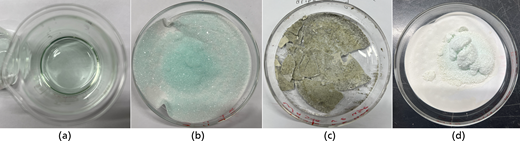
Figure 5 presents the final products resulting from the synthesis of ferrous sulfate, with each figure part highlighting distinct outcomes that demonstrate the efficiency and effectiveness of the synthesis method. Figure 5(a): residual solution – this panel depicts the final residual solution, which is characterised by high acidity and potential for reuse. The acidity was quantitatively assessed using litmus paper, revealing a pH range between 0 and 1. The low pH indicates that the solution retains a significant concentration of acidic components, making it suitable for subsequent recycling or other applications within the synthesis process. Figure 5(b): filtered ferrous sulfate tetrahydrate wet product – this photograph shows the filtered ferrous sulfate wet product, which displays a distinct cyan colouration. This colour is similar to that of ferrous sulfate produced using pure reagents, indicating high purity and consistency in the synthesis process. The visual similarity suggests that the industrial waste-derived ferrous sulfate supports the quality necessary for effective hexavalent chromium reduction in OPC. Figure 5(c): final waste product – this photograph depicts the final waste product generated from the synthesis process. The waste mass is less than 1 g, derived from the initial 10 g of raw waste sludges. The minimal waste production highlights the efficiency of the process, underscoring its potential for scalable industrial applications with reduced environmental impact. Figure 5(d): dried ferrous sulfate tetrahydrate powder – shown here is the dried ferrous sulfate in white powder form, which is highly effective in reducing hexavalent chromium levels in OPC cement. The white powder indicates the successful crystallisation and purification of ferrous sulfate, confirming its suitability as a reducing agent. The high efficacy of the dried ferrous sulfate is essential for meeting stringent regulatory standards for hexavalent chromium concentrations in construction materials.
The presented figures collectively demonstrate the efficacy and effectiveness of the ferrous sulfate synthesis process. The residual solution’s high acidity and potential for reuse highlight the sustainability of the process. The filtered ferrous sulfate wet product’s high purity and consistency further underscore the reliability of the process. The final waste product’s minimal production emphasises the efficiency of the process. The dried white ferrous sulfate powder’s effectiveness in reducing hexavalent chromium levels in OPC cement is pivotal for meeting regulatory standards and ensuring the quality of construction materials.
Hexavalent chromium reduction in OPC
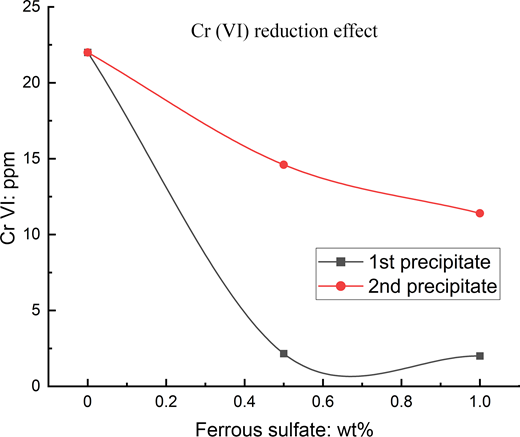
The primary objective of this study was to evaluate the efficacy of synthesised ferrous sulfate in reducing hexavalent chromium levels in OPC from an initial concentration of 20 ppm to below international regulatory thresholds of 2 ppm (Demars and Benoit, 2019). When 0.5 wt% of the first precipitate (ferrous sulfate tetrahydrate) was incorporated into OPC, the hexavalent chromium concentration was effectively reduced to approximately 2 ppm. Further increasing the dosage to 1 wt% resulted in reductions to about 1 ppm, ensuring a margin of safety and exceeding the regulatory requirements.
Figure 6 illustrates the outcome of hexavalent chromium reduction in OPC using ferrous sulfate monohydrate. In contrast, the second precipitate (ferrous sulfate monohydrate), obtained from recycling filtered sludge residues, demonstrated slightly diminished reducing potency. At an addition of 0.5 wt%, it reduced hexavalent chromium to approximately 3–4 ppm. Only when the dosage was increased to 1 wt% did the reduction approach the 2 ppm threshold. This disparity in reducing performance is attributed to variations in purity and crystallinity.
Practical implications for industrial applications
From an industrial perspective, the consistently high ferrous sulfate yield from mixed sludges LD and CF and the significant hexavalent chromium reduction in cement highlight the practical benefits of this approach. By tapping into waste materials that are often considered liabilities, the process generates a valuable hexavalent chromium-reducing additive that rivals or surpasses conventional ferrous sulfate derived from primary resources. The integrated method is not only environmentally beneficial, reducing landfill use and mitigating acid waste disposal, but also economically attractive, as it transforms byproducts into functional constituents within the construction supply chain.
Moreover, the reproducibility of these results, combined with the broad tunability of parameters, suggests that this method can be adapted to accommodate a range of industrial sludge compositions. The key determinant of sufficient iron (II) availability can be promoted by way of appropriate sludge pre-treatment (grinding), temperature control and strategic mixing of different sludge types. This flexibility enhances the method’s potential for widespread industrial adoption, encouraging companies to adopt greener production cycles and reducing the sector’s overall environmental footprint.
Discussion
The developed process aligns with green chemistry and circular economy principles by repurposing waste streams to produce functional additives that enhance cement safety. The reduction of hexavalent chromium in OPC is achieved through a well-established redox reaction, where iron (II) acts as the reducing agent. Successfully converting various iron oxide species into ferrous sulfate underscores the critical roles of sludge selection, pre-treatment (e.g. grinding) and optimisation of processing parameters such as temperature, reaction time and mixing intensity (Jagupilla et al., 2015; Song et al., 2019).
However, challenges remain in ensuring consistent ferrous sulfate production from diverse sludge compositions. Future research should focus on the kinetics of ferrous sulfate formation and the stability of iron (II) during cement hydration. In addition, conducting long-term leaching tests, durability assessments and mechanical property evaluations of ferrous sulfate-treated cement will be essential to confirm the permanent immobilisation of trivalent chromium and prevent its reversion to hexavalent chromium.
To confirm the scalability and economic feasibility of this approach, large-scale trials at cement plants are recommended. Furthermore, comprehensive life-cycle assessments and techno-economic analyses will provide insights into the environmental benefits and cost-effectiveness of this method compared to conventional hexavalent chromium reduction techniques (Xu et al., 2022). These steps are crucial for integrating this sustainable process into industrial practices, thereby promoting environmentally responsible and economically workable cement production.
Broader environmental and policy implications
Implementing this ferrous sulfate synthesis method on an industrial scale could significantly reduce the environmental footprint of cement production by diverting substantial amounts of industrial waste from landfills and decreasing reliance on virgin chemical resources (Kinnunen et al., 2024; Taslakyan et al., 2022). This approach not only minimises waste disposal costs but also contributes to the reduction of greenhouse gas emissions associated with traditional ferrous sulfate production processes. In addition, aligning this method with existing and emerging environmental regulations can enhance compliance and support industry-wide shifts toward more sustainable practices. Policymakers could incentivise the adoption of such green technologies through grants, subsidies, or tax breaks, further accelerating the transition to sustainable cement manufacturing. By demonstrating both environmental and economic benefits, this study provides a compelling case for the integration of waste-derived additives in construction materials, fostering a more sustainable and resilient construction industry.
Conclusions
This study presents a robust and scientifically grounded strategy for reducing hexavalent chromium levels in OPC through the synthesis of ferrous sulfate derived from industrial iron-rich sludges and waste sulfuric acid. The key findings are summarised below.
Raw material suitability. Iron-rich sludges containing iron (II)-dominant phases (sludges LD and CF) exhibited higher reactivity with waste sulfuric acid, resulting in significant ferrous sulfate yields. The synergistic combination of sludges LD and CF further enhanced ferrous sulfate productivity, demonstrating the benefits of sludge blending.
Process optimisation. Optimisation of the synthesis process through mild grinding of sludges, maintaining a reaction temperature of 70°C, and a 5 h reaction time with 200 r/min stirring significantly increased iron (II) availability. In addition, recycling dried sludge residues with fresh acid boosted overall ferrous sulfate recovery to approximately 90%, highlighting the efficiency of the optimised process.
Hexavalent chromium reduction in cement. Incorporating the synthesised ferrous sulfate into OPC effectively reduced hexavalent chromium concentrations from an initial 20 ppm to as low as 2 ppm, thereby meeting and exceeding international regulatory standards. The first precipitate (ferrous sulfate tetrahydrate) showed the highest reduction efficiency due to its superior purity and crystallinity.
Environmental and economic benefits. Utilising industrial waste streams aligns with sustainability goals by reducing reliance on primary ferrous sulfate sources and diverting waste from landfills. This integrated approach contributes to greener cement production and offers economic advantages by transforming byproducts into valuable construction additives, thereby minimising environmental impacts.
Overall, the research supports the adoption of waste-derived ferrous sulfate as a practical, scalable and cost-effective solution for hexavalent chromium mitigation in cement. This methodology fosters a more circular and environmentally responsible construction industry by leveraging industrial waste materials. Future studies should focus on long-term stability assessments of iron (II) in cement matrices, large-scale industrial trials to validate feasibility and comprehensive life cycle and techno-economic analyses to fully establish the environmental and economic benefits of this sustainable approach.
Declaration of competing interest
The authors declare that they have no known competing financial interests or personal relationships that could have appeared to influence the work reported in this paper.
Authorship statement
All authors made significant contributions to the conceptualisation, study design, methodology, material preparation, data collection and analysis. Bilguun Mend led the writing of the first draft of the manuscript, and all authors significantly contributed to the revision and final approval. Each author has reviewed and approved the final manuscript.
Acknowledgement
The authors express their gratitude to Mr Hyun Gu Kim, Principal Technical Researcher at KICET’s metropolitan office, for providing invaluable support with chemical analyses and technical insights that greatly enhanced the quality and speed of this work.