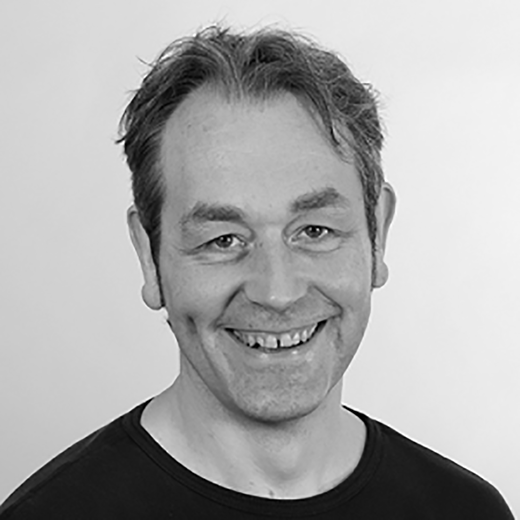
Computing expert, arch bridge specialist and renowned academic, Professor Matthew Gilbert (1968–2025) bravely fought a brain tumour for 15 months. Through his sheer determination he defied his prognosis for longer than expected. Sadly, some illnesses cannot be overcome, and despite every effort he passed away on 27 June 2025.
Matthew was born in August 1968 in Kingston upon Hull, UK. It was in his teenage years that he found a passion for computing. He saved up his birthday and Christmas money to buy a Sinclair ZX81. Matthew quickly mastered BASIC programming language, but was dissatisfied with the speed of operation of his computer, so he learned Assembly language. He also devised a Frogger game which was so fast that he had to introduce loops to slow it down so it was possible for a human to actually navigate from one side of the river to the other. It was this computing ability that was to become more widely applied in his later life.
In 1986, he moved to Sheffield, UK to study civil and structural engineering at the university. It was here that he met Carrie, who went on to be his life partner. After graduation, Matthew was employed at the Bolton Institute of Higher Education, UK, where he was involved in testing full-scale masonry arch bridges under the supervision of Professor Clive Melbourne. This work culminated in the award of a PhD.
Matthew then got a job as a postdoc researcher at the University of Sheffield in the department of civil engineering, where he had studied for his first degree some years earlier. It was here that he stayed for his entire career, later becoming a senior lecturer and then, in 2013, a professor of structural engineering.
Matthew’s speciality was masonry arch bridges. He had numerous journal and conference papers published on the subject, many written in collaboration with others, but that was his way – to work with and help fellow engineers. It was Matthew’s paper, written with colleagues Colin Smith and Tom Prichard, that introduced the concept of discontinuity layout optimisation for the analysis of masonry arch bridges. This was a revolutionary technique that enabled complex analyses to be carried out much faster than had previously been possible – somewhat akin to Matthew’s teenage experience with Frogger. Matthew also established a University of Sheffield spin-off company that provides software to analyse masonry arch bridges, geotechnical problems, concrete slabs and several other applications utilising those principles. Matthew also studied the behaviour of masonry parapets, and he produced one of the first assessment guides on the subject.
He also provided practical advice on the assessment of masonry arches to various bodies including the Bridge Owners Forum and the County Surveyors’ Society. Experimental work at the Universities of Salford and Sheffield allowed further development of the understanding of the behaviour of masonry arch structures and, in particular, the relationship between ultimate and serviceability limit states. This led to the publication of CIRIA guide C800 in 2022, which promoted Matthew’s concept of permissible limit state for masonry arches. This principle was subsequently incorporated in national standards.
Besides his expertise and interest in computing and structural engineering, Matthew loved cycling, and enjoyed his garden and family life. For several years he was the treasurer of his local volunteer-run library, a willing helper for Walkley festival events, as well as an active political campaigner and trade union representative. He truly was a ‘great bloke’.
A memorial service was held at Grenoside Crematorium and Wisewood Cemetery, Sheffield, on 23 July 2025. Matthew leaves his wife, Carrie, and daughters Eliza and Ibby. His passing leaves such a gap in many lives. He will be dearly missed by us all.