Adrian Long, head of civil engineering at Queen's University of Belfast and current ICE president, stresses the importance of the Institution as an international centre for engineering information and excellence.
Every civil engineer working on projects is aware that teamwork underpins everything the profession does – and that information flow between team members is crucial. In 2003 the team is even bigger, both in an international and an inter-disciplinary sense, and the need for effective information sharing is even greater. It is for this reason that, the ICE's role as a learned society has become more important than ever.
The Institution has come a long way since the Transactions were first published in 1836. Today 36 issues of the Proceedings are published annually. But these represent just the tip of an intellectual iceberg that includes our regions, boards and associated societies. Online professional interest networks now facilitate the exchange of information and look set to become even more popular over time.
Extending our reach
Equally important is ensuring that all concerned feel that they are part of the team. Despite positive moves such as embracing both incorporated and chartered engineers as Members, the Institution still has a great deal to do. Barriers have sprung up over the years that we must confront if we are to transmit the message that we are a welcoming, customer-focused organisation.
More must also be done to encourage young people into the profession and retain them after graduation. It's not just a matter of appealing to primary school children or those about to choose their post-16 courses, it's a case of appealing to young people throughout their education process – including supporting them through their time as an undergraduate and during their first years of professional life.
Improving our value
The quality of the professional lives of those entering civil engineering must also be addressed by reviewing the standard procurement processes that we employ. Competitive tendering for design, on the face of it an excellent option for clients in a costconscious world, has been adopted by many responsible for delivering new projects.
But it is absolute folly to scrimp on design costs. If a building costs one unit then, during its lifetime, refurbishment and maintenance will cost five units and salaries of the staff working in the building will cost 200 units. An inadequately designed building will cost far more in the long term in higher maintenance and lower productivity than any short-term design savings. Lowest cost design simply isn't helpful for the client or the contractor, and it also means that consultants cannot afford to pay designers a competitive wage.
Increasing our learning
Engineering must also invest more in research and development. The benefits of research may not always be immediately obvious but, as someone who has been involved in research for 30 years, I can testify to the long-term value it delivers.
As far as engaging education is concerned, the UK's four-year MEng degree courses are the envy of foreign universities. It is less than two years since the American Society of Civil Engineers published their policy statement Why we must raise the bar, advocating a switch to four-year degree courses so that graduates on the other side of the Atlantic might be the equal of their contemporaries in the UK. This extra year is crucial in an age where our graduates are expected to combine business and management skills with technical excellence. Three years is simply too short a time for a university to prepare someone for a career as a professional civil engineer.
Although we clearly have much to do to further our profession, we also have a great deal to celebrate. Pro-rata, the UK surpasses France, Germany and the USA as an exporter of engineering design. British engineers are in great demand around the globe and civil engineering courses attract many hundreds of students from overseas every year.
Celebrating our triumphs
Consider also some of the triumphs of British engineers – the Falkirk Wheel, the Millennium Eye and the Gateshead Millennium Bridge are just three of the high-profile projects completed in recent years. Projects such as these, and the creative, ingenious individuals behind them, are there to be celebrated.
Jeremy Clarkson—via the BBC's Great Britons programme in November 2002—did for Brunel and his legacy what we must do for the engineers of 2003. By addressing the challenging tasks facing the profession we can continue to celebrate our successes long into the future.
Briefing: Sustainability starts to become a reality
Two years ago a group of 43 young engineers came up with 47 recommendations to make the profession more sustainable. Sebastian Wood of consultant Whitby Bird says a follow-up report due out this month shows the tide really is beginning to turn.
In 2000 a group of young engineers were brought together by leading sustainable development charity Forum for the Future to discuss how the British engineering profession should face up to the challenge of moving towards a sustainable future. Under the title Engineer of the 21st century Inquiry, they set about exploring a range of issues facing today's engineers.
The work ranged from exploring the ethical context of engineers' work, to design, technology and costs. From this process, involving 43 engineers from all disciplines, emerged 47 recommendations designed to accelerate the rate of change to sustainable engineering practice. These were published in June 2000.1
Was initial enthusiasm ‘marketing greenwash’?
Two years on, twelve young engineers, supported by their employers and partners of the project,2 questioned heads of engineering business, institutions, academia and government to see if and how the profession has reacted to the rallying cry of the 47 recommendations.
The results have been encouraging. Across all sectors, a whole raft of initiatives is taking place to tackle different aspects of the engineering challenges we face. The questions being asked are no longer ‘is sustainability a real issue or just a fad?’ but, instead, ‘how are we going to tackle this?’
Universities and institutions taking many approaches
Universities are trying many different ways of introducing sustainability into syllabuses, ranging from adding modules to existing courses to restructuring entire courses with a different philosophical framework. The process has made many of those involved reevaluate what university courses should be trying to achieve. Should graduates emerge as calculation kings or with the ability to create a better world?
In the same vein, engineering institutions have, in many cases, not only seen the importance of sustainable development to their profession in their activities, but also as a means to communicate the importance and excitement of engineering when tackling the shortage of engineers today.
Business and government recognise importance
Business is recognising that there are real dangers in ignoring social and environmental impacts of projects, whether it be bad publicity or hidden long-life costs. They are also finding that they are not immune from being held responsible for ethical decisions. Initiatives range from proactively seeking to offer new solutions to clients to tying in sustainable targets to bonuses.
Government was charged in the first report with leading by example and producing a legislative framework that encourages organisations to operate sustainably. Since then the government has attempted to integrate sustainability principles into the development of public infrastructure and a range of new committees have been formed, such as a sustainable procurement group.
The success of the initiatives will, however, largely depend on the success of incorporating sustainability into standards. Unfortunately the committees that approve standards, overviewed by the BSI, tend to be conservative, their processes opaque and unwelcoming to new ideas.
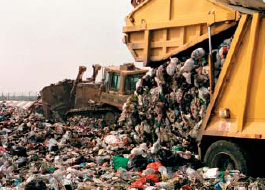
On a positive note, fiscal measures introduced to force change in the waste industry have been a resounding success, with the aim of recovering 40% of municipal waste by 2005.
Maintaining the momentum
The picture being painted is clearly encouraging, but this is undoubtedly just the beginning. The latest report, which details the recent investigation by the 12 engineers, contains case studies, discussions and change challenges. The challenges outline the opinions of the interviewees as to what needs to happen in the next two years in order to keep the momentum of sustainable development in engineering going.
A report of the findings of the second stage of the inquiry will be launched at a conference to be held at the Royal Society this month (February 2003).
References / Notes
FOR FURTHER INFORMATION CONTACT, Sebastian Wood, TEL +44 (0)20 7631 5291, EMAIL sebastian.wood@whitby-bird.co.uk
Briefing: Health and safety—the way forward?
Construction accidents and injuries continue to cost the UK around £26 billion a year. Brian Law of the Association of Planning Supervisors suggests a licensing scheme for the whole industry could be the answer.
Over recent years, a great number of initiatives have focused in general on improving the construction industry and in particular its appalling health and safety record with very mixed results. Are we not missing an opportunity to really rethink construction?
The scale and diversity of the industry is immense. Over 1·9 million people work in it, from manual labourers to professionals. They are responsible for about 10% of the gross domestic product, valued in 1998 at about £58 billion. The ‘informal’ part of the construction market is estimated at £4·5 billion and an independent report commissioned by UCATT suggests the number of false selfemployed in the industry is between 300 000 and 400 000 people.
Huge losses from accidents
On the other hand, the cost of construction accidents has been estimated at £8 billion and of ill health £18 billion – and the figures don't seem to get any better. Whatever the accuracy, the fact is that huge sums are involved and, as stated in the Rethinking Construction initiative, the industry ‘is simply too important to be allowed to stagnate’.
So what changes do we need to make? The starting point, as stated in the Accelerating Change initiative, is that everyone in the industry should be qualified and competent. Registration schemes such as CORGI and others—such as the scheme being developed for demolition contractors—point the way forward. Schemes for registration, certification, licensing have been mooted in various formats at various times before but with a few exceptions (e.g. CORGI), they are flawed in that there is nothing to require the customer or the supplier to be party to them.
The other principal flaw is that the cost usually falls on the registrant, who gains little other than the possibility of being invited to bid for work. In reality even the most willing participant faces being undermined by clients primarily interested in lowest price, despite all the advice and initiatives to support ‘best value’ and/or by those in the ‘informal economy’.
Outlawing un-licenced workers
If the real primary driver is to focus on and to find the means to recruit and retain good quality staff in all disciplines, and who are appropriately qualified and competent at all levels, then why not require all those who practise, work and offer a service within the construction industry to be licensed? In return, laws should be changed to ensure that construction work can only be undertaken by appropriately licensed or registered practitioners.
Models already operate in the USA and within several EC countries. Licensees could be registered with the appropriate professional and/or trade organisation with perhaps different levels of licence being granted to reflect experience and competence. In this way the licence would clearly identify the type of work or projects that may be undertaken and would allow for periodic review. The Government already appears to be considering such a licence scheme for doctors with a five-year review period. This could well be applicable to other professions.
Practitioners would be able to invest, undertake research and development and develop best business practices in the knowledge that they are competing against similarly ‘qualified’ practitioners. The industry would be able to offer rewarding and fulfilling long-term careers while dealing a severe blow to rogue and ‘white van’ traders.
Building in health and safety
Health and safety could be incorporated with each licensee appropriate to the level of working but very much as an integral part of generally improving business.
By offering a means of reaching all who work in the construction industry it is quite possible that such a scheme could become largely self financing. With the number of accidents and those suffering ill-health likely to reduce, and a consequent reduction in costs in insurance and to the health service, the burden to the national economy is also likely to reduce.
From the mandatory scheme the industry would be well placed to meet its fundamental role in the successful delivery of the government's planned investment in modernising Britain. It will also provide a sound basis for good design and good construction—deemed by Accelerating Change to be ‘vital to the quality of our life’.
FOR FURTHER INFORMATION CONTACT, Brian Law, TEL +44 (0)131 221 9959, EMAIL brian.law@aps.org.uk
Briefing: Biotechnology cuts sludge volumes
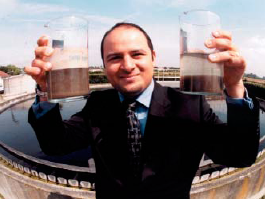
Europe and North America now generate 40 million tonnes of sewage sludge each year – and its getting harder to get rid of. Ranjit Mene of Ondeo Degrémont reports on a new technology developed in France that cuts activated sludge volumes by up to 80%.
Activated sludge is a highly effective wastewater treatment process but has the drawback of leaving large volumes of waste. According to one estimate, North America and Europe now produce 40 million tonnes of sludge a year. Finding an economic and environmentally acceptable means of disposing of these ever-increasing volumes is now a major headache for most operators, many of which have introduced tertiary thickening or digesting plants to reduce the volumes.
A new technology developed in France takes a totally different approach. It tackles the problem at the earliest stage—in the activated sludge plant. The quantity of sludge produced in the plant can be cut by up to 80%, dramatically reducing disposal costs without affecting the required standards of treatment.
Enzyme and ozone versions equally effective
Called Biolysis, the process operates by controlling the numbers of bacteria that are an essential part of the activated sludge process. It is available from process contractor Ondeo Degrémont in two versions—enzyme (E) and ozone (O)—but both depend for their effectiveness on inducing stress in the bacteria.
The E process involves creation of a heat-activated natural enzyme. The process was originally developed by a Japanese firm with which Ondeo Degrémont has since signed a partnership agreement. An in-line reactor operates as a loop above the activated sludge tank, generating aerobic and thermophilic conditions that stimulate development of specific enzymes. These enzymes attack the membranes of the micro-organisms in the sludge, killing some of them off and, reducing their capacity to reproduce.
In version O, the technology depends on the addition of ozone and is the result of research at CERDEG, the Ondeo Degrémont research centre at Croissy, which began in 1997. Liquor extracted from the activated sludge basin is mixed with ozone and returned. The ozone causes stressful oxidisation which is sufficient to destroy some of the bacteria and affects others so that they do not reproduce.
The choice depends to a large extent on the treatment processes already in place, but both substantially reduce the volumes of sludge generated. The enzyme version has been operating at several municipal and industrial plants in Japan for about three years, achieving sludge reductions of 30% to 80% dry solids.
French trials replicate Japanese results
The first plant to be set up in Europe was a pilot scheme at CERDEG, which was operated for a year and achieved results similar to those of the Japanese plants. A demonstration plant was subsequently installed at Verberie in the Oise area of France. The works handles a flow from a population equivalent of 3000 and uses extended aeration treatment and endogenous denitrification. The Biolysis E system has a 50m3 aerobic thermophilic reactor to heat the thickened sludge. The plant has been operational since March 2002 and sludge reductions of up to 80% are regularly achieved.
A demonstration plant for the ozone process has been operating at Aydoilles in north-eastern France now for well over a year. The small works takes flow from a population equivalent of 1000 and uses extended aeration. Oxygen is fed into the ozone producing facility from a plant alongside the activated sludge facility. Mixed liquor drawn from the activated sludge tank is mixed with ozone and drawn into a contact tower, from which the surplus ozone escapes to the environment and the treated sludge returns to the tank. From there the flow passes to a clarifier, where the treated water is drawn off for discharge and the sludge passes to a thickener. The plant has consistently demonstrated sludge reductions of 30% to 80% dry solids.
Overall cost savings achieved
In a comparison of the economics of systems with and without Biolysis, there was no increase in the total cost since equipment installation and operating costs were more than offset by economies in other areas. The principal benefit is, of course, the spectacular reductions in sludge volumes, which offers clear advantages in dealing with problems of disposal. With less sludge being produced, fewer digesters are needed, cutting capital and operating costs, and with less to be moved, transport costs are also dramatically reduced.
FOR FURTHER INFORMATION CONTACT, Ranjit Mene, TEL +44 (0)1582 631143, EMAIL ranjit.mene@ondeo-degremont.com
Briefing: Catching the research bug
The UK is fast running out of engineering doctors. Memis Acar of Loughborough University reports on an innovative, government-funded, pilot project that aims to convince high quality undergraduates to choose a career in research rather than industry.
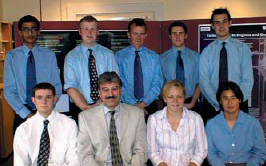
Loughborough University has successfully completed the first year of a three-year, government-funded pilot project aimed at strengthening the UK's fast-declining engineering research base. Eight high-calibre engineering undergraduates were selected from around the country to undertake a ten-week research project of their choice. They were supported as appropriate by supervisors and assistants from Loughborough's six engineering departments and it is hoped that many will now seriously consider PhD studies and research careers after graduation.
The difficulty of attracting high quality graduates into engineering research is an ever-increasing concern for the UK's engineering research community and the engineering industry in general. It could seriously erode the country's engineering research base if allowed to continue, with fewer and fewer students being trained at PhD level.
A risk of national economic failure
A survey report1 published last year by the Royal Academy of Engineering revealed that almost all UK engineering departments are finding difficulty in recruiting PhD students. Among the reasons given were low PhD grants, a poor view of research degrees in industry and the low salaries and poor working conditions of academic life. The report concluded: ‘There is a great danger of courting economic failure if the declining numbers of UK domiciled engineering research students spreads and the fears of senior engineering academics are realised.’
Promoting and advancing engineering research usually requires continuing, intensive efforts to attract a diversified pool of talented graduates into research careers in engineering and to ensure they receive the best research training possible. Recognising this difficulty, researchers at Loughborough sought and secured funding from the Engineering and Physical Sciences Research Council (EPSRC) to set up an engineering student undergraduate research experience (‘Ensure’) scheme. The scheme is desigend to introduce high-calibre engineering undergraduate students to PhD-style research experience. In doing so, it aims to attract more talented young graduates into engineering research as a career choice.
Undergraduate years are critical in education as career-choice points and as the first real opportunities for in-depth study. Engaging in real-life research during this period is thus one of the most effective ways of instilling the ‘research bug’ in gifted students and increasing the likelihood of attracting them to careers in engineering research.
Vacation training with a difference
Students from any engineering degree programme at any UK University are entitled to apply for the Ensure scheme and they are paid at the EPSRC PhD studentship rates. They gain research experience through undertaking individual supervised research projects and structured research training programmes. Projects are of ten weeks duration, carried out during the summer months prior to the final year of students' degree programmes.
Development of relationships, student-staff interactions and student-student communication are seen as important elements of the scheme. Student researchers also present the outcome of their research in written, oral and poster form.
One of last year's students was Chris Ibbott, an MEng civil engineering undergraduate at Loughborough. He embarked on a project to develop and validate an appropriate testing regime for assessing the load transfer performance of cracked fibre-reinforced concrete under repeated cyclic loading. He successfully developed a suitable loading regime together with an appropriate data logging and processing technique.
The pilot scheme is offers around eight places a year for three years. However, we are currently seeking further funding from engineering institutions and organisations to expand the programme both at Loughborough and nationwide. Our goal is to develop a diverse, internationally competitive and globally engaged engineering research workforce – the ultimate beneficiaries of which will be the UK engineering industry and the national economy generally.
Reference
FOR FURTHER INFORMATION CONTACT, Memis Acar, TEL +44 (0)1509 227533, EMAIL m.acar@lboro.ac.uk
Briefing: How to avoid complaints
Tony Ridley, emeritus professor at Imperial College and chairman of the ICE investigating panel, says unclear terms of engagement and a poor understanding of party wall legislation are the main causes of client complaints to the ICE.
This is the first of what are intended to be a series of articles about professional conduct and ethics. It is hoped they will help ICE members avoid disagreements with clients, which in the worst cases can result in formal allegations of professional misconduct.
The two ICE bodies dealing with misconduct complaints are the investigating panel and the disciplinary board. Both bodies have a duty to ensure, on the one hand, that the Institution's disciplinary procedures are properly carried out and that members are treated fairly and, on the other hand, that the public and society as a whole are being protected.
Processing and types of complaints
The investigating panel sees all complaints about members—typically 20 to 25 a year—and is responsible for deciding whether he or she broken one or more of the ICE's rules for professional conduct. The disciplinary board adjudicates on all complaints referred to it by the investigating panel— typically 20% of those received.
Around a further 20% of complaints are not considered serious enough to merit referral. In these cases the panel generally gives advice to the member regarding his or her shortcomings. The remainder of cases, where no misconduct is established, are dismissed.
Around 90% of complaints are from lay clients, mainly against the principals of singlemember practices or against members working for practices with only a few staff. There are two areas that regularly give rise to complaints
terms of engagement not clarified with the client
mis-application of the Party Wall etc. Act 1996.
Spell out terms of engagement
Unclear terms of engagement frequently occur when a client has an urgent job. All too often nothing is set down in writing, leaving scope for misunderstanding and acrimony. To help prevent this, the Institution produced a small-works consultancy agreement1 in 1997, which sets out in the form of a simple checklist the types of services to be provided and payment terms. Whether they use this or not, members should always follow up a verbal agreement with a written statement clearly setting out in plain, layman's English the terms of their engagement, including the fees to be charged.
Structural surveys of houses are a common area of misunderstanding, with clients and members frequently being at odds over what they think a ‘structural survey’ actually entails. Members should always make clear at the outset—in simple, layman's language— what the survey will cover and what will not be covered. This too should be confirmed in writing, ideally before the work starts. Indeed, a Construction Industry Council leaflet2 on the topic advises professionals to avoid the expression ‘structural survey’ and to be precise about what the survey will involve.
Ensure you understand party wall rules
Domestic and small works projects frequently affect neighbouring property such that the provisions of the Party Wall etc. Act 1996 may apply. Complaints about members' understanding or application of the Act have become a feature of the investigating panel's work. In such cases members may be in breach of the Institution's rules for professional conduct, which require them to act with integrity and to be competent to undertake the work. In the event of a complaint, members would therefore be in danger of disciplinary action.
Basic advice on the Act is contained in a free government booklet,3 which also gives details of other sources of information about the Act – including the Green Book4 from the Pyramus & Thisbe club of party wall surveyors. The Act itself can be downloaded from the HMSO website.5
The investigating panel welcomes contacts and comments from members over these and any other matters to do with professional conduct and professional ethics.
References
FOR FURTHER INFORMATION CONTACT, Paul Taylor, ICE investigating panel secretary, TEL +44 (0)20 7665 2064, EMAIL paul.taylor@ice.org.uk
FOR FURTHER INFORMATION CONTACT, Adrian Long, TEL +44 (0)2890 274005, EMAIL a.long@qub.ac.uk, WEB www.qub.ac.uk
Briefing: A tale of a sceptical environmentalist
The international controversy caused by an anti-environmentalist book published 18 months ago continues to rumble on. Sara Parkin of Forum for the Future and Tim Chapman of Arup agree the book is flawed but believe it has stimulated a more rigorous debate about of the issues.
Bjørn Lomborg was an associate political science professor in Denmark when Cambridge University Press published the English language version of his book The Skeptical Environmentalist in August 2001. It argued the environment was in far better shape than environmentalists would have us believe – and sparked a massive controversy world-wide.
The Daily Telegraph said it was ‘probably the most important book on the environment ever written’ and The Economist agreed ‘this is one of the most valuable books on public policy – not merely on environmental policy’. Nature, on the other hand, said it was like arguing that ‘gay men are not dying of Aids’ and Scientific American printed 11 pages of attacks.
Lomborg, a former member of Greenpeace, nevertheless went on to become a director of Denmark's national Environmental Assessment Institute, from where he continues to challenge ‘gloomy’ environmental statistics – most recently those from the World Wildlife Fund's annual report.
Certainly he didn't pull any punches in his book. He cited a ‘litany’ promoted by gloomy, ill-informed environmentalists who use lopsided scientific research, who are driven by the need to raise funds and exploit the media's love of bad news. Using 352 pages of text, 182 figures and tables, 2930 footnotes and a 2000 entry bibliography, he concluded ‘our problems are getting smaller and not bigger’.
Flawed references and statistics
But before you take the book with the degree of authority that it claims, it would be wise to give it a bit of a health check. For example, Lomborg's references for the ‘litany’ turn out to be articles in the New Scientist and Wired magazines, plus a book coauthored by Isaac Asimov – not exactly the arguments of established environmentalists.
On climate change he asserted that ‘economic analyses clearly show that it will be far more expensive to cut carbon-dioxide emissions radically than to pay the costs of adaptation to the increased temperature.’ A review of climate-change models for the US economy by the World Resources Institute found the costs ranged from +3% to –7% GDP – not quite as clear as Lomborg would have us believe.
Lomborg's choice of economic statistics also reveal a lack of understanding about ecological systems. For example, in his economics-based climate change arguments he fails to consider the impact that even small deviations of temperature can have on biological resources.
An extraordinary omission occurred in the chapter on waste, where he claims that the US needs only 0.009% of its landmass to cope with its waste this century. This turns out be based solely on municipal waste and neglects toxic, hazardous, radioactive, industrial and agricultural waste as well as the huge volume of waste from the mining industry.

Broader understanding of the issues
One excellent result of the book however is that it has stimulated a healthy debate, which in turn has led to a broader understanding of environmental issues generally. It has highlighted to both sides the danger of misinterpreting data and, in particular it has encouraged environmentalists to become more ‘literate’ in economics. Given that the common purpose of both environmentalists and economists is to ensure that money, human welfare and environmental health are all properly valued, further debate has much to commend it.
But we must not forget the real bottom line, the future quality of human existence. If the environment does end up with its capacity to support life impaired, life will almost certainly go on in some form if not particularly convivial to highly dependent mammals, like us. This is something that merits an approach more bedded in humility about what we don't know than in the hubris of clever tricks with limited data.
Reference
FOR FURTHER INFORMATION CONTACT, Tim Chapman, TEL + 44 (0)20 7636 1531, EMAIL tim.chapman@arup.com