Discussion
Readers can send in comments of up to 200 words on all papers and articles published in Civil Engineering. Subject to being approved by the editorial panel, full texts of readers' comments and authors' responses are published in the on-line version of the journal at www.ice.org.uk/jol (select Civil Engineering journal, then click on text link to Discussion). Edited highlights of the discussion on papers in the May 2003 and special issue are published here.
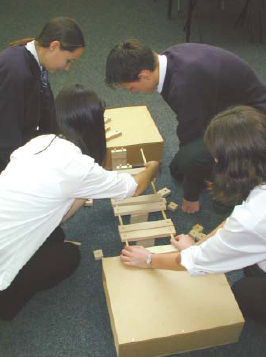
12936: Civil engineering's image in schools – and how to change it by L. Hamill and L. Hodgkinson
Contribution by Geoffrey Wort
The paper unfortunately deals with the symptoms, not the cause. As with all the other expressions of dissatisfaction about status, pay and image, there is an inability to see the bigger picture. In the case of the authors it is not surprising, but for civil engineers there is now no excuse.
Even in a market as large as construction, wasteful and inefficient producers can only expect to achieve low profits at best, and hence be driven to low cost solutions – including pay. There is an almost complete lack of customer-centred strategy and management in the industry. To those who would argue that their role is entirely about working with the client: this is only within the existing structures of an industry that delivers 35% waste.
As I write this I am enjoying a pint in the City. I am surrounded by smart prosperous looking young people, Porsches parked not far away. I doubt whether they are any more able than chartered civil engineers and the financial sector has had their share of disasters; but one thing they strive for above all is to respond to the market. As the intellectuals of the construction industry, civil engineers really must now get with it instead of suffering the inevitable effects of economics.
Authors' reply
We do not doubt that the status of civil engineers would be improved instantaneously if they all earned £100 000 per annum and drove Porsches! Realistically, we did not feel qualified to judge the effect on the construction industry of pay rises significantly above inflation. However, pay is important.
The industry should examine its working practices, salaries and culture to ensure that the image it aspires to is based upon reality and is appropriate for the twenty-first century.
Contribution by Peter Wiltshire
The civil engineering profession is comparable to a private company that suffers from a failing brand image. The way that Skoda successfully addressed the problem was through a £15 million marketing spend and by having a product that people value.
We will never have the money but we could at least try to match our product to customer values. Instead of indulging in self pity for the lack of appreciation for our work, we ought to be thinking quick and hard about why we have failed so badly in the image stakes over the last 30 years.
In a future world stuffed full of articulate, self-confident and mathematically estranged journalists, we can expect much more questioning of the reasoning behind our actions. It will no longer be good enough to know how to build a bridge. It will be more important to explain why it is being built. A better brand image would help.
Authors' response
A few years ago the engineering community was about to launch a ‘ground breaking’ 5-year advertising-led marketing campaign that was developed for them by a major advertising agency, J. Walter Thomson.1 This aimed to change the national perception of engineering and to promote engineering careers to young people. Unfortunately it was postponed due to lack of funds.
Whether or not advertising alone can be successful in changing engineering's image is debatable, but its chances would be increased if there were more mainstream engineering-friendly TV programmes. This medium is very influential and is perhaps the best vehicle to establish positive role models in the public's mind and to raise the status of engineering.
However, there are no guarantees; as Hamilton2 pointed out, most of the G7 group countries—with the exception of Japan and the Pacific Rim—are experiencing declining numbers entering engineering degree courses even though the status of engineers is relatively high in these countries.
Contribution by Bronagh Liddicoat
I was concerned at what seems to be a major omission within the section ‘What can be done’. Coordination of information to schools is being provided by 53 Setpoints throughout the UK under the umbrella of the national Setnet organisation. Setpoint web sites (e.g. www.setpointsussex.org.uk) also provide such an on-line information resource for schools.
Also, no mention was made of the successful Science and Engineering Ambassadors programme which has been operational now for just over a year. Ambassadors provide schools with a local resource to support teachers of science, design and technology, mathematics and ICT. The programme is funded by the DTI and by the Engineering and Technology Board (ETB) – the latter using the contributions made by all members of the Institution within their annual subscription.
Author's reply
The Setpoints and Science and Engineering Ambassadors programme join a long list of initiatives to raise the status of engineers, something the Council of Engineering Institutions (CEI) was charged to do when it was created in 1965. It failed, as did its successor the Engineering Council. The latter created such schemes as Neighbourhood Engineers, the Young Engineers for Britain competition and Project UNCLE amongst others. There are many other initiatives, such as the recent Year of Engineering Success and National Construction Week 2003 (www.ncw.org.uk).
The activities are to be applauded but few, if any, appear to have been entirely successful. In future it is essential that such initiatives are fully evaluated and the results disseminated. However, in the authors' opinion, if the status of civil engineers is to be raised then ideally the ICE, which has been in existence since 1818, should be the lead partner and should coordinate activities.
Similarly, for engineering as a whole, the ETB states that part of its role is ‘to improve the perception of engineering and engineers’. It is almost 40 years since the CEI was given a similar task, and the authors wait with interest to see how the ETB fulfils its role.
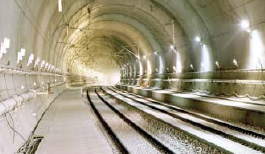
13207: Channel Tunnel Rail Link: the case for safety by Simon French
Contribution by John Hislam
What would happen when trains running in opposite directions in a tunnel at speeds of up to 300 km/h collided due to one being partially derailed?
Authors' reply
There is a concrete upstand between the two tracks. This is designed to withstand the forces imposed by a detailed train and would therefore serve to ensure that the opposite track remains unobstructed.
Experience in France shows that the probability of a derailment on plain line is extremely low. However, in all cases where high-speed derailments involving TGV-style trains have occurred, the trains have remained clear of the opposite line.
References
1. Engineering Council. Engineering image campaign put on ice. Engineering First, August 1999, 4.
2. Hamilton, J. The Engineering Profession, Engineering Council, London, November 2000. www.engc.org.uk/publications/pdf/Hamilton.pdf
Proceedings: RECENTLY PUBLISHED PAPERS
In addition to Civil Engineering, the ICE Proceedings includes seven specialist journals. Papers published in the most recent issues are listed here. Summaries of all these and other papers published in the past 3 years can be read free on the ICE web site at www.ice.org.uk/jol.
Bridge Engineering
156, No. BE2, June 2003, 55–107
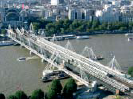
Dynamics of the Hungerford Millennium footbridges, UK
M. S. Fletcher and J. S. Parker
Analyses of a composite bowstring truss with tension stiffening
R. P. Johnson
Section model tests on human–structure lock-in
A. McRobie, G. Morgenthal, J. Lasenby and M. Ringer
Real strength of high-performance concrete bridge deck slabs
S. E. Taylor, G. I. B. Rankin and D. J. Cleland
Seismic response analysis of long-span steel arch bridges
A. S. Nazmy
Design of strengthening works for an 1890s steel rail bridge
G. Waley, S. D. Wilkins and H. Barbour
Engineering Sustainability
156, No. ES2, June 2003, 67–126
BRIEFINGS
Johannesburg Earth Summit—what next?
A. Macnair
News from the Environment and Sustainability Board ICE Charter for Sustainable Development
Sustainable development progress—cement and concrete
D. Collins
Moving towards sustainability in the sewage treatment industry
J. Thornton
Sustainable steel construction: building a better future
M. Sansom
Lime versus cement: traditional methods for today's buildings
I. Pritchett
PAPERS
Urban infrastructure procurement in low-income countries
M. Sohail and A. N. Baldwin
Sustainability of bitumen use in highways
R. A. Peden
The use of ‘managed retreat’ in coastal engineering
N. J. Cooper
The effects of pumping on the energy potential of a tidal power barrage
T. L. Shaw and M. J. Watson
Flexible power generation from the tides
T. L. Shaw and M. J. Watson
MEETING REPORT
Designing for health and safety
J. de Souza
Geotechnical Engineering
156, No. GE4, October 2003, 171–230
BRIEFINGS
Embankment cuttings: condition appraisal and remedial treatment
J. Perry, M. Pedley and M. Reid
PAPERS
Use of settlement reducing piles to support a raft structure
J. P. Love
Settlement prevision of piles under vertical load
F. Castelli and E. Motta
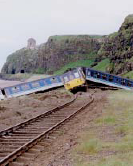
Local settlements and sinkholes due to EPB tunnelling
J. N. Shirlaw, J. C. W. Ong, H. B. Rosser, C. G. Tan, N. H. Osborne and P. E. Heslop
Sampling disturbance effects in soft laminated clays
M. Long
DISCUSSION
Determination of parameters for a hyperbolic model of soils
N. Al-Shayea, S. Abduljauwad, R. Bashir, H. Al-Ghamedy and I. Asi
Municipal Engineer
156, No. ME2, June 2003, 79–153
BRIEFINGS
Making the Connections: Final Report on Transport and Social Exclusion. Report by the Social Exclusion Unit 2003
B. Simpson
Social inclusion and the Disability Discrimination Act 1995
S. Homer
Safer travel by design: reducing crime on public transport
J. Stafford
PAPERS
Conceptualising social inclusion: some lessons for action
C. C. Williams and R. White
Understanding social exclusion and social inclusion
S. Kenyon
Transport, social exclusion and young people in rural England
P. Dibben
Social inclusion implications of park-and-ride
G. Parkhurst
Gender mainstreaming within local planning authorities
C. Greed

Engineering and gender issues—evidence from low-income countries
B. J. Reed and S. Coates
Water and sanitation for the disabled in low-income countries
H. E. Jones, R. A. Reed and J. E. Bevan
Strategic marketing of water services in developing countries
C. Njiru and K. Sansom
Improving access to transport in developing countries
T. Savill, J. Stone, C. Venter and D. Maunder
Structures and Buildings
156, No. SB3,August 2003, 227–336
A spatial displacement model for skewed multi-rib T-beams
R. H. Wang, Q. Z. Luo, J. Tang and Q. S. Li
Foundation and structural design of the Bibliotheca Alexandrina
M. Hamza and M. Ghoneim
Blast-induced vibrations in urban residential buildings
E. M. L. Carvalho and R. C. Battista
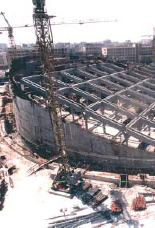
Oblique bending in U-shaped steel sheet piles
M. P. Byfield and R. J. Crawford
Wind-induced vibration analysis of the Hong Kong Ting Kau Bridge
C. Su, D. J. Han, Q. S. Yan, F. T. K. Au, L. G. Tham, P. K. K. Lee, K. M. Lam and K. Y. Wong
Environmental impact of brick arch bridge management
K. Steele, G. Cole, G. Parke, B. Clarke and J. Harding
Reliability of nailed timber connections with gusset plates
I. Drummond and A. Kermani
Steel sway frames tested to collapse
A. Cunningham, A. G. Kamtekar and G. H. Little
Analysis of multi-braced earth retaining structures
H. B. Xiao, J. Tang, Q. S. Li and Q. Z. Luo
Design of slab–column junctions in flat slabs
N. K. Subedi and P. S. Baglin
DISCUSSION
Vortex-induced vibrations of the Second Severn Crossing cable-stayed bridge: full-scale and wind tunnel measurements
J. H. G. Macdonald, P. A. Irwin and M. S. Fletcher
Behaviour and strength of FRP-strengthened RC structures: a state-of-the-art review
J. G. Teng, J. F. Chen, S. T. Smith and L. Lam
Transport
156, No. TR4, November 2003, 171-224
BRIEFING
Private finance initiative and public private partnerships
Institution of Civil Engineers Transport Club
PAPERS
Development and research of road management systems in China
W. G. Wong, G. P. He and S. T. Luk
Traffic generated by office and retail developments in Singapore
W. Y. Tan and H. S. L. Fan
Which technology for urban public transport? A review of system performance, costs and impacts
C. Brand and J. Preston
Assessment of bond condition using the Leutner shear test
A. C. Collop, N. H. Thom and C. Sangiorgi
Water and Maritime Engineering
156, No. WM3, September 2003, 219-295
Hydraulic characteristics of the Jamuna River gauging section, Bangladesh
G. M. Tarekul Islam and J. U. Chowdhury
Modelling of meandering channels for overbank flow
J. Spooner and K. Shiono
A methodology for national-scale flood risk assessment
J. W. Hall, R. J. Dawson, P. B. Sayers, C. Rosu, J. B. Chatterton and R. Deakin
Air entrainment and oxygen transfer in a venturi
A. Baylar and M. E. Emiroglu
Study of aeration efficiency at stepped channels
A. Baylar and M. E. Emiroglu
Integrated modelling of urban watercourses
R. W. Crabtree, P. Dempsey, I. T. Clifforde, S. Quinn, B. Henderson and A. Wilson
Use of calcium carbonate as a wet contact filter
J. Sallanko, R. Kamula and J. Röpelinen
TECHNICAL NOTE
On establishing uniform channel flow with tail gate
B. C. Yen
DISCUSSION
An unusual marine outfall off central California, USA
R. A. Grace
Wave-speed–discharge relationship from cross-section survey
D. W. Knight, X. Tang and P. G. Samuels
Development of a modelling tool to quantify faecal indicator levels in Cardiff Bay
E. Harris, R. Falconer, D. Kay and C. Stapleton
A new approach for directing proactive sewer maintenance
R. A. Fenner, L. Sweeting and M. J. Marriott
Personal subscriptions to specialist Proceedings journals start from £11 a year for members and include full on-line access to the past 3 years' issues. Please call +44 (0)20 7665 2227, email subs@ice.org.uk or visit the ICE virtual library at www.iceknowledge.com. At the virtual library members can also download any 15 Proceedings papers published this year for £25 or any paper published over 3 years ago at £5 each.
Books
ON-LINE REVIEWS
Expert reviews of the following books that have been submitted to Civil Engineering are available in the on-line version of the journal at www.ice.org.uk/jol (select Civil Engineering, then click on text link to reviews).
Science and Technology Ethics by various authors, published by Routledge, 2002, reviewed by Gordon Millington
Eleven essays by academics on major ethical issues in science and engineering, including environmental issues and nuclear development – an excellent read with extensive references.
The Many Facets of International Education of Engineers by Jean Michel, published by AA Balkema, 2000, reviewed by Ian Whyte, UMIST
Proceedings of an international conference embracing a wide spectrum of engineering education and training, of interest to those involved in international trends in collaboration.
The relationship manager By Tony Davis and Richard Pharro, published by Gower Publishing Limited, 2003, reviewed by Mark Rudrum, Arup & Partners
Practical guidance on how to make this new way of working a reality and details the skills and techniques necessary to make a success of the latest developments in project management.
The bid manager's handbook By David Nickson, published by Gower Publishing Limited, 2003, reviewed by Mark Rudrum, Arup & Partners
Practical guidance on all the aspects and interfaces required to produce a quality bid to a tight timescale and budget. Particular emphasis is placed on planning to save time – the example bid plan being particularly useful.
Project Management 8th edition By Dennis Lock, published by Gower Publishing Limited, 2003, reviewed by Tony Caccavone, Manchester Business School
Comprehensive with simple case studies that will provide an invaluable jargon-free reference guide to both the newly-appointed and the experienced project manager.

NEW BOOKS
The ICE's bookshop in London carries one of the most comprehensive range of civil engineering publications in the world. New books received in the past three months are as follows.
Architects & Builders Price Book 2004
Spon £120
Best Practice Tendering for Design and Build Projects
A. Griffith, A. King and A. Knight £35
Bridge Engineering: a Global Perspective
L. F. Troyano £95
Civil Engineers & Highway Works Price Book 2004
Spon £120
Design of Linear Drainage Systems
M. Naqvi £45
Elements of Spatial Structures
M. Y. H Bangash and T. Bangash £135
Geosynthetics: Protecting the Environment
N. Dixon (ed) £40
Health and Safety Law for the Construction Industry: 2nd Edition
Masons £25
Hydraulic Design of Side Weirs
R. W. P. May, B. C. Bromwich, Y. Gasowski and C. E. Rickard £45
Landscape & External Works Price Book 2004
Spon £90
Managing Innovation in Construction
M. Jones and M. Saad £50
Mechanical & Electrical Services Price Book 2004
Spon £120
Port Designer's Handbook
C. A. Thoresen £135
Prestressed Concrete Bridges
N. Hewson £70
The bookshop is in the ICE foyer, 1 Great George Street, London SW1P 3AA and is open from 9.30 am to 5.00 pm, Monday to Friday. Books can also be ordered by calling +44 (0)20 7665 2462, emailing orders@thomastelford.com or visiting www.thomastelford.com.
ICE review
A review of recent and forthcoming developments and events at the Institution of Civil Engineers by ICE communications director Anne Moir. For further information please contact the communications office on 020 7665 2196.
Local transport survey
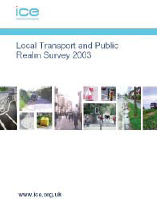
ICE's 2003 Local Transport Survey reveals that 72% of local authorities report a deterioration over the past year in Britain's local roads, footpaths and cycleways – on which more than three quarters of all journeys are made.
Compiled from research among local authorities in Great Britain with statutory responsibility for roads and pathways, the survey suggests that the road maintenance backlog has increased by approximately 12%, from an estimated £7·4 billion in 2002 to £8·3 billion in 2003, equivalent to £150 for every person.
According to John Sanders, chairman of the ICE municipal engineering board, ‘We understand that local authorities have many other pressing demands on their budgets. However, road maintenance can only be ignored for so long before carriageways, footways, bridges and street lighting deteriorate beyond repair. We want to see both revenue and capital funding for transport ring-fenced and allocated amounts guaranteed beyond elections, be they local or general.’
The ICE also supports measures to introduce a consistent methodology to measure road quality and calculate the budget required to bring the road network to an acceptable level. The Institution will press the Government to ensure that such a broad indicator is adopted as soon as possible to ensure realistic targets for improvement can be set and met.
The full survey is available via ICE's website at www.ice.org.uk.
Environmental quality scheme

In September the ICE launched its Civil Engineering Environmental Quality Awards Scheme (CEEQUAL) for assessing the environmental quality of civil engineering projects. It is a civil engineering equivalent to BREEAM for buildings.
The scheme is being promoted by ICE, BRE, CIRIA and a group of industry organisations. Its objective is to encourage environmental excellence in civil engineering projects and thus deliver improved environmental performance in project specification, design and construction.
A credit-based assessment framework is used, which is applicable to any civil engineering project and includes environmental aspects such as the use of water, energy and land as well as ecology, landscape, nuisance to neighbours, archaeology, waste minimisation and management, and community amenity.
Four projects—two flood defence schemes and two sewage works—were presented with ‘excellent’ CEEQUAL awards at the launch. To register your project for an award, visit www.ceequal.com.
Value-added website
The ICE is currently developing a new website for members, which is due for launch in January 2004. In response the recent ICE membership survey, the new site will offer a variety of on-line products and services tailored to the needs of the institution's diverse audience.
Before the new website is available, however, ICE members are able to register for an enhanced on-line service known as ICExtra. This is a secure extranet available exclusively to members of any grade, and offers the ability to
read Civil Engineering and other ICE journals on-line
receive a new, email newsletter service called ICExtra news
review ICE Council meeting minutes
change personal details or make sub-scription payments
register for areas of special interest.
By providing a regular email news service, the ICE hopes to offer updates on the action it is taking on members' behalf without excessive printing costs or environmental impact. Specialist technical and events news will continue to be made available via the Infoshare email service.
Members can register for ICExtra at www.ice.org.uk/icextra
President's reception
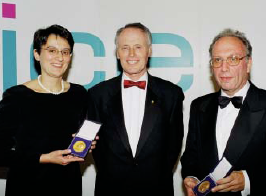
ICE's outgoing president Adrian Long was joined by nearly 200 guests at his formal reception at One Great George Street on 8 September. He chose the theme of sustainable development, delivering a speech on its importance for both civil engineering and society as a whole. Guest speaker Sara Parkin of Forum for the Future, who also sits on the Civil Engineering editorial panel, reinforced the message.
Lord Howie of Troon, Environment Agency chief executive Baroness Young and Phil Hope from the Office of The Deputy Prime Minister were among the guests representing the Government.
Incoming president Douglas Oakervee will be formally inaugurated this month.
ICE meetings
The following ICE meetings and seminars have been organised by ICE staff and regions. All are free to attend unless indicated by (£). Before travelling, please contact the organiser or visit the ICE web site at www.ice.org.uk to confirm details. Events have been classified under broad but not necessarily exclusive headings.