Discussion
Readers can send in comments of up to 200 words on all papers and articles published in Civil Engineering. Subject to being approved by the editorial panel, full texts of readers' comments and authors' responses are published in the on-line version of the journal at www.ice.org.uk/jol (select Civil Engineering journal, then click on text link to Discussion). Edited highlights of the discussion on papers in recent issues are published here.
12844: Crowd-related failure of bridges by Bill Wolmuth and John Surtees (August 2003)
Contribution by John Hailey
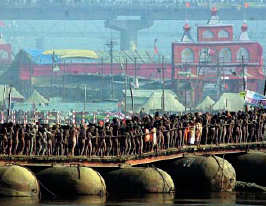
Fig. 9 (also used on the front cover of the issue) is a glorious picture of bridge loaded by a crowd of people. If it was merely to show the people density possible and had been labelled as such – fine – but as an illustration of failure it is totalling misleading.
It appears to be a pontoon bridge suffering from a lack of maintenance, namely removal of water from the pontoons. The deck beams are not bent and are therefore correctly hinged.
Authors' reply
As Mr Hailey has pointed out, the bridge is reassuringly sound. Variation in deck level is probably caused by grounded pontoons adjusting to the river-bed profile, rather than Mr Hailey's suggested lack of maintenance.
Several bridge failures at religious events are reported in Table 1 of the paper but available photographs mainly consist of unpopulated post-collapse views with no hint of the large exuberant gathering that precipitated the collapse.
Crowd loading of bridges is the key theme of the paper and the high civil engineering content and vivid pictorial quality make this image our favourite.
13082: British civil engineering skills: defusing the time bomb by Mike Byfield (November 2003)
Contribution by Deryk Simpson
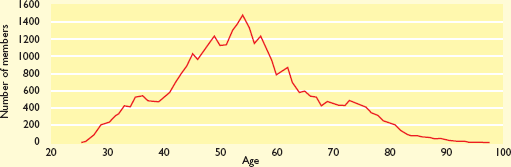
This is probably the most important and yet depressing paper published in the Proceedings in recent years. The implications for the future of our profession and the UK economy are stark. Our profession faces a severe decline. The effect of a severe shortage of civil engineers on Railtrack is well known. Magnify this shortage to the whole construction industry and the effect on our economy could be disastrous.
The problem described in the paper is so serious that the ICE must address itself to it immediately and put considerable resources in trying to fight the decline. If it does not, the ICE has no long-term future – certainly not in the form that my generation knew!
Authors' response
At the time of writing the paper I thought that my findings had a chance of provoking the ICE to help universities. These hopes were I am afraid naïve.
The current view within the Institution is that overseas engineers are migrating to the UK and that routine design work is gradually being transferred overseas. I am assured that these global trends will solve the skills shortage.
Contribution by J. Gray
It is to be expected that academics in engineering education will take Dr Byfield's line.
But it would behove the Institution, given the lack of any effective trade union for engineers, to take a closer interest in engineers' pay, conditions and job satisfaction so as to alleviate the stated drop-out rate of UK engineers. It would also help to ensure that employers are not robbing developing countries of young engineers who are needed there.
Author's reply
Mr Gray seems to suggest that the ICE should pressurise employers to increase pay. I cannot think how this could be achieved by the Institution and Mr Gray fails to suggest a method either. It may be easier to leave it up to market forces.
Contribution by H. Catherall
Another article in the same issue could possibly help the way forward, that is upskilling civil engineering managers with the new chartered manager status. Offering civil engineering as a joint honours subject with management could also help.
Another area of concern to the UK civil engineering industry and for that matter other professional areas is the ‘offshoring’ of specialist design / detailing / IT / software development activities that will be carried out in low-cost countries, in particular India. So, in addition to the shortage of UK trained engineers, we will find that highly specialised desk-top activities can be easily and cheaply carried out around the world.
Authors' reply
Mr Catherall is absolutely correct, management degrees are extremely popular. My experience is that employers are falling over themselves to hire engineering graduates whereas management graduates are by contrast easy to come by.
In the short term, ‘offshoring’ will certainly ease the skills shortage. Longer term, these offshore companies will almost certainly move into the more lucrative activities, perhaps recruiting UK engineers to provide the client interface. Offshoring is inadvertently inviting lowcost, high-skill foreign competition into our relatively safe domestic market. UK consultancies may end up regretting this.
13257: Halley—at the edge of ice-station design by David Blake (November 2003)
Contribution by Maureen Skilling
It seems the 1961 accommodation building at Halley I has been overlooked. It is my understanding that this had been planned as the ground floor of a building to become three storeys high as the snow around it accumulated.
Unfortunately only about 10 % of the bolts necessary for floor fishplates and roof beams were sent. As the existing 1956 accommodation was unsatisfactory, the building was erected with recognition that the original concept would be unachievable.
Another problem arose from the mastic sealant between panels being unworkable in the ambient temperatures.
Response on behalf of author by Alan Smith*
Ms Skilling's facts are correct. Crown Agents were responsible for design, bills of quantity, procurement and supervision of packing but there was a shortfall of major structural fixings for the first phase. The builders did everything possible to erect the building in such a way that it was structurally stable by using nuts and bolts from base supplies and, in some cases, manufacturing them.
Regarding sealants, they have never been successful in the Antarctic and use has been avoided wherever possible.
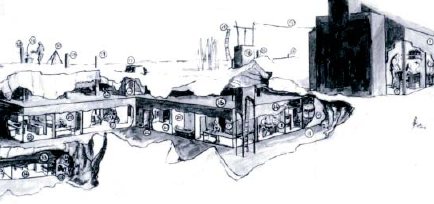
As well as the 1961 living building, a pitched-roof timber prefabricated office building was added to Halley 1 in 1964 (see Fig.).
* Alan Smith (tel: +44 (0)1765 688455) was head of buildings at the British Antarctic Survey. Now retired, he is preparing a detailed history of structures on the Brunt Ice Shelf and would welcome assistance.
ICE review
A review of recent and forthcoming developments and events at the Institution of Civil Engineers by ICE communications director Anne Moir. For further information please contact the communications office on 020 7665 2196.
Email news service

The second issue of the ICE's electronic newsletter ICExtra News was sent out to around 30 000 ICE members, associated society members and civil engineering academics in December 2003. It was given an 85% approval rating by readers, up from 75% for the first issue that was emailed in September.
Each issue contains around 20 news items on latest developments at the Institution, special promotional offers, new publications and listings of local and national events.
There will be around six issues a year, which it is hoped will be enough to keep members up to date without clogging up their email systems. Back issues are archived on the ICExtra section of the ICE website (www.ice.org.uk/icextra)
From an economic perspective, an email newsletter was the only viable option. The costs of printing and distributing a newsletter to every member on a regular basis is simply beyond the means of the Institution at this time. The newsletter is currently going to around 30% of the membership base and it is hoped more members will register in due course.
To receive ICExtra news, members need to provide the ICE with a current email address. The easiest way to do this is on-line at ICExtra. If you have registered an email address but have not received the newsletter, please check that the address is still valid and, if necessary, re-register your details at ICExtra.
New demolition protocol
The ICE launched a demolition protocol in November to show how the production of demolition material can be linked to its specification as a high-value material in new buildings.
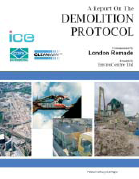
If widely adopted, the protocol would stimulate the supply and demand for recycled and recovered construction materials. The protocol also shows how the market can be driven through the development of regional planning guidance, supplementary planning guidance, planning conditions and agreements.
Recovery indexes are provides for demolition projects and new buildings– the latter aimed at increasing the amount of potentially recyclable material specified for new construction.
The report was prepared in conjunction with the Chartered Institution of Wastes Management, EnviroCentre, London Remade, Cory Environmental and Cleanaway.
Giving energy evidence
David Anderson, chairman of the ICE energy board, gave evidence to the House of Commons Trade and Industry Select Committee at the end of 2003. The evidence related to the committee's inquiry into the resilience of the National Grid following power blackouts in London and Birmingham in the summer.
It was the first time in nearly 3 years that ICE has given oral evidence to a parliamentary committee and follows the submission of written evidence to 11 different select committee inquiries this year.
Anderson was questioned by MPs about the level of investment in the grid and network, about the chief engineering adviser and about reconfiguring the grid to deal with renewable sources.
Supporting toll motorways

The ICE publicly backed the opening of the UK's first toll motorway, a new section of the M6 north of Birmingham.
Senior vice president Colin Clinton told journalists: ‘ICE has for many years supported the idea of road tolling as an effective way of reducing traffic gridlock across the UK. Currently congestion on the trunk road network is estimated to cost the nation £2·9 billion each year.
He said toll roads may prove unpopular with drivers, but in the long-term ICE believes that the idea will prove essential in reducing congestion. Traffic jams are an issue road users must accept as a part of life unless they are willing to pay high enough fees to balance demand.
‘Implementation of both the M6 toll motorway and the congestion charging scheme in Central London this year were both bold decisions. Both are examples of positive and initially unpopular action to suppress traffic rather than simply to accommodate it’ said Clinton.
President's address
New ICE president Doug Oakervee gave his inaugural address in November. The text can be downloaded from the ICE website at www.ice.org.uk.
Books
NEW BOOKS
The ICE's bookshop in London carries one of the most comprehensive ranges of civil engineering publications in the world. New books received in the past three months are as follows.
Advanced concrete technology – concrete properties
J. Newman and B. S. Choo (eds) £55
Advanced concrete technology – constituent materials
J. Newman and B. S. Choo (eds) £55
Advanced concrete technology – processes
J. Newman and B. S. Choo (eds) £55
Advanced concrete technology – testing and quality
J. Newman and B. S. Choo (eds) £55
Appraisal, risk and uncertainty
N. Smith £30
BGA international conference on foundations
T.A. Newson (ed) £115
British railway track – vol. 4 – plain line maintenance
D. L. Cope and J. B. Ellis £45
British railway track – vol. 5 – switch and crossing maintenance
D. L. Cope and J. B. Ellis £45
Buckling of thin metal shells
J. G. Teng & J. M. Rotter (eds) £99
Conceptual structural design: bridging the gap between architects and engineers
O. Popovic Larsen and A. Tyas £20
Construction safety Q&A
P. Perry £19.95
Deep excavations – 2nd edition
M. Puller £90
Fire safety Q&A
P. Perry £19.95
Health and safety Q&A
P. Perry £19.95
High-rise manual – typology and design, construction and technology
J. Eisele and E. Kloft £46.50
Infrastructure cuttings
J. Perry, M. Pedley and K. Brady £90
International conference on coastal management 2002
Various £65
Recycling and re-use
R. K. Dhir £95
Retention of masonry facades – best practice guide
M. Bussell, D. Lazarus and P. Ross £110
Risk assessment Q&A
P. Perry £19.95
Rural and urban hydrology
M. G. Mansell £65
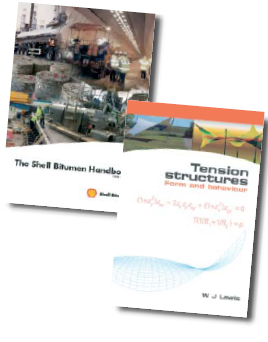
Shell bitumen handbook
J. Read and D. Whiteoak £40
Sustainable waste management
R. K. Dhir £75
Tension structures: form and behaviour
W. J. Lewis £30
The repair of historic timber structures
D. Yeomans £35
Traffic loading on highway bridges
P. Dawe £35
Wastewater treatment and technology
C. Forster £65
The bookshop is in the ICE foyer, 1 Great George Street, London SWIP 3AA and is open from 9.30 am to 5.00 pm, Monday to Friday. Books can also be ordered by calling +44 (0)20 7665 2462, emailing orders@thomastelford.com or visiting www.thomastelford.com.
Proceedings
RECENTLY PUBLISHED PAPERS
In addition to Civil Engineering, the ICE Proceedings includes seven specialist journals. Papers published in the most recent issues are listed here. Summaries of all these and other papers published in the past 3 years can be read free on the ICE web site at www.ice.org.uk/jol.
Bridge Engineering
156, No. BE3, September 2003, 109–151
Experimentally-based assessment of masonry arch bridges
P. J. Fanning and T. E. Boothby
The construction of Taney Bridge, Ireland
D. Collings and P. C. Brown
The reconstructed Lions' Gate suspension bridge, Vancouver
P. G. Buckland and D.D. Matson
Dynamic measurements on bridges: design, rehabilitation and monitoring
Á. Cunha, E. Caetano, R. Calçada, G. De Roeck and B. Peeters
Engineering Sustainability
156, No. ES3, September 2003, 127–17
Editorial
BRIEFINGS
Corporate social responsibility—unworkable paradox or sustainable paradigm?
M. Barry
Sustainable coastal defence
H. R. Payne
Sustainability indicators for the water industry
J. Luckhurst
PAPERS
Ecological footprint analysis as a project assessment tool
I. R. Nicholson, N. Chambers and P. Green
Resource flow analysis: measuring sustainabilty in construction
P. I. J. Griffiths, R.A. Smith and J. Kersey
Designing sustainable estuarine intertidal habitats
N. I. Pontee
DISCUSSION
Sustainable development: understanding the concept and the practical challenge
S. Parkin, F. Sommer and S. Uren
Geotechnical Engineering
157, No. GE1, January 2004, 1–53
BRIEFINGS
Slope stability of earthfill dams: a case study of Kızılca dam
S. N. Keskin, U. S. Cavus and H. Yıldırım
PAPERS
Settlement of a bridge embankment on soft soils
U. F.A. Karim, H. van Meekeren and R. Feenstra
Geotechnical analysis of a retaining wall in weak rock
D. J. Richards, C. R. I. Clayton, W. Powrie and T. Hayward
Approaches to the design of cantilever retaining walls
N.A.Trenter
Optimal design of highway cuttings in residual soils
A. Shein, M. S. Snaith and C. C. Holt
Municipal Engineer
156, ME3, September 2003, 155–215
Editorial
A. Fraser
BRIEFINGS
ICE Health and Safety Register
P. Fry
On the move: by foot
R. Huxford

PAPERS
Engineering a safe event: Edinburgh's International Festival fireworks
T. O'Brien
Construction safety legislation framework in China
D. P. Fang, J. Zhang and I.Vickeridge
Construction safety in 2003—time for radical action
J. Anderson
Making Irish roads safer
S. Proctor and F. Crowley
Driver distraction by advertising: genuine risk or urban myth?
B. Wallace
Safe streets—challenging the principles
P. Jones
Closed-circuit television in Daventry town centre, UK
S. P. Bowers
A flood failure flowchart for buildings
I. Kelman and R. Spence
Structures and Buildings
156, SB3, November 2003, 337–430
Editorial
PAPERS
Construction over nineteenth century brick railway tunnels
A. J. H. Brown
Strength of reinforced concrete pile caps
A. G. Bloodworth, P.A. Jackson and M. M. K. Lee
Façade failure effects on blast propagation along city streets
P. D. Smith, T.A. Rose, S. L. Krahe and M.A. Franks
Measurement of floor vibrations using a heel drop test
A. Blakeborough and M. S.Williams
Dynamic stiffness of reinforced concrete beams
K. S. Numayr, S.A.Al-Jallamdeh and N. M.Al-Akhras
Seismic design procedures for concentrically braced frames
A.Y. Elghazouli
CFRP strengthened continuous concrete beams
S.A. El-Rafaie, A. F.Ashour and S.W. Garrity
Development of self-compacting concrete
C. I. Goodier
TECHNICAL NOTE
Acceptance and monitoring of FRP-strengthened concrete structures
J. L. Clarke
DISCUSSION
Criteria for loading slabs during construction
A.W. Beeby
Holistic behaviour of concrete buildings in fire
C. Bailey
Transport
157, No. TR1, February 2004, 1–76
BRIEFING
Road congestion: how modal shift and planning policies could reduce it
ICE Transport Board
Can planning reduce traffic problems? Goals, role and effectiveness of planning 1963-2020
P. Hall
Urban mobility worldwide: how does it look today?
D. Bayliss
More or less traffic in towns?
M. Buchanan
An investigation of lane utilisation on Turkish highways with reference to lateral discipline
B. Gunay
Benefits of adopting lower mass trains for high speed rail operations
B. Rochard and F. Schmid
PAPERS
Road marking assessment using digital image analysis
M. P. N. Burrows, H.T. Evdorides and M. S. Snaith
Segmentation algorithms for road marking digital image analysis
M. P. N. Burrows, H. T. Evdorides and M. S. Snaith
Evaluation of a mechanism for urban road maintenance by level of service
H. de Solminihac, E. Lobo, N. Jiménez and A.Altimira
Engineering the motorway system 1950-2000
R. Bridle and J. Porter
Water and Maritime Engineering
156, No. WM4, December 2003, 297–365
Chichester emergency flood alleviation project, winter 2000/2001
R. S. Hoad, A. M. Gilham and D. S. Fawcett
Simulation of the great flood of December 1870 in Rome
G. Calenda, L. Calvani and C. P. Mancini
Discharge assessment in mobile-bed compound meandering channels
J. J. O' Sullivan, W. R. C. Myers, J. F. Lyness and M. F. Lambert
Computer modelling of two-stage meandering channel flows
P. Rameshwaran and K. Shiono
Performance of sandbags for domestic flood defence
D. Reeve and A. Badr
Water resources and food security: a Caribbean case study
G. S. Shrivastava
DISCUSSION
Sewage discharge estimation from a flow-stick monitoring device
R. Burrows, K. H. M.Ali and G. Okleston
Design considerations for improved dock mitre gates
M. Cullen 358
Effect of tailwater depth and model scale on scour at culvert outlets
R.A. Day, S. L. Liriano and W. R.White
Personal subscriptions to specialist Proceedings journals start from £11 a year for members. Print subscriptions include full on-line access to the past 3 years' issues. Please call +44 (0)20 7665 2227, email subs@ice.org.uk or visit the ICE virtual library at www.iceknowledge.com. At the virtual library members can also download any 15 Proceedings papers published this year for £25 or any paper published over 3 years ago at £5 each.
ICE Meetings
The following meetings, seminars and social events have been organised by ICE staff and regions.All are free to attend unless indicated by (£). Before travelling, please contact the organiser or visit the ICE web site at www.ice.org.uk to confirm details. Events have been classified under broad but not necessarily exclusive headings.