A review of recent and forthcoming developments at the Institution of Civil Engineers by ICE president Geoff French. For further information please contact the communications office on +44 20 7665 2152, email communications@ice.org.uk or visit www.ice.org.uk//news-public-affairs.
Promoting UK flood resilience
Following extreme flooding in Britain earlier this year, ICE has once again called for a more holistic approach to the country's flood risk management. This includes providing sufficient levels of investment for flood defences but also enabling those without defences to build resilience through other measures.
Our views were aired on over 50 radio and television channels during January and February and in our submission to the government's 2014 budget, in which we called for a return of capital and maintenance investment in flood risk management to pre-2010 levels.
We also urged the government to commit to a longer-term investment programme for flood risk management – beyond the current 5 year programme – and to work more closely with local flood authorities to target flood spending where it is needed most.
ICE's media efforts will continue and we will also use our relationships with industry and government to shape the debate and inform the future of flood resilience. This builds on the collaborative work undertaken in both 2000 and 2007 to inform the Learning to Live with Rivers report and the Pitt Review.
Spearheading EngTech campaign
ICE, together with the Institution of Mechanical Engineers and the Institution of Engineering and Technology, spearheaded the launch of a new UK campaign in March to engage employers with the engineering technician (EngTech) qualification and encourage them to place it at the heart of their recruitment and development policies.
Called EngTech Now, the campaign was announced by British prime minister David Cameron last year. Bosses at five of the UK's major engineering organisations – Crossrail, BAE Systems, BAM Nuttall, Atkins and NG Bailey – gave their support to the campaign on its launch during national apprentice week, committing to increase the number of engineering technicians in their own workforce. ICE also wrote to chief executive officers of major civil engineering firms asking for them to put their weight behind the campaign.
Our objective is to register 100 000 engineering technicians by 2020 and in doing so increase the status of those who play a crucial hands-on role in delivering vital infrastructure projects. The campaign will work to help companies recognise the benefits of recruiting engineering technicians and, importantly, raise awareness of the fact that those who have come through vocational and apprenticeship routes can also achieve professional status.
Supporting High Speed 2
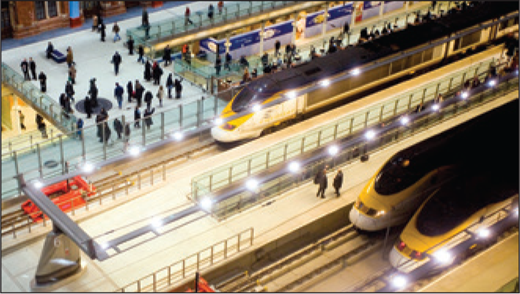
ICE remains supportive of the UK's proposed High Speed 2 railway as a suitable option for increasing national rail capacity, connectivity and access to new markets. In March we responded to the government's consultation on the routing for phase 2 of the project, reiterating our support.
While ICE's High Speed 2 expert panel is satisfied with the proposed route, we did however recommend the government gives further consideration to the location of stations and connections to the existing rail network. We have also advised the line should be ‘future proofed’ to accommodate potential future expansion.
Additionally, ICE urged the government to ensure options for future expansion of the high-speed network to Scotland are factored into the planning and design for High Speed 2 so Scotland can be connected to the high-speed service as quickly as possible. The railway should be positioned not as an isolated project but as an integral part of a national transport strategy, which sets out a vision for comprehensive, integrated future transport across all modes.
Establishing a more strategic approach to infrastructure development will also feature in our State of the Nation: Infrastructure 2014 report to be launched in June – find out more at http://www.ice.org.uk/State-of-the-Nation.