

Financing infrastructure projects: a practical guide (2nd ed.)
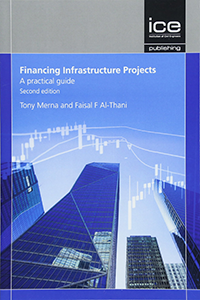
Financing of infrastructure projects is a perennial issue for the global construction industry. Increasing pressure on budgets means funding is often the primary driver for whether a project proceeds or not. This book delves into the detail of public and private finance for infrastructure projects and the financial instruments available, such as equity and bonds.
A very useful glossary of financial terms is provided. The different types of public–private partnerships (PPPs) are described together with a summary of how they can be structured. The influence of financial and foreign exchange markets is also described in detail. Typical risk in the procurement of infrastructure projects is explained, with a breakdown in terms of financial and non-financial risks.
I found the case studies particularly valuable: one a PPP school in the UK and the other a project in the Middle East. While the book does not give all the answers to funding an infrastructure project, it is certainly a must-read for any civil engineer involved in the early stages of project development as well as those responsible for financial delivery.
Flood resilience
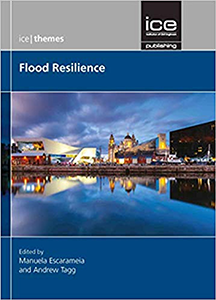
This book is an interesting collection of papers on the theme of flood resilience. It is clearly and intelligently divided into sections of interest, and the papers are drawn from international experience. The breadth of experience makes it particularly useful, with synergies and transferable ideas ever present. While many of the solutions appear to be simple, they are all technically nuanced.
In particular, the papers help readers to understand the performance of existing drainage as well as the strategic and detailed approaches to managing it. Practical examples are also given of successfully involving communities in solutions, which will help stakeholders understand how their actions or inactions can alter the performance of a chosen solution.
Considering today’s world of continuing urban development with increasing flood risk, this is a timely and useful publication. I found it thought provoking and readable.
Port designer’s handbook (4th ed.)
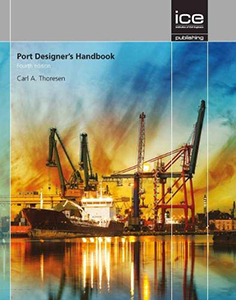
The Port designer’s handbook is well known to maritime engineers worldwide. It provides practical guidance, mainly based on the author’s experience in Norwegian practice and solutions, for all those responsible for the design of port and harbour structures.
The author uses his more than 50 years’ experience of working on some 850 port and harbour projects to provide guidance and recommendations on the layout, design and construction of modern port structures, and the forces and loadings acting upon them.
The fourth edition includes changes to design and construction of berths for large vessels due to new developments in construction and use of new materials. The chapter on port planning is extensive but could usefully include more on masterplanning. The types of concrete and steel deterioration and methods of repair are extensively covered, as is safety, with sections on specification, design, construction, personnel and operation.
The book should provide a valuable addition to the armoury of port engineers.
Lean Six Sigma for leaders
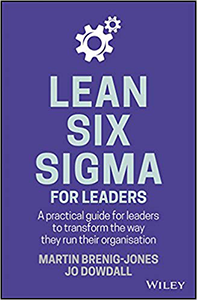
The concept of using Six Sigma process-improvement techniques in ‘lean’, low-waste production processes is well covered by this book. Once you have got past the plethora of acronyms, you can go straight to chapters that are of interest without losing the overall concept.
The book is not a deep dive into improvement processes but serves as a useful reminder to managers to see if their own organisation can improve and in what way. The case studies are good, with honest comments from people in a wide variety of industries.
The authors stress that improvement programmes will not work without continued involvement of all staff, including those departments not normally associated with production. Leaders, however, should concentrate on overall strategy rather than particular tools.
Structural design from first principles
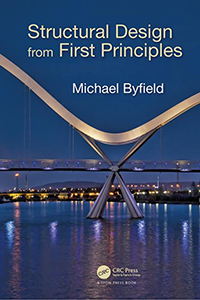
This book simplifies and demystifies the theory of structural design and, through practical examples, makes the principles simple and easy to understand. It covers beams and columns; different construction materials including steel, reinforced concrete, timber and composites; and their structural behaviour under common loading conditions.
Advanced structures, including thin-walled structures, composite structures, prestressed structures, trusses and arches are also examined from first principles. The practical examples are closely associated with design equations and codified rules.
The book will no doubt help students and young engineers understand some of the challenging issues and potential solutions when developing and analysing structural schemes. It will provide a good foundation for dealing with the complex designs and sophisticated rules in modern civil and structural engineering.
Designing for cycle traffic
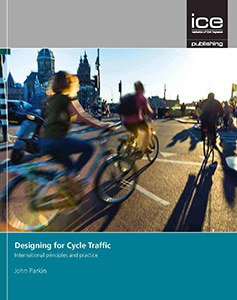
While some national and local authorities have issued regulations on designing and planning for cycle traffic, there is still an overall lack of guidance. This book helps to fill the gap.
It covers all aspects related to cycling, from understanding why car traffic dominance must be reduced to design and planning in different scenarios, within or adjacent to carriageways. Specific attention is given to crossings
The book will be useful to urban planners and designers, as well as anyone concerned with transport infrastructure and mobility. Construction works managers could also find it useful for ensuring that temporary traffic diversions take proper account of cyclists. Looking forward, it would be good to see colour rather than black and white illustrations in the next edition.
Rethinking masterplanning: creating quality places
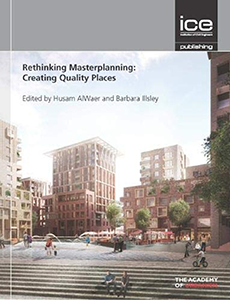
The book explores the recent holistic approach to masterplanning, which differs from the standard definition of a masterplan and includes higher ideas such as resilience and adaptability aspects, inclusivity and sustainability.
After giving a quick history of masterplanning, the authors explore different approaches such as plot-based and adaptive. Real examples from around the world are reviewed, followed by a focus on sustainability. It concludes with a call to ‘new professionalism’ to deliver equity and social justice through the built environment.
Masterplanners, architects, urban developers as well as civil engineers involved in projects that shape places and change cities will find this book very useful as it expands on the long-term impacts and benefits that such projects can make to communities and developments. It is also a useful book for clients involved in masterplanning projects.
Railway bridge maintenance (2nd ed.)
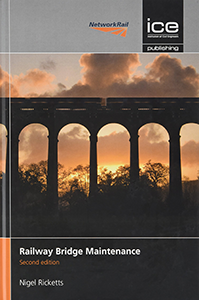
This book updates the 1972 first edition by Frank Turton, which has been a long-standing reference for civil engineers maintaining rail bridges. Historic facts are followed by a comprehensive section on deterioration, analysing different problems associated with different materials and types of structures.
Further sections explore assessing strength and capacity, examination, preventive maintenance, economics and asset management. A section on diagnosis and treatments explores how different treatments can be adopted to bridges given the information collected and the analysis performed. Clear sketches and pictures are included, making the book easy to follow and understand.
The book concludes with a useful section on UK case studies. Pleasant to read and very informative, it will be a useful book for civil engineers working on the assessment and repair of railway bridges, particularly in the UK.
Disturbed soil properties and geotechnical design (2nd ed.)
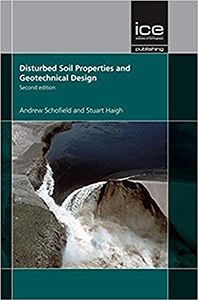
This 182-page book is a useful reference for anyone interested in or gaining knowledge of the development of critical-state soil mechanics, a theory of plasticity which was initially jointly developed by Schofield in the 1950s.
Topics covered range from simple planar sliding of soil to plastic design in geotechnical engineering. Historical coverage starts with Coulomb’s theory of strength, through Taylor’s recognition that interlocking between grains provides a component of strength, to Schofield’s work on the Cam Clay soil model and critical-state concepts.
Many other seminal geotechnical engineering contributions are discussed, critically reviewed and in some cases refuted. Limitations of the Cam Clay model with regard to anisotropy, soil sensitivity and cyclic loading are acknowledged. The establishment and development of geotechnical centrifuge model testing in the UK is included together with mobilisable strength design, where calculations of the deformation of geotechnical systems are based on energy dissipation.
NEW BOOKS
The ICE Library maintains one of the most comprehensive collections of civil engineering books in the world, including all titles from ICE Publishing (shown in bold below). New books received in the past 3 months include the following.
All books can be borrowed from the ICE Members’ Resource Hub on the second floor of 1 Great George Street, London, SW1P 3AA from 9.15 a.m. to 5.30 p.m., Monday to Friday. ICE Publishing titles can also be purchased from the ICE Members’ Resource Hub or ordered by calling +44 1892 832299, emailing orders@icepublishing.com or by visiting www.icevirtuallibrary.com/content/books.


