

Autodesk recently made its new MapGuide software ‘open-source’. The company's Dominic Jukes explains why giving away their software secrets to civil engineers and geospatial professionals makes commercial sense.
Mention open-source software and most people think of Linux and the success it has in establishing an operating system through mass adoption. However, the trend for unlocking the secrets of certain computer applications is gathering momentum within the software industry generally.
One such move was made last year by my company, which launched an ‘open-source’ version of its new MapGuide product and posted the code behind it on the internet. Opening up our intellectual property for all to see was not a decision we took lightly as the information published represents 60 man-years of work
Civil engineers, geospatial professionals and their software developers quickly took advantage of the opportunity: over the past year the source code has been downloaded more than 23 000 times.
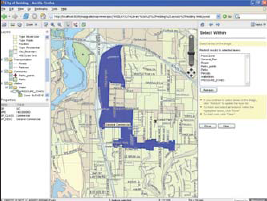
Open-source mapping software enables users to test and develop spatial applications with minimal financial risk
Open-source mapping software enables users to test and develop spatial applications with minimal financial risk
Testing ideas
Open-source mapping software enables developers rapidly to test ideas through the creation and deployment of valuable spatial applications. They can then publish their spatial views internally, over the web or using dwf-format file-viewing technology to share information.
It will make web-mapping solutions increasingly affordable for local authorities, particularly those with in-house developers. In turn this will enable easier sharing of location information with the public and with departments, such as engineering and surveying professionals that need access to information.
It will enable the piloting of an idea on a small controlled project without the risk of full implementation up front. Users may decide to go ahead with open-source software or they may decide they prefer the support they get with a commercial solution downstream, having had the chance to see whether the investment would be worthwhile.
Innovation and security
The other benefit to open-source software is that, as developers can access and modify source code, it often evolves at a more rapid pace than commercial software. Users can express their requirements, discover others with similar needs and influence the product direction and development.
As such, users of open-source software can find that the application will be constantly enhanced and updated. This is sometimes referred to as collaborative software development in an open-source environment, with the benefits that it can speed up progress and takes the software in a totally customer-led direction.
Many also believe that open-source software is more secure. According to the Open Source Initiative, ‘The open-source model also means increased security. Because the code is in the public view, it will be exposed to extreme scrutiny, with problems being found and fixed instead of being kept secret until the wrong person discovers them.’
Encouraging growth
Mapping leads open-source software in the engineering sector for two reasons: a successful open-source community already exists, and there is a strong belief that basic web mapping is becoming a commodity that should be open and available to all.
So why are companies like mine getting involved? First, because our customers are demanding faster innovation, more frequent product releases and a lower cost of ownership. They also wish to evaluate mapping solutions and open-source provides an easy way to do this.
By better addressing the needs of customers and the broader geospatial community, we believe we are helping the overall mapping industry to grow. We also expect to increase demand for other products used to create and manage spatial information—for example we plan to offer a commercial version of the MapGuide early this year.
Acknowledgment
The author is grateful to James Brayshaw, director of Ordnance Survey, for his help in producing this article.
FOR FURTHER INFORMATION CONTACT, Dominic Jukes, TEL +44 (0) 1252 456600, EMAIL dominic.jukes@eur.autodesk.com

