

With a track record of nearly two decades, BRE's environmental assessment method (Breeam) for buildings is now firmly established as a world leader. Alan Yates of BRE reports on the latest updates to the scheme, including new versions for healthcare and education facilities.
The UK Building Research Establishment's environmental assessment method (Breeam) was created in 1990. Nearly two decades on it is the longest-standing and most widely used environmental assessment scheme in the world, a byword for sustainability in buildings.
In the UK alone more than 110 000 buildings have now been certified under the scheme and over half a million more are registered for assessment. Since its launch, when it focused on office buildings, the scheme has evolved and is now able to assess any building type through standardised versions. There is also a ‘bespoke’ version that can be used to assess buildings which fall outside the standard categories, such as leisure complexes, laboratories and hotels.
Use is not limited to the UK – the method has assessed developments all over the world. BRE Global is launching Breeam International this autumn to help with the development of versions designed specifically for use in other countries or regions.
Latest updates
All of the Breeam versions are regularly updated to ensure they continue to set the agenda on building sustainability and remain fully up to date with legislation and changes in the industry.
The latest update was launched in June 2008 and went live in August. Changes range from improvements to the mechanics of the scheme – such as updating the weightings and introducing credits for exemplary performance and innovation – to broader adjustments in approach. For example, mandatory minimum credit requirements are being introduced for key issues including energy and water efficiency to help ensure the scheme delivers the maximum environmental benefits.
Final certification now takes place post-construction rather than at the design stage, which has tended to be the focus of assessments in the past. An interim design-stage certificate will still be available to demonstrate compliance prior to construction. The new two-stage certification is designed to ensure that the final certificate will more closely reflect the building's actual environmental performance.
New approach to CO2
There is a shift in the approach to carbon dioxide (CO2) emission assessment. The benchmarks set for CO2 emissions are to be aligned with the recently established environmental performance certificates required to meet the UK's obligations under the EU's Energy Performance of Buildings Directive.1 This will help the system to recognise energy demand reduction in buildings that use passive/adaptive measures for cooling.
Another enhancement is the introduction of a new ‘outstanding’ rating to recognise buildings achieving exemplary levels of environmental performance. The level for ‘outstanding’ was determined through pilot assessments and an overall score of around 85% is to be required together with other minimum requirements.
The new rating will be used to encourage innovation and to drive the improvements needed, for example, to meet the UK government's challenging targets for zero-carbon non-domestic buildings.
Healthcare and education versions
Also new for 2008 is a ‘healthcare’ version commissioned by the UK Department of Health. It replaces the existing National Health Service (NHS) environmental assessment tool scheme that BRE developed for NHS six years ago.
The ‘healthcare’ version can be used to assess all healthcare buildings containing medical facilities and can assess buildings at different stages of their lifecycle, such as new-build, major refurbishment and extensions.
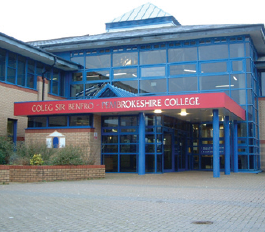
Pembrokeshire College was the highest-scoring Welsh project to be assessed under the Breeam ‘bespoke’ version in 2008
Pembrokeshire College was the highest-scoring Welsh project to be assessed under the Breeam ‘bespoke’ version in 2008
A new ‘education’ version will incorporate the existing ‘schools’ version and a newly developed ‘further education’ version for assessing and certifying all further-education, adult-education and vocational colleges.
The UK Learning and Skills Council will require all further-education buildings to achieve a ‘very good’ rating to gain eligibility for funding. It is already a condition of eligibility for capital funding by the UK Department for Children, Families and Schools that major new-build and refurbishment projects achieve a ‘very good’ rating.
BRE is currently consulting with the higher-education sector on assessing higher-education buildings within the ‘education’ version.
Reference
FOR FURTHER INFORMATION CONTACT, Alan Yates, TEL +44 1923 664462, EMAIL yatesa@bre.co.uk, WEB www.breeam.org

