

The UK Standing Committee on Structural Safety is promoting a new and more holistic form of independent project review as a way to reduce the risk of structural failure. Committee secretary John Carpenter explains the background and benefits.
Engineering is a safety-critical profession. This particularly applies to civil and structural engineering, where the opportunities to test prototypes is very limited and, despite the best endeavours by professionals, errors are sometimes made and failures occur.
‘Failure’ in this sense is represented by a collapse or similar adverse occurrence. However, other structural deficiencies may not lead to fatalities but nonetheless could have a significant financial consequence and lead to professional indemnity claims.1
Design checking
A key element to managing engineering risk is checking. This varies in scope, but usually consists of a numerical check that the design complies with the relevant codes of practice. Such checks are frequently undertaken in-house and often against the original calculations.
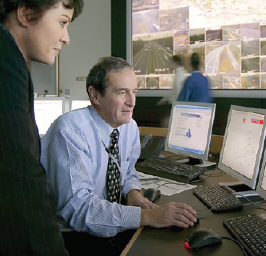
An independent review can range from a straightforward design check to wider issues such as buildability, financial controls and environmental issues (courtesy Atkins)
An independent review can range from a straightforward design check to wider issues such as buildability, financial controls and environmental issues (courtesy Atkins)
On many structures the checking is selective, limited perhaps to critical elements and joints or overall loading. The UK Highways Agency has long insisted on a graded category of checking, with the most complex structures receiving a check from an independent organisation without the benefit of the original calculations.
There is, however, no equivalent discipline in the UK building sector. Indeed, to the author's knowledge, there are no reliable data to identify the extent of a typical check or review for buildings or other structures governed by the Building Regulations, and carried out by those responsible for the design.
A more holistic approach
The UK Standing Committee on Structural Safety (Scoss) has been considering the topic for some time. Its 16th biennial report suggested an alternative, more holistic approach – generally for more complex and larger structures, but not exclusively so.
The proposal has since been refined and launched as Independent review through peer assist. A form of appointment accompanied by a guidance note is published on the scoss web-site.2 The proposal has the support of all Scoss sponsors: the Institution of Civil Engineers, Institution of Structural Engineers and the Health and Safety Executive. Independent review through peer assist has been developed in the knowledge that the construction industry does not always derive optimum value from project reviews. The intent is to promote a more interactive and timely process tuned to the specific needs of the project team. This should lead to reduced risks, greater efficiency and an improved service for clients. It should also stimulate learning, continuous improvement and mentoring.
Independent reviewers
The independent reviewer is a nominated individual, appointed for his or her particular experience and reputation. The review functions primarily through presentations by the project team, focusing on risks and highlighted concerns. This may lead to further work or justifications, but the ownership of actions taken and responsibility for the design itself remains with the team.
The brief is a matter for the client and project team. It may be limited to structural safety or include wider issues such as buildability, financial controls, environmental issues and so on. The wider the brief, the more likely that a number of reviewers will be required, each expert in their own field.
So that reviewers can provide best advice without background concerns regarding accountability or unnecessarily rigid compliance with codes of practice, Scoss is of the view that they should have no liability for the advice given. Although this may be contrary to normal expectations, it is an approach which has been adopted elsewhere3 and has been accepted by some clients in the UK.
Cost-effective
The process will attract a cost as it is not intended to be absorbed within standard duties. However, if considered as an insurance policy – not only against structural mishap but also as a means of subjecting the design to a risk appraisal – it will inevitably be considered as good value.
When matters do go awry, particularly on larger projects, the sums can be very significant indeed.
References
FOR FURTHER INFORMATION CONTACT, John Carpenter, TEL +44 161 973 6928, EMAIL jzcarpenter@aol.com

