

A review of recent and forthcoming developments at the Institution of Civil Engineers by ICE president Paul Jowitt.
For further information please contact the Communications Office on +44 20 7665 2150, email communications@ice.org.uk or visit http://www.ice.org.uk/News-Public-Affairs
Rethinking aviation report
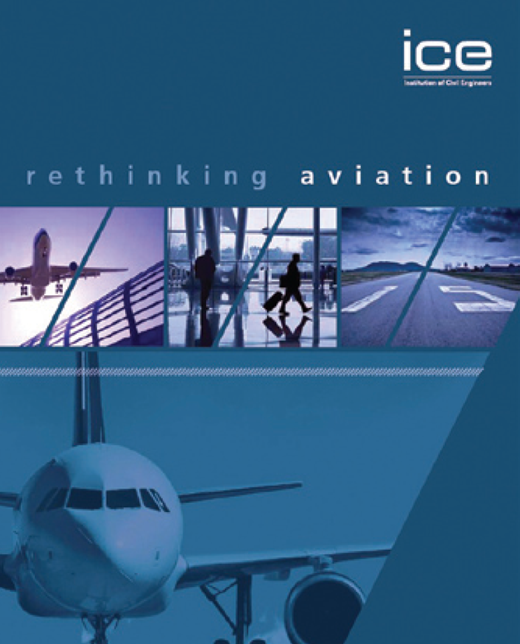
ICE's July 2010 report Rethinking aviation urged the UK government to rethink its plans for British aviation and airport infrastructure development, including its decision to ban new runways at the country's busiest airports.
Produced by ICE 's aviation panel chaired by Ian Blackwell, the report warned that a ‘better not bigger’ approach to airport runway capacity could seriously undermine the UK's global connectivity and competitiveness – and see the country lagging behind north European rivals that have been boosting their hub runway capacity at a considerable rate.
The institution acknowledges that the government has ruled out building additional runway capacity in south-east England as part of the aim to reduce aviation emissions, and agrees that unrestrained growth in demand for air travel without quick improvements in aircraft efficiency would damage the environment and needs addressing.
But the government should think carefully about the UK's long-term airport infrastructure needs and the wider implications of its decision, says ICE.
The report can be downloaded from www.ice.org.uk/transportbriefings.
Economic migration response
ICE told the UK government's migration advisory committee in September 2010 that the proposed cap on economic migration should be seen in the context of a much wider skills crisis facing the construction industry.
In a consultation response, the institution warned that introducing a permanent cap could leave the UK struggling to deliver vital infrastructure projects such as high-speed rail, low-carbon-dioxide energy generation and the nuclear new-build programme.

‘We must ensure the doors must remain open to specialist engineers from outside the European Economic Area’, says ICE vice-president Barry Clarke
‘We must ensure the doors must remain open to specialist engineers from outside the European Economic Area’, says ICE vice-president Barry Clarke
Chair of the consultation committee and ICE vice-president Barry Clarke said although the construction industry is currently experiencing a downturn, it is set for a period of much increased activity by 2014 that will demand a high level of specialist skills.
‘A history of stop-start government procurement has meant industry has been reluctant to make long-term investments in the UK's skill base, and we are now facing a skills crisis. This has been exacerbated by the economic downturn, and consequently when construction activity booms in the near future we may find we have plenty of qualified engineers but a distinct lack of experienced specialist engineers,’ he said.
According to Clarke, it is government's responsibility to equip industry with the confidence to invest in long-term specialist skills training and development through consistent and clear approaches to planning and procurement. ‘However, until this can be achieved, we must ensure the doors remain open to specialist engineers from outside the European Economic Area who can help us deliver critical infrastructure projects, crucial to our long-term economic growth and shift to a low-carbondioxide economy.’
The consultation response can be downloaded from www.ice.org.uk/economic-migration.
Nuclear energy lessons
ICE is leading on a joint UK engineering community and government project to investigate what lessons can be learned from past nuclear building projects and how this information can assist the current new-build programme.
The project, led by Engineering the Future and the Office for Nuclear Development, aims to ensure the nuclear industry and supply chain are equipped with clear and accessible information about the new-build programme, derived from the experience of past projects.
The initial discussion workshop was hosted by ICE and attended by representatives from within the energy sector, academia, government departments and engineering bodies. It is hoped the long-term outcomes of the project will be the facilitation of a more effective knowledge-capture-and-dissemination scheme during the UK new-build programme.
The Engineering the Future report, Nuclear lessons learnt, is expected to be published in November 2010.
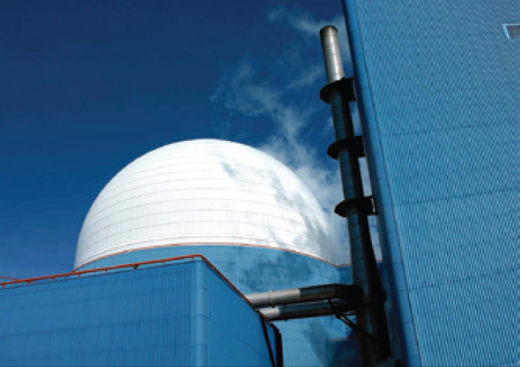
ICE's new nuclear-energy report will collate experience learnt building previous nuclear power stations, such as Sizewell B (British Energy)
ICE's new nuclear-energy report will collate experience learnt building previous nuclear power stations, such as Sizewell B (British Energy)

