


ICE manual of health and safety in construction (2nd ed.)
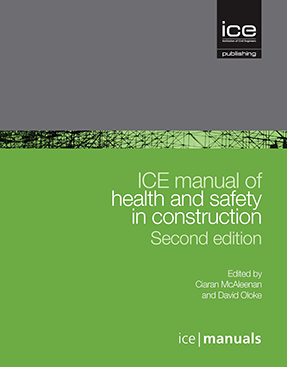
The book does what it promises to, and delivers a comprehensive reference manual for all aspects of health and safety in construction. The book is divided into four sections: introduction; managing occupational health and safety; health hazards; and safety hazards.
The introduction describes the legal framework and the duties of the various parties to a construction project. This section has been updated to reflect the Construction (Design and Management) Regulations 2015, and provides a useful summary to the regulations. One of the chapters provides a thought-provoking discussion of how leadership and culture can influence successful health and safety on a construction project.
The section on managing occupational health and safety includes a strong theme of design and planning to eliminate hazards and reduce risk, with some useful practical advice and examples. Further chapters discuss health and safety management systems, both from a business perspective and in terms of establishing operational procedures. A specific chapter on procurement provides good guidance in establishing a competent team, and a chapter on emerging technologies provides some ideas that could promote innovation in planning for safety.
The second part of the book covers specific health hazards and safety hazards. Health issues are generally less well understood than safety issues, and it is good to see comprehensive coverage of health issues in this manual. The section on health, in particular, provides useful background on the hazards to develop knowledge before discussing methods of controlling and addressing the hazards. Chemical, biological and physical hazards are all considered. The section on safety addresses specific key risks, and will be useful alongside other more detailed industry guidance.
This book will be most useful in the UK context, as many references and examples refer to UK regulations, but the principles set out in this book with be universally applicable. Overall it will be a useful and practical reference for clients, constructors and designers alike, particularly when used in conjunction with health and safety training.
BIM in principle and practice (2nd ed.)
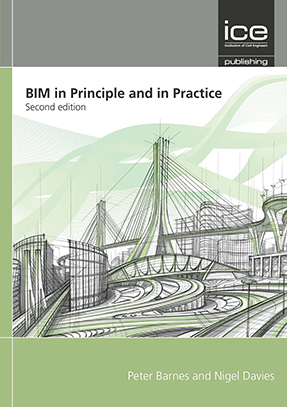
As the authors of this admirable volume state, ‘BIM is the future’. All those working in the construction industry need to understand what building information modelling (BIM) is currently, how it is likely to develop in the future and what issues need to be considered in its implementation. This book is an excellent introduction to a vital topic.
BIM is potentially the catalyst that will drive a far better approach to the delivery of civil engineering projects in the UK. It is already being used extensively in the USA and some European countries. It can facilitate genuine collaboration between project partners. It can reduce costs by reduction of errors. It will help move the industry towards a more efficient production management approach to delivery.
Authors Barnes and Davies give a very clear description of the key features and benefits of BIM. They describe clearly the organisation, contractual arrangements, processes and other key activities required to implement ‘level 2 BIM’ successfully. And if you do not know what level 2 BIM means, then you really need to read this book: all UK public sector construction projects have to comply with level 2 BIM from April this year.
The authors also describe the major benefits to be gained with ‘level 3 BIM’ as well as some of the contractual and insurance issues that will need to be addressed. In level 3 BIM, there will be one single project model, accessible by all project team members: this could make true collaboration between partners the new norm. The more widespread the understanding is of those benefits and issues, then it is to be hoped that the greater the chances of success in moving towards level 3 BIM. This book provides that knowledge.
NEC3: the role of the supervisor
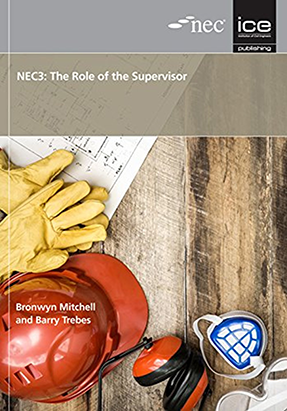
A recent Royal Institute of British Architects survey found NEC3 is now the contract suite of choice for UK clients and is being used by over half the construction industry. Mitchell’s and Trebes’ book describes the supervisor role in the NEC3 Engineering and Construction Contract (ECC) and the value it can bring to a project.
Spilt in into sections that match project phases, the book contains many useful checklists, examples, templates and diagrams which help to illustrate the authors’ points and give practical support to the supervisor role. There is consistent guidance through each chapter, with contract responsibilities presented along with key messages and opportunities where supervisors can or should be asked to provide additional value to a project.
The book starts with a general overview of the ECC and the context for the supervisor role, emphasising the importance of communications. It then clearly sets out the supervisor’s duties with clear diagrams, tables and key message boxes, highlighting areas where an informed supervisor can add value.
It then provides an in-depth review of what the supervisor is required to do at each project stage, again with good use of tables and diagrams to assist the reader, while providing helpful links to contract clauses for future reference. The appendix is full of ready-to-use lists and templates, which may be particularly useful in the initial stages of a scheme.
While there are no case studies to illustrate its points, this does not detract from the value of this book in clearly setting out the role of the ECC supervisor. Overall it is an informative guide and will be helpful to people employing, working alongside or undertaking the supervisor role.
Global risk assessment and strategic planning – an introduction and facilitator’s guide to the Grasp methodology
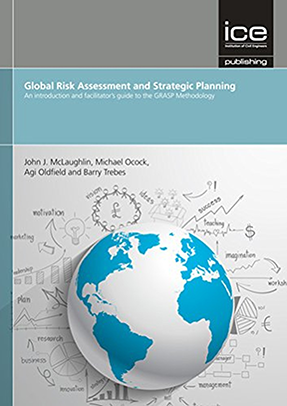
The book presents the ‘global risk assessment and strategic planning’ (Grasp) method in a simple and easy-tounderstand manner. Although presented as a facilitator’s guide, it introduces the concept through a basic approach, which helps to understand the origin, tiers and importance of Grasp.
It explains the concept of values that all parties bring to a project, and how these ‘knowledge capitals’ can be mined and utilised. A triangle is used to highlight the inter-relationship between stakeholder knowledge, situational awareness and the project.
According to the authors, Grasp can be carried out in three optional tiers: workshop only; interviews and workshop; and interviews, workshop and supporting output tables. They explain how it is applicable to all projects and can be used at any point in a project life cycle for resolution of an issue.
Certainly the practical manner in which the book explains the methodology must be applauded as it not only describes the process, but uses case studies to demonstrate its application. The inclusion of numerous knowledge templates and other information-capture tools does, however, make the book read like an instruction manual in parts.
Nevertheless, I would recommend it for use by any practitioners with project management implementation and oversight duties. Lecturers may also find it a useful reference book to help students learn the concept as part of modules on innovative project management.
Highways: the location, design, construction and maintenance of road pavements (5th ed.)
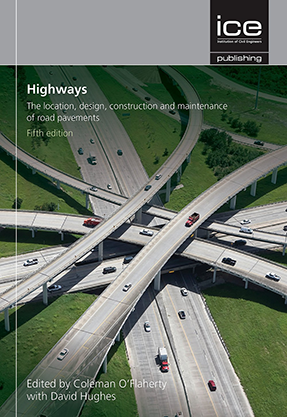
This fifth edition remains a comprehensive textbook on all aspects of highway engineering and has been updated to include the latest European standards. It is primarily aimed at final year and master’s degree civil engineering students but it is also a very useful reference book for all those working in highway design offices who are designing new roads and/or maintaining existing ones.
First published in 1967, this latest edition has been fully updated to provide the current position and thinking on all areas of highway design, including locating the line of a new highway, the use of digital elevation models, acquiring any statutory approvals and investigating the ground on which the new road will sit. It looks at the design of flexible and rigid pavements including the materials used in those pavements and the design and construction of bituminous surfacings.
There are also chapters on key issues such as earthworks, soil stabilisation and – probably the most important factor in good pavement design – the drainage of the surface and sub-surface of the road. The book also looks at the important area of pavement asset management including structural strengthening of road pavements, improving wet skid resistance and the use of thin surface treatments.
Each of the 18 chapters has been written by industry experts who share their knowledge and practical experiences on the many different aspects of highway engineering.
Practical road safety auditing (3rd ed.)
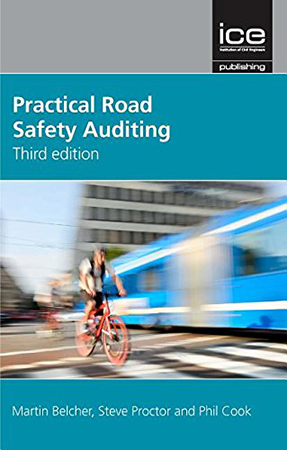
The book aims to provide a practical hands-on approach to conducting road safety audits. It reviews international road safety audit procedures and processes, helping readers to adopt a relevant strategy and methodology, and then looks at competency, discussing the requisite training and qualifications and the context of EU directives.
Other topics covered include safety data requirements associated with road safety reports and the legal implications of road safety audits. To set the UK system into perspective, it presents a summary of the state of the art in six countries and the EU.
The book also looks at other types of audit related to road construction and usage to help readers gain better understanding of the context of road safety audits. Finally, it reviews current issues in road safety audits with a range of international case studies.
Generally, the book is very straightforward to read and has clear illustrations. It should therefore be a worthy addition to the library of the safety practitioner and student.
Stadium and arena design

Ten years after publication of their book Stadium engineering, Culley and Pascoe have updated the multidisciplinary content to cover current major sports facility design and the increasing demand for sustainability.
The book now starts with an interesting historical presentation of stadium and arena engineering from the eighth century to the most recent international venues. The chapters about crowd circulation and security have been fully reconsidered, and chapters added on computerised design, concrete technology, natural and artificial pitches and retractable roofs.
Three new case studies are analysed and supported by original data, these being the Hazza Bin Zayed Stadium in Abu Dhabi, Wimbledon Centre Court in the UK and Beijing National Stadium in China. Not covered, however, are financial planning or lessons learned from recent world cup venue projects.
Overall, the book is easy to read, even for non-specialists. The new version will no doubt be welcomed by professionals and practitioners involved in arena construction. It will also be inspirational for any civil engineer interested in understanding how to design and build these complex, landmark facilities.
Core concepts of geotechnical engineering
This book is part of the ICE textbook series and covers the main concepts of geotechnical engineering. These include site investigation, ground improvement techniques, shallow foundations, deep foundations, retaining structures, embankments, machine foundations and geotechnical reinforcement.
Each of its nine chapters is presented clearly and includes a summary, learning aims, questions for practice and a useful list of references and further reading. Some chapters also benefit from worked examples.
The material in the book has been developed for an undergraduate programme and will be a useful reference for all students on civil and geotechnical engineering degree courses. However, it will also be useful to practising professionals in helping them find solutions to problems in the ground.
Waste prevention policy and behaviour: new approaches to reducing waste generation and its environmental impacts
The management of the 1·3 Gt of waste that is generated in cities is seen as a key challenge in our progress towards an environmentally sustainable world. Bortoleto’s book charts the interface between policy and practice in waste prevention.
The strength of the book is in the presentation of three in-depth case studies that examine waste policy across Sheffield, Tokyo and Sao Paulo. These genetically different cities provide a rich backdrop on which to explore the efficacy of waste policy.
Based on extensive surveys of the residents in the three cities, the book contains a wealth of information on attitudes and behaviour. The author uses these data to validate a framework model of waste generation that integrates general attitudes to environmental problems, subjective and personal norms and perceived behaviour control.
The findings, while compelling, are not surprising, and suggest an important contribution of personal and subjective norms on the waste management behaviour of individuals. The author starts with the preconception that human behaviour is the overarching cause of waste generation. This view is not uncommon, the roots of which are found deep in modern environmentalism. The 1980 book by Cone and Hayes, Environmental problems/behaviour solutions is a comprehensive discussion on this. The authors argued in 1980 that the development of physical technology had far exceeded that of ‘behaviour technology’.
The ability of small behavioural changes to leverage large effects when acted en masse is an important dimension to be highlighted, and placing the burden of responsibility on consumers can be empowering when external obstacles and restrictions are removed. However, this becomes highly counterproductive when the overarching infrastructures or policies act against the consumer. The discourses surrounding climate change are an excellent example of this.
The environmental movement was quick to highlight lifestyle changes as a key aspect of preventing climate change, which they are. However, lifestyle changes alone will not solve the problem, and the lack of social and private investment in the other measures makes the former sound hollow. The result: an increase in scepticism and apathy. Treatment of this disconnect, while mentioned, is not developed within Waste prevention policy and behaviour. As such, the book lacks depth in the overall treatment of the subject.
Nevertheless, it offers an interesting insight into the connection between social sciences and civil engineering, and will be particularly beneficial for those who are working within the technical and policy interface in waste management.
NEW BOOKS
The ICE library maintains one of the most comprehensive collections of civil engineering books in the world, including all titles from ICE Publishing (shown in bold below). New books received in the past 3 months include the following.
| A practical guide to adopting BIM in construction projects | B Kumar | £25·00 |
| A practical guide to construction adjudication | J Pickavance | £64·95 |
| Accessibility and the bus system: transforming the world (2nd ed.) | N Tyler | £100·00 |
| Acoustic emission and related non-destructive evaluation techniques in the fracture mechanics of concrete | M Ohtsu | £175·00 |
| Advanced materials and techniques for reinforced concrete structures | M El-Reedy | £99·00 |
| Aquatecture: buildings designed to live and work with water | R Barker and R Coutts | £35·00 |
| Basic principles of concrete structures | X Gu, X Jin and Y Zhou | £59·99 |
| Being an effective construction client: working on commercial and public projects | P Ullathorne | £33·44 |
| BIM for construction clients | R Saxon | £40·00 |
| Civil engineering procedure (7th ed.) | Institution of Civil Engineers | £25·00 |
| Coastal management: changing coast, changing climate, changing minds | A Baptiste | £250·00 |
| Collaborative project procurement arrangements | D Walker and B Lloyd-Walker | £20·88 |
| Comparative design of structures: concepts and methodologies | S Lin and Z Huang | £93·16 |
| Construction materials based on industrial waste products | L Dvorkin, O Dvorkin and Y Ribakov | £158·50 |
| Delivering sustainable buildings: saving and payback | Y Abdul and R Quartermaine | £45·00 |
| Disaster recovery | B Phillips | £44·99 |
| Engineering: questions and answers | G Duckett | £8·25 |
| Getting to grips with BIM: a guide for small and medium-sized architecture, engineering and construction | J Harty, T Kouider and G Paterson | £34·99 |
| Handbook on green infrastructure: planning, design and implementation | D Sinnett, N Smith and S Burgess | £180·00 |
| Health and safety questions and answers: a practical approach (2nd ed.) | P Perry | £35·00 |
| Masonry structures: between mechanics and architecture | D Aita, O Pedemonte and K Williams | £72·92 |
| Principal designer’s handbook: guide to the CDM regulations 2015 | Association for Project Safety | £25·00 |
| Renewable energies offshore | C Guedes Soares | £172·00 |
| Seismic behaviour and design of irregular and complex civil structures II | Z Zembaty and M De Stefano | £117·00 |
| Seismic loads | V Lyatkher | £130·00 |
| Sensor technologies for civil infrastructures. Volume 2: applications in structural health monitoring | M Wang, J Lynch and H Sohn | £180·00 |
| Sketching for engineers and architects | R Slade | £40·00 |
| Stability of buildings. Part 4: moment frames | A Gardner and IStructE | £70·00 |
| Supply chain construction: the basics for networking the flow of materials, information and cash | W Walker | £49·99 |
| Sustainable building conservation: theory and practice of responsive design in the heritage environment. | O Prizeman | £40·00 |
| Sustainable water | C Ainger and R Fenner | £30·00 |
| Taming the flood: rivers, wetlands and the centuries-old battle against flooding | J Purseglove | £25·00 |
| The ‘one planet’ life: a blueprint for low impact development | D Thorpe | £26·99 |
| The economics of infrastructure provisioning: the changing role of the state | A Picot, M Florio, N Grove and J Kranz | £24·95 |
| The sustainable built environment: technical, managerial, legal and economic aspects | B Sertyesilisik and A Al Shamma’a | £29·99 |
| Theories of sustainable development | J Enders and M Remig | £90·00 |
| Tidal power: harnessing energy from water currents | V Lyatkher | £130·00 |
| Trust in construction projects | A Ceric | £95·00 |
| Understanding and using structural concepts | T Ji, A Bell and B Ellis | £44·99 |
| Urban pluvial and coincidental flooding | C Maksimovic | £67·00 |
| Urban water reuse handbook | S Eslamian | £89·00 |
| Water and climate change adaptation | OECD | £27·00 |
All books can be borrowed from the ICE library on the first floor of 1 Great George Street, London, SW1P 3AA from 8.30 am to 6.30 pm, Monday to Friday. ICE Publishing titles can also be purchased from the ICE library or ordered by calling +44 1892 832299, emailing orders@icepublishing.com or by visiting www.icevirtuallibrary.com/content/books.

