


ICE manual of blue-green infrastructure
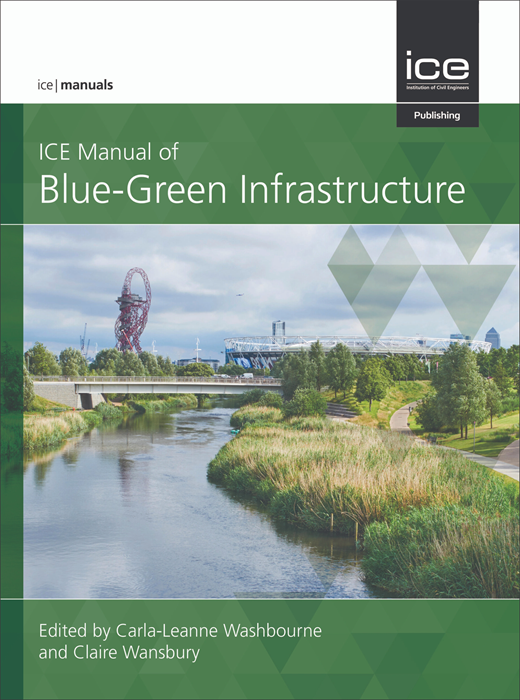
This is a timely publication given that blue-green infrastructure is now frequently in the news and there is a climate emergency. The authors have put together a collection of highly relevant topics into an authoritative manual.
It is an expensive book at £145 but is crammed full of useful information. Readers may be aware of some sections in the manual but perhaps not actually associate these as blue-green infrastructure. Others were very new to me so might also be to others.
There are 16 chapters, each with several subsections. They include definitions, benefits, master planning, costal and marine, sustainable drainage systems, green bridges, green roofs, living walls, urban trees, highways, soil management and engineering, maintenance and support. There is also a fairly effective index at the back of the book.
It must surely become the standard reference for any architect, landscape planner or council officer that has any input into the built environment or civil engineering infrastructure. Congratulations to the team for getting this out just when it is most needed. It should be consulted in any construction or infrastructure project hereafter.
ICE guide to careers in civil engineering
This book contains a fantastic collection of diverse role models which really bring to life the breadth of careers available in civil engineering. The first chapter introduces civil engineering and the role of the Institution of Civil Engineers (ICE). It provides a compelling overview of the importance of lifelong learning. It is easy to read, being clearly pitched at apprentices, undergraduates and graduates or those who advise them.
Chapter 2 is very much the core of the book and takes the reader on an inspiring journey into seven separate disciplines. These are structures and buildings; geology, geotechnical and ground engineering; water engineering and waste management; coastal and maritime engineering; transport; energy; and development, planning and urban engineering.
For me the real power of the book is that the disciplines are brought to life by the role models, who cover a wide selection of career stages and demographics. They all, however, have two things in common: civil engineering and being inspirational.
The third and final chapter is a highly useful directory of employers, which will really help those who aspire to be civil engineers find their first or next step in their career journey. I would recommend this very reasonably priced book be part of every college and university careers library. In addition, all ICE STEM ambassadors would benefit from sharing this resource and considering having it for reference themselves.
Transportation in a net zero world: transitioning towards low carbon public transport
This brief 115-page book looks at using green energy in the transport sector and the technology that will enable and support it.
The authors start by covering personal vehicles, considering the various hybrid, plug-in and hydrogen fuel options and the current barriers and challenges to using them. This is followed by chapters on buses, trains, planes and freight. Each chapter summarises where we currently are and where we need to get to, and how that could be achieved.
Cleaner low carbon dioxide technologies are discussed, and the policy changes that would be needed to introduce them. The authors consider how new fuels such as hydrogen can be introduced into public transport fleets. Policy changes and behaviour changes are needed, and these are summarised within the modal chapters.
The book comes with a few good important reminders, such as electricity in transport is not new – electric underground trains have been operating since the nineteenth century. Electricity is also not emissions-free, it is only zero at the point of use. In addition, in our focus on reducing carbon dioxide we should not forget the potential harm of other greenhouse gasses, nitrogen oxides and particulate matter.
Earthworks: theory to practice – design and construction
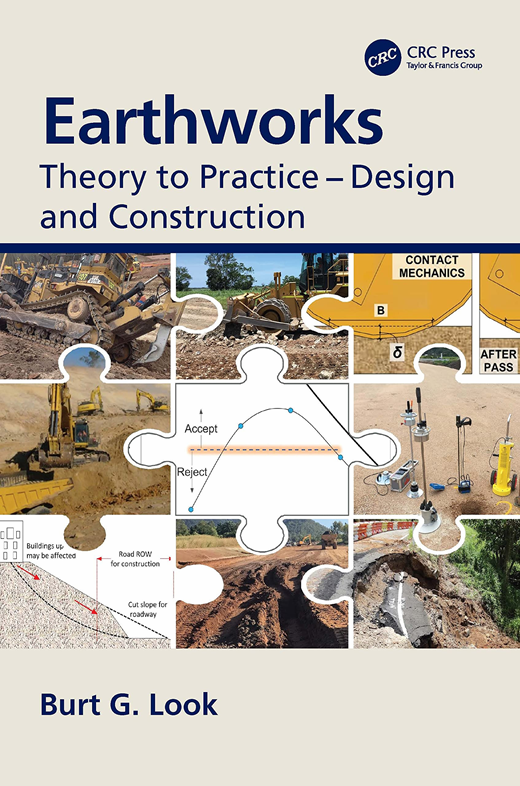
Higher education study programmes do not teach earthworks specifically as a course, but on real projects earthworks is a significant element of work. This book consolidates the related courses that constitute the subject, such as soil mechanics, geology, landscaping and transportation engineering, to prepare engineering and construction professionals for the project environment.
Worthy of note is the author’s caution to practitioners, through case studies, on why heuristic techniques applied in the real world but not founded on established theoretical foundations may be problematic. Similarly, the author highlights theoretical concepts that cannot be expressly applied in real practice.
Overall, this book tries to close the gap between theory and practice, highlighting the gaps between state of the art, state of knowledge and practice. Readers will particularly find useful the author’s reflection on the correct application of earthworks specifications and the nuances based on region.
Highway bridge management
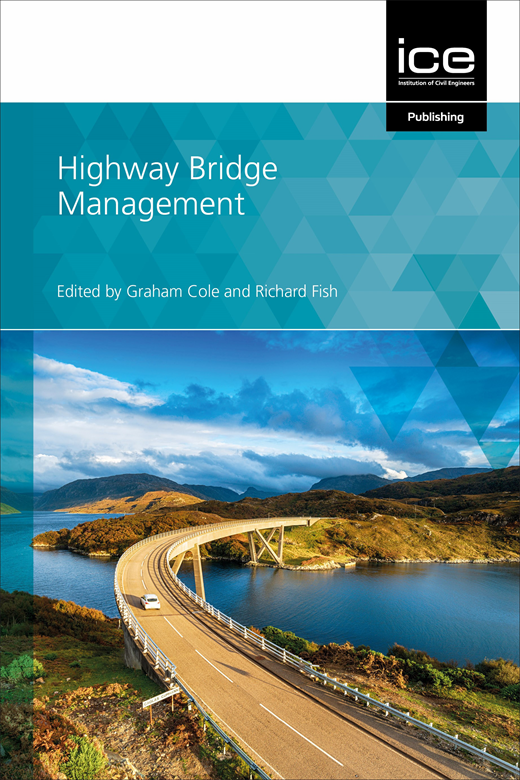
Highway Bridge Management brings together the perspectives of experts across the UK bridge community to provide an excellent reference book for those involved in bridge management. Readers can dip into specific chapters and topics or read the narrative across the book more generally.
The book covers practical and technical topics – such as inspection, maintenance, assessment and details for different forms of bridges − but also includes history, background and examples that bring the content to life.
The authors have made the contents very accessible. I particularly appreciated that they rooted the book’s content within a modern context and challenges, discussing the impacts of the sector with respect to greenhouse gas emissions and the UN Sustainable Development Goals.
One point to note is that the authorship is UK-based and, although much of the content is just as relevant in an international context, the references, codes and so on are predominantly UK-focused.
An encyclopaedia of world bridges
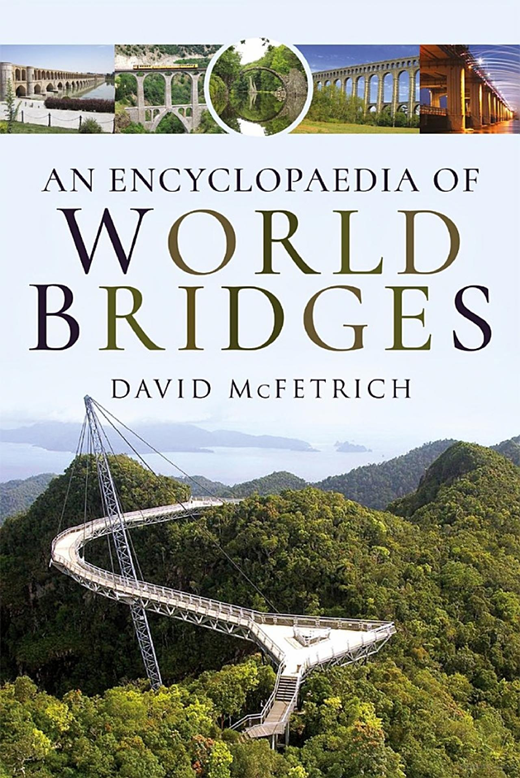
There are a phenomenal number of bridge structures in the world. An attempt to provide an encyclopaedia of them will always suffer from the burden of what to include and what not to include. This book, which is a sister publication to the author’s earlier An Encyclopaedia of British Bridges, is a commendable attempt.
Bridge engineers, and others that have an interest in bridge structures, will enjoy its contents but are sure to spot certain glaring exclusions from the list. The author does, however, forewarn the reader of this and of his intention to present ‘some of the world’s most famous bridges…[and] a wide selection of less well-known bridges’.
The book has descriptions of nearly 1000 bridges, though fewer than half are accompanied by a photograph. It is clear the author has a passion for his subject, evidenced by his interesting classification of the many examples into numerous lists. The book is a useful, if not comprehensive, guide to these important structures.
ICE companion to engineering management
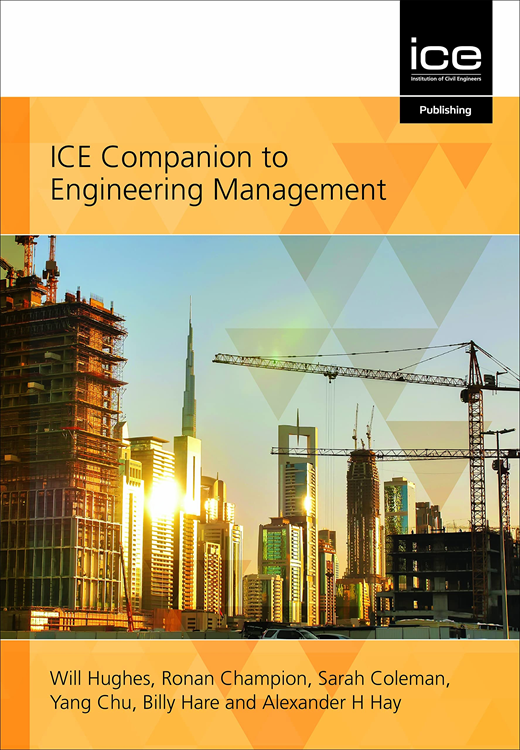
This is a well-written 320-page book, with each author discussing different elements of engineering management and the post-Covid-19 situation we now work in.
The chapters cover procurement, contracts and project management; management and leadership; project appraisal and financial management; health, safety, welfare and risk assessment; and sustainable development.
Each chapter can be read as an informative standalone summary of the topic matter, and each one has a comprehensive list of references for further reading if the reader wants to delve into more detail.
NEW BOOKS
The ICE Library maintains one of the most comprehensive collections of civil engineering books in the world, including all titles from ICE Publishing (shown in bold below). New books acquired in the past 3 months include the following (* indicates e-book only).
| A practical design guide for coastal rubble mound structures | L Mohammad | £120.00 |
| Analysis of pavement structures (2nd ed.) | A Das | £110.00 |
| Applied geotechnics for construction projects. Volume 1: soil and experimental data* | A Dhouib | £125.00 |
| Applied geotechnics for construction projects. Volume 2: fundamental principles of soil mechanics and the role of water* | A Dhouib | £125.00 |
| Applied geotechnics for construction projects. Volume 3: behavior and design of project foundations and Eurocode validation* | A Dhouib | £125.00 |
| Applied geotechnics for construction projects. Volume 4: retaining structures, soil reinforcement and improvement* | A Dhouib | £125.00 |
| Appraisal and repair of existing concrete structures | Y Kog | £70.00 |
| Behaviour and design of steel and composite connections in fire* | M Jafarian and Y Wang | £79.99 |
| Building better - less - different: circular construction and circular economy* | F Heisel et al. | £41.50 |
| Coastal disaster surveys and assessment for risk mitigation* | T Shibayama and M Esteban (eds.) | £79.99 |
| Coasts and estuaries: management and engineering | V Sundar, S Sannasiraj and K Murali | £105.00 |
| Construction detailing for landscape and garden design: urban water features | P Hensey | £34.99 |
| Construction law: from beginner to practitioner (2nd ed.) | J Mason | £42.99 |
| Damage and cracking of concrete structures: from theory to practice* | S Grange and J Mazars | £125.00 |
| Delivering on the climate emergency: towards a net zero carbon built environment | D Prasad et al. | £39.99 |
| Design of hybrid structures* | A Plumier and H Degree (eds.) | £89.99 |
| Deterioration and maintenance of pavements (2nd ed.) | D Cudworth and M Rahman | £100.00 |
| Digital twins for smart cities | L Wan et al . | £70.00 |
| Discourse analysis in transport and urban development | C Hannigan and R Hickman (eds.) | £105.00 |
| Experiment design for civil engineering: methods and examples* | F Hopcroft and A Charest | £89.99 |
| Finite element analysis and design of steel and steel-concrete composite bridges (2nd ed.)* | E Ellobody | £127.00 |
| Finite element analysis for building assessment: advanced use and practical recommendations | A Gaetani and P Lourenco | £59.99 |
| Geopolymer concrete structures with steel and FRP reinforcements | M Elchalakani et al. | £190.00 |
| Geotechnical baseline reports: a guide to good practice (CIRIA C807) | J Davis et al. | £90.00 |
| Innovation in TBM traffic tunnels* | S Pompeu-Santos | £84.99 |
| InSAR and earth observation techniques for infrastructure (CIRIA C805) | N Devanthery et al. | £140.00 |
| Landslide risk assessment (3rd ed.) | M Lee and D Jones | £120.00 |
| Lean construction 4.0: driving a digital revolution of production management in the AEC industry | V González, F Hamzeh and L Alarcón (eds) | £150.00 |
| Manual of geotechnical laboratory soil testing* | B Ahmed Mir | £100.00 |
| Post-tensioning in building construction* | B Aalami | £110.00 |
| Railways in North and Mid Wales in the late 20th century* | P Green | £25.00 |
| Rainwater harvesting - building a water smart city* | A Akter | £109.99 |
| Reactivation of the built environment: from theory to practice | D Fanzini and G Venturini | £39.99 |
| Recycled concrete: technologies and performance* | V Tam, M Soomro and A Evangalista (eds) | £195.00 |
| Seismic design and analysis of tanks* | G Calvi and R Nascimbene | £95.00 |
| Seismic retrofit of existing reinforced concrete buildings* | S Antoniou | £105.00 |
| Smart energy for smart transport (CSUM 2022)* | E Nathanail N Gavanas and G Adamos (eds) | £249.99 |
| Structural use of fibre polymer composites | G Bohm et al. | £65.00 |
| Sustainable high-rise buildings: design, technology, and innovation | K Al-Kodmany, P Du and M Ali (eds) | £125.00 |
| The world of steel: on the theory, production and use of a basic material* | J Schlegel | £29.99 |
| Traditional brickwork: construction, repair and maintenance | T Lee | £18.99 |
| Transportation engineering (2nd ed.) | M Janic and D Teodorovic | £138.00 |
All books can be borrowed through the library’s online catalogue at www.ice.org.uk/knowledge-and-resources/ice-library or from the ICE Members’ Resource Hub at 1 Great George Street, London, SW1P 3AA, Monday to Friday, 9.15 a.m. to 5.30 p.m., email library@ice.org.uk. Recent ICE Publishing titles can be ordered online from www.icebookshop.com.

