

Reducing storm overflows (SOs) and improving water quality is a core part of the largest infrastructure investment in UK history, as stated in the UK government’s Storm Overflows Discharge Reduction Plan (SORP). To address this, Wessex Water Services Limited (WWSL) is integrating nature-based solutions (NbS) as key interventions into the company’s asset base through their commitment to restoring the environment. Building on its successful monitoring programme of reedbed treatment systems installed to treat groundwater-influenced SOs at two sites, WWSL is trialling NbS schemes across the region. Working towards achieving targets set out in the SORP, these trials shall inform the long-term NbS plans of WWSL. Mott MacDonald Limited (MML) has worked closely with WWSL to assess several of their SO sites for installation of constructed treatment wetlands. MML is designing both traditional and innovative wetland approaches to deliver schemes at different scales and approaches, while maximising sustainability through retrofitting existing and decommissioned infrastructure. MML and WWSL are working collaboratively with stakeholders to develop inclusive designs that maximise biodiversity and social opportunities, benefitting the environment and wider communities. Installed systems will be monitored and lessons learnt captured to inform best practice and deliver targets while incorporating wider benefits.
1. Introduction
Combined sewer networks, carrying both sewage and surface runoff, may exceed their capacity during storm events. Storm overflows (SOs) are a critical component of combined sewer networks, acting as relief points within the network and preventing systems from being overloaded and causing flooding. When SOs operate during or shortly after storm events, they discharge diluted sewage into waterways, temporarily reducing the water quality of the receiving environment.
SOs can impact the environment due to high biological oxygen demand (BOD), chemical oxygen demand (COD), ammonia, total suspended solids (TSS) and coliform levels, among other pollutants. These pollutants have the potential to harm aquatic ecology and ecosystems, in addition to human health. Their impact on water quality will vary depending on location, sources of inflow and the point in time of an overflow event. For example, the beginning of an overflow can be the most concentrated and therefore harmful.
In the UK, the legacy Victorian sewer infrastructure is under growing pressures from climate change and increasing urban development. As stated in the UK government’s Storm Overflows Discharge Reduction plan (SORP) (DEFRA, 2023), reducing SOs and improving water quality is a core part of the largest infrastructure investment in UK history. This investment will require diverse approaches and a combination of solutions, such as integrating nature-based solutions (NbS) alongside traditional built infrastructure. According to the SORP, there are around 15 000 SOs in England, with varying sewerage systems and discharge rates. Wessex Water Services Limited (WWSL) owns and maintains approximately 1300 SOs (WWSL, 2024a) and is integrating NbS as key interventions into its asset base as part of the company’s commitment to restoring the environment.
Under the 2021 Environment Act, all water companies in England are legally required to progressively reduce the adverse impacts of discharges from SOs. According to the SORP (DEFRA, 2023), all water companies are required to achieve the following three specific targets.
- ▪
By 2035, water companies will have improved all SOs discharging near every designated bathing water site and improved 75% of SOs discharging into or near ‘high-priority sites’.
- ▪
By 2045, water companies will have improved all remaining SOs discharging into or near high-priority sites.
- ▪
By 2050, no SOs will be permitted to operate outside of unusually heavy rainfall or to cause any adverse ecological harm.
These targets need to be achieved in addition to all legal duties stipulated under the Urban Waste Water Treatment Regulations (England and Wales) (HMG, 1994) and the 1991 Water Industry Act.
WWSL, building on its successful monitoring programme of reedbed treatment systems installed to treat groundwater-influenced SOs at two sites, is trialling NbS schemes across the region. Mott MacDonald Limited (MML) has worked closely with WWSL to assess several of their SO sites for the potential installation of NbS in the form of constructed treatment wetlands (CTWs). MML is designing both traditional and innovative CTW systems to deliver schemes at different scales using different approaches, while increasing sustainability through retrofitting existing or decommissioned infrastructure. MML and WWSL are working collaboratively with stakeholders to ensure inclusive designs that maximise biodiversity and social opportunities, benefitting the environment and wider communities. Working towards achieving targets set out in the SORP, these trials shall also inform the long-term NbS plans of WWSL. Installed systems will be monitored to ensure targets are met and to inform best practice.
The focus of this paper is to outline the design approach taken by MML to achieve an aspirational water quality target of 40% reduction in TSS and detail how the design has gone beyond simply seeking to limit environmental impacts. It highlights key challenges identified and includes recommendations that could facilitate the long-term implementation of CTWs, and other NbS, for the treatment of SOs.
2. Design approach
2.1 Definitions of NbS
The International Union for Conservation of Nature defines NbS as (IUCN, 2020):
… actions to address societal challenges through the protection, sustainable management and restoration of ecosystems, benefitting both biodiversity and human well-being.
This definition focuses on sustainability and the management of existing ecosystems. However, the schemes discussed within this paper have required the construction of new systems rather than the restoration of existing habitats. Nevertheless, these proposed systems will ultimately support the protection and restoration of the downstream ecosystems, including protected sites.
The 2018 Naturvation report (Davis et al., 2018) expands on this definition and states:
NbS are deliberate, innovative interventions that seek to use the properties of nature to address a set of urban challenges as an alternative to conventional methods of urban planning and development, which mainly deploy purely technological and ‘grey infrastructure’ based solutions.
This definition seems more applicable, and representative of the approach needed to tackle the SO challenge. The aim is to utilise the properties and capabilities of natural systems to provide water quality improvements. Some of these systems may not look like a fully natural, landscaped wetland because the nature of site constraints, engineering standards and health and safety requirements often need a compromise between natural and engineered solutions. However, even engineered wetlands will utilise natural processes and create habitats similar to those found in natural systems. The challenge and opportunity for engineers is to balance meeting standards and maximising the ecological and landscape potential of a site, while also incorporating as many wider benefits as practicable.
CTWs are a type of NbS that utilise natural wetland processes to provide water quality improvements. The US Environmental Protection Agency defines them as ‘treatment systems that use natural processes involving wetland vegetation, soils and their associated microbial assemblages to improve water quality’ (US EPA, 2024). For the work described in this paper, these wetlands have been used to provide the treatment processes required. Other types of NbS are typically observed within the wider catchment as sustainable drainage systems (SuDS) and used to manage surface water runoff entering the sewer system.
2.2 Wider relevance
From the authors’ experience, CTWs can contribute towards achieving numerous United Nations Sustainable Development Goals (UN SDGs) (UN, 2016). Table 1 highlights these potential opportunities for consideration.
UN SDGs relevant to CTWs
| Aim | Potential opportunities for CTWs to contribute | |
|---|---|---|
| UN SDG 3: Good health and well-being | Ensure healthy lives and promote well-being for all at all ages | Improving recreational bathing waters Connecting people with nature by providing walking routes and public green and blue space |
| UN SDG 6: Clean water and sanitation | Ensure availability and sustainable management of water and sanitation for all Target 6.3: By 2030, improve water quality by reducing pollution, eliminating dumping and minimising release of hazardous chemicals and materials, halving the proportion of untreated wastewater and substantially increasing recycling and safe reuse globally Indicator 6.3.2: Proportion of bodies with good ambient water quality | Improving water quality in receiving water bodies, increasing their status Protecting downstream habitats and industries reliant on clean water such as fisheries, water sports centres and commercial abstractors |
| UN SDG 11: Sustainable cities and communities | Make cities and human settlements inclusive, safe, resilient and sustainable | Providing amenity value and a place for education and tourism opportunities. These can be promoted by actively involving the local stakeholders during all phases of development |
| UN SDG 13: Climate action | Take urgent action to combat climate change and its impacts | Lower carbon dioxide approach to water treatment rather than traditional grey infrastructure Potential to reduce flood risk |
| UN SDG 14: Life below water | Conserve and sustainably use the oceans, seas and marine resources for sustainable development | Reducing nutrient pollution of estuaries and coastal waters |
| UN SDG 15: Life on land | Protect, restore and promote sustainable use of terrestrial ecosystems, sustainably manage forests, combat desertification, and halt and reverse land degradation and halt biodiversity loss | Improving biodiversity and reducing loss and degradation of aquatic biodiversity Supporting terrestrial ecosystems that are reliant on the aquatic ecosystems |
2.3 Phased delivery
Increased flow within combined sewer systems during an overflow event can be caused by surface water and groundwater entering the system. Groundwater enters the system primarily in two ways: spring flows leading to runoff into storm drains and direct infiltration (e.g. through gaps in pipework). Infiltration is very complex to both locate and remove cost effectively, with groundwater levels varying seasonally, hence the impact on drainage systems varying accordingly. When compared with rainfall-influenced systems, groundwater-influenced overflows are assumed to exhibit smaller peak flows, but for a longer duration after a storm event. As such, they are good candidates for CTWs, which thrive on lower, regular flows.
Since 2022, MML has assisted WWSL in reviewing its most frequently spilling groundwater-induced SOs and assessing the suitability of each for the installation of CTWs. It is recognised that CTW systems are used in some European countries to treat SOs (Meyer, 2013), but their use in the UK is limited. The integration of non-traditional and unfamiliar technology within the UK water treatment industry comes with associated risks and opportunities. WWSL has used a phased delivery approach that allows for gradual implementation, facilitating easier planning and control of delivery. Key blockers are identified at the initial stages of delivery, allowing for issues to be resolved with a minimised impact and leading to a smoother long-term process. The approach has also fostered expertise and capacity growth, developed efficiencies and best practices, and implemented lessons learnt from earlier phases.
2.4 Overview of CTW solutions
2.4.1 Treatment process
A typical CTW for a SO is installed between the storm tank overflow point and the existing storm outfall. A flow diagram for an example site with vertical flow wetlands installed is provided in Figure 1. At some sites, the SO and final effluent share a common outfall to an adjacent watercourse.
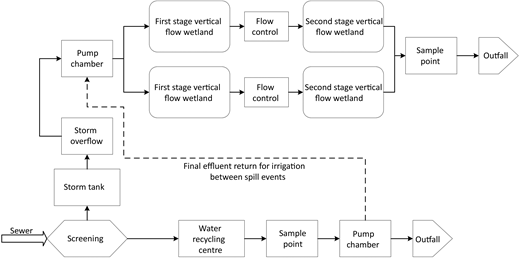
Example of a vertical flow wetland configuration for SO. Indicative design only and subject to change per site specific requirements (source: David Naismith)
Example of a vertical flow wetland configuration for SO. Indicative design only and subject to change per site specific requirements (source: David Naismith)
2.4.2 Types of CTWs
A summary of all the CTW types being designed by MML include the following.
- (a)
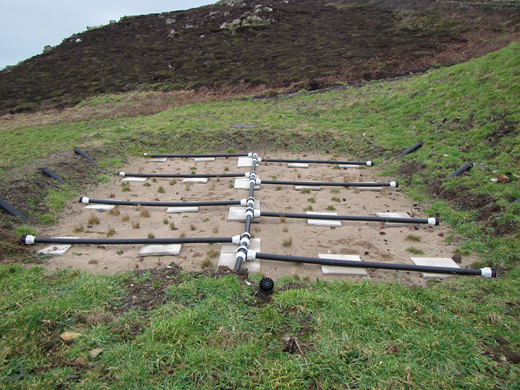
Vertical flow wetlands. These consist of a sand and gravel filter with wetland plants (typically common reed (Phragmites australis)) on the surface (Figure 2). Influent is delivered in measured volumes to the surface of the wetland, where it floods the top sand layer to a design depth. The influent then filters vertically down through the sand and gravel layers, receiving treatment before being collected in the base of the wetland and directed to the next downstream stage. These wetlands usually operate in a minimum configuration of two cells that are alternately fed with influent, with each cell having a rest period between feedings. These wetlands are particularly effective at reducing BOD, COD and ammonia concentrations (Dotro et al., 2017; Kadlec, 2019; Kadlec and Wallace, 2009).
- (b)
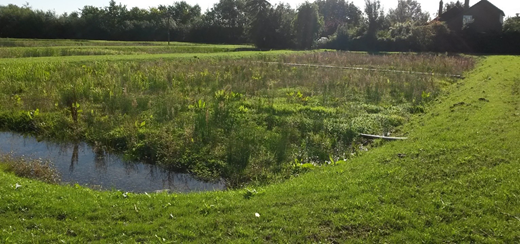
Free water surface wetlands. This type of wetland most closely resembles natural wetlands and takes the form of a marsh habitat (Figure 3). They consist of soil media in the base, a permanent flooded water depth of at least 300–500 mm and are usually densely planted with mixed native species of submerged, emergent and marginal aquatics. These wetlands are typically used for secondary and tertiary treatment and are effective at reducing BOD, COD, oxidised nitrogen, total phosphorus and suspended solids concentrations. Free water surface wetlands are also referred to as integrated constructed wetlands (ICWs) where they are installed in line with the principles of the ICW strategy of ‘… adopting and implementing a strategy that integrates the management of land, water and biological resources, while promoting conservation and sustainable use in an equitable way’ (DEHLG, 2010; Kadlec, 2019).
- (c)
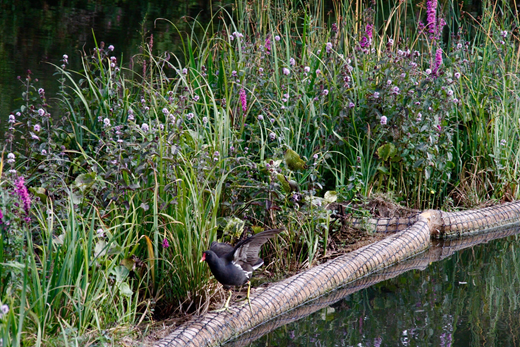
Floating treatment wetlands. These consist of module units that comprise a floatation and substrate support system, planting substrate and plants (Figure 4). They are typically installed on open water areas with multiple anchoring points to the bed and/or banks to hold them in position. They can typically accommodate relatively large fluctuations in water level while providing water quality improvement and ecological benefit. They can be used to improve the performance of settlement ponds by promoting greater suspended solids removal (Borne et al., 2013; Headley and Tanner, 2012).
- (d)
Swales and bioswales. Traditionally used for SuDS applications, dry and wet swales are shallow ditch-like features with dense vegetation (Figure 5). Bioswales are deeper features with a saturated, anaerobic zone in the base. Swales are generally considered in specific situations where spill volumes are low, space is limited and irrigation between events is challenging, as they are more resilient to dry periods. Adopted from the catchment-sensitive farming approach, they are proposed on an experimental basis for network pump stations and low-volume spilling sites to improve water quality and reduce impact on the receptor. However, they are likely to have lower water quality improvement potential than the other wetland types (Mackenzie and McIlwraith, 2013; Woods Ballard et al., 2015).
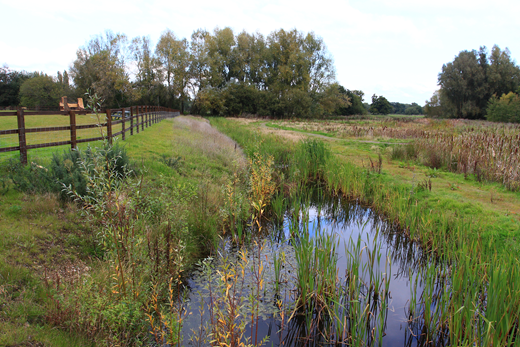
At time of writing, MML had commenced design on a total of 11 sites at WWSL’s water recycling centres (WRCs) and a sewage pumping station: six sites in late 2022 and five sites in late 2023. Table 2 provides an overview of the types of wetlands being designed for the sites.
Overview of MML designed wetlands at time of writing
| Site | Treatment wetland or NbS type being designeda |
|---|---|
| Gurney Slade sewage pumping station | Swale with engineered soil |
| Bradford On Tone WRC | Vertical flow wetland |
| Hatch Beauchamp WRC | Bioswale |
| Maiden Newton WRC | Combination of vertical flow and free water surface wetlands |
| Wookey WRC | Repurposing of decommissioned filter beds and retrofit with a vertical-flow-style wetland using existing filter bed media |
| Cheddar WRC | Repurposing of decommissioned oxidation ditch and retrofit with floating treatment wetlands |
| North Cadbury WRC | Vertical flow wetland and/or bioswale |
| Sydling St Nicholas WRC | Potential short-term swale solution and long-term vertical flow wetlands |
| Chewstoke WRC | Repurposing of decommissioned primary settlement tanks and creation of free water surface wetlands |
| Hullavington WRC | Vertical flow wetlands |
| Great Badminton WRC | Free water surface wetlands |
Subject to change upon receipt of surveys or release of new guidance on permitting and monitoring requirements for SO treatment wetlands
2.4.3 Treatment potential
CTWs for stormwater treatment have been used in Europe and the USA since the 1990s, with performance data documented within the literature review undertaken as part of the design of the WWSL schemes. The review included over 80 references and focused on the most recent information and performance data from systems installed in Germany, Italy, France and the USA (including Apple and Schlee, 2018; Ávila et al., 2013; Botturi et al., 2021; Brunsch et al., 2020; Masi et al., 2017, 2023; Meyer et al., 2013; Nivala et al., 2018; Rizzo et al., 2020). A summary of pollutant reduction potential derived from the above literature review is provided in Table 3.
2.4.4 Focus on wider benefits
The design approach of the schemes listed in Table 2 focused on wider benefits alongside reducing construction, carbon dioxide and energy requirements. An appropriate balance between grey and green infrastructure was sought during design development at existing WWSL sites. This included considering options that avoid the demolition of existing structures or the construction of new structures by adapting and retrofitting existing redundant infrastructure such as biofilters sludge beds and oxidation ditches at Wookey WRC and Cheddar WRC.
The design process sought to maximise reusing material, such as biofilter media, to encourage responsible material consumption, thus reducing the transport requirements and volumes of material sent to landfill. The design considered the whole-life cycle and mitigated the risk of potential habitat degradation during dry summer periods when selecting the CTW type. To reduce energy consumption, designs have explored the use of renewable energy using solar pumps for irrigation during dry periods. Where feasible, designs have sought gravity systems and have adopted greener engineering solutions to provide additional value and sustainability benefits.
The team adopted a collaborative design approach with stakeholders and disciplines, including statutory agencies, contractors and suppliers. This included early engagement to mitigate risks and maximise opportunities, including construction efficiencies.
Selecting the type of CTW was site specific, as each site has unique challenges and opportunities, although with some commonality. Typical constraints were the land area available, topography, existing asset and services and ecological aspects.
The team designed holistic systems alongside multiple stakeholders and disciplines, to work with – and for – people and nature. Where possible, the designs include viewing platforms and interpretation boards for recreational users of adjacent land to view and learn about the proposed CTW and the surrounding area. The incorporation of these elements provides opportunities to educate on the importance of water management and biodiversity, and directly benefit people’s wellbeing through the creation of interactive natural spaces.
The design process considered how multiple benefits for local wildlife and enhancements to existing habitat could be achieved. The use of soft engineered banks to retain CTWs was prioritised where site constraints allow. This, in combination with planting of mixed native species with attention to locally important species, has the potential to support local ecosystems and enhance biodiversity. Where excavation has been unavoidable, enhancements such as utilising excavated chalk to enrich surrounding chalk grassland, the creation of butterfly and invertebrate mounds, and strategic planting have been included in the design. For example, at Maiden Newton WRC, the design includes scrub planting for the enhancement of local reptile habitat and hedge planting and management, using traditional hedge laying techniques, to both screen the existing WRC works and provide ecological, landscape and heritage educational opportunities.
3. Overcoming challenges
The design phases of all 11 schemes highlighted many opportunities and challenges, resulting in key lessons learnt that can be applied to other schemes to facilitate a more joined-up, nature-positive approach. Two key lessons learnt are described here.
3.1 Early and collaborative engagement
Early engagement and collaboration of multiple disciplines, stakeholders and organisations was key to the success of the schemes. It allowed the designers to meet specific requirements and standards, but it also created opportunities to expand the scope of a scheme early in the design process. In turn, this led to an ability to incorporate feedback into designs and avoid significant abortive work and impact on programme. Early engagement identified opportunities to improve existing asset resilience and quality assurance of proposed assets. The collaborative multi-disciplinary approach provided an environment to foster, align and implement wider opportunities to maximise outcomes. Working together increases commitment and the value of the outcome, benefitting from the experience and skills of all.
3.2 Data availability
Each site is unique with bespoke constraints and opportunities. It was essential to go beyond data obtained through desk-based assessments. Meetings with people with extensive knowledge of the infrastructure and processes of each site were invaluable to the schemes. Early involvement mitigated data gaps and identified potential opportunities. Site visits at key points in the programme (e.g. the start of each design phase), with representatives of all disciplines, led to collaborative designs that better utilise existing infrastructure.
Under current legislation, all water companies are required to report spill durations, captured using event duration monitoring. Although this is useful data, it does not provide any information on the volume or quality of the spill, which is critical to understanding the impact on the environment and the scale of the intervention required. During the initial stages of the schemes, attempts to use sewer catchment modelling to estimate design flows at groundwater-impacted sites proved unsuccessful as the modelling could not incorporate this element. When designing a treatment process, two of the key questions to be answered are ‘what are the hydraulic flows?’ and ‘what are the pollutant loads?’. Without this information, there is a likelihood of either over-designing or under-designing the system.
SOs provide an intermittent, unreliable nutrient source for CTWs, and flow surges are difficult to treat effectively. Additionally, some of the more innovate approaches described in this paper, such as retrofitting existing structures, have limited or no performance data. To address gaps in the data, early monitoring and survey works were undertaken to inform the design. This was critical to the success of the schemes as it significantly influenced the type and size of CTW, and included:
- ▪
temporary flow monitoring of SOs for a period of 5 months over winter/spring to capture peak flow
- ▪
topographic surveys of sites to understand potential for gravity flow solutions
- ▪
condition surveys of existing structures where retrofit options were required.
Flow monitoring programmes are required to facilitate appropriate design and successful implementation, and a longer flow monitoring programme typically results in a more economical design. Post-construction, monitoring to demonstrate that there is no environmental impact to downstream watercourses will be essential to inform regulatory requirements. The designs have sought to facilitate future monitoring programmes by incorporating flow and water quality monitoring structures. Ecological monitoring programmes have also been considered by WWSL.
4. Remaining challenges
4.1 The UK water industry
4.1.1 Historic perception and use of CTWs
The UK water industry has a built-in natural aversion to risk (UKWP, 2019). Although this is fundamental to allow the industry to operate safely and effectively, risk aversion can lead to a reluctance to adopt innovative approaches and thus a reliance on traditional solutions. To develop innovative approaches like those mentioned in this paper, the water industry, regulators, water companies and consultants will need to be bold and willing to take calculated risks where there may be uncertainty.
CTWs have been used in the UK to treat municipal wastewater for many decades, and our understanding of the treatment process occurring within them has expanded considerably in this timeframe. However, the authors have found that experiences of wastewater site operators have not always been positive and, understandably, there will remain some caution around adopting CTWs. This may partly be due to the common misconception that treatment wetlands are ‘fit and forget’ systems that require little to no maintenance. This is not the case, and systems will fail or have their treatment potential impacted due to lack of maintenance, training and understanding of how they operate. To improve the perception of CTW solutions in the industry, the authors recommend that key staff (e.g. operatives) are involved in the design from an early stage. In the authors’ experience, this approach can facilitate the voicing of any concerns and queries, provide opportunities to influence the design process and improve the confidence in CTW systems of those directly responsible for their upkeep. The inclusion of key staff in site visits and design reviews with open forums is encouraged.
As the use of CTWs to treat SOs is a relatively new approach for water companies, existing standards and delivery processes are typically tailored towards traditional infrastructure (including wetlands to treat municipal wastewater). During the design of the schemes, MML worked with WWSL to address this challenge, to update their standards and create suitable processes for CTW delivery without compromising fundamental health and safety requirements.
The authors have found that UK water companies are typically very supportive of the application of NbS within the public sewerage network and wider surface water drainage systems. NbS feature strongly in water company’s SO discharge reduction and drainage and wastewater management plans (Ofwat, 2024).
4.1.2 Regulation
Suitable regulation is key to ensuring CTWs are appropriate and adequately designed to address needs. WWSL has been working with DEFRA and the Environment Agency to develop a permitting approach suitable for use at sites with SO wetlands. It is anticipated that, through using existing CTW sites as research and case study systems, under operating techniques agreements, suitable regulation can be developed for future schemes. To date, water companies have had to satisfy the requirements of the Urban Waste Water Treatment Regulations (England and Wales) (HMG, 1994), specifically Schedule 3, which sets out effluent quality standards with respect to BOD5, and demonstrate that ‘best technical knowledge not entailing excessive cost’ tests have been satisfied.
4.2 Perception of the UK public
In December 2023, the UK government reported that 100% of SOs in England are now fitted with event duration monitoring (DEFRA et al., 2023). With the amount of SO frequency data increasing and being more readily available than ever before, public interest appears to be high. Given the high public profile and regular media attention, there is an opportunity to increase education and awareness. The cause of overflows generally remains not widely understood and public awareness will assist in explaining the complexities of tackling the issues.
Education and awareness should include a focus on the benefits of reducing SOs to both people and nature. Opportunities for community outreach should be sought.
4.3 Wider issues
4.3.1 Historic habit loss
Over the past 500 years, England has lost approximately 90% of its wetlands (Natural England, 2024). NbS, like those mentioned in this paper, offer a way to replace a very small portion of the wetland habitats lost and improve ecological connectivity across the landscape.
4.3.2 Climate change
Climate change is increasingly a current issue and not a future risk, with wetter winters, warmer and drier summers and more intense rainfall events being seen. These pose challenges for all NbS, with wetter periods and intense rainfall events overwhelming the hydraulics of systems and drier summers putting wetland habitats under water stress. Engineers can address these challenges by turning to technology and nature in tandem. Intelligent management of hydraulic flows, building in more freeboard for wetlands and lagoons/ponds and employing ‘smart sewer networks’ can mitigate the risk. Flow control and utilising the storage capacity of wetlands will also reduce the impacts of peak flow rates and intense storm events on downstream receptors, reducing the impacts of flooding. Careful selection of plant species is critical to finding a habitat mix that is resilient to both flooding and drought conditions. Where irrigation is needed, during times of water stress, careful consideration of water source and impacts is required. Water balances and smart monitoring will ensure that irrigation is effective and efficient in sustaining wetland habitats. Opportunities for renewable energy such as solar pumps should also be considered.
4.3.3 Scale and complexity of SOs
It must be noted that, due to the number and complexity of SOs, the implementation of one solution in isolation will not singularly stop the need for SOs to spill and discharge to receiving watercourses. The schemes referenced in this paper are ‘end of pipe’ (i.e. at the storm spill point) solutions and will treat an overflow after an event has started. In isolation, they will not stop an overflow event and industries must not consider them as the only potential solution to implement. Any SO treatment solution should be done concurrently alongside solutions that seek to address root causes in the upstream system, such as sealing of sewer pipes to mitigate ingress and implementing NbS in the upstream catchments to reduce flows into the network. Ultimately, a strategic systems based approach across industries will be required to maximise outcomes, resulting in cleaner rivers.
5. Conclusions
5.1 Potential future for CTWs
There is substantial potential for the use of SO CTWs within the wastewater industry as wastewater utility companies in the UK look to address their SOs under the SORP (DEFRA, 2023). WWSL is committed to progressively reducing and eliminating the discharge of untreated sewage into rivers or the sea (WWSL, 2024b). Working towards achieving targets set out in the SORP, these CTW trials will also inform the long-term NbS plans of WWSL. The systems will be monitored not only for performance but also for ease of operation and maintenance. This monitoring will feed into capturing performance trends, lessons learnt and efficient maintenance operations. The information captured can then be fed back into various elements of the business to inform the development of NbS for this application. From this, there is potential to educate and inform the national narrative and provide the evidence for other water companies to take up these solutions. Promoting the wider benefits (biodiversity, carbon dioxide reduction, energy reduction, research and education), resilience to climate change impacts and landscape fit, backed up with evidence, should increase the uptake of NbS within the water industry.
There is also the prospect that the findings could be applied to other industries, such as agriculture and highways, to further improve water quality.
Pollution from SOs is far from just a UK issue, with an estimated 650 000 SOs across Europe (Clisham, 2022), and the approaches outlined in this paper can be adapted to other countries, with CTW media and vegetation selection adjusted for the specific climate.
5.2 Importance of data
Based on the authors’ experience, data is key to effective design and there is currently a significant lack of reflective spill data. Although event duration monitoring data for spill duration is important, there remains the need to capture flow profile, volume and quality data to properly understand the potential impacts of overflows to the environment and derive appropriate solutions. A solid understanding of both the quantity and quality aspects of SOs will inform what and where an appropriate end-of-line solution should be. High-quality data is a fundamental tool in building evidence of environmental impacts and solution effectiveness, enabling the continued development and understanding of CTW technology and processes. Ultimately, these schemes provide an opportunity to produce data that will create an educational resource and build both industry and public trust in the effectiveness and safety of CTW systems.
5.3 Concluding remarks
Engineers have a key part to play in nature-positive solutions. We need to work collaboratively across disciplines and industries to maximise opportunities and learn from one another. We need to ensure that monitoring capabilities are incorporated as an integral part of designs. We need to be empathetic with people and habitat without comprising safety. We need to apply a systems approach and aspire to understand and rectify issues at the source and the end point. If we can work with nature and not against it, the opportunities for, and benefits from, nature-positive design are manifold and truly exciting.

