The aim of the research reported here was to determine how Lithuanian citizens engaged in information-seeking behaviour in response to the stress caused by the Russian invasion of Ukraine.
An interview survey was designed, using a semi-structured interview schedule. A convenience sample of 21 participants was obtained and the interviews lasted between 20 and 70 min. The schedule design was guided by the transactional theory of stress and coping and employed the Perceived Stress Scale.
A majority of participants experienced moderate to high levels of stress associated with the war in Ukraine. Information seeking and discussing information found with family members and friends played a significant role in helping to moderate stress. Most of the participants understood more than one language and, consequently, were able to compare local information sources with international sources. Only five participants were active users of social media, the rest were critical of these sources. All participants valued those sources they believed to be reliable and truthful.
The small convenience sample of educated urban participants limits generalizability but provides indicative findings for future investigations into information behaviour during prolonged international conflicts.
The study highlights the importance of media literacy in managing psychological stress during geopolitical tensions, demonstrating how strategic information seeking and social support can serve as effective coping mechanisms.
The research reveals psychological impacts of war beyond direct conflict zones, illustrating how communities develop collective emotional resilience through informed, critically engaged information practices.
The study provides unique insights by examining war-related stress in a neighbouring country not directly experiencing conflict, applying stress-coping theory to understand intricate information-seeking behaviours during a geopolitical crisis.
Introduction
The war raging in the middle of Europe caused by Russia’s attack on Ukraine in February, 2022, is a continuation of a longer armed conflict that began in 2014 and was marked by many stressful events in the lives of individuals and nations, e.g. the shooting-down of the Malaysia Airlines flight 17 over Donetsk on 17th of July, 2014, and the annexation of the Crimea by Russia earlier the same year. Since the beginning of the “hot” stage of the war, researchers have explored its impact on a variety of areas of our lives, including war trauma (Javanbakht, 2022), psychological problems (e.g. Riad et al., 2022) and emotional reactions (Lopatovska et al., 2022). In these recent publications, the main subjects of research are young people and refugees and also international students (Awuah et al., 2022; Talabi et al., 2022).
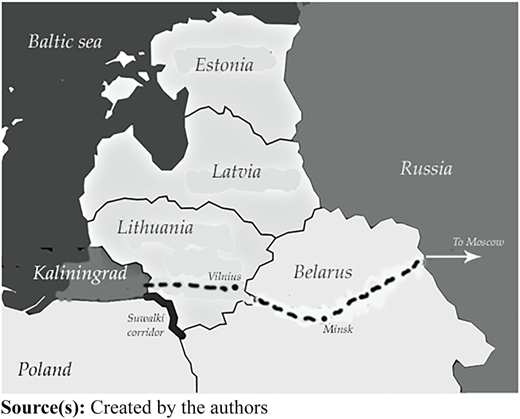
Concerns about the war extend beyond the boundaries of Ukraine: to the north, the country is bordered by Belarus, whose leader is a strong supporter of President Putin of Russia; further north are Lithuania, Latvia and Estonia, all former states of the Soviet Union; and, to the west, Poland, not part of the Soviet Union, but part of the zone of communist influence in central and eastern Europe. All of these states fear that Putin’s aim is the re-establishment of the Russian Empire and that if Ukraine falls, they will be the next targets (Figure 1).
It is understandable that citizens of the neighbouring countries will feel stressed by the war. In a study by an international team of researchers on depression, stress and anxiety levels of Ukrainians, Poles and Taiwanese, Ukrainians scored the highest levels, followed by Poles, with the Taiwanese showing much lower levels (Chudzicka-Czupała et al., 2023). The Lithuanian market and public opinion research company Spinter research began measuring the general index of emotional health in Lithuania in 2022. This shows that feelings of anxiety, tension and stress, resulting from the war in Ukraine, has risen to 25% of the population (https://spinter.lt/emocines-sveikatos-indeksas-kyla-karas-kelia-stresa-labiau-nei-darbas/). Though one-quarter of the population is quite a significant indicator, we considered it to be average having in mind the geopolitical situation of the country with the Russian enclave Kaliningrad next to Lithuania, with the Suwalki corridor running along its border, providing road access between Moscow and Kaliningrad, with rail connection running through Lithuania and direct threats by the Russian government.
Thus, we have formulated our research problem in terms of stress-coping theory and information behaviour as suitable to explore the citizens in a country affected by the Russia–Ukraine war but not experiencing its direct impact, as do Ukrainian citizens. Together with easy linguistic access to Lithuanian respondents (one of the authors is Lithuanian), this indicator led us to think that Lithuanians must be coping with the war-related stress quite well and it may be a useful study case for the identified problem.
In this article, we begin with a literature review on media use and information behaviour related to the war in Ukraine and information behaviour in relation to stress-coping research. Media use in this context means the preference and choice of media channels and contents using available social and technical structures (McQuail and Deuze, 2020, p. 465). Then we introduce the theoretical framework, the associated research questions and a qualitative method of data collection and analysis. The results of the study occupy the central place in the text and are discussed in the closing part.
Literature review
Information use and the war in Ukraine
A search was carried out on the Web of Science using the queries, ”information seeking and war”; ”information behaviour” AND war OR “war time” OR “stress of war”. After systematically screening the initial corpus of 25 articles, we identified seven scholarly works as most pertinent, having excluded those employing war terminology metaphorically or utilizing information-related terminology merely incidentally.
A search with the same queries was carried out in Google Scholar and yielded a large number of studies on information behaviour of various societal groups in crises and threatening situations, such as natural disasters (Pang, 2014; Lopatovska and Smiley, 2014; Cooper et al., 2022), pandemics (Kim et al., 2021), health hazards (Choo, 2017) or terror attacks (Ayalon and Aharony, 2024). We also found an additional 15 articles directly related to our research.
The review is structured systematically: initially examining media studies, information usage and information behaviour within Ukraine; then exploring comparable dynamics in nearby nations; then addressing broader scholarly interest in news concerning the Russia–Ukraine conflict; and concluding with comparative analysis against extant research on information behaviour during previous armed conflicts.
The found literature shows that most information and communication scholars have explored the issues of information campaigns and media strategies related to the Russia–Ukraine war in both its low-intensity stage (before 2022) and later. Such investigations include the use of the information infrastructure and cyber-power by Russians (Unwala and Ghori, 2016), the main principles of Russian warfare (Snegovaya, 2015), disinformation on social media (Mejias and Vokuev, 2017) or social media as propaganda tools (Geissler et al., 2022).
Contemporary hybrid warfare, which began against Ukraine long before the hot stage, uses all kinds of destabilisation including manipulation of media and disinformation, using modern technologies of distortion and persuasion (Schemes, 2024). Russia has historically refined these techniques, strategically leveraging “this ecosystem by combining traditional and digital tools to reach broad layers of Ukrainian society and its supporters” (Alonso-Martín-Romo et al., 2023, p. 4). The study reveals how disinformation, propaganda and digital technologies have reconfigured Ukrainian citizens' media engagement. Participants now traverse an intricate informational terrain, from traditional media to “documenting conflict’s quotidian experiences” (Alonso-Martín-Romo et al., 2023, p. 9). These individuals critically assess their publications' international implications while strategically navigating information sources. Furthermore, they bolster collective resilience through media literacy initiatives, raising awareness among less-mobilised populations and facilitating critical discernment of propaganda (Alonso-Martín-Romo et al., 2023, p. 10).
Within information science, Lopatovska et al. (2022) studied the emotional reactions of Ukrainian adolescents to the military upheaval, exploring how they seek, use or avoid information from different sources to increase their resilience during this traumatic period. The researchers explore adolescents’ resilience strategies, finding that adjusting their information behaviour is key to managing traumatic stressors.
Living in a country that is close to Ukraine geographically as is the case of Poland or feeling threatened by Russia as is the case of the Baltic states, the Czech Republic and Finland, can also be a source of stress (Riad et al., 2022). Firstly, the ongoing conflict has created political instability and uncertainty in the region, which can be stressful for individuals living in nearby countries. Additionally, the presence of military forces and the threat of violence can create a feeling of insecurity and fear, which can be stressful. Furthermore, the spill-over effects, such as the economic impact of the conflict, such as trade disruption and reduced tourism, can lead to financial stress for individuals and communities living in countries further from the conflict (Metcalfe et al., 2011; Gehring, 2022; Siedler et al., 2024). When the potential use of nuclear weapons is raised many people around the world may be fearful of the consequences for themselves and for the very existence of the planet. These countries are also affected by the same elements of hybrid war (fake news, propaganda, intimidating messages, spreading of rumours, etc.) as Ukraine itself and international media.
The war in Ukraine has resulted in extensive information behaviour research. Studies have revealed insights across different populations. Alyukov’s (2021) focus group of Russian TV viewers identified three viewing repertoires correlated with socio-demographic profiles, with the broadcast repertoire predominantly representing older participants and the digital-oriented repertoire characterizing younger viewers. Research among Baltic Russian speakers (Juzefovičs and Vihalemm, 2020) exposed complex information-seeking practices within a “polarized political environment”, demonstrating mixed strategies of content screening and selective channel engagement. These findings illuminate the potential psychological tensions arising from conflicting transnational allegiances, particularly in countries with significant Russian minority populations, though typically not escalating to severe traumatic experiences.
Ditrich and Sassenberg (2024) have surveyed German citizens’ protest readiness in solidarity with Ukraine immediately after the invasion and a year later. The second study included questions on information seeking about protest actions. The authors reveal that anger and sympathy increased participants' information seeking about protests expressing solidarity, but not about protests calling for peace. Fear predicted interest in such protests: “The more fear participants reported, the higher their interest in protests calling for peace” and lower in protests calling for solidarity (Ditrich and Sassenberg, 2024, p. 8). Vintilă et al.'s (2023) study on Romanian populations revealed that information strain from war-related social media usage increases fake news dissemination. Their findings parallel Rosenbaum and Benyosef’s (1995) Israeli civilian research, which linked high threat-relevant information consumption to elevated stress, particularly among individuals with low self-control. Vintilă et al. hypothesised that people superficially process information to avoid negative emotions, recommending interventions such as developing information overload reduction strategies and enhancing fake news detection skills.
Savolainen’s (2023, 2024) Quora study on the Russia–Ukraine war discourse revealed that opinion dominates over facts, reflecting limited nuclear conflict experience. Participants, drawing from external sources without personal war experience, predominantly displayed neutral or negative questioning with emotionally partisan responses. Supporters of Ukraine or Russia selectively engaged information confirming pre-existing beliefs. Zhang et al.'s (2024) research on Chinese population responses paralleled these findings, demonstrating that cultural proximity more strongly influences attitudes than media source credibility. Increasing media exposure correlated with more rigid perspectives, confirming Cullum et al.'s (2011) earlier observation that personal war significance drives information-seeking and subsequent attitude clustering. Another study explored the seeking of Russia–Ukraine war news by Egyptian newspaper readers, finding that the only meaningful factor leading to active seeking of such news is an interest in politics, not age, or sex, or any other demographic feature (Abdel Aziz, 2022, p. 20).
Thus, our review provides an understanding of research in information behaviour, i.e. seeking, using, emotionally reacting to, avoiding and dealing with information within the specific context of the Russia–Ukraine war. It relates information seeking and discovery from a variety of sources to changes in information and propaganda technologies, direct or indirect personal experience and various kinds of stress and strain, including those emerging from intensive media use and information overload. It also underscores, though often implicitly, the importance of information literacy, i.e. of competence and resourcefulness in dealing with different types of information content and channels. Media and information literacy acquire increased significance in using media and sources saturated with propaganda and disinformation.
Information behaviour and stress-coping theory
Stress-coping theory (Lazarus and Folkman, 1984) is a psychological framework that aims to explain how individuals deal with stressful situations. It posits that individuals engage in various coping strategies in order to reduce the negative impact of stress on their well-being. Information seeking is one such coping strategy that individuals may use to alleviate stress. By seeking out information related to the source of their stress, individuals can gain a better understanding of the situation and develop effective coping mechanisms. In this way, the relationship between stress-coping theory and information seeking is one of mutual support, with information seeking serving as a tool for individuals to effectively cope with stress.
The literature on stress-coping theory is extensive; when that phrase is entered into Google Scholar, the search engine reports 184,000 results and, from the point of view of our research this would be far too many papers to review. Consequently, we limited the results to those that dealt with information seeking as a coping strategy; even then, more than 4,000 results were returned. We then used the Publish or perish software (https://harzing.com/resources/publish-or-perish) to download the first 1,000 results (which is the maximum that Google Scholar allows). For some unknown reason the final 20 results were not downloaded, so we had 980 items to review for relevance.
The review was carried out by scanning the available online text (usually the abstract), and then, if the online information was insufficient, downloading the original document. Our aim was to discover papers that dealt with the issue from a perspective other than information science: consequently, all such references were removed, along with those that appeared only to mention information-seeking in their own literature reviews and did not actually pursue this coping strategy in the actual research. As a result, we extracted 213 papers from different disciplines, such as psychology, health studies, media and communication, political communication and information studies with a focus on information seeking for stress relief. We uploaded these to the Taguette application (https://www.taguette.org). This is a freely available qualitative data analysis application, which allows one to apply tags to the documents in a project.
Normally, each document abstract would have been a separate document in our project, but it was possible to work faster by having one document that contained all the information on the items downloaded from Google Scholar. Occasionally, it was necessary to download documents to determine whether or not a specific tag would be appropriate and, ultimately, 63 tags were used. The tags related to the person experiencing stress, the coping strategy, the cause of stress and theoretical concepts.
Understandably, as we were interested in information seeking as a coping strategy, this tag was used most, with 195 instances: related tags were information avoidance (9 instances), monitoring and blunting (7), social media (5) and mailing lists (1). As to the persons experiencing stress, the most commonly used tag was children (31), followed by adolescents (19) and students (10). The dominant source of stress was illness of some kind, including mental illness, cancer, multiple sclerosis, sports injuries, surgery and chronic diseases of various kinds. These totalled 54 instances.
A variety of theoretical concepts appeared in the sample of papers, although all of them used stress-coping theory as the main theoretical framework. Various influencing factors such as age and sex differences were used, and the notion of locus of control was occasionally employed in relation to the coping strategies adopted by people. The idea of locus of control is that people either believe that they can personally control what happens in their lives, i.e., they have an internal locus of control or that they are at the mercy of external factors that they are unable to control, i.e., they have an external locus of control (Rotter, 1966). It is suggested that an internal locus of control is more likely to be associated with information seeking (Hahn, 2000).
We found only one item that dealt with war as a stressful condition (Solomon et al., 1989) but which does not deal with information seeking as a method of coping with the attendant stress. Rather, the intensity of the experienced battle conditions is regarded as information to be used by the soldier in understanding the cause of their traumatic condition. This paper led to others by the same group of authors, but none explored information seeking as a coping strategy.
A number of papers dealt with stress arousing threats of one kind or another and these are relevant to our study, as the war in Ukraine may be perceived as a threat not only to those with direct experience of the conflict but also to citizens of neighbouring countries.
In an early study, in a laboratory setting, Miller (1987), using the monitor/blunter framework, found that participants who ranked as high monitors and low blunters were more likely to attend to information, when faced with the threat of an electric shock, than were low monitors and high blunters. In another study, Feifel et al. (1987) considered a very different form of threat, that of life-threatening diseases, compared with people whose diseases were not life-threatening. The authors found that,
As intimated by previous investigators, it appears that contending with a precise menace to life elicits a different manner of coping than wrestling with a more generalized and indefinite threat. The significant use of confrontation in this regard, e.g. increased information seeking, cognitive redefinition of the illness, and greater involvement in the treatment process, signals that when individuals are aware of the seriousness of their situation, the consequence is not necessarily depression and loss of hope but a marshalling of available lifeforces and efforts to deal with their condition. (p. 97)
In another medical study, Geller et al. (2010) researched patients with the life-threatening disease of ovarian cancer. Their purpose was to compare the effectiveness of a video presentation of information on the disease compared with printed documents conveying the same information. The authors found that the video presentation was more effective in increasing the patients’ knowledge of the disease, but they also found that 42% of the participants,
developed less favorable attitudes and experienced increased distress, manifested by increased intrusive thinking about cancer. Women were upset learning about cancer and had difficulty concentrating and recalling information presented to them despite their improved knowledge scores verifying significant information recall. (p. 373)
In both of these cases, although the authors did not use this explanation, we can surmise that those who acted favourably as a result of receiving the information would be considered to have an internal locus of control, while those who reacted adversely would have an external locus.
Turning to cases related to mental health, Plancherel and Bolognini (1995) explored the coping strategies of adolescents in maintaining their mental health. Information seeking, in general, was not part of the research but the adolescents studied sought advice and help from parents and professionals for the problems they experienced and this is one mode of information-seeking behaviour.
Rice et al. (2016) reviewed the existing research on the mental health of elite athletes and noted a study by Thomas et al. (2011) which found that, although seeking information about drug use was stigmatised within the sport, athletes, nevertheless, expressed a need for more information on recreational drugs. No doubt this situation is brought about by the stress of competition among elite athletes.
Caring for a person with a mental illness is clearly a stressful occupation: Szmukler et al. (1996) studied a large sample of caregivers and found that practical coping was a common response to stress. Practical coping included “asking friends or relatives for practical advice and information” (p. 143). Schizophrenia is a mental illness which causes stress for other family members: Avcıoğlu et al. (2019) studied the coping responses of siblings of schizophrenia patients and again found that problem-focused coping, including information seeking, was a common response. Information seeking involved, “the well siblings’ efforts to understand the situation (e.g. using the Internet media) and put into place cognitive strategies to avoid it in future” (p. 259).
Even the most cursory review of the literature would show that information-seeking behaviour is a common coping strategy for those suffering from some chronic illness. For example, BorjAlilu et al. (2017), in an extensive review of research on the role of self-efficacy in coping, found that patients with high self-efficacy benefited from information provision and information seeking more than those with low self-efficacy. An earlier paper (Collie et al., 2005) found, similarly, that women with “higher self-efficacy for seeking and understanding medical information had fewer problems with medical interactions” (p. 907). Much earlier, Felton et al. (1984) in a study of people with one of four chronic illnesses, found that as a coping strategy, information seeking had a positive effect in coping with the disease. They note that “More so than the other factors, Information Seeking is characterized by an active, instrumental orientation to illness” (p. 892).
In relation to a specific chronic illness, multiple sclerosis, Plow et al. (2009) found that patients who engaged in physical activity, commenting: “Active participants were optimistic, information seekers and used problem-solving techniques to engage in PA [physical activity]. These coping strategies may have helped to prevent social environmental stress from becoming a barrier to PA” (p. 1661). In relation to motor neurone disease, Matuz et al. (2010) found that, “Searching for information and support as well as avoidance were relevant predictors of QoL [quality of life] such that more support and information seeking behaviour and more emotional avoidance predicted higher QoL” (p. 897).
The stress of ordinary work has been given much less attention by researchers, but there is some work that shows the same kind of relationships as in the health field. Robblee (1997) in her PhD thesis on coping with the threat of organizational downsizing found that, “Coping resources, such as Perceived Organizational Support (POS) and coping by seeking information about the specifics of downsizing and restructuring, were found to demonstrate significant and independent direct effects on organizational affective well-being” (p. 145).
Robinson and Griffiths (2005), in a study of change in a government department, found that a lack of information about planned changes was a source of uncertainty and ambiguity and, consequently, a source of stress. Participants engaged in information seeking from colleagues and managers to overcome this uncertainty. Much earlier, Ashford (1988) suggested that, “Those who seek information and feedback useful for understanding change and predicting its impact should experience less stress than their co-workers who fail to do so” (p. 22). However, her investigation showed no such effect, suggesting that the specific context of the organization, the extent to which information is conveyed to workers and the severity of change may be factors affecting the extent and significance of information seeking. Latack and Havlovic (1992), in reviewing the literature with a view to developing a conceptual framework, found frequent use of information seeking as a coping strategy, including seeking feedback from others and information exchange with colleagues.
Overall, our review of the literature demonstrates that in a wide variety of stressful circumstances, information seeking is often employed by people as a coping mechanism. Other strategies, such as planning and talking with service providers or colleagues, are also part of the information-seeking strategy.
Theoretical framework
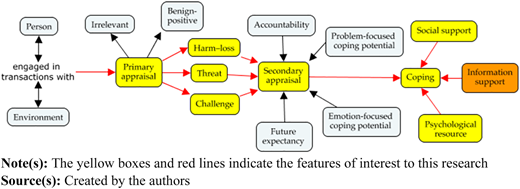
The theoretical basis of the research reported here is stress-coping theory, or, to give its full name, the transactional theory of stress and coping, first elaborated by Lazarus and Folkman (1984). After reviewing the history of definitions and research on stress (mainly in the field of psychology) the authors define the concept as, “a particular relationship between the person and the environment that is appraised by the person as taxing or exceeding his or her resources and endangering his or her well-being” (p. 19). Coping is defined as, “the process through which the individual manages the demands of the person-environment relationship that are appraised as stressful and the emotions they generate” (p. 19).
The theory is described as transactional in that it proposes that stress arises through the relationship between person and environment and, “The three key stress-relevant relationships are harm–loss, threat, and challenge.” (Lazarus and Launier, 1978, p. 288). Harm–loss and threat are clearly negative relationships but challenges may be positive or negative: “Challenge appraisals differ from harm/threat appraisals, as they entail the potential for rewards and growth when sufficient coping resources are available, and are characterized by positive emotions” (Biggs et al., 2017).
Linking the two concepts is the notion of cognitive appraisal, “an evaluative process that determines why and to what extent a particular transaction or series of transactions between the person and the environment is stressful” (p. 19). We can suggest that a person may seek information one way or another (e.g., by talking to friends or experts or searching for information on the Internet) in order to assess the degree of stress that a situation provokes.
Noting that the terms do not imply relative importance or precedence, Lazarus and Folkman identify two modes of appraisal as primary and secondary. They illustrate this by two evaluative questions: “Am I in trouble or being benefited, now or in the future, and in what way?” and “What if anything can be done about it?” (Lazarus and Folkman, 1984, p. 31). Primary appraisal is of three kinds: irrelevant, that is, the event or situation occurring in the environment has no significance with regard to the person’s well-being; benign-positive, i.e., the event or situation has beneficial consequences for the individual; and stress appraisal, which consists of the three types noted above; harm–loss, threat and challenge. Harm–loss implies that the person has already suffered harmful consequences from the environmental situation or event; threat implies some future harm to the person and may result in emotions of fear, worry or anxiety; and challenge, as noted above, may be positive or negative.
According to Smith and Lazarus (1993), secondary appraisal has four components: “accountability, problem-focused coping potential, emotion-focused coping potential, and future expectancy” (p. 237).
For our research framework, we adopt a modified version of the transactional theory of stress and coping of Lazarus and Folkman (1984). The modification is the insertion of “information support” into their basic model, as in Figure 2:
Although some researchers (e.g. Kroenke et al., 2006; Levy, 1989; Piankivska, 2022) treat information support as part of social support, we (in common with others, e.g., Nambisan, 2011) treat it independently, principally because personal information behaviour is the focus of our research. Furthermore, social support implies the giving of various kinds of support, e.g. emotional and material, as well as informational, by members of a person’s social network, groups and organizations at various levels, which correspond with Piankivska’s micro, meso and macro levels. However, from an information behaviour perspective, we focus on the actions of the individual person, who seeks informational support not only from his/her social network but independently through access to media and other information resources. From this model and the literature review above, we derive the categories of questions to be asked of the participants in the research. Thus, we need to know;
Whether the war in Ukraine is perceived as personally stressful;
What social support they experience in relation to their stressful condition and how far their use of social media helps in this;
Whether they monitor the situation in Ukraine or avoid information on the subject;
If they monitor the situation, what range of information resources they rely upon;
How well they feel that the social, information and psychological resources they draw upon help them to cope with the perceived stress.
Method
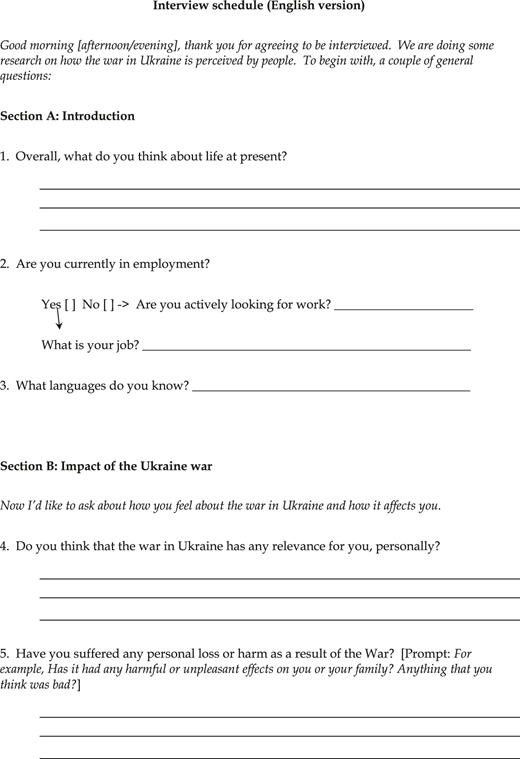
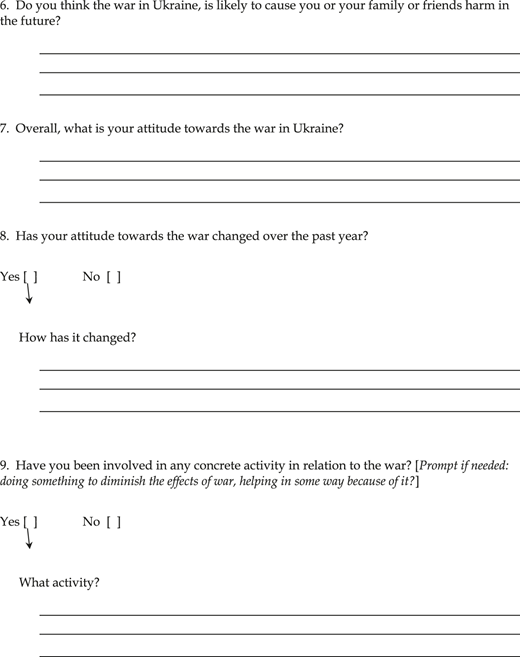
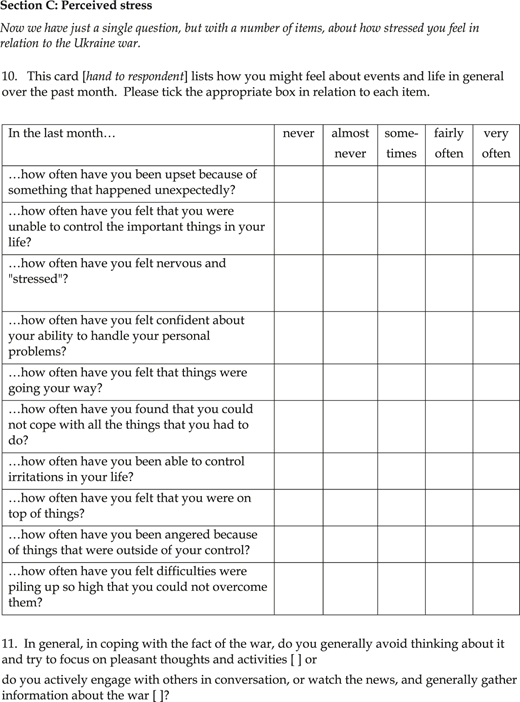
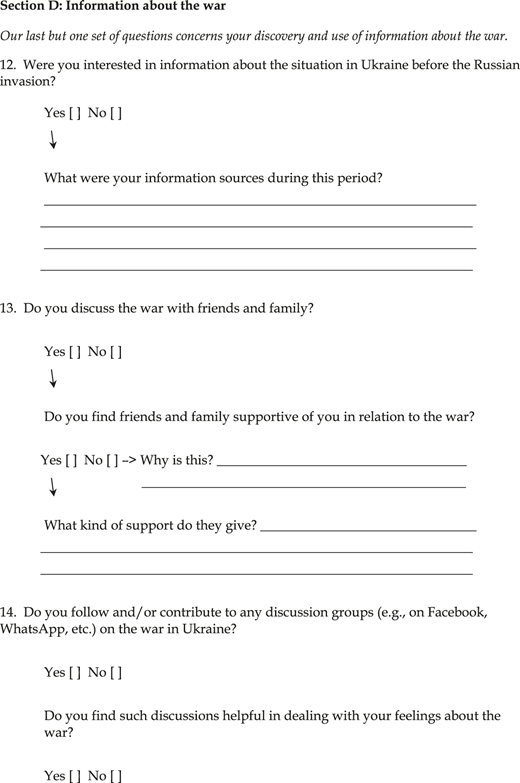
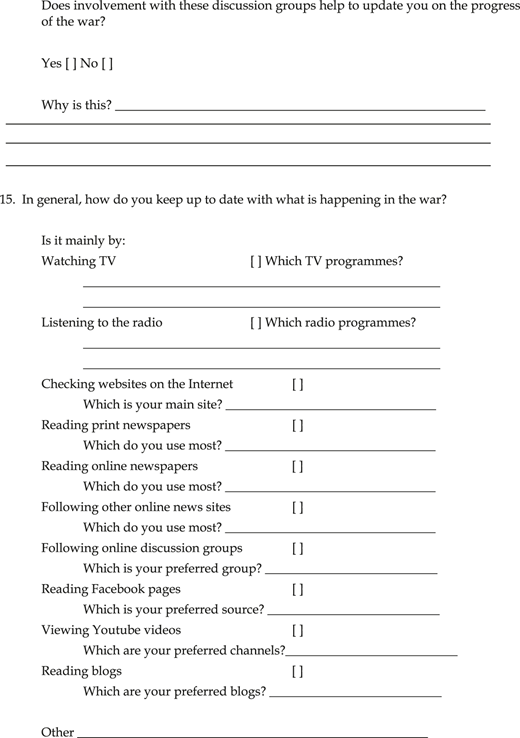
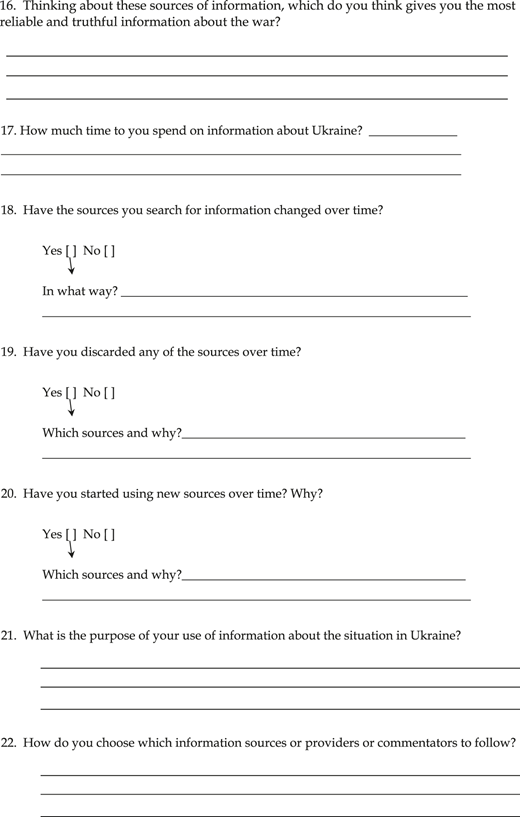
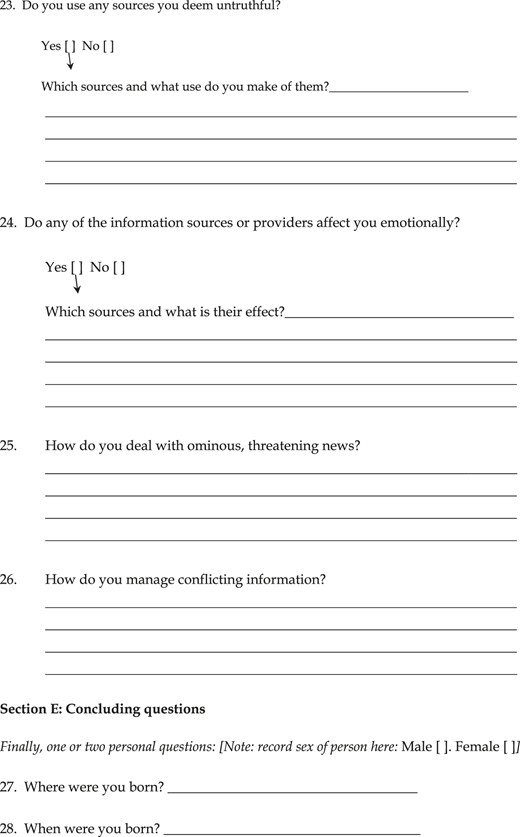
To collect data relevant to the research aims we devised a semi-structured interview schedule ( Appendix 1) based on the theoretical framework explained earlier. It included the 10-item Perceived Stress Scale originally devised by Cohen et al. (1983), which has been widely used and evaluated to assess stress levels. In addition, the schedule sought information on how the respondent viewed the impact of the war in Ukraine, whether the person sought information about the war, and if so, what sources of information they used, and finally, demographic questions. The interview schedule was tested in two pilot interviews and worked well with the adjustment of some formulations. The schedule did not include any questions on respondents’ political views or opinions about the war, as we did not want to exclude anyone on this basis and regarded the situation as equally stressful to all.
A convenience sample of respondents was obtained from contacts known to the three interviewers. Convenience samples, unlike probability samples, have limitations in terms of the generalisability of the results; however, their use is suggested when the research is exploratory, and when resources do not permit probability sampling (Jager et al., 2017; Etikan et al., 2016). These conditions apply to the research reported here.
Twenty-one interviews were carried out, and these lasted between 23 and 70 min. The interviews were carried out in late January–March of 2023, roughly a year after the war began. Most of the interviews were carried out face-to-face in physical locations, but some were also conducted online using Zoom or Skype. The interviewers used probing questions when the provided answers were brief or ambiguous, but in most cases, the participants were eager to share their experiences, perceptions and feelings and most of them were explicit about the sides they took in this war without asking. The initial interview schedule worked well and the participants seemed to be not only willing to share their experiences and feelings but were quite interested in the study itself. However, the interviewers have controlled the whole process professionally and collected rich data.
Three interviewers conducted the interviews, in Lithuanian: after each instance each interviewer made a transcript and sent it together with the recording to a senior researcher (the second author), who started analysis immediately, using the open code scheme derived from the theoretical model and adding new codes when needed. The senior researcher monitored the whole data collection process. The saturation point seemed to be reached after 19 interviews when the reported behaviour patterns were repeating the previous ones and no new codes occurred in the data. Even some new points in the final two interviews were consistent with the emerging themes and did not disrupt the coherence of data with information support in the stress-coping model above. Thus, we have reached inductive thematic saturation and to some extent theoretical saturation (Saunders et al., 2018).
Results
Participants
Of 21 participants, seven were women and fourteen men. Their age ranged from 22 to 67, though the majority of participants were between 40 and 55 years old. The majority of participants lived in the capital Vilnius. The results may be skewed by the fact that seventeen of the participants had higher education, and the rest had either not yet completed their studies or had dropped out without graduating. However, the participants were employed in a variety of jobs: three IT engineers in different institutions, a driving instructor, two journalists, two museum workers, two writer-editors, a lecturer at a higher education institution, a civil servant, a legal advisor, a business consultant, a marketing specialist, a sports manager, an actor, a construction worker, a beautician, a yoga instructor, a student and a pensioner. All in all, the occupations of participants covered a wide range of social strata and several of the participants were translators.
All participants were fluent Lithuanian speakers. Five of them had good knowledge of one foreign language. Seven spoke two foreign languages, six knew three and two participants – four foreign languages. One was fluent in five foreign languages. All of the participants could use the English language, Russian was known to more than half of them. German and Polish were known to four participants, while Swedish, French, Italian, Ukrainian, Byelorussian, Korean and Japanese were spoken by at least one of the participants.
Level and forms of perceived stress
We have calculated the stress levels using the Cohen et al. (1983) perceived stress formula and found that: six participants over the last month before the interview experienced perceived low stress (scores ranging from 0–13). One of those perceived very low stress of six; 13 experienced perceived moderate stress (scores ranging from 14–26). Two participants in this category experienced higher stress of over 23; and one experienced a perceived high level of stress (score ranging from 27 to 40).
We have also asked people to assess their life over the last year. More than a half of the participants do not mention the war in response to this question of whether they describe it as successful at work, in business or in studies (II2, FI2 EI5 and EI3), relate to many events that happened over the last 12 months (II1, II4, II10 and EI4) or none at all (FI4) or complain of bad health and old age (EI2). Some of the participants talked of the last year as being full of actual or emotional changes regardless of war but mentioned the start of the war as a factor of stress and anxiety (II9, II11 and EI1). Some of the lives of our participants were dominated by the war factor, which changed their emotional and work life (II6), became a dominating factor requiring adaptation (II3) or caused psychological stress leaving long-term traces (II5). The shock experienced by the war was mentioned by many (EI1, EI5, FI2, II10 and II11) or referred to through reference to the atrocities of the war as “total madness” (II16), “What happens to women, how children are raped, bodies cut, other atrocities. I have not thought about this consciously” (II3); “I have not really imagined that it will be so atrocious and affecting civilians” (II2). In time for most participants the shock has subsided and turned into a daily stress as expressed by one of them: “The war has become closer and we have accepted the situation as it is” (EI5).
People feel strong negative emotions about the war: It causes unrelenting anger against Russia as a country aggressor (II4), We are very sad and feel pity for the people [of Ukraine] … They have to fight because Russia has come and wants to establish its rule and its attitude towards life, which is very sad (FI4), Thinking of war every day is difficult as each day is cruel (II7), I feel sorrow for Ukrainians, life has been devalued without regard to the sides (EI1). But the feeling of hope is present and one of the participants has linked it to the changing situation:
The mood is both pessimistic and optimistic as the situation is impossible to forecast. It seems that support is coming, but the consequences may be even worse. Nothing will end simply in the near future. (II2)
Both the feeling of danger and emotions were expressed in actions by some of the participants: volunteering in Red Cross activity (EI3, FI1 and II1); helping the migrated Ukrainians psychologically or in legal matters and accommodating Ukrainian families (II9, II1, II7, II10 and II11). Almost all participants have mentioned financial donations to various initiatives, activities and organizations involved in military and humanitarian support to Ukraine. There were also some who joined the Lithuanian Riflemen’s Union, as one of the participants told us:
I have joined the Riflemen association to prepare myself for a military or other difficult conflict, to train a little. Never considered this before, just about some civil aid. The membership in the Association is growing quickly because of this conflict. (II8)
All participants have emphasised that they have not experienced any direct harm to themselves or their families. On the other hand, some were worried about their friends and acquaintances in Ukraine (II6, FI1 and EI4), pointed out a negative effect on work because of severed relations with partners (FI4, II3 and II7), increased workload (II7, FI1) or increasing prices of raw materials (II2 and II11) and diminished income (II10) or disrupted travel plans (II1 and II9). Although no one reported any significant harm, the feeling of threat (not immediate but pending) was expressed by all participants because of the proximity of the war to Lithuania and the understanding that it will inevitably spread to Lithuania and other countries if Ukraine fails to stop the aggressor.
Many participants mentioned that they expected the war to last for a long time and have adapted to the situation though the danger is still felt as an imminent threat to security (II1) and a source of distress, which was characterised as personal: “Personally, I feel that the war in Ukraine is very important in a wide sense. If not for Ukraine, it is a threat for us. The sense of the direct military threat was perceived as close both in space and time, e.g. if the war goes on, then Ukraine is only the first step to the West” (II4); “the war is very close” (EI1); and “if Russia wins, then the threat of war reaches us and increases substantially” (FI3).
In relation to this, the participants have been positive about the unity achieved in Lithuania, the dawning understanding of the threat posed by the Russian Federation in the West, and the support given to Ukraine by many countries and their populations. These assessments, however, have not diminished the understanding that the war will be “long and nasty” (EI3) and all participants have talked about different scenarios of future developments for their families, from joining defence forces or running abroad to participating in rebuilding Ukraine after the war.
Coping with stress
Taking action seems to be not only an expression of stress but also one way of coping. The participants were offered several options for managing stress and anxiety caused by the war to choose from. The most popular were starting some activity (12) and seeking news about the war (12). Looking for some distraction and entertainment was close (11) and most of the free choices were under the categories Enjoy beautiful things, heritage objects, nature views, Walking the dog. The statement Looking for someone to talk about it was chosen by six. The choice was multiple and it turned out that thirteen participants combined at least two, but mainly three means of coping with stress and three participants even four. The least popular choice Avoiding thinking about the war was marked by only three participants, one of them adding “sometimes”. The most popular among those choosing a single category was seeking news.
Some of the participants expanded their answers disclosing a complex approach to the situation and strategies for managing stress:
Some parallel activities, distraction – this is the main thing. Different physical, cognitive activities. At the beginning I used to see news about the war, but this constant seeking generates irritation, so now I seek them less and check only some sources. At the beginning it was a lot of information seeking, but I have found other activities to get away from it. (FI1)
I am interested, seeking information, but at the same time I try to forget, manage stress by training, organizing parties, doing something with the family. It helps not to read too much, not to touch some sources, and disassociate from them. One day one thing helps, another - something else. (II2)
Seeking news is at the centre of these additional explanations and both calms and causes anxiety. It is balanced with some distractions. One of the participants has started providing information on social media regarding it as “personal obligation and work”:
Then I transfer information to the people [in Lithuania]. May I call this information volunteering? I do a morning summary, which I then supplement over the day if something important or unexpected happens. The summary is in fact of the last day and daily information from the General Staff that comes at six in the morning. I translate, systematise and present everything. (II6)
Friends as the source of information and social support
Though “looking for someone to talk about it” was not among the most popular categories, almost all participants discussed the war’s events with friends and family. They confirm shared opinions about “who is the aggressor and who is the victim” and the “need for helping Ukraine”. Some find solace in like-minded conversations:
In general, we talk about it in the family, especially at the beginning when there was much stress. After conversation one sees things clearer, understands that everyone feels the same. So, it becomes easier and one calms down. Our acquaintances think the same. (II10)
For others, such discussions serve to improve morale. One participant regarded support from family and friends as essential for information work:
They have patience to listen, are interested, this is also some kind of support: providing me time to engage in my information work, which is quite significant … I also often turn to my friends with different requests – to find out about this and that; they are eager to respond for information dissemination or volunteering and with various advice. (II6)
Differing opinions were extremely rare. Participants mainly encountered alternative perspectives second-hand, often attributing such views to propaganda television. Most individuals with divergent viewpoints were systematically excluded from communication:
I do not talk about the war with those who have a different attitude. There are people in the surroundings and there is nothing to talk about with them. Not many, but some. Others need putting their brain right as they are easily influenced by manipulators. Some people see things very differently. (EI2)
One notable exception was a participant who reported near-total disengagement:
No, we almost do not talk of it. No one is interested … at work, for example, there is absolute neutrality. No one talks about politics, that is it. It is not some directive; people just do not talk or announce something. (EI4)
This apparent lack of interest reflects broader patterns of topic avoidance, potentially stemming from entrenched opposing viewpoints. As one participant noted regarding social media interactions:
Sometimes I feel it is necessary to provide feedback, but there are different people and one cannot change anything. I try to ignore it and not fight on social media, just react where it is meaningful, possible to influence, so it is necessary to choose sources. (FI1)
In general, the support provided by family and friends is appreciated as a calming mechanism, offering an outlet for anxiety and direct personal assistance.
Opinions on social media use
In this context, it may seem strange that social media are not used for the purposes of solidarity or social support. Half of our participants (10) state that they do not participate in any social media discussions or do not use social media at all. Some of them, “Do not use social media for communication, calming down or searching for information” (II8), see the discussion there as a “waste of time” (EI1) or think that “discussions will not change anything”. One of this group is irritated by “many ungrounded opinions, theories, invented attitudes based on subjective imaginings, not on information” (II3).
A smaller group of six participants follows social media groups, particularly on Telegram. YouTube and Facebook were also named by two participants each, and Twitter (now X) was called “awfully unpopular in Lithuania.” They look for: “details about the war actions” (II11), “direct images from the war” that will appear much later in the mainstream media (II2) and “analytics is significant as good analytics is rare, so if you find some, you have to hold on to them” (II6). The participants also mentioned a complex emotional aspect, as the discussions can be dull or irritating, but the action of following both may have a soothing effect.
A group of five participants was more active on social media and talked more about it. All of them were writing comments and participating in discussions occasionally or rarely. One participant mentioned that, “one can find gems” in the two groups discussing war, one Ukrainian and one Russian and in Telegram. The diversity of points of view and attitudes from social media and bloggers, getting direct and unfiltered information from both sides and building independent picture, was one of the main reasons to follow social media:
I write sometimes in Telegram groups. It helps to stay calm and provides more uncensored information, real information, which often is cruel and does not meet the Facebook standards. It would be blocked if uploaded to Facebook. Telegram and Reddit provide information from ‘both sides'. (FI4)
Some participants also felt they should guide others: “Not everyone is able to select and some people are entirely lost … It seems strange, but this is the reason I present my information, to help avoid fuzzy conspiracy theories” (II6).
Facebook and Telegram were named most often as social media channels of information. The participants followed accounts maintained by governmental institutions (e.g. Ukrainian and Lithuanian Ministries of Defence), Lithuanian NGOs (e.g. Blue-Yellow, the Riflemen Union), discussion groups (e.g. Lithuanian “Karo Ukrainoje kronikos”, “Lock N” Loaded”, “Rusijos informacinis karas”; Ukrainian “War in Ukraine”, “Ukraine vs Russia war”) and Lithuanian war commentators.
Changing patterns of media use
Time allocation for monitoring news about the war in Ukraine varies significantly. Some participants estimate weekly consumption: once a week, 2–4 h weekly or every second day. Others report daily use, ranging from 10 to 40 min, with half spending 1–2 h daily and some up to 3 h.
Participants offered candid reflections on their news consumption:
I spend an hour in the morning, one hour in the evening and during the day one hour. If I work on the morning information summary, then I spend at least 1.5 hours on it. So, it is three to four hours a day. Very much. (II6)
It seems that I allocate much time, all free time goes for scrolling about the war. I look for Ukraine news first of all. I am not sure if it is an hour or two, but much. Maybe too much. (II9)
Other participants described less consistent patterns: “One hour a day, but over the whole day in bursts” (II4) “There is no routine. Sometimes I browse in the morning what I see in the phone. Television in the evening and later before night telephone again. The work limits” (II8) “When I want to rest between the working jobs, start looking what is happening. There is no routine, just when I have time” (II3).
The comments also reflected significant changes in information consumption over time:
When the war has started, I used to spend half a day at all sources. At present, I just check what is happening and how and if something attracts, then I look up more, if there is time. (FI1)
Used to do it all the time at the beginning, but I've now reduced the time. (II5)
One particularly poignant account described an intense initial period followed by complete withdrawal:
During the first several months it was literally from morning till night, I didn’t need to eat or drink. Only the TV and channel switching. Then there was a total quiet, I did not switch the TV on, did not follow Facebook. Would switch off anything about Ukraine. I blocked this information after Bucha events, for a month or so. Then I wanted news again, but less intensively. (II11) [See: https://en.wikipedia.org/wiki/Bucha_massacre]
The latter comment provides a hint about the reactions to some of the news that might change information seeking to avoidance, not only adjustment to the continuous news flow.
Participants emphasised their specific information-seeking motivations: looking for Ukrainian news first, searching only for “information about Ukraine as the only area that interests me at present” (FI3), working on information summaries, spend much time selecting interesting, aesthetic material as “Meilutytė swimming in the red pool … Look for such sparkles every day as the military situation can be learned in five minutes.” (EI2) [See, https://swimswam.com/ruta-meilutyte-posts-video-swimming-in-bloody-pond-near-russian-embassy/].
Participants used between three and 28 sources to monitor the situation, with Internet newspapers proving more popular than print media. Lithuanian media, including social media groups, were most frequently mentioned, appreciated for accessibility and language:
LRT (Lithuanian Radio and TV) is maybe lacking, but concentrated, in Lithuanian and easiest to access. (II3)
One significant result is that no-one read paper newspapers (see Appendix 2 Table A1), though some have pointed out that they miss or “long for paper newspapers, which have disappeared” (EI2, II11). The Internet newspapers were more popular and one participant said that he reads ten Ukrainian newspapers, but has not named them.
Many participants used translation services, with language knowledge primarily affecting choices of Russian and Ukrainian sources. Over half reported changing information channels since the war’s start, some point out a significant increase in information sources during the first months of the war and their number lessening over time. The changes reported involved:
Starting to use Ukrainian official sources (e.g. the Ministry of Foreign Affairs, and the President’s Chancellery) and media;
Following new foreign media (e.g. the Guardian newspaper and other UK and EU sources);
Exploring new channels like Telegram or YouTube;
Selecting more accurate and less biased sources; and
Following certain analysts, journalists, experts and groups commenting on the war and the political situation.
The results suggest that the interview participants were developing their information competency over time, learning how to identify biased sources or misinformation and selecting sources that they identified as truthful and authoritative.
Some participants continued to engage with Russian sources, despite finding them challenging:
I am very irritated by Russian propaganda persons. They are psychotic and naturally irritating. So, I only watch them occasionally. (II4)
Notably, some respondents lamented losing access to Russian sources banned in Lithuania, viewing this as a limitation in understanding potential future developments.
Use of information: rational approaches
Participants employ information sources for multiple purposes, primarily to comprehend ongoing events. The fundamental motivation is understanding:
To understand what is happening, to follow how everything develops. Maybe it is my thing that I want to control any situation. I am irritated if I cannot control it. (II8)
The need for information extends beyond mere comprehension to emotional regulation and personal safety:
To know if we are safe, if we need to start packing things. But mainly I look for information to calm myself. (II11)
Also to know what happens around it. It is good to just follow the news and feel somewhat calmer. Maybe one feels some control when following the events. Maybe it is imaginary, still … (II3)
Some participants engaged in more extensive strategic planning:
I use information about Ukraine to follow the process, to make forecasts on how everything continues, which regions are occupied, which weapons are supplied … At present I do not feel threatened by information. At the beginning it was the case. I used to forecast and plan how to defend ourselves from the nuclear war, Byelorussian attack, and raids on the Suvalkai corridor. (EI1)
I was planning how to produce Molotov cocktails and where to go to throw them at the occupiers. (EI6)
Professional and civic motivations were equally significant:
One needs to follow professionally at work. All communication about the war is like a good textbook, how they motivate, speak, manage crisis. (II7)
To understand and be oriented in the situation is very important, because Ukraine defends our country, which is very significant. (FI3)
Several participants mentioned the need to understand the situation in a wider international context and in relation to civil responsibility, which strengthens in a time of war. Participants demonstrated sophisticated approaches to information assessment, emphasising the critical importance of source reliability:
I choose the sources for the concentration of news and informativeness, objectivity as much as it is possible. One cannot measure objectivity, but when you get facts without drama or consideration of what is actually happening. (II3)
Criteria for evaluating information sources included:
Selection of concrete, factual information;
Structured and meaningful content;
Logical presentation;
Cross-referencing; and
Systematic detail.
Interestingly, some participants deliberately consulted unreliable sources to gain broader perspectives:
I use untrustworthy sources, oh, yes. The same Telegram Russian channels. It is very interesting how they reinterpret all information for their audience, how propaganda is spread and what the opinions of Russians themselves are. (II2)
One of the participants had a different take on the choice of his sources looking for interesting, not dull, well-presented by interesting people:
I look for information that is not dull, for a commentator who is not squinting, for new and suitable content, select smaller pieces looking at the size and duration or a title. So, some are trusted, but some with enormous blunders over the last month were hugely entertaining. (EI2)
Critical thinking emerged as a fundamental approach to information consumption:
One has to evaluate everything critically … [Regarding] controversial information: watch other sources, what they show, what Lithuanian and Western media write. (II5)
Ultimately, participants recognised the inherent biases in information sources:
I do not trust any information fully … We understand that fighting sides have their ideologies, arguments and use them to form messages. When you know the ideologies, you can identify what is happening and how to think about it. (EI4)
Use of information: emotional responses
Participants emphasised that quality information predominantly affects individuals positively, enabling them to learn facts and understand their environment. However, emotional reactions to information were complex and nuanced.
Some participants expressed significant irritation towards misleading sources:
I used to watch Skabejeva [Russian TV presenter], but it seemed that what she is telling is entirely untrue, much propaganda and it started annoying me. (EI1)
I choose those that are interesting for me, are capable of expressing their opinion without spitting dirt … I cannot use sources that are not true, unnerve me, cause anger … (II11)
Emotional responses varied considerably:
All sources affect us emotionally. It depends on the content. If the news is good they motivate. If they are hard, about violence, rapes, killings, their impact is very hard. (II7)
I am emotionally affected by information from organizations collecting support for Ukraine or similar. If the news is negative, I feel sorrow, pity for Ukraine and the situation of its people. If it is a positive one – then I feel proud that Lithuania supports Ukraine. (FI4)
Participants demonstrated diverse coping mechanisms for managing emotional responses:
I belong to the people who feel better when they know, not when they do not. (II6)
I would feel anxiety without information, negative emotions. I do not follow news too closely and can miss a day or two, but if news disappears altogether, I would think that something tragic has happened. (II3)
Some acknowledged the challenges of processing threatening information:
I do not know what to do with threatening information, in general with stressful situations. Start drinking some wine, feel stress, anxiety. It disappears in due time. I try to concentrate on work, use less information. (II5)
Threatening news needs to be digested, I try to understand it. I have never considered things like this before, as if I were to visit a psychiatrist. (II2)
Human social networks played a crucial role in the choice of information sources, in information processing and in emotional regulation:
I choose the sources recommended by friends. Check myself if the information is correct, unmanipulated. I get additional sources, allocate time for deeper analysis. (FI4)
Parents filter information for me … Controversial information requires more reading, but we also discuss it with my parents. Something becomes clearer, something does not, but we calm down. (II10)
My husband tells me much as he has an open French journal in the computer and follows it. He sees that the Western attitude is more superficial … If something is threatening I talk to my husband, calm down and then watch the news. (II11)
Ultimately, participants' social environments proved instrumental not only in managing war-related stress but also in navigating and understanding information sources.
Discussion
If we examine the primary appraisal of the situation (as indicated by the model in Figure 2), all of the respondents believed that the aggression towards Ukraine was of relevance to them. All participants assessed it as a threat to their personal lives and the state of Lithuania, and some even considered it a global threat. Although no one reported direct harm or loss, the ongoing war was perceived as a highly stressful event impacting lives throughout the entire year. The ongoing stress is also reported in the studies on German and Romanian responses to the war (Ditrich and Sassenberg, 2024; Vintilă et al., 2023). Many participants have adapted to this situation, viewing it as an inherent aspect of life. The level of stress varied among individuals. Based on Cohen’s Perceived Stress Scale, out of the 21 participants, one person experienced a high level of stress, while 13 reported a moderate level.
All respondents have emphasized that the war is evil, though could find some positive effects of the present situation in terms of increased understanding of Russian aggressive politics by the politicians in the West and greater solidarity and cohesion felt in Lithuanian society and surrounding countries in supporting Ukraine. This can be seen in how countries’ citizens reacted to the war in Ukraine as measured by Eurobarometer: when asked, “How satisfied or dissatisfied are you with the way [citizens in our country] have reacted to the war in Ukraine?” the Baltic states and Finland, Poland and Romania have the highest satisfaction rating (Eurobarometer, 2022, p. 19).
The situation was assessed as challenging and demanding on several levels: immediate actions to support the victims of aggression, thinking about their personal future and civil responsibility, considering different scenarios of the future and planning solutions for the family, assessing socio-political and economic responses to the aggression on national and global levels. In all these respects different ways of seeking information were regarded as directly relevant to satisfy a variety of present and future needs.
Information seeking played a significant role in enhancing a personal feeling of control and providing a calming effect, despite the war being an objectively external development. This aligns with Hahn’s (2000) findings that information seeking is associated with an internal locus of control.
During prolonged military conflicts, there arises a need to seek social contact and engage in discussions not only about the events themselves but also to share information sources and received messages. These interactions help reduce anxiety by confirming one’s own opinions and understanding of the situation (Szmukler et al., 1996; Avcıoğlu et al., 2019).
The most immediate support was found through conversations with like-minded friends and family. This is hardly surprising, as the events themselves naturally encourage dialogue. Extensive research has explored the impact of conversations with others on the experience of stress (e.g. Procidano and Heller, 1983; Fenlason and Beehr, 1994; Lepore et al., 2000; Lopatovska et al., 2022). Understandably, the situation can lead to conflicts with friends and family when attitudes towards the war are not shared. Several respondents even mentioned that they cut off all communication with those who supported Russia or at least avoided talking about the war with the individuals having differing attitudes. This corresponds with the findings of Juzefovičs and Vihalemm (2020). Others helped those who required enlightening and assistance in navigating the dramatic and complex developments of the war process or the geopolitical situation.
Our respondents highlighted significant changes in their information behaviour and use over time. Initially, most reported intensive information seeking across various media channels during the war’s early stages, dedicating significant time to following events. However, they gradually became more selective with their channels, commentators and media sources. This selectivity led to a reduction in time spent monitoring information and in the overall number of channels accessed. While some respondents experienced periods of information avoidance due to satiation or heightened anxiety (Matuz et al., 2010), ultimately, this shift was driven by a preference for sources perceived as objective, trustworthy or, in some cases, aesthetically pleasing and unexpected. The process of comparison helped them distinguish between credible and unreliable sources. Similar strategies are documented in related research (Stroud and Reese, 2008; Castillo et al., 2013; Keshavarz, 2021).
Interestingly, all respondents displayed a high level of information and media literacy, evidenced by their well-defined criteria for trusting, selecting and using specific media and sources. However, this finding might be skewed due to the educational bias of our convenience sample. Notably, respondents exhibited a limited use of social media, viewing it as biased, unreliable or filled with gossip, which was unexpected. Conversely, they accessed direct materials from the frontlines on Telegram and even Russian propaganda channels to understand the enemy’s position and perspective. While some found this access depressing or irritating, it aligns with observations by Geller et al. (2010) who noted a simultaneous increase in knowledge and distress among patients.
Critical thinking emerged as a crucial component of media use, particularly in the context of complex events like war, where diverse actors, ideologies and interests collide. Participants employed cross-checking information against various sources and discussing it with family members as strategies to gain a comprehensive understanding of the situation.
Information seeking served a dual purpose: both problem-focused, as participants utilized it for immediate and long-term planning and emotion-focused, as it helped regulate anxiety and uncertainty levels.
Conclusion
It will be evident that, given the small number of participants in this investigation, we cannot generalise to the population of Lithuania as a whole. The convenience sample also has its own limitations, for example, most of participants live in the capital city and have higher education. However, the findings can be regarded as indicative of further studies on information seeking as a stress-coping strategy.
At the very least, the results point to the direction in which further research might be undertaken. The theoretical model (Figure 2) proved useful in underpinning the development of the research instrument. That instrument served a valuable purpose in guiding the acquisition of information from participants and also guided the presentation of results.
In times of war, stress may result from fears regarding friends and family caught up in the conflict, from proximity to the conflict, and from fear of its extension into one’s own country. Information, on its own, can do little to alleviate this stress, but the results here demonstrate that when the search for information is undertaken to discover objective, valid information and when that information is the subject of conversations and debate, it can have a beneficial effect on the stress levels experienced.
The importance of interpersonal communication with friends and family cannot be over-estimated. Such communication results in the development of shared understanding and can moderate the more severe feelings of anxiety when such feelings are shared with others. The participants also learned about trustworthy sources and alternative information sources through discussions with friends and family, thereby developing their person media-literacy levels.
The war in Ukraine is having effects far outside the borders of the country: the Western powers are engaged in supporting Ukraine, albeit without unanimity in some of the countries (European Council, 2024). The war in Ukraine is reflected in the “war” within the Republican Party in the US House of Representatives (Tait, 2024) and opinion within NATO on appropriate action is far from unanimous (George, 2023). Most recently, North Korea has become involved by sending troops to fight for Russia (Roth, 2024).
What this research reveals, however, is the extent of anxiety and resulting stress in a small country, which has been overwhelmed by Russia in the past, which is close to the present fighting, and in which people experience genuine fear that the war, if won by Russia, will extend beyond its present boundaries.
We thank Indrė Jovaišaitė-Blaževičienė and Fausta Kepalienė for their help in carrying out the interview, as well as our generous respondents, who willingly gave their time. Our thanks also go to the anonymous referees whose comments have resulted in an improved text.