Skip to article sections
Purpose

This systematic literature review examines the intersection of behavioural economics (BE) applications in entrepreneurial decision-making (EDM), addressing critical gaps in understanding how psychological factors systematically influence entrepreneurial outcomes across diverse economic contexts. Beyond cataloguing existing research, this study aims to identify fundamental theoretical and methodological limitations that constrain current understanding and proposes an integrated framework for future research and practice. Given the absence of systematic analysis in this emerging interdisciplinary field, this review outlines a future research agenda.

Design/methodology/approach

A rigorous systematic review methodology, adhering to PRISMA guidelines, analysed 33 high-quality peer-reviewed papers published between 2000 and 2024 from multiple databases, using a domain-based protocol to identify research gaps.

Findings

The analysis reveals geographical imbalances, with developed economies dominating theoretical frameworks. Internal factors (cognitive biases, emotions, heuristics) and external factors (policy interventions, social messaging) are identified as influential in entrepreneurial decisions, especially in resource-constrained environments.

Research limitations/implications

This study acknowledges several limitations: the exclusion of non-academic literature restricted comprehensive analysis; the inclusion of only English-language publications limited cultural perspectives; and the review’s focus on overall BE research in EDM meant detailed examination of specific economies was beyond the scope.

Originality/value

This research advances BE-entrepreneurship theory through three key theoretical contributions. First, it demonstrates the theoretical necessity of integrating cognitive, emotional and contextual dimensions, rather than examining them separately, and provides empirical evidence for their systematic interdependence. Second, it introduces a context-sensitive framework explaining how behavioural principles manifest differently across economic environments, particularly addressing the theoretical gap in emerging market contexts (representing only 17.64% of existing studies). Third, the study reconciles bounded rationality with adaptive expertise through a dynamic model that captures the evolving nature of entrepreneurial cognition from novice to expert decision-making. These contributions lay the foundations for more effective, contextually relevant entrepreneurial support systems, while advancing theoretical understanding in both BE and entrepreneurship research domains.

Entrepreneurial decision-making (EDM) consistently defies traditional economic rationality, creating a fundamental theoretical puzzle that demands interdisciplinary investigation. Despite global business failure rates consistently exceeding 70%, entrepreneurs worldwide continue entering markets with remarkable optimism and persistence (Hechavarria and Welter, 2015). Baron (2008) documented extensive evidence where highly successful entrepreneurs made critical expansion and investment decisions based on intuitive confidence rather than comprehensive analytical frameworks, revealing decision-making processes that traditional economic theory cannot adequately explain or predict. This persistent pattern of seemingly irrational behaviour under extreme uncertainty challenges fundamental assumptions about economic decision-making and demonstrates why behavioural economics (BE) has become theoretically essential for understanding entrepreneurial behaviour.

Traditional economic theory fundamentally struggles to explain why rational actors would consistently choose ventures with such extraordinarily high failure probabilities. The rational choice model assumes individuals possess complete information, unlimited cognitive capacity and consistent preferencesassumptions that entrepreneurial contexts systematically violate. However, BE provides theoretically robust explanations through predictable psychological patterns that can be systematically analysed, understood and leveraged. Research demonstrates that entrepreneurs systematically rely on cognitive shortcuts, exhibit predictable biases such as overconfidence and loss aversion, and make decisions influenced by social networks rather than formal analytical processes (Zhang and Cueto, 2017; Shepherd et al., 2015). These psychological “biases” paradoxically both enable entrepreneurial action under extreme uncertainty while simultaneously contributing to systematic decision-making errors (Forbes, 2005; Koellinger et al., 2007).

This paradox, where psychological bias both enables entrepreneurial action and increases the risk of failure, has been documented across diverse entrepreneurial contexts, from Silicon Valley startups to emerging market ventures (Baron, 2008; Hmieleski and Baron, 2009). This reality challenges core assumptions about economic decision-making and demonstrates why traditional rational choice models prove insufficient for understanding entrepreneurial behaviour in contemporary global contexts.

BE emerges from fundamental challenges to traditional economic assumptions about human rationality. Simon’s (1955) bounded rationality framework challenged conventional economic theory by demonstrating that decision-makers face systematic constraints, including limited information, restricted cognitive capacity and time pressure. Rather than seeking theoretically optimal solutions, entrepreneurs satisfice by selecting options that meet acceptable criteria given available resources and constraints. This insight explains why successful entrepreneurs consistently make rapid decisions with incomplete information, relying on experiential pattern recognition and intuitive judgement rather than exhaustive analytical processes.

Kahneman and Tversky’s (1979) prospect theory further revolutionised understanding by demonstrating that individuals systematically evaluate gains and losses relative to subjective reference points rather than absolute terms, with losses perceived as approximately twice as impactful as equivalent gains. In entrepreneurial contexts, this loss aversion provides powerful explanatory frameworks for understanding persistence with failing ventures and risk-seeking behaviour when facing potential business failure (Saura and Bužinskienė, 2025; Yang, 2025). These psychological mechanisms become particularly evident in entrepreneurial contexts where bounded rationality facilitates rapid opportunity recognition through cognitive shortcuts, while prospect theory illuminates entrepreneurial persistence and risk tolerance behaviours that traditional economic models cannot adequately explain (Ying et al., 2025; Jurek et al., 2025).

For this systematic review, BE is defined as the application of psychological insights to economic analysis, examining how entrepreneurs’ decision-making systematically deviates from traditional rational models due to cognitive biases, emotional factors and contextual influences. BE provides analytical frameworks for examining welfare questions through integrating economics and psychology (Bernheim and Rangel, 2005; Sijabat, 2018), while investigating the psychological drivers behind economic choices and their market implications (Miller et al., 2016a, 2016b; Powell et al., 2011). In addition, BE offers crucial practical insights for entrepreneurs by enhancing understanding of consumer behaviour, enabling more effective marketing strategies and facilitating customised offerings that meet complex market needs (Dobryagina, 2021).

The theoretical imperative for integrating BE with EDM stems from three critical gaps that current frameworks cannot address. The application of BE to EDM is particularly relevant in emerging economies, where entrepreneurs face institutional voids, resource constraints and higher uncertainty (Bruton et al., 2013; Mair and Marti, 2009). In these contexts, psychological factors play a more critical role in shaping outcomes than in developed economies (Khavul et al., 2013; Shepherd et al., 2015).

Within entrepreneurial contexts specifically, BE examines how psychological factors interact with environmental constraints to shape opportunity identification, resource acquisition, risk assessment and strategic choices under conditions of high uncertainty and limited information (Shepherd et al., 2015; Zhang and Cueto, 2017). Understanding these dynamics is essential for theoretical advancement and designing effective support mechanisms for entrepreneurs in environments where traditional economic models inadequately explain behaviour (Baker et al., 2021; Welter, 2011).

This integration proves theoretically essential rather than merely novel. Entrepreneurship research has traditionally relied on rationalist decision-making models, which fail to account for why entrepreneurs continue operating in high-risk environments where failure rates exceed 70% (Hechavarria and Welter, 2015) or why they make emotionally influenced and seemingly counterintuitive choices under extreme uncertainty (Baker and Nelson, 2005). Meanwhile, BE has focused largely on consumer and financial decision-making (Thaler, 2015), offering limited insight into the emotionally intense, resource-constrained and context-sensitive realities of entrepreneurial action. This disciplinary divide has created significant theoretical blind spots. Critical entrepreneurial behaviours such as persistent overconfidence (Hmieleski and Baron, 2009), biased opportunity recognition (Baron, 2006) and emotion-driven decision-making in environments of scarcity (Cardon et al., 2009) remain underexplored. The integration of BE and EDM becomes conceptually necessary to overcome this fragmentation and build a more holistic, contextually grounded understanding of entrepreneurial behaviour.

Second, methodological necessity becomes evident. This theoretical fragmentation creates conceptual blind spots where neither field can adequately explain phenomena such as entrepreneurial overconfidence persistence (Hmieleski and Baron, 2009), opportunity recognition biases (Baron, 2006), or the role of emotions in venture creation under resource constraints (Cardon et al., 2009). Third, analytical rigour varies substantially across studies. Qualitative analyses often lack transparent coding procedures or inter-rater reliability checks, while quantitative studies frequently use basic statistical techniques without controlling for relevant confounding variables. This analytical weakness limits conclusions robustness from both methodological traditions (Paul and Criado, 2020; Snyder, 2019).

Previous literature reviews have significant limitations restricting their applicability in diverse economic contexts. These reviews primarily focus on either the general psychological perspective of entrepreneurial cognition (Cheng, 2014; Brännback and Carsrud, 2018) or specific behavioural frameworks such as nudges in Western contexts (Thaler and Sunstein, 2008; Ren, 2024), without specifically addressing how BE principles apply to EDM.

A critical limitation is their predominant focus on developed economies, with minimal attention to how contextual factors in emerging economies influence the manifestation of behavioural biases (Bruton et al., 2013; Tekic and Kurnosova, 2024). Resource-constrained environments present unique challenges affecting decision-making processes, including greater information asymmetries, weaker formal institutions and stronger reliance on social networks (Demirdag and Eraydin, 2024; Elmonshid and Sayed, 2024).

The novelty of this review lies not merely in synthesising previously separate literature, but in demonstrating that this integration is theoretically necessary, methodologically urgent and practically essential for advancing entrepreneurship understanding. Furthermore, systematic analysis reveals three critical justifications for why this integration matters.

First, there is a gap in theory. Most current studies focus only on either cognitive, emotional or contextual factors, without showing how these work together. In addition, 82.36% of the studies reviewed are based in Western countries, which means that the findings may not apply well to other settings, especially in emerging economies, where decision-making is shaped by very different institutional and social conditions (Bruton et al., 2013; Welter, 2011). Second, there is a clear gap in research methods. Many BE studies rely on controlled experiments that may not reflect real-life entrepreneurship, while 61.8% of entrepreneurship studies use only qualitative methods and do not apply behavioural theories in depth (Shepherd et al., 2015). Third, a practical issue has been identified. In 94.1% of studies, cognition and emotion are treated as separate, even though they often interact in real decision-making. This makes it harder to design support tools that match the complex realities entrepreneurs face in today’s uncertain and fast-changing business environment (McMullen and Shepherd, 2006; Zhang and Cueto, 2017). Together, these issues show that connecting BE and entrepreneurship is not only new but also needed to build better theories and real-world solutions.

The synthesis addresses important questions that are directly relevant to policy and practice. Key issues include: how policymakers can design interventions that are sensitive to the contexts of institutions in emerging economies (Mair and Marti, 2009; Welter, 2011); which combinations of cognitive biases impact entrepreneurial outcomes where overconfidence may initially facilitate initiation but later hinder strategic judgement (Forbes, 2005; Koellinger et al., 2007); and how social influences, such as networking in collectivist contexts, affect the effectiveness of behavioural nudges developed in individualistic settings (Beshears and Kosowsky, 2020; Thaler and Sunstein, 2008). In addition, the findings emphasise the importance of educational strategies that cultivate metacognitive skills for recognising and managing biases, particularly in resource-constrained environments (Haynie et al., 2010; Neck and Greene, 2011).

A paper review contributes to ongoing scholarly discussions in three significant ways. First, it moves beyond traditional deficit models, such as bounded rationality (Simon, 1955), by demonstrating that what may appear as biases serve as adaptive strategies in high uncertainty environments (Gigerenzer and Gaissmaier, 2011; List, 2004). This finding supports the ecological rationality perspective. Second, it emphasises the importance of contextual sensitivity, challenging the notion that Western-derived behavioural frameworks are universally applicable (Henrich et al., 2010). It advocates for more localised theories that take cultural and institutional variations into account (Bruton et al., 2013; Tekic and Kurnosova, 2024). This directly responds to Baker et al.s (2021) calls for frameworks that are attuned to diverse entrepreneurial realities. Third, the review proposes a model of dynamic integration that views cognitive, emotional and contextual dimensions as interconnected systems rather than isolated constructs (Delgado García et al., 2015; Shepherd et al., 2015). This advancement aligns with calls for more holistic approaches to understanding entrepreneurial cognition (Cardon et al., 2012).

This systematic literature review addresses three key research questions:

RQ1.

What is the current state of knowledge regarding the application of behavioural economics principles in entrepreneurial decision-making?

RQ2.

What are the factors influencing entrepreneurial decision-making?

RQ3.

Which sectors, countries, concepts and theories are contributing more to behavioural economics principles in entrepreneurial decision-making?

This review’s motivation stems from the recognition that entrepreneurs in different economic contexts face cognitive challenges inadequately addressed by traditional economic models (Alvarez et al., 2015; Camerer and Loewenstein, 2004). By systematically examining how BE informs EDM, this study aims to develop more contextually appropriate theories and interventions (Baker and Nelson, 2005; McMullen and Shepherd, 2006).

The conjunction of BE and EDM is increasingly necessary due to mounting evidence that entrepreneurship in emerging economies is shaped by complex interactions between cognitive biases, institutional regulations and resource limitations, factors that existing theoretical frameworks struggle to explain (Khavul et al., 2013; Mair and Marti, 2009). The rapid digital transformation further amplifies this need, as platform-based forms of entrepreneurship create new and constantly evolving decision environments where conventional BE models and traditional entrepreneurship theories prove inadequate (Nambisan, 2017; Autio et al., 2018). Recognising these dynamics underscores the importance of integrating insights from both fields to establish a more comprehensive and context-sensitive foundation for advancing research, informing policy, and developing practical interventions tailored to diverse economic and institutional settings.

By addressing these gaps, this synthesis contributes more than a descriptive review: it provides an integrated framework for understanding EDM as a dynamic system where cognition, emotion and context intersect. This framework is particularly salient for emerging economies, where entrepreneurial choices are shaped by institutional voids, resource scarcity and culturally embedded social networks. As such, the review not only advances theoretical debates in both BE and entrepreneurship but also provides a foundation for developing interventions and educational approaches that are sensitive to the diverse contexts in which entrepreneurship occurs.

The methodology is distinguished by three features: first, adherence to PRISMA guidelines for methodological rigour (Moher et al., 2009; Mohamed Shaffril et al., 2021); second, a focus on the intersection of BE and EDM; and third, the inclusion of studies from diverse economic contexts to enable comparative analysis (Henrich et al., 2010; Baez et al., 2023). Findings are synthesised through a multidimensional framework that examines internal factors (cognitive biases, emotions, heuristics) and external factors (policy interventions, social messaging) influencing entrepreneurial decisions.

This review makes three significant contributions:

  1. It provides the first comprehensive synthesis at the intersection of BE and EDM (Cardon et al., 2012; Zhang and Cueto, 2017).

  2. It identifies contextual variations in how behavioural biases manifest across different economic environments (Roundy et al., 2018; Nambisan, 2017).

  3. It develops a contextually sensitive typology of factors influencing entrepreneurial decisions (Molina-Azorin et al., 2012; Ball, 2023).

From a practical perspective, this review offers insights for entrepreneurs in resource-constrained environments (Ali et al., 2024; Xanthopoulou and Sahinidis, 2024) and guides policymakers in designing behavioural interventions that account for the unique characteristics of entrepreneurship in emerging economies (Espinosa et al., 2022; Patil, 2020). The structure of this paper is as follows: The second section details the methodology, the third section presents findings organised by the research questions, the fourth section discusses implications and acknowledges limitations, the fifth section outlines future research directions and the sixth section concludes by highlighting the significance of this review in advancing understanding of EDM in diverse economic contexts.

This study uses a systematic literature review methodology to synthesise existing research. This approach is deliberately chosen for three reasons:

First, systematic literature reviews are the gold standard in evidence-based research, providing reliable evidence to guide practice (Bwanga, 2020). This is especially important when examining interdisciplinary fields like BE and entrepreneurship, where findings can be contradictory or context dependent.

Second, this approach offers advantages over traditional reviews, including predefined search strategies, enhanced transparency and replicability (Higgins et al., 2011). These characteristics are crucial for ensuring comprehensive coverage and minimising selection bias in fragmented fields.

Third, this study uses a domain-based review protocol that represents one of the broad classifications of systematic literature reviews (Paul and Criado, 2020). This protocol helps future researchers understand the methods, theories, and constructs previously used and identifies research gaps (Paul and Criado, 2020; Snyder, 2019; Nayak and Pillai, 2022).

The search string was developed through a deliberate, multi-stage process. After initial exploratory searches and expert consultation, the final search string included “TITLE-ABSTRACT-KEYWORD” with the keywords: (“behavioral economics” OR “entrepreneurship psychology” AND “entrepreneurship” AND “decision making”). This trade-off between precision and sensitivity ensured comprehensive coverage of existing literature at this specific intersection while maintaining methodological rigour. Following this consultation, American spelling variations (e.g. “behavioral” vs “behavioural”) to expand search results, particularly important given the international scope of this review.

The advanced literature search was conducted in June 2024, with three primary databases strategically selected: Scopus, Business Source Ultimate and Web of Science Core Collection.

These databases are chosen based on:

The selection of databases was guided by their specific strengths: Scopus for breadth in management and economics literature, Business Source Ultimate for specialised coverage of business and psychological aspects, and Web of Science for global interdisciplinary research coverage. Through this triangulation approach, the study captured the full spectrum of relevant literature while maintaining quality standards. In addition, Google Scholar was incorporated as a supporting resource, with recognition of its limitations (Mohamed Shaffril et al., 2021).

To enhance search comprehensiveness, three manual search techniques were used as recommended by Wohlin (2014): handpicking frequently cited articles not captured in database searches, backwards tracking (examining references of selected papers) and forward tracking (identifying newer papers that cite key selected studies).

The search strategy used precise filters for peer-reviewed academic journals, English language publications and publications from 2000 to 2024 (Okoli, 2015). This 24-year timeframe balances historical perspective with contemporary relevance, capturing both seminal works from the early 2000s and recent developments following the 2008 financial crisis and the 2020 pandemic. The focus on English-language publications reflects the concentration of interdisciplinary BE-entrepreneurship research within English-language academic discourse, where both constituent fields developed their primary theoretical frameworks. This approach aligns with established systematic review practices, as empirical studies demonstrate minimal bias from English-language restrictions in interdisciplinary research domains (Morrison et al., 2012; Jüni et al., 2002).

Boolean operators were constructed to precisely capture relationships between BE and EDM. Subject filters including “Economics”, “Business”, “Management”, “Psychology, Applied” and “Entrepreneurship” focused the search on relevant disciplinary domains (Petticrew and Roberts, 2006).

The initial search yielded 261 articles: Scopus (23), Web of Science (15), EBSCO (2), ProQuest (6) and Google Scholar (215). After deduplication, 260 unique articles remained. After applying exclusion criteria for nonpeer-reviewed articles, 251 studies remained. Limiting to English-language documents reduced the total to 196 articles, following established methodological guidelines (Moher et al., 2009).

Each article was meticulously screened by examining titles, abstracts, keywords and full texts when necessary. This rigorous screening process resulted in 33 articles being retained for detailed analysis, following the standardised PRISMA methodology (Moher et al., 2009). All subsequent analyses and findings are based on this verified final sample of 33 studies.

This study established clear inclusion and exclusion criteria before conducting the review to ensure the selection of relevant and high-quality studies. Directly derived these criteria from the research questions to maintain alignment between the selection process and research objectives. The criteria development process involved multiple iterations and team discussions to refine and clarify each criterion, following established methodological guidelines for systematic reviews (Petticrew and Roberts, 2006).

The exclusive focus on English-language publications may have excluded relevant research from emerging economies published in local languages. Future systematic reviews would benefit from dedicated multilingual research teams with native language expertise to ensure comprehensive global coverage and capture culturally specific manifestations of BE principles in diverse entrepreneurial contexts (see Table 1).

Figure 1 illustrates the study PRISMA selection process. Of the initial 261 articles identified, 64 were excluded during title and abstract screening primarily due to irrelevance to EDM (37 articles) or BE principles (27 articles). Full-text assessment of the remaining 197 articles resulted in further exclusion of 164 articles: 52 lacked sufficient focus on the intersection of both fields, 43 mentioned behavioural concepts only peripherally, 38 were not peer-reviewed, 24 focused on general decision-making without entrepreneurial context and 7 were duplicates not previously identified. This rigorous screening process resulted in 33 articles being retained for detailed analysis, following the standardised PRISMA methodology (Moher et al., 2009). All subsequent analyses and findings are based on this verified final sample of 33 studies.

The selection process follows the standardised Preferred Reporting Items for Systematic Reviews and Meta-Analyses (PRISMA) methodology (Moher et al., 2009), involving four distinct phases:

  1. Identification: Initially, 261 articles were identified through a comprehensive search process.

  2. Screening: Articles were filtered based on titles, keywords and abstracts to remove irrelevant or low-quality sources.

  3. Eligibility assessment: Secondary screening through full-text review.

  4. Inclusion: Finally, 33 articles met all the inclusion criteria and were selected for in-depth analysis.

A comprehensive Excel template was developed to systematically record extracted information from individual papers, enabling the structured organisation of findings. The template design is based on Garrard’s (2020) recommendations for systematic data extraction, emphasising comprehensive documentation of methodological and substantive elements.

The data extraction protocol captures multiple dimensions:

  • Bibliographic details.

  • Study characteristics.

  • Contextual factors.

  • Theoretical frameworks.

  • Key findings.

  • Research gaps identified by the authors.

  • Recommendations and practical implications.

Two researchers independently extracted data from each of the 33 papers using a standardised template based on Garrard’s (2020) recommendations for systematic data extraction. This dual-extraction approach represents best practice in systematic reviews and strengthens reliability by minimising individual researcher bias (Higgins et al., 2011).

Inter-rater reliability procedures included:

  • Independent coding of all 33 articles using identical extraction templates.

  • Systematic comparison of coding decisions at regular intervals (25%, 50%, 75% completion).

  • Structured consensus meetings to discuss and resolve any discrepancies.

  • Achievement of 100% agreement on all coding decisions through collaborative discussion.

  • Documentation of all coding decisions and rationale for transparency and auditability.

This dual-extraction approach represents best practice in systematic reviews and strengthens reliability by minimising individual researcher bias (Higgins et al., 2011). This systematic data extraction enables rigorous thematic analysis following established scholarly guidelines of 33 articles, following established scholarly guidelines (Nayak and Pillai, 2022; Sharma et al., 2020). This final sample represents comprehensive coverage of BE applications in EDM. The analytical approach combines content analysis with bibliometric techniques to provide qualitative insights into themes and quantitative assessment of research distribution.

The data were analysed through multiple analytical lenses:

  • Geographic analysis: Examining research distribution across countries and regions.

  • Methodological analysis: Assessing research designs and analytical techniques.

  • Temporal analysis: Tracking the evolution of research focus over time.

  • Theoretical analysis: Identifying dominant frameworks and their applications.

  • Thematic analysis: Categorising internal and external factors influencing EDM.

A comprehensive coding protocol was established before data extraction, incorporating predetermined categories based on research objectives: bibliographic details, study characteristics, theoretical frameworks, methodological approaches, key findings, contextual factors and practical implications. Both researchers received training on the coding protocol through pilot testing on five representative articles to ensure interpretive alignment.

Interpretive alignment was achieved through:

  • Standardised coding definitions and criteria established in advance.

  • Regular calibration sessions between researchers.

  • Collaborative discussion of ambiguous cases.

  • Ierative refinement of coding categories based on emerging patterns.

  • Final validation of all coding decisions through joint review.

This systematic approach ensured consistency and reliability throughout the analytical process.

The thematic analysis used a hybrid approach combining deductive theoretical frameworks with inductive empirical categorisation (Braun and Clarke, 2006). The initial analytical framework was theoretically guided by established BE literature, specifically distinguishing between internal factors (cognitive biases, emotions, heuristics) and external factors (policy interventions, social messaging). This deductive foundation was extracted from seminal works, including Kahneman (2011) on bounded rationality, Thaler and Sunstein (2008) on nudge theory and entrepreneurship research by Baron (2008) and Shepherd et al. (2015).

Within these theoretically informed broad categories, specific subthemes emerged inductively through iterative analysis of the 33 studies. The thematic development process involved:

  • Initial categorisation based on theoretical expectations.

  • Identification of empirical patterns within each category.

  • Emergence of novel sub-themes not anticipated in the theoretical framework.

  • Three rounds of thematic refinement through researcher collaboration.

  • Final consolidation ensuring both theoretical coherence and empirical grounding.

This approach allowed for the discovery of unexpected patterns while maintaining a connection to established theory.

To enhance methodological transparency, the complete analytical process was documented. The hybrid thematic approach combined theory-driven categorisation with data-driven pattern identification. Coding decisions were systematically documented, and thematic development was iterative and collaborative. The final themes represent the convergence of theoretical expectations and empirical findings from the 33-study sample.

This section presents findings from the systematic analysis of 33 studies, organised to identify patterns, tensions and gaps in the literature on BE and EDM rather than merely cataloguing existing research. These studies are published across 31 different journals, with the Journal of Small Business and Enterprise Development and the Journal of Management contributing the most, with two articles each. Most journals relate to business and management, with some from multidisciplinary fields.

The outcomes are organised according to the formulated research questions, providing insights into the current state of research through publication details (country, author, study design, year and theoretical models) and exploring BE research by mapping relevant themes and identifying factors influencing EDM (see Table 2).

The current state of BE and entrepreneurs’ decision-making research.

The geographic distribution of BE research reveals profound imbalances stemming from structural factors within global academic ecosystems. American-based research predominates with 11 studies (32.35%), reflecting not merely coincidence but systemic advantages:

  • The intellectual lineage of BE, with formative contributions from American scholars including Simon, Kahneman and Thaler establishing dominant theoretical paradigms.

  • Disproportionate research funding directed towards behavioural science initiatives within US institutions.

  • Well-developed entrepreneurial research infrastructure facilitating empirical studies.

  • Entrenched publication preferences for methodologies and theoretical frameworks originating from Western contexts (Baker and Ricciardi, 2014; Shepherd et al., 2015).

These systemic advantages perpetuate knowledge production patterns where American contexts become the default lens through which EDM is understood (Zhang and Cueto, 2017). Sweden and UK researchers contribute three studies each (8.82%), indicating growing interest in BE within European contexts. These European contributions represent different institutional contexts, yet similar theoretical frameworks are often applied despite their distinct entrepreneurial ecosystems (Fayolle and Liñán, 2014).

In contrast, developing countries are still working to build their research capacity in this area. Emerging economies like Saudi Arabia and Indonesia contribute two studies each (5.88%). Other countries contribute one study each (2.94%), including South Africa, Spain, Russia, Panama, India, Germany, France, Switzerland, the European Union, Denmark, Costa Rica, Brazil, Australia, Romania and China (Figure 2). The theoretical consequences of this geographic concentration extend beyond representation issues to fundamentally shape the conceptual understanding of BE principles (see Figure 2).

Analysis reveals distinctive patterns in emerging economies that challenge Western-centric theoretical assumptions. In high-uncertainty institutional environments characteristic of emerging markets, EDM relies more heavily on trust-based heuristics and social capital considerations than formal analytical frameworks emphasised in developed economy contexts (Alhammad et al., 2021b; Bruton et al., 2013). Risk perception and loss aversion manifest differently when embedded within necessity-driven entrepreneurial contexts, where informal institutional arrangements moderate behavioural biases in ways unaccounted for in dominant theoretical frameworks. Risk perception and loss aversion manifest differently when embedded within necessity-driven entrepreneurial contexts, where informal institutional arrangements moderate behavioural biases in ways unaccounted for in dominant theoretical frameworks (Bruton et al., 2013; Mair and Marti, 2009). Without greater theoretical diversity, BE research risks misattributing universal significance to contextually bounded phenomena (Welter, 2011).

This distribution limits the understanding of how BE principles manifest across different entrepreneurial contexts and raise questions about the universality of current theoretical frameworks (Henrich et al., 2010; Bruton et al., 2013). The geographic concentration of research (82.36% from Western contexts) creates theoretical blind spots, particularly evident in emerging economy entrepreneurship. Saudi Arabian case studies reveal that governmental interventions are perceived as threatening and ambiguous, leading entrepreneurs to adapt through networking and wasta – adaptation mechanisms absent from traditional BE models (Alhammad et al., 2021a). This contextual variation suggests that universal behavioural principles may manifest differently across institutional environments.

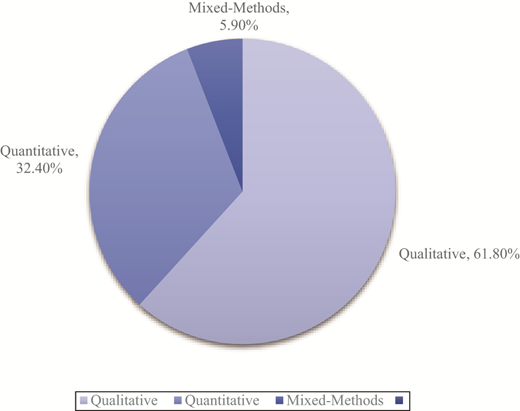
A critical assessment of methodological approaches reveals not merely a predominance of qualitative methods (61.8%) but systematic limitations affecting the field’s theoretical development. The heavy reliance on qualitative approaches presents a paradoxical limitation: while BE inherently concerns cognitive processes that require in-depth exploration, the field’s qualitative studies frequently use methodologies ill-suited for accessing these processes.

Content analysis of interviews (used in 42% of qualitative studies) relies on entrepreneurs’ conscious articulation of largely unconscious cognitive processes, creating a fundamental methodological mismatch between research objectives and methods. This introduces not just recall bias, but a more problematic “accessibility bias” where only consciously available mental processes are captured (Shepherd and Patzelt, 2018; Podsakoff et al., 2012).

Quantitative studies (32.4%) face equally significant but different limitations. The predominant use of cross-sectional designs with convenience samples fundamentally contradicts the BE key premise that decision-making evolves through experience and context. Statistical analyses in these studies frequently use basic correlation or regression techniques without addressing endogeneity or selection effects inherent in entrepreneurial samples (see Figure 3).

Most quantitative studies capture decision-making at a single point in time, failing to account for the dynamic nature of entrepreneurial cognition (Talebi et al., 2014; Xia, 2023). This creates potentially spurious relationships between cognitive factors and entrepreneurial outcomes.

The field’s methodological weakness is most evident in the near-absence of mixed-methods research (5.9%), which could address these complementary limitations. This methodological segregation has created theoretical silos where qualitative researchers identify context-specific cognitive processes without testing their generalisability, while quantitative researchers measure general tendencies without exploring their contextual boundaries or underlying mechanisms (Baron, 2008; Cardon et al., 2012).

The field urgently requires methodological innovation through techniques like cognitive mapping, experimental designs with actual entrepreneurs, longitudinal approaches tracking cognitive evolution and triangulated mixed methods designs that can capture both the depth and breadth of EDM processes (Grichnik et al., 2010; Lane et al., 2021a, 2021b).

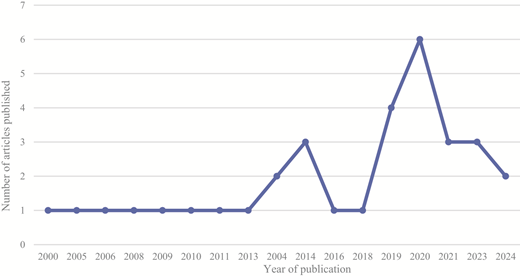
The analysis of publications reveals meaningful shifts in research focus reflecting changing economic realities (Faria, 2024; Landström et al., 2012). The early research phase (2000–2014) shows relatively sporadic contributions, with individual studies published in 2000, 2005, 2006, 2008, 2009, 2010, 2011 and 2013 (each 2.94% of the total). This period mainly focuses on cognitive biases without sufficiently connecting them to entrepreneurial contexts (Baron, 2004; Azar and Leiser, 2008).

A slight uptick occurs in 2004 (two studies, 5.88%) and 2014 (three studies, 8.82%). During 2016–2018, the percentage of BE concepts devoted to entrepreneurship increased steadily (Giacomin et al., 2016; Powell et al., 2011). The period from 2016 to 2018 witnessed a gradual increase: one study in 2016 (2.94%), one in 2018 (2.94%) and four in 2019 (11.76%).

The significant surge during 2019–2024, particularly in 2020 (17.65%), reflects a qualitative evolution in research sophistication (Luo, 2023; Portyanko et al., 2023). This period contributed six studies in 2020 (17.65%), three each in 2021 and 2023 (8.82% each) and two in 2024 (5.88%) (Figure 4). Studies from this period show greater theoretical integration and methodological refinement, suggesting a maturing field responding to global economic uncertainties, including the COVID-19 pandemic (Ma et al., 2024; Stephens et al., 2021).

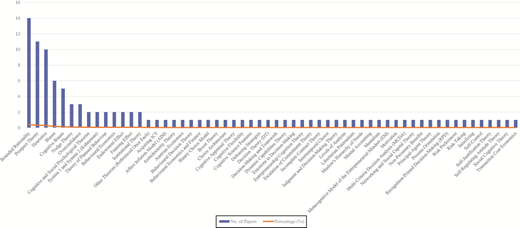
This analysis reveals deep theoretical divergences underlying the frameworks used in EDM research, with significant implications for scholarly understanding and practical interventions. The field’s theoretical landscape is characterised by a fundamental divide between deficit-focused models and adaptation-oriented perspectives, creating unresolved conceptual tensions.The predominant theoretical perspectives, Bounded Rationality (41.18% of studies) and Prospect Theory (32.35%), share a common epistemological foundation that conceptualises entrepreneurial cognition primarily through the lens of limitation. These frameworks position entrepreneurial decision processes as fundamentally constrained versions of idealised rationality (Simon, 1955; Kahneman, 2006).

While these models effectively identify systematic deviations from normative decision standards, they inadvertently frame entrepreneurial cognition as inherently deficient rather than contextually specialised. This creates a paradoxical theoretical disconnect; cognitive patterns labelled as “errors” within these frameworks frequently correspond with entrepreneurial performance in naturalistic settings (Tversky and Kahneman, 1974; List, 2004).

Alternatively, frameworks emphasising heuristics and adaptive decision strategies (29.41% of studies) offer a contrasting theoretical orientation that interprets entrepreneurial cognition as environmentally calibrated rather than merely bounded. These approaches suggest entrepreneurs’ mental shortcuts represent specialised cognitive adaptations to high-uncertainty, time-constrained environments rather than deficiencies in rational processing (Moore and Healy, 2008; Zhang, 2016).

Sarasvathy’s (2001) effectuation theory operationalises bounded rationality in entrepreneurial contexts, demonstrating how cognitive limitations become strategic advantages under uncertainty. Expert entrepreneurs systematically use means-driven rather than goal-driven logic, starting with available resources rather than predetermined objectives. This directly challenges traditional planning approaches that assume predictive rationality is possible and optimal (Li et al., 2025; Chen and Liu, 2025).

Dew et al.’s (2009) experimental evidence further validates this effectuation perspective, demonstrating that experienced entrepreneurs rely significantly more on effectual (means-driven) rather than causal (goal-driven) reasoning under uncertainty compared to novices. Their findings directly support the theoretical reconciliation by showing how cognitive constraints become strategic advantages rather than limitations in dynamic entrepreneurial environments.

The theoretical tension between these competing interpretations, cognitive limitation versus ecological adaptation, has substantial implications for intervention design that remains insufficiently examined in current literature. The field demonstrates limited integration of contemporary theoretical advances that could potentially reconcile these competing paradigms.

Emerging frameworks such as nudge theory (represented in only 8.82% of studies) and dual-process cognition models (5.88%) offer theoretical bridges that simultaneously acknowledge cognitive constraints while providing pathways for adaptive intervention (Thaler and Sunstein, 2008; Watson, 2011).

More problematic is the absence of theoretical frameworks developed specifically for diverse entrepreneurial contexts, despite substantial evidence that decision processes vary significantly across cultural, institutional and economic environments (Cardon et al., 2012; Benartzi et al., 2017). This theoretical homogeneity risks overlooking contextually embedded decision processes that may not conform to Western cognitive models but drive entrepreneurial behaviour in diverse global settings (Beshears and Kosowsky, 2020).

The limited application of integrative approaches represents a missed opportunity to build nuanced understandings of EDM that account for cognitive constraints and contextual adaptations. Current literature continues to reflect an unresolved tension between viewing entrepreneurial cognition as fundamentally constraining, consistent with bounded rationality and calibrating it to the environment, as suggested by adaptive expertise. This study proposes that these perspectives should not be treated as competing frameworks but rather as complementary, offering a richer and more dynamic account of entrepreneurial cognition.

At early stages of entrepreneurial development, decision-making often exhibits the features of bounded rationality, where biases and limited information processing restrict cognitive capacity. Yet, with experience, these same heuristics can be transformed into adaptive assets, enabling entrepreneurs to engage in sophisticated pattern recognition and domain-specific expertise (Pellegrini et al., 2016; Bonder et al., 2023). The extent to which bounded or adaptive approaches dominate is heavily moderated by context. In stable and predictable environments, analytical strategies tend to be more effective, while in highly uncertain and time-sensitive contexts, particularly those characteristics of entrepreneurial activity in emerging economies, heuristic-based decision-making frequently delivers superior results (Bingham and Eisenhardt, 2011; Powell et al., 2011). This dynamic interaction suggests that bounded rationality and adaptive expertise are not mutually exclusive but operate as different phases of entrepreneurial cognition that evolve with experience and are shaped by environmental demands. Like perspective highlights the importance of stage-appropriate and context-sensitive interventions that recognise the fluid nature of EDM (Grichnik et al., 2010; Lane et al., 2021a, 2021b).

Evidence from the systematic review further reinforces this theoretical reconciliation, as illustrated in Figure 5. The figure demonstrates a theoretical evolution in the field, with bounded rationality frameworks dominating 41.18% of studies, gradually giving way to more nuanced perspectives, such as prospect theory 32.35% and heuristics research 29.41%. This progression reflects a maturation of the literature from simplified models of cognitive limitations to more complex accounts that recognise adaptive and context-dependent dimensions of entrepreneurial behaviour. The convergence around these three theoretical perspectives highlights the centrality of core behavioural mechanisms in shaping entrepreneurial action. However, the same pattern reveals important blind spots: emotional dynamics and contextual factors remain underrepresented, indicating that existing models fail to capture the full complexity of EDM. This underscores the need for a more comprehensive integration of cognitive, emotional and contextual dimensions, moving the field beyond its current conceptual boundaries and closer to an ecologically valid understanding of entrepreneurial cognition.

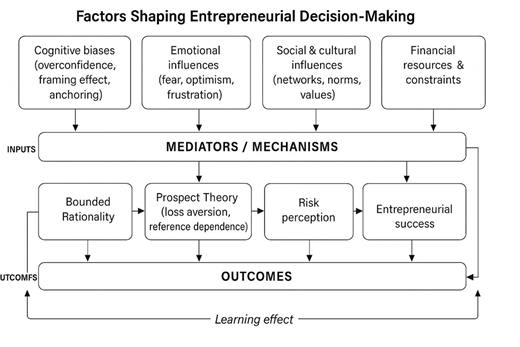
EDM is shaped by internal and external factors. In this review, provide an overview of the subthemes related to the factors affecting EDM from a BE perspective (see Figure 6).

Cognitive biases: contradictions and contextual variations.

Study analysis reveals nuanced and sometimes contradictory effects of cognitive biases on entrepreneurial outcomes. While many studies portray biases like overconfidence as uniformly harmful, critical synthesis suggests their impact varies substantially based on context, entrepreneurial stage and individual characteristics (Michl et al., 2009; Rotondi, 2024).

Mental shortcuts cause cognitive biases, which are systematic deviations from rationality affecting perception, reasoning and decision-making (Neisser, 1967). In entrepreneurship, cognitive biases shape how entrepreneurs recognise opportunities, evaluate risks and make decisions under uncertainty (Mitchell et al., 2002).

Entrepreneurial opportunity recognition exemplifies heuristic decision-making under uncertainty. Baron’s (2006) pattern recognition framework shows how entrepreneurs use availability and representativeness heuristics to identify business opportunities by connecting disparate information. However, these cognitive shortcuts can lead to systematic biases, including overconfidence in familiar patterns and anchoring on initial impressions (Jayawardena and Nanayakkara, 2025).

Grégoire et al.’s (2010) structural alignment theory extends this understanding by providing sophisticated psychological accounts of opportunity recognition through analogical reasoning. Their experimental evidence demonstrates how entrepreneurs use cognitive heuristics to identify structural similarities between new ventures and existing knowledge domains, involving three key processes: alignment (identifying relational similarities), evaluation (assessing attractiveness) and elaboration (developing implementation strategies).

Prospect theory applications reveal sophisticated framing effects in entrepreneurial evaluation processes. Research demonstrates that entrepreneurs systematically frame identical situations more positively than nonentrepreneurs, seeing “opportunities” where others perceive “threats.” While potentially leading to overconfidence, this optimistic framing bias may be functionally adaptive in contexts requiring action despite uncertainty (Seena and Dinesh Kumar, 2025).

The literature presents an unresolved tension regarding overconfidence bias. Some studies (Forbes, 2005; Hayward et al., 2006) frame it as a decision-making disadvantage leading entrepreneurs to underestimate risks. Conversely, others (Busenitz and Barney, 1997; Koellinger et al., 2007) suggest it enables entrepreneurial action under extreme uncertainty where rational analysis would lead to inaction.

This contradiction points to a more complex reality where cognitive biases may have different effects depending on the entrepreneurial phase, with overconfidence potentially helping during venture initiation but hindering later strategic decision-making (Kraft et al., 2022; Wang, 2023).

This paper identifies significant gaps in understanding how cognitive biases interact with each other and contextual factors. The literature examines biases in isolation, overlooking potential compounding effects when multiple biases operate simultaneously, a common situation in real-world entrepreneurial contexts. This siloed approach limits theoretical development and practical application (Capolupo et al., 2024; Miller et al., 2016a).

The methodological approaches used to study cognitive biases reveal limitations. Most studies rely on self-reported measures or hypothetical scenarios rather than observing actual decision-making processes, raising questions about ecological validity. This creates problems, given that biases often operate unconsciously and may not be accurately captured through self-reporting mechanisms (Nuijten et al., 2020; Talebi et al., 2014). A summary of the sub-EDM themes from the BE perspective is shown in Table 3.

Critical analysis of emotional factors reveals significant contradictions in how emotions influence EDM across contexts. The literature presents emotions as valuable tools enabling rapid decision-making and sources of systematic bias distorting rational evaluation (Goud et al., 2024; Long et al., 2022). Emotions include feelings experienced by entrepreneurs during their ventures, significantly shaping the decision-making process. Cardon et al. (2012) define entrepreneurial emotion as feelings individuals experience concerning entrepreneurship, often guiding decisions regarding opportunity evaluation, risk-taking and innovation.

This contradiction becomes particularly evident in studies of entrepreneurial optimism. While some research (Baron, 2008; Cardon et al., 2009) illustrates optimism as a trigger for innovation and persistence, other studies (Hmieleski and Baron, 2009; De Meza and Southey, 1996) highlight its potential to worsen risk underestimation and resource misallocation. Synthesis suggests these contradictory findings stem from methodological limitations and context-specific factors not adequately controlled for in existing research (Dawson, 2023; Liu et al., 2024).

Identify a significant theoretical gap in understanding the dynamic interplay between emotions and cognitive processes. Despite growing evidence, they function as integrated processes in EDM; most studies treat emotions and cognition as separate systems. This artificial separation hinders the development of more realistic models accounting for how emotions influence cognitive processing and vice versa (Shepherd and Patzelt, 2018; Spytska, 2024). The literature on entrepreneurial emotions shows methodological weaknesses. Most studies rely on retrospective self-reports subject to recall bias and social desirability effects. Few studies use real-time measures of emotional states during actual decision-making processes (Singh et al., 2024a; Spytska, 2024).

An assessment of the heuristic’s literature reveals tensions between theory and empirical evidence. While theoretical frameworks often characterise heuristics as insufficient substitutes for analytical decision-making (Kahneman, 2011), empirical evidence suggests they can be highly effective in entrepreneurial contexts (Gigerenzer and Gaissmaier, 2011; Bingham and Eisenhardt, 2011). Entrepreneurs frequently rely on heuristics, mental shortcuts and simplifying decision-making processes (Tversky and Kahneman, 1974). Furthermore, it helps reduce cognitive load; these shortcuts can introduce biases leading to systematic errors in judgement and decision-making.

This contradiction becomes particularly evident in studies of representativeness heuristics. Several studies, such as Tversky and Kahneman (1974) and Powell et al. (2011), emphasise how these heuristics lead entrepreneurs to make inappropriate generalisations from limited samples. Others (Bonder et al., 2023) suggest pattern recognition through representativeness can be highly efficient for experienced entrepreneurs with domain-specific expertise (Pellegrini et al., 2016a; Xia, 2023).

This contrast points to a more subtle reality where heuristics’ effectiveness depends on factors like entrepreneurial experience, industry context and decision nature (Bonder et al., 2023; Powell et al., 2011). Identify methodological limitations in how heuristics are studied. Most research uses artificial decision systems that may not capture real-world entrepreneurial decisions. In addition, studies often focus on identifying heuristics’ presence rather than evaluating their effectiveness compared to other decision-making approaches, creating an incomplete picture of their role in entrepreneurial success (Saleh and Hunt, 2020; Tanaiutchawoot, 2022).

According to Bonder et al. (2023), the tendency to generalise from limited experiences can result in entrepreneurs applying inappropriate solutions to complex problems. The literature reflects limited attention to how entrepreneurs develop and refine heuristics over time. Nevertheless, a few evidence suggest experienced entrepreneurs use different heuristics than novices; there is insufficient research on how these decision-making tools evolve through the entrepreneurial learning gap, limiting theoretical development and practical application (Pellegrini et al., 2016a; Xia, 2023).

The integration between internal psychological factors and external environmental influences creates a dynamic decision-making ecosystem. The paper analysis reveals that cognitive biases (internal factors) are amplified or mitigated by institutional contexts (external factors). For instance, overconfidence bias shows different manifestations in weak institutional environments compared to strong regulatory frameworks, suggesting that internal-external factor interactions are context-dependent rather than additive (Rotondi, 2024).

Policy interventions affect entrepreneurial contexts with considerable variation in effectiveness. The literature reveals unresolved tensions between universal and context-specific approaches to policy nudging, with contradictory evidence regarding their impact on EDM (Benartzi et al., 2017; Espinosa et al., 2022).

In entrepreneurship, personal attributes like self-efficacy, optimism and risk-taking propensity play a crucial role in affecting decision-making biases (Talebi et al., 2014). Behavioural development economics advocates for nudging as a tool for guiding behaviour through government intervention.

However, some studies, such as Beshears and Kosowsky (2020) and Patil (2020), suggest policy nudges can effectively guide entrepreneurial behaviour under uncertainty, while others (Espinosa et al., 2022) highlight significant limitations in addressing cognitive biases of both entrepreneurs and policymakers. Critics argue that nudging fails to address political decision-makers’ cognitive biases and overlooks institutional settings’ comparative influence (Espinosa et al., 2022).

This contradiction reflects complex interactions between policy design and implementation contexts that current research inadequately captures (Löfgren and Nordblom, 2020; Yahya and Alisyahbana, 2024).

Identify a concerning gap in understanding policy interventions’ long-term effects. The majority of studies evaluate immediate behavioural responses without examining whether changes persist or lead to sustainable improvements in EDM (Patil, 2020; Singh et al., 2024b).

Furthermore, the Austrian School of Economics offers an alternative through “boost theory,” empowering individuals to recognise and correct mistakes within a free market framework (Espinosa et al., 2022). Policy nudges, when effectively designed, can assist entrepreneurs in navigating uncertain markets by providing subtle cues encouraging more rational decision-making (Beshears and Kosowsky, 2020).

In addition, the literature also reflects methodological weaknesses in evaluating policy interventions. Few studies use rigorous experimental or quasi-experimental designs establishing causal relationships between specific policy features and entrepreneurial outcomes (Hallett et al., 2024; Renz et al., 2023b).

Entrepreneurs often operate along a regulatory formality continuum, influenced by political capital and relationships with government officials (Biru et al., 2023). Research suggests policy nudges are particularly effective in environments characterised by high uncertainty (Löfgren, 2020). Tax incentives, subsidies and other policy interventions reduce perceived risks and provide entrepreneurs with confidence to take action (Patil, 2020).

Likewise, note insufficient attention to potential unintended consequences of policy nudges. While aimed at preserving choice freedom, several studies suggest nudges can inadvertently reinforce cognitive biases or create dependence on external guidance rather than fostering entrepreneurs’ decision-making capabilities (Espinosa et al., 2022; Thaler and Sunstein, 2008).

Critical examination of social messaging reveals important nuances in how social influences shape entrepreneurial cognition. Research shows social norms and peer influences have context-specific impacts on entrepreneurial decisions that current theoretical frameworks inadequately capture (Beshears and Kosowsky, 2020; Portyanko et al., 2023). Social messaging interventions using cues appealing to social norms and collective actions often take the form of reminders or motivational messages for entrepreneurs, encouraging timely decision-making and reducing inertia (Patil, 2020).

The research presents conflicting evidence; some studies indicate social messaging reduces decision paralysis and encourages entrepreneurial action (Patil, 2020; Beshears and Kosowsky, 2020). Moreover, others demonstrate how social influences amplify existing biases, particularly overconfidence (Cheng et al., 2021). Social messaging proves particularly valuable in high-stakes environments requiring quick decisions, where emotional reassurance and action prompts help entrepreneurs avoid decision paralysis (Beshears and Kosowsky, 2020). This contradiction suggests social messaging may have different effects depending on specific cognitive processes targeted and entrepreneurs’ existing biases, a complexity not adequately addressed in current research (Cheng et al., 2021; Lane et al., 2021a, 2021b).

Acknowledge significant methodological limitations in studying social influences. The majority of research relies heavily on self-reported responses to hypothetical social scenarios rather than directly observing actual social interactions and their impact on EDM (Portyanko et al., 2023; Stephens et al., 2021).

However, social contexts’ influence can have unintended consequences. Research shows individuals adjust their self-perceptions based on others’ confidence levels. Witnessing overconfident behaviour may lead to increased overconfidence persisting over time and across tasks (Cheng et al., 2021). In entrepreneurial settings, heightened confidence driven by social influence can encourage risk-taking behaviours with both positive and negative implications.

The literature reflects limited attention to ethical considerations in designing social messaging interventions. In addition, these aim to improve entrepreneurial outcomes; they involve deliberate attempts to influence behaviour, raising concerns about autonomy and informed decision-making ethical dimensions underexplored in current literature (Thaler and Sunstein, 2003, 2008).

Social networks play a critical role in shaping EDM and success. Strong networks provide access to information, resources and emotional support, while psychological capital and optimism often moderate these effects (Ma et al., 2024). Social environments like educational institutions and incubation spaces offer knowledge and subtle cues influencing student entrepreneurs’ decisions (Stephens et al., 2021). A summary of the subthemes of external factors influencing EDM from the BE perspective is presented in Table 4.

Behavioural influences evolve dynamically throughout the entrepreneurial journey. Early-stage entrepreneurs exhibit higher levels of optimism bias during opportunity recognition, and experienced entrepreneurs develop more sophisticated heuristics for risk assessment (Brundin and Gustafsson, 2013). This temporal progression suggests that behavioural interventions should be tailored to the entrepreneurial stage rather than applying universal approaches.

The critical appraisal of methodological quality across the reviewed studies reveals significant limitations affecting the reliability and validity of findings in this field (Higgins et al., 2011; Mohamed Shaffril et al., 2021). First, note concerning weaknesses in sampling approaches. Many qualitative studies use convenience sampling without clear inclusion criteria or theoretical sampling rationales. Quantitative studies frequently rely on student samples or entrepreneurs from single industries or regions, raising questions about generalisability across different entrepreneurial contexts (Kumar and Goyal, 2015; Nayak and Pillai, 2022).

Second, measurement issues undermine confidence in reported findings. Studies examining cognitive biases and emotional factors often use nonvalidated instruments or single-item measures that may not reliably capture these complex constructs. Several studies rely heavily on self-reported data without triangulation through objective measures, introducing potential social desirability bias (Forbes, 2005; Kraft et al., 2022). Third, analytical rigour varies substantially across studies. Qualitative analyses often lack transparent coding procedures or inter-rater reliability checks; quantitative studies frequently use basic statistical techniques without controlling for relevant confounding variables. This analytical weakness limits conclusions’ robustness from methodological traditions (Paul and Criado, 2020; Snyder, 2019).

Fourth, a few studies explicitly address potential researcher biases or reflexivity concerns, particularly problematic in qualitative research where researcher interpretation plays a significant role in analysis and theory development. The limited attention to researcher positionality raises questions about objectivity and theoretical neutrality (Gancarczyk and Ujwary-Gil, 2021; Moher et al., 2009). Finally, observe inadequate reporting of limitations across many studies. Few authors explicitly acknowledge their methodological approaches’ constraints or discuss how these might affect theoretical conclusions and practical implications. This lack of critical self-assessment hinders cumulative knowledge development and may lead to overconfident generalisations from limited evidence (Bwanga, 2020; Sharma et al., 2020).

These methodological weaknesses collectively suggest findings in this field should be interpreted with caution. The BE literature on EDM would benefit from more rigorous research designs, validated measurement approaches, transparent analytical procedures and greater attention to potential biases (Bosman and Magana, 2024; Cahyani et al., 2024).

BE provides a powerful framework for understanding the complexities of EDM, encompassing cognitive biases, emotional factors and heuristics. These internal factors, alongside external influences such as policy interventions and social messaging, significantly shape entrepreneurial behaviours in various contexts. This systematic review highlights the critical role of BE in improving decision-making strategies, fostering innovation and enabling resilience among entrepreneurs, particularly in dynamic and uncertain environments (Tversky and Kahneman, 1974; Moore and Healy, 2008; Brundin and Gustafsson, 2013). The following sections outline specific practical and theoretical implications for policymakers, educational institutions and researchers, followed by a critical assessment of the study’s limitations and comprehensive directions for future research.

This systematic review yields specific practical and theoretical implications grounded in analytical findings.

For policymakers, the analysis suggests three targeted intervention approaches:

  1. Precision-designed behavioural nudges targeting the most prevalent cognitive biases identified in review, specifically overconfidence in opportunity assessment (found in 8.82% of studies) and reference dependence in financial decision-making (identified in multiple studies applying Prospect Theory, which comprised 32.35% of the sample). These interventions should be strategically implemented at critical entrepreneurial decision points, including business planning and investment timing decisions.

  2. Contextually differentiated support mechanisms accounting for the geographic disparities revealed in the review, with particular attention to developing economy contexts where institutional constraints significantly alter decision processes compared to Western environments (Beshears and Kosowsky, 2020; Patil, 2020).

  3. Comprehensive training programmes that address cognitive and emotional dimensions of EDM, as methodological analysis revealed the artificial separation of these interconnected factors in existing research (Baron, 2008; Grichnik et al., 2010).

Research review points to concrete policy implementation approaches with empirical support:

  • Restructuring entrepreneurial support programme applications to systematically counteract confirmation bias by requiring entrepreneurs to articulate potential weaknesses in their business models, addressing the tendency towards selective information processing identified in the theoretical framework analysis (Simon, 1955; Kahneman, 2006).

  • Developing sector-specific decision support tools that account for the differential manifestation of framing effects in high-uncertainty industries compared to more established sectors, as indicated by studies applying prospect theory to entrepreneurial contexts (Tversky and Kahneman, 1974; List, 2004).

  • Creating graduated mentorship programmes for entrepreneurs in resource-constrained environments that specifically address the heightened information asymmetries in these contexts while leveraging social capital resources, directly responding to the contextual factors identified in geographic distribution analysis (Doern and Goss, 2013; Giacomin et al., 2016).

Educational institutions should incorporate BE principles into entrepreneurship curricula by developing experiential learning modules simulating real-world decision-making scenarios, allowing students to directly engage with challenges posed by cognitive biases and emotional factors (Baron, 2008; Giacomin et al., 2016). Educational programmes should equip future entrepreneurs with practical tools to monitor and adjust their decision-making processes, particularly in high-stakes environments and develop metacognitive skills essential for entrepreneurial success.

Researchers are encouraged to explore interdisciplinary approaches, combining psychology, economics and entrepreneurship to build more comprehensive frameworks addressing short- and long-term entrepreneurial challenges (Grichnik et al., 2010; Doern and Goss, 2013). This interdisciplinary perspective will enhance understanding of how various factors influence entrepreneurial cognition and behaviour, leading to more effective interventions and support mechanisms.

Beyond their research implications, these findings have immediate practical significance for entrepreneurial ecosystems worldwide. Educational institutions should integrate BE principles into entrepreneurship curricula through experiential learning modules simulating real-world decision-making scenarios under uncertainty. This approach enables students to directly experience specific cognitive biases, such as overconfidence bias, confirmation bias and loss aversion, alongside emotional factors like the fear of failure, while developing metacognitive skills essential for entrepreneurial success (Baron, 2008; Shepherd et al., 2015).

Findings translate into immediate practical applications across multiple stakeholder groups. For entrepreneurial education, institutions should implement “bias awareness laboratories” where students experience cognitive biases through structured simulations before learning mitigation strategies. For instance, opportunity evaluation exercises deliberately triggering confirmation bias followed by structured debiasing protocols help students recognise these patterns in real contexts (Nuijten et al., 2020; Giacomin et al., 2016).

For practising entrepreneurs, this analysis suggests developing systematic approaches to decision-making that acknowledge behavioural limitations. This includes implementing structured opportunity evaluation processes that counteract confirmation bias, establishing peer review mechanisms to challenge overconfidence and creating emotional regulation strategies for high-stakes decisions. Support organisations should design mentorship programmes specifically addressing these behavioural dimensions rather than focusing solely on technical business skills (Giacomin et al., 2016; Grichnik et al., 2010).

The societal implications of BE applications in entrepreneurship extend beyond individual decision-making improvement. Enhanced EDM capabilities reduce business failure rates, currently exceeding 70% globally, thereby improving economic stability and job creation in local communities (Hechavarria and Welter, 2015).

In emerging economies where entrepreneurship often represents necessity rather than opportunity, improving decision-making quality significantly impacts poverty alleviation and community development (Bruton et al., 2013).

The ethical implications of influencing entrepreneurial behaviour through BE principles require explicit consideration of autonomy, consent and empowerment principles. Systematic review reveals that 32.35% of studies involved interventions designed to modify decision-making behaviour, yet a few explicitly addressed the ethical implications of such influence attempts. This oversight becomes particularly concerning when applied to vulnerable populations, including necessity entrepreneurs in resource-constrained environments. This paper recommends adopting informed consent protocols for all behavioural interventions, ensuring entrepreneurs understand both the intervention mechanisms and their psychological rationale. Furthermore, intervention effectiveness should be measured not only by immediate behavioural modification but also by long-term capability development and entrepreneurial satisfaction with decision-making processes. This approach respects entrepreneurial autonomy while providing cognitive support tools (Beshears and Kosowsky, 2020).

Ethical considerations become more complex when applying Western-developed behavioural interventions to non-Western entrepreneurial contexts. Geographic analysis revealing 82.36% Western research dominance suggests potential cultural imperialism in intervention design. Ethical practice requires developing culturally sensitive interventions that respect local decision-making norms while providing cognitive support. This includes acknowledging that behaviours labelled as “biases” in Western contexts may represent adaptive responses to specific cultural and institutional environments (Henrich et al., 2010).

Findings provide specific guidance for policy implementation across three levels: institutional, programmatic and individual. At the institutional level, policymakers should restructure entrepreneurial support programme eligibility criteria to systematically counteract confirmation bias by requiring applicants to articulate three potential weaknesses in their business models alongside strengths. This directly addresses the selective information processing tendency identified in theoretical analysis (Simon, 1955; Kahneman, 2006). At the programmatic level, analysis suggests developing sector-specific decision support tools that account for the differential manifestation of framing effects in high-uncertainty industries compared to established sectors. For instance, technology entrepreneurs face different cognitive challenges than agricultural entrepreneurs, requiring tailored intervention approaches. This responds directly to studies applying prospect theory to diverse entrepreneurial contexts identified in the review (Tversky and Kahneman, 1974; List, 2004).

Specific policy recommendations include:

  • Implementing mandatory “cognitive bias audits” in government-sponsored entrepreneurship programmes.

  • Establishing BE training requirements for business advisors and mentors.

  • Creating graduated support mechanisms that increase intervention intensity based on demonstrated cognitive bias susceptibility.

  • Developing outcome measurement systems that track both business performance and decision-making capability improvement over time.

For emerging economy contexts, policies should address the heightened information asymmetries and institutional voids identified in the analysis, while leveraging existing social capital resources. This includes creating community-based peer mentoring networks that provide behavioural decision support within culturally appropriate frameworks and developing mobile technology platforms that deliver bias-awareness training in local languages and contexts (Mair and Marti, 2009; Khavul et al., 2013).

The application of BE principles to entrepreneurial contexts requires careful normative consideration of intervention legitimacy and effectiveness. Analysis reveals tension between paternalistic approaches that “steer” behaviour through nudging and libertarian approaches that “empower” through education and choice architecture transparency (Thaler and Sunstein, 2008; Espinosa et al., 2022). This tension becomes particularly acute in entrepreneurial contexts where individual autonomy and risk-taking represent core values.

A “capability-enhancing” normative framework is proposed that prioritises empowerment over manipulation. This approach ensures behavioural interventions enhance entrepreneurs’ decision-making capabilities rather than substituting external judgement for individual choice. Interventions should be designed to make cognitive biases visible and provide tools for self-correction, rather than automatically correcting for biases without entrepreneur awareness (Löfgren and Nordblom, 2020).

This systematic literature review has several significant limitations that substantially impact the reliability and generalisability of conclusions.

First, the methodological approach in the identified peer-reviewed systematic literature review articles was only briefly assessed. This methodological limitation potentially compromises the ability to fully evaluate the quality of underlying evidence and may lead to overestimating the reliability of certain findings. Particularly in studies examining behavioural interventions, where methodological rigour directly affects the validity of causal claims, this limited assessment constrains the ability to differentiate between robust evidence and weaker correlational relationships.

Second, this study excluded nonacademic/industry literature, conference papers and documents/reports from multilateral agencies. This exclusion introduces an academic bias that likely overemphasises theoretical frameworks while underrepresenting practical applications of BE in entrepreneurial contexts. This limitation is especially consequential for the understanding of emerging economy entrepreneurship, where academic coverage is already limited, as geographic analysis revealed, potentially creating a significant gap between theoretical propositions and practical realities.

Third, the small number of systematic literature review articles made identifying a comprehensive and distinct categorisation of regulatory studies across various sectors challenging. This sample size limitation affects the stability of the thematic framework and may oversimplify the complex interactions between cognitive, emotional and contextual factors in EDM. The resulting categorisation scheme might inadequately capture the nuanced interplay between these factors that analysis suggests is essential for understanding entrepreneurial behaviour.

Fourth, exclusive focus on articles published in English might have led to overlooking important cultural and regional variations in BE principles. This linguistic restriction introduces substantial cultural and contextual bias, particularly undermining conclusions about the universality of BE principles across different entrepreneurial ecosystems. Given the finding that Western contexts dominate the existing research landscape, this limitation further constrains the ability to develop truly global insights into EDM processes.

Finally, the restricted number of systematic literature review articles prevented conducting a meta-analysis. This methodological constraint precludes quantitative assessment of effect sizes for different biases or interventions, requiring readers to interpret qualitative synthesis with appropriate caution. Without meta-analytical insights, we cannot reliably establish the relative importance of different factors influencing EDM or the comparative effectiveness of various behavioural interventions.

Furthermore, the application of BE principles to entrepreneurial contexts requires careful normative consideration of intervention legitimacy and effectiveness. The analysis reveals tension between paternalistic approaches that “steer” behaviour through nudging and libertarian approaches that “empower” through education and choice architecture transparency (Thaler and Sunstein, 2008; Espinosa et al., 2022). This tension becomes particularly acute in entrepreneurial contexts where individual autonomy and risk-taking represent core values. The proposal adopts a “capability-enhancing” normative framework that prioritises empowerment over manipulation. This approach ensures behavioural interventions enhance entrepreneurs’ decision-making capabilities rather than substituting external judgement for individual choice. Interventions should be designed to make cognitive biases visible and provide tools for self-correction, rather than automatically correcting for biases without entrepreneur awareness (Löfgren and Nordblom, 2020).

BE in EDM offers substantial opportunities for advancing theoretical and practical insights. Based on the gaps identified in the systematic review, prioritise three critical research areas that require immediate attention, followed by additional important questions for subsequent investigation. These priorities reflect the theoretical significance and practical urgency of addressing specific knowledge gaps.

First priority addresses methodological limitations by calling for integrated frameworks that examine how cognitive biases, emotional influences and heuristics interact as a cohesive system rather than isolated factors. Current research artificially separates these elements, limiting understanding of their combined effects in dynamic entrepreneurial contexts (Mitchell et al., 2002; Cardon et al., 2012). This integration is crucial for developing more ecologically valid models of EDM. The second priority highlights the need to investigate unique sociocultural and institutional contexts in emerging economies. Research should examine how regional variations shape entrepreneurial behaviour and intervention effectiveness, with particular attention to understanding how trust mechanisms and community values in regions such as sub-Saharan Africa or South Asia influence decision processes (Abdelnaeim and El-Bassiouny, 2021; Nayak and Pillai, 2022). This addresses the significant geographic imbalance identified in the review. The third priority focuses on the transformative impact of digital technologies on entrepreneurial decision environments. Future research should examine how artificial intelligence (AI) and automation may mitigate or introduce new biases and how digital platforms reshape entrepreneurs’ perceptions of opportunities and threats (Löfgren, 2020). This research direction becomes increasingly critical as digitalisation fundamentally changes entrepreneurial practices.

Additional important research directions include understanding how entrepreneurs balance competing objectives in resource-constrained environments (Baron, 2008; Giacomin et al., 2016), examining the long-term effects of behavioural interventions (Renz et al., 2023), developing effective educational approaches (Benartzi et al., 2017; Nuijten et al., 2020) and addressing the unique challenges faced by underrepresented groups in entrepreneurship (Portyanko et al., 2023; Lane et al., 2021a, 2021b).

Future research requires methodological innovation to address the limitations identified in the review. Priority should be given to developing:

  • Longitudinal experimental designs that track cognitive evolution in real entrepreneurial contexts rather than artificial laboratory settings.

  • Mixed-methods approaches that combine the depth of qualitative insights with the generalisability of quantitative findings.

  • Cross-cultural comparative studies that examine how behavioural principles manifest differently across institutional and cultural contexts.

  • Real-time measurement techniques for capturing unconscious cognitive and emotional processes during actual decision-making.

  • Intervention studies with long-term follow-up to assess the sustainability of behavioural change beyond immediate effects.

Theoretical advancement requires moving beyond Western-centric frameworks to develop more inclusive models that account for diverse entrepreneurial contexts. Specific theoretical priorities include:

  • Developing stage-specific models that recognise how cognitive biases and decision-making processes evolve throughout the entrepreneurial journey.

  • Creating context-sensitive frameworks that account for institutional, cultural and economic variations in entrepreneurial environments.

  • Building integrative theories that examine the dynamic interactions between cognitive, emotional and contextual factors.

  • Establishing normative frameworks for ethical application of behavioural interventions in diverse entrepreneurial contexts.

Practical application research.

Research should also focus on translating theoretical insights into practical applications:

  • Developing evidence-based training programmes that help entrepreneurs recognise and manage cognitive biases.

  • Creating policy frameworks that leverage behavioural insights while respecting entrepreneurial autonomy.

  • Designing culturally appropriate interventions for diverse entrepreneurial ecosystems.

  • Establishing evaluation metrics that assess both immediate behavioural change and long-term entrepreneurial capability development (see Table 5).

These prioritised research directions address the most significant gaps identified in the systematic review. The priority addresses the fundamental theoretical limitation identified – the artificial separation of cognitive and emotional factors, which undermines the ecological validity of current models. The second priority addresses the critical geographic imbalance in existing literature, which limits understanding of how BE principles manifest in diverse entrepreneurial contexts. The third priority acknowledges the rapidly evolving technological landscape, which is fundamentally changing how entrepreneurs perceive and evaluate opportunities. Together, these priorities form a coherent research agenda that balances theoretical advancement with practical relevance.

This systematic literature review examined how BE principles influence EDM through analysis of 33 peer-reviewed studies published between 2000 and 2024. The findings reveal three key contributions: First, EDM involves complex interactions between cognitive biases (particularly overconfidence and loss aversion), emotional factors (optimism and fear) and contextual elements (social networks and institutional environments). Second, a significant geographic imbalance exists in current research (82.36% from Western contexts), limiting theoretical development for diverse entrepreneurial ecosystems. Third, methodological limitations are prevalent, with 61.8% of qualitative methods lacking behavioural rigour, and limited triangulation hinders the establishment of causal relationships. Evaluation restricting causal relationship establishment.

These findings extend insights from recent integrative studies at the BE-entrepreneurship intersection. Lerner et al.’s (2018) action-oriented framework highlights how entrepreneurs often “act their way into thinking” rather than following traditional rational planning models, while Grégoire and Corbett’s (2015) comprehensive synthesis identifies cognitive processes, attention allocation and mental models as key mechanisms linking psychological factors to entrepreneurial intentions. Systematic analysis validates these perspectives while revealing their limited application across diverse economic contexts.

These findings suggest that advancing the field requires repositioning BE from a peripheral consideration to a more central framework for entrepreneurship research, education and policy (Zhang and Cueto, 2017). While not representing a complete paradigm shift, this integration significantly enhances current approaches by acknowledging the fundamental role internal psychological processes play alongside external factors in shaping entrepreneurial outcomes (Shepherd and Patzelt, 2017; Mitchell et al., 2002).

For entrepreneurs, these findings emphasise the importance of developing metacognitive awareness to recognise and compensate for cognitive limitations, particularly overconfidence bias in opportunity assessment and loss aversion in resource allocation decisions.

For policymakers, analysis suggests precision-designed behavioural nudges targeting specific cognitive biases at critical decision points, contextually differentiated support mechanisms accounting for diverse economic environments, and comprehensive training programmes addressing cognitive and emotional dimensions of EDM.

For future research, this paper specifically recommend three priority directions:

  1. Developing integrated methodological approaches that simultaneously capture cognitive, emotional and contextual factors in EDM (Delgado García et al., 2015).

  2. Expanding research in emerging economies to build more contextually sensitive theoretical models (Welter, 2011; Mair and Marti, 2009).

  3. Investigating how digital technologies transform the decision environment for entrepreneurs, creating new biases or mitigating existing ones (Löfgren, 2020).

Findings reveal that successful entrepreneurship is not merely about developing technical business skills but equally about cultivating metacognitive awareness, allowing entrepreneurs to recognise and compensate for cognitive limitations (Haynie et al., 2010; Giacomin et al., 2016).

By advancing this more nuanced understanding of EDM, researchers, educators and policymakers can develop more effective support mechanisms that enhance entrepreneurs’ capacity to navigate increasingly complex and uncertain business landscapes while acknowledging the diverse contexts in which entrepreneurship occurs (Baker et al., 2021; Lane et al., 2021a, 2021b).
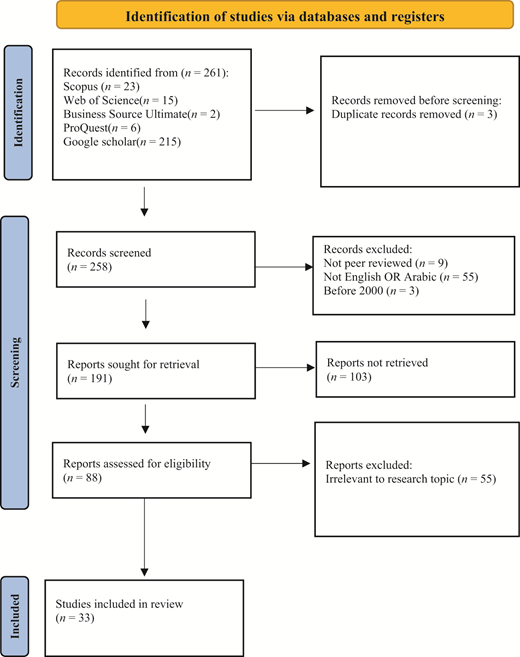
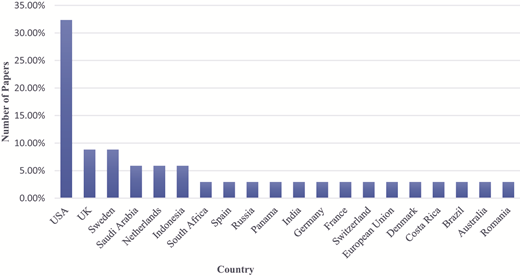
Abdelnaeim
,
S.M.
and
El-Bassiouny
,
N.
(
2021
), “
The relationship between entrepreneurial cognitions and sustainability orientation: the case of an emerging market
”,
Journal of Entrepreneurship in Emerging Economies
, Vol.
13
No.
5
, pp.
1033
-
1056
, doi: .
Ahmad
,
S.
and
Bajwa
,
I.
(
2021
), “
The role of social entrepreneurship in socio-economic development: a meta-analysis of the nascent field
”,
Journal of Entrepreneurship in Emerging Economies
, Vol.
13
No.
4
, pp.
781
-
804
, doi: .
Alamamari
,
A.
,
Hassan
,
A.
and
Liñán
,
F.
(
2019
), “
Entrepreneurial intention among university students in Malaysia: integrating self-determination theory and the theory of planned behaviour
”,
International Entrepreneurship and Management Journal
, Vol.
15
No.
4
, pp.
1323
-
1342
, doi: .
Alhammad
,
F.H.
,
Kraus
,
S.
and
Dubey
,
R.
(
2021
), “
The role of innovation capability on business model innovation in SMEs
”,
European Journal of Innovation Management, Ahead-of-Print
, doi: .
Alhammad
,
N.A.
,
Albihany
,
N.A.
and
Aljarodi
,
A.M.
(
2021
), “
The role of personal connections (wasta) on early-stage entrepreneurial orientations: empirical evidence from Saudi Arabia
”,
Humanities and Social Sciences Communications
, Vol.
11
, pp.
1
-
12
.
Ali
,
A.
,
Rauf
,
T.
,
Ahmed
,
D.
and
Naveeda
(
2024
), “
Impact of entrepreneurial competence on venture performance: the moderating role of entrepreneurial education
”,
ShodhKosh: Journal of Visual and Performing Arts
, Vol.
5
No.
1
, pp.
123
-
137
.
Alvarez
,
S.A.
and
Barney
,
J.B.
(
2007
), “
Discovery and creation: alternative theories of entrepreneurial action
”,
Strategic Entrepreneurship Journal
, Vol.
1
Nos
1-2
, pp.
11
-
26
, doi: .
Alvarez
,
S.A.
,
Barney
,
J.B.
and
Anderson
,
P.
(
2015
), “
Forming and exploiting opportunities: the implications of discovery and creation processes for entrepreneurial and organizational research
”,
Organization Science
, Vol.
26
No.
6
, pp.
1288
-
1306
, doi: .
Amir
,
O.
and
Lobel
,
O.
(
2008
), “
Stumble, predict, nudge: how behavioral economics informs law and policy
”,
Columbia Law Review
, Vol.
108
, pp.
2098
-
2137
.
Åstebro
,
T.
,
Herz
,
H.
,
Nanda
,
R.
and
Weber
,
R.A.
(
2014
), “
Seeking the roots of entrepreneurship: insights from behavioral economics
”,
Journal of Economic Perspectives
, Vol.
28
No.
3
, pp.
49
-
70
, doi: .
Autio
,
E.
,
Nambisan
,
S.
,
Thomas
,
L.D.
and
Wright
,
M.
(
2018
), “
Digital affordances, spatial affordances, and the genesis of entrepreneurial ecosystems
”,
Strategic Entrepreneurship Journal
, Vol.
12
No.
1
, pp.
72
-
95
, doi: .
Azar
,
O.H.
and
Leiser
,
D.
(
2008
), “
Behavioral economics and decision making: applying insights from psychology to understand how people make economic decisions
”,
Journal of Economic Psychology
, Vol.
29
No.
5
, pp.
613
-
618
, doi: .
Baez
,
S.
,
Alladi
,
S.
and
Ibanez
,
A.
(
2023
), “
Global South research is critical for understanding brain health, ageing and dementia
”,
Clinical and Translational Medicine
, Vol.
13
No.
11
, p.
e1486
, doi: .
Baker
,
H.K.
and
Ricciardi
,
V.
(
2014
),
Investor Behavior: The Psychology of Financial Planning and Investing
,
John Wiley and Sons
.
Baker
,
T.
and
Nelson
,
R.E.
(
2005
), “
Creating something from nothing: resource construction through entrepreneurial bricolage
”,
Administrative Science Quarterly
, Vol.
50
No.
3
, pp.
329
-
366
, doi: .
Baker
,
T.
,
Gedajlovic
,
E.
and
Lubatkin
,
M.
(
2021
), “
A framework for comparing entrepreneurship processes across nations
”,
Journal of International Business Studies
, Vol.
52
, pp.
551
-
572
, doi: .
Baker
,
T.
,
Shepherd
,
D.
and
Wiklund
,
J.
(
2021
), “
Moving beyond stereotypes of entrepreneurs: a new research agenda examining behavioral influences and outcomes
”,
Journal of Business Venturing
, Vol.
36
No.
5
, p.
106129
, doi: .
Ball
,
D.D.A.
(
2023
), “
Neuroanatomy of entrepreneurship and bibliometric analysis of studies with vosviewer
”,
Black Sea Journal of Engineering and Science
, Vol.
6
No.
2
, pp.
175
-
186
.
Baron
,
R.A.
(
2000
), “
Psychological perspectives on entrepreneurship: cognitive and social factors in entrepreneurs’ success
”,
Current Directions in Psychological Science
, Vol.
9
No.
1
, pp.
15
-
18
, doi: .
Baron
,
R.A.
(
2004
), “
The cognitive perspective: a valuable tool for answering entrepreneurship’s basic 'why’ questions
”,
Journal of Business Venturing
, Vol.
19
No.
2
, pp.
221
-
239
, doi: .
Baron
,
R.A.
(
2006
), “
Opportunity recognition as pattern recognition: how entrepreneurs ‘connect the dots’ to identify new business opportunities
”,
Academy of Management Perspectives
, Vol.
20
No.
1
, pp.
104
-
119
, doi: .
Baron
,
R.A.
(
2008
), “
The role of affect in the entrepreneurial process
”,
Academy of Management Review
, Vol.
33
No.
2
, pp.
328
-
340
, doi: .
Benartzi
,
S.
,
Beshears
,
J.
,
Milkman
,
K.L.
,
Sunstein
,
C.R.
,
Thaler
,
R.H.
,
Shankar
,
M.
,
Tucker-Ray
,
W.
,
Congdon
,
W.J.
and
Galing
,
S.
(
2017
), “
Should governments invest more in nudging?
”,
Psychological Science
, Vol.
28
No.
8
, pp.
1041
-
1055
, doi: .
Bernheim
,
B.D.
and
Rangel
,
A.
(
2005
), “
Behavioral public economics: welfare and policy analysis with nonstandard decision-makers
”,
Working Paper No. 11518
,
National Bureau of Economic Research
.
Beshears
,
J.
and
Kosowsky
,
H.
(
2020
), “
Nudging: progress to date and future directions
”,
Organizational Behavior and Human Decision Processes
, Vol.
161
, pp.
3
-
19
, doi: .
Bingham
,
C.B.
and
Eisenhardt
,
K.M.
(
2011
), “
Rational heuristics: the 'simple rules’ that strategists learn from process experience
”,
Strategic Management Journal
, Vol.
32
No.
13
, pp.
1437
-
1464
, doi: .
Biru
,
A.
,
Arenius
,
P.
,
Bruton
,
G.
and
Gilbert
,
D.
(
2023
), “
Firm formalization strategy: the interaction of entrepreneurs and government officials in the enforcement of regulation
”,
Journal of Management, Article
, p.
01492063231224343
, doi: .
Bonder
,
T.
,
Erev
,
I.
,
Ludvig
,
E.A.
and
Roth
,
Y.
(
2023
), “
The common origin of both oversimplified and overly complex decision rules
”,
Journal of Behavioral Decision Making
, Vol.
36
No.
4
, p.
e2321
, doi: .
Bosman
,
L.
and
Magana
,
A.
(
2024
), “
Using evidence-based decision-making and cognitive apprenticeship approach to develop students’ entrepreneurial mindset
”,
Computer Applications in Engineering Education
, Vol.
32
No.
6
, p.
e22779
, doi: .
Brännback
,
M.
and
Carsrud
,
A.L.
(
2018
), “Where do we go from here? A research agenda for entrepreneurial cognitions”, in
Brännback
,
M.
and
Carsrud
,
A. L.
(Eds),
A Research Agenda for Entrepreneurial Cognition and Intention
,
Edward Elgar Publishing
, pp.
1
-
6
.
Braun
,
V.
and
Clarke
,
V.
(
2006
), “
Using thematic analysis in psychology
”,
Qualitative Research in Psychology
, Vol.
3
No.
2
, pp.
77
-
101
, doi: .
Brenes
,
E.R.
,
Montoya
,
D.
and
Ciravegna
,
L.
(
2014
), “
Differentiation strategies in emerging markets: the case of Latin American agribusinesses
”,
Journal of Business Research
, Vol.
67
No.
5
, pp.
847
-
855
, doi: .
Bonilla
,
C.A.
and
Fica
,
D.
(
2022
), “
Loss aversion and risky entrepreneurship
”,
Finance Research Letters
, Vol.
48
, p.
102985
, doi: .
Brundin
,
E.
and
Gustafsson
,
V.
(
2013
), “
Entrepreneurs’ decision making under different levels of uncertainty: the role of emotions
”,
International Journal of Entrepreneurial Behavior and Research
, Vol.
19
No.
6
, pp.
568
-
591
, doi: .
Bruton
,
G.D.
,
Ketchen
,
D.J.
, Jr.
and
Ireland
,
R.D.
(
2013
), “
Entrepreneurship as a solution to poverty
”,
Journal of Business Venturing
, Vol.
28
No.
6
, pp.
683
-
689
, doi: .
Busenitz
,
L.W.
and
Barney
,
J.B.
(
1997
), “
Differences between entrepreneurs and managers in large organizations: biases and heuristics in strategic decision-making
”,
Journal of Business Venturing
, Vol.
12
No.
1
, pp.
9
-
30
, doi: .
Bwanga
,
O.
(
2020
), “
How to conduct a qualitative systematic review to guide evidence-based practice in radiography
”,
Radiography
, Vol.
26
No.
4
, pp.
350
-
353
, doi: .
Cahyani
,
R.R.
,
Riani
,
A.L.
,
Harsono
,
M.
and
Sunaryo
,
S.
(
2024
), “
The impact of entrepreneurial lifestyle on business success: a systematic literature review
”,
Journal of Ecohumanism
, Vol.
3
No.
4
, pp.
3395
-
3405
.
Camerer
,
C.
and
Loewenstein
,
G.
(
2004
), “Behavioral economics: past, present, future”, in
Camerer
,
C. F.
,
Loewenstein
,
G.
and
Rabin
,
M.
(Eds),
Advances in Behavioral Economics
,
Princeton University Press
, pp.
3
-
51
.
Capolupo
,
N.
,
Virglerova
,
Z.
,
Rosa
,
A.
and
Palmucci
,
D.N.
(
2024
), “
The relationship between biases and entrepreneurial decision-making: evidence from Italian and Czech SMEs
”,
International Entrepreneurship and Management Journal
, Vol.
20
No.
4
, pp.
3323
-
3348
, doi: .
Cardon
,
M.S.
,
Foo
,
M.D.
,
Shepherd
,
D.A.
and
Wiklund
,
J.
(
2012
), “
Exploring the heart: entrepreneurial emotion is a hot topic
”,
Entrepreneurship Theory and Practice
, Vol.
36
No.
1
, pp.
1
-
10
, doi: .
Cardon
,
M.S.
,
Wincent
,
J.
,
Singh
,
J.
and
Drnovsek
,
M.
(
2009
), “
The nature and experience of entrepreneurial passion
”,
Academy of Management Review
, Vol.
34
No.
3
, pp.
511
-
532
, doi: .
Cenamor
,
J.
,
Parida
,
V.
and
Wincent
,
J.
(
2019
), “
How entrepreneurial SMEs compete through digital platforms: the roles of digital platform capability, network capability and ambidexterity
”,
Journal of Business Research
, Vol.
100
, pp.
196
-
206
, doi: .
Chen
,
W.
and
Liu
,
M.
(
2025
), “
The influence mechanism and control measures of cognitive biases and heuristic thinking in decision making
”,
Proceedings of ICEMGD 2025 Symposium: Resilient Business Strategies in Global Markets
, pp.
1
-
12
.
Cheng
,
Z.H.
(
2014
), “
Impact parameters in an entrepreneurial career determination model from cognition and social network perspectives
”, Doctoral dissertation,
Manchester Metropolitan University
.
Cheng
,
J.T.
,
Anderson
,
C.
,
Tenney
,
E.R.
,
Brion
,
S.
,
Moore
,
D.A.
and
Logg
,
J.M.
(
2021
), “
The social transmission of overconfidence
”,
Journal of Experimental Psychology: General
, Vol.
150
No.
1
, pp.
157
-
186
, doi: .
Costa
,
D.F.
,
Carvalho
,
F. D M.
and
Moreira
,
B. C. D M.
(
2019
), “
Behavioral economics and behavioral finance: a bibliometric analysis of the scientific fields
”,
Journal of Economic Surveys
, Vol.
33
No.
1
, pp.
3
-
24
, doi: .
Dawson
,
C.
(
2023
), “
Gender differences in optimism, loss aversion and attitudes towards risk
”,
British Journal of Psychology
, Vol.
114
No.
4
, pp.
928
-
944
, doi: .
De Meza
,
D.
and
Southey
,
C.
(
1996
), “
The borrower’s curse: optimism, finance and entrepreneurship
”,
The Economic Journal
, Vol.
106
No.
435
, pp.
375
-
386
, doi: .
De Winnaar
,
K.
and
Scholtz
,
F.
(
2020
), “
Entrepreneurial decision-making: new conceptual perspectives
”,
Management Decision
, Vol.
58
No.
7
, pp.
1283
-
1300
, doi: .
Delgado García
,
J.B.
,
De Quevedo Puente
,
E.
and
Blanco Mazagatos
,
V.
(
2015
), “
How affect relates to entrepreneurship: a systematic review of the literature and research agenda
”,
International Journal of Management Reviews
, Vol.
17
No.
2
, pp.
191
-
211
, doi: .
Demirdag
,
I.
and
Eraydin
,
A.
(
2024
), “
Regions, entrepreneurship and institutions: the role of institutions on the entrepreneurship profiles of regions
”,
Eastern European Economics
, Vol.
62
No.
6
, pp.
798
-
823
, doi: .
Dew
,
N.
,
Read
,
S.
,
Sarasvathy
,
S.D.
and
Wiltbank
,
R.
(
2009
), “
Effectual versus predictive logics in entrepreneurial decision-making: differences between experts and novices
”,
Journal of Business Venturing
, Vol.
24
No.
4
, pp.
287
-
309
, doi: .
Dobryagina
,
N.
(
2019
), “
Agricultural entrepreneurship motivation policies: European Union experience and decision theory application
”,
International Journal of Rural Management
, Vol.
15
No.
1
, pp.
97
-
115
, doi: .
Dobryagina
,
N.
(
2021
), “
Relevance of behavioral economics for entrepreneurship and entrepreneurs
”,
Journal of Innovation and Entrepreneurship
, Vol.
10
No.
1
, pp.
1
-
16
, doi: .
Doern
,
R.
and
Goss
,
D.
(
2013
), “
From barriers to barring: why emotion matters for entrepreneurial development
”,
International Small Business Journal: Researching Entrepreneurship
, Vol.
31
No.
5
, pp.
496
-
519
, doi: .
Elmonshid
,
L.
and
Sayed
,
O.
(
2024
), “
The relationship between entrepreneurship and sustainable development in Saudi Arabia: a comprehensive perspective
”,
Economies
, Vol.
12
No.
8
, p.
198
, doi: .
Espinosa
,
V.I.
,
Wang
,
W.H.
and
Huerta de Soto
,
J.
(
2022
), “
Principles of nudging and boosting: steering or empowering decision-making for behavioral development economics
”,
Sustainability
, Vol.
14
No.
4
, p.
4593
, doi: .
Faria
,
L.
(
2024
), “
Behavioral economics and decision-making: the impact of psychological insights on economic choices
”,
Journal of Economics and Economic Education Research
, Vol.
25
No.
1
, pp.
1
-
12
.
Fayolle
,
A.
and
Liñán
,
F.
(
2014
), “
The future of research on entrepreneurial intentions
”,
Journal of Business Research
, Vol.
67
No.
5
, pp.
663
-
666
, doi: .
Forbes
,
D.P.
(
2005
), “
The effects of strategic decision making on entrepreneurial self-efficacy
”,
Entrepreneurship Theory and Practice
, Vol.
29
No.
5
, pp.
599
-
626
, doi: .
Gancarczyk
,
M.
and
Ujwary-Gil
,
A.
(
2021
), “
Entrepreneurial cognition or judgment: management and economics approaches to the entrepreneur’s choices
”,
Journal of Entrepreneurship, Management and Innovation
, Vol.
17
No.
1
, pp.
7
-
23
, doi: .
Garrard
,
J.
(
2020
),
Health Sciences Literature Review Made Easy: The Matrix Method
, (6th ed.) ,
Jones and Bartlett Learning
.
Giacomin
,
O.
,
Janssen
,
F.
and
Shinnar
,
R.S.
(
2016
), “
Student entrepreneurial optimism and overconfidence across cultures
”,
International Small Business Journal: Researching Entrepreneurship
, Vol.
34
No.
7
, pp.
925
-
947
, doi: .
Gigerenzer
,
G.
and
Gaissmaier
,
W.
(
2011
), “
Heuristic decision making
”,
Annual Review of Psychology
, Vol.
62
No.
1
, pp.
451
-
482
, doi: .
Goud
,
K.
,
Kumar
,
D.
and
Chakradhar
,
P.
(
2024
), “
A study on behavioural finance and its impact on decision making of an investment
”,
EPRA International Journal of Economics, Business and Management Studies
, Vol.
11
No.
1
, pp.
104
-
115
.
Gradinaru
,
A.
(
2014
), “
The contribution of behavioral economics in explaining the decisional process
”,
Procedia Economics and Finance
, Vol.
16
, pp.
417
-
426
, doi: .
Grégoire
,
D.A.
and
Corbett
,
A.C.
(
2015
), “
Unraveling the cognitive underpinnings of entrepreneurial intentions: a review and research agenda
”,
Journal of Business Venturing
, Vol.
30
No.
5
, pp.
785
-
807
, doi: .
Grégoire
,
D.A.
,
Barr
,
P.S.
and
Shepherd
,
D.A.
(
2010
), “
Cognitive processes of opportunity recognition: the role of structural alignment
”,
Organization Science
, Vol.
21
No.
2
, pp.
413
-
431
, doi: .
Grégoire
,
D.A.
,
Corbett
,
A.C.
and
McMullen
,
J.S.
(
2011
), “
The cognitive perspective in entrepreneurship: an agenda for future research
”,
Journal of Management Studies
, Vol.
48
No.
6
, pp.
1443
-
1477
, doi: .
Grichnik
,
D.
,
Smeja
,
A.
and
Welpe
,
I.
(
2010
), “
The importance of being emotional: how do emotions affect entrepreneurial opportunity evaluation and exploitation?
”,
Journal of Economic Behavior and Organization
, Vol.
76
No.
1
, pp.
15
-
29
, doi: .
Hallett
,
M.F.
,
Kjær
,
T.
and
Bjørnskov Pedersen
,
L.
(
2024
), “
The use of nudge strategies in improving physicians’ prescribing behavior: a systematic review and meta-analysis
”,
Medical Decision Making
, Vol.
44
No.
8
, pp.
986
-
1011
, doi: .
Haynie
,
J.M.
,
Shepherd
,
D.
,
Mosakowski
,
E.
and
Earley
,
P.C.
(
2010
), “
A situated metacognitive model of the entrepreneurial mindset
”,
Journal of Business Venturing
, Vol.
25
No.
2
, pp.
217
-
229
, doi: .
Hayward
,
M.L.A.
,
Shepherd
,
D.A.
and
Griffin
,
D.
(
2006
), “
A hubris theory of entrepreneurship
”,
Management Science
, Vol.
52
No.
2
, pp.
160
-
172
, doi: .
Hechavarria
,
D.M.
and
Welter
,
C.
(
2015
), “
Opportunity types, business models, and firm growth
”,
Journal of Small Business Strategy
, Vol.
25
No.
1
, pp.
30
-
52
.
Henrich
,
J.
,
Heine
,
S.J.
and
Norenzayan
,
A.
(
2010
), “
The weirdest people in the world?
”,
Behavioral and Brain Sciences
, Vol.
33
No.
2-3
, pp.
61
-
83
, doi: .
Higgins
,
J.P.T.
,
Altman
,
D.G.
,
Gøtzsche
,
P.C.
,
Jüni
,
P.
,
Moher
,
D.
,
Oxman
,
A.D.
,
Savović
,
J.
,
Schulz
,
K.F.
,
Weeks
,
L.
and
Sterne
,
J.A.C.
(
2011
), “
The Cochrane collaboration’s tool for assessing risk of bias in randomised trials
”,
BMJ
, Vol.
343
No.
Oct 18 2
, p.
d5928
, doi: .
Hmieleski
,
K.M.
and
Baron
,
R.A.
(
2009
), “
Entrepreneurs’ optimism and new venture performance: a social cognitive perspective
”,
Academy of Management Journal
, Vol.
52
No.
3
, pp.
473
-
488
, doi: .
Jayawardena
,
A.M.A.
and
Nanayakkara
,
N.S.
(
2025
), “
How does loss aversion mediate the relationship between personality traits and efficiency of skills in investment decision-making?
”,
International Review of Management and Marketing
, Vol.
15
No.
1
, pp.
45
-
58
.
Joo
,
B.K.
(
2017
), “
Influence of overconfidence, optimism and pessimism on the rationality of the individual investors: an empirical analysis
”,
Pacific Business Review International
, Vol.
9
No.
7
, pp.
7
-
13
.
Jüni
,
P.
,
Holenstein
,
F.
,
Sterne
,
J.
,
Bartlett
,
C.
and
Egger
,
M.
(
2002
), “
Direction and impact of language bias in meta-analyses of controlled trials: empirical study
”,
International Journal of Epidemiology
, Vol.
31
No.
1
, pp.
115
-
123
, doi: .
Jurek
,
P.
,
Baldacchino
,
L.
and
Sassetti
,
S.
(
2025
), “
Bounded sustainable entrepreneurship: Uncertainty, perceptions, and tensions
”,
Strategic Change
, Vol.
34
No.
3
, pp.
234
-
251
.
Kahneman
,
D.
(
2006
), “
Maps of bounded rationality: Psychology for behavioural economics
”,
Psikhologicheskiĭ Zhurnal
, Vol.
27
No.
2
, pp.
5
-
28
.
Kahneman
,
D.
(
2011
),
Thinking, Fast and Slow
,
Farrar, Straus and Giroux
.
Kahneman
,
D.
and
Tversky
,
A.
(
1979
), “
Prospect theory: an analysis of decision under risk
”,
Econometrica
, Vol.
47
No.
2
, pp.
263
-
291
, doi: .
Khavul
,
S.
,
Bruton
,
G.D.
and
Wood
,
E.
(
2013
), “
Informal family business in Africa
”,
Entrepreneurship Theory and Practice
, Vol.
37
No.
6
, pp.
1219
-
1238
, doi: .
Knoll
,
M.A.Z.
(
2010
), “
The role of behavioral economics and behavioral decision making in Americans’ retirement savings decisions
”,
Social Security Bulletin
, Vol.
70
No.
4
, pp.
1
-
23
.
Koellinger
,
P.
,
Minniti
,
M.
and
Schade
,
C.
(
2007
), “
I think I can, I think I can”: overconfidence and entrepreneurial behavior
”,
Journal of Economic Psychology
, Vol.
28
No.
4
, pp.
502
-
527
, doi: .
Kraft
,
P.S.
,
Günther
,
C.
,
Kammerlander
,
N.H.
and
Lampe
,
J.
(
2022
), “
Overconfidence and entrepreneurship: a meta-analysis of different types of overconfidence in the entrepreneurial process
”,
Journal of Business Venturing
, Vol.
37
No.
4
, p.
106207
, doi: .
Kumar
,
S.
and
Goyal
,
N.
(
2015
), “
Behavioural biases in investment decision making—a systematic literature review
”,
Qualitative Research in Financial Markets
, Vol.
7
No.
1
, pp.
88
-
108
, doi: .
Landström
,
H.
,
Harirchi
,
G.
and
Åström
,
F.
(
2012
), “
Entrepreneurship: exploring the knowledge base
”,
Research Policy
, Vol.
41
No.
7
, pp.
1154
-
1181
, doi: .
Lane
,
B.
,
Grubb
,
M.
and
Power
,
A.
(
2021
a), “
High risk, high reward? Risk taking of entrepreneurs with ADHD
”,
Journal of Business Venturing Insights
, Vol.
16
, p.
e00274
, doi: .
Lane
,
J.
,
Poskanzer
,
E.
,
Eesley
,
C.E.
,
Delecourt
,
S.
,
Dimitriadis
,
S.
,
Li
,
Z.
,
Spina
,
C.
,
Alibhai
,
S.
,
Assavabhokhin
,
A.
,
Donald
,
A.
,
Koning
,
R.M.
,
Lakhani
,
K.R.
,
Novelli
,
E.
and
Polzer
,
J.T.
(
2021
b), “
Field experiments in social networks and entrepreneurship
”,
Academy of Management Proceedings
, Vol.
2021
No.
1
, p.
15362
, doi: .
Lerner
,
D.A.
,
Hunt
,
R.A.
and
Dimov
,
D.
(
2018
), “
Action! Moving beyond the intendedly-rational logics of entrepreneurship
”,
Journal of Business Venturing
, Vol.
33
No.
1
, pp.
52
-
69
, doi: .
Li
,
X.
,
Zhang
,
Y.
and
Wang
,
H.
(
2025
), “
The impact of analytical cognitive style on business model innovation in new ventures: the moderating role of self-efficacy and environmental uncertainty
”,
Plos One
, Vol.
20
No.
10
, p.
e0335256
.
Liestyowati
,
L.
(
2024
), “
Behavioral economics and decision making: understanding irrationality and biases in economic choices
”,
Economics Studies and Banking Journal (DEMAND)
, Vol.
1
No.
3
, pp.
151
-
165
, doi: .
Lin
,
J.
,
Qin
,
J.
,
Lyons
,
T.
,
Nakajima
,
H.
,
Kawakatsu
,
S.
and
Sekiguchi
,
T.
(
2022
), “
The ecological approach to construct entrepreneurship education: a systematic literature review
”,
Journal of Entrepreneurship in Emerging Economies
, Vol.
14
No.
5
, pp.
981
-
1014
, doi: .
List
,
J.A.
(
2004
), “
Neoclassical theory versus prospect theory: evidence from the marketplace
”,
Econometrica
, Vol.
72
No.
2
, pp.
615
-
625
, doi: .
Liu
,
Y.
,
Wu
,
Y.
and
Yang
,
Q.
(
2024
), “
The impact of stress on the risk decision-making process
”,
Psychophysiology
, Vol.
61
No.
9
, p.
e14595
, doi: .
Löfgren
,
K.G.
(
2020
),
The Behavioral Economics of Climate Change: Adaptation Behaviors, Cognitive Biases, Policy Implications
,
Academic Press
.
Löfgren
,
Å.
and
Nordblom
,
K.
(
2020
), “
A theoretical framework of decision making explaining the mechanisms of nudging
”,
Journal of Economic Behavior and Organization
, Vol.
174
, pp.
1
-
12
, doi: .
Long
,
D.
,
Yu
,
W.
,
Fu
,
W.
and
Muhammad
,
S.
(
2022
), “
The influence of entrepreneurial effect on entrepreneurship from the perspective of emotional behavior change
”,
International Journal of Neuropsychopharmacology
, Vol.
25
No.
Supplement_1
, pp.
A21
-
A22
, doi: .
Luo
,
J.
(
2023
), “
Analysis of the strategic decision-making behaviour of entrepreneurs from a behavioural economics perspective
”,
BCP Business and Management
, Vol.
38
, pp.
1186
-
1191
, doi: .
McMullen
,
J.S.
and
Shepherd
,
D.A.
(
2006
), “
Entrepreneurial action and the role of uncertainty in the theory of the entrepreneur
”,
Academy of Management Review
, Vol.
31
No.
1
, pp.
132
-
152
, doi: .
Ma
,
D.
and
Liu
,
X.
(
2023
), “
Entrepreneurial decision-making under risk: prospect theory and dual-process theory
”,
Entrepreneurship Research Journal
, doi: .
Ma
,
H.
,
Khan
,
A.J.
,
Fayyaz
,
S.
,
Hameed
,
W.U.
and
Ullah
,
H.
(
2024
), “
Unpacking the optimistic mindset of business students towards entrepreneurship
”,
Plos One
, Vol.
19
No.
2
, p.
e0297868
, doi: .
Mair
,
J.
and
Marti
,
I.
(
2009
), “
Entrepreneurship in and around institutional voids: a case study from Bangladesh
”,
Journal of Business Venturing
, Vol.
24
No.
5
, pp.
419
-
435
, doi: .
Michl
,
T.
,
Welpe
,
I.M.
,
Spörrle
,
M.
and
Picot
,
A.
(
2009
), “The role of emotions and cognitions in entrepreneurial decision-making”, in
Carsrud
,
A. L.
and
Brännback
,
M.
(Eds),
Understanding the Entrepreneurial Mind: Opening the Black Box
,
Springer
, pp.
167
-
190
.
Miller
,
J.E.
,
Amit
,
E.
and
Posten
,
A.-C.
(
2016
a), “Behavioral economics”, in
ten Have
,
H.
(Ed.),
Encyclopedia of Global Bioethics
,
Springer
, pp.
272
-
279
.
Miller
,
J.G.
,
Kahle
,
S.
and
Hastings
,
P.D.
(
2016
b), “
Roots and benefits of costly giving: Children who are more altruistic have greater autonomic flexibility and less family wealth
”,
Psychological Science
, Vol.
27
No.
7
, pp.
1038
-
1045
, doi: .
Mitchell
,
R.K.
,
Busenitz
,
L.
,
Lant
,
T.
,
McDougall
,
P.P.
,
Morse
,
E.A.
and
Smith
,
J.B.
(
2002
), “
Toward a theory of entrepreneurial cognition: rethinking the people side of entrepreneurship research
”,
Entrepreneurship Theory and Practice
, Vol.
27
No.
2
, pp.
93
-
104
, doi: .
Mohamed Shaffril
,
H.A.
,
Samsuddin
,
S.F.
and
Abu Samah
,
A.
(
2021
), “
The ABC of systematic literature review: the basic methodological guidance for beginners
”,
Quality and Quantity
, Vol.
55
No.
4
, pp.
1319
-
1346
, doi: .
Moher
,
D.
,
Liberati
,
A.
,
Tetzlaff
,
J.
and
Altman
,
D.G.
(
2009
), “
Preferred reporting items for systematic reviews and meta-analyses: the PRISMA statement
”,
PLoS Medicine
, Vol.
6
No.
7
, p.
e1000097
, doi: .
Molina-Azorin
,
J.F.
,
López-Gamero
,
M.D.
,
Pereira-Moliner
,
J.
and
Pertusa-Ortega
,
E.M.
(
2012
), “
Mixed methods studies in entrepreneurship research: applications and contributions
”,
Entrepreneurship and Regional Development
, Vol.
24
Nos
5-6
, pp.
425
-
456
, doi: .
Moore
,
D.A.
and
Healy
,
P.J.
(
2008
), “
The trouble with overconfidence
”,
Psychological Review
, Vol.
115
No.
2
, pp.
502
-
517
, doi: .
Morrison
,
A.
,
Polisena
,
J.
,
Husereau
,
D.
,
Moulton
,
K.
,
Clark
,
M.
,
Fiander
,
M.
,
Mierzwinski-Urban
,
M.
,
Clifford
,
T.
,
Hutton
,
B.
and
Rabb
,
D.
(
2012
), “
The effect of English-language restriction on systematic review-based meta-analyses: a systematic review of empirical studies
”,
International Journal of Technology Assessment in Health Care
, Vol.
28
No.
2
, pp.
138
-
144
, doi: .
Nambisan
,
S.
(
2017
), “
Digital entrepreneurship: toward a digital technology perspective of entrepreneurship
”,
Entrepreneurship Theory and Practice
, Vol.
41
No.
6
, pp.
1029
-
1055
, doi: .
Nayak
,
R.
and
Pillai
,
R.
(
2022
), “
Sustainable entrepreneurship research in emerging economies: an evidence from systematic review
”,
Journal of Entrepreneurship in Emerging Economies
, Vol.
14
No.
5
, pp.
981
-
1014
, doi: .
Neck
,
H.M.
and
Greene
,
P.G.
(
2011
), “
Entrepreneurship education: known worlds and new frontiers
”,
Journal of Small Business Management
, Vol.
49
No.
1
, pp.
55
-
70
, doi: .
Neisser
,
U.
(
1967
),
Cognitive Psychology
,
Appleton-Century-Crofts
.
Nuijten
,
A.
,
Benschop
,
N.
,
Rijsenbilt
,
A.
and
Wilmink
,
K.
(
2020
), “
Cognitive biases in critical decisions facing SME entrepreneurs: an external accountants’ perspective
”,
Administrative Sciences
, Vol.
10
No.
4
, p.
89
, doi: .
Okoli
,
C.
(
2015
), “
A guide to conducting a standalone systematic literature review
”,
Communications of the Association for Information Systems
, Vol.
37
No.
1
, pp.
879
-
910
, doi: .
Patil
,
V.A.
(
2020
), “Nudge theory and decision making: enabling people to make better choices”, In
A.
Behl
(Ed.),
Multi-Criteria Decision Analysis in Management
,
IGI Global
, pp.
239
-
252
.
Paul
,
J.
and
Criado
,
A.R.
(
2020
), “
The art of writing literature review: what do we know and what do we need to know?
”,
International Business Review
, Vol.
29
No.
4
, p.
101717
, doi: .
Pellegrini
,
M.M.
,
Ciappei
,
C.
,
Zollo
,
L.
and
Boccardi
,
A.
(
2016
), “
Finding the extraordinary and creating the unexpected: gnome and genius combined in an entrepreneurial ethical heuristic
”,
Journal of Management Development
, Vol.
35
No.
6
, pp.
789
-
801
, doi: .
Petticrew
,
M.
and
Roberts
,
H.
(
2006
),
Systematic Reviews in the Social Sciences: A Practical Guide
,
John Wiley and Sons
.
Podsakoff
,
P.M.
,
MacKenzie
,
S.B.
and
Podsakoff
,
N.P.
(
2012
), “
Sources of method bias in social science research and recommendations on how to control it
”,
Annual Review of Psychology
, Vol.
63
No.
1
, pp.
539
-
569
, doi: .
Portuguez Castro
,
M.
and
Gomez Zermeño
,
M.G.
(
2021
), “
Harnessing business intelligence and analytics to support COVID-19 decision making
”,
Journal of Entrepreneurship in Emerging Economies
, Vol.
13
No.
5
, pp.
831
-
849
, doi: .
Portyanko
,
S.
,
Reinmoeller
,
P.
,
Hussels
,
S.
and
Turner
,
N.
(
2023
), “
Peer effects and intentional entrepreneurial behaviour: a systematic literature review and research agenda
”,
International Journal of Management Reviews
, Vol.
25
No.
3
, pp.
515
-
545
, doi: .
Powell
,
T.C.
,
Lovallo
,
D.
and
Fox
,
C.R.
(
2011
), “
Behavioral strategy
”,
Strategic Management Journal
, Vol.
32
No.
13
, pp.
1369
-
1386
, doi: .
Ren
,
Y.
(
2024
), “
Promoting decision making and behavioral change application of psychology and behavioral economics to nudge design
”,
Education Reform and Development
, Vol.
6
No.
6
, pp.
34
-
41
.
Renz
,
E.
,
Müller
,
M.M.
and
Böhm
,
K.L.
(
2023
), “
When nudges promote neutral behavior: an experimental study of managerial decisions under risk and uncertainty
”,
Journal of Business Economics
, Vol.
93
No.
8
, pp.
1309
-
1354
, doi: .
Rotondi
,
V.
(
2024
), “
Overconfidence, misjudgment, and entry in experimental entrepreneurial markets: evidence from Panama
”,
Entrepreneurship and Regional Development
, Vol.
36
Nos
5-6
, pp.
816
-
832
, doi: .
Roundy
,
P.T.
,
Bradshaw
,
M.
and
Brockman
,
B.K.
(
2018
), “
The emergence of entrepreneurial ecosystems: a complex adaptive systems approach
”,
Journal of Business Research
, Vol.
86
, pp.
1
-
10
, doi: .
Saleh
,
S.
and
Hunt
,
R.
(
2020
), “
The role of heuristics and biases in entrepreneurial decision-making when creativity is a necessity
”,
Frontiers of Entrepreneurship Research
, Vol.
40
No.
6
, pp.
304
-
310
.
Sarasvathy
,
S.D.
(
2001
), “
Causation and effectuation: toward a theoretical shift from economic inevitability to entrepreneurial contingency
”,
The Academy of Management Review
, Vol.
26
No.
2
, pp.
243
-
263
, doi: .
Saura
,
J.R.
and
Bužinskienė
,
R.
(
2025
), “
Behavioral economics, artificial intelligence and entrepreneurship: an updated framework for management
”,
International Entrepreneurship and Management Journal
, Vol.
21
No.
1
, pp.
1
-
33
, doi: .
Seena
,
K.R.
and
Dinesh Kumar
,
G.R.
(
2025
), “
Prospect theory – the key tenets and the challenges
”,
Lex Localis - Journal of Local Self-Government
, Vol.
23
No.
S6
, pp.
1
-
15
.
Sent
,
E.-M.
(
2004
), “
Behavioral economics: how psychology made its (limited) way back into economics
”,
History of Political Economy
, Vol.
36
No.
4
, pp.
735
-
760
, doi: .
Sharma
,
S.
,
Goyal
,
D.P.
and
Singh
,
A.
(
2020
), “
Systematic review on sustainable entrepreneurship education (SEE): a framework and analysis
”,
World Journal of Entrepreneurship, Management and Sustainable Development
, Vol.
16
No.
4
, pp.
365
-
395
, doi: .
Shepherd
,
D.A.
and
Patzelt
,
H.
(
2017
),
Trailblazing in Entrepreneurship: Creating New Paths for Understanding the Field
,
Springer
.
Shepherd
,
D.A.
and
Patzelt
,
H.
(
2018
), “Emotion and entrepreneurial cognition”, in
Shepherd
,
D.A.
and
Patzelt
,
H.
(Eds),
Entrepreneurial Cognition: Exploring the Mindset of Entrepreneurs
,
Springer
, pp.
201
-
258
.
Shepherd
,
D.A.
,
Williams
,
T.A.
and
Patzelt
,
H.
(
2015
), “
Thinking about entrepreneurial decision making: review and research agenda
”,
Journal of Management
, Vol.
41
No.
1
, pp.
11
-
46
, doi: .
Sijabat
,
R.
(
2018
), “
The contribution of behavioral economics to marketing science
”,
Jurnal Bina Ekonomi
, Vol.
22
No.
2
, pp.
105
-
114
.
Simon
,
H.A.
(
1955
), “
A behavioral model of rational choice
”,
The Quarterly Journal of Economics
, Vol.
69
No.
1
, pp.
99
-
118
, doi: .
Singh
,
C.B.
,
Sharma
,
N.
and
Ahmed
,
M.
(
2024
), “
Psychological determinants of investment decisions: analyzing financial behavior in personal investments
”,
Involvement International Journal of Business
, Vol.
1
No.
2
, pp.
258
-
268
.
Singh
,
N.
,
Singh
,
D.
and
Singh
,
A.
(
2024
), “
The role of nudges and behavioral interventions in financial decision making
”,
Interantional Journal of Scientific Research in Engineering and Management
, Vol.
08
No.
09
, pp.
1
-
7
.
Snyder
,
H.
(
2019
), “
Literature review as a research methodology: an overview and guidelines
”,
Journal of Business Research
, Vol.
104
, pp.
333
-
339
, doi: .
Sofi
,
M.
,
Reshi
,
I.
and
Sudha
,
D.
(
2023
), “
How psychological factors influence economic decision-making, and the implications for policy
”,
Journal of Accounting Research, Utility Finance and Digital Assets
, Vol.
1
No.
4
, pp.
370
-
375
.
Spytska
,
L.
(
2024
), “
The influence of psychological factors on investment decision-making: psychological features of economic relations formation
”,
Modern Economics: Theory and Practice
, Vol.
2024
No.
1
, pp.
87
-
95
.
Stephens
,
S.
,
Lyons
,
R.
and
Cunningham
,
I.
(
2021
), “
The decision-making environment for the entrepreneurial student
”,
Journal of Enterprising Culture
, Vol.
29
No.
01
, pp.
65
-
78
, doi: .
Talebi
,
K.
,
Nouri
,
P.
and
Kafeshani
,
A.
(
2014
), “
Identifying the main individual factors influencing entrepreneurial decision-making biases: a qualitative content analysis approach
”,
International Journal of Academic Research in Business and Social Sciences
, Vol.
4
No.
8
, pp.
2222
-
6990
.
Tanaiutchawoot
,
N.
(
2022
), “
A study of heuristics and cognitive biases affecting the decision-making of inventory management for drugstores
”,
Paper presented at the 2022 International Conference on Decision Aid Sciences and Applications (DASA)
,
Marrakech, Morocco
.
Tekic
,
A.
and
Kurnosova
,
E.
(
2024
), “
Entrepreneurial ecosystem performance in advanced and emerging economies: the role of contextual factors
”,
International Journal of Emerging Markets
, Vol.
19
No.
5
, pp.
1230
-
1253
, doi: .
Thaler
,
R.H.
(
2015
),
Misbehaving: The Making of Behavioral Economics
,
W. W. Norton and Company
.
Thaler
,
R.H.
(
2016
), “
Behavioral economics: past, present, and future
”,
American Economic Review
, Vol.
106
No.
7
, pp.
1577
-
1600
.
Thaler
,
R.H.
and
Sunstein
,
C.R.
(
2003
), “
Libertarian paternalism
”,
American Economic Review
, Vol.
93
No.
2
, pp.
175
-
179
, doi: .
Thaler
,
R.H.
and
Sunstein
,
C.R.
(
2008
),
Nudge: Improving Decisions about Health, Wealth, and Happiness
,
Yale University Press
.
Tversky
,
A.
and
Kahneman
,
D.
(
1974
), “
Judgment under uncertainty: Heuristics and biases
”,
Science
, Vol.
185
No.
4157
, pp.
1124
-
1131
, doi: .
Wang
,
B.
(
2023
), “
The impact of anchoring bias on financial decision-making: exploring cognitive biases in decision-making processes
”,
Studies in Psychological Science
, Vol.
1
No.
2
, pp.
41
-
50
.
Watson
,
K.
(
2011
), “
D. Kahneman (2011). Thinking, fast and slow. New York, NY: Farrar, Straus and Giroux. 499 pages [review]
”,
Canadian Journal of Program Evaluation
, Vol.
26
No.
2
, pp.
111
-
113
.
Welter
,
F.
(
2011
), “
Contextualizing entrepreneurship—conceptual challenges and ways forward
”,
Entrepreneurship Theory and Practice
, Vol.
35
No.
1
, pp.
165
-
184
, doi: .
Wohlin
,
C.
(
2014
), “
Guidelines for snowballing in systematic literature studies and a replication in software engineering
”,
Paper presented at the Proceedings of the 18th International Conference on Evaluation and Assessment in Software Engineering
,
London
.
Xanthopoulou
,
P.
and
Sahinidis
,
A.
(
2024
), “
Students’ entrepreneurial intention and its influencing factors: a systematic literature review
”,
Administrative Sciences
, Vol.
14
No.
5
, pp.
1
-
28
, doi: .
Xia
,
Y.
(
2023
), “
Reducing uncertainty representative bias and decision-making of micro subjects
”,
Highlights in Business, Economics and Management
, Vol.
11
, pp.
185
-
192
, doi: .
Yahya
,
M.
and
Alisyahbana
,
A.
(
2024
), “
The intervening role of entrepreneurial motivation in the link between innovation education and entrepreneurial intentions
”,
Pinisi Journal of Entrepreneurship Review
, Vol.
2
No.
2
, pp.
85
-
96
.
Yang
,
J.
(
2025
), “Prospect theory: a valuable theory to exploring the decision-making of innovation-driven entrepreneurship”, in
Cai
,
L.
,
Ge
,
B.
,
Li
,
X.
and
Yu
,
X.
(Eds),
A Theoretical Foundation for Innovation-Driven Entrepreneurship
,
Springer
, doi: .
Ying
,
L.Y.
,
Cheng
,
L.M.S.
and
Ling
,
K.C.
(
2025
), “
Cognitive biases and entrepreneurial decision-making in equity crowdfunding: implications for economic growth and the sustainable development goals (SDG 8)
”,
Journal of Lifestyle and SDGs Review
, Vol.
5
No.
4
, pp.
e05713, 1-27
.
Zhang
,
G.
(
2016
), “
Comparison of decision-making mechanism between emotion behavior selection and prospect theory
”,
Paper presented at the 8th International Conference on Intelligent Human-Machine Systems and Cybernetics (IHMSC)
,
Hangzhou, China
.
Zhang
,
S.X.
and
Cueto
,
J.
(
2017
), “
The study of bias in entrepreneurship
”,
Entrepreneurship Theory and Practice
, Vol.
41
No.
3
, pp.
419
-
454
, doi: .
Zhao
,
L.
and
Xie
,
M.
(
2020
), “
The indirect effects of optimism and overconfidence on entrepreneurial intention through emotions
”,
Journal of Business Psychology
, Vol.
35
No.
4
, pp.
512
-
528
.
Zichella
,
G.
(
2020
), “
Uncertainty preferences and entrepreneurial decision-making: Evidence from Denmark
”,
European Journal of Innovation Management
, Vol.
23
No.
2
, pp.
234
-
251
.
Alvarez
,
S.A.
and
Barney
,
J.B.
(
2005
), “
How entrepreneurs organize firms under conditions of uncertainty
”,
Journal of Management
, Vol.
31
No.
5
, pp.
776
-
793
, doi: .
Bernheim
,
B.D.
, and
Rangel
,
A.
(
2007
), “Behavioral public economics: welfare and policy analysis with nonstandard decision-makers”, in
Diamond
,
P.
and
Vartiainen
,
H.
(Eds.),
Behavioral Economics and Its Applications
,
Princeton University Press
, pp.
7
-
77
.
Bruton
,
G.D.
,
Ahlstrom
,
D.
and
Li
,
H.L.
(
2010
), “
Institutional theory and entrepreneurship: where are we now and where do we need to move in the future?
”,
Entrepreneurship Theory and Practice
, Vol.
34
No.
3
, pp.
421
-
440
, doi: .
Camerer
,
C.F.
(
2019
), “Behavioral economics and behavior change”,
World Development Report 2019: The Changing Nature of Work
,
World Bank Publications
.
Cardon
,
M.S.
and
Kirk
,
C.P.
(
2015
), “
Entrepreneurial passion as mediator of the self-efficacy to persistence relationship
”,
Entrepreneurship Theory and Practice
, Vol.
39
No.
5
, pp.
1027
-
1050
, doi: .
Cardon
,
M.S.
,
Gregoire
,
D.A.
,
Stevens
,
C.E.
and
Patel
,
P.C.
(
2013
), “
Measuring entrepreneurial passion: conceptual foundations and scale validation
”,
Journal of Business Venturing
, Vol.
28
No.
3
, pp.
373
-
396
, doi: .
Fayolle
,
A.
and
Gailly
,
B.
(
2015
), “
The impact of entrepreneurship education on entrepreneurial attitudes and intention: hysteresis and persistence
”,
Journal of Small Business Management
, Vol.
53
No.
1
, pp.
75
-
93
, doi: .
Roundy
,
P.T.
and
Im
,
S.
(
2024
), “
Combining cognition and context: entrepreneurial alertness and the microfoundations of entrepreneurial ecosystems
”,
Asia Pacific Journal of Management
, Vol.
42
No.
1
, pp.
57
-
75
, doi: .
Taylor
,
O.
,
Rossi
,
M.
,
Lee
,
J.
and
Hernandez
,
M.
(
2024
), “
Behavioral economics in consumer decision-making: analyzing the impact of cognitive biases
”,
International Journal of Management, Business, and Economics
, Vol.
1
No.
1
, pp.
36
-
48
.
Thaler
,
R.H.
(
2018
), “
From cashews to nudges: the evolution of behavioral economics
”,
American Economic Review
, Vol.
108
No.
6
, pp.
1265
-
1287
, doi: .
Zhang
,
Q.
,
Li
,
Y.
and
Wang
,
M.
(
2025
), “
The influence of perceived failure on entrepreneurial intentions: an interdisciplinary theoretical integration perspective
”,
Global Academic Frontiers
, Vol.
3
No.
2
, pp.
73
-
84
.
Published by Emerald Publishing Limited. This article is published under the Creative Commons Attribution (CC BY 4.0) licence. Anyone may reproduce, distribute, translate and create derivative works of this article (for both commercial and non-commercial purposes), subject to full attribution to the original publication and authors. The full terms of this licence maybe seen at Link to the terms of the CC BY 4.0 licenceLink to the terms of the CC BY 4.0 licence.

Data & Figures

Figure 1.
A flow diagram showing the number of records identified, screened, excluded, and included in a review process.The diagram shows a sequence of linked boxes representing the steps of identifying, screening, assessing, and selecting studies for a review. The records identified total 261 from five sources: Scopus at 23, Web of Science at 15, Business Source Ultimate at 2, Pro Quest at 6, and Google Scholar at 215. Three duplicate records are removed before screening. Two hundred fifty-eight records are screened. Sixty-seven records are excluded for not being peer reviewed at 9, not being in English or Arabic at 55, or published before 2000 at 3. One hundred ninety-one reports are sought for retrieval, and one hundred three are not retrieved. Eighty-eight reports are assessed for eligibility, and fifty-five are excluded for being irrelevant to the research topic. Thirty-three studies are included in the final review.

PRISMA flowchart

Source: Created by authors

Figure 1.
A flow diagram showing the number of records identified, screened, excluded, and included in a review process.The diagram shows a sequence of linked boxes representing the steps of identifying, screening, assessing, and selecting studies for a review. The records identified total 261 from five sources: Scopus at 23, Web of Science at 15, Business Source Ultimate at 2, Pro Quest at 6, and Google Scholar at 215. Three duplicate records are removed before screening. Two hundred fifty-eight records are screened. Sixty-seven records are excluded for not being peer reviewed at 9, not being in English or Arabic at 55, or published before 2000 at 3. One hundred ninety-one reports are sought for retrieval, and one hundred three are not retrieved. Eighty-eight reports are assessed for eligibility, and fifty-five are excluded for being irrelevant to the research topic. Thirty-three studies are included in the final review.

PRISMA flowchart

Source: Created by authors

Close modal
Figure 2.
A bar chart showing the percentage of papers contributed by multiple countries.The chart shows vertical bars representing the percentage of papers associated with each listed country. The highest percentage is shown for the U S A at slightly above 30 percent. The next highest bars represent the U K, Sweden, Saudi Arabia, the Netherlands, Indonesia, and South Africa, each with values between 5 percent and 10 percent. The remaining countries, including Spain, Russia, Panama, India, Germany, France, Switzerland, the European Union, Denmark, Costa Rica, Brazil, Australia, and Romania, each have lower percentages close to or below 5 percent. The vertical axis represents the percentage of papers from 0 percent to 35 percent, and the horizontal axis lists the countries from left to right.

Geographic distribution of studies by country

Source: Created by authors

Figure 2.
A bar chart showing the percentage of papers contributed by multiple countries.The chart shows vertical bars representing the percentage of papers associated with each listed country. The highest percentage is shown for the U S A at slightly above 30 percent. The next highest bars represent the U K, Sweden, Saudi Arabia, the Netherlands, Indonesia, and South Africa, each with values between 5 percent and 10 percent. The remaining countries, including Spain, Russia, Panama, India, Germany, France, Switzerland, the European Union, Denmark, Costa Rica, Brazil, Australia, and Romania, each have lower percentages close to or below 5 percent. The vertical axis represents the percentage of papers from 0 percent to 35 percent, and the horizontal axis lists the countries from left to right.

Geographic distribution of studies by country

Source: Created by authors

Close modal
Figure 3.
A pie chart showing the percentage of studies using qualitative, quantitative, and mixed methods.The chart shows three segments representing the proportion of studies using different research approaches. The largest segment is qualitative at 61.80 percent. The second segment is quantitative at 32.40 percent. The smallest segment is mixed methods at 5.90 percent. The chart displays these three categories as distinct portions of a full circle, each labelled with its percentage value.

Methodological approaches in behavioural economics research

Source: Created by authors

Figure 3.
A pie chart showing the percentage of studies using qualitative, quantitative, and mixed methods.The chart shows three segments representing the proportion of studies using different research approaches. The largest segment is qualitative at 61.80 percent. The second segment is quantitative at 32.40 percent. The smallest segment is mixed methods at 5.90 percent. The chart displays these three categories as distinct portions of a full circle, each labelled with its percentage value.

Methodological approaches in behavioural economics research

Source: Created by authors

Close modal
Figure 4.
A line chart showing the number of articles published from 2000 to 2024.The chart shows a line connecting yearly values from 2000 to 2024, representing the number of articles published each year. From 2000 to 2013, the count remains at 1 article per year. The count increases to 2 in 2014 and rises to 3 in 2015. The count returns to 1 in 2016 and stays at 1 in 2017 and 2018. The count rises to 4 in 2019 and reaches a peak of 6 in 2020. The count decreases to 4 in 2021, remains at 4 in 2022, and decreases to 2 in 2023. The final value shown for 2024 is 2. The vertical axis displays the number of articles published, and the horizontal axis displays the years from 2000 to 2024.

Temporal distribution of publications (2000–2024)

Source: Created by authors

Figure 4.
A line chart showing the number of articles published from 2000 to 2024.The chart shows a line connecting yearly values from 2000 to 2024, representing the number of articles published each year. From 2000 to 2013, the count remains at 1 article per year. The count increases to 2 in 2014 and rises to 3 in 2015. The count returns to 1 in 2016 and stays at 1 in 2017 and 2018. The count rises to 4 in 2019 and reaches a peak of 6 in 2020. The count decreases to 4 in 2021, remains at 4 in 2022, and decreases to 2 in 2023. The final value shown for 2024 is 2. The vertical axis displays the number of articles published, and the horizontal axis displays the years from 2000 to 2024.

Temporal distribution of publications (2000–2024)

Source: Created by authors

Close modal
Figure 5.
A bar chart showing the number of papers associated with multiple theories.The chart displays vertical bars representing the number of papers linked to a wide range of theories. The highest bar, at about 14 papers, corresponds to bounded rationality. The next highest bars show fewer papers across theories such as heuristics, cognitive biases, system 1 and system 2 behaviour, and behavioural economics. Many other theories follow with decreasing values, each represented by a short bar close to 1 or 2 papers. Along the horizontal axis, theories appear in a long sequence, each labelled individually. Two indicators beneath the chart denote the number of papers and percentage values.

Prominent theories/models used in the literature

Source: Created by authors

Figure 5.
A bar chart showing the number of papers associated with multiple theories.The chart displays vertical bars representing the number of papers linked to a wide range of theories. The highest bar, at about 14 papers, corresponds to bounded rationality. The next highest bars show fewer papers across theories such as heuristics, cognitive biases, system 1 and system 2 behaviour, and behavioural economics. Many other theories follow with decreasing values, each represented by a short bar close to 1 or 2 papers. Along the horizontal axis, theories appear in a long sequence, each labelled individually. Two indicators beneath the chart denote the number of papers and percentage values.

Prominent theories/models used in the literature

Source: Created by authors

Close modal
Figure 6.
A conceptual diagram showing inputs, mediators, and outcomes related to entrepreneurial decision making.The diagram presents inputs, mediators, and outcomes arranged in a vertical sequence connected by arrows. The inputs include cognitive biases described as overconfidence, framing effect, and anchoring; emotional influences described as fear, optimism, and frustration; social and cultural influences described as networks, norms, and values; and financial resources and constraints. Arrows link these inputs to the mediators or mechanisms. The mediators or mechanisms include bounded rationality, prospect theory described as loss aversion and reference dependence, risk perception, and entrepreneurial success. Arrows from the mediators or mechanisms lead to the outcomes section at the bottom. A learning effect is shown looping from outcomes back to the inputs.

Factors shaping entrepreneurial decision-making

Source: Created by authors

Figure 6.
A conceptual diagram showing inputs, mediators, and outcomes related to entrepreneurial decision making.The diagram presents inputs, mediators, and outcomes arranged in a vertical sequence connected by arrows. The inputs include cognitive biases described as overconfidence, framing effect, and anchoring; emotional influences described as fear, optimism, and frustration; social and cultural influences described as networks, norms, and values; and financial resources and constraints. Arrows link these inputs to the mediators or mechanisms. The mediators or mechanisms include bounded rationality, prospect theory described as loss aversion and reference dependence, risk perception, and entrepreneurial success. Arrows from the mediators or mechanisms lead to the outcomes section at the bottom. A learning effect is shown looping from outcomes back to the inputs.

Factors shaping entrepreneurial decision-making

Source: Created by authors

Close modal
Table 1.

Inclusion and exclusion criteria with examples

CriterionInclusionExclusionExample
Topic focusStudies examining entrepreneurial decision-making through behavioural economics conceptsStudies focusing solely on either entrepreneurship or behavioural economics without connecting both fieldsExcluded: (Busenitz and Barney, 1997) examined general decision-making heuristics with only a peripheral mention of entrepreneurship. Included: (Ma and Liu, 2023) applied prospect theory from behavioural economics to explain entrepreneurial risk-taking behaviours
Theoretical frameworkResearch explicitly applying behavioural economics concepts or implicitly using key BE principles (e.g. loss aversion, framing effects)Studies using purely rational economic models or psychological theories without BE connectionIncluded: (Bonilla and Fica, 2022) examined entrepreneurial decision-making using loss aversion and framing effects despite not explicitly positioning within behavioural economics terminology
Study designPeer-reviewed journal articlesConference papers, books, book chapters, dissertations and working papersExcluded: (Åstebro et al., 2014) comprehensive working paper on entrepreneurial biases despite relevant content
Publication yearStudies published between 2000 and June 2024Studies published before 2000Excluded: Seminal work by Åstebro et al. (2014) on cognitive biases in business decisions
LanguageArticles published in EnglishNon-English publicationsExcluded: García’s (2021) Spanish-language study on entrepreneurial heuristics in Latin America
Source(s): Created by authors
Table 2.

Key study contributions to behavioural economics in entrepreneurship

Author and yearContextKey contribution to behavioural economics in entrepreneurship
Baron (2000) USADemonstrated how overconfidence, reduced counterfactual thinking and social competence differentiate successful entrepreneurs, advancing behavioural economic insights into entrepreneurial decision-making
Baron (2004) USACritiqued limited cognitive integration in entrepreneurship research, promoting deeper use of cognitive science to explain nonrational entrepreneurial judgements
Sent (2004) The NetherlandsShowed how bounded rationality, heuristics and emotions reshape economic theory, providing a behavioural framework for entrepreneurial decision analysis
Alvarez and Barney (2005) USAApplied behavioural economics to organisational design under uncertainty, revealing adaptive strategies beyond traditional rational models
Kahneman (2006) SwedenIntroduced bounded rationality, heuristics and prospect theory as tools to understand entrepreneurial decision-making under uncertainty
Amir and Lobel (2008) USAIllustrated how nudge theory can influence entrepreneurial behaviour by altering choice environments without restricting freedom
Michl et al. (2009) GermanyShowed that positive emotions enhance opportunity recognition while negative emotions foster caution, shaping entrepreneurial strategies
Knoll (2010) USALinked cognitive appraisal and emotions to family firm performance, offering behavioural insights into strategic entrepreneurial choices
Grégoire et al. (2011) USAAdvocated for process-oriented, multilevel cognitive models to better capture behavioural drivers of entrepreneurial action
Brundin and Gustafsson (2013) SwedenDemonstrated how emotions and uncertainty interact to influence entrepreneurial investment decisions
Åstebro et al. (2014) France, Switzerland, USAShowed that overconfidence, risk preferences and nonpecuniary benefits drive entrepreneurial entry despite apparent irrationality
Gradinaru (2014) RomaniaHighlighted behavioural economics as a superior model for entrepreneurial decision-making by integrating psychology with economic theory
Shepherd et al. (2015) USAProvided a behavioural decision-making taxonomy for entrepreneurship, identifying biases and heuristics at different venture stages
Thaler (2016) USAAdvocated incorporating framing, temptation and self-control into entrepreneurial economic models for greater realism
Sijabat (2018) IndonesiaDemonstrated how bounded rationality, heuristics and prospect theory explain deviations from self-interest in entrepreneurial contexts
Alamamari et al. (2019) Saudi ArabiaFound that postmaterialistic values reduce entrepreneurial intention via desirability and self-efficacy, reflecting psychological trade-offs in venture decisions
Cenamor et al. (2019) SwedenLinked digital platform capabilities to SME performance, showing behavioural moderation via exploration and exploitation orientations
Costa et al. (2019) BrazilMapped research evolution in behavioural economics and finance, identifying key psychological constructs relevant to entrepreneurial finance
Dobryagina (2019) EUShowed that nonhereditary entrepreneurs’ decision-making brings innovation to rural economies but faces policy mismatches
Beshears and Kosowsky (2020) USASynthesised nudging research to guide entrepreneurial policy interventions that leverage inattentive decision-making
De Winnaar and Scholtz (2020) South AfricaIntegrated metacognitive and recognition-primed decision-making models to explain intuitive and rational entrepreneurial choices
Löfgren and Nordblom (2020) SwedenDistinguished between attentive and inattentive entrepreneurial choices to predict when nudges are most effective
Nuijten et al. (2020) The NetherlandsIdentified cognitive biases in SMEs and proposed debiasing strategies via external advisors
Zhao and Xie (2020) ChinaFound that optimism and overconfidence influence entrepreneurial intention indirectly through emotions
Zichella (2020) DenmarkDemonstrated that entrepreneurs maintain stable uncertainty preferences and resist overreaction to predictive information
Alhammad et al. (2021a) Saudi ArabiaShowed that entrepreneurs adapt to institutional constraints via networking or wasta, with contrasting value implications
Brenes et al. (2014) Costa RicaIdentified cognitive flexibility, risk-taking and teamwork as behavioural traits of entrepreneurial success
Espinosa et al. (2022) SpainCompared to nudging vs boosting in entrepreneurship, advocating for capacity-building approaches to long-term decision quality
Renz et al. (2023)USADemonstrated that pre- and post-decision nudges promote managerial neutrality in risk/uncertainty contexts, aligning entrepreneurial decision-making with profit-maximising and shareholder-value goals. Applied principal-agent theory, nudge theory and bounded rationality to reduce aversive, nonoptimal behaviours
Luo (2023) AustraliaIllustrated how successful entrepreneurs strategically overcome loss aversion and other biases to achieve long-term goals
Sofi et al. (2023) IndiaSynthesised how cognitive biases, emotions and social norms shape entrepreneurial economic behaviour
Liestyowati (2024) IndonesiaIntegrated emotions, biases, motivation and self-control into a holistic behavioural model for entrepreneurship policy
Rotondi (2024) PanamaShowed that overconfidence drives market entry in weak institutions, especially among networked entrepreneurs
Source(s): Created by authors
Table 3.

Prominent subthemes of internal factors extracted from the articles with citations

Source(s): Current study
Table 4.

Prominent subthemes of external factors extracted from the articles with citations

Subthemes of external factorsFractals of subthemesSelected citations
Policy interventionsSubsidiesBeshears and Kosowsky (2020), Patil (2020), Löfgren (2020), Biru et al. (2023), Talebi et al., 2014 
Government supportive policies
Social messagingSocial normsXia (2023), Tanaiutchawoot (2022), Portyanko et al. (2023), Lane et al. (2021a, 2021b), Stephens et al. (2021), Ma et al. (2024), Cheng et al. (2021), Beshears and Kosowsky (2020), Patil (2020) 
Peer behaviour
Social networks
Cultural norms
Source(s): Current study
Table 5.

Prioritised research agenda for behavioural economics in entrepreneurial decision-making

Research priorityKey research questionsRationale
Priority 1: Addressing methodological limitationsHow do cognitive biases like overconfidence and loss aversion interact to shape entrepreneurial decisions under uncertainty?Addressing the key theoretical gap identified in 94.1% of studies
How do emotions such as optimism, fear and stress influence entrepreneurial persistence and risk-taking?Exploring emotional dimensions that are often artificially separated from cognitive factors
How do heuristics, such as representativeness and anchoring, affect rapid decision-making in dynamic entrepreneurial contexts?Understanding the integrated nature of entrepreneurial cognition
Priority 2: Contextual variation in emerging economiesHow do cultural, social and institutional dynamics in emerging economies influence entrepreneurial behaviour and the effectiveness of behavioural interventions?Addressing the geographic imbalance, where only 17.64% of studies examine non-Western contexts
What roles do socio-cultural factors, such as collectivism and religious values, play in shaping entrepreneurial biases and decision-making?Expanding understanding of context-specific manifestations of behavioural principles
Priority 3: Digital transformation of decision environmentsHow do digital technologies, such as AI and automation, exacerbate or mitigate cognitive biases in entrepreneurial decision-making?Addressing the rapid technological change affecting entrepreneurial contexts
What are the implications of digital platforms on entrepreneurial behaviour, especially regarding the framing of risks and opportunities?Examining how technology mediates entrepreneurial perception and evaluation
Additional important research directionsHow do entrepreneurs balance compete goals of profitability, sustainability and innovation, particularly in resource-constrained environments?Understanding decision trade-offs in complex entrepreneurial contexts
How can behavioural economics-focused curricula in educational institutions foster cognitive and emotional awareness among entrepreneurs?Bridging theoretical knowledge with practical application
How can educational institutions in emerging economies develop tailored programmes to promote entrepreneurial decision-making aligned with societal and economic goals?Addressing educational needs in diverse contexts
How can interventions like cognitive training help mitigate biases and improve decision-making outcomes for entrepreneurs?Addressing the predominance of cross-sectional studies identified in the methodological analysis
Source(s): Created by authors

Supplements

References

Abdelnaeim
,
S.M.
and
El-Bassiouny
,
N.
(
2021
), “
The relationship between entrepreneurial cognitions and sustainability orientation: the case of an emerging market
”,
Journal of Entrepreneurship in Emerging Economies
, Vol.
13
No.
5
, pp.
1033
-
1056
, doi: .
Ahmad
,
S.
and
Bajwa
,
I.
(
2021
), “
The role of social entrepreneurship in socio-economic development: a meta-analysis of the nascent field
”,
Journal of Entrepreneurship in Emerging Economies
, Vol.
13
No.
4
, pp.
781
-
804
, doi: .
Alamamari
,
A.
,
Hassan
,
A.
and
Liñán
,
F.
(
2019
), “
Entrepreneurial intention among university students in Malaysia: integrating self-determination theory and the theory of planned behaviour
”,
International Entrepreneurship and Management Journal
, Vol.
15
No.
4
, pp.
1323
-
1342
, doi: .
Alhammad
,
F.H.
,
Kraus
,
S.
and
Dubey
,
R.
(
2021
), “
The role of innovation capability on business model innovation in SMEs
”,
European Journal of Innovation Management, Ahead-of-Print
, doi: .
Alhammad
,
N.A.
,
Albihany
,
N.A.
and
Aljarodi
,
A.M.
(
2021
), “
The role of personal connections (wasta) on early-stage entrepreneurial orientations: empirical evidence from Saudi Arabia
”,
Humanities and Social Sciences Communications
, Vol.
11
, pp.
1
-
12
.
Ali
,
A.
,
Rauf
,
T.
,
Ahmed
,
D.
and
Naveeda
(
2024
), “
Impact of entrepreneurial competence on venture performance: the moderating role of entrepreneurial education
”,
ShodhKosh: Journal of Visual and Performing Arts
, Vol.
5
No.
1
, pp.
123
-
137
.
Alvarez
,
S.A.
and
Barney
,
J.B.
(
2007
), “
Discovery and creation: alternative theories of entrepreneurial action
”,
Strategic Entrepreneurship Journal
, Vol.
1
Nos
1-2
, pp.
11
-
26
, doi: .
Alvarez
,
S.A.
,
Barney
,
J.B.
and
Anderson
,
P.
(
2015
), “
Forming and exploiting opportunities: the implications of discovery and creation processes for entrepreneurial and organizational research
”,
Organization Science
, Vol.
26
No.
6
, pp.
1288
-
1306
, doi: .
Amir
,
O.
and
Lobel
,
O.
(
2008
), “
Stumble, predict, nudge: how behavioral economics informs law and policy
”,
Columbia Law Review
, Vol.
108
, pp.
2098
-
2137
.
Åstebro
,
T.
,
Herz
,
H.
,
Nanda
,
R.
and
Weber
,
R.A.
(
2014
), “
Seeking the roots of entrepreneurship: insights from behavioral economics
”,
Journal of Economic Perspectives
, Vol.
28
No.
3
, pp.
49
-
70
, doi: .
Autio
,
E.
,
Nambisan
,
S.
,
Thomas
,
L.D.
and
Wright
,
M.
(
2018
), “
Digital affordances, spatial affordances, and the genesis of entrepreneurial ecosystems
”,
Strategic Entrepreneurship Journal
, Vol.
12
No.
1
, pp.
72
-
95
, doi: .
Azar
,
O.H.
and
Leiser
,
D.
(
2008
), “
Behavioral economics and decision making: applying insights from psychology to understand how people make economic decisions
”,
Journal of Economic Psychology
, Vol.
29
No.
5
, pp.
613
-
618
, doi: .
Baez
,
S.
,
Alladi
,
S.
and
Ibanez
,
A.
(
2023
), “
Global South research is critical for understanding brain health, ageing and dementia
”,
Clinical and Translational Medicine
, Vol.
13
No.
11
, p.
e1486
, doi: .
Baker
,
H.K.
and
Ricciardi
,
V.
(
2014
),
Investor Behavior: The Psychology of Financial Planning and Investing
,
John Wiley and Sons
.
Baker
,
T.
and
Nelson
,
R.E.
(
2005
), “
Creating something from nothing: resource construction through entrepreneurial bricolage
”,
Administrative Science Quarterly
, Vol.
50
No.
3
, pp.
329
-
366
, doi: .
Baker
,
T.
,
Gedajlovic
,
E.
and
Lubatkin
,
M.
(
2021
), “
A framework for comparing entrepreneurship processes across nations
”,
Journal of International Business Studies
, Vol.
52
, pp.
551
-
572
, doi: .
Baker
,
T.
,
Shepherd
,
D.
and
Wiklund
,
J.
(
2021
), “
Moving beyond stereotypes of entrepreneurs: a new research agenda examining behavioral influences and outcomes
”,
Journal of Business Venturing
, Vol.
36
No.
5
, p.
106129
, doi: .
Ball
,
D.D.A.
(
2023
), “
Neuroanatomy of entrepreneurship and bibliometric analysis of studies with vosviewer
”,
Black Sea Journal of Engineering and Science
, Vol.
6
No.
2
, pp.
175
-
186
.
Baron
,
R.A.
(
2000
), “
Psychological perspectives on entrepreneurship: cognitive and social factors in entrepreneurs’ success
”,
Current Directions in Psychological Science
, Vol.
9
No.
1
, pp.
15
-
18
, doi: .
Baron
,
R.A.
(
2004
), “
The cognitive perspective: a valuable tool for answering entrepreneurship’s basic 'why’ questions
”,
Journal of Business Venturing
, Vol.
19
No.
2
, pp.
221
-
239
, doi: .
Baron
,
R.A.
(
2006
), “
Opportunity recognition as pattern recognition: how entrepreneurs ‘connect the dots’ to identify new business opportunities
”,
Academy of Management Perspectives
, Vol.
20
No.
1
, pp.
104
-
119
, doi: .
Baron
,
R.A.
(
2008
), “
The role of affect in the entrepreneurial process
”,
Academy of Management Review
, Vol.
33
No.
2
, pp.
328
-
340
, doi: .
Benartzi
,
S.
,
Beshears
,
J.
,
Milkman
,
K.L.
,
Sunstein
,
C.R.
,
Thaler
,
R.H.
,
Shankar
,
M.
,
Tucker-Ray
,
W.
,
Congdon
,
W.J.
and
Galing
,
S.
(
2017
), “
Should governments invest more in nudging?
”,
Psychological Science
, Vol.
28
No.
8
, pp.
1041
-
1055
, doi: .
Bernheim
,
B.D.
and
Rangel
,
A.
(
2005
), “
Behavioral public economics: welfare and policy analysis with nonstandard decision-makers
”,
Working Paper No. 11518
,
National Bureau of Economic Research
.
Beshears
,
J.
and
Kosowsky
,
H.
(
2020
), “
Nudging: progress to date and future directions
”,
Organizational Behavior and Human Decision Processes
, Vol.
161
, pp.
3
-
19
, doi: .
Bingham
,
C.B.
and
Eisenhardt
,
K.M.
(
2011
), “
Rational heuristics: the 'simple rules’ that strategists learn from process experience
”,
Strategic Management Journal
, Vol.
32
No.
13
, pp.
1437
-
1464
, doi: .
Biru
,
A.
,
Arenius
,
P.
,
Bruton
,
G.
and
Gilbert
,
D.
(
2023
), “
Firm formalization strategy: the interaction of entrepreneurs and government officials in the enforcement of regulation
”,
Journal of Management, Article
, p.
01492063231224343
, doi: .
Bonder
,
T.
,
Erev
,
I.
,
Ludvig
,
E.A.
and
Roth
,
Y.
(
2023
), “
The common origin of both oversimplified and overly complex decision rules
”,
Journal of Behavioral Decision Making
, Vol.
36
No.
4
, p.
e2321
, doi: .
Bosman
,
L.
and
Magana
,
A.
(
2024
), “
Using evidence-based decision-making and cognitive apprenticeship approach to develop students’ entrepreneurial mindset
”,
Computer Applications in Engineering Education
, Vol.
32
No.
6
, p.
e22779
, doi: .
Brännback
,
M.
and
Carsrud
,
A.L.
(
2018
), “Where do we go from here? A research agenda for entrepreneurial cognitions”, in
Brännback
,
M.
and
Carsrud
,
A. L.
(Eds),
A Research Agenda for Entrepreneurial Cognition and Intention
,
Edward Elgar Publishing
, pp.
1
-
6
.
Braun
,
V.
and
Clarke
,
V.
(
2006
), “
Using thematic analysis in psychology
”,
Qualitative Research in Psychology
, Vol.
3
No.
2
, pp.
77
-
101
, doi: .
Brenes
,
E.R.
,
Montoya
,
D.
and
Ciravegna
,
L.
(
2014
), “
Differentiation strategies in emerging markets: the case of Latin American agribusinesses
”,
Journal of Business Research
, Vol.
67
No.
5
, pp.
847
-
855
, doi: .
Bonilla
,
C.A.
and
Fica
,
D.
(
2022
), “
Loss aversion and risky entrepreneurship
”,
Finance Research Letters
, Vol.
48
, p.
102985
, doi: .
Brundin
,
E.
and
Gustafsson
,
V.
(
2013
), “
Entrepreneurs’ decision making under different levels of uncertainty: the role of emotions
”,
International Journal of Entrepreneurial Behavior and Research
, Vol.
19
No.
6
, pp.
568
-
591
, doi: .
Bruton
,
G.D.
,
Ketchen
,
D.J.
, Jr.
and
Ireland
,
R.D.
(
2013
), “
Entrepreneurship as a solution to poverty
”,
Journal of Business Venturing
, Vol.
28
No.
6
, pp.
683
-
689
, doi: .
Busenitz
,
L.W.
and
Barney
,
J.B.
(
1997
), “
Differences between entrepreneurs and managers in large organizations: biases and heuristics in strategic decision-making
”,
Journal of Business Venturing
, Vol.
12
No.
1
, pp.
9
-
30
, doi: .
Bwanga
,
O.
(
2020
), “
How to conduct a qualitative systematic review to guide evidence-based practice in radiography
”,
Radiography
, Vol.
26
No.
4
, pp.
350
-
353
, doi: .
Cahyani
,
R.R.
,
Riani
,
A.L.
,
Harsono
,
M.
and
Sunaryo
,
S.
(
2024
), “
The impact of entrepreneurial lifestyle on business success: a systematic literature review
”,
Journal of Ecohumanism
, Vol.
3
No.
4
, pp.
3395
-
3405
.
Camerer
,
C.
and
Loewenstein
,
G.
(
2004
), “Behavioral economics: past, present, future”, in
Camerer
,
C. F.
,
Loewenstein
,
G.
and
Rabin
,
M.
(Eds),
Advances in Behavioral Economics
,
Princeton University Press
, pp.
3
-
51
.
Capolupo
,
N.
,
Virglerova
,
Z.
,
Rosa
,
A.
and
Palmucci
,
D.N.
(
2024
), “
The relationship between biases and entrepreneurial decision-making: evidence from Italian and Czech SMEs
”,
International Entrepreneurship and Management Journal
, Vol.
20
No.
4
, pp.
3323
-
3348
, doi: .
Cardon
,
M.S.
,
Foo
,
M.D.
,
Shepherd
,
D.A.
and
Wiklund
,
J.
(
2012
), “
Exploring the heart: entrepreneurial emotion is a hot topic
”,
Entrepreneurship Theory and Practice
, Vol.
36
No.
1
, pp.
1
-
10
, doi: .
Cardon
,
M.S.
,
Wincent
,
J.
,
Singh
,
J.
and
Drnovsek
,
M.
(
2009
), “
The nature and experience of entrepreneurial passion
”,
Academy of Management Review
, Vol.
34
No.
3
, pp.
511
-
532
, doi: .
Cenamor
,
J.
,
Parida
,
V.
and
Wincent
,
J.
(
2019
), “
How entrepreneurial SMEs compete through digital platforms: the roles of digital platform capability, network capability and ambidexterity
”,
Journal of Business Research
, Vol.
100
, pp.
196
-
206
, doi: .
Chen
,
W.
and
Liu
,
M.
(
2025
), “
The influence mechanism and control measures of cognitive biases and heuristic thinking in decision making
”,
Proceedings of ICEMGD 2025 Symposium: Resilient Business Strategies in Global Markets
, pp.
1
-
12
.
Cheng
,
Z.H.
(
2014
), “
Impact parameters in an entrepreneurial career determination model from cognition and social network perspectives
”, Doctoral dissertation,
Manchester Metropolitan University
.
Cheng
,
J.T.
,
Anderson
,
C.
,
Tenney
,
E.R.
,
Brion
,
S.
,
Moore
,
D.A.
and
Logg
,
J.M.
(
2021
), “
The social transmission of overconfidence
”,
Journal of Experimental Psychology: General
, Vol.
150
No.
1
, pp.
157
-
186
, doi: .
Costa
,
D.F.
,
Carvalho
,
F. D M.
and
Moreira
,
B. C. D M.
(
2019
), “
Behavioral economics and behavioral finance: a bibliometric analysis of the scientific fields
”,
Journal of Economic Surveys
, Vol.
33
No.
1
, pp.
3
-
24
, doi: .
Dawson
,
C.
(
2023
), “
Gender differences in optimism, loss aversion and attitudes towards risk
”,
British Journal of Psychology
, Vol.
114
No.
4
, pp.
928
-
944
, doi: .
De Meza
,
D.
and
Southey
,
C.
(
1996
), “
The borrower’s curse: optimism, finance and entrepreneurship
”,
The Economic Journal
, Vol.
106
No.
435
, pp.
375
-
386
, doi: .
De Winnaar
,
K.
and
Scholtz
,
F.
(
2020
), “
Entrepreneurial decision-making: new conceptual perspectives
”,
Management Decision
, Vol.
58
No.
7
, pp.
1283
-
1300
, doi: .
Delgado García
,
J.B.
,
De Quevedo Puente
,
E.
and
Blanco Mazagatos
,
V.
(
2015
), “
How affect relates to entrepreneurship: a systematic review of the literature and research agenda
”,
International Journal of Management Reviews
, Vol.
17
No.
2
, pp.
191
-
211
, doi: .
Demirdag
,
I.
and
Eraydin
,
A.
(
2024
), “
Regions, entrepreneurship and institutions: the role of institutions on the entrepreneurship profiles of regions
”,
Eastern European Economics
, Vol.
62
No.
6
, pp.
798
-
823
, doi: .
Dew
,
N.
,
Read
,
S.
,
Sarasvathy
,
S.D.
and
Wiltbank
,
R.
(
2009
), “
Effectual versus predictive logics in entrepreneurial decision-making: differences between experts and novices
”,
Journal of Business Venturing
, Vol.
24
No.
4
, pp.
287
-
309
, doi: .
Dobryagina
,
N.
(
2019
), “
Agricultural entrepreneurship motivation policies: European Union experience and decision theory application
”,
International Journal of Rural Management
, Vol.
15
No.
1
, pp.
97
-
115
, doi: .
Dobryagina
,
N.
(
2021
), “
Relevance of behavioral economics for entrepreneurship and entrepreneurs
”,
Journal of Innovation and Entrepreneurship
, Vol.
10
No.
1
, pp.
1
-
16
, doi: .
Doern
,
R.
and
Goss
,
D.
(
2013
), “
From barriers to barring: why emotion matters for entrepreneurial development
”,
International Small Business Journal: Researching Entrepreneurship
, Vol.
31
No.
5
, pp.
496
-
519
, doi: .
Elmonshid
,
L.
and
Sayed
,
O.
(
2024
), “
The relationship between entrepreneurship and sustainable development in Saudi Arabia: a comprehensive perspective
”,
Economies
, Vol.
12
No.
8
, p.
198
, doi: .
Espinosa
,
V.I.
,
Wang
,
W.H.
and
Huerta de Soto
,
J.
(
2022
), “
Principles of nudging and boosting: steering or empowering decision-making for behavioral development economics
”,
Sustainability
, Vol.
14
No.
4
, p.
4593
, doi: .
Faria
,
L.
(
2024
), “
Behavioral economics and decision-making: the impact of psychological insights on economic choices
”,
Journal of Economics and Economic Education Research
, Vol.
25
No.
1
, pp.
1
-
12
.
Fayolle
,
A.
and
Liñán
,
F.
(
2014
), “
The future of research on entrepreneurial intentions
”,
Journal of Business Research
, Vol.
67
No.
5
, pp.
663
-
666
, doi: .
Forbes
,
D.P.
(
2005
), “
The effects of strategic decision making on entrepreneurial self-efficacy
”,
Entrepreneurship Theory and Practice
, Vol.
29
No.
5
, pp.
599
-
626
, doi: .
Gancarczyk
,
M.
and
Ujwary-Gil
,
A.
(
2021
), “
Entrepreneurial cognition or judgment: management and economics approaches to the entrepreneur’s choices
”,
Journal of Entrepreneurship, Management and Innovation
, Vol.
17
No.
1
, pp.
7
-
23
, doi: .
Garrard
,
J.
(
2020
),
Health Sciences Literature Review Made Easy: The Matrix Method
, (6th ed.) ,
Jones and Bartlett Learning
.
Giacomin
,
O.
,
Janssen
,
F.
and
Shinnar
,
R.S.
(
2016
), “
Student entrepreneurial optimism and overconfidence across cultures
”,
International Small Business Journal: Researching Entrepreneurship
, Vol.
34
No.
7
, pp.
925
-
947
, doi: .
Gigerenzer
,
G.
and
Gaissmaier
,
W.
(
2011
), “
Heuristic decision making
”,
Annual Review of Psychology
, Vol.
62
No.
1
, pp.
451
-
482
, doi: .
Goud
,
K.
,
Kumar
,
D.
and
Chakradhar
,
P.
(
2024
), “
A study on behavioural finance and its impact on decision making of an investment
”,
EPRA International Journal of Economics, Business and Management Studies
, Vol.
11
No.
1
, pp.
104
-
115
.
Gradinaru
,
A.
(
2014
), “
The contribution of behavioral economics in explaining the decisional process
”,
Procedia Economics and Finance
, Vol.
16
, pp.
417
-
426
, doi: .
Grégoire
,
D.A.
and
Corbett
,
A.C.
(
2015
), “
Unraveling the cognitive underpinnings of entrepreneurial intentions: a review and research agenda
”,
Journal of Business Venturing
, Vol.
30
No.
5
, pp.
785
-
807
, doi: .
Grégoire
,
D.A.
,
Barr
,
P.S.
and
Shepherd
,
D.A.
(
2010
), “
Cognitive processes of opportunity recognition: the role of structural alignment
”,
Organization Science
, Vol.
21
No.
2
, pp.
413
-
431
, doi: .
Grégoire
,
D.A.
,
Corbett
,
A.C.
and
McMullen
,
J.S.
(
2011
), “
The cognitive perspective in entrepreneurship: an agenda for future research
”,
Journal of Management Studies
, Vol.
48
No.
6
, pp.
1443
-
1477
, doi: .
Grichnik
,
D.
,
Smeja
,
A.
and
Welpe
,
I.
(
2010
), “
The importance of being emotional: how do emotions affect entrepreneurial opportunity evaluation and exploitation?
”,
Journal of Economic Behavior and Organization
, Vol.
76
No.
1
, pp.
15
-
29
, doi: .
Hallett
,
M.F.
,
Kjær
,
T.
and
Bjørnskov Pedersen
,
L.
(
2024
), “
The use of nudge strategies in improving physicians’ prescribing behavior: a systematic review and meta-analysis
”,
Medical Decision Making
, Vol.
44
No.
8
, pp.
986
-
1011
, doi: .
Haynie
,
J.M.
,
Shepherd
,
D.
,
Mosakowski
,
E.
and
Earley
,
P.C.
(
2010
), “
A situated metacognitive model of the entrepreneurial mindset
”,
Journal of Business Venturing
, Vol.
25
No.
2
, pp.
217
-
229
, doi: .
Hayward
,
M.L.A.
,
Shepherd
,
D.A.
and
Griffin
,
D.
(
2006
), “
A hubris theory of entrepreneurship
”,
Management Science
, Vol.
52
No.
2
, pp.
160
-
172
, doi: .
Hechavarria
,
D.M.
and
Welter
,
C.
(
2015
), “
Opportunity types, business models, and firm growth
”,
Journal of Small Business Strategy
, Vol.
25
No.
1
, pp.
30
-
52
.
Henrich
,
J.
,
Heine
,
S.J.
and
Norenzayan
,
A.
(
2010
), “
The weirdest people in the world?
”,
Behavioral and Brain Sciences
, Vol.
33
No.
2-3
, pp.
61
-
83
, doi: .
Higgins
,
J.P.T.
,
Altman
,
D.G.
,
Gøtzsche
,
P.C.
,
Jüni
,
P.
,
Moher
,
D.
,
Oxman
,
A.D.
,
Savović
,
J.
,
Schulz
,
K.F.
,
Weeks
,
L.
and
Sterne
,
J.A.C.
(
2011
), “
The Cochrane collaboration’s tool for assessing risk of bias in randomised trials
”,
BMJ
, Vol.
343
No.
Oct 18 2
, p.
d5928
, doi: .
Hmieleski
,
K.M.
and
Baron
,
R.A.
(
2009
), “
Entrepreneurs’ optimism and new venture performance: a social cognitive perspective
”,
Academy of Management Journal
, Vol.
52
No.
3
, pp.
473
-
488
, doi: .
Jayawardena
,
A.M.A.
and
Nanayakkara
,
N.S.
(
2025
), “
How does loss aversion mediate the relationship between personality traits and efficiency of skills in investment decision-making?
”,
International Review of Management and Marketing
, Vol.
15
No.
1
, pp.
45
-
58
.
Joo
,
B.K.
(
2017
), “
Influence of overconfidence, optimism and pessimism on the rationality of the individual investors: an empirical analysis
”,
Pacific Business Review International
, Vol.
9
No.
7
, pp.
7
-
13
.
Jüni
,
P.
,
Holenstein
,
F.
,
Sterne
,
J.
,
Bartlett
,
C.
and
Egger
,
M.
(
2002
), “
Direction and impact of language bias in meta-analyses of controlled trials: empirical study
”,
International Journal of Epidemiology
, Vol.
31
No.
1
, pp.
115
-
123
, doi: .
Jurek
,
P.
,
Baldacchino
,
L.
and
Sassetti
,
S.
(
2025
), “
Bounded sustainable entrepreneurship: Uncertainty, perceptions, and tensions
”,
Strategic Change
, Vol.
34
No.
3
, pp.
234
-
251
.
Kahneman
,
D.
(
2006
), “
Maps of bounded rationality: Psychology for behavioural economics
”,
Psikhologicheskiĭ Zhurnal
, Vol.
27
No.
2
, pp.
5
-
28
.
Kahneman
,
D.
(
2011
),
Thinking, Fast and Slow
,
Farrar, Straus and Giroux
.
Kahneman
,
D.
and
Tversky
,
A.
(
1979
), “
Prospect theory: an analysis of decision under risk
”,
Econometrica
, Vol.
47
No.
2
, pp.
263
-
291
, doi: .
Khavul
,
S.
,
Bruton
,
G.D.
and
Wood
,
E.
(
2013
), “
Informal family business in Africa
”,
Entrepreneurship Theory and Practice
, Vol.
37
No.
6
, pp.
1219
-
1238
, doi: .
Knoll
,
M.A.Z.
(
2010
), “
The role of behavioral economics and behavioral decision making in Americans’ retirement savings decisions
”,
Social Security Bulletin
, Vol.
70
No.
4
, pp.
1
-
23
.
Koellinger
,
P.
,
Minniti
,
M.
and
Schade
,
C.
(
2007
), “
I think I can, I think I can”: overconfidence and entrepreneurial behavior
”,
Journal of Economic Psychology
, Vol.
28
No.
4
, pp.
502
-
527
, doi: .
Kraft
,
P.S.
,
Günther
,
C.
,
Kammerlander
,
N.H.
and
Lampe
,
J.
(
2022
), “
Overconfidence and entrepreneurship: a meta-analysis of different types of overconfidence in the entrepreneurial process
”,
Journal of Business Venturing
, Vol.
37
No.
4
, p.
106207
, doi: .
Kumar
,
S.
and
Goyal
,
N.
(
2015
), “
Behavioural biases in investment decision making—a systematic literature review
”,
Qualitative Research in Financial Markets
, Vol.
7
No.
1
, pp.
88
-
108
, doi: .
Landström
,
H.
,
Harirchi
,
G.
and
Åström
,
F.
(
2012
), “
Entrepreneurship: exploring the knowledge base
”,
Research Policy
, Vol.
41
No.
7
, pp.
1154
-
1181
, doi: .
Lane
,
B.
,
Grubb
,
M.
and
Power
,
A.
(
2021
a), “
High risk, high reward? Risk taking of entrepreneurs with ADHD
”,
Journal of Business Venturing Insights
, Vol.
16
, p.
e00274
, doi: .
Lane
,
J.
,
Poskanzer
,
E.
,
Eesley
,
C.E.
,
Delecourt
,
S.
,
Dimitriadis
,
S.
,
Li
,
Z.
,
Spina
,
C.
,
Alibhai
,
S.
,
Assavabhokhin
,
A.
,
Donald
,
A.
,
Koning
,
R.M.
,
Lakhani
,
K.R.
,
Novelli
,
E.
and
Polzer
,
J.T.
(
2021
b), “
Field experiments in social networks and entrepreneurship
”,
Academy of Management Proceedings
, Vol.
2021
No.
1
, p.
15362
, doi: .
Lerner
,
D.A.
,
Hunt
,
R.A.
and
Dimov
,
D.
(
2018
), “
Action! Moving beyond the intendedly-rational logics of entrepreneurship
”,
Journal of Business Venturing
, Vol.
33
No.
1
, pp.
52
-
69
, doi: .
Li
,
X.
,
Zhang
,
Y.
and
Wang
,
H.
(
2025
), “
The impact of analytical cognitive style on business model innovation in new ventures: the moderating role of self-efficacy and environmental uncertainty
”,
Plos One
, Vol.
20
No.
10
, p.
e0335256
.
Liestyowati
,
L.
(
2024
), “
Behavioral economics and decision making: understanding irrationality and biases in economic choices
”,
Economics Studies and Banking Journal (DEMAND)
, Vol.
1
No.
3
, pp.
151
-
165
, doi: .
Lin
,
J.
,
Qin
,
J.
,
Lyons
,
T.
,
Nakajima
,
H.
,
Kawakatsu
,
S.
and
Sekiguchi
,
T.
(
2022
), “
The ecological approach to construct entrepreneurship education: a systematic literature review
”,
Journal of Entrepreneurship in Emerging Economies
, Vol.
14
No.
5
, pp.
981
-
1014
, doi: .
List
,
J.A.
(
2004
), “
Neoclassical theory versus prospect theory: evidence from the marketplace
”,
Econometrica
, Vol.
72
No.
2
, pp.
615
-
625
, doi: .
Liu
,
Y.
,
Wu
,
Y.
and
Yang
,
Q.
(
2024
), “
The impact of stress on the risk decision-making process
”,
Psychophysiology
, Vol.
61
No.
9
, p.
e14595
, doi: .
Löfgren
,
K.G.
(
2020
),
The Behavioral Economics of Climate Change: Adaptation Behaviors, Cognitive Biases, Policy Implications
,
Academic Press
.
Löfgren
,
Å.
and
Nordblom
,
K.
(
2020
), “
A theoretical framework of decision making explaining the mechanisms of nudging
”,
Journal of Economic Behavior and Organization
, Vol.
174
, pp.
1
-
12
, doi: .
Long
,
D.
,
Yu
,
W.
,
Fu
,
W.
and
Muhammad
,
S.
(
2022
), “
The influence of entrepreneurial effect on entrepreneurship from the perspective of emotional behavior change
”,
International Journal of Neuropsychopharmacology
, Vol.
25
No.
Supplement_1
, pp.
A21
-
A22
, doi: .
Luo
,
J.
(
2023
), “
Analysis of the strategic decision-making behaviour of entrepreneurs from a behavioural economics perspective
”,
BCP Business and Management
, Vol.
38
, pp.
1186
-
1191
, doi: .
McMullen
,
J.S.
and
Shepherd
,
D.A.
(
2006
), “
Entrepreneurial action and the role of uncertainty in the theory of the entrepreneur
”,
Academy of Management Review
, Vol.
31
No.
1
, pp.
132
-
152
, doi: .
Ma
,
D.
and
Liu
,
X.
(
2023
), “
Entrepreneurial decision-making under risk: prospect theory and dual-process theory
”,
Entrepreneurship Research Journal
, doi: .
Ma
,
H.
,
Khan
,
A.J.
,
Fayyaz
,
S.
,
Hameed
,
W.U.
and
Ullah
,
H.
(
2024
), “
Unpacking the optimistic mindset of business students towards entrepreneurship
”,
Plos One
, Vol.
19
No.
2
, p.
e0297868
, doi: .
Mair
,
J.
and
Marti
,
I.
(
2009
), “
Entrepreneurship in and around institutional voids: a case study from Bangladesh
”,
Journal of Business Venturing
, Vol.
24
No.
5
, pp.
419
-
435
, doi: .
Michl
,
T.
,
Welpe
,
I.M.
,
Spörrle
,
M.
and
Picot
,
A.
(
2009
), “The role of emotions and cognitions in entrepreneurial decision-making”, in
Carsrud
,
A. L.
and
Brännback
,
M.
(Eds),
Understanding the Entrepreneurial Mind: Opening the Black Box
,
Springer
, pp.
167
-
190
.
Miller
,
J.E.
,
Amit
,
E.
and
Posten
,
A.-C.
(
2016
a), “Behavioral economics”, in
ten Have
,
H.
(Ed.),
Encyclopedia of Global Bioethics
,
Springer
, pp.
272
-
279
.
Miller
,
J.G.
,
Kahle
,
S.
and
Hastings
,
P.D.
(
2016
b), “
Roots and benefits of costly giving: Children who are more altruistic have greater autonomic flexibility and less family wealth
”,
Psychological Science
, Vol.
27
No.
7
, pp.
1038
-
1045
, doi: .
Mitchell
,
R.K.
,
Busenitz
,
L.
,
Lant
,
T.
,
McDougall
,
P.P.
,
Morse
,
E.A.
and
Smith
,
J.B.
(
2002
), “
Toward a theory of entrepreneurial cognition: rethinking the people side of entrepreneurship research
”,
Entrepreneurship Theory and Practice
, Vol.
27
No.
2
, pp.
93
-
104
, doi: .
Mohamed Shaffril
,
H.A.
,
Samsuddin
,
S.F.
and
Abu Samah
,
A.
(
2021
), “
The ABC of systematic literature review: the basic methodological guidance for beginners
”,
Quality and Quantity
, Vol.
55
No.
4
, pp.
1319
-
1346
, doi: .
Moher
,
D.
,
Liberati
,
A.
,
Tetzlaff
,
J.
and
Altman
,
D.G.
(
2009
), “
Preferred reporting items for systematic reviews and meta-analyses: the PRISMA statement
”,
PLoS Medicine
, Vol.
6
No.
7
, p.
e1000097
, doi: .
Molina-Azorin
,
J.F.
,
López-Gamero
,
M.D.
,
Pereira-Moliner
,
J.
and
Pertusa-Ortega
,
E.M.
(
2012
), “
Mixed methods studies in entrepreneurship research: applications and contributions
”,
Entrepreneurship and Regional Development
, Vol.
24
Nos
5-6
, pp.
425
-
456
, doi: .
Moore
,
D.A.
and
Healy
,
P.J.
(
2008
), “
The trouble with overconfidence
”,
Psychological Review
, Vol.
115
No.
2
, pp.
502
-
517
, doi: .
Morrison
,
A.
,
Polisena
,
J.
,
Husereau
,
D.
,
Moulton
,
K.
,
Clark
,
M.
,
Fiander
,
M.
,
Mierzwinski-Urban
,
M.
,
Clifford
,
T.
,
Hutton
,
B.
and
Rabb
,
D.
(
2012
), “
The effect of English-language restriction on systematic review-based meta-analyses: a systematic review of empirical studies
”,
International Journal of Technology Assessment in Health Care
, Vol.
28
No.
2
, pp.
138
-
144
, doi: .
Nambisan
,
S.
(
2017
), “
Digital entrepreneurship: toward a digital technology perspective of entrepreneurship
”,
Entrepreneurship Theory and Practice
, Vol.
41
No.
6
, pp.
1029
-
1055
, doi: .
Nayak
,
R.
and
Pillai
,
R.
(
2022
), “
Sustainable entrepreneurship research in emerging economies: an evidence from systematic review
”,
Journal of Entrepreneurship in Emerging Economies
, Vol.
14
No.
5
, pp.
981
-
1014
, doi: .
Neck
,
H.M.
and
Greene
,
P.G.
(
2011
), “
Entrepreneurship education: known worlds and new frontiers
”,
Journal of Small Business Management
, Vol.
49
No.
1
, pp.
55
-
70
, doi: .
Neisser
,
U.
(
1967
),
Cognitive Psychology
,
Appleton-Century-Crofts
.
Nuijten
,
A.
,
Benschop
,
N.
,
Rijsenbilt
,
A.
and
Wilmink
,
K.
(
2020
), “
Cognitive biases in critical decisions facing SME entrepreneurs: an external accountants’ perspective
”,
Administrative Sciences
, Vol.
10
No.
4
, p.
89
, doi: .
Okoli
,
C.
(
2015
), “
A guide to conducting a standalone systematic literature review
”,
Communications of the Association for Information Systems
, Vol.
37
No.
1
, pp.
879
-
910
, doi: .
Patil
,
V.A.
(
2020
), “Nudge theory and decision making: enabling people to make better choices”, In
A.
Behl
(Ed.),
Multi-Criteria Decision Analysis in Management
,
IGI Global
, pp.
239
-
252
.
Paul
,
J.
and
Criado
,
A.R.
(
2020
), “
The art of writing literature review: what do we know and what do we need to know?
”,
International Business Review
, Vol.
29
No.
4
, p.
101717
, doi: .
Pellegrini
,
M.M.
,
Ciappei
,
C.
,
Zollo
,
L.
and
Boccardi
,
A.
(
2016
), “
Finding the extraordinary and creating the unexpected: gnome and genius combined in an entrepreneurial ethical heuristic
”,
Journal of Management Development
, Vol.
35
No.
6
, pp.
789
-
801
, doi: .
Petticrew
,
M.
and
Roberts
,
H.
(
2006
),
Systematic Reviews in the Social Sciences: A Practical Guide
,
John Wiley and Sons
.
Podsakoff
,
P.M.
,
MacKenzie
,
S.B.
and
Podsakoff
,
N.P.
(
2012
), “
Sources of method bias in social science research and recommendations on how to control it
”,
Annual Review of Psychology
, Vol.
63
No.
1
, pp.
539
-
569
, doi: .
Portuguez Castro
,
M.
and
Gomez Zermeño
,
M.G.
(
2021
), “
Harnessing business intelligence and analytics to support COVID-19 decision making
”,
Journal of Entrepreneurship in Emerging Economies
, Vol.
13
No.
5
, pp.
831
-
849
, doi: .
Portyanko
,
S.
,
Reinmoeller
,
P.
,
Hussels
,
S.
and
Turner
,
N.
(
2023
), “
Peer effects and intentional entrepreneurial behaviour: a systematic literature review and research agenda
”,
International Journal of Management Reviews
, Vol.
25
No.
3
, pp.
515
-
545
, doi: .
Powell
,
T.C.
,
Lovallo
,
D.
and
Fox
,
C.R.
(
2011
), “
Behavioral strategy
”,
Strategic Management Journal
, Vol.
32
No.
13
, pp.
1369
-
1386
, doi: .
Ren
,
Y.
(
2024
), “
Promoting decision making and behavioral change application of psychology and behavioral economics to nudge design
”,
Education Reform and Development
, Vol.
6
No.
6
, pp.
34
-
41
.
Renz
,
E.
,
Müller
,
M.M.
and
Böhm
,
K.L.
(
2023
), “
When nudges promote neutral behavior: an experimental study of managerial decisions under risk and uncertainty
”,
Journal of Business Economics
, Vol.
93
No.
8
, pp.
1309
-
1354
, doi: .
Rotondi
,
V.
(
2024
), “
Overconfidence, misjudgment, and entry in experimental entrepreneurial markets: evidence from Panama
”,
Entrepreneurship and Regional Development
, Vol.
36
Nos
5-6
, pp.
816
-
832
, doi: .
Roundy
,
P.T.
,
Bradshaw
,
M.
and
Brockman
,
B.K.
(
2018
), “
The emergence of entrepreneurial ecosystems: a complex adaptive systems approach
”,
Journal of Business Research
, Vol.
86
, pp.
1
-
10
, doi: .
Saleh
,
S.
and
Hunt
,
R.
(
2020
), “
The role of heuristics and biases in entrepreneurial decision-making when creativity is a necessity
”,
Frontiers of Entrepreneurship Research
, Vol.
40
No.
6
, pp.
304
-
310
.
Sarasvathy
,
S.D.
(
2001
), “
Causation and effectuation: toward a theoretical shift from economic inevitability to entrepreneurial contingency
”,
The Academy of Management Review
, Vol.
26
No.
2
, pp.
243
-
263
, doi: .
Saura
,
J.R.
and
Bužinskienė
,
R.
(
2025
), “
Behavioral economics, artificial intelligence and entrepreneurship: an updated framework for management
”,
International Entrepreneurship and Management Journal
, Vol.
21
No.
1
, pp.
1
-
33
, doi: .
Seena
,
K.R.
and
Dinesh Kumar
,
G.R.
(
2025
), “
Prospect theory – the key tenets and the challenges
”,
Lex Localis - Journal of Local Self-Government
, Vol.
23
No.
S6
, pp.
1
-
15
.
Sent
,
E.-M.
(
2004
), “
Behavioral economics: how psychology made its (limited) way back into economics
”,
History of Political Economy
, Vol.
36
No.
4
, pp.
735
-
760
, doi: .
Sharma
,
S.
,
Goyal
,
D.P.
and
Singh
,
A.
(
2020
), “
Systematic review on sustainable entrepreneurship education (SEE): a framework and analysis
”,
World Journal of Entrepreneurship, Management and Sustainable Development
, Vol.
16
No.
4
, pp.
365
-
395
, doi: .
Shepherd
,
D.A.
and
Patzelt
,
H.
(
2017
),
Trailblazing in Entrepreneurship: Creating New Paths for Understanding the Field
,
Springer
.
Shepherd
,
D.A.
and
Patzelt
,
H.
(
2018
), “Emotion and entrepreneurial cognition”, in
Shepherd
,
D.A.
and
Patzelt
,
H.
(Eds),
Entrepreneurial Cognition: Exploring the Mindset of Entrepreneurs
,
Springer
, pp.
201
-
258
.
Shepherd
,
D.A.
,
Williams
,
T.A.
and
Patzelt
,
H.
(
2015
), “
Thinking about entrepreneurial decision making: review and research agenda
”,
Journal of Management
, Vol.
41
No.
1
, pp.
11
-
46
, doi: .
Sijabat
,
R.
(
2018
), “
The contribution of behavioral economics to marketing science
”,
Jurnal Bina Ekonomi
, Vol.
22
No.
2
, pp.
105
-
114
.
Simon
,
H.A.
(
1955
), “
A behavioral model of rational choice
”,
The Quarterly Journal of Economics
, Vol.
69
No.
1
, pp.
99
-
118
, doi: .
Singh
,
C.B.
,
Sharma
,
N.
and
Ahmed
,
M.
(
2024
), “
Psychological determinants of investment decisions: analyzing financial behavior in personal investments
”,
Involvement International Journal of Business
, Vol.
1
No.
2
, pp.
258
-
268
.
Singh
,
N.
,
Singh
,
D.
and
Singh
,
A.
(
2024
), “
The role of nudges and behavioral interventions in financial decision making
”,
Interantional Journal of Scientific Research in Engineering and Management
, Vol.
08
No.
09
, pp.
1
-
7
.
Snyder
,
H.
(
2019
), “
Literature review as a research methodology: an overview and guidelines
”,
Journal of Business Research
, Vol.
104
, pp.
333
-
339
, doi: .
Sofi
,
M.
,
Reshi
,
I.
and
Sudha
,
D.
(
2023
), “
How psychological factors influence economic decision-making, and the implications for policy
”,
Journal of Accounting Research, Utility Finance and Digital Assets
, Vol.
1
No.
4
, pp.
370
-
375
.
Spytska
,
L.
(
2024
), “
The influence of psychological factors on investment decision-making: psychological features of economic relations formation
”,
Modern Economics: Theory and Practice
, Vol.
2024
No.
1
, pp.
87
-
95
.
Stephens
,
S.
,
Lyons
,
R.
and
Cunningham
,
I.
(
2021
), “
The decision-making environment for the entrepreneurial student
”,
Journal of Enterprising Culture
, Vol.
29
No.
01
, pp.
65
-
78
, doi: .
Talebi
,
K.
,
Nouri
,
P.
and
Kafeshani
,
A.
(
2014
), “
Identifying the main individual factors influencing entrepreneurial decision-making biases: a qualitative content analysis approach
”,
International Journal of Academic Research in Business and Social Sciences
, Vol.
4
No.
8
, pp.
2222
-
6990
.
Tanaiutchawoot
,
N.
(
2022
), “
A study of heuristics and cognitive biases affecting the decision-making of inventory management for drugstores
”,
Paper presented at the 2022 International Conference on Decision Aid Sciences and Applications (DASA)
,
Marrakech, Morocco
.
Tekic
,
A.
and
Kurnosova
,
E.
(
2024
), “
Entrepreneurial ecosystem performance in advanced and emerging economies: the role of contextual factors
”,
International Journal of Emerging Markets
, Vol.
19
No.
5
, pp.
1230
-
1253
, doi: .
Thaler
,
R.H.
(
2015
),
Misbehaving: The Making of Behavioral Economics
,
W. W. Norton and Company
.
Thaler
,
R.H.
(
2016
), “
Behavioral economics: past, present, and future
”,
American Economic Review
, Vol.
106
No.
7
, pp.
1577
-
1600
.
Thaler
,
R.H.
and
Sunstein
,
C.R.
(
2003
), “
Libertarian paternalism
”,
American Economic Review
, Vol.
93
No.
2
, pp.
175
-
179
, doi: .
Thaler
,
R.H.
and
Sunstein
,
C.R.
(
2008
),
Nudge: Improving Decisions about Health, Wealth, and Happiness
,
Yale University Press
.
Tversky
,
A.
and
Kahneman
,
D.
(
1974
), “
Judgment under uncertainty: Heuristics and biases
”,
Science
, Vol.
185
No.
4157
, pp.
1124
-
1131
, doi: .
Wang
,
B.
(
2023
), “
The impact of anchoring bias on financial decision-making: exploring cognitive biases in decision-making processes
”,
Studies in Psychological Science
, Vol.
1
No.
2
, pp.
41
-
50
.
Watson
,
K.
(
2011
), “
D. Kahneman (2011). Thinking, fast and slow. New York, NY: Farrar, Straus and Giroux. 499 pages [review]
”,
Canadian Journal of Program Evaluation
, Vol.
26
No.
2
, pp.
111
-
113
.
Welter
,
F.
(
2011
), “
Contextualizing entrepreneurship—conceptual challenges and ways forward
”,
Entrepreneurship Theory and Practice
, Vol.
35
No.
1
, pp.
165
-
184
, doi: .
Wohlin
,
C.
(
2014
), “
Guidelines for snowballing in systematic literature studies and a replication in software engineering
”,
Paper presented at the Proceedings of the 18th International Conference on Evaluation and Assessment in Software Engineering
,
London
.
Xanthopoulou
,
P.
and
Sahinidis
,
A.
(
2024
), “
Students’ entrepreneurial intention and its influencing factors: a systematic literature review
”,
Administrative Sciences
, Vol.
14
No.
5
, pp.
1
-
28
, doi: .
Xia
,
Y.
(
2023
), “
Reducing uncertainty representative bias and decision-making of micro subjects
”,
Highlights in Business, Economics and Management
, Vol.
11
, pp.
185
-
192
, doi: .
Yahya
,
M.
and
Alisyahbana
,
A.
(
2024
), “
The intervening role of entrepreneurial motivation in the link between innovation education and entrepreneurial intentions
”,
Pinisi Journal of Entrepreneurship Review
, Vol.
2
No.
2
, pp.
85
-
96
.
Yang
,
J.
(
2025
), “Prospect theory: a valuable theory to exploring the decision-making of innovation-driven entrepreneurship”, in
Cai
,
L.
,
Ge
,
B.
,
Li
,
X.
and
Yu
,
X.
(Eds),
A Theoretical Foundation for Innovation-Driven Entrepreneurship
,
Springer
, doi: .
Ying
,
L.Y.
,
Cheng
,
L.M.S.
and
Ling
,
K.C.
(
2025
), “
Cognitive biases and entrepreneurial decision-making in equity crowdfunding: implications for economic growth and the sustainable development goals (SDG 8)
”,
Journal of Lifestyle and SDGs Review
, Vol.
5
No.
4
, pp.
e05713, 1-27
.
Zhang
,
G.
(
2016
), “
Comparison of decision-making mechanism between emotion behavior selection and prospect theory
”,
Paper presented at the 8th International Conference on Intelligent Human-Machine Systems and Cybernetics (IHMSC)
,
Hangzhou, China
.
Zhang
,
S.X.
and
Cueto
,
J.
(
2017
), “
The study of bias in entrepreneurship
”,
Entrepreneurship Theory and Practice
, Vol.
41
No.
3
, pp.
419
-
454
, doi: .
Zhao
,
L.
and
Xie
,
M.
(
2020
), “
The indirect effects of optimism and overconfidence on entrepreneurial intention through emotions
”,
Journal of Business Psychology
, Vol.
35
No.
4
, pp.
512
-
528
.
Zichella
,
G.
(
2020
), “
Uncertainty preferences and entrepreneurial decision-making: Evidence from Denmark
”,
European Journal of Innovation Management
, Vol.
23
No.
2
, pp.
234
-
251
.
Alvarez
,
S.A.
and
Barney
,
J.B.
(
2005
), “
How entrepreneurs organize firms under conditions of uncertainty
”,
Journal of Management
, Vol.
31
No.
5
, pp.
776
-
793
, doi: .
Bernheim
,
B.D.
, and
Rangel
,
A.
(
2007
), “Behavioral public economics: welfare and policy analysis with nonstandard decision-makers”, in
Diamond
,
P.
and
Vartiainen
,
H.
(Eds.),
Behavioral Economics and Its Applications
,
Princeton University Press
, pp.
7
-
77
.
Bruton
,
G.D.
,
Ahlstrom
,
D.
and
Li
,
H.L.
(
2010
), “
Institutional theory and entrepreneurship: where are we now and where do we need to move in the future?
”,
Entrepreneurship Theory and Practice
, Vol.
34
No.
3
, pp.
421
-
440
, doi: .
Camerer
,
C.F.
(
2019
), “Behavioral economics and behavior change”,
World Development Report 2019: The Changing Nature of Work
,
World Bank Publications
.
Cardon
,
M.S.
and
Kirk
,
C.P.
(
2015
), “
Entrepreneurial passion as mediator of the self-efficacy to persistence relationship
”,
Entrepreneurship Theory and Practice
, Vol.
39
No.
5
, pp.
1027
-
1050
, doi: .
Cardon
,
M.S.
,
Gregoire
,
D.A.
,
Stevens
,
C.E.
and
Patel
,
P.C.
(
2013
), “
Measuring entrepreneurial passion: conceptual foundations and scale validation
”,
Journal of Business Venturing
, Vol.
28
No.
3
, pp.
373
-
396
, doi: .
Fayolle
,
A.
and
Gailly
,
B.
(
2015
), “
The impact of entrepreneurship education on entrepreneurial attitudes and intention: hysteresis and persistence
”,
Journal of Small Business Management
, Vol.
53
No.
1
, pp.
75
-
93
, doi: .
Roundy
,
P.T.
and
Im
,
S.
(
2024
), “
Combining cognition and context: entrepreneurial alertness and the microfoundations of entrepreneurial ecosystems
”,
Asia Pacific Journal of Management
, Vol.
42
No.
1
, pp.
57
-
75
, doi: .
Taylor
,
O.
,
Rossi
,
M.
,
Lee
,
J.
and
Hernandez
,
M.
(
2024
), “
Behavioral economics in consumer decision-making: analyzing the impact of cognitive biases
”,
International Journal of Management, Business, and Economics
, Vol.
1
No.
1
, pp.
36
-
48
.
Thaler
,
R.H.
(
2018
), “
From cashews to nudges: the evolution of behavioral economics
”,
American Economic Review
, Vol.
108
No.
6
, pp.
1265
-
1287
, doi: .
Zhang
,
Q.
,
Li
,
Y.
and
Wang
,
M.
(
2025
), “
The influence of perceived failure on entrepreneurial intentions: an interdisciplinary theoretical integration perspective
”,
Global Academic Frontiers
, Vol.
3
No.
2
, pp.
73
-
84
.

Languages

or Create an Account

Close Modal
Close Modal