This study aims to investigate how Algorithmic Management (AM) within Sri Lanka’s PickMe ride-hailing platform shapes the ethical conduct, autonomy and professional agency of autorickshaw drivers. Drawing on MacIntyrean Virtue Ethics (MacIntyre, 2007), this research examines whether PickMe’s algorithmic governance fosters genuine ethical dispositions or primarily enforces compliance through digital control.
The study uses a qualitative case study design grounded in critical realism. Data was collected through 25 semistructured interviews with PickMe drivers, senior managers and one frequent customer. Using the GIOIA methodology, interview transcripts were coded to identify first-order concepts, second-order themes and aggregate dimensions related to algorithmic surveillance, nudging and ethical behavior.
The analysis reveals that PickMe’s algorithmic systems, particularly data surveillance, automated ratings and performance-based nudging, successfully promote professionalism and accountability among drivers. However, these same mechanisms constrain ethical agency by limiting transparency, reducing autonomy and embedding opaque decision-making processes into everyday work. Drivers experience both empowerment through structure and disempowerment through algorithmic opacity, reflecting broader tensions in gig economy labor governance.
This study contributes to emerging scholarship on AM by examining a South Asian ride-hailing platform that explicitly integrates ethical training with algorithmic oversight. It extends Gal et al. (2020) by demonstrating how algorithmic nudging and workplace datafication influence virtue cultivation in informal labor markets. The findings highlight the need for more transparent, participatory and ethically aligned algorithmic governance models.
Introduction
This research examines ethical practices in South Asia’s autorickshaw industry, specifically exploring Algorithmic Management’s (AM) role in shaping professional conduct among autorickshaw drivers through PickMe’s ride-sharing platform in Sri Lanka. Originally, this project cast a wide net across several ethics-oriented autorickshaw initiatives – Peace Auto, Ola and Uber – each attempting, in its own way, to script virtue into an industry long governed by improvisation. In the end, PickMe stood apart – not merely as another platform, but as a rare experiment in using algorithms to choreograph ethical behavior among drivers who had long navigated their work without any managerial compass.
This article is based on my broader research on Virtue Ethics within the Sri Lankan transportation industry and presents unique findings from my research in Sri Lanka, which emerged organically during the qualitative interview analysis phase rather than being part of the initial research objectives. As interviews unfolded, it became clear that PickMe was functioning less like a neutral app and more like a quiet, ever-present supervisor – nudging drivers toward diligence and professionalism in ways no human manager ever had. These revelations demanded their own story – one that follows the unexpected ethical currents set in motion by AM and traces how a simple ride-hailing app recalibrated moral life within the gig economy.
The autorickshaw context in South Asia
Autorickshaws, or “tuk-tuks,” are three-wheeled vehicles widely used for short-distance travel in South Asia’s urban centers (Shlaes and Mani, 2014). Despite their affordability and popularity, autorickshaw drivers often face a negative reputation among the public, primarily for fare manipulation, unprofessional behavior and sporadic service reliability. Studies reveal growing public dissatisfaction in urban areas like Bangalore, where research found that “poor attitude and behaviour of many auto drivers has been a huge growing concern among public users of the service and regulating/enforcing authorities” (Chanchani and Rajkotia, 2012, p. 11). Government-sponsored studies across India, including in Chennai and Mumbai, confirm these issues (Garg et al., 2010; Shlaes and Mani, 2014).
In response to these challenges, entrepreneurs and tech firms have attempted to organize this largely unregulated industry, introducing various platforms to “organize the unorganized” (Dutta, 2014). Unlike taxi drivers, most autorickshaw drivers lack a centralized governing body to set professional standards, leaving ethics to individual discretion (Harding et al., 2016). To mitigate this lack of accountability, policy solutions in India have focused on “ratcheting up of penalties for non-compliance of meter regulations” (Harding et al., 2016, p. 149). However, studies suggest that reforms must “be based on a recognition of the driver’s perspective, and the daily reality of autorickshaw operation, which is one of long hours, high cost-to-revenue ratios, and limited opportunities for social mobility” (Harding et al., 2016, p. 150).
Algorithmic management in the ride-sharing applications
The rise of the ride-sharing economy has allowed for new forms of collaborative consumption and access-based business models (McCormick et al., 2016). The ride-sharing economy enables transactions between individuals through a digital intermediary, with projections for the industry reaching $335bn by 2025 (Yaraghi and Ravi, 2017). Despite ongoing critiques, proponents argue that these platforms breathe life into decentralized economies, stretch the usefulness of shared resources and open the door for ordinary individuals to step into the role of micro-entrepreneurs (Ahsan, 2020). This model thrives in urban settings where resources and technology can facilitate real-time exchanges (Davidson and Infranca, 2015).
The social fallout from these platform-based models – especially those pioneered by companies like Uber – has ignited fierce debates over what worker rights look like when algorithms, rather than employers, mediate the labor relationship. Uber and similar companies classify drivers as independent contractors, thus avoiding obligations like health benefits and overtime wages (Jordan, 2017). PickMe, however, distinguishes itself by embedding ethical guidelines into its app, combining algorithmic oversight with training to enforce professional conduct among drivers. This approach makes PickMe a noteworthy case in the South Asian context, where AM plays a pivotal role in instilling ethics within an industry traditionally resistant to regulation.
Virtue Ethics, rooted in the teachings of Socrates, Aristotle and Plato, offers a framework for understanding ethical practice through the cultivation of character. Contemporary articulations, particularly those of Alasdair MacIntyre, emphasize that virtues are not merely isolated actions but are the result of consistent, habitual behavior grounded in a cultivated disposition. As MacIntyre (2007, p. 149) stated, virtues are “dispositions not only to act in particular ways but also to feel in particular ways,” forming the foundation for moral behavior that remains stable over time. This perspective aligns with Hursthouse’s (2018, p. 2) definition of virtues as “character traits” distinguished from fleeting actions or emotions. Within this framework, ethical programs in institutions can be seen as efforts to cultivate and sustain virtuous behavior among their members, making Virtue Ethics a pertinent lens for analyzing ethical practices.
PickMe’s unique ethical and operational model
Founded in June 2015, PickMe became Sri Lanka’s first autorickshaw aggregator, recruiting drivers through its ride-sharing app and enforcing a professional code of conduct (PickMe.lk 2024). By October 2019, PickMe reported over 60 million rides, with services extending to taxis and food delivery. Drivers are required to undergo training in customer interaction, appearance and ethical conduct, facilitated by PickMe’s rating-based algorithm that assesses drivers’ performance based on customer feedback (Jayasundera, 2016). Acting as an ever-watchful virtual manager, the algorithm quietly installs behavioral norms that had long eluded the autorickshaw industry’s informal, street-level culture.
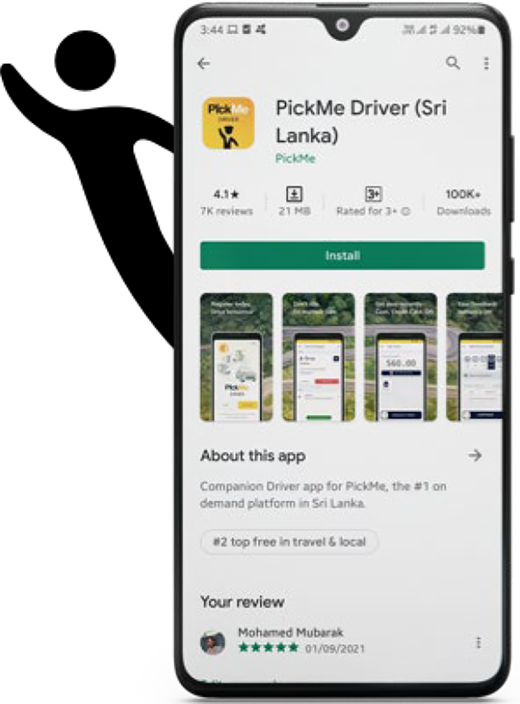
According to PickMe’s CEO, the app’s traceability and customer feedback systems foster ethical behavior, and complaints are addressed swiftly to reinforce standards (Zulfer, 2016). Figure 1 presents a sample page from the PickMe app interface. By maintaining oversight via app-based ratings and accountability systems, PickMe exemplifies a shift in AM’s role in worker conduct, transforming previously unregulated drivers into systematically evaluated professionals. This form of control aligns with the platform economy’s trend of using technology to manage distributed labor forces while preserving driver autonomy (Möhlmann et al., 2021).
Review of the literature
Algorithmic management in peer-to-peer platforms
AM plays a transformative role in peer-to-peer platforms, reshaping the dynamics of autonomy, control and decision-making. For example, a study of Ola drivers in Bengaluru reveals how drivers initially joined the platform seeking stability but soon found that their freedom to make decisions was constrained by app-based directions and algorithmically determined schedules (Ahmed et al., 2016). These restrictions limit drivers’ capacity to rely on personal expertise or make autonomous choices, as the algorithm dictates routing, scheduling and passenger interactions.
The opacity of AM’s decision-making processes further adds to the sense of powerlessness among drivers. A lack of transparency about algorithm-driven decisions affects drivers’ income and daily routines, often generating frustration and disempowerment as they navigate unclear protocols (Ahmed et al., 2016). The Bengaluru study suggested that users of ride-sharing applications require “sufficient information about how a system works” (Ahmed et al., 2016, p. 3). Many drivers report a strong desire for flexibility and autonomy in selecting trips, a preference that is often unmet by the rigid structure of AM (Hsiao et al., 2008; Lee et al., 2015). In these settings, the lack of autonomy restricts drivers to narrowly defined roles, diminishing their engagement with their work.
Power imbalances and complex pay structures also reinforce this sense of powerlessness, as drivers face difficulties understanding surge pricing mechanisms or compensation adjustments. In AM-driven platforms, these rigid compensation policies can undermine drivers’ decision-making capacity, making it difficult to exert personal influence over their work outcomes (Kumar et al., 2018). Consequently, the frustration stemming from these power imbalances can lead to worker dissatisfaction and disengagement, as drivers feel unable to control or influence their job conditions.
AM’s reliance on performance ratings adds another layer of complexity. Many drivers feel uncertain about how ratings impact their performance evaluations or earnings, contributing to a perception of arbitrary feedback mechanisms that fail to offer constructive guidance (Ahmed et al., 2016). This disconnect between feedback and actionable improvement reinforces the limitations of AM as a system that prioritizes efficiency over personalized engagement.
AM is an essential mechanism within the ride-sharing economy, serving as a bridge between informal labor practices and the formalized, rule-based framework of platform employment. Defined by Lee et al. (2015), AM refers to the transfer of managerial roles to algorithmic systems, which allows platforms to monitor and manage vast workforces with minimal human intervention (Lee et al., 2015). Jarrahi states that AM refers to the “delegation of managerial functions to algorithmic and automated systems” (Jarrahi et al., 2021, p. 1). This approach uses algorithms to control and evaluate workers, standardizing schedules, task assignments and performance evaluations within digital platforms (Jarrahi et al., 2021).
Key characteristics of AM include continuous data collection, data-driven decision-making, automated evaluations, real-time responsiveness and performance-based nudges that drive worker behavior toward meeting platform objectives (Mateescu and Nguyen, 2019). In practice, AM uses these tools to automate traditional managerial functions, embedding performance expectations and behavioral norms directly into the platform’s technology. This enables platforms to maintain control over a dispersed workforce, using algorithms to maintain productivity and quality without direct human oversight.
However, the deployment of AM raises significant ethical challenges regarding transparency, worker autonomy and the influence of digital management on workers’ sense of agency. The challenges of AM largely revolve around three aspects: algorithmic opacity, datafication and manipulative nudging (Gal et al., 2020). These challenges restrict workers’ autonomy and decision-making, potentially limiting their engagement and ability to contribute meaningfully within their roles.
The opacity inherent in algorithmic systems often makes it difficult for workers to fully understand or question the decision-making processes that guide their actions on platforms. AM typically embeds decision-making into opaque systems that calculate worker assignments, prioritize specific tasks or alter pay rates based on real-time data. This restricts workers’ ability to engage with or influence management decisions, reducing them to passive agents within an algorithmic system that lacks transparency (Gal et al., 2020; Mittelstadt, 2016). Such opacity prevents workers from questioning or interpreting decisions, making it challenging to develop a sense of control or ownership over their roles.
Datafication reduces workers to simplified profiles based on quantitative metrics, which can obscure individual abilities and contributions, discouraging self-reflection and professional growth (Constantiou and Kallinikos, 2015; Gal et al., 2020). In AM environments, workers often receive only superficial feedback on their performance, limiting opportunities for meaningful engagement. Manipulative nudging further restricts autonomy by using psychological prompts to encourage behavior without changing the financial or logistical incentives in any significant way (Thaler and Sunstein, 2008; Gal et al., 2020). Such practices subtly shape worker behavior while limiting individual choice, raising ethical questions regarding the influence of AM on workers’ autonomy and decision-making capacity.
These challenges highlight the ethical tensions inherent in AM’s approach to managing labor within the ride-sharing economy. The depersonalization and restricted agency created by these practices can hinder workers’ ability to actively engage with their work, as observed by Martí and Fernández (2013), who argue if people “feel their capacity to shape their lives has been taken from them” they feel like they are taken advantage of, and that “people need to feel and be treated as worthy human beings to envision and execute acts of agency” (Martí and Fernández, 2013, p. 1217).
Empirical studies on AM in sharing organizations have examined pricing, labor matching and entrepreneurial activity (Horton, 2017; Burtch et al., 2018) highlighting how algorithms both substitute for and complement managerial functions (Jarrahi et al., 2021). Algorithmic control includes performance reviews, worker rankings and dispute resolution, creating a work environment mixing flexibility, autonomy and surveillance (Galliers et al., 2017; Newell and Marabelli, 2015; Duggan et al., 2020; Wood et al., 2019; Möhlmann et al., 2021). Drivers often perceive themselves as “working for an algorithm” (Curchod et al., 2020), experiencing both gamified motivation and reduced autonomy, which shapes varied responses from endurance to exit (McDaid et al., 2023; Liu and Yin, 2024).
For AM to function effectively without eroding worker dignity, platforms need to consider more transparent and inclusive decision-making processes, balancing algorithmic efficiency with human engagement.
Methods
This section outlines the research design, philosophy, approach and sampling methods used in the case study of AM within PickMe, a ride-sharing company in Sri Lanka. As mentioned in the Introduction section, the planned research in Sri Lanka centered on a study of Virtue Ethics in the context of an autorickshaw institution. However, in the course of interviewing key stakeholders in the institution, it became apparent that the PickMe application and AM played an outsized role in the managerial functions of the organization. The methods herein described unveiled key understandings on how AM affects the drivers’ professional conduct and organizational values.
Research design
The study uses a social constructionist epistemology to examine how PickMe drivers and management collectively design, impose, interpret and respond to AM systems. Social constructionism holds that “all knowledge […] is contingent upon human practices, being constructed in and out of the interaction between human beings and their world” (Crotty and Crotty, 1998, p. 42). Within this framework, AM is interpreted as both a tool and a cultural influence on driver conduct and workplace virtues. The adoption of critical realism as a theoretical perspective supports a focus on both observed data and the subjective experiences of drivers, aligning with the idea that the world exists independently of perceptions but is understood through individual experiences (Elder-Vass, 2012; Easton, 2010).
Critical realism supports the notion that algorithms represent a structured system of control, yet these structures do not directly influence behavior without the context provided by human actors (Lawrence and Suddaby, 2006). This approach provides a useful foundation for examining AM as it affects driver decision-making within institutional settings.
The study applies an abductive approach, suitable for research in evolving fields like AM, where theory-driven hypotheses and data-driven observations intersect. This method allows for revisiting theories as new insights emerge from data (Dubois and Gadde, 1999). The iterative nature of this approach supports the examination of how algorithmic systems redefine managerial functions traditionally reserved for human oversight, often diminishing drivers’ autonomy and promoting distinct normative behaviors (Weber et al., 2021; De Reuver et al., 2018).
Research strategy
A single case study on PickMe is selected to explore the fostering of ethics through a digital application and its unique impacts within a specific organizational context. This choice supports a nuanced examination of the company’s approach to ethics and control mechanisms, focusing on how PickMe integrates algorithmic systems to promote and enforce professional conduct norms among drivers. Case studies in ride-sharing (Jordan, 2017; Kashyap and Bhatia, 2018) demonstrate the benefits of exploring one institution deeply, especially where the institutional context is as unique as Sri Lanka’s.
The sample includes 25 interviews, involving 21 PickMe autorickshaw drivers, 1 PickMe taxi driver and 3 senior managers. Driver interviews were conducted in person in January 2020 and March 2022, while senior leaders were interviewed via Zoom (including one conducted remotely in September 2021). One frequent PickMe customer was also interviewed. The driver sample consisted entirely of men aged roughly 20 to their late 50s, including both full-time and part-time drivers, with varied PickMe ratings (4.00–4.95) and lengths of service; approximately half had been with the organization for more than a year. Drivers represented Sinhala, Tamil, Muslim, Christian, Hindu and Buddhist backgrounds, and interviews were conducted in Sinhala or Tamil through a hired translator. Most drivers lived outside Colombo and traveled into the city for work. Senior managers, all middle-aged professionals based in Colombo, included two founding members and one manager from the Finance department. Collectively, these participants represent multiple levels of the organization and provide a broad view of PickMe’s institutional and ethical practices. Convenience sampling was used due to accessibility, and snowball sampling was attempted but discontinued. The saturation level was reached as responses began to reveal consistent and repeated patterns (Fusch and Ness, 2015).
Data collection and analysis
The primary data collection method was semistructured interviews with PickMe drivers and with senior management, aiming to uncover, among other things, their perceptions of AM, specifically the app-based star rating and ride assignment systems. Questions were designed using a theoretically informed guide derived from MacIntyre’s (2007) notions of success, autonomy and algorithmic control, enabling consistent comparability across interviews while still allowing participants to introduce unanticipated themes essential for inductive qualitative analysis. Driver interviews averaged 40–60 min, and managers’ interviews often exceeded an hour, enabling a deeper exploration of organizational motivations for algorithmic implementation.
Following qualitative best practices, the interview protocol was iteratively refined as emerging insights highlighted the centrality of the rating system; this adaptive approach strengthened analytic validity by ensuring that subsequent interviews probed theoretically salient behaviors shaped by algorithmic controls. The rating system emerged as a critical factor in driver performance, with managers and drivers alike referencing it as a tool for enforcing professionalism and ensuring service quality (Gal et al., 2020).
The GIOIA methodology was selected because it provides a systematic and transparent structure for inductive theory-building, aligning with this study’s aim of tracing how institutional mechanisms shape drivers’ ethical perceptions (Gioia et al., 2013). Coding proceeded from raw transcripts to first-order informant terms, second-order conceptual categories and ultimately aggregate themes. The process of coding and theme building using the GIOIA Method has a four-step process: Establish the gap, Distill the essence, Elaborate the story and Reaffirm the contribution to provide a novel insight or theory that touches prevailing theories that the research has already brought to the study. You will see this GIOIA method of representing data in the tables below in the results section of this article (Gioia et al., 2013).
AM was assessed in terms of its procedural and normative influences, with themes such as algorithmic opacity and performance feedback emerging as significant. The rating system, for example, not only guides driver behavior but also indirectly nudges drivers toward specific behaviors by rewarding or penalizing their actions based on passenger feedback (Mittelstadt, 2016; Gal et al., 2020). These codes formed broader dimensions relevant to the study’s purpose, allowing a structured comparison between data and theory.
Results
Overview of algorithmic management at PickMe
The PickMe app integrates several typical AM elements, including data surveillance, continuous feedback loops and incentives tied to performance metrics, all of which aim to maximize operational efficiency and customer satisfaction. These mechanisms, while ostensibly streamlining operations, present challenges for the drivers, particularly concerning their agency, fairness and transparency in the workplace. Key elements like surveillance, automated decision-making, nudging and data-driven evaluations are applied through the app to both monitor and modulate driver behavior.
Table 1 below highlights the evidence of AM, as noted from the semistructured interviews. This table, as stated in the Methods section, uses the GIOIA methodology to display qualitative findings (Gioia et al., 2013).
As can be seen, the PickMe application displays evidence of all the typical elements of AM, including Data and Surveillance, Responsiveness, Automated decision-making, Automated evaluations, Nudges and Penalties. What the evidence suggests is that management at PickMe, vis-à-vis the digital application, designed the application to act as a proxy managers for the fleet of autorickshaw drivers connected to their institution.
Data surveillance and continuous monitoring
AM at PickMe hinges on comprehensive data surveillance and monitoring, tracking drivers’ hours, performance and customer interactions. Managers noted that driver activities are monitored continuously, with data on ride acceptance rates, customer feedback and overall performance aggregated to determine rewards, penalties and driver ratings (SM1; SM3). For instance, a senior manager shared, “we know how many hours they put in […] If it’s only four hours, we know there’s something going on” (SM1), highlighting how data is used to flag and potentially penalize drivers suspected of working with competing apps (e.g. Uber). As mentioned in the Introduction section, this real-time tracking creates an environment where drivers’ daily activities are persistently scrutinized, raising concerns about privacy and worker autonomy (Ahmed et al., 2016).
Automated decision-making and feedback systems
Automated decision-making in the PickMe app manifests through algorithms that assign jobs based on drivers’ ratings, response times and customer reviews. These algorithms prioritize high-performing drivers for more lucrative or frequent jobs, thus incentivizing behaviors that align with the company’s operational goals (SM3). However, drivers reported feeling as though their job assignments – and by extension, their earning potential – were governed by an opaque algorithm that lacked transparency and fairness (D1; D18). As referred to in the Review of the Literature section, Gal et al. (2020) posited that opacity in decision-making, where drivers do not fully understand how or why certain jobs are assigned, can lead to a sense of disempowerment and mistrust toward the app.
Feedback mechanisms within the app are also automated, relying on cumulative data to assess drivers’ standing on a monthly basis. Drivers receive periodic feedback regarding their performance, though they are rarely given opportunities to contest low ratings or address negative feedback. This feedback cycle contributes to a rigid structure where drivers’ actions are evaluated impersonally, based on aggregate data rather than individual circumstances.
Performance-based nudging and incentivization
The PickMe app uses nudging strategies to encourage drivers to accept specific rides and improve their ratings, impacting their ranking and access to rewards. Drivers are ranked into loyalty tiers, such as bronze, silver and platinum, each providing increasing benefits based on metrics like ride frequency, customer satisfaction and overall ratings (SM3). These tiers function as a motivational structure, encouraging drivers to enhance performance metrics to move up ranks. For instance, SM2 noted that “drivers who are doing good […] earn more money,” incentivizing adherence to the app’s rating-based metrics to access higher earnings.
Virtue ethics in algorithmic management
AM at PickMe raises ethical questions, particularly in three domains: opacity, datafication and manipulative nudging. These challenges impact drivers’ ability to pursue growth and excellence in their professional conduct, as defined by Virtue Ethics, as they navigate an environment increasingly mediated by app logic (MacIntyre, 2007).
Similar to above, Table 2 below displays the qualitative findings from management and driver interviews on the ethical implications in AM.
As is evident, elements of both algorithmic opacity and datafication were present from the interviews. Opacity was evidenced through the confusion most drivers felt about the mapping system in place through the app and the fare system and rates charged to passengers. This caused no small amount of frustration with many of the drivers. Besides this, there did seem to be general affirmation of the application as well as the sense that by in large the app offered greater clarity in their work practices.
Algorithmic opacity disrupts drivers’ ability to grasp the standards of excellence internal to their practice, thereby undermining the practical reasoning that Virtue Ethics sees as essential for cultivating virtues and achieving internal goods (MacIntyre, 2007). Datafication further weakens a Virtue Ethics framework by collapsing the rich, practice-based dimensions of good driving into a single rating, shifting attention from the development of excellences to the pursuit of external rewards. Even subtle forms of nudging redirect drivers’ decision-making toward corporate goals rather than the deliberation, autonomy and character formation that Virtue Ethics identifies as central to flourishing. Collectively, opacity, datafication and nudging distort the moral ecology of the driving practice, making it harder for drivers to pursue internal goods and thus threatening the conditions necessary for MacIntyrean flourishing.
Opacity and lack of transparency
A recurring theme among drivers was the lack of transparency in PickMe’s algorithms, specifically around ride fares and job assignments. Drivers reported that they often could not predict earnings due to unclear fare structures and inaccurate location markers on the app (D7). In cases where customers entered incorrect locations or disputes arose regarding fare amounts, drivers felt at a disadvantage, as they were unable to access the app’s logic or contest the outcomes (Mittelstadt, 2016). Driver 14 shared, “the app doesn’t show [fares] in our meters,” underscoring drivers’ inability to verify or anticipate fare calculations.
Opacity also affects the rating system, with drivers describing it as a rigid, uncontestable evaluation measure that fails to account for individual efforts and extenuating circumstances. This lack of transparency in performance metrics, combined with the inability to negotiate or clarify feedback with customers, fosters a sense of frustration and helplessness among drivers (Ahmed et al., 2016).
Datafication of driver performance
The algorithmic reliance on ratings and feedback mechanisms illustrates the datafication of driver performance, reducing their work to numerical values that may inadequately represent the quality and depth of service they provide. Drivers consistently mentioned that their performance is tied closely to their star rating, with those scoring below a threshold facing reduced job offers and potential penalties (D1; D16). However, many drivers found that ratings often did not reflect their actual service, as minor misunderstandings with customers could significantly impact their scores (D22).
Nudging and incentivization
While management frames incentives as motivational tools to guide drivers toward preferred behaviors, drivers perceived these nudges as a means to constraining their decision-making. Drivers with higher loyalty tier rankings access better jobs and benefits, effectively nudging all drivers toward a performance-first mindset that may conflict with their personal schedules or work–life balance (SM2). Some drivers reported feeling pressured to accept less desirable rides to maintain their ratings, reducing their autonomy and sense of agency (Gal et al., 2020).
Discussion
This research investigates the role of AM in shaping ethical practices and professional conduct within South Asia’s autorickshaw industry, focusing on PickMe’s ride-sharing platform in Sri Lanka. The study’s core research question asks: In what ways has PickMe designed systems and technology to specifically promote virtue ethics among autorickshaw drivers, and how do these systems inhibit or enable virtuous practices? By analyzing drivers’ experiences and management’s design intentions, this research highlights both the contributions and limitations of AM in fostering ethical behavior. This discussion explores the theoretical and practical implications of these findings.
The research advances the understanding of virtue ethics in algorithmically mediated environments. Drawing on MacIntyre’s (2007) framework, the findings illustrate that virtues are not only cultivated through habitual practice but can also be guided – and constrained – by technological systems. Linking to Virtue Ethics, algorithmic opacity, datafication and nudging collectively undermine drivers’ pursuit of internal goods, the cultivation of virtues and the practical reasoning necessary for MacIntyrean flourishing.
PickMe’s rating and feedback systems promote virtues such as diligence, courtesy and professionalism. However, the inherent challenges of algorithmic opacity and datafication hinder the drivers’ ability to internalize these virtues fully. By reducing complex professional behaviors to simplified metrics, datafication undermines the moral development central to virtue ethics. This observation extends the theoretical discussion on how algorithmic systems mediate ethical behavior, suggesting that platforms must balance efficiency with opportunities for workers to exercise moral judgment.
The study’s findings on algorithmic opacity and nudging contribute to ongoing debates in the literature. While nudging is often framed as a subtle mechanism to encourage desirable behavior, drivers’ experiences highlight its potential to restrict autonomy. This tension underscores the need for transparency in algorithmic decision-making to foster trust and agency. For instance, providing drivers with clear explanations of fare calculations and job assignments could mitigate feelings of disempowerment, aligning AM with both IW and virtue ethics principles.
Conclusion
This study has explored the role of AM in promoting and inhibiting ethical practices among autorickshaw drivers in Sri Lanka through the PickMe ride-sharing platform. By examining the experiences of drivers and management, this research has highlighted how PickMe’s systems aim to foster virtues such as professionalism, diligence and courtesy while addressing long-standing challenges within an unregulated industry. The study contributes to the fields of virtue ethics by uncovering new strategies uniquely adapted to algorithmically managed environments, such as Designing Autonomy and Maintaining Reflective Practices.
The findings suggest that while AM can effectively standardize and promote ethical behavior, challenges such as opacity and datafication pose significant barriers to fostering genuine autonomy and professional growth. The significance of this research lies in the multiple stakeholders interviewed in this project; from senior managers and CEOs to the rank-and-file authorickshaw drivers for whom the ethical strategies were intended. The tension between efficiency and ethics underscores the need for balancing technological oversight with human agency and transparency. Practically, the study provides actionable recommendations for designing algorithms that empower workers, incorporate cultural contexts and enhance trust and accountability within gig-economy platforms.
Implications for practice include encouraging managers and institutions to design algorithms that reward professionalism, flag misconduct early and provide virtue-focused feedback. Firms can adapt by integrating ethical training into onboarding, aligning app-based ratings with clear behavioral standards and using algorithmic prompts to reinforce consistent, accountable conduct.
In conclusion, this research advances the understanding of how algorithmic systems mediate ethical behavior, providing both theoretical insights and practical recommendations for the evolving field of algorithmic governance. By integrating transparency, autonomy and cultural alignment into algorithmic designs, platforms like PickMe can better align their operational goals with the ethical and professional aspirations of their workers. This balance is essential not only for fostering virtuous practices but also for ensuring the sustainability and inclusivity of platform economy businesses.
Ethics statement
This research was approved by the Ethics at Oxford Centre for Mission Studies, in conjunction with Middlesex University London.