In this study, we aim to show the effect of entrepreneurs’ overconfidence on their required rates of return. Accordingly, we show the implication of two levels of overconfidence: moderate and excessive.
We use a hyperbolic absolute risk aversion utility function with a payoff function affected by an ego component to derive different expressions of required rates of return for non-diversified entrepreneurs.
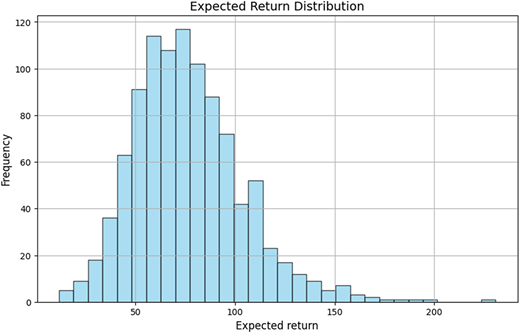
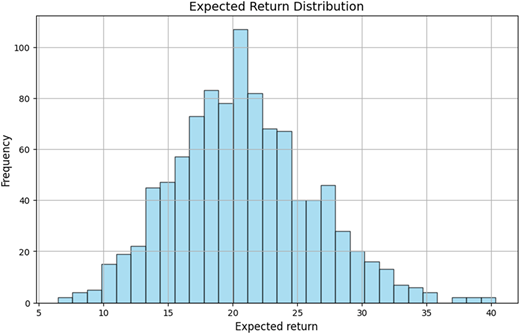
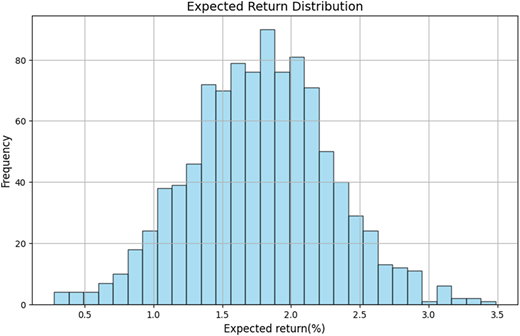
Using simulations of these expressions, we show that a confident entrepreneur will require an annual average required return of 76.49%, an entrepreneur with moderate overconfidence will require an average return of 20.80% and an entrepreneur with excessive overconfidence will require an average return of 1.77%.
Our expressions for the required rate of return depend on the assumption of the hyperbolic utility function. Other expressions will arise from other functions.
While moderate overconfidence can help overcome the fear of failure, entrepreneurs suffering from excessive overconfidence will underestimate the total risk of a startup.
Excessive overconfidence could lead to bankruptcy.
This is the first research that addresses overconfidence in relation to required rates of return.
1. Introduction
Entrepreneurs differ from each other because of their motivation, their expectations, their investment horizon and their risk preferences. These differences are often shaped by cognitive and motivational biases. Hence, the study of behavioral entrepreneurial finance provides a better understanding and explanation for entrepreneurs’ investment decisions due to their cognitive and motivational biases (Amor and Kooli, 2024). In this paper, we study the effect of entrepreneurial overconfidence on required rates of return. Although several empirical studies have shown that overconfidence influences financial decision-making and the cost of capital, there is still a lack of a formal theoretical model that captures how overconfidence affects entrepreneurs’ required returns. Our contribution is to fill this gap by deriving a theoretical framework in which entrepreneurs suffer from moderate or excessive overconfidence.
According to Dawes and Mulford (1996), overconfidence is a systematic calibration according to which the assigned probability that all given answers are correct exceeds their true accuracy. However, Teigen and Jørgensen (2005) argue that overconfidence is the excessive accuracy relative to the individual’s belief about the occurrence of an uncertain amount. In both cases, these authors relate overconfidence with positive results (overoptimism).
A third definition is the one provided by Grinblatt and Keloharju (2009), who consider overconfidence as the excess of an individual’s confidence in their own abilities, knowledge and thoughts. Benoit and Dubra (2008) state that overconfidence is a phenomenon in which a person perceives themselves as better than average, therefore relating it to an ego component.
We define overconfidence as the overestimation of one’s own knowledge and ability to perform well in a certain activity. In this case, the entrepreneur considers themselves better than the others a priori, and this overconfidence allows them to overcome their fear of failure. But it could also lead to the underestimation of business risks. Several authors explain that overconfidence and overoptimism carry both positive and negative effects on performance (Zhang and Cueto, 2017; Szerb and Vörös, 2021). In the area of entrepreneurship, Tang et al. (2023) used questionnaires from 184 entrepreneurs to show a negative relationship between overconfidence and the incubation performance of startups. Singh (2020) tests three hypotheses about overconfidence and firm behavior, and they find that entrepreneurs who are overconfident tend to make errors that result in the underperformance and failure of their firms. Cassar and Friedman (2007) studied the effects of overconfidence in investment decision-making and found that moderate overconfidence increases the probability that an individual starts his or her own business. Also, Shunmugasundaram and Sinha (2025) indicate that overconfidence functions as a serial mediator in the relationship between behavioral biases and investment decisions.
With respect to the empirical magnitudes of discount rates, Phillips (1986) finds that discount rates in Nepal vary from 0% to 30%; Phillips attributes these variations to factors such as the level of economic development, access to capital markets and differing degrees of risk perception among investors. Paglia and Harjoto (2010) report discount rates from 38.6% to 88.1%, with significant variability among sectors, while Nosić and Weber (2010) report discount rates between 33.9 and 48.4% depending on the different risk perceptions. These magnitudes cannot be explained by any asset pricing model.
In a seminal article, Heath and Tversky (1991) explain that there are different degrees of overconfidence and that normally people are most confident in fields in which they already have certain experience. The result of overconfidence could be good or bad depending on whether it is moderate or excessive and may be related to entrepreneurial experience. Cooper et al. (1995) find that new entrepreneurs tend to look for less information before making a decision compared to more experienced ones. Hence, entrepreneurs with excessive overconfidence search for less information when starting a new business.
We conceptualize overconfidence as the overestimation of the entrepreneur’s own knowledge and ability. We incorporate an ego component to examine whether the entrepreneur may (moderate overconfidence) or may not (excessive overconfidence) ask for others’ opinions when undertaking an entrepreneurial venture. We argue that this component may lead to the underestimation of the business’ risk represented in extremely low required returns.
Although other studies have managed to show a negative effect of the CEO’s overconfidence on the cost of capital and the extremely high or low required returns charged by entrepreneurs, these results are empirical ones and there is no theoretical model to support them. Koszegi (2000, 2006) analyses the implications of overconfidence solely upon utility functions, suggesting that an important application would be in small enterprises. We took his suggestion and applied his proposed setup to the derivation of entrepreneurs’ expected required returns. Hence, our contribution to the literature is to provide a theoretical foundation by deriving entrepreneurs’ required returns when they suffer from moderate and excessive overconfidence bias using a utility function with an ego component.
Our paper is organized as follows: in the next section, we derive a general expression of the entrepreneur’s required return with an ego component and three special cases when the entrepreneur does not suffer from overconfidence and when they suffer from moderate or excessive overconfidence. In the third section, we simulate our percentages to estimate the magnitudes of the required returns in each case, while in the fourth section, we discuss our results. In the last section, we state our conclusions.
2. Required rates of return for an overconfident entrepreneur
In his doctoral dissertation, Köszegi (2000) considers a Bayesian entrepreneur that maximizes their expected utility in which they are more influenced by their beliefs than their abilities. He focuses on the manipulation of information and considers that in the case of moderate overconfidence, the individual’s beliefs maximize their expected utility, but not in the case of excessive overconfidence.
In Köszegi (2006), he proposes an ego utility function that captures two degrees of overconfidence: moderate and excessive. Simultaneously, Mongrut and Ramirez (2006) show that there is no unique rate of return required by different entrepreneurs for the same business. This result means that there are neither homogenous expectations nor market equilibrium. However, there is a range of possible values depending on the entrepreneur’s risk aversion, the startup’s total risk and the entrepreneur’s preferences for present and future consumption. Then, Mongrut and Cruz (2021) generalize the results of Mongrut and Ramirez (2006) by deriving equations for the required returns by using a hyperbolic absolute risk aversion (HARA) utility function that uses the general quadratic and the logarithmic forms as special cases for different entrepreneurial preferences, but without overconfidence.
In this research, we use the ego utility function proposed by Köszegi (2006) and the methodology of Mongrut and Cruz (2021) to derive mathematical expressions for the entrepreneur’s two possible levels of overconfidence: moderate or excessive. The full derivation of this expression, including the binomial expansion and conditions for different levels of overconfidence, is provided in Appendix A.
Consider the non-diversified entrepreneur with the HARA function for two consecutive periods presented in equation (1), all variables in period t are deterministic, and the variables in period t+1 are random:
represent consumption at time t and the consumption at time t+1 respectively. The parameter represents the relative risk-aversion coefficient, is the absolute risk-aversion coefficient, and represents the entrepreneur’s preferences for present and future consumption.
The function is subject to the following restrictions:
where
is the expected required rate of return in period t+1
is the initial wealth level of the entrepreneur in period t
is the entrepreneur’s pay-off function in period t+1
is a dummy variable that equal one if the entrepreneur is overconfident and zero otherwise
is the environment faced by the entrepreneur in period t+1 composed by the entrepreneur’s own abilities and an external negative random shock
q is the innate ability of the entrepreneur
q* is the realized ability of the entrepreneur
is the external negative random shock in period t+1 where
which means that follows a normal distribution in which:
represents the mean or expected value of the random shock in period t+1 that reflects the average impact.
represents the variance or the degree of variability around the mean impact.
In period t, the entrepreneur acts with a specific ability q* to set up a business venture that might be different from their innate ability q, and in t+1, they receive the payment or benefit from their investment. The fact that when the entrepreneur uses q* instead of q indicates that they are affected by the overconfidence bias. There are two kinds of entrepreneurs: those who make decisions with an excessive overconfidence (q*<q) and those who make decisions with moderate overconfidence (q*≥q) because they share their abilities and views with others.
On one hand, the fact that the entrepreneur has excessive overconfidence means that they act with an ability that is less than his or her innate one (q*<q) because he or she suffers from an excessive ego component that makes him or her feel superior to others and that prevents them from sharing their abilities and information with others.
On the other hand, the fact that an entrepreneur suffers from moderate overconfidence means that they share their abilities and information with others, leading them to add to their own abilities (q*≥q). The classification of the entrepreneurs is given by ; zero for the entrepreneur that does not present the bias and one for the one that does. The scenario faced by an entrepreneur is the sum of their realized abilities plus the negative external random shock in t+1. The negative external random shock reflects external factors that reduce the business benefit, such as entry barriers to the industry, strong competition and political risk, among others.
is the pay-off function of the entrepreneur: if they decide to start a business when they are moderately overconfident (q*≥q), their ability will be enough to compensate for the external negative random shock; in fact, their pay-off function will be positive and equal to one. On the other side, if the entrepreneur decides to start a business when having excessive overconfidence (q*<q), their ability will not be enough to compensate for the external negative random shock, and their pay-off function will be negative and equal to minus one.
Following Cochrane (2005), we use the expected relationship between the stochastic discount factor and the required rate of return in period t+1 in equation (5) and the risk-free return in equation (6). The stochastic discount factor is the first-order condition in the optimization of equation (1):
where is the risk-free rate.
Optimizing (1) subject to (2), (3) and (4), the following equation is obtained:
In case of , we use the binomial theorem:
It is possible to factorize the k = 0 assuming that , and establishing the condition of the least risk-averse entrepreneur, that is, . Likewise, considering that the wealth level of the entrepreneur approaches zero, , then the consumption approaches zero, →0; and with some algebraic manipulation, we get:
Considering the lower discount rate for an entrepreneur with quadric preferences and an ego component:
By dividing and multiplying for the startup’s total risk , we get:
In equation (10), is the Sharpe Ratio () of the startup, and is its coefficient of variation (; therefore, the required return for a non-diversified entrepreneur is the following:
Note that equation (11) is a general expression for a non-diversified entrepreneur.
From equation (11), it is possible to establish three propositions: when the entrepreneur does not suffer from overconfidence, when they do suffer from moderate overconfidence, or when they suffer from excessive overconfidence.
According to Bodie et al. (2014), the risk-aversion coefficient for human beings ranges between one and four, where the least risk-averse entrepreneur will have a coefficient higher than one. This is precisely the necessary condition for the entrepreneur to have a positive present consumption . The latter means that they invest almost all their initial wealth () in the startup.
When the entrepreneur does not have overconfidence, the required rate of return depends on the risk-free rate, the startup’s Sharpe Ratio and coefficient of variation, and the absolute entrepreneur’s risk-aversion coefficient (Mongrut and Cruz, 2021).
Equation (13) shows the required return rate for an entrepreneur with moderate overconfidence (). In this case, the required rate of return is lower than the one required by the entrepreneur who does not suffer from this bias (equation (12)).
Equation (14) shows the required rate of return for an entrepreneur with excessive overconfidence. Notice that in this case it does not depend on the absolute risk-aversion coefficient. This is consistent with Camerer and Lovallo (1999), who find that when an entrepreneur is excessively overconfident, risk aversion does not play an important role in his investment decision. Notice that the required rate of return in this case is lower than that for a moderately overconfident entrepreneur (equation (13)).
3. Methodology
3.1 Research design
In this section, we explain the values of the parameters we use to conduct the simulations of required returns for the three cases: when the entrepreneur is not overconfident (equation (12)), when they are moderately overconfident (equation (13)) and when they are excessively overconfident (equation (14)).
The three equations depend on the following parameters: risk-free return, the startup’s Sharpe Ratio and coefficient of variation, the entrepreneur’s risk-aversion coefficient and the payoff function. The chosen values for the parameters are reported in Tables 1 and 2 and are based on the literature.
The risk-free rate is set at 6% per year, which was roughly the mean value of the 10-year annual return for US Treasury bonds between 1970 and 2024. Lakonishok and Shapiro (1986) find that the Sharpe Ratio tends to have a normal distribution around a mean of approximately one. Black (1995) notes that the Sharpe Ratio tends to follow a normal distribution, with a typical mean around 1.5 when evaluating performance in equity markets. Also, Campbell et al. (1997) discuss the properties of the Sharpe Ratio and argue that it often follows a normal distribution with a mean near 1.5 when assessing returns relative to risk. Given these findings, we set the Sharpe Ratio equal to one for the first two cases (no overconfidence and moderate overconfidence).
The choice for the parameters of the startup’s coefficient of variation is based on the literature as well. Cooper et al. (2008) argue that the coefficient of variation tends to cluster around 0.35 in stock returns due to factors like overconfidence and the mispricing of risk. Goetzmann and Kumar (2008) show that the coefficient of variation in the context of equity returns tends to be around 0.35–0.50, as investors often have behavioral biases such as overconfidence, leading to under-diversification. Kumar (2009) finds that the coefficient of variation for returns tends to cluster around 0.35–0.50 due to behavioral biases such as overconfidence leading investors to underestimate risks. Therefore, we assume that a startup’s coefficient of variation is normally distributed with a mean value of 0.35 and a standard deviation of 0.10 for the case of entrepreneurs without overconfidence. In the case of entrepreneurs with overconfidence, we increase the parameters to 0.50 and 0.20, respectively. This is because entrepreneurs who are overconfident are more optimistic.
Since we are dealing with non-diversified entrepreneurs and because the risk-aversion coefficient cannot be smaller than 1, we decided to set its mean value equal to 1.5 with a standard deviation equal to 0.10.
According to Arrow (1965), the risk aversion coefficient typically ranges between 1 and 2 for individuals, and often between 1 and 1.5 in the context of entrepreneurship due to increased uncertainty. Arrow’s theory of expected utility maximization assumes that the risk aversion coefficients for individuals are normally distributed, particularly when considering the trade-offs between risk and return in economic decision-making. Eckstein and Wolpin (1990) analyze risk aversion in investment decisions and find that entrepreneurs tend to have risk aversion coefficients between 1 and 1.5, due to the uncertainty and risks associated with new ventures.
Table 1 shows the parameters we use to simulate the entrepreneur’s required returns when they are not overconfident (equation (12)) and when they are moderately overconfident (equation (13)). In both cases, we use the same parameters except for the payoff function (zero for no overconfidence and one for moderate overconfidence).
3.2 Simulated data and analytical procedure
Figure 1 shows that 90% of the simulated required rates of return for overconfident entrepreneurs have an average of 76.49% and a standard deviation of 27.68%; we use Python to conduct all simulations. As the entrepreneur is usually affected by cognitive and motivational biases, this case provides us with the full range of required returns, but many of them are not realistic, especially those beyond the mean.
Figure 2 shows that 90% of the required rates of return for entrepreneurs who are moderately overconfident lie between 15.4 and 26.2%, with an average of 20.8%. These values include the traditional values provided by the Capital Asset Pricing Model (CAPM) that range between 10 and 20% and go up to 30%. In this sense, we interpret moderate overconfidence as good and necessary for entrepreneurs to overcome the fear of failure. In fact, Mongrut and Juarez (2020) found that an entrepreneur’s positive self-perception reduces their fear of failure by 19% in Latin America.
Table 2 shows the parameters we use to simulate equation (14) for the case of entrepreneurs with excessive overconfidence. In this case, the expression is highly sensitive to the parameters. Hence, we use a coefficient of variation that is normally distributed with a mean of 0.5 and a standard deviation of 20%. We also use a Sharpe Ratio of 2.5% and a risk-free rate of 6% (see Table 2).
The justification for using a Sharpe Ratio between zero and one is that entrepreneurs who are excessively overconfident do not care about risk, so they act, in fact, as risk lovers. Furthermore, in this simulation we do not consider the risk aversion coefficient; this is also consistent with the fact that entrepreneurs with excessive overconfidence do not care about risk.
Figure 3 shows that 90% of the required rates of return for entrepreneurs who suffer from excessive overconfidence lie between 1.20% and 2.20%, with a mean value of 1.77%. This result shows that entrepreneurs with excessive overconfidence will require a risk-free rate for their startups. If we increase the Sharpe Ratio and the coefficient of variation, the expression will become negative (not reported), which is consistent with some authors who have reported a negative cost of equity (Graves and Ringuest, 2018). The interpretation of a negative required return is that risk is not important at all and that the entrepreneur can successfully handle any possible bad scenario that may appear in the future.
4. Discussion of results
4.1 Theoretical implications
We believe that it is possible that a significant portion of startup failures are due to the entrepreneurs’ traits instead of bad business models. This is the importance of doing research in behavioral entrepreneurial finance. The main theoretical implication is that it is possible to map different entrepreneurial traits into required rates of returns, such as the entrepreneurs’ risk aversion and overconfidence. The research has focused mainly on the implications of the entrepreneurs’ risk aversion (Mongrut and Ramirez, 2006; Mongrut and Cruz, 2021), but to the best of our knowledge, this is the first one to map the overconfidence of entrepreneurs in the required rates of return.
4.2 Managerial and entrepreneurial implications
The cognitive bias of overconfidence has been studied through the years in relation to discount rates but in an empirical setting rather than in a theoretical one. Weber et al. (2002) study how overconfidence leads to mispricing of risks and unrealistic expectations regarding investment returns. They find that overconfident investors set discount rates based on subjective beliefs rather than objective risk assessments, but they do not establish a theoretical model for the required rates of return.
Heaton (2002) investigated how overconfidence affects corporate financial decisions, including the cost of capital and investments. Heaton emphasizes that overconfident managers may set unrealistically low discount rates, leading to suboptimal capital allocation decisions. Similarly, in the context of financial markets, Parveen et al. (2021) indicate that behavioral biases such as overconfidence negatively affect investor behavior.
Malmendier and Tate (2005) studied how overconfidence influences CEOs’ decision-making. They found that overconfident bias leads to higher discount rates or lower perceived costs of capital, driving overinvestment in projects with higher risk. In the same line, Puri and Robinson (2007) investigate optimism and its role in modeling the cost of capital. They argue that the overconfidence bias leads entrepreneurs to underestimate risk, which results in setting excessively low discount rates for investment projects.
The underlying managerial implication is the same: an overconfidence bias leads managers to not properly assess the investment risk, to set low discount rates and to invest in risky investments in a suboptimal way. This managerial implication is translated into an entrepreneurial implication: excessive overconfidence makes entrepreneurs undertake risky investments due to an ego component, and this in turn may cause the startup’s failure.
Another entrepreneurial implication is that moderate overconfidence is good to overcome fear of failure only if the entrepreneur is aware of it, so they will always have a multidimensional way of thinking, consulting, and hearing from other experts in the field.
4.3 Limitations and future research agenda
Our model is far from general for a very simple reason: we derive it from a utility function. We know that utility functions are very special cases in which humans behave according to the expected utility theory with rational choice. Unfortunately, humans do not behave like homo economicus, so sentiments make them deviate in a meaningful way from utility functions. Hence, what we have done is to portray possible “rational” entrepreneurial required returns with the presence of a cognitive bias: overconfidence.
From this point onwards, we may want to take a loss aversion utility function from Kahneman and Tversky (1979) with different cognitive and motivational biases to analyze the implications for entrepreneurs’ required rates of return. Understanding and addressing these biases is very important in the practice of promoting rational and sustainable entrepreneurial activity.
Furthermore, we must also consider that entrepreneurs often derive utility not only from financial returns but also from non-monetary rewards, such as ego gratification, reputation, or fulfilling a personal vision. This perspective is supported by Benz and Frey (2008), who argue that self-employment provides intrinsic rewards beyond financial returns, such as autonomy and purpose of life.
5. Conclusion
In this study, we show how an overconfidence bias can influence the entrepreneurs’ required returns. Whenever entrepreneurs are suffering from the overconfidence bias, they will require a lower rate of return than when they are not subject to the bias. Furthermore, the underestimation of the startup’s total risk is serious whenever entrepreneurs are excessively overconfident. Hence, moderate overconfidence is beneficial to overcome fear of failure and to properly assess business risk, while excessive overconfidence is detrimental to assessing business risk and may lead to its failure.
We find that the magnitudes of required returns corresponding to moderate overconfidence are between 13.41 and 28.70%, which are in line with the magnitudes found empirically by several studies such as Paglia and Harjoto (2010) and Nosić and Weber (2010).
Our findings point to a fruitful avenue of research in the field of behavioral entrepreneurial finance because we may also derive expressions of required returns in the presence of entrepreneurial resilience, or we may derive equivalent expressions to valuate real options under conditions of incomplete markets. We may also try to empirically test the previous expressions using a field experiment. All in all, many interesting topics of research emerge in this young field of study that we may call behavioral entrepreneurial finance.
The supplementary material for this article can be found online.